




Abstract
In this article the author submits that COVID-19 pandemic challenges could be utilised as an opportunity to reform government institutions to develop resilience measures that would potentially meet contemporary and future challenges. It will highlight that the current approach of institutions has failed to meet societal need. It focuses on developing countries, particularly the continent of Africa, drawing on results from a qualitative study of a justice institution of Uganda as a case study that explored how institutions coped to maintain societal relationship during the pandemic. Results suggested that, despite the pandemic challenges, institutions suffer epistemic issues that require critical examination for states to develop policies that would facilitate institutional reform to gain resilience mechanisms needed to meet contemporary and future societal challenges. A vulnerability theoretical framework is introduced and suggested as the remedy.
Introduction
The World Health Organisation (WHO) declared the Novel Coronavirus (Covid 19) a global pandemic on March 11, 2020. First reported in Wuhan, Hubei province of China, the coronavirus has caused unprecedented disruption on human interactions worldwide (Kirigia and Muthuri, 2020). Health experts confirm its transmission from person to person through respiratory droplets as well as directly through touching surfaces and other fomites (WHO, 2020b). The Emergency Event Database (EM-DAT) indicates that 220,000 disastrous events happened worldwide since 1900 but identifies only the 1918–1919 Spanish influenza as having reached a similar magnitude to Covid 19 (WHO). Historians have compared the scale of disruption to that of the aftermath of the second world war. The capability of Government institutions worldwide to adapt innovatively to new mechanisms with the potential to foster societal resilience has been severely tested. These challenges have left institutions vulnerable, particularly in terms of strengthening health care systems, while conversely accelerating the substantial technological adaptation required. The vulnerability of institutions is reflected in the loss of lives reported in established countries, such as Italy, the United Kingdom and Greece, which were the epicentres of the virus, (see WHO COVID-19 tracker).
In this article the author explores how institutional vulnerability was managed to achieve improvement and to establish resilience against future challenges. Whilst understandably health institutions have been the focus of attention during the Covid 19 pandemic, this article focuses on justice systems in developing countries, mainly the African region utilising Uganda as a case study. Wilson (2018) highlights the importance of examining institutional vulnerability during crises to identify research gaps within systems. The current author proposes that an analysis of Covid 19 challenges presents an opportunity for institutional reform and resilience-building to meet current and future challenges. Fineman’s universal vulnerability theory (2007) is utilised, and a multi-disciplinary approach undertaken to support this analysis.
The article is structured in four sections: Following the introduction which highlights the catastrophic disruption caused by Covid 19, the next section broadly contextualises the related challenges in the context of the continent of Africa. It suggests that, despite the low mortality rate, Covid 19 made the existing suffering worse. While currently undergoing a transition towards the transformation of policies and the restructuring of institutions, the author suggests that policies developed from laws that derive from the western liberal framework have failed to meet societal needs. In the search for a new approach, the author suggests the consideration of universal vulnerability theory as offering a potential remedy. The third section will introduce vulnerability theory, its development and application. In introducing the theory’s potential application to the African continent, a detailed analysis will be undertaken which outlines the two competing schools of thought, presenting the arguments for and against each perspective and its potential as key a theory for informing current debates on contemporary social issues. In the third section the author contends that universal vulnerability theory has the potential to facilitate African continental strategies for developing policies to counter contemporary challenges. The fourth section demonstrates the theory’s potential application using a small study of the Ugandan justice system and its response to the challenges presented by Covid 19. The final section consists of a discussion and conclusion.
The African region and COVID-19
Predicted as the region that ‘would be’ worst affected by the Covid-19 Pandemic (WHO), the 54-country African region is known for its susceptibility to other epidemics and disasters such as tsunamis, floods, wildfires, and landslides. Notably Covid 19 manifested differently, attributed ostensibly to contemporary challenges – mainly globalisation and the resulting interconnectedness of different states and regions. Despite lower levels of suffering compared to other regions, by June 2020 the highest country cases in the region were South Africa (34,357 cases), Egypt (26,384 cases), Nigeria (10578 cases), Algeria (9513 cases) and Ghana (8070 cases) (Africa CDC, Outbreak Brief, 2020). Experts attributed the relatively low levels of reported cases to low or absent testing capacity, poor reporting systems and an insufficient number of medical staff, Rutayisire et al. (2020): other scientists hypothesised that the region’s earlier suffering with communicable diseases might have contributed to a pre-existing immunity to Covid-19, alongside the growing youth population and a warmer temperature. (See Appendix 1 for the region’s status on Covid-19). However, despite the region’s lower levels of reported infections, the global impact has been felt on the continent. The report on physical, social, economic, and environmental impacts indicates that the effect of past disasters and epidemics on the region’s development currently affect most countries – if not the entire region – resulting in a reliance on international support (World Bank, 2019).
African challenges
African studies have highlighted that pre-existing challenges affecting the region would exacerbate the challenges arising directly from Covid. Examples include insecurity from the absence of a national welfare system, corruption, the democratic governance deficit, social and economic deficits, security agencies’ brutality and human rights abuses, patriarchal and religious norms and cultures, and communal living. The UN Women 2020 Report on Domestic Violence shows that, although gender-based violence was prevalent before in the region, incidents escalated sharply during the period of lock down. Most of these issues have been highlighted within the global challenge of the UN; s Sustainable Development Strategy 2030, which also suggests that the current approach to social issues has failed society leading to calls for a new approach (UN, 2016). Given the above, and amid the development of mitigating strategies to manage the challenges presented by the pandemic whilst enabling the continuation of other services, it is salient to consider how the region coped. This article seeks to consider this question using a vulnerability theory lens to explore whether/how social protections were used to build and sustain resilience to access justice during the pandemic. The submission is that the Covid-19 pandemic can be utilised as a catalyst for the institutional reforms necessary to meet contemporary and future challenges. A universal vulnerability theoretical framework is suggested as the possible vehicle for change.
In relation to justice across the region, governments’ approaches to delivering justice are underpinned by adherence to various regulations both regional and international including working towards the UN’s Sustainable Development Goal 16 of accessing justice (UN, 2016). It is also a requirement for African countries to adhere to the African Charter on the Rights of People and the Rights of Women in Africa. While African laws are western influenced, it is important to acknowledge how the legal subject internationally derives from a liberal theory of equality, which seeks axiologically and epistemologically to address vulnerability objectively. The region is currently exploring the relevance of western theories in relation to achieving the needs of the continent. While this has not resulted in any notable success to date, introducing the concept of universal vulnerability would provide a different dimension and a much-needed renewed approach.
African justice systems and Covid
Like other justice institutions worldwide, the African region experienced unprecedented challenges, notably its adaptation to Digital Access to Justice (DAJ) the globally adopted method which serves as an alternative means of maintaining the principle of accessing justice. In African jurisdictions, the challenges of adapting to technology depend on the country’s adaptation capability. It is important to note that the justice systems within Africa are not homogeneous as many countries inherited colonial justice systems. While some countries operate common law judicial systems, others use civil law systems. Such legal fragmentation is shown to impede the region’s success resulting in countries operating hybridised methods of justice dependant on each country’s historical colonial attachment. Where adversarial and inquisitorial systems operate, they are often supplemented with other culturally determined methods for achieving justice, for example, the Gacaca and Local Councils.
Notably, as with criminal justice institutions globally, there are a multiplicity of factors that have exacerbated Covid 19 vulnerabilities within the region including the rising insecurity resulting from the absence of a national welfare system, gender-based violence (GBV), deeply rooted in patriarchal social cultural, traditional, and religious norms and communal living. Administratively, poor digital skills and a lack of technological infrastructure have been reported. Other studies report ongoing institutional inefficiencies that impede institutional resilience attributed to a lack of capacity and integrity and relatively low standards of living. Reference has also been made to the obstacles that emanate from systems inherited at independence, mostly designed around western values (HiiLs, 2016; O’Mahony, 2012; 2010; Muigua et al., 2020).
Since the introduction of the UN’s Sustainable Development Goals 2030, jurisdictions around the world have developed transformation strategies aimed at achieving these goals. This has been beneficial to some jurisdictions in terms of adapting to new methods of delivering justice during the pandemic. For example, England and Wales embarked on the Transformation of Justice Programme in 2016, through which innovation has been taking place including digitised methods of delivering justice (Transforming justice 2015). Similar innovations have occurred in China, America, Canada, and in some developing countries such as India. In the wake of the Covid19 pandemic, the challenges of delivering technological justice have been minimised by such action. In contrast African countries still operate mainly on the Physical Presence Model (PPJ): so that facilitating the transition to DAJ has proved problematic, particularly in relation to the acquisition of technological tools, new skills, and appropriate infrastructure. Later in this article vulnerability theory is used to explore how the Ugandan justice system coped. This example provides a case study of how countries on the African continent delivered justice within the Covid-19 environment. First it is necessary to explore the vulnerability theory framework.
Vulnerability theory and the framework
The concept of vulnerability has recently gained popularity across various disciplines, and studies have been also conducted on its development (Herring, 2016). Notedly these developments depend heavily on the position undertaken epistemologically. Originating from the Latin word ‘Vulnus’ meaning ‘wound’,until recently, the notion has been characterised by its association with deficits, need, suffering, fragility, risk or exposure to possible attacks or wounding. However, studies have shown that the concept has a different positive side that could be applied descriptively and prescriptively as will be elaborated later. While currently utilised rhetorically in addressing human issues, there are two competing schools of thought, the categorical and the universal and there are implications resulting from both positions.
The categorical position takes a deductive reasoning to vulnerability analysis, emphasising the notion of individualism and contending that the label of vulnerability should only be applied to certain classes of human beings, considered vulnerable, deriving from their biological, racial, or chronic conditions. This approach emphasises that human vulnerability can be quantitatively identified and analysed individually in preparation for developing resilience mechanisms. Underpinning the categorical approach are the values of independence, autonomy, and individual responsibility (Fineman, 2014).
On the contrary, the universalists raise dissatisfaction with the categorical approach contending that vulnerability should be recognised as the primal human condition (Fineman, 2014) and highlighting our constant susceptibility to diverse harms caused by a range of different factors including infancy, a lack of capacity, diseases and/or physical decline or by natural or manufactured disasters (Fineman, 2008). Fineman emphasises that there is no such thing as independency as our vulnerability is a precursor for dependency. In that vein it is emphasised that countries, through their institutions, must be responsible for building human resilience (Fineman, 2010). In this line of argument, the concepts of human vulnerability and resilience are central, as well as a recognition that we are embodied human beings, inevitably dependent on various social institutions and relationships over the life course.
Given the above, while both approaches sound plausible, the current author takes a pragmatic epistemological position, leaning towards the universalists’ view (Fineman, 2008) in the context of Covid 19. This is due to the manifestation of the pandemic and the unprecedented and indiscriminate threat that it poses to all human beings. This threat accords with the notion that ‘We are all vulnerable’ which is articulated by the universal theory of vulnerability.
Utilising a vulnerability approach
Scholars from several disciplines have embarked on the utilisation of vulnerability theory. This article concentrates on criminal justice studies, in which vulnerability, although under explored, is currently defined narrowly in terms of victimisation, Dehaghani and Newman (2017). This is more evident within western developed countries, where criminal justice studies are more developed. In this article, the parameters of criminal justice are widened to problematise the response to the pandemic within the African region in the context of access to justice. The following analysis examines how societal relationships were maintained to foster resilience for those needed to access justice providing an opportunity for the continent to reflect on where and how vulnerability theory could be used in the future.
Critics have shed light on both the categorical and universal approaches. The categorical approach suffers most for taking a narrow approach to situations that need broader critical consideration. Universalist critics initially drew on what was described as its descriptivist approach (Kohn, 2014). However, this has evolved from descriptivism to the approach’s use as part of a more prescriptive process which demonstrates its potential to facilitate developments to yield inclusive and accountable policies which – if implemented in practice – have the potential to respond to human vulnerability and to maintain resilience.
The universalist analysis of vulnerability moves beyond its central site within the human condition to address how the notion manifests itself at different levels – for example, from institutions to practitioners and to individuals – while providing mechanisms for resilience. It is important to highlight here that the state does not necessarily provide direct support to individuals, but rather its role is to ensure the proper functioning of institutions through which individual will access the services they need. Following this process, the state’s failure to organise resources that institutions need in order to cushion society against harm and risk could result in institutional vulnerability for practitioners resulting in a reduced capacity to support individual challenges. This could lead to further perpetuation of discrimination and other disadvantages (Fineman, 2008).
Vulnerability due to COVID
Applying the above to address the covid-19 pandemic challenges within the justice context, this article adopts a middle path, leaning towards Fineman’s epistemological position that considers the variety of sources of vulnerability in which the state is theorised as the legitimate governing body and thus tasked with responsibility for compensating those vulnerabilities. The premise of Fineman’s notion of human being’s innate dependency which places obligations on states to reduce, ameliorate and compensate for vulnerability fits well in the current crisis. Its key appeal lies in the axiological domain that implies human decency, relationships, care, accountability, user involvement and transparency: aspects that are all vital in addressing challenges cotemporally. It intrinsically encompasses human rights endeavours that are currently narrowly delivered within an equality framework. It shifts the focus from individual responsibility and interrogates the manifestation of vulnerability while prescriptively scrutinising state’s arrangements and facilitates strategies for policy development. While the African continent is currently reviewing and negotiating its global relationships with a view to refocusing its position on social issues, introducing vulnerability theory at this time provides the continent with the remedy currently needed for western societies to meet contemporary societal needs.
Within this context, the contention is that the model which most governments currently employ is too narrow to achieve equality in a world with no assurance of avoiding injury, illness, or other adverse life events. Political theorists emphasise the role of equality as providing a strategy for policy development (Squires, 2007). In response, the current author would contend, using Fineman’s theory, that from a multi-disciplinary perspective the use of an equality model by governments in seeking to meet their obligations to respond to human vulnerability in, for example, the justice system, a narrow a view to meet the needs of all those seeking justice.
In the extreme environment brought about by the pandemic, the research project outlined in the rest of this article adopted a universal view of vulnerability theory to explore how the Ugandan government responded to the challenges raised by Covid-19. This case study concludes by positing how the current situation could provide an opportunity for institutions to review their approaches to meeting contemporary and future challenges and how the shift to an approach based on the concept of universal vulnerability could contribute to this process.
The Ugandan justice system and the pandemic
The study aimed to explore how criminal justice institutions maintained societal resilience in relation to access to justice within the Covid 19 environment. Uganda logged its first case of covid-19 on 21st March 2020, which, it was claimed, had been imported from Dubai. That led to a full a lock down on 30th March which involved an immediate ban on private and public transport, school closures and restrictions on gatherings. Commentators have suggested the need for a full lockdown derived from Uganda’s geographical position as a landlocked country (Kiwanuka et al., 2019). A travel ban on air, water and roads was enacted, social distancing and preventive isolation measures were also fully implemented (Presidential address 1).
Despite a dearth of evidence relating to the precise values and principles underpinning the operation of the Ugandan justice system, in theory the country operates an adversarial system. Studies indicate, there are also local forms of justice delivery available through cultural and political councils, (HiiLs, 2016). Emanating from the British system model of adversarial justice, the Ugandan system is characterised by the concept of due process (Parker, 1968). Notably, unlike inquisitorial systems which emphasise the search for truth, adversarial systems aim to amass sufficient evidence to establish guilt traditionally through congregating in court rooms. This approach imposed additional challenges on those seeking to access justice within the Covid 19 environment.
Additionally, the country is also at crossroads with seemingly ongoing national challenges relating to justice. As well as pre-trial detention, the increasing use of extra judicial punishments, witness disappearances, and a loss of interest in cases, as highlighted by Kirabira, the country faces a host of gross human right violations including torture, enforced disappearances and murder (Kirabira, 2021: Chapter 4 Uganda). Some existing challenges got worse during Covid 19, for example 6,800 cases of defilement were recorded in 6 months (Sabiti, 2020). Besides these human rights challenges, there are high levels of corruption that led to the mismanagement of Covid 19 funds (Gwebayanga, 2020). The judicial system is reported as being highly corrupt, with minimal impartiality and independence, nearly half of Uganda’s citizens perceive the courts as corrupt. Empirical studies reveal the serious impact of corruption on the justice system, see ( https://repository.up.ac.za/handle/2263/5791 ), some human rights violations are being considered as the basis of a report to the international criminal court (Kirabira, 2021).
To manage the operation under government standard operative procedures (SOP) with the Covid-19 environment, the Ugandan Justice System (UJS) strategically employed several methods to enable the continuation of delivering justice. As well as encouraging behavioural change, affordable technological measures, and judgments, as well as rulings to be issued via social media, provision was made for video and Zoom links to prisons and magistrates’ courts were conducted within prisons wherever possible (Chief justice, 9/3/2020).
The aim of the study reported here was to examine how the justice institutions coped in the environment caused by Covid through the maintenance of societal relationships and the resilience-building necessary for citizens to achieve justice. It is worth noting that access to the court system is extremely difficult to obtain at the local level (BTI 2016). Legal theorists advise of the need for practitioners to adapt to the changing circumstance of human society
The study thus makes three contributions: first, by contributing to theoretical discussions regarding how best to meet contemporary needs and future challenges in the context of developing countries and countries in transition; secondly, by interrogating current debates that shape the development of mechanisms intended to contribute to the closing of the justice gap as prescribed by the UN’s SG16C; and, thirdly, it offers a theoretical framework that could stimulate criminal justice studies. The results have practical and policy implications for those countries which are in transition and the institutions that require reform.
Literature review
Addressing vulnerability is not a new phenomenon, in her work Fineman has explored the concept extensively to develop her vulnerability theory which aims, among other things, to address institutional functioning (Fineman, 2008, 2010, 2014, 2017, 2020). This work has had a significant impact on how the notion is addressed in terms of responding to challenges and the development of resilience. As Fineman argues, institutions play a vital role in terms of facilitating resilience-building. In the context of responding to crises such as the current pandemic, how human vulnerability is considered and responded to is crucial can be identified in the relationships forged between institutions and the societies they serve.
In addressing vulnerability Fineman (2008, p. 10) advocates the vulnerable subject as the target of intervention which should be based on the universal approach which emphasises the notion of what it means to be human. She warns against employing the concept of vulnerability inappropriately which could result in discrimination or harm for those labelled as being ‘particularly vulnerable’. Fineman contends that justice is more likely to occur if the state is built around the recognition of the vulnerable subject. In this vein the theory is more focused on establishing the parameters of state responsibility to societal institutions, the scrutiny of structures, and arrangements available to counter human vulnerability and the maintenance of relevant relationships than on setting the limits of state intervention through the categorical or reductionist approach currently employed within many jurisdictions.
Current studies focusing on covid 19 challenges have been largely quantitative using the individualist approach to calculate the numbers of cases of those contracting the disease and deaths caused by it. This approach, which articulates positivist intervention, can be criticised for its narrow viewpoint which overlooks embodied vulnerability. The recognition that human vulnerability is universal and constant places a high value on dependency rather than independency, as, during the course of our lives, it is inevitable that we will, to varying degrees, be reliant on others, Covid 19 illustrates this point, it afflicted heads of state in both developed and developing countries, while exposing the importance of our dependency on institutions. Universal vulnerability theory insists that institutions require responsive states leading to a need to interrogate structures for resilience which can maintain societal relationship.
Fineman’s analysis (2017) further highlights the inequality that emanates from a focus on the liberal legal subject as the target for justice institutions operation which arises from a lack of acknowledgement of human vulnerability in this context. Accordingly, here have not been many studies conducted within the criminal justice system in relation to universal vulnerability. Dehaghani and Newman’s (2017) study of police custody found that the justice system in England and Wales employs a narrow procedural approach which focused solely on those in custody and noted how practitioners’ vulnerability was often unattended. Other studies have also emphasised how the notion of vulnerability has been employed subjectively, deeming some individuals or population more vulnerable than others (Munro and Scoular, 2012)
The need to adapt to the technological provision of services has been reported as a challenge for criminal justice institutions in addressing vulnerability. In some parts of the world this is a new phenomenon which has tested the capabilities of governments and institutions. Institutional theorists have identified the benefits such provision brings, showing how varying national responses sheds light on performance deficits and arguing that such innovation can act as a catalyst for further innovative ideas and reforms (Wilson, 2018).
For institutions that have delivered justice during Covid 19, the emphasis has been on adaptability to the new paradigm of digital justice delivery. This has demonstrated countries’ commitment to the new infrastructure needed for their institutions (Sourdin and Zeleznikow, 2020). In the absence of such provision many institutions have struggled to manage resilience. It is notable that for advanced countries such as Canada, the USA, Australia, and the UK, which had embarked upon meeting the UN’s sustainable development objectives, frameworks for the technological provision of services had been available before the pandemic. Consequently, challenges have been minimised.
Fair trials (2020), assessed the challenges posed by Covid and access to justice during the pandemic, arguing that such challenges go beyond adaptation to digital service delivery. From a practitioner and individual vulnerability perspective, challenges also include largely unreported issues of restriction to lawyers, difficulties in accessing police and courts, overcrowded prisons, breaching of confidentiality through the digital method of justice delivery and the risks to both legal practitioners and all of those in premises related to the justice system of contracting the disease. It should also be noted that problems related to technological services adaptation include the issue of public confidence in accessing courts using media of which there is little knowledge and experience that has been not paid attention to.
In Uganda there have been reports of violent scenes and a 10% increase in the prison populations resulting from the imprisonment of thousands for violation of the covid 19 lockdown rules (Biryabarema, 2020). Technological deficiencies, some of which could potentially result in human rights violations, and ethical concerns, regarding the principle of confidentiality and the right to effective communication with lawyers, have been also reported. In relation to achieving justice, it is noted that the UN’s Sustainable Development Goal 16 of 2019 recommends a people centred approach as a model for achieving justice in line with human rights requirements (HiiLs, 2016). It is thus perhaps debatable whether applying a vulnerability lens could provide a more balanced approach to meeting human needs than the demand for more and better-enforced rights.
Methodology
As Yin (2009) highlights a case study strategy in any social research investigates contemporary phenomenon within its real-life context while utilising multiple sources of evidence. Indeed, the Covid 19 challenges manifested uniquely, suggestively warranting an investigation of how countries coped. The Ugandan justice system was utilised as a case study to explore how its institutions coped and the focus was on the justice system, specifically how the principle of accessing justice was achieved. Data was collected through qualitative interviews with practitioners which focused on how the government had responded to Covid 19 challenges.
The data gathered through various sources was thematically analysed and themes emerged were used to explore the above. Using a vulnerability lens, the measures employed to combat Covid 19 were phenomenologically examined to determine the extent to which they fostered resilience for those who needed to access justice in the courts. Given the time and the nature of the study, a qualitative methodology was deemed suitable due to its ability to achieve in-depth data extraction and its appropriateness in addressing complexities (Denscombe, 2012).
A diverse data collection approach was purposefully employed to gain a holistic insight (Creswell and Plano Clark, 2011). This combined semi-structured interviews and a focus group meeting, the examination of national reports and articles related to the pandemic. Through the focus group meeting international, regional, and national insights were gained. Participants’ recruitment was managed through a gatekeeper, a practitioner within the high courts. Ugandan high courts are nationally positioned and so a purposive sampling strategy (Patton, 1990 and Palsy, 2008) was utilised to manage representation. Recruitment was limited to practitioners in high courts with diversity in terms of client’s representation. The resulting sample included, practitioners working with women and girls, children’s advocates, business advocates, and those representing refugees, students in higher institutions and ordinary citizens. The target sample was 8–10 practitioners and 9 ultimately took part with one unable to participate due to communication failures. Semi-structured interviews lasted between 45 and 60 minutes, and the focus group meeting lasted for 1 hour. Voice recordings and handwritten notes were used to provide transcripts. The data extracted was coded and thematically analysed. Initial coding was subject to constant comparison within and between the study questions and themes and sub themes were developed (Bryman, 2016). The study explored and identified how the characteristics of Covid 19 challenged access to justice, i.e. how the government responded, how getting into courts was managed, whether there were gaps in its response and how a universal vulnerability approach could be utilised to remedy any shortcomings.
Ethics
Although the interviews were conducted remotely using social media, ethical procedures were adhered to and fully
complied with. Signed informed consent prior to interview was given by all participants who were informed of their right to withdraw. Confidentiality was maintained, and information security was adhered to according to policies governing research UK conduct and in line with the Data Protection Act 2017. Remote interviews are impacted by how human beings interact and some deficits, mainly methodological ones, are unavoidable, through for example, the limitations in observing the behaviour of respondents. As Braeutigam (2006) explains, the nature of communication is naturally conducive to building trust and rapport. However, the limitations imposed by the pandemic on face-to-face interviews meant that the remote method was the best option. The study cannot be considered as representative due to the environment it was conducted in as the sampling strategy was limited to those available and able to use online methods. The study should thus be considered as a snapshot, albeit it one that utilised social science methods. Nonetheless it has yielded particularly important data that can shed light on significant challenges which could be used to initiate discussion and debate aimed at addressing contemporary issues of concern.
Findings
Summary of findings
Q1
Initial response to the pandemic.
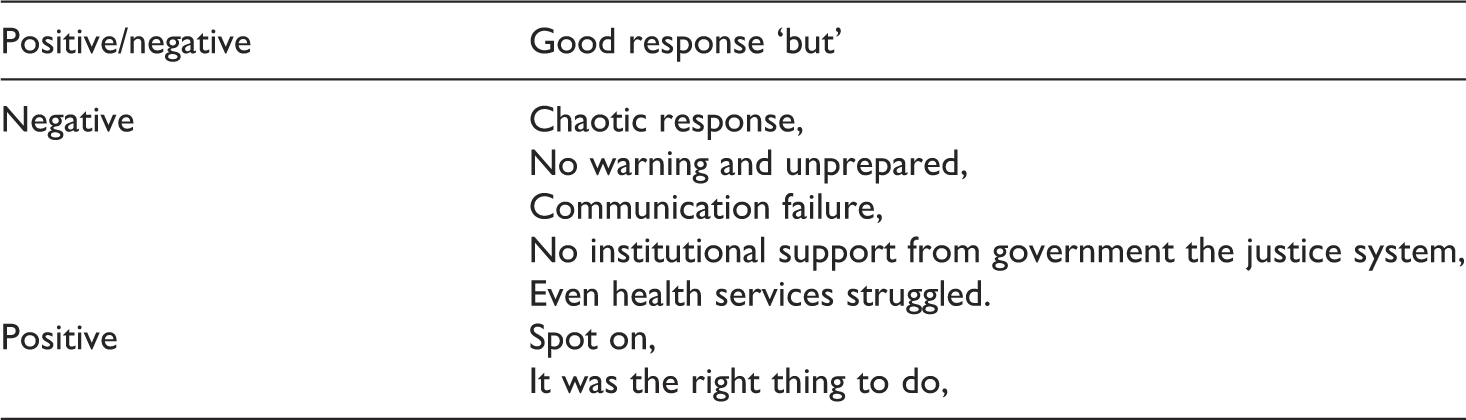
Participant agreed on restrictions as lock down was unavoidable given the circumstances. However, a recurring notion of unpreparedness/negativity derived from communication failures, some referred to a chaotically conducted response with no clear direction.
Q2
Response to institutional challenges.
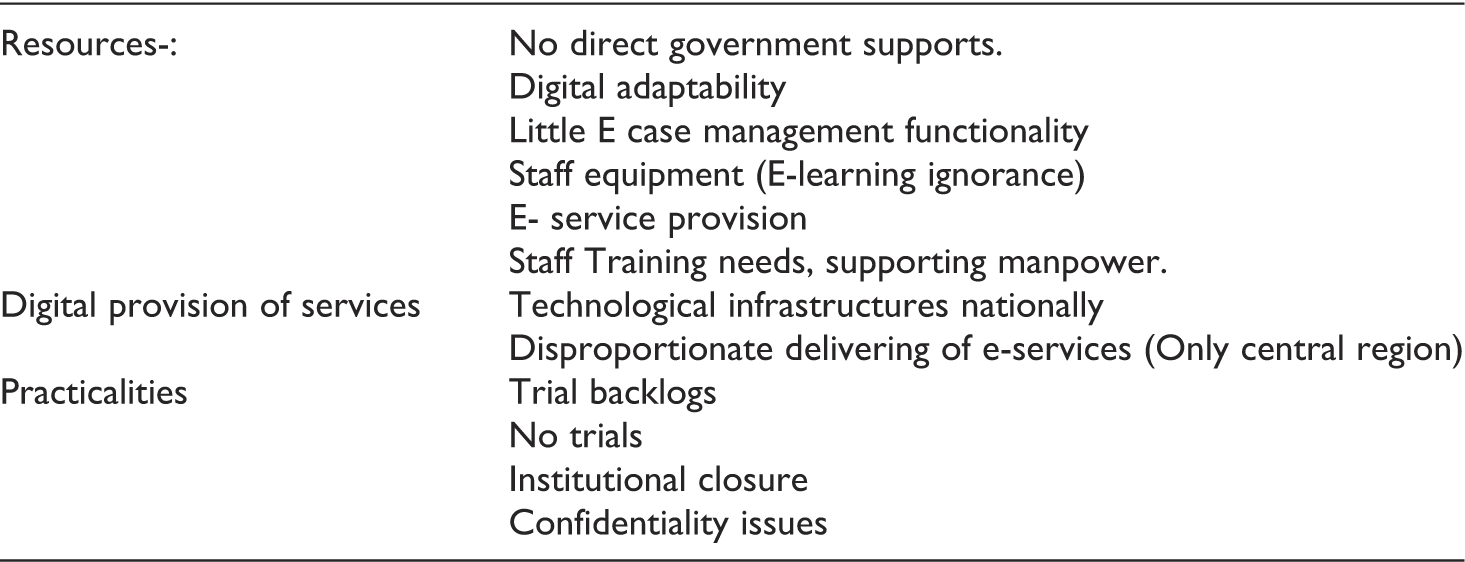
In response to professional challenges.
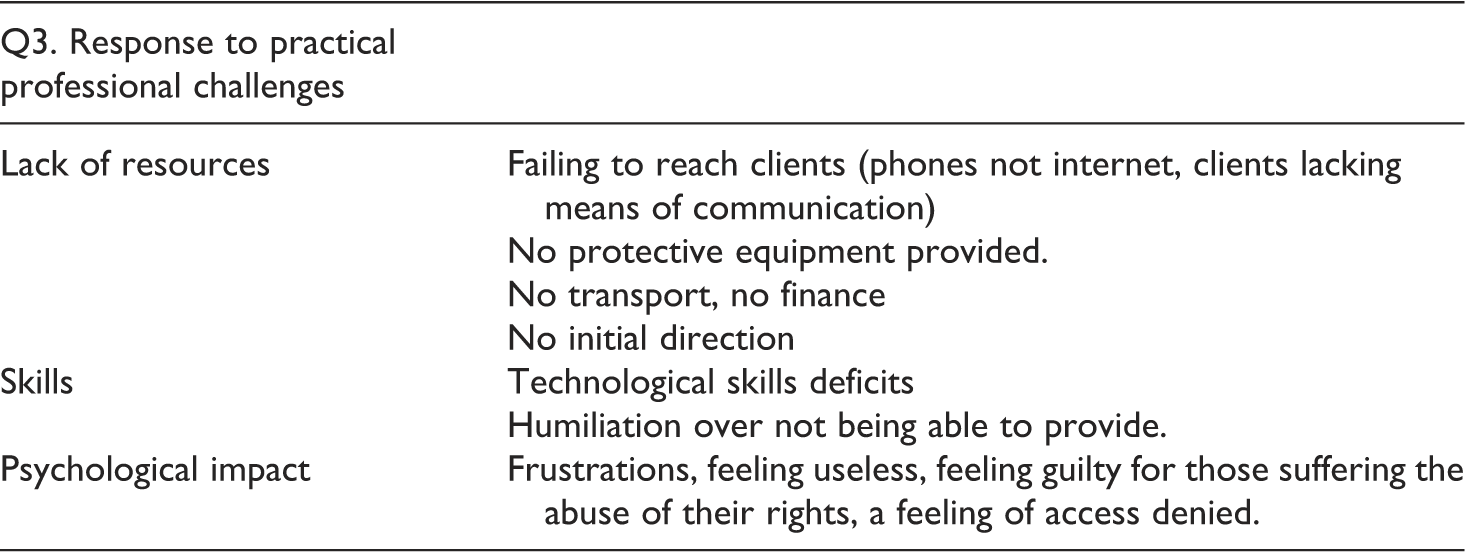
One participant reported, accessing court services was not a trip anyone wanted to make. Participants own psychological and emotional suffering stemming from the feeling of letting down the people they are meant to serve.
Q4
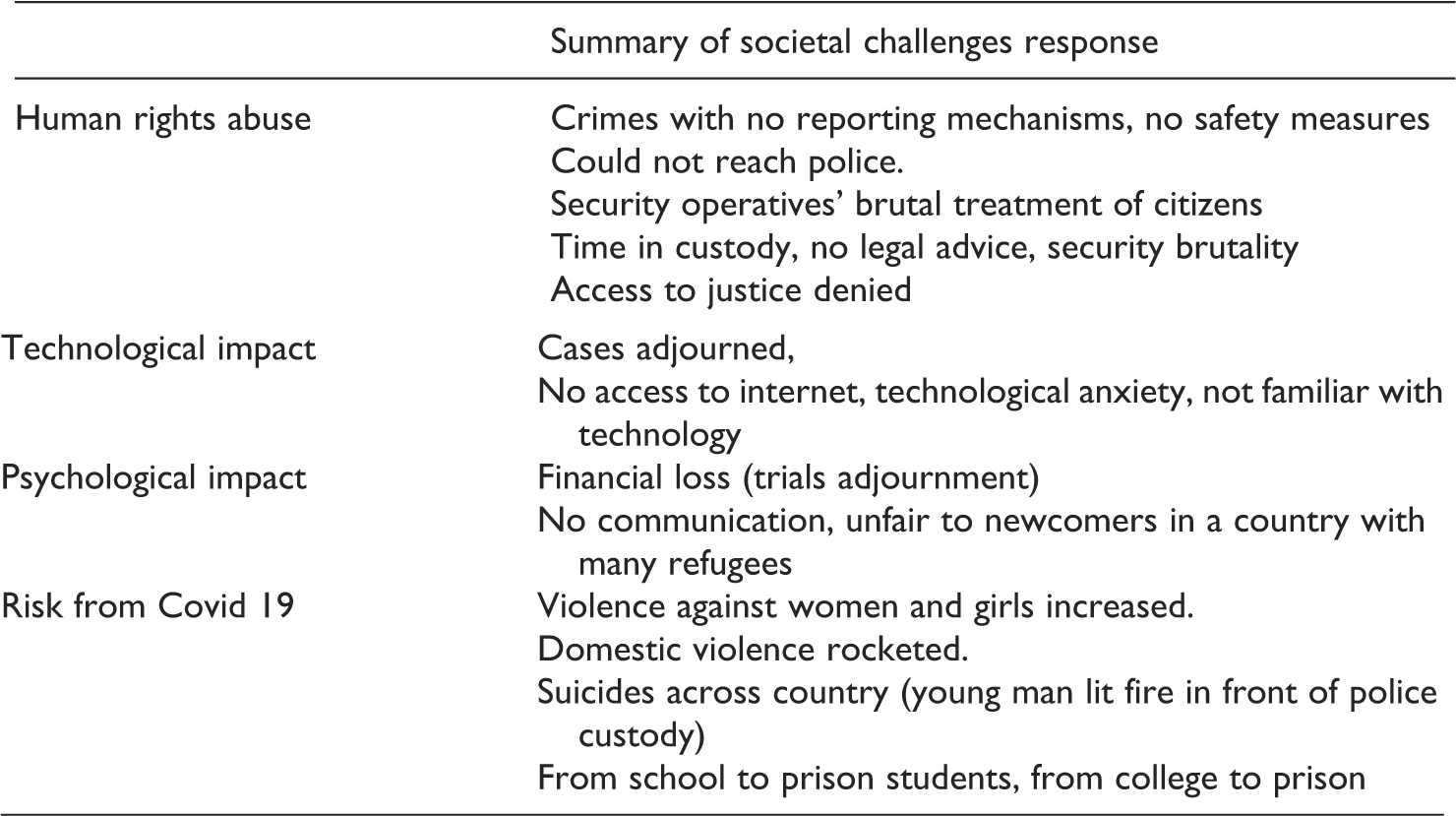
Response to societal challenges.
Q5
In response to challenges and remedies.
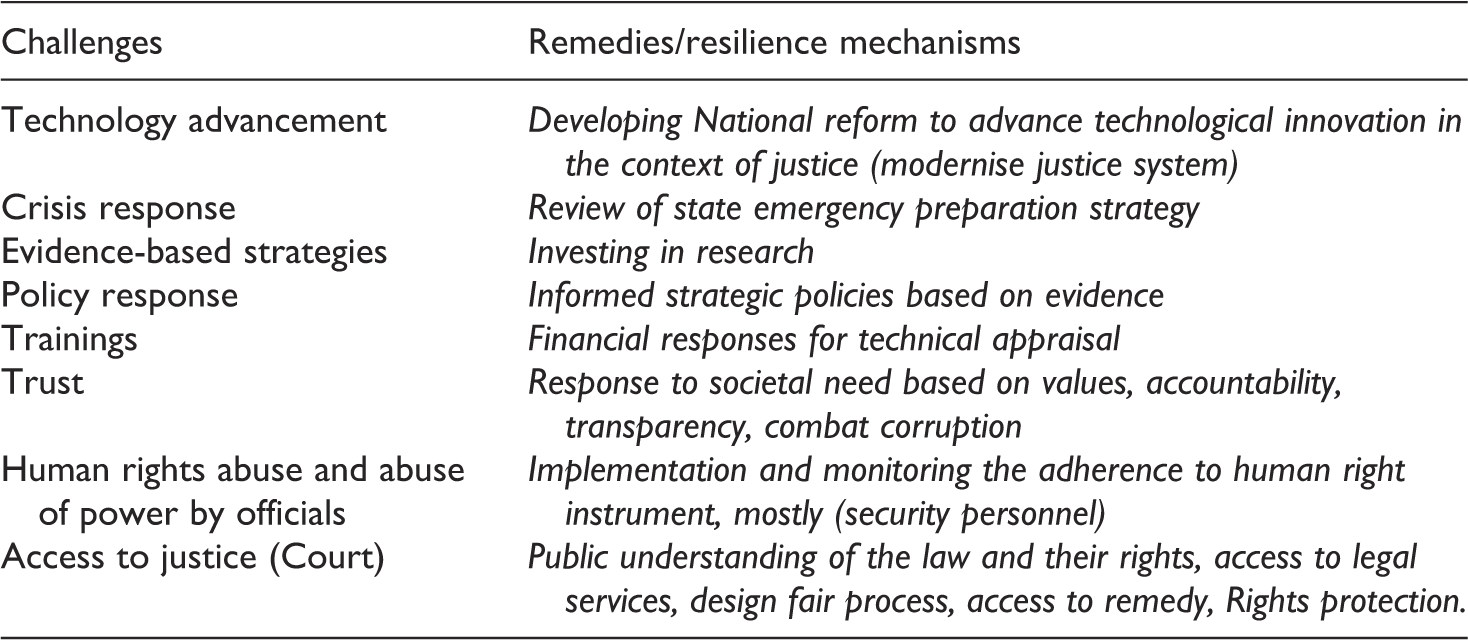
A focus on international, regional, and local responses
It emerged different strategies developed worldwide varied from jurisdiction to jurisdiction based on capabilities to adapt technologically. Participants commented on countries that succeeded in delivering digital justice and indicated requirements including a transformation of the entire system including the development of e courts, interconnected data centres, robust security systems and user-friendly e-courts procedures that are simple and accessible to the public. In the national context the occurrence of acts of brutality by security operatives was emphasised as happening across the country.
Discussion of the results
The study reported here aimed at exploring how the Ugandan government responded to Covid 19 challenges to assess how institutions functioned and how societal resilience was fostered in the context of achieving justice. The study yields important results. The notion was covid 19 challenges could be translated into opportunity for institutional review, suggesting the use of vulnerability theory as a means of providing a remedy for any shortcomings identified. Here, vulnerability is a positive notion capable of infusing fresh ideas which have the potential for action, education, and innovation. In this way analysing vulnerability is considered a necessary step to achieving the better functioning of an institution enabling provision of the resilience societies need.
The justice system, Covid and vulnerability theory
Our understanding of vulnerability impacts significantly on how we respond to it and so on the resilient mechanisms we secure. A universal vulnerability approach posited in this article considers vulnerability is inevitably arising from our embodiment, with the state theorised as the legitimate governing entity. It emphasises state responsibility to establish and monitor social institutions and relationship that facilitate societal resilience. While Covid 19 irrefutably affected individuals indiscriminately and institutional functioning unprecedently, the pandemic has also demonstrated the importance of dependency as highlighted by Fineman. In relation to the justice system as the current study has identified, there are several issues to be addressed.
As Fineman (2017) reminds us, the ways in which laws that regulate duties to provide society with resources are established is vitally important for human resilience and related relationship between institutions and societies. Criminal justice studies and vulnerability currently operate narrowly from a positivist perspective. In relation to the current study, it is difficult to establish how the discrete values of vulnerability are intertwined with what was uncovered. Rather the results are clustered in three broad themes: institutional vulnerability to functioning as in Table 2; practitioner’s vulnerability in providing societal resilience as in Table 3; and societal vulnerability as in Table 4. Together these three elements interact to provide a route to the achievement of justice.
Achieving justice within a vulnerability framework requires placing humanity at the centre of the equation, shifting responsibility for how institutions have been arranged to provide societal resilience from individual to state functioning, of. A range of disciplines, have, in different ways, employed vulnerability theory in the development of policy and practice. Criminal justice studies lag and narrowly define the notion of vulnerability (Dehaghani and Newman, 2017). This, it is suggested, is due to the framework in which laws concerned with the criminal justice system operate which leader in turn to its failure to meet societal needs (UN Sustainable goal strategy 2013; Fineman, 2017). Despite the appeal for a new approach, it is unsurprising that the outcomes demonstrated in the study highlight the impact of vulnerability at different levels of the Ugandan justice system.
Reflecting on Uganda’s government’s responses, the lack of preparedness demonstrated in Table 1 which emerged as a recurrent theme invites a question in relation to the soft policies which were developed as mitigating strategies to accommodate the Covid 19 environment. As per the Foucauldian view, (2000), institutions reflect government’s strategic approaches to policy development. The foundations of the Ugandan justice system, based on the British adversarial system, would be considered by some commentators as an impediment to its success due to the challenges of operating an inherited colonial justice system. Others may see this as an opportunity to operate the best model in the world to deliver contemporary justice. While that is an argument for another time, despite the author’s initial reservations regarding vulnerability analysis, the British system of adversarial criminal justice, as utilised in England and Wales, has provided an international yardstick for performance, see (Alshamari, 2016; Fairclough, 2019; McConville, 2002).
However, it is important to understand that the strategies which maintain justice systems are not static (McConville, 2002). The system in England and Wales has evolved pragmatically, suggesting that policies informing practice continually strive to address current situations. This process can occur through research examining the need for continuous change by what both McConville, and Wilson (2002) refer to as animating principles and values. Therefore, it is perhaps unsurprising that a country running an adversarial system without evidence-based policies needs to evolve. This point is highlighted in the study with participants explicitly indicating the need for a review of the system to develop policies based on societal values as well as on the evidence gleaned from research.
However, as this article argues, engaging with vulnerability theory would go further than merely following due process by enabling the translation of human need into practice. Policies developed through a vulnerability approach create an environment that has the potential to address humanity. In the context of the Covid pandemic or in any crisis, this framework allows us to ask questions addressing issues of national importance, for example, regarding corruption, resources, practitioners’ unethical practices, and encourages society to demand accountability from those responsible for providing the resources necessary to build resilience.
Institutional vulnerability and Covid
In the current digital age, as highlighted by participants in this study, technological transformation is projected to play a vital role not only in meeting Covid 19 challenges but for future performance and resilience. It is important that institutions can usefully navigate the regulatory space between societies’ needs and governments’ ability and willingness to provide. This study has identified various deficits including those relating to technological concerns, financial resources, skills for adaptation and so on. What appears to be missing, is the state’s response, from a universal vulnerability perspective, is how the notion of universal humanity informed the strategies developed to support society during the pandemic. Resilience, unlike vulnerability, is not an inherent human characteristic but is underpinned by our location within the webs of social and economic relationships and institutions and will depend on the quality and quantity of resources through the social arrangements which are developed in response to challenges. On reflecting on the study, insufficient arrangements were put in place for the societal resilience necessary to achieve the justice Ugandans deserve.
This has resulted in what can be described as state neglect that suggests institutional failures to provide resources to fully support practitioners in their endeavours of providing services necessary to build societal resilience. The effects are felt by the wider society and practitioners themselves who feel responsible for failing to tailor societal relationships in the extreme environment of Covid19 to achieve justice. An institutional approach to addressing vulnerability would significantly impact on relationships at the point of delivery of services. Of course, Covid 19 has disrupted the normal provision of services, but nonetheless the approach undertaken when delivering communications during the crisis can still impact negatively or positively on those at the receiving end. Unlike the individualistic approach to vulnerability, the value of maintaining relationships underpins universal vulnerability which, in the time of crisis, would have helped to instil a resilient environment.
From the perspective of social contract theory, social relations happen voluntarily through conformity with social norms generally and with the subset of norms that the criminal law would seek to secure. In the context of criminal sanctions applied to violating measures which were implemented by the Ugandan government to contain Covid, whilst criminal law became an essential tool for identifying and securing acceptable conduct, the results of this study indicate that there was an absence of humanity. This was demonstrated by the conduct of security operatives utilising brutal mechanisms and resulting in suicide. A universal vulnerability approach would focus on what it means to be human in Covid times, requiring the criminal law to reflect humanity rather than being used merely as a tool to combat Covid 19 at any cost. Given that the primary aim was to save lives, as one participant said: It defeats my understanding if the government’s aim is to save lives from the covid and people would die in the hands of those with the duty to protect them.
Reports of suicides at a time when countries, regions, and the entire world were focused on the preservation of human life relates to what Durkheim (1893) has referred to as the notion of anomie in which the usual social norms seem to be confused, unclear, or absent. The current author would contend that these apparently epistemic issues are also axiological and require critical examination within all institutions of the state. The often-devastating impacts reported seem to have resulted not only from the denial of justice at the time of Covid 19 but due to ongoing complex underlying issues within society. Covid 19 has provided an opportunity to reflective on current institutional direction, raising questions of national importance, particularly of what it means to be human and regarding the functioning of institutions to maintain societal resilience.
This study demonstrates what Fireman has described as the unresponsive state which appears to have failed to respond to human needs at a time when humanity needed that relationship the most. A universal vulnerability approach recognises the importance of the relationship between individuals and society and acknowledges the collective responsibility of recognising the vulnerability of both. It is for the state to reflect on its current functioning and ask where did we go wrong? This approach would enable the development of strategies for social recovery. Covid 19, thus, provides an opportunity to reset.
The justice system undoubtedly suffered immensely during the pandemic without the technological tools necessary to adapt. This study also throws light on the institutional lack of care and concern regarding the court system’s ability to foster resilience. While it would be difficult for the justice system to build resilience for practitioners, for example, in the provision of services to support a child who has suffered sexual or domestic violence, or a refugee who has nobody to turn to, the achievement of social justice or indeed access to justice requires the justice system and other state institutions to focus its attention on the vulnerable subject. As this study demonstrates, the need for innovative practice which are evidence-based requires policy makers to engage with society at large through various channels to develop inclusive policies that reflect wider social values, and which align with the principles of accountability and transparency enabling scrutiny of issues of national importance, such as systemic corruption.
As argued in this article, the failure to provide resources contributes to institutional vulnerability as Fineman notes, ‘Institutions can be captured and corrupted, they can be damaged and outgrown, they can be compromised by legacies of practice’. As a result, those disadvantaged through a failure to recognise their vulnerabilities perpetuate disadvantage which cascades down from institution to practitioners and to the entire society and the individuals who comprise it.
Conclusion
The above study which examined how the Ugandan government responded to Covid 19, and how institutions were correspondingly able to support access to justice during the pandemic, reveals three key findings. It provides a case study which enables exploration of how social resilience was maintained during the pandemic Firstly, despite the low mortality rate, the impact from safeguarding measures introduced to combat the spread of the virus significantly affected institutional functioning. Secondly, the pandemic revealed pre-existing epistemic and axiological issues that require the critical attention of the Ugandan institutions. Thirdly, as highlighted by Fineman, when Institutions are corrupted, they can be compromised by legacies of practice. In Uganda, this study has revealed that critical services are not being delivered.
As indicated in the study, if neglected, vulnerabilities perpetuate, causing resulting disadvantage to cascade down from institutions to practitioners and to the entire society and the individuals who comprise it. The vulnerability framework provides the vehicle that can successfully facilitate resilience-building for the justice institution of Uganda to achieve the principle of accessing justice and provide important links to other institutions.
For African institutions, the journey to overcome challenges, for example, by meeting sustainable development objectives is in jeopardy if the legal subject, as identified as the target of intervention, is incapable of leading to change that can appropriately address vulnerability, in the international, regional, and national contexts. The current approach, by which the political theory of equality currently operates, requires tailoring to society’s needs. The traditional criminal justice studies approach to vulnerability takes a narrow perspective which does not enable access to justice for all and which has failed to address the discrimination and human rights breaches experienced by some. The introduction of a universal approach to vulnerability would engender a new paradigm for analysis by shifting attention away from the current individualistic approach towards an inclusive approach capable of responding to the current needs of the continent. The review and development of polices and strategies designed based on this new paradigm could restore trust, encourage user involvement, transparency, accountability and embrace the innovation of technology as a way forward to meet society’s current needs. For all justice systems, the vulnerability framework provides an innovative tool that can provide all relevant actors including policy makers with a framework to facilitate the development of strategies to create a resilient and inclusive environment for the empowerment of all. The current Covid 19 challenges have exposed human vulnerability: we are all vulnerable, and only responsive states underpinned by a strong axiological dimension that recognise our vulnerability can meet societies’ needs.
Footnotes
Declaration of Conflicting Interests
The author(s) declared no potential conflicts of interest with respect to the research, authorship, and/or publication of this article.
Funding
The author(s) received no financial support for the research, authorship, and/or publication of this article.

Appendix 1