



Abstract
Categories such as ‘monster’ and ‘freak’ are used to define what is not normal in a community. However, the ‘mass monsters’ of the 1990s heralded an era in which monstrosity became normalised in bodybuilding. The mass monsters also brought with them aspects of monstrosity that were considered ‘too monstrous’ for mainstream bodybuilding. Efforts were made to contain these. But sometimes bodybuilding monstrosity cannot be contained. Sometimes the process of monstrification takes on a life of its own, and becomes monstrous in itself. We have termed this ‘unhinged monstrosity’: monstrosity that is disordered, wild, unbalanced, and set apart from the world of mainstream bodybuilding. Employing a somatechnics critical framework to analyse online ethnographic data, this article unpacks how the intra-action of body and techné led to the ‘unhinging’ of three bodybuilders, Rich Piana, Dave Crosland and Gregg Valentino, who lost control over their processes of monstrification, and permanently impaired themselves.
In order to stand out, in order to fight, many times you have to become that monster. But most individuals when they become that monster, they don’t know how to control it and they let the monster control them . . . Everybody’s got a dark side . . . that’s what fuels you . . . It can destroy you, but the individuals that can control it, harness it, acknowledge it, know how to use it, it takes them to a completely different level. THE MONSTER INSIDE YOU–INTENSE BODYBUILDING MOTIVATION. [https://www.youtube.com/watch?v=SXNRuuADet4]
It takes extreme practices to build extreme bodies. The individual must do things other people are not willing to do. While motivation can come from many places, bodybuilders frequently describe visiting the ‘dark places’ inside themselves in order to build their bodies. They describe bodybuilding as a process of calling up a ‘monster’. Since the late 1980s, and the first use of insulin and human growth hormone for bodybuilding purposes, different discourses of monstrosity have circulated in bodybuilding communities. Today, the ‘monster’ serves as a frame of reference for all bodybuilding projects, and the explicit goal of many. But bodybuilding communities, and individual bodybuilders themselves, recognise that monsters must not be left to run wild. There must be some attempts made to control monstrosity. This article is an exploration of the many dimensions of monstrosity in bodybuilding through an examination of the psychosocial, cultural and embodied processes that spawn bodybuilding ‘monsters’, and the subcultural attempts to contain them. We will use what Nikki Sullivan and Samantha Murray have coined a ‘somatechnic’ framework to consider the discursive impact of monstrosity in this space, and examine case studies of three individuals whose obsession with bodybuilding resulted in them being (to varying degrees) ostracised from/by the mainstream bodybuilding community for being too monstrous: Rich Piana, Dave Crosland and Gregg Valentino.
Bodybuilding is the exercising of control over the composition of one’s body. The aim of the practice is to develop the musculature of the body, and reduce its fat levels, so that the muscles are clearly visible. This is achieved through extreme discipline with regards to diet and exercise – a dedicated bodybuilder carefully plans every bit of exercise, and every calorie consumed. Successful bodybuilding, especially at the top levels, requires enhancement drug use, and behaviours that would be considered excessive and obsessive from an outside perspective (Underwood and Olivardia, 2023). Building a body well is a pursuit that is all consuming. Indeed, psychiatrists have questioned whether this sport of extreme discipline is inherently psychopathological (Steele et al., 2019).
There is no doubt that bodybuilding can, and does, become psychopathological in some cases. The pathological preoccupation with the pursuit of muscularity was first termed ‘bigorexia’ by bodybuilders, a term academics adopted before re-naming the disorder ‘muscle dysmorphia’ (Pope et al., 1997). In this article, Mair Underwood, an anthropologist, and ethnographer of online bodybuilding communities (Underwood, 2017, 2018, 2023; Underwood and Olson 2019), and Karin Sellberg, a cultural theorist specialising in monstrosity, medical humanities, theories of embodiment and particularly somatechnics, bring together our respective skills in order to critically analyse and carefully unpack ethnographic data on monstrosity collected from online bodybuilding communities. Specifically, we describe how against a background of normal monstrosity, some high-profile bodybuilders, who openly discuss suffering from muscle dysmorphia, are constructed by mainstream bodybuilding as the ‘freak’s freaks’ (T-Nation, 2002) and ostracised. While the paper is primarily based on media and social media representations of a very small group of bodybuilders, it is informed by 5 years of ethnographic research in online bodybuilding communities (Underwood, 2018, 2023; Underwood and Olson 2019). It builds on a long tradition of bodybuilding ethnography (e.g. Bunsell, 2013; Klein, 1993; Monaghan, 2001), extending it to online contexts, and describing themes frequently discussed across these communities. It also draws on analyses of four and a half hours of YouTube videos of Rich Piana and Gregg Valentino, and two documentary films starring Dave Crosland: Under Construction: The Film (Grealish, 2014), and Under Construction 2: A Journey into the Dark Side of Bodybuilding (Grealish, 2016). These three bodybuilders were initially identified in a study of the bodybuilder perspective on muscle dysmorphia (Underwood and Olivardia, 2023), and were some of the very few high-profile bodybuilders to openly discuss their experience of muscle dysmorphia. 1 It was during this research that explanatory models of muscle dysmorphia used in the bodybuilding communities were noted (Underwood and Olivardia, 2023), and the links between monstrosity and muscle dysmorphia were identified.
From a medical perspective muscle dysmorphia is a pathological preoccupation with muscularity characterised by negative body image, compulsive behaviours, and obsessive thoughts that cause significant distress or social, occupational or recreational impairment (Pope et al., 1997). Medicine sees muscle dysmorphia as categorically different from normal bodybuilding. However, bodybuilders describe muscle dysmorphia as normal in bodybuilding communities (Underwood and Olivardia, 2023). Indeed, there is a saying in bodybuilding communities that draws attention to the common (perhaps universal) experience of body image distortion among bodybuilders: ‘the day you start lifting is the day you become forever small’ (Underwood and Olivardia, 2023). Bodybuilders see muscle dysmorphia as so common and normal that it has, up until recently, warranted little mention. At the same time, it can also lead to alienation and ostracisation from the community. Rich Piana, Dave Crosland and Gregg Valentino, who all identify as having suffered from muscle dysmorphia, were not only labelled ‘monsters’ or ‘freaks’
2
by their communities, but self-identified with these categories. Dave Crosland has described himself as a ‘400-pound freak’ on social media, and advertised his film (Under Construction: The Film) with the line ‘a film about the journey from monster to freak’. Rich Piana called himself a ‘monster’ in videos, and branded himself ‘the supermutant’, and Gregg Valentino stated:
‘I know I’m a freak. I accept it’ (Valentino and Jendrick, 2010).
As self- and peer-identified monsters and freaks, these three individuals can serve as windows on bodybuilding monstrosity at individual and subcultural levels, directing us to areas of monstrosity that warrant further consideration.
Ways of Looking and Control
In order to make sense of the voluntary and involuntary processes of monstrification that occur in bodybuilding, we view them through a somatechnics lens. We argue that the bodybuilding community consciously and self-reflexively uses a range of technologies to de-naturalise their bodies for means of enhancement. To some extent this is celebrated and expected, although there is an extreme level at which it becomes unacceptable. Samantha Murray and Nikki Sullivan (2009) coined the term ‘somatechnics’ in 2003, in a dual attempt to highlight the inextricability of embodiment and technology, and to ‘bring forth’ or ‘denaturalize’ the technological or discursive aspects of the material self (p. 4). Since then, this framework has been used extensively in cultural studies research to study and negotiate tensions between nature and nurture, revealing the artifice involved in all processes of embodiment. Somatechnics does not imply that the body is just a machine (in the simplest sense), nor does it argue that embodiment is entirely discursive. Rather, it is an approach that recognises the inextricability of body (soma) and discourse (techné) inherent in the complex process of becoming-embodied in social spaces, outlined by theorists such as Amelia Jones (2006) in Self/Image and Mike Featherstone’s (2006) ‘Body image/Body without image’.
A somatechnics is an embodied discursive-somatic critical approach. Bodybuilding communities rely on intricate somatechnics of gazing. Acts of looking or ‘gazing’ are never neutral. While the purely physical aspects of vision may be considered natural traits, the ways in which we cultivate these, that is, how we look, is socially acquired. Lee Monaghan (2001), in his classic Bodybuilding, Drugs and Risk, describes bodybuilding’s ‘ethnophysiology’, or ‘ways of looking’ that are learnt (and as we argue below, sometimes explicitly taught) in bodybuilding communities. These ways of looking at bodies inform bodybuilders’ decisions to aspire to a bodybuilding look, and thus their willingness to dedicate themselves to bodybuilding. The technology of the gaze simultaneously provides the shape of the aspirational body, but also the belonging that accompanies its development.
One example of how learning to look may create aspirational bodies was told by one of the bodybuilders on which we focus in this article, Richard Eugene Piana, in a YouTube video. Piana, who was born in Glendale, California, on 26 September 1970, was raised by his bodybuilding mother, and was just 6 years of age, too young to train himself, when he first learnt to covet muscle mass. He recalled being in the gym, watching all of the bodybuilders while his mother trained, when he noted that the men who were given the accolade ‘monster’ were also the ones who everyone looked up to, who drove the sportscars, and who got the girls.
All this as a little kid, I would take this in, and I don’t know if I was destined, or if I was pretty much screwed, because that’s [i.e. monstrosity] where I was going to go. [RICH PIANA WITH HIS MOM–THE FIRST GYM I EVER JOINED–BILL CAMBRA https://www.youtube.com/watch?v=fnPKcNeEFLs]
Somatechnics of Monstrosity: Normal and Aberrant
To be called a ‘monster’ or ‘freak’ is the ultimate compliment in bodybuilding. It acknowledges the effort and discipline it takes to create a body that goes beyond the boundaries of the normal human body. It is a term of admiration and respect, and thus something to aspire to. At the same time, there are elements of fear that always underpin discourses of monstrosity, whether consciously or not. Etymologically, the word ‘monster’ derives from the Latin ‘monstrum’, referring to something to be seen or understood. In early medieval uses of the word, ‘monster’ denoted a sign or portent; a harbinger of something (often terrible) to come. Broadly defined as bodies that are ‘other’, or fall outside the norms of a given society, monstrosity troubles our preconceived notions of what is healthy, acceptable and good (Sellberg, 2015). In modern uses of the word (for example, as described by the Oxford English Dictionary), it carries connotations of ‘terror’, ‘great size’, ‘deformity’ and inhuman appearance or ‘animality’.
Perhaps most importantly, monstrous embodiment challenges boundaries and norms, such as the boundaries between human and non-human, and as such, the study of monsters has become an important part of cultural studies, with many edited volumes and journal special issues appearing since the late 1980s. As Asa Simon Mittman (2012) puts it in the Ashgate Research Companion to Monsters and the Monstrous, ‘Monsters do a great deal of cultural work, but they do not do it nicely. They not only challenge and question; they trouble, they worry, they haunt’ (p. 1). This is why Jeffrey Jerome Cohen (1996) argues in Monster Theory that ‘monsters provide a key to understanding the culture that spawned them’ (p. 6). As the physical embodiment of things we find frightening or disturbing, monsters show us where the boundaries of social acceptability lie, while at the same time pushing such boundaries in new directions. As Yasmine Musharbash and Geir Henning Presterudstuen (2020) argue in their introduction to Monster Anthropology, monsters are not just manifestations of fears and anxieties surrounding social change, they are agents of change, making new physicalities and ways of being possible. Because, as Stephen Greenblatt (1988) puts it, ‘the normal is constructed on the shifting sands of the aberrant’ (p. 86).
Monster studies have gained particular interest among feminists, queer theorists and practitioners, focusing on this productive aspect of monstrosity, and its potential for change. It is an embodied version of what feminist theorist Margaret Higonnet (2018) has called ‘borderwork’ (p. 1); a continual pushing and reconsideration of the limits of the normal body (Sellberg, 2015: 45). Practitioners as wide-ranging as queer theorist Jack J. Halberstam, feminist theorist Margrit Shildrick, and performance artist and pop singer Lady Gaga, explore monstrosity not only as a means of troubling the boundaries of what we determine to be normal embodiment, but also as making space for bodily difference. In Skin Shows: Gothic Horror and the Technology of Monsters, Halberstam (1995) views monstrous embodiment as a meaning-making and affective ‘technology’: monsters make us change our attitude to what is beautiful and right in the world (p. 3). Shildrick (2002) points out that the shifting of such norms is seldom painless, and often results in some form of cataclysmic ‘disruptive force’ (p. 1). Lady Gaga puts this ‘borderwork’ into practice, when she transforms herself into the ‘Mother Monster’ surrounded by ‘Little Monsters’ in a reproductive monster extravaganza in the music video accompanying her hit single ‘Born This Way’ (Knight, 2011).
Current monster studies tend to focus particularly on the boundaries between human and animal, and human and machine. These sets of boundaries are often negotiated by the bodybuilders we have analysed, but it is particularly in the testimony of Dave Crosland, born on 23 October 1971 in Camberley, Surrey, England. He started bodybuilding when he was 16 years old [Under Construction], and competed in a natural bodybuilding competition when he was 19 [personal communication]. He continued bodybuilding until he was 24, but then injury (a detached left pectoral muscle) resulted in him ceasing bodybuilding until age 38, when he returned with a different focus. Since his pectoral tear made it impossible for him to balance his physique, Crosland’s focus shifted to sheer size (regardless of condition) and he documented his efforts to attain it in two films: (1) Under Construction: The Film (2014) (see Figure 1), and (2) Under Construction 2: A Journey into the Darkside of Bodybuilding (2016). Crosland’s new aim was to get ‘as big and as ugly as I can get’ [Under Construction]:
Because of injuries I’ve gone away from trying to make an aesthetic physique, because I can never balance my pec, I can never balance my tear, so now I am more just brutally all about mass . . . When I was 24, I actually did have a very balanced physique . . . But since the pec tear there’s been little point really. [Under Construction]
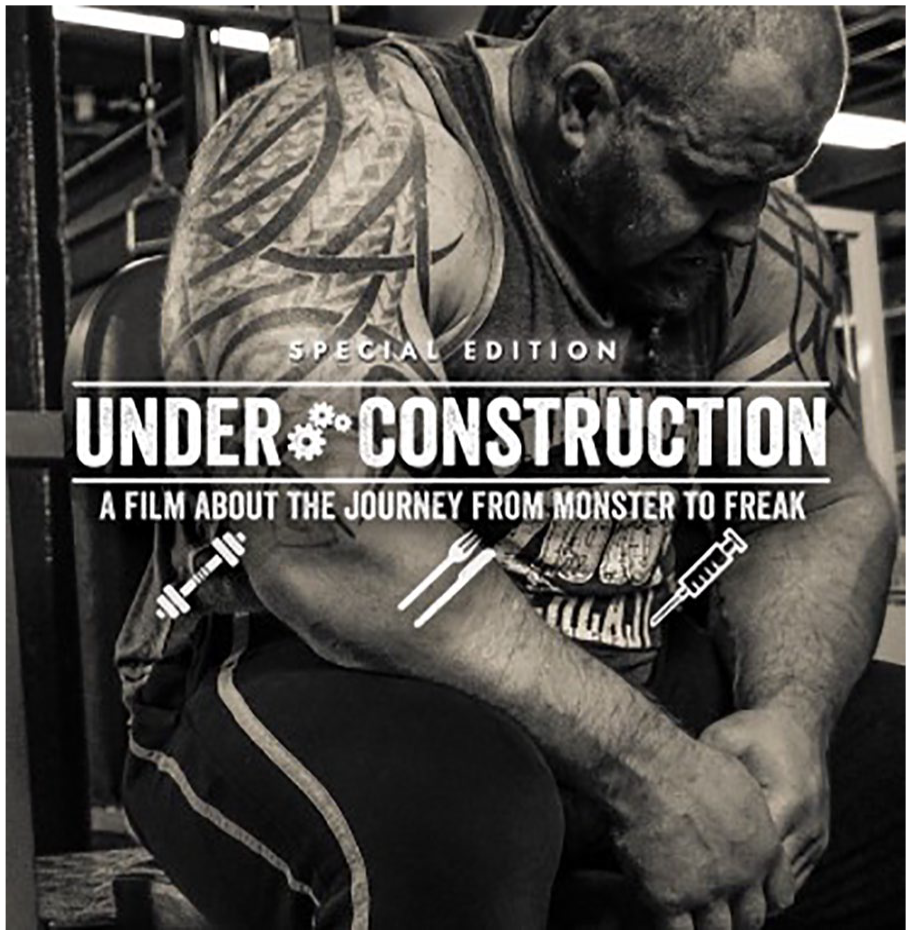
Promotional image for the film Under Construction (2014) from https://underconstructionthefilm.com.
As the promotional image from Under Construction shows, Crosland emphasises the size of his body over its aesthetics, and repeatedly turns his face away from the camera, seemingly to depersonalise himself. Interestingly, Crosland describes his training process as a form of transformation, where techniques of visualisation allowed him to access parts of himself that were otherwise hidden:
I used to go into [training] sessions visualising myself as something more than a human. For me it was a visualisation technique I used so that I would not allow preconceived limits of a human’s capabilities. Because I wasn’t a human at that point, I was something else. And it sounds really corny when you talk about it, and it sounds almost like a joke. But when I trained, I did approach my training as if there wasn’t a limit, as if I wasn’t limited by human boundaries. It was quite spiritual in a way . . . Obviously, it wasn’t a physical transformation, but there was a mental transformation in the way I thought about the limitations when I was training, and I wasn’t just a person anymore, there was an animalistic core to it. [personal communication]
Crosland describes a somatechnic monstrification, where the limits and boundaries of humanity are left behind, allowing him to push himself harder, and to move beyond the confines of what is humanly possible. He recounts seeing that more-than-human being inhabiting his body when watching himself in Under Construction:
There are certain shots if you find them, and you can see it in my eyes. You can genuinely see I am no longer in that room . . . [I would] transcend myself into some form of animal. I would literally snarl and snort when I was training. And it wasn’t put on . . . I would do that if I trained on my own . . . The best way I can describe it is look at the Viking berserkers, because they believed that they were possessed by an animal spirit that aided them in battle . . . they fought with the ferocity of the animal they believed to be, or believed that they transcended into being, because that was more capable than they were . . . Mentally it removes the limitations that you already have in your brain from your childhood, and from parenting, and from school, and everything else you have experienced up until that point that says you can’t do this, you can’t do that, because you aren’t that person you’re something else now. [personal communication]
Crosland describes an experience of releasing something transcendent, animalistic and ferocious beyond his ordinary self – a Viking berserker or an animal spirit. This transformation happens as he literally invites monstrosity into his body. Through the process of monstrification, he gives birth to something new.
The type of generative force Crosland describes is often hailed in monster studies, and there was a tendency especially in the 1990s queer work to take a celebratory view of monstrosity as an empowering discourse. Halberstam’s Skin Shows is an example of this type of approach, although it should be noted that Halberstam primarily writes about the way in which horror movies enable new means of imagining bodies, so it is not directly about the experiences of real bodies. Problematically, such accounts often overlook the vulnerability and impact of the people that come out on the other side of these journeys. More recent monster studies thus often overlap with disability studies, which is a field of great interest to us, as all three of the bodybuilders in our case studies were physically impaired by their bodybuilding practice. The connection between monsters and disability goes back to the Middle Ages. The first people who were classified as ‘monsters’ would most probably have been classified as ‘disabled’ today (Cohen, 1996; Garland-Thomson, 1997; Mittman, 2012; Shildrick, 2002). As the disability theorist Rosemary Garland-Thomson (1997) points out in Extraordinary Bodies, people that look different have been of interest as far back as we can remember (p. 6). Throughout the 18th, 19th and 20th centuries they were subjects of various forms of spectacles, including public ‘freakshows’ and scientific exhibitions, which often ran in conjunction (Stephens, 2011: 8). Disability studies is careful not to perpetuate objectifying language and foci (Garland-Thomson, 1997: 7). Rather, what disability studies tends to focus on today is harnessing the disruptive power of difference, including a body that looks different, while also empowering the potential agent or agents involved.
Garland-Thomson considers bodies and difference in terms of processes and relationality. As she points out, shifting expectations about what constitutes normal embodiment always reposition what we categorise as ‘strange’ or ‘freakish’ (Garland-Thomson, 1997: 17). For example, whereas a ‘tattooed man’ would have been a spectacle in a 19th-century freakshow, it is a fairly common sight in 21st-century Western society (Stephens, 2011: 111). In Embodying the Monster, Shildrick (2002) argues that all embodiment to some extent relies on processes of monstrification (p. 37). In fact, the potential pain, fear or horror people may experience when encountering monstrosity is part of the somatechnic process of encountering otherness inherent in becoming-embodied, and the process by which norms are generated and changed (Shildrick, 2002: 36). As we have argued elsewhere, monstrosity drives this change through a type of ‘borderwork’ (Sellberg, 2015), but it also generates potential monstrous agents or subjects of this change, and the monsters of one community will never be the same as those of another.
Normal Monsters in Bodybuilding
Monstrosity is normalised in contemporary bodybuilding, and monstrosity and freakdom are key parts of contemporary bodybuilding’s imagery and language, but this has not always been the case. In 1901, the natural history branch of the British Museum in London produced a statue of ‘the perfect type of the European man’, as part of an exhibit representing the different races of the globe (Conrad, 2021). The statue was a life-size model of Eugen Sandow, strongman, vaudeville performer and ‘father of modern bodybuilding’, whose physical features were widely considered the prototype of the beautiful human body (Conrad, 2021).
In the mid-20th century major bodybuilding competitions such as Mr Universe and Mr Olympia began (1947 and 1965 respectively), but it was not until the 1970s and early 1980s that bodybuilding entered its ‘Golden Age’. Golden Age bodybuilders were known for their ‘beautiful, aesthetic and flowing physiques’ [video]. The most famous bodybuilder of this time was Arnold Schwarzenegger, who competed (from 1965 to 1980, winning 7 Olympia titles) at a weight of between 102 and 107 kg at 188 cm height and approximately 8% body fat (see Figure 2).
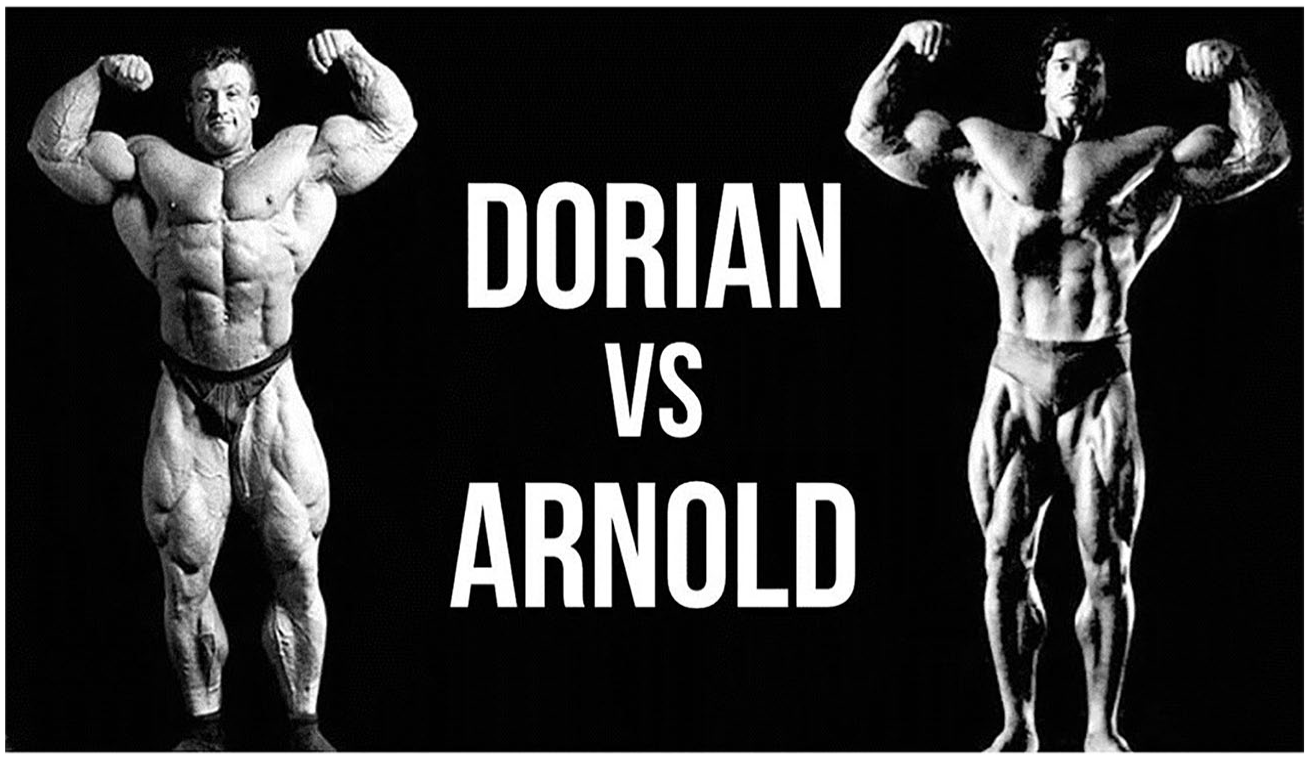
Still image from Luimarco (2017) ‘Arnold Schwarzenegger Vs Dorian Yates’ https://www.youtube.com/watch?v = DtFv1QiSyGs.
It was from the late 1980s that bodybuilding first became monstrous. This was when the era of the ‘mass monsters’ began. The mass monsters pushed boundaries. They had bodies that were more muscular, and in better condition (i.e. lower body fat levels), than had ever been seen before. Their bodies were not only monstrous in terms of their size, but they were also monstrously lean, with so little fat that the details of their muscles and veins were clearly visible. Mass monsters are described as ‘shredded’ or ‘ripped’, and indeed they appear to have been flayed, like walking biological specimens. The first of these ‘mass monsters’ is generally considered to be Dorian Yates, who competed from 1980 to 1997 (winning six consecutive Olympia titles from 1992 to 1997). Yates graced the Olympia stage heavier (approximately 118 kg at a height of 178 cm), and in better condition (body fat reportedly as low as 3%), than any of his predecessors. Indeed, he was the first to be of such low body fat that his muscle fibres could be seen (a look that is now termed ‘grainy’), and it allegedly became painful for him to walk because there was insufficient fat to cushion the soles of his feet. Figure 2 shows Dorian Yates (left) as compared to ‘Golden Age’ bodybuilder Arnold Schwarzenegger (right), demonstrating the change in cultural aesthetic ideals from the late 20th century to the modern day.
The unprecedented bodies of the mass monsters are generally attributed to changes in the folk pharmacology of bodybuilding. Golden Age bodybuilders built their bodies using anabolic-androgenic steroids alone. However, the mass monsters added insulin and human growth hormone to the mix, compounds that act in synergy with anabolic steroids. The mass monsters, and the drugs that spawned them, are claimed by some to have ‘ruined bodybuilding’, as they indicated a prioritising of sheer mass over aesthetic considerations. They heralded a move from the display of the beautiful and ‘perfectible body’, to a display of the grotesque body, a shift that Niall Richardson (2012) describes as the ‘enfreakment’ of bodybuilding. Bodybuilding became the celebration of abject freakishness (Richardson, 2012), modern-day bodybuilding competitions have come to resemble freak shows (Denham, 2008), and monstrosity and freakdom have become the aspirations of many bodybuilders. Indeed, there are few greater compliments one may give a male bodybuilder than to call him a ‘monster’ or a ‘freak’, as this bodybuilding forum post demonstrates:
The other day, a dude who competes came up to me and said ‘you keep doing what you’re doing and keep training with the intensity you train, you’ll be a monster by summer I promise you. I’m watching you.’ [forum post, 1994]
Monstrosity has become a central aspect of the imagery and language of bodybuilding since the late 1980s (Richardson, 2012). In bodybuilding, monstrosity is celebrated, and monsters are made real. Approximately 90% of the 38,900 Instagram posts tagged #monstersdoexist are photos of bodybuilders. 3 Thus, as mentioned at the start of this article, monstrosity has to some extent become aspirational, and is a key feature in bodybuilding motivational videos, with titles like ‘Project Monster’, ‘DON’T WASTE YOUR LIFE–BECOME A MONSTER–EPIC BODYBUILDING MOTIVATION’, ‘BE A MONSTER–FIGHT THROUGH HELL–EPIC BODYBUILDING MOTIVATION’. It has also become a key aspect of bodybuilding branding, with supplements from companies such as Monster Supplements, or Supplement Monster, selling Monster Test Testosterone Booster, Monster Shred Preworkout, Anabolic Monster Beef Protein, or Muscle Monster Mass Gainer. Enhancement drugs may be purchased from Monster Steroids or Monster Gear, and bodybuilders may train at Muscle Monster Gym or Monster Fitness, while wearing Monster Factory clothes, and do Dumbbell Monster, Monster Maker or Monster Muscle Mass workouts, within which you might do ‘monster sets’ of lifts.
Monstrosity has become so central to bodybuilding language and imagery, and monstrous bodies have become so prominent in the recent history of bodybuilding, that it could be argued that monstrosity is a key component of the frame of reference for all bodybuilding projects. While bodybuilding projects are not homogeneous, and different levels of muscularity and fat are desired, and created, by different bodybuilders (Monaghan, 2001; Underwood, 2017), arguably all bodybuilders build their bodies in relation to monstrosity, whether they personally subscribe to this ideal or not.
Containing Monstrosity
While bodybuilding, particularly at the highest levels, has for some time aimed at what we have called ‘normal monstrosity’, that is, the size and vascularity of the mass monsters, efforts are still made to limit excessive monstrosity in bodybuilding. Bodybuilding has norms and values that control monstrosity by dictating the acceptability of certain monstrous bodies, and the unacceptability of others. These norms and values exist in recreational bodybuilding (for example, the valuing of low fat levels, and a torso that tapers to a small waist), but it is in the world of competitive bodybuilding that they are made most obvious and explicit. In mainstream bodybuilding, the aim is not the achievement of size at all costs. Rather, monstrosity is contained through the norms and values of bodybuilding. Efforts to build size are restricted by the need to simultaneously consider other factors such as balance, proportion, and body composition.
The advent of mass monsters heralded a new era. The world had never before seen bodies of that monstrous size, in such monstrous condition. The mass monsters, with their new arsenal of drugs (in particular, insulin and human growth hormone), brought new bodily features – veins, and muscle fibres – to the surface. However, at the same time, these drugs brought with them elements of monstrosity that were unwelcome. Bodybuilding has always idealised the ‘v-taper’: wide shoulders and lats (latissimus dorsi) tapering down to a narrow waist, thus making the torso appear to be shaped like the letter ‘V’. In bodybuilding, the size of the upper torso and legs are emphasised relative to the waist (Linder, 2007). However, insulin and growth hormone are said to cause ‘bubble gut’ or ‘Palumboism’ which runs counter to this narrow-waisted ideal. This condition, consisting of distended abdomens despite very low fat levels, has become unacceptable among bodybuilders, with the International Federation of Bodybuilding and Fitness specifying in their rules for men’s bodybuilding that competitors with ‘extended abdominal/stomach muscles’ will receive low scores. Figure 3 shows the distended abdomen of Dave Palumbo, after whom the condition ‘Palumboism’ was named. The size and shape of his body push the boundaries of what is considered acceptable in bodybuilding. Mass monsters, with their expanded folk pharmacology, make new physicalities and ways of being possible, thus altering the ethnophysiology of bodybuilding. This altered ethnophysiology not only encompasses the idealisation of bodies that are much larger and in better condition than in previous eras of bodybuilding, but also is part of the reforging of new boundaries that attempt to contain bodybuilding monstrosity.
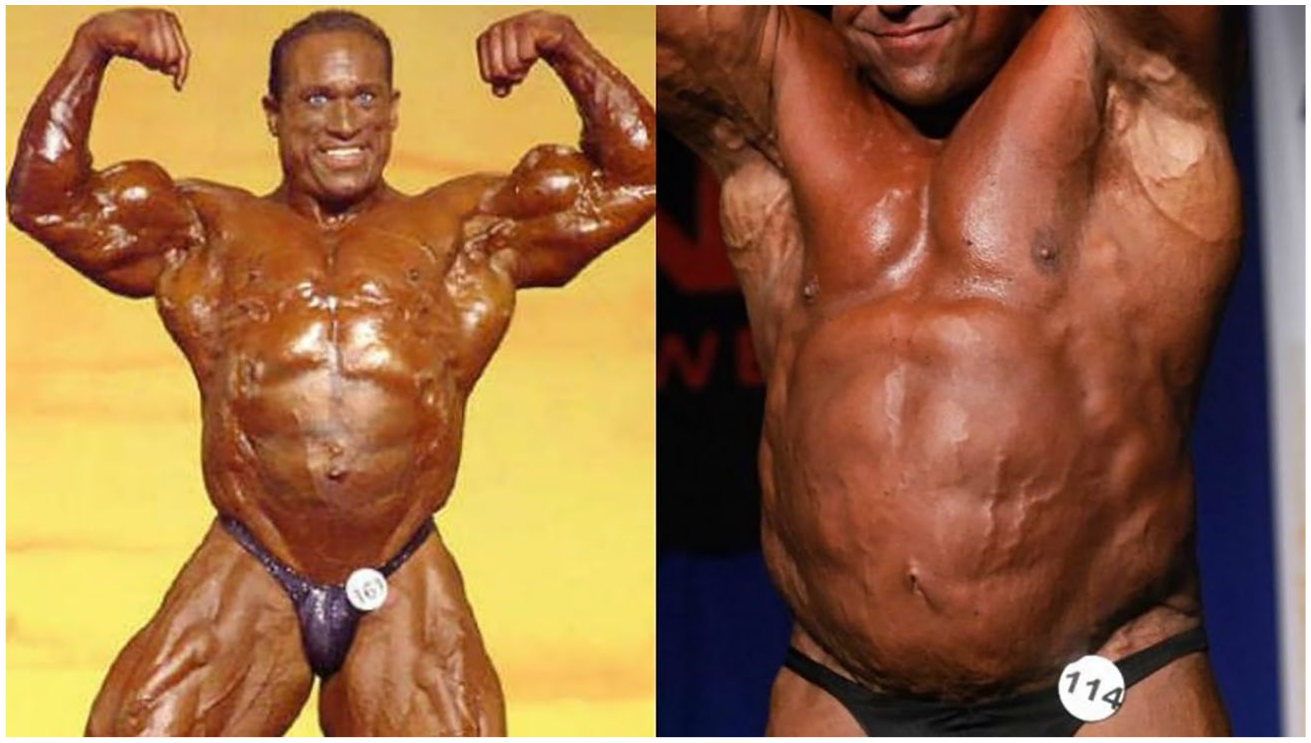
Dave Palumbo, an early sufferer of ‘Bubble gut’, or ‘Palumboism’ (stills from video ‘New Bodybuilding Disease’ by Nick’s Strength and Power (2015) https://www.youtube.com/watch?app = desktop&v = eZKyfX_6OTY).
Bodybuilding monstrosity is strictly gendered. The term ‘mass monster’ is rarely, if ever, used to describe female bodybuilders, and online lists of mass monsters never include females. When a female bodybuilder is called a ‘monster’ or ‘freak’ it is often not a compliment (Rahbari, 2019). Since women first entered into bodybuilding, their ‘excessive’ muscularity has been considered problematic and unacceptable because of competing norms around feminine embodiment. In a sport focussed on the building of muscle, male muscle mass has been demonstrably valued, but female muscle mass has been explicitly devalued and efforts have been made to limit it (Aoki, 1996; Freuh, 2001). While all bodybuilding monstrosity is contained in some ways, the monstrosity of female bodybuilders is the most heavily policed, especially through the enfreakment of female bodybuilders in media and culture (Aoki, 1996; Freuh, 2001).
The bodybuilders we focus on became too monstrous for mainstream bodybuilding, and thus experienced some degree of ostracism. For example, Rich Piana’s ‘unbalanced’ physique, combined with his muscle enhancing tattoos and ‘bad boy’ image, resulted in him being dismissed by many in the bodybuilding community as only a ‘YouTube bodybuilder’.
Dave Crosland’s process of unhinging began with his injury (described above) which made it impossible for him to conform to the norms and values of bodybuilding. Because Crosland prioritised size over aesthetics, showed little regard for condition, and constructed a body that was fatter than is socially acceptable among bodybuilders, he was shunned by some in the bodybuilding community who describe him as ‘not a real bodybuilder’ [personal communication].
Gregg Valentino was born on 5 August 1960 in the Bronx, New York (Valentino and Jendrick, 2012). He began his bodybuilding career at an early age, and stayed within the container of acceptable monstrosity that is mainstream bodybuilding for some time (as described below). However, eventually he began to focus his bodybuilding practice on his arms, building them to be disproportionate, or what he termed ‘retarded-looking’ (Valentino and Jendrick, 2010):
‘Don’t look like me. I look like Uncle Fester on steroids. I don’t think I look good. You think I think I look good? Fuck that, I look like shit. But I know that. I went too far’ [video].
The lack of balance and proportion in Valentino’s physique resulted in him being ostracised and enfreaked by the bodybuilding community. He has been called ‘the most hated man in bodybuilding’ [websites and videos], as he is said to have ‘made a mockery out of the sport’ [video]: ‘Who is it that the professional bodybuilders call a freak? Who is the freaks’ freak? Answer: Gregg Valentino’ [T-Nation website].
Bodybuilding is not only concerned with containing monstrosity with regard to size, proportion, balance and fat, but also with regard to the technologies employed to create the appearance of muscle. At the same time as bodybuilders began using insulin and human growth hormone to build monstrous bodies (the 1980s and 1990s), they began to also use site enhancement oils (such as synthol) and fillers (such as polymethylmethacrylate (PMMA) microspheres). These products are injected into the body to create the illusion of muscle. In response to the advent of these oils and fillers the community developed norms around their use in order to contain their monstrous potential. Specifically, bodybuilding norms dictate that they may only be used in small amounts to correct minor imperfections in the muscle (for example, if one bicep peak is not as round as the other, oils or fillers may be used to create balance). Use of more significant amounts of these products is stigmatised, as such use creates an ‘unnatural’ or ‘fake’ appearance according to bodybuilding standards. All three of the bodybuilders described in this article (Piana, Valentino and Crosland) are accused of using socially unacceptable amounts of these oils and fillers. For example, Piana is rumoured to have used large amounts of PMMA, to create the unnaturally shaped chest shown in Figure 4, and Valentino frequently appears in lists of ‘synthol freaks’ online. All three, Piana, Valentino and Crosland, have denied illegitimate use of these compounds. Statements such as these, and other statements that these individuals are ‘too fat’, ‘too ill-proportioned’, are ‘not real bodybuilders’, or that they ‘make a mockery of bodybuilding’, are used to ‘other’ these individuals, disowning them and thus reinforcing the containment of bodybuilding monstrosity.
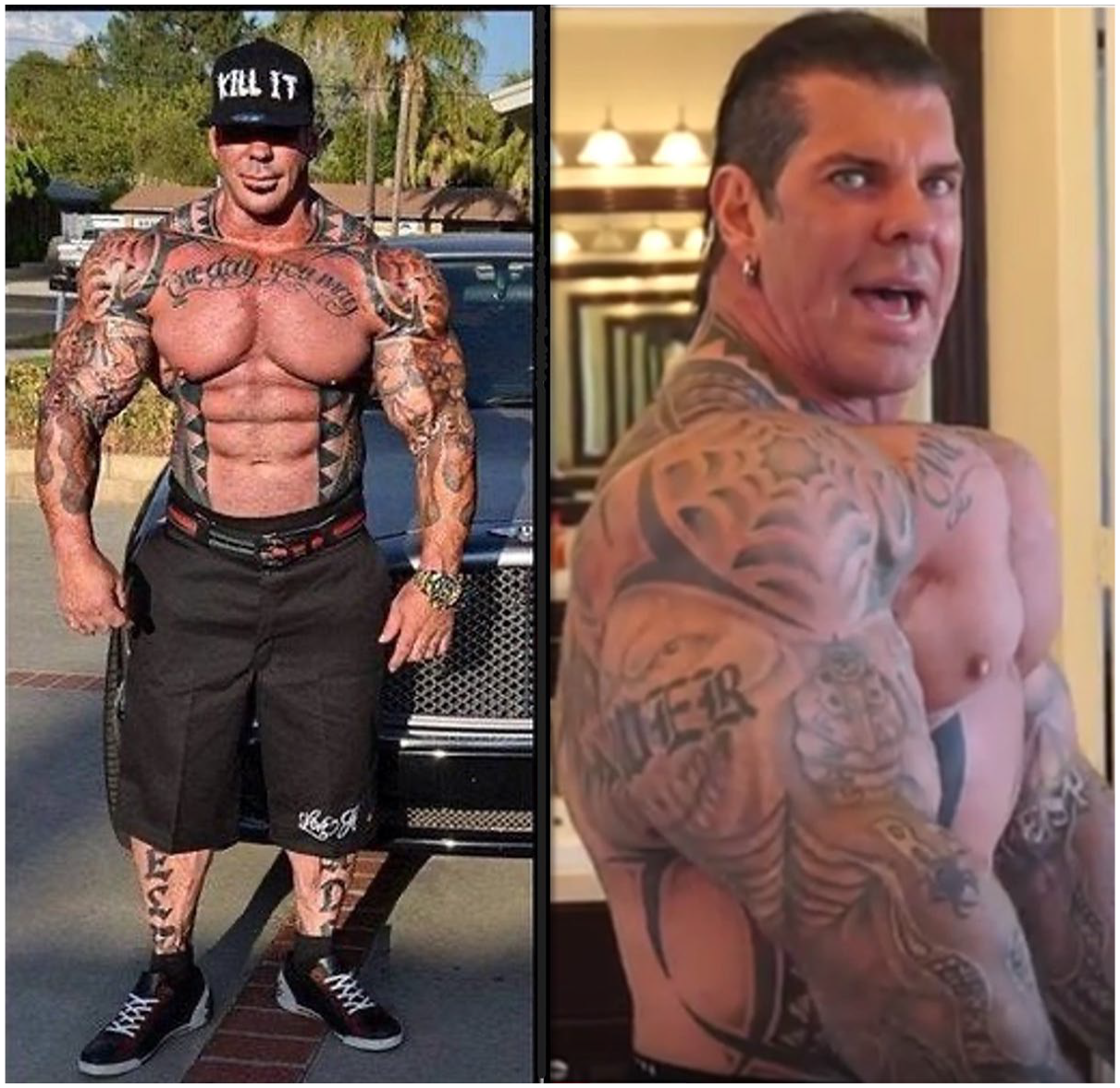
Photos of Rich Piana circulated online (https://www.facebook.com/photo?fbid = 10152649557259475&set = gm.801375816590492).
Unhinging Monstrosity
Although monstrosity is normalised in bodybuilding, there are levels at which it becomes too much. Normal monstrosity becomes monstrous by virtue of being too monstrous. There is a careful negotiation of boundaries, or ‘borderwork’ taking place here, where the participants are simultaneously subjects and agents of changing goals of embodiment. This is something that has been observed in numerous other types of body modification subcommunities (Featherstone, 2000; Mifflin, 2013; Pitts-Taylor, 2003, 2007), where boundaries are being troubled, pushed to their limits and transgressed. This is how borderwork emerges in real time. Interestingly, in our study we found that the extreme outer limit of embodiment accepted in the community was both celebrated and feared. Although bodybuilders strive to be ‘monsters’, there is a limit to acceptable monstrosity, and those who transgress it are othered, and pushed out of the community. Such ‘unhinged’ monstrosity creates a class of monsters’ monsters – the extremity of the extreme. In this section we describe the experience of unhinged monstrosity and its social and physical consequences, through the stories of Valentino, Crosland and Piana.
Gregg Valentino began training at an early age because he wanted to be strong like his father, and by the sixth-grade other children started noticing his muscles (Valentino and Jendrick, 2010). Enjoying the attention his muscles received, he began exercising in the school bathrooms in order to get a ‘pump’ (i.e. exercise the muscle so it engorges with blood and therefore looks bigger) before standing on the cafeteria tables and flexing for the other students (Valentino and Jendrick, 2010).
‘Me, I like muscle. And I like people. Muscle attracts people’ (Valentino and Jendrick, 2010).
Displaying his muscularity became a key component of Valentino’s life. At his school graduation, he removed his graduation gown and flexed his shirtless torso for the audience [video]. He started displaying his muscular body in a strip club at age 18, and then used his muscular appearance to work security in clubs (Valentino and Jendrick, 2010).
‘My life started to be dictated by muscle’ (Valentino and Jendrick, 2010).
Valentino spent 23 years training as a natural bodybuilder before beginning steroid use in his 30s. Figure 5 shows Valentino’s body before and after he, by his own admission, lost control of the bodybuilding process. In his autobiography he stated:
After taking juice [steroids] for the first time, I felt almost like a traitor. But at the same time a new part of me was born. I was a bodybuilder, had trained more than twenty years, and it was something I felt bodybuilders did . . . Within weeks my arms were getting veiny, and people started responding more than ever . . . people started feeding my ego like never before. The bigger I became the more I craved the attention. (Valentino and Jendrick, 2010)
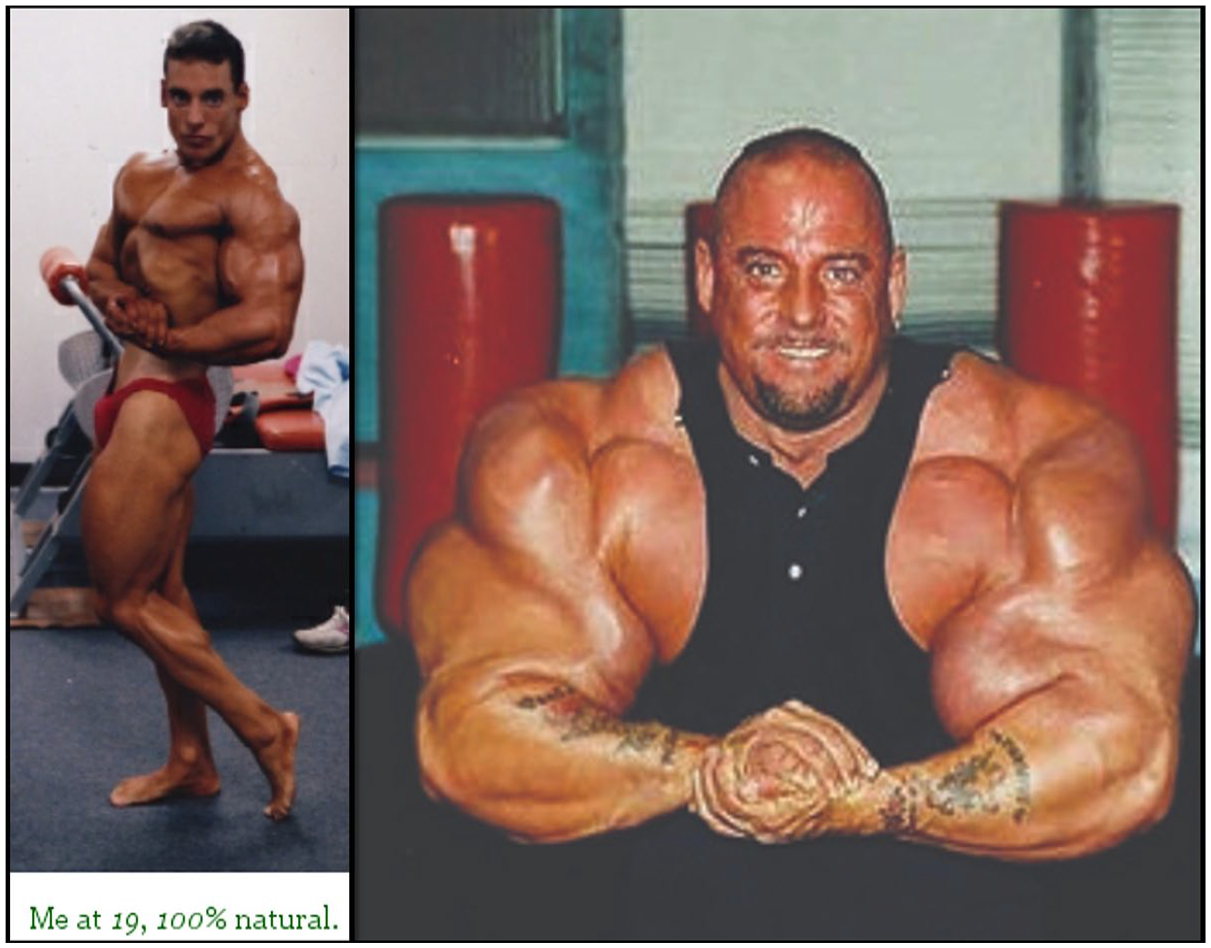
Images and caption from Valentino and Jendrick (2010).
His doses of steroids became larger and larger. As he described it: ‘I juiced the shit out of myself’ [video]. Valentino stated that he did not build his body to the extent he did ‘on purpose’, that ‘no normal guy’ wants to look like he did at the peak of his muscularity, and that his arms were ‘deformed’ and ‘ugly’ [video]. He described a loss of control over his process of monstrification. ‘I ruined a great physique to look like a side show freak . . . I lost myself a long time ago’ (Valentino and Jendrick, 2010). Valentino explains his obsession with muscularity as resulting from his short stature, and describes himself as having a ‘Napoleon complex’ [video]: ‘I’m only 5 foot 6 right? And when I was superjacked [i.e. highly muscular] I weighed 278 pounds at 5’ 6’. That’s big. Because in my mind, if I couldn’t grow taller, I’m going to grow wider, y’know?’ [personal communication]. While Valentino ceased to use steroids when he was imprisoned for steroid distribution on 17 April 2001 [personal communication], his testosterone levels have never recovered, and therefore he is dependent on testosterone replacement therapy for the rest of his life (Valentino and Jendrick, 2010).
Dave Crosland has a similar story of losing control of the process of monstrification, resulting in permanent damage. He built his body by frequently (every 90–120 minutes) eating large amounts of food (up to 10,000 calories per day). Crosland initially described his drug use (despite the large doses he used) as considered, and that his decisions were made with full knowledge of the risks entailed. While he says it is difficult to say when he actually lost control of his bodybuilding practice, he can say when he realised he had lost control:
I had always had a take it or leave it approach to drugs. But I realised when I was sitting on the toilet at 3am injecting growth hormone, I was using it all times of the day and night in order to have multiple growth peaks, I was sitting there at 3am injecting growth hormone, and I thought I am no longer using drugs as a tool, they have become the priority. I knew my dosing wasn’t healthy, hadn’t been for a while but that was a deliberate and a conscious decision, but now this dependency was creeping in, and I was using drugs for the sake of it. That’s what I recognised in that moment. [Crosland personal communication]
Crosland’s efforts to achieve freakish size eventually resulted in his body revolting against him:
Crosland: I have heart failure. I have stage 4 kidney failure. I have afib [atrial fibrillation]. I have damaged vertebrae in my neck, trapping nerves. I have two screwed discs in my back. I have severe arthritis in my ankle and feet plus nerve pain from my back and am now getting it in my wrist. The kidney failure is pushing me towards type 2 diabetes. Underwood: How much of this do you attribute to bodybuilding? Crosland: All of it. [personal communication via Messenger]
However, he ‘counts himself lucky’ as these health problems ‘kept him alive’ as they stopped him from using drugs at enhancement levels [video]. Today, Crosland uses only low levels of testosterone to replace his natural production which was permanently damaged as a result of his enhancement use [personal communication]. He uses the knowledge that he gained during his process of monstrification to help people who use image and performance enhancing drugs (through his blood testing and harm reduction service, and social media), and to advise the legal, scientific and healthcare communities.
Piana describes his birth as a bodybuilder at 6 years old (described above) as also the birth of his disorder [video]. He describes his unhinging as beginning with his learning to aspire to monstrosity. Piana sees bodybuilding as his destiny, his purpose, but also as his curse. Piana began lifting weights at age 11, competing in bodybuilding at age 15 (Instagram post) and using steroids at the age of 18 [video]. He achieved some moderate success in the sport of bodybuilding (e.g. NPC Mr. Teen California, 1989, and NPC Mr. California, 1998 (Instagram post)). But eventually his body project subsumed him:
My first cycle was test [testosterone] and deca [Deca-Durabolin], I got pretty dramatic results . . . My first cycle was probably my best cycle ever. I put on 28 pounds in 8 weeks . . . I would have to say that 22 pounds of those 28 was pure muscle . . . I was hooked because my body just grew in front of me, it was growing, my strength was exploding, and I was going to be one of the top bodybuilders of the world, and I was not going to stop. I was hooked and I knew I was hooked, and at this point I knew that this was all that mattered to me. [video]
In order to build his body Piana trained for at least 3 hours, and ate up to 12 times per day. He is known for his ‘8 hour arm workout’ [video], and his openness about his enhancement drug use which he publicly documented in detail. One 16 week cycle of enhancement drugs that Piana posted on Instagram was described in an online review by enhancement drug expert, and author of the popular guide ‘Anabolics’, William Llewellyn, as a ‘monster’ cycle, and was described by another bodybuilder as ‘suicidal’ [video]. Piana revelled in his unnaturalness, stating in a video that he had a biohazard symbol tattooed on his neck in reference to his high levels of drug consumption. In the early 2010s Piana was sponsored by Mutant supplements, whose catch phrase is ‘leave humanity behind’. This sponsorship earned him the title ‘the supermutant’. Piana’s process of monstrification was fuelled in part by his celebrity:
It’s more difficult now than ever before because now I’m somewhat in the limelight, so I feel like I NEED to portray that y’know monster look, and I really honestly don’t necessarily like being as big as I am. I like to be around 250, I’m like 285 right now . . . Also, I’m 44, there’s health reasons [to drop size]. You can’t be big forever. This is the age where people start having problems. I can’t be 285 and be in my 50s. I’m looking for a heart attack. [video]
Rich Piana’s monstrosity did in fact cost him his life. He died on 25 August 2017, aged 46 years old, just 2.5 years after he made the above statement. While the official cause of death was ‘undetermined’, the autopsy revealed cardiac hypertrophy, which is a known side-effect of anabolic-androgenic steroid use (Far et al., 2012). Indeed, his heart is reported (in online media) as weighing 670gm, more than double the weight of an average male heart (Molina and DiMaio, 2012).
Problematising the ‘and’ in ‘Body and Techné’
The bodybuilders described in this article describe themselves as having ‘bigorexia’, or muscle dysmorphia, although they have never been formally diagnosed. It is likely from their descriptions (although neither author is qualified to judge) that they have suffered from this condition, and that their muscle dysmorphia contributed to their unhinging. However, we suggest that muscle dysmorphia is an insufficient explanation for the cultural phenomena and experiences described in this article. Muscle dysmorphia, and body dysmorphias in general, have been conceptualised as issues of body image, relying on notions of the relationship between body and self that are limited. As Featherstone (2006) argues, the concept of ‘body image’ objectifies the body, emphasises vision (to the exclusion of the other senses) and does not do justice to the complexity of embodied-becoming. The diagnostic category of muscle dysmorphia has the concept of body image at its foundation. As such it is commonly defined as a preoccupation with the idea that one is insufficiently muscular (as described above). The process of bodybuilding is considered secondary to this vision-based idea. However, we have found (in this article, and Underwood and Olivardia, 2023) that perhaps the process should be considered as primary, at least in some cases. That is, we suggest that the practices of bodybuilding may actually cause the body image distortion and dissatisfaction that medicine has defined as central to muscle dysmorphia (Underwood and Olivardia, 2023). Indeed, in the case of the bodybuilders we have described as ‘unhinged’, Dave Crosland, Gregg Valentino and Rich Piana, it may be argued that the bodybuilding process gained some form of agency.
Ontological categorisations become blurry as the bodies of our three bodybuilders are pushed to the extremes. It is not a matter of body ‘and’ techné, but a continual intra-action between both, to the extent that the process itself becomes part of the ontological apparatus, and threatens to take over. As mentioned above, Crosland speaks of calling forth a beast and watching from outside as it transports him. Although there are aspects of empowerment in his bodybuilding practice, there came a moment, sitting on the toilet at 3 am in the morning, when he realised that he was no longer controlling the process, the process was controlling him. Valentino described how he ‘lost himself’ to bodybuilding, with the consequence that he found himself looking like ‘a sideshow freak’. Piana wondered if the moment he learned to look at monstrous bodybuilders as something to aspire to was the moment he found his destiny, or the moment that he was ‘screwed’. In the end, the bodybuilding journey that began at that moment cost him his life, because as he built his monstrous body, he also built a monstrous heart.
Monstrosity became an ideal in bodybuilding when changes in the ethnopharmacology of bodybuilding produced unprecedented mass and condition. The advent of the mass monsters forever changed bodybuilding, not only because they pushed the boundaries of what was possible in bodybuilding, but because they forced mainstream bodybuilding to construct new boundaries. This was carefully negotiated borderwork. Bodybuilding acted to contain monstrosity by defining what was ‘too monstrous’. Every community needs monsters because they show us where the boundaries of social acceptability lie. Even a community of bodybuilding monsters need to have their own monsters to guide them to stay within the confines of normality. Potentially what makes Crosland, Piana and Valentino stand out as the monsters’ monsters, or ‘freaks’ freaks’, is their refusal to see a limit to the pushing of boundaries. They take the concept of ‘mass monster’ to the extreme, whether voluntarily or not, and thus further monstrify it:
Nothing exceeds like excess. There is no end to extreme. There’s always more. There’s always more extreme. There’s always more. [Dave Crosland, personal communication]
Footnotes
Acknowledgements
The authors thank Dave Crosland and Gregg Valentino for sharing their stories with us.
Funding
The author(s) disclosed receipt of the following financial support for the research, authorship, and/or publication of this article: The Early Career Grant from the University of Queensland supported this research.
