



Abstract
This article examines the images of working bodies seen in the photographic motion studies of work undertaken by the management consultants Frank and Lillian Gilbreth in the 1910s and 1920s. It contextualises their studies, called chronocyclegraphs, as the product of two key cultural developments: first, new practices of measuring and assessing productivity in the context of workplace management and second, the use of new technologies for visualising the body, which brought with them new aesthetics and visual conventions for representing bodies in motion. The Gilbreths’ chronocyclegraphs provide a striking new vision of the working body in industrial capitalism, not as a thing of flesh and blood, but as a luminous field of energy or line of force. Taking these images as representative of new ideas about efficiency and productivity emergent at this time, this article examines their popularisation through the work of Lillian Gilbreth, who promised that the reward for increased productivity was a greater quantity of ‘happiness minutes’.
Keywords
In the past the man has been first; in the future the system must be first. (Taylor, 1911: 7)
Introduction
During the first decades of the 20th century, the industrial engineers and early management consultants Frank and Lillian Gilbreth undertook a series of photographic motion studies of work they called chronocyclegraphs (see Figure 1). Attaching small lamps to the wrists of their subjects, who were mostly but not exclusively manual labourers, the Gilbreths photographed them as they performed the key tasks of their jobs – packing boxes, stamping papers, operating industrial machines and so on – filming in semi-darkness using time-lapse photography (see Figure 2). The result was a series of striking images that revealed to the human eye something new: not (just) a visualisation of the body in motion, itself a novelty in the early 1900s, but rather the luminous traces of movement itself, abstracted from the body as streaks or dashes of light. For the Gilbreths, these images were a tool used in their research on industrial efficiency. By studying the pattern of these motion paths, the Gilbreths claimed, they could identify and eliminate any unnecessary or ‘wasteful’ movements that reduced worker productivity and/or increased their fatigue. In a phrase that served as a slogan for their management consultancy, the Gilbreths referred to this as the ‘One Best Way’ to perform any job. Beyond their function in the Gilbreths’ research, this article argues, these chronocyclegraphs provide an extraordinary new vision of the working body under industrial capitalism. No longer a thing of flesh and blood, the body here is a line of force, visualised as the labour that can be extracted from it. In this way, as we will see in this article, the Gilbreths’ chronocyclegraphs were representative of a new way of seeing the body emergent at the start of the 20th century, in which it was viewed through the lens of efficiency and productivity.

Cyclegraph of woman doing light assembly work (1917?). Frank and Lillian Gilbreth Collection, Glass Stereo Slides (NMAH-AC0803-0000116). Image courtesy of the National Museum of American History.
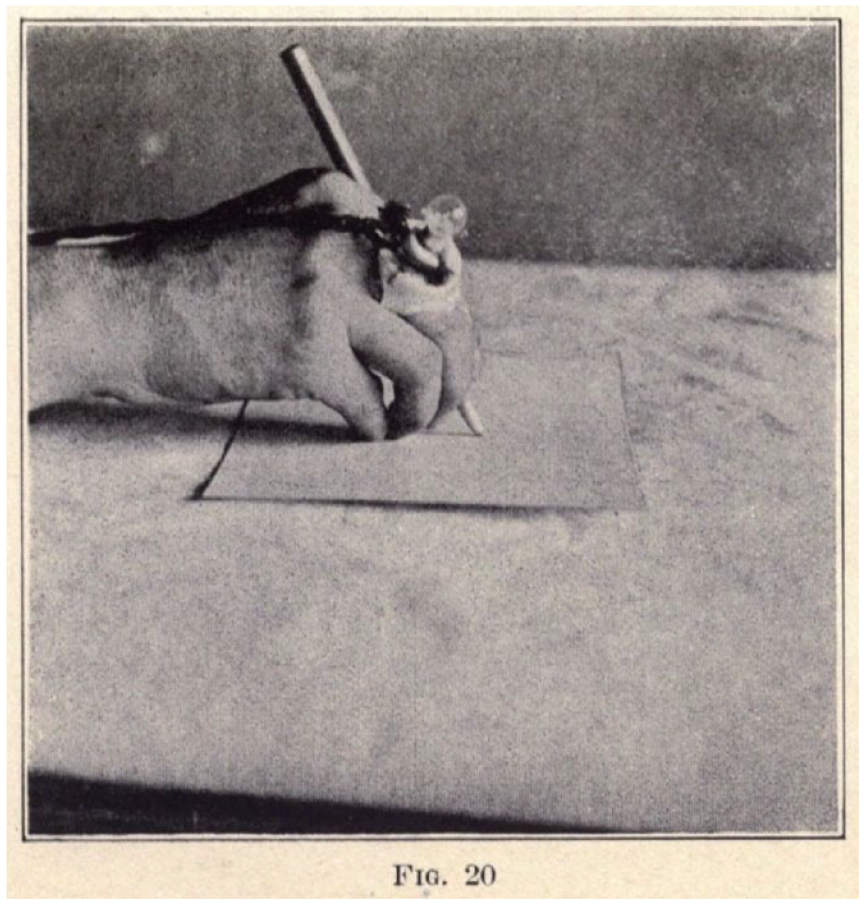
A finger lamp used to make chrono/cyclegraphs. Image from Frank and Lillian Gilbreth, Fatigue Study, the Elimination of Humanity’s Greatest Unnecessary Waste: A First Step in Motion Study (1916). Image courtesy of the British Library.
The privileging of productivity and efficiency that shaped the Gilbreths’ practice is one now deeply embedded in the technologies and management of the contemporary workplace, an influence that is a well-recognised legacy of their work (Blayney, 2022; Gregg, 2018). The Gilbreths’ finger lamps find a modern equivalent in the wrist tracking devices used in contemporary factories and warehouses, as well as the keyloggers in call centres and remote work, while monitoring of workplace productivity through surveillance technologies and/or bureaucratic record-keeping is now ubiquitous (Ajunwa, 2023; Stephens, 2023). However, the wider cultural impact of the Gilbreths’ work, or what we might call their managerial imaginary, remains less examined. The Gilbreths and their vision of the working body played a pivotal role in entrenching the new productivity imperative emergent in the early 20th century, extending its influence far beyond the industrial workplace and into the sphere of everyday life. This article examines how efficiency and productivity became such valued concepts at this time, not by examining the contemporary management practices that developed from the Gilbreths’ managerial imaginary, but rather by tracing the historical conditions from which their understanding of productivity and efficiency emerged. It situates chronocyclegraphy at the convergence of two key cultural developments at the turn of the previous century: first, new practices of measuring and categorising living bodies that had developed in the medical and human sciences and second, new technologies for visualising the body, which had a wider aesthetic and cultural impact. The first part of this article examines the Gilbreths’ chronocyclegraphs in the context of their research on workplace efficiency in the new field of scientific management in the early decades of the 20th century, focusing on their contribution to the study of workplace fatigue. The second section of this article traces the origin of the Gilbreths’ chronocyclegraphs to the earlier chronophotographs of the French physiologist Étienne-Jules Marey, revealing the under-appreciated role that physiology played in the emergence of modern management practices. The final section of this article examines the popularisation of the Gilbreths’ managerial imaginary through its extension into practices of everyday life, concentrating on the sole-authored work on Lillian Gilbreth and her largely forgotten concept of ‘happiness minutes’. It is Lillian Gilbreth who promised happiness as a reward for productivity in a way that linked these concepts for the first time. A century after the Gilbreths’ photographic motion studies of work, the cultural privileging of productivity their work did so much to reinforce remains deeply embedded in the practices of everyday life. The images of the working body seen in the Gilbreths’ chronocyclegraphs capture a cultural moment in which the productivity imperative escapes the confines of the workplace and comes to shape every aspect of life.
An Epidemic of Fatigue: Engineering Efficiency in the Gilbreths’ Chronocyclegraphs
At the turn of the last century, the United States and other industrialised countries were suffering a perceived epidemic of tiredness. The conditions of contemporary urban life hyper-stimulated and thus debilitated both body and mind, it was argued. This led to widespread nervous exhaustion, claimed the early neurologist George Beard (1881) in American Nervousness, and physical exhaustion, argued labour reformer Josephine Goldmark (1912) in Fatigue and Efficiency. 1 For work scientists in the early 1900s, fatigue posed one of the greatest challenges to the industrial workplace and a significant impediment to the continued rapid increases in productivity seen during the late 19th century (Blayney, 2022; Rabinbach, 1990). While the machines of industrial capitalism had become increasingly faster and more efficient, the human bodies that operated them had not kept pace. There was a limit to the quantity of labour that could be extracted from them, and fatigue signalled this limit was approaching. Yet fatigue was a subject about which little was known, as the Gilbreths’ (1916) noted at the start of Fatigue Study: the Elimination of Humanity’s Greatest Unnecessary Waste: ‘Even to-day, fatigue is not wholly understood’ (p. 5). Their book was intended to provide a detailed account of how to reduce fatigue in the industrial workplace. Fatigue was not something that could be avoided completely, however, the Gilbreths cautioned, as it was the ‘after-effect of work’ and an inevitable consequence of exertion; it was thus the ‘necessary by-product of activity’ (p. 5).
If fatigue could not be eliminated, it could be greatly reduced through more efficient management practices and improved work performance, the Gilbreths argued, in ways that would also increase worker productivity. Such ongoing increases in productivity were in the best interests of workers as well as business owners, the Gilbreths wrote: the labourer who worked more efficiently on the assembly line would benefit from the increased profitability of the workplace, through a greater sense of job satisfaction and increased wages. This worker would leave at the end of the day with head erect rather than shoulders slumped, ready and able to participate fully in family and social life (p. 7). Excessive fatigue, on the contrary, detracted from every aspect of life: ‘We know that fatigue is marked by a decrease in power to work, a decrease in pleasure taken in work, and a decrease in the enjoyment of the hours spent away from work’ (p. 7). Fatigue left workers enervated outside the workplace, diminishing their capacity for enjoyment and activity in the rest of their lives. However, with proper (self-)management and efficient use of one’s energy, all of life could be lived with vim and vigour, the Gilbreths claimed. In this respect, Fatigue Studies imagined a new subject of industrial capitalism, one who was an efficient and hard-working labourer on the factory floor, a good citizen who participated in civic life, and a vital and active member of their family or community at home. This section of this article examines the new and expansive ideas about productivity developed in the Gilbreths’ study of fatigue and represented in their chronocyclegraphs. In extending the applicability of management practices from the workplace into the rest of workers’ lives, the Gilbreths expanded the cultural reach of new concepts like efficiency and productivity, which came to be understood as measures of a life well-lived as well as simply numbers of outputs at work.
The aim of Fatigue Studies, the Gilbreths wrote, was to help managers identify sources of unnecessary or avoidable fatigue in the workplace and to show how workflows could be redesigned to increase the amount of work that could be completed before fatigue began to be felt. Photographic motion studies played a key role in this research, enabling the Gilbreths (1916) ‘to record, measure, and see [the] exact path of a motion or cycle of motions’ (p. 120) and to identify those movements that increased fatigue unnecessarily. Chronocyclegraphs, with their distinctive dashed lines luminous against a gridded black background, were designed to measure intervals of movement as numerical data (see Figure 3). The grid provided a template against which movement could be measured in both space and time. These images allowed the Gilbreths to break down a work task into a series of discrete steps that could then be measured and redesigned for greater economy of movement. The Gilbreths also used cyclegraphs, which depicted a continuous motion path, for this purpose (see Figure 4). If the lines of a motion path formed a messy tangle, as they do in Figure 4, it was seen as inefficient, because it contained redundant or unnecessary movement. Efficient movement, in contrast, could be recognised by its more streamlined form: ‘the fewer lines, the less wasteful the motion’, as Sharon Corwin (2003) explains (p. 144) (see Figure 5). Reducing the number of motions required to complete a task meant it could be completed more quickly while also using less of the worker’s energy. The result, along with a decrease in fatigue, was a potentially exponential growth in productivity. Using their methods, the Gilbreths claimed, a time-stamper could increase their speed from 1900 to 3050 papers per hour, for instance, or a soap-packer triple the number of bars of soap boxed in a day.
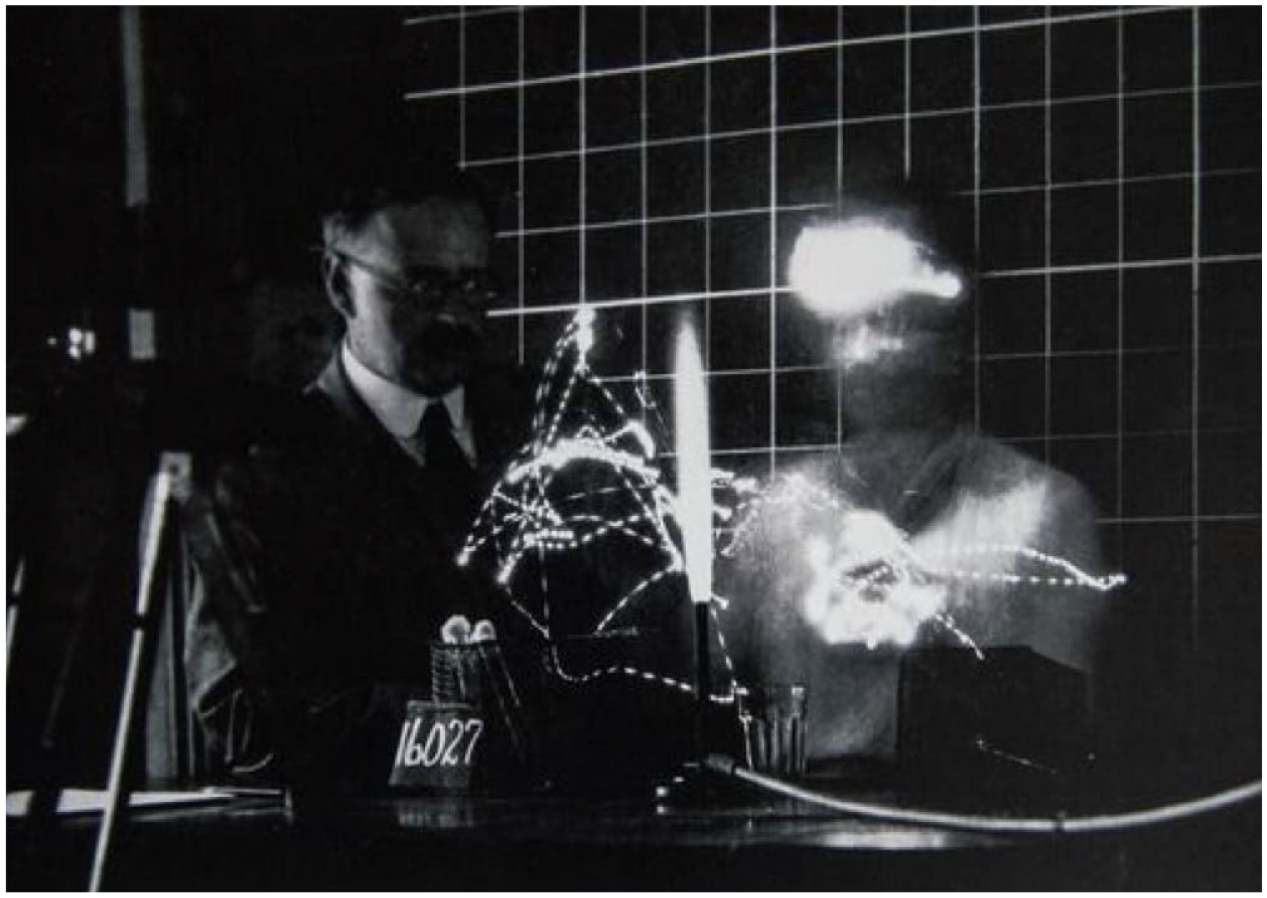
Chronocyclegraph showing motion paths, worker observed by Frank Gilbreth, c. 1917. Frank G. Gilbreth Motion Study Photograph Collection. Image courtesy of the National Museum of American History, Division of Work and Industry Collection.
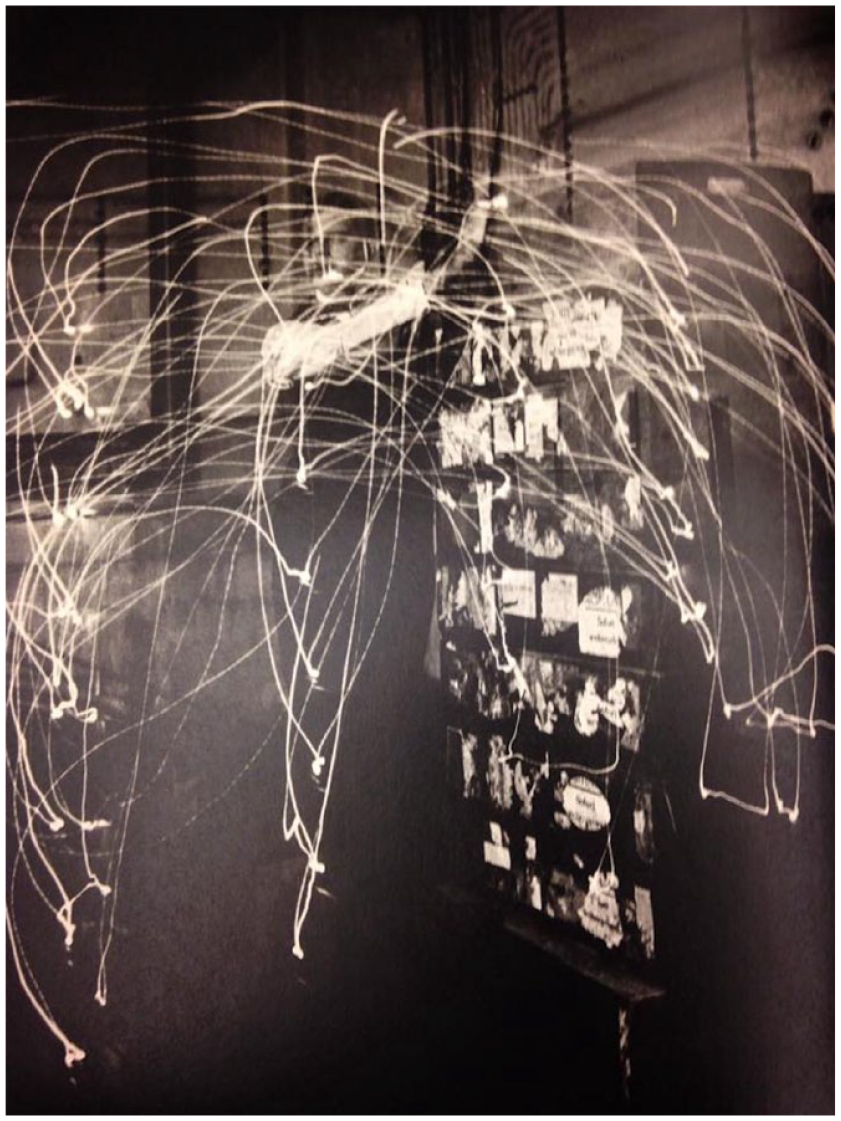
Cyclegraph revealing inefficient motion paths, c. 1914. Frank G. Gilbreth Motion Study Photograph Collection. Image courtesy of the National Museum of American History, Division of Work and Industry Collection.

Cyclegraph of male drill press operator at New England Butt Co., undated. Frank and Lillian Gilbreth Collection, Glass Stereo Slides (NMAH-AC0803-0000077). Image courtesy of the National Museum of American History.
In his most famous case study, first discussed in his sole-authored Motion Study: A Method for Increasing the Efficiency of the Workman, Frank Gilbreth (1911) showed how a bricklayer could increase the rate of bricks laid from 350 to 700 bricks per hour by first stacking them on a suspended trolley whose height could be adjusted as he worked, rather than bending to the ground to pick up each new brick individually (pp. 22–35). Traditional methods of bricklaying required a greater expenditure of energy for a lesser reward, Gilbreth argued, whereas the One Best Way allowed bricklayers to work faster and with less damage to their spines. The Gilbreths included a chronocyclegraph of an inefficient motion path for bricklaying in Fatigue Study, contrasting this with an efficient motion path (see Figure 6). Here again an excess of lines, with repeated backtracking, was taken as visual evidence of inefficient movement, while a more streamlined path, with greater economy of movement, was identified as efficient. A surplus of movement, especially ‘unnecessary’ movement, was wasteful, the Gilbreths argued: the key to increasing work outputs while simultaneously decreasing worker fatigue was to reclaim this wasted energy and direct it towards productive ends.
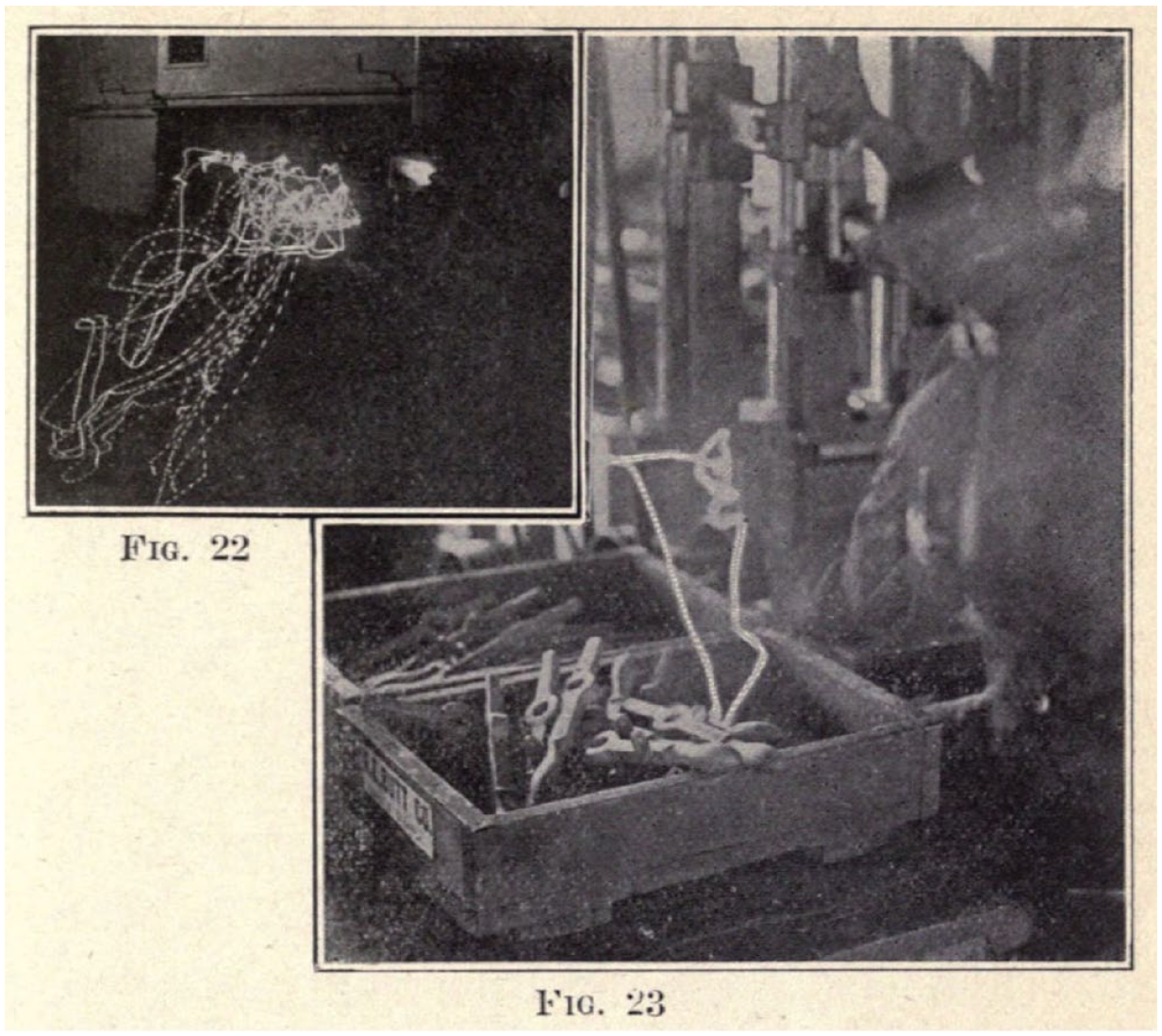
Figure 22 shows a chronocyclegraph of a brick layer, revealing inefficient motion paths, contrasted with Figure 23, which shows a chronocyclegraph of an assembly line worker, showing efficient motion paths. From Fatigue Study (1916). Image courtesy of the British Library.
There was a margin of excess and waste in most workplaces, the Gilbreths claimed, which represented an enormous economic and social loss, but one recoverable through the introduction of new efficiency measures: ‘There is no waste of any kind in the world that equals the waste from needless, ill-directed, and ineffective motions’, they wrote at the start of Fatigue Study. ‘Wasted motions mean wasted effort and wasted time. [. . .] Time, a lifetime, is our principal inheritance. To waste any of it is to lose part of our principal asset’ (p. 3). The waste in work not done, or in work done with the wrong method, was therefore not merely an economic waste, but ‘a waste of life’ (p. 6). Moreover, what the Gilbreths meant by ‘wasted’ time or energy here was something new: not merely idleness or slowness, or the squandering of an existing resource, but rather the failure to tap into a margin of potential between current levels of productivity and the maximum productivity it was possible to achieve. Eliminating this gap between actual and potential productivity was the Gilbreths’ key aim. Although perfect productivity may never be reached, it was an ideal towards which the docile subjects of industrial capitalism should now be oriented. Productivity was an imperative and a measure of the value of a life well-lived, as well as work delivered.
The photographic motion studies the Gilbreths produced to study and eliminate the gap between actual and potential productivity represented a striking new vision of the productive body under industrial capitalism: a docile body working under the constant eye of a supervising manager, as seen in Figure 3, encircled by recording devices used to monitor and measure their outputs, with the expectation that increased efficiency would allow the number of outputs to rise indefinitely. Seen through the lens of this managerial imaginary, workers are ‘productive bodies’, in Guéry and Deleule’s sense of that phrase. In Le Corps productif, Guéry and Deleule (1972) argue that capitalism views the body not (just) as a biological entity but as a vehicle of production, a means of generating economic value. 2 For Anson Rabinbach (1990), similarly, the working body is the ‘human motor’ of capitalism. Prior to the industrial revolution, Rabinbach argues, the body had been understood as a ‘machine’, a mechanism that must be powered by an external source. After the industrial revolution, and particularly with the 19th-century discovery of thermodynamics, the body came to be understood as an engine, a mechanism that is powered from within, ‘regulated by internal, dynamic principles’ (Rabinbach, 1990: 52). This understanding of the body is compellingly visualised in the Gilbreths’ chrono/cyclegraphs, in which the fleshy bodies of workers are obscured, their work made visible as dynamic lines of force, as in Figure 6, or in which they appear as ghostly forms among industrial machinery, visualised as a blur of accelerated movement, as in Figure 5.
Aesthetically striking as they are, the Gilbreths’ photographic motion studies were not unique in visualising the moving body in this way. Rather, they were part of a wider visual culture that reflected a popular fascination with energy and speed in industrialised countries at the start of the 20th century. The contemporaneous ‘photodynamism’ of the Italian futurist Anton Giulio Bragaglia, whose photographs also depicted bodies in motion as a blur of dynamic action, bear a striking resemblance to the Gilbreths’ visual motion studies (see Figure 7). 3 The futurists famously celebrated the arrival of industrial capitalism, and the passing of what they saw as an exhausted, outmoded world order. 4 While both the futurists and the Gilbreths associated energy and speed with progress and modernity, the latter’s orientation was towards efficiency and science, rather than destruction and cultural revitalisation.
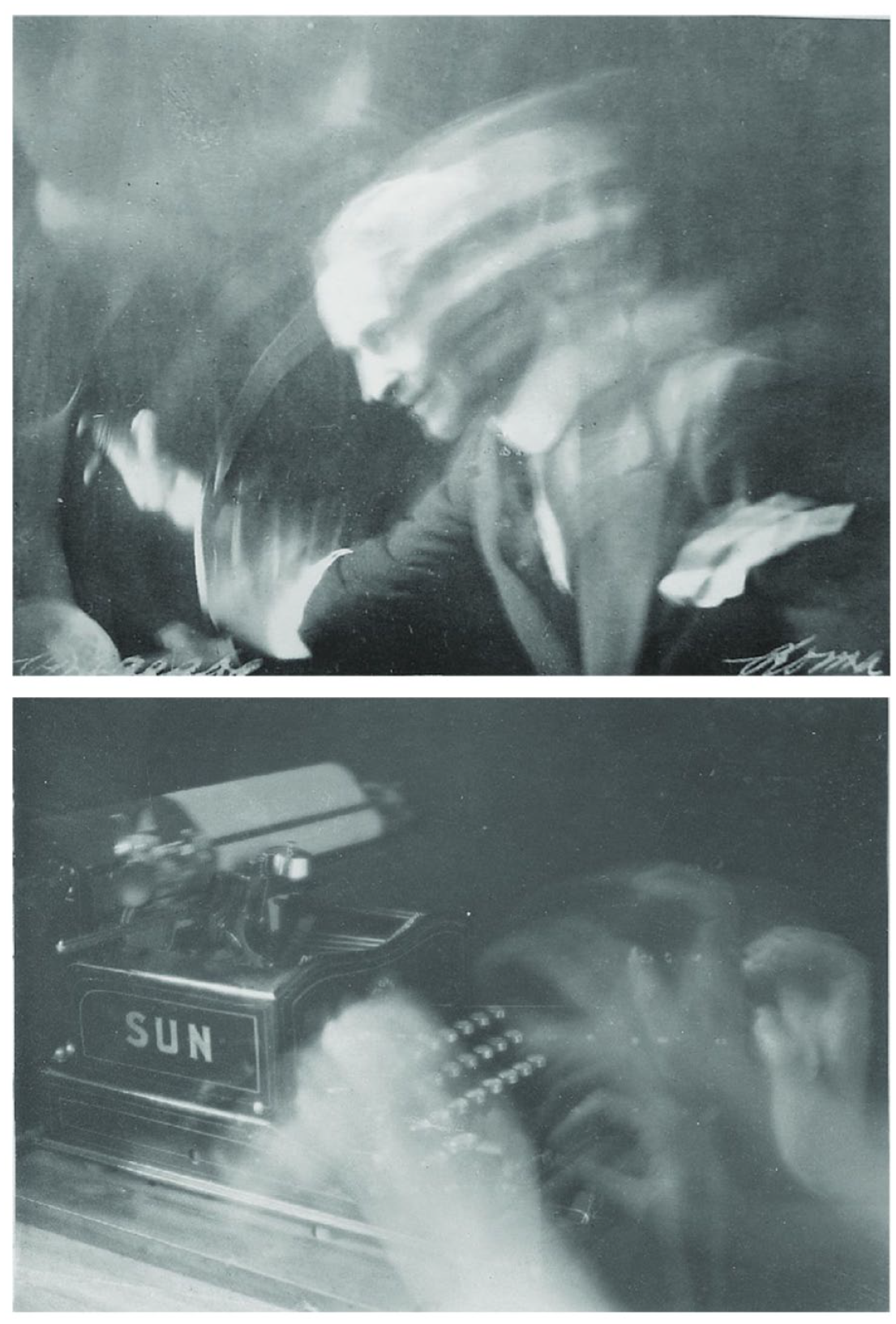
Two examples of Anton Giulio Bragaglia’s futurist photodynamism. Top: Anton Giulio Bragaglia and Arturo Bragaglia, ‘The Bow’, 1911. Postcard. Rome, Centro Studi Bragaglia. Bottom: Anton Giulio Bragaglia, ‘The Typist’, 1911. Postcard. Courtesy of Metropolitan Museum of Art, Gillman Paper Collection.
The Gilbreths (1916) described their motion studies as ‘scientific investigations’ that used ‘laboratory tools and methods’ to transform motion paths into numerical data that could be studied and improved using complex mathematical formulae. In emphasising the empirical and quantitative nature of their investigations, the Gilbreths were positioning their practice as part of the new field of ‘scientific management’ founded by Frederick Taylor. In his foundational text The Principles of Scientific Management, Taylor (1911) contrasted his new approach to management with that of the then-dominant ‘rule-of-thumb’ practice. ‘Rule-of-thumb’ methods were shaped by personal experience and individual judgement which made them inefficient and imprecise, Taylor argued. Scientific management, on the contrary, was precise and quantitative, because it rested upon a foundation of ‘clearly defined laws, rules, and principles’ (Taylor, 1911: 7). What made his approach to management scientific, Taylor claimed, was that it was quantitative and systematic. Scientific management thus represented a shift away from an embodied or evaluative managerial practice (‘rule-of-thumb’) to one reliant on mechanical devices and quantitative analysis.
Using a stopwatch instead of a stop-motion camera, Taylor, like the Gilbreths, studied work tasks by breaking them down into the discrete steps it took to complete them, then streamlining and standardising these steps in order to increase the speed with which the work could be completed. In a statement I have taken as an epigraph for this article, Taylor (1911) argued that whereas ‘[i]n the past the man has been first; in the future the system must be first’ (p. 7). Today, Taylor’s name is a synonym for the standardisation and routinisation of labour that resulted from this principle. His extractive view of the body, which removed autonomy from individual workers and gave it to supervisors, was the subject of critique and resistance even in his own day, with Taylor accused of attempting to ‘turn men into machines’ (Derksen, 2014: 148). The Gilbreths’ focus on fatigue reduction must be understood in this context, as a means by which to distinguish their own brand of scientific management from that of Taylor. Rather than focusing on simply increasing speed, their management advice included measures for countering work fatigue, including providing rest areas conducive to napping, and reading nooks furnished with armchairs and magazines. The Gilbreths imagined workers leaving at the end of the day with energy left to enjoy the rest of their lives, and enough time in the day to do so. Yet the founding principle of both forms of scientific management was the same: that productivity should always continue to rise and that the best means of achieving this was to constantly monitor and measure workers’ bodies and their outputs.
Despite their claims that their use of quantified methods and data made their work more precise and scientific, however, many of the Gilbreths’ and Taylor’s assertions that they had exponentially increased productivity in the workplaces in which they conducted their research have since been questioned: ‘It is not at all clear that workers’ reduced motion remained at a modernist premium once the Gilbreths moved on to another consultancy job’, notes Elspeth Brown (2005: 66). Matthew Stewart (2009) recounts how Taylor conducted his famous experiments on pig-iron loading rates by rounding up the burliest workers on site, instructing them to work at their fastest possible speed for an hour, and then multiplying the results according to the length of the workday. Although Taylor’s case studies were strewn with impressively complex mathematical equations that seemed to justify his claims of quantitative precision, Stewart argues, these formulae served a largely ornamental function, while his actual ‘figures were the result of multiplying an irrelevant and uncontrolled experimental observation with a big blob of fudge’ (Stewart, 2009: 48). Scott Curtis makes a similar argument about the Gilbreths’ chronocyclegraphs and short films, noting that while the use of gridded backgrounds in many of these was ostensibly designed for easy measurement of worker movements [. . .] close inspection of the films reveals that only the crudest estimates of distance could be made with this system. [. . .] Yet Gilbreth repeatedly relies on proclamations of precision. This, I believe, is bluster. (Curtis, 2009: 89–90)
The grid and the graph were included in the Gilbreths’ work as recognisable aesthetic conventions that signified ‘scientificity’, Curtis argues. Their value derived as much from the strong evidentiary appeal of photography as from the accuracy of the data the photographs produced.
The role quantification played in the Gilbreths’ chronocyclegraphs therefore must be understood as cultural as much as empirical. As historians of science have argued, numbers are not neutral measures of an external reality or a guarantee of objectivity or accuracy; the privilege accorded quantified forms of knowledge is shaped by wider cultural factors, including a preference for data that can be analysed mechanically and/or mathematically (Poovey, 1998; Porter, 1995). The disparagement of qualitative forms of knowledge as imprecise or woolly, which underpins Taylor’s criticism of ‘rule-of-thumb’ management, was grounded in the belief that quantified forms of knowledge were more precise and reliable, despite his own manipulations of his data. Although the Gilbreths claimed that increased productivity would be the result of their new scientific managerial practices, then, the causality was really the other way around: a much larger cultural investment in the ideas of productivity and efficiency drove the increasing quantification of work at the start of the last century. In this way, quantification served an ideological as much as an epistemological function in scientific management.
The key tenet of the Gilbreths’ managerial imaginary was that increases in productivity could always be achieved by introducing further efficiencies, identified by management consultants who knew how to transform the movement of working bodies into useful data, who could freeze movement and examine it mathematically, engineering it for ever greater productivity. There was no ceiling to this rise in productivity, in the Gilbreths’ view. There was no concept of enough productivity or too much productivity. It is possible to overwork (to work too long, to do too much) or to over supply a product (by flooding a market), but there is no concept of ‘too productive’ in the Gilbreths’ managerial imaginary, because productivity includes an element of efficiency that mitigates against this, ensuring that energies are not simply being ‘wasted’. The concept of ‘excessive productivity’ is thus an oxymoron in the Gilbreths’ managerial imaginary, which instils in the working body a constant drive towards productivity that can never be satisfied. This is one of the key mechanisms by which the productivity imperative becomes so ingrained in the practices of 20th century life at this time. Although Fatigue Studies starts by framing fatigue as inevitable, and as a boundary to the amount of labour that could be extracted from the working body, the substance of the book suggests that, with the right forms of management, the onset of fatigue could be postponed indefinitely. Fatigue was thus transformed from a hard limit to the work that could be demanded from a body to a continually receding horizon. This aspect of the Gilbreths’ managerial imaginary – that perfect productivity, while not possible to achieve, was the goal towards which workers should be oriented – was one that would become deeply ingrained in aspects of life far outside the workplace over the course of the 20th century, but has its origins much earlier, in the photographic studies of biometrics found in the work of French physiologist Étienne-Jules Marey.
How Numbers Became Productive: Étienne-Jules Marey’s Chronophotographs
The Gilbreths were not the first to conduct photographic studies of motion paths. On the contrary, their chronocyclegraphs had a clear and famous precedent in the earlier chronophotographs undertaken in the final decades of the 19th century by Étienne-Jules Marey, who invented one of the first stop-motion cameras for his research on movement in humans and animals, and whose influence the Gilbreths’ acknowledged, if fleetingly, in a footnote in Fatigue Studies. 5 The continuity between Marey’s chronophotographs and the Gilbreths’ chronocyclegraphs is evident in their striking visual similarities: in both, the mechanics of the moving body were made visible by obscuring its fleshy form. The subject of the photograph was movement itself, rather than the moving body (see Figure 8). Like the Gilbreths’ photographs, Marey’s images depicted a full range of motion in a single image: either as geometrical lines of the body’s biomechanics, abstracted from the corporeal body, as in Figure 8, or as a cycle of movement, in which the blurred form of the moving body was visible (see Figure 9). It is thus in Marey’s work that we first see movement broken down into a series of discrete steps that could then be measured and examined. Recovering the Gilbreths’ under-acknowledged debt to Marey’s earlier photographic studies of motion helps us better understand the wider context from which their work emerged in two key ways: first, it elucidates the central role-played by emergent visual technologies in establishing new practices of measuring and quantifying bodies at this time; second, it draws attention to the contexts in which the transformation of bodies into energy and sources of numerical data came to be established and recognised as part of scientific practice in the second half of the 19th century.
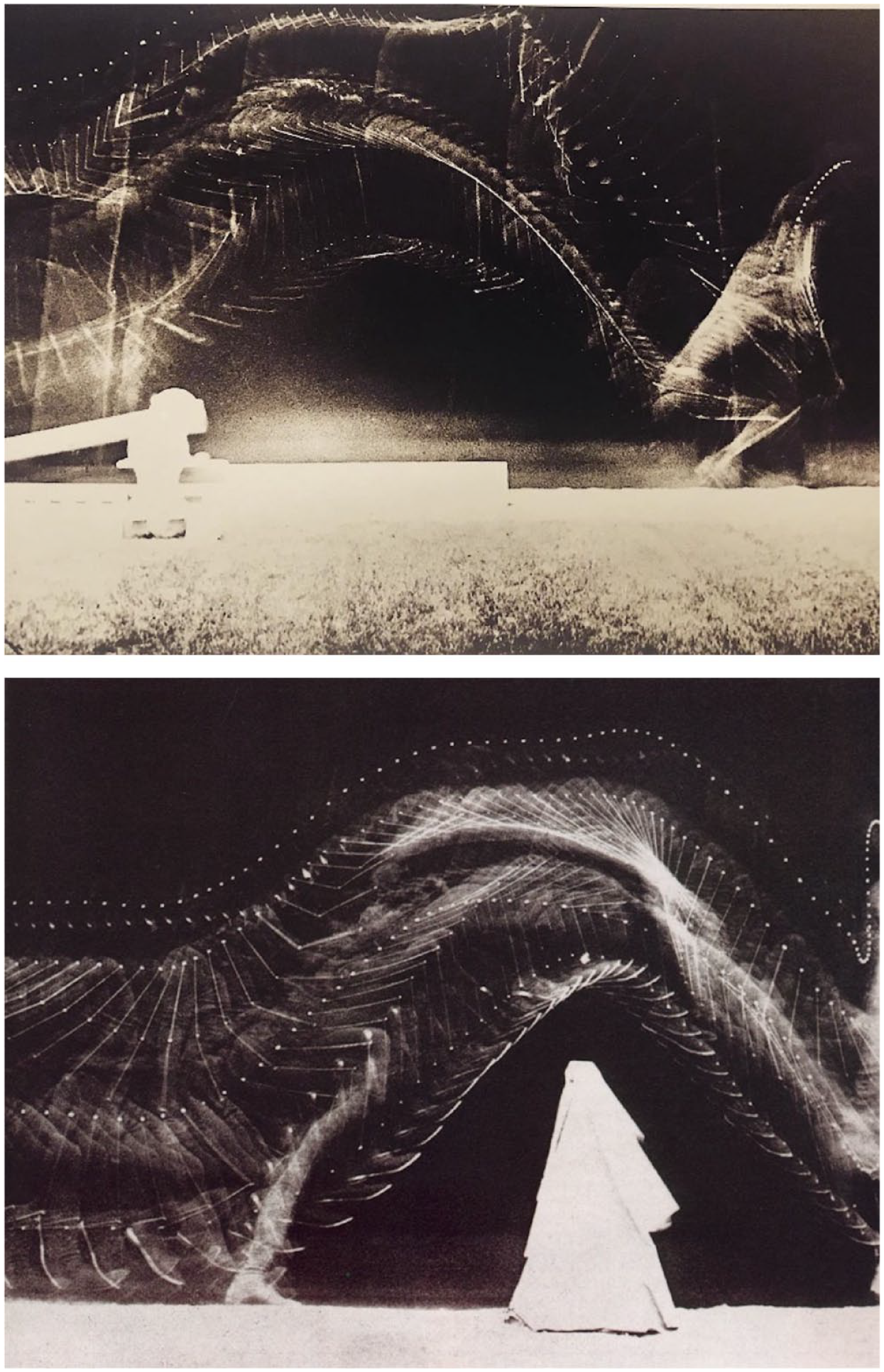
Étienne-Jules Marey, chronophotographs revealing the motion path of a human figure jumping, c. 1880s. Images courtesy of the Bibliothèque nationale de France.

Étienne-Jules Marey, chronophotograph representing an arc of arm movements, c. 1880s. Image courtesy of the Bibliothèque nationale de France.
Where the Gilbreths’ work was conducted in the context of industrial management, Marey was a scientist and Professor at the Collège de France in what was then the new field of physiology. 6 Physiology represented a radically new approach to the study of the body in the 19th century. Where earlier fields of medical research, such as anatomy, derived their knowledge of the body from the dissection of cadavers, and understood biological structures and organisation to be relatively fixed and stable, physiology focused on the dynamic processes and properties of living bodies (Stephens, 2011). It examined forces that were largely internal, and thus invisible to the human eye. Marey invented many of the devices that made this research possible. His inventions included some of the first instruments able to measure and record data from living bodies in real-time, transforming complex physiological processes into numerical biodata and providing new insights into the internal biological processes of living bodies. Like the Gilbreths, Marey did this by breaking down continuous movement into distinct stages that could be charted and measured. Undertaking his doctoral research on the circulation of the blood, in 1868, Marey invented a portable sphygmographe, which recorded the pulse and provided data in a graphic form (see Figure 10). 7 As blood pulsed through the vein, it moved the stylus of the sphygmographe. The result was a stream of biodata captured in real-time, represented in a visual form that could be interpreted faster than that of a written chart (Marey, 1878: 10). 8 The sphygmographe introduced graphic inscription to medicine in France. In so doing, notes Marta Braun (1992) in Picturing Time: the Work of Étienne-Jules Marey, it replaced ‘pulse feeling’ and direct observation by individual doctors, with a mechanical device and quantitative data (p. 18). Just as Taylor would later argue that (embodied) ‘rule-of-thumb’ management practices should be replaced with systematic ‘scientific management’, so did Marey propose replacing diagnostic methods based on personal touch and individual evaluation with those based on mechanical measurement and quantitative analysis. Marey’s devices and data-driven approach to physiology represented, as Anson Rabinbach (1990) puts it, ‘the triumph of technology over sense perception’ (p. 94). This is the groundwork on which the Gilbreths’ would later build their practice.

Marey’s sphygmographe (1868) was designed to measure the pulse and to produce a graphic record of those data. Image courtesy of the Musée des Beaux-Arts de Beaune, France.
Yet this ‘triumph’ was by no means assured in the second half of the 19th century, and Marey experienced considerable professional resistance to his attempts to implement his new methods. Whereas the Gilbreths and Taylor could simply assert that their quantitative approach to management made it scientific, Marey still needed to argue that quantitative methods and analysis were appropriate to use in medical research and practice. It was Marey’s success in establishing this quantitative approach to the body in medicine that paved the way for the rise of scientific management in the early 20th century. Marey (1885) acknowledged in La méthode graphique that, in seeking to replace human observation with mechanical inscription, many of his colleagues believed him to be devaluing human reason and intelligence in favour of unthinking machines (p. v). 9 Critiques of the usefulness of the quantitative forms of knowledge remained common until the end of the 19th century. Until then, the idea that mathematical formulae and laws of numerical regularity could provide better or more useful information than that gained by individual observation and honed professional judgement was often greeted with outright derision (Cryle and Stephens, 2017: 63–99). It was only at the end of the 19th century, as Mary Poovey (1998) has shown in The History of the Modern Fact, that the number definitively came to usurp the fact as the key unit of knowledge across the sciences, and the quantitative became fully established as more objective and scientific than the evaluative.
Marey’s work, and particularly his chronophotographs, help us better understand how and where numbers came to be understood as useful and productive of new knowledge at the end of the 19th century, and elucidate the key role-played by visual technologies in the rise of quantification as a privileged form of knowledge production at this time. His instruments fulfilled the ambitions of a new ‘medical gaze’, in Foucault’s (1963) sense of the term, to see inside the body and make it fully visible to emergent systems of biopower. The sphygmograph had revealed the circulation of the blood inside the body, transcribing this in real-time as data points on a graph. Marey’s chronophotographs, similarly, transformed the biomechanics of whole bodies into a form of (photo)graphic inscription. The stages of each movement are plotted like points on a graph. Using a stop-motion camera of his own design he called a fusil photographique (photographic rifle) (see Figure 11), many of the chronophotographs Marey produced feature his préparateur, Gilbert Demenÿ, as subject. Marey dressed Demenÿ in a black suit, to which he affixed white paper circles at the body’s joints, connecting these with lengths of white string (see Figure 12). Marey then photographed Demenÿ performing a range of actions – such as running, walking, sitting on a chair – in semi-darkness (see Figure 13). Like his graphs of pulse readings, Marey (1885) argued, these chronographs allowed him to ‘grasp and represent with ease phenomena that escape direct observation and even the use of ordinary inscriptive devices’ (p. xix; my translation). 10 Marey’s motion studies demonstrate how important new visualising technologies like photography were to scientific research in the late 19th century, and the extent to which they were constitutive, rather than simply illustrative, of scientific knowledge.
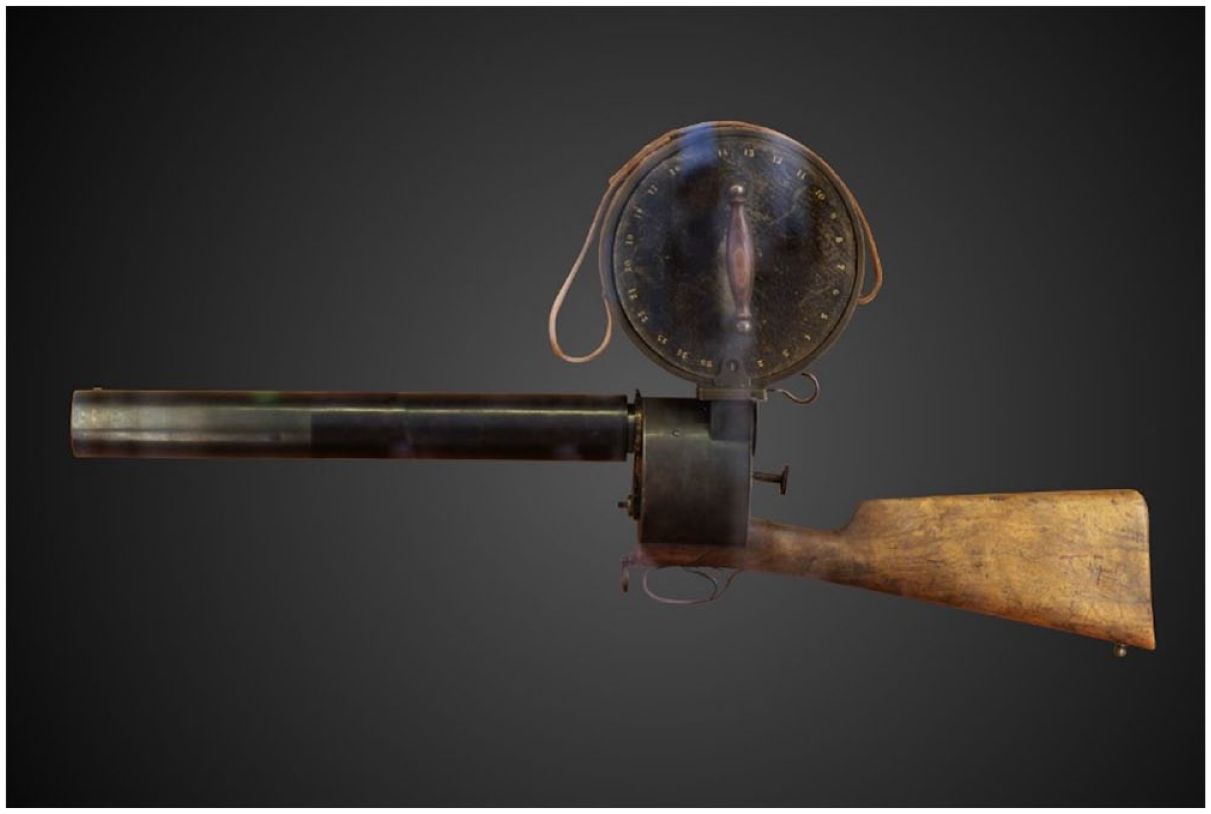
Marey’s fusil photographique (photographic rifle) with cartridge, used to take stop-motion photographs. Image courtesy of the Cinémathèque française, Paris.
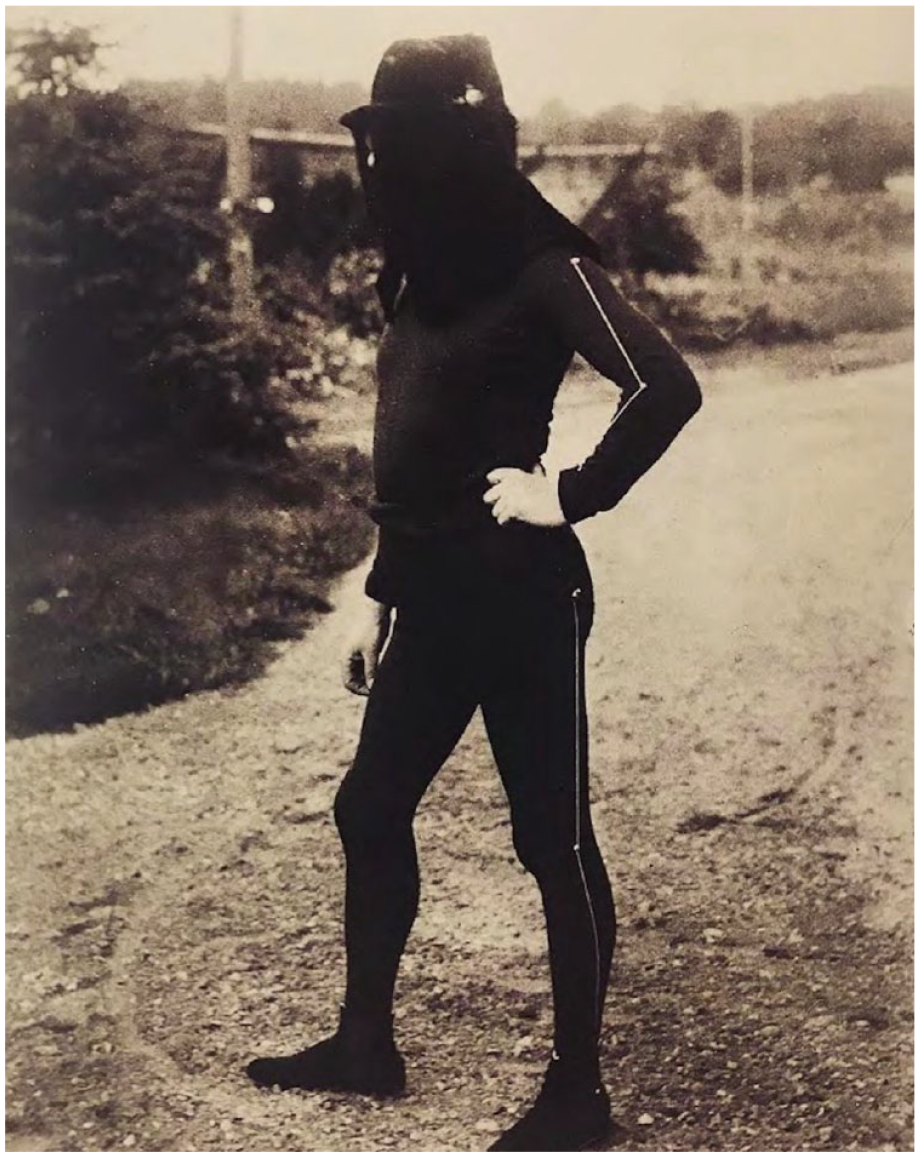
Étienne-Jules Marey’s assistant Gilbert Demenÿ, with white string pinned to each joint, used to reveal motion paths in chronophotographs. Image courtesy of the Bibliothèque nationale de France.
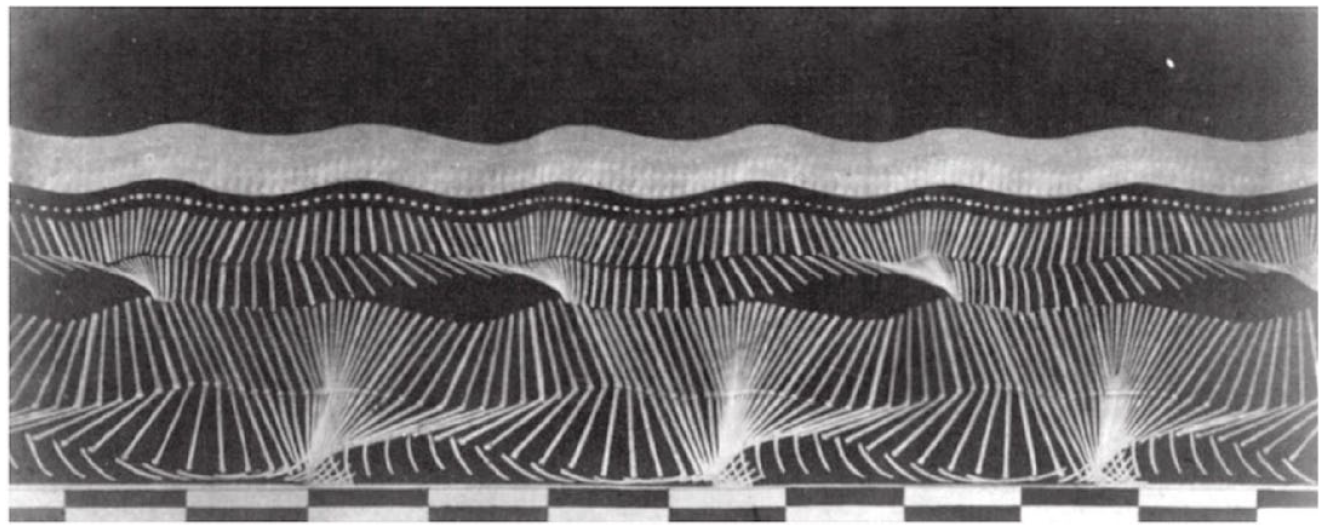
Chronophotograph of man walking, 1882. Image courtesy of the Bibliothèque nationale de France.
Marey’s chronophotographs, like the Gilbreths’ chronocyclegraphs, depicted movement as a series of marked intervals that allowed both the time and space between movements to be measured, allowing a continuous stream of bioinformation to be recorded as discrete units of data (see Figure 14). This allowed that stream of information to be broken down into steps that could be measured in a way that would prove so foundational for the Gilbreths. Although Marey himself would do much to embed mensuration and quantitative methods into the study of living bodies, the philosopher Henri Bergson saw these images of frozen movement, with their charted points and marked intervals, as evidence of a scientific imaginary that believes itself empirical and objective but is really a kind of systematising fiction. Scientific methods depended on measuring discrete bits of data and fitting these into stable taxonomies, when in actuality life was in a constant state of flux and transformation. Bergson took Marey’s chronophotographs as exemplary of this scientific imaginary, although without naming Marey directly. 11 For Bergson, Marey’s photographs exemplified a scientific tendency to record and represent movement, and thus life and time, as though these were things made up of discrete measurable units, like the ticking of a second hand. The result was a fragmented, decomposed form of time Bergson (1907) contrasted with the constant flow of ‘real’ time he called la durée, which was fluid and continuous. Scientific systems of measurement were grids of intelligibility placed over the chaotic flux of the ‘real’. They produced a series of numbers whose connection to reality was largely imaginary.

Étienne-Jules Marey, ‘Un coup de marteau’, chronophotograph on glass plate (D-55-1-16), c. 1895. Image courtesy of the Musée des Beaux-Arts de Beaune, France.
Despite Bergson’s disapproval, the vision of the body that appeared in Marey’s chronophotographs – a body of geometric lines, of frozen motion and luminous traces – was celebrated by the general public and scientific community alike, and influenced the wider visual culture of his time. His stop-motion camera design was the source of both Edison and the Lumiere Brothers’ first moving image cameras, playing a foundational role in the development of early cinema technologies. 12 His striking images of moving bodies were also an inspiration for the geometric bodies seen in cubist and futurist art, in which moving bodies are all lines and angles. Marcel Duchamp’s ‘Nu descendant un escalier, no 2’, for instance, was inspired by Marey’s chronophotographs (see Figure 15).
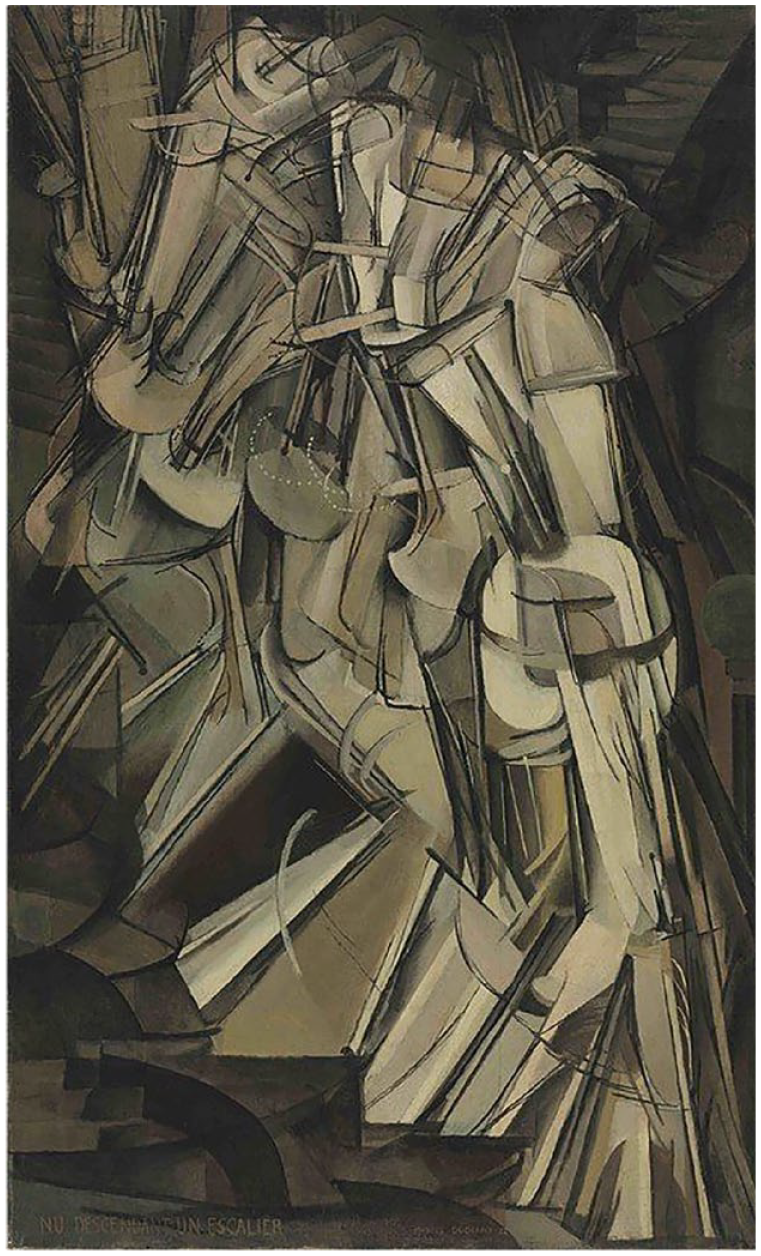
Marcel Duchamp’s ‘Nu descendant un escalier’, 1912, was inspired by the image of the moving body as geometrical lines in Marey’s chronophotographs. Oil on canvas. Image courtesy of the Philadelphia Museum of Art.
When physiology looked inside the living body, then, what it found was not a stable physical entity, a thing of flesh and blood, but a collection of forces and dynamic processes. In capturing this new vision of the body as energetic, rather than corporeal, Marey’s chronophotographs consolidated the increasing dominance of quantitative approaches to the study of the body and its association with the scientific at the end of the 19th century. Chronophotography also established a new association between a particular aesthetics of the body – depicted as a line of force or energy – and a scientific project of quantification and measuring bodily mechanics that would become integral to the project of scientific management and the new managerial imaginary to which it gave rise.
From Fatigue Studies to Happiness Minutes: Lillian Gilbreth’s Managerial Imaginary
The Gilbreths were the direct beneficiaries of this history. Their photographic motion studies were made possible by the visual technologies Marey invented, and their status as scientific documents relied on the association of photography with bodily quantification established in 19th-century physiology (and elsewhere). However, where Marey’s chronophotographs were designed to enable the measurement of the moving body, the Gilbreths’ chronocyclegraphs were intended to enable its management. This represented a shift in purpose from one of observation to one of correction. For Marey, quantitative studies of bodily motion provided a better way to understand biomechanics; his primary purpose was not to improve performance. Improvement was the driving logic of the Gilbreths’ managerial practice, however. They had an unwavering faith in progress and betterment, in a way that would transform the principles of scientific management into a form of self-improvement.
This can be seen in the conclusion to Fatigue Studies, in which the Gilbreths (1916) explained the terms in which the success of fatigue management should be measured: The final test of fatigue elimination, as of every other change made in doing things, is its influence upon the total output of ‘Happiness Minutes’. The aim of life is happiness, no matter how we differ as to what true happiness means. Have you reason to believe that your workers are really happier because of the work that you have done on fatigue study? Do they look happier, and say they are happier? Then your fatigue eliminating work has been worthwhile in the highest sense of the term, no matter what the financial outcome. (p. 150)
If this celebration of ‘happiness minutes’ over financial outcome seems like an abrupt change of focus at the end of a book on industrial management, it should be noted that the term ‘happiness minutes’ is not discussed or defined anywhere in the pages that precede this. This is the first and only reference to ‘happiness minutes’ in this book. The final section of this article examines how a study of fatigue became a study of happiness, and considers what is at stake culturally in this entwining of productivity and happiness. In the Gilbreths’ managerial imaginary, happiness is the reward for productivity, and the most productive subject is the most satisfied with life.
While the term ‘happiness minutes’ does not appear in Frank’s sole-authored work, it is a core concept in the sole-authored book Lillian published in 1927, The Home-maker and Her Job, as well as the book she co-authored with Orpha Mae Thomas and Eleanor Clymer over a quarter of a century later, Management in the Home: Happier Living Through Saving Time and Energy (Lillian Gilbreth et al., 1954). The purpose of these books was to encourage women to apply the principles of scientific management to the running of their homes. Lillian Gilbreth (1927) was a proponent of the benefits of efficiency for the management of the home and everyday life, and she advocated for it by promising happiness as a reward: ‘Efficiency is doing the thing in the best way to get the desired results. And these, we must never forget, are the largest number of happiness minutes for the largest number of people’ (p. 85). Efficient home management was a subject on which Lillian was a recognised authority: the Gilbreths were famously parents to 12 children, two of whom would go on to write an affectionate recollection of their upbringing in the best-selling book Cheaper by the Dozen (Gilbreth and Carey, 1948), which was made into an equally popular movie of the same name in 1950. It was primarily to Lillian that the running of the Gilbreth household fell, which she did while completing one of the first PhDs in industrial psychology in the United States, co-authoring books with Frank, and co-directing their consultancy business. 13
The Home-maker and Her Job is also notable for having been written just a few years after Frank passed away suddenly of a heart attack aged 55 years, in 1924. Lillian immediately assumed control of their business, and Frank’s legacy, continuing to run their consultancy until her own death in 1972. She never remarried. Her decision to extend the applications of scientific management from the industrial workplace into the domestic sphere was presumably partly a response to her change in status: there were very few other women working in industrial management at the time. Reorienting her own research around the domestic space allowed Lillian to assert her authority in a sphere in which this was likely to be received more positively. Gilbreth began The Home-maker and Her Job by explaining that her intention was use what she had learned from her research in scientific management, and particularly the experiments in chronocyclegraphy discussed above, to assist women running busy households. Women, like other workers, would benefit from identifying the One Best Way to complete each task, she argued. While women may fear that introducing such practices would make their housework more mechanical and tedious, Gilbreth wrote, it would instead reduce fatigue and drudgery, thereby increasing their number of happiness minutes.
The Home-maker and Her Job included examples of functional work charts and chronocyclegraphs, as well as explanations of how these could be adapted to domestic settings. Her advice followed the basic principles of scientific management, as represented in the Gilbreths’ chronocyclegraphs: that jobs should be broken down into discrete tasks, and the movement required to complete them streamlined as much as possible. Dishwashing was one of the Gilbreths’ most frequently used examples, which she noted was because it was one of the most disliked. She shared anecdotes from the Gilbreth (1927) home life of Frank and the children enthusiastically conducting experiments to make the work of washing dishes more efficient and pleasant: ‘Any homemaker who has ever tried the experiment will never forget the picture of Johnny and Mary and all the rest, even Father, sitting about the kitchen, observing actively and making records of the dishwashing process’ (p. 91). She included a pair of comparative chronocyclegraphs to illustrate the advantages of studying and reducing movements (see Figure 16), explaining that smooth, streamlined motion paths on the left reflected both skill and grace, whereas the erratic lines on the right demonstrated unskilled movement, and were ‘ungraceful, unrhythmic, ugly, jerky’ (Gilbreth, 1927: 108). While homemakers may not be able to produce chronocyclegraphs of their own at home, she recognised, they could undertake motion studies more simply using a ball of twine: ‘A child may follow Mother around as she clears the table and gets the dishes ready for stacking, unwinding the ball of string as he goes’ (p. 93). Pins could be used to mark the points at which ‘Mother’ turned, and the resulting motion path reproduced as a sketch, which could then be studied as chronocyclegraphs were.
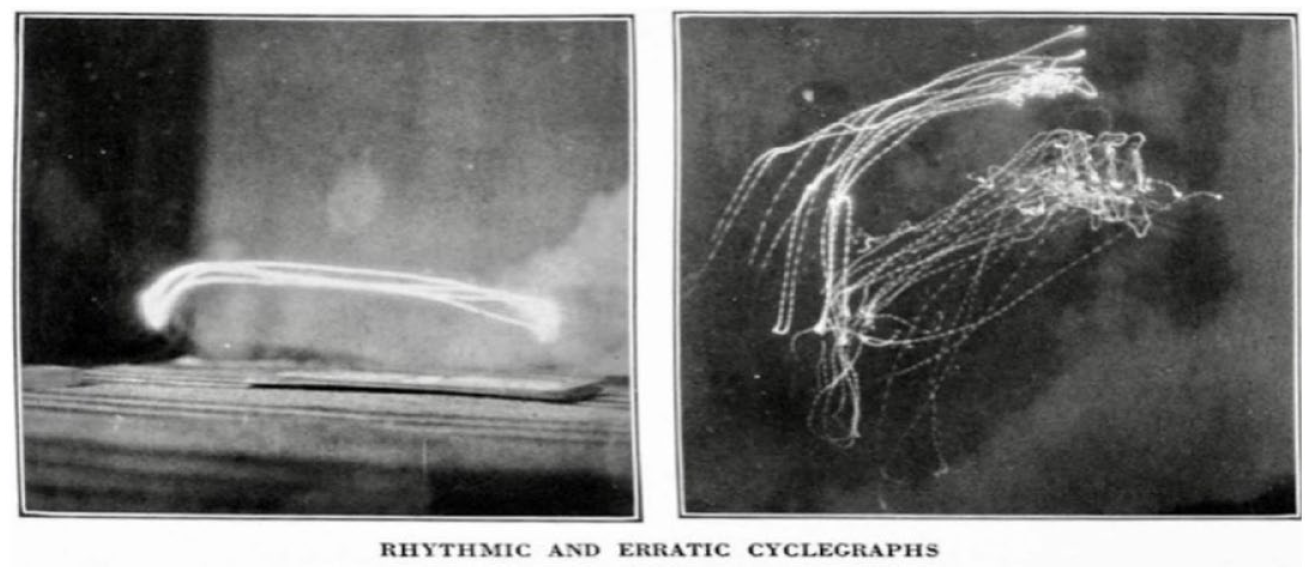
Comparative chronophotographs included in Lillian Gilbreth’s The Home-maker and Her Job (1927), subject unspecified. Image courtesy of the British Library.
Gilbreth acknowledged that her advice required a very different approach to homemaking than that to which women may have been accustomed. Women might feel sentimental about doing things the way their mothers or grandmothers did, or bound by social convention, but Gilbreth urged women to let go of these traditions: ‘The way we have always done things is probably wrong’ (p. 58). It was no longer necessary for women to do things the way previous generations of women had, and they must learn to prioritise what was important to do themselves within the home, and what they were willing to outsource: ‘Many a housekeeper wears herself out doing the work herself’ (p. 51). Gilbreth denounced such unnecessary self-sacrifice as wasteful: ‘It really is selfish to be too unselfish in the matter of giving up to others’, she wrote. ‘It is part of the homemaker’s job to share the joys of unselfishness’ (pp. 12–13). Although Gilbreth did not identify as feminist, and many of her views about the role of ‘Mother’ and ‘Father’ in the home were very traditional, she was nonetheless emphatically modern in her outlook. She associated modernity with efficiency, and the result of both was more time for happiness: ‘Don’t be hampered by anyone else’s experiences or opinion or by fear of what anyone else will say. “We are trying for efficiency” will answer most questions, and “happiness minutes” is always your answer to yourself’ (p. 55).
While Gilbreth framed The Home-maker and Her Job as a direct application of the principles of scientific management to the home, revealing the One Best Way to complete any domestic task, in practice her focus on happiness minutes signalled a significant shift in her vision of management, deviating from that of Frank Gilbreth and Taylor in significant ways. Lillian had completed a PhD in 1915, published as The Psychology of Management, and she introduced to scientific management an interest in individual psychology and personality types that was at odds with its central tenet of a standardised One Best Way to complete any task. Instead, she envisaged a form of household management that prioritised what she referred to as the balance between the needs and preferences of individual workers and those of their workplace. Balance, she argued, was the key to happiness (p. 16). Too much busyness required rest to compensate, too much sociability required time alone and so on. But balance would look different for each member of the family: ‘Father may want a quiet room and a chance for forty winks. John may want tennis, and Mary the last magazine before supper’ (p. 8). These differences were the result of different temperaments and preferences, which must be considered when managing the allocation of tasks: ‘Care is taken not only to find out whether the person tested can do the work, but whether he likes it or not’ (p. 43). There was an ‘ideal person’ to undertake each job (p. 39), and that was the person who could complete it with both skill and satisfaction. This argument, however, is in direction contradiction to Taylor’s (1911) insistence that there was no ‘best man for the job’ and that the system must come before the man (pp. 7–11). For Gilbreth, on the contrary, a balance must be found between the worker and the system.
The Home-maker and Her Job was a ground-breaking book in many respects. Lillian Gilbreth was the first to undertake motion studies in the home, and these led her to redesign the suburban kitchen to minimise the number of steps needed to move between appliances, transforming the Victorian kitchen into the modern kitchen design still in use today. 14 She popularised the use of detailed daily schedules, including examples in her book, and designed a home ‘reminder card’ system years before filing cabinets would be commonly found in domestic households. In 1933, the home Management Desk she made for IBM was displayed at the World’s Fair in Chicago (see Andersson and Gregg, 2022). Despite this, The Home-maker and Her Job, like most of Lillian’s books, is out of print and has not (yet) been digitised. This article is the first to provide an overview of this text or recognition of its wider influence. In contrast, all the books Lillian co-authored with Frank are still in print, as are all his sole-authored books. It is common for the books she co-authored with Frank to be attributed to him alone. Yet Lilian Gilbreth worked decades longer than Frank, had a PhD in this field, and wrote a series of ground-breaking studies, including one of the first books to explore disability accommodations in the workplace, with Edna Yost (1944) in Normal Lives for the Disabled. 15
Most significantly, it is in The Home-maker and Her Job that we see the articulation of what was then a new concept: the idea of work-life balance. Gilbreth’s focus on balance between work and rest (and play) in this book brings together what were once distinct spheres, widening the sphere of the managerial imaginary first developed in scientific management by extending it into the home. It is precisely in this way the managerial imaginary developed in the context of scientific management came to seep into other aspects of everyday life and to have a cultural impact far beyond the sphere of industrial work with which scientific management was primarily concerned. All aspects of life now needed to be managed. Efficiency, for Lillian Gilbreth, was not simply a theory of industrial management but a whole way of life. Gilbreth argued that the competing demands of the workplace, domestic and social spheres and personal life could be successfully juggled by judicious management of one’s time and that it was the responsibility of each individual not only to maintain a healthy balance between these spheres but also to optimise their productivity in each of them. Where once fatigue had constituted a hard boundary to the amount of work that could be extracted from the body, balance allowed the efficient subject to manage and optimise their productivity in every aspect of life, with the promise of more happiness as a reward.
Conclusion
A hundred years after the Gilbreths claimed to be able to reduce fatigue at work through greater efficiency, the subjects of industrial capitalism are more tired than ever. A century of fatigue studies and efficiency in the workplace has intensified, not mitigated, the problem of fatigue. Managerial practices of surveillance and record-keeping, along with a bureaucratic fixation on data collection and measuring outputs, have become a source of inefficiency and exhaustion in their own right (Gregg, 2018). What fatigue was to the 20th century, burn out is to the 21st century. As Byung-Chul Han (2015) argues in The Burnout Society, in the present day, the disciplinary subject described by Foucault has been transformed into the ‘achievement-subject’ of the achievement society, constantly maximising performance and compulsively overworking. The extension of the productivity imperative to all aspects of life leads not to an energetic postponement of tiredness through greater efficiency but to burn out through the relentless quest to constantly optimise and maximise, and the belief that to do anything less is a waste.
The Gilbreths’ managerial imaginary, with its assertion that individuals could successfully navigate the competing and ever-escalating demands of 20th-century industrial life through careful balance, is in this respect exemplary of what Lauren Berlant (2011) has so influentially called the ‘cruel optimism’ of contemporary life, holding out a promise of manageability in a context of constant acceleration and quantification through constant (self-)management. Lillian Gilbreth’s vision of work-life balance, in which the reward for improved productivity was more happiness minutes, entwined happiness and productivity in a way that would prove highly persuasive and enduring in the spheres of work, home and everyday life. In making happiness the reward for productivity, Lillian Gilbreth helped popularise a productivity imperative whose emergence, as we have seen, was captured so strikingly in the Gilbreths’ chronocyclegraphs of bodies at work.
Footnotes
Declaration of Conflicting Interests
The author(s) declared no potential conflicts of interest with respect to the research, authorship and/or publication of this article.
Funding
The author disclosed receipt of the following financial support for the research, authorship, and/or publication of this article: The author received funding from the Australian Research Council (FT170100214).
