



Abstract
As tourism firms increasingly adopt sustainable practices, effectively communicating their sustainable transitions has become essential yet challenging. This study explores how tourism operators use narrative structures and framings to communicate their sustainable transitions and their tensions to audiences on Instagram. Employing a comparative case study approach, this research analysed 2320 Instagram posts (from 2019 to 2024) and semi-structured interviews with three tourism operators in New Zealand. Findings indicate that tourism operators use ‘Romance’ and ‘The Quest’ narratives to engage consumers in sustainability dialogues. However, firms differ significantly in how they frame tensions, ranging from explicit acknowledgement to implicit or absent representation. Instagram's interactive and multimodal nature enables viewers to ignore, endorse, or contest firms’ sustainability narratives and to surface tensions in sustainability. This active engagement challenges assumptions that tensions in sustainability are too complex for public audiences to grasp. This study advances the literature on sustainability communication in tourism by highlighting how narrative complexity and audience interaction shape how tourism firms’ sustainability narratives are crafted, offering practical insights for effectively communicating sustainable transitions on social media platforms.
Keywords
Introduction
Tourism firms are increasingly adopting sustainable business practices as part of a broader industry-wide shift towards more responsible travel. A recent World Economic Forum report emphasises increasing consumer demand for sustainable travel products, with over 80% of global travellers considering sustainability a priority in their travel decisions (Neuenburg et al., 2022). This trend compels firms to integrate environmental and social considerations alongside their economic goals, requiring firms to redesign their products, services, and business models (Roxas et al., 2020). This long-term, gradual process, known as a sustainable transition, realigns firms’ internal strategies with changing external environmental and social priorities (Geels, 2002).
Sustainable transitions are rarely linear or tidy, and often reshape operational practices and organisational values (Beach et al., 2025a), creating competing demands known as tensions in sustainability (Hahn et al., 2015). For example, a tour operator promoting environmental conservation while increasing visitor capacity faces a direct tension between environmental and economic goals. Marketing these transitions can expose inconsistencies in firms’ sustainability narratives, leading to accusations of green- or social-washing, damaging firms’ reputation and credibility (Keilmann and Koch, 2024), raising the stakes for effective communication.
In this context, platforms like Instagram have become key communication channels for tourism firms (Lama, 2024), where they can showcase their sustainable transitions and engage directly with consumers. Beyond marketing, Instagram acts as a performative space where sustainability narratives are publicly constructed and contested. Thus, communicating sustainable transitions on Instagram can prompt difficult questions: Which aspects of sustainability are (de)emphasised? Who is (not) represented? Which tensions are rendered (in)visible?
Although research increasingly explores sustainability communications in tourism (e.g. Font and McCabe, 2017; Tölkes, 2018; Villarino and Font, 2015), most studies focus on promoting sustainable tourism as a consumer product or on encouraging sustainable tourist behaviour, rather than exploring how firms communicate the process of becoming more sustainable. Moreover, research on sustainability communications on Instagram has tended to examine visual aesthetics (Li and Xie, 2020), sponsorship transparency (Evans et al., 2017), and influencer effects (Roozen, 2025), with limited attention to how firms narrate the complexities and tensions inherent in sustainable transitions.
We seek to contribute to the literature on sustainability communications in tourism by asking: How do tourism firms use narrative structures to communicate their sustainable transitions, and how do they frame tensions in sustainability in their social media messaging?
We investigate this question through a comparative case study of three tour operators in Aotearoa, New Zealand, drawing on qualitative content analysis of Instagram posts from 2019 to 2024 and semi-structured interviews with staff involved in sustainability implementation and communication. Our approach highlights what stories are told and how they are told – what is made visible, what is smoothed over, and what is left unsaid.
We make three contributions. First, we contribute to sustainability communications by showing how tourism firms use narrative structures and framing to translate complex and ambiguous sustainability issues to diverse audiences. Second, we extend conceptualisations of sustainability communications by demonstrating how consumer-driven dialogues can transform posts that were not originally about sustainability into sustainability communications. Third, we contribute to the literature on sustainable transitions by providing empirical evidence that consumers actively recognise and contest firms’ framings of tensions in sustainability on Instagram, challenging the assumption that the complexities of sustainable transitions are too abstract for public engagement. Together, these insights offer practical guidance for tourism marketers in effectively communicating sustainable transitions amidst heightened public scrutiny and interactive dialogue.
The remainder of the article is structured as follows. We first review the relevant literature, outline our methodology, and present our findings. We then discuss their theoretical and practical implications and conclude with recommendations for how tourism firms can craft more effective sustainability communications on social media.
Literature review
As tourism firms engage in sustainable transitions, they must navigate complex organisational changes and communicate these efforts to the public. This section explores three related areas of research: tensions in sustainability, sustainability communications, and narrative structures and framing. Together, this literature provides the theoretical foundation for analysing how tourism firms communicate their sustainable transitions and frame tensions in sustainability on social media.
Tensions in sustainability
Tourism firms face growing pressure to demonstrate their contributions to sustainability, requiring them to balance competing demands across economic, environmental, and social dimensions, known as tensions in sustainability (Hahn et al., 2018). Scholars have developed typologies to describe these tensions, which can arise both between dimensions (such as the need to reduce environmental impact while remaining economically viable) and within dimensions (like balancing community empowerment against the risk of cultural commodification or exploitation) (Jarzabkowski et al., 2013; Schad et al., 2016; Smith and Lewis, 2011). Tourism firms regularly face tensions such as encouraging carpooling while relying on self-drive tourism revenue or deciding whether to market culturally sensitive festivals. These tensions are operational and interpretive, influenced by whose needs are prioritised, how success is defined, and how competing goals are communicated over time.
Firms can respond to tensions in sustainability in different ways. Firms can resolve tensions by prioritising a single goal, accept tensions as ongoing challenges (Hahn et al., 2015), or balance tensions as competing goals (Wu et al., 2017). Firms can also embrace tensions as a potential source of innovation and differentiation (Beach et al., 2025a; Carmine and De Marchi, 2022). In practice, firms often shift between responses depending on their strategic goals, stakeholder pressures, and changing operational constraints, complicating how they communicate their sustainable transitions to consumers.
The saliency of tensions is not always deliberate and can vary across posts. It may be influenced by strategic framings or emerge inadvertently through imagery, language, or consumer interpretation. In tourism, where many sustainability initiatives are difficult to observe directly, sustainability communications play an important role in shaping how consumers understand a firm's sustainability goals, evaluate organisational commitments, and make sense of competing demands. These dynamics emerge in how tourism firms engage with consumers through sustainability communications, including the challenges that arise when communicating complex organisational changes into accessible, engaging messages. In this sense, social media posts become a place where firms’ sustainable transitions are expressed, interpreted, and contested.
Sustainability communications
Sustainability communications help individuals and groups interpret and respond to complex environmental and social challenges. According to Adomßent and Godemann (2011), effective sustainability communications equip people with the competencies to make sense of uncertain, ambiguous, and contradictory information and to engage with the long-term implications of sustainability decisions. However, sustainability issues often lack immediacy or experiential effects, such as direct sensory cues and clear cause-and-effect linkages, which makes them difficult to communicate (Moser, 2010).
Platforms like Instagram create opportunities for interactive and visual storytelling that can help firms convey the complex interrelations between human activity and the environment, which ‘elude immediate sensory perception and depend on visual and verbal communication’ (Kruse, 2011: 69). Using social media as a channel for sustainability communications allows firms to engage consumers on environmental and social issues that are often difficult to relate to or act upon. This is particularly relevant in tourism, where sustainable transitions frequently occur behind the scenes and are not easily observed by consumers.
Sustainability communications in tourism inform consumers about sustainable travel products (Tölkes, 2018) and encourage sustainable behaviour (Kruse, 2011). However, Tölkes' (2018) systematic review found that the current literature predominantly focuses on environmental sustainability in hotel contexts; little attention has been given to tour operators or innovative qualitative methods. In a more recent study, Alnawas et al. (2024) demonstrated how informative and engaging hotel sustainability communication strategies can positively influence consumer engagement and brand advocacy on social media. However, there remains a need to understand what sustainability messages entail: how they are structured, and how tensions are framed within social media narratives.
Narrative structures and framings
In this article, we distinguish between narrative structures, which refer to overarching storylines marketers use to communicate sustainable transitions, and narrative framing, which refers specifically to how individual elements within these narratives are strategically emphasised or minimised to guide audience interpretation. This distinction on social media platforms like Instagram is particularly important as visual and textual cues shape how audiences understand and evaluate a firm's sustainability narratives and credibility, influencing consumer perceptions and engagement.
Narratives help simplify complexity and construct coherence across time. Tourism firms often draw on familiar narrative structures to make sustainable transitions more compelling and relatable. For instance, transformational tourism narratives frequently echo the hero's journey, following the path of departure, challenge, and return (Robledo and Batle, 2017), where the firm overcomes sustainability challenges. Other firms may romanticise returns to traditional practices as a redemptive arc, grounding their sustainable transitions in moral or emotional appeals.
Tourists tend to be more receptive to and better remember information communicated in narrative form (Galih Kusumah and Andrianto, 2023). Prior research has examined how narratives are crafted at the destination level (Bassano et al., 2019), by tour guides (Galih Kusumah and Andrianto, 2023), and in consumer-generated content, such as pilgrimage reviews (Van Laer and Izberk-Bilgin, 2019). Other studies have explored how social media influencers use narrative strategies in luxury contexts (Zhou et al., 2021) and how the content structure of social media posts influences consumer engagement (Li and Xie, 2020).
Framing theory (Entman, 1993; Goffman, 1974), widely used in corporate social responsibility (CSR) research, demonstrates that how sustainability messages are framed significantly influences individuals’ attitudes and behaviours (Davis, 1995; Wang and Anderson, 2008). Frames make ‘some aspects of perceived reality’ more salient to encourage specific interpretations (Entman, 1993: 52), but can also be used to frame away tensions (Pang et al., 2022). In tourism marketing on Instagram, framing involves multimodal storytelling through visuals, captions, hashtags, and interactive comments that collectively shape audience interpretations and responses to the firm's sustainability narratives.
A recent study by Kwon et al. (2024) used quantitative content analysis to examine how 12 global brands (e.g. LEGO, Rolex, Microsoft) framed their CSR initiatives on social media. Analysing 886 posts from 2019 to 2021, they found that firms increasingly used social media to communicate environmental efforts and often combined multiple frames to shape audience interpretation. While such work highlights broad framing patterns around sustainability, it does not address how tensions are communicated, interpreted, or negotiated.
In tourism, where firms often operate in fragile ecological and social settings, the framing of tensions in sustainability plays an important role in how sustainable transitions are understood. On platforms like Instagram, where space is limited and formats are highly curated, visuals, captions, hashtags, and comments all shape how tensions are surfaced or hidden. These elements work together to influence the saliency of tensions within a post's narrative structure. Yet little research has explored the multimodality through which sustainability narratives are constructed, interpreted, and, at times, contested and reshaped.
Methodology
Methods
This study adopts a critical realist approach and employs a qualitative comparative case study design to examine how tourism operators communicate sustainable transitions on social media. Critical realism, which distinguishes between real-world phenomena and their observed representations (Bhaskar, 1975), reveals differences between the internal complexities firms face in navigating sustainable transitions and the external sustainability narratives they communicate via Instagram. The case study method supports this exploratory focus on ‘how’ questions, allowing us to systematically untangle (Easton, 2010) the complexity of communicating sustainable transitions and tensions in sustainability in marketing contexts.
Instagram was chosen because it represented each firm's primary communication channel. Instagram's emphasis on visual storytelling and emotional engagement aligns with tourism's experiential marketing strategies, enabling firms to visually convey complex and often intangible sustainability concepts (Manning and Freimund, 2004). Thus, Instagram provides ideal conditions for examining how tourism firms craft and communicate their sustainable transitions to public audiences.
In contrast to dominant quantitative computational approaches to social media analysis (e.g. Kwon et al., 2024 and Li and Xie, 2020), we employed a qualitative design that combines social media content analysis with semi-structured interviews (Adams, 2015) to explore what tensions each firm faces and the stories they tell. The inclusion of interviews reduced researcher bias in coding tensions and their saliency, and enhanced researcher sensitivity to the (non)representation of tensions in firms' social media messaging.
As Highfield and Leaver (2016: 53) note, visuals are ‘critical to story-telling and meaning-making’, necessitating methods capable of capturing multimodal data. Accordingly, we used qualitative content analysis to systematically code visual, textual, and interactive elements (Schreier, 2012). This holistic approach examined the entire composition of posts, including image-caption combinations, hashtags, emojis, and comment threads, recognising that meaning is co-constructed through shared content and audience engagement.
Case selection
This research analysis focuses on three tourism operators navigating sustainable transitions in New Zealand. Firms were chosen based on broad conceptual criteria and specific data requirements. Conceptually, each firm demonstrated awareness of, engagement with, and the communication of tensions in sustainability to consumers. After ensuring the conceptual criteria were met, we narrowed the selection to three firms with strong data describing their situational context, including tensions around ecological sensitivity and social friction. Furthermore, these firms have public commitments to sustainability and sustainability certifications.
Case overview.

Semi-structured interviews were conducted with eight staff members across the three firms, including personnel from marketing, operations, and sustainability roles. Interviews were primarily conducted in person, on-site, as weather allowed. Thematic analysis (Fryer, 2022) was used to explore staff interpretations of sustainability communications, the stories they were trying to tell, and what they communicated to their customers. This combination of interview and Instagram posts provided rich data on the firms (Table 1), revealing organisational intentions, sustainability communication approaches, and their public-facing communication.
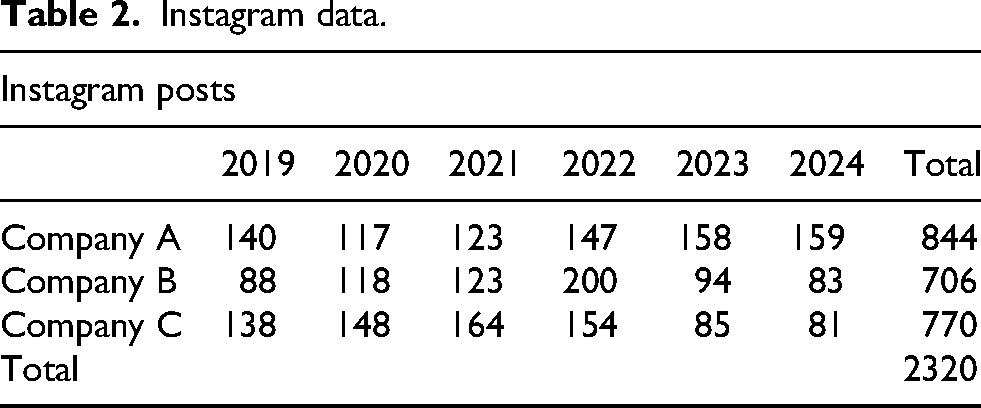
All Instagram posts made by the firms between 1 January 2019 and 31 December 2024 were collected using an APIFY web scraper using JSON (Supplemental Appendix 1). Informed consent was obtained from each firm on the condition of de-identification, and only publicly available posts were accessed. The final dataset included 2320 posts (Table 2) comprising static images, carousels, reels, and videos. Each post was treated as a unit of analysis, with captions, hashtags, and comments analysed alongside imagery to reflect the co-construction of meaning and the presence of tensions in sustainability across modalities.
Instagram data.
Coding
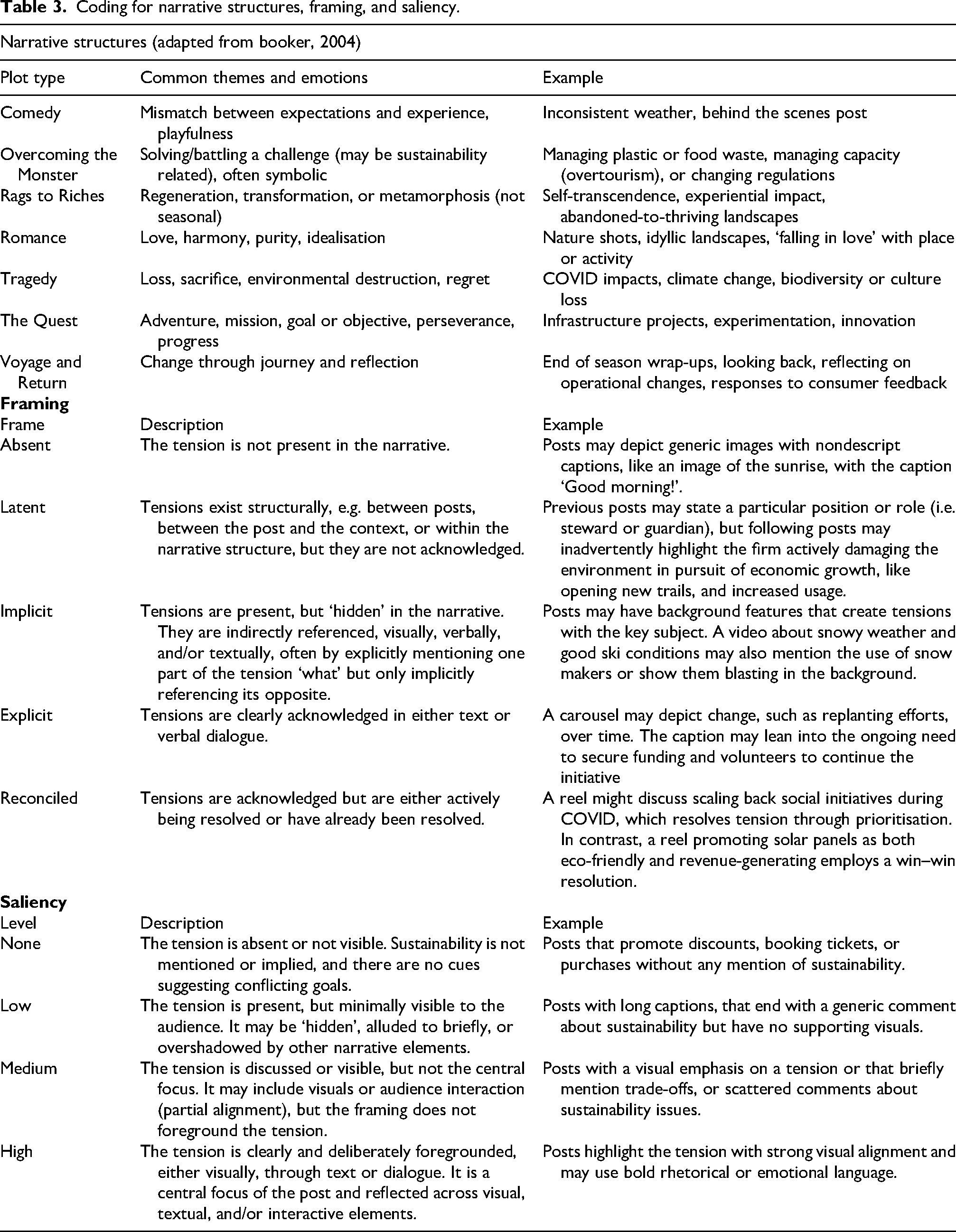
Instagram posts were first coded for tensions in sustainability, guided by established typologies in the literature (e.g. Jarzabkowski et al., 2013; Smith and Lewis, 2011). Across the dataset, nine distinct tensions were identified (Supplemental Appendix 2). Each post was coded for its narrative structure and framing based on textual cues, visual elements, and contextual markers.
Framing refers to how explicitly firms acknowledge tensions within their narratives, from completely absent to reconciled. In contrast, saliency captures how visible or prominent these tensions appear to viewers, irrespective of the firm's intentions. For instance, a tension framed as latent (not acknowledged by the firm but that exists in practice) may still be highly salient if it is apparent through visual imagery or comments. Conversely, tensions explicitly acknowledged in a caption may be less salient if buried in extensive text.
Therefore, each tension was assessed for saliency (low, medium, or high) based on how prominently it was presented to viewers through visual and textual elements. High-saliency tensions were clearly foregrounded visually, through text, or in dialogue. In contrast, low-saliency tensions were often obscured by other narrative content, making them easily overlooked by viewers. Evaluating saliency clarifies how tourism marketers highlight or conceal sustainability tensions, shaping audience interpretation and response. Table 3 provides comprehensive examples of the coding scheme.
Coding for narrative structures, framing, and saliency.
Finally, user comments were analysed to determine whether viewers recognised or responded to tensions in the posts. Recognition was coded when comments explicitly referenced conflicting values, acknowledged sustainability-related complexity, or initiated tension-based dialogue among viewers or with the firm. In some cases, recognition was more implicit, expressed through expressions of concern or alternative values that challenged or complicated the firm's narratives (e.g. comments calling for the protection of animals featured in posts, hinting at opposition to their exploitation or commodification). While this approach remains conservative, focusing only on comments that clearly suggest dissonance or critique, it acknowledges that tensions are often difficult to articulate, and recognition may be expressed in various ways.
Results
Overview
Each firm operated in ecologically sensitive environments home to threatened and endangered species. Across sites, firms experienced social tensions related to land use, community support, and industry conflicts. Although all firms prioritised economic sustainability, they differed in how they communicated their sustainable transitions and the tensions they faced to viewers on Instagram. Table 4 summarises how narrative structures and framings shaped the visibility and saliency of tensions in sustainability in their social media communications.
Cross-case summary.
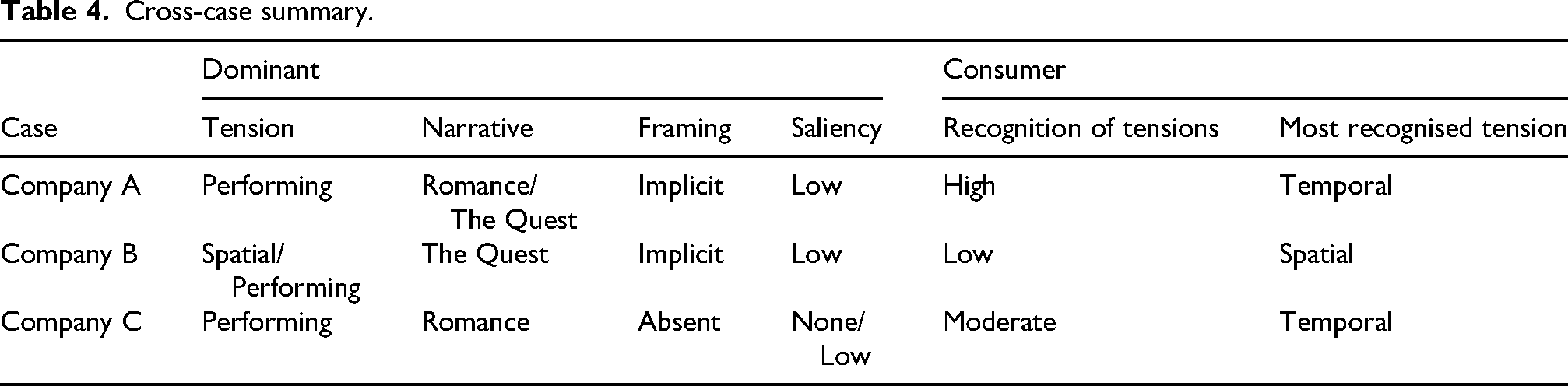
Instagram's structure of discrete posts enables firms to narrate their sustainable transitions through fragmented and evolving stories. Firms often shifted between roles and narratives, portraying themselves as heroes or agents of change. Three dominant narrative structures emerged across firms’ sustainability communications: ‘The Quest’, ‘Overcoming the Monster’, and ‘Romance’. In ‘The Quest’, sustainable transitions are depicted as a collaborative journey, requiring collective action between ‘characters’ (i.e. firms, consumers, and the community), which may resonate with viewers seeking actionable ways to address sustainability challenges. In ‘Overcoming the Monster’, the firm is a hero battling against and triumphing over sustainability challenges. ‘Romance’ narratives minimise tensions by offering idealised interpretations of sustainable transitions that emphasise happy endings. While these patterns occurred across firms, each company had a distinct message it was trying to convey to viewers.
Company A is a large ski resort known for its high-end international tourism and influencer-driven marketing campaigns, and it maintains the largest and most engaged follower base among the three firms. Despite having the fewest firm-directed sustainability communications, these increased steadily over time, reflecting the growing importance of sustainability and the firm's efforts to narrate its sustainable transition.
Company A predominantly used ‘The Quest’ and ‘Romance’ narratives on Instagram, but its most engaging content drew on ‘Comedy’ narratives to playfully acknowledge tensions and the operational challenges they create, without directly positioning posts as sustainability communications. For example, in Image 1, Company A explicitly references the temporal tension between winter and spring, commenting on unexpected snowfall without mentioning climate change or its impact on the ski industry's seasonality.
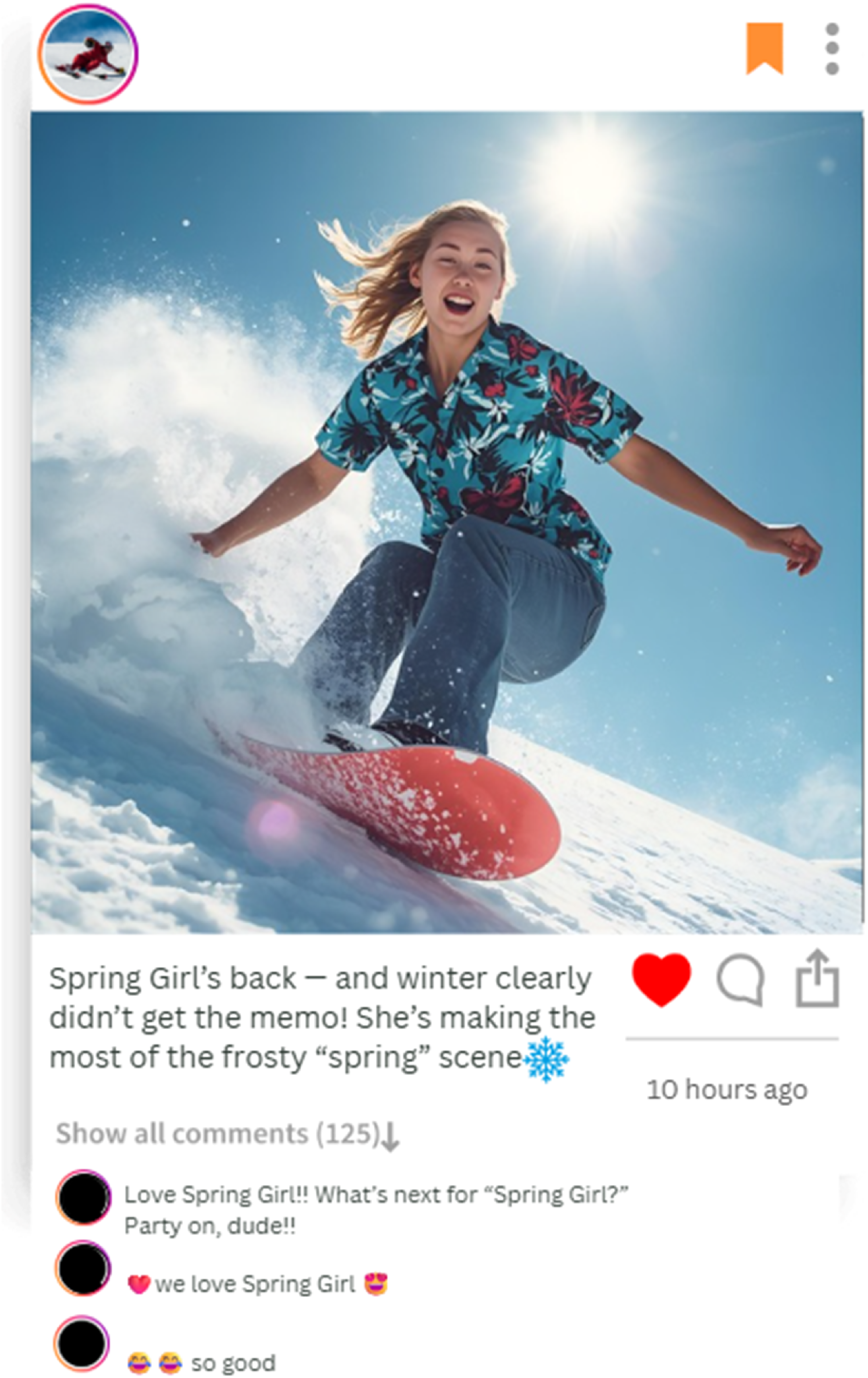
Company A's comedic post depicting heightened seasonality.
Beyond these lighter posts, Company A's sustainability communications often showcased tangible steps in its sustainable transition, such as implementing new waste management systems and decarbonisation initiatives. Kelly, one of the managers, explained that they try to communicate the firm's sustainability journey and the value of being more sustainable to their customers: We’re really susceptible to climate change. But we are also a reasonably large polluter as an industry. So, we really want to clean up our act. We’re trying to change our systems by decarbonising and reducing waste, reducing our impact. And we’re trying to advocate that to the skiers who come through our doors every year.
In contrast to Company A, Company B, a treetop tourism firm, represents a smaller, more typical New Zealand tourism operator. Its posts frequently outlined the steps in the firm's sustainable transition, from hiring carbon auditors to revealing the results and adopting initiatives to improve, with regular updates on progress and successes. While ‘The Quest’ narrative dominates their posts, ‘Overcoming the Monster’ is also common, positioning the firm as a champion actively tackling sustainability challenges (Image 2).
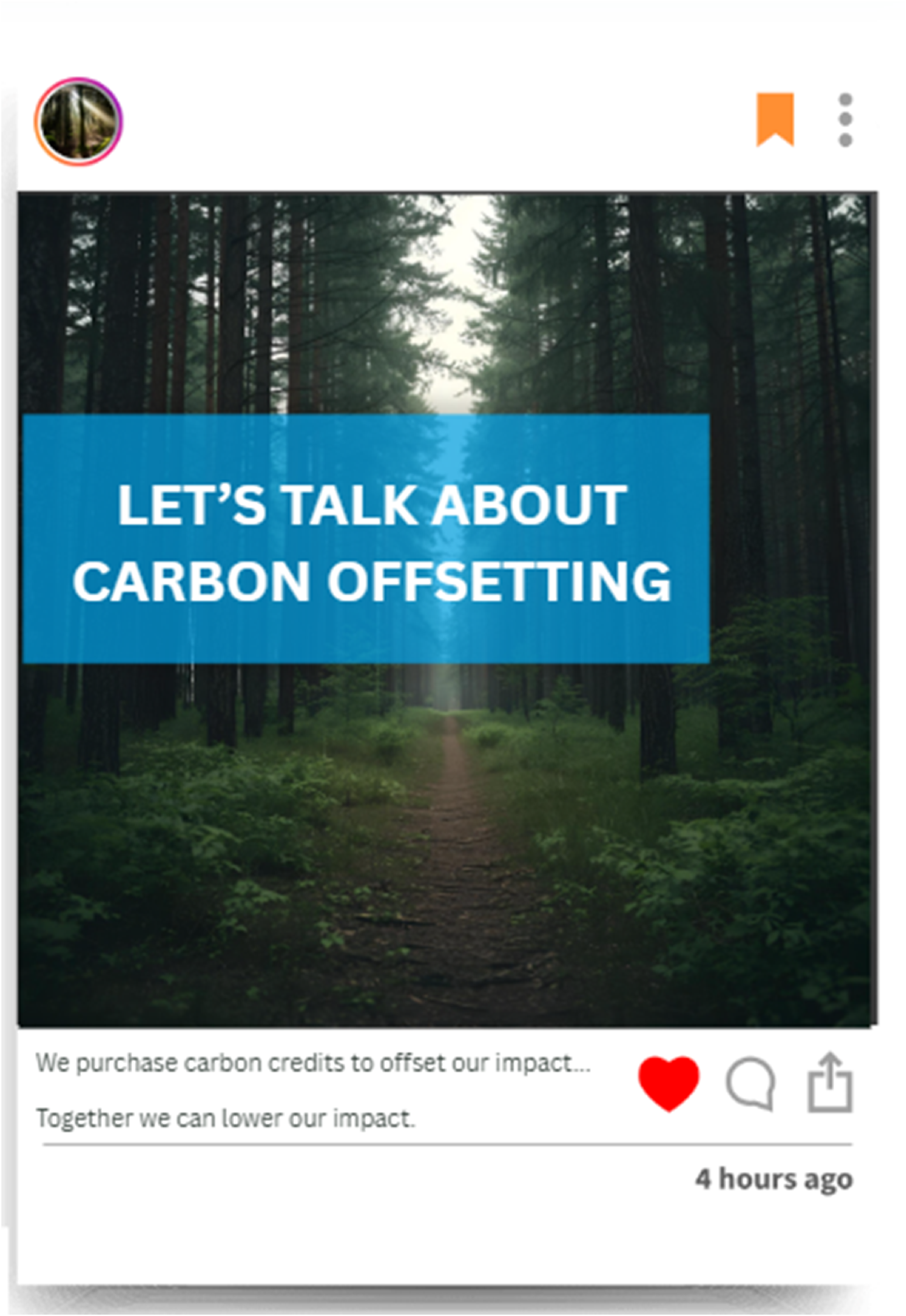
Company B's post about their quest to become carbon neutral.
Roger, their manager, described sustainability as a lifestyle, not just a business practice, where reaching net zero is ‘the start line’. He explained: We’re trying to find a way to communicate with people in a meaningful way … [But] sometimes, we get pinged on things, and you’ve got to watch it [when talking about sustainability] because you start to do these things [communicate sustainability practices], but if it's wrong, then you get in a lot of trouble.
Company C, the smallest firm, is a family-owned marine wildlife tourism operator. Its Instagram communications rely heavily on commercial promotion. When asked about their sustainability messaging, Vicki, who oversees their sustainability and marketing, explained: We are just a business that is always trying to look for ways to improve, and sustainability is a huge part of that. We are always trying to look for ways to help protect the environment and support the community where we can. That's the message we want to come across.
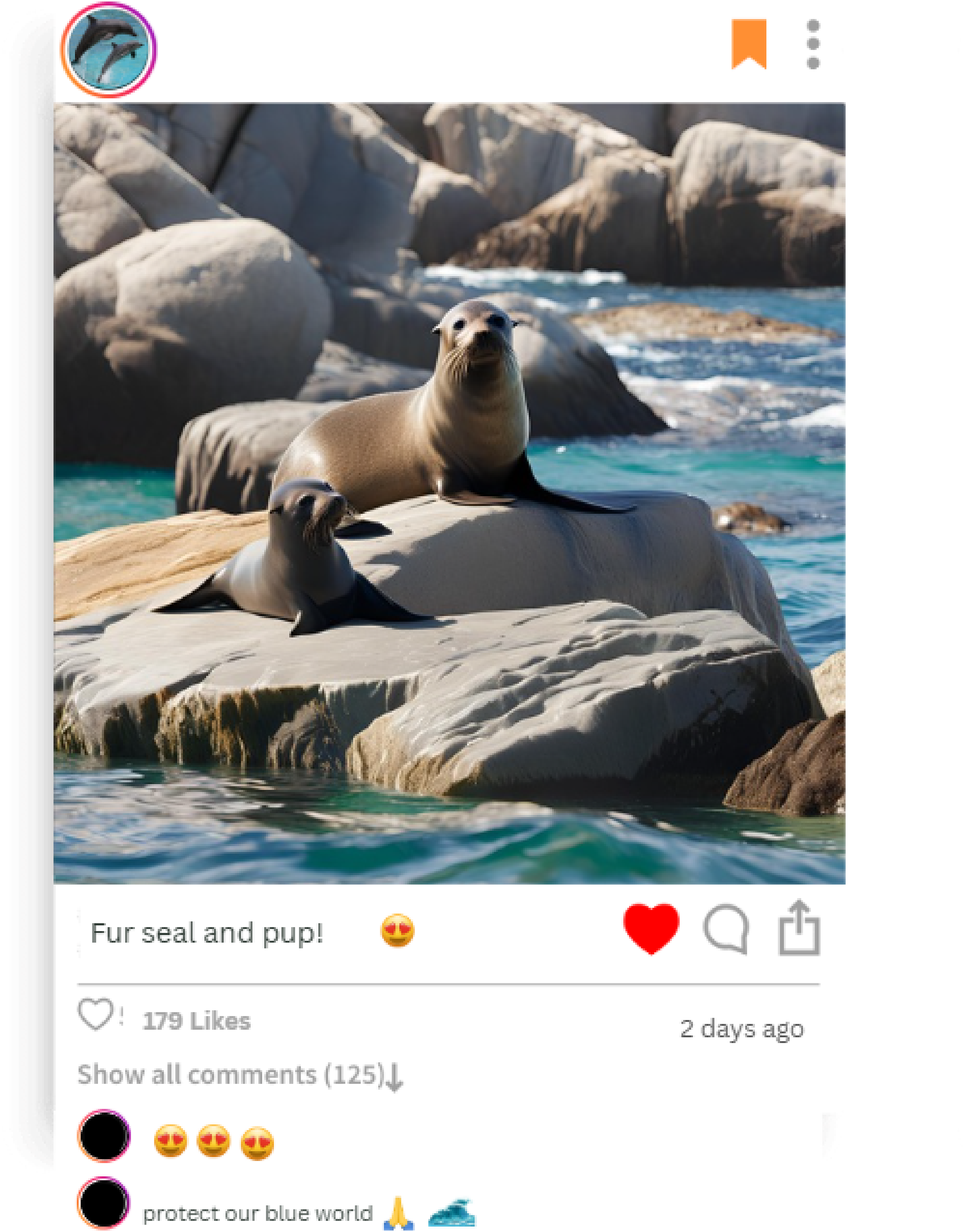
Company C's romanticised post depicting close-up wildlife viewing.
The following sections examine three forms of sustainability communications evident in the data: traditional firm-directed sustainability communications, mixed sustainability messages, and consumer-driven sustainability dialogues. The examples below show how audience engagement can endorse, contest, and reshape firms’ sustainability narratives.
Firm-directed sustainability communications
Firm-directed sustainability communications, including posts about new sustainability initiatives, challenges, and milestones, provide evidence of firms’ sustainable transitions.
For Company A, firm-directed sustainability communications often prompted public discussion about their initiatives and their limitations. For example, an internal social media audit revealed that women were featured in only 15% of their posts, prompting a marketing campaign to improve gender representation. This initiative quickly attracted critical viewer responses, with one commenter stating that ‘15% is ridiculous’, and another asking, ‘Why was it only 15%?’.
In response, Company A publicly acknowledged the shortcoming, framing the initiative as a corrective step: As you can see from all our posts over the last couple of months, it wasn’t because of a lack of talent! The simple truth is that we weren’t doing the right thing. So, we’re on a mission to make a change…
The firm again engaged directly with these critiques, responding, ‘You’re totally right. This is just a start …. We’re going to take a hard look at ways we can improve’, demonstrating how exchanges can surface tensions in sustainability and/or increase their saliency. These exchanges illustrate how viewer contestation can surface and amplify tensions in sustainability, while firm responses can extend their narrative of accountability and gradual improvement.
Cynthia, one of the assistant managers at Company A, echoed the importance of incremental progress in facilitating change and the role of transparency in communicating sustainability initiatives to consumers: We’ve been really focusing on the small steps … A lot of the time, it would start with someone on the front line, or me, seeing it [an unsustainable practice] and thinking, there's got to be a way to change … We’ve got to make this better.
In contrast, Company B's posts were more informative. For example, they produced a six-part series explaining concepts such as carbon zero and carbon offsetting, and how the firm implements them. Roger explained that these posts were deliberately designed to follow what he described as the ‘ultimate communication standard’, namely, World Economic Forum videos: ‘They’re like 60 seconds, 8 slides, with no more than 25 words per page. My brain can handle that’. The series was intentionally structured and sequenced, reflecting an effort to communicate sustainability in a transparent, standardised, and accessible way.
Company B was also the most likely to promote low-impact practices (Image 4). While these posts explicitly outline the firm's sustainable transition and raise implicit tensions around individual responsibility in addressing systemic sustainability challenges, they attracted relatively little viewer engagement. This suggests that audiences ignored the firm's narratives when related to individual actions, rather than endorsing or contesting them.
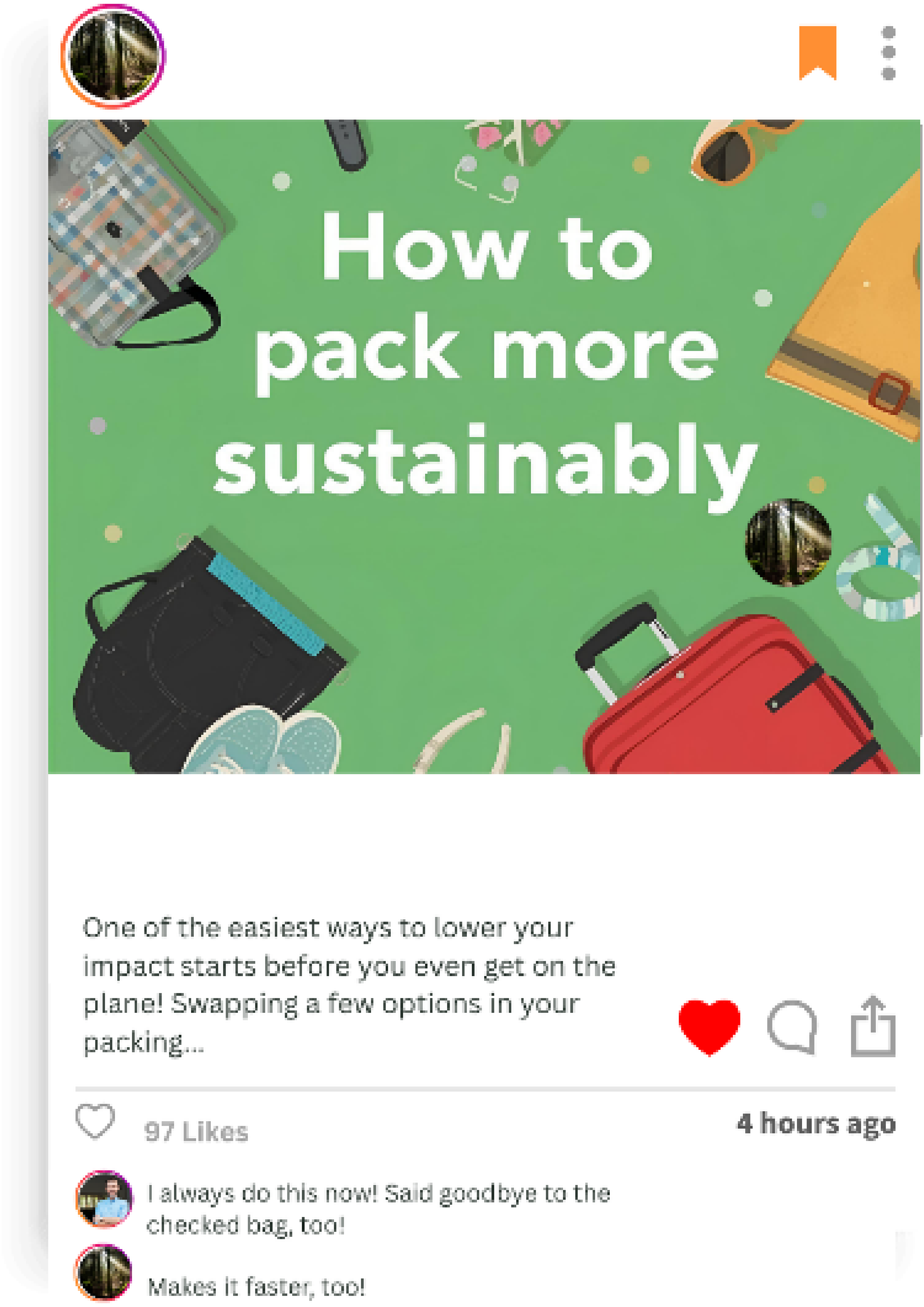
Company B's post encouraging individual responsibility in addressing systemic sustainability challenges.
Company C's firm-directed sustainability communications were more operational in nature. For example, on Earth Day, Company C posted a carousel update about a reforestation initiative launched the previous year (Image 5). Using ‘The Quest’ narrative, this post conveys an implicit performing tension: noting that the initiative is funded entirely by consumer donations (clearly stated), enabling Company C to pursue its environmental goals without affecting its profitability (not stated). Roughly 150 viewers liked this progress-focused storyline, endorsing the firm's sustainable transition narrative.

Company C's post depicting progress in its replanting initiative.
Together, these firm-directed sustainability communications trace each firm's sustainable transition through self-authored narratives that viewers can ignore, endorse, or contest. However, many posts blended sustainability themes, sometimes combining environmental or social messages, or mixing them with commercial promotions, creating mixed sustainability messages.
Mixed sustainability messages
Two-way communication about sustainability also occurred on posts where sustainability was not the primary focus. In many of these posts, firms appended sustainability themes to otherwise promotional content or had disconnected captions and visuals, creating mixed sustainability messages. While these hybrid messages sometimes diluted clarity, they reveal how firms seek to embed sustainability into their everyday marketing messages as part of their sustainable transition.
For example, in a post focused on a children's ski competition, Company A concluded with a reminder, ‘Don’t forget it's Environmental Day tomorrow!’ Such comments reflect what Cynthia described as the firm's mission to ‘plant seeds with our guests’. By embedding sustainability cues into everyday communications, Company A seeks to shape visitor behaviour before they arrive on the mountain. This sentiment was echoed by Amanda, a team member at Company A, who frequently has ‘conversations with them [guests] about our sustainability practices, [including] how we don’t encourage the use of single-use plastics and landfill rubbish’. She explained that the staff try to ‘make people more conscious of what they’re bringing up the hill’.
Despite these intentions, such sustainability ‘add-ons’ do not always reinforce the firm's intended narrative. In some cases, they introduce new interpretive frames that invite scrutiny and contestation. For instance, the environmental day add-on prompted a critical response from one viewer: ‘You guys are cutting out all meat meals tomorrow! What about organic farming that accounts for sustainable meat farming?’ Company A then clarified, ‘We support sustainable meat and veggie farming, we are just providing more veggie/vegan options’, not taking away meat options. This brief exchange shows how well-intentioned sustainability cues can disrupt a post's narrative coherence, expose the firm to contestation and dilute the post's original message.
Similarly, Company B posted a carousel with a caption focused on Mental Health Awareness Week (Image 6). However, the visuals showed staff walking through town and toasting reusable coffee thermoses, shifting the focus from social to environmental sustainability. Viewers engaged more with the imagery than the caption in the comments, illustrating how conflicting visual and textual cues can shift viewers’ focus, re-shaping the firm's message.
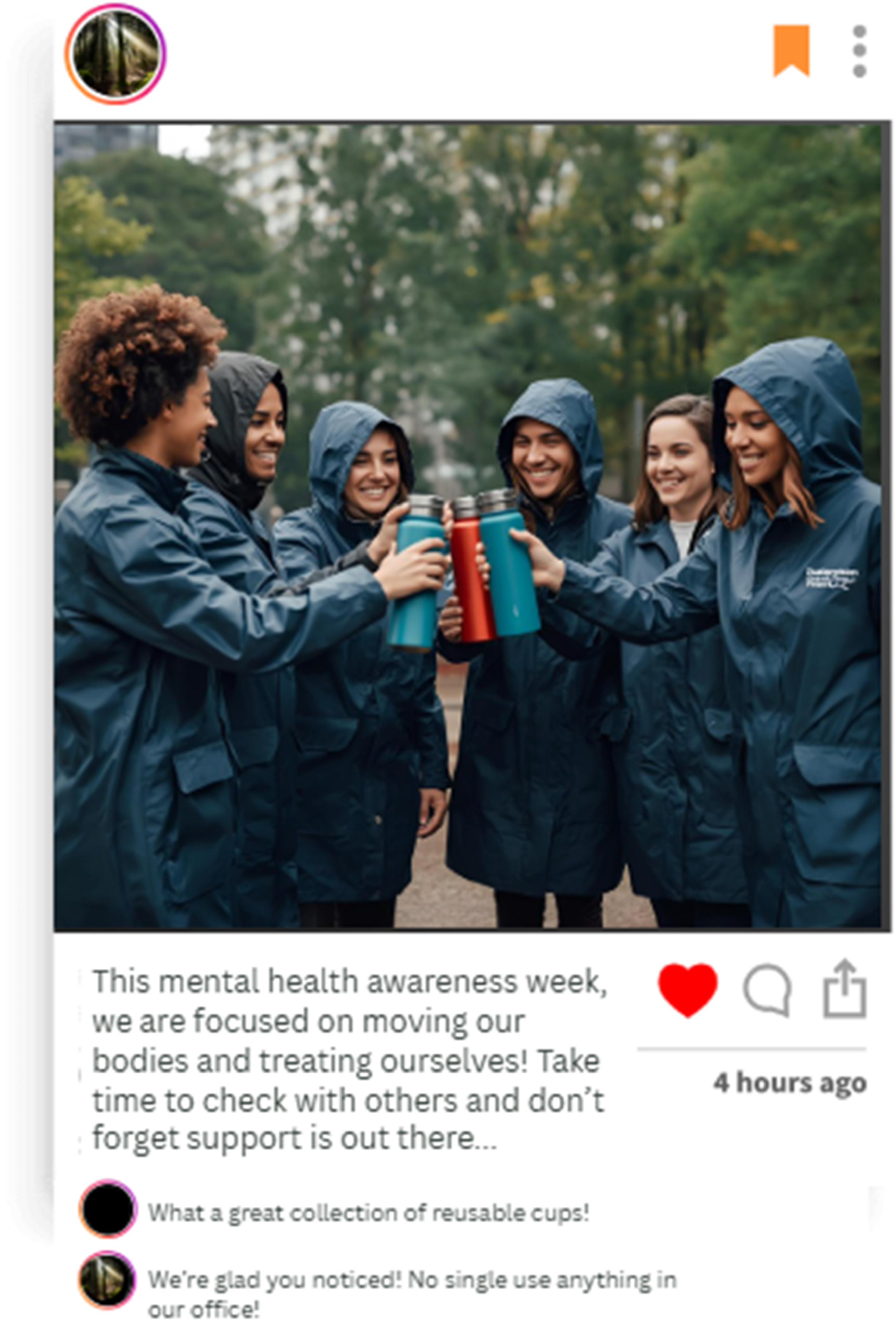
Company B's post depicting mixed sustainability messages across image and text.
Another common approach was for firms to introduce sustainability-related content in the comments. For example, Company C's post about a #rare wildlife encounter (Image 7) attracted viewer comments like, ‘Wow, that's an awesome interaction!!!  ’, and strings of heart emojis, endorsing the firm's ‘Romance’ narrative. The company then added two unprompted comments promoting responsible wildlife viewing, which received no engagement. This post-hoc insertion shifted the narrative from ‘Romance’ to ‘The Quest’, disrupting the post's narrative coherence; additionally, without two-way engagement, the firm's comments failed to shift the conversation towards sustainability.
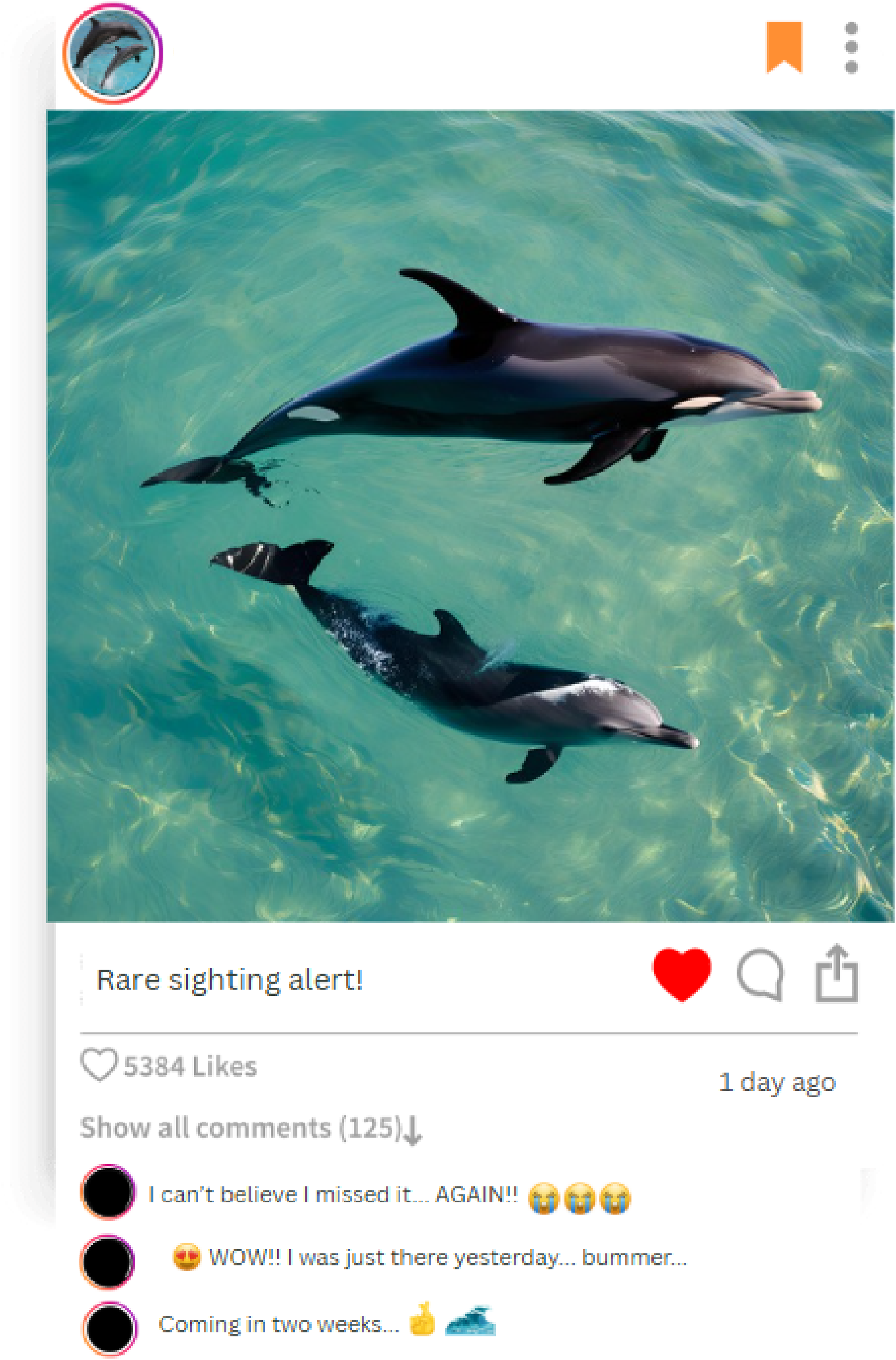
Company C's post romanticising lucky timing in wildlife viewing.
This pattern reflects a tension between how Company C understands its sustainable transition internally and how it communicates it to consumers. While sustainability challenges and initiatives were viewed as key parts of the firm's journey, they were not consistently foregrounded in guest communications. As Vicki, their sustainability and marketing manager, explained: We don’t necessarily talk about sustainability as such … I guess conversations might organically happen with guests when they’re in here [the shop], but on the boat, we do talk about things.
Consumer-driven sustainability dialogues
In many instances, viewers recognised tensions within firms’ posts, drawing attention to firms’ competing economic, environmental, and social goals in their comments. For example, Company A's post about making snow before opening day prompted one viewer to comment, ‘So you guys don’t get enough snow and need to use snow guns’, surfacing the firm's performing tension between economic imperatives (opening to make money) and environmental impact. Similarly, an ‘idyllic’ post showcasing Company A's mountain in the summer (Image 8) evoked both temporal and performing tensions, by inadvertently depicting how human activities have visibly damaged the mountain, through comments like ‘This bit of land looks fu#%ed!!’ and ‘how whack does it look with no snow on it’. These comments contest the firm's ‘Romance’ narrative of scenic beauty, revealing how audience interpretation and engagement can surface or increase the saliency of tensions in sustainability.
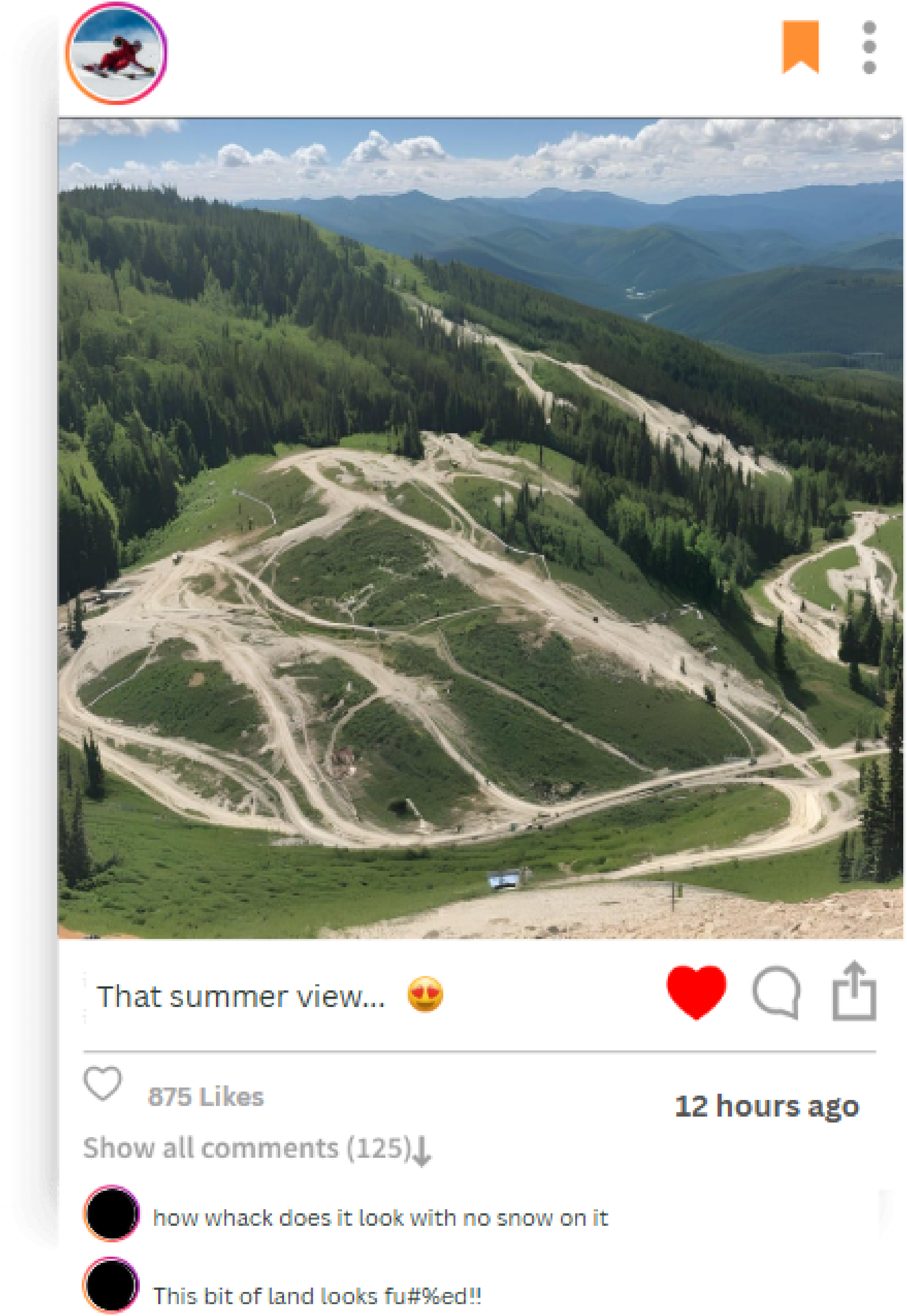
Company A's romanticised post conveys temporal and performing tensions.
Viewers also recognised tensions, often in relation to their own experiences and interests. For example, Company C's ‘Romanticised’ posts about rare animal sightings or pairings often prompted comments like, ‘Where were you when I was there  so cool!!!’, and ‘Wow, I missed them again
  ’. These reactions make temporal tensions more salient by highlighting the unpredictability and limited reproducibility of wildlife-viewing experiences. This recognition indicates that promotional posts can surface tensions when audiences associate them with missed opportunities or unmet expectations.
In addition to surfacing tensions in the comments, consumers also shaped how Company C communicates its performing tensions. Growing demand for lower-impact experiences helped Company C reframe an operating constraint into a sustainability differentiator. As Vicki explained, the firm did not receive a permit for swimming with the dolphins, but they have found that this resonates with visitors: I just think there's a massive shift. So, for instance, we don't swim with the dolphins. We don't have a permit… And we're finding that, because we don't swim with dolphins, we're getting a lot of people who want to have a lower impact. They want to learn and be educated… It's a real drawcard with people.
Viewer recognition and reframing of tensions also shifted in response to broader contexts. During the COVID-19 pandemic, for example, viewers’ focus shifted from temporal to spatial tensions, reflecting travel disruption caused by lockdowns (Images 9 and 10). Australian consumers who were season pass holders expressed frustration with border closures, while New Zealanders commented on regional lockdowns that limited inter-island travel. These shifts indicate that recognition of tensions is dynamic and context-sensitive, influenced by the immediacy of their impact on viewers.
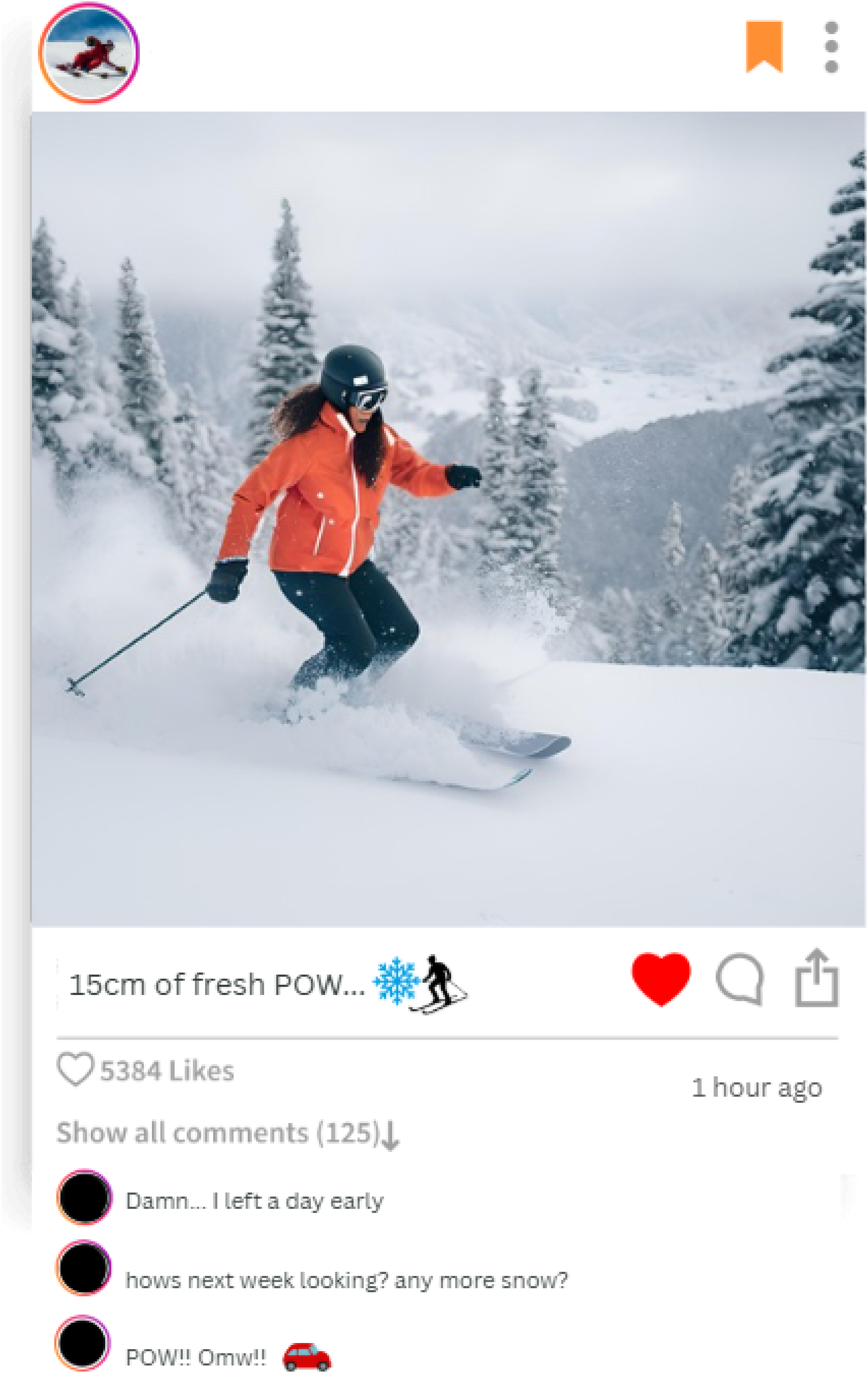
Company A's post surfaced temporal tensions in viewer comments.
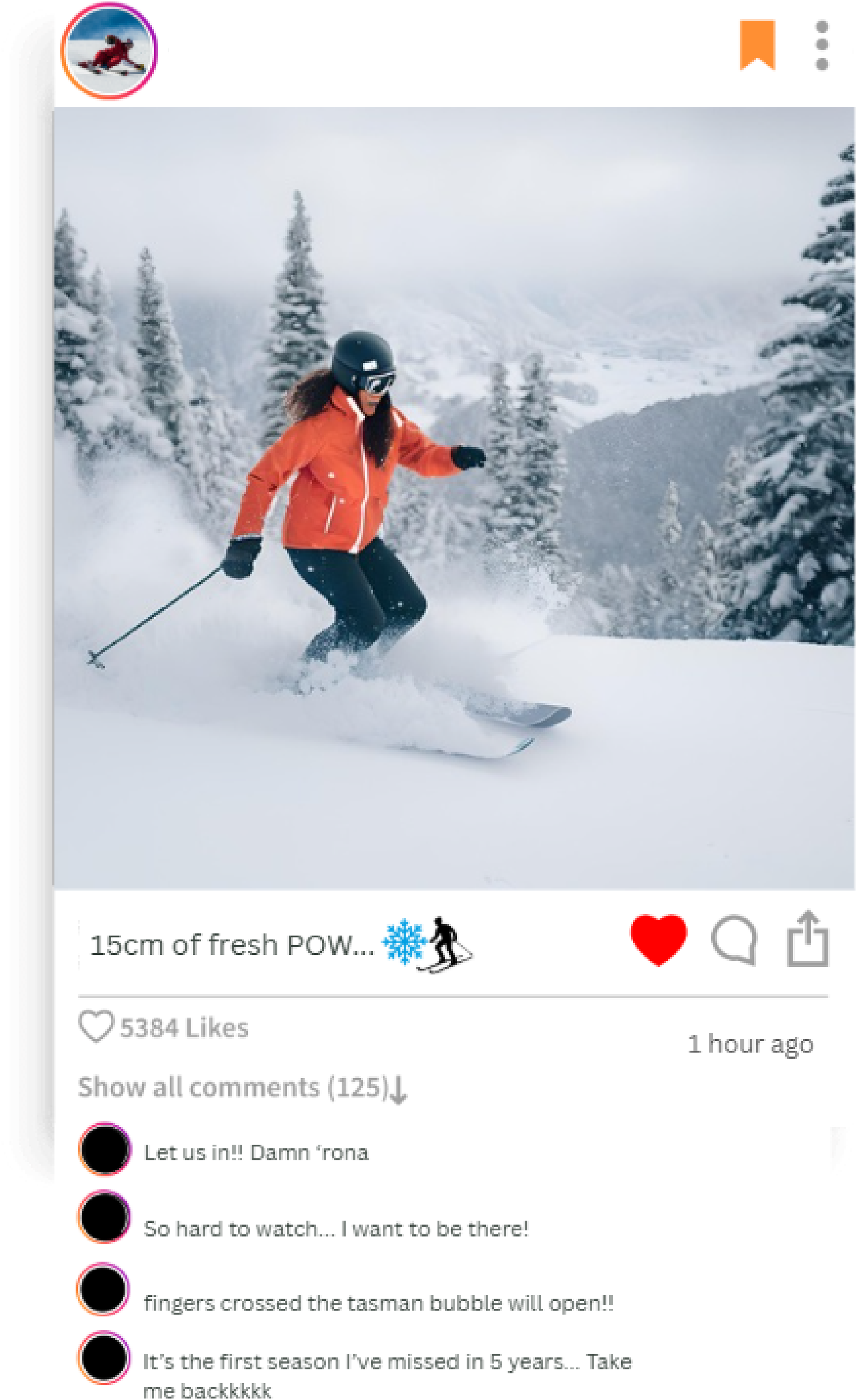
Company A's post surfaced spatial tensions in viewer responses.
While many comments remained one-way observations, others developed into dialogues as firms or other viewers responded, transforming posts into sustainability communications. These dialogic interactions can alter the meaning of posts, demonstrating that viewers are not simply passive recipients of firm narratives, but can be active participants who endorse, contest, and reshape the firm's sustainability narrative.
For example, Company A's posts about facility expansions initially focused on improved visitor experiences, such as emphasising increased uphill lift capacity. Yet viewer comments questioned environmental impacts on local wildlife. The firm initially directed viewers to a webpage for details, but later responded directly on Instagram, posting a video about their wildlife management plan. This example illustrates how viewer engagement can surface and increase the saliency of tensions, spurring two-way communication that can transform posts into sustainability dialogues.
Company C also experienced consumer-driven sustainability dialogues. In one post (Image 11), the firm wished followers ‘Kia Pai tou tatou Matariki!’ (or Happy Matariki!, used to celebrate the Māori New Year). Although not a sustainability communication, comments surfaced tensions in sustainability around authenticity. One commenter noted that the local Indigenous group celebrates a different event and suggested consulting a local expert. In the same post, a commenter also joked that ‘It's a bit hilarious wearing head torches to look at stars though!  ’, pointing out that the headlamps, while visually striking in the photo, hinder night-sky viewing. These comments contest the firm's ‘Romance’ narrative of harmony, revealing the post's performative aspects and cultural commodification.
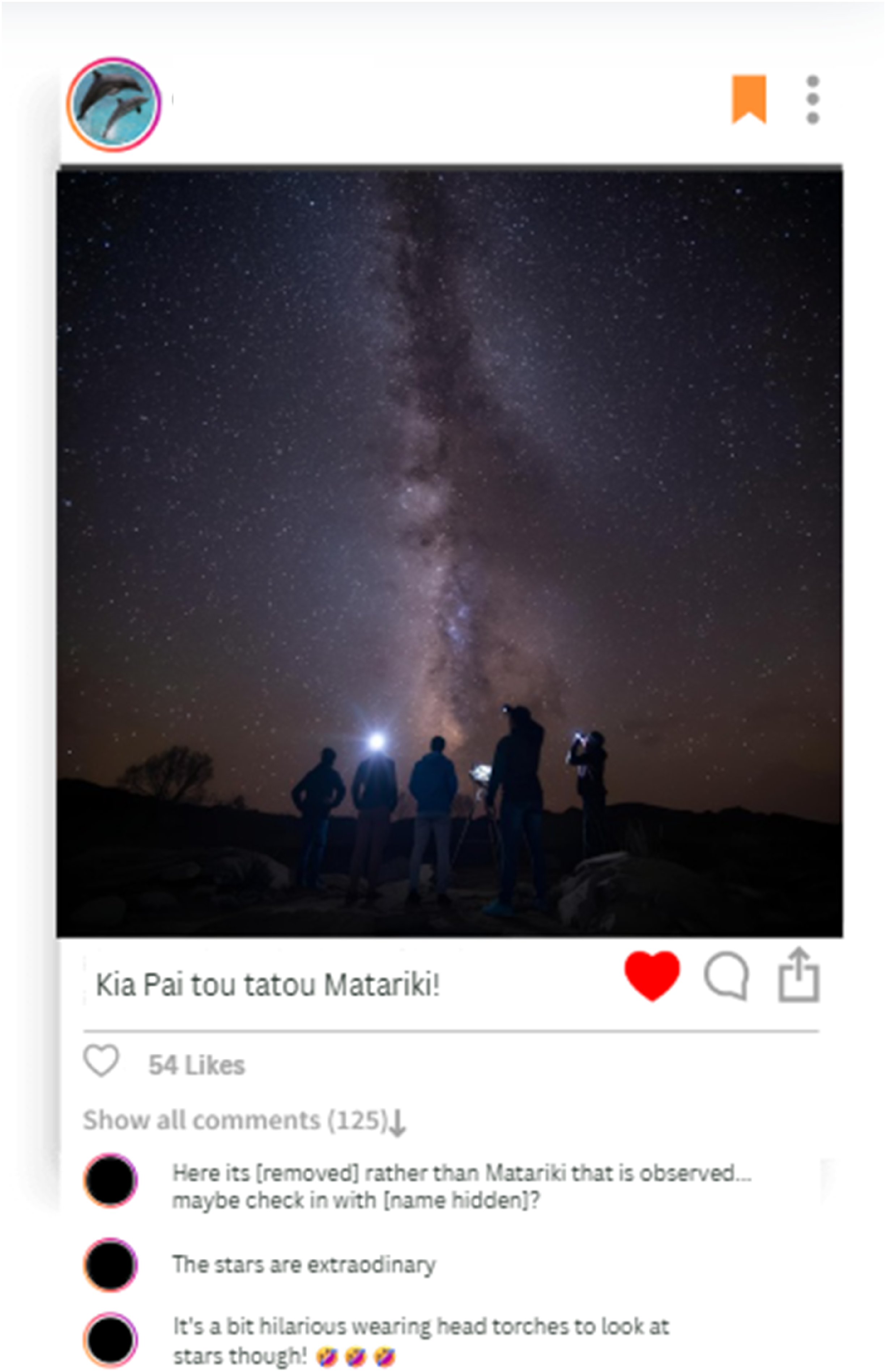
Company C's romanticised post sparked viewer contestation.
In another example, Company C used a ‘comedy’ narrative to announce a calf sighting. One viewer commented, ‘and with a species with only 42 to 60 left on earth, wonderful news!  ’, prompting the firm to respond, ‘This is a Hector's dolphin, they look very similar to Maui … The Hector's dolphin population is roughly 10,000…’. Through this exchange, the comments reshaped the post from a light-hearted promotion into an educational dialogue about conservation, enabling sustainability communication.
In contrast, Company B had no consumer-driven sustainability dialogues. Viewer comments typically endorsed and reinforced the firm's narratives around their sustainable transition, without surfacing additional tensions in sustainability. However, Company B occasionally leveraged viewer comments to introduce or elaborate on its sustainability initiatives, turning spontaneous interactions into sustainability communications.
For example, Company B's feed regularly features staff introductions. When a viewer asked whether the plants visible in one such photo were real (Image 12), the firm replied, ‘Yes, they sure are real! This is our community space and living wall! Over 100 plants…’. This brief exchange allowed the firm to highlight its environmental and social initiatives, including its community gathering space, which can be rented for a koha (donation), and its ‘living wall’, drawing attention to its reforestation and native replanting initiatives. This demonstrates how two-way engagement on posts can create opportunities for sustainability dialogue.
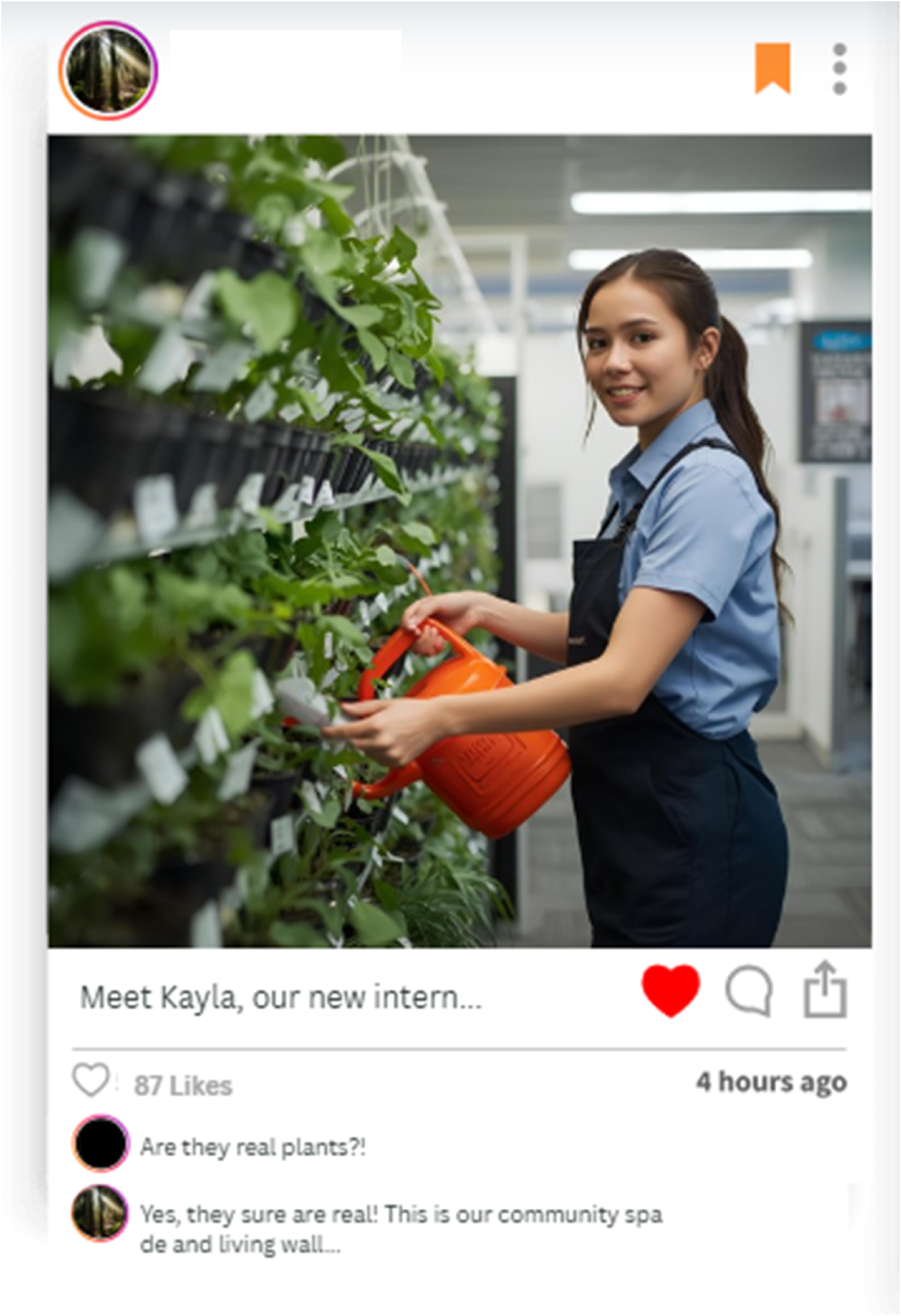
Company B's post using consumer comments to engage in sustainability dialogue.
Discussion
Our findings contribute to the literature on sustainable communications in tourism by drawing attention to the co-construction of firms’ sustainability narratives on Instagram. Firms employ recognisable narrative structures (e.g. ‘The Quest’, ‘Romance’) and framing choices to render tensions in sustainability more or less salient (Entman, 1993; Goffman, 1974; Pang et al., 2022), while audiences can ignore, endorse, or contest firms’ messages.
This dialogic feedback loop informs how firms construct subsequent posts, reflecting the shift from firm-directed to co-constructed sustainability narratives. By focusing on tour operators and multi-modal content, we address gaps identified in tourism communication research, extending social media insights beyond hotels (Alnawas et al., 2024; Tölkes, 2018) and CSR framing on social media (Kwon et al., 2024), to the framing of tensions in sustainability in tourism.
Narrative structures and framing in sustainability narratives
Our research complements existing studies on narrative communications in tourism, at the destination (Bassano et al., 2019) and individual levels (Galih Kusumah and Andrianto, 2023; Van Laer and Izberk-Bilgin, 2019), by adding a firm perspective. Instagram's episodic nature gives firms flexibility in how they narrate their sustainable transitions. Firms frequently switch between and combine narrative structures across posts, which appears to prime distinct viewer responses. For example, ‘Comedy’ narratives enable firms to communicate sustainability challenges while deflecting attention from the underlying tensions, while ‘Romance’ narratives highlight idyllic elements, drawing attention to aspirational or reconciled outcomes. Thus, narrative structures may condition whether and which tensions viewers recognise and respond to.
However, the effectiveness of these narrative choices may depend on viewers’ ability to interpret sustainability claims. As Roger from Company B explained, consumers often struggle to distinguish between superficial and substantive sustainability efforts: But if they [consumers] are not educated enough, this guy [operator] can say “I’ve got a worm farm”, and this [other] guy says, “I’m a regenerative tourism business”, and they don’t know the difference.
Accordingly, we demonstrate how framing theory (Entman, 1993; Goffman, 1974) is applied to tensions in sustainability, influencing their saliency. The multimodal composition of each post (i.e. the narrative, visuals, text, emojis) allows firms to selectively reveal, maximise and minimise tensions. Together, these findings contribute to a more dynamic conceptualisation of narrative communications in tourism by demonstrating how narrative forms and framing influence which aspects of sustainable transitions are (in)visible. This links the literature on narrative communications with research on tensions in sustainability, clarifying how firms use narratives and framing when crafting their sustainability narratives on social media.
Audience autonomy and counter dialogues
Our second contribution reconceptualises sustainability communications as an interactive, participatory process. Previous research has focused primarily on firm-directed sustainability messaging (Font et al., 2017; Kwon et al., 2024; Villarino and Font, 2015), overlooking how audience participation reshapes narratives. While Kwon et al. (2024) call for additional research on consumer perceptions and responses to different framings in CSR advertisements (in times of crises), our research goes further by examining more generally how these responses and interactions actively reshape firms’ sustainability narratives.
We show how visible contestation can surface latent tensions and press firms to clarify their messages, transforming posts into sustainability communications. Additionally, feedback from viewer responses can shift the firm's sustainability narratives and framings in subsequent posts. These findings support Entman's (1993) claim that audience autonomy enables real-world reframing, particularly in environments where messages are open to multiple interpretations.
As Cynthia at Company A explained, consumer support for their sustainability initiatives depended on how they were communicated, ‘I think a lot of it's the way that we sort of teach, don't preach’. In reflecting on behavioural change amongst visitors, she noted that the company saw ‘the biggest behavioural changes [in] guests after one season of learning how to not preach at people but just give them the facts’.
This dynamism has significant methodological implications. Studies focusing solely on firm-directed sustainability communications risk overlooking how sustainability narratives evolve through contestation, endorsement, and reinterpretation in practice. Our findings highlight the importance of analysing the participatory nature of social media communication, where meaning often emerges through interactions and dialogue.
By analysing naturally occurring, publicly visible interactions, our study offers empirical evidence that challenges assumptions about where sustainability communications occur and who controls the narrative. Sustainability communications on social media are not unidirectional; instead, their meaning often evolves through firm–audience interactions. This calls for more expansive analytical approaches that account for the dialogic and multimodal nature of how sustainability narratives are constructed in tourism marketing.
Viewer recognition of tensions in sustainability
Our third contribution provides empirical evidence that viewers recognise tensions in sustainability at both individual and societal levels. Viewers often surfaced tensions related to their ability to participate in or replicate the experiences advertised on Instagram. Yet viewers also recognised tensions extending beyond their immediate interests, identifying broader societal challenges (e.g. Company A's post about gender representation prompted viewer comments about racial bias in their marketing communications).
Viewer recognition was highly context-dependent, shifting with situational factors such as pandemic-induced travel restrictions. This extends research that has primarily examined how firms manage tensions in sustainability (Chen and Eweje, 2022; Hahn et al., 2018; Sharma and Jaiswal, 2018), by showing that audiences also identify and interpret tensions. Distinguishing narratives and framings (firm-side emphasis) from saliency (viewer-side visibility) provides initial insights into how tensions become visible even when minimised or unacknowledged by the firm. Thus, recognition varies over time across (and within) audiences.
These findings challenge assumptions that consumers lack the attention or capacity to engage with complex sustainability issues (e.g. Santa and Drews, 2023). This may be due to the relatively low cost of engaging in two-way communication on social media, enabling viewers to surface complex tensions that may be ignored in traditional one-way communications.
Conceptualising the co-construction of sustainability narratives
From these insights, we construct a conceptual model that illustrates how the multi-modal nature of Instagram facilitates firm-consumer interactions that transform posts and create new spaces for sustainability communications (Figure 1). Firms initially encode posts by selecting the message they wish to convey and the narrative structure through which it is told. The encoding process links visual and textual elements to create a coherent message, which is then shared on social media for viewers to decode.
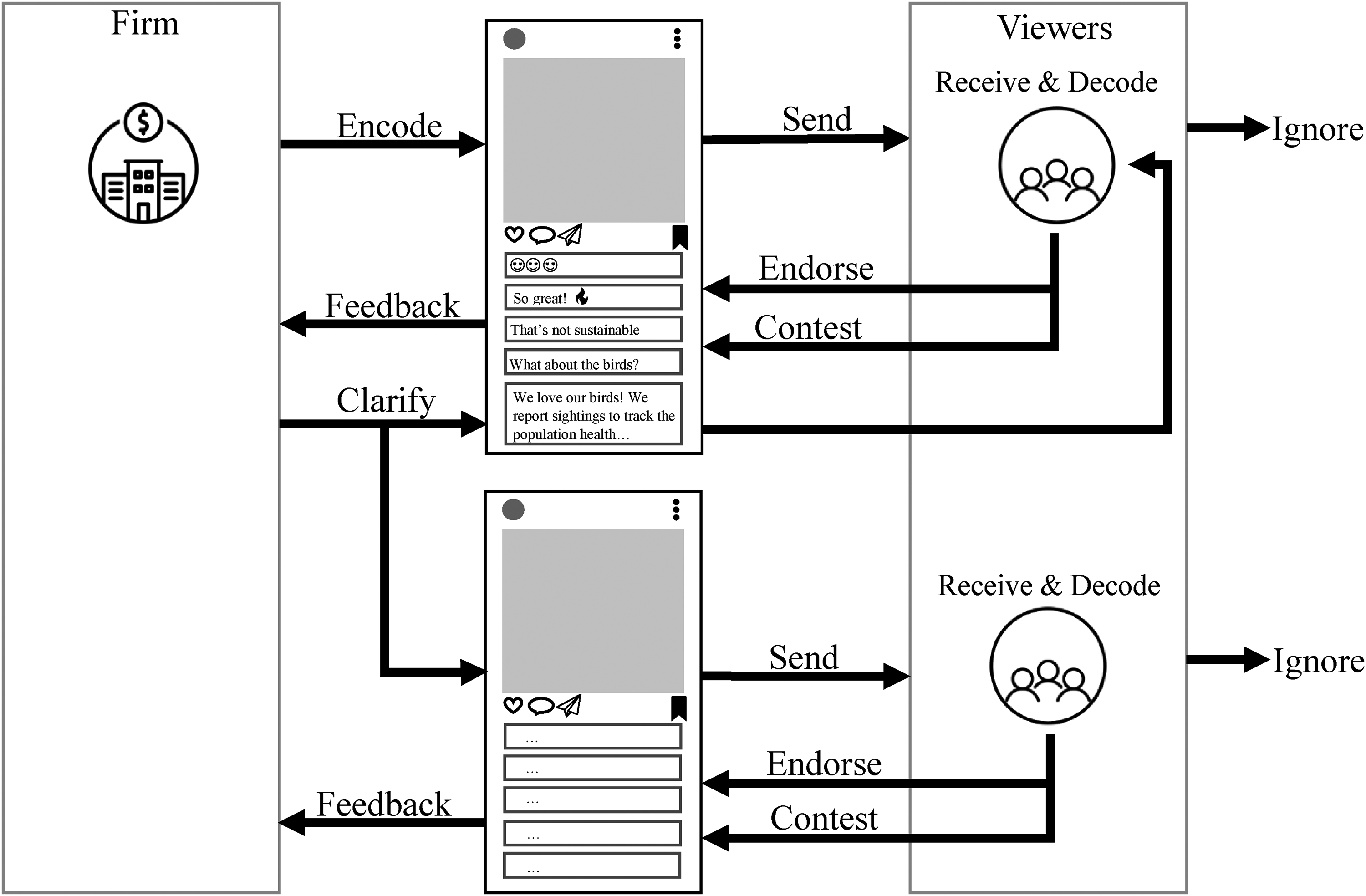
Co-construction of firms’ sustainability narratives on Instagram.
Viewers encountering the post may scroll past it (non-engagement), view it without interacting (passive engagement), or share it privately through direct messages (private engagement). While Instagram provides metrics like platform share counts, it does not capture private channels or indicate whether viewers agree or disagree with a message. Because this data is not visible and cannot be reliably interpreted, it is excluded from the analysis. Consequently, we categorise non-visible engagement under narrative indifference. This approach avoids speculation of viewer behaviour, while maintaining consistency with the patterns observed in the data.
Visible engagement occurs when viewers either endorse or contest the firm's message. Endorsements, such as likes, positive emojis, and affirming comments that reproduce and reinforce the firm's narrative. Contestation is primarily expressed through critical comments, challenges, or reinterpretations of the firm's message, often increasing the salience of, or surfacing additional tensions in sustainability.
Viewers may vary in their sensitivity to firms’ narratives. Those more familiar with a firm may be more likely to perceive inconsistencies in the firm's narratives or in their own experiences, thereby increasing the likelihood of endorsement and contestation. Familiarity may strengthen identification with the firm's values, prompting endorsement when messages align, but also increasing scrutiny when they do not. For example, Company A, which had many long-time season-pass holders, had the most contested posts, with viewers referencing specific practices that conflicted with the firm's narratives on Instagram.
Contestation creates space for sustainability communications. Firms can ignore these opportunities or respond with clarification. Similarly, viewers may choose to (not) engage with the firms or other viewers’ comments. In these instances, the narrative structures and framings of the original post remained largely intact. Two-way exchanges, however, have the potential to redefine the meaning of a post as viewers and the firms negotiate and co-construct shared understandings.
Over time, the feedback from these interactions informs how firms construct subsequent posts. This iterative process can gradually reshape a firm's broader sustainability narrative, shifting what stories they tell and which narratives they use. Company A's experience communicating resort expansion exemplifies this process by showing how continued dialogue across posts reshaped their sustainability narrative, from the excitement of expanding the resort to the challenge of forming a conservation management plan, and eventually, building elsewhere to protect the local ecosystem.
This model provides an empirical example of a micro-foundational pathway theorised by Beach et al. (2025b): when a firm's narratives do not resonate with viewers, or when viewers perceive the firm's messages as inconsistent, they may contest the firm's narrative. This provides the firm with an opportunity to engage viewers in the sense-making process by clarifying or adjusting their narrative as they negotiate and co-construct shared meanings.
Managerial implications
Our findings show that sustainability communication on Instagram is no longer unidirectional: viewers actively contest and co-construct firms’ sustainability narratives. Even posts not explicitly intended as sustainability communications can provoke dialogue about environmental or social concerns. Rather than avoiding or suppressing these interactions, managers should view them as valuable opportunities for dialogue and to clarify the firm's narratives (Beach et al., 2025a).
Demonstrating responsiveness to viewer interactions and comments may help firms avoid accusations of greenwashing, or defensive communication strategies like intentionally under-communicating (green blushing) or not communicating their sustainable transitions (greenhushing) (Falchi et al., 2021; Font et al., 2017). As such, such interactions should be approached as an ongoing negotiation with viewers, welcoming dialogue and using explicit framings to acknowledge complexity.
Viewer familiarity adds further complexity. Firms with loyal or long-term customer bases face heightened scrutiny because these viewers have greater knowledge of the firm's operations and sustainability commitments. Such audiences may be more sensitive to perceived discrepancies between the firm's stated sustainability goals and observed practices, and more likely to contest implicit framings that minimise tensions.
For managers, this highlights the need for consistency and transparency when communicating sustainable transitions and tensions in sustainability. Managers should regularly post sustainability updates and openly share information about their sustainable transitions, to increase viewer engagement as well as perceived transparency (Alnawas et al., 2024). Additionally, firms should use Instagram's narrative flexibility to their advantage by employing a range of structures that reflect genuine progress and challenges to craft sustainability narratives that resonate with their viewers.
Conclusion
This article contributes to the emerging literature on how tourism firms communicate sustainable transitions through social media, focusing on narrative framing and the visibility of tensions in sustainability on Instagram. Our findings demonstrate that sustainability narratives are actively co-constructed through interactions between firms and their audiences, whose responses can surface tensions and shift firms’ narratives.
We make three distinct contributions. First, we extend the understanding of narrative structures and framing in tourism marketing. By analysing narrative structures, framings, and the multimodal nature of communications on social media, we show how Instagram serves as a performative space where tourism firms craft sustainability narratives and can strategically minimise, maximise, or render their tensions in sustainability (in)visible. While we acknowledge that audience recognition of tensions is not inherently negative, we focus on these cases in this article because they pose more significant challenges for tourism marketers.
Second, we offer a methodological contribution by analysing all Instagram posts within the study period rather than focusing solely on sustainability communications. This broader approach reveals how Instagram audiences can ‘subvert’ and contest firms’ sustainability narratives, surfacing implicit tensions. When other viewers or the firm engage in these viewer-driven narratives, the audience may redirect the firm's narratives towards sustainability-oriented dialogue. Consequently, we argue for broader methodological approaches to better understand how sustainability narratives are crafted and evolve in tourism marketing.
Third, we provide empirical evidence that viewers are not passive recipients of firm communications. Viewers actively recognise, engage with, and respond to firms’ sustainability narratives. Across our cases, Instagram users recognised tensions and, at times, contested firm-driven narratives. These findings demonstrate that the common assumption that tensions in sustainability are too complex or ambiguous for meaningful public engagement is more nuanced. Our results suggest that even when tensions are not necessarily present in a post or are subtle in framing, they may still be highly salient to viewers.
This study has several limitations. First, our research conceptualises sustainability communications as continuous interactions that may limit insights into the experiences of casual or infrequent viewers who encounter posts sporadically (rather than following a company). Additionally, while focusing on a small number of tourism firms in New Zealand provides rich contextual understanding, findings may not be generalisable to other cultural or regulatory contexts. This leads to another limitation of our conceptual model: the inability to capture viewers who do not publicly engage with posts. In this article, the data cannot distinguish between non-public engagement (e.g. sharing posts privately), passive engagement (e.g. watching and scrolling), or non-engagement (scrolling without consuming the content). Lastly, our methodology does not directly capture whether firms strategically and intentionally employ specific narrative framings or saliencies or if they emerge inadvertently. While our interview data offers some managerial perspective, it does not definitively clarify the intentionality behind each post, potentially limiting practical insights for tourism marketers seeking precise strategic limitations.
Future research could explicitly examine the strategic decision-making processes underlying firms’ narrative framing and saliency choices on social media. Qualitative research involving interviews and participant observation focused specifically on marketing and sustainability communication strategies could provide insights into whether and how tourism marketers intentionally leverage narratives and framing strategies on platforms like Instagram. Understanding intentionality and its results could significantly enhance practical guidance for effectively communicating sustainable transitions and their tensions.
Finally, this research points to the need for conceptual research into how tourism firms engage consumers in collective sensemaking around sustainable transitions and tensions in sustainability. Consumer responses to sustainability communications appeared varied, indicating that deeper insights into how consumers interpret or respond to these tensions would enable firms to craft more compelling sustainability narratives. Future research could use social judgment theory (Sherif and Hovland, 1961) or cognitive dissonance theory (Festinger, 1957) to explore how consumers evaluate and respond to firms’ sustainability communications.
Overall, our study reinforces that sustainability communication in tourism marketing on Instagram is a dynamic, interactive, and co-constructed process; this requires marketers to carefully navigate narrative strategies, framing, and audience engagement to craft compelling sustainability narratives on social media.
Supplemental Material
sj-docx-1-jvm-10.1177_13567667261425038 - Supplemental material for Crafting sustainability narratives in tourism on social media
Supplemental material, sj-docx-1-jvm-10.1177_13567667261425038 for Crafting sustainability narratives in tourism on social media by Claire Beach, Sitong Michelle Chen, Michael SW Lee and Richard Starr in Journal of Vacation Marketing
Footnotes
Ethical statement
This research has received ethical approval from the University of Auckland Human Participants Ethics Committee on 17/01/2024 for three years (Ref No. UAHPEC24736).
Instagram data were collected using a verified web scraper via a paid APIFY account. Only publicly accessible content was collected, and all organisations provided informed consent for the analysis of their online materials. The use of this data complies with free and fair use provisions for educational and research purposes. The data cannot be shared due to the embedded metadata, which would breach the confidentiality condition established for this study.
Funding
The authors disclosed receipt of the following financial support for the research, authorship, and/or publication of this article: This work was supported by the University of Auckland Business School (PhD Research Grant).
Declaration of conflicting interests
The authors declared no potential conflicts of interest with respect to the research, authorship, and/or publication of this article.
Generative AI was employed for specific, limited purposes in this research. As no one on the research team is skilled in coding, ChatGPT was used to modify the JSON codes used with APIFY for web scraping. An editable version of these codes is included in Supplemental Appendix 1 to ensure transparency and replicability. Canva was used to produce de-identified versions of the Instagram posts presented in the article, to protect participants from potential identification via reverse-image search tools such as Google Lens. An overview of this procedure is provided in  . To our knowledge, this use complies with Canva's Acceptable Use Policy.
Supplemental material
Supplemental material for this article is available online.
References
Supplementary Material
Please find the following supplemental material available below.
For Open Access articles published under a Creative Commons License, all supplemental material carries the same license as the article it is associated with.
For non-Open Access articles published, all supplemental material carries a non-exclusive license, and permission requests for re-use of supplemental material or any part of supplemental material shall be sent directly to the copyright owner as specified in the copyright notice associated with the article.
