




Abstract
Achieving eco-service quality remains a challenge in the eco-tourism sector. This study develops a novel theoretical model to examine the impact of the eco-service quality (ECOPERF) model on behavioral intentions by analyzing the structural relationships among satisfaction, memorability, and revisit intention (RI). Utilizing the ECOPERF model, we demonstrate how the quality of lodging services influences RI through satisfaction and the memorability of ecotourism experiences. More specifically, the study is underpinned by the stimulus–organism–response framework. The proposed conceptual model examines the unique relationships among the stimulus (eco-service quality), organism (satisfaction and memorable tourism experiences), and response (RI), addressing a gap in the literature. The study draws on data from 268 U.S. tourists, summarizing key findings. Additionally, an experimental study highlights the moderating role of Inclusion of Nature in Self (INS) in the relationship between eco-lodging appeal and consequential behaviors. This study is the first to apply INS in an eco-lodge context, offering practical insights for industry practitioners. Furthermore, we demonstrate that ECOPERF influences RI through a sequential pathway: service quality → satisfaction → memorability → revisit intention. Theoretical and practical implications for ecotourism hospitality literature and practice are discussed.
Keywords
Introduction
Ecotourism refers to travel undertaken primarily to experience natural environments and support biodiversity conservation (Beall et al., 2021; Fennell and de Grosbois, 2023; Prideaux et al., 2012). It seeks to minimize cultural and environmental impacts while contributing to conservation, local economic benefits, and ecological education (UNWTO, 2025). The global ecotourism market was valued at USD 185.87 billion in 2021, with an estimated CAGR of 15.2% from 2022 to 2030 (Grand View Research, 2025). Growing awareness of the negative impacts of traditional tourism—such as water pollution, soil erosion, and habitat destruction—has driven tourists and governments to advocate for ecotourism (TIES, 2025; UNWTO, 2025).
Ecolodges have become central to this sector (De Grosbois and Fennell, 2021; Fennell and de Grosbois, 2023). The International Ecotourism Society coined the term in 1994 to distinguish lodges that rely on natural environments and follow ecotourism principles. Core aims include minimizing impacts, promoting conservation, generating local benefits, and respecting cultures (Mafi et al., 2019; Talukder et al., 2024). Research shows that eco-lodging should provide distinctive value beyond conventional stays by offering conservation engagement, wildlife activities, eco-learning, and sustainability practices (Ban and Ramsaran, 2017; Paul and Roy, 2023). To assess such experiences, the ECOPERF model was developed to measure service quality in ecolodge contexts (Ban and Ramsaran, 2017).
Despite the central role of service quality in determining an eco-lodging experience, the effect of eco-service quality in shaping tourists’ loyalty to ecolodges (i.e. revisit intention (RI)) and its underlying mechanism remains underexplored. Although Ban et al. (2021) examined the effect of service quality of eco-lodge using eco-service quality, their focus was on the cognitive evaluation of economic value (value for money) of eco-lodge services in determining tourist loyalty. An experiential view of eco-lodge tourism has yet to be explored although promising, given the hedonic nature of the ecotourism experience.
Few studies have investigated the sequential relationships between service quality and behavioral outcomes in eco-tourism using theoretical approaches such as the stimulus–organism–response (S-O-R) framework (Mehrabian and Russell, 1974), particularly in the context of ecolodges (Paul and Roy, 2023). The S-O-R framework suggests that exposure to a stimulus (S)—an external environmental factor or characteristic—elicits an internal state (O), whether cognitive or affective, which then shapes behavioral responses (R) (Liu et al., 2024; Su et al., 2020). Applying this framework, we examine how eco-service quality affects RI. Findings indicate that higher service quality enhances satisfaction and memorability, both of which jointly foster loyalty. The study highlights satisfaction and memorable experiences as interrelated processes shaping tourist behavior. In the second study, we replicate survey findings in an experimental setting and extend them to the general public by incorporating “Inclusion of Nature in Self” (INS; Schultz, 2001). INS reflects how strongly individuals see nature as part of their identity, enabling nuanced consumer segmentation and practical implications for eco-lodge marketing and service design.
The objectives of the study are fivefold: The objectives of the study are fivefold: (1) to examine the effects of perceived eco-service quality (ECOPERF) on customer satisfaction (CS) and the memorability of their experiences, (2) to determine whether this effect on RI is mediated by satisfaction and memorability, (3) to assess how perceived eco-service quality (S) influences satisfaction and memorability (O), which in turn affect RI (R), forming a sequential path: service quality → satisfaction → memorability → revisit intention, within the S-O-R framework, (4) to examine the moderating role of INS in shaping consumer responses to eco-lodges, and (5) to explore how varying INS levels influence guests’ emotional connection to nature-based experiences.
This study makes four contributions. First, it is the first to examine ecotourists’ perceptions of service quality and its impact on memorability in an eco-lodge setting, addressing the limited research linking service quality, satisfaction, and memorability (Ye et al., 2021). Second, using the S-O-R framework, we identify satisfaction and memorability as mechanisms through which perceived service quality (stimulus) influences RI (response). Third, by applying INS in an eco-lodge context, we offer a segmentation tool to guide marketing, strengthen emotional connections with nature, and improve satisfaction, memorability, and RI. Finally, this study used mixed methods to address the research questions by combining convergent empirical evidence from survey data and experimental methods, strengthening the robustness of our theoretical argument.
Literature review
S-O-R framework
S-O-R framework has been adopted in a range of tourism settings, including nature-based tourism (Paul and Roy, 2023), national parks (Su et al., 2020), cultural heritage tourism (Liu et al., 2024), wellness tourism (Chen et al., 2023), and virtual tourism (Kim et al., 2020). The S-O-R framework suggests that an intrinsic state (cognitive and/or affective), organism’s (O) internal processes, including their thoughts, emotions and psychological characteristics are elicited when an individual is exposed to a stimulus (S) (an external environmental factor or characteristic), which in turn influences the individual's behavioral response (R) (Mehrabian and Russell, 1974). Organism (O) is an important medium within the S-O-R framework since it determines how every person interprets or responds to different stimuli according to their individual preferences and experiences (Liu et al., 2024; Su et al., 2020).
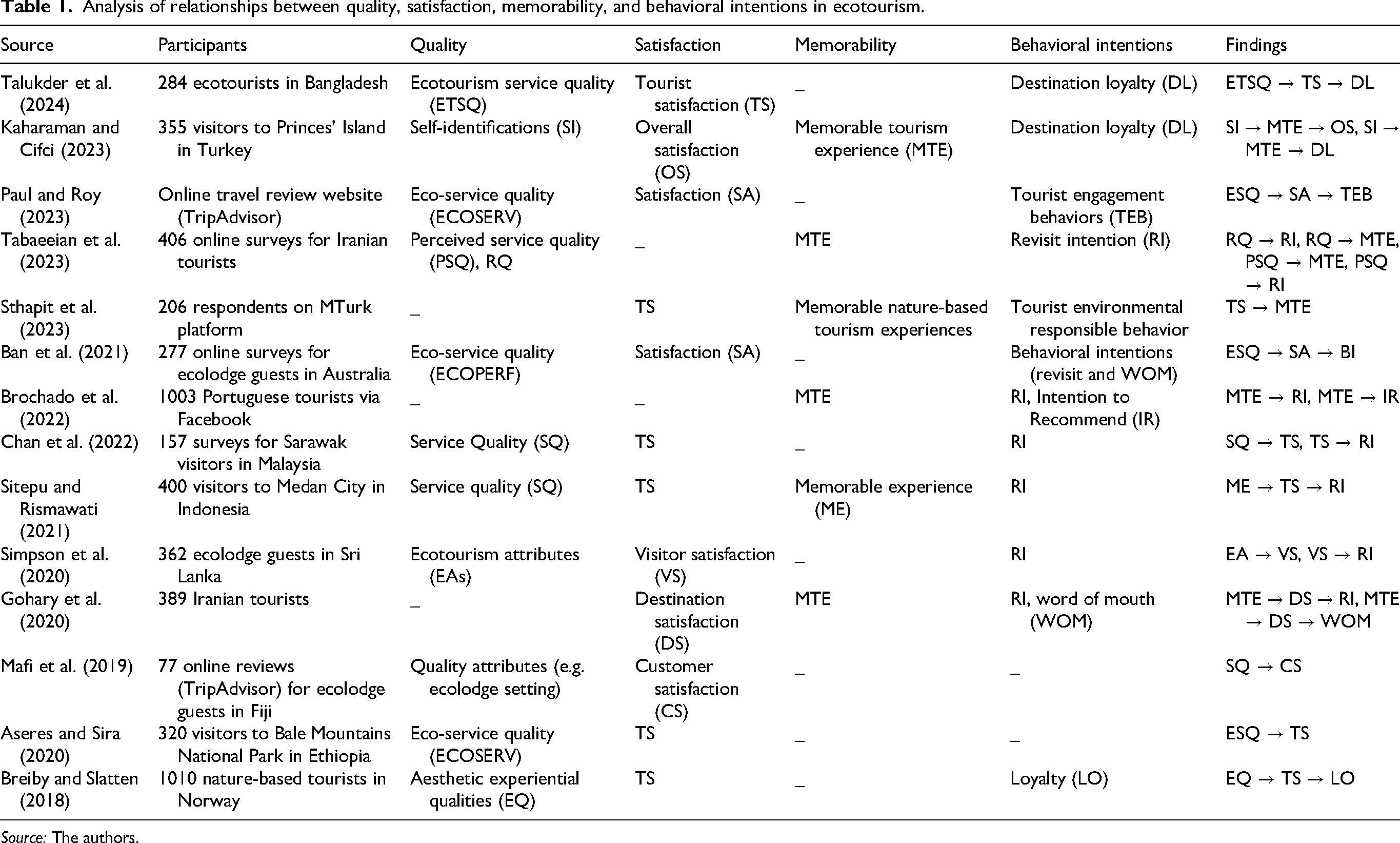
By adopting the S-O-R framework, this research addresses this literature gap by examining how memorable tourism experience (MTE) are formed and further affect eco-lodge destination loyalty in a novel way. MTE are defined as the personal mental state experienced by individuals during a service interaction (Sthapit et al., 2023). It is broadly accepted that tourists’ perceptions of products, activities, and destinations are inherently subjective (Brochado et al., 2022; Tabaeeian et al., 2023; Zhang et al., 2018). We show that eco-service quality (stimulus) predicts eco-lodge RI (response), and the effect is explained by the increase in customer satisfaction (organism) and memorability of the tourism experience (organism). Further, we established the sequential order of underlying mechanism, satisfaction → memorability, to offer a more nuanced understanding of how eco-service quality (ECOPERF) influences RI through increased satisfaction and memorability. CS and MTE are not mutually exclusive, and both often lead to customer loyalty behaviors directly or indirectly. However, most studies examine these two types of subjective evaluation independently (e.g. Brochado et al., 2022; Chan et al., 2022; Tabaeeian et al., 2023; Talukder et al., 2024). We posit that examining customer satisfaction, and the memorability of their experiences independently does not capture the full extent of the relationship, and tourists might perceive them simultaneously or sequentially (satisfaction → memorability or memorability → satisfaction). Additionally, the relationship between perceived service quality and memorability lacks empirical evidence in the context of ecolodge settings (Tabaeeian et al., 2023). Table 1 analyzes the most recent literature on eco-tourism, emphasizing the necessity of considering perceived service quality, satisfaction, memorability and behavioral intentions. To the best of our knowledge, this study is one of the first to examine the impact of guests’ perceptions of eco-service quality on their memorability in an ecotourism lodging context. However, prior studies have established a positive link between MTE and positive destination outcomes in other hedonic contexts (Ali et al., 2016; Kim, 2018).
Analysis of relationships between quality, satisfaction, memorability, and behavioral intentions in ecotourism.
Source: The authors.
Relationships between stimulus (eco-service quality) and organism (satisfaction and MTE)
In the tourism and hospitality industry, customers’ perception of service quality is essential to a successful tourism business as it directly affects their satisfaction with products, services and memorability (Chan et al., 2022; Tabaeeian et al., 2023). Numerous scholars have suggested that the nature of the relationship between service quality and satisfaction is an intriguing issue (Paul and Roy, 2023) and the perception of service quality is considered to be an antecedent of customer satisfaction (Mafi et al., 2019; Sitepu and Rismawati, 2021). Supporting this notion, Talukder et al. (2024) found that ecotourism service quality leads to both higher satisfaction and positive destination loyalty.
Similarly, Aseres and Sira (2020) found that eco-service quality significantly enhances tourist satisfaction. In contrast, Sitepu and Rismawati (2021) reported that destination image and memorable experiences positively influenced satisfaction, whereas service quality did not. Collectively, these findings highlight the importance of eco-service quality in influencing customer satisfaction (CS) and memorable tourism experinece (MTE), particularly in ecotourism contexts (Mafi et al., 2019; Talukder et al., 2024). This leads to the following hypotheses:
Hypothesis 1: Eco-service quality is positively related to CS. Hypothesis 2: Eco-service quality is positively related to MTE.
Relationship between stimulus (eco-service quality) and response (RI)
Enhancing eco-service quality is crucial for fostering Revisit intention (RI) among tourists, as satisfied customers are more likely to return to ecotourism destinations due to positive experiences and high-quality services (Mafi et al., 2019; Simpson et al., 2020). Improving eco-service quality can therefore significantly influence tourists’ decisions to revisit, ultimately contributing to sustainable tourism development (Paul and Roy, 2023; Talukder et al., 2024). Prior studies have consistently confirmed that service quality is an important antecedent of RI across various contexts in tourism and hospitality, including, heritage tourism (Liu et al., 2024), nature-based tourism (Breiby and Slatten, 2018; Chan et al., 2022) and the lodging industry (Fennell and De Grosbois, 2023; Kahraman and Cifci, 2023; Simpson et al., 2020). This relationship is particularly pronounced in ecotourism settings, where eco-consciousness plays a critical role in shaping tourists’ decisions to return (Fennell and De Grosbois, 2023; Kahraman and Cifci, 2023). These findings suggest that enhancing eco-service quality not only strengthens satisfaction but also substantially increases the likelihood of tourists revisiting ecotourism destinations consistent with the above premise, we propose the following hypotheses:
Hypothesis 3: Eco-service quality is positively related to RI.
Relationship between the two organisms (CS and MTE) and response (RI)
CS has also been found to be a major antecedent of MTE. For example, DeMatos et al. (2024) demonstrated positive relationships between tourists’ satisfaction and their memories for 550 once-in-a-lifetime leisure vacationers in Portugal. The findings showed that tourists’ enjoyment and recollections of the trip are directly and favorably impacted by states of flow or ecstasy (DeMatos et al., 2024). Similarly, Rasoolimanesh et al. (2022) and Ye et al. (2021) highlighted that satisfaction plays a central role in enhancing memorability, suggesting that satisfied tourists are more likely to retain vivid and positive recollections of their experiences. This relationship is particularly relevant in the hospitality and tourism industry, where creating and delivering positive and unforgettable customer experiences is central to the “experience economy” (Ali et al., 2016; Chen et al., 2023). On one hand, highly memorable experiences increase recall and reduce forgetfulness because consumers vividly remember the services or products they received (Ye et al., 2021). On the other hand, numerous studies have shown that tourists who are satisfied with their travel experiences tend to develop stronger loyalty and are more willing to return to the same destination (Brochado et al., 2022; Gohary et al., 2020; Kahraman and Cifci, 2023). In line with this, Sitepu and Rismawati (2021) and Kim (2018) identified MTE as a central antecedent of RI. Therefore, the following hypotheses are proposed:
Hypothesis 4: CS is positively related to MTE.
Hypothesis 5: CS is positively related to RI.
Hypothesis 6: MTE are positively related to RI.
The mediating role of organism (CS and MTE)
From an S-O-R perspective, eco-service quality (stimulus) enhances satisfaction and memorability (organism), which in turn foster RI (response) (Liu et al., 2024; Paul and Roy, 2023). Paul and Roy (2023), drawing on TripAdvisor reviews, demonstrated that satisfaction mediates this relationship, showing that eco-service quality strengthens satisfaction and tourist engagement behavior. Similarly, Ban et al. (2021) found that eco-service quality influences both satisfaction and loyalty behaviors, with satisfaction mediating this relationship among Australian ecotourists. Hung et al. (2014) further argued that memorability serves as a mediator, as creative or novel experiences exert a long-lasting impact on RIs.
These findings highlight that satisfaction and the memorability of tourism experiences play critical mediating roles in translating eco-service quality into loyalty outcomes within ecotourism hospitality (Rasoolimanesh et al., 2022; Tabaeeian et al., 2023). Thus, the following five indirect (mediation) effect hypotheses are proposed;
Hypothesis 7: CS mediates relationships between eco-service quality and MTE. Hypothesis 8: MTE mediates relationships between CS and RI. Hypothesis 9: CS mediates relationships between eco-service quality and RI. Hypothesis 10: MTE mediates relationships between eco-service quality and RI. Hypothesis 11: CS and MTE serially (sequentially) mediate relationships between eco-service quality and RI.
The conceptual model developed for this study is shown in Figure 1.
Study 1: Survey
Participants
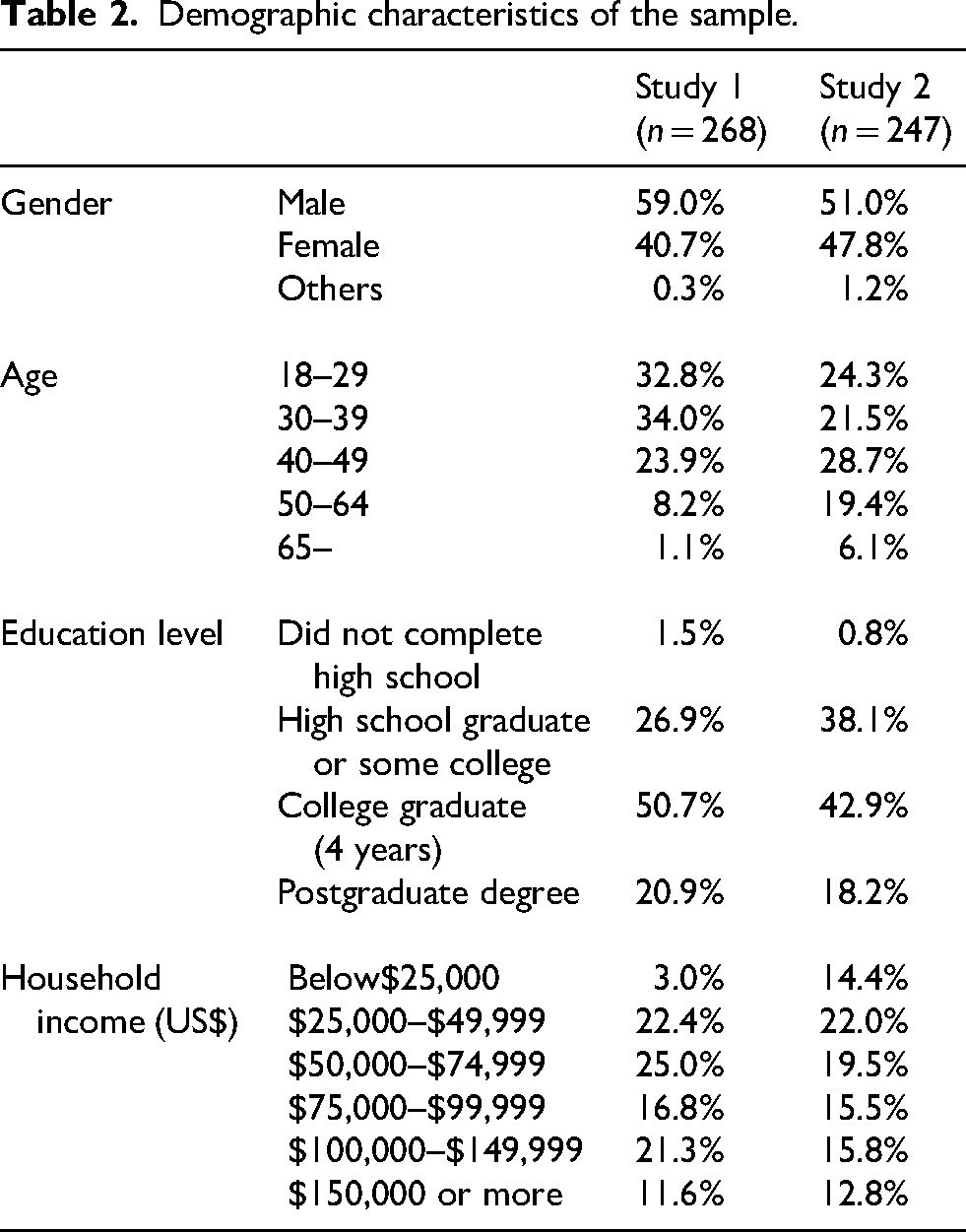
To examine these hypotheses, data were collected from a panel of U.S. travelers via the online survey platform CloudResearch Connect (https://www.cloudresearch.com/). The integration of online survey methodologies has become a significant internet-mediated tool for real-time data collection (Buhrmester et al., 2018; Howell et al., 2010). All respondents were recruited and compensated by CloudResearch for participating in the survey (Buhrmester et al., 2018). Participants were compensated US$1.70 for completing the study, which was estimated to take approximately 10 min. Respondents were limited to U.S. citizens above the age of 18. Before being asked questions about ecolodge services, respondents were provided with the following information: “An ecolodge is a type of accommodation designed to have minimal impact on the environment and to promote sustainable practices. They focus on the importance of conserving natural resources, learning, recreation, and adventure in natural settings. This statement was followed by a filter question: “Have you visited an ecolodge for a holiday in the past 24 months?” Respondents who answered “No” were excluded from the survey. A dataset of 270 completed responses was received. Two cases were removed from the dataset, as they failed the attention check question. Thus, a final sample of 268 participants was used for the analyses. The participants’ demographic information is illustrated in Table 2. The majority of respondents traveled with family (36.6% with adults and 25.7% with children), though a notable number traveled with friends (20.9%) or alone (11.9%). Tour group travelers were the least represented (4.9%). Most respondents stayed for 1–3 nights (58.2%), followed by those staying 4–7 nights (38.1%), with only 3.7% staying longer than seven nights.
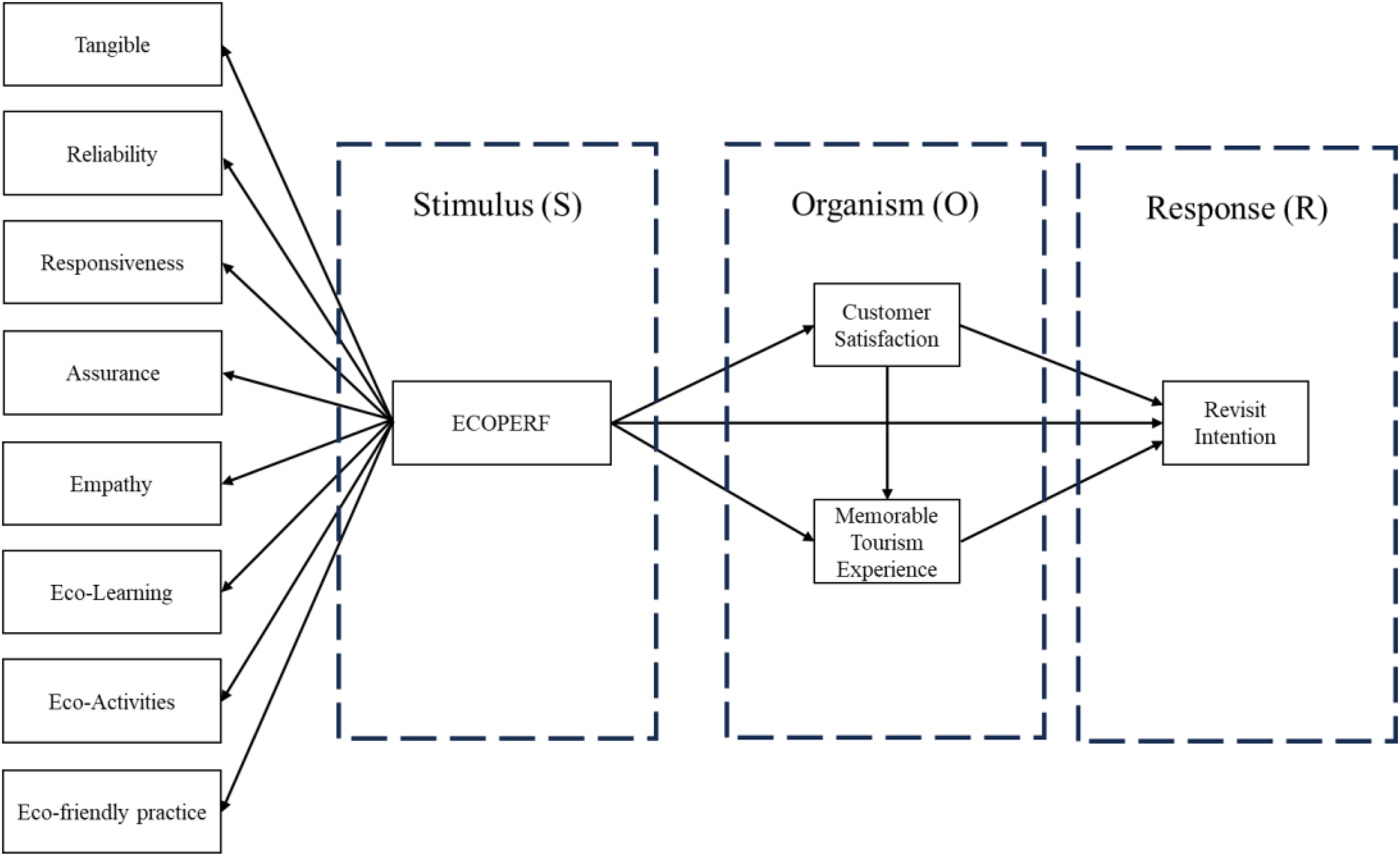
Conceptual model.
Demographic characteristics of the sample.
Survey construction
A self-administered questionnaire based on previous literature was developed as follows. Key variables were measured using 7-point Likert scale items. Specifically, eco-service quality (35 items) was measured with the instruments developed by Ban and Ramsaran (2017) and Cronin and Taylor (1992). CS was measured with two items taken from Williams and Soutar (2009). Three items for MTE were adopted from Oh et al. (2007) and Zatori et al. (2018). Last, RI was assessed with two items adapted from Li and Cai (2012) and Huang and Liu (2017). The online survey consisted of three parts: an information sheet (social exchange message), the main survey questionnaire and a section with demographic questions (refer to the supplemental material for the full list of survey items).
Measurement model
Confirmatory factor analysis (CFA) was first performed to assess the overall fit of the measurement model and to examine the reliability and validity of the constructs used. After eliminating problematic items (i.e. poor item loading and cross-loading), the results of CFA showed satisfactory goodness-of-fit indices for the measurement model (χ2/df = 2.310, CFI = .902, IFI = .903, TLI = .893, RMSEA = .070, PNFI = .770, Standardized RMR = .060). In support of convergent validity (Nunnally and Bernstein, 1994), all items loaded upon their respective constructs were above the suggested threshold of .70 (see Table 3). Confirming internal consistency, composite reliability values were well above the threshold level suggested by Fornell and Larcker (1981) (see Table 4). The square root of AVE for each construct was greater than the latent factor correlations between the pairs of constructs, with all AVEs greater than .50 (Fornell and Larcker, 1981). The overall results suggest that these measures possess a good level of discriminant and convergent validity for testing the relationships in the proposed model. Additional tests confirmed that there was no multicollinearity or common method bias within the data. All variance inflation factor values were below 3.
Confirmatory factor analysis item loadings.
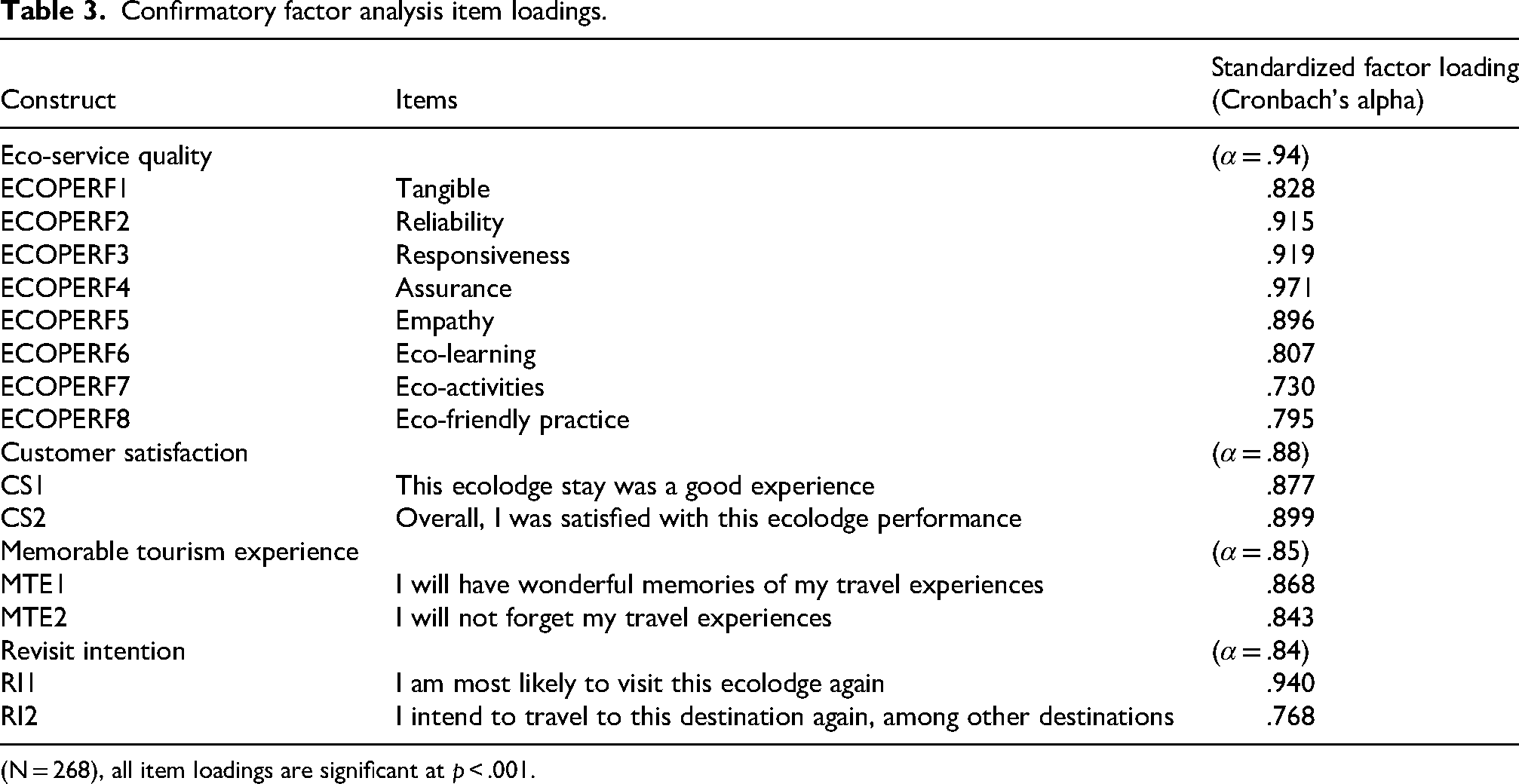
(N = 268), all item loadings are significant at p < .001.
Results: Hypotheses testing
In total, 11 hypotheses were developed from the literature review and aligned with the S-O-R framework. Six hypotheses based on direct relationships between variables (i.e. ECOPERF-CS, ECOPERF-MTE, ECOPERF-RI, CS-MTE, CS-RI and MTE-RI) were examined in terms of their respective standardized regression weights and the associated significance levels to test the hypotheses. Table 5 presents the SEM results for hypotheses testing (H1 to H6).
Inter-factor correlation matrices and validity.
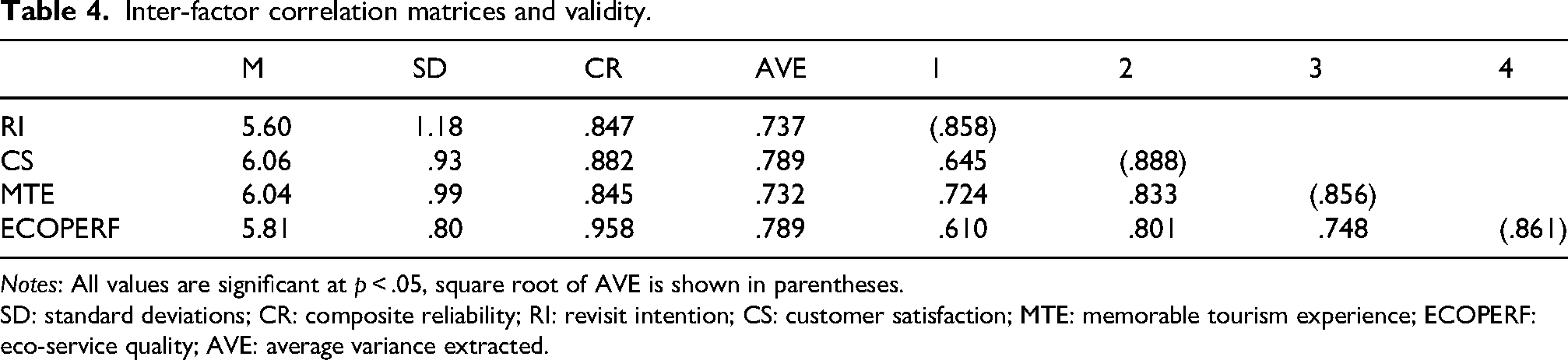
Notes: All values are significant at p < .05, square root of AVE is shown in parentheses.
SD: standard deviations; CR: composite reliability; RI: revisit intention; CS: customer satisfaction; MTE: memorable tourism experience; ECOPERF: eco-service quality; AVE: average variance extracted.
Fit indices of the estimated structural model indicated that the model reasonably fits the data (χ2/df = 2.323, CFI = .901, IFI = .901, TLI = .891, RMSEA = .070, PNFI = .766, Standardized RMR = 0.058). All path coefficients were positive and significant except for ECOPERF → RI (H3) and CS → RI (H5). Based on the results of the tests of these hypotheses, four (H1, H2, H4, H6) were supported as shown in Table 5.
Results: Indirect effects
Indirect effects were examined using Hayes’ (2018) PROCESS macro (see Table 6 for the summary of indirect effect analyses). CS mediates the relationship between eco-service quality and MTE (ECOPERF → CS → MTE; Model 4; indirect effect = .409, 95% CI [0.236, 0.586], 10,000 resamples), supporting Hypothesis 7. CS also mediates the relationship between eco-service quality and RI (ECOPERF → CS → RI; Model 4; indirect effect = .398, 95% CI [0.234, 0.584], 10,000 resamples), supporting Hypothesis 9. MTE mediates the relationship between CS and RI (CS → MTE → RI; Model 4; indirect effect = .398, 95% CI [0.234, 0.584], 10,000 resamples) and between eco-service quality and RI (ECOPERF → MTE → RI; Model 4; indirect effect = .437, 95% CI [0.282, 0.611], 10,000 resamples). These results support both hypotheses 8 and 10.
Results summary (direct effect).
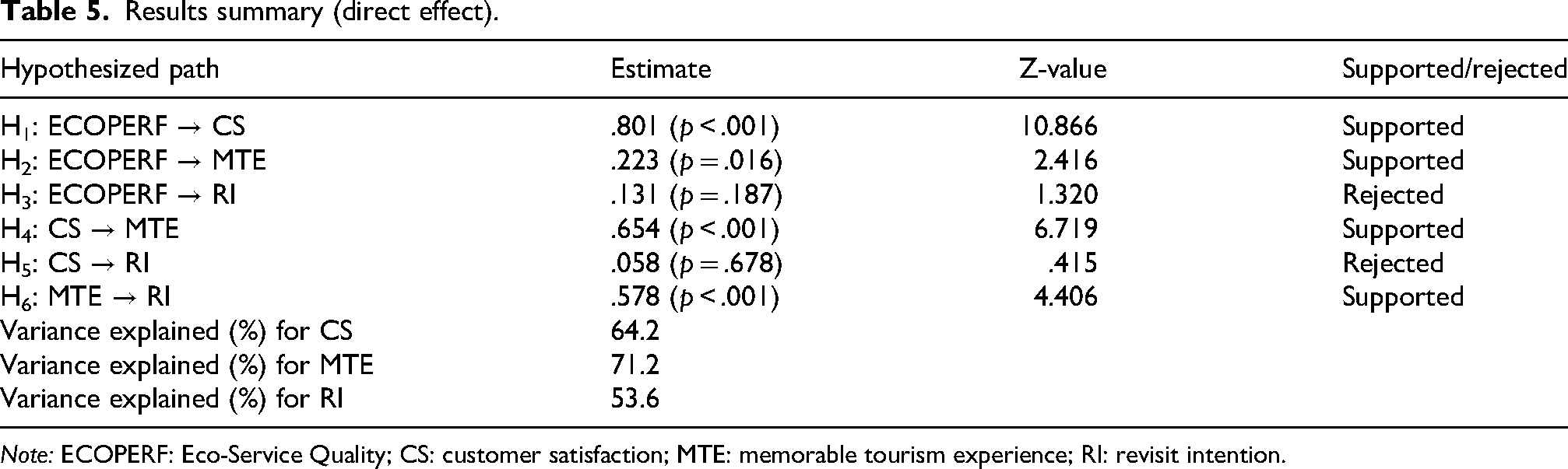
Note: ECOPERF: Eco-Service Quality; CS: customer satisfaction; MTE: memorable tourism experience; RI: revisit intention.
Lastly, the serial mediation model (Hayes, 2018; Model 6) was run to test the predicted serial mediation path: ECOPERF → CS → MTE → RI. The results suggest that the relationship between ECOPERF and RI was serially mediated (indirect effect = .180, 95% CI [0.082, 0.308], 10,000 resamples). A serial mediation model that tested the reverse order of the mediators (ECOPERF → MTE → CS → RI) was not significant (indirect effect = .056, 95% CI [–0.033, 0.154], 10,000 resamples). Thus, the authors posited that memorability is a consequence of satisfaction, given the distinct nature of these evaluations. These results allow us to conclude that high-quality eco-service experiences lead to CS, and this satisfaction enhances the memorability of the tourism experience. The enhanced memorability further leads to RI. The serial mediation results, thus, support Hypothesis 11 (Table 6).
Results summary (indirect effect).
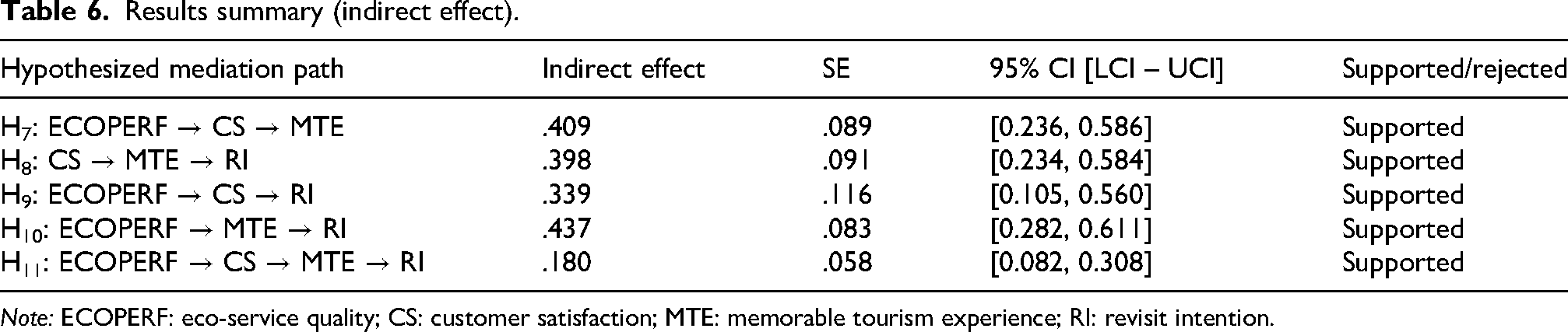
Note: ECOPERF: eco-service quality; CS: customer satisfaction; MTE: memorable tourism experience; RI: revisit intention.
The mediation analysis showed that CS does not directly affect RI but exerts an indirect influence through MTE. This underscores MTE as a key determinant of RI: guests may be satisfied with services but are unlikely to return without vivid, positive memories. The indirect effect of eco-service quality (ECOPERF) on RI through MTE was strongest (β = .437), confirming MTE's central mediating role (Sthapit et al., 2023; Ye et al., 2021). In addition, the sequential path (ECOPERF → CS → MTE → RI) was significant, with an indirect effect of .180 and a 95% CI [0.082, 0.308] (10,000 resamples). This suggests eco-service quality shapes RI through both CS and MTE, each with distinct contributions. Standardized coefficients indicated that ECOPERF had the largest total effect on RI (.610), followed by MTE (.578) and CS (.436), with CS mediating ECOPERF's effect (.339).
Study 2: Experiment
Purposes of the study and expectation
The purpose of this experiment is to (1) replicate key findings from previous survey data in an experimental setting by examining the impact of eco-lodge appeal (vs non-eco-lodge) on perceived CS, perceived MTE, and visit intention; (2) test the moderating role of INS in the above main effect of eco-lodge appeal; and (3) to apply the research question to the general public, including those who may not have prior experience with eco-lodging.
Theoretically, we predict that eco-lodge appeal should increase CS, MTE, and visit intention. Since the positive effect of pro-environmental factors is linked to individual traits related to one's relationship with nature (Mayer and Frantz, 2004; Nisbet et al., 2009; Tam, 2013), we further expect that the positive effect of eco-lodge appeal will be stronger for individuals with a high connection to nature. The related concept, INS, is defined as “a cognitive-affective construct that reflects the degree to which an individual perceives nature as an integral part of their identity” (Schultz, 2001). Therefore, we formally predict that the moderating role of INS will strengthen the impact of eco-lodge appeal on CS, MTE, and visit intention for participants with high INS scores.
Method: Participants, design and procedure
The participants in this study were 247 U.S. adults (47.8% women; Mage = 40.96, SD = 13.62) recruited through an online Connect panel. They were invited to complete the survey, posted under the title “academic study,” and received standard compensation. The participants’ demographic information is illustrated in Table 2. Participants were randomly assigned to one of two between-subjects experimental conditions based on lodge appeal (eco-appeal vs non-eco-appeal). The INS scale was measured individually.
First, participants rated their INS on a seven-point scale following Schultz (2001). After this, they completed an unrelated product evaluation task as a filter task. Next, participants were invited to the main study and were asked to vividly imagine taking a three-day vacation. They were then presented with a detailed three-day itinerary for their trip. Participants in the eco-appeal condition were shown an itinerary featuring eco-friendly facilities and activities, including staying at a rainforest ecolodge, having a farm-to-table dinner, visiting an animal conservation center, or snorkeling at a coral reef restoration project. In contrast, participants in the non-eco-appeal condition were shown an itinerary with non-eco-friendly facilities and activities, including staying at a regular lodge, having a standard dinner, visiting a regular park, or snorkeling at a popular tourist spot. Without these manipulations of eco-appeal, other elements—such as the total price and the number of activities—were kept constant across the two experimental conditions, as shown in Figure 2.

Stimuli for experimental study.
After reviewing the itinerary, participants were also asked to rate CS (α = .89), perceived MTE (α = .81), and visit intention (α = .96), using two items per measure, based on a previous study, on a seven-point scale (1 = strongly disagree, 7 = strongly agree). Then, all participants rated the perceived realism of the scenarios on a seven-point scale (1 = highly unrealistic, 7 = highly realistic) and provided their demographic information.
Eco-lodge appeal itinerary versus non-eco-lodge appeal itinerary
Main findings and implications
First, the perceived realism of the scenario-based task was relatively high in that the mean value was the neutral point (i.e. M = 4.91, SD =1.49 vs “4”; t (246) = 9.63, p < .001, Cohen's d = .61). This perceived realism was not different from two experimental conditions (M_eco appeal = 4.78, SD = 1.58 vs M_non-eco appeal = 5.04, SD = 1.39; F (1, 245) = 1.89, p = .170, η2 = .008). In addition, the INS value was not different from two experimental conditions (M_eco appeal = 4.07, SD = 1.60 vs M_non-eco appeal = 4.15, SD = 1.41; F (1, 245) = .21, p = .646, η2 = .001).
Second, to test the moderating effect of INS on measurements, we conducted a moderation analysis with Hayes (2018) macro method. Specifically, we used Model 1 (IV: lodge appeal (1 = eco-appeal vs 2 = non-eco-appeal), moderator: INS measurement, and DV: four different measurements) with 10,000 bootstrap samples.
Perceived CS: We found that the two main effects were not significant (all ps > .791). However, as predicted, the interaction effect was significant (coeff. = .21, se = .09, p = .027, 95% CI [0.023, 0.379]. Specifically, when INS was relatively low (i.e. −1SD), eco-appeal (vs non-eco-appeal) did not increase perceived CS (M_eco-appeal = 5.72 vs M_non-eco-appeal = 5.98, p = .162). However, when INS was relatively high (i.e. +1SD), eco-appeal (vs non-eco-appeal) increased perceived CS (M_eco-appeal = 5.98 vs M_non-eco-appeal = 5.65, p = .079), as shown in Figure 3.
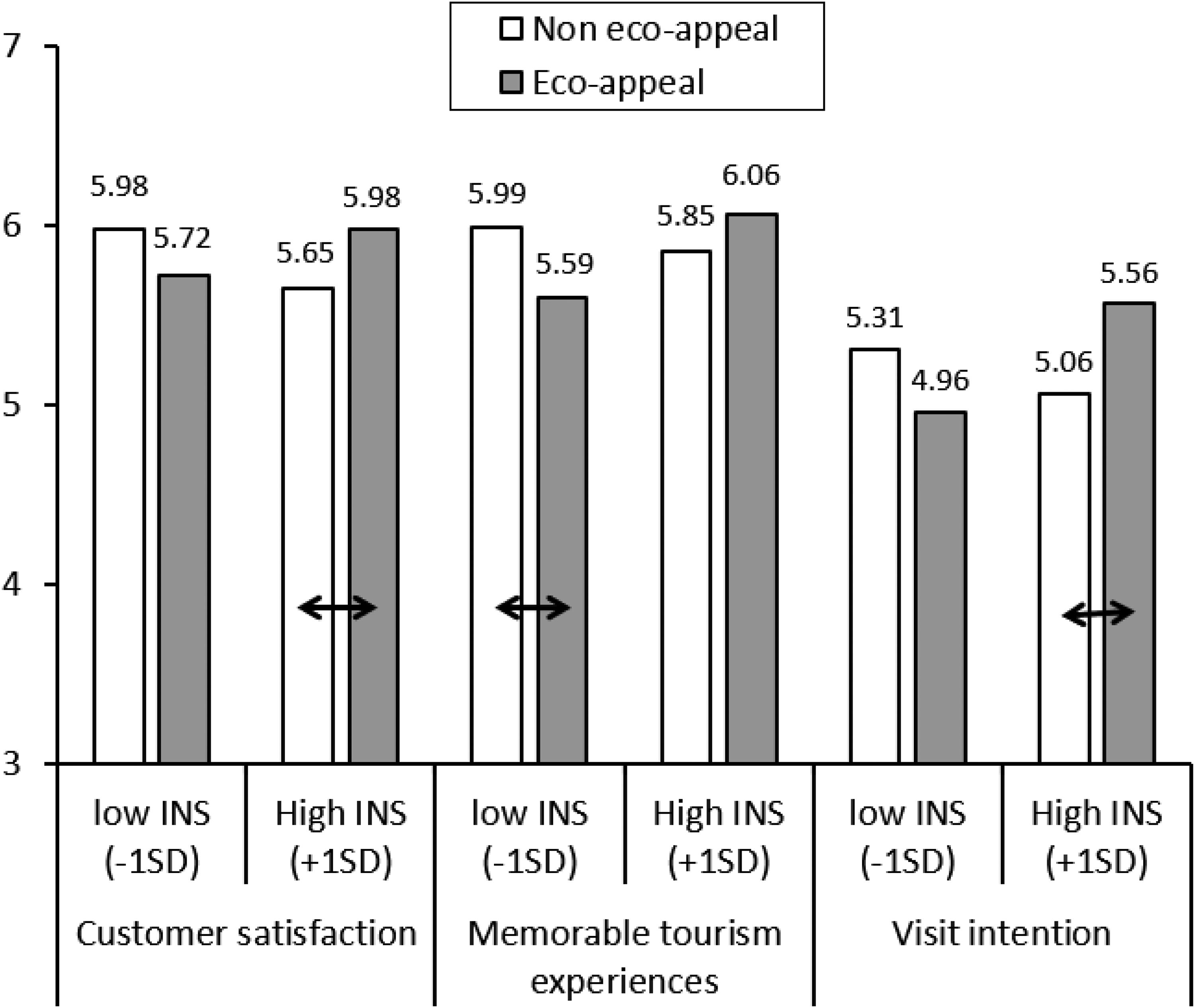
Results of experimental study.
Perceived MTE: The two main effects were not significant (all ps > .204). However, as predicted, the interaction effect was significant (coeff. = .21, se = .09, p = .020, 95% CI [0.033, 0.378]. Specifically, when INS was relatively low (i.e. −1SD), eco-appeal (vs non-eco-appeal) decreased perceived MTE (M_eco-appeal = 5.59 vs M_non-eco-appeal = 5.99, p = .031). However, when INS was relatively high (i.e. +1SD), eco-appeal (vs non-eco-appeal) increased perceived MTE (M_eco-appeal = 6.06 vs M_non-eco-appeal = 5.85, p = .244), but this effect failed to reach statistical significance, as shown in Figure 3.
Visit intention: We found that the two main effects were not significant (all ps > .383). However, as predicted, the interaction effect was significant (coeff. = .29, se = .13, p = .028, 95% CI [0.031, 0.542]. Specifically, when INS was relatively low (i.e. −1SD), eco-appeal (vs non-eco-appeal) did not increase visit intention (M_eco-appeal = 4.96 vs M_non-eco-appeal = 5.31, p = .199). However, when INS was relatively high (i.e. +1SD), eco-appeal (vs non-eco-appeal) increased visit intention (M_eco-appeal = 5.56 vs M_non-eco-appeal = 5.06, p = .066), as shown in Figure 3.
In sum, the additional experimental study provided further evidence of the role of eco-lodging in influencing visit intention among the general public. As we found, the moderating effect of INS was crucial in demonstrating the positive impact of eco-appeal in the context of eco-lodging consumption.
Discussion and conclusions
General discussion and theoretical implications
The objectives of this study are (1) to examine the effects of perceived eco-service quality (ECOPERF) on CS and MTE, (2) to test the mediating roles of CS and MTE in shaping RI, (3) to model the sequential S-O-R pathway—eco-service quality → satisfaction → memorability → revisit intention, (4) to assess the moderating role of INS, and (5) to explore how varying INS levels influence guests’ emotional connection to nature-based experiences.
In line with these objectives, the theoretical implications of this study are also fourfold. First, the findings contribute to advancing theoretical understanding in ecotourism by positioning eco-service quality (ECOPERF) as a distinct construct from traditional service quality. Importantly, this study is the first to establish a direct link between ECOPERF and MTE within the ecolodge context. In doing so, it addresses a gap in prior research—for instance, Khan (2003) explored ECOSERV in ecotourism but did not propose a path model connecting service quality perceptions with memorability. By integrating ECOPERF into the MTE framework, this study enriches theoretical understanding on how sustainability-oriented service attributes shape tourists’ emotional and cognitive responses, providing a more nuanced account of their role in sustainable tourism management.
Second, the study refines the S-O-R framework by showing that the organism component operates sequentially. The serial mediation path (ECOPERF → CS → MTE → RI) indicates that satisfaction forms the foundation for memorable experiences, positioning MTE as outcomes rather than precursors. For ecotourism hospitality marketing, this suggests that enhancing customer satisfaciton through eco-service quality is essential for creating memorable experiences that drive revisit intention. These findings align with prior research (DeMatos et al., 2024; Lee et al., 2024; Ye et al., 2021), confirming that organism processes in ecolodges function in series rather than in parallel.
Third, the study contributes to ecotourism hospitality theory by identifying memorability as a more proximal predictor of revisit intention than satisfaction, challenging the traditional satisfaction–loyalty paradigm in hospitality (Mafi et al., 2019; Simpson et al., 2020) and tourism research (Chan et al., 2022; Sitepu and Rismawati, 2021). The findings demonstrate that satisfaction alone is insufficient to drive loyalty in ecolodge contexts; instead, guests’ vivid and positive memories play a critical role in motivating future travel decisions. By highlighting memorability as a critical mediator, the study extends S-O-R theory within ecotourism hospitality.
Finally, this study makes a novel theoretical contribution by introducing the INS measure into the ecotourism literature for the first time. By validating INS within a sustainablity-driven hospitality context, the findings broaden its theoretical applicability (Mayer and Frantz, 2004; Tam, 2013) and offer new insights into how personal identification with nature influences tourism experiences and decision making.
Practical implications
This study offers important practical implications for ecolodge operators, policymakers, and ecotourists. First, ecolodge managers are encouraged to integrate eco-learning, eco-activities, and eco-friendly practices into the eco-service quality (ECOPERF) model (Ban and Ramsaran, 2017). Incorporating nature-based activities such as guided wildlife expeditions, hiking, birdwatching, and flora observation can create distinctive experiences that strengthen tourists’ connection to the natural environment (Fennell and De Grosbois, 2023; Paul and Roy, 2023). Similarly, extraordinary experiences involving novelty and adventure, such as horseback riding, safaris, or immersive cultural exchanges, further enhance satisfaction and memorability (De Grosbois and Fennell, 2021; Torres-Sovero et al., 2012). Eco-learning initiatives, including workshops on ecosystems, biodiversity, and cultural heritage, also enrich tourist experiences, fostering a deeper understanding of sustainability and enhancing memorability (Kim, 2018; Paul and Roy, 2023). Complementing these, eco-friendly practices such as the use of renewable energy, waste reduction, and locally sourced organic food strongly appeal to environmentally conscious tourists, while also creating meaningful experiences that foster advocacy for ecotourism (Aseres and Sira, 2020; Mafi et al., 2019). Given the growth of sustainable and nature-based tourism (TIES, 2025; UNWTO, 2025), ecolodge operators should also collaborate with NGOs, environmental organizations, and influencers to enhance credibility and attract the right audience (Brochado et al., 2022; Fennell and De Grosbois, 2023).
For policymakers, the findings highlight the need for frameworks that incentivize ecolodges to adopt and maintain high eco-service standards. Policy mechanisms such as green certification schemes, tax incentives for eco-innovation, and destination-wide sustainability campaigns (De Grosbois and Fennell, 2021) can reinforce the industry's adoption of environmentally responsible practices (Ban and Ramsaran, 2017; Beall et al., 2021), aligning with broader principles of the circular economy (De Martino et al., 2025). A shift to strong sustainability is needed, with policymakers advancing ecological culture. This advances the discussion beyond incremental CE practices (e.g. recycling, efficiency) toward transformative change in hospitality and tourism. The institutional perspective introduced by Hoffman and Jennings (2021), which classifies sustainability archetypes, further supports policymakers in identifying where current practices are strong or weak in addressing global environmental challenges (De Martino et al., 2025).
Finally, for ecotourists, improving eco-service quality and memorability strengthens customer loyalty. Central to this is the design of emotionally enriching and unforgettable experiences, as such experiences are critical determinants of tourists’ likelihood to revisit. Cognitive scripts, formed through experiential learning, are stored in long-term memory and guide future behavior (Tomkins, 1978). In particular, extraordinary experiences—characterized by heightened emotional intensity—create distinctive memory imprints (Arnould and Price, 1993). Empirical evidence supports this, with Ye et al. (2021) showing that memorable experiences in rural tourism arise from both “ordinary” elements (e.g. service quality, satisfaction) and “extraordinary” features (e.g. novelty, delight), with the latter exerting a stronger influence on memorability due to their uniqueness and emotional resonance.
Moreover, increasing tourists’ awareness of their role in sustaining ecosystems and cultural resources can further enhance their psychological connectedness to nature (Schultz, 2001). For high-INS consumers, marketing should emphasize sustainability certifications, eco-friendly initiatives, and storytelling to enhance authenticity and appeal (Beall et al., 2021; Mafi et al., 2019), while for low-INS consumers, highlighting relaxation, pleasure, or cultural experiences (e.g. heritage and culinary traditions) may be more effective (Sthapit et al., 2023; Torres-Sovero et al., 2012). While eco-appeal alone may not be sufficient to drive consumer responses, its effectiveness is heightened when individuals possess a strong environmental identity. Thus, this research advances segmentation strategies in ecotourism hospitality, showing that eco-appeal must be complemented by tailored experiential attributes to maximize memorability and revisit intention.
Limitation and future research
Although our study makes a significant contribution to the literature on ecotourism hospitality, it must be recognized that it has some limitations. First, the data collection based on a sample of online respondents may result in an overrepresentation of social media users due to the need for a computer or mobile device to participate (Beall et al., 2021). Future studies should consider incorporating field surveys to enhance the representativeness and validity of the results. Second, regarding behavioral intentions for this study, the survey questions only addressed revisit intention. However, the use of more psychometrically sound measures, such as examining environmentally responsible behavior, may enhance the reliability of findings and the interpretation and prediction of customer loyalty, as the results of frequency and/or familiarity with eco-travels may have an impact on ecotourists’ environmentally responsible behavior. In this sense, the use of other constructs and other multivariate analysis could enrich our conceptual model and illustrate another comprehensive structure, both conceptually and empirically.
Furthermore, the study employs a cross-sectional design, capturing data at a single point in time, based on the respondents’ recollection. This may influence respondents’ memory bias as described in most academic marketing literature. Thus, future research should consider a longitudinal method to better trace the relationships over time, allowing for a more accurate depiction of behavioral patterns and causal effects. This will assist in the establishment of more valid constructs and further reliable indicators for future research.
Finally, beyond the ecolodge context, future research should investigate the role of INS in various forms of ecotourism, such as wildlife safaris, marine-based excursions, and community-driven conservation initiatives.
Supplemental Material
sj-docx-1-jvm-10.1177_13567667251413344 - Supplemental material for Understanding visit intentions in eco-lodges: The role of eco-service quality within the stimulus–organism–response framework
Supplemental material, sj-docx-1-jvm-10.1177_13567667251413344 for Understanding visit intentions in eco-lodges: The role of eco-service quality within the stimulus–organism–response framework by Joowon Ban, Jungkeun Kim, Bruce Prideaux, Swee Kuik and Kishore Singh in Journal of Vacation Marketing
Footnotes

Ethical approval and informed consent
This study was approved by the Central Queensland University Research Ethics Committee (Approval No. 0000024260) on 27 June 2023.
Author contributions
Joowon Ban: conceptualization, data curation, formal analysis, methodology, investigation, writing, and review and editing; Jungkeun Kim: conceptualization, data curation, formal analysis, methodology, investigation and writing, and review and editing; Bruce Prideaux: conceptualization, investigation, writing, and review and editing; Swee Kuik: conceptualization, investigation, writing, and review and editing; Kishore Singh: conceptualization, writing, and review and editing.
Funding
The authors received no financial support for the research, authorship, and/or publication of this article.
Declaration of conflicting interests
The authors declared no potential conflicts of interest with respect to the research, authorship, and/or publication of this article.
Data availability statement
The datasets are available from the corresponding author on reasonable request.
Supplemental material
Supplemental material for this article is available online.
References
Supplementary Material
Please find the following supplemental material available below.
For Open Access articles published under a Creative Commons License, all supplemental material carries the same license as the article it is associated with.
For non-Open Access articles published, all supplemental material carries a non-exclusive license, and permission requests for re-use of supplemental material or any part of supplemental material shall be sent directly to the copyright owner as specified in the copyright notice associated with the article.
