



Abstract
The hospitality industry has taken several initiatives to implement environmental management practices to minimize its adverse environmental impact. Nevertheless, travelers often harbor skepticism and hold unfavorable perceptions toward green communication efforts, particularly when such messages are seen as insincere or misleading. This study explores how travelers perceive green hotel communication, aiming to help hoteliers craft credible messages that build trust. Based on five focus groups with 33 participants, this qualitative study applies thematic analysis guided by signaling and attribution theories. The analysis reveals three key themes shaping travelers perceptions of green hotel communication: perceived greenwashing, attribution of ulterior motives and advancing green knowledge. The first two themes reflect the skepticism travelers express when encountering cost-driven motives or promotional overstatements. In contrast, the third theme, advancing green knowledge, emerged as a crucial mitigating factor, emphasizing the importance of guest awareness of green program, green education, and credible certification in fostering trust and message credibility. Theoretically, this study integrates signaling and attribution theories to provide a holistic explanation of how travelers perceive the credibility of green messages, introducing “advancing green knowledge” as a new mechanism that reduces skepticism and enhances trust. Practically, it offers guidance for hotel managers and marketers to strengthen message transparency and credibility by incorporating educational content, demonstrating verifiable environmental actions, and strategically communicating credible certifications across guest touchpoints.
Introduction
The global hospitality industry, including hotels, plays an important role in the global economy. In 2023, the global hotel industry achieved significant revenue, reaching US$4699.57 billion, demonstrating a robust compound annual growth rate (CAGR) of 7.0% from the previous year (EHL Hospitality Business School, 2024a). Moreover, the global hospitality market is estimated to expand further, projected to reach US$5816.66 billion by 2027, with a continuous growth rate of 5.5% (EHL Hospitality Business School, 2024b). Despite the positive contributions of the hospitaltiy industry toward economic activities, it is noted that hotels are significant contributors to greenhouse gas emissions, with about 75% of the environmental impact in the accommodation sector arising from excessive use of energy and water resources, as well as pollutant emissions into air, water, and soil (Acampora et al., 2022; Moise et al., 2021). Given this, travelers’ growing environmental consciousness is increasingly driving them towards sustainable choices, including a preference for staying in green hotels (Malhotra and Srivastava, 2024; Nimri et al., 2022). Scholars note that approximately 81% of hotel customers plan to stay in eco-friendly hotels in the future (Majeed et al., 2023). Booking.com (2024) indicates that 75% of global travelers aim to travel more sustainably over the next 12 months and 43% feel guilty when making less-sustainable travel choices, underscoring a significant shift towards eco-friendly traveling/accommodation. Customer-driven research highlights that eco-friendly practices can help hotels improve both market share and operational efficiency (Cheng et al., 2022).
Hotels actively seek ways to reduce their environmental footprint through sustainable practices and operational innovations (Cheng et al., 2022). They are also stepping up efforts to enhance environmental awareness by sharing green messages through various communication channels, including advertising, news media, and online content (Chua and Han, 2022; Wang et al., 2021). By aligning marketing messages with environmental values, hotels highlight their dedication to social responsibility and eco-friendliness (Cao et al., 2024; Lv et al., 2024). This approach has become more prominent as tarveler awareness of environmental impacts has intensified, emphasizing the significance of sustainable consumption for future generations (Pittman et al., 2022).
With the rising impact of green practices on guest preferences, it is crucial for hotel management to effectively gauge how current and prospective guests perceive their green claims. This requires a thorough assessment of green communication, including both direct expressions such as promotional content and indirect cues like green certifications, amid travelers’ ongoing concerns about hotel greenwashing (Cao et al., 2024; Majeed and Kim, 2023). The Australian Competition and Consumer Commission (2023) claims that 57% of the surveyed businesses make misleading environmental claims, which fuel customers’ allegations of greenwashing. An effective strategy to mitigate greenwashing allegations is educating travelers about choosing green accommodation (Dolnicar, 2020), as hotels’ sharing of green information and communication may alleviate travelers’ perceptions of greenwashing (Majeed and Kim, 2023). Scholars assert the importance of developing effective green communication and examining its influence on hotel customers in tandem with exploring the impacts of message framing (Cai et al., 2024; Rahman and Reynolds, 2019), media selection for message dissemination (Pittman et al., 2022), and specific language use (Luan et al., 2023).
Despite the growing literature on hotel green communication, several critical research gaps remain. First, while previous studies have examined customer responses to hotel green initiatives and concerns about greenwashing (Gupta et al., 2019; Majeed et al., 2023; Majeed and Kim, 2023), limited attention has been given to how green communication itself can mitigate travelers’ skepticism regarding hotel greenwashing. Second, although existing research has addressed guests’ cognitive and behavioral responses to hotel green initiatives (e.g. Chua and Han, 2022; Ferreira et al., 2023; Majeed and Kim, 2023; Nimri et al., 2022), few studies have examined how trust is formed in response to green communication (e.g. see Cao et al., 2024; Chen et al., 2019). In particular, the instrumental association between perceived message credibility, perceived greenwashing, green trust is under-theorized (e.g. see Isac et al., 2024; Tewari et al., 2022; Xue and Mattila, 2024). This gap is particularly concerning because travelers’ perceptions of green practices often outweigh the practices themselves, shaped heavily by subjective interpretations. Third, while greenwashing in hospitality is receiving more scholarly (Bernard et al., 2023; Szabo and Webster, 2021), but it remains in a state of flux (Koseoglu et al., 2021; Li et al., 2024). Further, the role of ulterior motives, such as cost-saving or image-driven strategies, in shaping customer perceptions remains poorly understood (e.g. see Chen et al., 2019; Tabatabaei and Beldona, 2024). It is therefore important to understand how travelers perceive green communication, particularly the factors that shape the perceived credibility of these messages. It is equally essential to explore how hotels can enhance travelers’ understanding of their environmental practices to build greater trust. To address these gaps, it is important to investigate how credible and transparent green communication, alongside interpretations of hotels’ underlying motives, shapes traveler trust and mitigates perceptions of greenwashing.
The signaling theory (Spence, 1973) supports how an organization's credible communication signals trustworthiness and builds customers’ green trust. Green communication that hinge on verifiable certificates, such as Leadership in Energy and Environmental Design, ISO 14001 (Kim and Roseman, 2022) and Green Seal, or the Green Business Bureau (Majeed and Kim, 2023), send strong signals to mitigate customer skepticism about organizational eco-friendly claims and elevate trust in the organization's environmentally friendly business operations (Liao et al., 2020; Majeed and Kim, 2023). Additionally, attribution theory (Heider, 1958) supports this perspective by showing how customers evaluate the motives behind an organization's actions or reactions toward hotel green initiatives (Jia et al., 2023). Customers’ confidence levels are impacted when they evaluate whether a hotel's green initiatives are self-serving or truly altruistic (Jia et al., 2023). Therefore, this study has two main objectives: (1) to examine travelers’ perceptions of green hotel communication; and (2) to explore the factors that shape their trust in such communication and inform the development of credible and trustworthy green messages, through the lenses of signaling and attribution theories.
The integration of signaling theory and attribution theory presents a robust framework for understanding how travelers’ cognitively and behaviorally respond to hotel's green communications. Specifically, it sheds light on how travelers interpret the underlying motives behind environmental claims, often perceiving them as cost-driven tactics or strategically motivated signals, thereby triggering skepticism. This theoretical synthesis solidifies understanding of perceived greenwashing and enriches the discourse surrounding green marketing within and beyond the hospitality and tourism sectors. By linking the signals embedded in green messages with the attributions travelers assign to them, this dual-framework approach clarifies the mechanisms through which credibility is evaluated in hotel sustainability communications. Grounded within this conceptual foundation, the current study advances fragmented discussions in the literature (see Cao et al., 2024; Chen et al., 2019) by contributing a cohesive lens for exploring how credible green claims in hospitality, can be crafted. Additionally, the study provides actionable insights for hospitality practitioners, emphasizing the role of trustworthy green messaging in reducing guest skepticism and building stronger guest trust. Further, by integrating these theoretical perspectives, the research offers a nuanced understanding of the psychological drivers behind customer reactions to sustainability claims, enhancing strategic communication practices in the hospitality industry.
Literature review
Theoretical background
To elucidate the entwined relationship between hotel green communication, travelers’ perceptions of greenwashing and hotel ulterior motives, this study adopts a dual-theoretical lens integrating signaling theory (Spence, 1973) and attribution theory (Heider, 1958). Signaling theory provides a foundation for understanding how hotels use green initiatives and communications to signal their commitment to environmentally responsible practices. These signals aim to bridge gaps in consumer knowledge, nurture green trust and strengthen brand loyalty (Kim et al., 2025). This study supports Majeed and Kim's (2023) claims that unclear or inconsistent green messaging may send negative signals, increasing customers’ doubts and reinforcing perception of greenwashing. Even when hotels adopt eco-friendly practices for operational efficiency, their attempts may be questioned if motivations appear unclear or self-serving. As such, credible and transparent communication is essential for building trust in a hotel's environmental commitment (Tewari et al., 2022).
Attribution theory (Heider, 1958) offers critical insights into how guests interpret motives behind hotels’ green communication. Guests evaluate whether environmental claims reflect sincere commitment or self-serving intent, which can significantly influence green trust. When green initiatives and corresponding communication are perceived as transparent and aligned with sustainability goals, green trust increases; when they are perceived as manipulative or profit-driven, trust declines (Jia et al., 2023; Lv et al., 2024; Sivapalan et al., 2024). For example, hotels’ failure to openly share their green certifications or sustainability achievements with guests can fuel doubts about the legitimacy of their green messages (Ferreira et al., 2023; Majeed and Kim, 2023; Merli et al., 2019). This situation can provoke customers’ skepticism and result in attribution to ulterior motives, such as cost-saving, image-building, and self-serving, rather than a transparent commitment to environmental protection (Chen et al., 2019; Jia et al., 2023; Rahman and Reynolds, 2019). Attribution theory, therefore, highlights the interpretive lens through which travelers decode sustainability messages, reinforcing the importance of transparency in building credible green communication.
Green hotel practices and communication
As traveler awareness of environmental issues increases, the hospitality industry faces growing pressure to adopt and showcase environmentally responsible practices (Yi et al., 2018). Many hotels now integrate green initiatives such as solar energy systems, water-saving technologies, and waste reduction programs to minimize ecological impact and meet the evolving expectations of eco-conscious travelers (Moise et al., 2021). These operational measures are increasingly seen as part of a hotel's brand identity and environmental credibility, as green practices communicate a hotel's commitment to sustainability.
Green hotels differentiate themselves by adhering to environmental standards, securing third-party certifications and displaying eco-labels all of which serve as verifiable evidence of environmental commitment (Cao et al., 2024; Nimri et al., 2022), as sustainable practices promote a culture of responsibility and innovation alongside motivating employees to align their behavior with hotel environmental goals (Kim et al., 2025; Majeed et al., 2023). From the perspective of signaling theory, such investments can enhance the clarity and strength of green signals, thereby presenting a credible environmentally responsible brand image intended to attract eco-friendly travelers. Moreover, the premises of attribution theory help to understand how a hotel's green initiatives and environmental upgrades impact travelers’ interpretations of the hotel ulterior motives. For example, practices like installing low-flow water fixtures or limiting daily housekeeping may mirror hotel's sincere commitment to environmental sustainability, that is, intrinsic motives, or maybe perceived by travelers as ulterior motives to save water and electricity bills, that is, extrinsic motives. These differing attributions may impact travelers` psychological and behavioral responses, generating positive outcomes when actions are seen as credible but triggering skepticism when viewed as profit-driven.
While implementing green initiatives is essential, how these practices are communicated to travelers plays an equally critical role in shaping perceptions of environmental credibility and trust (Nimri et al., 2024; Sheng et al., 2023). Green communication, referred to as eco-friendly or sustainable communication, entails the strategic dissemination of information regarding the hotel's environmental practices, with the aim of promoting sustainability and enhancing brand integrity (Bernard et al., 2023). It typically includes emissions reduction, ethical sourcing, and sustainability messaging conveyed through websites, marketing materials, in-room messaging, and third-party certifications (Gupta et al., 2019). From the signaling theory, and building on the work of Majeed and Kim (2023), green communication serves as a verbal or symbolic representation of a hotel's green initiatives, such as Leadership in Energy and Environmental Design (LEED) certification, ISO 14001 compliance, or Fairtrade accreditation. These high-cost, externally verifiable signals carry a strong and credible message to travelers about a hotel's commitment to sustainability and may reduce suspicions of cost-saving disguised as environmental concern.
Green communication offers several strategic benefits. It enhances the brand image in terms of perceived signal credibility, resonating with environmentally conscious travelers and attracting a growing customer base (Chung, 2020; Shishan et al., 2021). However, if there is a disconnect between the signal's content (green messages) and quality (green certifications), it may undermine the effectiveness of green communication as the signaling process and fuel travelers’ skepticism regarding hotel's environmental legitimacy. Implementing green communication also supports profitability and market differentiation (Szabo and Webster, 2021). Nevertheless, through the lens of attribution theory, exaggerated or inconsistent green communication may provoke travelers’ doubts about a hotel's environmental initiatives. A disconnect between claimed green initiatives and what is practiced may fuel travelers’ attribution of ulterior motives and greenwashing (Ali and Hassan, 2023; Pham et al., 2024). For example, promoting a plastic-free policy while providing individually wrapped plastic toiletries or imposing “eco-friendly” fee without transparent justification may trigger guests to blame hotels for self-serving motives (e.g. boosting brand image, cost-cutting). Therefore, further research is needed to explore how guests perceive and interpret green communication signals and attribute underlying green motives (Amatulli et al., 2019; Nimri et al., 2022). As sustainability becomes a decisive factor in hotel selection, the success of green communication depends on how guests perceive and interpret its credibility and trustworthiness.
Guest perceptions: Greenwashing, skepticism, and trust
Greenwashing refers to the deceptive practice by organizations, such as hotels, of overstating their environmental efforts, often to mask cost-saving measures rather than transparently committed sustainability initiatives (Majeed and Kim, 2023; Rahman et al., 2015). Such practices affect traveler perceptions and lead to confusion and perceived risk, negatively impacting their behaviors and decisions (Alnawas et al., 2024; Li et al., 2024; Lv et al., 2024). In the hotel industry, greenwashing can take many forms, from selective disclosure to superficially green initiatives primarily for financial gain, creating a disconnect between claims and actions, eroding trust, and undermining transparent and credible sustainability efforts (Isac et al., 2024; Tabatabaei and Beldona, 2024; Yang et al., 2023).
Based on the framework of “hotel environmental performance and communication matrix” proposed by Majeed and Kim (2023), examined through the lens of signaling theory, greenwashing also refers to the use of low-effort or “cheap talk” signals by hotels to remain competitive for survival in the expanding green hospitality industry. A misalignment between signaled communication and a hotel's actual environmental performance may elevate traveler skepticism and perception of “cheap talk” by hotels. For example, promoting a green hotel brand without the support of credible green certifications and logos constitutes a breakdown in signaling the credibility of hotel green messages (see Majeed and Kim, 2023).
From the perspective of attribution theory, greenwashing may also prompt travelers to assign cognitive blame, attributing hotel's green communication as manipulative or self-serving (i.e. ulterior motives) (Yu et al., 2024). For example, mandatory “no housekeeping” policies without offering guests alternatives is a bad green signal that may be perceived as cost-saving tactics rather than sincere environmental stewardship. Such acts of greenwashing may damage the perceived quality of green service and produce a contagion effect where skepticism extends to hotel's legitimate environmental efforts (Pham et al., 2024). This study argues that the opposite of greenwashing refers to transparent and credible green communication that accurately reflects a hotel's environmental practices, avoids exaggeration, and is supported by verifiable evidence such as third-party certifications (e.g. Kim and Roseman, 2022; Majeed and Kim, 2023).
A distinction between perceived trustworthiness and perceived manipulation is central to the development of green trust, which is defined as the willingness to rely on a product or service based on the perceived credibility, benevolence, and capability in delivering environmental performance (Chen and Chang, 2013; Sivapalan et al., 2024). In the hospitality sector, travelers’ trust becomes crucial, especially because verifying the credibility of hotels’ green messages is particularly challenging, (de Freitas Netto et al., 2020). In the context of this study, green trust can be understood as the confidence that green hotels will act in alignment with their proclaimed environmental principles (Ferreira et al., 2023). When green messages are viewed as credible, they can enhance brand reputation, build trust, and cultivate positive traveler relationships (Cai et al., 2024; Isac et al., 2024).
Building and maintaining green trust is crucial for cultivating long-term customer relationships and sustaining a positive hotel reputation (Gupta et al., 2019; Yin et al., 2020). When this trust is compromised, guests may attribute the hotel's actions to self-serving motives, leading to dissatisfaction, disengagement, and ultimately guest loss. Negative word-of-mouth can further damage the hotel's image, particularly among environmentally conscious travelers. Moreover, the erosion of trust can have lasting psychological effects, influencing future booking decisions and weakening brand loyalty (Szabo and Webster, 2021).
Drawing on the perspective of the signaling theory, trust is higher when the credibility of stimulus is strong (Moon et al., 2022). For example, when a hotel delivers credible, and transparent green signals such as eco-friendly claims backed by visible, verifiable practices, guests are more likely to develop green trust in the hotel`s sustainability efforts. This strengthened trust can, in turn, increase their willingness to pay more for environmentally responsible accommodation (Majeed and Kim, 2023). Attribution theory further clarifies how guests attribute the motives behind hotel green communication and how green trust influences their psychological and behavioral responses. For example, when green communication is supported by valid environmental certificates, such as Green Seal, Fairtrade compliance, and LEED certificate ratings (Majeed and Kim, 2023), it reinforces positive attributions, validating the hotel's environmental intentions and further cultivating green trust (Ali and Hassan, 2023; Yu et al., 2024).
Overall, travelers’ perceptions of green hotel communication are shaped by the perceived credibility of messages, the visibility of actual sustainability practices, and the motives they attribute to hotels. This study explores how travelers perceive these communications and the underlying factors that influence their trust, aiming to inform the development of more credible and meaningful green messages. As this remains an underdeveloped area in the literature, further research is needed to understand how travelers evaluate the credibility of green messages and attribute potential ulterior motives.
Methodology
Research approach
This study adopts a qualitative, interpretivist approach, acknowledging that reality is socially constructed, subjective, and context-dependent (Denzin and Lincoln, 2011). It recognizes multiple, coexisting “realities”, shaped by the guests’ experiences and interpretations. This approach facilitates an in-depth understanding of the multifaceted factors influencing travelers’ perceptions of green communication, including how these perceptions shape their trust in green messages (Creswell and Creswell, 2017). Importantly, the findings reflect participants’ subjective interpretations rather than establishing causal relationships.
Sampling and data collection
Focus groups were selected as the data collection method due to their capacity to facilitate interactive, in-depth discussions that reveal both shared and divergent interpretations of green hotel communication (Gundumogula, 2020). This approach is particularly well-suited to exploring the complex factors that shape perceptions of credibility within sustainability contexts, where subjective interpretations are central (Creswell and Creswell, 2017). Although the study adopts an interpretivist and primarily inductive orientation, existing literature on green communication, message credibility, and guest perceptions informed the design of the focus group questions to ensure the relevance and comprehensiveness of key themes (Creswell and Creswell, 2017). These theoretical foundations served as sensitizing concepts (Blumer, 1954) that guided the discussions without imposing predetermined categories or limiting participants’ responses.
Group discussion participants were purposively selected to gather critical insights and a breadth of perspectives from individuals with diverse backgrounds (Gundumogula, 2020). To capture a wide range of views on communication messages in green hotels, maximum variation sampling was utilized, ensuring a diverse participant pool in terms of age, gender and profession (Patton, 2014). Participants were recruited through purposive sampling, targeting Australian active travelers aged 18 years and older who had stayed at least one night in a green hotel in the past six months and expressed a preference for choosing green hotels in the near future.
Five focus group sessions were conducted in 2023 with 33 English-speaking participants in Southeast Queensland. Each session lasted between 60 and 90 min. Each group included five to eight invited participants and the primary investigator, who acted as a moderator. By the end of the fifth focus group, the consistent recurrence of themes indicated that data saturation had been reached, meaning no substantively new insights were emerging from the data (Palinkas et al., 2015). Of the participants, 52% were female and 43% were male. The majority were aged between 25 and 34 years. Most participants held graduate degrees and were married. Regarding their recent hotel experiences, about 20% had stayed in a hotel within the last month, 40% within the past three months, and all participants had stayed at least once in the past six months.
Prior to the commencement of the focus group discussions, participants were briefed about the study's objectives and were debriefed on key concepts to ensure a shared understanding of this discussion. They were provided with a clear explanation of green hotels, defined as establishments that diligently implement environmental management initiatives such as waste recycling, towel and linen reuse programs, low-flow taps and showerheads, automatic climate control, light sensors, and natural ventilation (Nimri et al., 2022; Rahman and Reynolds, 2019). The concept of green communication was also introduced, described as the intentional dissemination of information regarding a hotel's environmental initiatives, designed to inform stakeholders and promote sustainability commitments (Bernard et al., 2023). This discussion clarified the study context by outlining key elements, including green hotels as the source of the message, green communication as the content (e.g. claims about recycling programs or energy-efficient systems), and various delivery modes such as in-room signage, website descriptions, and promotional brochures. These elements were illustrated using concrete examples, including towel reuse reminders, labels for locally sourced menu items, and visible eco-certification displays in hotel lobbies, to ensure a consistent baseline understanding among participants. After obtaining participants’ consent, the discussions were audio-recorded.
A semi-structured guide was developed to facilitate the focus group discussions. This guide included several questions designed to encourage participants to share their views on green claims by hotels. Appendix A lists the main questions used during the focus group sessions. To promote further engagement, multiple prompts were included for each aspect of green communication. After each session, the participants’ responses were systematically recorded and transcribed verbatim. The transcripts were then cross-checked against the original recordings to ensure accuracy.
Data analysis
The transcripts were analyzed thematically using NVivo 13 software to facilitate systematic coding and theme development. Thematic analysis, defined by Braun and Clarke (2006: 79) as “a method for identifying, analyzing, and reporting patterns (themes) within data,” provided a structured yet flexible framework for interpreting participants’ perceptions of green marketing messages in hospitality contexts. An inductive approach was adopted (Braun and Clarke, 2019), avoiding predefined categories or hypotheses and instead allowing themes to emerge organically from the data. This ensured that findings remained grounded in participants’ interpretations, consistent with the study's interpretivist stance and its aim to capture the complexity and ambiguity of real-world green messages.
The analysis followed Braun and Clarke's (2019) six-phase approach: (1) familiarization with the data, (2) generation of initial codes, (3) searching for themes, (4) reviewing themes, (5) defining and naming themes, and (6) producing the report. Initial open coding generated a wide range of codes across transcripts, which were iteratively refined, consolidated, and conceptually grouped. A three-level coding structure was employed encompassing overarching themes, and sub-themes to support a layered and coherent interpretation of the data while remaining true to participants’ language and meaning. To ensure rigor, the authors collaboratively reviewed codes and conducted inter-coder reliability checks by independently coding a subset of transcripts and resolving discrepancies through discussion (Sim and Waterfield, 2019). This process strengthened the credibility of the analysis and mitigated individual bias. Transcripts and analysis were conducted sequentially to facilitate ongoing assessment of data saturation. The final thematic structure presented in Figure 1 (see Appendix B for code abbreviations) reflects a robust and conceptually grounded interpretation of hotel guests’ evaluations of green marketing messages. Participants are identified using pseudonyms that indicate their focus group and assigned number (e.g. FG2–P12 refers to Participant 12 from Focus Group 2), allowing quotes to be traced to specific group discussions without revealing identities.
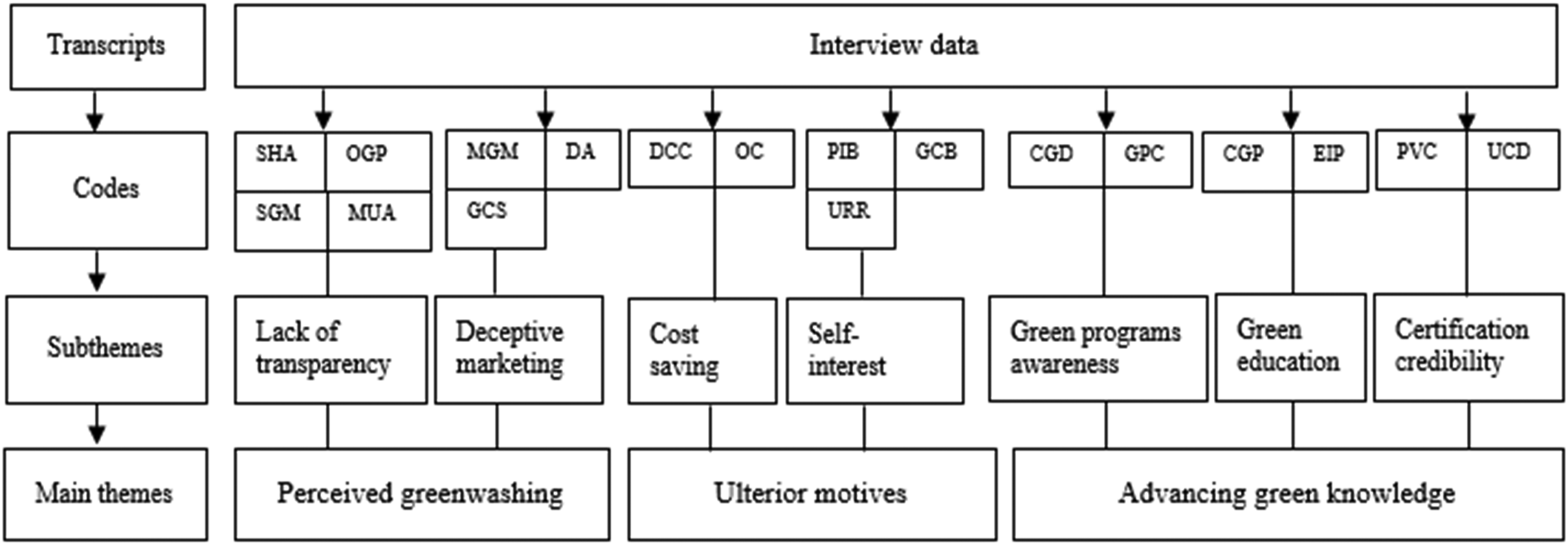
Emerging thematic findings.
Results
Thematic analysis revealed three overarching themes shaping how travelers perceive green hotel communication: perceived greenwashing, ulterior motives, and advancing green knowledge. The first theme, perceived greenwashing, consists of two subthemes: lack of transparency and deceptive marketing. The second theme, ulterior motives, encompasses the subthemes cost-saving and self-interest. The third theme, advancing green knowledge, emerged as a cross-cutting theme comprising three subthemes: green programs awareness, green education, and certification credibility. The following sections discuss these themes and subthemes in depth, supported by illustrative participant quotes and analytical interpretation.
Perceived greenwashing
This theme encompasses two interrelated subthemes: lack of transparency and deceptive marketing, which reflects widespread concerns among participants about the credibility and transparency of hotels’ green claims. Across the five focus groups, travelers expressed uncertainty and doubts about the credibility of green initiatives, often pointing to inconsistencies between what hotels promote and how they actually operate. Under the first theme, lack of transparency, participants frequently questioned whether hotels’ visible environmental actions accurately reflected broader operational behavior, or whether these efforts were selectively communicated to create a favorable impression. One participant noted: “Hotels might promote towel reuse to appear eco-friendly, even while engaging in harmful operations” (FG1–P4). Another added: “They only mention towel reuse, but nothing else, but what about food waste or cleaning chemicals?” (FG3–P17). This suggests that visible green practices may be used to mask less sustainable activities, creating doubts about the hotel's overall trustworthiness. Another traveler described feeling overwhelmed by excessive green claims “I stayed at a lodge that really emphasized being eco-friendly even with the ingredients they used for cooking! They had signs all over the place, and for me, it felt like they were trying too hard and making it seem better than it actually was” (FG2–P12). The perceived overemphasis on sustainability raised suspicions that the hotel was exaggerating or selectively emphasizing certain efforts for marketing purposes. Similarly, one participant raised concerns about selective communication: “Is it possible that hotels selectively promote the ones that enhance their public image without fully implementing them or hide other ones that actually would have negative impacts?” (FG3–P19). This reflects concerns that selective disclosure undermines message credibility and perceived trustworthiness.
A further concern involved masking unfavorable actions. One participant explained, “Hotels might deliberately promote some practices to hide other ones. For example, they might highlight local sourcing but actually get more ingredients from overseas” (FG4–P23). In these cases, participants assumed potential misalignment between stated commitments and actual practices. These reflections reveal how participants critically engage with green messaging while also scrutinizing the broader institutional practices of hotels, often interpreting omissions or inconsistencies as intentional strategies to shape public perception. In this context, travelers interpret selective or exaggerated green messaging as a signal of incomplete transparency, expressing a clear demand for verifiable information and a closer alignment between operational reality and the messages hotels share.
While the previous subtheme emphasized concerns about a lack of transparency in hotel operations, the second subtheme, deceptive marketing, highlights how exaggerated or misleading marketing further undermines the perceived credibility of green communication. One participant noted: “They market everything with green logos and slogans, but I doubt they actually do anything behind the scenes” (FG5–P30). This comment highlights perceptions of image-driven green communication, suggesting that marketing efforts may be opportunistic or misleading when not supported by visible implementation. Another participant highlighted this disconnect, stating: “They put signs everywhere about being green, like bins for recycling, but you don’t actually see whether they follow through. It feels more like a marketing strategy than real action” (FG3–P18). This reflects concern with how environmental messaging may be strategically employed for image-building, even when supporting evidence is absent or unclear, capturing the core of the deceptive marketing theme. Participants noted that in the absence of visible or verifiable practices, green claims can appear insincere or exaggerated. This erodes the perceived credibility of hotel sustainability efforts and contributes to growing skepticism among travelers, ultimately weakening trust in green communication.
While participants often associated both cost-saving and self-interest with underlying managerial motives, the two represent distinct forms of attribution. Cost-saving was primarily perceived as an operational motive, where guests believed hotels implemented green practices to reduce expenses, such as lowering laundry frequency, minimizing water and electricity use, or cutting maintenance costs. This form of attribution reflected an economic rationale focused on efficiency and resource management. In contrast, self-interest was viewed as a strategic or image-oriented motive. Participants suggested that some hotels engage in green communication to enhance their public reputation, attract environmentally conscious guests, or gain favorable publicity without necessarily enacting substantial environmental changes. Self-interest was also linked to transferring responsibility onto guests, for example, asking them to reuse towels or limit housekeeping, allowing hotels to appear responsible while exerting less effort. This distinction highlights that travelers differentiate between financial efficiency and image management motives, both of which shape their skepticism and perceptions of message credibility in different ways.
Ulterior motives
This theme captures participants’ widespread suspicions about the underlying intentions behind hotels’ green initiatives. Two key subthemes emerged from the discussions: cost-saving and self-interest. These subthemes reflect travelers’ perceptions of the underlying motives driving hotels to adopt environmentally friendly practices. Across all five focus groups, participants expressed concerns that environmental practices were adopted primarily for cost reduction and operational convenience, rather than out of credible concern for the environment.
The first subtheme, cost-saving, highlights how travelers frequently questioned whether hotel sustainability initiatives were genuinely environmentally motivated or simply operational strategies aimed at reducing costs. As one participant remarked: “I am convinced they are more concerned with saving money than the environment” (FG2–P14). Another participant echoed this view: “It feels like they want us to make sacrifices while they save money” (FG5–P32). These perspectives reflect traveler perceptions that sustainability initiatives are primarily driven by cost-efficiency and serve to enhance a hotel's environmental image while ultimately prioritizing financial benefit.
Participants also noted instances of opportunistic compliance, where hotels adopted green practices to benefit from external financial incentives. Another participant shared: “I heard that the government is lowering the taxes collected from businesses if they go green so hotels probably convert to green because of the tax breaks, they do it more for the financial relief and not sustainability” (FG3–P17) suggesting a perception of pragmatic adaptation to financial opportunity. Additionally, participants observed that hotels often present operational changes such as energy-efficient upgrades as sustainability efforts, raising doubts about their underlying intent. One participant remarked: “Many hotels install energy-efficient appliances and brand themselves as green to save money while establishing a reputation” (FG4–P25). Collectively, this skepticism reflects the perception that green initiatives are driven more by financial considerations than by environmental commitment. Participants suggested that acknowledging these operational benefits more transparently could help hotels avoid being perceived as insincere or purely profit-driven.
The second subtheme, self-interest, reflects participants’ perception of hotel green messaging as self-serving, often describing efforts that appeared driven more by public relations than actual environmental responsibility. These initiatives were frequently seen as attempts to enhance public image or align with market trends rather than reflecting to implement meaningful operational change. One participant stated: “Hotels talk a lot about being green, but to me, it feels more like branding than real action. With my background in marketing, I have seen how companies use things like sustainability to shape their image, without always making real changes” (FG1–P6). This reflects broader pattern of green claim skepticism, where travelers doubt whether messaging aligns with substantive actions. One participant added: “I am sure these hotels promote themselves as ‘green’ just for the positive image and it's more about looking good to people who cares about the environment” (FG2–P10). Similarly, another participant remarked: “I think they just do it for the image—it looks good on Instagram” (FG5–P33). Such promotional image-building activities were interpreted as examples of attribution of self-interest, illustrating how travelers inferred strategic intent behind green messages, especially when marketing appeared unsubstantiated. Several participants also highlighted perceived trade-offs in comfort and convenience, reinforcing perceptions of self-interest. Participants frequently expressed the idea of a ‘guest comfort burden,’ where environmentally framed initiatives were seen to compromise the quality of the hospitality experience, particularly in terms of perceived luxury. As one explained: “I find hotel messages promoting shampoo dispensers and timed showers confusing. It impacts my luxurious experience, and I believe it's not fair to a paying customer” (FG5–P29). Others highlighted a sense of unequal responsibility, where environmental practices were disproportionately placed on guests. One traveler asked, “It is mainly my role as a customer to reuse towels, recycle, waive room cleaning, but what about the hotel operations?” (FG3–P21). This reflects a perceived imbalance in responsibility, where participants questioned whether hotels are fulfilling their fair share to uphold sustainability commitments. These reflections suggest that when hotels position sustainability as primarily guest-driven without transparently demonstrating their own efforts, travelers interpret this imbalance as self-serving. Participants emphasized the need for shared responsibility and more credible communication to counter the impression that green initiatives are merely image-driven.
Advancing green knowledge
The third theme that emerged from the data, advancing green knowledge, reflects participants’ belief that improving communication and education around green practices can help reduce perceptions of greenwashing and mitigate suspicions about ulterior motives. Across all five focus groups, participants described how limited understanding of what green initiatives involve, both in scope and impact, can hinder acceptance of green claims. Three key subthemes were identified within this theme: green program awareness, green education, and certification credibility.
The first subtheme, green programs awareness, captures participants’ confusion about what qualifies a hotel as “green” and how environmental initiatives are actually implemented. This reflects a perceived communication gap in how hotels present the existence, scope, and meaning of their sustainability efforts. One participant noted: “More communication about the exact meaning of a green hotel would definitely influence my choice between two hotels and my engagement in green initiatives” (FG1–P7), highlighting the importance of program visibility and clarity. Others noted that although certifications or symbols were present, their meaning was unclear or underexplained. As one participant added, “They just put some badge on the door, but no one explains what it stands for” (FG2–P14), reflecting perceptions of superficial or incomplete messaging, which weakens confidence in the initiative's legitimacy. Others expressed reduced confidence in green programs when only partial information was provided. As one participant shared: “I was pleased to stay in a LEED-certified hotel, but I soon discovered other practices that I believe management should have informed me about, such as the use of water-saving showerheads in the showers” (FG2–P11). These reflections suggest that travelers expect more complete and transparent, and easily interpretable information about green programs, not just symbolic gestures. While the participants were not questioning the legitimacy of sustainability, they highlighted how partial or selective messaging may unintentionally undermine the perceived credibility of green programs.
The second subtheme, green education, reflects participants’ emphasis on the need to explain the rationale behind specific green practices. They highlighted that effective communication should go beyond awareness to actively build guest understanding. Many felt that while green initiatives were available, the reasoning behind them was often left unexplained, limiting guest engagement. One participant shared, “It was a funny coincidence because one day I looked into why hotels promote using cold water for laundry… I discovered that do that to save energy, a fact new to me. Hotels should share this with us” (FG3–P20). Rather than questioning the practice itself, this reflected a desire for operational clarity, where understanding the “why” behind an initiative increases trust and perceived credibility. Similarly, another participant stated, “Sometimes I follow the green suggestions in my room just because they’re there, but I don’t really understand the point. If they explained more, I’d probably support the initiatives more actively” (FG2–P9). This suggests that even environmentally inclined travelers may remain passive unless provided with meaningful educational context. The absence of such explanations was seen as a missed opportunity to foster informed participation. These reflections highlight the importance of organizational transparency in everyday operational choices, for example, clarifying resource-saving measures or service trade-offs. Participants indicated that when hotels communicate these decisions more proactively, it can reduce skepticism and encourage more engaged and informed support for green practices.
Lastly, the third subtheme under advancing green knowledge is certification credibility. Participants discussed the role of third-party certification programs in shaping their trust in green initiatives. Recognized and independent endorsements were seen as critical to establishing message credibility. One participant recalled, “I once spoke with a receptionist who mentioned a ‘Green Key’ certificate in the manager's office. I was intrigued… and found it strange that they wouldn’t prominently display such a commendable achievement” (FG4–P26). This reflects a perceived disconnect between organizational achievements and their visibility, as participants also expressed frustration, suggesting a missed opportunity to build credibility through transparent communication. However, another participant added, “I was pleased to stay in a LEED-certified hotel” (FG5–P28), indicating that well-recognized endorsements like LEED can contribute to trust and positive brand image, particularly when they are clearly presented and understood. By contrast, when certification schemes are communicated in a superficial or unexplained manner, their perceived credibility weakens, limiting their potential in nurturing guest trust.
Discussion
Drawing on the theoretical premises of signaling and attribution theories, this study offers a nuanced qualitative understanding of how travelers perceive green hotel communication. The study identified three interconnected themes: perceived greenwashing, suspected ulterior motives, and advancing green knowledge, that collectively shape the travelers’ trust. The study highlights the limited focus on greenwashing in hospitality research (Majeed and Kim, 2023; Rahman et al., 2015), proposing that clearer definitions of “green hotels” (Chen et al., 2019) and more transparent environmental practices could mitigate these perceptions (Nimri et al., 2022).
Addressing the research gap identified in prior studies, which have largely focused on guests’ behavioral intentions rather than their cognitive interpretations (e.g. Chen et al., 2019; Rahman et al., 2015), this study unpacks how travelers attribute ulterior motives when perceiving green communication, a distinct psychological mechanism that shapes how travelers perceive the credibility of green communication even in the absence of objective deception (e.g. Majeed and Kim, 2023; Szabo and Webster, 2021). As illustrated in Figure 2, a holistic interpretive framework is proposed, outlining the relationships among perceived greenwashing, suspected ulterior motives, and advancing green knowledge, which collectively explain how travelers form or withdraw trust in green hotel communication.
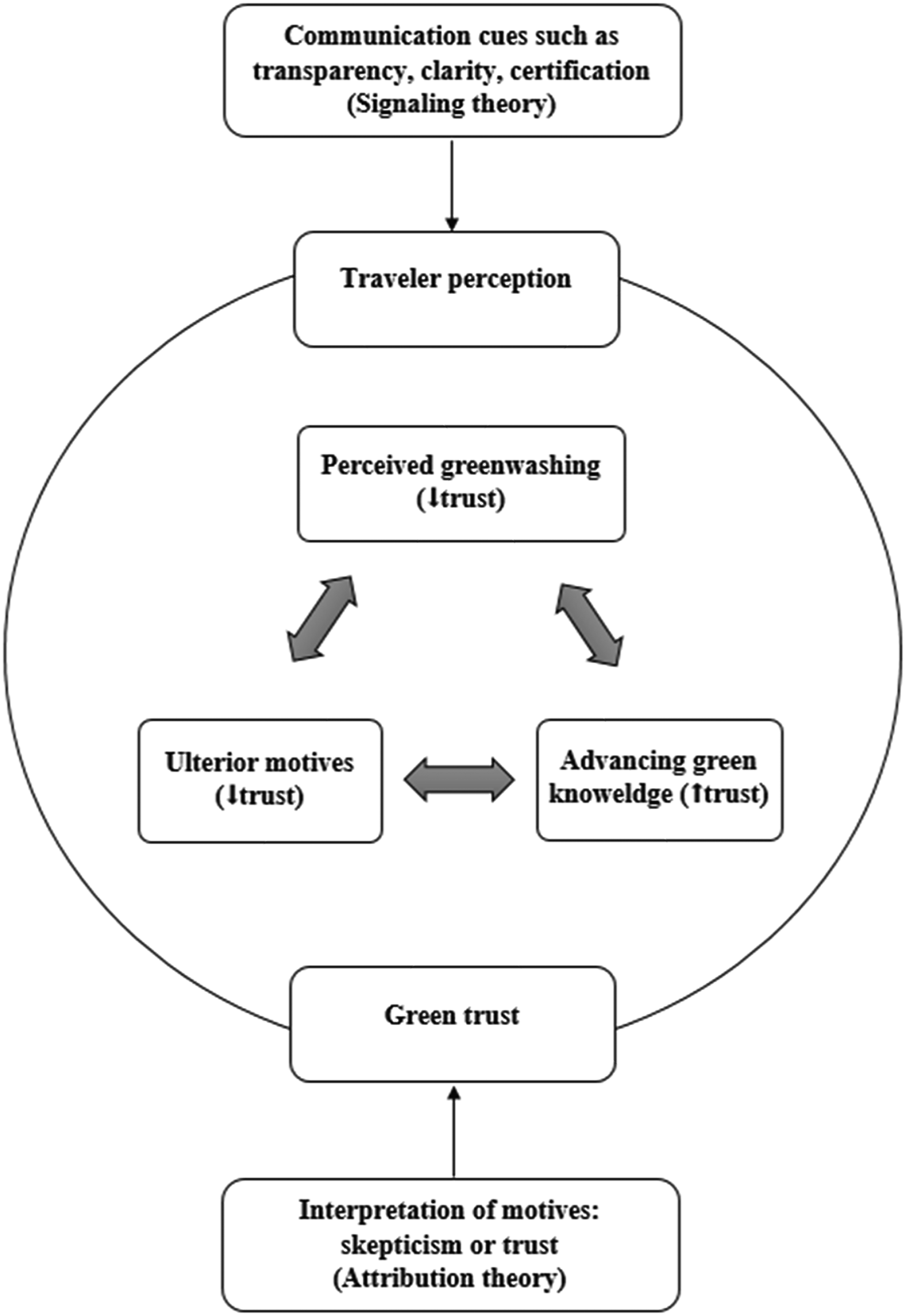
The intertwined relationship between perceived greenwashing, attributions of ulterior motives, advancing green knowledge, and the development of green trust.
As illustrated in Figure 2, perceived greenwashing, ulterior motives, and advancing green knowledge, interact to explain how travelers perceive green hotel communication through the dual lenses of signaling and attribution theories. Communication cues, such as transparency, clarity, and credible certification, act as signals that inform traveler judgments about the hotel's environmental commitment. Simultaneously, travelers engage in attributional processing, interpreting these cues in terms of the hotel's underlying motives, including cost-saving or self-interest. These attributions shape cognitive evaluations that result in either heightened skepticism or reinforced trust. As shown in the figure, perceived greenwashing and attributed ulterior motives emerge as key sources of traveler skepticism that weaken green trust, particularly when messaging is perceived as exaggerated, image-driven, or lacking in operational transparency. In contrast, advancing green knowledge through guest education, clearer information about green practices, and visible certification credibility acts as a critical mitigating force that restores message credibility and strengthen trust. These three thematic dimensions interact through travelers’ interpretive processes and collectively shape their perception of the credibility of hotel green communication. The directional arrows in the framework reflect this flow: signaling and attribution processes shape perception, which in turn determines whether trust is weakened or strengthened. Ultimately, the figure captures the theory-driven structure through which travelers process green messages, highlighting how green trust is both formed and challenged within the broader context of green communication.
In line with past research, participants described how unclear or partial communication can send ambiguous signals, reinforcing doubts and perceptions of greenwashing (Jia et al., 2023; Nimri et al., 2022). Although many hotels are adopting eco-friendly measures, such initiatives may fail to strengthen their green reputation if not communicated clearly and transparently (Jia et al., 2023; Lv et al., 2024; Majeed and Kim, 2023). The findings extend prior work by demonstrating that enhancing travelers’ understanding of green practices is essential for developing effective communication messages that reduce perceptions of greenwashing and suspicion of self-interest. Consistent with prior studies by Alnawas et al. (2024) and Lv et al. (2024), our findings indicate that guests often interpret these communications through a lens of suspected self-interest, heightening the risk of greenwashing perceptions. Eco-friendly practices can also generate confusion or perceived risk when travelers interpret cost-saving measures as exclusively self-serving. Beyond confirming the challenges, the results demonstrate that targeted traveler education about specific green practices and their dual environmental and operational benefits can directly reduce greenwashing perceptions and strengthen green trust. This, in turn, enhances guest preferences, brand perception, and loyalty.
In addition to cognitive and perceptual factors, credibility cues play a vital role in shaping traveler trust. Our findings reinforce prior research emphasizing the importance of third-party certifications in enhancing credibility and reducing skepticism about green claims (Rahman et al., 2015; Serkan and Dincer, 2019). Independent audits and visible endorsements by credible certifiers play a critical role in validating hotels’ sustainability efforts and increasing green trust among travelers. However, overstating green efforts can lead to skepticism and perceptions of greenwashing (Brouwer, 2016). Transparency about the cost-saving motives behind green actions can mitigate skepticism while maintaining environmental integrity. Beyond confirming these challenges and solutions identified in prior research, this study adds new insight by demonstrating that an integrated approach, combining clear guest education about green practices, transparency about operational benefits, and credible third-party certification, can more effectively reduce greenwashing perceptions and strengthen trust. Additionally, prior research suggests that hotels need to clarify that green practices do not compromise quality or comfort (Nimri et al., 2017), addressing concerns that green initiatives reduce luxury. To further reduce travelers’ skepticism and attributions of ulterior motives such as cost-saving or image building, hotels should adopt clear green communication that encourages guests to engage with environmentally friendly accommodation options, while also emphasizing that such practices do not compromise guest comfort or shift the sustainability burden unfairly onto the traveler. These findings explain why travelers may remain skeptical toward green communication even when hotels engage in genuine environmental practices.
Finally, clear and consistent communication remains crucial for building green trust. Ambiguous terms such as ‘eco’ or ‘green’ can confuse travelers if not supported by transparent descriptions of actual practices (Malhotra and Srivastava, 2024; Nimri et al., 2022). Communicating verified certifications and simplifying technical language make sustainability messages more trustworthy and credible, thereby reducing skepticism and reinforcing trust.
Theoretical contribution
This study offers several theoretical contributions. First, it clarifies how hotels’ ulterior motives undermine guests’ trust in the legitimacy of green claims and fuel travelers’ perceptions of greenwashing. By exploring this relationship, the study bridges theoretical gaps in understanding the role of ulterior motives within sustainable service businesses. Previous studies have largely overlooked this perspective while addressing challenges related to sustainable operations, green communication, and travelers’ cognitive and behavioral responses (e.g. Isac et al., 2024; Majeed and Kim, 2023; Xue and Mattila, 2024). Thus, this study expands the scope of sustainability research and strengthens understanding of how perceived motives shape customer green trust. Second, drawing on attribution theory, the study explains how travelers perceive organization's hidden motivations, namely ulterior motives, embedded in green communication. Attribution theory provides a framework for understanding how perceived intentions within green messages influence traveler trust when self-serving motives are apparent. By presenting the intertwined relationship between perceived green washing, ulterior motives, and advancing green knowledge, the study extends the theoretical application of attribution theory (Jia et al., 2023) and offers a more comprehensive understanding of green communication in service contexts. Third, by integrating signaling and attribution theories, the study highlights their combined role in explaining how hotels’ green communication influences travelers’ perceptions and attributions of a hotel's environmental image. This dual-theoretical approach deepens insight into how communication cues shape attributions of ulterior motives and contributes to ongoing debates on sustainable business practices and their effects on travelers’ cognitive and behavioral responses, which remain mixed and fragmented in prior research (e.g. Cao et al., 2024; Chen et al., 2019).
Practical implications
Despite the increasing interest in environmental responsibility, attracting travelers to green hotels remains a persistent challenge, particularly in a communication landscape saturated with green claims and rising skepticism (Chua and Han, 2022). This study underscores the need for hoteliers to craft green messages that are trustworthy, informative and capable of reducing perceived greenwashing while nurturing greater trust in their environmental commitments.
First, hotels should prioritize communication that goes beyond marketing slogans. Rather than overselling or exaggerating green practices; a concern raised by participants; messages should present clear and verifiable information. This includes explaining specific sustainability initiatives, their environmental benefits, and any operational motivations such as cost-saving. For example, instead of making general claims about energy efficiency, hotels can detail how measures like cold-water laundry cycles contribute to sustainability goals without compromising service quality. By openly acknowledging both environmental and operational benefits, hotels can reduce attributions of ulterior motives.
Second, green messages should emphasize the shared responsibility between hotels and guests in achieving sustainability objectives. Framing green practices as a collaborative effort fosters a sense of partnership and mutual commitment, helping reduce perceptions of imposed inconvenience or hypocrisy. Hotels should also acknowledge and communicate any trade-offs associated with green practices that might affect guest comfort or convenience. Explaining the environmental rationale behind such measures can help increase understanding, manage expectations, and encourage acceptance.
Third, beyond the content of green messages, the credibility of the signals themselves plays a critical role in shaping guest trust. While participants valued clarity, they expressed greater confidence in initiatives supported by strong evidence (signals), particularly third-party certifications like LEED or ISO 14001. Independent verification made these signals more reliable. Participants also found visible investments such as renewable energy installations more convincing, as they signal a deeper level of commitment than symbolic gestures. In a skeptical market, the quality and reliability of the signal should take precedence over the volume of messaging.
Fourth, the findings highlight the importance of educating travelers about what constitutes a green hotel and the breadth of practices involved. Many guests lack familiarity with industry certifications and sustainability initiatives beyond basic programs such as towel reuse. Communication efforts should therefore aim to educate guests about environmental standards and certifications. Displaying these certifications with short, clear explanations in the form of in-room materials, infographics, or videos can improve guest understanding. Additionally, training frontline staff to explain these practices can further personalize guest education, reinforce credibility, and directly address skepticism.
Limitations and avenues for future research
This study has several limitations that present opportunities for future research. First, the focus groups relied on a relatively small, culturally homogeneous sample of Australian travelers, most of whom had moderate incomes and university education. The sample also skewed toward participants aged 25–34, a group that may hold attitudes toward sustainability that differ from those of other age cohorts, which may limit the generalizability of the findings. Additionally, participants’ prior experiences with different hotel types (e.g. budget or luxury) may have influenced their perceptions of green communication. Future research should incorporate a more diverse sample across age groups, cultural backgrounds, economic levels, and travel experiences to capture a broader range of traveler perspectives.
Second, while the qualitative focus group method offered rich and exploratory insights, participants shared views based on general perceptions of green communication without being exposed to standardized message examples. This approach may have introduced variation in how they interpreted green claims, including differences in evaluating message content, source credibility, or delivery style. Although this openness aligns with the study's inductive design, future research could adopt stimulus-based qualitative or experimental approaches to systematically examine how specific message features influence trust, perceptions of greenwashing, and travelers’ behavioral intentions. Finally, as this study highlights the importance of advancing travelers’ green knowledge to build trust and reduce perceptions of greenwashing, future research could investigate how clearer explanations, staff interactions, or digital tools (e.g. mobile apps, in-room displays) facilitate more transparent and credible green communication.
Footnotes
Ethical approval and informed consent statements
Full ethical approval was obtained from the researchers’ institution.
Funding
The authors received no financial support for the research, authorship, and/or publication of this article.
Declaration of conflicting interests
The authors declared no potential conflicts of interest with respect to the research, authorship, and/or publication of this article.
Data availability statement
The datasets generated and analyzed during the current study are available from the corresponding author upon request.

Appendix A. Questions asked during the focus group session.
Appendix B. Codes with Abbreviations,Themes,and Subthemes.
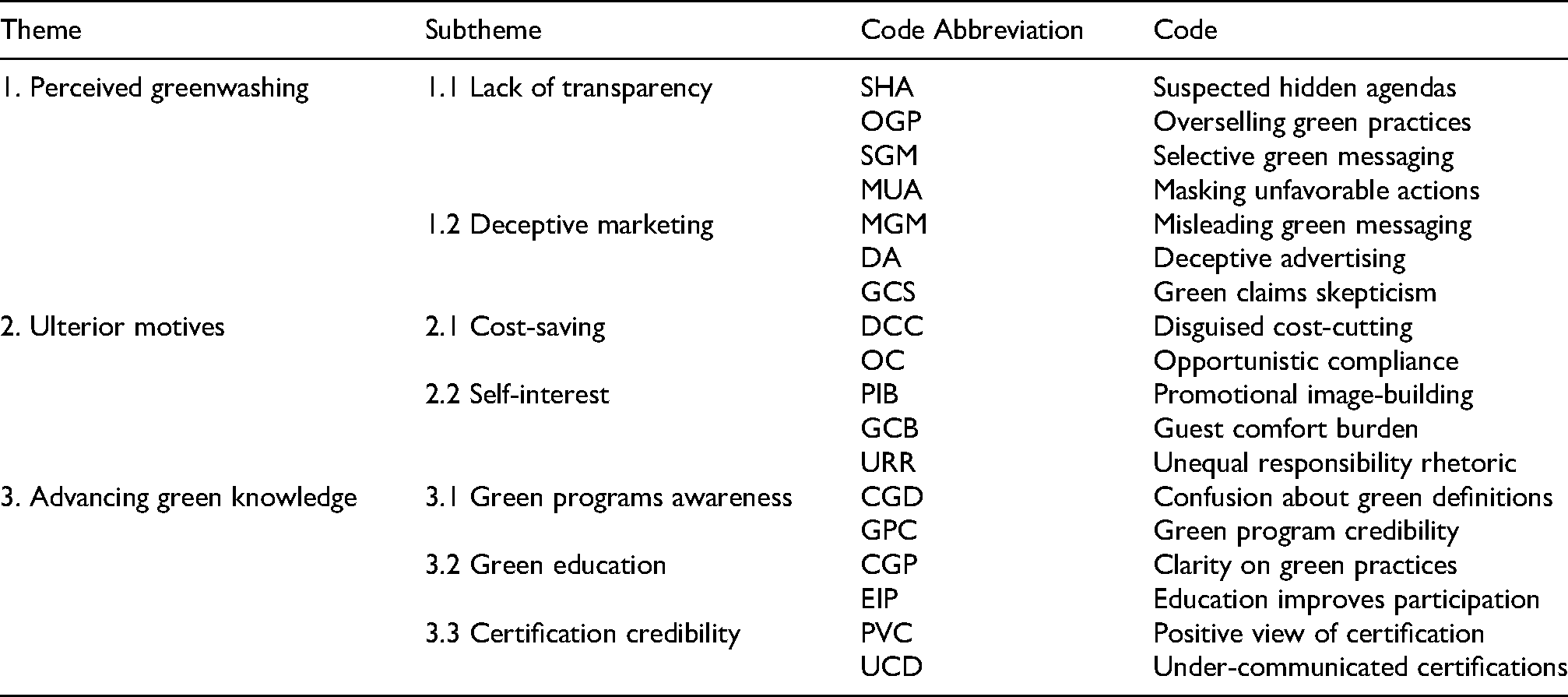
| Theme | Subtheme | Code Abbreviation | Code |
|---|---|---|---|
| 1. Perceived greenwashing | 1.1 Lack of transparency | SHA | Suspected hidden agendas |
| OGP | Overselling green practices | ||
| SGM | Selective green messaging | ||
| MUA | Masking unfavorable actions | ||
| 1.2 Deceptive marketing | MGM | Misleading green messaging | |
| DA | Deceptive advertising | ||
| GCS | Green claims skepticism | ||
| 2. Ulterior motives | 2.1 Cost-saving | DCC | Disguised cost-cutting |
| OC | Opportunistic compliance | ||
| 2.2 Self-interest | PIB | Promotional image-building | |
| GCB | Guest comfort burden | ||
| URR | Unequal responsibility rhetoric | ||
| 3. Advancing green knowledge | 3.1 Green programs awareness | CGD | Confusion about green definitions |
| GPC | Green program credibility | ||
| 3.2 Green education | CGP | Clarity on green practices | |
| EIP | Education improves participation | ||
| 3.3 Certification credibility | PVC | Positive view of certification | |
| UCD | Under-communicated certifications |