



Abstract
In response to the growing complexity of consumer choices, there has been a noticeable shift towards experiential marketing in travel destinations. This study focuses on Catalonia, Spain, and Veneto, Italy, examining how tourism institutions adapted communication to emphasise experiential appeals in the pre-travel phase. Using a content analysis of posts from Twitter-X, this study examines communication trends in aligning tourism products with the tourist experience, using pre- and post-COVID-19 pandemic periods as reference points. Although there have been attempts to diversify product categories, pre-pandemic categories remain dominant, limiting the comprehensive portrayal of tourism product offerings. This research proposes a framework for aiding pre-travel communication planning, advocating for the alignment of online branding of destinations with the projected destinations’ image based on experience dimensions and components.
Introduction
Many studies have examined tourist experiences from various perspectives, including the physical, emotional, sensory, spiritual, and intellectual aspects that evolve throughout the travel journey (Cutler and Carmichael, 2010; Meacci and Liberatore, 2018; Oh et al., 2007; Rageh et al., 2013; Walls et al., 2011). In addition, brand experience is defined as internal subjective and behavioural responses provoked by brand-related stimuli, with effects from brand communications and interactions with goods and services influencing purchase decisions and brand loyalty (Brakus et al., 2009). Nonetheless, a recent study addressing the complexity and lack of a clear definition of tourist experiences (Rusu et al., 2023) advocated a holistic approach, suggesting that tourist experiences encompass cognitive, affective, sensory, and conative subjective perceptions influenced by situational factors during interactions with brands throughout travel stages (pre, during, and post).
The tourist experience is linked to the destination image, which includes beliefs, ideas, and impressions of a destination (Agapito et al., 2013). As tourist experiences evolve, the role of destination marketing organisations (DMOs) in projecting destination image becomes crucial (Kim and Lehto, 2013). Despite their importance, studies on projected and perceived destination images, particularly on social media, are scarce (Sun et al., 2021). Social media is now a key channel for communicating destination image and relationship-building tools (Song et al., 2021; Villamediana et al., 2019), notably in digital destination branding (Confetto et al., 2023), where DMOs face the challenge of enhancing a destination's image competitiveness through positioning strategies and integrated marketing communications (Sotiriadis, 2021).
Research on tourism destination marketing highlights the importance of aligning marketing strategies with tourists’ decision-making and experiential processes (McCabe et al., 2016). Tourists’ choices are influenced by their perception of a destination, based on the images they hold (Reitsamer and Brunner-Sperdin, 2017). Tourist experiences, though non-linear, can often be categorised into pre-travel, on-site, and post-travel stages, allowing DMOs to manage digital destination branding (Confetto et al., 2023). In the pre-travel stage, tourists seek holiday ideas, with social media, reviews, and booking portals serving as key sources of inspiration (Almeida-Santana and Moreno-Gil, 2017).
Tourists in the pre-travel phase seek not only information, but also anticipated experiences and inspirations (Fesenmaier and Pearce, 2019; Tung and Ritchie, 2011). This research examines the inspiration phase in which technology-mediated ‘distant’ online travel experiences occur (Sundbo and Dixit, 2020). In branding, the multidimensionality of the customer experience arises from interactions with brand-related stimuli, utilising experiential marketing modules (Schmitt, 2008). Affective forecasts, like anticipating future emotions in the pre-consumption phase (Wilson and Gilbert, 2005), are crucial for travel behaviour intentions (Karl et al., 2021).
This article analyses how DMOs in Catalonia and Veneto use experiential approaches on X social media (former Twitter) to communicate their tourism products during pre- and post-COVID-19 periods. The Covid-19 pandemic has undoubtedly had a profound impact on the tourism industry, significantly altering tourist behaviour and reshaping destination research (Torres-Pruñonosa et al., 2023). As a pivotal moment, it serves as a valuable comparative reference for analysing shifts in marketing strategies, particularly regarding how tourism products have been promoted over time. The goal is to identify shifts in the DMÓs communication strategies to stimulate visitors. While existing studies focus on behavioural changes during travel, research on anticipated stimuli in the pre-purchase stages via social media channels remains limited. This study addresses this gap in literature.
In this study, content analysis (Krippendorff, 2012; Neuendorf, 2016) of posts from the official X accounts of ACT (@turismecat) in Catalonia and the Veneto region (@TurismoVeneto) was conducted between January 2019 and December 2022. It examines how destinations have adjusted their tourism product communications across successive periods, focusing on experiential attributes (Packer and Ballantyne, 2016), having the COVID-19 crisis as a reference point for analysis. This study addresses three research questions:
RQ1: How has the communication of tourism products by DMOs through X social media accounts in Catalonia and Veneto evolved over time, considering the pre- and post-COVID-19 periods? RQ2: How did mentions of experiential tourism evolve across these periods, and how were they linked to tourism product offerings in the publications of DMOs’ X social media accounts? RQ3: How are the dimensions and components of the tourist experience related to the tourism product conveyed by DMOs through their X-published content?
This study merges research on tourism product classification (Arnegger et al., 2010; Benur and Bramwell, 2015; McKercher, 2016) with an experiential approach to tourism products and the dimensions and components of tourist experiences (Kim et al., 2012; Mehmetoglu and Engen, 2011; Oh et al., 2007) to guide content analysis and interpretation. This study makes two major contributions. First, it shows how tourism product communication on social media reflects experience dimensions and components, enhancing the understanding of DMOs’ digital communication practices (Confetto et al., 2023) and tourist experience structuring (Godovykh and Tasci, 2020). Second, it enhances the literature on experiential marketing integration in DMOs (Sotiriadis, 2021) and experience enhancements in the pre-travel stage (Köchling, 2021) by proposing guidelines for balancing product diversity embedded with tourist experience components and dimensions in digital content strategies.
Conceptual background
Experiential tourism and types of experience
Tourism experiences have been extensively studied (Stienmetz et al., 2021), with varying definitions (Kim and Fesenmaier, 2017), and are sometimes ambiguous and used differently by scholars when discussing the components of the experience (Godovykh and Tasci, 2020). Experience is categorised as action, outcome (psychological, emotional, or learning), or entertainment (Hosany and Gilbert, 2009; Hosany, 2011). The process-oriented view conceptualises experience as an ‘orchestration’ of multiple processes (Packer and Ballantyne, 2016), playing a crucial role in the tourism product (Xu, 2010). It is categorised as personal, entertaining, memorable, meaningful, and extraordinary (Mossberg, 2008; Walls et al., 2011), and is influenced by social, cultural, and physical contexts, as well as products and services (Lindberg et al., 2014; Mossberg, 2007). Tourism experiences often revolve around creating symbolic meaning through travel (e.g. self-identity and learning) (Rickly and McCabe, 2017).
Sensorial aspects of experience involve sensory, perceptual, cognitive, and emotional processes including transformation, learning, and memory (Hosany, 2011). Experiential tourism studies often focus on sensory, emotional, and lifestyle aspects (Knobloch et al., 2017; Mehmetoglu and Engen, 2011), describing experiences as affective, cognitive, conative, and sensorial (Godovykh and Tasci, 2020). Research exploring the affective component addresses concepts like affect, feeling, emotions, or mood (Bagdare and Jain, 2013). Perić (2010) identified various tourism experience components related to entertainment (passive absorption), edutainment (active learning), aestheticism (passive immersion), and escapism (seeking hyperactivity and involvement). Earlier studies (Aho, 2001) proposed core components like emotional experiences, informative practices, practice experiences, and transformation experiences.
Additionally, the cognitive component encompasses cognition, thoughts, education, thinking, information, intellectual, rational, knowledge, and memory (Cutler and Carmichael, 2010). The conative component manifests as behaviour, involvement, and act (Brakus et al., 2009; Kim et al., 2012), whereas the sensorial components are related to sense, sensation, and sensorial experiences (Brakus et al., 2009). Kim et al.'s (2012) study identified seven components of the tourism experience (hedonism, novelty, local culture, refreshment, meaningfulness, involvement, and knowledge) relevant to destination marketing efforts, which are likely to impact memory. Research on sensorial experience highlights the important role of the visual sense in tourism settings, combined with other sensory modalities (Agapito et al., 2014; Elvekrok and Gulbrandsøy, 2022; Mateiro et al., 2017). These components of experience occur at different stages of tourism consumption and are affected by several brand-related stimuli and consumer, situational, and macro-environmental factors (Godovykh and Tasci, 2020; Kim and Fesenmaier, 2017).
In the consumer journey paradigm, experiences span various touchpoints, including channels and media for planning, purchasing, and reflecting (Cutler and Carmichael, 2010; Lemon and Verhoef, 2016). These touchpoints involve virtual and physical interactions between consumers and service providers, thereby enabling experience co-creation (Halvorsrud et al., 2016). These experiences are multi-destination and multi-activity, and achieving an excellent customer experience is crucial for destinations to gain a competitive edge (Halvorsrud et al., 2016). However, designing tourist experiences across various touchpoints poses challenges (Moscardo, 2017).
Marketing views participative experiences as integral to the pre-, during, and post-travel stages (Campos et al., 2015; Neuhofer et al., 2012). Organisations enable consumer participation in value creation (Eraqi, 2011) through contextual, personalised, and interactive experiences (Binkhorst and Dekker, 2009). Participative experiences within the ‘experiencescape’ are shaped by the physical environment and organisation or destination story (Mossberg, 2007), and mobile apps, videos, or social networks enable tourists to customise experiences (Neuhofer et al., 2014). Considering a destination as a complex product, brand-related stimuli in the pre-travel phase should simultaneously occur through multiple dimensions (Köchling, 2021). Challenges remain in understanding experience structuring and communication across the customer journey, specifically during the pre-travel stage.
Tourism products and online communication destination image projection
Destinations rely heavily on primary tourism products, highlighting their environmental and sociocultural attributes (Benur and Bramwell, 2015). A consistent tourism supply should be based on a solid product strategy that emphasises the unique characteristics and conditions that foster meaningful tourism experiences (De Noni et al., 2014). Tourism products include both tangible and intangible elements that support destination activities (Nasimba and Cejas, 2015; Xu, 2010) and have been classified based on tourist needs resulting in five major types: pleasure, personal quest, understanding human endeavour, nature, and business; and 27 product families, further subdivided into 90 sub-product types, reflecting the breadth of offerings in the tourist market (McKercher, 2016).
The integration and consistency of tourism products are vital in online destination branding, as social media reshapes brand image formation (Garay, 2019) and destination images are mainly projected and received in virtual social media communities (Ghazali and Cai, 2014). Research on brand image formation and projection processes has examined the interplay between cognitive, affective, and conative aspects (Kladou and Mavragani, 2015; Tasci and Gartner, 2007). Image attributes can develop before, during, or without a visit (Kneesel et al., 2010), with affective attributes having a stronger impact on behaviour, highlighting the need to enhance this component in destination marketing (Agapito et al., 2013; Papadimitriou et al., 2015).
Online destination image projection uses platforms like X-Twitter to build brand reputation (Yayli et al., 2011). Digital content, including videos, photos, texts, and stories about travel experiences, is now the standard in tourism marketing (John and De’Villiers, 2020; Pabel and Prideaux, 2016; Pop et al., 2021). However, destination image studies often overlook projected images generated by marketing stimuli (Song and Kim, 2016). Research has mainly focused on Instagram content (Filieri et al., 2021; He et al., 2021; Volo and Irimias, 2021), and visual projections (Siyamian et al., 2021). A comprehensive study integrating social media communication encompassing tourism products with the diverse components and dimensions of the projected tourism experience in the pre-stage of travel is still lacking.
Materials and methods
Context of the study
During the Covid-19 pandemic, global tourism paused, prompting destinations to reconsider their marketing strategies. By the summer of 2020, EU tourist arrivals partially recovered with domestic ‘staycations’ (Eurostat, 2022a). In early 2022, bookings on platforms like Airbnb and Booking.com surged by 138% compared to 2021, and bookings exceeded pre-pandemic levels for the first time, with 15 European regions recording over one million guest nights in Q1 2022(EUROSTAT, 2022b). Veneto in Italy and Catalonia in Spain ranked second and seventh, respectively, in overnight stays, among the top European regions (Eurostat, 2022a).
Catalonia tourism products include culture, sun and beach, nature, sports, leisure, food and wine, and health and wellness (ACT, 2022b). In 2019, 85.4% of international tourists visited Catalonia for leisure, 8.3% for business, and 6.3% for other reasons (IDESCAT, 2021). Veneto products include arts and culture, relaxation and wellness, gastronomy, sports and nature, leisure, shopping, and spirituality (Veneto Inside, 2023; Italia.it, 2023). Tourist spending in Veneto is mainly for relaxing holidays (78%), followed by business (13%) and other personal reasons (9%) (Statistiche Flash, 2020).
In Catalonia, the Catalan Tourism Agency (ACT) manages tourism promotion policies (ACT, 2022a) and uses various online channels including profiles on Instagram, Facebook, YouTube, and X-Twitter. In Veneto, the Veneto Region coordinates tourism efforts and promotes the region via platforms like veneto.eu, which links to Facebook, X-Twitter, Instagram, YouTube, and Flipboard.
This study examines X-Twitter as a key channel for DMOs in Catalonia and Veneto, given the critical role of social media in decision-making (de las Heras-Pedrosa et al., 2020). Social networks offer insights into tourist behaviour, aiding in planning and marketing strategies (Zeng and Gerritsen, 2014). Despite limited research on Twitter in tourism (Ćurlin and Jaković, 2019), its role as an information channel (Antoniadis et al., 2015) warrants further investigation.
Template and content analysis
To address the RQs, we conducted a content analysis (Krippendorff, 2012; Neuendorf, 2016) of posts from both DMOs’ X-Twitter accounts from January 2019 to December 2022. Using Twitonomy (Twitnomy, 2022), we extracted the data posts from the ACT (@turismecat) and Visit Veneto (@TurismoVeneto) accounts for four periods: pre-pandemic, post-confinement, recovery, and normality (Table 1). ACT posts were in Catalan, with some in English or Spanish, whereas Visit Veneto posts were in Italian.
Total DMOs posts during the analysed period.
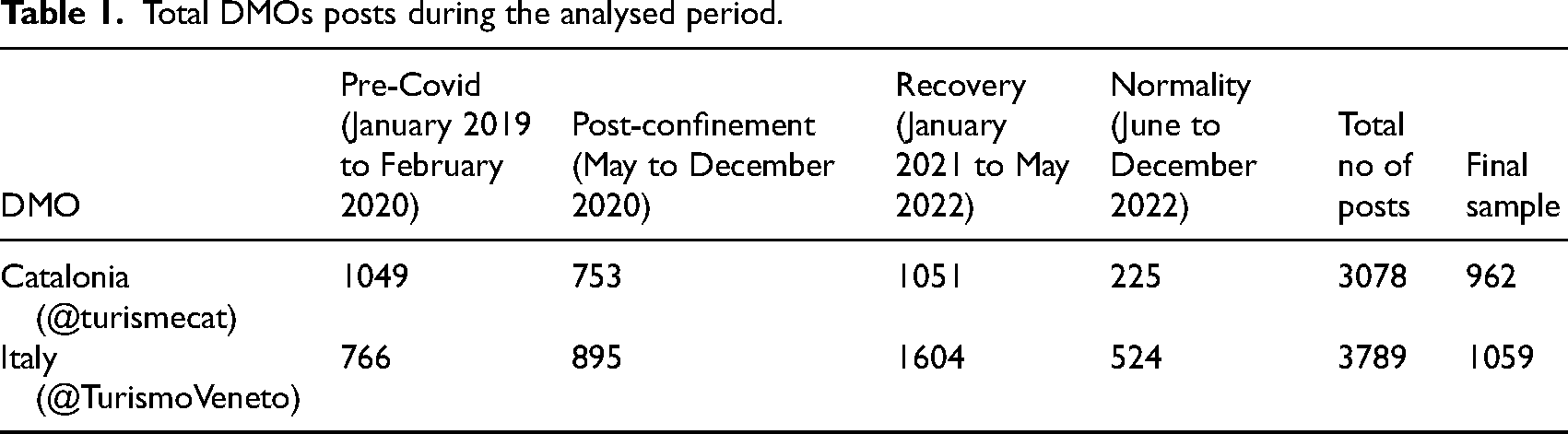
Table 1 lists the total number of posts in each period. The final sample, consisting of 2.021 posts, was randomly selected considering a 95% confidence level and 5% error margin (Piña-García et al., 2016).
We developed a content analysis template by adapting categories from existing literature to address the lack of comprehensive templates in previous research. For RQ1, we based the template on McKercher’s (2016) tourism products classifications, Benur and Bramwell’s (2015) product diversification typologies, and Arnegger et al. (2010) nature niche framework. The categories and subcategories used to examine the types of products conveyed in the posts of DMOs are detailed in Supplemental Appendix 1.
To address RQ2, we examined the posts for mentions of ‘experience’, ‘emotional sensations’, ‘emotions’, ‘authenticity’, and ‘memories’ (Kim and Fesenmaier, 2017). Supplemental Appendix 2 outlines the categories and subcategories used for the analysis of tourist experience dimensions and components. For RQ3, the template draws from the literature on tourist experiences and the experience economy (Kim et al., 2012; Mei, 2014; Stienmetz et al., 2021; Tung and Ritchie, 2011).
In exploring experiential tourism, amidst diverse studies on tourist experience and its foggy conceptual definition (Godovykh and Tasci, 2020), we referred to frameworks defining experience dimensions (Mehmetoglu and Engen, 2011; Oh et al., 2007), and drawn on Kim et al. (2012) for experience components, focusing on those evoking personal memorability, excluding deeply personal aspects more likely to emerge in later travel stages and less evident in DMOs’ online communication.
To assess category analysis reliability (McHugh, 2012), two authors tested agreement on a sample of 10% of posts (N = 198), achieving 93.4% agreement.
Results
Tourism products communicated by the DMOs
To explore tourism products promoted by DMOs in Catalonia and Veneto (RQ1), we compared the frequency of product content types across periods (Figure 1).
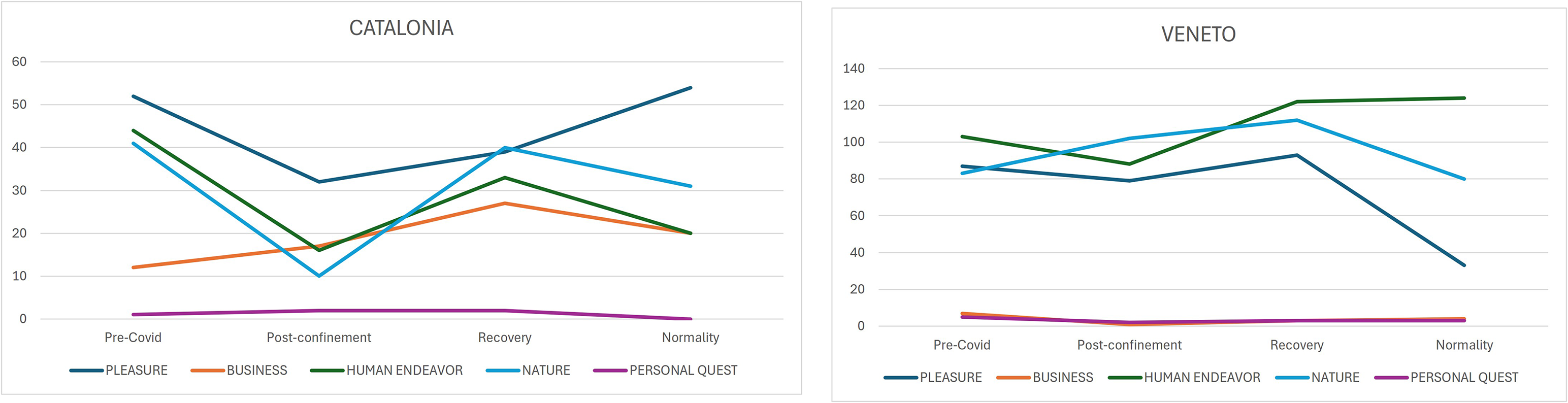
Changes in tourism products communication.
In Veneto, human endeavour tourism products were more prominent than business and personal quest categories. Pre-Covid, human endeavour, pleasure, and nature were the most featured. However, human endeavour and pleasure decreased post-lockdown, while nature increased. During recovery, content focusing on human endeavour, nature, and pleasure increased slightly. And in normality, after restrictions lifted, human endeavour remained prominent, unlike pleasure, with a pronounced decline. In Catalonia, the personal quest category was infrequently communicated, as in Veneto. Pleasure was consistently the most mentioned, with a notable increase in the last period. Mentions in all categories decreased post-lockdown, whereas nature became the most relevant product category during recovery.
Next, we examined each product category to discern communication variations. Figure 2 shows trends in the pleasure category. Gastronomic content was initially prominent in both regions, although interest varied over time. In Catalonia, gastronomic promotion declined during the post-lockdown and recovery periods, but increased again during normality. Recreation was the second most communicated, with fewer mentions in the second and fourth periods. In Veneto, gastronomic and leisure-related products dominated communication, with leisure products peaking during recovery but declining in the fourth period, similar to gastronomic products.
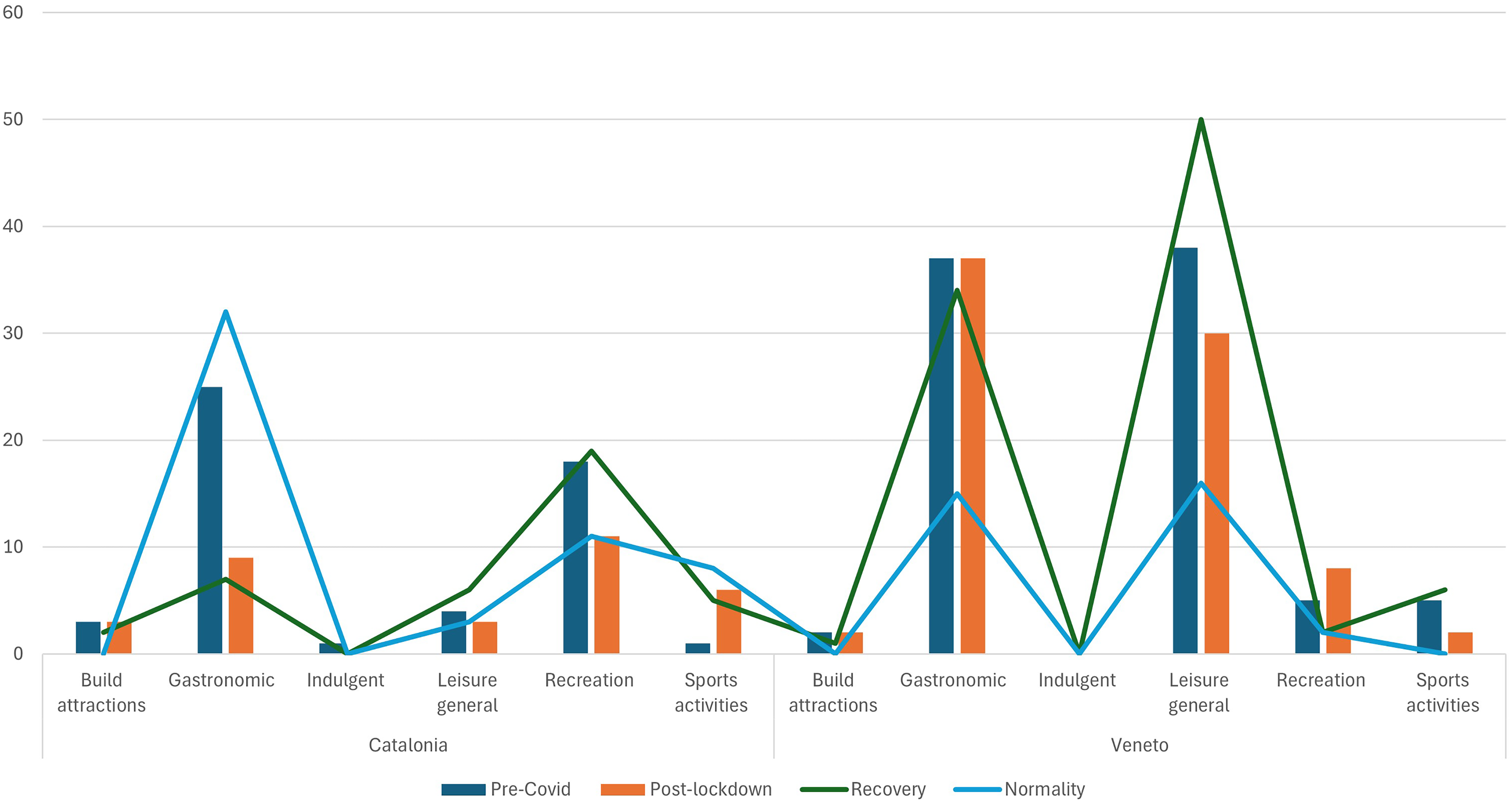
Communication changes in pleasure tourism product subcategories.
In the human endeavour category (Figure 3), built heritage grew in frequency across all four periods in Veneto. Creative tourism increased during recovery and normality, but remained lower than built heritage. Focus on museums, interpretative centres, people, and intangible heritage was sustained but showed a slightly declined post-lockdown. In Catalonia, people and intangible heritage received more mentions but decreased from pre-Covid to normality. Conversely, the focus on built heritage increased in the last two periods compared to pre-Covid.
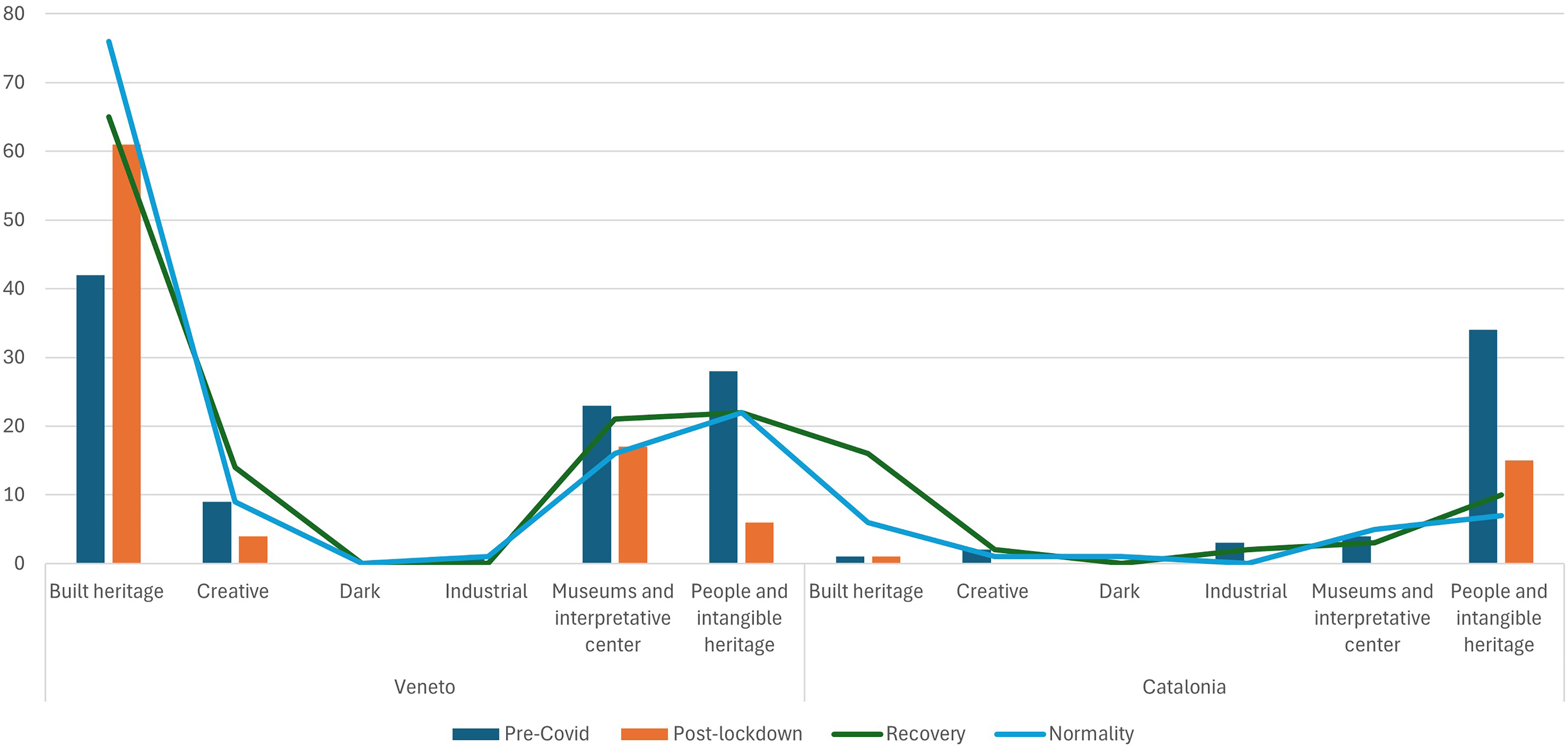
Communication changes in human endeavour tourism product subcategories.
As depicted in Figure 4, in Veneto, adventure tourism gained attention during recovery and normality periods, whereas place-based tourism, remained the most focused. Similarly, in Catalonia, place-based tourism received the most mentions, followed by adventure tourism, which slightly decreased over the last two periods. However, wildlife appreciation and learning saw a surge compared to pre-Covid.
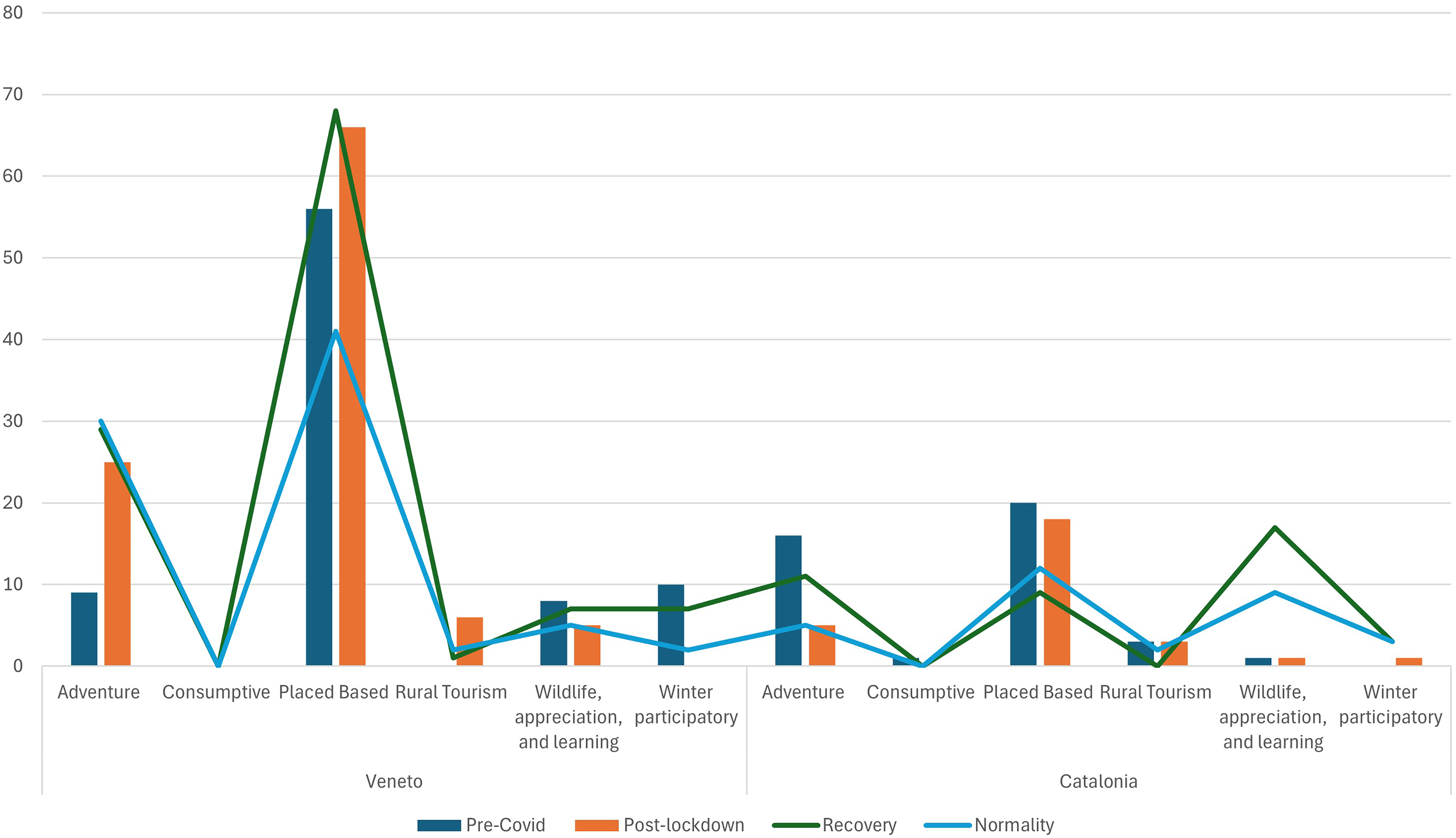
Communication changes in nature tourism product subcategories.
In the business category (Figure 5), Catalonia intensified its focus on business tourism post-Covid, whereas Veneto consistently allocated less emphasis to this category across all four periods.
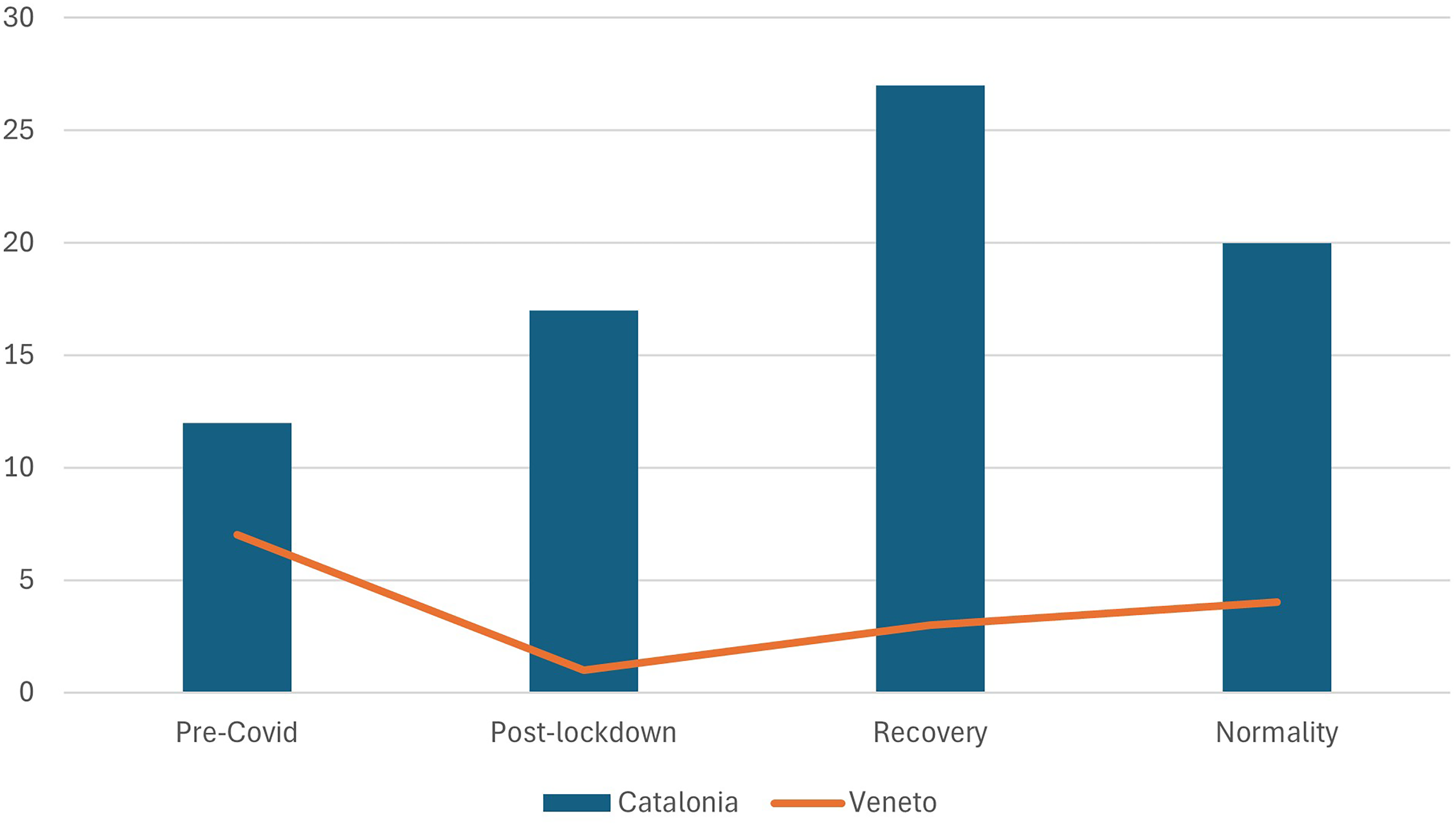
Communication changes in business tourism product subcategories.
Figure 6 illustrates that wellness and religious themes were the only subcategories in both regions’ publications across all periods. Veneto increased mentions of monasteries and sacred places, while Catalonia had fewer mentions. Overall, both regions maintained a low frequency of mentions in this category.
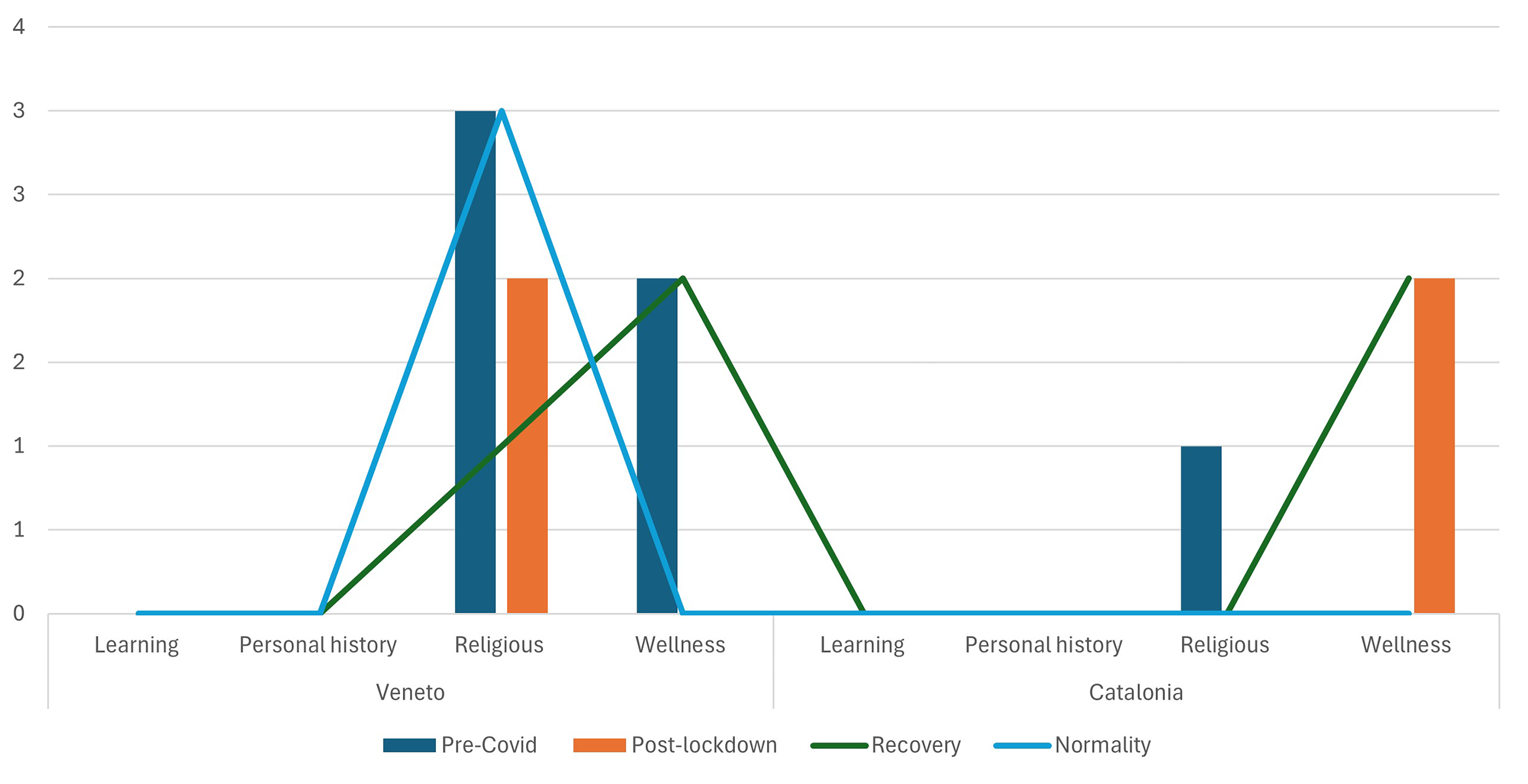
Communication changes in personal quest tourism product subcategories.
Experiential tourism approach
To address RQ2, we examined content for references to experiential tourism, focusing on terms like ‘experiences’, ‘emotional sensations’, ‘emotions’, ‘authenticity’, and ‘memories’. Figure 7 illustrates the content focus across the periods.
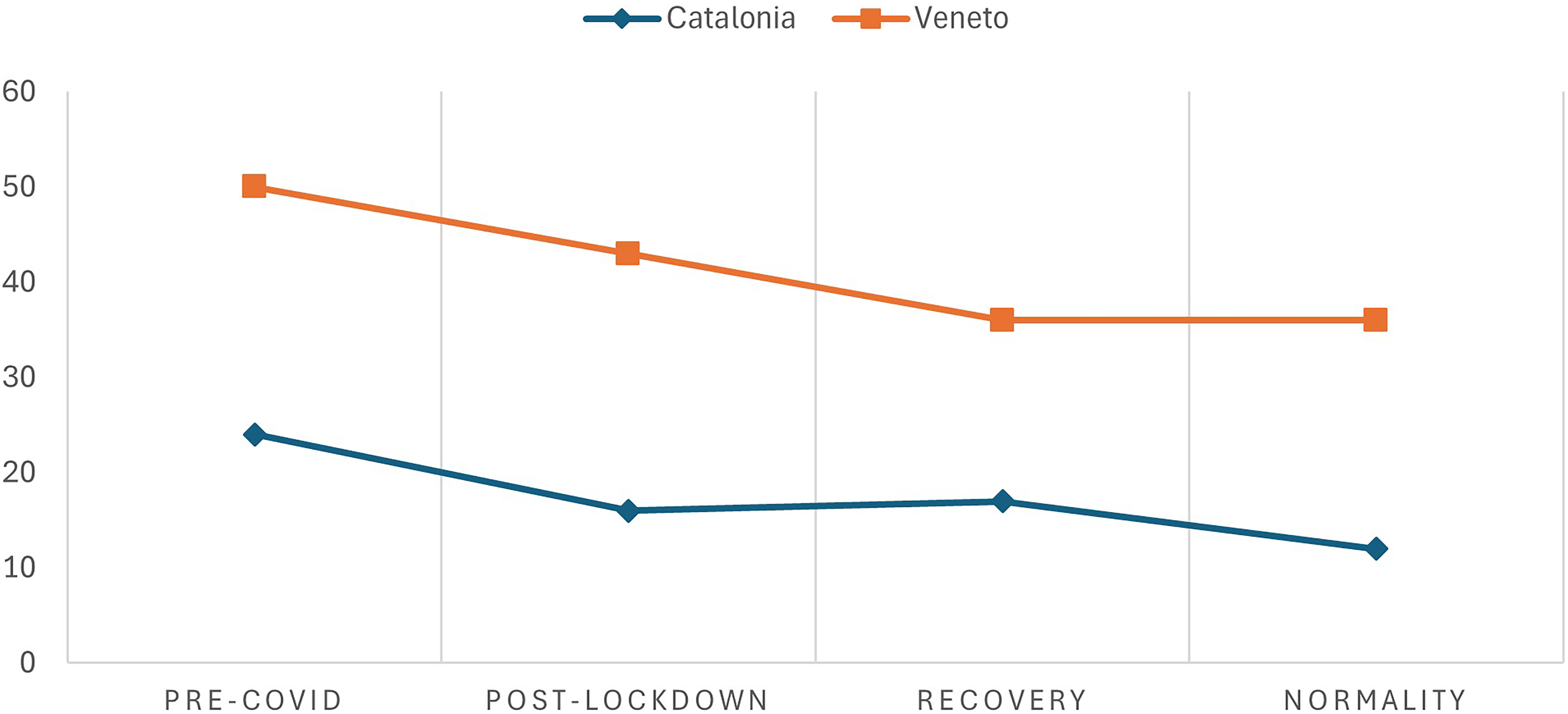
Evolution of mentions in experiential tourism approach.
Throughout all phases, Catalonia's account mentioned experiential tourism in only 7.2% of the analysed publications, compared to a higher representation of 15.6% in Veneto. However, mentions steadily declined from the first to the fourth periods in both regions (Figure 7). In Catalonia, pre-Covid publications emphasised life experience-based tourism products, such as gastronomic products inspired by landscapes in #CostaDaurada and #TerresdelEbre, alongside promoting Catalonia as a hub for premium experiences. Additionally, communication included a regional project aimed at fostering tourism experiences in low-density areas to support the development of slow tourism products (see Supplemental Appendix 3).
In the post-Covid-lockdown period, mentions of experiences were related to technology's role (e.g. showcasing #LegendsofCatalonia through virtual reality), the role of emotion, and emerging tourism business models based on local experiences (Supplemental Appendix 4). During recovery, mentions focused on personalised offerings to enhance value (e.g. ‘Penedès 360 incorporates tourist values and markets customised services, showing a shift in tourism model’) (Supplemental Appendix 5). In the normality period, the emphasis was on premium destination brand promotion with personalised experiences and slow tourism (Supplemental Appendix 6).
In Veneto, pre-Covid communications focused on unforgettable, fascinating, authentic, and unique experiences. Post-lockdown, the emphasis shifts to highlight attributes such as magic, enchanted, and thrilling attributes. During recovery, the focus remained on the uniqueness of the experience, while in the normality period, there was a stronger emphasis on memorable experiences (e.g. ‘Welcome to #ValComelico! Come discover its stunning landscapes, traditions, art, and culture. An unforgettable vacation awaits you’) (Supplemental Appendices 7 and 8).
To understand experiential stimuli usage to forecast anticipated experiences, we examined the co-occurrence analysis of experiential tourism mentions with types of tourism products. Results show that experiential mentions mostly co-occurred with place-based, leisure general, and gastronomic products (Figure 8).
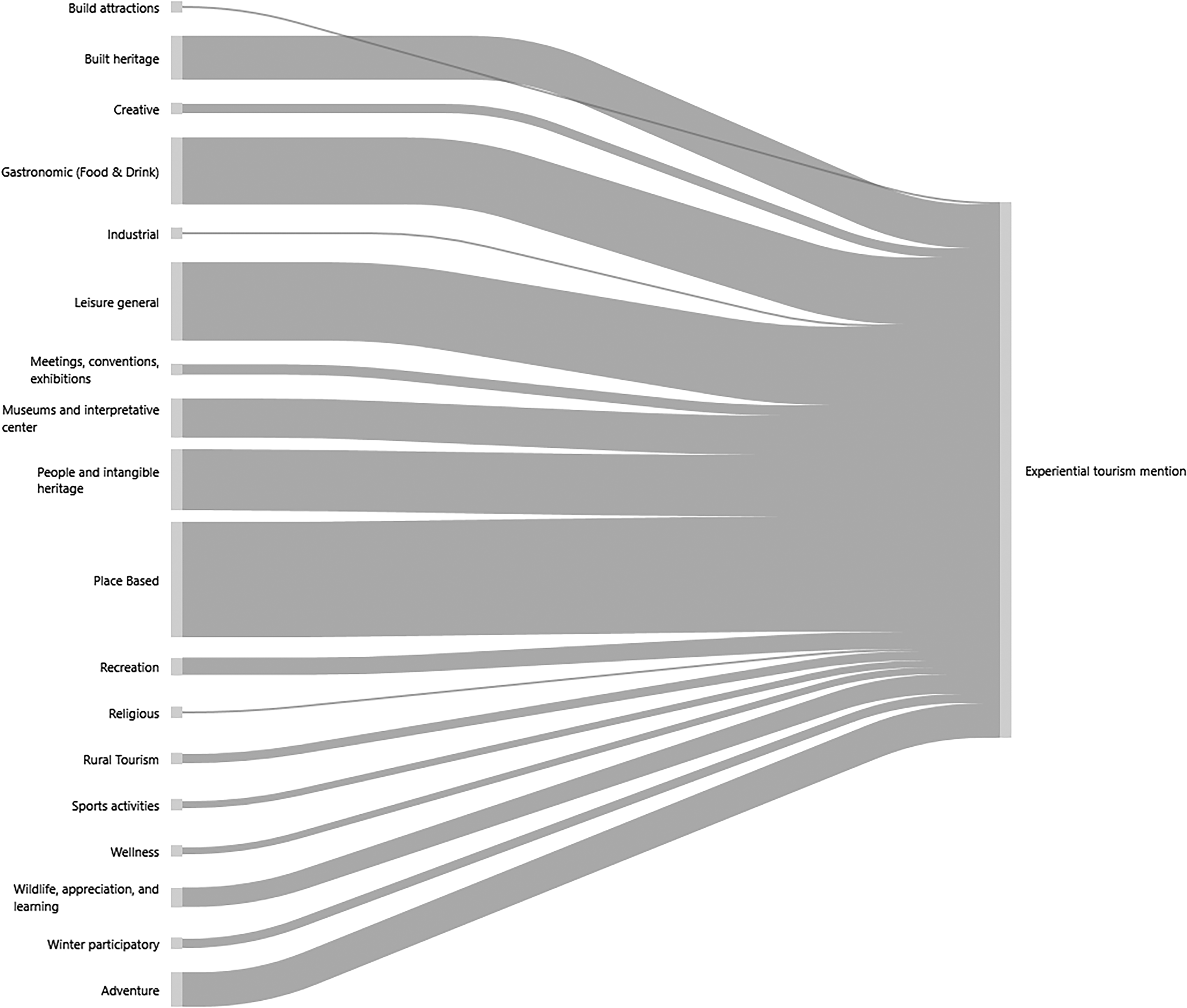
Co-occurrence of tourism products and experiential tourism mentions.
Table 2 provides examples of quotations that illustrate how mentions of experiential tourism are used to describe these product types.
Most mentioned product types using experiential stimuli.
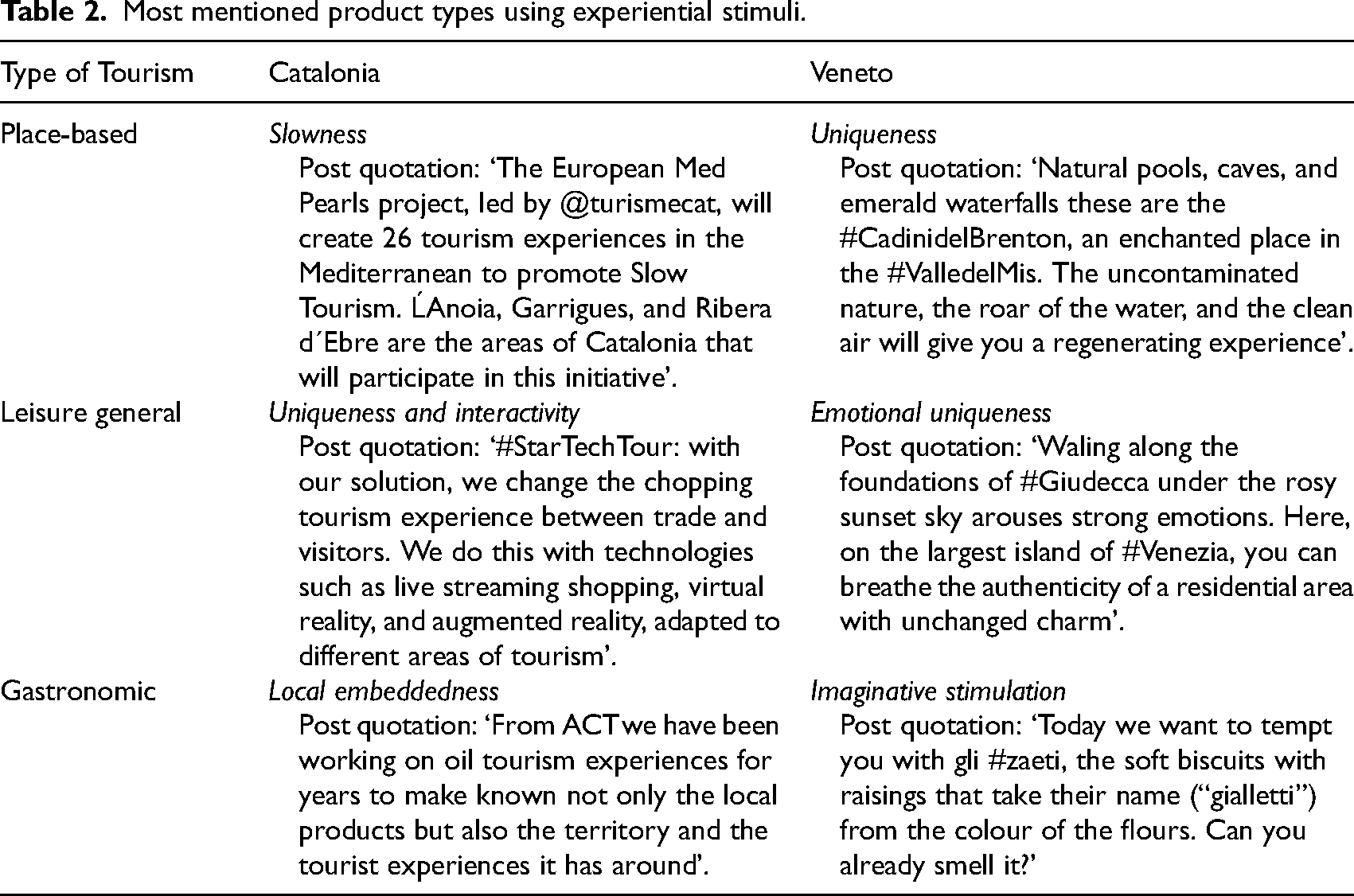
In Catalonia, place-based tourism communication emphasised creation and co-creation of slow tourism experiences (slowness), while Veneto highlighted unforgettable, authentic, magical, fascinating, rejuvenating, and surprising experiences (uniqueness). Catalonia’s leisure general tourism focused on exclusivity, premium quality, authenticity, personalisation, and integration of technology for immersion (uniqueness and interactivity), whereas Veneto featured romantic city sights with an emotional appeal (emotional uniqueness). Gastronomic product posts from Catalonia stressed personalisation and local connection (local embeddedness), while Veneto emphasised the product's local embeddedness, and stimulating imagination through fantastic and fascinating experiences (imaginative stimulation).
We analysed how experiential stimuli were communicated through product descriptions and developed a network diagram (Figure 9) to illustrate the identified associations.
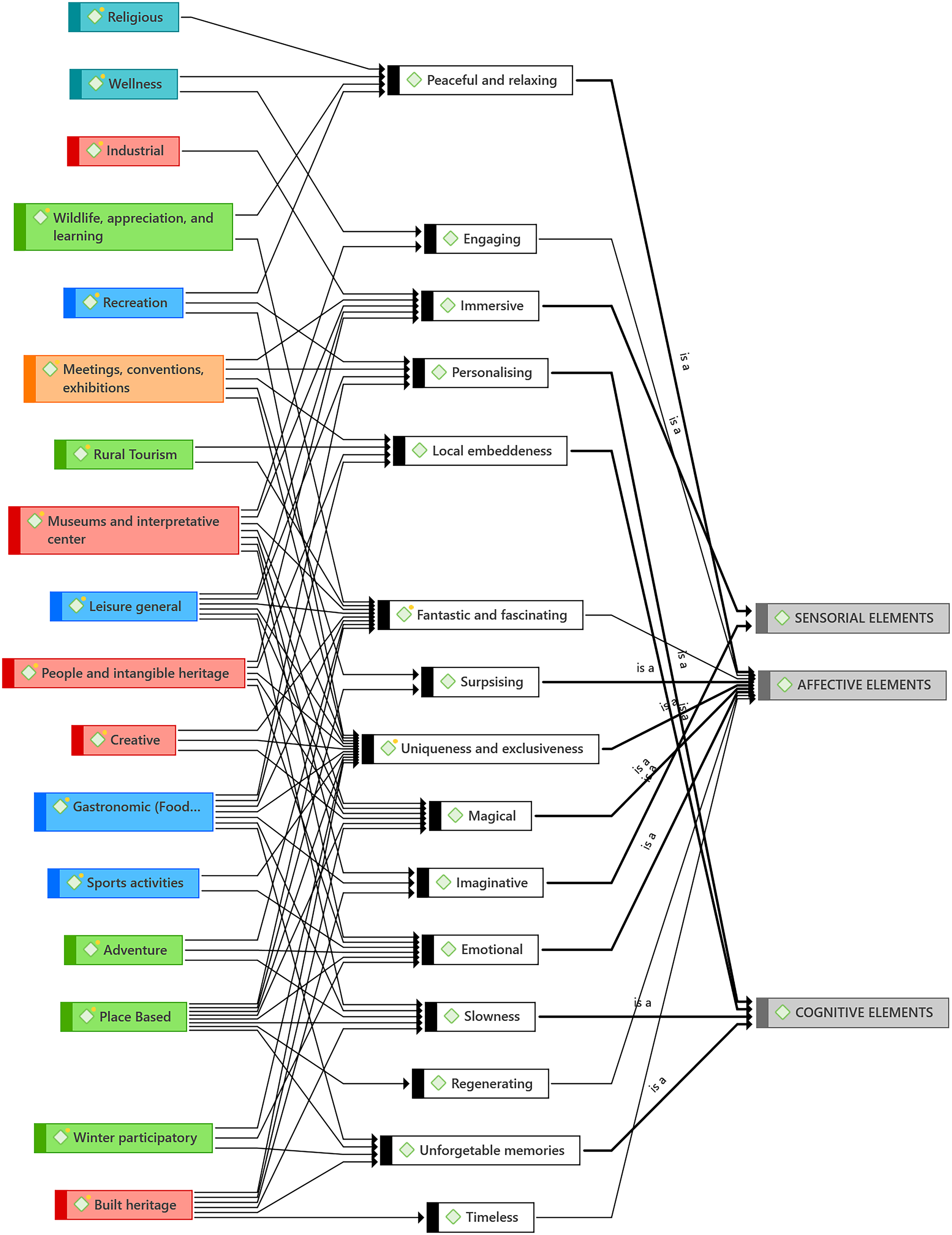
Connection between tourism product subcategories and experiential approach.
Figure 9 illustrates the relationship between tourism products and experiential stimuli emerging from the content of DMO posts. We identified three primary categories of experiential elements in tourism product offerings: affective, cognitive, and sensorial, with affective and sensorial being the most common.
Various product categories are communicated with similar experiential elements. Affective elements (e.g. magical, fantastic, and fascinating experiences) are linked to museums, interpretative centres, place-based and built heritage products. Cognitive elements (e.g. slowness attributes or memorability) relate to nature tourism categories (place-based and winter participatory), pleasure (gastronomic), and human endeavour (built heritage). Sensorial elements (e.g. encouraging imagination and immersion) are found in product communications across various types, including gastronomic, cultural (such as museums), and industrial. These results indicate diverse experience structures in tourism communication, reflecting efforts towards product diversification in communication strategies.
Dimensions and components of the tourism experience
To address RQ3, we analysed the co-occurrence of tourism products with experience dimensions and components (Figure 10). Novelty and hedonism emerged as the most prevalent components associated with the tourism experience. Place-based, built heritage, and leisure general tourism products’ contents were linked to a variety of experience components (Figure 10(a)). Entertainment and aesthetics were the most frequent dimensions, especially in place-based, built heritage, leisure, and adventure tourism products (Figure 10(b)).
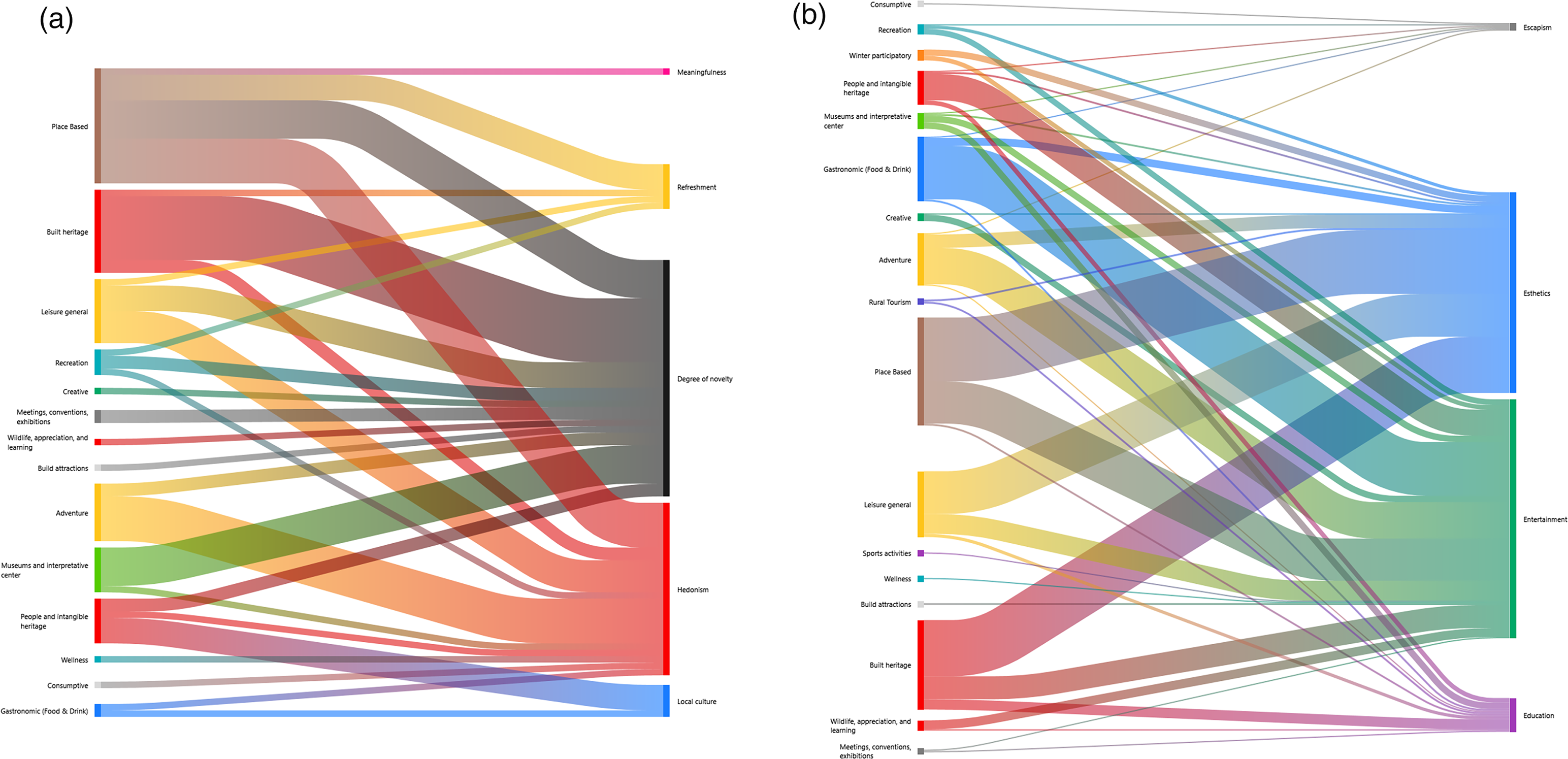
(a) Tourism product types and their co-occurrence with experience components and (b) tourism product types and their co-occurrence with experience dimensions.
Mentions of the novelty component often highlighted the uniqueness of the experience with terms like ‘exclusivity’, ‘rarity’, and ‘uniqueness’. For build-heritage tourism, posts emphasized discovering distinctive, often inaccessible places, with wordings such as ‘rare’, ‘unique’, ‘considered one of the most ancient in the zone’, ‘the biggest’, and ‘unique opportunity to see’. Place-based tourism posts also focused on uniqueness and the evolving nature of visits, reminding visitors to come back to see novel things (Supplemental Appendix 9a and b).
Posts mentioning hedonism stressed experiences described with phrases like ‘spending a relaxing day’, ‘enjoying fantastic moments of relaxation’, ‘discovering a uniquely exciting experience’, ‘being amazed by something’, ‘seeking emotional sensations’, ‘indulging in pure relaxation’, ‘feeling tranquillity and calmness’, ‘being left speechless’, ‘experiencing excitement’, or ‘finding happiness’. Place-based tourism highlighted relaxation, while built heritage posts emphasised being amazed by historical sites. Posts mentioning the refreshment component accentuated the experience offerings, including tranquillity, rejuvenation, and freedom, particularly associated with place-based tourism. The local attraction component was most linked to people and heritage tourism, with content inviting visitors to join local festivities and experience passive or active immersions (Supplemental Appendix 9(c) to (f)).
Posts mentioning the entertainment dimension in place-based and built heritage tourism often emphasised contemplation, while in adventure tourism, entertainment involves contemplation of the beautiful environment, discovery, and fun. In leisure general tourism, posts focused on leisurely wandering, relishing, and contemplation (Supplemental Appendix 10). Aesthetics, the second most dimension mentioned in the posts, was primarily associated with place-based and built-heritage tourism, often exploring the visual spectacularity, beauty, or elegance of the environments (Supplemental Appendix 11).
Discussion and implications
This paper assumed that an understanding of the components and dimensions of the tourist experience should be effectively incorporated into DMOs’ communication in social media, as an integrated strategy for reinforcing the tourism product experiential approach. Despite efforts to diversify tourism product portfolio communication, both regions maintained a focus on specific categories prevalent in the pre-COVID-19 period. This imbalance may limit a comprehensive representation of destination offerings. The findings underscore the importance of effectively integrating tourism experience dimensions and components in social media content strategy to cater to diverse traveller needs while aligning with the destination's brand image. From a theoretical standpoint, this study presents a conceptual framework that reinforces the experiential approach in the pre-stimuli consumer journey (Köchling, 2021), aiming to expand the discussion on challenges within the field of online destination image projection research (Song and Kim, 2016; Sotiriadis, 2021). From a practical perspective, this study outlines several managerial implications and offers specific guidelines for product diversification and experiential storytelling in digital communication.
Theoretical implications
The analysis uncovered distinct trends. Before Covid, both regions heavily focused on three main product categories in their communications: pleasure, human endeavour, and nature. Despite this commonality, each region continued highlighting specific products from the pre-pandemic period. This suggests that during normality, the emphasis on the top pre-Covid category not only continues (human endeavour for Veneto and pleasure for Catalonia) but also increases at the expense of others.
These findings support prior research on diversified tourism product portfolios as catalysts for leveraging brand image formation (Garay, 2019). Both destinations showcased diverse product offerings in their online communication. However, the disproportion in communication frequency persisted, accentuated compared to the pre-Covid phase. The analysis revealed a consistent focus on affective elements in tourist experience communication, emphasising their importance (Godovykh and Tasci, 2020). Prevalent mentions of affective dimensions like entertainment and aesthetics with mentions of novelty and hedonism, were identified as integral components of the tourism experience. Cognitive elements like information on product slowness and local embeddedness, provide further product information considerations for potential visitors. In our study, focusing on brand-related stimuli on a specific social media platform, we observed a more disconnected approach to experiences, particularly highlighting affective elements. This result contrasts with Köchling's (2021) findings, which showed that DMOs’ brand-related stimuli on their website during the inspiration phase tended to represent holistic experiences, including sensory, affective, intellectual, social, and behavioural aspects.
Aesthetic stimuli emerged as a crucial aspect in DMOs’ publications, highlighting the importance of the sensory module of experiential marketing in tourism design experiences (Agapito et al., 2014; Mateiro et al., 2017). These findings suggest a close association between aesthetic stimuli and various tourism product communications, spanning from nature, to pleasure to human endeavours. The results reveal that DMOs use a diverse range of components and dimensions in their tourism product communication. However, these dimensions and components are not uniformly applied to all types of tourism products. While various aspects of the components and dimensions of the tourism experience were communicated, their presence varied significantly, depending on the product. These findings extend the understanding of tourism experience dimensions and components during pre-travel communication (Godovykh and Tasci, 2020), by emphasising the experiential stimuli in tourism product communication and highlighting its potential limitations in this process.
Furthermore, despite extensive research on the tourism experience, its definition remains ambiguous, often confined to a limited contextual understanding of its dimensions and components (Godovykh and Tasci, 2020; Rusu et al., 2023). While the significance of considering the tourist experience and its communication throughout travel planning stages is well-recognised (Confetto et al., 2023), and the interplay between cognitive and affective elements in projected and perceived destination images is acknowledged (Sun et al., 2021), there remains a critical gap in comprehensive studies examining how tourism experiences are communicated online during the pre-travel stages, particularly from a holistic perspective on the diversification of tourism product communication.
This study compares the X social media accounts of two DMOs across pre-Covid and post-normality periods, revealing that while DMOs expanded the diversity of tourism product communication as pre-travel stimuli, they largely continued to prioritise categories that were relevant before the pandemic, indicating limited shifts in communication behaviour. Additionally, this study delves into how the communication of tourism products is structured around experiential dimensions and components, contributing to a more nuanced understanding of how destinations engage in digital communication practices to convey their experiences (Confetto et al., 2023). Based on these findings, this study proposes the development of a conceptual framework based on both the revised literature and in-depth content analysis of X-Twitter data. Table 3 outlines the criteria used to develop the framework, which seeks to provide a comprehensive model for pre-stage tourist experience communication, drawing on an evaluation of the observed objective phenomenon.
Criteria for developing the conceptual framework of the pre-travel stimuli: integrating tourism products with experiential approach.
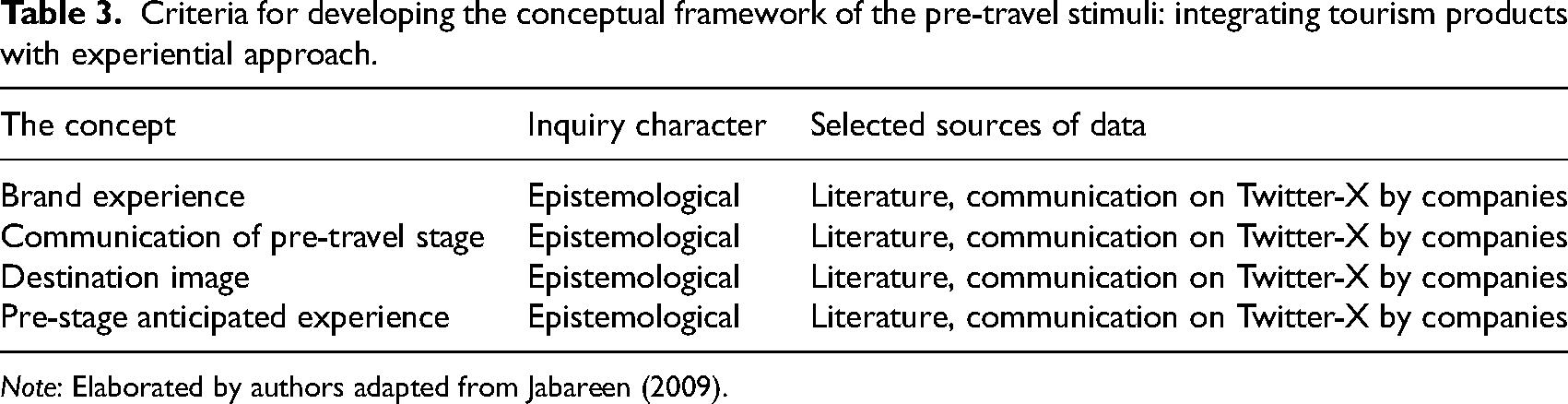
Note: Elaborated by authors adapted from Jabareen (2009).
In the conceptual framework, we propose integrating tourist experience dimensions and components within diverse tourism product categories as pre-travel stimuli (Figure 11).
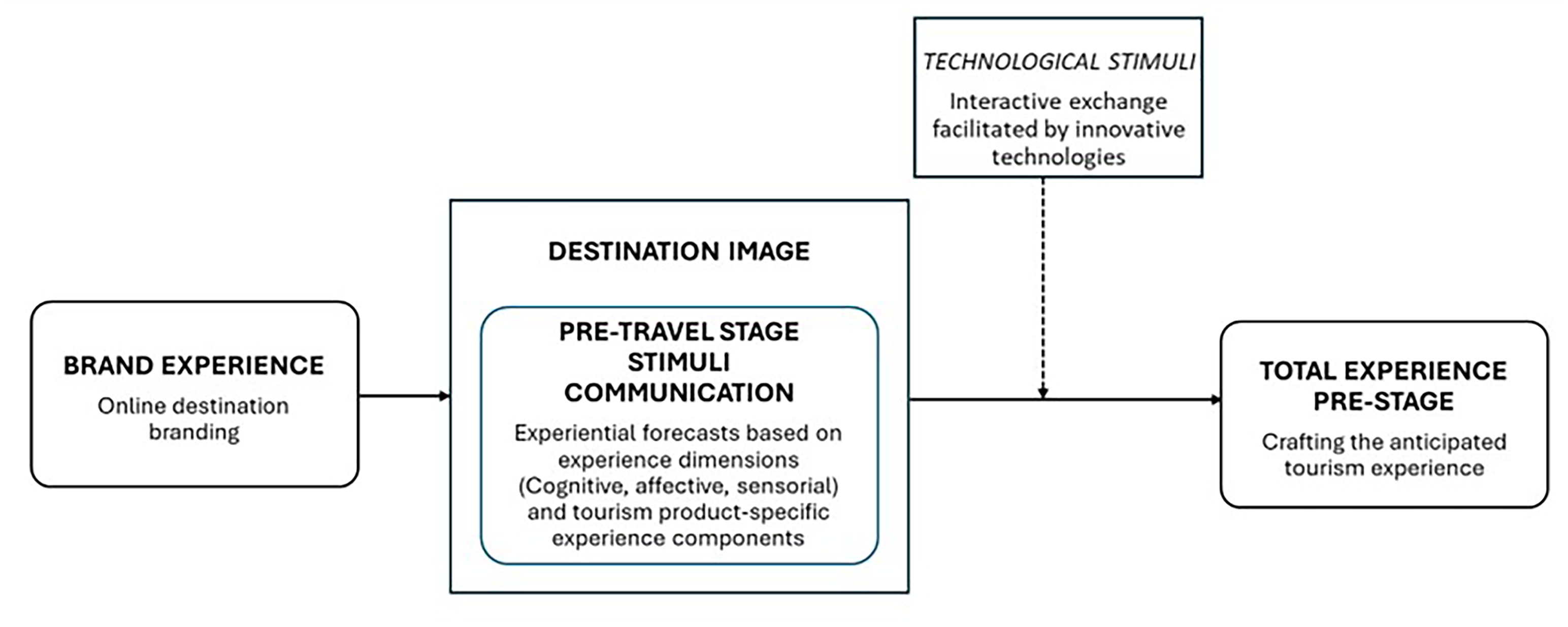
Integrating tourism products with the experiential approach as pre-travel stimuli communication.
Integrating tourism products with an experiential approach in the pre-travel stimuli stage draws on research suggesting that anticipatory emotions can influence travel intentions (Karl et al., 2021; Köchling, 2021; Wilson and Gilbert, 2005). This approach clarifies how the dimensions and components of the tourist experience can be communicated more effectively through social media. While previous studies have examined factors like social, cultural, and physical influences, and product offerings (Lindeberg et al., 2014; Mossberg, 2007), they often overlook the critical role of product diversity in shaping the multi-stage travel experience, particularly online.
The integration proposal consolidates experiential modules into three key dimensions identified from DMOs’ social media communications, emphasising the critical role of activating anticipatory stimuli by showcasing diverse tourism product options. Social media strategies may vary depending on destination brand image projection and positioning goals. Although differences emerged between Veneto and Catalonia over time, their communication strategies focused mainly on the affective dimensions of tourism products, like human endeavour, pleasure, and nature. From a theoretical perspective, our proposal contributes to the understanding of pre-travel communication by advocating for a balanced strategy that incorporates diverse stimuli from both products and experiential standpoints. This approach caters to the varied information needs of travellers during the pre-travel stage, addressing the challenge of massification versus product positioning diversification in a competitive digitally driven market (Sotiriadis, 2021).
Given the complexity and multidimensional nature of experiences (Schmitt, 2008), our proposed framework introduces the integration of experiential components within pre-travel stage stimuli communications aiming to enhance content stimuli around diverse product offerings. This approach highlights the significant role of anticipatory stimuli in shaping the memorability of experiences, represented in the framework by the resulting total experience in the pre-stage travel. While the study results revealed that the examined DMOs mostly emphasised hedonism and novelty in their communication as components of the tourism product experience, our framework suggests a more refined approach. Specifically, it calls for aligning diverse tourism product portfolios and, clearly outlining the specific experiential components of each product with its corresponding dimensions in the communication process. Considering the forecast of their dimensions and components, this stronger alignment between product diversity might serve as an opportunity to amplify and strengthen the anticipated memories of these products. For instance, in product communications where the cognitive dimension is stimulated by the educational aspect, like participating in agro-eco-community activities during rural tourism, highlighting the memorability of the experiences and aspects of local culture might deepen the connection to the place.
This integrated approach may facilitate exploration of the tourism experience multidimensionality, and the inherent challenges in effectively communicating it. The proposed integration of destination image through pre-travel stimuli communication is central to the brand experience strategy outlined. The framework suggests that, when planning pre-travel experiential forecasts communications, DMOs should align their online brand experiences with the strategic objectives for tourism product diversification positioning, thereby influencing pre-travel stimuli communication planning.
While our study does not directly address technological drivers like live streaming, virtual or augmented reality, or artificial intelligence, the proposed framework acknowledges their moderator role in shaping anticipated tourism experiences through conveyed communications. These technologies may provide novel avenues for communicating sensorial or affective elements.
Practical implications
This study developed a strategic framework to assist marketing professionals, particularly those engaged in destination branding and digital communication, in the area of digital content planning. The framework integrates tourism product communication with an experiential approach during the pre-travel stimulus phase. This is especially relevant for DMOs as they tackle challenges related to brand positioning strategies and product diversification. Leveraging their online branding experience strategy, various DMOs can innovatively incorporate this integration of tourist experience components and dimensions into their content strategy. This implementation spans the design of the pre-travel stimuli, addressing specific positioning and product diversification objectives, whilst employing a range of technologies within the content of their enduring brand image.
Our findings examined five key categories of tourism products along with their respective subcategories. As a result, a practical approach to optimising product communication was developed, by proposing a framework that systematically integrates experiential components and dimensions. This framework can be effectively organised within a content calendar, curated to ensure both the strategic selection of product content and the appropriate frequency of communication, thus mitigating an overemphasis on specific categories, as our findings indicated. Accordingly, the digital strategy of DMOs should align with their brand positioning efforts to implement a digital content calendar, that embraces a multi-product, multi-experiential approach, reinforcing the experience during the pre-travel planning stage. For example, a destination focusing on nature tourism might concentrate on the wildlife appreciation product subcategory, specifically targeting environmentally conscious travellers across various demographic segments.
The content strategy would need to shape the anticipatory memory of the experience, employing immersive storytelling to highlight the experiential dimensions and components. Marketing professionals should prioritise textual elements that emphasise emotional resonance, the slow-paced nature of the experience, and its distinctiveness (e.g. ‘breathtaking encounters with wildlife’, ‘conservation initiatives’, and ‘community involvement’). Audiovisual content can encompass videos, live-streams, testimonials, and interactive elements like gaming to reinforce these attributes. The integration of experience components into digital storytelling should encapsulate the local culture and hedonism associated with wildlife appreciation. Content should, therefore, thoughtfully highlight engagement with conservation communities, showcasing their cultural and environmental significance, while also evoking the hedonistic enjoyment of nature's beauty. Moreover, storytelling could weave in educational and escapist dimensions of the experience by elucidating learning opportunities about biodiversity and ecosystems, while conveying the serene and immersive qualities of natural environments, thereby enabling prospect visitors to anticipate their experience during this pre-travel stage.
Additionally, from the multi-product approach, DMOs could refine their storytelling strategy for the personal quest product category by targeting a segment of travellers seeking premium, high-end experiences. In particular, the wellness subcategory might be emphasised, with narratives centred on the aesthetic dimension of the experience, showcasing the visual beauty and elegance of luxurious accommodations, spa offers, and gourmet dining experiences. These stories could incorporate the novelty component by promoting exclusive, bespoke experiences, such as private guided tours of secluded attractions or personalised culinary offerings that vary daily. High-quality visual content, including videos, would serve to convey both elegance and sophistication, whereas serene narratives could emphasise relaxation and tranquillity. Moreover, the refreshment component of the experience could be accentuated by detailing the revitalising activities available to visitors, further shaping the experience anticipation within the pre-travel stage.
These examples illustrate how this framework can guide the creation of digital content. The emphasis is on intentionally crafting storytelling that aligns and intersects with the experiential approach and the strategic positioning of the destination, considering both the frequency of the content distribution frequency and the variety of narrative and visual formats. The approach exemplified adopts a multi-product perspective, showcasing premium, personalised and environmentally-conscious tourism product offerings. The product narrative is carefully structured around the components and dimensions of the experience, ensuring consistency across a diverse portfolio of products and a varied product content communication calendar. Our findings indicate that the destinations studied often engage in repetitive storytelling, frequently concentrating and reiterating product categories, dimensions, and experiential components, resulting in an unbalanced product communication strategy. Consequently, the practical implications of the proposed framework involve recognising this imbalance and proposing a more effective and diverse storytelling approach. This strategy aims to support the digital content responsible for crafting stimuli that foster anticipated memory during the pre-trip planning phase.
Limitations and future research
This study is not without limitations, which presents opportunities for further research in the field of anticipated stimuli in pre-purchase stages in social media. The first direct limitation is the solely focus on a single social media platform, X-Twitter, which may introduce biases owing to platform-specific features and user demographics, that could influence the types of content conveyed. Future research could expand this analysis by incorporating other emerging social media platforms that incorporate technologies like virtual reality or live-streaming features. This could offer insights into how technology and platform characteristics influence the design and communication of tourism products, alongside the various dimensions and components of the tourism experience during the pre-travel stage. Additionally, this research primarily considers the perspectives of DMOs, by analysing publicly accessible data from their posts. Future studies could incorporate users’ perspectives via user-generated content, to expand the comprehension of the interplay between social media platforms, technology, DMO strategies, and user engagement in the pre-travel tourism stage.
By considering the perspectives of visitors during the trip planning process, future studies could adopt innovative methodological approaches, such as visual analysis using screencast methodology (Kawaf, 2024) to examine user engagement with DMO content, thereby uncovering novel insights into how prospective visitors interact and respond to product communication stimuli across social media during the pre-travel planning phase. A focused analysis of the effects of visual content, experiential storytelling techniques, or interactive features on traveller engagement and decision-making could provide practical insights for DMOs in reinforcing experiential storytelling as a means of pre-travel stimuli.
Our study examined shifts in patterns of tourism product diversification and digital communication of their experiential components and dimensions, using the Covid-19 pandemic as a comparative reference point. However, we did not investigate the specific factors DMOs consider when planning their digital content calendars. Consequently, from the perspective of DMOs seeking to create impactful and effective content throughout the pre-travel stage, future research could adopt an in-depth qualitative approach. This could involve case studies, interviews, and field observations to explore how DMOs are adjusting their product diversification strategies and product communication messages in response to persistent behavioural shifts resulting from the COVID-19 pandemic, specific incidents like negative local community perceptions regarding tourism offerings (Cook, 2024), and the drive for authenticity in promoting tourism products and their digital communications as experiential catalysts for pre-journey planning.
Supplemental Material
sj-docx-1-jvm-10.1177_13567667251335046 - Supplemental material for Pre-travel experiential tourism communication: A study of Catalonia and Veneto
Supplemental material, sj-docx-1-jvm-10.1177_13567667251335046 for Pre-travel experiential tourism communication: A study of Catalonia and Veneto by Michele Girotto, Carolina Nicolas and Jordi Campo in Journal of Vacation Marketing
Footnotes
Author contributions
Michele Girotto: conceptualization, methodology, software, formal analysis, investigation, data curation, writing original draft, visualisation, review, and editing. Carolina Nicolas: conceptualization, methodology, formal analysis, software, data curation, and validation, review. Jordi Campo: validation, review.
Declaration of conflicting interests
The author(s) declared no potential conflicts of interest with respect to the research, authorship, and/or publication of this article.
Funding
The author(s) disclosed receipt of the following financial support for the research, authorship, and/or publication of this article: This work was supported by the Dirección de Investigación Cientifica y Tecnológica (DICYT) of the University of Santiago of Chile (USACH) (grant number 032393NA).

Supplemental material
Supplemental material for this article is available online.
References
Supplementary Material
Please find the following supplemental material available below.
For Open Access articles published under a Creative Commons License, all supplemental material carries the same license as the article it is associated with.
For non-Open Access articles published, all supplemental material carries a non-exclusive license, and permission requests for re-use of supplemental material or any part of supplemental material shall be sent directly to the copyright owner as specified in the copyright notice associated with the article.
