




Abstract
In 2024, the Journal of Vacation Marketing celebrates its 30th anniversary, marking three decades of scholarly contributions to the field of tourism, hospitality and travel marketing. In commemoration, this paper presents a bibliometric analysis of the journal's publications from 1994 to 2023, offering insights into the journal's growth and influence within the academic and professional community. This ‘self-analytical’ review examined publication trends, including key bibliometric indicators such as citation counts, most-cited papers, and the most productive and influential authors, institutions and countries. Further, VOSviewer and Leximancer were used for the network analysis to examine co-citation and thematic trends through these three decades. The analysis identifies keyword patterns, highlighting shifting research interests correlated with a changing global landscape, with a clear focus on themes related to risk emerging in the most recent decade. The review concludes with reflections on 30 years of research, suggesting areas that are over-represented and under-represented in the body of work published by the Journal of Vacation Marketing.
Keywords
Introduction
In 2024, the Journal of Vacation Marketing marked 30 years since the first issue was published in 1994. Since then, the world has seen remarkable changes, not least the evolution of the internet into an essential daily tool, where a Wi-Fi connection and a charged battery might usurp the foundation of Maslow's (1962) hierarchy of needs. Alongside technological advances, the status quo has been disrupted by economic and political crises, natural disasters, and ever-pressing environmental concerns, indelibly reformatting the travel and tourism industries. These developments have concomitantly shaped the nature of questions posed by tourism academics and the methods used to investigate them, affecting not only the practice and study of tourism, but also the nature of academic publishing. In commemoration of the Journal of Vacation Marketing's 30th anniversary, it is apposite to reflect on the journal's contributions to the body of knowledge and those authors and institutions that have substantially underpinned these contributions.
Since its inception, the Journal of Vacation Marketing has evolved into a leading peer-reviewed research dissemination outlet. The journal aims to advance understanding of tourist consumer behaviour and the marketing of tourism destinations, attractions, and related services. It publishes pioneering papers that make meaningful contributions to applied marketing knowledge. Over the years, the Journal of Vacation Marketing has steadily increased its academic impact, reflecting its growing influence in the field of tourism marketing research. Indexed by Clarivate Analytics’ Social Sciences Citation Index as well as Scopus, the journal is rated as a Q1 journal (Top 25%) by the Scimago Journal Ranking (SJR). The SJR indicator for the Journal in 2023 stands at 1.32 a significant rise from 0.393 in 1999, and the journal's Impact Factor is 4.5 in 2023. The journal is listed as an ‘A’ journal (Top 20%) by the Australian Business Deans Council. Concurrently, the H-index for the journal is 78, further underscoring its substantial scholarly influence.
In celebration of the Journal of Vacation Marketing's tricenarian milestone, this paper provides a bibliometric review of all research articles published in the journal in its first 30 years. The review includes an analysis of citation and publication structures, the most-cited publications, and the most influential and productive authors, institutions and countries/regions. A network analysis including co-citation and keyword analyses is also presented in a visual format. In discussing the bibliometric results, this paper highlights a range of notable developments derived from not only the analysis of 30 years of research articles published in the journal but also from the broader context of academic publishing, both generally and within the field of tourism and travel. These developments include publishing trends that reflect the inconsistencies in journal rankings in different university systems around the world, tendencies of tourism academia to eke out narrowly focused study conclusions that are often not generalisable to other tourism contexts or beyond tourism, and increasing sophistication of keyword selection to optimise a paper's visibility in searches. The paper concludes with reflections on the 30 years of research, suggesting aspects that are over-represented and under-represented in the journal's body of work, pointing to suggestions for future research endeavours.
Method
This review employs bibliometric analysis to explore extensive unstructured bibliographic data (Donthu et al., 2021) and showcase research highlights and trends. Bibliometric analysis is a quantitative method in library and information science that interrogates bibliographic data, including publication units and citations, to establish scholarly patterns (Leong et al., 2021; Pritchard, 1969). The method is well-suited to reviewing 30 years of research articles as it produces a comprehensive and systematic mapping of research trends, key themes and influential works over extended periods (Mulet-Forteza et al., 2021). The effectiveness of bibliometric analysis in capturing the evolution of academic fields is well documented, with similar methods for self-analytical reviews used in other leading tourism and hospitality journals (cf. Huang et al., 2023; Koseoglu et al., 2016; Leong et al., 2021).
Before conducting the bibliometric analysis, we identified all research articles published in the journal between 1994 and 2023. In analysing the data, we considered the attributes of the full 30-year span of publications, as well as decade-by-decade. We name the decades the ‘early years’ of the journal (1994–2003), the ‘coming of age years’ (2004–2013), and the ‘grown-up years’ (2014–2023). For parsimony, in the results we largely report on the full 30-year span compared with the ‘grown-up years’, however we present the keyword analysis for the full 30-year span and each decade individually to better depict the evolution of research themes over time.
A total of 847 research articles were identified for analysis, from 984 articles published in the journal across the 30-year span. The 137 excluded articles were book reviews, editorials, indices, corrections, conference reviews and abstracts. The bibliometric data, including citation information, bibliographic details, abstracts and keywords for the 847 articles, were exported to an Excel database. For the analysis, citation data were collected from both Scopus and Google Scholar to capture a more comprehensive snapshot of the academic impact of the journal's research articles. Unlike Scopus, which only includes citations from verified peer-reviewed journals above certain SJR thresholds, Google Scholar also encompasses citations from theses, books and book chapters, unpublished works and grey literature. As such, Scopus citation counts are skewed to higher quality academic outlets, whilst Google Scholar citation counts provide a broader perspective of the reach of a research article.
In our bibliometric review, we applied both evaluative techniques and network analysis to scrutinise the scholarly influence of, and connections within, articles published in the journal. Evaluative techniques assess the impact of academic outputs and appraise individuals’ or groups’ contributions and performance (Koseoglu et al., 2016). These techniques include productivity and impact metrics mainly focusing on the most frequently cited papers, the top-performing authors, and contributions from institutions and countries or regions (Correia and Kozak, 2022; Koseoglu et al., 2016). Therefore, we analysed the journal's annual publication output, citation patterns, the most-cited papers, and the topmost productive and influential authors, institutions, and countries.
To complement the evaluative analysis, we employed network analysis to investigate the patterns in co-citations and inter-relationships among different research themes, leading to suggestions of new research areas (Benckendorff and Zehrer, 2013; Huang et al., 2023). Specially, we conducted co-citation and word co-occurrence analyses. Co-citation analysis, based on the assumption that references often cited together are likely thematically related (Huang et al., 2023), helps reveal the structure of scientific fields (Koseoglu et al., 2016). This method is particularly valued for its insight into the research dynamics of tourism and hospitality (Benckendorff and Zehrer, 2013). We utilised VOSviewer version 1.6.19 to conduct graphical network mappings for the co-citation analysis of journals and authors.
Additionally, we conducted word co-occurrence analysis to indicate thematic linkages suggested by frequently co-occurring words, which is typically extracted from keywords (Donthu et al., 2021; Huang et al., 2023). This keyword analysis facilitates deeper exploration into thematic clusters (Koseoglu et al., 2016) and produces semantic maps that delineate the conceptual framework of a field, thereby assisting in understanding its intellectual structure (Benckendorff and Zehrer, 2013). By generating these maps across different periods, researchers can track changes in the conceptual landscape of their disciplines (Huang et al., 2023). Leximancer™ v5.00 was used to undertake co-occurrence analysis of keywords. Leximancer is a content analysis software that operates based on textual properties (Sotiriadou et al., 2014) and was utilised to analyse the prevalence of and connection between keywords – which indicates the papers’ topics, research issues and fields – across the three decades of research articles. Four sets of authors’ keywords were imported into Leximancer to produce four concept maps: one for each of the decades and one for the full 30-year span. Following the steps operated by Tseng et al. (2015), (a) meaningless words such as ‘paper’, ‘research’, ‘article’ and ‘the’ were identified and removed; (b) synonyms and variations of terms, such as behaviour/behavior, consumer/customer and brand/brands/branding, were consolidated; (c) we repeated these steps examining the outcomes, and modifying the settings; and (d) themes of relevant concepts were discovered and the relationships between the themes were highlighted.
Yearly articles and citations
Figure 1 depicts the frequency of research articles published per year. The 1994 inception year saw a total of nine research articles published, and in 2023 the number of articles jumped markedly to 86. In the intervening years, an average of 28 articles were published per year. The number of volumes and issues varied annually: for example, Volumes 1 and 2, published across 3 years from 1994 to 1996, each comprised four issues. In 1999, two volumes of were published (Volumes 5 and 6), and Volume 6 was completed in 2000 with three more issues. Since 2001, the journal has consistently published one volume per year. In 2023, a change in editorial strategy led to a sharp rise in total number of research articles, about three times the yearly average up to that point. Of the 86 papers published in 2023, 38 were included in Volume 29, and 48 papers are available online pending assignation to a specific volume. This ‘online first’ approach accelerates the publication process, extending the reach and impact of the research, with articles available online immediately following acceptance and proofing.
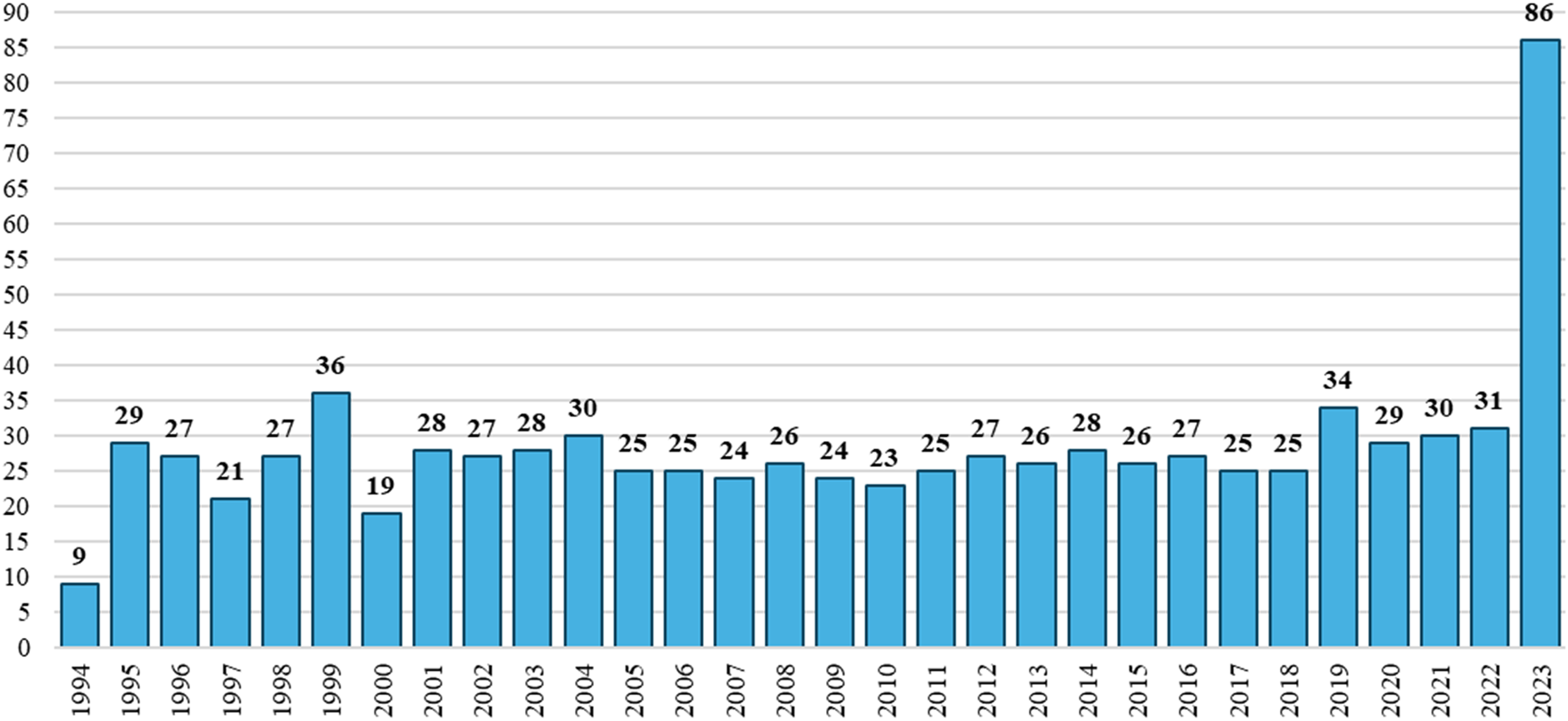
Research articles per year.
As of August 2024, the 847 research articles published by the journal had attracted 28,710 citations in Scopus and 70,211 citations in Google Scholar – an average of 33.9 and 82.9 citations per article, respectively. According to Scopus, more than 95% of the articles have been cited at least once, whilst more than 97% of articles have received at least one citation in Google Scholar. Of the 37 uncited articles in Scopus, 19 were published in 2022 or 2023, thus having limited time to attract citations. For the uncited articles in Google Scholar, three were only published in 2022 or 2023, whilst the remaining 16 were published between 1995 and 1998, possibly not able to gain traction before the internet became a pivotal facilitator of research dissemination.
Figure 2 presents the total number of citations by year of publication of the cited article, for both Scopus and Google Scholar citation counts (mapped on the lefthand vertical axis). Additionally, Figure 2 includes the average number of citations per article per year (mapped on the righthand vertical axis). It is natural that the peaks of both total citations and total citations per year occur in earlier years, reflecting the inherent time lag for newer articles to be cited, whilst the older articles are still attaining more citations, albeit likely at a diminishing rate over time. However, the peak (2004) occurred nearly 20 years ago, suggesting that the journal's outputs were attracting relatively more attention around 15 years ago than in the most recent decade. Our background research corroborates this, as the journal's SJR factor did indeed peak in 2011 at 1.543, compared to 1.32 in 2023. Given that citation counts and journal prestige factors are correlated, changes in one can impact the other which cause either a virtuous or vicious circle. Despite a decline in the SJR between 2011 and 2016, the journal has steadily increased its SJR year-on-year since 2017. Although it is premature for this recent rise to be clearly reflected in Figure 2, preliminary indications suggest another emerging peak in citation counts commencing around 2017. This trend, along with other relationships between global journal ranking systems and academic publication patterns, is further explored in subsequent sections in this review.
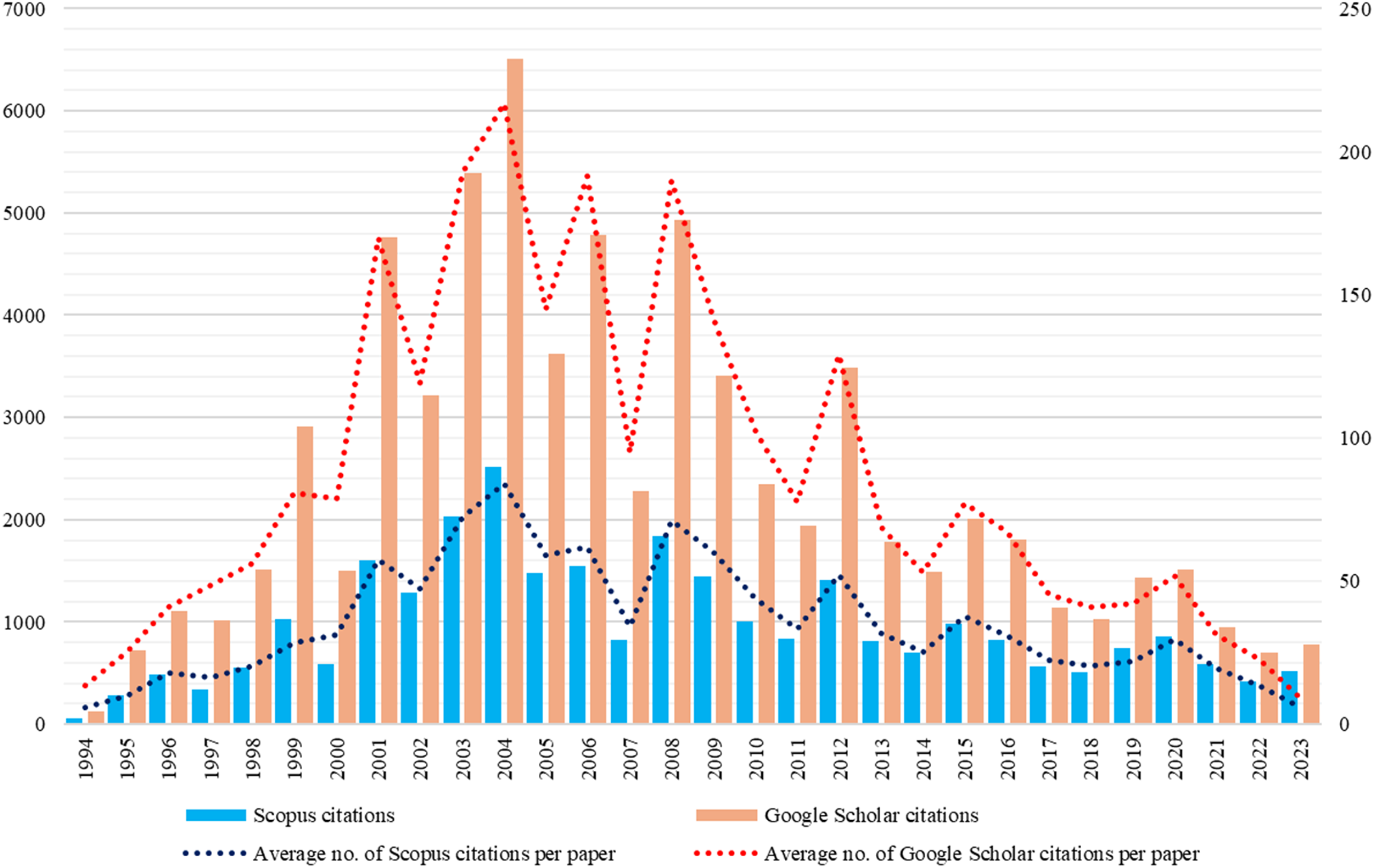
Yearly citation structure.
Most cited papers
In this section, we analyse the individual research articles over the journal's 30-year span of publications, then focus on the ‘grown-up years’. Table 1 presents the ten most-cited papers, according to both Scopus and Google Scholar citation counts, featuring a total of 12 different articles that are ranked among the top ten by either citation source. Of the 847 research articles, these 12 papers collectively account for 11% of Scopus citations, and nearly 14% in Google Scholar. Consistent with the citation count peak depicted in Figure 2, all of the most-cited papers were published between 2001 and 2008. Notably, no one author has contributed more than one article to the top ten. Most of the top-cited papers involve co-authors from different countries and institutions, evidencing the international scope of collaborations contributing to the journal.
Most-cited papers.
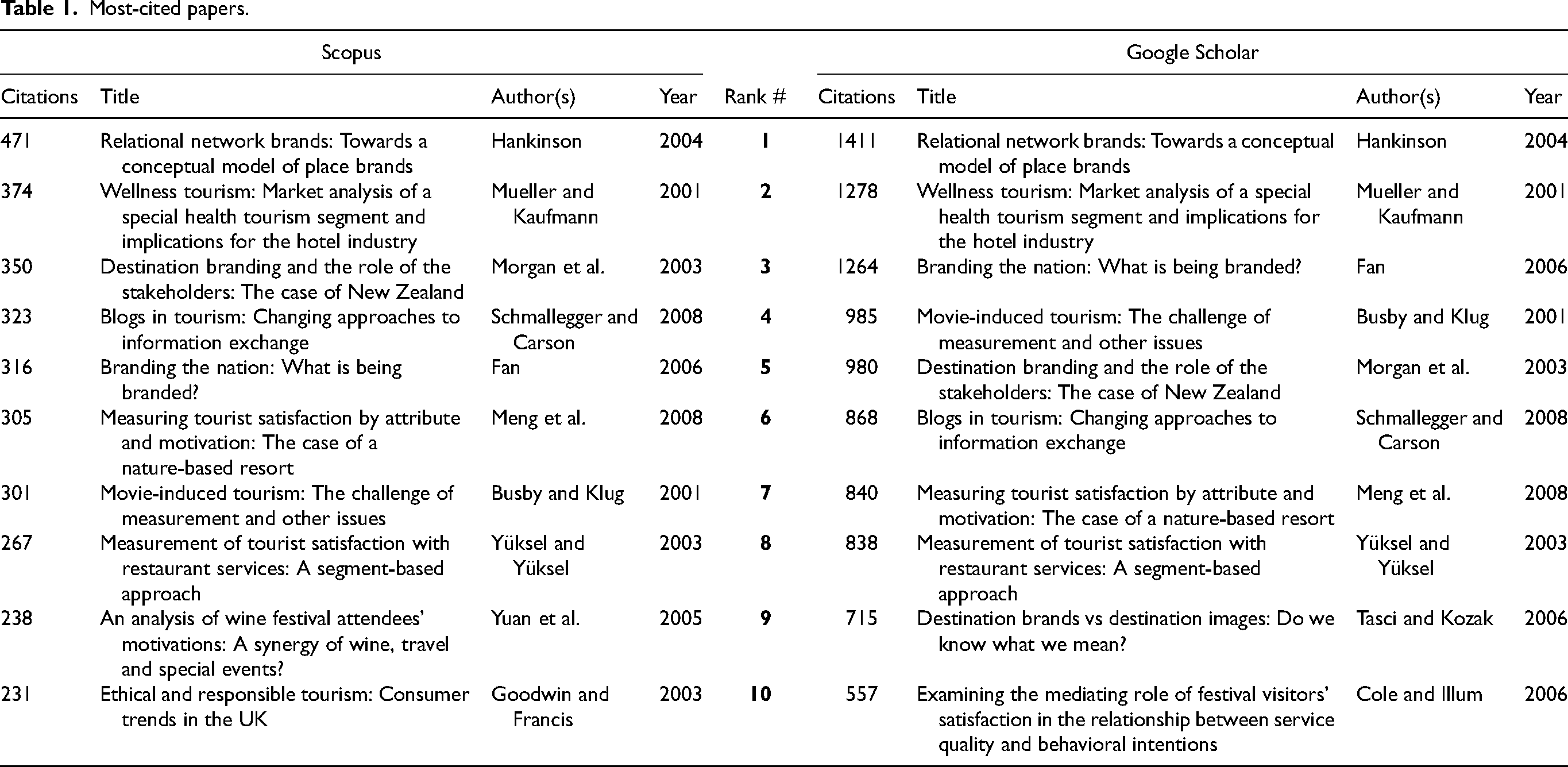
The highest-cited paper (471 Scopus citations; 1411 Google Scholar citations) was Hankinson’s (2004) article, ‘Relational network brands: Towards a conceptual model of place brands’. The second most-cited paper, ‘Wellness tourism: Market analysis of a special health tourism segment and implications for the hotel industry’ by Mueller and Kaufmann (2001), attracted 374 Scopus citations and 1278 in Google Scholar. From third place onwards, the Scopus and Google Scholar rankings differ, with the exception of Yüksel and Yüksel’s (2003) paper, ‘Measurement of tourist satisfaction with restaurant services: A segment-based approach’ which ranks eighth in both listings. The articles ranked ninth and tenth are unique to each list.
As it is logical that papers published earlier would have higher citation counts than more recently published papers, and given the absence of any papers published since 2008 in Table 1, we identified the most-cited articles during the ‘grown-up years’. Accordingly, Table 2 presents the ten most-cited papers published between 2014 and 2023. Of note is the absence of sole authorship, in contrast to Table 1 where two solo authors feature. This shift reflects a broader trend towards collaboration in academic research (Ajiferuke et al., 2021) which is heightened by the complex, interdisciplinary nature of tourism studies that benefit from diverse perspectives and expertise.
Most-cited papers published 2014–2023.
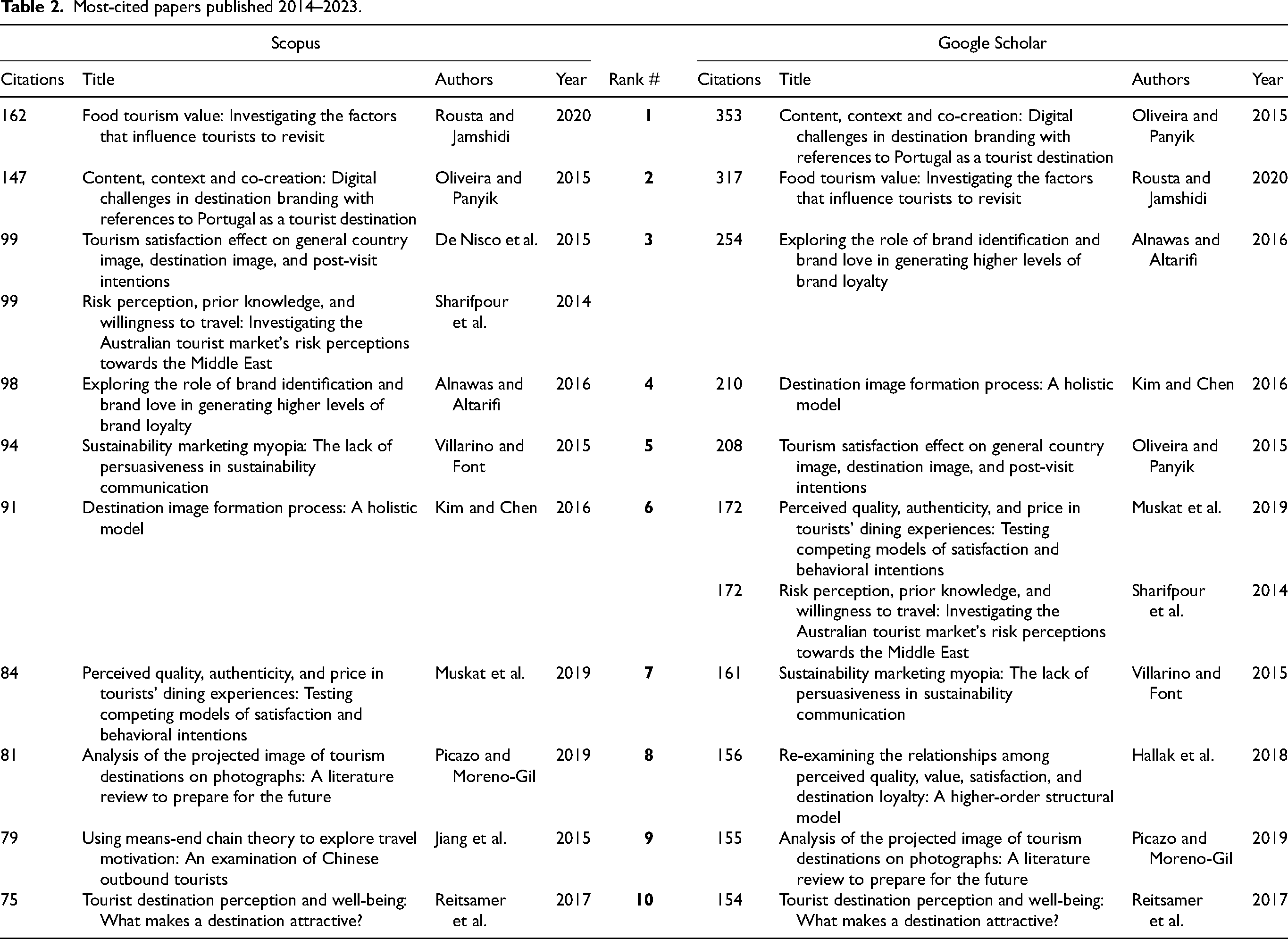
Eleven articles appear in both the Scopus and Google Scholar lists of the most-cited papers from the ‘grown-up years’. By Scopus citations, two papers are equally ranked in third place, and by Google Scholar citations, two papers are equally ranked at sixth place. Jiang et al.'s (2015) article ‘Using means-end chain theory to explore travel motivation: An examination of Chinese outbound tourists’ appears only on the Scopus list, whilst Hallak et al.'s (2018) article ‘Re-examining the relationships among perceived quality, value, satisfaction, and destination loyalty: A higher-order structural model’ appears only on the Google Scholar list. Thus, a total of 12 individual papers are represented across the two lists of most-cited papers between 2014 and 2023. The most-cited articles of the ‘grown-up years’ are an indicator of contemporary academic interest in particular topics within tourism marketing research. The top ten articles cover topics including gastronomic tourism, digital destination branding, tourists’ risk perceptions and green marketing communications.
Most productive and influential authors
In this section, we identify the authors that have been most productive (by number of articles authored) and influential (by number of citations per article) for the full 30-year span, and in the ‘grown-up years’. This analysis recognises those authors whose contributions to the Journal of Vacation Marketing have been sustained over time, and also those whose work may not have featured in the top ten most-cited papers in the previous section, but have nonetheless substantially influenced the development of the extant literature on tourism and travel marketing.
Initially, we identified the 20 most productive authors from 1994 and 2023. However, this approach produced a list too extensive for practical inclusion, as many authors were equally ranked on the same number of papers. Also, authors who published three papers over this period earned authors ranked 11th, when one paper per decade might not reflect high productivity. Narrowing our focus to the top ten most productive authors, only six authors distinctly stood out due to their numerous contributions: Brian King (18 articles between 1997 and 2023), Bruce Prideaux (16 articles between 1999 and 2023), Alastair Morrison (13 articles between 1995 and 2016), Stephen Litvin (12 articles between 1996 and 2019), Nigel Morgan (12 articles between 1995 and 2023), and Annette Pritchard (10 articles between 1995 and 2012). Collectively, these six authors contributed 71 research articles to the journal (some articles were co-authored), representing eight percent of the 847 research articles in this review. This substantial body of work underlines the sustained research efforts of these scholars and their extended influence on the field of tourism marketing. Another 35 authors who ranked in the top ten (but outside of the top five ranking) each contributed between four and eight research articles to the Journal of Vacation Marketing between 1994 and 2023. When combined with the extensive list of authors who are among the 20 most productive, it is clear that the Journal of Vacation Marketing is shaped by the research efforts of a wide range of authors rather than dominated by the voices of a select few.
Naturally, authors who have contributed to the journal throughout its 30-year lifetime are more likely to appear on the list of the most productive authors. To highlight the key contributors to the most recent state of knowledge in the field, we focused on the ‘grown-up years’. Again, due to numerous authors achieving equal ranking, we established a threshold of five articles between 2014 and 2023 as noteworthy productivity. Seven authors emerged as the top contributors: Brian King led with seven articles, followed by Heesup Han, Seongseop Kim, Sharyn Rundle-Thiele and Aaron Tkaczynski, each contributing six articles, whilst Tahir Albayrak and Bruce Prideaux both contributed five articles. Notably, Brian King headed the lists for both the 30-year span and the ‘grown-up years’, whilst Bruce Prideaux was the only other author to feature on both – a testament to their sustained input to tourism marketing discourse.
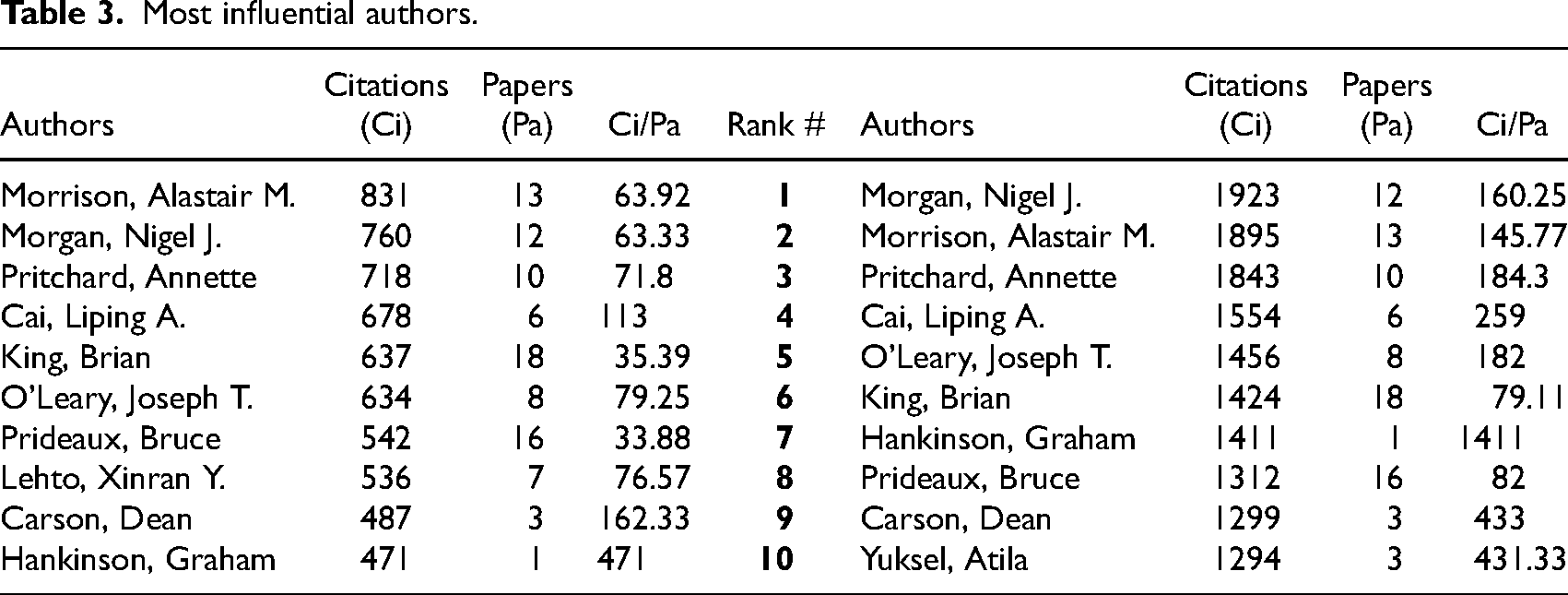
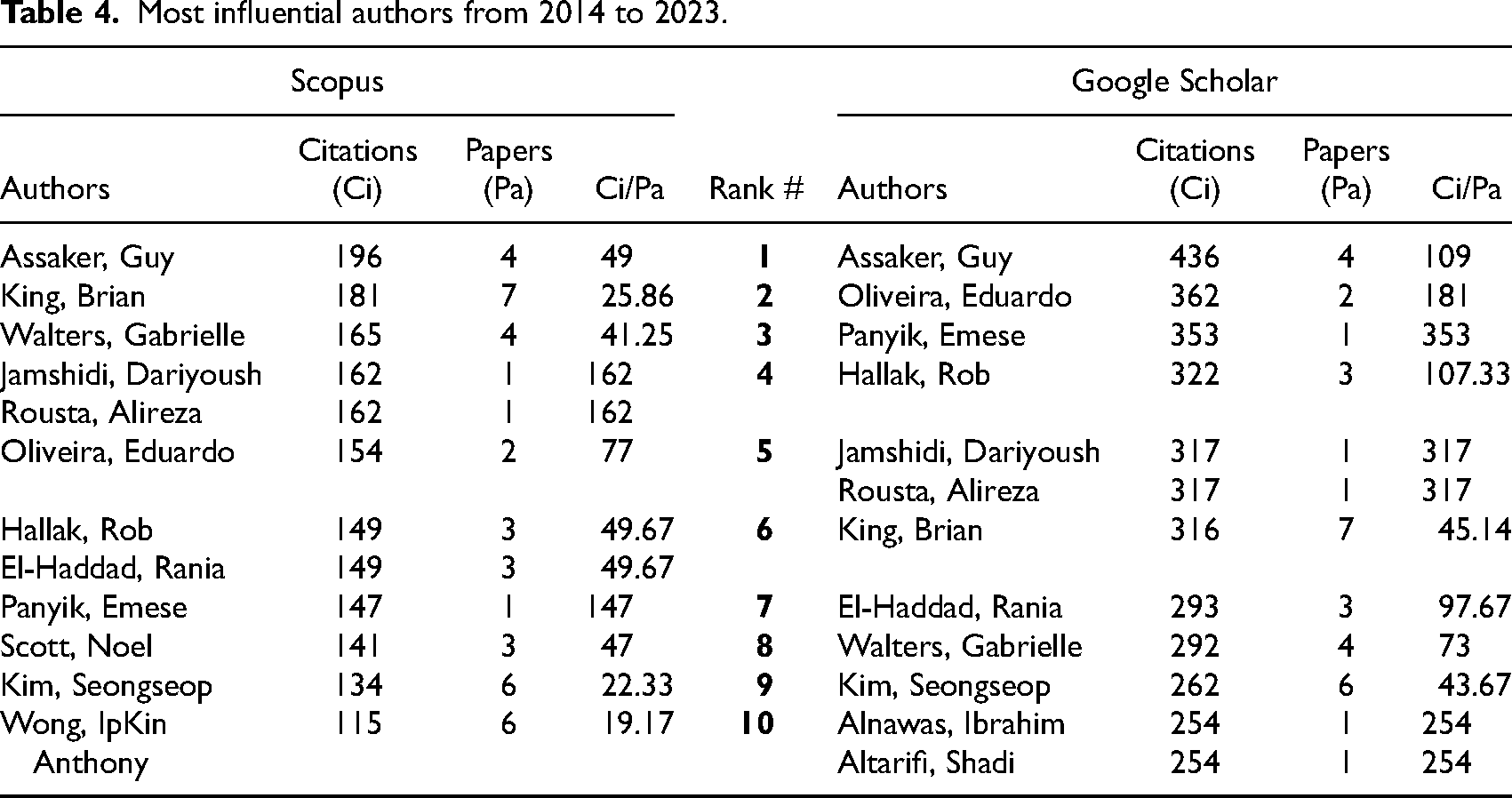
We now focus on the most influential authors, measured by the total number of citations, thus incorporating a measure of academic impact along with productivity. Table 3 presents the ten most influential authors across the 30-year span, ranked according to both Scopus and Google Scholar citation counts. Table 3 also provides the average number of citations per article for each listed author. Of note, Table 3 includes some of the authors who either contributed to the most-cited papers or are among the most productive authors – yet it also highlights other authors that have been influential, including Liping Cai, Joseph O’Leary, Xinran Lehto and Dean Carson. Again, we narrowed the focus to the ‘grown-up years’ to depict the influence of authors in the most recent decade, with Table 4 presenting the top ten most influential authors as per Scopus and Google Scholar citation counts. Given the short and recent timeframe for this analysis, it is unsurprising that the authors listed in Table 4 are also listed in the most-cited papers of the same period (Table 2).
Most influential authors.
Most influential authors from 2014 to 2023.
Most productive institutions
In this section, we consider the institutions that have made the most contributions to the body of knowledge generated by the journal. A caveat to the interpretation of results presented in this section is that our analysis of the most influential institutions is based on total number of author affiliations attributed to that institution across the dataset of 847 articles published in the full 30-year span (or the most recent decade, as appropriate). This means that a paper with multiple co-authors from the same institution would be counted multiple times in this analysis. This approach better depicts the collective contributions of academics at each institution. Simply counting discrete articles would not adequately represent the extensive collaborative input into that paper, nor would it fully acknowledge the substantial investments made by institutions into tourism research.
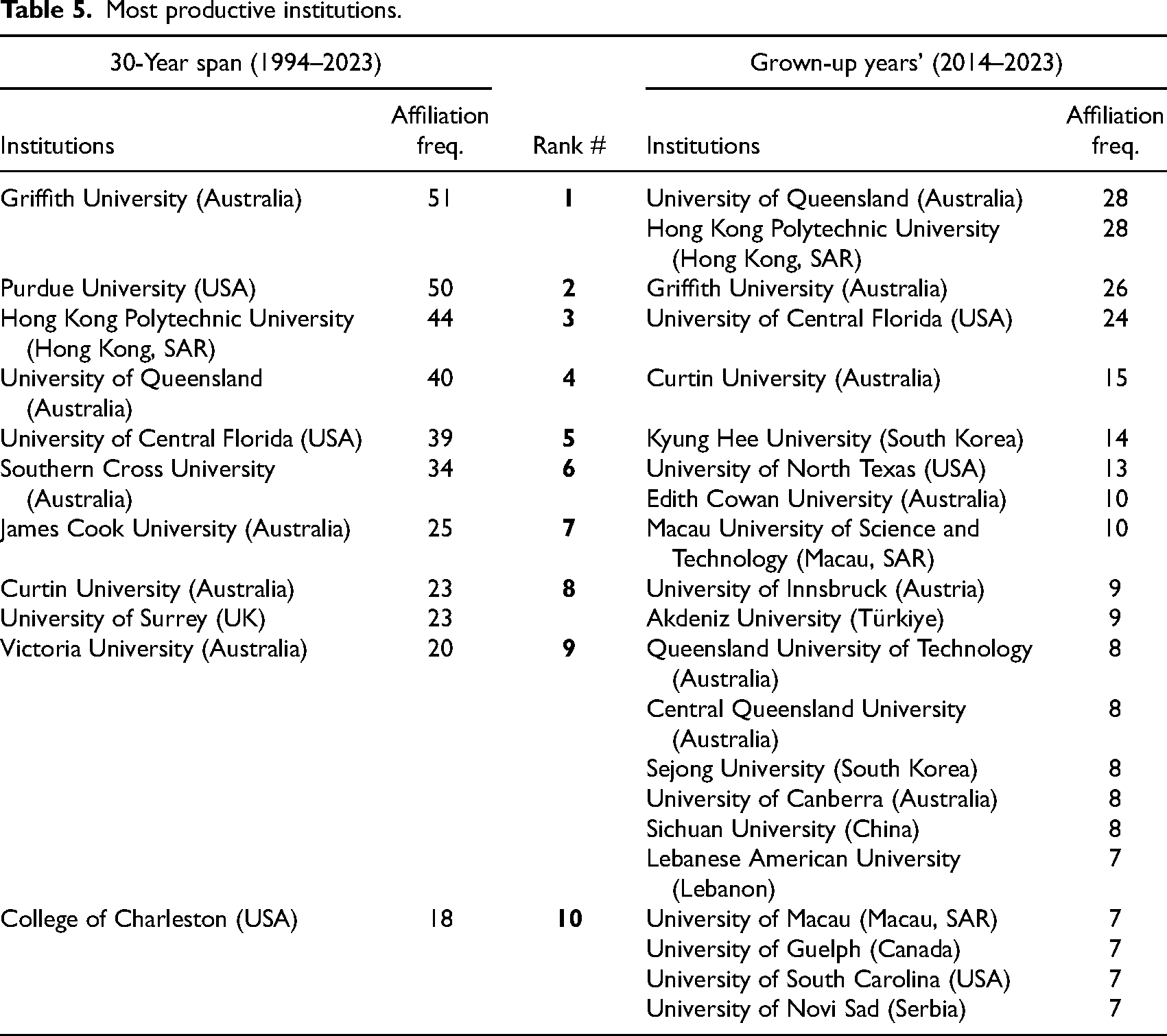
Table 5 presents ten institutions with the highest number of author affiliations in our dataset, for both the full 30-year span and the ‘grown-up years’. Over the entire 30 years of publications, eleven institutions collectively ranked in the top ten. In contrast, the list for the most recent decade features a broader range of institutions, with 21 institutions represented. Australian institutions dominate both lists, accounting for more than half of the most productive institutions over the full three decades. In the ‘grown-up years’, Australian universities continue to be heavily represented with seven institutions, although their relative presence is diluted by a number of other top contributing institutions from around the world.
Most productive institutions.
The prevalence of Australian contributions to the journal is perhaps reflective of the strong interest in tourism research within Australian institutions. The prominence is also influenced by the journal's visibility and awareness in Australia, given that both editors-in-chief since the journal's inception have both been located in Australia. Within the Australian journal ranking systems adopted by its university sector, the Journal of Vacation Marketing has consistently been ranked as an ‘A’ journal which encourages researchers to select the journal as an outlet (the only higher rank being A*). In contrast, other countries often rely on the SciMago Q1 ranking to evaluate the quality of a journal, and on this index the Journal of Vacation Marketing has fluctuated between Q2 and Q1, albeit achieving Q1 consistently since 2017. This made the journal less desirable in countries where research evaluations prefer the SciMago indices, thereby also contributing to Australia's quantity of contributions relative to institutions located in other countries.
A comparison of institutional contributions between the 30-year span and the ‘grown-up years’ reveals some interesting observations. Purdue University, ranked second over the entire 30-year span, does not feature in the most recent decade. The University of Queensland ascended to the top position during the ‘grown-up years’, overtaking Griffith University. Whilst the top ten list for the 30-year span included institutions from only four countries or administrative regions, the list for the most recent decade has expanded to include 12 countries or regions. New additions include institutions from Austria, Canada, China, Lebanon, Macau, Serbia, South Korea and Türkiye joining those from locations already represented. This global representation enriches the journal's content and reflects its growing international scope and relevance.
Among the top ten institutions for the hospitality and tourism subject ranking per the most recent Academic World Ranking of Universities (Shanghai Ranking, 2024), seven are featured in Table 5: Hong Kong Polytechnic University, the University of Surrey, Griffith University, the University of Central Florida, Sejong University, the University of Queensland, and Kyung Hee University (noting that the University of Surrey does not appear in Table 5 in the list for the most recent decade). The three institutions from the 2023 Shanghai Ranking top ten that are not listed in Table 5 are Sun Yat Sen University, the University of Johannesburg, and Temple University. With the exception of the University of Johannesburg, these institutions have had affiliated authors publish in the journal – yet not enough to feature in the top ten lists. This could again be attributed to the journal ranking systems prevalent in the countries where these institutions are located. As already noted, some countries base their metrics on SciMago's Q1 Ranking. In the UK, leading business schools apply the Chartered Association of Business Schools journal ranking system that categorises journals from 4* (the highest) to 1 (the lowest). Academics in the UK are typically strongly motivated to publish in journals ranked 3 and above, where the Journal of Vacation Marketing is ranked as a 1 in the UK system. This British example explains the absence of UK institutions from the ‘grown-up years’ list in Table 5, despite the presence of the University of Surrey in the list for the full 30-year span. This also reflects the accelerating shift in recent decades towards what some scholars have termed the ‘neo-liberalisation’ of universities, where performance metrics heavily influence research and dissemination decisions (Morrissey, 2015; Tribe et al., 2015).
Most productive countries and administrative regions
The analysis of influential institutions highlighted some nuances in the global distribution of contributors to the Journal of Vacation Marketing. In this section, we present a more fine-grained view of the contributions to the journal from around the world by considering the author affiliations by country or administrative region rather than by institution. This analysis further showcases the diverse input the journal publishes, as some countries or administrative regions may not be home to the most highly ranked institutions, yet researchers across these countries and regions are actively generating substantial new knowledge in the extant literature.
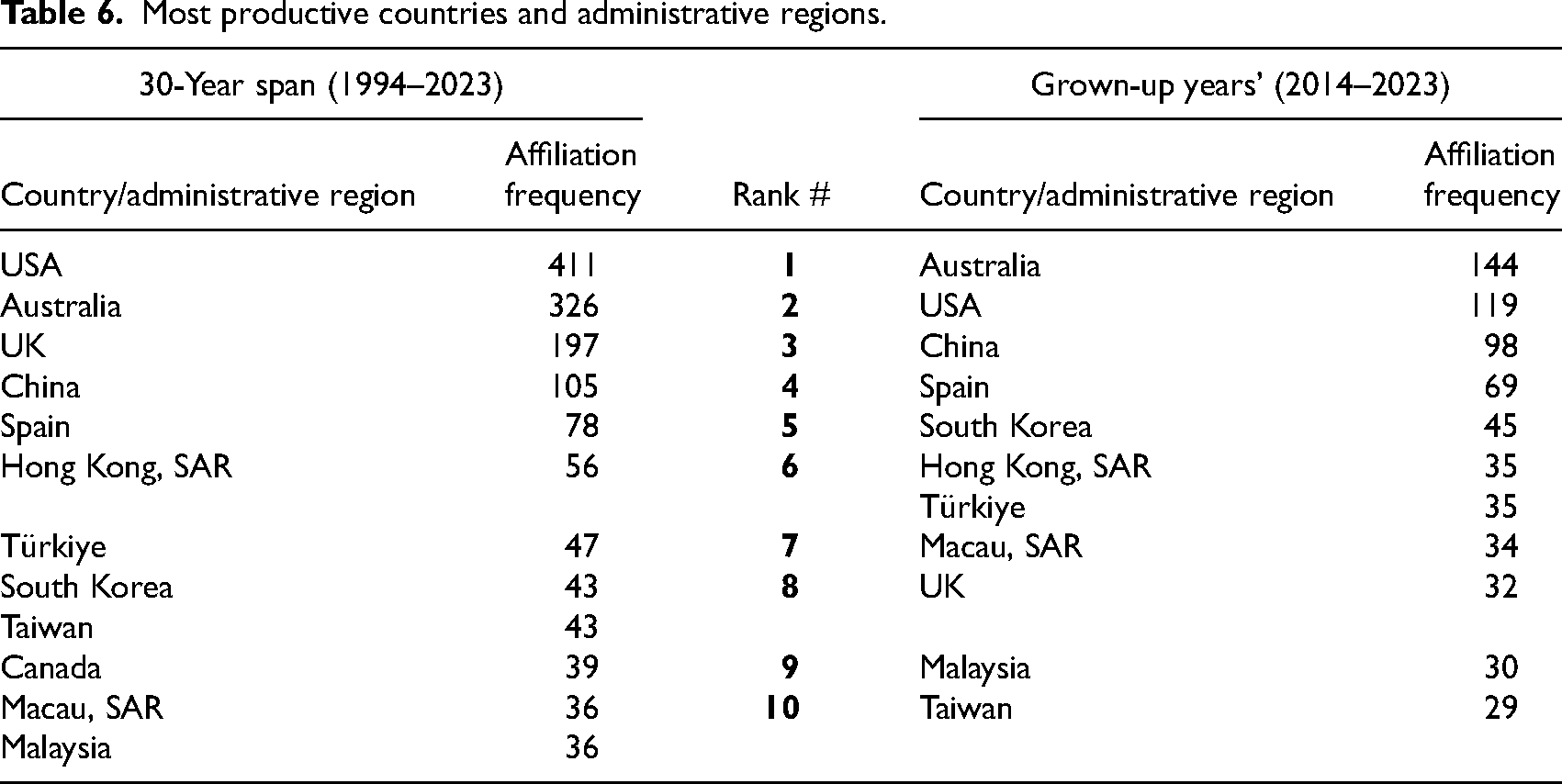
Table 6 presents the top ten countries or administrative regions ranked by the total of author affiliations for the 30-year span and for the ‘grown-up years’. Three countries feature in Table 6 that did not appear on the most productive institutions list – Spain, Taiwan, and Malaysia – further emphasising the sustained contributions to the journal from a wide range of regions and the global interest in tourism research. The United States and Australia dominate both lists, a predictable outcome given Australia's substantial presence in the lists of most influential institutions, as well as the size of the United States and its higher education sector. Australia surpassed the United States for the top spot in the most recent decade. Across the 30 years, there were 326 affiliated articles linked to Australia, with approximately 44% (144 affiliated articles) published in the ‘grown-up years’. In contrast, US-affiliated articles were recorded 411 times in the 30-year span, with 119 appearing in the ‘grown-up years’ (approximately 29%). This shift may reflect the growth and continued prominence of tourism as a field of tertiary study in Australia (Airey et al., 2015) during the 30 years of the journal's existence, contrasted with a relative decline in emphasis on tourism at US institutions, where there has been a stronger focus on hospitality studies over tourism.
Most productive countries and administrative regions.
Co-citation analysis of journals
To enhance the bibliometric analysis, we applied a graphical network approach using VOSviewer to map the connections between the articles. A co-citation occurs when a third journal simultaneously cites two journals (Benckendorff and Zehrer, 2013). Our initial step involved analysing the co-citations of cited journals. Table 7 displays the citations and total link strength of the ten journals most co-cited in the Journal of Vacation Marketing, whilst Figure 3 presents the network map comprising three clusters with 146 items. This network map was created by setting the citation thresholds at a minimum of 20 co-citation links (Leong et al., 2021). The size of each node or circle corresponds to the number of citations received, and the size of the text label reflects the item's weight, with larger circles and labels indicating greater significance. Generally, the closer the two journals are, the stronger their relatedness.
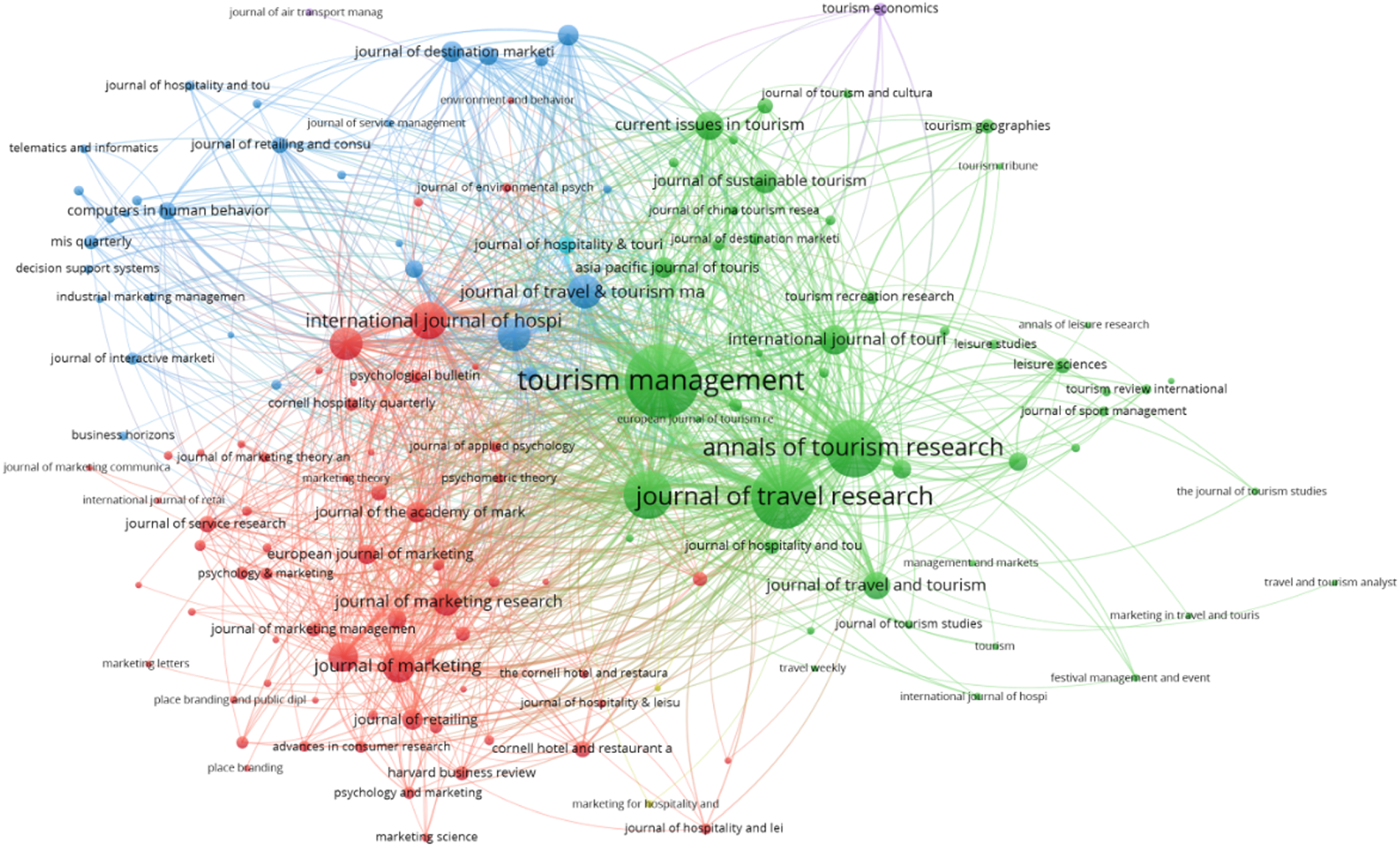
Network analysis of co-cited journals.
Co-citation of journals.
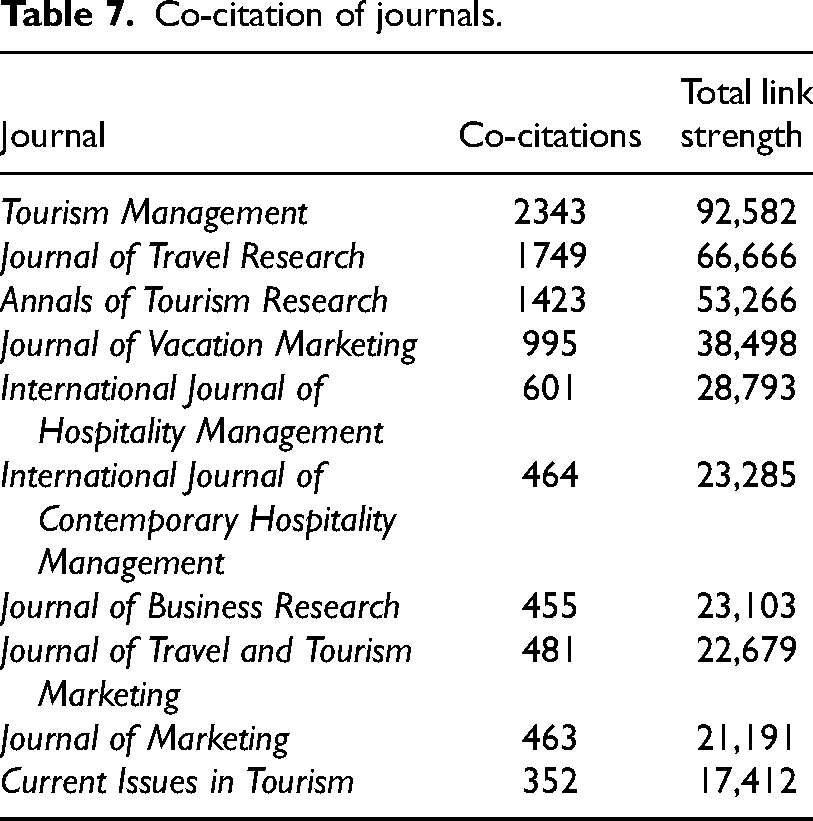
Tourism Management is the most co-cited journal, followed by Annals of Tourism Research and Journal of Travel Research, with the Journal of Vacation Marketing itself ranked in fourth place (see Table 7). This indicates that the Journal of Vacation Marketing is largely drawing on knowledge disseminated in the leading tourism journals, and then on its own body of knowledge. Eight of the ten journals listed in Table 7 are specific to tourism or hospitality. Of the two non-tourism journals, the Journal of Marketing is the only journal listed that is specific to the discipline of marketing. Whilst only one marketing journal appeared in Table 7, the network map depicted in Figure 3 visualises further insights about the connectedness of journals and their respective bodies of knowledge. To a large degree, the green area represents journals that are specific to tourism, whilst the red area covers journals from the parent marketing discipline, and the blue area includes journals that are less directly or specifically related to tourism or marketing, yet may still provide a useful context for knowledge, for example generic business journals, and journals related to specific themes such as information technology.
Co-citation analysis of authors
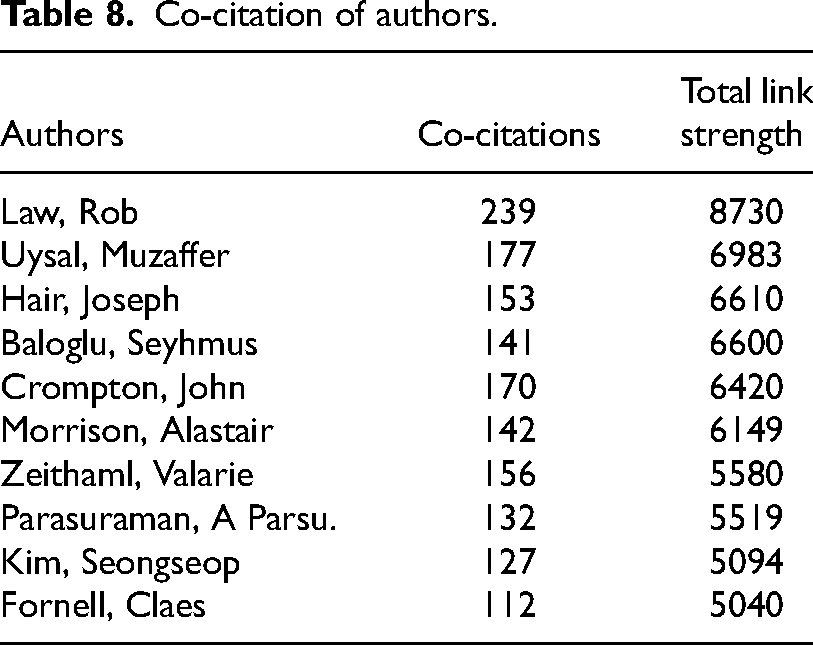
In terms of co-citation of authors, we produced a network map (see Figure 4) with a minimum threshold of 20 citations and a maximum threshold of 200 co-citation connections, following the guidelines of Leong et al. (2021). The map includes five clusters with 192 items. The results, also presented in Table 8, indicate that Rob Law, affiliated with the University of Macau, is the most co-cited author in the Journal of Vacation Marketing, followed by Muzaffer Uysal (University of Massachusetts Amherst), Joseph Hair (University of South Alabama), Seyhmus Baloglu (University of Nevada, Las Vegas), and John Crompton (Texas A&M University). With the exception of Hair, whose work is cited as a general statistical reference, all of these authors are known for their contributions to marketing and tourism research. Specifically, two authors listed in Table 8, Alastair Morrison and Seongseop Kim, have been previously identified as amongst the most influential authors in the Journal of Vacation Marketing. This indicates that their publications have had the most substantial spillover impact originating from the Journal of Vacation Marketing.
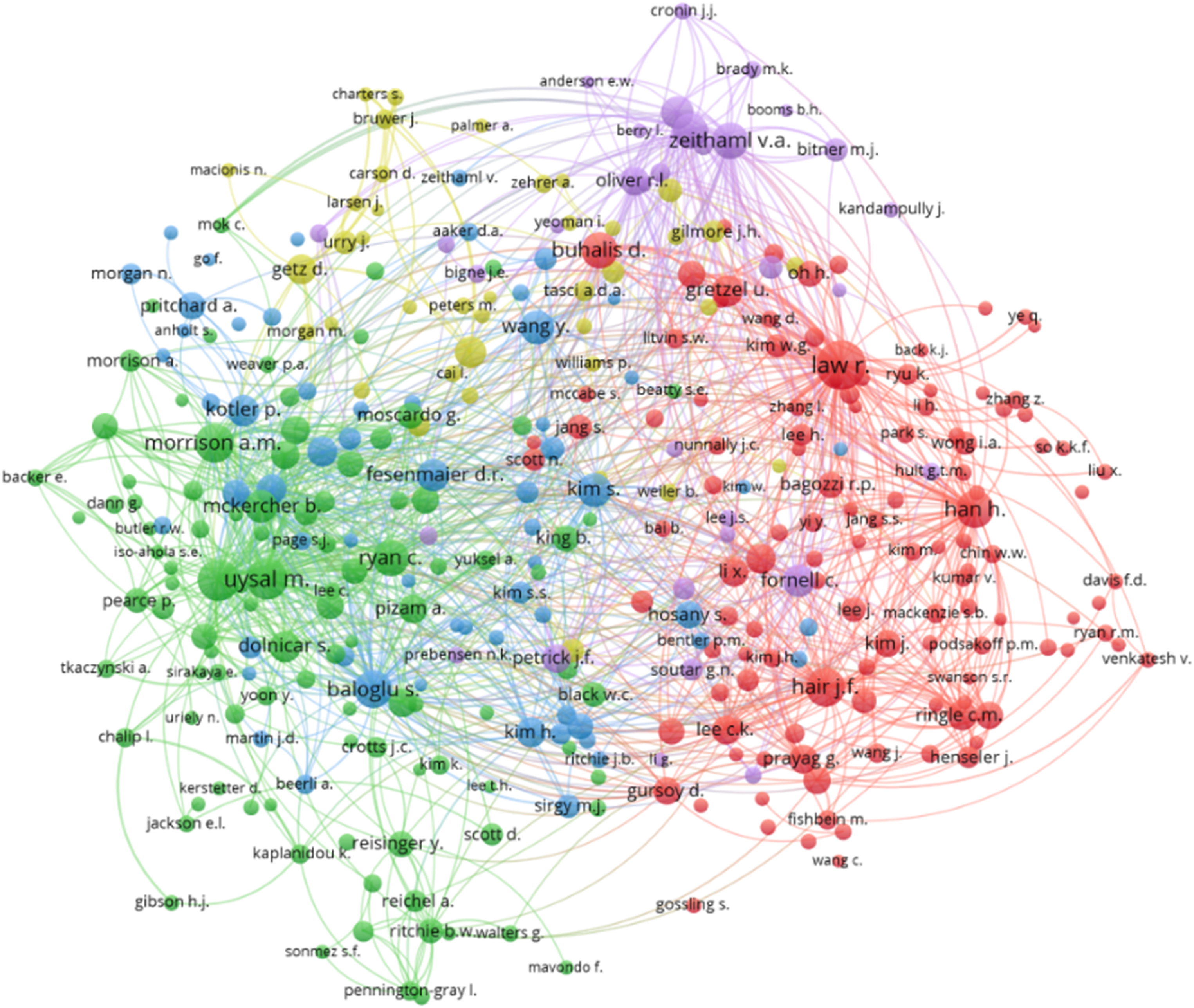
Co-cited analysis of authors.
Co-citation of authors.
Analysis of keywords
In this section, we present the results of Leximancer™ network analyses of keywords used throughout the 30-year history of the journal. This examination is divided by decade, presenting concept maps that illustrate the inter-relationships among keywords for each period. This analysis also details the evolution of keyword prevalence and connections and highlights shifts in research focus in response to global developments. The mapping of these keywords across three decades in the journal traces the intellectual progression of body of knowledge in the journal and underscores the dynamic and interconnected nature of vacation marketing research and its responsiveness to changing market dynamics and consumer behaviours. The keyword maps generated for each decade are displayed with coloured thematic clusters, with the larger circles presented in warmer colours denoting the most prevalent keywords.
First, we consider the keywords that transcend the full 30-year span – those keywords that stand out when all 847 articles are included in analysis. Figure 5 identifies three major domains – satisfaction, segmentation, and tourism – with a fourth smaller grouping labelled industry. The satisfaction domain represents the customer perspective, featuring terms like consumer experience, service quality, value, loyalty and attitude. The segmentation domain, fundamental to a marketing lens on tourism phenomena, includes concepts such as market, analysis, behaviour and motivation. The tourism domain emphasises the contextual nature of vacation studies, and substantially overlaps both the satisfaction and segmentation domains, featuring constructs such as destination, cultural, crisis, information and visitor. The industry domain is most closely connected to the satisfaction domain through attributes related to hotels and hospitality highlighting the practical applications of research in enhancing service quality and customer satisfaction.
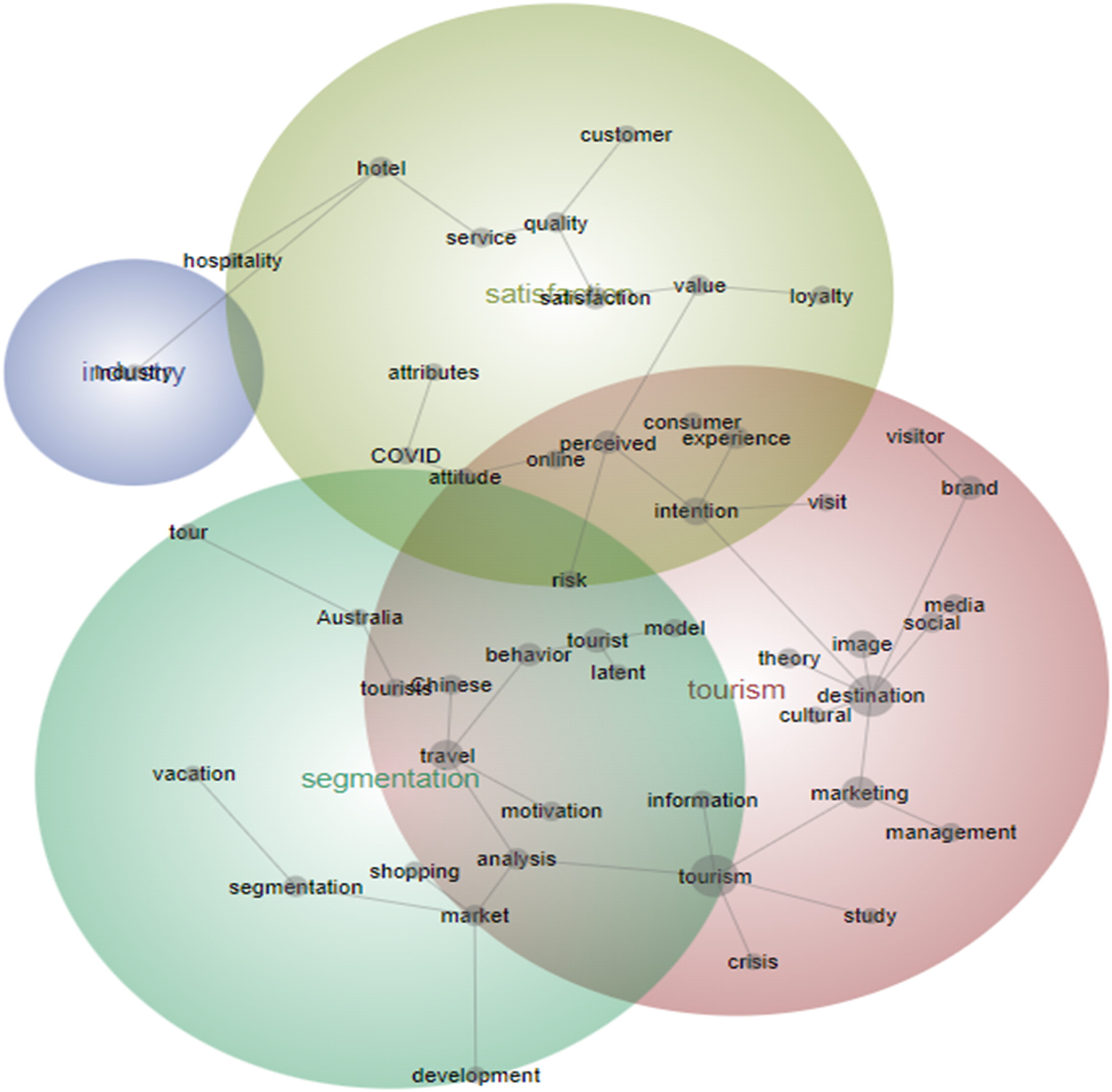
Keyword map (full 30-year span).
Next, we focus on the occurrence of keywords within each of the three decades, with Figure 6 presenting the Leximancer keyword analysis for the ‘early years’ from 1994 to 2003. Four keyword groupings emerge in this period: tourism, customer, investment and industry. The tourism cluster is the largest, connecting a variety of unique yet connected topics from domestic and outbound travel to policy and media. Within the customer grouping, key concepts such as image, satisfaction and behaviour appear. The investment bundle includes eco-tourism, which at the time was an emerging industry segment and understanding the cost versus benefit of going green was highly topical (e.g. Abubakar, 2001).
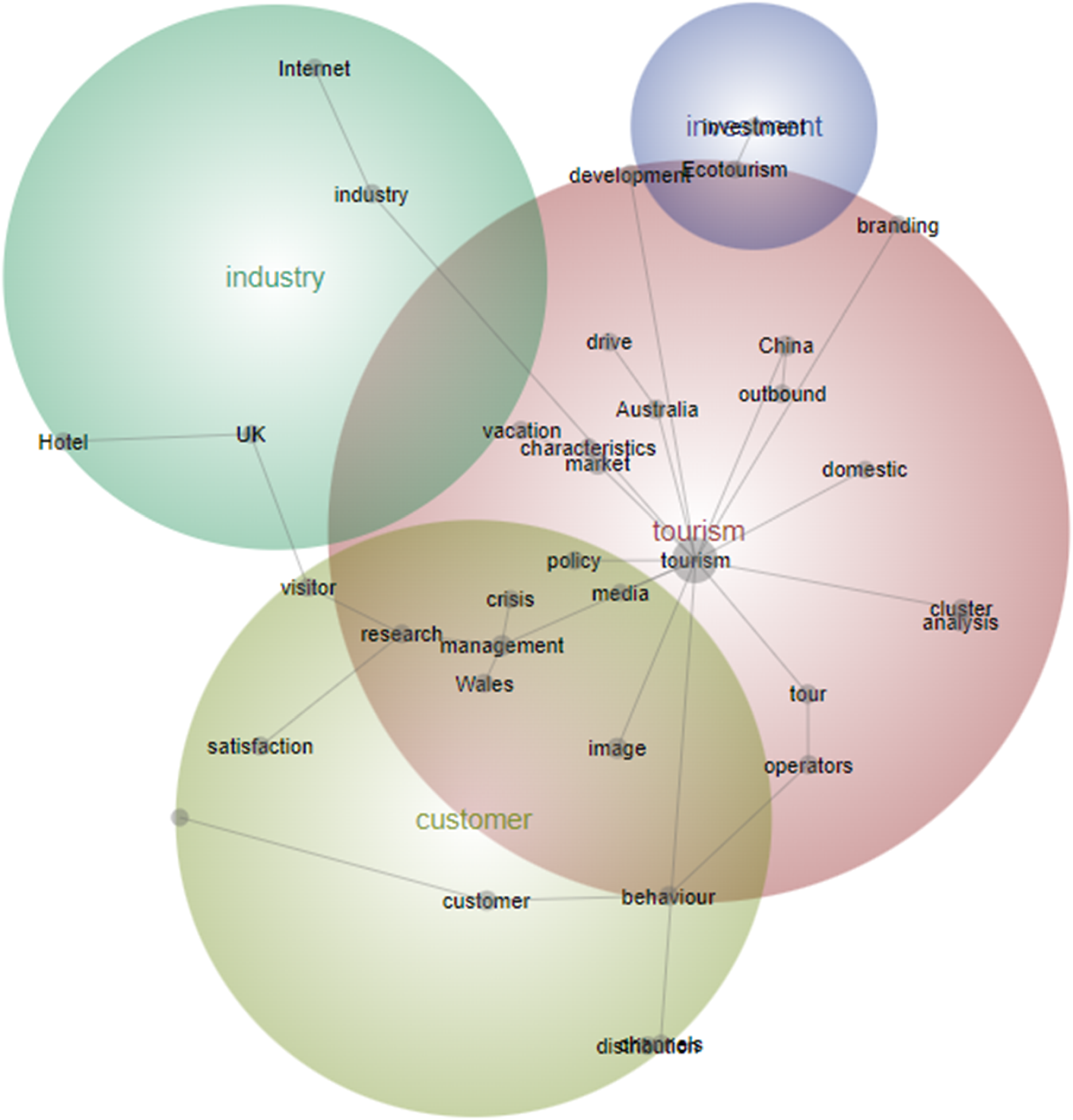
Keyword map (‘early years’).
The industry grouping in Figure 6 features a select few distinct keywords: hotel, internet and UK. When coding the database of research articles for this review, the co-authors noticed a number of contributions during ‘the early years’ came from industry practitioners and consultants (e.g. Beames, 2003), particularly based in the UK (e.g. Anholt, 1999; Bartl, 1997), a feature that is not as apparent in the ‘grown-up years’ of the journal. Also, with the introduction and rapid growth of the internet in the late 90s and early 2000s, it is logical that this theme would have been quite topical at the time (e.g. Christian, 2001; Geissler, 2002). The ongoing impact of digitisation, that largely commenced with the instant communication made possible by the world wide web, is still a key feature of research focus these days, albeit no longer so generically focused on the ‘internet’.
For the ‘coming of age’ years, Figure 7 presents the Leximancer keyword analysis for the articles published between 2004 and 2013. Five keyword clusters are depicted: satisfaction, tourism, management, distribution and economic. The largest clusters, satisfaction and tourism, also appeared in Figures 5 and 6, confirming the fundamental underpinning of these concepts for the study of vacation marketing. The economic keyword cluster, whilst the smallest of the groupings depicted in Figure 7 is notable in its inclusion in a journal focused on marketing. This likely stems from the global financial crisis’ impact on tourism that occurred in the middle of the journal's ‘coming of age’ years, spurring interdisciplinary interest into how economic factors influence vacation marketing strategies (e.g. Bronner and de Hoog, 2011). The management keyword cluster connects keywords such as communication, marketing and branding with social media – a concept that did not exist prior to this decade (cf. Hvass and Munar, 2012). The introduction of social media represents a pivotal evolution in how vacation marketing strategies are communicated and developed.
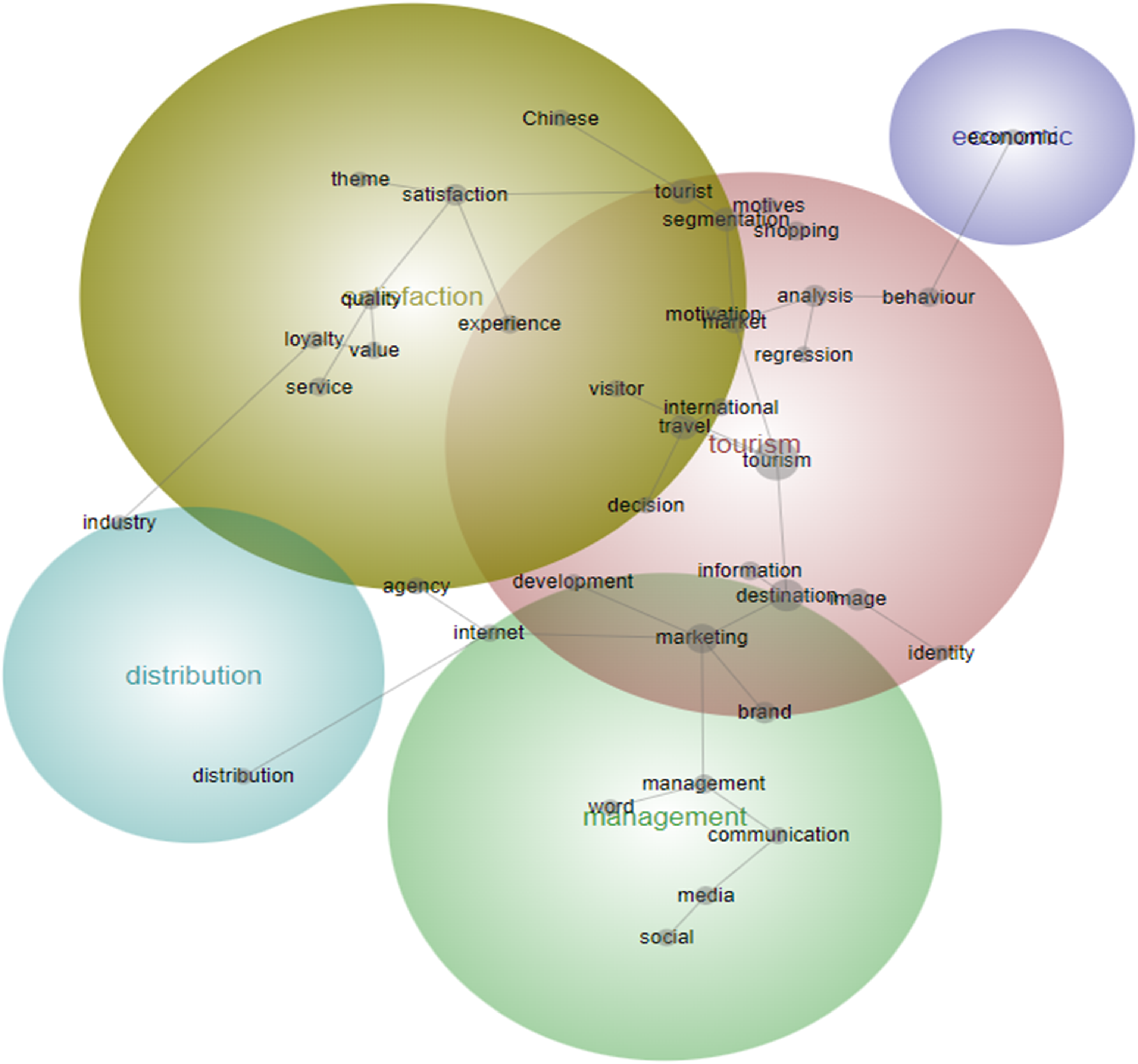
Keyword map (‘coming of age years’).
Distribution featured so prominently in the keywords of the ‘coming of age years’ that it earned its own clustering in Figure 7. As the journal reached adolescence, the broad notion of the internet in the ‘early years’ crystallised into a particular focus on distribution channels (e.g. Smith, 2007) as demonstrated by the links between internet and distribution. The keyword internet is central to Figure 7, noting that internet is also linked to marketing as a keyword (e.g. Wang and Russo, 2007), whereas internet was an outlying keyword connected only to industry in Figure 4. These keyword shifts reflect the exponential advances in information technology that started during the ‘early years’ of the journal and gained further momentum during the ‘coming of age’ years. The seismic shift in how we communicate up-ended how tourism and travel operators brought their products to the marketplace.
Turning attention to the ‘grown-up years’ of the journal, Figure 8 depicts the groupings of keywords for articles published between 2014 and 2023. Three prominent clusters emerge – destination, risk and perception – alongside two smaller clusters: segmentation and place. Apart from segmentation which was identified as a key cluster in the analysis of keywords for the full 30-year span, the other clusters are unique to the most recent decade. The destination cluster is the largest, incorporating themes such as market, motivation, attributes and management. Risk forms another significant cluster, with COVID unsurprisingly at its centre, reflecting the pandemic's profound impact on global tourism. The perception cluster overlaps considerably with both risk and destination, reflecting the centrality of concepts such as service, quality, value and trust, whilst also acknowledging the subjectivity inherent in these concepts. The place keyword cluster is the smallest and does not include other distinct keywords within the cluster. We would expect this to change over the coming decade, as place-based tourism grows in demand, responding to customer preferences for unique, authentic and sustainable experiences (Wang et al., 2024) rather than the ‘cookie-cutter’ experiences of the mass tourism model.
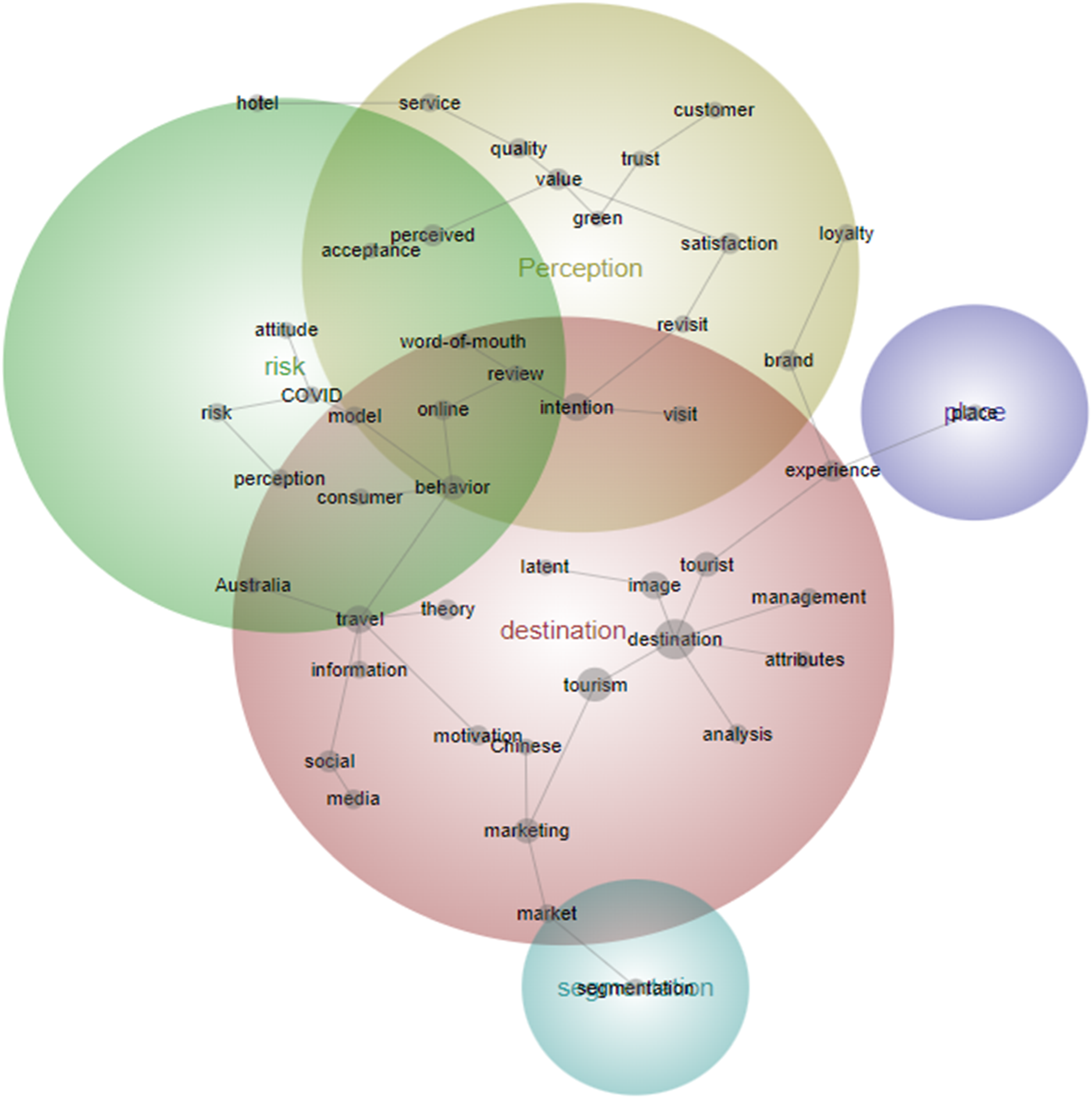
Keyword map (‘grown-up years’).
The keyword analysis over the three decades in the Journal of Vacation Marketing mirrors the broader evolution of the marketing discipline, reflecting shifts in management focus globally, and responding to unfolding world events. The results are also largely consistent with macro-meso-micro framework of themes in tourism destination research proposed by Huang et al. (2023), where the macro level includes themes related to the destination, the micro level covers themes about the tourist, and the intermediary meso level contains themes that connect the destination with the tourist through organisations and platforms.
Reflecting on 30 years of research
This bibliometric review of 30 years of research articles published by the Journal of Vacation Marketing has not only celebrated the performance of the journal and the contributions of leading authors, institutions and countries, it has also highlighted some areas where the editorship could focus strategic initiatives to sustain and further enhance the upward trajectory of the journal's esteem and recognition. To organise our discussion, we overlay a framework of ‘over-represented’ and ‘under-represented’ to synthesise the key insights we have derived from the review. We first address the ‘over-represented’ elements, then we turn to the ‘under-represented’ elements, before finishing the paper with some concluding remarks.
Over-represented
Our reflections on what is over-represented in the body of work published by the Journal of Vacation Marketing primarily relate to authors’ keyword choices for their research articles. Tourism dominated as a keyword, reflected as the most prevalent keyword with which other keywords cluster. Only in the keyword mapping for the ‘grown-up years’ tourism does not feature as its own cluster, though it remains a dominant and central theme within the destination cluster. Another example of this over-representation of a specific keyword is marketing. Unless paired with an adjective or descriptor such as service marketing, or relationship marketing, then using marketing as a standalone keyword in a journal that already includes marketing in its title may not be the most optimal choice. Even the term service marketing is quite broad, and more specific elements related to the topic could better represent an article's focus and its contribution to the literature. As the journal is specifically focused on marketing within the context of vacations and travel, relying on generic keywords as tourism or marketing rather than selecting terms that are more indicative of the study's attributes represents a missed opportunity. More targeted keywords could significantly improve the visibility of research articles in relevant literature searches, thereby enhancing their impact and reach.
Taking Goldsmith and Litvin (1998) as an example, their paper includes only three keywords, of which two are tourism and marketing. The paper's citations are below the average for Journal of Vacation Marketing papers in both Scopus and Google Scholar citation counts (11 and 21 citations, respectively). Another pertinent example is Yeoman and McMahon-Beattie (2006), which uses four keywords: tourism, climate change, Scotland and adaptation strategies. This paper also has below average citations (14 in Scopus and 30 in Google Scholar). Given the title of the paper is ‘Understanding the impact of climate change on Scottish tourism’, the selected keywords have not given any extra depth to what is mentioned in the title and abstract, other than adaptation strategies. Using synonyms in the abstract can help enhance the article's visibility in more search results, especially considering not all databases index the full text of articles (Schilhan et al., 2021). For instance, additional relevant keywords that Yeoman and McMahon-Beattie (2006) could have included are sustainability, scenario mapping and risk assessment. These terms would have broadened the paper's visibility and align more closely with its content, potentially increasing its citations.
The only specification that journals usually impose on keywords (compared with other elements of the paper such as referencing style and section numbering) is setting a limit – and this limit needs to be used wisely to maximise the visibility of the article. Keywords must be as specific as possible, clearly reflecting the research topic, academic subdiscipline, theories and methodologies. They should convey a general understanding of the subject without being overly technical or unique (Schilhan et al., 2021). A guide for selecting appropriate keywords, and avoiding overly common and less specific keywords, might be a helpful resource for authors submitting to the journal – which may in turn increase the journal's citations with more aptly tagged research articles.
It could be argued that, considering the delay between conducting research and publishing the results, COVID-19 is over-represented in the ‘grown-up years’ of research articles (12 articles used the keyword COVID). At the time it seemed that the world had irrevocably changed, yet only a few years later, daily life has largely returned to ‘business as usual’ (Nepal, 2021). The heightened attention to risk apparent in the keyword analysis of the ‘grown-up years’ can obviously be attributed to the COVID-19 pandemic (cf. Min et al., 2022; Özekici and Küçükergin, 2023; Prince and Kim, 2021). Certainly, the learnings gained from coping with a major public health shock, which drastically restricted international travel and tourism, have been invaluable and will continue to shape the body of knowledge moving forward, particularly in relation to disaster and crisis management and risk mitigation strategies. Yet looking back in a few more decades, COVID-19 itself may appear as a blip relative to other current world events with potentially much longer lasting ramifications. Beyond public health shocks, economic or political crises and natural disasters are attracting ever more attention from tourism marketing academics (cf. Caber et al., 2020). These issues are critically important as the global tourism industry reels from successive shocks to the system. This evolving focus is indicative of the need for a more integrated approach to understanding and mitigating risks in tourism marketing rather than focusing reactively on one case example of system shock.
The analysis of co-citation of journals points to another area of over-representation: there is a demonstrated emphasis on knowledge drawn from other tourism journals, and less attention paid to contributions from journals in the parent discipline of marketing. This finding parallels Correia and Kozak's (2022) call for raising the interdisciplinarity and trans-disciplinarity of tourism research generally – in their review of trends in tourism research, issues related to the ‘tribal’ nature of the tourism academic community and the ‘publish or perish’ mentality are constraining genuine collaborations and knowledge sharing across disciplinary silos. The tourism field of academia is often accused of operating in a silo outside of the developments in the parent disciplines (Correia and Kozak, 2022; Tribe, 2006), and the analysis presented in this review might give future authors pause to consider their engagement with a body of literature outside the tourism sphere.
Under-represented
Our review has also identified several aspects that we considered to be under-represented in the analysis of the body of work published by the Journal of Vacation Marketing. Some of the under-representation stems from the themes that emerged from the keyword analysis. Also under-represented are some leading institutions as contributors to the journal, as well as perspectives from some developing areas of the world and from industry practitioners. In this section, we discuss these under-represented elements and the opportunities that they offer for the journal to continue its maturation into a prestigious and impactful research outlet.
The under-representation of certain themes in the keyword analysis is intrinsically related to the issues of over-representation discussed previously. The frequent selection of generic and repetitive keywords over specific and nuanced terms resulted in keyword maps that cluster on broad-spectrum terminology. Although such a trend may be expected across a 30-year span, the decade-by-decade keyword analyses did not result in substantial variation until perhaps the ‘grown-up years’. This shift suggests that authors are becoming more sophisticated in their keyword selection, increasingly recognising the importance and mechanics of an article being returned in a keyword search.
An example of this under-representation is the unexpected low prominence of environmental issues in the keyword analysis, particularly in the ‘grown-up years’. Granted, the term ‘green’ is located at the centre of the perception keyword cluster for 2014 to 2023, reflecting the growing consumers’ concern about environmental protection issues, this single keyword may not fully capture the broader environmental engagement evident in recent research. Studies in travel and tourism marketing have responded to this change in attitudes, as reflected in studies on, for example, preference for eco-friendly travel options (Wong et al., 2021), demand for transparency in sustainability practices (Ferreira et al., 2023) and ‘green communication’ that emphasises environmental benefits and green initiatives in marketing messages (D’Souza et al., 2021). Nonetheless, for an industry that is arguably threatened by climate change through its reliance on natural resources (Zeng et al., 2024), it is somewhat surprising that the only keywords explicitly related to the environment or sustainability across the keyword maps are green (in the most recent decade), and eco-tourism (in the ‘early years’). In the ‘coming of age’ years, no environmental themes appeared in the keyword mapping at all.
Similarly absent from the keyword analysis are themes related to robotics, artificial intelligence, or service automation (RAISA). Whilst there is a growing number of articles published on these topics in the Journal of Vacation Marketing (e.g. Alarcón-López et al., 2025; Chen and Girish, 2023), they have not been prevalent enough up to this point to feature in the Leximancer output of our analysis. A search conducted in October 2024 for terms related to RAISA in articles published in 2024 in the journal's website returned various results: eight articles for robot, one for service automation and five for artificial intelligence. Assuming that the journal maintains its publication volume in 2024 as in 2023, articles related to RAISA themes could make up around 15% of total publications in 2024. In a technology-related vein, a search for virtual tourism or virtual reality in the journal's 2024 publications returned 19 articles. The keyword analyses presented in this review are certainly indicative of the general nature of tourism marketing research across the first 30 years of the journal. However, we are at a tipping point before artificial intelligence becomes ubiquitous, and this pivotal shift is not represented in this review, making this analysis a distinctive historical marker at a critical juncture in the evolution of human society.
Another under-represented aspect is contributions from all the institutions that are ranked as global leaders in the field of tourism and hospitality research. As noted in the analysis of most productive institutions, some leading institutions do not feature. This is most likely driven by the fluctuating Q1 ranking of the journal between 1999 and 2016, along with the variations in country-specific ranking systems. In business disciplines, journal ranking systems significantly shape research and publication practices, impacting which journals are regarded as prestigious within specific regions (Mingers and Willmott, 2013). The national preferences dictate where business researchers aim to publish, often selecting journals aligned with local ranking criteria to enhance their professional standing and career progression. This approach, however, can lead to a narrowed research focus and reduced diversity in scholarly discourse, as researchers may be incentivised to publish in journals that align with national standards rather than the broader needs of the field. Whilst national ranking systems are beyond the direct control of the journal, understanding the parameters of the system can help the journal strategically move up the rankings. In some cases, national systems rely on submissions from leading academics in order to impact the ranking of the journal – in this case the journal might consider the advocates or ambassadors it has in each country. Notwithstanding the constraints of arguably arbitrary ranking systems, this review has showcased a trend towards increased internationalisation and cross-country contributions in the body of work published by the journal.
Contributions from certain parts of the world, particularly Africa and South America, remain under-represented in the journal. Consistent with the growing celebration of diversity and inclusion globally, it is incumbent on academics at privileged institutions to broaden their collaborative circles, and for the journal's editorship to actively seek opportunities to encourage more submissions from countries in the Global South. Similarly, contributions from practitioners are also under-represented in the ‘grown-up years’ relative to the ‘early years’. This likely stems from changes in the mandate of the journal over time. In the 1990s, the journal aimed to ‘keep abreast of developments in the industry’, ‘monitor developments [of marketing tourism] in theory and practice’ (Tilley, 1994), and ‘encourage communication and sharing of expertise between all those concerned with the marketing of tourism services including practitioners…’ (‘Aims and Scope’, 1998). Nowadays, the journal aims to ‘provide a forum for the publication of academic papers that make a solid contribution to knowledge and practice to extend our understanding of how to optimise the marketing and promotion of tourism-related industries […also prioritising] quality research submissions comprising knowledge and/or theoretical developments’ (Journal of Vacation Marketing, n.d.). Along with the changes in the journal's aims, industry-based authors may face greater barriers to publishing than previously, or a perceived decrease in the journal's engagement with or visibility to industry since the ‘early years’.
We can only make suppositions without empirical data, however, the representation of practitioner input is an interesting attribute of the review results the editorship may wish to consider. Lofty future goals aside, this review has confirmed that the journal has increased the diversity of perspectives represented in its collective body of work, with emerging researchers gaining recognition from around the globe at institutions big and small. This trend bodes well for the continuous generation of new knowledge and progress in the field, incorporating diverse views.
The final under-represented aspect that we propose is the Journal of Vacation Marketing itself. This may seem an unusual statement, yet it stems from the VOSviewer analysis. The top three co-cited journals were Tourism Management, Journal of Travel Research and Annals of Tourism Research. The journal itself appeared in fourth place, with substantially less co-citations. We wonder, does the journal cite itself enough? Given the amount of knowledge vested in the 30 years of research articles, it is somewhat surprising that authors do not reference the body of knowledge within the journal with more frequency. SciMago data indicates that, on average, the journal only cites itself an average of 15.5 times per year, which is well less than the average number of articles published per year.
Concluding remarks
This review serves as a tribute to the Journal of Vacation Marketing's first 30 years, celebrating the significant contributions made by its editorship, the authors and not least the peer reviewers in advancing knowledge on tourism and travel marketing. From its humble beginnings, the journal has steadily increased its stature and academic impact, positioning itself as one of the leading journals in the tourism field. The journal is poised to further consolidate its position as a frontrunner in the dissemination of robust, rigorous and cutting-edge tourism marketing research. With a touch of irony, it seems fitting to suggest that the Journal of Vacation Marketing could benefit from marketing itself better. Enhancing its visibility and impact through strategic initiatives will reach an ever-wider audience, attracting more high-quality submissions and continuing to craft the future of tourism marketing research.
Footnotes
Declaration of conflicting interests
The authors declared no potential conflicts of interest with respect to the research, authorship, and/or publication of this article.
Funding
The authors received no financial support for the research, authorship, and/or publication of this article.
