



Abstract
Using cognitive appraisal theory, service-dominant logic, and conservation of resources theory, this study tests a proposed model of the antecedents and outcomes of value co-destruction in Airbnb. First, the effects of host's bad behaviour and poor customer service are evaluated as antecedents of distrust in host. Second, the effects of both cognitive (distrust in the host) and affective (negative emotions) factors as determinants of value co-destruction and the subsequent consequences on guests’ hedonic wellbeing, dissatisfaction and negative electronic word-of-mouth were evaluated. A web-based survey was conducted through Amazon Mechanical Turk, and data were gathered from 427 tourists who had negative experiences with Airbnb hosts and platform customer service agents. Both host's bad behaviour and poor customer service contributed to distrust in host. Results showed that both cognitive and affective factors contributed to value co-destruction. Results have both theoretical and managerial implications.
Keywords
Introduction
Interactive value formation (IVF) is a neutral and integrative term that includes both positive and negative value outcomes: value co-creation (VCC) and value co-destruction (VCD) (Echeverri and Skålen, 2011). Interest in VCC has increased in the tourism field (Sthapit and Björk, 2021). Grounded in the Service Dominant Logic (SDL), VCC is a process of resource exchange in which actors interact and create value reciprocally (Vargo and Lusch, 2004), representing ‘value in use’ (Grönroos, 2011). For tourists, value is derived from the tourism experience and represents ‘value in the experience’ (Helkkula et al., 2012). A fundamental premise of SDL is that the customer is a VCC (Lusch and Vargo, 2014) when both service providers and customers incorporate resources to co-create and consume an experience jointly resulting in improved customer wellbeing (Scherer et al., 2015). However, value is not always co-created and can also be co-destructed because of the collaboration, or lack thereof, between different actors (Echeverri and Skålen, 2011). Typically, negative consumer experiences contribute to VCD (Sthapit and Björk, 2019).
VCC and VCD co-exist, but tourism studies abound on VCC, affecting how academics and practitioners perceive value (Sthapit and Björk, 2021). Existing studies fall short in terms of theoretically expanding and practically guiding both value outcomes of IVF, with many studies centred on VCC and this focus has been problematised as normatively biased, while it offers little understanding of the collaborative and interactive nature of VCD (Echeverri and Skålen, 2021). Often described as a service failure (Hess et al., 2007), VCD refers to a failed interaction that has undesirable consequences for actors (Plé, 2017).VCD is the result of negative value perceptions (Järvi et al., 2020), including actors’ loss of financial and physical resources, which affect their wellbeing (Sthapit and Björk, 2019). VCD is founded on negative experiences (Malone et al., 2018) and can result in low wellbeing for at least one actor in the service system (Plé and Chumpitaz Cáceres, 2010). VCD remains sparsely researched in tourism studies (Adam, 2021), with a significant omission being the peer-to-peer (P2P) accommodation context.
Although antecedents of VCD are well researched, with distrust (Lv et al., 2021), insufficient communication, inappropriate behaviour (Järvi et al., 2020), and rude employee behaviour (Zhang et al., 2018) being significant, these have yet to be ascertained in the Airbnb context (Sthapit and Björk, 2021). VCD can also lead to outcomes such as complaining on social media (Dolan et al., 2019) and desire for revenge (Zhang et al., 2018), which have not been linked comprehensively to Airbnb customer behaviour. Existing studies are mainly qualitative and evaluate sources and outcomes of VCD from Airbnb (Camilleri and Neuhofer, 2017; Sthapit, 2019; Sthapit and Björk, 2021). Given that VCD can bring about negative word-of-mouth (WOM), disengagement with the community, switching behaviour, or other negative behaviours among customers (guests) (Laud et al., 2019; Smith, 2013), its consequences should be studied as they may affect Airbnb bookings.
This study assesses the effects of host's bad behaviour and poor customer service in Airbnb as antecedents of distrust in host. In turn, both the effects of cognitive (distrust in the host) and affective (negative emotions) factors and the subsequent consequences of VCD on guests’ hedonic wellbeing, dissatisfaction, and negative electronic WOM (NWOM) are evaluated. The antecedent factors (distrust in the host and negative emotions) represent manifestations of resource misintegration by the service provider, which provide an early signal of sub-optimal guests’ wellbeing (Laud et al., 2019) and dissatisfaction of the focal actor, the guest (Laamanen and Skålen, 2015).
Theoretical background and hypotheses
Service-dominant logic, cognitive appraisal theory and conservation of resources theory
Understanding the role of resources, which are exchanged and integrated by specific actors in service systems remains a central tenet of the SDL (Peters et al., 2014). Recent studies on Airbnb have used SDL to explicate guest experiences, value co-creation, and destruction (e.g. Buhalis et al., 2020; Sthapit and Björk, 2020, 2021). According to SDL, physical and operant resources involve human, organisational, informational and relational resources that can be used for value creation (Madhavaram and Hunt, 2008). SDL argues that values are determined through a collaborative process involving both the customer and the supplier (Vargo and Lusch, 2004), through which both actors stand to benefit (Grönroos, 2012). Thus, distrust in the host reflects a loss of relational resources that activate VCD and impacts hedonic wellbeing (Grönroos and Voima, 2013). For example, a failed interaction in which at least one actor (e.g. the Airbnb guest) in the service system fails to experience value because of resource misuse by another factor (Airbnb host) can affect guest hedonic wellbeing. The antecedents of distrust in the host, which according to our model are hosts’ bad behaviour and Airbnb poor customer service, reflect loss of value to customers in the resources provided by Airbnb. In this way, the specific set of interactions that occurs between the key actors lead to resource disintegration rather than integration (Peters et al., 2014).
A key consequence of resource disintegration for the customer is negative experiences (Vargo and Lusch, 2017). Thus, distrust in the host leads to negative emotions with consequences on dissatisfaction, wellbeing and WOM within our model. More importantly, VCD becomes an important outcome of negative emotions. These relationships allude to the mental mechanism connecting stimuli and emotional responses (Moors, 2009). To this end, SDL and cognitive appraisal theory (CAT) can be integrated to explain the antecedents and outcomes of VCD. According to CAT, an appraisal can be defined as a ‘cognitive process [and] the way an individual defines and evaluates relationships with the environment’ (Lazarus, 1991: 3). Positive and negative emotions emerge from event appraisal in relation to personal motives, goals and needs (Roseman and Smith, 2001), in turn affecting behavioural responses (Lazarus, 1991). This implies that Airbnb customers evaluate their interactions with the host cognitively and focus on the value embedded in resources they obtained, or lack thereof. The lack of value translates into negative emotions, affecting VCD, with negative consequences on post-consumption behaviours such as satisfaction and negative WOM. In this process, a cognition-emotion-behaviour link is evident, which has been grounded in the application of CAT in the tourism literature (Hosany et al., 2021). CAT has also been applied in recent Airbnb studies for understanding guests’ experiences (e.g. Suess et al., 2021), giving credence to the role of negative emotions in triggering negative post-consumption behaviours.
When consumers have negative experiences, they enact coping mechanisms that limit the psychological damages. Conservation of Resources (CoR) theory is a motivational theory that explains human behaviour based on the evolutionary need to acquire and conserve resources (Hobfoll et al., 2018). These resources refer to ‘anything perceived by the individual to help attain his or her goals’ (Halbesleben et al., 2014: 1338) and can be categorised as objects, conditions, personal characteristics and energies (Hobfoll, 1989). Thus, at the core of CoR is individuals ability to obtain, retain, protect and foster valued resources (Hobfoll, 1989). This implies that consumers will seek value in resources they obtain, aligning with SDL. However, when resource disintegration occurs, which manifest in VCD, consumers will attempt to retain in this case psychological resources such as wellbeing. Thus, they will actively seek to limit the impact of negative emotions, VCD and dissatisfaction on wellbeing. CoR theory also suggests that individuals can also enact mechanisms to restore resource loss. In this case, individuals may engage in restorative handling actions (Laud et al., 2019), of which NWOM is a mechanism (Smith, 2013), to protect their psychological resources. Studies on P2P accommodation have adopted CoR theory as their theoretical foundation (e.g. Ma et al., 2021; Smith, 2013) to understand how resources are impacted in host–guest interactions.
The use of CAT, SDL and CoR theories in tandem offer important theoretical and practical implications to consider as research concerning VCD continues to develop. Recent studies have called for the use of other theories that extend beyond SDL (Sthapit et al., 2023). Figure 1 summarises the conceptual framework of this study.
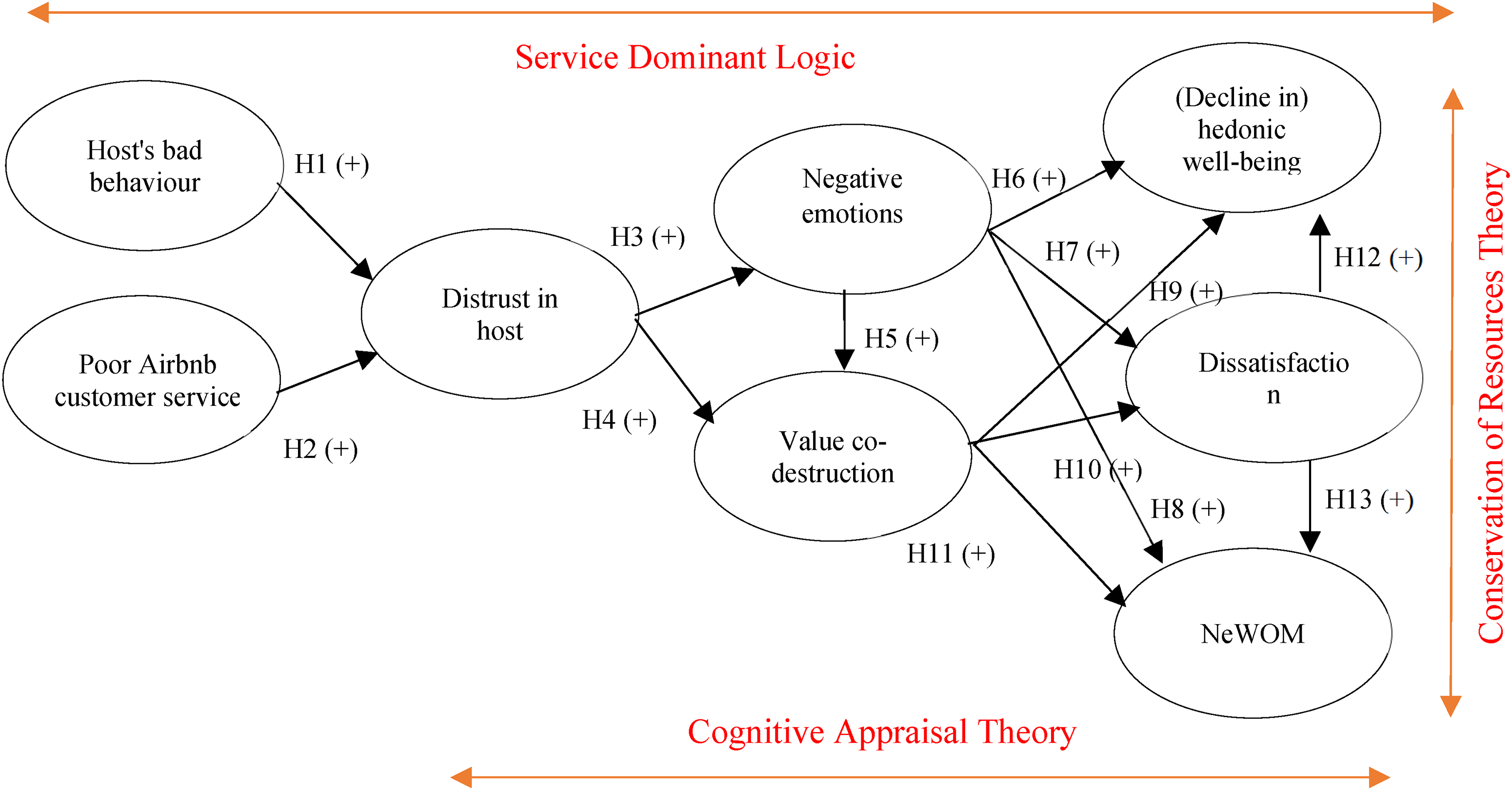
New conceptual framework.
Host's bad (inappropriate) behaviour
In the context of Airbnb, hosts can enhance customer-perceived value by being conscientious, friendly and responsive (Lyu et al., 2019) and are thus considered a distinct operant resource in the VCC process (Johnson and Neuhofer, 2017), as suggested by SDL. The quality of host behaviour can contribute to strong relationships with guests and heightened emotional value from the experience (Ariffin and Maghzi, 2012). However, Airbnb guests can experience varied host behaviours and actions (Sthapit, 2019) that contribute to negative emotions (Sthapit and Björk, 2021). A host's bad behaviour is contrary to the positive service-related qualities associated with P2P accommodation hosting, specifically being understanding and caring (Sthapit and Björk, 2020). Studies have linked host’s bad behaviour to poor service quality (Sthapit et al., 2021), which is a common cause of guests’ negative Airbnb experiences and has been suggested as an antecedent of distrust in the host (Sthapit and Björk, 2019). Thus, we propose:
Poor Airbnb customer service
According to Turban et al. (2002), customer service is a series of activities designed to enhance satisfaction, that is, customers’ feeling that a product or service has met their expectations. Providing excellent customer service entails making every effort to satisfy customers’ requests (Miao and Wang Bassham, 2007). Although Airbnb provides several customer supports services through its corporate website and call centre, guests can also contact customer service when they have negative experiences and want to mitigate stress (Sthapit, 2019). Some studies suggest that Airbnb guests’ interactions with customer service agents are inadequate and insufficient (Zamani et al., 2019), with poor customer service often being the major complaint posted online about Airbnb (Phua, 2019). Negative customer experiences caused by a failure to address and promptly resolve customer complaints and ineffective service recovery strategies, including a lack of communication with customers, can lead to distrust in the host (Sthapit and Björk, 2019). Thus, we propose:
Distrust in the host
Distrust refers to an intuitively negative feeling about another individual's conduct (Tussyadiah and Pesonen, 2018). Distrust is usually associated with self-protective intentions, risk perceptions, high-risk behaviour and defensive actions, and it elicits ambivalence, insecurity and anxiety (Chang and Fang, 2013); hinders business exchanges and service delivery; and lead to unhealthy customer–service provider relationships and unsatisfactory experiences (Moody et al., 2014). In Airbnb, distrust is associated with a lack of relational trust between host and guest (Tussyadiah and Pesonen, 2018). The sources of distrust in relationships are linked to a lack of cooperation (Cho, 2006), avoidance of interaction (Bies and Tripp, 1996), unwillingness to share views and preferences (Bijlsma-Frankema, 2004), and reduced information sharing (Choi and Choi, 2022). Distrust causes not only negative emotions (Sthapit, 2019) but also additional grievous disbelief issues (Luo and Zhang, 2016) because of the online and anonymous nature of the Airbnb platform compared with face-to-face interactions. According to Lv et al. (2021), distrust is an antecedent of VCD. Thus, we put forth:
Negative emotions and hedonic wellbring
Emotions are positive or negative feelings, pleasant or unpleasant, elicited by cognitive evaluations and experienced by individuals at a point in time (Wyer et al., 1999). Positive emotions represent desired emotional consequences, whereas negative emotions relate to undesired outcomes (Liu et al., 2021). Emotions are central to the VCC process (Sthapit and Björk, 2021). As value resides in a consumption experience (Holbrook, 1999), emotions are central to the consumption experience (Holbrook and Hirschman, 1982). Positive emotions are linked to VCC, whereas negative emotions contribute to VCD (Lastner et al., 2016). Consumers often experience negative emotions after a service failure, which leads to VCD (Camilleri and Neuhofer, 2017).
According to Vada et al. (2019), vacations can enhance tourists’ wellbeing by increasing happiness levels, positive emotions and pleasure. Thus, vacations contribute to the pleasure aspect of wellbeing known as hedonic wellbeing, which can be linked to life experiences related to pleasure, arousal, feelings and fun (Holbrook and Hirschman, 1982). Hedonic wellbeing results from the pleasure one experiences when one is able to increase positive affect and decrease negative affect (Ryan and Deci, 2001). Emotions such as anger, sadness and regret, however, negatively affect customer wellbeing (Yi and Baumgartner, 2004).
In the context of Airbnb, some studies have shown that guests’ negative emotions affect their wellbeing due to a loss of resources, such as physical effort (Sthapit, 2019). Negative emotions can undermine wellbeing (Joiner, 2000) and are linked to dissatisfaction (Jang et al., 2013), including NWOM (Wen-Hai et al., 2019). Thus, we posit:
Value co-destruction
VCD is ‘an interaction process between service systems that results in a decline in at least one of the system's wellbeing’ (Plé and Chumpitaz Cáceres, 2010: 431). When collaborating parties fail to integrate the resources they possess, the interaction process between the parties can fail (Plé and Chumpitaz Cáceres, 2010). Thus, VCD emerges from an unsuccessful collaboration between actors with negative consequences on wellbeing (Prior and Marcos-Cuevas, 2016). It can be associated with misappropriation by a system of its own resources or by the resources of another system (Plé and Chumpitaz Cáceres, 2010). This misappropriation may be unpremeditated or deliberate and may occur in a way that is unanticipated and considered inappropriate by other focal actors in the interacting system (Adam, 2021). Based on Skourtis et al.'s (2016) study, we conceptualise VCD as service failures because when service failure occurs some forms of value (e.g. functional and emotional) are co-destroyed in a way similar to how they are co-created during VCC. Further, service failure, in which value is co-destroyed (Camilleri and Neuhofer, 2017), can cause increased dissatisfaction (Sarkar et al., 2021), as manifestations of negative wellbeing include dissatisfaction (Sthapit and Björk, 2019). Recent studies indicate that as Airbnb continues to grow, service failures have gained traction and become increasingly evident (Sthapit, 2019). Moreover, some studies indicate that VCD leads to NWOM (Gkritzali et al., 2020). Thus, we propose:
Dissatisfaction and NWOM
Dissatisfaction points to cognitive processing linked with perceived service performance being below the customer's desirable levels (Bowen, 2001) but also has an affective element interrelated with frustration experienced by customers due to the nonfulfilment of their desires (Oliver, 1997). Dissatisfaction might be elicited before satisfaction and have a longer duration, as customers have the propensity to recall adverse feelings for a longer period when customer-firm exchanges fail (Colgate and Danaher, 2000). Whereas customer satisfaction contributes to wellbeing (Chen et al., 2016), dissatisfaction can reduce wellbeing.
Electronic WOM (eWOM) refers to ‘any positive or negative statement made by potential, actual, or former customers about a product or company, which is made available to a multitude of people and institutions via the Internet’ (Hennig-Thurau et al., 2004: 39). eWOM behaviour is instigated by a service/product experience triggered by a customer's motivation and ultimately comprehended on online platforms (Lee et al., 2021). Dissatisfaction with tourist services may lead to negative consequences, such as NWOM (Cheng et al., 2005). The leading source of NWOM is a dissatisfactory consumption experience (Berger, 2014). NWOM is highly problematic for marketers and offers risk cues to customers to avoid a particular product or service provider (Ran et al., 2021). Thus, regulating adverse and promoting constructive eWOM is fundamental to the success of hospitality firms (Litvin and Hoffman, 2012). Thus, we posit:
Methodology
Survey instrument and pilot test
We use a cross-sectional survey to measure customer demographic and travel characteristics and the eight constructs of the study: host’s bad behaviour, distrust between the host and the guest, poor customer service, negative emotions, VCC, dissatisfaction, and NWOM (Appendix 1). The items were measured on a five-point Likert scale (1 = strongly disagree to 5 = strongly agree). The questionnaire was developed, administered in English, and pilot tested by five tourism researchers with expertise in studies on the sharing economy to confirm the relevance, clarity, flow and phrasing of the questions. A pilot test was also conducted among 15 Airbnb users and leads to minor survey item refinement.
Sampling and data collection
The sampling criteria for selecting participants in this study included tourists aged 18 years and older who had negative experiences because of the host and customer service agent while staying in an Airbnb rental property during 3 months preceding the time of data collection (June–August 2021). Data were collected using a convenience sampling technique. The survey questionnaire was distributed in September 2021 using an online crowdsourcing platform, Amazon Mechanical Turk (MTurk). Each participant was paid US$1.00 upon completion of the survey. From the respondents, 441 responses were obtained, and data from 427 tourists were retained for data analysis after deleting responses that did not meet the screening criteria.
Data analysis
Given the complexity of the model and theory development nature of this research (Hair et al., 2017), partial least squares structural equation modelling (PLS-SEM) was applied for data analysis using SmartPLS 3.3.3 software (Ringle et al., 2015). A power analysis using G*Power was applied to estimate the minimum sample size (Faul et al., 2009). Based on the results, we determined that a minimum sample size of 160 respondents was needed to obtain a power of 0.95. A minimum sample size of 100 respondents can be sufficient when PLS-SEM is applied to obtain acceptable power (Reinartz et al., 2009). Thus, a sample size of 427 was adequate for this study.
Common method bias (CMB) can occur in studies that use a self-administered survey for data collection (Conway and Lance, 2010). Several remedial procedures were performed to control for CMB, including avoiding double-barrel questions, selecting respondents who were familiar with the issue of interest, and providing thorough instructions (Mackenzie and Podsakoff, 2012). We applied two methods, full collinearity using the variance inflation factor (VIF) (Kock, 2015) and the correlation matrix procedure, to assess the presence of CMB. To check for CMB, the value of full collinearity VIF should be <3.3 for all constructs (Kock, 2015), and the value of correlation between constructs should be <0.9 (Rasoolimanesh et al., 2021). Both methods showed that the model and data were free of CMB.
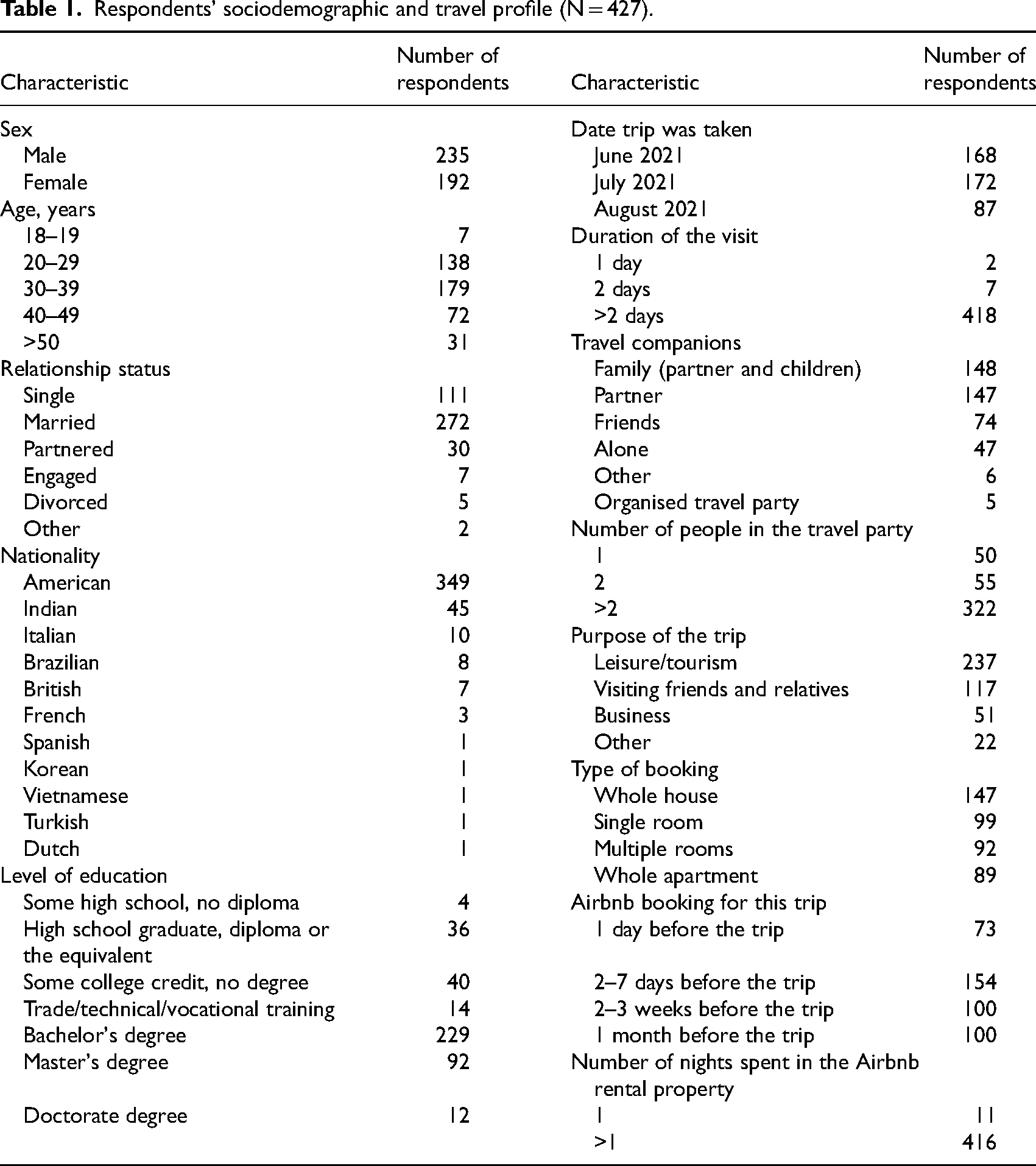
Of the 427 respondents with valid responses, most were male (n = 235). The respondents’ ages ranged from 18 to 69 years, and those between the ages of 30 and 39 comprised the largest group (n = 171). Most respondents were married (n = 272). In terms of nationality, the majority were American (n = 349), and remaining respondents represented 11 different nationalities (American, Indian, Italian, Brazilian, British, French, Spanish, Korean, Vietnamese, Turkish and Dutch). Most had completed a bachelor's degree (248) and had visited destinations such as Madrid and San Francisco. The majority of respondents visited cities mainly based in the United States. A large majority mentioned spending >2 days travelling (n = 418) (Table 1).
Respondents’ sociodemographic and travel profile (N = 427).
Results
Assessment of the model using PLS-SEM
The assessment of a measurement model of reflective constructs using PLS-SEM requires reliability, convergent validity and discriminant validity to be ascertained. For reliability, the outer loadings should be >0.7, and those >0.5 are acceptable if other quality criteria meet the thresholds (Hair et al., 2017). In addition, rho_A and composite reliability should be higher than 0.7 (Ali et al., 2018). The average variance extracted (AVE) should be >0.5 to establish convergent validity (Hair et al., 2019). Reliability and convergent validity were established for all eight constructs (Table 2).
Assessment of the measurement models.
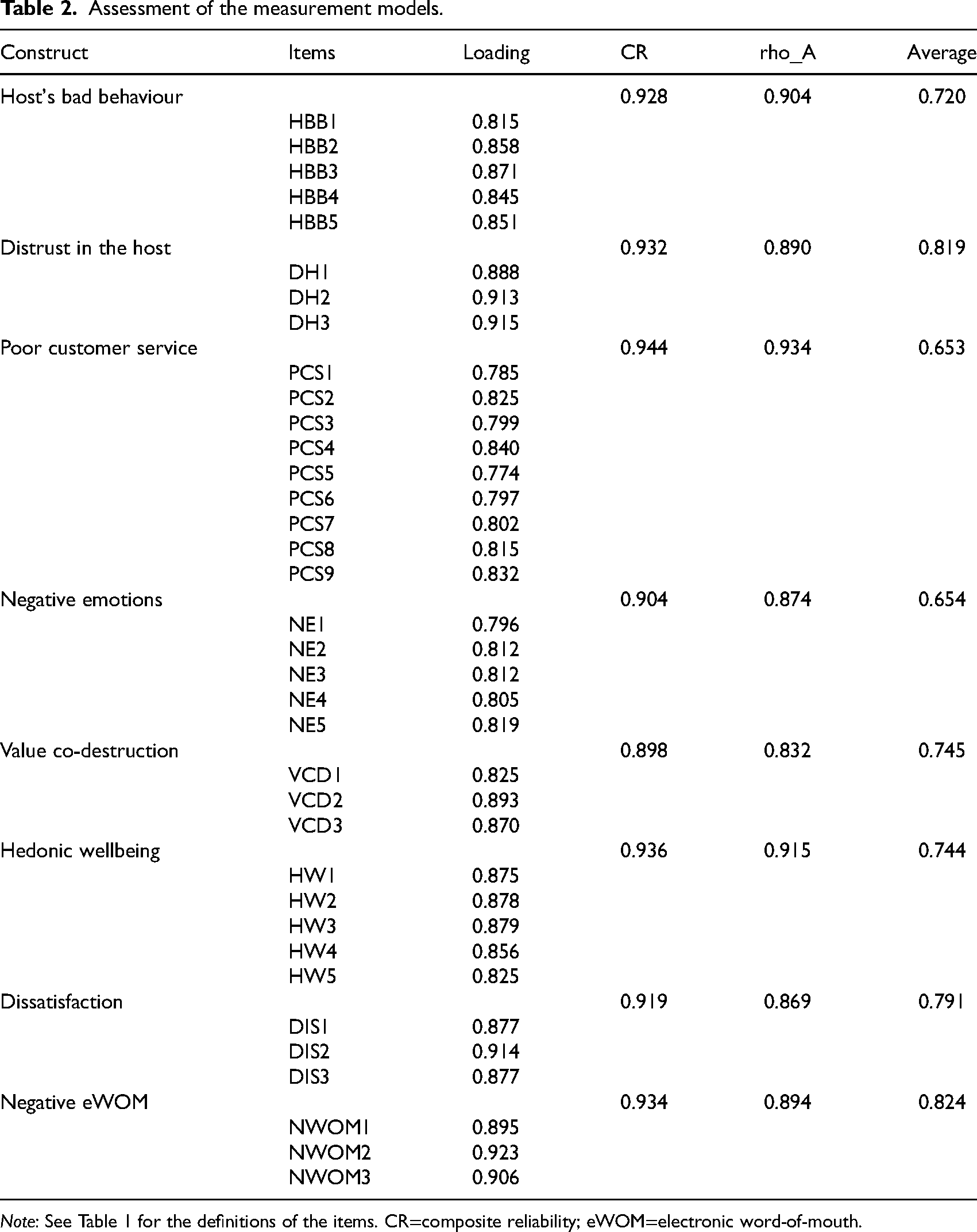
Note: See Table 1 for the definitions of the items. CR=composite reliability; eWOM=electronic word-of-mouth.
Discriminant validity was assessed using the two most conservative approaches; the Fornell-Larker criterion and the heterotrait-to-monotrait (HTMT) ratio (Hair et al., 2017). The square root of the AVE should be higher than the correlation of each construct with other constructs in the model to establish discriminant validity using the Fornell-Larcker criterion approach (Ali et al., 2018). By using the HTMT, the ratio of each construct should be <0.85 or 0.9, or the value of the HTMT should be significantly different from 1 when using the bootstrapping and confidence interval approach (Rasoolimanesh et al., 2021). Tables 3 and 4 show acceptable discriminant validity for the model using the two methods.
Discriminant validity using the Fornell-Larcker criterion.
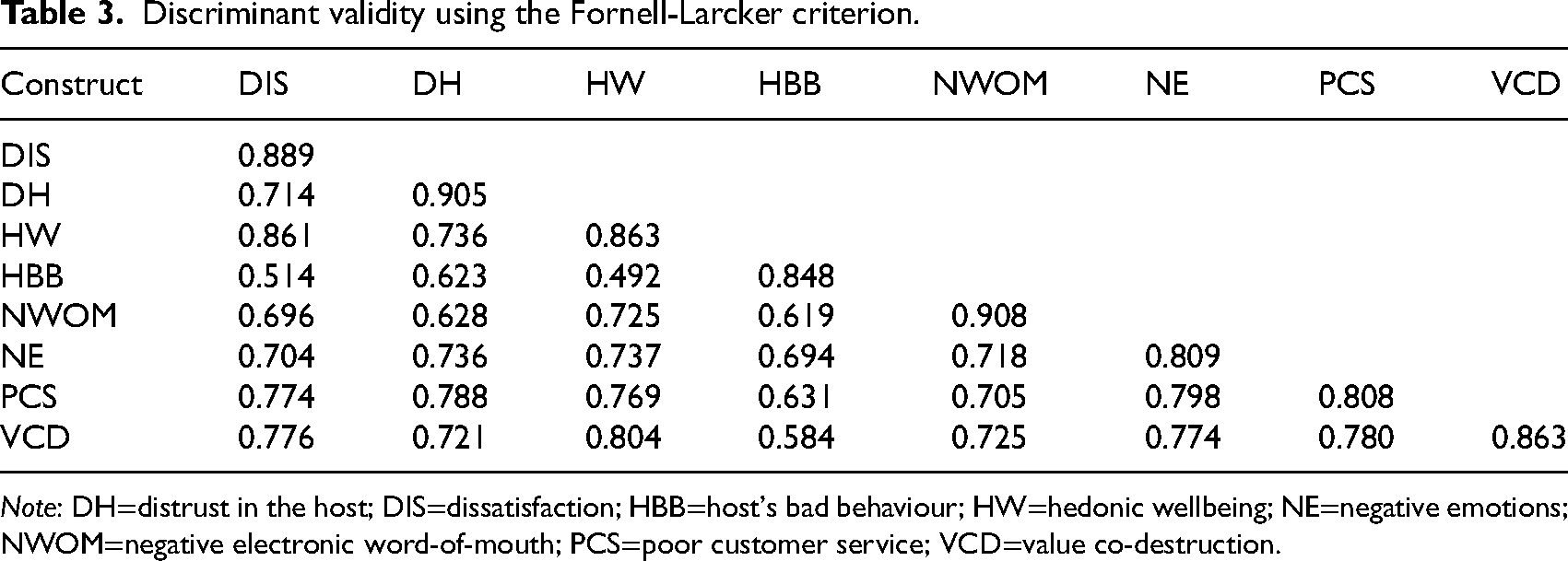
Note: DH=distrust in the host; DIS=dissatisfaction; HBB=host's bad behaviour; HW=hedonic wellbeing; NE=negative emotions; NWOM=negative electronic word-of-mouth; PCS=poor customer service; VCD=value co-destruction.
Discriminant validity using the HTMT ratio (confidence interval).
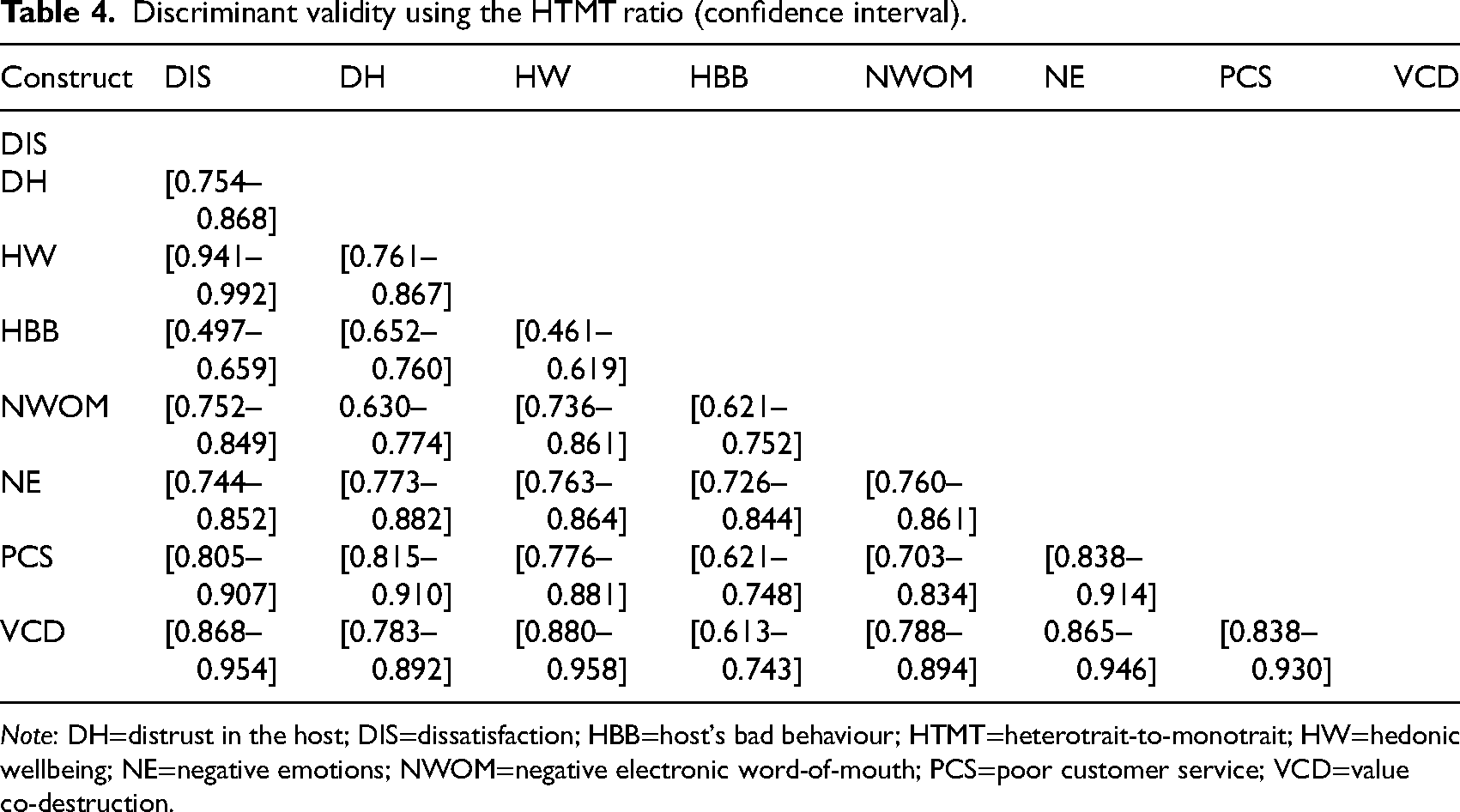
Note: DH=distrust in the host; DIS=dissatisfaction; HBB=host's bad behaviour; HTMT=heterotrait-to-monotrait; HW=hedonic wellbeing; NE=negative emotions; NWOM=negative electronic word-of-mouth; PCS=poor customer service; VCD=value co-destruction.
Assessment of the structural model
Figure 2 and Table 5 show the assessment of the structural model and hypothesis testing, respectively. All the endogenous constructs had high R2 values, which were 0.648, 0.543, 0.650, 0.629, 0.609 and 0.795 for Distrust in the host, negative emotions, VCD, dissatisfaction NWOM, and hedonic wellbeing, respectively. The Q2 values ranged from 0.457 to 0.588, indicating that the model had a very high predictive power (Hair et al., 2019).
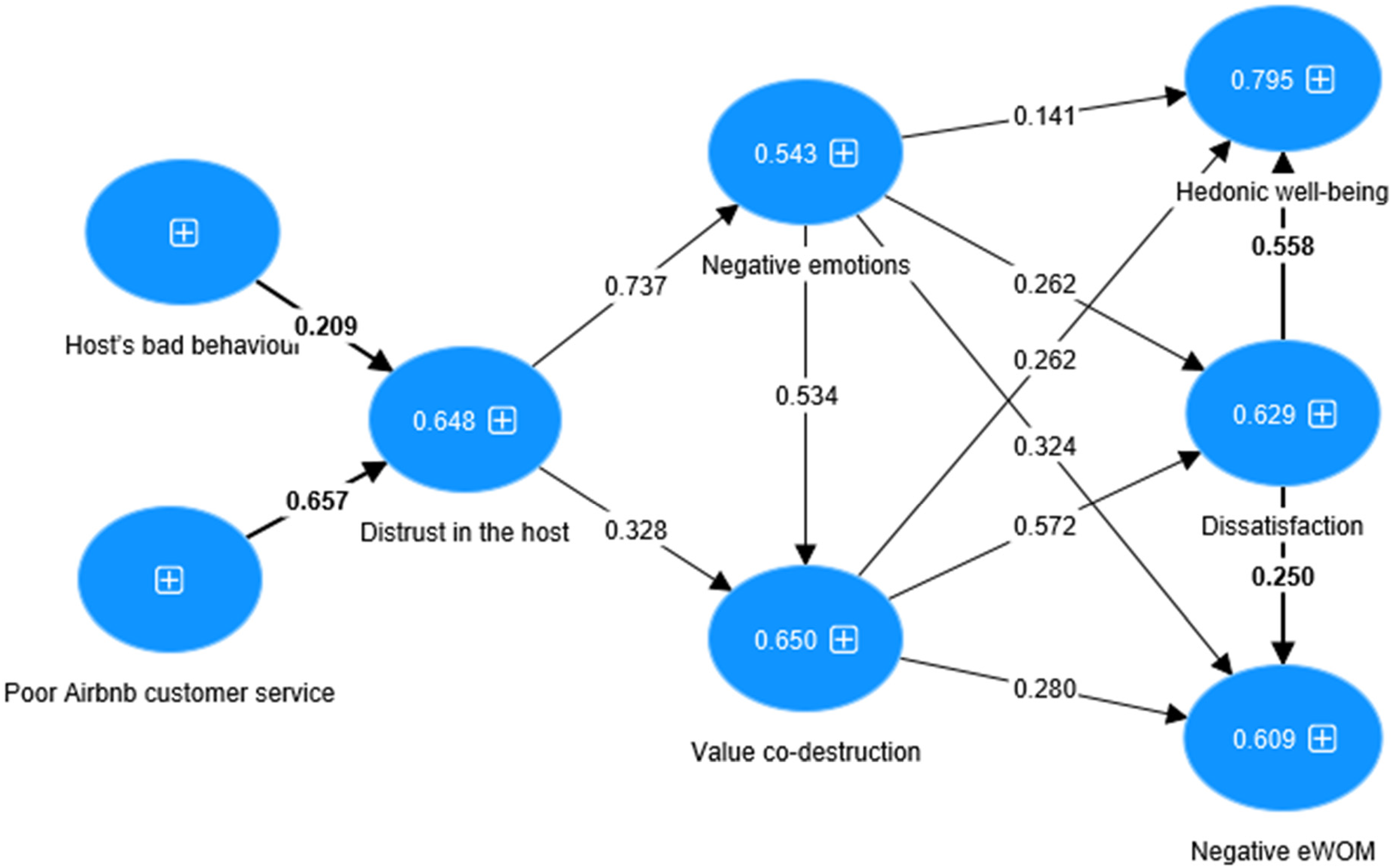
Results of assessment of structural model and hypothesis testing.
Results of the hypothesis testing.
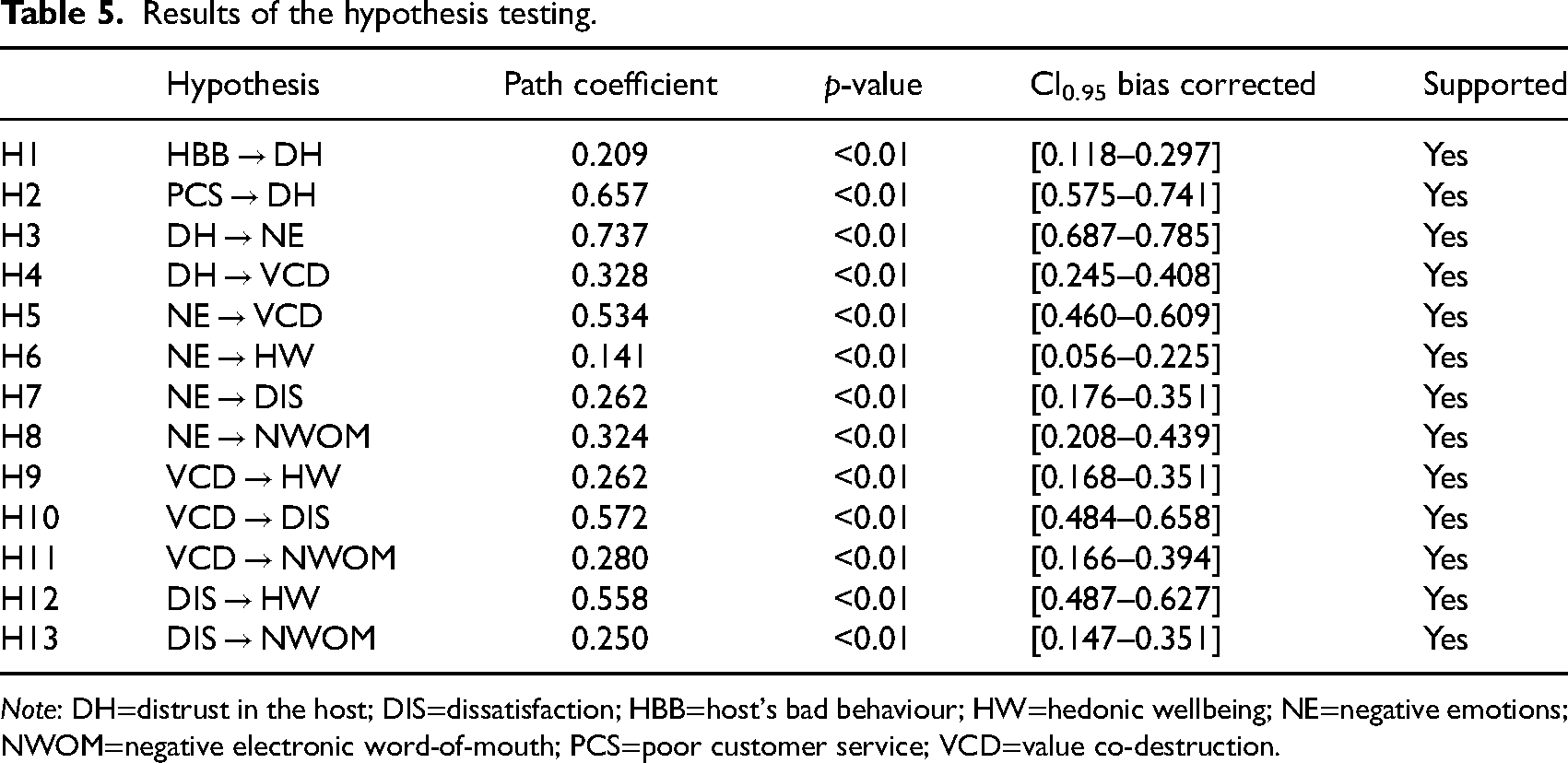
Note: DH=distrust in the host; DIS=dissatisfaction; HBB=host's bad behaviour; HW=hedonic wellbeing; NE=negative emotions; NWOM=negative electronic word-of-mouth; PCS=poor customer service; VCD=value co-destruction.
The significance of the path coefficients (
Conclusion and implications
Theoretically, this study rooted in CAT, SDL and CoR, tests a proposed model to clarify the inter-relationships between the antecedents and outcomes of VCD. We integrate the three theories based on how they view operant resources, including psychological resources. Resources are valued and evaluated cognitively by consumers in both SDL and CoR. However, when there is resource disintegration through loss of value in actor interactions, VCD occurs with negative consequences on post-consumption behaviours.
All the 13 hypotheses were supported. The relationship between host’s bad behaviour and distrust in the host (
A positive relationship was found between distrust in the host and negative emotions (
The paths from negative emotions to VCD (
Our results show a positive relationship between VCD and hedonic wellbeing (
The proposed positive associations between dissatisfaction and decline in hedonic wellbeing and between dissatisfaction and NWOM were confirmed by our results, supporting
Theoretical implications
This study makes three key contributions. First, it responds to the calls for more research on VCD as most previous studies have focused on VCC (Järvi et al., 2020). While existing studies have highlighted the antecedents of VCD (Järvi et al., 2020; Lv et al., 2021; Zhang et al., 2018), these have yet to be ascertained in Airbnb context (Sthapit and Björk, 2021). We fulfil this gap by demonstrating the effects of both cognitive (distrust in the host) and affective (negative emotions) factors on VCD and the subsequent consequences on guests’ hedonic wellbeing, dissatisfaction and NWOM.
Second, this study contributes to the VCD literature (e.g. Echeverri and Skålen, 2011; Plé, 2017; Prior and Marcos-Cuevas, 2016) by confirming several negative outcomes for guests. With hedonic wellbeing diminishing, our findings confirm how Airbnb can deplete the psychological resources of guests. Moreover, we show that negative emotions and VCD affect dissatisfaction, thereby expanding the service marketing literature on the consequences of negative experiences in the sharing economy. Furthermore, given the importance of eWOM for a company's reputation, success and customer loyalty, we demonstrate that VCD is an important antecedent of NWOM. In addition, this study responds to the call for more quantitative research on VCD (Järvi et al., 2020; Lv et al., 2021), with our findings extending the literature by integrating both antecedents and outcomes in the same model. Of importance is the role of VCD as a significant predictor of a decline in hedonic wellbeing, dissatisfaction and NWOM, highlighting the outcomes of VCD.
Third, while most of the tourism studies have mainly examined VCD through a sociological lens, drawing on practice theory (Camilleri and Neuhofer, 2017; Dolan et al., 2019) to explain the (misaligned) practices that lead to VCD. None of the studies have used multiple theories to examine VCD. The present study complements this literature and offers a process model that uses three different theories: CAT, SDL and CoR to show not only the significant determinants of VCD but also the negative emotions that result collectively from host’s bad behaviour, distrust in the host, and poor customer service. Notably, to the best of our knowledge, this is one of the first studies to examine the antecedent and outcomes of VCD in the context of Airbnb and the results enable us better to understand VCD with actionable and observable elements.
SDL allows us to focus on actor interactions and the value in use (Peters et al., 2014). When the value derived from the interactions is sub-optimal through hosts’ bad behaviour and poor customer service, resource disintegration occurs for the customer that manifests in negative emotions and VCD. The negative emotions can be understood through the lens of CAT (Lazarus, 1991), which posits that cognition drives emotional responses and behaviour (Hosany et al., 2021). Thus, consumers cognitively assess negative interactions with hosts and Airbnb leading to distrust in the host, triggering negative emotional responses that result in dissatisfaction. Contrary to conventional hospitality providers, such as hotels, Airbnb hosts are not usually trained in setting service standards, which can affect their ability to deliver service appropriately, leading to negative experiences that can aggravate negative feelings and contribute to dissatisfaction among guests. In this way, some of the basic premises around resource integration in SDL become the antecedent factors to emotional responses, with a focus on lack of value and negative emotions. Several consequences of negative emotions emerge, which align with CAT and CoR. In CAT, post-consumption behaviours such as dissatisfaction and negative WOM have been linked to negative emotions (Hosany et al., 2021). We extend these by examining hedonic wellbeing. A failed interaction in which at least one actor in the service system fails to experience value because of resource misuse by another factor can affect guest hedonic wellbeing. SDL emphasises that customers use the service offering to determine the emerging value (Buhalis et al., 2020; Sthapit and Björk, 2020, 2021; Vargo and Lusch, 2004). From a broader perspective both cognitive (distrust in the host) and affective (negative emotions) were significant factors affecting VCD. Moreover, considering that negative emotions and VCD, which are indicative of the loss of psychological resources, reduce guests’ wellbeing. Therefore, guests engage in NWOM as a coping mechanism to reinstate their wellbeing (Laud et al., 2019; Smith, 2013), supporting CoR.
Practical implications
The results of this study have several managerial implications for Airbnb, its hosts and sharing economy companies operating in the tourism industry. First, given that inappropriate host actions lead to distrust in the host among Airbnb guests, one of the immediate calls to action includes the need for Airbnb management to hold hosts accountable and forbidding them from hosting on the platform when they are frequently reported as unprofessional towards guests; for example, when they use inappropriate words and body language. Airbnb's management should invest more resources to minimise the negative experiences of its customers by clearly defining hosts’ responsibilities and training them in hospitableness to enact behaviours that are considered respectful and responsive to customer requirements. This can reduce negative experiences and a decline in wellbeing among Airbnb guests. When hosts are provided with clear responsivities, Airbnb guests can be serviced efficiently, which reflects service presence. While hosting in Airbnb, hosts should be required to remain well-mannered when welcoming guests to their rental properties. Hosts should also be more thoughtful, competent, and caring to help mitigate the decline in their guests’ wellbeing. Hosts should not discriminate against any guests but should treat them in a friendly manner, including settling any problems they face related to the accommodations. Furthermore, overall support measures for Airbnb guests should ensure that policies pertaining to service provision are standardised, clear and universally applicable to all hosts. Airbnb platforms should adopt strict policies against bad host behaviour to help resolve issues around guests’ dissatisfaction with the host and VCD.
Second, another call for action for Airbnb management is to incentivise hosts to write honest and accurate descriptions of their listings. The host's online information, for example, his or her profile and accommodation description and pictures, should be credible to build trust between the host and the guest. At minimum, a service advertised by a host must be provided with one hundred percent consistency. To minimise distrust in hosts among guests, Airbnb management should take strict action against dishonest hosts when guests report inconsistencies between listed accommodations and reality, such as deceptive pictures. In addition, hosts should engage in active communication with their guests and respond to their inquiries in real time, for example, by providing updated information related to booking and the rental property's condition prior to the guest's arrival. Hosts should also maintain ongoing personal communication with guests and follow up promptly to effectively alleviate negative feelings and prevent distrust. Such interactions may help develop closeness and trust between the host and the guest. To support this, Airbnb should ensure that guidelines relating to service provision, including communication with customers, are standardised, clear and universally applicable to all hosts. These guidelines should indicate that a proposed service must be provided with 100% consistency.
Third, other calls for action for Airbnb management include the need to recruit qualified customer service personnel and equip them with service recovery skills through training and control mechanisms. Such training should focus on upgrading their skills for handling complaints and on effective service recovery efforts after a failure. Airbnb management should also direct customer service personnel to promptly address customer complaints with apologies, which may lead to efficient service recovery.
From a broader tourism sharing economy perspective, sharing economy companies operating in the tourism industry should invest more resources into setting up live chat functions on the website to facilitate immediate communication with customer service representatives and to provide diverse contact methods (through phone communication, emails and the website). After a failed interaction between the service provider and the customer, leading to VCD (decline in wellbeing) for the customer, customer service personnel should be willing to provide financial compensation to remedy what has occurred to a certain extent. This may be an effective trust-repair measure to neutralise the distrust that customers feel towards the service provider and help in the rebuilding of their overall trust. Moreover, both service providers and customer service agents should respond to customers’ inquiries quickly and be trained to provide prompt, responsible and efficient service. Lastly, adopting policies against bad and misleading service providers, for example, hosts, offering good customer service, including a greater level of service presence, and simplifying the service recovery process may help resolve issues pertaining to guests decreased hedonic wellbeing, dissatisfaction and NWOM because of VCD. This requires a congruent integration of resources by the service providers, in this context, hosts and customer service agents during customers’ value formation. It is particularly important that guests be able to contact customer service agents after a failed interaction with a host, so that lost resources can be restored.
Limitations and future research
This study was limited by the fact that only a web-based survey questionnaire was used for data collection. The generalisability of the results is limited because of the moderate sample size and the use of a convenience sample. Further, the study participants were primarily Americans, so future studies would benefit from using a more multicultural sample base. The study participants mainly were mostly young, and those between the ages of 30–39 comprised the largest group, which is another limitation. The data were collected during the post-visit stage, and the survey questionnaire was written only in English. Future studies should include other dimensions that might have an impact on VCD to extend the findings of the present study. Moreover, the time lapse between the actual experience and completion of the survey was 3 months, which might have impacted the survey responses. Data should be gathered shortly after a trip has been taken to avoid the creation of false memories. Lastly, data were gathered during the COVID-19 pandemic and respondents might have had higher expectations on the host and the services provided including the customer service personnel during this travel context. This might have further affected the responses and increased the possibilities for VCD.
Footnotes
Author note
Erose Sthapit is currently affiliated with Department of Marketing, International Business, and Tourism, Manchester Metropolitan University, UK; Centre for Research and Innovation in Tourism (CRiT), Taylor's University, Malaysia; School of Business, Woxsen University, Hyderabad, India; d UCSI Graduate Business School, UCSI University, Kuala Lumpur, Malaysia; HANKEN School of Economics, Helsinki, Finland; and Faculty of Social Sciences and Business Studies, University of Eastern Finland, Finland.
Declaration of conflicting interests
The authors declared no potential conflicts of interest with respect to the research, authorship, and/or publication of this article.
Funding
The authors received no financial support for the research, authorship, and/or publication of this article.

Appendix 1. Constructs and measurement items
Host's bad behaviour (Guan et al., 2020)
The host HBB1 lost his/her temper with me. HBB2 used inappropriate body language. HBB3 threatened me using inappropriate words. HBB4 made me feel discriminated as a guest. HBB5 harassed me using inappropriate words and body language. I felt that the Airbnb host. DH1 was not reliable. DH2 was not honest. DH3 was not trustworthy. The Airbnb customer service agent PCS1 was not thoughtful. PCS2 did not provide timely services. PCS3 provided insufficient information. PCS4 wasted my time. PCS5 made mistakes in providing services. PCS6 failed to meet my (customer's) reasonable requirements. PCS7 shifted responsibility for problems to others. PCS8 did not justify their misconduct. PCS9 did not act in good faith to address my problems. During my recent stay in an Airbnb, I felt NE1 afraid. NE2 nervous. NE3 upset. NE4 ashamed. NE5 hostile. The failed interaction with the host or customer service agent during my recent stay in an Airbnb VCD1 was severe. VCD2 made me feel angry. VCD3 was unpleasant. HW1 In most ways, my recent Airbnb experience was not close to ideal. HW2 The conditions of this Airbnb experience were not excellent. HW3 I was not satisfied with my recent Airbnb experience. HW4 I did not achieve the most important things on this recent Airbnb stay. HW5 I would change the plans I made for this recent Airbnb stay. DIS1 I was disappointed with the experience of staying in an Airbnb during my recent trip. DIS2 I was dissatisfied with the delivery of the service by Airbnb. DIS3 Overall, I felt regret after staying in an Airbnb. NWOM1 I will share this bad Airbnb service experience online via social networking sites and mobile technology. NWOM2 I will tell my friends on social networking sites and mobile technology about my disappointment with the recent Airbnb service experience. NWOM3 I will let my friends know via social networking sites and mobile technology about Airbnb as a bad service provider.
Distrust in the host (Mao et al., 2020)
Poor customer service (Guan et al., 2020)
Negative emotions (Watson et al., 1988)
Value co-destruction (Sarkar et al., 2021)
Hedonic wellbeing (Diener et al., 1985)
Dissatisfaction (Seo and Um, 2019)
Negative eWOM (Zhang et al., 2017)