



Abstract
Despite growing interest, the associations between contextual and psychological factors concerning consumers’ intentions to visit green hotels have been scarce in the literature. The main purpose of this investigation is to evaluate the intentions of consumers to visit green hotels and establish determinants of this intention. We developed and tested a research model grounded on the theory of planned behavior (TPB) and inclusion of the contextual factors, biospheric value and green trust. A quantitative study was carried out among consumers in Portugal. Findings revealed that consumers have high intentions to visit green hotels. The TPB variables (attitude, subjective norms, and perceived behavioral control) and the biospheric value positively affect behavioral intentions. Green trust has a positive influence on TPB variables. Similarly, the biospheric value impacts on attitude and subjective norms. The study withdraws implications for hotel managers to design effective marketing strategies in the context of green hotels.
Keywords
Introduction
As climatic variations emerge (Bashir et al., 2019), environmental protection is one of the crucial issues in contemporary societies (Manganari et al., 2016). The tourism industry is often reported as one of the biggest contributors to environmental degradation (Preziosi et al., 2019). The worldwide growth in the tourism activity highlights its environmental impacts and raises the significance of tourists’ eco-friendly behavior in the conservation of both the environment and tourist destinations (Jhawar et al., 2023). There is a growing trend in hotels to change their operations and proactively implement greener practices in order to meet market demands (Choi et al., 2015; Leroux and Pupion, 2018; Preziosi et al., 2019). With the expansion of green consumption, the green hotel concept gained visibility in the hotel industry (Rahman et al., 2012). Green hotels, i.e. hotels that implement eco-friendly practices, have been increasingly perceived as a long-term trend and as key to the success of the hotel industry (Choi et al., 2015; Dang-Van et al., 2023; Han et al., 2018a, 2018b; Ting et al., 2019). Examples of these practices include recycling, towel and linen reuse programs, low-flow faucets and shower heads, refillable bath products, automatic climate control and natural ventilation (Al-Aomar and Hussain, 2017; Rahman and Reynolds, 2016; Reid et al., 2017). By adopting these initiatives, hotels contribute to environmental protection, reduce operating costs and attract consumers who identify with such approaches (Gil-Soto et al., 2019; Ting et al., 2019).
The literature in green practices in the hospitality industry gained momentum in the 1990s and continues to grow in importance and significance (D'Souza et al., 2021; Kim et al., 2017). Despite the growing popularity of green hotels, the understanding of the factors that influence consumers’ intentions to choose green hotels is still limited (Choi et al., 2015; Yadav et al., 2019). Consumers’ eco-friendly behaviors are complex. The literature lacks consensus on the drivers of eco-friendly behaviors (Chan et al., 2022). For example, while studies found that consumers are concerned about environmental issues (Yadav et al., 2019; Yarimoglu and Gunay, 2020), others suggested they are skeptical about green practices and believe it is unnecessary to stay or pay more for stays at green hotels (Chen and Chang, 2013; Gao and Mattila, 2016).
Research tends to ground on the theory of planned behavior (TPB) to determine consumers’ intentions to visit green hotels (e.g. Grubor et al., 2019; Han et al., 2010; Yadav et al., 2019). Yet TPB assumes that consumer attitudes are relatively stable and determined by psychological factors (Ajzen, 1991). Such views are limited and do not include the contextual dimension (Myung et al., 2012; Nimri et al., 2020). Few studies explored the associations between contextual and psychological factors in relation to consumers’ intentions to visit green hotels (Myung et al., 2012). A limited number of studies included the attitude-behavior-context (ABC) theory, expanding the idea that contextual factors affect consumer beliefs and attitudes (Guagnano et al., 1995).
This study looks at the extent to which consumers intend to visit green hotels and the drivers of this intention. In particular, we address the influence of psychological variables from TPB (attitude, subjective norms, and perceived behavioral control), and contextual variables (biospheric value and green trust), in determining the consumer's intention to visit green hotels. By looking at the integration of psychological and contextual factors the study provides further insights on the inconsistencies observed in the literature regarding consumer behavior in relation to green hotels (Yadav et al., 2019). The study also establishes guidelines to the development of effective marketing strategies to promote positive purchasing decisions and retain environmentally conscious consumers (Bashir et al., 2019; Choi et al., 2015; Rahman and Reynolds, 2016; Verma and Chandra, 2018).
Literature background
Green hotels
The Green Hotels Association (2020) defines green hotels as “environmentally friendly properties whose managers are eager to institute programs that save water, save energy and reduce solid waste—while saving money—to help protect our one and only earth!”. This definition is based on key green management practices in the hotel industry, including saving energy and water, managing waste, and light sensors (Manganari et al., 2016; Rahman and Reynolds, 2016). Research on the green hotel industry rests on three perspectives: (i) the corporate view; (ii) the role of government and trade associations; and (iii) the consumer's perspective (Manganari et al., 2016). This study focuses on the consumer's perspective.
Over the last decade, there has been a growing interest in understanding consumers’ green purchasing intentions (Yarimoglu and Gunay, 2020). Studies tend to focus on studying the determinants of the intention to visit green hotels (Chen and Tung, 2014; D'Souza et al., 2021; Han, 2015; Wang et al., 2023; Yadav et al., 2019) or on the consumer's intention to revisit (Dang-Van et al., 2023). Others, investigate the determinants of actual behavior (Chen and Peng, 2012; Huang et al., 2014; Bashir et al., 2019). Although studies predominantly address the positive antecedents of the intention to visit green hotels (Chen and Tung, 2014; Verma et al., 2019), some assess its barriers (e.g. Baker et al., 2014; Nimri et al., 2017), or the antecedents and consequences in relation to staying in green hotels (e.g. Yarimoglu and Gunay, 2020). Since intentions to visit green hotels do not always translate into actual behaviors (Dinis et al., 2019), literature usually only focus on measuring intentions, without assessing actual behavior (Jaiswal and Kant, 2018; Paço et al., 2019). Empirical results show that, although intentions are an important prerequisite, external factors can influence actual behavior and hinder the performance of an intended action (Dinis et al., 2019). Even though consumers state their intention to stay at green hotels, their behavior does not always reflect that claim (Sadiq et al., 2022).
Theory of planned behavior and attitude-behavior-context theory
TPB states that most human behaviors result from an individual's intention to perform a certain behavior (Ajzen, 1985). Such intention is directly influenced by three theoretically independent factors: attitude, subjective norms and perceived behavioral control (Ajzen, 1991). Critics claim that all of the variables included in the TPB are rational predictors and, therefore, the theory largely rests on the assumption that individuals make rational and self-interested choices (Wang et al., 2018a; Yadav et al., 2019).
TPB has been widely applied to predict the behavioral intentions of consumers to visit green hotels (e.g. Grubor et al., 2019; Han et al., 2010 Nimri et al., 2017; Verma and Chandra, 2018; Yadav et al., 2019; Yarimoglu and Gunay, 2020). However, those studies’ findings are often inconclusive or even controversial (Wang et al., 2023). For some behaviors and contexts, the inclusion of other variables can increase the predictive utility of a research model (Chen and Tung, 2014; Han et al., 2010). In this regard, Ajzen (1991: 199) argued that the model was “in principle, open to the inclusion of additional predictors, if it can be demonstrated that they capture a significant proportion of the variance in intention or behavior.” Findings from previous studies supported the use of extended TPB for intention formation, revealing to increase its predictive power (e.g. Nimri et al., 2020; Yadav et al., 2019; Yarimoglu and Gunay, 2020). In this study, we adopt the original variables of TPB (Ajzen, 1991).
ABC theory states that behavior results from the combination of attitudinal variables and contextual factors (Guagnano et al., 1995). This theory does not have specific variables, but bases on the assumption that both external and psychological conditions influence behavior. Therefore, such variables ought to be considered simultaneously (Guagnano et al., 1995). Contextual factors refer to “situation/domain-specific factors which make a scenario unique” (Yadav et al., 2019: 386). These include interpersonal influences, values and feelings, personal abilities, publicity, community expectations, physical environment, institutional and legal factors, temporal perspectives, and various characteristics of the social, economic, and political context (Stern, 2000; Yadav et al., 2019). According to Belk (1975), these factors increase the ability to explain and understand human behaviors.
Although ABC has not been widely used in the context of green hotels, a few studies have demonstrated its effectiveness in predicting intentions to visit green hotels. For example, Yadav et al. (2019) showed that the choice of green hotels is better explained when considering both psychological and contextual factors. Green trust and biospheric value were included as contextual constructs in the model since they are related to the pro-environmental context. Previous studies have also demonstrated the critical role of both constructs in determining behavioral intentions in the context of green hotels (e.g. Chen and Chang, 2013; Choi et al., 2015; Verma et al., 2019; Yadav et al., 2019). In this way, the integration of psychological and contextual factors can contribute to a better understanding of consumers’ decisions when choosing green hotels. This study extends existing knowledge by assessing the roles of biospheric value and green trust as contextual factors in predicting the intention to visit green hotels. Figure 1 presents the conceptual framework of the study.
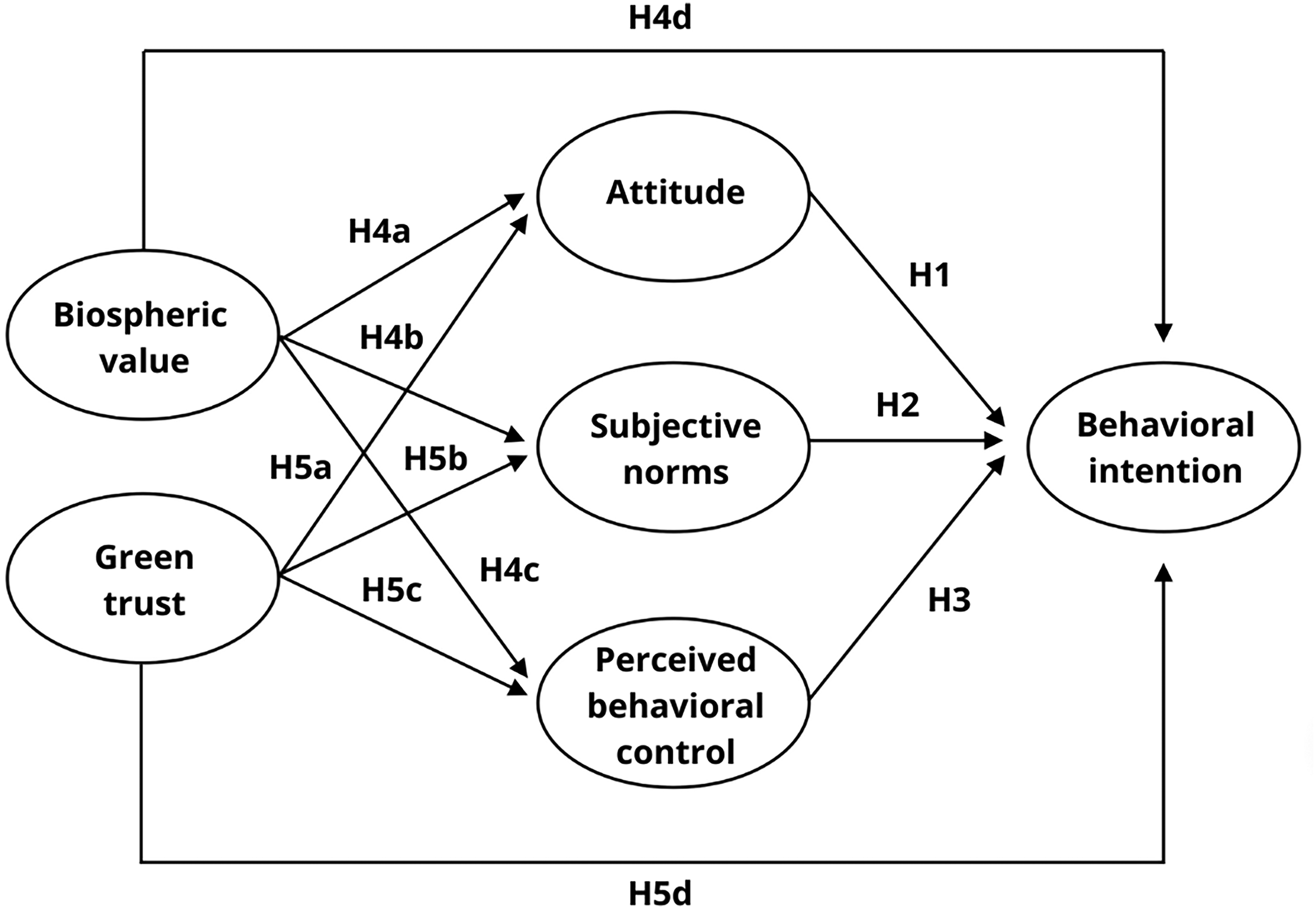
Conceptual framework.
Research hypotheses development
Attitude
Attitudes entail the degree to which individuals have a favorable or unfavorable evaluation when performing a certain behavior. Attitudes toward a behavior are formed by behavioral beliefs (Ajzen, 1991). Hence, attitudes play a crucial role in predicting consumers’ behavioral intentions (Eid et al., 2020). The relationship between attitudes and behavioral intention has been posed as direct and positive (Ajzen, 1991). In this study, the consumer's attitude is described in relation to an ecological behavior, namely in staying or visiting green hotels when traveling. Studies show that attitude is an important antecedent of the intention to visit green hotels (e.g. Eid et al., 2020; Han and Yoon, 2015; Yadav et al., 2019; Yarimoglu and Gunay, 2020). In particular, Verma and Chandra (2018) found that attitude emerged as the most significant factor in the TPB model to predict the intention of young consumers to visit a green hotel. Therefore, we propose the following:
Subjective norms
Subjective norms refer to “perceived social pressure to perform or not the behavior” (Ajzen, 1991: 188). Subjective norms involve the opinions or viewpoints of other people who are important to the person and who have the ability to influence decision-making, such as family members and relatives, or groups outside the immediate family (e.g. colleagues, associates or business partners, and friends) (Chen and Tung, 2014; Ting et al., 2019; Verma and Chandra, 2018).
Studies addressing the relationship between subjective norms and behavioral intentions present inconsistent findings. Although there is growing evidence that subjective norms are a significant predictor of behavioral intentions toward visiting a green hotel (Chen and Tung, 2014; Yarimoglu and Gunay, 2020) studies also found non-significant relationships between the two variables (Nimri et al., 2020; Yadav et al., 2019). Such idea suggests that, although subjective norms can be identified through social interactions, the final decisions are processed by the individuals themselves (Choi et al., 2015). Given the inconsistencies in existing findings about the role of this variable, it is important to analyze this relationship in different contexts (e.g. Portuguese context). In light of these arguments, the following hypothesis is proposed:
Perceived behavioral control
In the TPB model, perceived behavioral control is defined as ‘'the perceived ease or difficulty of performing the behavior” (Ajzen, 1991: 183). Transposed to this study, perceived behavioral control captures the ease or difficulty of visiting a green hotel. Some of the barriers perceived by consumers to visit green hotels include cost, location and lack of information about the hotel (Nimri et al., 2017). Previous studies empirically confirmed that perceived behavioral control positively affects behavioral intention in various contexts, including visiting green hotels (e.g. Grubor et al., 2019; Han et al., 2010; Ting et al., 2019; Verma and Chandra, 2018). In the study from Nimri et al. (2020), the influence of perceived behavioral control on intentions to visit green hotels stands out from the remaining variables. Thus, the following hypothesis is proposed:
Biospheric value
Biospheric value may be defined as “values that emphasize the environment and the biosphere itself” (De Groot and Steg 2007: 104). The increasing environmentally conscious behavior of consumers in the hotel industry seems to result from their ecocentric attitudes, which, in turn, stem from their biospheric values (Rahman and Reynolds, 2019).
Previous studies suggest that biospheric values are a strong predictor of pro-environmental behaviors, specifically in the context of green hotels. Yadav et al. (2019) showed that the biospheric value indirectly influences behavioral intentions to visit green hotels through the TPB variables attitude and perceived behavioral control. Verma et al. (2019) concluded that, among all values, biospheric value was the most significant factor in consumers’ attitude toward green hotels. Based on the above discussion, we suggest the following hypotheses:
Few studies tested the direct relationship between biospheric values and pro-environmental behavioral intentions, especially in the context of green hotels. Studies in the context of organic foods indicate that biospheric values are the most relevant driver for organic purchases (Doorn and Verhoef, 2015). Wang et al. (2020) further demonstrated that there is a positive relationship between biospheric value and green purchase intention. We transpose this idea to the context of our study, anticipating that the biospheric value is expected to directly influence behavioral intentions related to green hotels. Hence, the following hypothesis is proposed:
Green trust
Green trust encompasses “a willingness to depend on a product, service, or brand based on the belief or expectation resulting from its credibility, benevolence, and ability about its environmental performance” (Chen, 2010: 312). When applied to the study's context, trust may be defined as the individual's “belief that green hotels will perform in a manner consistent with their environmental values” (Balaji et al., 2019: 3292). Given the persistence of greenwashing practices, i.e. inappropriate use of environmental claims (Parguel et al., 2011), previous studies have validated the significant influence in determining consumers’ pro-environmental behaviors (e.g. Chen and Chang, 2013; Choi et al., 2015). For consumers who choose a green hotel over a conventional hotel, ensuring that their chosen hotel is actively dedicated to preserving the environment can be very important (Choi et al., 2015). For example, the study from Yadav et al. (2019) reveals that green trust, individually and in combination with TPB variables, is the most relevant and necessary condition for consumers to choose green hotels. Following this rationale, the present study adds consumers’ green trust to the TPB model and proposes the following hypotheses:
Research design
The research design entailed a consumer survey. We developed a questionnaire operationalizing the constructs from the conceptual model. We selected and adapted existing scales, previously tested in the literature, and showing high reliability and validity. Items were adapted, when necessary, to suit the study's context. The scales were selected/adapted as follows: biospheric value (De Groot and Steg, 2009); green trust followed the four-item scale from Yadav et al. (2019), adapted from Chen (2010); attitude applied the scale from Yarimoglu and Gunay (2020), adapted from Han et al. (2010); subjective norms (Han et al., 2010); perceived behavioral control (Han et al., 2010); and, behavioral intention (Han et al., 2010).
The questionnaire was back translated from English to Portuguese, in order to make it suitable for the target population and study's context. After a pre-test, the final version of the questionnaire was applied among consumers in Portugal aged 18 or over. The sampling procedure entailed a non-probability convenience sampling (Preziosi et al., 2019; Trang et al., 2019; Yarimoglu and Gunay, 2020). The questionnaire was distributed online through social media—Facebook, Linked-in, and Instagram. We focused on interest groups of participants related to travel, hospitality, tourism, sustainability. The final sample produced 921 cases. In similar quantitative studies, sample sizes ranged between 152 and 781 (Bashir et al., 2019; Nimri et al., 2020; Preziosi et al., 2019). Thus, the final sample of 921 was considered sufficient and adequate for the purpose of the study.
To address the potential issue of common method bias, both procedural and statistical techniques were employed. Respondents were assured of anonymity and were informed about the study goal, estimated completion time, and consent for study participation. Also, the scales were previously tested and validated in the literature and a pre-test was conducted before distributing the final questionnaire. With respect to statistical measures, we conducted Harman's single-factor test, in which all items are loaded into one common factor (Fuller et al., 2016). The variance obtained was 32.68%, which is less than 50%, providing evidence that the data is relatively resilient to the effects of common method bias.
Data analysis involved preliminary analysis for data suitability (Clow and James, 2014) (e.g. normality, multicollinearity and outliers). This was followed by univariate and bivariate analysis and a multivariate analysis. The measurement model assessed the psychometric properties of measurement items through a confirmatory factor analysis (CFA). Then, the structural equation model (SEM) was run to test the hypotheses (Hair et al., 2014). Covariance-based structural equation modeling (CB-SEM) was applied as it is an appropriate method for research purposes aimed at theory testing and confirmation (Dash and Paul, 2021). We used IBM Statistical Package for the Social Sciences (SPSS; version 22) and Analysis of Moment Structures (AMOS; version 27).
Findings
Sample profile
More than half of the sample consisted of female respondents (59.2%). Respondents’ ages are between 18 and 73 years old, with an average age of 35.8 years (SD = 12.243) and where 40% are between 18 and 29 years old. Regarding education, the vast majority has completed higher education studies with bachelor (34.1%) or master (24.1%) degrees. The vast majority of respondents resides in the North of Portugal (40.2%), followed by Lisbon Metropolitan Area (23.6%), Center (15.3%), Alentejo (7, 4%), Algarve (4.7%) and the islands of Azores (4.5%) and Madeira (4.5%). Finally, there is a predominance of respondents (36.7%) among the income group €601 to €1100 (Table 1).
Sociodemographic characteristics of the sample (n = 921).
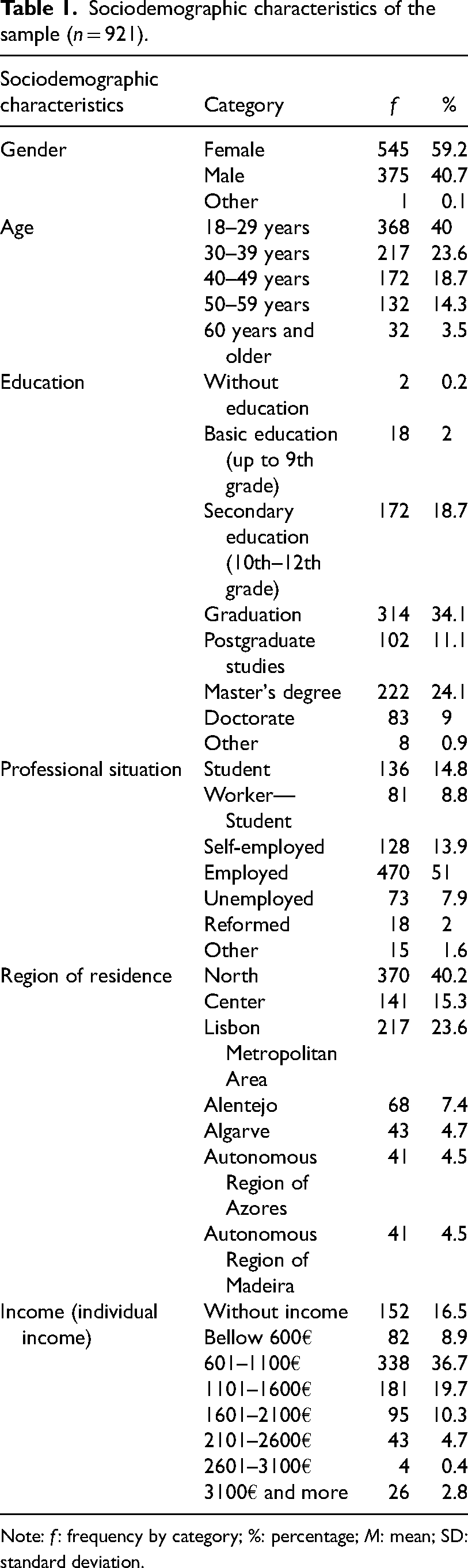
Note: f: frequency by category; %: percentage; M: mean; SD: standard deviation.
Measurement validation
We performed CFA to gauge the properties of the measurement model. The model produced a good fit (X2 = 573.288; p < 0.001; X2/df = 2.955; RMSEA = 0.046; NFI = 0.958; CFI = 0.972; GFI = 0.946; AGFI = 0.929; TLI = 0.966; IFI = 0.972) (Hair et al., 2014; Hu and Bentler, 1999). Convergent validity was evidenced by the fact that all factor loadings were higher than 0.5 (p < 0.5), composite reliability values ranged from 0.865 to 0.934 (i.e. above 0.70) and average variance extracted (AVE) values were higher than 0.6 (AVE > 0.6) (i.e. above 0.5). All constructs further demonstrated acceptable levels of cronbach alpha equal or greater than 0.8 (α ≥ 0.8), suggesting a good level of reliability (Hair et al., 2014) (Table 2). Discriminant validity was evidenced by the fact that individual constructs’ AVE was higher than the squared correlations among the constructs (Fornell and Larcker, 1981) (Table 3).
Measurement properties.
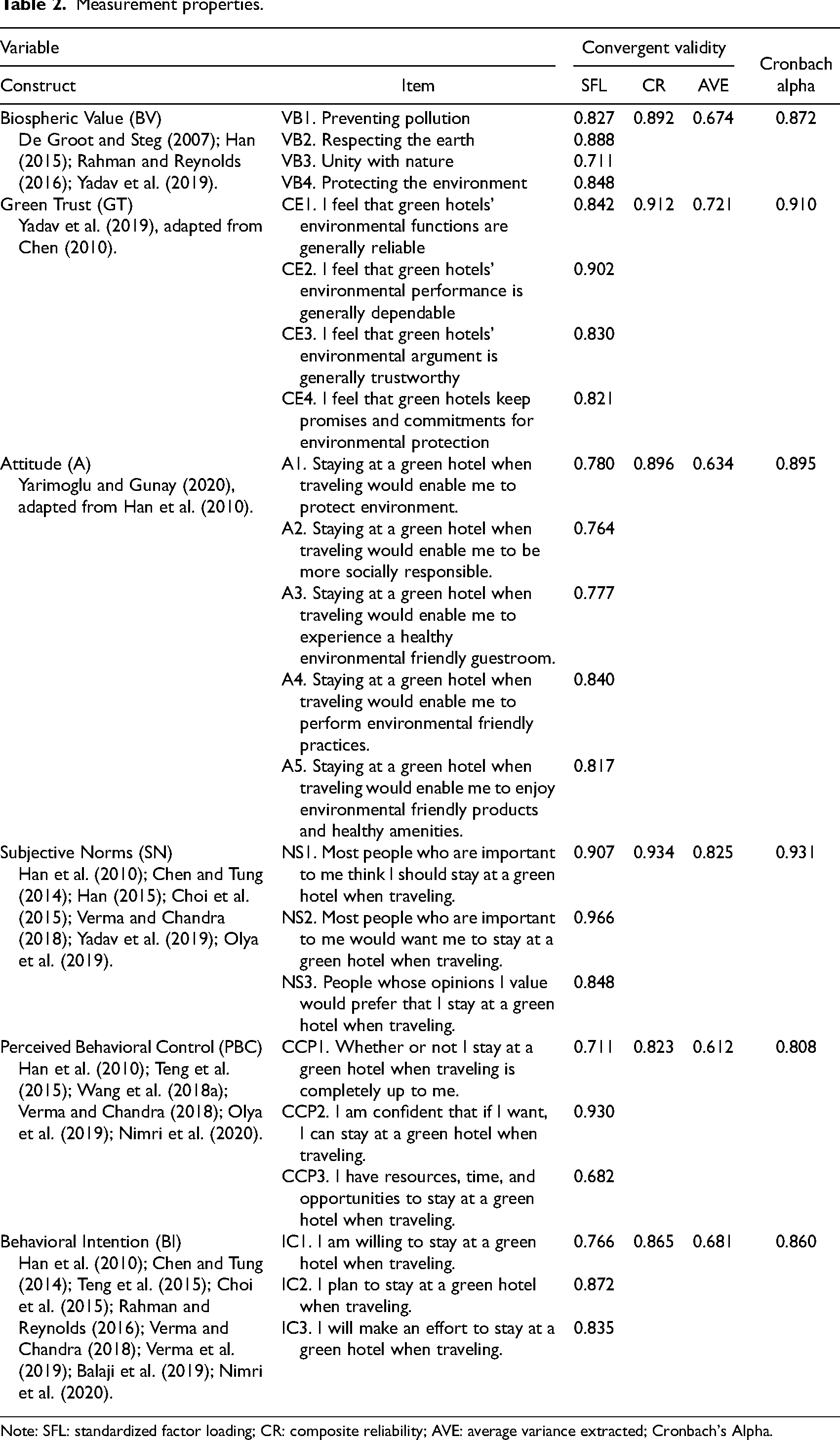
Note: SFL: standardized factor loading; CR: composite reliability; AVE: average variance extracted; Cronbach's Alpha.
Discriminant validity.
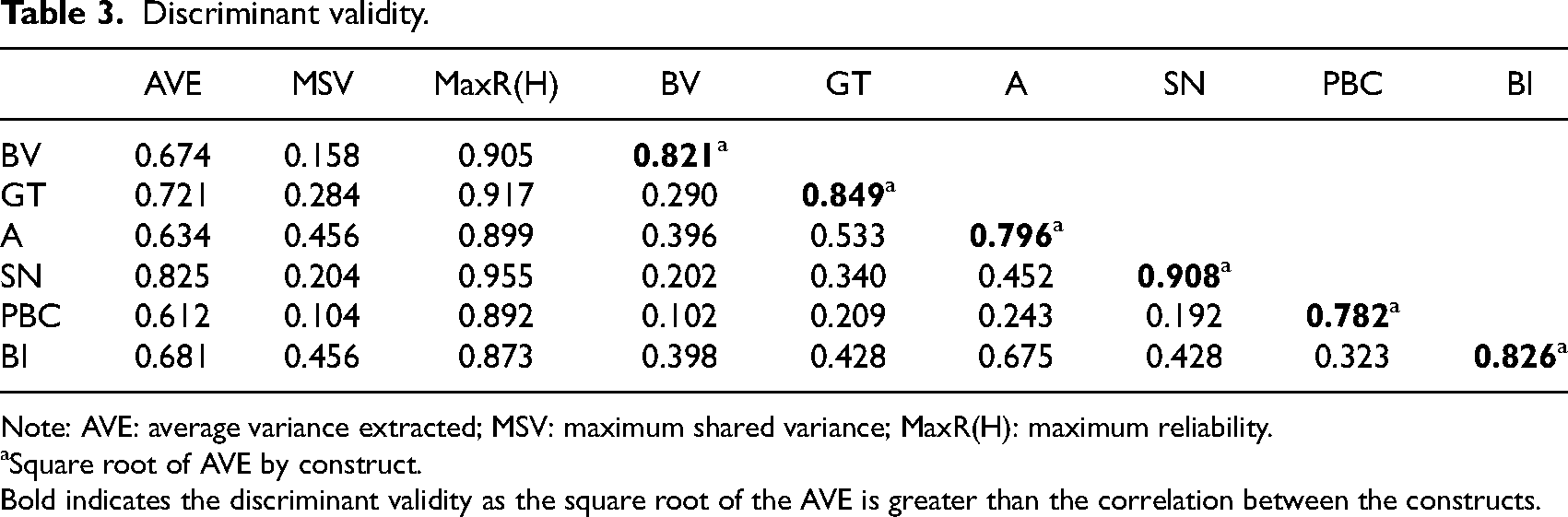
Note: AVE: average variance extracted; MSV: maximum shared variance; MaxR(H): maximum reliability.
Square root of AVE by construct.
Bold indicates the discriminant validity as the square root of the AVE is greater than the correlation between the constructs.
Model and hypothesis testing
The research model showed a good fit with the data (X2 = 672.568; p < 0.001; X2/df = 3.414; RMSEA = 0.051; NFI = 0.951; CFI = 0.965; GFI = 0.936; AGFI = 0.918; TLI = 0.958; IFI = 0.965). The explanatory power of the model was conducted based on the adjusted coefficient of determination (R2). The model explained 42.6% (adjusted R2 = 0.426; p < 0.05) of the variance of the intention to visit green hotels. Table 4 summarizes the results of the hypotheses testing concerning the direct relationships. Findings confirmed the relationships between TPB variables (i.e. attitude, subjective norms, perceived behavioral control, and behavioral intention). As expected, the results showed that attitude (β = 0.506, p < 0.001), subjective norms (β = 0.152, p < 0.001) and perceived behavioral control (β = 163, p < 0.001), are positively and significantly related to consumers’ intention to visit green hotels, supporting H1, H2, and H3.
Hypothesis testing (direct effects).
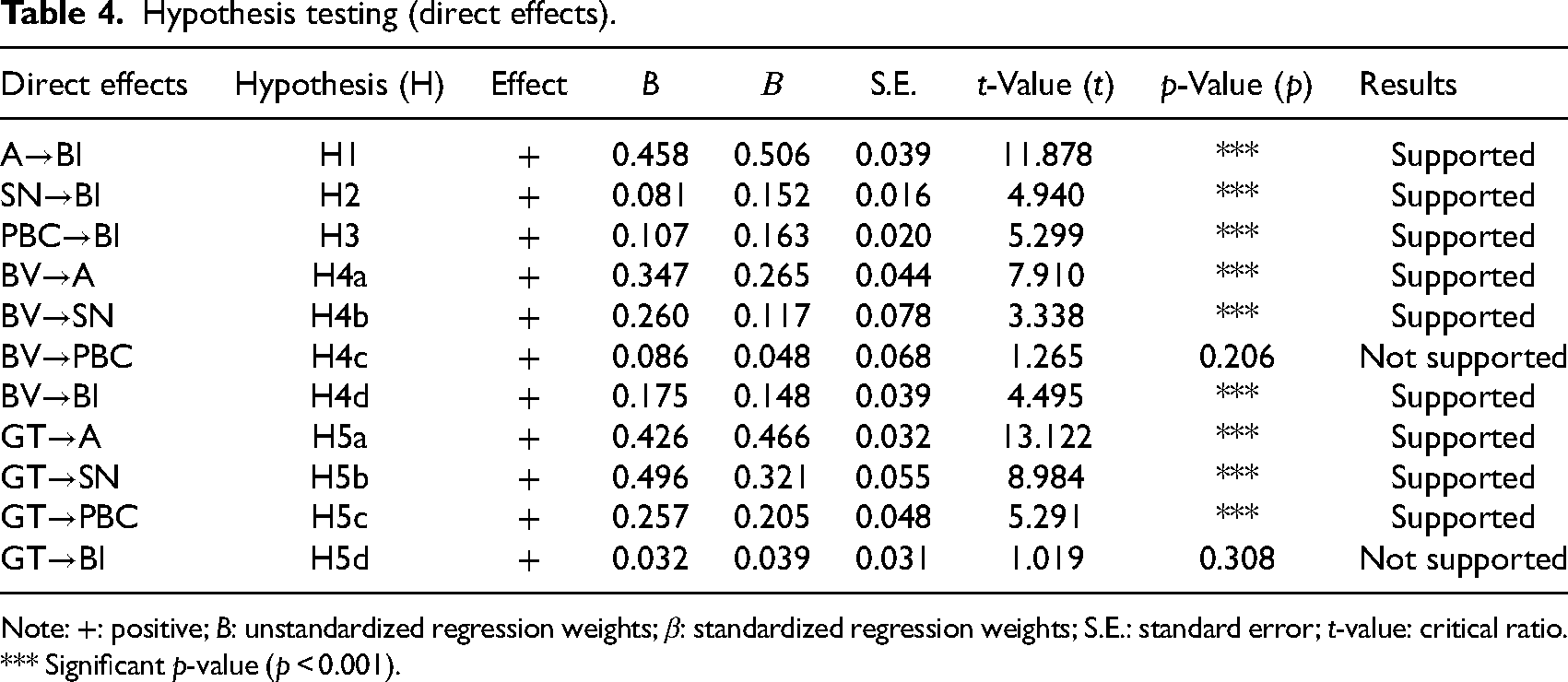
Note: +: positive; B: unstandardized regression weights; β: standardized regression weights; S.E.: standard error; t-value: critical ratio.
*** Significant p-value (p < 0.001).
In what concerns the effects of biospheric value and green trust on TPB variables, findings indicated a significant positive effect of biospheric value on intentions to visit a green hotel (β = 0.148, p < 0.001) (H4d) and a non-significant effect of green trust on intentions to stay in a green hotel (β = 0.039, p > 0.05) (H5d). As proposed, the influence of biospheric value on attitude (β = 0.265, p < 0.001) and on subjective norms (β = 0.117, p < 0.001) was positive and significant (H4a and H4b). However, the impact of biospheric value on perceived behavioral control was not significant (β = 0.048, p > 0.05) (H4c). Finally, the direct impact of green trust on TPB variables revealed a significant positive relationship between green trust and attitude (β = 0.466, p < 0.001), subjective norms (β = 0.321, p < 0.001) and perceived behavioral control (β = 0.205, p < 0.001), confirming H5a, H5b, and H5c.
Differences between groups were conducted using t-tests for independent samples (Hair et al., 2014). The dependent variable of this study—behavioral intention toward eco-hotels—was compared in relation to the group of variables gender, age, preference for green hotels and past experience in eco-hotels. Regarding gender, the results revealed that the difference in means between the female and male groups (0.2678) is statistically significant (t = 4.102; p < 0.001). The average behavioral intention of female participants was significantly higher than the average behavioral intention of male participants. As for age, the results did not show significant differences (t = 0.481; p = 0.631) between the millennials, that is, a generation extremely concerned with environmental issues born between the 1980s and the late 1990s (Wang et al., 2018b) and non-millennial participants. Consumers’ intention to visit a green hotel, on average, differed significantly between participants with a preference for visiting green hotels and those without a preference for these type of hotels (t = −13.199; p < 0.001). This means that consumers who prefer green hotels over other similar non-green hotels (M = 6.1483) have a higher behavioral intention toward green hotels than consumers who have no preference when choosing a hotel (M = 5.3630). In addition, the intention to visit a green hotel, is significantly higher for consumers who have had a past experience in these hotels (M = 5.9619), when compared to those who have never previously stayed in green hotels (M = 5.6573).
Discussion and research implications
This study provides implications in terms of the psychological and contextual factors that affect consumers’ pro-environmental purchase intention. The study evidences the application of TPB in the context of the green hotel industry, indicating that attitude, subjective norms and perceived behavioral control are positive antecedents of intention, consistent with findings from previous studies (e.g. Ajzen, 1991; Chen and Tung, 2014; Han et al., 2010; Verma and Chandra, 2018). Our results contrast with previous studies that did not show a significant influence between subjective norms and behavioral intentions in the context of green hotels (e.g. Choi et al., 2015; Yadav et al., 2019). Thus, consumers’ intention to stay in a green hotel is positively associated with perceived social pressure to visit these hotels in certain contexts. A possible explanation lies in the fact that products and services are consumed not only to satisfy consumers’ own needs, but also as a way of building a social identity and structuring interpersonal interactions (Choi et al., 2015). This result reinforces the idea that Portuguese consumers are influenced by the expectations and pressure of their reference groups to visit green hotels (Ajzen, 1991).
The critical role of perceptions of control in shaping individuals’ intentions is especially relevant. In fact, perceived behavioral control was the second-best predictor of behavioral intentions in relation to green hotels. Consistent with other studies (e.g. Nimri et al., 2020; Ting et al., 2019), consumers who felt confident in their behavioral control over green hotel selection, were more likely to do so than those who lacked trust and opportunities to stay in such hotels. Therefore, the proposed model better predicts the intentions of consumers to visit green hotels.
This study expands the literature by incorporating biospheric value orientation to better understand the formation of behavioral intentions regarding the stay in a green hotel. The research tested relevant variables from the literature, together with the biospheric value. As expected, and confirmed by previous literature in different contexts (e.g. Nguyen et al., 2016; Verma et al., 2019; Yadav et al., 2019), the biospheric value orientation revealed a direct influence on the attitude toward green hotels and on subjective norms. Thus, when a consumer has a higher biospheric value orientation, he will present a more positive attitude toward visiting green hotels and will perceive a greater influence from his reference groups (family, friends, colleagues, etc.). However, the direct impact of biospheric value on perceived behavioral control was not statistically significant, which contradicts previous findings (Yadav et al., 2019). The mediating effect of perceived behavioral control on the relationship between biospheric value and behavioral intentions was also not supported. A possible explanation for these results may be related to the fact that even if an individual has a concern and esteem for issues that affect the environment, this is not strong enough. There may be certain barriers or difficulties, including cost, location and lack of information about green hotels, that prevent individuals from obtaining a perception of control over their behavior (Baker et al., 2014; Nimri et al., 2017).
Findings further produced a non-significant effect between green trust and intentions to visit a green hotel. This result contrasts with findings from what is often evidenced in the literature (Balaji et al., 2019; Choi et al., 2015; Yadav et al., 2019). Aligned with previous studies (e.g. Balaji et al., 2019; Yadav et al., 2019), we found effects of green trust on attitudes, subjective norms, and perceived behavioral control. Thus, green hotels must build consumer credibility based on a genuine commitment to protecting the environment, dispelling accusations of greenwashing, and communicating this message effectively.
Managerial implications
This study improves the current understanding of consumers’ purchasing behaviors in the context of green hotels. Deriving from the investigation, we present practical implications for various stakeholders, including hotel managers, eco-label coordinators, consumers, and marketing professionals. Understanding consumer behavior is essential for managers to maximize financial sustainability. Hotel managers ought to communicate information about their green attributes to consumers to help them understand what a green hotel is and recognize the seriousness of environmental issues and, thus, increase the positive attitudes of consumers. For example, managers may consider developing visible green experiences for guests involving them in green practices, such as waste sorting, controlling water and energy use, and participating in towel reuse programs. Also, they can collect feedback from guests regarding their green experiences and use it to make continuous improvements. As an incentive, green hotels should offer discounts or rewards to guests who opt for green practices. Biospheric value did not have a significant effect on perceived behavioral control. Hence, hotel managers should minimize possible barriers that influence the perceived behavioral control in relation to the visit to green hotels, such as the high price, lack of comfort and luxury and lack of information about the hotel.
Professionals may use our findings to reflect on more effective marketing strategies around green practices to promote environmentally responsible purchasing and increase consumers’ intention to visit green hotels. The group differences highlighted in this study can help marketing professionals to recognize the characteristics of their target segment and, as a result, advertise and promote their green hotels more effectively to the target public. Considering that green trust had a significant indirect impact on intentions through the TPB variables, green hotel professionals should build consumer credibility.
Eco-label coordinators, like Green Key certificate, can use the results of the study to encourage more hotels to join the certification and follow an environmental management. Eco-label coordinators ought to further encourage certified hotels to include more green practices to attend the growing demand and improve the effectiveness of their communication strategies.
Last but not least, collaborative efforts between governmental agencies and green hotels should encourage green practices to enhance the hospitality industry's positive reputation. Policy makers should therefore provide green incentives for both guests, employees and the hotel industry in general. This approach will motivate prospective customers to choose green hotels while encouraging hotel management to adopt green practices.
Limitations and future research direction
This study presents limitations that may be addressed in future research. From an empirical perspective, although we attained a relevant sample size, data focuses on consumers residing in Portugal. Future research may focus on consumers from other cultures and/or carry out multi-cultural comparisons. We used a convenience sampling method. Future studies may consider different contexts and sampling procedures to increase the validity and representativeness of the findings. Furthermore, the study is cross-sectional. Future research ough to consider longitudinal designs in order to observe dynamic changes. Also, a follow-up qualitative research with consumers may help to better understand behaviors and decisions to visit green hotels.
From a research model's perspective, although TPB suggests that intentions lead to actual behaviors (Ajzen, 1991), this relationship was not tested in the proposed conceptual model. Thus, further research is needed to gain a more in-depth understanding of actual consumer behaviors in the context of green hotels and their antecedents. As children influence parents’ purchasing decisions, their role shouldn’t be underestimated (Parker et al., 2022). Therefore, the potential influence of children on parents’ green hotel choice must be investigated. Finally, future studies may test other determinants of behavioral intentions toward green hotels. Examples of such variables are green image (e.g. Yarimoglu and Gunay, 2020), environmentally responsible activities (e.g. Yarimoglu and Gunay, 2020), past experience (e.g. Han, 2020) and willingness to pay more (e.g. Yadav et al., 2019). Possible consequences to consider are actual behavior (Bashir et al., 2019), satisfaction (Wang et al., 2018b) and loyalty (Yarimoglu and Gunay, 2020).
Footnotes
Author's note
Olga Pereira is also affiliated at ESTG, Polytechnic of Porto, Portugal.
Declaration of conflicting interests
The authors declared no potential conflicts of interest with respect to the research, authorship, and/or publication of this article
Funding
The authors received no financial support for the research, authorship, and/or publication of this article. The third author aknowledges FCT, the Portuguese Foundation for Science and Technology (UIDB/03182/2020).
