




Abstract
We aim to map the intellectual structure of destination image (DI) research and its theoretical development in two longitudinal periods: firstly, from 2001 and before the outbreak of Covid-19 and approval of vaccines (2001–2020); and secondly, during Covid-19 (2021–2023). This is the first article to use co-citation analysis that focuses solely on DI, identifying the main clusters, intellectual turning points, and citation burst papers in this field. Studying bibliometrics pre- and during Covid-19 can help to understand the impact of the pandemic on research output and the shift in research focus. This methodology expands tourism science by recognising the intrinsic nature of DI from an evaluative and relational point of view. Co-citation refers to the cited not the citing papers. The results in the first period show: 1) theoretical background on DI associated with branding from Destination Management Organisations (DMO); 2) the components of DI and their relationship with visitor behaviour; 3) how the Internet and User-Generated Content (UGC) have become the main sources to perceive DI. Whereas, in the second period, two main shifts have been identified: 1) the impact of the pandemic on tourism and perceived travel risk; 2) the emergence of a new approach focusing on the engagement of people with the destination through life experiences. The conclusions could help suppliers, DMOs, and policymakers to understand the components of DI before and during the pandemic, as well as provide valuable insights for the tourism industry to adapt to the new normal.
Keywords
Introduction and background
This longitudinal study examines the timeframe encompassing from 2001 to 2023, aiming to comprehend the potential effects and alterations that transpired in the DI (Destination Image) research duration. DI has been an eclectic and disparate area of research for more than 50 years mainly due to its relevance to the tourism sector in general. This field of study emerged the early 1970s, with Hunt (1971) and Gunn (1972) being among the pioneering scholars who have made significant contributions to this area, analysing impressions of people and information sources, respectively. In the 1980s, prominent academic research on DI focused on the cognitive component of image (Russell & Pratt, 1980) and consumer rationality and emotionality (Moutinho, 1987). During the 1990s, various approaches in seminal papers used visitor satisfaction as a conceptual model (Echtner & Ritchie, 1991, 1993), as well as the incorporation of both cognitive and affective processes (Baloglu & McCleary, 1999) for a comprehensive review of the development of DI.
From 1 January 2001 onwards, as the first period context framing our study, through to the early stages of the pandemic up to 31 December 2020 (before the pandemic even though the outbreak was in March 2020), influential academic papers have covered various aspects of DI and shaped the direction of research. The date of 31 December 2020 seems appropriate due to the significant impact of the pandemic on how tourists and potential tourists have perceived tourism DI around the world, and the approval of Covid-19 vaccines. There were two mainstreams of DI research papers: a “scientific stream” contributing with theories and models to tourism knowledge; and a “management stream” reflecting effective techniques to manage DI. Tourism and marketing researchers have shown the positive effects of DI management on tourism results. They found a positive relationship between DI perception and visitor behaviour, such as experience satisfaction, intention to visit, or loyalty (Chen & Tsai, 2007; Gartner, 1994; Prayag et al., 2017). Furthermore, scholars have also analysed the role of DI components in the image perception process (Hallmann et al., 2015; Stylidis et al., 2017; Stylos et al., 2017). DI has become a marketing strategy tool used by Destination Management Organisations (DMO) (Govers et al., 2007; Tasci & Gartner, 2007).
Moreover, scholars are aware of the consolidation of the Internet as a basic information source, transforming the DI field (Hays et al., 2013; Navío-Marco et al., 2018). In this context, User Generated Content (UGC) has become a new challenge for DMO marketing strategies (Reza-Jalilvand et al., 2012; Stepchenkova & Zhan, 2013).
Wang & Chen (2013) analysed articles published between 1955 and 2011 using co-citation analysis. They found that DI was one of four clusters within the field, alongside tourist experience and stakeholder involvement, customer relationship management, and using SEM. Zhang et al. (2015) also conducted a co-citation analysis, examining clusters of papers published from 1900 to 2013 in journals indexed in SCI Expanded and SSCI. They found one cluster related to DI in their topic search for “tourism*”. Ávila-Robinson & Wakabayashi (2018) used a proximity search strategy to find papers published between 2005 and 2016 that mentioned “destination*” at least five words away from any of the marketing and management-related terms. Furthermore, Kislali et al. (2016) conducted a critical review of DI formation, Baptista & Matos (2018) analysed DI from a consumer behaviour perspective, and Matos et al. (2015) carried out a literature review with regard to how both imagery and tourism experiences construct tourism DI.
To fill the information gap in co-citation bibliometric DI literature, this paper also analyses the impact of COVID-19 on research from 1 January 2021 to 7 February 2023 (during the pandemic), and the shifts in scientific publication. The pandemic had progressed, and researchers had access to more data and information about the virus and the impacts on DI. By dividing the analysis into two-time intervals, this study compares the information available and assesses how papers on Destination Image have evolved in the wake of the pandemic.
The main purpose of this paper is to provide an overview of the dynamics and intellectual structure of the DI research field and its applicability to tourism management, which involves defining the research traditions of the scientific domain, as well as the influential research topics and disciplinary composition (Shafique, 2013). Literature reviews contribute to the field by setting the conceptual and theoretical framework of a field of knowledge, indispensable to the advancement of research. While literature review is valuable for understanding the existing DI body of knowledge, it may not directly answer specific questions about the evolution or present state of a field in a visual and quantitative data-driven manner. This is where bibliometric analysis can complement literature review by providing answers to these questions: Which are the current major research fields in DI? Which articles contributed to disseminating this field of research? Which articles have attracted most researchers, becoming trends? When did these trends occur? To answer these questions, we carried out a co-citation bibliometric analysis from an evaluative and relational point of view. This approach helps to identify important shifts in DI papers during the pandemic. The extent of DI resilience during the hard and soft pandemic has undergone significant changes in terms of trust, crisis management, healthcare systems, and solidarity in DI papers (Rasoolimanesh et al., 2021). In times of crisis like the COVID-19 pandemic, when tourism has faced travel restrictions, DI papers have also studied exposure through both mass media and social media (Nadeau et al., 2022). Moreover, the increasing popularity and accessibility of virtual reality have presented an opportunity for new DI papers to leverage the strengths to attract visitors (Griffin et al., 2023).
The theoretical, managerial, and methodological contribution made by this paper to the field entails mapping its intellectual structure (theoretical and management implications of DI), as opposed to classic studies that would just increase the conceptual understanding of their area of research, by identifying the most relevant research, the papers that have contributed most significantly to its circulation, the papers that have especially captured the interest of researchers, and the trends that have occurred, as well as future research proposals. Although there have been some co-citation analyses conducted with regard to wider fields of knowledge that encompass DI (Ávila-Robinson & Wakabayashi, 2018; Wang & Chen, 2013; Zhang et al., 2015), this is the first co-citation paper that focuses solely and entirely on DI. In this sense, it identifies not only the main clusters but also the intellectual turning points, citation burst papers, and shifts in research publication.
The organization of this paper begins with this introduction and background to DI research, then Section 2 explains the methodology used. Section 3 shows and discusses the results obtained before and during Covid-19. Section 4 includes the research agenda on DI prior and amidst Covid-19. The main conclusions, theoretical implications, and managerial recommendations as well as the limitations of the study are presented in Section 5.
Methodology
There are many kinds of citation and bibliometric analysis. We have opted to use co-citation analysis because it is among the most commonly used and extensively validated methods (Zhao & Strotmann, 2015; Zupic & Čater, 2015) and because it recognizes interconnections between papers, identifies networks and also reveals changes in lines of thought and paradigms (Zupic & Čater, 2015). Hence, co-citation analyses are able to map the intellectual structure of a research field, identify trends, detect front-line papers and underscore high-impact discoveries (Zhao & Strotmann, 2015).
Before delving into the details, we conducted a cluster analysis. A cluster analysis is based on researchers’ evaluations of the research content analysed. This is one of the main limitations of bibliometric analysis because it is difficult to differentiate evidence-based findings from those based on researchers’ speculations and heuristics (Zupic & Čater, 2015). To reduce the impact of this limitation and enrich the labelling and description of each cluster, we independently coded the content of the co-cited documents following the work of Vogel et al. (2020). The authors coded the basic elements of each document (publication source, publication year, title, abstract, DOI), parent cluster, and bibliometric results (citation burst and betweenness centrality). The core thematic structure identification is based on the analysts’ knowledge and experience, which is the main limitation of co-citation analyses. We have analyzed the common links between the papers of each cluster to summarise their key aspects and enhance the robustness of the cluster labelling process. Based on this information, each researcher independently came up with a label and description for each cluster and inter-reliability assessment through inductive analysis. Inductive analysis involves deriving general patterns, themes, or categories from specific observations or data. In this case, we examined the data without preconceived labels or descriptions, allowing us to explore and identify emerging patterns or themes within the clusters. By employing inductive analysis, we ensured that the labels and descriptions were grounded in the data itself, enhancing the credibility and objectivity of our findings. In the inter-reliability assessment, we conducted three rounds to reach a consensus on cluster labelling. Initially, consensus has been 53% (9 out of 17 clusters), but it increased to 76% (13 out 17 clusters) after iterative discussions and refinements. The final round aimed to 100% consensus, striving to resolve all discrepancies through comprehensive discussions. As previous research (Cruz-Suárez et al., 2020; Díez-Martín et al., 2023; Savin et al., 2022), we have analysed the common links between the papers of each cluster to distil their key aspects and enhance the robustness of the cluster labelling process. This procedure made it possible to summarise the essence of each research cluster. In the results section of this study, we share a description of our findings during the content analysis.
As far as software is concerned, we have opted to use CiteSpace (Chen et al., 2010), because it has already been applied to analyse the intellectual structure of various business research fields (e.g., Seyedghorba et al., 2016; Torres-Pruñonosa et al., 2020, 2021) and because it identifies intellectual turning points and citation burst papers in order to detect research trends.
Scientific journals included in SSCI and Emerging Sources Citation Index (ESCI) databases were selected for the analysis. We have chosen the SSCI and ESCI that belong to the Web of Science Core Collection, a well-known academic research database. Indeed, the SSCI was established in 1972 as one of several indexes developed within the Discussion Framework. Its main focus has been on co-citation research, particularly for organising “Research Reviews”, which serve as an important component for self-sorting (Saeed et al., 2019). According to Durán et al. (2017), prior to the introduction of the SciVerse Scopus database in November 2004 by Elsevier, Web of Science from the Thomson Reuters Institute of Scientific Information (ISI) was the only bibliographic database capable of gathering data on a large scale and generating statistics utilising bibliometric indicators, making it the primary source of bibliometric data (Archambault et al., 2009). Hence, the SSCI and ESCI are widely used databases for social science research, including tourism science, with a reputation for high-quality indexing. The following Boolean operators were used in titles, abstracts, or keywords (TS): TS = (“destination image”) AND TS = (tourism).
The thematic category parameters and the time frame used for the first period of the study (2001–2020) generated a sample of 1480 papers. The sample search was carried out from 1 January 2021 onwards, after the Covid-19 pandemic was officially declared. 15 articles did not have any references when the search was carried out, therefore, the final sample was 1465 articles containing 51,580 different references that encompass the data sample used for the analysis. These 51,580 cited references of the 1465 citing documents are the intellectual structure of DI research.
The second period (1 January 2021–7 February 2023) yielded 517 papers from 30,523 different references encompassing the total data sample.
Table 1 shows the parameters of both periods selected to run the analysis by means of CiteSpace. We used the broadest option in Web of Science, which includes the title, abstract, and keywords to obtain as comprehensive a source of terms as possible. Even though by means of this option it is possible to obtain a good range of terms to be used for the analysis from the 1465 citing papers in the first period and 517 papers in the second one, CiteSpace allows us to complete and improve on it by also including the terms used in the 51,580 cited references in the first period and 30,523 in the second one, using the option referred to in the programme as “keyword plus (all)”. This procedure ensures a sufficiently broad source of terms that are strongly related to the research field analysed, both in the first and second period.
Parameters for the analysis in the first and second period (*).
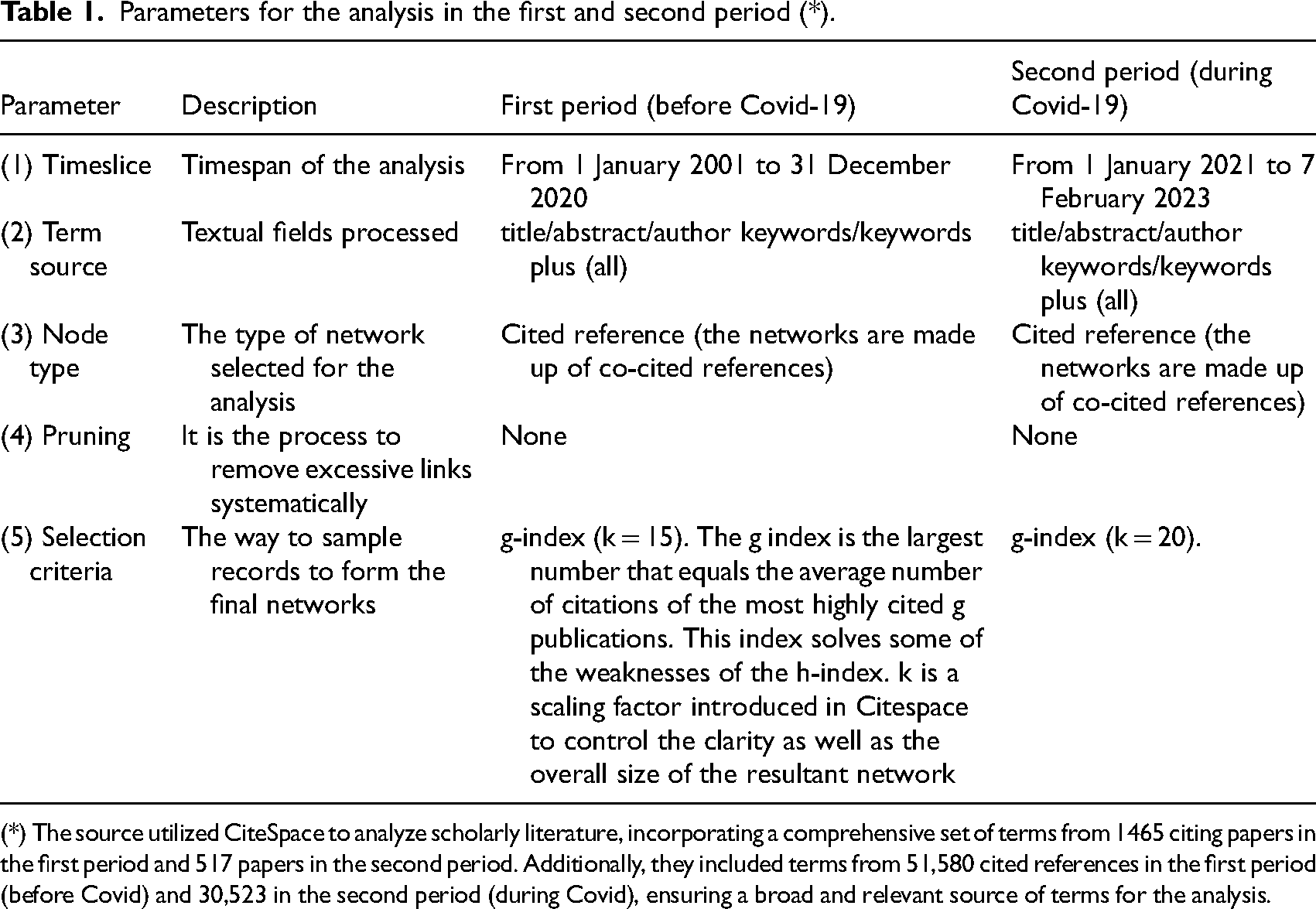
(*) The source utilized CiteSpace to analyze scholarly literature, incorporating a comprehensive set of terms from 1465 citing papers in the first period and 517 papers in the second period. Additionally, they included terms from 51,580 cited references in the first period (before Covid) and 30,523 in the second period (during Covid), ensuring a broad and relevant source of terms for the analysis.
Results and discussion
As a whole, DI research published in SSCI and ESCI has experienced marked growth over the last two decades, observing steady progress since 2005 (Figure 1). There has been a higher number (831) of papers published over the years 2017–2020 than in the previous 16 years put together (2001–2016), where only 649 papers were published.
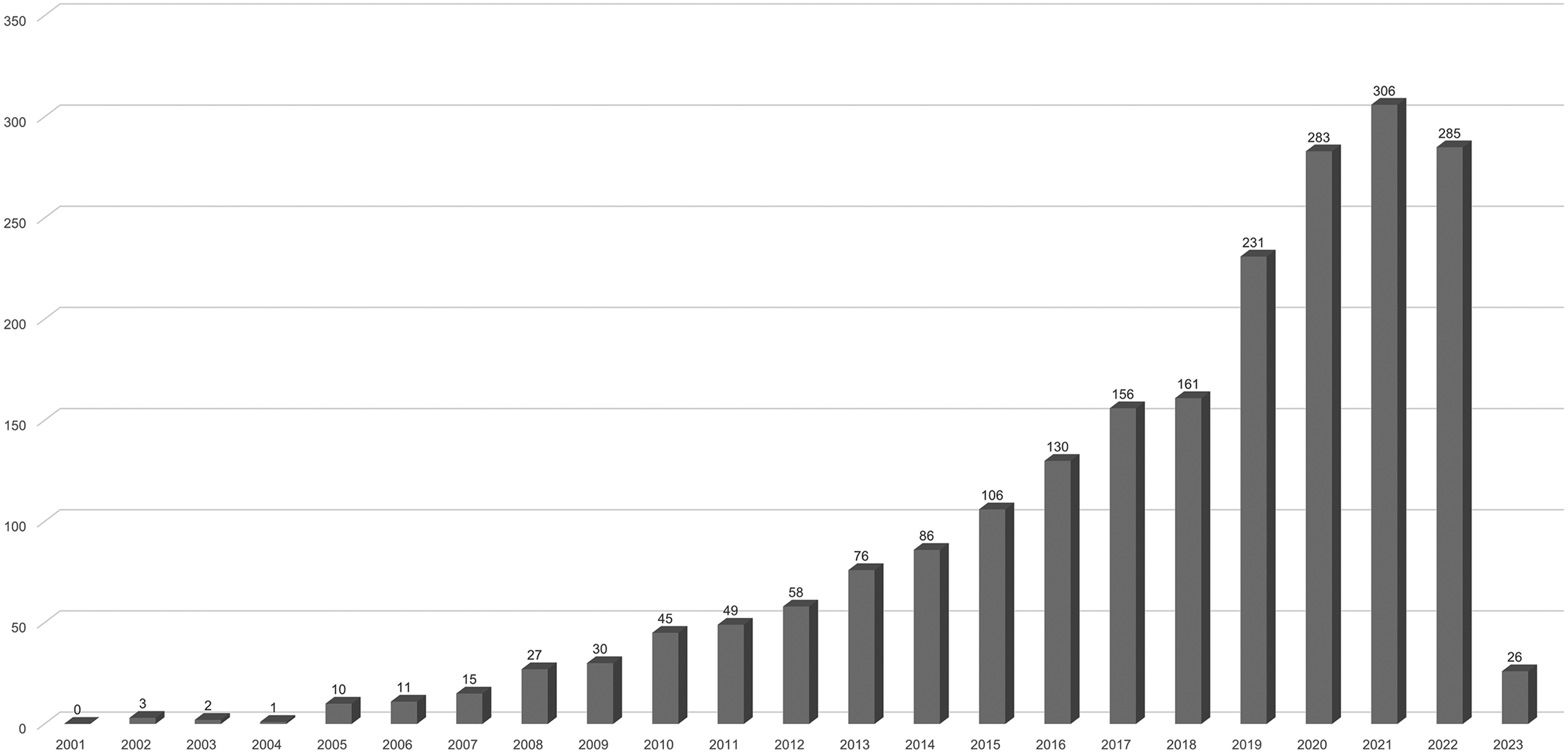
Growth of publications on destination image research (2001–2023). * 2023 only includes the papers published trough to February 7.
As far as the second period of the analysis is concerned, the number of citing papers were 306 in 2021, 285 in 2022 and 26 through to 7 February 2023, reaching higher values than in the first period.
Main research areas in destination image from an evaluative and relational point of view before COVID-19
Table 2 shows the network with the most important areas in DI research in the first period from an evaluative and relational point of view, which is divided into 10 major co-citation clusters. DI describes the combined concepts related to how people perceive and imagine a particular destination. The multifaceted nature of DI, influenced by various factors (physical attributes and intangible aspects), has made it difficult to reach a consensus on its exact definition. This has sparked extensive research to understand different dimensions and implications of DI in tourism and destination studies. Each and every cluster relates to a specific thematic structure or line of research.
Main research areas in destination image in the first period (before COVID-19).
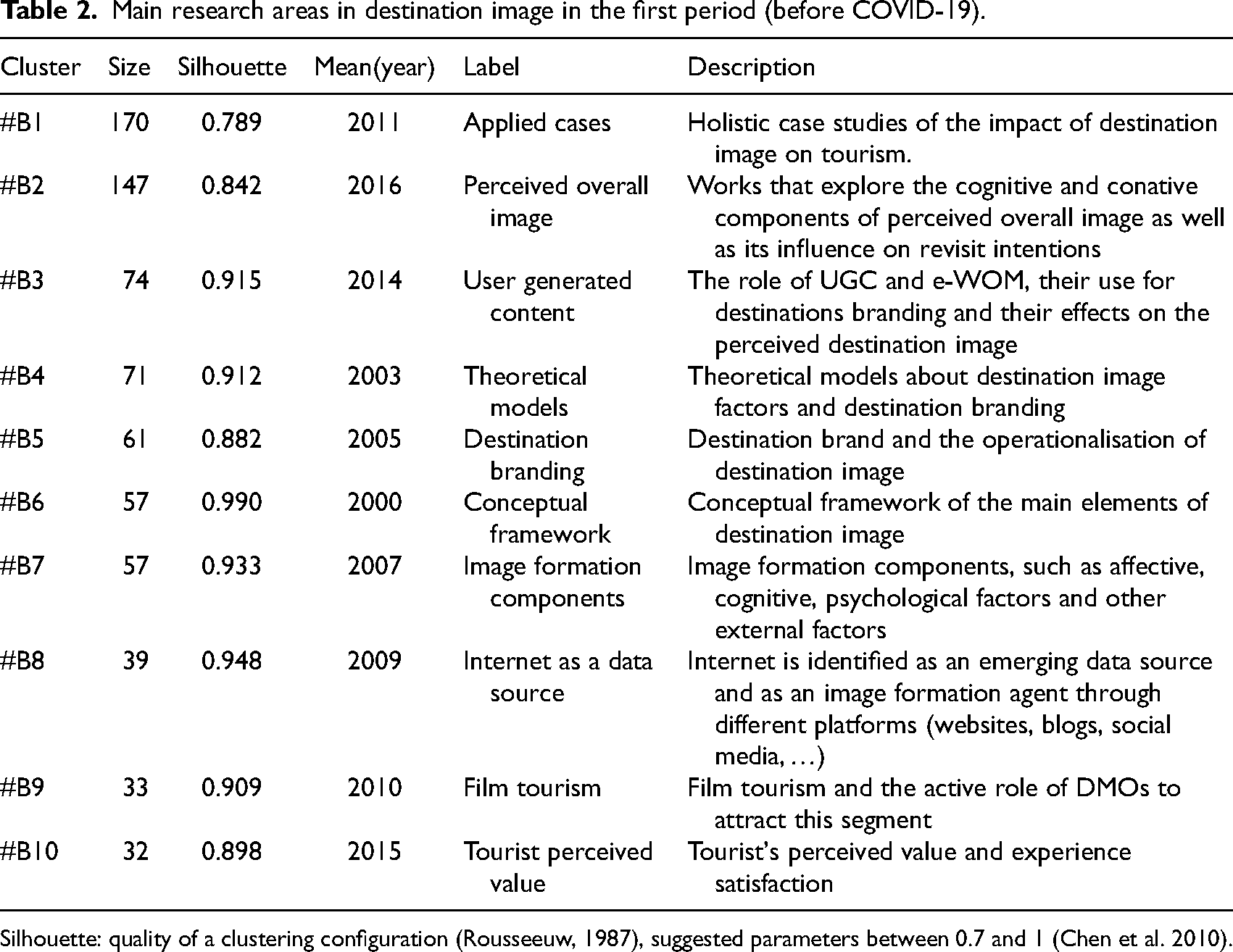
Silhouette: quality of a clustering configuration (Rousseeuw, 1987), suggested parameters between 0.7 and 1 (Chen et al. 2010).
With the purpose of selecting the 10 different clusters, we have used the cluster silhouette value which must be between .7 and 1.0 (Chen et al., 2010). Moreover, the overall network division is assessed by modularity Q, which ranges from 0 to 1 (Newman, 2006). Whereas low values suggest that there are no clear boundaries in the clusters, high values mean that the network is well structured (Chen et al., 2019). Each of the 10 main clusters have silhouette values higher than .70. Therefore, the homogeneity between clusters is good. Furthermore, the value of Modularity Q is .77149. Thus, the network generated is reasonably split into loosely coupled clusters. Figure 2 shows the DI network.
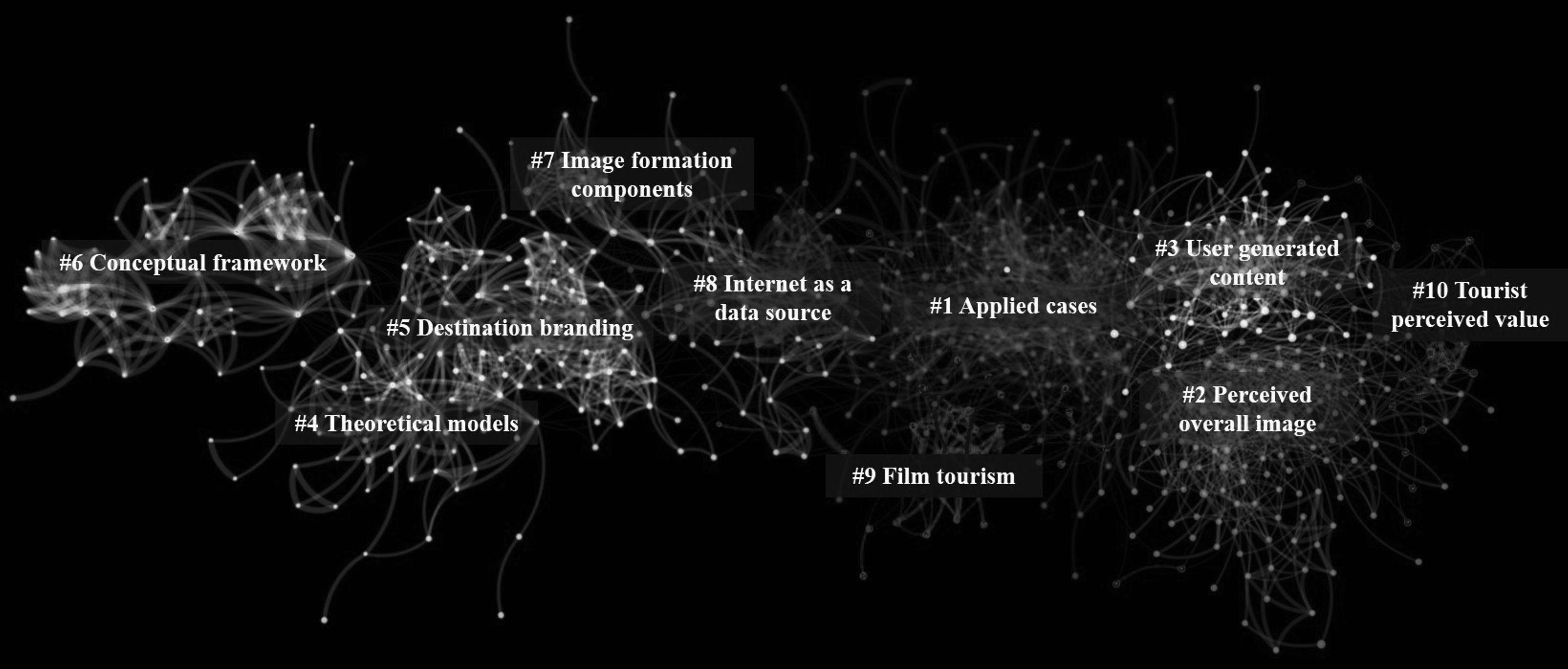
Destination image network in the first period.
To enhance the robustness of the cluster labelling process, we have analysed the common links between the papers within each cluster. By identifying these common links, we can summarize the key aspects of each cluster and improve the accuracy and reliability of the cluster labelling.
Cluster #B1 is the main cluster and deals with
Cluster #B2 includes studies that focus on
Cluster #B3 deals with
Cluster #B4 focuses on
Cluster #B5 deals with
Cluster #B6 deals with the
Cluster #B7 deals with different
Cluster #B8 is about the
Cluster #B9 is about
Cluster #B10 deals with the relationship between
The intellectual turning points in destination image before COVID-19
Dots or nodes connecting different clusters can be considered intellectual turning points (Chen et al., 2009) in relation to DI. Betweenness centrality is used to assess the importance of a node that connects others by quantifying the number of times that a dot acts as a bridge along the length of the shortest path between two different nodes. Thus, nodes that have high values of betweenness centrality can be considered indispensable connectors between two or more dots (Chen et al., 2019). Therefore, betweenness centrality has a correlation with future long-term citations of documents, from a bibliometric standpoint (Shibata et al. 2007).
In line with social network theory, dots that show a betweenness centrality higher than 0.10 can be classed as high betweenness centrality nodes. These nodes are usually found in the connections between clusters (Chen et al., 2019). Eight papers on DI research in which betweenness centrality is equal to or greater than 0.10 are shown in Table 3 and can be regarded as the field's intellectual backbone. Cluster #B1, which contains three papers with betweenness centrality equal to or greater than .10, has more intellectual turning points than any other research area and, therefore, this is the cluster that spreads the most knowledge. Clusters #B3, #B4, #B6, #B7 and #B8 have just one turning point. Finally, no intellectual turning points are found within clusters #B2, #B5, #B9 and #B10.
Intellectual turning point articles in destination image in the first period.
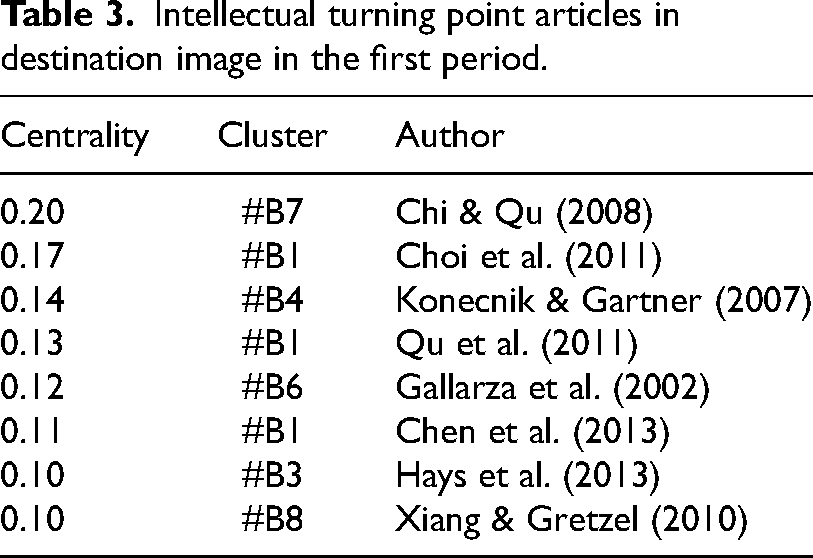
Turning points act like bridges connecting different clusters. Table 3 shows the evolution in DI research where researchers have faced several challenges. In the early stages, represented in cluster #B6, the conceptual framework was developed (Gallarza et al., 2002). This cluster is closely related to cluster #4, which encompasses studies focused on developing a theoretical framework (Konecnik & Gartner, 2007). Both clusters #B6 and #B4 provide the basis for cluster #B5, which focuses on destination branding. These three early clusters provide a good representation of how research on DI was initially carried out from the viewpoint of destination management organisations (DMO). From a chronological perspective, at that point, DI research has focused on analysing the components of DI formation. This is represented in cluster #B7, where we can find the paper with the highest centrality (Chi & Qu, 2008). This paper acts as the backbone of the intellectual structure of DI research, and it connects the early research, based on the conceptual framework, with the theoretical models of research conducted during the second decade of the twenty-first century.
The second stage of research on DI began with papers focused on the rise of the Internet as a data source (Xiang & Gretzel, 2010) and is represented in cluster #8. This new research on DI has generated several applied cases represented in cluster #1. The high centrality in some of them shows their relevance and cross-cutting nature in this research area (Choi et al., 2011; Chen et al., 2013; Qu et al., 2011). In this second stage, research has also produced cases of vertical applications, such as film tourism, represented in cluster #9, and perceived overall image, represented in cluster #B2. The increasing role of social digital platforms and the effects of user-generated content (Hays et al., 2013) are represented in cluster #3. Finally, in cluster #10, we detect how these new approaches have allowed researchers to analyse perceived tourist value, a topic that is strongly related to clusters #B2 and #B3.
The intellectual turning points of this field have been published in these journals: Tourism Management (6), Annals of Tourism Research (1) and Current Issues in Tourism (1).
Main research areas in destination image from an evaluative and relational point of view during COVID-19
Table 4 shows the network with the most important areas in DI research in the second period from an evaluative and relational point of view, which is divided into seven major co-citation clusters.
Main research areas in destination image in the second period (during COVID-19).
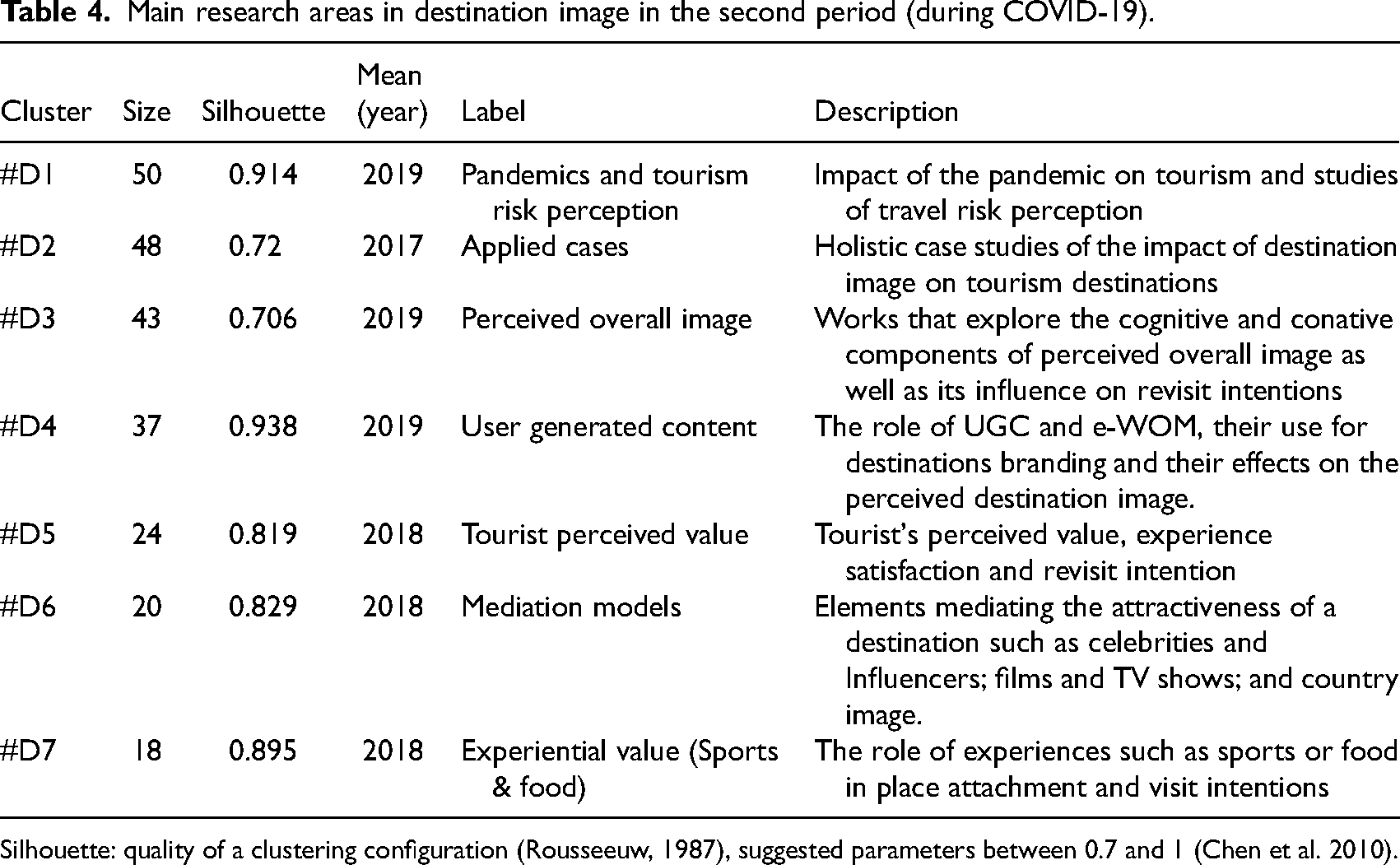
Silhouette: quality of a clustering configuration (Rousseeuw, 1987), suggested parameters between 0.7 and 1 (Chen et al. 2010).
Again, with the purpose of selecting the seven different clusters, we have used cluster silhouette values between .7 and 1.0 (Chen et al., 2010). Moreover, the overall network division is assessed by means of Modularity Q, which ranges from 0 to 1 (Newman, 2006). Whereas low values suggest that there are no clear boundaries in the clusters, high values mean that the network is well structured (Chen et al., 2019). Each of the seven main clusters have silhouette values higher than .70. Therefore, the homogeneity between clusters is good. Furthermore, the value of Modularity Q is .6115. Thus, the produced network is reasonably split into loosely coupled clusters. Figure 3 shows the DI network.
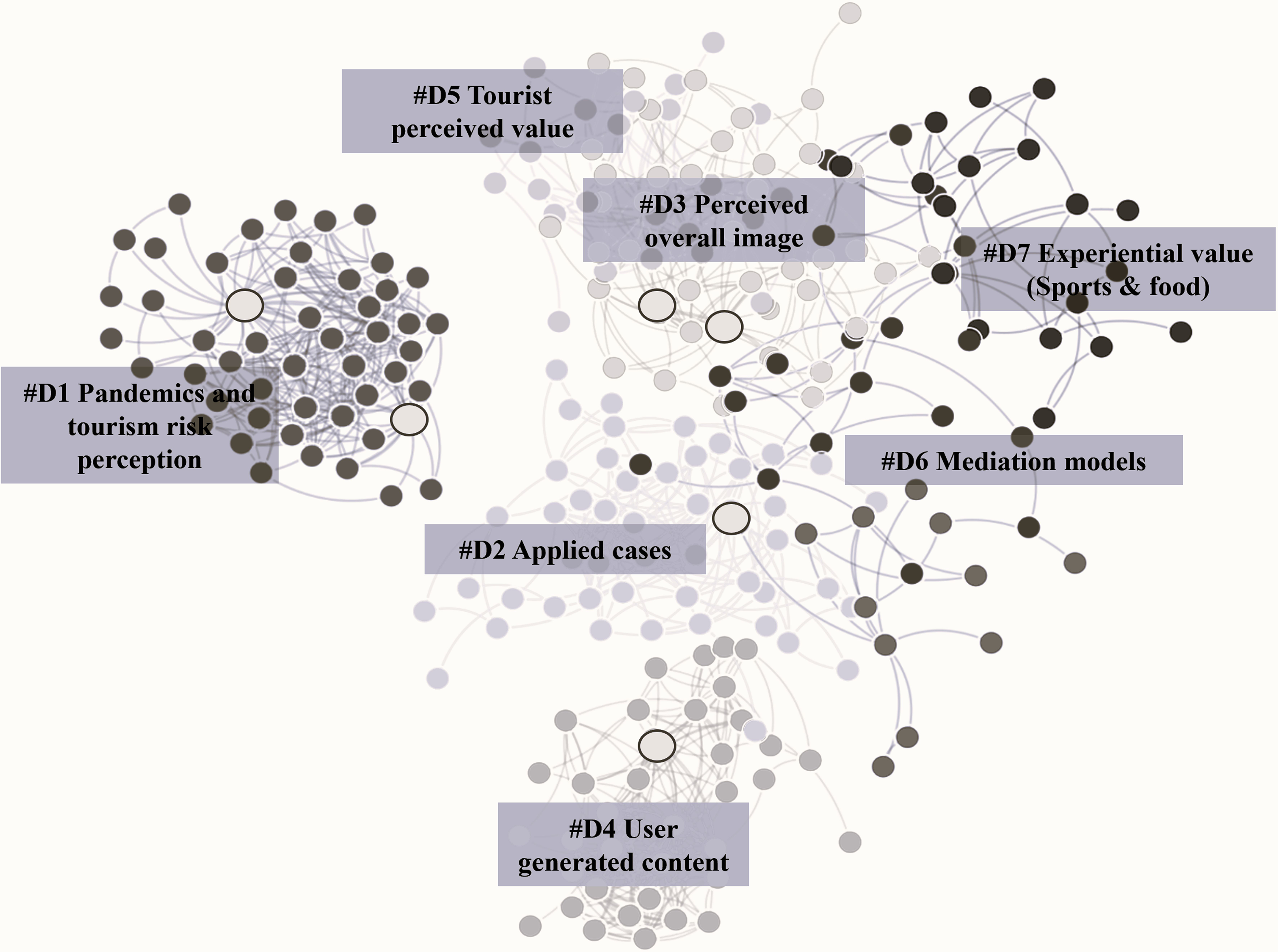
Destination image network in the second period.
As in section 3.1, the primary constraint of co-citation analyses is that the identification of the core thematic structure depends on the expertise and experience of the researchers. To overcome this limitation, we scrutinised the shared links among the papers within each cluster to consolidate their fundamental characteristics and strengthen the accuracy of the cluster labelling procedure.
Cluster #D1 is the main cluster of this second period and contains a new set of papers not detected in the pre-Covid analysis. This cluster deals with pandemics and
Cluster #D2 encompasses Holistic case studies of
Cluster #D3 deals with Perceived overall image and was also detected in pre-pandemic analysis and identified as Cluster #B2. This cluster contains a set of papers that explore
Cluster #D4 was also detected as Cluster #B3 in pre-Covid analysis; it deals with
Cluster #D5 deals with tourist perceived value and was also identified as cluster #B10 in the pre-Covid analysis. During the Covid pandemic, these papers were more focused on
Cluster #D6 deals with
Cluster #D7 deals with
The intellectual turning points in destination image during COVID-19
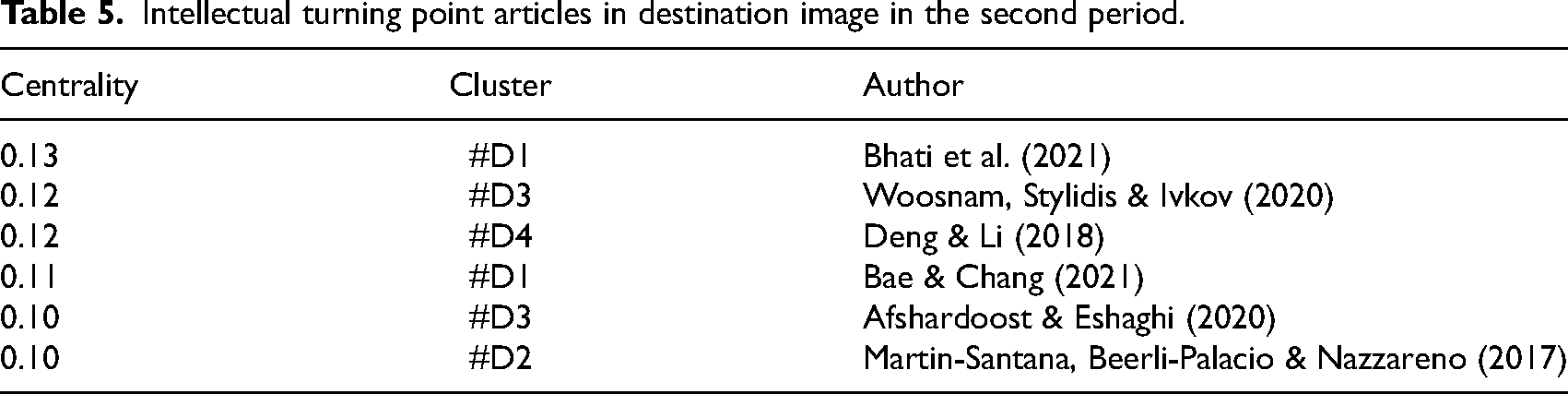
As mentioned in section 3.2, in line with social network theory, dots that show a betweenness centrality higher than 0.10 can be classified as high betweenness centrality nodes. These nodes are usually found in the connections between clusters (Chen et al., 2019). Six papers on DI research, where betweenness centrality is equal to or higher than 0.10, are shown in Table 5 and can be regarded as the field's intellectual backbone. Clusters #D1 and #D3, which encompass two papers with betweenness centrality equal to or higher than .10, have more intellectual turning points than any other research area and, therefore, these are the clusters that spread the most knowledge. Clusters #D4 and #D2 have just one turning point. Finally, no intellectual turning points are found within clusters #D5, #D6, and #D7.
Intellectual turning point articles in destination image in the second period.
Burst detection in destination image research as scientific production
A citation burst algorithm (Kleinberg, 2003) is a suitable indicator to detect the most active research areas during a specific period of time. If there is a considerable increase in the number of citations received by a paper during a specific period of time, a citation burst might be inferred. Clusters with different nodes that show strong citation bursts can be considered active and emergent research areas (Chen et al. 2009).
Appendix A shows the 225 papers that have become citation bursts within the DI field between 2001 and 2023, according to the Kleinberg algorithm (2003). The analysis is right censoring for burst periods in 2023; consequently, for the time being, the end date of the burst periods for these papers cannot be known. All clusters contain citation burst papers.
Although papers from 2001 to 2023 are included in the database, burst papers are dated between 1999 and 2021 because the latter are the cited papers and the former the citing ones. 2013 was the most prolific year in terms of burst papers with 23. No burst papers have been published since 2021. This is paradoxical, because the growth of citing papers has risen significantly from 2018 to 2023 (Figure 1) and the average between the publication date of the burst papers and their moment of maximum interest is 2.37 years.
The detection of burst papers reveals research trends in a given field (Hou et al., 2018). Table 6 shows the 17 trends–classified by cluster–that have occurred in the field of DI. The number of burst papers, the year in which this trend began (Min (year)) and ended (Max (year)), the mean year, the mean strength value, the year when that trend started (Min (begin)) and the year that the trend finished (Max ) are also specified in Table 6.
Burst papers per cluster in the destination image field
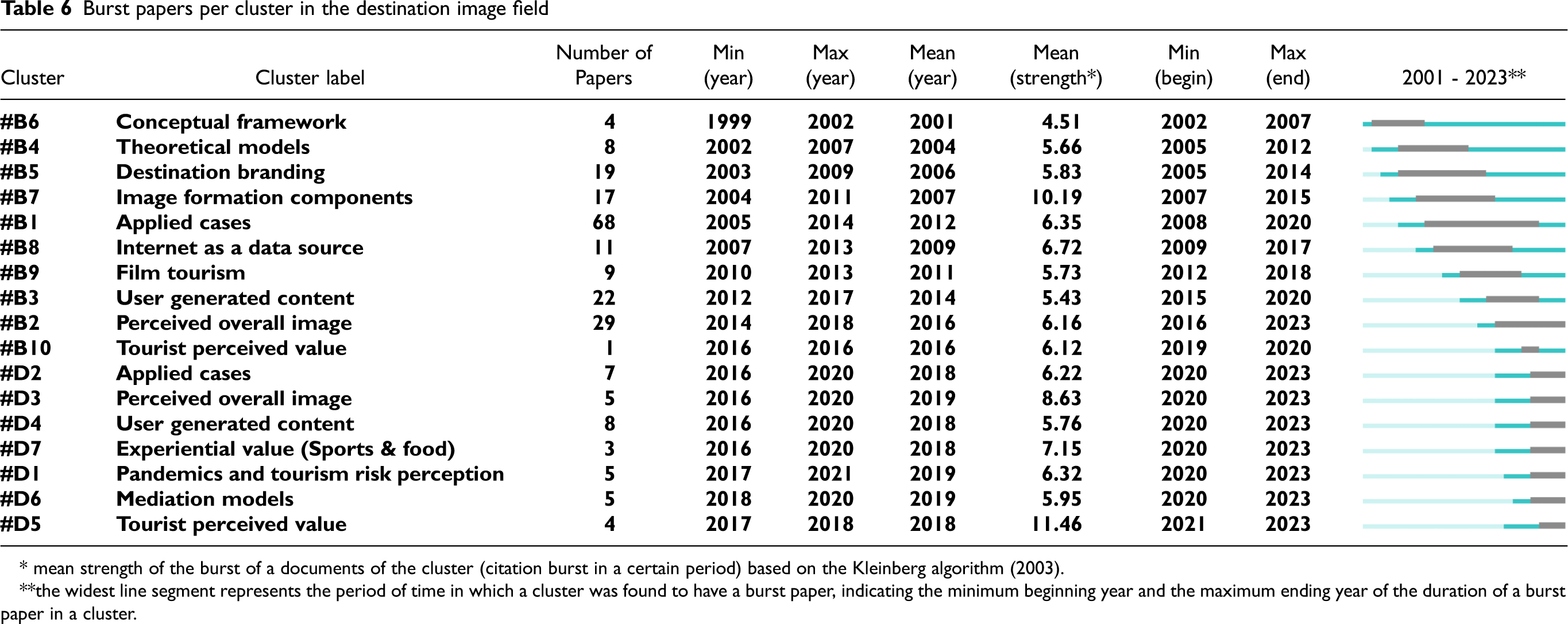
* mean strength of the burst of a documents of the cluster (citation burst in a certain period) based on the Kleinberg algorithm (2003).
**the widest line segment represents the period of time in which a cluster was found to have a burst paper, indicating the minimum beginning year and the maximum ending year of the duration of a burst paper in a cluster.
Early research focused on the definition of a conceptual framework (#B6) and on proposing theoretical models (#B4). In addition, the use of DI as a marketing tool and papers addressing how it has been used for destination branding (#B5) were another early set of works. Thereafter, papers about image formation components (#B7) have complemented previous research, adding more literature about psychological and behavioural implications. For over fifteen years, applied cases (#B1) about these theoretical models have been published, monitoring the evolution of DI analysis. One application is research about film tourism (#B9), demonstrating how the projected image could transform the tourist model of any single destination.
Finally, due to the increasing popularisation of the Internet, papers about the Internet and digital channels and how the new reality should be approached have drawn increasing attention in recent years. Many studies published in the last decade focus on DI creation (#B3) and perception (#B2), taking into account the role of social media and the effects of UGC. This set of papers expanded the literature about DI, adding more case studies and proposing new theoretical models for tourism management in the new digital environment.
Research agenda
Research agenda before COVID-19
As we have seen in the co-citation analysis, in the period 2017–2023, there have been more papers published about DI than in the previous 16 years (2001–2016). We also have seen that over these last few years, digital platforms and user-generated content (UGC) have become a trending topic that, as shown in Table 6, are still generating citation burst papers. Likewise, social media have been widely analysed as user-generated content platforms, and we have seen that they are closely related to perceived overall image and tourist perceived value (Cheung et al., 2021), represented in clusters #B2 and #B3. This could pose the following research propositions to be addressed in a post-pandemic scenario.
The first one is related to the methodologies used. As we can see in cluster #B2, most papers are using structural equations to analyse the relationships between DI components, a very useful methodology to know the relationship between different components. However, due to the central role of UGC and social media as an information source in recent research, further research is required using content analysis and mixed methodologies to understand not just the components but also how they are being projected and perceived. These methodologies are closer to the fields of communication knowledge but, within visual content mediated communication, an interdisciplinary approach could help. Indeed, we have some examples of its utility in cluster #B2 when it comes to analysing topics such as dissonance and image congruency (Marine-Roig & Ferrer-Rosell, 2018). By transforming challenges like dissonance and image congruence into specific research propositions such as methodological gaps, methodological innovations, or interdisciplinary connections, it can benefit future studies conducted by other researchers and refine methodological models that explain the underlying mechanisms and relationships between DI variables.
The second research proposition pertains to the lack of research observed on the rise of visual social media platforms, such as Instagram or Tik-Tok, and on how they could produce a user-mediated phenomenon (Filieri et al., 2021). Some research has started to analyse the effects of user-mediated image on DI (Conti & Lexhagen, 2020; Wijesinghe et al., 2020), but it could also be a strong research topic for a post-Covid agenda in order to understand how it could influence perceived overall image, as well as tourist perceived value and brand engagement (Davcik et al., 2021). By formulating research propositions around the influence of the post-Covid era on perceived DI overall image and brand engagement in the tourism industry, researchers can contribute to both theoretical and practical advancements, providing insights that can inform decision-making, marketing strategies, and the recovery of the tourism sector in the post-pandemic world.
Finally, some recent empirical case studies included in cluster #B1 (Chirisa et al., 2020; Higgins-Desbiolles, 2020; Mohanty et al., 2020) have started to explore the effects of COVID on Tourism. The pandemic topic could be a new cluster in future research. Not only because the impact that DI projected during the COVID-19 crisis could affect the perception of some territories by potential visitors, but also because COVID-19 could be a driver to accelerate virtual experiences to fix temporary restrictions and maintain interest in the destination. Even though the pandemic will eventually subside, the rise of virtual experiences could gain ground as an alternative way to perceive a destination from a distance. In all these cases, DI has a crucial role because, in virtual experiences, this makes up most of the experience. Taking into account that clusters #B2 and #D3, which are related to perceived overall image, and clusters #B1 and #D2, which are composed of applied cases, were still generating citation burst papers in 2020 and 2023, research that analyses how DI components are combined and perceived through virtual scenarios should be considered in a during-Covid scenario.
Research agenda during COVID-19
The Covid-19 outbreak has slightly altered the research agenda. The impact of the pandemic on the tourism industry has also influenced destination image research. As noted in the analysis of publications between the years 2021 and 2023, some clusters, such as #D2, #D3, #D4 and #D5 have continued and increased in size; others, such as #D6 have transformed, and others, such as #D1 and #D7 have even emerged during the three years of the pandemic. This confirms some of the research propositions described in the pre-pandemic research agenda and presents new challenges:
Firstly, the analysis of user generated content (UGC) has become a field of research in relation to destination image. As perceived in the pre-pandemic analysis, interest is growing because of image dissonance and congruency (Lojo et al., 2020; Mak, 2017; Marine-Roig & Ferrer-Rosell, 2018). The coexistence of the image portrayed by users through UGC and the one portrayed by destination management and marketing organisations (DMMO) presents a challenge in the management of physical territories. Furthermore, as also noted in pre-pandemic studies, the growth of visual platforms presents an important research proposition in the analysis of the image portrayed through them. Some papers, such as Deng & Li (2018), have begun to analyse large volumes of images, but progress in analytical methodologies and artificial intelligence (AI) will be a research proposition in the coming years.
A second research proposition identified in the pre-Covid analysis is the emergence of new platforms and measurement formats between destination image and visitors. In this case, we have seen how film tourism, a consolidated segment detected in cluster #B9, has evolved in cluster #D6. Celebrities, as mediators of a destination's image, still play a relevant role in this area of research, but the consolidation of new media personalities highlights the need to examine in depth the role of these new celebrities as mediators of a territory's image.
A third research proposition is the growing body of research on destination experiences as mediators of destination image (Brown et al., 2016; Jeong et al., 2019; Jeong & Kim, 2020; Song et al., 2017; Zhang et al., 2019). In a period of severe travel restrictions, studies that focus on the experiential value of destination experiences have gained prominence. In this regard, one of the challenges of the coming years will be to determine whether experiences such as sporting, culinary or festival events gain relevance as mediators of a destination's image.
Finally, when comparing the two periods – pre-Covid (2001–2020) and during the Covid pandemic (2021–2023) –research focused on image destination analysis is confirmed as a mature and solid field. Some papers detected in cluster #B1 of the pre-Covid analysis (Chirisa et al., 2020; Higgins-Desbiolles, 2020; Mohanty et al., 2020) have grown in volume and become a new cluster, #D1. This is the largest set of papers over the 2021–2023 period and is focused on the impact of Covid on tourism destination image. However, as shown in Figure 3, it has become a very large field in a short space of time but with little connection to the rest of the research topics in this area. This may indicate that, once the pandemic is over, such papers will return to a complementary role in image destination research.
The robustness of the concept of destination image as a field of tourism research can also be demonstrated by the resilience of some clusters to the impact of the Covid pandemic. Some of the clusters detected in the pre-Covid analysis tend to merge more and more. This may imply that studies focused on the components of destination image, perceived image, and the impact they have on residents or potential visitors make up a core of well-established research with numerous well-documented cases.
In terms of the clusters that emerged during the pandemic, all of them are still burst in 2023 (see Table 6), which shows that Covid-19 has been a trend in destination image research during the pandemic. Therefore, we believe that once the pandemic is over (given that the World Health Organization declared the end of the Covid-19 pandemic on 5 May 2023), the research will continue evolving as it was before the pandemic.
Conclusions, theoretical implications, and managerial recommendations
Conclusions, theoretical implications, and managerial recommendations before COVID-19 (first period)
We have used a co-citation bibliometric analysis to map the intellectual structure of the DI field in the first period. No previous study had examined DI from this perspective either in tourism science (body of knowledge) or tourism studies
The results are rigorous from a quantitative point of view and contribute in the following ways to the further development of this area of knowledge and its application to tourism management from an evaluative and relational point of view. This approach can be considered paradigmatic in the fundamentals of tourism because it allows us to analyse the complex interacting elements of DI as a set of units between which there is an established relationship.
In comparison with the paper by Ávila-Robinson & Wakabayashi (2018) that focuses on destination management and marketing (DMM) research, DI was present in some parts of the authors’ analysis but was not its main topic. Ávila-Robinson & Wakabayashi (2018) explored DI related to destination perception, destination identity, and destination branding, but the perspective of the paper was focused on destination management. In this article, these papers are also included in clusters about Destination branding (#B5), Image formation components (#B7) and some applied cases (#B1). Additionally, the perspective of our analysis focuses on destination image and all its applications beyond a management and marketing perspective. Furthermore, Ávila-Robinson & Wakabayashi (2018) explored the literature published from 2005 to 2016 and, as we argued, many new papers about image destination have been published in recent years. Topics related to the role of the Internet, user generated content and Electronic Word of Mouth (e-WOM) have emerged in recent years, necessitating an amplified analysis of DI in all its dimensions.
Only one pre-pandemic trend is still active in 2023, along with all the during-pandemic clusters, and could be relevant to any worldwide destination: #B2 about perceived overall image. Since 2015, papers about UGC (#B2) have attracted attention within academia. The growth of the main social media platforms and the adoption of these tools by DMO and tourists has sparked a number of research papers that are now current trends. Today it is crucial to follow up e-WOM through social media, as it gives credibility in terms of a “safe destination” (Antolín-Prieto et al., 2021). Likewise, papers that examined perceived overall image (#D3) taking into account the major components of DI and the main aspects of perception, are already trends. Many papers have used Structural Equation Modelling (SEM) to analyse the strength between the different components.
Taking into account the current situation, it is impossible to ignore that this is an exceptional time for research on the tourism industry due to the worldwide health crisis. Nowadays, the post-pandemic economy is growing and accelerating (Liu-Lastres and Wen, 2022) but whether this recovery will be U-shaped, V-shaped, K-shaped, or L-shaped is still undecided. Nonetheless, given that the outbreak of the Covid-19 pandemic occurred three years ago, co-citation analysis has not yet detected a cluster that deals with this topic, although the pandemic has particularly drawn the attention of scholars such as Prof. Gössling from Linnaeus University (Sweden). Take the example of Gössling et al., (2021), whose paper is included in cluster #B2 but which has been cited 217 times since its publication (13 October 2020; early access: April 2020). This paper is the most cited among the 239 published by the Journal of Sustainable Tourism – a journal ranked in the first quartile according to the Journal Citation Reports (JCR)–, whereas the second most cited paper had only 11 citations. For the time being, though, we do not know if this paper will generate a new cluster dealing with Covid-19 and tourism.
Scientific papers provide useful insights and recommendations for the tourism industry's DI. Technology, such as data analytics and social media, can enhance destination management, and sustainable tourism practices are crucial.
Conclusions, theoretical implications, and managerial recommendations during COVID-19 (second period)
In this second period during the pandemic, a co-citation bibliometric analysis to map the intellectual structure of the DI field has also been applied. Overall, these academic papers and articles suggest
Based on Appendix A, we have selected all burst papers ending in 2023 and distilled key insights to shape well-designed research agenda. In the post-COVID landscape, prioritizing resilient and sustainable tourism models demands thorough research, recognizing that existing theories can often explain many effects, as well as building crisis framework that emphasize factors like consumer perception, preparedness, and management outcomes (Gössling et al., 2021; Zenker & Kock, 2020; Novelli et al., 2018). The upcoming research agenda in applied studies delves into DI's intricate cognitive dimensions and evolving dynamics in the digital age, highlighting its significant impact on tourist behaviours and the crucial need for destination stakeholders to adapt strategies, offering valuable insights for practitioners in image construction (Akgün et al., 2020; Garay, 2019; Souiden et al., 2017). Research roadmap for the coming years underscores the intricate and multifaceted nature of perceived DI and its substantial influence on tourist behaviour, offering valuable insights for destination management and marketing, guiding strategies for improving tourism outcomes (Afshardoost & Eshaghi, 2020; Huete-Alcocer & Lopez, 2019; Woosnam et al., 2020). In the coming years, research will focus on understanding tourism DI, including user-generated content, and its implications for the tourism industry and destination management (Lojo et al., 2020). Research initiatives that emphasize the importance of understanding cross-cultural interactions and skilfully managing the perceived value of destinations will play a pivotal role in analysing tourist satisfaction and nurturing long-term loyalty within the broader tourism industry (Chen & Rahman, 2018; Kim, 2018; Zhang et al., 2018a). Future research utilizing mediation models will advance our comprehension of tourism-related phenomena by dissecting complex relationships among factors such as country image, DI, sustainability, celebrity involvement, and place attachment (Chen, 2018; Lee & Xue, 2020; Zhang et al., 2018b). Research vision for the years ahead provides a foundation for DI studies by incorporating experiential value demonstrating the importance of factors like quality, value, satisfaction, and loyalty in the context of sporting events and gastronomic tourism (Jeong & Kim, 2020). This collective research underscores the significance of adaptive strategies, emotional connections, cross-cultural interactions, mediation models, and nuanced experiential value as cornerstones of the future DI research agenda.
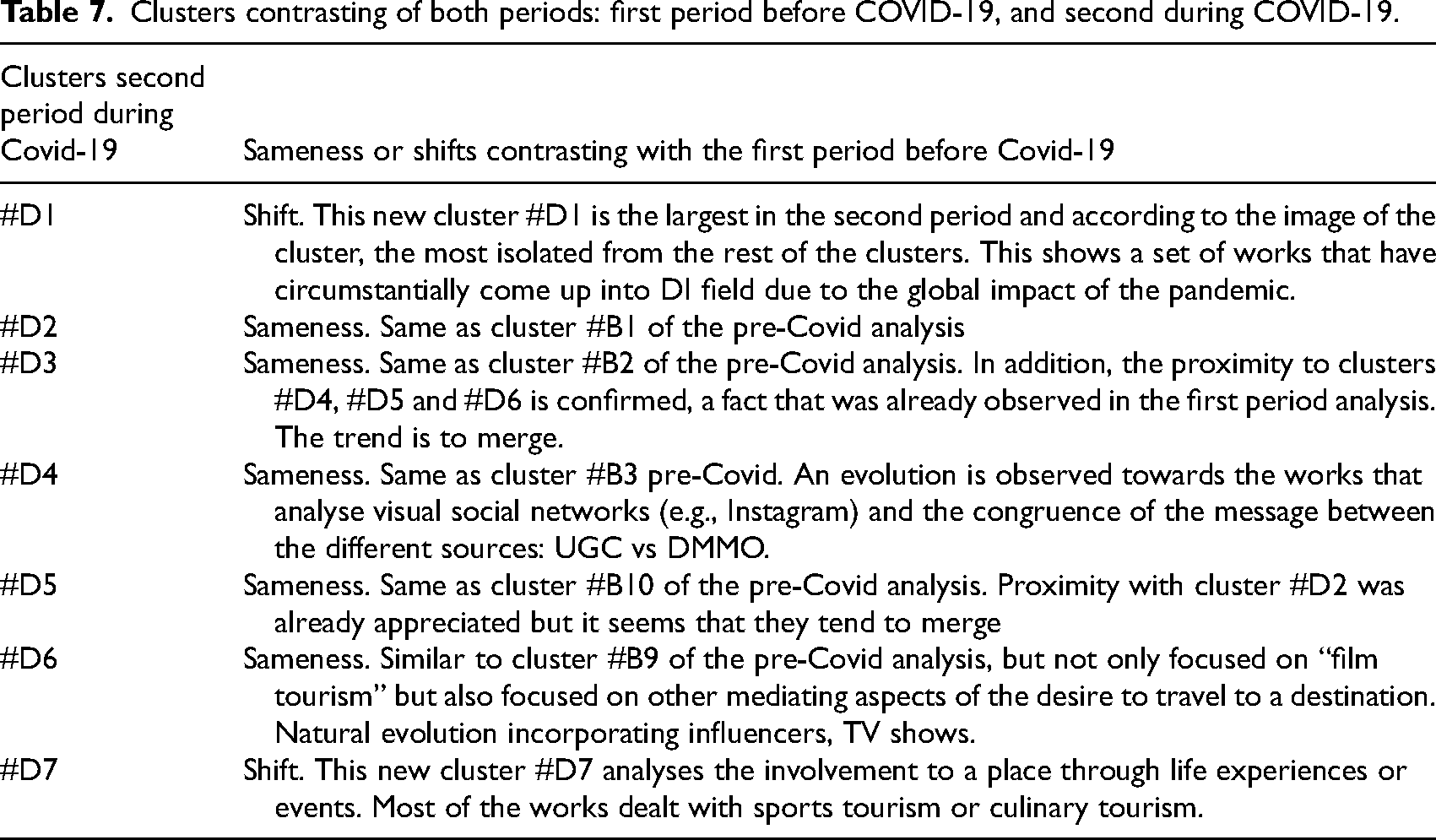
All these studies recommend that destination marketers and policymakers take action to counter the negative effects of the pandemic on tourism and improve DI. This involves promoting safety and hygiene, offering new tourism products, using effective communication strategies, and incorporating UGC and e-WOM into marketing plans. Understanding perception factors can also help businesses and marketers cater to the needs and expectations of visitors, increasing repeat business and tourist loyalty. By contrasting the first period and second period clusters (Figure 2 and Figure 3), the following table shows the sameness and shifts for both analyses.
Clusters contrasting of both periods: first period before COVID-19, and second during COVID-19.
Limitations of this research
While it is important to acknowledge that our study relies solely on databases included in Web of Science–SSCI and ESCI, it is worth noting that these databases are widely recognized and utilized in social sciences bibliometric analyses. While this limitation narrows the scope of our data sources, the robustness of our findings remains evident. By focusing on these well-established databases, our research benefits from their comprehensive coverage of influential scholarly publications in the field. Consequently, the insights gained from our study can serve as a valuable resource for improving DI management within the context of social sciences research.
Moreover, results and visualizations provided by the CiteSpace analysis of our research provide an accurate understanding of the clusters and their contents. The software employs bibliometric techniques to identify co-citation or co-occurrence patterns in DI literature. However, these patterns may not consistently align with authors’ definitions or established frameworks. Varied viewpoints can lead to diverse interpretations, potentially causing disparities between authors’ delineations and CiteSpace's pattern generation from impartial bibliometric data. This context suggests possible overlaps or interconnectedness among clusters (#B2, #B6, and #B7), reflecting the inherent variability in information perception and categorization within academia. In particular, to address
Supplemental Material
sj-docx-1-jvm-10.1177_13567667231205065 - Supplemental material for The intellectual structure of destination image research in tourism (2001–2023): Background, pre-pandemic overview, shifts during COVID-19 and implications for the future
Supplemental material, sj-docx-1-jvm-10.1177_13567667231205065 for The intellectual structure of destination image research in tourism (2001–2023): Background, pre-pandemic overview, shifts during COVID-19 and implications for the future by Jose Torres-Pruñonosa, Alex Araujo Batlle, Javier De Esteban Curiel and Francisco Díez-Martín in Journal of Vacation Marketing
Footnotes
Declaration of conflicting interests
The authors declared no potential conflicts of interest with respect to the research, authorship, and/or publication of this article.
Funding
The authors disclosed receipt of the following financial support for the research, authorship, and/or publication of this article: This work was supported by the Universidad Internacional de La Rioja, Fundació Tecnocampus Mataró-Maresme, Universidad Rey Juan Carlos,

Supplemental material
Supplemental material for this article is available online.
References
Supplementary Material
Please find the following supplemental material available below.
For Open Access articles published under a Creative Commons License, all supplemental material carries the same license as the article it is associated with.
For non-Open Access articles published, all supplemental material carries a non-exclusive license, and permission requests for re-use of supplemental material or any part of supplemental material shall be sent directly to the copyright owner as specified in the copyright notice associated with the article.
