




Abstract
Increases in dog guardianship and the demand for dog-friendly travel services present an opportunity for tourism providers, but this market can still be undervalued or taken for granted. A better understanding of the social behavior and experiences of traveling with dogs is required to discern what impacts guardians’ behavioral tendencies to travel with their dogs. Built on past literature and the reflective-impulsive model (RIM) of social behavior, a conceptual model was developed based on four social representations/perceptions (human–dog symbiotic relationship, dog well-being beliefs, information acquisition, and perceived risks) that influence guardians’ motivational orientation (intrinsic motivation) and behavioral tendencies (intention and behavioral schema) to travel with their dogs. A mixed methods design, with an online survey (N = 611) to test the model using partial least squares structural equation modeling (PLS-SEM) and semi-structured interviews (N = 34), was used to develop a better understanding of the social representations and experiences of guardians traveling with their dogs. Results from the quantitative analysis show that dog well-being beliefs had the strongest positive impact, while both dog well-being beliefs and information acquisition impacted motivation and behavioral tendencies. Perceived risks had a negative effect only on behavioral schema, while the human–dog symbiotic relationship required intrinsic motivation to drive behavioral patterns. Qualitative findings highlight the lived experiences of those traveling with their dogs, emphasizing that human and dog well-being and enjoyment are important to guardians, while issues persist with guardians finding adequate dog-friendly travel information and concerns regarding risks remain. Theoretical and managerial implications are provided.
Keywords
Introduction
Dog guardians 1 are a profitable, but still at times undervalued or taken for granted, market for tourism providers. In the UK, 29% of adults have at least one dog in their home, with 4.1 million dogs having been acquired since March 2020, bringing the UK dog population to roughly 11 million in 2023 (PDSA, 2023). The increased number of dogs and the strength of guardians’ attachment to their dogs are reflected in the increased desires and demands of guardians for options to travel with their dogs, including demands for services that exceed the mere tolerance of dogs in vacation spaces, which will lead to growth in the global market for travel with dogs (Williams, 2021). In fact, previous studies in the UK have indicated that the majority of people with dogs plan their breaks around their dogs (67%) and enjoy their vacations more when they can travel with their dogs (56%) (Statista, 2020). The global companion animal services market, which includes expenditures for travel with dogs, was valued at 24.9 billion USD in 2022 and is projected to grow to 50.1 billion USD by 2030 (Grand View Research, 2022). To stay competitive in this lucrative market segment, it is vital that tourism providers consider improving and expanding their dog-friendly services, which are designed and targeted specifically for this market and utilize communication channels catering to this segment.
Previous research has noted that traveling with dogs has mental and physical benefits, adds to enjoyment, and improves the dogs’ well-being and happiness (Dotson et al., 2010; Kirillova et al., 2015; Ying et al., 2021). On the other hand, some guardians choose to travel with their dogs to avoid feelings of guilt at leaving their dogs behind or to avoid expensive dog-sitting or kennel fees. However, taking dogs on vacation can be complicated due to restrictions, multiple logistical decisions, and additional costs (Mintel, 2020). For many guardians, their dogs play such an important role in their lives that travel plans are altered/compromised to facilitate the vacation (Carr and Cohen, 2009). Dog guardians offer considerable potential for destinations and tourism providers (Dotson et al., 2010; Kirillova et al., 2015), however, few studies have examined what influences the motivation and behavioral tendencies to travel with dogs. Furthermore, the increase in search demand and additional revenue potential from guardians wishing to travel with their dogs is still sometimes overlooked or undervalued by tourism providers despite the growth and opportunities in this segment (Apse, 2022; Hotelchamp, 2023).
Social behavior, such as participating in travel with dogs, is a result of the mental processing of various perceptions of cues/stimuli (Strack and Deutsch, 2014). The reflective-impulsive model (RIM), a dual-process theory related to behavior, considers individual differences in the perception of cues/stimuli used in mental processing, impacting motivation orientations and behavioral tendencies (Strack and Deutsch, 2004). RIM is also unique in that it considers motivational orientation to be a catalyst for behavior (Strack and Deutsch, 2004) and that the “execution of a particular behavior may be facilitated by a given motivational orientation” (Deutsch and Strack, 2006: 267) while also incorporating intention to bridge temporal gaps between decision and actual behavior (Gollwitzer, 1999; Strack and Deutsch, 2004). An examination of the individual perceptions that impact the motivational orientation (i.e. approach behavior of intrinsic motivation driven by interest in the activity) to travel with dogs will allow for an understanding of what drives guardians’ behavioral schema related to traveling with their dogs, which will ultimately improve understanding and the prediction of this social behavior (De Neys, 2021).
A mixed methods design, comprised of two studies, is adopted, consisting of both an online survey and semi-structured interviews with people who had traveled with their dogs on a vacation in the past five years in the UK. An online survey was used to empirically test a conceptual model based on the existing literature, while semi-structured interviews were conducted to gain a better understanding of the social representations and experiences of guardians traveling with their dogs. The contributions of this research include an in-depth examination of what impacts dog guardians’ behavioral tendencies of traveling with their dogs; testing the theoretical linkage between intrinsic motivation, intention, and behavioral schema in leisure participation with dogs, in this case, in the context of tourism rather than dog walking; and a novel, empirically tested model for predicting guardians’ behavioral tendencies related to travel with dogs. Furthermore, this study provides communication and service development recommendations for tourism stakeholders on how to attract guardians who want to travel with their dogs.
Literature review
Participating in leisure and travel with dogs
Previous literature has emphasized that leisure activities, such as travel, are a multispecies practice also experienced by non-human animals (Danby et al., 2019). However, much of the leisure and tourism studies related to dogs have focused on human experience (e.g. Chen et al., 2013; Kirillova et al., 2015). This is largely due to the difficulty in studying dogs’ experiences and the complexity of human–dog relationships which are personal, culturally specific to a certain place and time, and always evolving (Carr, 2014; Dashper, 2020). Dogs that take part in casual leisure activities with their humans, such as vacations, participate in the leisure, rather than performing or working to create the experience (Carr, 2014; Rickly and Kline, 2021). A leisured dog can be defined “as one who is in the leisure environment with its owner but within the context that it is recognized as a sentient being and not an object by its human companion” (Carr, 2014: 57). Nevertheless, hidden work may be performed by dogs in the form of emotional labor where dogs provide emotional care and support for their humans when on vacation (Rickly and Kline, 2021). True leisure by humans and dogs is related to both actors’ perception of freedom which is relative rather than complete or absolute. In fact, human–dog leisure requires compromise between the desires and needs of both species. However, the decision to participate in leisure travel is the human's who controls the resources such as money and transportation (Carr, 2014), as opposed to some other leisure activities, such as walks, where dogs may exert a level of choice and agency (Danby et al., 2019). Often guardians consider what they think their dog will enjoy and what would be good for their well-being when making travel decisions (Ying et al., 2021). Therefore, Carr (2014) argues that the relationship between guardians and dogs can be strong and separating the leisure perceptions and desires of guardians from those of their dog is impossible. Ultimately, what makes a good vacation for both human and dog should be considered, even if the power of tourism choices resides with guardians (Dashper, 2020).
Previous studies have found that ‘pet attachment’ is related to the decision to take dogs along on tourism activities, but this is not direct relationship. Instead, the relationship between attachment and behavior is fully mediated by attitude, or judgement (Chen et al., 2013; Hung et al., 2016; Peng et al., 2014). Additionally, research has found that the growing desire of highly attached guardians to travel with their dogs means that they are willing to pay more to do so and stay longer (Dotson et al., 2010; Kirillova et al., 2015; Taillon et al., 2015). Going a step beyond the concept of attachment which tends to focus on guardians’ wishes to maintain proximity to their dogs (Winefield et al., 2008), the human–dog symbiotic relationship is defined as the mutually beneficial bond between a person and a dog where both parties receive benefits such as joy and reduced stress, and humans gain companionship, while the dogs gain care, nurturing, and food (Dotson and Hyatt, 2008). People who score highly in the human–dog symbiotic relationship are highly emotionally involved with their dogs and will spend more time and resources caring for their dogs.
Overall, guardians are usually very concerned about their dogs’ well-being, with 73% of guardians believing that their dogs’ emotional well-being is just as important as their physical well-being (Mintel, 2018). Research into the leisure activity of dog walking has found that guardians can derive positive outcomes like happiness and enjoyment from walks, but only if they believe that their dogs are also enjoying it (Westgarth et al., 2017). Further, when it comes to travel, studies have shown that many dog guardians strongly believe that traveling with their dogs enhances their overall travel enjoyment while improving their dogs’ well-being and happiness (Kirillova et al., 2015; Ying et al., 2021).
However, traveling with dogs can be complex, difficult, and time-consuming (Chen et al., 2014) because bringing dogs along can be complicated with restrictions, multiple logistical decisions, and additional costs. (Mintel, 2020). Research has indicated that guardians often view traveling with their dogs as inconvenient and can require compromising their holiday desires (Carr and Cohen, 2009). Travelers can also face legal restrictions that differ across countries and widely varying company policies which must be followed when traveling with dogs. These types of limitations or restrictions on travel with dogs are referred to as ‘pet-related leisure constraints’ including ‘pet specific constraints’, ‘pet interpersonal constraints’, and ‘pet structural constraints’, which can impact guardians’ motivation to participate in tourism activities with their dogs (Chen et al., 2014). However, these constraints can be overcome by guardians with a high motivation to participate in tourism activities with their dogs and by guardians who are able to utilize negotiation strategies, such as knowledge acquisition and pre-trip preparation (Chen et al., 2013; Hung et al., 2012; Ying et al., 2021). Yet the fact remains, the more information that guardians need to be able to travel with their dogs, the less likely they are to travel (Wu and Cheng, 2020).
Traditionally tourists have recognized travel risks including social, physical, performance, convenience, health, financial, and time-related risks (Sönmez and Graefe, 1998). Recent literature has suggested that three risks – loss of money, the cost of extra time, and travel not meeting expectations – negatively impact guardians’ intentions to travel with their dogs (Wu and Cheng, 2020). Furthermore, research by the UK animal charity, PDSA (2022), found that when it comes to participating in the leisure activity of dog walking, guardians have concerns about physical safety and health issues for humans and dogs, their dog's behavior, time restrictions, and negative past experiences.
Overall, past research has indicated that the primary reason people participate in leisure (i.e. walking) with their dogs is due to intrinsic motivation (Lim and Rhodes, 2016; Westgarth et al., 2017). Intrinsic motivation can be defined as people's tendency to engage in activities that are enjoyable and satisfying, without any external pressures/rewards, which has been argued to be critical for creativity, personal growth, and well-being (Deci and Ryan, 1985). Additionally, the emotional connection between people and dogs created by participating in a leisure activity together strengthens the intrinsic motivation to participate in the leisure activity (e.g. dog walking), reinforcing the behavioral intention to continue (Campbell et al., 2016). Further, intention has been revealed to be a good indicator of future human behavior, although its predictive ability often depends on the individual's level of control (Ajzen, 1991).
Conceptual framework: motivation, intention, and behavioral schema to travel with dogs
Dual-process theories originate from cognitive and social psychology, centering around the duality of judgement, thinking, and reasoning where one type of mental processing is fast and intuitive and another is slow and deliberate (Evans, 2011; Sloman, 1996). Despite differences among dual-process theories and models, many agree that the first type of processing is automatic and unconscious, while the second type is deliberative and conscious (Epstein, 1994; Evans, 2008; Stanovich and West, 2000). The reflective-intuitive model (RIM) of dual-process theory focuses on human behavior and has been applied to a wide range of fields such as health behavior, fear development, physical activity participation, and consumer behavior (e.g. Hofmann et al., 2008; Mandolfo et al., 2022). RIM posits that behavior is a result of two operating systems that process information in parallel: the reflective system requiring a large amount of cognitive capacity, which is deliberate and is slower and the impulsive system, which is a simple network of associative links, without the need for cognitive resources, automatic, and activated by emotions, desires, and environmental cues (Strack and Deutsch, 2004). Propositional representations utilized by the reflective system are mental representations of the world based on people's perceptions of reality, whereas associative representations are links between elements in people's memory, which can be affective (Strack and Deutsch, 2004). The RIM emphasizes that social behavior, which is any form of behavior exhibited by individuals within a social group, organization, or society, is not simply a reflection of individual personalities or traits, but also a result of social context and situational factors. Therefore, understanding social behavior requires a comprehensive analysis of the individual, social, and situational factors that influence it. Behavioral schemata are knowledge structures about objects, events, or actions that organize information and feelings on a topic and the relationships between them; they represent both knowledge and information-processing and help to simplify cognition (DiMaggio, 1997). Overall, the RIM suggests that social cognition and behavior are a result of the interaction among emotional, cognitive, and motivational processes which impact behavioral tendencies such as intentions and behavioral schemata (Strack and Deutsch, 2014).
As the literature cited previously suggests, various factors influence peoples’ thoughts, feelings, and decisions to travel with their dogs. Based on the conceptual framework of the RIM, this paper considers the impact of the human–dog symbiotic relationship, dog well-being beliefs, information acquisition, and perceived risks on intrinsic motivation, intention, and subsequent behavioral schema related to traveling with dogs, from the perspective of those who have previously chosen to travel with their dogs. Considering these factors related to traveling with dogs, the following hypotheses have been developed: Hypotheses 1abc: The strength of the human-dog symbiotic relationship impacts a guardian's (a) intrinsic motivation, (b) intention to travel, and (c) behavioral schema, in relation to traveling with their dogs.
Hypotheses 2abc: The belief that dogs gain well-being benefits, through participating in tourism with their humans, impacts a guardian's (a) intrinsic motivation, (b) intention to travel, and (c) behavioral schema, in relation to traveling with their dogs.
Hypotheses 3abc: The level of self-confidence in their ability to acquire information about travel with dogs impacts a guardian's (a) intrinsic motivation, (b) intention to travel, and (c) behavioral schema, in relation to traveling with their dogs.
Hypotheses 4abc: Perceived risks of traveling with dogs impact a guardian's (a) intrinsic motivation, (b) intention to travel, and (c) behavioral schema, in relation to traveling with their dogs.
Hypothesis 5: Intrinsic motivation to travel with their dogs impacts a guardian's intention to travel with their dogs.
Hypothesis 6: Intention to travel with their dogs impacts a guardian's behavioral schema related to traveling with their dogs.
The conceptual framework which identifies key concepts and constructs, along with the connections between them, is presented in Figure 1.
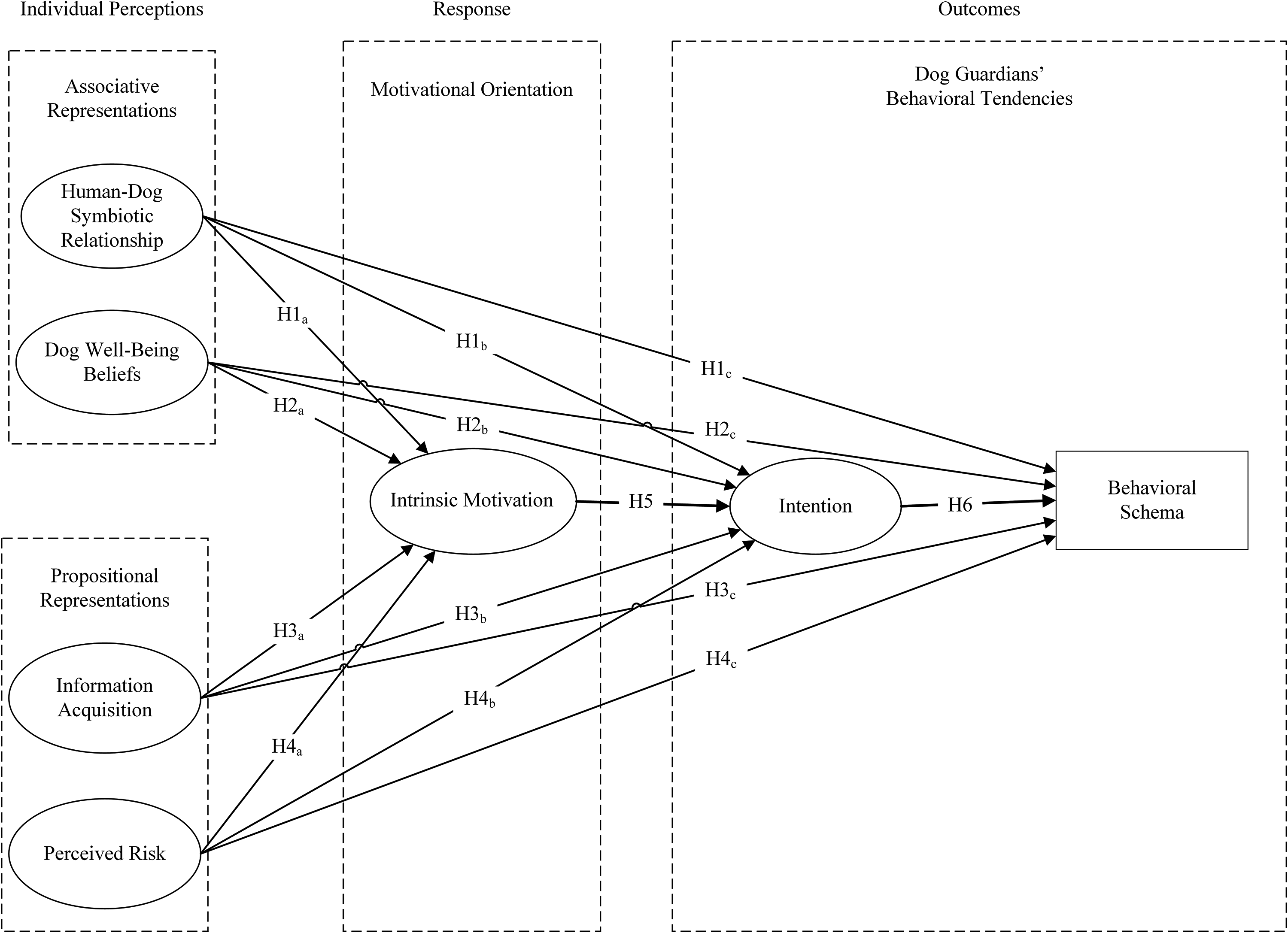
Conceptual model and study hypotheses.
Methodology
Online survey
Online survey development. A questionnaire was designed comprising established measurement scales for the human–dog symbiotic relationship (Dotson and Hyatt, 2008), dog well-being beliefs (Kirillova et al., 2015; Ying et al., 2021), information acquisition (Bearden et al., 2001), perceived risk (Sönmez and Graefe, 1998), intrinsic motivation (Guay et al., 2000), intention (Peng et al., 2014), and behavioral schema (Peng et al., 2014). All items were measured using a six-point Likert-type scale (1 = Strongly Disagree and 6 = Strongly Agree) to push respondents to choose a non-neutral point on the scale as suggested by multiple Rasch modeling studies evaluating the quality of Likert scales (e.g. Moors, 2008; Yamashita, 2022).
Sampling, data collection, and analysis. To ensure that those who participated in the study would have a behavioral schema related to travel with dogs, survey respondents were required to be UK dog guardians who had traveled with their dog(s) in the past five years. Quota sampling was used based on data from a previously representative survey of UK dog guardians provided by a market research company. The sampling profile consisted of 53.57% females and 46.43% males, with an age distribution of 18–29 (17.87%), 30–39 (18.72%), 40–49 (17.80%), 50–59 (21.06%), 60–69 (17.09%), and 70+ (7.47%). An attention check question confirmed that participants were actively involved in the survey. After data cleaning, the pre-tested, online survey resulted in 611 valid questionnaires. Our sample size was in excess of all suggestions for minimum sample size calculations for partial least squares structural equation modeling (PLS-SEM) which ranged from 50 for the “10 times rule” (Hair et al., 2017) to 595 for the “inverse square root method” (Kock and Hadaya, 2018).
Sample characteristics. The sample was representative consisting of 57.4% females and 42.6% males (X2 (1, N = 611) = 3.579, p = 0.059), with an age distribution of 18–29 (19.1%), 30–39 (17.5%), 40–49 (18.8%), 50–59 (20.9%), 60–69 (17.2%), and 70+ (6.4%) (X2 (5, N = 611) = 2.367, p = 0.796). The largest proportions of participants were employed full-time (48.6%), lived with one or more adults in the household (82.2%), and had one dog (75.1%).
Semi-structured interviews
To develop a richer understanding of the experiences of people who travel with their dogs, semi-structured interviews were conducted, allowing the researchers to listen to guardian's perspectives and search for the meanings behind them (Kallio et al., 2016). Participant recruitment posts seeking UK dog guardians willing to participate in phone interviews were posted in nine UK dog-related Facebook groups with the permission of the group administrators. These posts included information about the research and a short form collecting name, contact information, gender, whether the dog(s) were service/assistance dogs, and anything else potential participants wanted to share about their lifestyle or dog(s). This allowed purposive sampling to ensure a variety of demographic and dog characteristics. However, by sampling via Facebook dog-focused groups, the views shared are representative of those willing and able to participate and, who by their membership in the group, were more likely to be highly interested and/or heavily involved in dog-related conversations, and therefore they may not fully represent all people who have dogs in the UK. Nonetheless, for this qualitative portion, the key focus was to gain insights and better understand the experiences of people traveling with their dogs (Saunders et al., 2019).
Prior to starting the interviews, the interviewer verbally explained the study, the participants’ rights, and gained consent. The two key interview questions were as follows: “Why do you, or do you not, travel with your dog(s)?” and “What has been your experience of traveling with your dog(s)?”
A total of 34 semi-structured phone interviews were conducted. After 30 interviews, a high degree of consensus had emerged, indicating data saturation but a further four interviews were scheduled and conducted, confirming data saturation. The interview participants were predominantly females (85.3%) who lived with at least one other adult (82.3%) in an urban area (50.0%) and had one dog (73.5%). Ages ranged from 24 to 70 years with the largest proportion of participants between 40 and 49 years (32.3%).
The interviews ranged from 50 to 75 minutes; they were recorded and then transcribed verbatim. All transcriptions were checked for accuracy by a second transcriber and were spot checked by one of the researchers. Content analysis was used to evaluate the transcriptions with the assistance of NVivo 12 software (QSR International Pty Ltd, 2020). Initially three pre-defined coding categories were used including holidays as a dog guardian, leisure activities with dog(s), and issues/concerns relating to dogs. Additional codes were added as new categories emerged from the analysis and after re-evaluation.
Results
Individual perceptions: responses and travel outcomes
The conceptual model was evaluated using PLS-SEM, with SmartPLS software (Version 4; Ringle et al., 2022), due to its ability to estimate non-parametric, complex models, study new relationships, and prediction capabilities (Hair et al., 2017). Constructs and the measurement items with the full measurement model analysis results can be seen in Table 1 (see Supplementary Appendix S1 for descriptive statistics of scaled data). The reliability and validity of the outer model were inspected first, with all measurement items meeting the suggested thresholds (Chin, 2010). Item reliability was assessed by examining factor loadings and they were all found to be above the threshold value of 0.708 (Hair et al., 2019), with significant factor loadings (p < 0.001) other than behavioral schema, as this was a single-item measure. All internal consistency values, i.e. composite reliability (Jöreskog, 1971) values were above the minimum of 0.70 and did not exceed the suggested maximum of 0.95 (Diamantopoulos et al., 2012), indicating good levels of reliability (Hair et al., 2019). Cronbach's alphas (α) were also above 0.80 (Hair et al., 2017). Finally, ρA was used to assess construct reliability and it had a value between the lower and upper recommended thresholds of 0.80 and 0.95 respectively. Percentile bootstrap confidence intervals were calculated and indicated that the ρA was lower than 0.95 at the upper bound of the 95% confidence interval (Aguirre-Urreta and Rönkkö, 2018; Hair et al., 2019). Convergent validity was assessed using average variance extracted (AVE) and was found to be over the minimum value of 0.50 (Fornell and Larcker, 1981). AVE for the constructs ranged from 0.681 to 0.903. Finally, discriminant validity was established using both the Fornell-Larcker Criterion (AVE value > inter-construct correlation) (see Table 2) and the hetrotrait–monotrait ratio (HTMT < 0.85 for conceptually different constructs, HTMT < 0.90 for conceptually similar constructs) (see Table 3) (Hensler et al., 2015). HTMT was also shown to be significantly lower than the threshold values at a 95% confidence interval (Hair et al., 2019).
Measurement items and measurement model analysis.
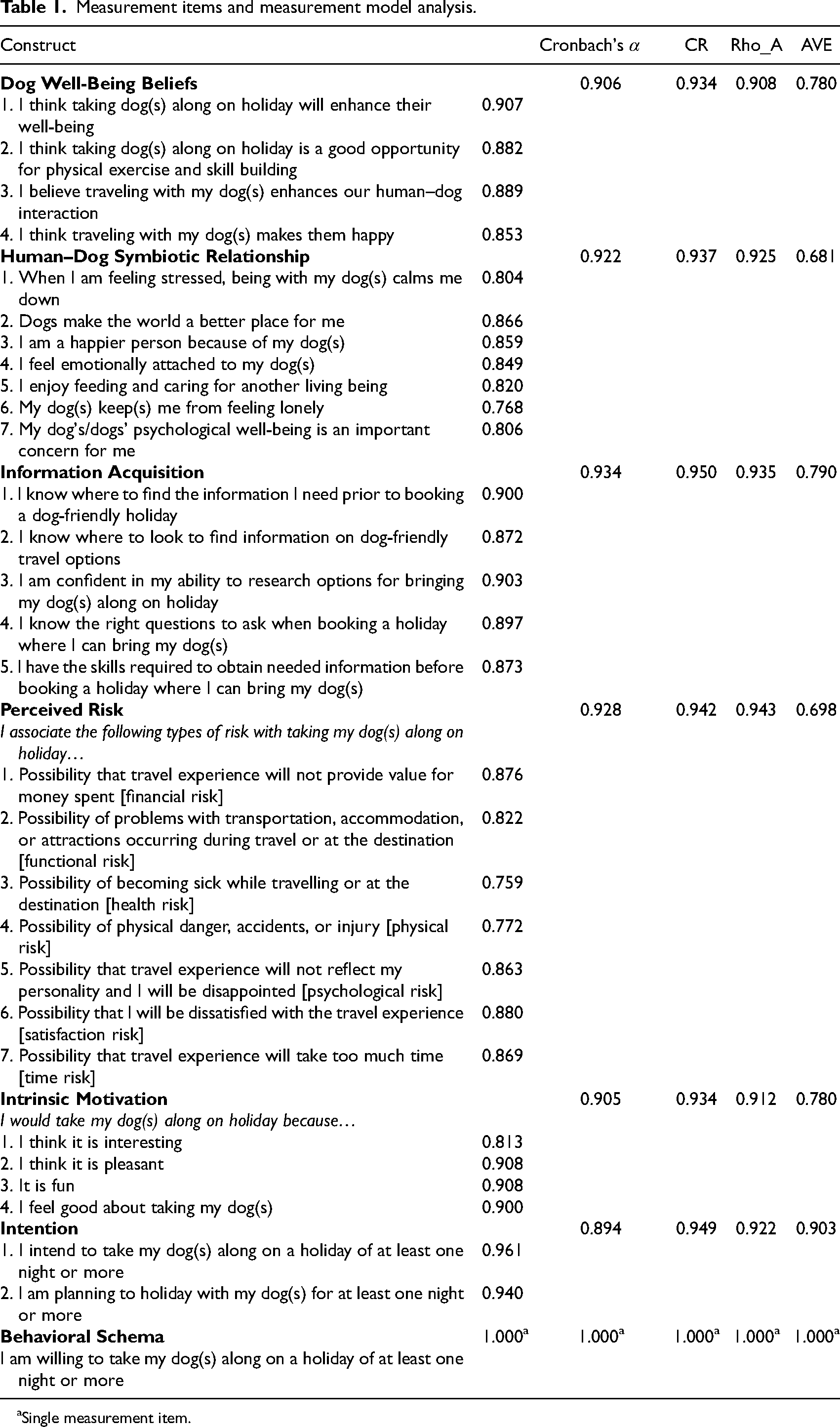
Single measurement item.
Fornell–Larcker criterion for discriminant validity.

Single measurement item.
Heterotrait–monotrait criterion for discriminant validity.
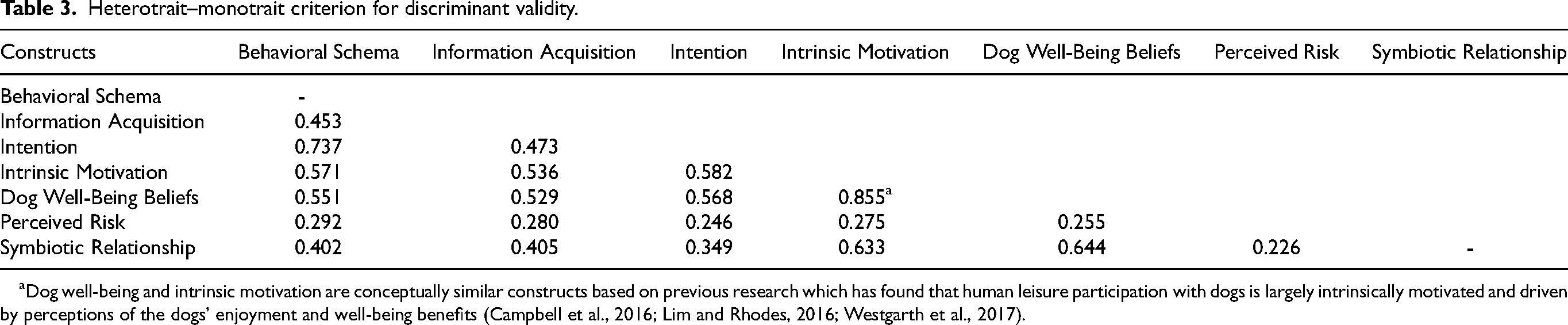
Dog well-being and intrinsic motivation are conceptually similar constructs based on previous research which has found that human leisure participation with dogs is largely intrinsically motivated and driven by perceptions of the dogs’ enjoyment and well-being benefits (Campbell et al., 2016; Lim and Rhodes, 2016; Westgarth et al., 2017).
To assess the structural model, the variance inflation factor (VIF) values of the reflective predictor constructs were revealed to be below the critical threshold VIF ≤ 5 and below the recommended VIF ≤ 3, with the maximum value of VIF = 2.786, indicating that collinearity was not an issue.
The coefficient of determination (R2 value) was then examined to assess the model's explanatory power (Hair et al., 2017) revealing values for all endogenous variables above 0.20 which is considered high, and of interest, in behavioral research (Hair et al., 2019). Furthermore, R2 values indicated that the variables in the model were significant predictors of intrinsic motivation (R2 = 0.641) and intention (R2 = 0.342). The model explained 55.4% of the variance in guardians’ behavioral schema related to travel with dogs.
To assess predictive accuracy values, Q2 (Geisser, 1974; Stone, 1974) values were calculated using blindfolding with an omission distance of seven (Hair et al., 2017). All values of the endogenous variables were greater than zero and, therefore, were meaningful (Chin, 2010). The Q2 values all exceeded 0.25, which indicated medium predictive relevance of the model (Hair et al., 2019).
The bias-corrected bootstrapping method (with 10,000 sub-samples) was used to evaluate path coefficients and test hypotheses (see Figure 2). The results revealed that 10 of the 14 hypotheses were supported, and mediation was present. See Tables 4 and 5.
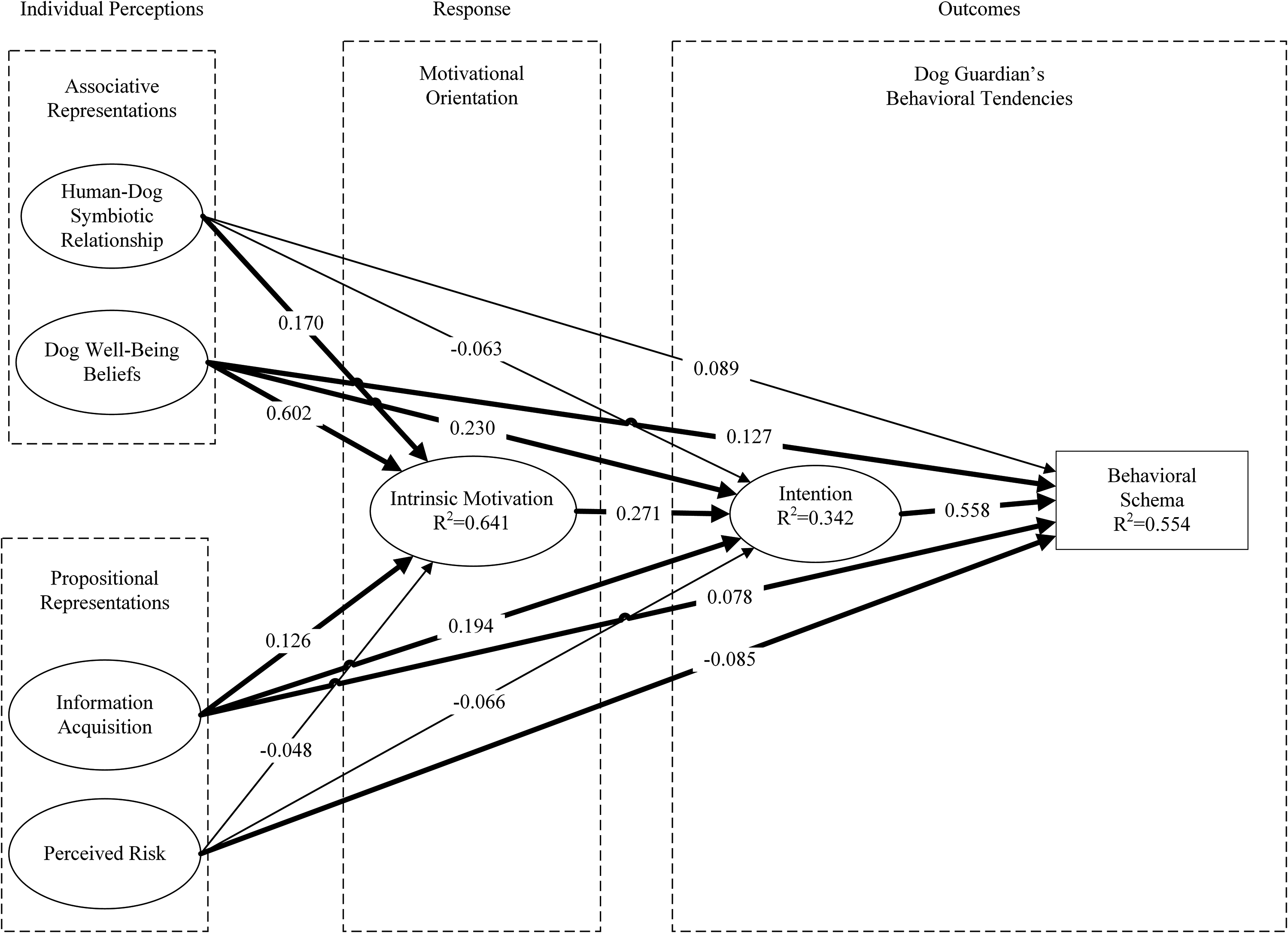
Model with partial least squares regression paths.
Estimates of path coefficients, effect sizes, and hypothesis testing.
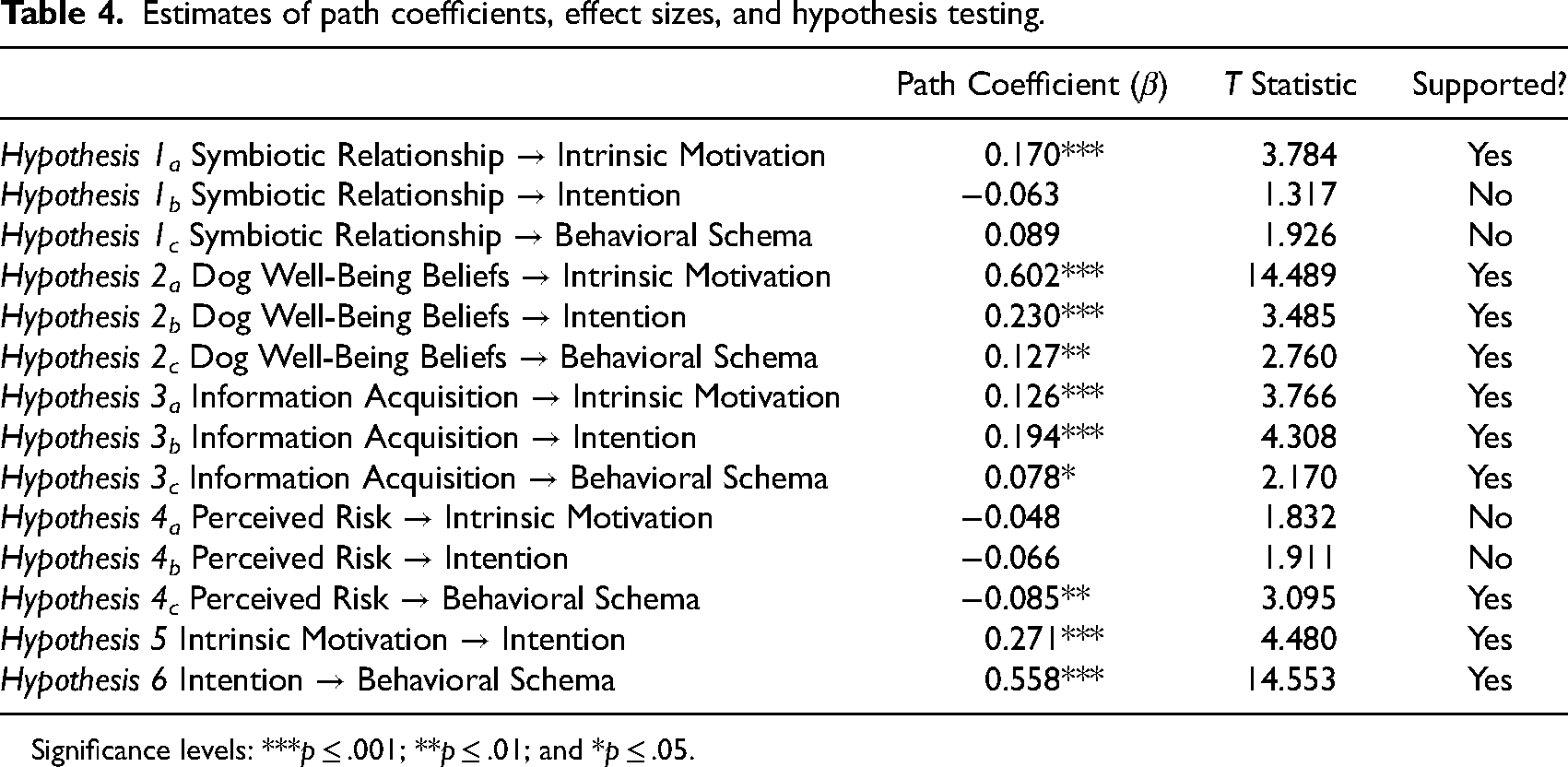
Significance levels: ***p ≤ .001; **p ≤ .01; and *p ≤ .05.
Mediation analysis (indirect effects).
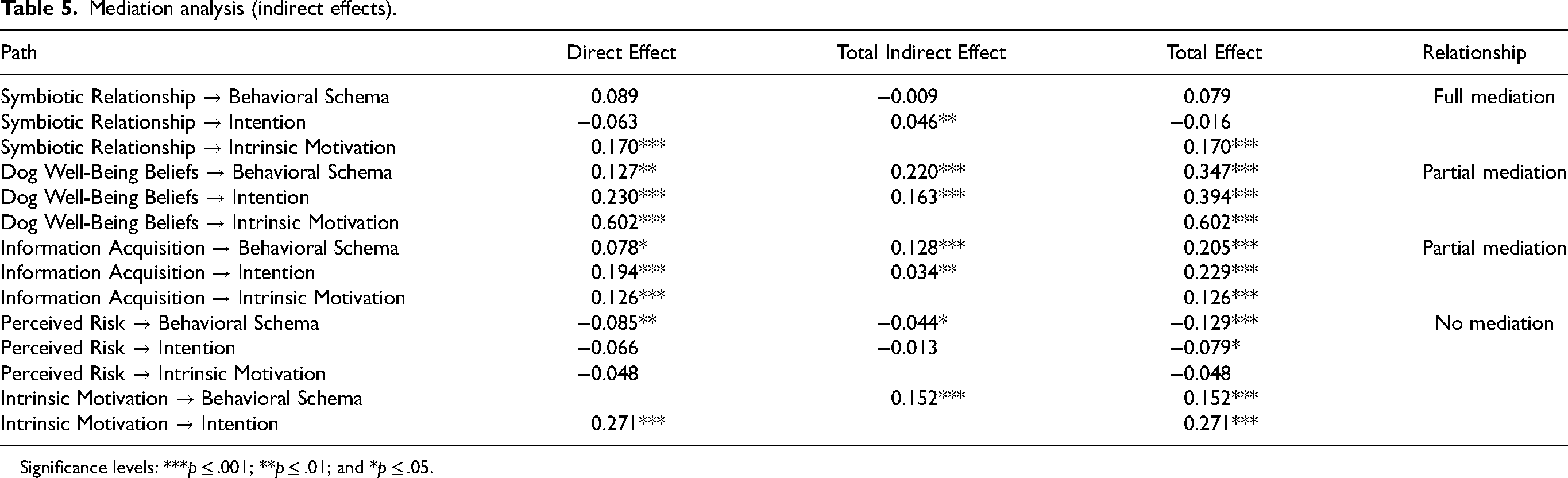
Significance levels: ***p ≤ .001; **p ≤ .01; and *p ≤ .05.
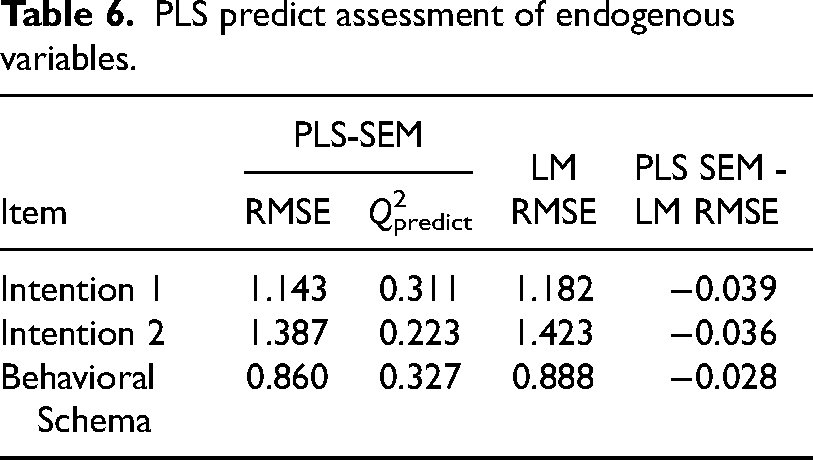
PLSpredict was run with 10 folds and 10 repetitions. All Q2predict (Shmueli et al., 2016, 2019) values were positive, which indicated the PLS path model outperformed the naïve benchmark (BHSC Q2predict = 0.327). Histograms of the RMSE for both the PLS-SEM and linear model were normal, largely symmetrical, and corresponded closely with each other which supported the use of RMSE (see Supplementary Appendix S2). The PLS model produced lower prediction errors for all items, which indicated that the model had high predictive power if applied to other samples (see Table 6) (Shmueli et al., 2016).
PLS predict assessment of endogenous variables.
The FIMIX-PLS fit indices for the one to five segment solutions (see Supplementary Appendix S3) did not point to an unambiguous segment solution; therefore, unobserved heterogeneity were not at critical levels and the aggregate data was appropriate to use (Sarstedt and Ringle, 2010; Sarstedt et al., 2020).
Human–dog symbiotic relationship
PLS-SEM analysis suggests that intrinsic motivation is a key mediator between the human–dog symbiotic relationship and guardians’ intention and behavioral schema, in relation to traveling with their dogs. The human–dog symbiotic relationship directly impacts intrinsic motivation and subsequent travel outcomes indirectly. Qualitative findings provide further understanding of how a mutually beneficial bond between people and dogs, where the human is happier and the dog is nurtured, results in dog guardian's behavioral tendencies toward traveling with their dogs.
Participants frequently mentioned a strong human–dog relationship as part of the discussion about traveling with dogs with many people viewing their dogs traveling with them as a normal activity for them. These feelings included statements about how traveling with dogs provided travel companionship, reflecting their intrinsic enjoyment of having their dogs accompany them on vacation. “I feel very uncomfortable, very odd being in the UK especially if I'm driving, and don’t have her in the car. To go for three, four, five nights and not have her with me, I wouldn't. I do just love to have her with me.” (#8, 40s, female, 1 dog)
“Of course, the dog comes with me [on trips]. The dog comes everywhere. He's a very good mate. […] If it wasn't for that dog, I’d really question why I’d bother.” (#18, 60s, male, 1 dog)
“She travels all the time with us. We brought her from Italy, then we took her to Germany. Then we took her with us to Lebanon. Then from Lebanon back to Germany, then from Germany to the UK. […] She even went on holiday with my parents to Austria and Italy, she goes everywhere which we all enjoy. […] For the past six years, she's been just an international traveler.” (#19, 30s, female, 1 dog)
“I don’t like to kennel my dogs; I wouldn’t do that. They're my pals, the positive is that I've always got company.” (#6, 50s, female, 2 dogs)
Furthermore, participants indicated that having their dogs with them on vacation was so important that they would experience stress, change their travel destination, or simply not travel if their dogs were not allowed to come with them, supporting the suggestion that a strong human–dog symbiotic relationship led to people wanting to travel with their dogs, which in turn impacted their travel behavior. “In terms of holidays, that was part of the deal we thought about when we got the dogs. We did actually consider holidays because we thought our lives would change because of having dogs. We decided if we were going to go, we’d be going to places that were dog-friendly and would allow dogs to come enjoy with us, […] which would be in this country.” (#15, 40s, male, 2 dogs)
“We found, for us personally, if we went on a holiday and left him with friends or boarders, it would just be too stressful for us. We would just rather take him with us. If we can’t take him then we just generally don’t go.” (#1, 40s, female, 1 dog)
“Wherever I can take her, she'll be there; definitely. I couldn’t bear it. […] It would be very odd not to have her there. Even if we're going out to the pub for supper, we’d take her with us. Anywhere I’ve been away, I think without exception really, in the UK, I've taken her with me.” (#8, 40s, female, 1 dog)
Dog well-being beliefs
Analysis of the conceptual model indicates that dog well-being beliefs, which were guardians’ perceptions that their dogs had fun and received enjoyment from vacations together, had strong direct and indirect impacts on guardians’ motivation, intention, and behavioral schema in relation to traveling with dogs. Interviewees similarly acknowledged their consideration and beliefs that their dogs’ well-being was improved by trips together. The guardians felt confident that it was possible to determine when their dogs were having fun or enjoying the vacation. “Last summer we went over to Ireland and took the dogs with us, and they loved it. I don’t think they wanted to come home. On the beach every day so it was great.” (#7, 40s, female, 3 dogs)
“We took him on a road trip last summer…we went to Dorset…Yes, he's joined at the hip with me. I have a little bit of anxiety being without the dog. He likes to go everywhere I go.” (#34, 50s, female, 1 dog)
“She’s perfectly happy to go everywhere with me—all my holidays were planned around my dog, and she really seems to enjoy our trips.” (#2, 30s, female, 1 dog)
“We recently had a holiday in Cambridge, and we took her with us, and we just went to a dog-friendly hotel. Very spoiled. It's always very nice when you see them experiencing these things because they're always very happy and they enjoy taking little trips like that, I feel.” (#19, 30s, female, 1 dog)
Participants also indicated that traveling with dogs was a good opportunity for the dogs’ training, socializing, and bonding. Some participants went on vacations for this specific purpose by attending organized dog training, dog festivals, and dog shows. “To be honest, more thought goes into how much fun it's going to be for the dog than it is for us. […] we did go on a dog training holiday. That was fun!” (#22, 50s, female, 1 dog).
“We go to fun village dog shows every summer. […] Yeah, it's a bit of a laugh really for all of us. We’ve never done any of the big, organized walks or festivals, that sort of thing. Not yet, but in theory the sort of thing that we would quite like to do.” (#10, 20s, female, 1 dog)
Information acquisition
Information acquisition had a significant direct impact on guardians’ intrinsic motivation, intention, and behavioral schema related to traveling with dogs. Additionally, partial mediation was present in all relationships between the constructs, indicating that intrinsic motivation and intention play an important role between guardian's level of confidence in getting dog-friendly travel information and their tendency to travel with their dogs.
Varying levels of concern or confidence in acquiring information about traveling with dogs and the extra time and effort associated with it were reflected in the qualitative responses. Many participants discussed the information required to travel with dogs and the difficulty and extra time required to get this information. “It'll be a little bit more difficult I suppose, but it's finding the right type of holidays and things like that because it is nice to go out and travel with them.” (#28, 50s, male, 2 dogs)
“From looking into it, I understand that going up into the country is fairly do-able with dogs. A lot of places are pet-friendly to sleep and to stay. It's not your five-star hotel that I've looked into, but fun trips that you can actually bring your dog with you.” (#29, 50s, female, 1 dog)
“We took our dog to Edinburgh in January. We ended up staying in a Holiday Inn Express or something. I had no idea it was dog-friendly until I clicked and then it turned up on Expedia or whatever. And I believe there was no extra charge. I was like, ‘Oh, wow.’ Because the other hotel that I originally wanted to book, they actually charge, and actually there was a size restriction.” (#4, 20s, female, 1 dog)
Interview responses concurred with the literature that traveling with dogs in general (especially if not staying with friends/family or if traveling internationally) required substantially more time and planning which can make traveling with dogs a daunting prospect causing stress for some guardians. “If we're holidaying somewhere else, it does take quite a lot of planning, and finding places that are genuinely dog-friendly, and making sure that the holiday is fun for them. When you do find the right places, it's like, ‘Oh, wow.’ It does take a lot more planning, in fact, more planning than it does with kids.” (#22, 50s, female, 1 dog)
“I wouldn't say that we're overly knowledgeable on traveling with dogs. We're used to very much traveling up and down the country like having him on the train with us and that kind of thing. […] I think it's so daunting because the rules everywhere are different. […] and it almost feels like traveling somewhere to go and live, it feels like it isn’t worth all of the hassle. I suppose for any different travel other than that, it's so difficult to do that it's almost not worth it. It feels like it would be really stressful if we do.” (#20, 20s, female, 1 dog)
Perceived risks
Perceived risks of traveling with dogs had a direct and negative impact on guardians’ behavioral schema related to traveling with their dogs. However, in contrast to previous research, perceived risks did not impact intrinsic motivation or intention to travel with dogs.
Interviews reveal that guardians have concerns regarding risks of traveling with dogs including illness, restrictions, possible disappointment, service failures/misrepresentations, and logistical issues. Plus, they frequently noted the amount of extra items required to care for dogs that must be considered when traveling (e.g. bowls, bedding, and food). “We tend to book fairly last minute so we can see what else is going on and make sure nothing is going to be a problem such as […] an injury or illness.” (#10, 20s, female, 1 dog)
“Previously because I had a Rottweiler, you discover that all these people that advertise that they're dog-friendly are not. They're Chihuahua-friendly.” (#22, 50s, female, 1 dog)
“I think the only thing that they [the dogs] change is if we go away within the UK, we tend to get a train there, so we don't have to worry about the car. But I think with dogs you may end up having to take the car because you've got all their bedding, their food, their bowls. It becomes a bit of a different story, and I think it'd be difficult to do that on transport.” (#28, 50s, male, 2 dogs)
“All these different things that we need to have for a dog! It's like we've got a baby or something with the amount of stuff that we're carrying up with us (to travel to Scotland). And you definitely feel it when you're traveling on public transport.” (#20, 20s, female, 1 dog)
Interestingly, although some interview participants expressed being comfortable traveling internationally with their dogs, others specifically mentioned risks that they perceived as negatively impacting their motivation or intention to travel internationally with their dogs. Interview participants mentioned the risks of international travel with dogs such as changes in transport regulations for dogs due to Brexit, dog-related legal restrictions, and provider policies for international destinations. “Last year, we took our dog to France, which was lovely. I think there's other aspects that would probably complicate that this year, in terms of Brexit and things like that.” (#11, 40s, female, 1 dog)
“I brought my large breed dog to the UK five years ago when I moved from the US. At the time, there was only one cruise ship in the world that allowed large breed dogs on it – the Queen Mary 2 from New York to Southampton and it took five days. […] You had to get all of your papers, with the United States Department of Agriculture, and the shots and the vet, and everybody had to sign off. […] It was so complicated and costly to get her here. We would think of taking her with us on a family vacation to Europe but that just seems like a lot of vet paperwork and costs, and I am not even sure how we would do it.” (#9, female, 30s, 1 dog)
“I know that we have extra restrictions in the UK, but I think he is small enough for me to basically have him under the seat in front of me in most countries if we were flying anywhere, but it still feels really daunting. The whole idea of it. It's not something I suppose I've considered that much in terms of us going on bigger abroad-type holidays or traveling, purely because it feels like it would be really stressful if we do.” (#20, 20s, female, 1 dog)
Intrinsic motivation
Guardians’ intrinsic motivation to travel with their dogs had a direct and positive relationship with intention, while intention also had a direct and positive relationship with behavioral schema. Interview participants’ comments supported this by alluding to their intrinsic motivation, intention, and behavioral schema related to traveling with their dogs in a range of ways including how it made them feel good and was pleasant which was often reflected in their connection with their dog(s) and enjoyment of the activity. “We went and found a lovely hotel that took dogs. We went to Dorset and Jurassic Coast with the dog. Had a fabulous week there.” (#31, 40s, female, 1 dog)
“We took her to France last year. […] We did the Eurotunnel. It was brilliant. It was so brilliant. It was so lovely having her around because she's such easy company.” (#34, 20s, female, 1 dog)
“Because we really, just liked it [traveling with the dog]. And that's kind of our traveling – he can come too. […] But that is our holidays for us, and he's always there.” (#1, 40s, female, 1 dog)
“And then if we're staying away from home, we stay in a pub or a hotel or at this stage in a big house. And we all have a very jolly supper together. You can imagine how it works. Those aspects of it, if it wasn't for the fact that I, when I go shooting, I run the dog as well, and play with him. If it wasn't for the dog, I don't think I'd want to go shooting on my own. (#4, 60s, male, 1 dog)
“I think particularly, me visiting my family up here in Scotland, and in Norfolk, our dog is really used to that sort of travel. As I say, we've had him in a couple of hotels with us or we've been to other places. […] I would love to be able to travel with him more. It's enjoyable.” (#12, 20s, female, 1 dog)
“All my holidays, everything I do is planned around my dog. She is a member of my family. I don’t have any children. I have my dog.” (#2, 30s, female, 1 dog)
Discussion
Many dog guardians wish to travel with their dogs and as the dog population continues to grow and the role of dogs in peoples' homes evolves so will the demand for dog-friendly tourism services. Drawing on the RIM of dual-process theory, the objective of this research was to better understand what impacts the motivation and behavioral tendencies of guardians who travel with their dogs.
Results indicate that a strong human–dog symbiotic relationship indirectly impacted the intention and behavioral schema of guardians related to travel with dogs via intrinsic motivation. This contrasted with Strack and Deutsch's (2004) reflective-impulsive model of dual-process theory where associative representations, such as this, directly impact behavioral schema and subsequent action. Instead, these findings which focused on the two-sided nature of the human–dog relationship, rather than the one-sided construct of ‘pet attachment’ (Chen et al., 2013; Peng et al., 2014), found that this relationship does not directly impact intention or behavioral schema as expected. Rather, intrinsic motivation to travel with dogs is required indicating that a strong human–dog relationship does not automatically result in guardians’ behavioral tendencies. Thus, a strong relationship between a human and dog may create a view that traveling together is fun and enjoyable, but other factors appear to be larger drivers of intention, behavioral schema, and the ultimate decision.
Findings also revealed that dog well-being beliefs impacted guardians’ travel behaviors and had a very strong relationship with guardians’ intrinsic motivation. This is in line with previous literature which has found that dog guardians believe that traveling with their dogs adds to their dogs’ happiness and well-being (Ying et al., 2021). Among all the determinants of behavior in our research, dog well-being beliefs had the largest impact on intrinsic motivation, intention to travel, and behavioral schema, which is congruent with the RIM view that associative representations can have a strong impact on motivation (Strack and Deutsch, 2014). This finding is important because previous research has found that more intrinsically motivated travelers have higher life satisfaction levels and experience more positive feelings (e.g. Cini et al., 2013). Importantly this quantitatively confirms what previous qualitative research into dog walking has found; when it comes to leisure activity participation with dogs, in this case travel, much of guardians’ enjoyment, and subsequent intentions and behavioral patterns are a consequence of the belief that the activity is pleasurable and good for their dogs (Westgarth et al., 2017).
Guardians’ confidence in their ability to acquire information about dog-friendly travel was directly related to the intrinsic motivation, intention, and behavioral patterns of traveling with their dogs. Additionally, guardians’ ability to get the required dog-friendly travel information influenced their intrinsic motivation and intention to travel with their dogs, which subsequently impacted their behavioral schema. Research has previously found that if guardians were highly motivated to travel with their dogs and could find the required information, then they were more likely to do so (Hung et al., 2012). Our findings indicate that people with experience of traveling with their dogs have varying levels of confidence about their ability to get the required information to travel with their dogs, but in general, it requires extra time and effort. It seems that for many guardians finding the required dog-friendly travel information can still be an arduous undertaking.
The findings suggest that perceived risks do not impact guardians’ intrinsic motivation or intention to travel with their dogs but that these risks do directly, negatively influence behavioral schema related to traveling with dogs. This finding contrasts with those of Wu and Cheng (2020) who found that risks, especially the loss of time/money, and travel not meeting expectations, all negatively impacted the intention to travel with dogs. We find that perceived risks do not impact guardians’ intrinsic motivation or intention in anyway, but directly negatively impact the willingness to travel with dogs. This is likely because if guardians perceive the risks to be severe enough, they simply will not traveling with their dogs. However, it is possible that these guardians still view travel with their dogs positively and may travel with them in the future, if they can mitigate the risks.
This research builds upon our understanding of dogs in the leisure experience and how guardians’ perceptions affect travel decision-making and behavior (Carr, 2014). It extends a limited field of studies into how dog guardianship impacts tourism behavior, thus, answering calls for more research into leisure with dogs (Carr, 2017; Kirillova et al., 2015). This is also the first study focusing on the determinants that influence guardians’ intrinsic motivation to travel with their dogs, rather than what constrains travel. Finally, we present a novel decision-making model to predict guardians’ intrinsic motivation, intentions, and behavioral schemata in relation to traveling with dogs. Previous research has found that guardians strongly believe that traveling with their dogs enhances their overall vacation enjoyment and experience (Dotson et al., 2010; Kirillova et al., 2015) and improves the well-being and happiness of dogs (Ying et al., 2021). We extend this by examining the importance of four determinants that impact dog guardians’ behavioral tendencies to travel with their dogs, the most influential of which is dog well-being beliefs about travel. Finally, our model confirms previous qualitative research that intrinsic motivation is paramount in leisure participation with dogs, while also being the first to look at the importance of this in the context of travel with dogs (Westgarth et al., 2017).
Dog guardianship considerably affects people's travel behavior such as the destinations they visit, type of accommodation they book, activities in which they participate, and the length of their vacations. The global market related to dog-friendly travel was a growing industry prior to the pandemic and has grown significantly as the number of people wanting to take their dogs along on vacation has risen sharply in the past few years. Tourism organizations that are dog-friendly can generate substantial increases in bookings and revenue (Williams, 2021). Therefore, understanding what impacts dog-friendly travel decisions will secure a larger share of spending for destination marketing organizations, accommodation providers, attractions/events, and transport suppliers compared to their competitors. This will allow organizations to influence dog-related travel decisions and behavior by communicating efficiently with this large market segment which is happy to spend more money to be able to enjoy vacations with their “fur babies” (Greenbaum, 2004; Kirillova et al., 2015).
Moreover, tourism providers should develop/offer services to enhance the well-being and enjoyment of both humans and dogs (Dashper, 2020). This could include activities for guardians and dogs to increase interactions, provide physical exercise, and build skills (e.g. providing walking maps, listing dog-friendly activities in the area, or partnering with dog well-being-related events/festivals to attract guardians). Additionally, tourism providers should highlight the available well-being activities and benefits in marketing communications with dog guardians. This could include images of guardians and dogs joyfully interacting, or text that focuses on the happiness and bonding that can be experienced when traveling together. Finally, service overall can be enhanced by providers and their staff recognizing that dogs are sentient beings who also take part in the leisure activity of traveling with their humans. Encouraging staff to be friendly to dogs when they visit, whether this be through addressing the dog, providing a biscuit, or petting the dog (after asking the guardian's permission), can recognize the dog in the leisure experience and provide guardians with a sense that the provider is truly dog-friendly.
The results of this research indicate that being able to find information about dog-friendly travel is important for guardians; however many still have difficulty finding, or spend a lot of time looking for information. It is vital for tourism providers and destinations to have information about their offerings and dog-related policies easily and widely available. However, as not all people like dogs or want them in their travel and leisure spaces (Kirillova et al., 2015; Marshall, 2005), it is important to specifically target messages to dog guardians through carefully considered marketing channels such as dog-friendly travel webpages, targeted marketing platforms including dog-related travel websites, dog-friendly marketing campaigns, and/or partnerships with dog-related organizations/charities/events.
In addition, this research found that the biggest travel risk concerning dog guardians is potential problems with transportation, accommodation, or activities. By communicating clearly about dog-friendly offerings, tourism providers and destinations can help alleviate these concerns and others, such as value for money and the safety of dogs, while conveying how the experience will be easy and enjoyable for both dogs and guardians. Furthermore, providing truly dog-friendly travel options and communicating clearly about these will allow more people to feel comfortable traveling with their dogs. This will in turn remove some of the ‘pet-related’ structural constraints (i.e. risk and lack of information) and broaden the market for those willing to travel with their dogs, including those with service dogs (Chen et al., 2013, 2014; Hung et al., 2012; Rickly et al., 2022). Although certified service/assistance dogs are already required by law to be allowed in tourism and hospitality spaces in most countries, some still face discrimination and service refusal (Rickly et al., 2021). Additionally, research has found that unfamiliar environments constrain/change travel choices of those with guide dogs (Rickly et al., 2022). If suppliers provide more information to ease risk concerns and therefore provide a greater confidence in the services that those traveling with dogs will receive, then travel will be more accessible to all guardians with dogs, including those with assistance dogs. Finally, developing services and an environment where dogs are welcomed rather than merely allowed, along with clear communication and targeted marketing, will allow dog-friendly tourism providers and destinations to attract guardians traveling with their dogs.
Limitations and future research
Previous research has indicated that dogs make up around 58% of companion animals traveling worldwide and were the focus of this study due to their ability to participate in a range of activities with humans (PBS Pet Travel, 2014). However, other guardians do travel with cats, birds, other small mammals, and horses, which would be interesting for further research. As noted previously, many dogs were acquired during the pandemic and as the subsequent cost-of-living crisis has intensified, many charities have reported an increase in people giving up their dogs (PDSA, 2022). Future research should investigate if people who welcomed dogs into their homes during the pandemic have unique bonds/involvement with their dogs and/or different desires to travel with their dogs. Additionally, judgments toward dog guardianship, the role of dogs in a household, the importance of travel, and income levels vary across the world; therefore, future research should test the model in other populations to better understand and target different guardian segments. Finally, the model focused on guardians’ behavioral schema related to traveling with dogs. Future research should investigate the various components of dog guardians’ travel decisions (e.g. choice of destination, accommodation, and tourism activities) through measuring actual travel behavior. This will advance our understanding of dog guardians’ travel behavior, while providing valuable insights to tourism industry providers about how to access and appeal to guardians who increasingly wish to travel with their dogs, and demand spaces and services that are truly dog-friendly.
Supplemental Material
sj-docx-1-jvm-10.1177_13567667231202798 - Supplemental material for The social behavior of traveling with dogs: Drivers, behavioral tendencies, and experiences
Supplemental material, sj-docx-1-jvm-10.1177_13567667231202798 for The social behavior of traveling with dogs: Drivers, behavioral tendencies, and experiences by Lori S. Hoy, Brigitte Stangl and Nigel Morgan in Journal of Vacation Marketing
Footnotes
Declaration of conflicting interests
The authors declared no potential conflicts of interest with respect to the research, authorship, and/or publication of this article.
Funding
The authors received no financial support for the research, authorship, and/or publication of this article.

Supplemental material
Supplemental material for this article is available online.
Notes
References
Supplementary Material
Please find the following supplemental material available below.
For Open Access articles published under a Creative Commons License, all supplemental material carries the same license as the article it is associated with.
For non-Open Access articles published, all supplemental material carries a non-exclusive license, and permission requests for re-use of supplemental material or any part of supplemental material shall be sent directly to the copyright owner as specified in the copyright notice associated with the article.
