



Abstract
Given the great potential of Generation Y for the tourism industry, their perceptions, and opinions of family-run hotels, which dominate tourism, were explored through 20 semi-structured interviews. The study shows that Generation Y perceives the image of family-run hotels positively and emphasizes traditions, small-scale structures, authenticity, and trust while highlighting their hospitableness. Our results underline the assumption of responsibility to family firms, including the importance of word-of-mouth, in the communication between Generation Y and family firms. Based on organizational identity theory, family-run hotels can build on their core values to build family firm images, contributing to differentiation, and establishing customer relationships. This study relates Generation Y to the tourism industry context, which family firms mainly run. The findings suggest that Generation Y should be targeted as a segment for the family-run tourism industry and that research should be expanded.
Keywords
Introduction
The tourism industry comprises visitors from several generations, with the “baby boomer” generation having long held a dominant position, but they have been increasingly diminished by Generation Y (Pendergast, 2010). Generation Y is the generation that travels the most, accounting for 40% of European foreign travel (Ketter, 2021). Therefore, Generation Y is of interest in tourism research and practice (Benckendorff et al., 2010). They have considerable purchasing power, and their purchases are related to their values and behavior, which differ from other generations (Glover, 2010).
Family firms are the most widespread form of business in all economies worldwide (De Massis and Rondi, 2020). In tourism, in particular, family firms are predominant (Kallmuenzer et al., 2018). Family firms are widely defined by the interference between ownership and control, which lies within the family itself (Kallmuenzer et al., 2020; Pikkemaat and Zehrer, 2016); their long-term orientation; their extensive and trusting social relationship with stakeholders, for example, employees and customers (Deephouse and Jaskiewicz, 2013; Gallucci et al., 2015; Zellweger, Kellermanns, Chrisman, and Chua, 2012); and the identification of the owning family with their firm (Deephouse and Jaskiewicz, 2013). Family firms are also associated with customer friendliness, trustworthiness, or social responsibility (Cooper et al., 2005). All the mentioned characteristics of family firms offer aspects that can influence customers, for instance, by impacting family firm images (Peters and Frehse, 2011) and creating family firm brands (Botero et al., 2018; Scholl-Grissemann et al., 2021). Therefore, family firms signal the status or characteristics of their family firms externally to improve their image and thus perceived authenticity, which is supposed to increase consumer identification with the firm (Scholl-Grissemann et al., 2021). According to Getz and Carlsen (2005), family firms are often crucial for customer satisfaction and experience in tourism. However, from a customer's point of view, family firms tend to be neglected in research (Binz et al., 2013).
When active market segmentation is applied as a strategic method to consider the heterogeneity of customers, customers are often divided according to personal characteristics, such as their country of origin and age (Dolnicar, 2020). Demography is the most widely employed market segmentation criterion, with age considered the most important (Horneman et al., 2002). Research showed that baby boomers seek to gain first-hand experience and enjoy connections to the places they visit when traveling (Patterson et al., 2017), making them an essential segment of family-run hotels. However, Generation Y is presently the most traveling generation (Ketter, 2021). Hence, examining their preferences and perceptions is essential for family-run hotels to use the family context as a competitive advantage to differentiate themselves from their competitors in the future (Micelotta and Raynard, 2011). The personal relationship between family firms and customers can have an impact on tourists’ perception of the image and services of a hotel (Kallmuenzer et al., 2020; Peters and Frehse, 2011). In addition, the communication of family firm images can positively affect consumers’ word-of-mouth, booking intentions, and willingness to pay price premiums (Scholl-Grissemann et al., 2021). Therefore, studies that show the construction of a family firm image from the perspective of Generation Y as a promising market segment are needed. Studies on Generation Y predominantly focused on backpacker markets and neglected the relevance of this market segment for family-run hotels (Gardiner and Kwek, 2017). Generation Y has great potential (Ketter, 2021) for the tourism industry, which family firms primarily run. Therefore, gathering knowledge about Generation Y's opinion on family firms and how this translates into the perceived image of family firms is essential.
Literature review
Generation Y
In the past, studies have been conducted on Generation Y in different contexts, for example, shopping behavior in the retail industry (Ladhari et al., 2019; Lissitsa and Kol, 2016), human resource management (Kim et al., 2009; Treuren and Anderson, 2010), educational contexts (Eckleberry-Hunt and Tucciarone, 2011; Sternberg, 2012), or understanding their cultural values (Ismail, 2016; Kim et al., 2018). To date, only a few studies have focused on Generation Y's tourism and tourist behavior (Chen and Chou, 2019; Gardiner and Kwek, 2017; Ketter, 2021; Kim et al., 2018; Kruger and Saayman, 2015; Liu et al., 2018; Muskat et al., 2013).
The generational cohort theory suggests that members of a generation share unique experiences of getting older during a particular period of history (Gardiner and Kwek, 2017). According to Pendergast (2010), the generational theory intends to develop characterization and understand cohorts of people based on their membership to generation. The socio-cultural and dynamic framework approaches propensities and patterns across the group on an aggregate rather than an individual level (Pendergast, 2010).
The definition of Generation Y varies, with people born between 1977 and 1995 often included (Benckendorff et al., 2010). The “Why—Y” refers to the questioning and basic critical attitude of Generation Y. Compared with previous generations, modern values are less prominent for Generation Y. Post-modern values have partly replaced these values. This case is reflected in a shift in the traditional family image and the acceptance of Generation Y of new family models (Parment, 2013). Generation Y is described as more open, particularly toward new cultures and ethnic diversity (Benckendorff et al., 2010; Canavan, 2018).
Social relationships represent a top priority for Generation Y members (Moskaliuk, 2016). Viswanathan and Jain (2013) found that members of Generation Y are very much influenced by their friends and families in judging different brands and products. Furthermore, studies showed that celebrities significantly influence various purchase decisions of Generation Y (Bush et al., 2004). With the help of new communication technologies, Generation Y follows celebrities and their consumption through various social networks (Bush et al., 2004). The members of Generation Y are digital natives as they were born in the digital age (Bento et al., 2018). They were the first generation to have the opportunity to explore a social world online (Canavan, 2018). Thus, they actively use social media, such as Facebook, and Instagram, by consuming, distributing, and sharing content (Bento et al., 2018).
The traveling generation Y
Traveling is a part of life for most of Generation Y (Moskaliuk, 2016). Unlike other generations, they travel more often and spend more money on their trips (Kim et al., 2018; Liu et al., 2020). Generation Y individuals want to discover new places, have adventures on their travels, and gain new experiences (Canavan, 2018; Kim et al., 2018). They also like to remain flexible on their holidays and seek a personalized holiday experience (Liu et al., 2020). The more the feeling of a unique holiday experience evoked among Generation Y, the greater the satisfaction, and the greater the chance of returning to a destination (Canavan, 2018; Chen and Chou, 2019). Generation Y's search for unique experiences is mainly conducted via the Internet, for instance, to identify special restaurants with local specialties (Kim et al., 2018).
Although little research has been conducted on Generation Y in tourism to date, individual studies highlighted the peculiarities of the generation in tourism. In this regard, Kruger and Saayman (2015) focused on identifying Generation Y's preferences by undertaking a quantitative study. Based on an investigation of live music performances, Generation Y members were divided into three groups—Gen Y tweens (kids and teens), Gen Y twixters (students), and Gen Y tweeds (adults). This division is influenced by demographic and behavioral characteristics (Kruger and Saayman, 2015), which highlights the heterogeneity of the Generation Y segment. This study suggests that the travel behavior of Generation Y is worth studying in more detail. Gardiner and Kwek (2017) explored Generation Y's perceptions of adventure tourism and highlighted the generation's unique socio-cultural perceptions when participating in adventure activities. Generation Y was found to demand the freedom of international travel, which allows for maturity, and self-development. A sense of family obligation was also observed (Gardiner and Kwek, 2017). Ketter (2021) highlighted the context of crucial travel trends of Millennials, such as creative tourism, digital tourism, alternative accommodation, and off-the-beaten-track tourism. These trends affect destinations, tourism firms, hotels, and tourist attractions (Ketter, 2021). Moreover, Chen and Chou (2019) showed that Generation Y tourists who visit a creative tourism destination perceive uniqueness, identification, and attractiveness, which impacts place attachment, and satisfaction. Thus, Generation Y's perceived coolness further promotes revisit intention and willingness to recommend (Chen and Chou, 2019). Kim et al. (2018) investigated food tourism, emphasizing the effect of food tourism video clips on Generation Y tourists’ familiarity with the destination's food, their perceptions of the destination's food values, and their intention to visit. Therefore, realistic restaurants have a significant impact on behavioral involvement (Kim et al., 2018). Liu et al. (2018) explored the impact of lifestyle hotel branding on Generation Y tourists by highlighting the impact of strong brand love on revisit intention and positive word-of-mouth.
Characteristics of family-run hotels contributing to family firm images
Family firms differ from non-family firms in various characteristics, with distinctiveness in tourism and hospitality often used to the advantage of family firms (Scholl-Grissemann et al., 2021). In this regard, family firms can communicate the characteristics of a “family firm” in many ways. The core concept here is “familiness,” routed in the resources-based view, which is described as a firm's unique resource and capability that arises from the close interaction of family and firm (Kraus et al., 2011; Pearson et al., 2008). Decisions are regarded to be guided equally by factual and emotional motives owing to this close integration of the family in the firms (Schuckert et al., 2008). In addition, the long-term livelihood security and the desire of the family to maintain the firm as such and pass it on to the next generation play a crucial role, which is a challenging task for a family firm and those responsible for it (Chua et al., 2003).
The characteristics of family firms can be a difficult resource to imitate depending on the size, industry, age, and subject matter (Märk and Situm, 2018). Key values attributed to family firms are trust, integrity, loyalty, tradition, connectedness, and positive associations, such as relational qualities, trustworthiness, customer orientation, and authenticity (Botero et al., 2018; Carrigan and Buckley, 2008). These values indicate that customer orientation and employee friendliness are often connected with family firms (Sageder et al., 2015). This case is also reflected in the hospitableness of family firms, expressed in a welcoming culture and a special focus on guest satisfaction and well-being (Scholl-Grissemann et al., 2021). Moreover, family firms are often associated with small- and medium-sized enterprises (Botero et al., 2018). Considering their history, family firms are regarded as authentic hosts who stand for the identity and history of the destination and can convey this to the guest (Kaslow, 2012).
Communicating these unique characteristics and capabilities by conveying the image of a family firm helps to develop differentiation (Astrachan et al., 2018; Zellweger et al., 2010). In this regard, family firms portray themselves as a family to customers and stakeholders to create a competitive advantage (Zellweger et al., 2010). A clear presentation and communication of the family firm characteristics can help create a favorable image among customers (Presas et al., 2014). In line with the organizational identity theory, Zellweger, Kellermanns, Eddleston, and Memili (2012) noted that the communication of a family firm's core values with community social ties, family firm pride, and long-term orientation contributes to building a family firm image.
The long-term orientation of family firms additionally promotes a bond with the local communities and institutions and motivates the firms to respect and protect these communities. Thus, family firms assume greater social responsibility regarding sustainable development (Dyer and Whetten, 2006). Moreover, family firms are argued to be deeply anchored and embedded in their region and show solidarity, human commitment, and social responsibility vis-a-vis the residents (Kuttner and Feldbauer-Durstmller, 2018; Zehrer, 2019). Therefore, the corporate social responsibility orientation of family firms has been widely considered from different approaches (Giovanna et al., 2012; Hernández-Perlines and Rung-Hoch, 2017), along with other factors such as socio-emotional wealth and social capital (Cennamo et al., 2012; Gómez-Mejía et al., 2007).
Generation Y's perception of family-run hotels
According to previous research, potential associations exist between family firms and Generation Y because of the specific characteristics of the generation (Gardiner and Kwek, 2017; Pendergast, 2010) and those of family-run hotels (Botero et al., 2018; Carrigan and Buckley, 2008). Gardiner and Kwek (2017) demonstrated the importance of Generation Y tourists’ socio-cultural perceptions, whereas, for family-run hotels, considerable social responsibility is assumed (Zehrer, 2019). Hence, family-run hotels’ regional embeddedness and social responsibility toward the community and the region (Zehrer, 2019) can serve as a basis for approaching Generation Y tourists.
Furthermore, realistic experiences have been found to influence Generation Y's behavior (Kim et al., 2018), with family-run hotels being described with the following key attributes: trust, integrity, and loyalty (Botero et al., 2018; Carrigan and Buckley, 2008). In addition, the influence of brand love on the revisit intention of Generation Y (Liu et al., 2018) can be linked to family-run hotels with their focus on customers’ well-being (Scholl-Grissemann et al., 2021). Moreover, this generation places a high value on social relationships (Moskaliuk, 2016), which can shape the relationships between Generation Y and family-run hotels. These connections thus suggest that Generation Y perceives family firms and their image with the associated characteristics as favorable. In terms of organizational identity theory, it is assumed that the core values of family firms are recognized by Generation Y (Zellweger et al., 2012).
In summary, although potential associations can be derived between Generation Y and family-run hotel characteristics, research neglected to study Generation Y's perceptions of family-run hotels. A combined exploration is needed considering the great potential of Generation Y for the tourism industry and the dominance of family-run firms in tourism. This study thus expands the literature on Generation Y in tourism, contributing to a better understanding of this vital segment. This study also enhances family firm literature by deriving recommendations for family-run hotels.
Materials and methods
This study employed a qualitative, explorative study to understand Generation Y's perceptions of family firm images. In an attempt to study Generation Y's opinions and their realities, a critical realist paradigm (Easton, 2010) was approached by observing, explaining, and interpreting the perceptions of Generation Y (Botterill and Platenkamp, 2012). A total of 20 semi-structured interviews were conducted with members of Generation Y born between 1977 and 1995 (Benckendorff et al., 2010) and residents in Germany as the largest incoming market for Tyrol (Scholl-Grissemann et al., 2021). Tyrol was chosen in this context because it is a particularly strong tourism region and family businesses are particularly dominant (Kallmuenzer et al., 2018). The interview partners were selected through purposive sampling (Hibberts et al., 2012) as a non-probability sampling method. The reason is the exploratory research character and the intended exploration of characteristic content concerning the research problem (Table 1). In this regard, the following categories were approached: (i) year of birth following Benckendorff et al. (2010) (born between 1977 and 1995), (ii) residency (Germany), (iii) divergent professions (i.e. employed and student), and (iv) gender balance for the selection of interviewees.
List of interviewees.
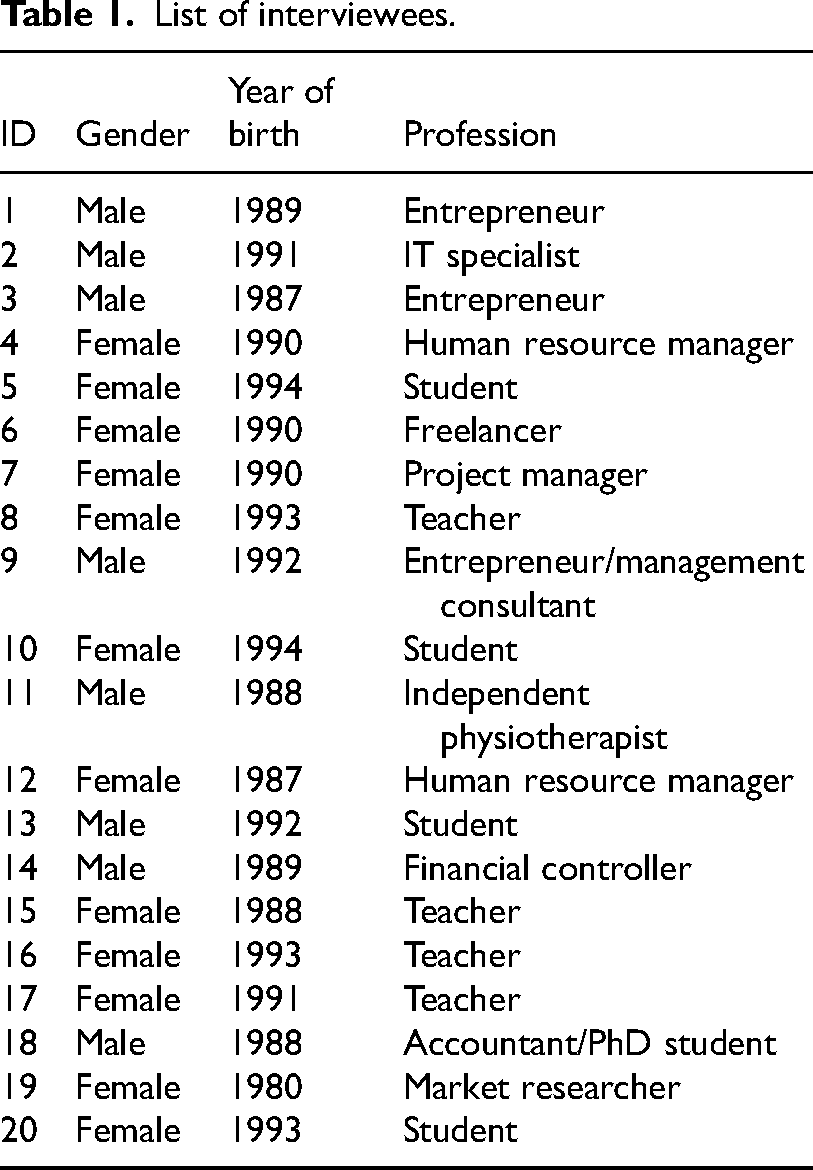
The interview guideline resulted from an extensive literature review related to family firms and Generation Y. Open-ended questions were chosen without prescribing a fixed order to delve into the perceptions of Generation Y, including being appropriately open to their narratives. For example, interview questions of Presas et al. (2014) “One of the things that we are especially interested in is how you have perceived and experienced familiness in your past activities as consumers of tourism family firms’ services. What can you tell us about that?” (p. 152), “How much do you value familiness in your travel experiences? Do you always value it positively?” (Presas et al., 2014: 152), and “What effect do you think branding familiness would have on improving the business of these firms?” (Presas et al., 2014: 152) were used. Further interview questions were based on Scholl-Grissemann et al. (2021) with “What differences do you see between family firms and non-family firms?” including that on family-run hotels (Botero et al., 2018; Carrigan and Buckley, 2008) with “What is your experience with family-run hotels?” The interview guideline also comprised questions relating to the literature on Generation Y, questions “How much do you value sustainability in family-run hotels?” being asked, building on Gardiner and Kwek (2017), or “How much do you draw inspiration for your own travel decisions from the experiences of others?,” based on Bento et al. (2018), Bush et al. (2004), and Viswanathan and Jain (2013). Considering the coronavirus disease 2019 (COVID-19) pandemic, the interviews were conducted and recorded via Zoom. Afterward, the interviews were transcribed verbatim for data analysis.
The flexible pattern matching approach was followed to explore and expand the theoretical background on Generation Y and family firms. This approach is based on matching existing theoretical patterns with collected empirical patterns (Bouncken et al., 2021; Sinkovics, 2018). First, the research question and an initial template (as theoretical patterns) were developed based on previous studies on Generation Y (Bento et al., 2018; Bush et al., 2004; Viswanathan and Jain, 2013) and family firms (Botero et al., 2018; Carrigan and Buckley, 2008; Scholl-Grissemann et al., 2021). The initial template served as an analytical framework for the process (for matching with the empirical patterns) (King et al., 2018; Sinkovics, 2018). Second, the empirical patterns were analyzed using Leximancer to illustrate the fundamental concepts of the collected interview data (Leximancer, 2023). Third, the aforementioned empirical patterns were matched against the corresponding theoretical patterns. This was achieved by means of a full qualitative data analysis, which was conducted with the software MAXQDA to streamline and standardize the process of analyzing the qualitative data. The innovative qualitative data analysis method helps to explore qualitative datasets from a universal perspective by reducing the subjectivity in usual qualitative content analysis (Goh and Wilk, 2022). Figure 1 illustrates the results of the Leximancer analysis (Leximancer, 2023) and visualizes the final coding template categories following the matching of the empirical and theoretical patterns in dotted circles.
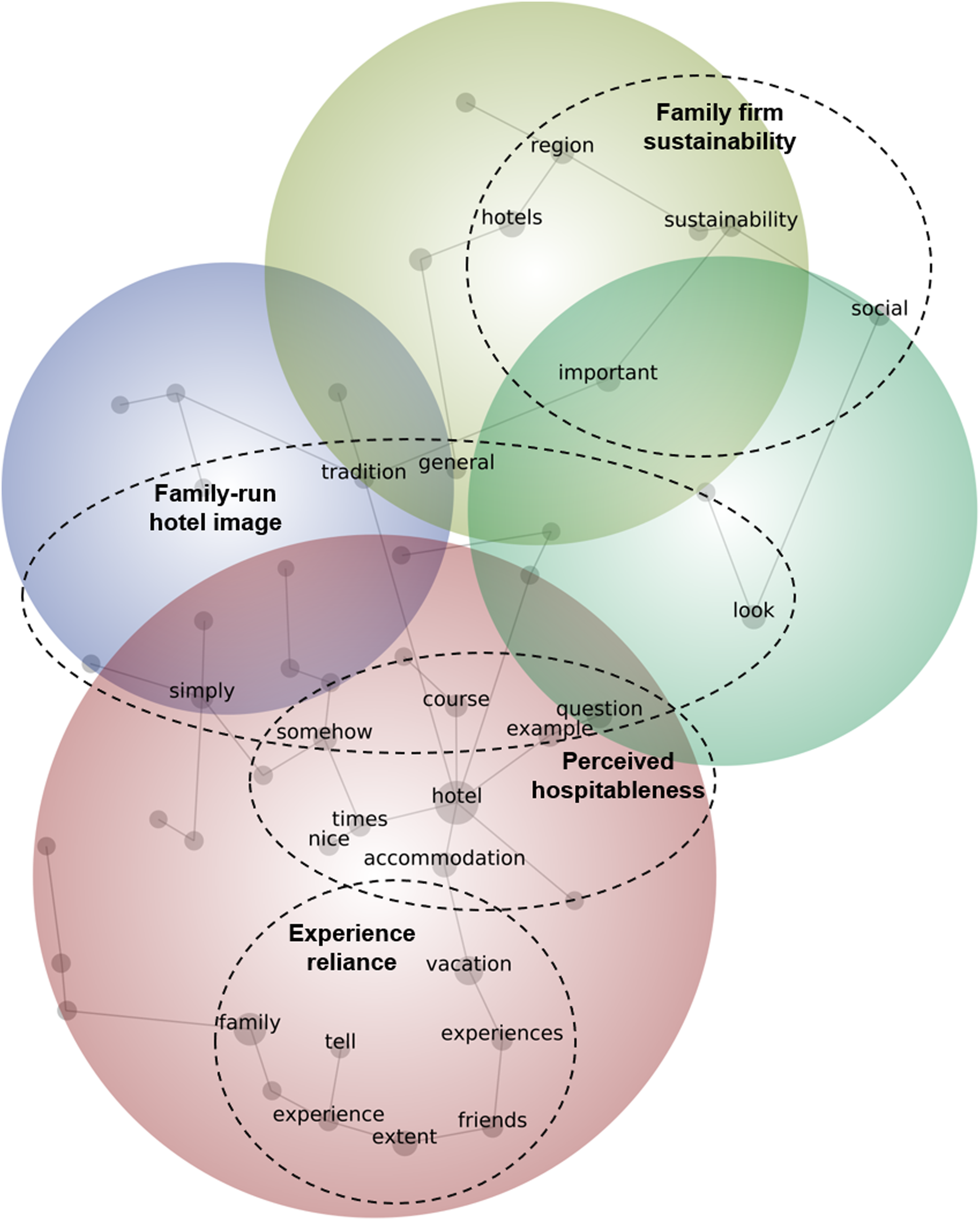
Empirical patterns developed with Leximancer (2023) and final template categories.
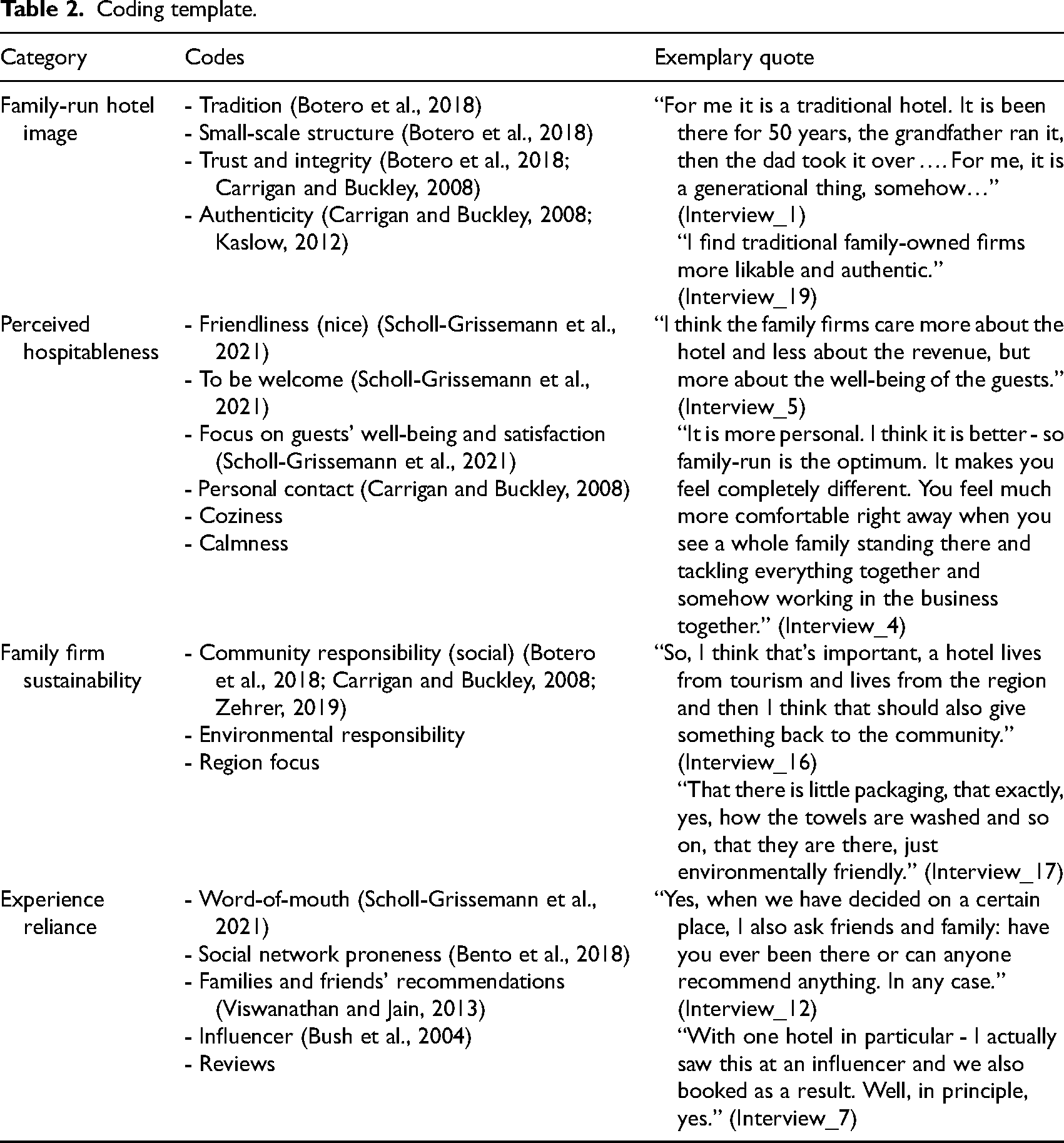
In the data analysis process, the initial template categories and codes were compared with the collected empirical patterns (Sinkovics, 2018), resulting in a final coding template (King et al., 2018). The present template serves to showcase the shifted patterns from the collected data (Sinkovics, 2018). A comparative analysis between the first Leximancer (2023) analysis (Figure 1) and the present model illustrates the evolution of the codes “simply” and “look” toward perceived authenticity. Additionally, the findings revealed that “nice times” were particularly linked to aspects such as friendliness, personal contact as well as coziness and calmness, as explicated through interviewees’ examples of feeling welcome or highlighted the “somehow” trust they associated with family firms. Table 2 illustrates the final coding template with the main results, illustrating the theoretical patterns that were able to be matched with the empirical data (where a reference is given), including new empirical findings (where no reference is given). We followed Lincoln and Guba (1986) to ensure trustworthiness in our qualitative research. In addition, two researchers handled the matching procedure (Bouncken et al., 2021) to enhance the reliability of the data analysis.
Coding template.
Results
Family-run hotel image
The analysis of the interviews shows that the family firm image is perceived to be favorable, and the image of family-run hotels is associated with tradition, small-scale structures, trust, and authenticity. Solely focusing on the interview data, the Leximancer analysis allowed identifying “tradition” as a key concept of Generation Y's perceptions. Matching with the theoretical background, following the flexible pattern matching analysis, demonstrates that Generation Y associates family firms with tradition, particularly relating to the context of time, that is, the same family runs firms over a longer period (over generations): There is a family atmosphere when several generations work together. That comes automatically, and it certainly makes a difference. (Interview_4)
Moreover, family-run hotels are regarded as being rather small: “I would say that if it's family-run, it's often a smaller hotel, a bit more personal.” Interview_1 and as the antithesis to hotel chains: A family-run hotel automatically creates a somewhat familiar, yes, feeling and I would also assess it as more personal than if it is somehow run by a large chain, the hotel, because large chains are usually more anonymous and impersonal, I would say. (Interview_10).
In addition, the Generation Y members ascribe trust to family firms: “So, if I had to choose, it would actually always be a family-run hotel. Because I think there's a greater chance that you'll be in better hands there and that you'll find what you want” (Interview_6). And describe family-run hotels as more authentic.
Perceived hospitableness
About their contact with family-run hotels, the interviewees particularly emphasize the special nature of hospitableness. In this context, family firms are described as being friendly, summarized as “nice” within the Leximancer analysis (Figure 1), having an extraordinarily welcoming culture, focusing on guests’ well-being and direct contact with them, and exhibiting pronounced coziness, and calmness. Friendliness is described as follows: But they are just friendly and you feel comfortable and you feel well welcomed there and your own needs are somehow well incorporated. (Interview_16)
Moreover, the atmosphere of family-run hotels contributes to their hospitableness by creating a welcoming culture: “So, I honestly appreciate family-run hotels because there is a family atmosphere there and yes, so that you feel that you are welcome” (Interview_10). In addition, according to the interviewees, their small-scale structure contributes to their coziness and calmness: “Let's say if a hotel is a little more personal, if there are fewer people and it is just a little cozier, if it offers the same service and food, etc. as a big hotel, then I prefer that” (Interview_1).
Moreover, the interviewees particularly emphasize the focus on guest satisfaction and well-being as the primary goal of family-run hotels: I simply believe that a family-run hotel is in a better position, because they are usually smaller, yes, to implement customer wishes and so on, in other words, to implement them more quickly, and yes, in non-family-run firms, I would say it's a bit more anonymous. (Interview_10)
The interviews furthermore reveal that it is beneficial to come into direct contact with the host families. The Generation Y interviewees report, for instance, personal greetings, contacts during meals, and particularly personal, the familiar atmosphere within family firms: I find it pleasant when you know who can be the contact person for certain situations or simply who is responsible for the house and I also find it nice when the hosts show themselves. (Interview_4)
Family firm sustainability
Sustainability emerged as a major concept for the interviewees in the empirical pattern analysis, following the Leximancer analysis. Regarding the ascription of responsibility to family firms, the interviewees primarily mentioned community responsibility: “They also contribute to the cohesion of the community” (Interview_5). In particular, this case is also evident in the empirical data analysis (Figure 1) with the fundamental concept “social” and its relation to the concept “sustainability.” To that end, Generation Y believes that family firms are more likely to give back to the region and the residents where they are located than non-family firms.
Moreover, the importance of environmental sustainability, in particular, focusing on avoiding waste and plastic within hotels, is highlighted by the Generation Y interviewees: Well, it's very important to me, and that was also the reason for choosing a family firm that was also, yes, sustainable, both from the construction, and you could eat there and that were just regional, seasonal products, some things also from their own cultivation, exactly, I think that's important. And then at breakfast, is it important whether the jam is packed in plastic or whether everything is in glass bowls, that there is little packaging. (Interview_17)
Additionally, the responsibility of family-run hotels is for the Generation Y interviewees to be associated with regionality (“region” in Figure 1): Regionality is particularly important to me, that is, that the products come from the surrounding area. It doesn't necessarily have to be organic, but at least the region itself is supported. (Interview_5)
Experience reliance
As shown in Figure 1, the experiences of friends and families play a key role for the interviewees (here, e.g., it was referred to with “tell” that family and friends about their experiences). Matching it with the theoretical background, in terms of communication options, the interviews with Generation Y highlight the importance of word-of-mouth. The interviewees themselves recommend family-run hotels and rely on recommendations from family and friends when booking family-run hotels: From friends, I would say, certain friends, the ones which have similar travel behaviors, they definitely influence me. (Interview_15)
Following further analysis, the Internet plays a key role in the information process for choosing accommodations for all interviewees. In this regard, particularly social network sites are highlighted: “Then I already look at Instagram or Facebook, then I already look at the hotel then, yes” (Interview_11), and “For me, the homepage is actually a bit more decisive” (Interview_6). In addition, the interviewees discuss that they are inspired by influencers (as also relying on others): I wouldn’t necessarily say that when I book a hotel, I look at how it's presented on Instagram, but every now and then, influencers, or social media draw my attention to certain hotels or vacation destinations, so, yes, I would say that, and I would also let myself be influenced by that, I guess. (Interview_10)
Furthermore, the importance of reviews in the communication process of Generation Y also becomes apparent: “I just look at the reviews on different websites” (Interview_8), thereby relying further on the perception of others: But of course I often let myself be guided by online reviews, because I have booked a lot for example Booking.com or similar and there are many reviews in it or you read through online reviews, exactly, and there I rely now rather than on now a judgment of someone I know, not because the person might be wrong, but simply because that has not happened yet, explicitly on the recommendation of someone else went somewhere else. (Interview_20)
Discussion
Theoretical contribution
With the current study, we contribute to previous research on Generation Y and family-run hotels in three ways. First, we extend research on Generation Y's perception by adding to the growing body of literature on Generation Y (Bento et al., 2018; Bush et al., 2004; Viswanathan and Jain, 2013) and expanding the literature to include Generation Y in the tourism context. Second, we contribute to a better understanding of how the characteristics of family-run hotels and their images are perceived by Generation Y as a target group, which shows great potential for the large family-run tourism industry (Ketter, 2021). Third, this study takes on a qualitative exploratory approach (involving innovative data analysis methods with a Leximancer analysis and flexible pattern matching approach) to address the perception of Generation Y. The study generated insightful and in-depth information on their preferences and represented a starting point for future research.
In line with organizational identity theory (Zellweger, Kellermanns, Eddleston, and Memili, 2012), this study illustrates that Generation Y perceives the family firm's core values in their image perception. The results show that Generation Y positively perceives the image of family-run hotels. Corresponding to previous research, tradition, and continuity, the small-scale structure, trust (Botero et al., 2018), and authenticity (Carrigan and Buckley, 2008; Kaslow, 2012) of family-run hotels contribute to their reputation. In particular, “tradition” emerged as a key concept in the Leximancer analysis, primarily associated with family-run hotels. Generation Y perceived hospitableness as important, based on friendliness, a welcoming culture, and a focus on guest satisfaction and well-being, as Scholl-Grissemann et al. (2021) indicated. Here, in particular, interviewees often associated family-run hotels with “nice.” In addition, personal contact with families as hosts is emphasized (Carrigan and Buckley, 2008). In terms of extending the theoretical background, the interviews show that coziness and calmness are associated with family-run hotels. However, contrary to the assumption that Generation Y individuals exclusively seek unique holiday experiences (Canavan, 2018; Chen and Chou, 2019), the interviews revealed the relevance of family firm characteristics. Thus, the key characteristics of family-run hotels, such as tradition and continuity, trust, integrity, authenticity, and their small-scale structure, including perceived hospitableness, seem to be even more relevant for Generation Y than the search for uniqueness. These findings support the assumptions of Astrachan et al. (2018) and Zellweger et al. (2010) that family firm characteristics contribute to family firm differentiation. In this regard, this study underlined favorable family firm images, as suggested by Presas et al. (2014), as a result of communicating and presenting family firm characteristics.
The results further prove that family firms’ social sustainability, as already highlighted in the literature (Botero et al., 2018; Carrigan and Buckley, 2008; Zehrer, 2019), is positively perceived by Generation Y (Gardiner and Kwek, 2017). Then, sustainability seems to also be relevant for Generation Y in non-family-run hotels (as emerging as a key theme following the Leximancer analysis). The anchoring and embeddedness of family firms in the regions contribute particularly to their community responsibility (Kuttner and Feldbauer-Durstmller, 2018; Zehrer, 2019) as social sustainability (Dyer and Whetten, 2006). Furthermore, in theory building, the importance of environmental responsibility and regionality becomes evident in the interviews. Previous research focused on the social responsibility of family firms (Dyer and Whetten, 2006) but neglected the environmental aspects of sustainability.
As shown in previous studies, the interviews demonstrate that Generation Y not only used social networks (Bento et al., 2018) but also indicated that they rely on recommendations from family and friends (Viswanathan and Jain, 2013), including influencers (Bush et al., 2004). This case emerged as fundamental concept “experience” in the empirical pattern analysis relating to “accommodation” and “vacation” (Figure 1). This reliance on the opinion of others thus might also be relevant for choosing non-family-run hotels. However, this corresponds to the importance of word-of-mouth for family firms, as Scholl-Grissemann et al. (2021) noted. In addition to this already perceived digital affinity of Generation Y (Bento et al., 2018), the contribution of this study lies in showing the relevance of reviews in the assessment of family-run hotels.
Practical implications
The study shows that Generation Y should represent a target group for family-run hotels. In addition, family firms with their special features can offer various benefits that can contribute to differentiation, building competitive advantages, and establishing sustainable customer relations. In summary, the following implications can be derived for family-run hotels targeting Generation Y.
On the one hand, the positive perception of the image of the family-run hotel can be used to address Generation Y members by communicating tradition and continuity and promoting trust and authenticity. On the other hand, immaterial factors are important to enhance perceived hospitableness. A cozy, calm, and personal atmosphere is important to Generation Y, which is more likely to be attributed to family-run hotels than large hotel groups. Such an atmosphere and the friendliness of the staff and hosts are essential points that contribute to Generation Y's perception. In this regard, family firms have a potential advantage as their informal character and lived values help to make interactions more personal and familiar.
Moreover, the regional anchoring of family-run hotels represents great potential, as Generation Y demands social and environmental responsibility. In addition, the importance of word-of-mouth can be emphasized, particularly for communicating with Generation Y. This can be improved, for example, through concrete actions, and measures to promote recommendations. In addition, family-run hotels shall communicate via social media, including influencers, and should also establish review management.
Limitations and future research
The present study explored Generation Y's perceptions of family-run hotels. The results contribute to an enhanced understanding of Generation Y in the tourism industry. Moreover, the findings of this study add knowledge to the family firm literature. However, the study is not without limitations, which are mainly related to the empirical methodology. First, subjective data are collected related to the perception of Generation Y. Second, the generalizability of the findings is limited owing to the number of interviews (20) with Generation Y individuals and the one point in time for data collection.
Although the study was exploratory in nature, a follow-up quantitative study is recommended to validate these results. Furthermore, the overall impact of the COVID-19 pandemic on tourism and, by extension, tourist perceptions, and preferences remain uncertain. Hence, future research can interrogate changing perceptions after recovery from the crisis. Future research could also look into other geographical areas to generate robust results and implications for Generation Y perceptions. Hence, more research is needed to assess Generation Y tourists and their perception of family-run hotel characteristics. The findings will help family-run hotels to target Generation Y in the future better.
Footnotes
Declaration of conflicting interests
The author(s) declared no potential conflicts of interest with respect to the research, authorship, and/or publication of this article.
Funding
The author(s) disclosed receipt of the following financial support for the research, authorship, and/or publication of this article: This work was supported by the Tyrol Tourism Research Centre of the Tyrolean Government (grant number 305074).
