




Abstract
Drawing on Flow theory and memorable tourism experience, this study explores the relationships between Flow, novelty, and interpersonal interaction and the impact on travelers’ satisfaction and memories. By applying a mixed-method approach and the critical incident technique to a once-in-a-lifetime leisure experience, 550 tourists recalled their experiences. The results reveal that Flow has a direct and positive influence on tourists’ satisfaction and memories of the experience. The findings highlight the role of novelty and interpersonal interaction in producing positive Flow. However, novelty and interpersonal interaction did not come out as significant to predict memories and satisfaction.
Keywords
Introduction
The concept of Flow, a state in which people are deeply immersed when enjoying an activity (Csikszentmihalyi, 1990), is an important factor that can help to trigger memory as an outcome of a memorable leisure experience. Flow can be of assistance to answer the question that has been remaining pertinent over the past decades in leisure marketing and tourism: “what exactly makes certain experiences memorable?” (Tung and Ritchie, 2011: 14). Since the 1980s researchers (e.g. Hirschman and Holbrook, 1982) have been trying to understand the intangible and subjective aspects of consumption and how experiences can be more engaging, rich, and memorable (Kim, 2016; Kim et al., 2010; Pine and Gilmore, 1998). Despite the progress made in a wide range of fields of study, from psychology (Maslow, 1964) to marketing (Brakus et al., 2009; Lemon and Verhoef, 2016); including tourism marketing (Adhikari and Bhattacharya, 2016; Ellis et al., 2019; Zhang et al., 2021) and hospitality (Coudounaris and Sthapit, 2017; Sthapit and Coudounaris, 2018), the understanding of what makes experiential consumption memorable remains unclear. Particularly in the field of leisure marketing and tourism, providing engaging and unforgettable event experiences, like a once-in-a-lifetime leisure experience (OLLE), is the prevalent paradigm guiding market operators (Kastenholz et al., 2018; Kim et al., 2012; Pine and Gilmore, 1998).
The research on memorable activities and events led to the development of several theories, such as effortless absorption (Woodworth, 1918), ecstatic experiences (Laski, 1961), peak experience (Maslow, 1962, 1964), Flow theory (Csikszentmihalyi, 1975), and memorable tourism experiences (Kim et al., 2012). The Flow concept, in particular, has stimulated extensive research in many fields and across several contexts, including learning, sports, gaming, music performance, and work and other daily activities (Aykol et al., 2017; Csikszentmihalyi and Lefevre, 1989; Jackson and Marsh, 1996; Kohoutkova et al., 2018). The Flow studies were targeted at uncovering the factors contributing to personal enjoyment and rewarding feelings of pleasure and happiness (e.g. Bonaiuto et al., 2016; Britton, 2010; Cohen and Bodner, 2019; Lee et al., 2019; Tarling, 2019). In the marketing and leisure context, Flow represents an optimal state associated with an enjoyable experience, in which individuals reach ecstasy (Ellis et al., 2019). Therefore, Flow is considered a key factor to turn leisure experiences into satisfying and remarkable events (DeMatos et al., 2021; Havitz and Mannell, 2005; Kazancoglu and Demir, 2021; Mannell and Iso-Ahola, 1987).
Despite its importance, Flow has only recently been seriously considered within the leisure and tourism contexts (e.g. Frochot et al., 2017). As posited by several authors, Flow is crucial for understanding the processes underlying the tourist's experience (Boudreau et al., 2020; Frochot et al., 2017) and its subjective evaluations and effects (Godovykh and Tasci, 2020; Mano and Oliver, 1993) since Flow has been associated with various (e.g. satisfaction) positive outcomes.
In search of what makes an experience memorable, several authors (Bakker, 2008; Bakker et al., 2017; Campos et al., 2020; Gohary et al., 2020; Sthapit, 2017) have identified and assessed several dimensions. Two, in particular, showed to influence the experience directly, but also its memorability and the individual's satisfaction: Novelty and interpersonal interaction (Chen et al., 2022; Skavronskaya et al., 2020; Sthapit et al., 2020). However, the contribution of Flow and novelty, and interpersonal interaction to tourists’ satisfaction and memories of their experience still requires further investigation since no agreement on the delimitation and interaction among these variables exists (Frochot et al., 2017). In addition, the understanding of how Flow impacts the overall leisure experience of tourists is also not clear (DeMatos et al., 2021), and, to our knowledge, the proposed relationships and measures have not been empirically tested, more so within the context of memorable OLLE events.
Therefore, the purpose of this study is to explore the role of Flow, novelty, and interpersonal interaction, and relationship with tourists’ satisfaction and memories of an OLLE event. Since Flow studies in the leisure area presented unclear definitions of the Flow construct (DeMatos et al., 2021; Huang et al., 2020), or lack specificity in terms of its measurement (Kaur et al., 2016; Lee et al., 2019), this research contributes to the understanding of Flow conceptualization, measurement, and consequences in terms of memorability within the leisure and tourism marketing field (Huang et al., 2020; Kaur et al., 2016; Lee et al., 2019). Research opportunities are presented for academics and practitioners to understand better how Flow, novelty, and interpersonal interaction impact individuals’ satisfaction and memories of OLLE events.
Literature review and hypotheses
The Flow theory was introduced in the 1970s by Csikszentmihalyi (1975) to understand and explain why individuals become so immersed in specific activities to the extent of neglecting their sleep or food, even at the cost of their physical welfare. Since then, several authors have put forth definitions for the concept based on the original conceptualizations of Flow being “the holistic sensation that people feel when they act with total involvement” (Csikszentmihalyi, 1975: 4), a state of ecstasy (Csikszentmihalyi, 1990) or an intrinsically enjoyable experience (Novak et al., 2000). Among these, Ullen et al. (2012: 167) succinctly described Flow as “a state of concentration, low self-awareness, and enjoyment that typically occurs during activities.” Faiola et al. (2013: 1113) address it as “a highly enjoyable state of consciousness that occurs when our skills match the challenges that we are undertaking.” Pondering these and other conceptualizations, we first conclude that the Flow concept has been developed to understand intrinsically rewarding and enjoyable autotelic activities (Csikszentmihalyi, 2014; Fong et al., 2015; Nakamura and Csikszentmihalyi, 2014). Secondly, that Flow is related to individual skills and tasks, activities, or actions being performed, and its duration is most likely very short (Riva et al., 2017). As such, according to Nakamura and Csikszentmihalyi (2009), the state of Flow has nine dimensions (Figure 1) that can be divided into two different moments (before and during Flow) and that three antecedents need to be met for the Flow process to occur.
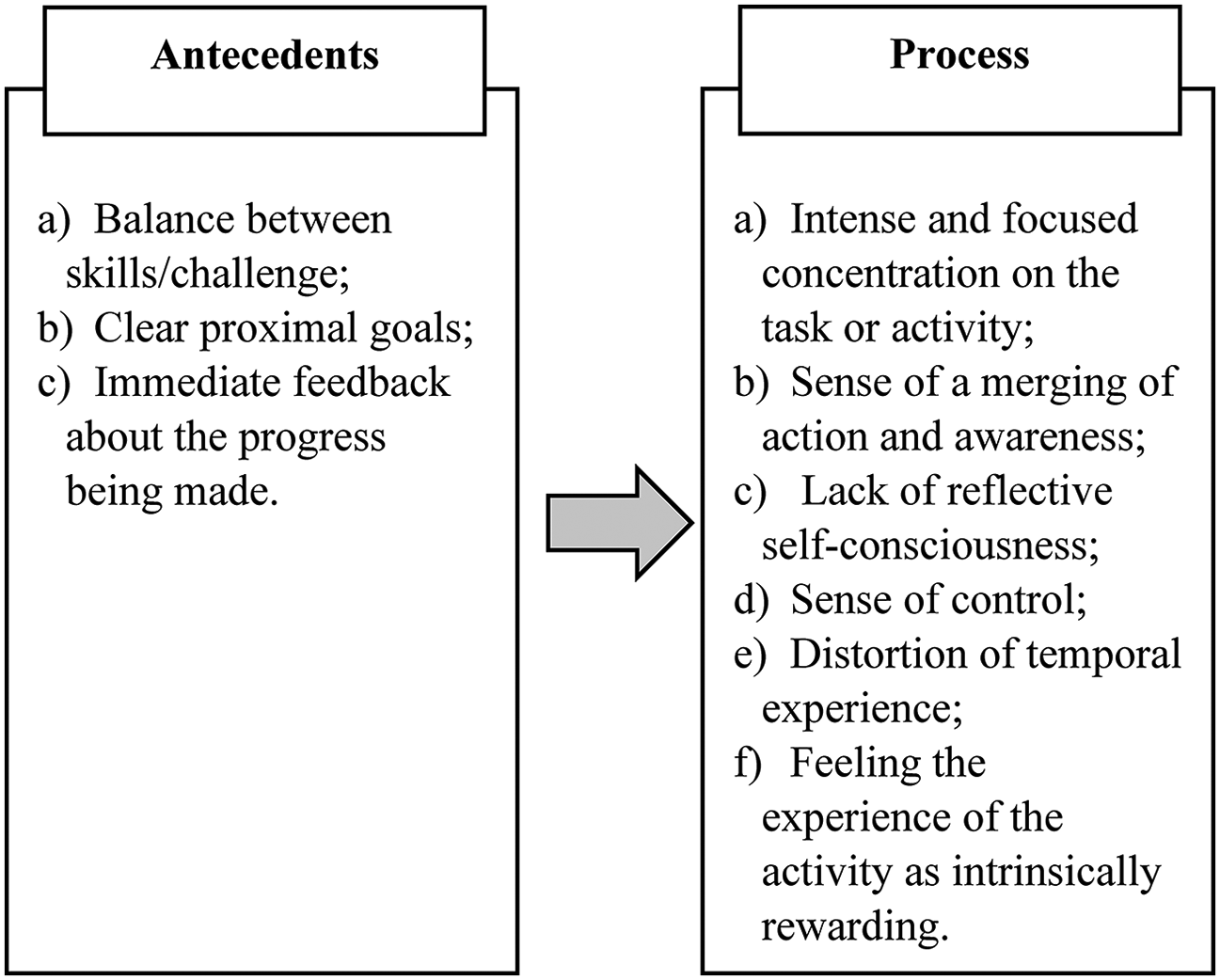
The nine dimensions of Flow.
The intense academic debate following 1975 led to the rapid growth of interest in the Flow concept among academics (e.g. Jackson, 1996) in the 1980s and 1990s. Consequently, its theoretical and empirical development contributed to the proposal of different models leading to different methodological approaches to Flow analysis. The initial empirical studies (e.g. Csikszentmihalyi et al., 1977; Csikszentmihalyi and Lefevre, 1989) favored the experience sampling method. Later, Jackson and Marsh's (1996) proposed an operational scale that became one of most known and developed to date, followed by two other (long) scales to measure Flow: dispositional Flow scale 2 (DFS-2) and Flow state scale (FSS-2) (Jackson and Eklund, 2002; Jackson et al., 2008).
Despite the improvements in the methods to assess Flow, particularly in the tourism context (e.g. Kim and Thapa, 2018), Flow remains a concept that is difficult to operationalize as its dimensions weigh differently across studies and contexts, leading to diverse meanings and understandings (Frochot, 2019; Lee et al., 2019). In this regard, Abuhamdeh (2020) argues that the developments in the Flow concept since Csikszentmihalyi's early studies have been modest. Some studies suggest that leisure and tourism experiences can provide a rich ground to go beyond the extant theoretical framework and advance the understanding of Flow (Kim and Thapa, 2018; Woeran et al., 2012).
The role of Flow in the tourists’ satisfaction and memories
In the tourism context, leisure experiences have the particularity of conveying the Flow characteristics (Cini et al., 2013; Ellis et al., 2019b; Morgan, 2008; Oh et al., 2007; Pine and Gilmore, 2011). Mannell and Iso-Ahola (1987) are among the first to suggest that Flow is at the very basis of the leisure experience, with total involvement in an event being one of its crucial elements. Literature has suggested that Flow can have a strong and positive effect on tourists’ satisfaction (Chen et al., 2017; Mannell and Iso-Ahola, 1987). Tourists’ satisfaction is not merely about the perceived service quality. However, instead, it results from something consumed or experienced and an attitude change resulting from the fulfillment that the consumer gets from consumption (Liang and Zhang, 2012; Pizam et al., 2016). Recent studies have recognized the strong relationship between the Flow state and satisfaction, for instance, in the context of paragliding (Ayazlar and Yüksel, 2018), scuba diving (Cater et al., 2021), and ecotourism during tour package activities (Kim and Thapa, 2018). Considering these indications, we argue that:
Tung et al. (2017: 853) suggest that “experiences are fundamentally based on an individual's LTM [Long-term memory],” and though memories have been addressed in the past, there is yet much to learn regarding memorable experiences. Instead of ordinary, offering memorable experiences has been deemed important by tourism practitioners and scholars (Bigne et al., 2020; Kim and Chen, 2019; Kim and Ritchie, 2014; Kim et al., 2012). Memories are the most influential customer information source (Lehto et al., 2004). Therefore, the investigation has tried to identify and measure the unique elements of the experience that are worthy of being remembered by customers since memorable experiences are the raison d’etre of leisure events (Larsen, 2007; Pine and Gilmore, 1998; Pizam, 2010; Ye et al., 2021). The motivation for this research quest lies in the value customers ascribe to experiences stored in memory, which can be recalled and revisited (Pung et al., 2020). Moreover, it has been suggested that during vacation events, tourists will experience emotions that are likely to lead to memories (Buckley et al., 2022; Stienmetz et al., 2021). Flow, a state in which individuals experience emotions such as enjoyment (DeMatos et al., 2021), can influence the participants’ memory (Kim and Thapa, 2018). As recently verified by Ding and Hung (2021) in the context of a music festival, based on the above, the following hypothesis is proposed:
The role of novelty in tourists’ Flow, satisfaction, and memories
There are indications that Flow, satisfaction, and memorability may, in turn, be explained by the novelty (e.g. Skavronskaya et al., 2020) of the OLLE event that travelers experience during their leisure time. Novelty is relevant considering the tourists’ willingness to experience new and complex events, sensations, and feelings (Assaker et al., 2011; Skavronskaya et al., 2020; Wei et al., 2019). Novelty has been found to be related to Flow (Chen et al., 2020; Teng, 2011) and satisfaction since tourists seek novel experiences (Assaker and Hallak, 2013; Mitas and Bastiaansen, 2018; Skavronskaya et al., 2020; Wei et al., 2019). Previous studies also suggest that novel experiences (positive or negative) not only impact the customers’ memories (Skavronskaya et al., 2020) but also the vividness of their experience recollection (Wei et al., 2019). Despite some developments, the relationship between novelty, satisfaction, and memories is not yet explicit nor clear (Assaker and Hallak, 2013) and needs further development (Skavronskaya et al., 2020; Mitas and Bastiaansen, 2018). Therefore, we propose the following hypotheses:
The role of interpersonal interaction in tourists’ Flow, satisfaction, and memories
In tourism leisure activities, extensive research suggests that interpersonal interactions impact customers’ experiences (Campos et al., 2020; Choo and Petrick, 2014; Park and Santos, 2016). Interpersonal interaction can be defined as “the expectation of encountering and relating to familiar social stimuli and being exposed to unfamiliar social stimuli during experience” (Campos et al., 2020: 3120). Tourists are involved in experiences mediated by interactions with other tourists and residents (Coudounaris and Sthapit, 2017). Thus, when engaged in leisure events, travelers value collectivistic experiences with other people, friends, family, or relatives (Wei et al., 2019). As such, personal interactions with others will affect customers’ behavior during the experience, that is, when Flow occurs (Buonincontri et al., 2017; Liu et al., 2016). Thus, these interactions can contribute to the experience quality and influence positively tourists’ satisfaction and memories (Campos et al., 2016; Huang and Hsu, 2010). We posit that:
The role of satisfaction in tourists’ memorable experiences
The research on consumer satisfaction has been extensive and is central to the marketing concept and firms’ performance (Fournier and Mick, 1999). The comparison between pre-purchase expectation and the product or service consumption will lead to a cognitive response, either satisfaction or dissatisfaction (Oliver, 1980; Pizam et al., 2016). In addition to a cognitive assessment, satisfaction can also be associated with memories (Ding and Hung, 2021; Kastenholz et al., 2018). However, since satisfaction varies over time (Giese and Cote, 2000), the relationship between satisfaction and memories would benefit from further support (Ali et al., 2016b; Oh et al., 2007; Pestana et al., 2020; Su and Hsu, 2013). Thus, we argue that:
The above discussion on the Flow experience and related variables supports the proposed conceptual model in Figure 2. Considering the extant literature, the authors suggest the positive influence of Flow, novelty, and interpersonal interaction on satisfaction and memories during an OLLE (Buonincontri et al., 2017; Cater et al., 2021; Ding and Hung, 2021; Kastenholz et al., 2018; Skavronskaya et al., 2020). From this perspective, it is also proposed that novelty and interpersonal interaction may positively influence the Flow experience (Chen et al., 2017; Chen et al., 2020; Teng, 2011).
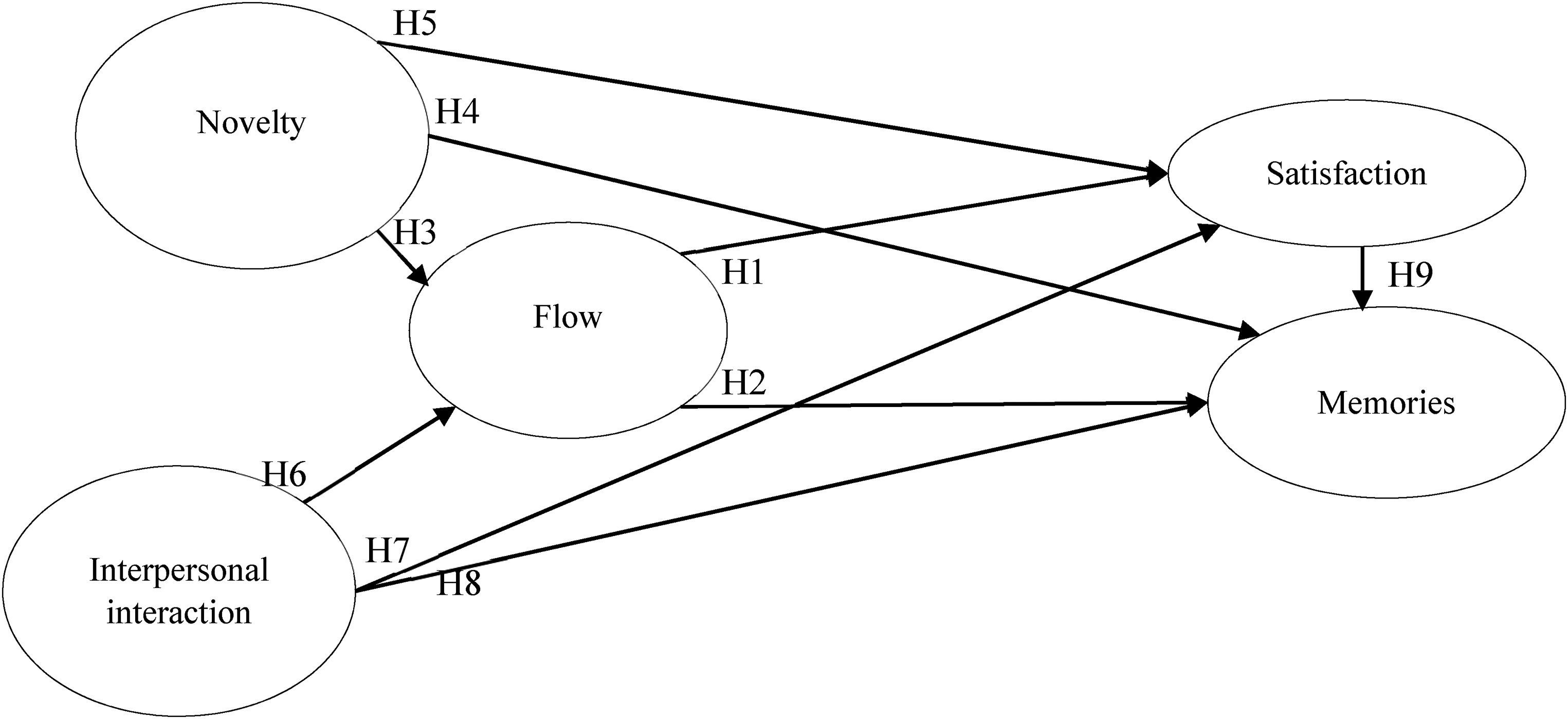
Proposed model of the OLLE.
Methodology
Research design
To explore the impact of tourists’ Flow, novelty and interpersonal interaction on satisfaction and memories resulting from OLLE events, this study assesses leisure experiences in the context of tourism. Tourism is recognized by providing highly engaging experiences in which these variables are critical (Campos et al., 2017; Dias et al., 2017). For this purpose, the study uses the critical incident technique (CIT) approach. CIT was introduced by Flanagan (1954) and became a popular method in social sciences because it allows identifying and collecting complex behaviors and events of individuals who have had a first-hand experience systematically and simply (Rosala, 2020).
CIT can be found in previous studies within the current field of research (e.g. Li et al., 2021). Following previous uses of CIT, the study participants were invited to identify and remember one memorable incident, their OLLE event, in the tourism context and answer several open-ended questions regarding the details of the OLLE (Barnes et al., 2016; Gohary et al., 2020). These questions allowed the respondents to remember a specific OLLE before answering the remaining sections of the questionnaire, composed of close-end questions (Li et al., 2021).
Sampling and data collection
The data were collected through an online survey using a convenience sampling technique from May to July 2021. The self-report questionnaire was divided into seven sections based on scales validated in previous studies and contexts. Small adaptations were made to fit the scope of the study.
The first section sought to qualify the participants about the OLLE and resulting memories by asking them to identify the year, location, and context of the experiential event, using three open-ended questions. The second section measured Flow using Kim and Thapa's (2018) scale which includes first a definition and description of flow state, followed by a 3-item scale. The third section dedicated to the novelty construct that used three items adapted from Gohary et al.'s (2020) scale. The fourth section assessed interpersonal interaction using Moore et al.'s (2005) scale. Satisfaction with the leisure experience remembered was assessed in the fifth section using the 5-item scale from Hasan et al. (2019). The sixth section measured the memorable nature of the experience using Wei et al.'s (2019) 5-point Likert memory scale. The final section collected the demographic data and the number of times the participants visited the location where they had the OLLE.
The questionnaire was sent to two tourism and marketing academic experts for validation (Khan and Rahman, 2017). The questionnaire was redesigned according to minor recommendations for changing the order and sequence of questions, and for correcting typos. Afterwards, it was pre-tested with 49 respondents leading to some small changes to improve the understanding. The original questionnaire was made in English and then translated to Portuguese by a native professional and proofread (Kim, 2012; Kim and Thapa, 2018). The survey was disseminated using e-mail contacts from the researchers and social media platforms, namely Facebook. A total of 678 responses were obtained, but only 550 questionnaires were returned completed and thus considered valid for analysis.
Data analysis
SPSS v27 was used to assess the participants’ demographic profile and descriptive statistics. Inductive content analysis was employed to code and categorize the OLLE events. This type of analysis is common in marketing and tourism literature (Govers and Go, 2005; Nelson and Paek, 2007) due to its content-sensitive nature and capacity to assess open-ended questions datasets (Kyngäs et al., 2020). Following the recommendations by Wattanacharoensil and La-ornual (2019), the results of the coding process were reviewed by two other researchers and assessed using SPSS for Cohen's kappa coefficient (81.9%). The review process leads to inter-coding category reliability between both researchers of 82%. Since 18% of the inter-coding categories did not generate consensus among the researchers, these categories were once more discussed and categorized jointly by the two researchers (Wattanacharoensil and La-ornual, 2019). The scales were assessed for convergent validity, discriminant validity, and composite reliability. Afterwards, based on Ali et al.'s (2018) suggestions, structural equation modelling (SEM) was used to evaluate the relationships between the constructs. PLS-SEM was selected as this technique was adequate to the nature (exploratory) and objective of the study (to explore the role of Flow, novelty, and interpersonal interaction, and their relationship with tourists’ satisfaction and memories of an OLLE event). PLS-SEM is used to assess relationships between constructs and determine their ability to predict an outcome or dependent variable (memories in our case).” In fact, PLS-SEM is adequate when the analysis is concerned with testing a theoretical framework from a prediction perspective, when the model is complex and normality of the sample may be a concern (Hair et al., 2019) due to the use of non-probabilistic sampling approaches, as in the current study. The technique selected for estimating the path coefficients in the structural model was the partial least squares (PLS) path modelling. This technique is appropriate to work with small samples and non-normal data and has been widely accepted in academia, particularly in the tourism marketing area and by the industry practitioners (e.g. Ali et al., 2016; Campos et al., 2017). The software to perform the analysis was SmartPLSv3.3.9 (Ringle et al., 2015).
Results and discussion
Demographic profile and leisure experience description
The respondents are predominantly female (64%), aged between 18 and 25 (31.2%), Portuguese (66%), single (45.3%), who have completed undergraduate education (38.4%). Regarding the visiting frequency of the place where the OLLE took place, most participants (59.3%) visited it for the first time (Appendix 1). Their time at the event location lasted mostly between 6 and 10 days. The more frequent travel partners were family members (51.5%). The OLLE events were reported during several years (Figure 3). However most recent years yield a higher number of OLLE events: 2019 (n = 120), 2018 (n = 73), and 2017 (n = 57). Some experiences were lived during the COVID-19 outbreak, particularly in 2020 (n = 41) and up to July of 2021 (n = 8).
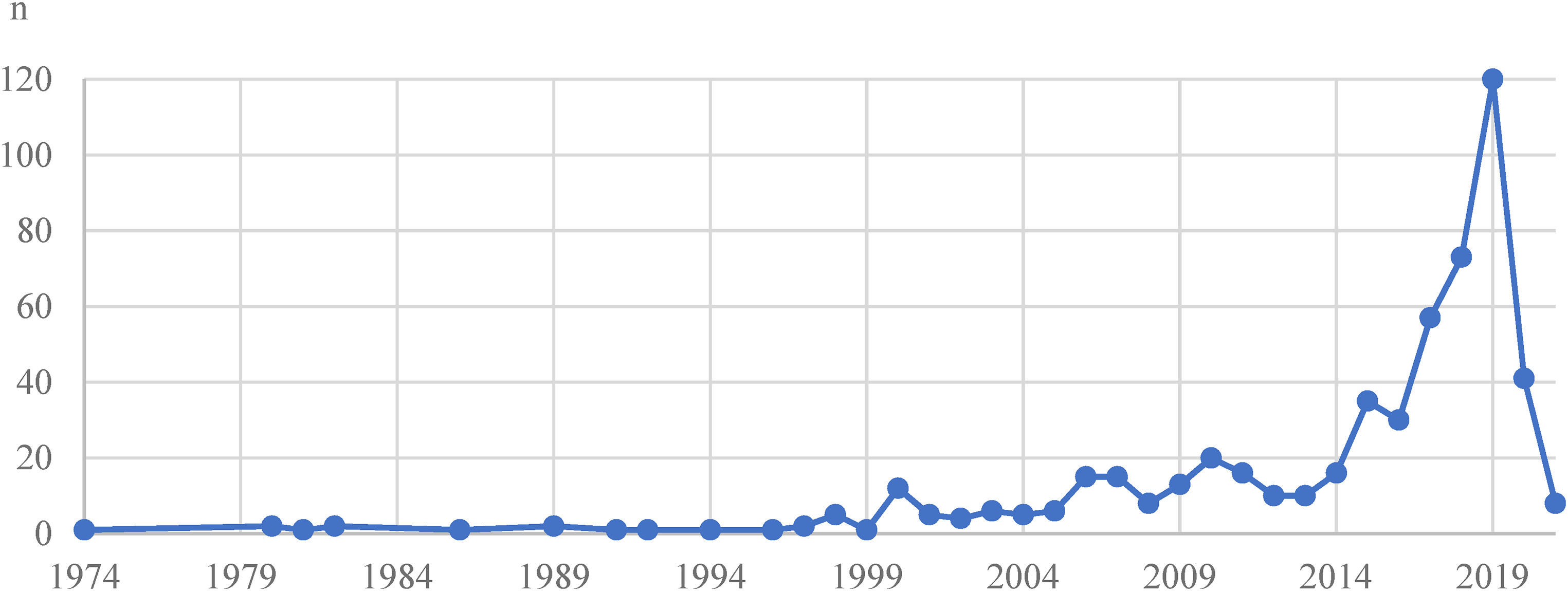
Year of the OLLE.
The most frequent type of OLLE (Figure 4) involved experiences associated with unique natural, built, and cultural characteristics of the destination (n = 239) followed by experiences associated with tourism facilities, activities, and attractions (n = 173), interrelationship experiences (n = 47), experiences with personal significance (n = 39), and novel experiences (n = 35).
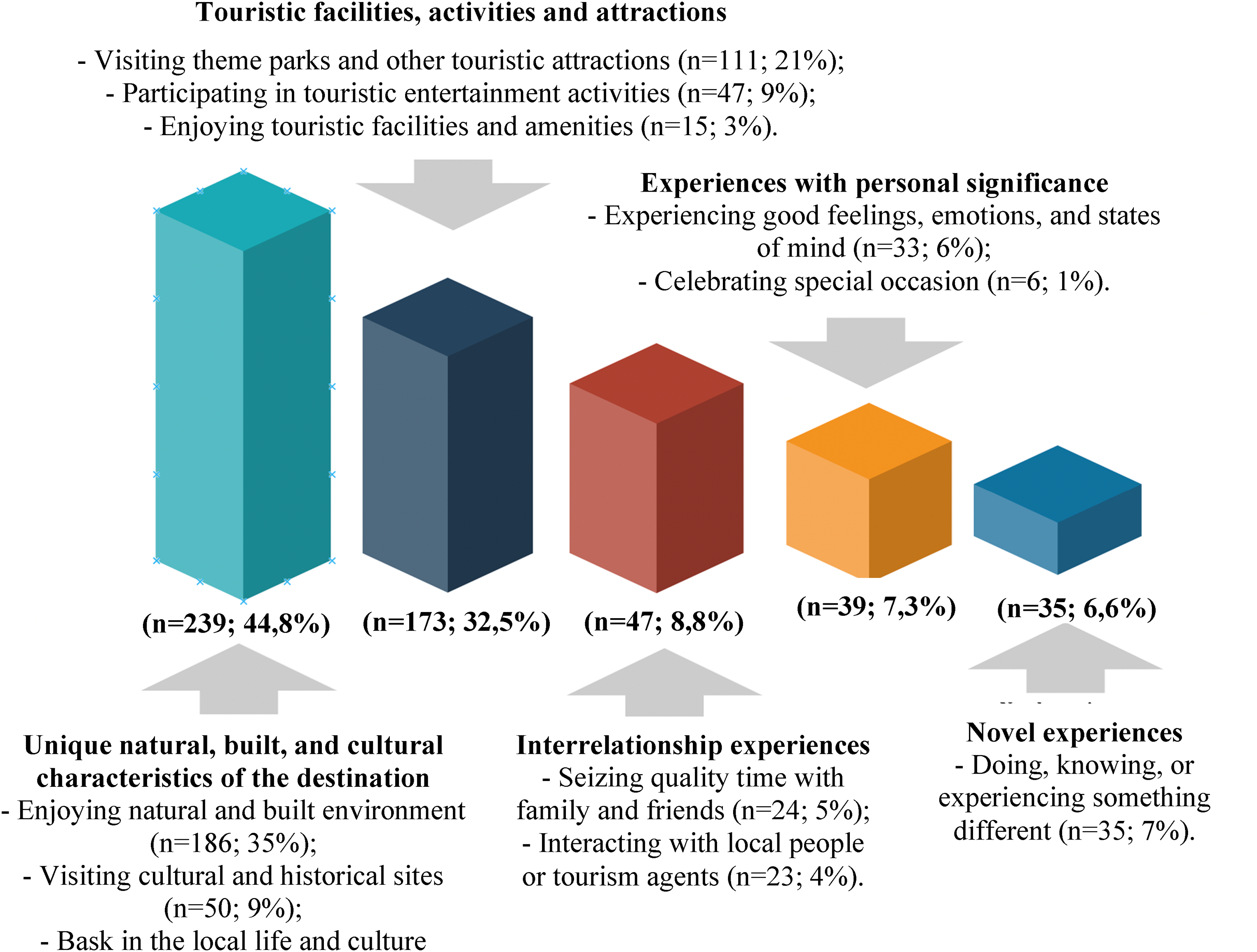
OLLE experienced by travelers.
The exact location of the experiences can be traced almost all around the world since 55 countries were identified. Regarding the continental region and countries, Figure 5 shows that most of the respondents’ OLLE events were experiences in Europe (64%) and America (19%). In Europe, the most common location was the Algarve (n = 43), Paris (n = 20), Barcelona (n = 13), and Rome (n = 12).
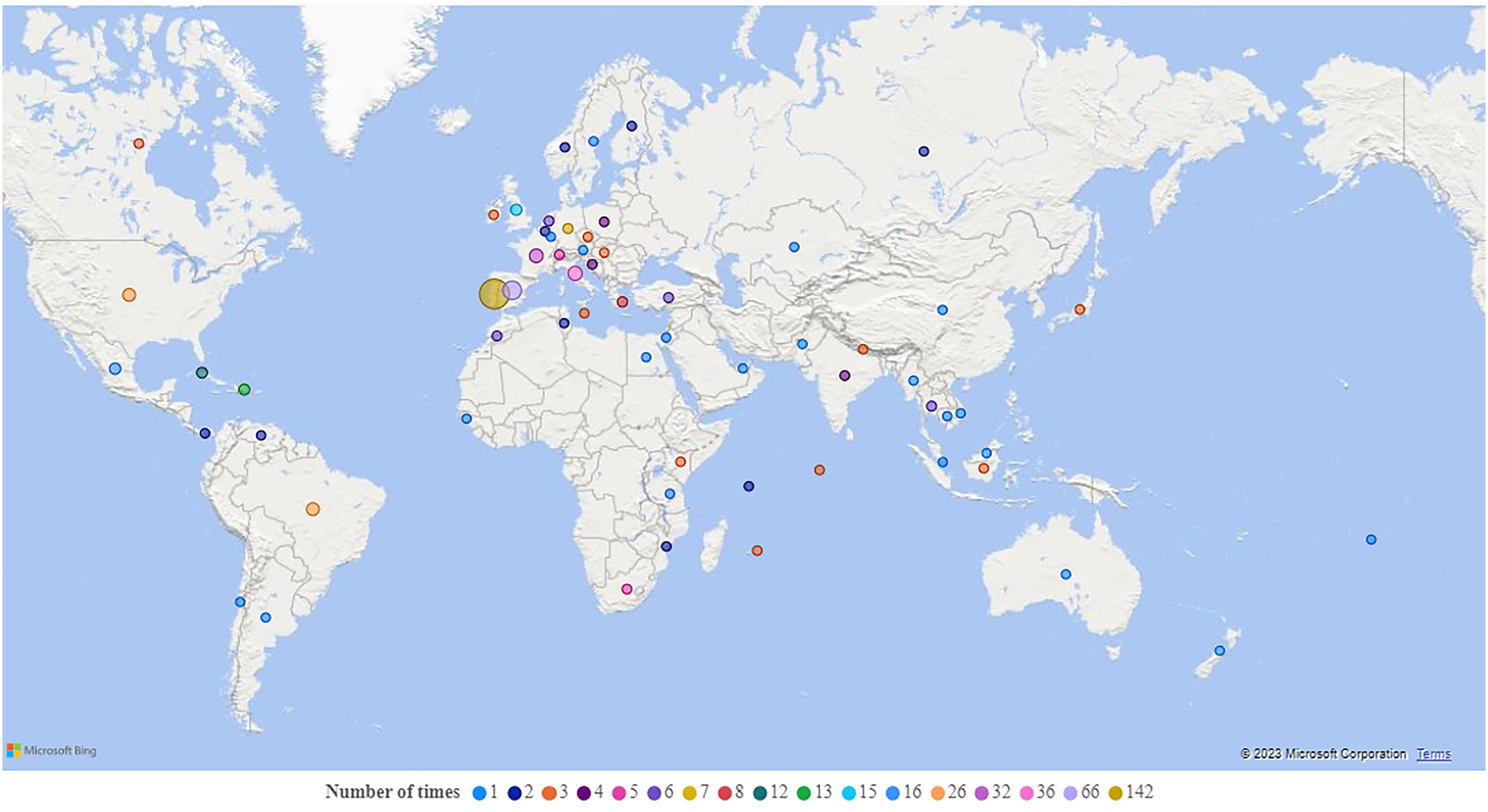
Location of the OLLE in which Flow was experienced.
Measurement model
The standardized factor loadings, average variance extracted (AVE), composite reliability, Cronbach's α, and the rho_A were computed to assess the reliability and validity of the measurement model (Ali et al., 2018). The results indicated that only two factor loading did not reach the 0.707 standard threshold. However, considering that the value was above the minimum acceptable level of 0.4 proposed by Hulland (1999) and Wong (2013) and all other indicators were above 0.707, it was decided to keep them in the model.
The remaining values of composite reliability (ranging from 0.836 to 0.949), Cronbach's α (ranging from 0.709 to 0.929), and rho_A (ranging from 0.724 to 0.929) allowed to validate the adequacy of the measurement model (Bagozzi and Yi, 1988; Hair et al., 2017; Müller et al., 2018) (Table 1).
Validity and reliability of the constructs.
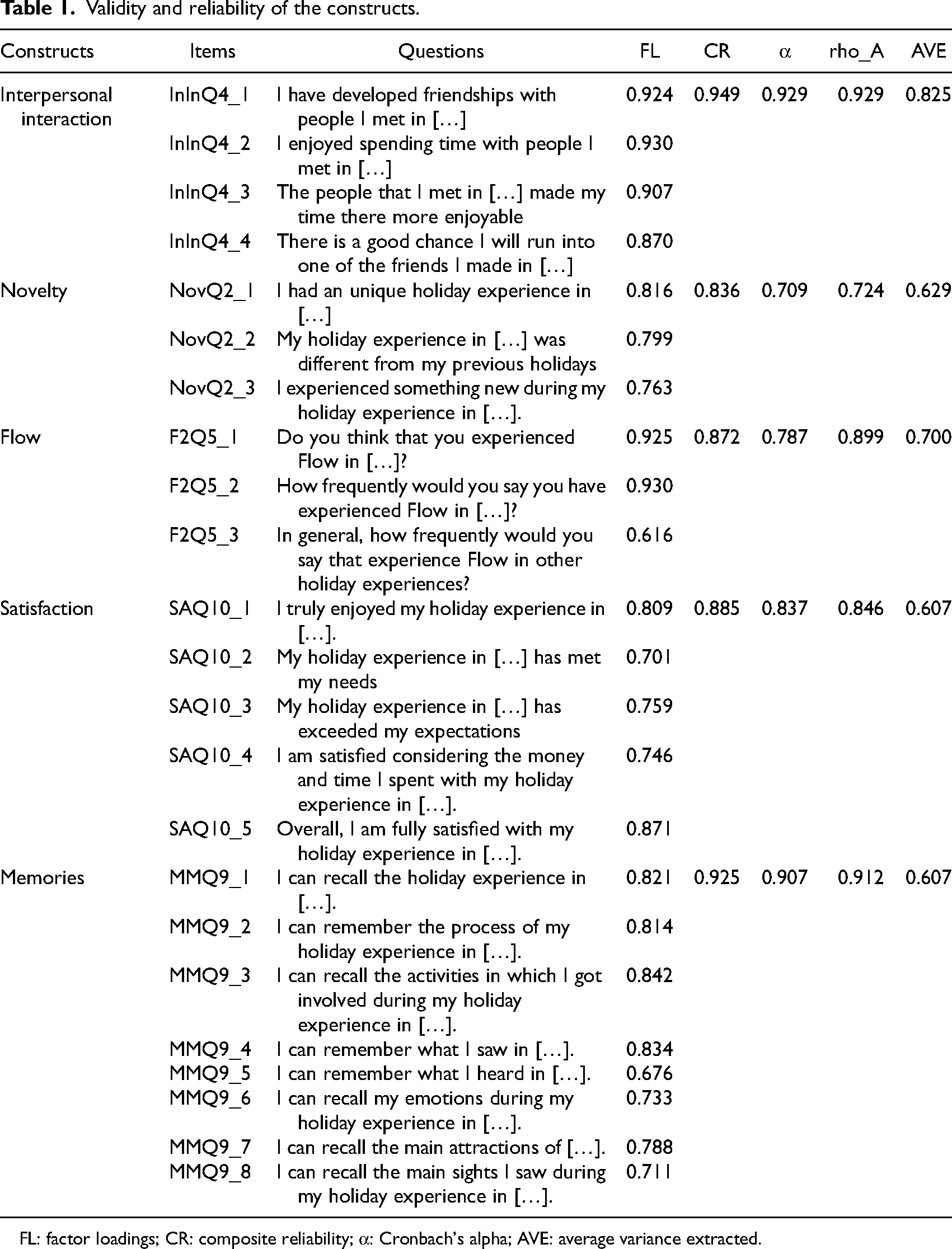
FL: factor loadings; CR: composite reliability; α: Cronbach's alpha; AVE: average variance extracted.
The AVE (ranging from 0.607 to 0.825) are above the acceptable threshold of 0.5, confirming the convergent validity of the constructs (Hair et al., 2019). The discriminant validity was examined by employing the Fornell and Larcker (1981) criterion and the Heterotrait-Monotrait (HTMT) ratio of correlations proposed by Henseler et al. (2015).
The square root of the AVE of each variable was calculated to verify if the result was larger than the correlation values in the respective row and column. Table 2 shows that all the results are acceptable (Hair et al., 2019). The HTMT ratio of correlations was also calculated and confirmed that the discriminant validity is well established since all values are below the threshold of 0.9 (Franke and Sarstedt, 2019; Henseler et al., 2015) (Table 3).
Results of the structural model.
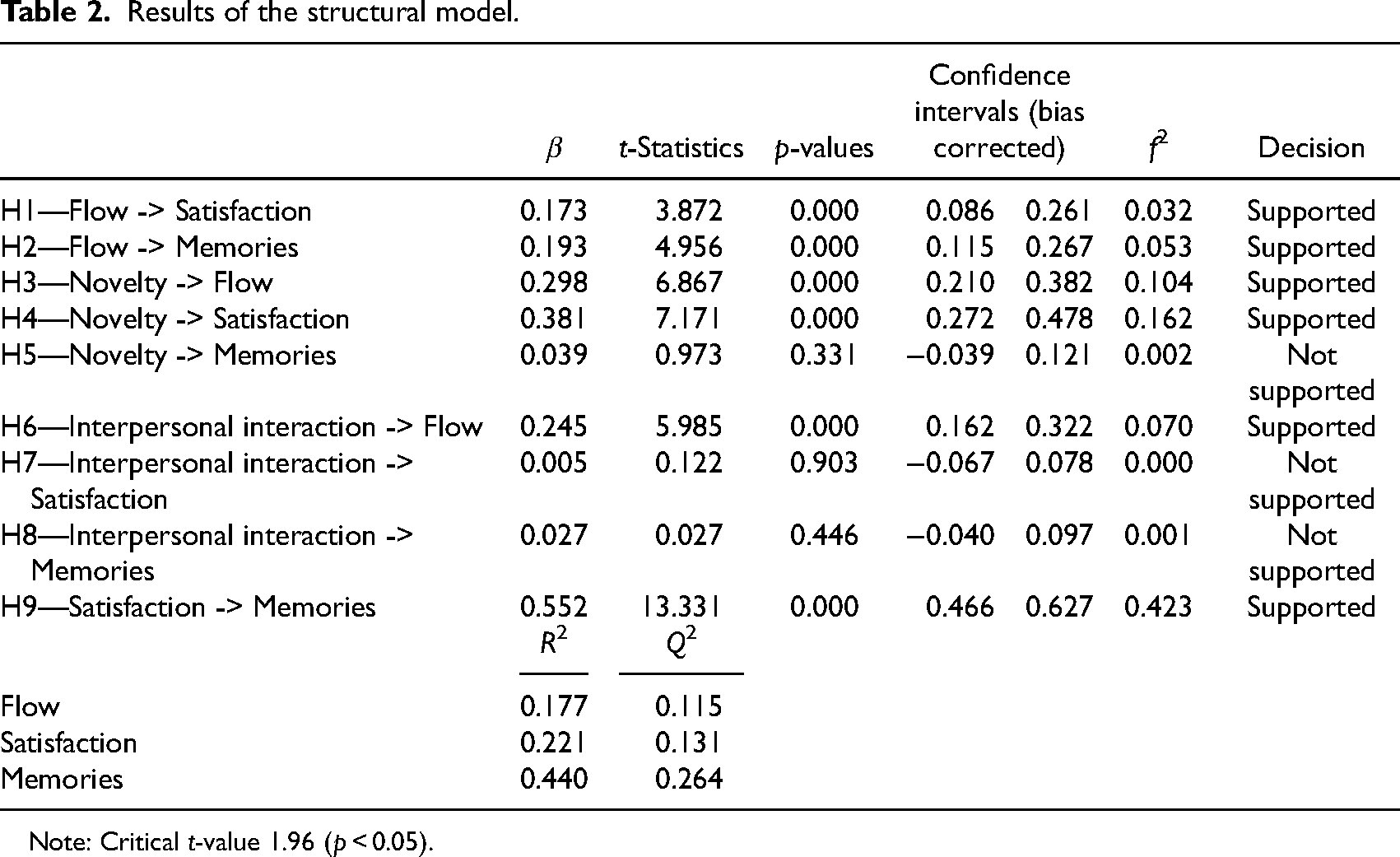
Note: Critical t-value 1.96 (p < 0.05).
Discriminant validity assessment.
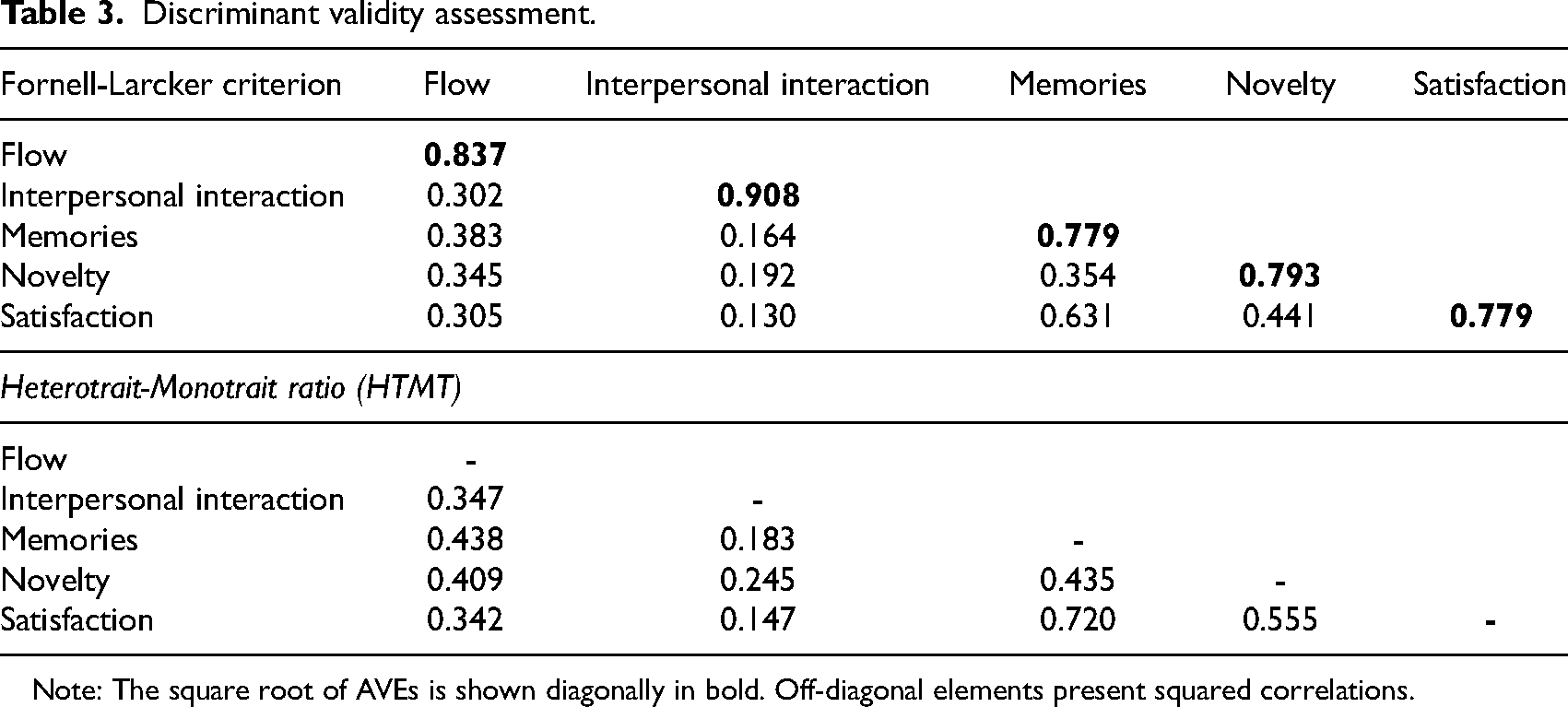
Note: The square root of AVEs is shown diagonally in bold. Off-diagonal elements present squared correlations.
The tests show that the measurement model is internally consistent and reliable and indicates acceptable discriminant validity, allowing us to proceed with the structural model analysis.
Structural model
The structural model was assessed to gauge the relationships among variables and test the proposed hypotheses. Table 2 presents the path coefficient, t-values, p-values, and confidence intervals. The results show that two-thirds of the hypotheses were confirmed, namely H1, H2, H3, H4, H6, and H9. However, hypotheses H5, H7, and H8 were not supported by the data.
The findings reveal differences in the effect size (f2) which ranges from 0.032 for the relationship between Flow and satisfaction (H1) to 0.423 for the relationship between satisfaction and memories (H9). The values of R2 range from a high (e.g. memories) to a low value (e.g. Flow) (Figure 6). In behavioral sciences, an R2 higher than 0.2 is usually considered high (Rasoolimanesh et al., 2017; Rasoolimanesh et al., 2019). The Blindfolding technique with an omission distance of 7 (Hair et al., 2012; Hair et al., 2017) was employed to verify the predictive relevance of the model (Chin, 2010) through the Stone-Geisser's Q² value. The values of Q2 for Flow (0.115), satisfaction (0.131), and memories (0.264) showed that the model has acceptable predictive relevance since all values are greater than zero (Ali et al., 2016a). Mediation effects were also tested. The results show that when Flow and Satisfaction are both absent, the relationship between novelty and memories becomes significant (B = 0.247, t = 4.815, p = 0.000). No other mediation effects were found.
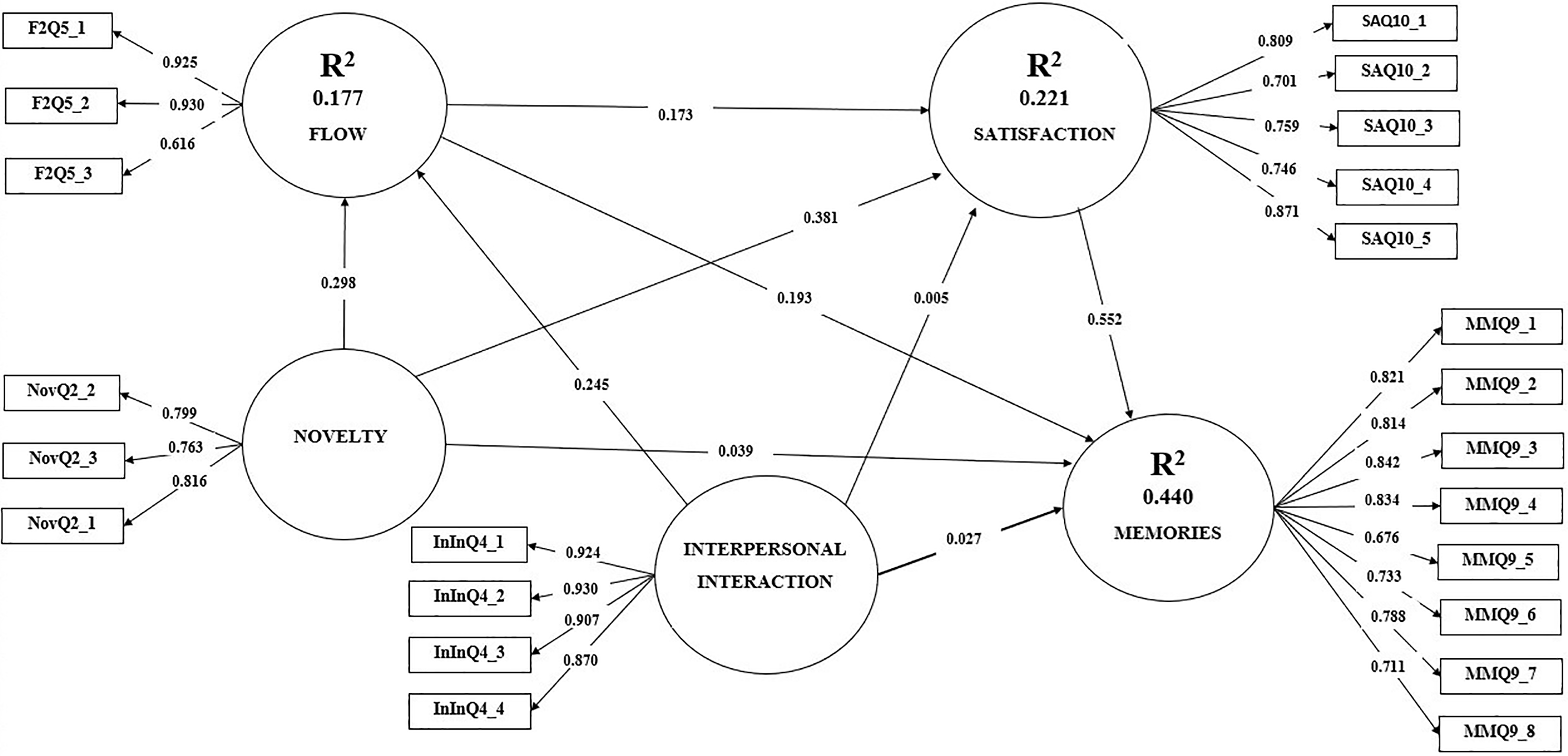
Structural model results.
Discussion
The findings show that Flow positively influences tourists’ satisfaction (H1) and their memories of the experience (H2). These results support the research proposing that Flow can increase tourists’ satisfaction (Chen et al., 2017) and has a positive influence on customers’ memorable experiences (Ding and Hung, 2021). The study further investigated the impact of the experience novelty on Flow (H3) and satisfaction (H4). The findings indicate that the novelty of the experience contributes to the tourists’ Flow and satisfaction. These results align with previous studies highlighting that Flow is connected with novelty-seeking experiences (e.g. Teng, 2011). Also, they are consistent with the proposition that novelty is a critical factor to tourists, influencing their satisfaction (Assaker and Hallak, 2013; Lee et al., 2017; Mitas and Bastiaansen, 2018; Skavronskaya et al., 2020). This research confirms that interpersonal interaction (H6) impact Flow, showing that tourists seek to engage in experiences that provide them with complex sensations, as proposed by Coudounaris and Sthapit (2017). One of these sensations can be the state of ecstasy or Flow. The results highlight the importance of satisfaction in generating tourists’ memories (H9). Our findings are congruent with several studies showing a direct relationship between memory and satisfaction (Ali et al., 2016b; Kastenholz et al., 2018; Quadri-Felitti and Fiore, 2013).
Results from the SEM-PLS also showed that three hypotheses were not supported, that is, H5, H7, and H8. These findings are not congruent with other studies supporting these hypotheses (Chen et al., 2022; Mitas and Bastiaansen, 2018; Skavronskaya et al., 2020). Several reasons may help to explain this result. One possible explanation is that the nature or richness of the OLLE lived by the respondents may lack novelty or interpersonal interactions. Some experiences lived by the respondents (e.g. enjoying the sun and sea, nature sightseeing) may not have provided the opportunity for them to interact with other people, or experience anything novel. In other cases, in which the OLLE events were associated with the interaction, it may not have been sufficiently impactful for the travelers. Solo travelling may also serve as an explanation due to the tourists’ search for transformative experiences or freedom (Yang, 2021), preventing them from interacting with other people or having satisfying and memorable experiences.
Conclusions and implications
This study explores the impact and relationship of Flow, novelty, and interpersonal interaction on tourists’ satisfaction and memories. Our findings can offer three important contributions to the existing experience marketing literature and memorable tourism experience literature in the leisure and tourism context.
First, the research model presented is the first to establish a link between Flow and memories and incorporate individual components of MTE per se (novelty and interpersonal interaction) as influential variables that can explain tourists’ satisfaction and memories. The current study expands previous studies on Flow, such as Frochot et al. (2017), who investigated Flow in leisure and recreational activities—mountain hikers—but no path model was proposed nor relationships between variables established. These current findings are critical because they bring Flow to the theoretical debate, a construct neglected in the MTE framework. Thus, future research addressing leisure and tourism memorable experiences should consider Flow as an important variable to explain tourists’ MTE.
Second, our findings revealed that Flow could be found during multiple experiential events, at different times and locations, and among a diverse sample of travelers. In fact, the consumption of experiences is what customers strive and pay for, to experience enjoyment (a core element of Flow) and to have rich experiences they can remember over time (DeMatos et al., 2021; Pine and Gilmore, 1998). Therefore, Flow needs to be readdressed in new perspectives and dimensions. Additional measures and methods should also be developed and applied to help uncover the extent to which Flow can explain tourists’ satisfaction and memorable experience.
Contrary to previous studies (e.g. Campos et al., 2016; Huang and Hsu, 2010; Kim et al., 2012; Sthapit et al., 2020), our findings revealed that novelty and interpersonal interaction did not impact tourists’ memories, nor interpersonal interaction influenced satisfaction. Our study highlights that not all experiences need to be novel or have interpersonal interaction to be memorable, such as visiting a friend or relative. At a time when every leisure and tourism firm seeks to offer memorable experiences, and tourists seek to live them, Flow can be a useful and valuable concept to understand, explain and predict tourists’ behavior, satisfaction, and memories (DeMatos et al., 2021; Frochot et al., 2017). In this context, based on the extant Flow and memorable tourism experience theory, we argue that our findings have several theoretical and managerial implications.
Theoretical and managerial implications
This study's theoretical implications emphasize the Flow state's role in enriching the tourism experience, as posited by Tung and Ritchie (2011) and others (Frochot et al., 2017) within leisure context. This research shows that Flow needs to be considered within the MTE framework since continuing to neglect it means that an essential psychological state, which can be found among tourists’ memorable experiences, is lacking. Our results help to understand better the concept of Flow and its outcomes in terms of tourists’ satisfaction and memories, which scholars and managers can use as a metric to evaluate the experience performance, that is, if it was memorable. In effect, the experience marketing quest for designing, creating, and delivering memorable customer experiences (Knobloch et al. (2017) emphasizes not only the need for measuring it, but also to verify if the hallmark of the experience (i.e. creating memories) was achieved. Findings also showed that tourists in diverse contexts and events experienced Flow. Therefore, as found, in the tourism leisure context, a skill-challenge balance (Csikszentmihalyi, 2014) is not so relevant. This may explain that in leisure, a plethora of triggers have the capacity to generate Flow (DeMatos et al., 2021). From a theoretical perspective, scholars should in the future incorporate the Stimulus (e.g. personal traits), Organism (e.g. event characteristics), and Response (e.g. loyalty) theory in Flow studies. This study reinforces the need to develop new theoretical models and scales specifically within leisure and tourism contexts.
Regarding the practical and managerial implications, the study's results reinforce the need for managers and decision-makers to create environmental cues and external stimuli (involving challenges) to help tourists reach the state of Flow. As noted recently, experience-enhancing solutions like gamification and visual or auditory stimulation (Huang et al., 2020; Kazancoglu and Demir, 2021) can stimulate and help customers and tourists to experience Flow and enjoy the experience more. Thus, we posit that organization and destination managers should explore gamification more (Xu et al., 2017). Moreover, specific tasks can be given to tourists (in the online and offline context) during the co-creation of the experience as part of a game (i.e. role-playing), enabling tourists to be immersed in the (e.g. Gamification) experience, since Flow has been found to be a key element during such experiences. Managers should develop virtual or augmented reality experiences (Hudson et al., 2019) since they are related with Flow and can provide richer experiences. Moreover, our research has also shown which tourism experiences enabled tourists to have memorable experiences. The experiences found are helpful for managers developing and promoting such activities. Previous studies also suggest that ecotourism packages (e.g. Kim and Thapa, 2018) or outdoor activities, such as mountain holidays (Frochot et al., 2017) can lead to Flow. It is also suggested to managers to explore Flow's role during the online context (using the website, social media, podcast, and blogs) since it has been found to influence the online experience, sales, and e-commerce (Bilgihan et al., 2014; Bilgihan et al., 2015). This study confirmed that tourists’ satisfaction is crucial to creating leisure memories, which advises destination managers to keep track of tourists’ satisfaction and memorable experiences to stay competitive and relevant for tourists (Chen et al., 2010; Hosseini et al., 2021).
Limitations and future research
The study faced several limitations that need to be highlighted. Firstly, due to the COVID-19 Pandemic outbreak, a convenience sampling procedure had to be employed for health and safety reasons. Secondly, a more diverse sample of respondents is recommended for comparison purposes. Thirdly, the Flow experience was not measured during the experiential event. Future research should seek to employ other variables (e.g. serendipity, emotions, loyalty), along with Flow which have been found to influence tourists’ memories. Additional scales adapted to the leisure context should be considered since they may help uncover new Flow traits and characteristics intrinsic to OLLE. Finally, relying on the psychology field, more qualitative approaches and methods are needed (e.g. ethnographic research, focus groups) since they may contribute to uncovering the effects of Flow in terms of intensity, meanings, and potential new relations with other constructs.
Footnotes
Author contributions
Nelson deMatos: conceptualization, conceptual framework development, methodology, data collection, formal analysis, writing—original draft; writing—review & editing. Paulo A. O. Duarte: conceptualization, writing—review & editing, supervision. Elisabete S. Sá: conceptualization, writing – review & editing, supervision.
Declaration of conflicting interests
The authors declared no potential conflicts of interest with respect to the research, authorship, and/or publication of this article.
Funding
The authors disclosed receipt of the following financial support for the research, authorship, and/or publication of this article: This work was supported by FCT—Foundation for Science and Technology, through project UIDB/04020/2020 and by NECE—Research Unit in Business Sciences funded by the Multiannual Funding Programme of R&D Centres of FCT under the project UIDB/04630/2020. This work is financed by national funds through FCT - Foundation for Science and Technology, I.P., within the scope of the project UIDB/04647/2020 of CICS.NOVA - Interdisciplinary Centre of Social Sciences of Universidade Nova de Lisboa.
Ethical standards
This article does not contain any experiments with human participants performed by any of the authors.
