



Abstract
Festivals showcase cultural heritage, popularise travel destinations, and generate economic benefits. Additionally, studies have shown that participating in the festivals of a destination whose culture is proximate to their own helps tourists resonate with the destination better. Thus, this study investigates the impact of cultural proximity on destination image and tourists’ festival perception. It also examines the mediating roles of festival perception and cognitive destination image. Lusofonia festival, an annual Portuguese cultural festival of Macao, was chosen for the questionnaire-based data collection. I employed factor and correlations analyses and tested the hypotheses using structural equation modelling. The results consolidated the relationship between cognitive destination image and affective image, provided insight into the role of cultural events in enhancing destination image, and identified the attributes of parity in terms of home-destination culture that steer festival perception and cognitive destination image positively. The study indicates that tourism managers should align destination branding with tourists’ expectations and experiences.
Introduction
Casinos have dominated Macao's destination image in recent decades. Macao's economic system, which is monopolised by the gaming industry, is largely vulnerable to the external economic environment. Thus, the Macao government began diversifying the economy by developing cultural tourism. Besides cultural heritage, the tourism department has drawn on the dynamic resources of the destination, namely festivals and events, to facilitate tourism development. Despite this, the role of festivals and events in diversifying destination image, in general, has remained underexplored.
Hallmark festivals are critical for destination branding (Getz et al., 2010). In addition to their economic impact, previous studies have discussed their social impact, reflected in aspects like safety, sense of place, trust, and cultural offerings (Onyx and Bullen, 2000). Festivals not only generate socio-cultural benefits for the host community, but they also strengthen social interactions and improve tourists’ and residents’ quality of life (Yolal et al., 2016). Because they facilitate the understanding of the unique cultural heritage, ethnic backgrounds, and customs of a tourist destination, local festivals are also a good means of promoting sustainable development (Lee et al., 2011). The cultural offerings of a destination significantly influence tourists’ intention to visit and revisit (Nikjoo and Ketabi, 2015). Festivals help destinations expand the tourist season and mitigate seasonality (Allen et al., 2002). Conversely, if these festivals are poorly organised, they might tarnish the destination's image and decrease the fulfilment derived by the local community from being chosen as the target destination for the said festival (Dyer, 2018). Thus, it is crucial for the festivals to be well organised because of their ability to highlight the host destination's profile and local cultural characteristics, and establish an emotional connection with tourists’ affects tourist perception about the festival and the trip (Guan et al., 2022). According to La Pastina and Straubhaar (2005), tourists are more inclined to understand familiar cultural activities, accept proxy customs, and communicate with residents whose language is similar to their own. Although culture has been proven as an antecedent and component of festivals, three research issues remain unaddressed. First, the way in which cultural proximity (CP) affects destination image and whether their relationship is positive or negative. Second, the extent and means by which culture affects festival perception (FP) and host destination image, especially with regard to the mediating role of FP and cognitive destination image (CI). Third, Jackson (2001) found that tourists’ preferences for destinations with similar or different cultural backgrounds vary. However, the key factors causing this variation remain unidentified. The novelty of this study lies in addressing these research gaps. Operationally, its goals are: first, to investigate festival participants’ perceptions about cultural festivals. Second, to explore the relationship between FP and destination image and the impact of CP on FP and destination image. Third, to verify the mediating effects of FP on the relationship between CP and destination image and of CI on the relationship between FP and affective destination image (AI). By modelling similarities among festival tourists regarding home-destination culture, this study seeks a deeper understanding of how tourists perceive the destination image and its festivals in the context of cultural proximity.
This study investigates ‘Lusofonia’, a unique Portuguese cultural festival in Macao that is hosted annually to celebrate the Lusofonia ethnic identity and promote intercultural communication between the eastern and western cultures in Macao (Wong et al., 2018). It attracts over 150,000 tourists from the mainland and other parts of China, Portuguese-speaking countries, and beyond to experience the festive atmosphere and different cultures of Macao (Macao Government Tourism Office, 2019). Over time, the festival has gained popularity and become one of the most anticipated events in Macao. It contributes to the development of urban animation and the creation of leisure spots and has promoted both local and international tourism. However, Lusofonia has not received as much attention in academia through governmental financial investment. The festival's authentic cultural appeal provides the ideal opportunity to assess the impact of CP on FP and the host destination image. The findings shed light on how the festival market can be targeted and the positive social and cultural impact of festivals be maximised for both the government and other relevant stakeholders.
Literature review
Perception about cultural festivals
Cultural festivals promote the development of travel destinations (Getz and Andersson, 2008; Prayag et al., 2013). They empower the destination and popularise its traditional culture (Cheng et al., 2021). Over the past two decades, destinations worldwide have competed to host major events because of their potential for (re-)imaging (Hiller, 2006; Smith, 2005) and as marketing places (Schuster, 2001). As Hall (1992: 14) noted, ‘major events can have the effect of shaping an image of the host community or country, leading to its favourable perception as a potential travel destination’.
People participate in cultural festivals mainly to experience living in the destination and understand its unique cultures (Prentice, 2001). Various themed cultural festivals can be used to underpin the festivalisation of a city (Hannigan, 1998). Cultural festivals play a significant role in enhancing destination image, particularly for large and/or cosmopolitan cities (Holcomb, 1999; Judd and Fainstein, 1999; Sassen and Roost, 1999; Selby, 2003). Cultural connotations of festivals also influence the destination image among tourists (Beerli and Martın, 2004). Tourists’ views on events translate into their perception about the destination, motivating tourism authorities to pay more attention towards building destination image by conducting events (Getz et al., 2010; Leone and Montanari, 2021). Based on the discussion so far, I propose the following hypotheses:
H1: Tourists’ FP influences the CI of the destination positively. H2: Tourists’ FP influences the AI of the destination positively.
Cultural proximity
CP refers to a common identity and the degree of affinity between two countries or regions (Straubhaar, 2002). Geographic and cultural distance between two places may influence tourists’ perceptions of a destination (Huang et al., 2013; Liu et al., 2018). Kastenholz et al. (2013) applied the notion of ‘cultural proximity’ to tourism and examined whether cultural closeness (language and history) influences destination image and found that the domestic tourist market is more loyal than its international counterpart. Trepe (2003) summarised four factors from studies that focused on CP: ‘geographical distance, the exchange of persons, the exchange of merchandise and goods, and a similar political and economic system’. Ginsburgh (2005) noted that the conventional measurement of CP revolved around linguistic, ethnic, religious, and political ties, which are pre-determined (Felbermayr and Toubal, 2010). CP affects tourists’ perception about the event and destination image (Boisso and Ferrantino, 1997; Deccio and Baloglu, 2002; Kastenholz, 2010; Melitz, 2008). The top markets for Macao (mainland China, Hong Kong, and Taiwan) have a proxy culture with the local residents. Chinese communities have a lot in common in terms of culture, language, and values. Compared to overseas tourists, Chinese tourists are more inclined towards understanding the festivals held in Macao owing to similar cultural backgrounds. If tourists have a shorter cultural distance with the destination, they may have a more positive perception of the festivals and destination image. I thus propose the following:
H3: CP influences tourists’ FP positively. H4: CP influences the CI of the destination positively. H5: CP influences the AI of the destination positively.
Destination image
Crompton (1979) defined destination image as an attitudinal concept that includes the sum of beliefs, ideas, and impressions a tourist has about a destination. After receiving a flood of impressions in the destination, tourists may construct a mental image of a few selected impressions (Reynolds, 1985). Instead of the objective reality of the destination, this image is based on the perceptions of the tourist (Gartner, 1994).
Murphy et al. (2000) noted that ‘destination image is a sum of associations and pieces of information connected to a destination, which would include multiple components of the destination and personal perception’. It may include common functional and psychological traits or unique features, such as aura and personal feelings. It is a construct comprising impressions, beliefs, ideas, feelings, and values regarding a place (Atadil et al., 2017; Iordanova, 2015; Lu and Atadil, 2021). Thus, the destination image of travellers is complex and encompasses many aspects (Govers et al., 2007). Some researchers have conceptualised destination image as a four-component construct: cognitive, affective, conative, and overall (Baloglu and McCleary, 1999) or cognitive, affective, cognitive-affective, and self-congruity (Zhang et al., 2014). Others have noted that destination image constituted by a set of multi-dimensional characteristics should be measured using CI, AI, and conative perspectives (Kislali et al., 2019; Martín-Santana et al., 2017). The cognitive component referring to perceived attributes is an antecedent of the affective component; that is, the feelings and emotions triggered by the perceived characteristics of the destination (Anand et al., 1988; Stern and Krakover, 2010; Woosnam et al., 2020). The conative image is consequential to the aforementioned components, which denote the behavioural intentions of tourists regarding future activities.
However, destination image is a dynamic concept because it is changeable, complying with tourists’ experience, visiting time, visiting frequency and group, and so on. (Stylidis and Cherifi, 2018). Thus, when investigating the formation process of destination image, recent studies have shown that the two-dimensional characteristics, namely cognitive and affective, have more significant effects (Stylidis, 2016). Additionally, they have a greater influence on visit and revisit intentions, according to Afshardoost and Eshaghi (2020). The current study mainly investigates the antecedents of DI in the cultural festival context instead of DI's consequences, such as behavioural intentions. Therefore, the destination image adopted in this study is discussed mainly from cognitive and affective perspectives.
Researchers have previously investigated the cognitive and affective components of destination image. The image of a place is a sum of cognitive and affective evaluations (Stern and Krakover, 2010; Stylidis et al., 2017). The combination of the cognitive and affective components generates a compound image (Beerli and Martin, 2004; Papadimitriou et al., 2015). Thus, the following hypothesis is proposed:
H6: CI influences AI positively.
Mediating effects of festival perception and the cognitive destination image
While constructing the destination image, CP is important (Huang et al., 2013). It builds tourists’ destination perception and behaviours (Guan et al., 2022). However, destination image is an organic integration of CI and AI and its order of cognition follows the affective structure (Martin and Bosque, 2008). Positive CP helps tourists better understand CI first, thereby enhancing their pleasure and satisfaction (Josiassen et al., 2016). Thus, this study also investigates whether CI plays a mediating role between FP and AI, proposing the following hypothesis:
H7: CI mediates the relationship between CP and AI. H8: FP mediates the relationship between CP and CI. H9: FP mediates the link between CP and AI.
Existing research has not examined the mediating effect of FP on the relationship between CP and destination image, which inspired the innovative construction of the measurement model presented in this study. As a manifestation of destination culture and characteristics, festivals offer tourists with live performances and hedonic experiences to expand the scope of their knowledge (cognitive) and form a better understanding (affective) about the destination individually (Morgan, 2008; Wong and Dioko, 2013). Exploring the mediating effects of FP on the relationship between CP and destination image, both perceived and affective, has theoretical and practical significance. Verifying its role uncovers the functional and symbolic attributes of the festival that both appeal to tourists and help destination marketing organisations sell their festivals in more targeted markets with similar or contrasting cultures to that of the destination (Gursoy and Gavcar, 2003). Thus, this study further hypothesises as follows.
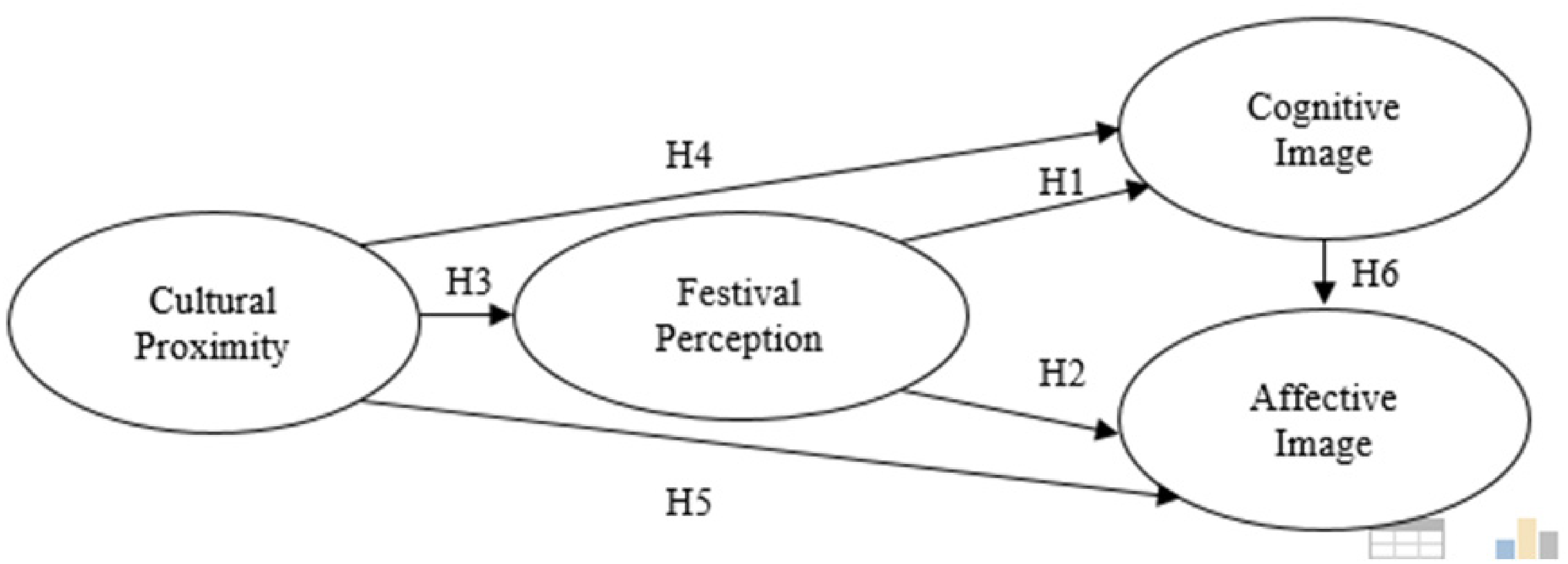
The Research Model.
Methodology
Research instruments
The research instruments comprised four constructs: FP, CP, CI, and AI. The eight items on FP were derived from the literature (Andereck and Vogt, 2000; Deccio and Baloglu, 2002) investigating festival programme quality, its importance to a trip, and its value. CP was measured using eight items derived from previous studies (Felbermayr and Toubal, 2010; Mischel, 1996; Straubhaar, 2002) that collected the respondents’ ideas about geographic distance, language, cuisine, and so on. The choice of attributes to measure destination image depends on the destination's attractions and the objectives of the assessment of the perceived image (Beerli and Martin, 2004). CI was measured using 16 items from the typology of attributes (Baloglu and McCleary, 1999; Echtner and Ritchie, 1993). AI was measured using four items based on previous studies (Hanyu, 1993; Russel and Snodgrass, 1987; Walmsley and Jenkins, 1993) and five induced items responding to the unique features of the destination being investigated. As Hu and Ritchie (1993) noted, these attributes should represent characteristics that have universal importance for all destinations, such as general infrastructure, scenic spots, and accommodation as well as reflect the unique attractions of a typical destination that may serve as determinant factors in the process of choosing a destination, such as cultural heritage and gambling programmes (Pike, 2009). According to Pacific Asia Travel Association (2012), Macao tourists think of it as a city of gambling, historic heritage, business events, leisure, and transportation networks. These five images reflect the feelings and assessment of tourists, and align with the definition of affective image. Moreover, the exploratory factor analysis (EFA) verified the relationship between the five items and affective image. Therefore, the five new items were considered in the assessment of affective image. Six academic experts on festival and event management and five Lusofonia staff evaluated the face validity of the measurement items. A pilot study was conducted on a sample of 50 tourists after they were informed consent considerations at the entrance of the venue where the Lusofonia was held, that is the Taipa House in Macao. The reliability and validity of the research instruments were verified through the pilot study. All ambiguities were clarified. All items were measured on a five-point Likert scale (1 = strongly disagree to 5 = strongly agree).
Data collection
Data were collected using a questionnaire administered to tourists at the Taipa House during the 22nd Lusofonia, held from 18 to 20 October 2019. Because the study explores the perceptions of tourists rather than of the residents, local residents were screened out to maintain consistency between the research design and results. The questionnaire comprised 41 questions and started with an introduction explaining the study's purpose. Eight questions in the first part gathered insights on the perception about the festival. The second part focused on destination image where 16 and 9 questions were on CI and AI, respectively. The third part comprised eight questions on CP. The last section gathered socio-demographic data, such as gender, age, occupation, place of origin, and travel party. To help both Chinese and foreign participants comprehend the questions and prevent misinterpretation, the questionnaires were administered in both Chinese and English. To ensure accuracy, the Chinese versions were back-translated by three bilinguals. Among the initial responses, eight were excluded because of incomplete answers, missing ratings, or wrong ticks. Finally, 312 effective responses were obtained.
Data analysis method
Descriptive and correlation analyses of variables were conducted using SPSS 24.0. First, the demographic factors, including gender, place of origin, age, and educational background were discussed. The second step involved factor and correlation analyses of the variables. Subsequently, structural equation modelling (SEM) was employed to test the hypotheses. Finally, the mediating effects of ‘festival perception’ and ‘cognitive destination image’ were explored using bootstrap, a statistical method that utilises random resampling with replacements.
Findings
Respondents’ profile
Among the respondents, 47% were female and 53% were male. Most respondents were from mainland China (57%), followed by Hong Kong (29%), Taiwan (6%), Portuguese-speaking countries (5%) and others (3%). Most were young and middle-aged: 18–24 years (52%), 25–34 years (28%), and 35–44 years (18%). Most respondents (72%) held university degrees.
Factor analysis
The preconditions for factor analysis were met as the KMO value exceeded 0.80 and the Bartlett test of sphericity was significant at the 0.0001 level (Huang et al., 2013). The results of the reliability analysis indicated high internal consistency for the scales, with the following Cronbach's alpha (α) values: FP (α = 0.952), CI (α = 0.963), AI (α = 0.965), and CP (α = 0.940).
Factor test.
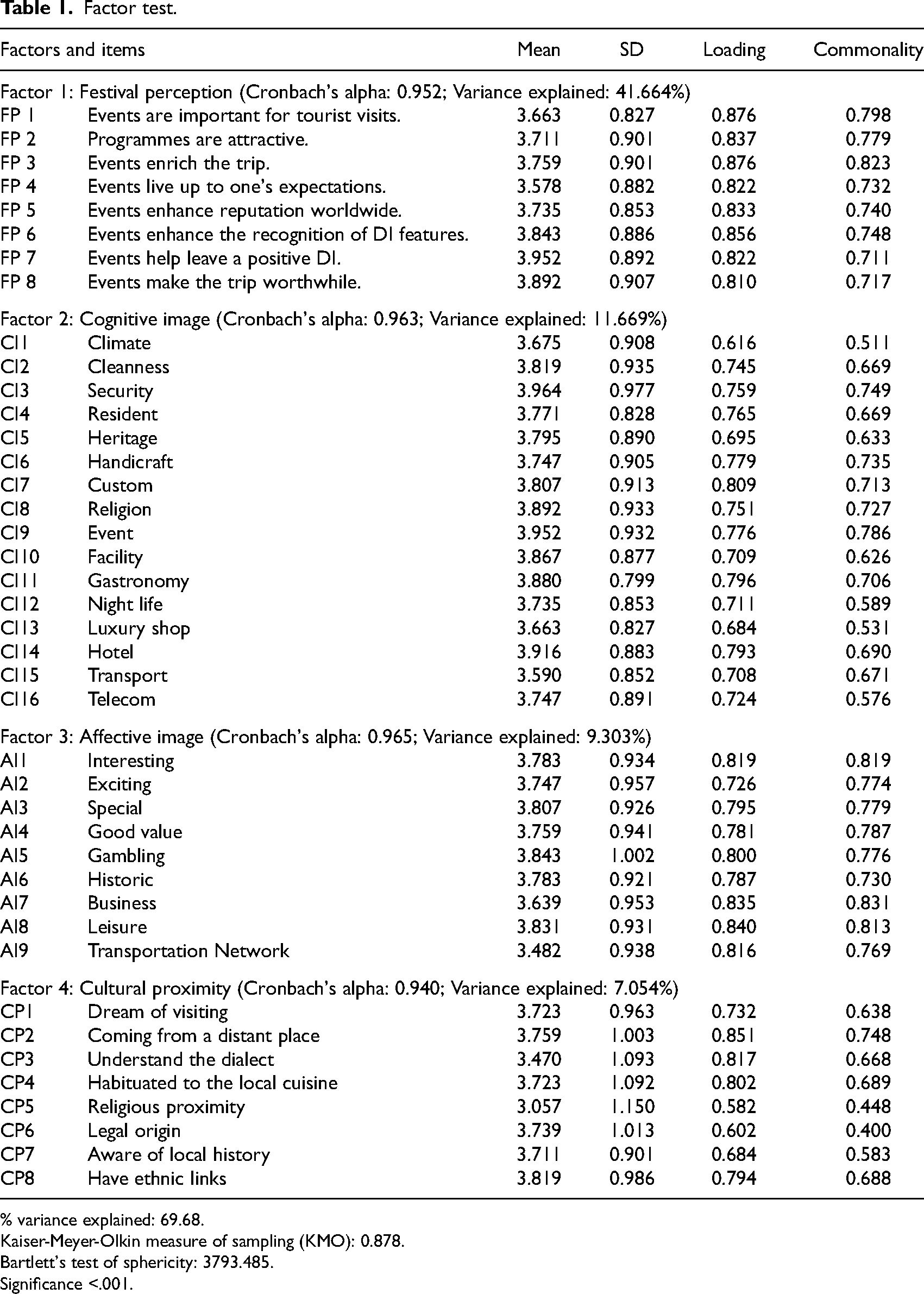
% variance explained: 69.68.
Kaiser-Meyer-Olkin measure of sampling (KMO): 0.878.
Bartlett's test of sphericity: 3793.485.
Significance <.001.
Correlation analysis
Table 2 shows that the four variables are significantly correlated to each other.
Correlation test.
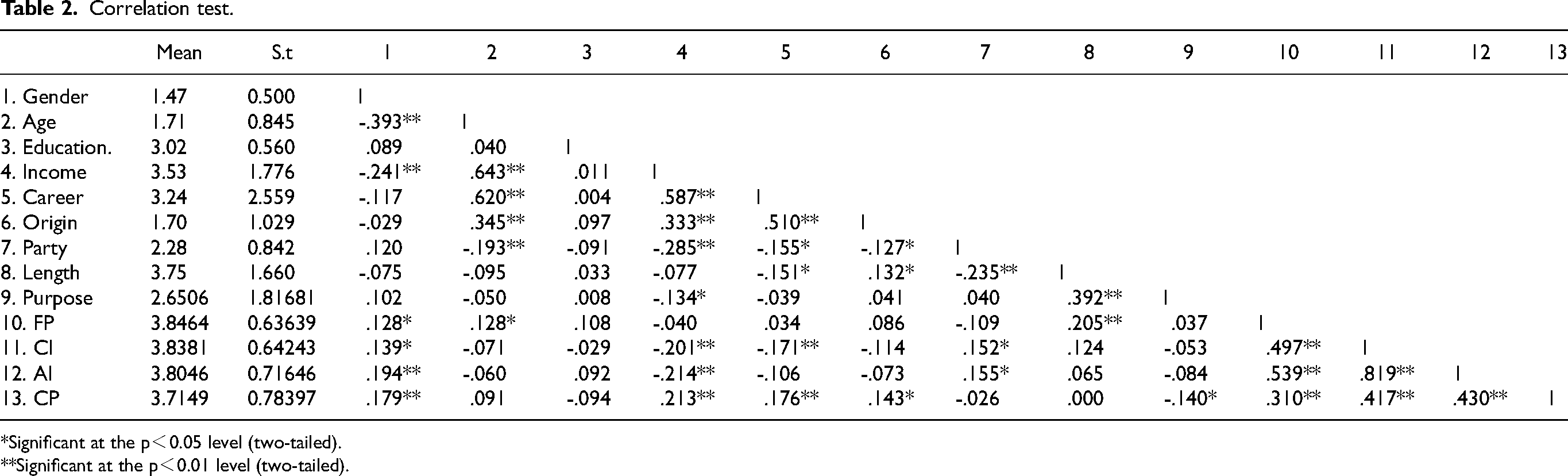
*Significant at the p<0.05 level (two-tailed).
**Significant at the p<0.01 level (two-tailed).
Hypothesis testing
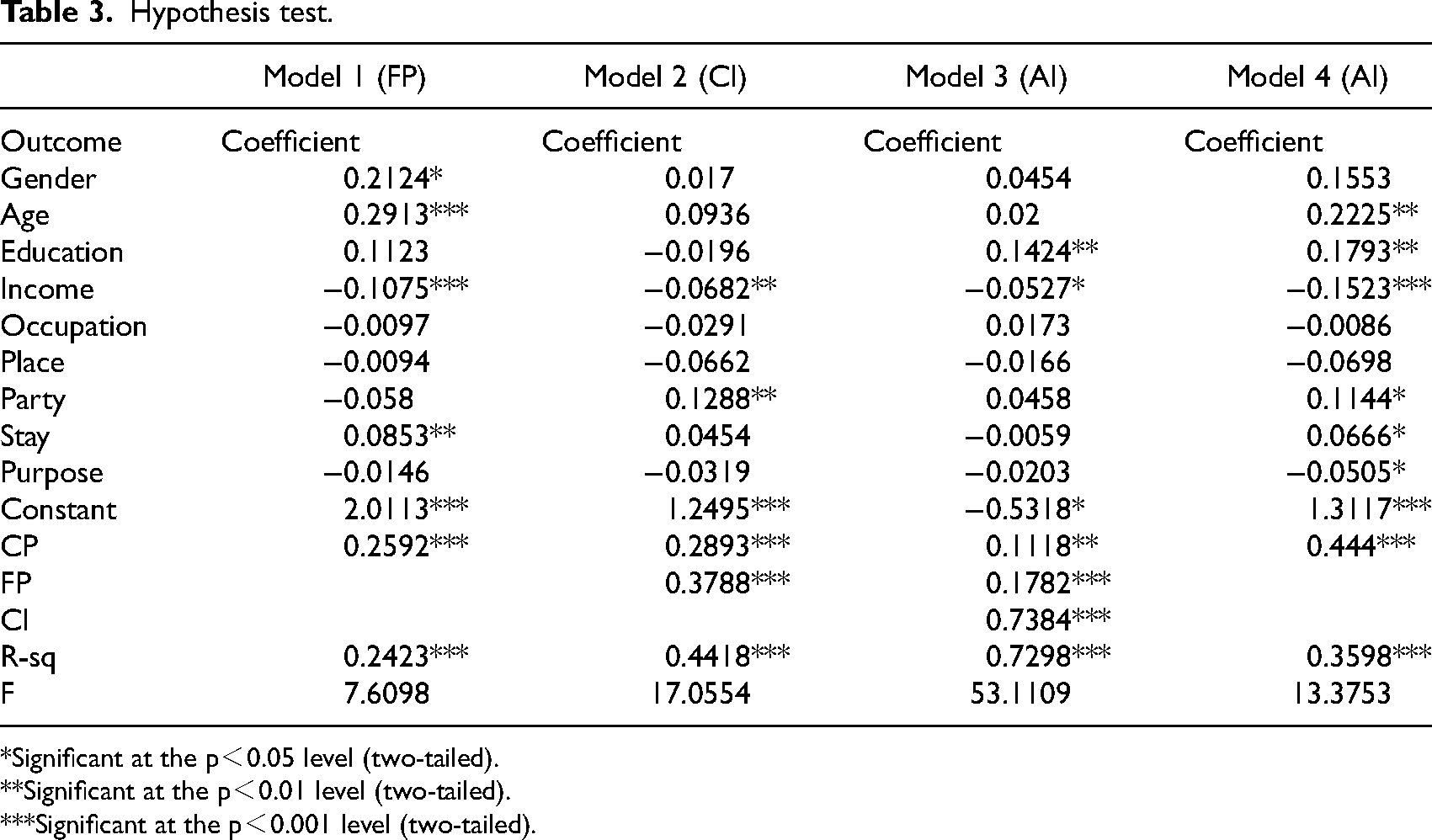
SEM was used to evaluate how well the proposed model explained the collected data (Hair et al., 2010). Following Anderson and Gerbing (1988), a two-step approach was adopted: first, the convergent and discriminant validity of the measurement model were tested. Subsequently, the research hypotheses and structural model were tested (Table 3).
Hypothesis test.
*Significant at the p<0.05 level (two-tailed).
**Significant at the p<0.01 level (two-tailed).
***Significant at the p<0.001 level (two-tailed).
The effect of CP on FP was verified. As shown in Model 1, the degree of model interpretation was good. The CP coefficient (0.259, p < 0.001) shows that CP had a significant influence on FP. Those who were more inclined towards ethnic products and were familiar with Chinese culture had stronger perceptions about the festival. Those from different cultures had weaker perceptions about the festival (H3). In support of H3, respondents who were exposed to a familiar culture showed a significantly higher average FP than those exposed to an unfamiliar culture. When the tourists had high CP to the destination, their event perception was high.
The effects of CP and FP on CI were verified. As shown in Model 2, the CP (0.289, p < .001) and FP (0.379, p < .001) coefficients indicated that both CP and FP had a significantly positive impact on CI, which supported H1 and H4. The relationship between CP and CI shows that those who had higher CP were likely to have a better CI. Regarding the relationship between FP and CI, those who had a higher FP tended to have a better CI.
The effects of CP, FP, and CI on AI were tested. As shown in Model 3, the CP coefficient (0.112, p < .01) indicated that CP had a significant effect on AI. CI (coefficient = 0.739, p < .001) and FP (coefficient = 0.178, p < .001) had significant positive effects on AI, lending credence to H2, H5, and H6. Thus, the cultural festival helped tourists build comprehensive and positive images about the destination. As Model 4 shows, the total effects (direct + indirect) of CP on AI were verified, which differed from the verification of the direct effect of CP on AI. This proved the existence of the main significant effects of SEM, which laid the ground for the verification of the next mediation effect (Baron and Kenny, 1986).
Total, direct, and indirect effects
Mediation was assessed for statistical significance by testing the direct and indirect effects of variables. The bootstrapping method proposed by Preacher and Hayes (2004) has been used to obtain confidence intervals to facilitate estimation of indirect effects with a normal theoretical approach. Thus, it was adopted in this study to verify the mediating effects of FP and CI. It was used to select model 4 and analysed 5000 samples. The confidence interval was set at 95%. The results showed that the bootstrap confidence interval did not contain zero. The corresponding indirect, direct, or total effects are shown below (Table 4).
Total, direct, and indirect effects.
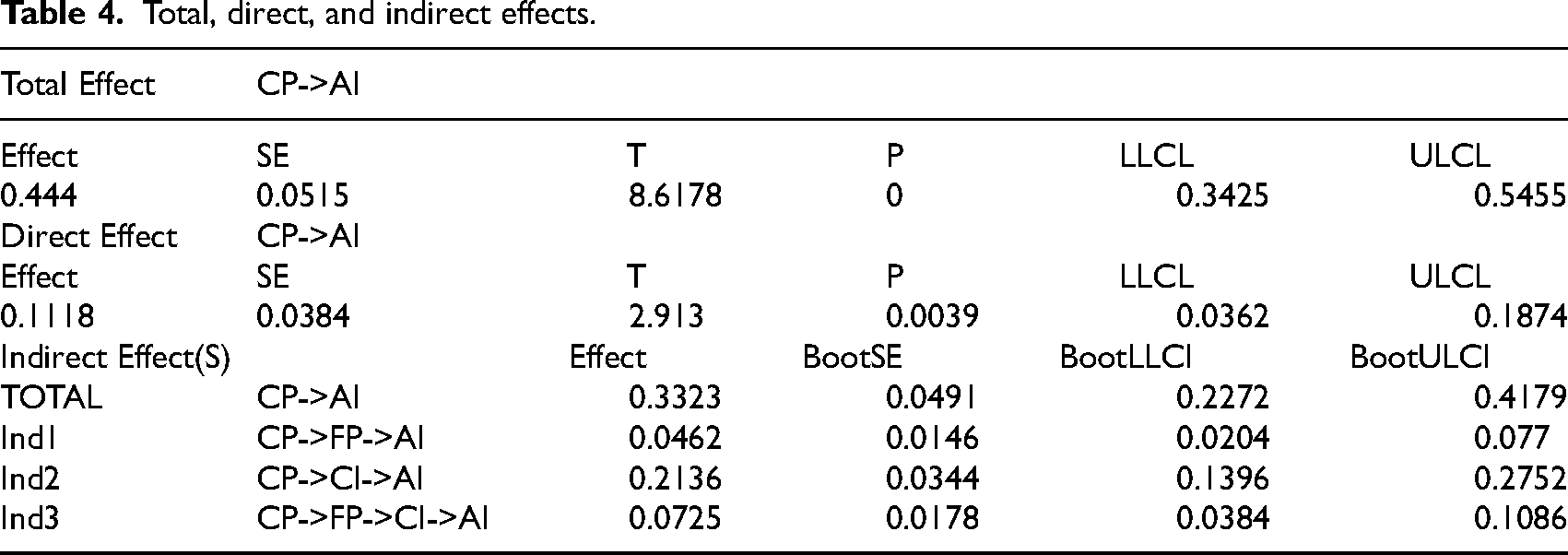
The total and direct effects of CP on AI were significant. The total indirect effect was 0.3323, and the LLCI and ULCL ranges were all greater than zero. The indirect effects of CP→FP→ AI, CP→ CI→ AI, and CP→FP→ CI→ were 0.046, 0.214, and 0.073, respectively. All relevant ranges were greater than zero, suggesting that the three indirect effects were significant. In Model 3, both coefficients of CP→FP and FP→AI were positive. As CP had a significant influence on AI, FP was a partial mediator between CP and CI. FP and CI were partial mediators between CP and AI.
Discussion and conclusion
This study explored the relationship between tourists’ perceptions about a cultural festival and the destination image, the effects of cultural proximity (CP) on the preceding two variables, and the mediating roles of festival perception (FP) and cognitive destination image (CI). It also examined the attributes of parity in terms of home-destination culture that steer tourists’ positive FP and CI. The findings consolidate the inner relationship between both images and make important contributions to the literature by empirically substantiating the mediating roles of the two variables. The notable research outcomes that have theoretical and practical implications are presented below.
First, the study identified positive relationships between CP, FP, CI, and affective destination image (AI). This aligns with Huang et al. (2013), who noted that CP is related to destination image. Further, tourists’ FP was found to have a positive effect on CI and AI. This is consistent with previous studies (Pike, 2009; Kokkali and Koutsouris, 2011). Additionally, studies have shown that unique festivals showcase the destination's versatile culture and city brand (Xu, 2019). In this study, when the respondents were asked to indicate the importance of the festival in terms of visiting the destination, over 85% chose the option of ‘important’ or ‘very important’. Hence, cultural festivals are important in building tourists’ destination image (Del Barrio et al., 2012). This study also found that CI affects AI positively, which supports previous studies on the association between CI and AI (Chen and Phou, 2013; Smith et al., 2015; Sonmez and Sirakaya, 2002).
Second, this study depicted the event components from a more comprehensive perspective, thereby validating the fact that well-designed events are an effective means to enhance destination image. It illustrated the elements and processes by which such events have become influential, which has seldom been investigated in the literature. For example, this study identified three strong predictors of destination image: heritage, gastronomy, and handicrafts. If the organising committee or corresponding business sector can take greater steps to address these three aspects by relating festivals to heritage stories (Eggers et al., 2013), popularising culinary culture (Österlund-Pötzsch, 2004), and interpreting the symbolic meaning attached to a unique handicraft's appeal, tourists can more readily understand the cultural festival and destination.
Third, this study revealed the mediating effects of FP and CI, instead of merely exploring the relationships among variables. The results show that FP partially mediated the relationship between CP and AI, and also between CP and CI. CI partially mediated the relationship between FP and AI. These findings enhance the extant literature by validating these mediating effects in the context of festivals and destination image and make the case for destination marketing organisations to utilise festivals better. That is, sufficient attention should be paid to marketing and organising cultural festivals in order to provide a quality experience, such as injecting the authentic appeal of festival performance and increasing tourists’ level of involvement (Martín-Santana et al., 2017). Given the distinguished performance of festivals, governments should integrate cultural resources from festivals with a macroscopic policy and establish professional and special departments to direct and manage festivals. After all, the government can have a significant impact not only on tourists’ perception about festival tourism, but also their perception about the travel destination (Getz and Page, 2016; Lee, 2016).
The findings provide new multifaceted insights into the role of CP in facilitating FP. Studies have highlighted the impact of CP on destination image based on geography alone (Huang et al., 2013) or language and history together (Kastenholz et al., 2013). As Park and Song (2021) noted, proximity plays a significant role in classifying tourists both geographically and culturally. Considering the gap in the existing literature, the current research studied the impact of CP from a wider perspective, including items such as geographic distance, language, history, cuisine, religion, and ethnic links. CP strongly affects tourists’ FP and destination image. As Richardson and Crompton (1988) noted, the closer the culture between tourists and their travel destination, the better the destination image. This supports Kastenholz's (2010) finding that CP has a significant influence on destination image. Thus, it is understandable that close cultural ties between home and the travel destination can easily evoke emotional closeness among tourists with the destination, which, in turn, can directly affect the destination image (Su et al., 2011). This can inspire festival organisers to enhance their awareness of festivals, interweave cultural similarities during festivals, and promote the destination in segmented tourist markets that have CP to the destination. The proximate culture can be applied to theme selection, venue decoration, traditional performance, interactive programmes, and the communication language of local staff during a festival.
As a platform for the integration of Chinese and Portuguese cultures, Lusofonia can be utilised better to improve tourists’ image of Macao. It may be feasible for the Macao SAR government to appoint students and local staff with in-depth knowledge about the Chinese and Portuguese culture as ‘cultural ambassadors’ for the Chinese and Portuguese tourists, respectively, to increase awareness about and publicity for the festival (Choi et al., 2020). In a culture-driven model, tourists can find consonance while interacting with the festival staff or participating in programmes, which can, in turn, enhance their tourism experience and enable them to build greater intimacy with the place (Liu et al., 2018). Macao, as a destination, can increase the sense of familiarity among the Chinese and Portuguese, which can promote a positive destination image (Huang et al., 2013).
Another practical contribution is that this study makes a case for aligning the festival and destination brand with tourists’ real experiences instead of the subjective desires of policymakers (Ong et al., 2014). This is applicable not only to Chinese festival managers and destination marketers, but also foreign stakeholders. The destination image formation is a long process, neatly related to festival attractions. Strengthening unique festival characteristics with the authenticity of the hosting destination can help festival organisers offer added attractions to tourists (Folgado-Fernández et al., 2015). Tourism managers too should keep pace with the changing times and dissect tourist demands and customise products accordingly. After all, the degree of hospitality, helpfulness, and professionalism of tourism practitioners can greatly impact destination image (Ragb et al., 2020).
Future studies can explore specific factors from a cultural perspective, which can lead to more positive FP, detection of shortcomings in current festivals, and a better understanding of the destination's impression on tourists. Moreover, it may be useful to understand tourists’ preference for festivals and destinations in terms of their place of origin, ethnic backgrounds, and so on, thereby facilitating the creation of appropriate promotional strategies for segmented markets. Finally, only one source market was investigated in this study due to being understaffed. Replicating this study in other international markets is necessary to determine its representativeness and the destination image will be more comprehensive if the researchers can get more complementary information.
Footnotes
Declaration of conflicting interests
The author(s) declared no potential conflicts of interest with respect to the research, authorship, and/or publication of this article.
Funding
The author(s) received no financial support for the research, authorship, and/or publication of this article.
