



Abstract
Dark tourism is an important part of tourism at some destinations; however, little is known about the factors that influence the overall dark tourism experience. This research aims to contribute to this existing knowledge gap by improving our understanding of the nature of the dark tourism experience and its formation process. Through in-depth, semi-structured interviews with 15 tourists in the war zones of Iran, participants were asked to talk about their memorable experiences and why the experience was special to them. Using a grounded theory approach, a theoretical model of memorable dark tourism experiences (MDTEs) was developed and four key factors influencing dark tourism experiences at a destination were identified: learning from dark experiences, spiritual experiences, involvement in activities and emotional experiences. The findings of this study contribute to ongoing efforts in tourism studies to understand the nature of memorable tourism experiences in general and in the context of dark tourism experiences in particular. The theoretical and practical importance of the research results is discussed and various approaches are proposed for future research.
Introduction
Nowadays, providing memorable customer experiences is very important in terms of gaining a competitive advantage (Seyfi et al., 2020). According to Pine and Gilmore (1998) experiences are not only about delivering products but also about developing a different and memorable event. This concept has piqued the interest of many in the service industry, including the tourism sector (Prebensen et al., 2018). The scholars thus identify memorable tourism experiences (MTEs) as tourism experiences that are positively remembered after the events (Sthapit and Jimenez-Barreto, 2018). Furthermore, there is a growing recognition that providing memorable tourist experiences can be used not only to differentiate or attract more visitors as a competitive advantage in the face of perceived increased competition between destinations, but also to create engagement and loyalty between destinations and the return of visitors (Chen and Chen, 2010; Vada et al., 2019). For example, previous research has shown that memorable experiences lead to loyalty and revisits (Agapito et al., 2017; Baloglu et al., 2019; Chen and Rahman, 2018; Kim and Brown, 2012; Kim, 2018; Rasoolimanesh et al., 2021a, 2021b; Sharma and Nayak, 2019a, 2019b; Stavrianea and Kamenidou, 2021; Vada et al., 2019; Zhang et al., 2018).
Recently, there has been great interest in developing more sophisticated theoretical explanations for factors associated with general traveller attitudes and satisfaction with dark tourism. Dark tourism is not a new concept. This phenomenon has its roots in the changes in the tourism market at the end of the 20th century (Light, 2017). By contrast to the usual types of tourism, which focus on escape, recreation and pleasure, dark tourism includes the consumption of pain, trauma and tragedy which are often motivated by learning and historical interest, as well as evoking emotional answers related with the experience of death (Isaac and Cakmak, 2014; Yan et al., 2016). Despite the fact that dark tourism provides an opportunity to reflect on changes in the social behaviour of societies, there is little research into dark tourism experiences (Podoshen et al., 2018). In addition, an approach is lacking that considers the key elements of a memorable dark tourism experience based on the experiences of travellers. Moreover, scholars have looked for additional academic research that would apply the frameworks to a real-world tourism context, thereby expanding our understanding of MTEs (Chandralal et al., 2015; Hung et al., 2016).
This study provides three significant contributions to help fill this gap by focusing on memorable experiences in dark tourism. Firstly, a great deal of research in the relevant literature focusing on the experiential dimensions of motivation and expectation, as well as cultural and historical interest and the stimulation of learning. However, little is known in the post-travel studies about subsequent effects and perceptions, and intentions (Iliev, 2020).
The second point is that despite significant advances in the literature on dark tourism, it will be necessary to analyse the experience of dark tourism in relation to different historical, social, cultural and geographical contexts (Stone, 2012). Initial research focused on dark tourism in the context of Western culture, but now we have further, new evidence of dark tourism in other cultural contexts. For example, in Asia, Africa, and South America (Iliev, 2020). Cohen (2018) states that little attention has been paid to the motivations and experiences of dark travellers in these areas. Such studies highlight the importance of additional research to gain a broader understanding of visitor experiences in dark tourism and to advance our understanding of MTEs in the context of dark tourism.
The third point to make is that tourism literature has been enriched by the adoption of the MTEs scale, but both theoretical and methodological aspects have been criticised (Sthapit et al., 2018). Kim et al. (2012) identified seven variables that represent MTEs and created a scale to assess them. Nevertheless, Chandralal et al. (2015) and Hung et al. (2016) claim that the sample used in the Kim et al., study does not afford an appropriate representation of typical tourists of this segment. It is thus not possible to generalise the results of their study to all travel groups. Even according to Chandralal et al. (2015) there is no theoretical agreement amongst researchers on MTEs. Besides, the results are inconsistent, and the proposed constructions are frequently highly subjective in nature, with no organised direction (Chen and Rahman, 2018). Hence, researchers (Hung et al., 2016; Kim and Ritchie 2014; Sthapit, 2017) recommended that the MTE scale needed to test new samples in a wider range of tourism contexts. As a result, current MTE dimensions do not suitably address the experience of dark tourists as a distinct, growing market segment. This study identifies components of memorable tourist dark experiences that should be taken into account in future measurement scales.
In light of the above, this study aims to understand the various factors that influence the evaluation of a dark tourist's memorable experience in a war destination in a Middle East context. A concept that has not been clearly studied in dark tourism research. From a theoretical point of view, the findings of this study contribute to ongoing efforts in tourism research to understand the nature of MTE in general, and within the dark tourism experience in particular, providing a framework for understanding memorable dark tourism experiences (MDTEs). The main question is: (1) What do travellers remember most when they describe their travel experiences?
Iran was at war with Iraq for eight years during the eighties and the effects of the war can be seen everywhere in the border areas with Iraq. Regarding this war, every year, a large number of tourists visit those places related with the War. Most of these trips are organised in the form of “Rahian-e Noor” tours which show the political and religious importance of these places. Sightseeing of the Iran-Iraq war sites (named the Holy Defence by the Iranians), is an important part of Iran's tourism industry (Siyamiyan Gorji et al., 2021). The monuments are apparently intended to educate local and foreign tourists visiting war zones, although some regard it as a form of propaganda. Some tourism researchers attribute visitor interest to nostalgia and past memories, personal implications and cultural factors. This research focuses on the analysis of tourism linked to visits to places related with this war and the analysis of the perceptions of tourists who visit these places linked to dark tourism.
Literature review
Dark tourism
Academic discussion of dark tourism began in the late 1980s and early 1990s. In the early 1990s, a number of scholars emphasised the link between tourism and places of death (Dann, 1995; Prentice, 1993). The term “dark tourism” was coined by Foley and Lennon (1996). Later, Lenon and Foley (2000) elaborated on this term in their dark tourism book: “death and disaster attraction which sets out the typology of dark tourism”. Besides “dark tourism” (Lennon and Continuum, 2002; White and Frew, 2013), several other phrases are used to define this phenomenon, such as “thanatourism” (Seaton, 2002; Slade, 2003), “battlefield tourism” (Winter, 2011), “heritage tourism” (Biran and Hyde, 2013), and “secular pilgrimage” (Cui et al., 2020; Hyde and Harman, 2011). In general, travellers to dark sites can be divided into three categories: people who have a connection to the historical event, visitors and members of the local community. Dark tourism has been conceptualised as a subset of cultural tourism and distinct from heritage tourism (Iliev, 2020). Curiosity, moral duty, remembrance of honour, and education range amongst their chief motives behind heading for a dark destination (Sharpley, 2012). Such a typology allows the researcher to assess the numerous motives for visiting dark sites, the level of emotional engagement and the individual's attitude towards dark tourism (Le and Pearce, 2011).
In recent decades, tourism literature has produced a wide range of dark tourism topics. From definitions of various terms, ethical discussions, policy debates, evaluation of tourism demand for dark tourism (Light, 2017); analysis of dark tourism as a means to world peace (Kang et al., 2012; Kim et al., 2007; Mansfeld and Korman, 2015); a number of studies have looked specifically at the definition of dark tourism (Ashworth, 2008; Johnston, 2010; Stone, 2016; Tarlow, 2007) or the motivation for dark tourism (Brown, 2016; Cheal and Griffin, 2013; Hyde and Harman, 2011); a range of dark places (Austin, 2002; Baldwin and Sharpley, 2009; Beech, 2009; Casella and Fennelly, 2016; Frew, 2013; Murphy, 2015; Yankovska and Hannam, 2014) and the development of typologies (Dunkley et al., 2007; Raine, 2013; Sharpley, 2012; Stone, 2006). Primary studies of dark tourism have focused on motivated factors. Understanding these motivating factors was essential to drive the needs of tourists. According to Light (2017: 295) motivations are now relatively well understood. Based on tourists’ personal connection to dark places, their reasons behind visiting dark sites vary (Petrevska et al., 2018). The main forces that drive tourists to visit dark tourism places are to do with a connection to heritage or historical places, individual values, political views, curiosity, fascination in history and culture, memorials, and education (Chen and Tsai, 2019). Nevertheless, there are gaps in the literature on the motivation for dark tourism. Furthermore, the literature on dark tourism does little to address the constraints and reasons why people avoid visiting places of death (Iliev, 2020). Iliev (2020) emphasises that understanding the link between motivation and restraint can help us better understand psychology in dark tourism. Another point is that most of the studies were conducted in western societies. Therefore, future research in non-western countries is needed to determine the motivation of tourists (Cohen, 2018). It is worth noting that a few studies have looked at the constraints and acceptability of dark tourism in non-western countries (Zhang et al., 2018). Zhang et al. (2018) states how cultural heritage affects a society's perception of death, which in turn affects the desire to visit places of dark tourism. Understanding this tourism behaviour allows the researcher to understand the reasons for people's engagement to dark destinations, the depth of emotional engagement and individual perceptions of dark tourism.
In recent years, scholars have adequately studied and paid particular attention to tourists’ experiences of visiting dark places (Biran et al., 2011; Boateng et al., 2018; Miles, 2014; Stone and Sharpley, 2008; Yan et al., 2016). According to Miller and Gonzalez (2013) dark travellers are often critical and demanding. They are curious to explore the places of unhappiness, sorrow, suffering and dying (Mowatt and Chancellor, 2011; Podoshen, 2013). Moreover, they visit extreme, remote, and painful environments to satisfy their own needs and emotions (Coughlin, 2014; Young and Light, 2016). However, a discussion of the experience of dark tourism raised further questions. Some questions have been answered whilst others require further tourism studies to be answered and clarified. Understanding tourists’ consumption experiences can therefore have a significant impact on improving tourists’ perceived value when visiting dark tourism (Robb, 2009; Strange and Kempa, 2003).
The largest and most important types of dark tourism are correlated with war-related attractions (Laderman, 2013). Almost all of the information gathered about dark tourism relates to the battlefield (Bigley et al., 2010; Cheal and Griffin, 2013; Dunkley et al., 2011; Isaac et al., 2019). According to Chen and Tsai (2019) memories of war and visits to important historical war sites could inspire patriotism, develop a sense of national unity and emphasise the significance of peace. Moreover, dark tourism motivates domestic tourists to increase their sense of nationality (Stone and Sharpley, 2008; Tinson et al., 2015). Apartheid, for example, was advertised as a mechanism to represent the new identity of South Africa and targeted both domestic and international tourists (Ashworth and Isaac, 2015). However, according to Stone (2012) “the literature on dark tourism, explores the experiences of the ‘dark tourist’ in a variety of sociocultural contexts, as well as the motivations for visiting such places and their consequences and effects,”. We can thus not generalise nationalist sentiments to all visitors to dark tourism.
Dark sites and dark tourism attractions are important heritage sites that form an integral part of the formation of national values, heritage, and cultural and religious identity. The interpretation of these places plays an important role in shaping journeys to dark destinations. Hence, knowledge of the criteria and characteristics of dark destinations may contribute to the cognition of different visitor motivations and experiences (Stone, 2006). Consequently, this study will consider war-related tourism as part of the memorable dark tourism experience.
Memorable tourism experience
The concept of memorable tourism experiences (MTE) has received a great deal of attention in recent years and provides a significant differentiator for companies with a competitive advantage (Yu et al., 2019). Although tourism experts believe that the nature of MTEs encompasses several characteristics, there is no clear consensus on what constitutes an MTE (Hosseini et al., 2021). Tourist experiences in particular are personal, subjective and, above all, not always easy to convey or comprehend by others. This leads to the conclusion that it is extremely difficult to construct and quantify experience because everyone's experience is special and unique (Pearce and Zare, 2017). According to Schmitt (1999) travellers participating in the same activity in the same place may have a positive or negative opinion of that tourist attraction, and the lasting memories they create may be different. So not all travellers can be guaranteed similar remarkable experiences (Ooi, 2005). A tourism experience becomes memorable when it is “selectively constructed from tourist experiences based on the individual's evaluation of the experience” (Kim et al., 2012: 13).
Kim et al. (2012) were the first researchers to establish a scale to quantify MTEs. Hedonism, refreshment, local culture, meaningfulness, knowledge, involvement and novelty are the seven dimensions of the scale (Hosseini et al., 2021). Much research extending the MTE concept has referenced Kim et al. (2012) dimensions and directly duplicated their scale in other scenarios (Kim and Ritchie, 2014; Tsai, 2016). In order to investigate MTE and to find out what types of tourism experiences can correspond to MTE, both quantitative and qualitative studies were conducted (Chen et al., 2020; Cho et al., 2021; Gohary et al., 2020; Sthapit et al., 2019; Zhang et al., 2018). However, some researchers (Chandralal et al.,, 2015; Sthapit and Jimenez-Barreto, 2018) believe that the study by Kim et al.'s (2012) cannot be generalised because the sample used does not reflect the “real world” in tourism. Despite this broad focus on MTE, the results are inconsistent and the proposed concepts are often subjective and lack defined direction (Chen and Rahman, 2018; Seyfi et al., 2020). Moreover, the growing literature on MTEs also shows that existing studies are unable to comprehensively predict and explain MTEs and that the constructs of an MTE may vary depending on the context. (Hosseini et al., 2021). This clearly shows that existing frameworks cannot be generalised to all destinations, as personal, social, cultural and geographical circumstances are influential factors in tourism experiences (Hosseini et al., 2021). Travellers tend to revisit a destination that has afforded them positive memories. This emphasises the importance of memorable experiences and their influence on tourists’ retention (Marschall, 2012). In this regard, many researchers argue that the improved participation of visitors optimises the general experience of the latter, improving the value proposal, increasing visitor predictability and ultimately creating a higher MTE level (Seyfi et al., 2019). Hence, higher engagement would, in all likelihood, lead to more memorable tourism experiences (Chen and Rahman, 2018). This study thus aims to obtain an understanding of different factors which influence and shape dark tourists’ evaluation of memorable experiences in a war zone and to explore the meanings behind them.
Dimensions of the MTE scale and its link to dark memorable experiences
There is no universally agreed-upon explanation of the experience. Everything travellers do at a destination, whether behavioural or perceptual, cognitive or emotional, or articulated or implied, can be experienced (Oh et al., 2007). Aho (2001) has classified the tourism experience into four groups: “emotional, informative, practical and transformative”. Overall, the tourist experience is considered as the result of interaction with the actors, processes and environment for the service context and it leads to multidimensional emotions, perceptions and attitudes of customers (Jain et al., 2017). Dark tourism varies from other tourism experiences in terms of the experiences it offers (Kutbay and Aykaç, 2016). Visiting a dark tourist place offers tourists deep and highly meaningful experiences. Hence, tourists’ experiences and behaviours at dark tourism sites often involve strong emotions or emotional responses (Weaver et al., 2018). In other words, the existence of strong emotional responses separates the experience of dark tourism from other kinds of tourism (Light, 2017). What's more, dark tourism transmits historical ideological messages (Stone, 2012). For instance, in a study of Chinese visitors to the Japanese prison Lushun Prison Museum in Dalian, Weaver et al. (2018) reported that travellers had strong negative emotional reactions to the site and had negative attitudes towards Japan.
Many dark tourism experiences are comparable to cultural tourism destinations (Biran et al., 2011). Visitors might be looking for new experiences that enrich their lives and provide memorable experiences (Albayrak et al., 2018). For example, Zerva (2021) argued that travelling in the dark sites includes a sense of engaging, emotional and spiritual experiences. Other studies on the dark tourism experience often describe the emotional experience with aspects of empathy. Ashworth and Hartmann (2005) note that Dark Tourism travellers convey emotional messages such as empathy with the victim. In this context, the interaction between tourists and a dark tourism site is believed to influence empathy as an emotional experience. A study by Kidron (2013) of Israelis’ survivor descendants on the “Holocaust” reveals that empathy is evoked in descendants when the emotions of survivors are tacitly present in their homes. Besides, research into dark tourism has identified the multidimensional nature of dark tourism experiences. For example, McCarthy (2017) recognised multiple elements of dark tourists’ involvement, such as physiological, introspective, hedonic, sensory, spiritual and cognitive experiences. The findings with regard to dark tourism also emphasise the subjective and phenomenological aspects of dark tourism experiences.
Dark tourism consumption comprises a mix of “tangible, objective, and practical components as well as symbolic, emotional, and subjective components” (Sharma and Kumar, 2019: 917). These emotional experiences can create long-lasting memories (Anderson and Shimizu, 2007). Consequently, these intense emotions may promote satisfaction with the visit and encourage revisiting (Ali et al., 2016) and an intense and memorable experience can result in a peak experience (Quan and Wang, 2004). Unlike previous studies on dark tourism, recently the literature has emphasised the need to focus on memorable experiences in order to achieve a better understanding of dark tourism. What's more, this is the first study of memorable dark tourism experiences and it focuses on the behavioural outcomes of MTEs.
Methodology
Study context
War is one of the most important and decisive events in the history of any society. The war was an important event in the history of Iran and has thus had a great impact on the social mentality, social identity and atmosphere of the collective action of Iranians. In order to evaluate the influencing factors on memorable dark tourist experiences, this study collected data from three war sites (Khuzestan, Ilam and Kermanshah) in Iran. On 22 September1980, a border dispute between Iran and Iraq turned into a major war. Between Iraq's formal declaration of war and Iran's acceptance of a ceasefire that came into effect on 20 July 1988, at least half a million soldiers were killed on both sides, at least half a million became permanently disabled, $228 billion was spent directly and more than $400 billion in damages (mostly to oil facilities but also to cities) was caused, mostly by bombing (Musai et al., 2013). In the post-war years in Iran, various programmes were implemented by different institutions to preserve the values and experiences of the war. Visiting war zones in Iran is known as “Rahian-e Noor”. This literature became part of Iranian culture and identity after the Iran-Iraq war. This is the name given by military organisations to tours that take visitors all the year round to areas that were once the heart of the battle during the Iran-Iraq war. In general, this reform has been discussed since 1998 at a community level and for a specific type of tourism. “Rahian-e Noor” is a pilgrimage trip to the border area of Iran and Iraq in which many people were regarded as having been martyred in the eight-year war between the two countries.
These journeys are made annually to the Persian Gulf, west (Ilam and Kermanshah), northwest (Kurdistan and West Azerbaijan), and south (Khuzestan). About 105 accommodation facilities, including hotels and suites, have been established in these war-torn areas to house “Rahian-e Noor” tourists. Travel to these areas is a kind of pilgrimage and spiritual journey, also overlapping with war tourism and dark tourism (Musai et al., 2013). Supported by the government, these trips are aimed at introducing the importance of sacrifice and national identity to students and visitors. Various times have been considered for holding the “Rahian-e Noor” camps, especially during the holidays of Nowruz (is the Iranian New Year) and the target market for this trip is primarily university students. (Figure 1)
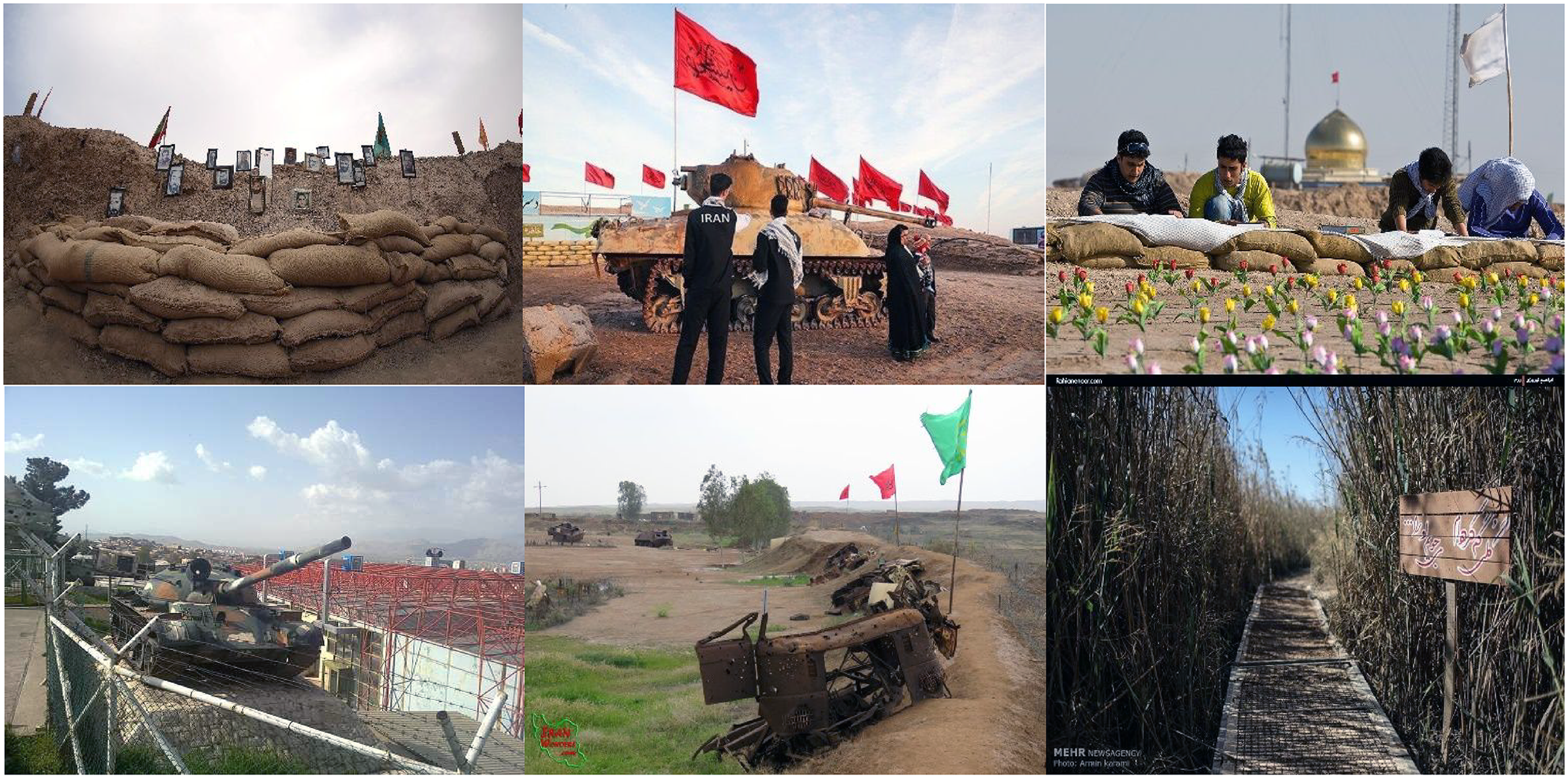
Some photos in Iran-Iraq war locations (mehrnews.com).
Research design
Qualitative research was chosen as the data collection method as it is best suited to address sensitive and complex issues (Figueroa-Domecq et al., 2015), and allows participants to freely express their ideas and feelings (Miller and and Fredericks, 1999). A grounded theory approach was determined to be the best method for this study, which aims to provide a conceptual framework that explains visitors’ experiences of dark tourism (Yuksel et al., 1999). Grounded Theory was a reaction to the prevailing sociological methods and the positivist pattern that focused mainly on the verification of the theory. “The discovery of grounded theory has a post-positivist bent, implying that there is still an ‘objective truth’ to be discovered” (Charmaz, 2014). The usually grounded theory (Corbin and Strauss, 1990; Glaser and Strauss, 1967) procedure involves data collection, coding, memo writing, theoretical sampling and saturation. The analytical framework used in this study helped us to explore the subjective nature of people's experiences (Cohen, 2013).
Sampling, data collection and analysis
The authors conducted an initial review amongst tourism experts from the academy in Iran and the department of tourism at Malaga University and following their recommendations, three war tourism destinations were selected. Experts have suggested that all of these destinations are war tourism locations that evoke similar experiences, such as the feelings of grief and pain from past tragedy. Amongst these destinations, Ilam, Kermanshah and Khuzestan are regarded as popular war tourism destinations in Iran. Figure 2 shows the map of three war tourism destinations.
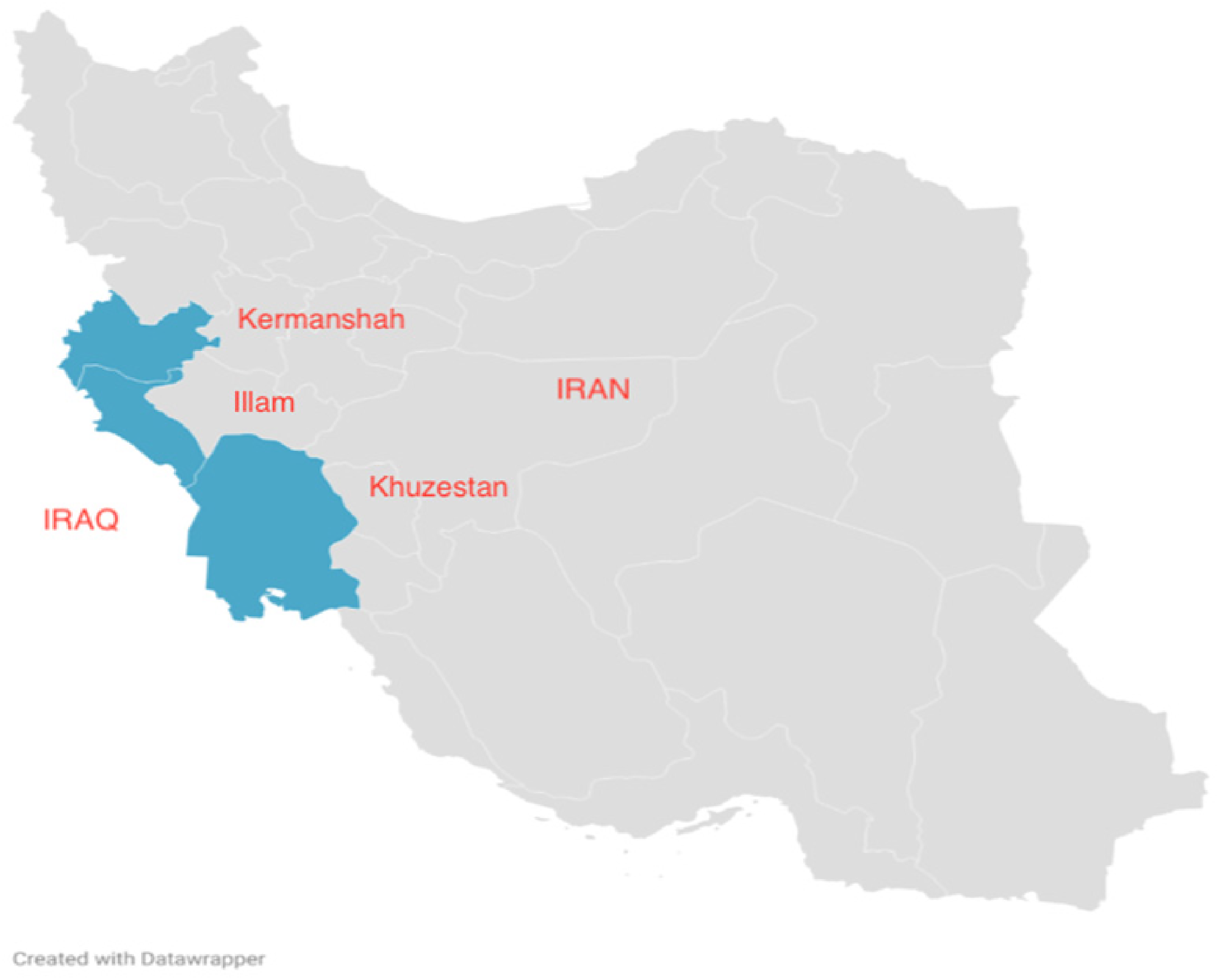
Map of three war tourism destinations (app.datawrapper.de).
The participants were chosen using a purposive sampling method. In this sampling method, the researcher selects the sample based on his/her personal knowledge of the population and the objectives of the study (Carson et al., 2001; Seyfi et al., 2019). To find additional participants, a ‘snowball’ sampling approach was used. Interviewees were also asked to recommend other people who could give their perspectives. The initial request for an interview has been made through “Instagram”, “WhatsApp” and e-mails to describe the purpose of the research. According to Hanna (2012) the development of internet technologies as a research medium has been recognised in qualitative studies and is more beneficial for some hard-to-reach and geographically dispersed groups. All those who responded positively were contacted by phone, “WhatsApp” and “Skype” for clarification and to request an interview. The initial questions were drawn up in advance according to the research focus and selected from various related studies (Kim et al., 2012; Seyfi et al., 2019; Sthapit, 2017; Zare 2019; Zhang et al., 2018). The recruitment of five participants for pilot semi-structured interviews was then carried out by the authors in February 2021. The aim of the 50-min pilot interviews was to identify key themes and questions about where, when, and why participants choose to visit dark tourism sites. These pilot interviews helped to develop an interview guide for the final data collection stage. A final interview guide was then drawn up based on the basic pilot interviews. All interviews were conducted between February 2021 and March 2021 via “WhatsApp” and lasted between 30 and 40 min.
Since one of the authors is Iranian and all the participants were Iranian and speak only Persian, the interviews were conducted in the latter language. Firstly, the data were analysed in Persian and only the final findings were translated into English (Nunkoo, 2018). Then, the authors read the transcripts to ensure accuracy and value for the purpose of the study. Ethical considerations were of paramount importance. All of the participants were given the same information. They were assured that they would remain anonymous and pseudonymous (Interviewee) to protect identities.
This research followed the “data saturation “ principle (Creswell and Poth, 2016) and theoretical saturation was attained after 15 interviews. Due to the uniqueness of these trips in Iran, especially for students, all the interviewees were university students. The selected age group was between 22 and 35 years old. Most of them (over 90%) had made at least 1–2 trips to war sites in the past 2 years.
The interview questionnaire consisted of three sections of standardised, open-ended questions. The first section focused on demographic information (e.g. gender, age, marital status, education level and nationality). At the second stage, respondents were asked about their travel experiences (e.g. “When, where and with whom did you travel?”, “Can you talk about your experiences during your visit?”, and “What activities did you engage in during your trip?”). The third segment referred to their dark memorable experiences (e.g. “What experiences do you remember when you return?” “What experiences do you think are worth sharing with friends?” and “How is your travel experience in the war zone different from your previous trips to other destinations?”). The participants’ profile has been provided in Table 1.
Participants’ profile.
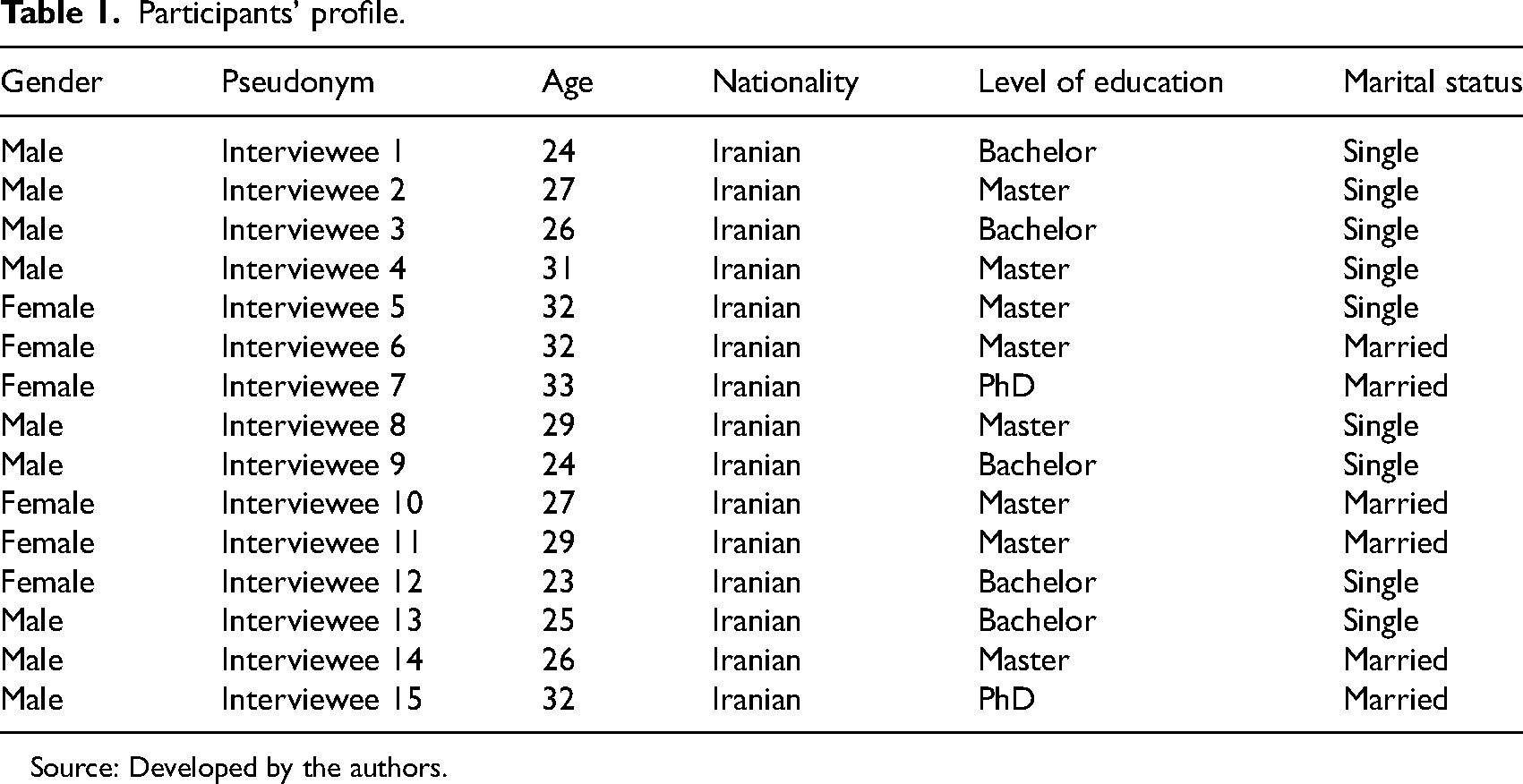
Source: Developed by the authors.
The authors followed a three-step approach to data analysis based on previous work on grounded theory (Matteucci and Gnoth, 2017; Strauss and Corbin, 1998). These stages focus on a general subject and categorise the various codes into possible themes. The first stage involved scanning the literature and collecting data to understand the theoretical view and identify gaps suitable for further investigation. Before proceeding with the conceptualisation and empirical validation, the preliminary research stage examined the literary works on memorable tourism experiences, dark tourism and dark tourism experiences, which are the main factors influencing travel decisions and tourism behaviour. The second stage includes reading the interviews and listing (MDTE's) categories. This stage consists of exploration and interviewing participants and empirical validation of constructs deriving from theory, respectively. Axial coding made it possible to describe tourists’ darkness experiences and the components that contribute to a memorable darkness experience. Selective coding involved reading transcripts multiple times, reviewing coding decisions and comparing ideas and principles extracted from the literature. During the final data analysis stage, coding work was performed using MAXQDA 10 qualitative data analysis software. Three types of coding were used, as recommended by Corbin and Strauss (1990): open coding, axial coding and selective coding. Figure 3 shows the trajectory of the research.
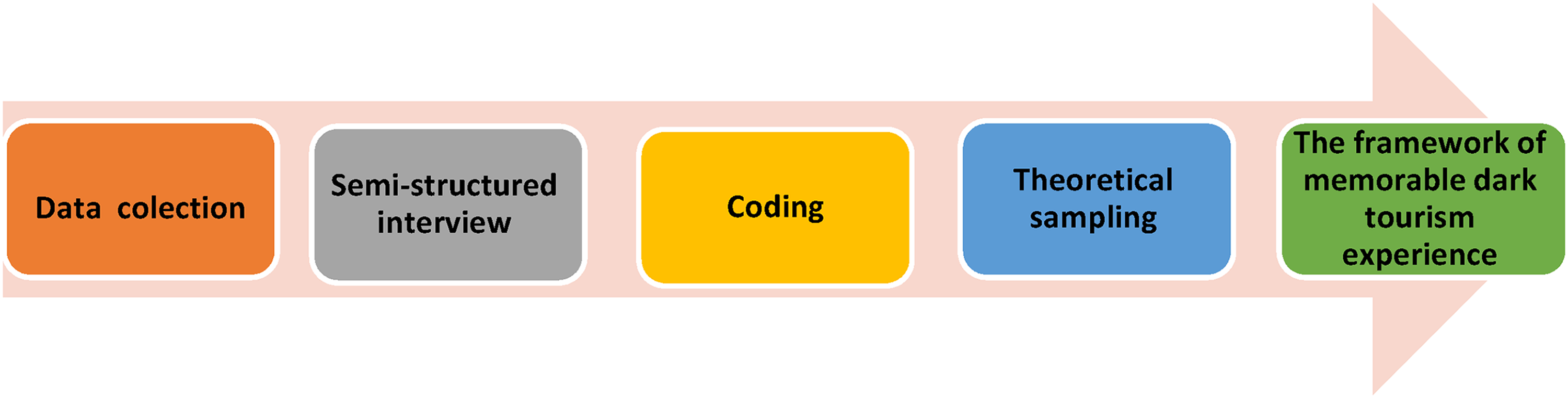
Research trajectory.
Findings
For most participants in this study, the perceived importance of visiting war areas, especially sights and landmarks, emerged as a crucial experience attribute, influencing their experience. We found that the travel experiences contribute to the formation and reproduction of positive individual and collective memories of war by transmitting the values of the war zone to future generations. This was reflected in responses that emphasised the importance of their war travel experiences and the transmission of social concepts and values to future generations at a time of war. Many moral concepts, such as sacrifice, martyrdom, belief in God, freedom, love, unity, courage and perseverance can be interpreted as being effective in the infrastructure of any country's cultural and political system. One of the participants commented: “I always wanted to visit a war destination in my country. That's where you can lose yourself and forget about your mundane life. Today, I’m here and I realised my dream and that definitely makes the trip memorable” (Interviewee 12).
The following section discusses factors unique to this particular destination that can make the trip memorable, as well as representative comments and findings from the literature. Following the grounded theory approach, Table 2 shows how open coding worked in practice.
An explanatory sample of the coding process.
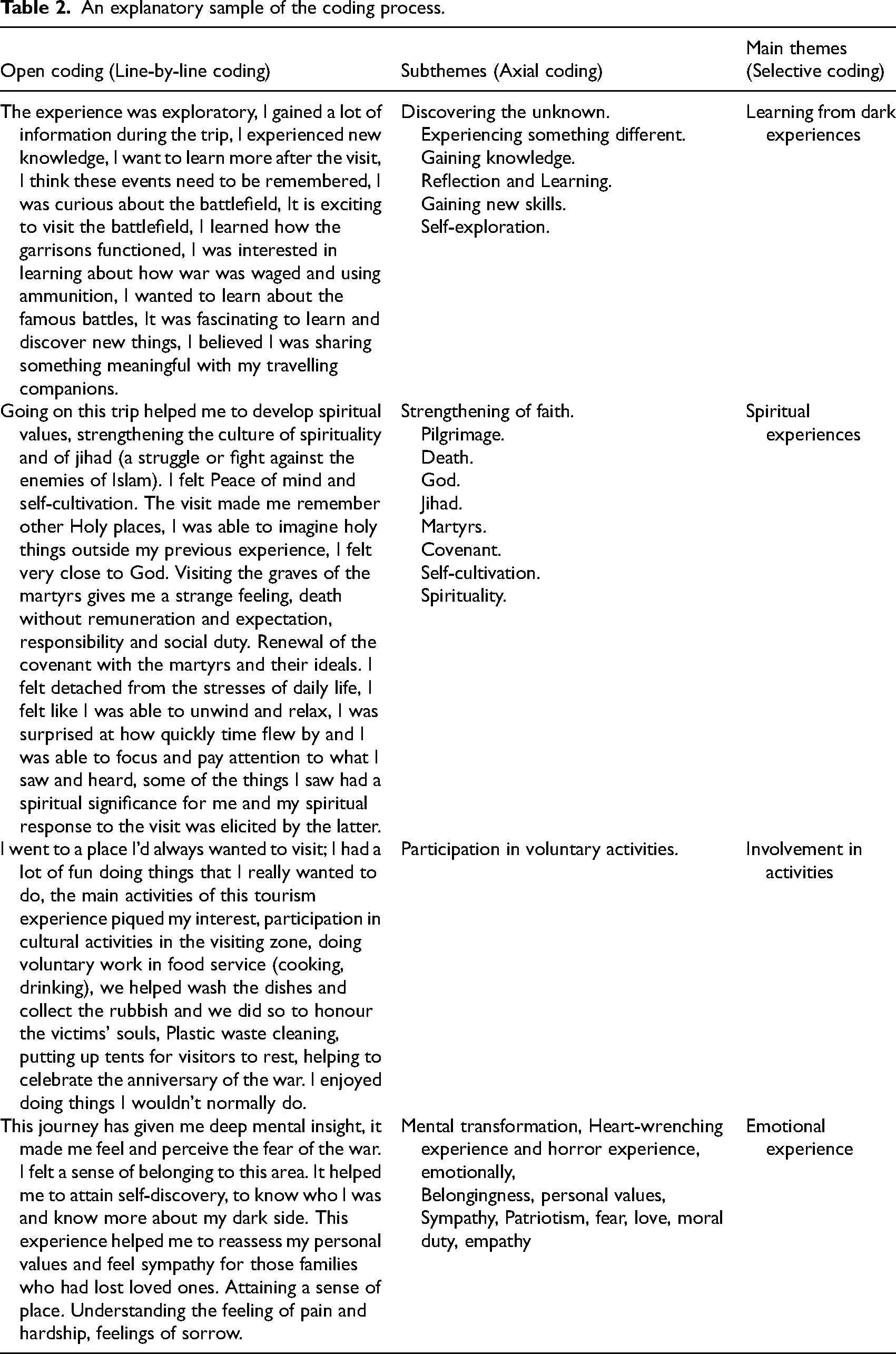
Learning from dark experiences
Learning is a continuous process that takes place throughout an individual's life in different contexts (Falk and Dierking, 2000). Travellers can gain new knowledge about better lifestyles or skills by learning from their experiences, leading to improvements they would not have otherwise known about (Laing and Frost, 2019). In particular, learning has been a well-documented motivator in tourism (Crompton, 1979; Mannel and Iso-Ahola, 1987) and the need to learn influences travellers’ decisions about where to go or what to do once they arrive at a destination (Van Winkle and Lagay, 2012). In fact, learning whilst visiting a destination is different from formal learning environments such as school. According to Ham (1992) educational Learners are considered as a “captive audience”. Whilst travellers are the audience who “have the option of ignoring the information without punishment or loss of potential reward”. Nawijn and Fricke (2015) mention that educating tourists about historical events in dark places is significant, implying that the benefit of learning has a positive impact on creating meaning. Dark places do not always need to be perceived as dark by every visitor. Hence, many visitors are motivated not by death and suffering, but by a desire for education, learning, comprehending what has happened at the dark sites, as well as cultural and social reasons (Iliev, 2020).
The theme of learning about the past war was integral to memorable tourist experiences. As a historic site, the war sites offer tourists the opportunity to learn about national history. It is also of historical significance to tourists. Informal learning and discovery were clearly a significant part of the visiting experience for many respondents (including those who visited for a variety of ‘general’ reasons). One person specifically mentioned learning when discussing their reasons for visiting: “I find it necessary to know the history of my country and I like serious destinations where you can feel how this war affects people and how much better it is now in peace” (Interviewee 6). This is how another of the tourists summarised it: “Travelling to this part of Khuzestan is a must-see for several reasons related with the war zone. The first thing is purely its historical significance. Secondly, young people of the third generation who have not experienced war should enter this region with awareness and know and learn about this place rife with memories” (Interviewee14). Several respondents particularly emphasised that the war zone was educational for students. “For students, it's a great way to introduce them to history and get them interested,” said one (Interviewees 3, 8 and 12). Another suggested that “the history of war is very interesting. I think that these events need to be remembered, which can be seen as instructive for our children and our community” (Interviewee 7). The results of the study show that learning and understanding history is at the forefront of the experiences tourists have when visiting battlefields, as participants discussed the films and documentaries they saw during the trip, as well as the historical memorials and inscriptions they saw on site. “I think it gave me a much deeper understanding of the history of the Iranian. The documentaries were very important. They gave me more knowledge and a much better understanding of the war” (Interviewee 2).
The learning-based approach was effective in evaluating the overall tourist experience to better understand both tourists’ reasons for visiting the site and their perspectives on the site. The reasons for visiting a war zone were classified into four categories: personal learning, historical reasons, inquisitiveness and educational programmes. Some of these reasons shared characteristics or were related with the reasons to visit cultural heritage tourism experiences (Moorhouse and Jung, 2017) and memorable cultural tourism experiences (Seyfi et al., 2020) in general. Furthermore, it seems that a previous tragic event can create moral obligations in subsequent generations, forcing them to learn about and remember the victims of the event (Thurnell-Read, 2009). This is understandable given that visitors with a learning goal are likely to find their cognitive experiences fulfilled at this location. Instead of focusing only on innocent victims or survivors, our participants tended to think and learn about issues related with the war event, such as ideological conflicts or the contemporary history of Iran in general. Consideration of the participant perspective reveals a high level of awareness in relation to the communication of historical information to visitors interested in history. Undoubtedly, the role of the tour narrator was seen as another important aspect of visitors’ learning and understanding of history.
Spiritual experiences
War tourism has a unique potential to develop self-identity processes. According to Dunkley et al. (2011) these tours provide an opportunity to remember and commemorate. War tours can thus be significant and meaningful to visitors. Furthermore, when travellers perceive a particular war heritage site as a piece of their own life story, they are more likely to visit the site for spiritual experience (Poria et al., 2006). A dark tourist destination could be thought of as a place for “spiritual” experiences of meditation on life and death (Korstanje and Baker, 2018). According to Cohen (2018) dark Tourism visitors are given the opportunity to understand mortality by contemplating death in such places. The meaning of dark sites lies in the formation and negotiation of personal and social identities through commemoration, pilgrimage and the affirmation of past events (Lee, 2016). Travellers, particularly those who have personal connections, tend to feel the suffering of the victims and are deeply moved. In this way, travellers affirm their shared spiritual memory (Korstanje and Baker, 2018). Consequently, the experience of attending a dark place would have a significant effect on them and alter their future behaviour (Osbaldiston and Petray, 2011). Dark tourism could also bridge the gap between the past and the present by provoking reflection on history and, as a result, “waking up” the public (Korstanje and Baker, 2018).
The results imply that spiritual experiences gained from visiting war sites help shape tourist experiences. The aim of the interviews was to establish the meaning of spirituality for the interviewees and their understanding of the concept as a basis for reflecting on their emotional relationship with the war sites and their tourist experiences. However, respondents found it difficult to express spiritual meanings and isolate spiritual moments or experiences. This is due to the nature of human experience as a series of interconnected events that are inseparable. When it came to ‘spiritual experiences’, most respondents made frequent references to spirituality and religion. For example, one interviewee described his experiences in war places in Kermanshah: “The camps have a spiritual, clear atmosphere. Everything was excellent, and I hope to attend this gathering every year. Visiting the tombs of the martyrs gives me a strange feeling. I feel much closer to God now. I believe everyone who suffers from a disease finds the best cure by coming to this place because martyrs have such a high status that it fills hearts with mercy” (Interviewee 15).
Respondents also emphasised different contextual interpretations of spirituality. For one respondent, spirituality has a lot to do with a sense of place. He told me “The visit reminded me of other sacred places” (Interviewee 4). For another, “I was able to concentrate on the things I saw and heard”. (Interviewee 8). When considering spirituality as a concept, many respondents from this spectrum indicated that emotional attachment to place was an important component of their experience. “The path of Rahian-e Noor is similar to a journey to Karbala or Mashhad, which does not fit the description until you have gone; you have a vague feeling, but when you go, you are absorbed by the atmosphere; the feeling of closeness to the martyrs cannot be adequately expressed; you just have to go, see and understand” (Interviewee 1).
The desire to participate in commemorative ceremonies is another important spiritual factor for visiting battlefields in the context of dark tourism (Kokkranikal et al., 2016). Many of the participants come to the region mainly to attend or participate in the ceremony organised for the soldiers. One of the reasons could also be the tourists’ spiritual feelings towards the memory of the Iranian soldiers who died during the war, as well as their respect for and gratitude to them. One of the participants mentions that: “The atmosphere was charged with active emotion and there was a sense of commemoration. In other words, as a pilgrimage for Iranians to go there and perform the commemoration, in our opinion, we go there to commemorate the victory” (Interviewee 9).
The most important factor attracting various classes, especially the young, to places associated with wartime was the tombs of martyrs and spiritual space. All respondents identified themselves as pilgrims seeking closeness and spiritual fulfilment. The mode and form of travel to these regions differ from other modes of travel: simple and easy. According to Seaton (1999) dark places are not inherently sacred, but have been made sacred through a sequential, “socially constructed” process. When travellers visit such places, they seek spiritual meanings and become connected to the place (Williams, 2014). For example, warfare places are special places that evoke intense spiritual experiences. Collins-Kreiner (2016) suggested that dark travellers are similar to pilgrims in that both are motivated by a desire to seek meaning beyond that which ordinary tourist intend. Although dark travellers experience a range of mixed emotions during their visit, such visits can also serve as a journey of spiritual transformation (Dunkley et al., 2011).
Involvement in activities
Sherif and Cantril first proposed the involvement theory in 1947. The degree of interest in an activity and the affective response associated with that activity is defined as involvement (Manfredo, 1989) and it refers to the perceived personal connection of an individual experience when relating to the object or consumption situation (Celsi and Olson, 1988). People would feel involved in an activity, a topic, a product, a decision or situation, an advertisement (Day et al., 1995), or a particular spatial environment such as an art museum (Slater and Armstrong, 2010). Pine and Gilmore (1998) described that tourist have memorable experiences when they are actively involved in the activity in question. Kim and Ritchie (2014) emphasised that tourists are more likely to remember experiences that are closely related with their interests. In summary, travellers who are immersed in a holiday activity are more likely to have a memorable tourism experience. Despite the fact that tourists’ involvement has been studied (Alegre et al., 2012; Borowiecki and Castiglione, 2014; Ibimilua, 2009; Wei and Milman, 2002), the issue of participation in activities at dark tourism sites is not yet widely known in the tourism industry. According to Andrades and Dimanche (2014) involvement leads to increased satisfaction and memorability through physical, psychological, cognitive, social or spiritual engagement. Kim et al. (2012) found that involvement determined as personal relevance is a major contributor to memorability. Moreover, according to Campos et al. (2017) the level of involvement of the tourist is expected to have a significant result on the memorability of the experience.
Involvement in activities was the third factor associated with tourists’ memorable experiences in dark tourism. All participants in the study reported experiencing positive emotions during involvement in tourism activities. Respondents mentioned items such as happiness, contentment and optimism. One participant, for example, stated that “when some high school students came here, we made food and had so much fun in the kitchen. That was the happiest time of my life” (Interviewee 9). Feeling useful was critical to the participants being on the trip. When participants were asked what aspects of the trip gave them the greatest sense of usefulness, many answers revolved around volunteering: according to one of the participants, “It was a pleasure to work with volunteers; the programme had a pleasant atmosphere. It's great to see the volunteers again” (Interviewee 4). Respondents also said it was beneficial in terms of social interaction. Another participant stated that “I like to be with people who think alike. The happiness for me came from the fact that, oh I’m here, how did I get here” (Interviewee 13).
The intangible cultural heritage of war sites can allow travellers to experience involvement in the cultural production process. As a result, the high level of participation can help tourists remember their travel experiences more easily and clearly. According to Woodside (2008) the involvement of the tourist is the main element at the site and essential for its survival. The more people are involved with a holiday in a destination and activities, the better they can remember and recall past travel experiences (Kim et al., 2010). Most tourists are willing to proactively spend their energy and personal emotions on the trip if they have a high level of involvement. The unforgettable experiences can leave deep impressions in the mind, making it easier to recall the memories of the tour in everyday life. It is worth pointing out that involvement emphasises the experience that is shaped by the overall atmosphere rather than the specific activity. As a result, involvement in activities clearly affects memory recollection (Kim and Ritchie, 2014).
Emotional experience
The significance of emotional engagement in tourism destinations is demonstrated by dark tourism research (Dore, 2006; Frew, 2018; Hede and Hall, 2012), as emotions influence people's lives, activities and subsequent decision-making (Straker and Wrigley, 2016). Dark tourism can be defined as emotionally charged (Nawijn and Fricke, 2015), with subjective and personal experiences that include both negative and positive experiences (Iliev, 2020; Martini and Buda, 2020; Sharma and Nayak, 2018). Tung and Ritchie (2011) mention that several approaches have been used to explore positive memorable experiences. Amongst these characteristics, the relationship between emotions and the tourism experience plays a significant role. Yan et al. (2016) mention that tourists’ emotional responses have a greater impact on their emotional tourism experiences than their psychological experiences. Fear, sorrow, shock, appreciation and depression were identified as five affective experiences. According to Cameron and Gatewood (2003) consumers assigning meaning to their own experiences in dark tourism can have a significant emotional impact. Similarly, the authors claim that when emotions are released during consumer engagement, people experience these effects (Hall et al., 2018).
The emotional experience of a dark destination crystallised as a factor influencing the tourist experience. Based on data analysis, we found that tourists visiting war sites were not only upset but also heartbroken. Tourists had different feelings about the situation. We saw the sadness that one of the participants went through when she visited Shalamcheh in Khuzestan: “When we entered the Shalamcheh, the gloom was overpowering. The sight of signs saying ‘place of martyrdom’ or “chemical bombing” reflected the crime of some people and what people can do to each other. I cried and was immobilised for a while. It stimulated me both intellectually and spiritually” (Interviewee 12).
It is observed that entering the context in which the war took place produces a profound sense of desolation. Although war site settings usually make visitors fearful, some tourists described their experience as exciting. The following extract from the perception of a respondent bears testimony to this: “I took a trip to Khuzestan with a group of university friends. The tour was very comprehensive and conveyed a high level of excitement about the war and life at that time. It was my first visit to the southwest of the country and to a war zone. Being born after the war, I was excited” (Interviewee 3).
It is clear that some tourists experience not only sadness in dark places, but also excitement. Some of them enjoyed the beauty of the path and others were enthralled by the prospect of taking photos. Tourists visiting dark sites are not only interested in the main attraction; the sounding out environment also helps them enjoy the main attraction and enhances it (Sigala and Steriopoulos, 2021). In addition, we discovered evidence of some participants describing their visits to war sites as harrowing. One of the respondents pointed out: “This sensory journey brought the past to life. It was very instructive to see how and where the war took place. War is a horrible part of world history and this location was a part of it. Even if you learn about it in school, you can never imagine the actual conditions that these people had to endure. It's an experience I’ll never forget” (Interviewee 7).
Several study participants mentioned that they were sad not only about their own experiences but also about the experiences of others at the sites, suggesting that emotional experiences may be interconnected and experienced collectively. (Interviewee 9, 12 and 6). Empathy was another emotional factor that influenced the memorable experiences of the study participants. One of the respondents mentioned: “It has a deep impression on you. You get the impression that people in the past fought with heart and soul for their country. Our lives are simple, but when you think about how people lived in the past, you’re deeply affected and you feel empathy” (Interviewee 2).
When all respondents were asked to name a single emotion that they remembered vividly, the most frequently mentioned emotions were disgust, shock, compassion and sadness. Emotional experiences at dark sites are a mixture of positive and negative emotions that are most strongly associated with the intention to visit. During the visit, negative emotions predominate, especially shock and sadness (Nawijn and Fricke, 2015). Moreover, different visitors’ motivations for visiting dark places may lead to different experiences, and thus different types of emotional experiences may be evoked. According to the results of this study, remembering emotional experiences can have a variety of antecedents. Putting oneself in the shoes of victims and martyrs, for example, can trigger revulsion and grief.
Discussion
This study addresses MTE's research gap and its implications in dark tourism literature. In recent years, there has been a surge of interest in the study of dark tourism. Tourists visit places with a dark theme, but that doesn't necessarily mean they are motivated by death and suffering. Dark tourist experiences are more in line with the mainstream of heritage sites, according to the literature. Robinson and Picard (2016) argue that we need to understand visitors as people and how they encounter, receive, respond and react to the effective change in conditions that tourism ultimately brings. Given the increased number of dark tourism publications, one might conclude that dark tourism researchers have already recognised this complexity. However, a close examination of this literature reveals that memorable experiences have been largely forgotten. Given the MTE dimensions proposed by Kim et al. (2012) and the complex and multidimensional nature of dark experiences, memorable dark tourism experiences can be linked to tourists’ MDTEs. These four contrasting factors of this study reflect the wide range of memorable dark tourism experiences, demonstrating the multidimensionality of tourists’ dark experiences.
From a theoretical perspective, dark tourism primarily offers educational and emotional experiences (Biran et al., 2011; Henderson, 2000; Kang et al., 2012). In general, the most common experiences for dark tourism are education, remembrance, the enhancement of national identity and interest in history (Cheal and Griffin, 2013; Farmaki, 2013; Isaac and Çakmak, 2014; Ivanova and Light, 2018; Kang et al., 2012; Raine, 2013; Yuill, 2004; Zheng et al., 2018). The study's findings show that learning and understanding history are at the forefront of visitors’ experiences. In keeping with previous research, the results of this study suggest that dark experiences help to increase the tourists’ memories of their trip and their learning experiences (Best, 2007; Biran et al., 2011; Isaac and Çakmak, 2014; Kang et al., 2012; Sharpley, 2012; Thurnell-Read, 2009; Winter, 2011; Yan et al., 2016). This research advances our understanding of the relationship between memorability and learning from dark experiences. This interpretation is crucial to the experience, for without it the dark places exist as empty spaces without meaning. According to Roberts (2018) learning experiences with historical events, as well as human responses to them at the sites of death, play an important role in the process of the creation of meaning, which is consistent with our findings. Although dark tourists experience a range of conflicting feelings during their visit, such journeys can also be a spiritually transformative experience (Dunkley et al., 2011). The experiences of tourists in dark places are varied, and many of them often do not involve dark aspects. This study provides a spiritual experience that evokes a sense of pilgrimage in a historical, war and patriotic context. These sites are widely regarded as sacred landscapes that can evoke national pride, especially amongst Iranians; it can thus be argued that the overarching memorable experiences of these visitors are those of pilgrimage. The results of the study showed that spiritual experiences can be one of the main motivating factors behind dark tourism. We argued that involvement, more than any other dimensions of MDTEs, promotes emotional bonds, feelings of mutual belonging and a sense of unity amongst travellers. According to Zatori et al. (2018) “involvement experience is closely associated with interaction, participation and engagement in various tourist activities, and they all increase the memorability of travel and enhance the value for tourists.” Perceptions of involvement help travellers improve their sense of unity and belonging, which significantly increases travel satisfaction. Since participants in dark trips in Iran are considered to be permanently involved in travel programmes, this study emphasises that programme designers should improve situational involvement to promote cohesion. An effective way to achieve this is to get travellers to co-create tourism experiences by encouraging active participation, close interactions and intensive role-playing (Campos et al., 2018). Another important insight is that memorable tourism experiences are a kind of emotional experience. According to Hochleitner and Makowski (2011) tourists are emotionally influenced to choose appealing trends for their leisure time in certain places. Tourism experiences related with this theme emerged most clearly in responses to the question, “what factors contributed to your emotionally memorable visit?” Participants made statements about the emotions they felt and remembered most after visiting the battlefields. Respondents generally indicated that the most important emotional experiences were feelings of revenge, fear, horror, depression, sadness and empathy. In general, this research suggests that visiting dark sites is more than just the physical presence of visitors and the viewing of the dark sites; rather, there are various emotional and cognitive features that create a new memorable experience. According to Seaton and Lennon (2004) dark tourists frequently exhibit emotional states similar to pilgrims. Visiting dark sites can thus be a fulfilling emotional experience for them. Dark tourists are also more likely to develop empathic responses after visiting a dark site. Empathy increases one's ability to relate to and understand others, as well as one's capacity for forgiveness.
Conclusions
As more people travel to places associated with death, suffering, “dark tourism” has become a niche tourism market and a new research discourse (Light, 2017). To make up for the absence of research into memorable experiences in dark tourism, this study seeks to provide new insights into interpreting and understanding the broad scope of memorable tourist experiences, by drawing on the perceptions of dark tourists in an Iranian context. According to Kim et al. (2012) the memorable tourist experiences of a destination are varied. This is supported by our research. It shows that there are numerous memorable dimensions of experience that tourists express when visiting tourist sites, especially dark sites. Combining the results of the current study with the existing literature led to the development of a model of tourists’ MDTEs, as shown in Figure 4.
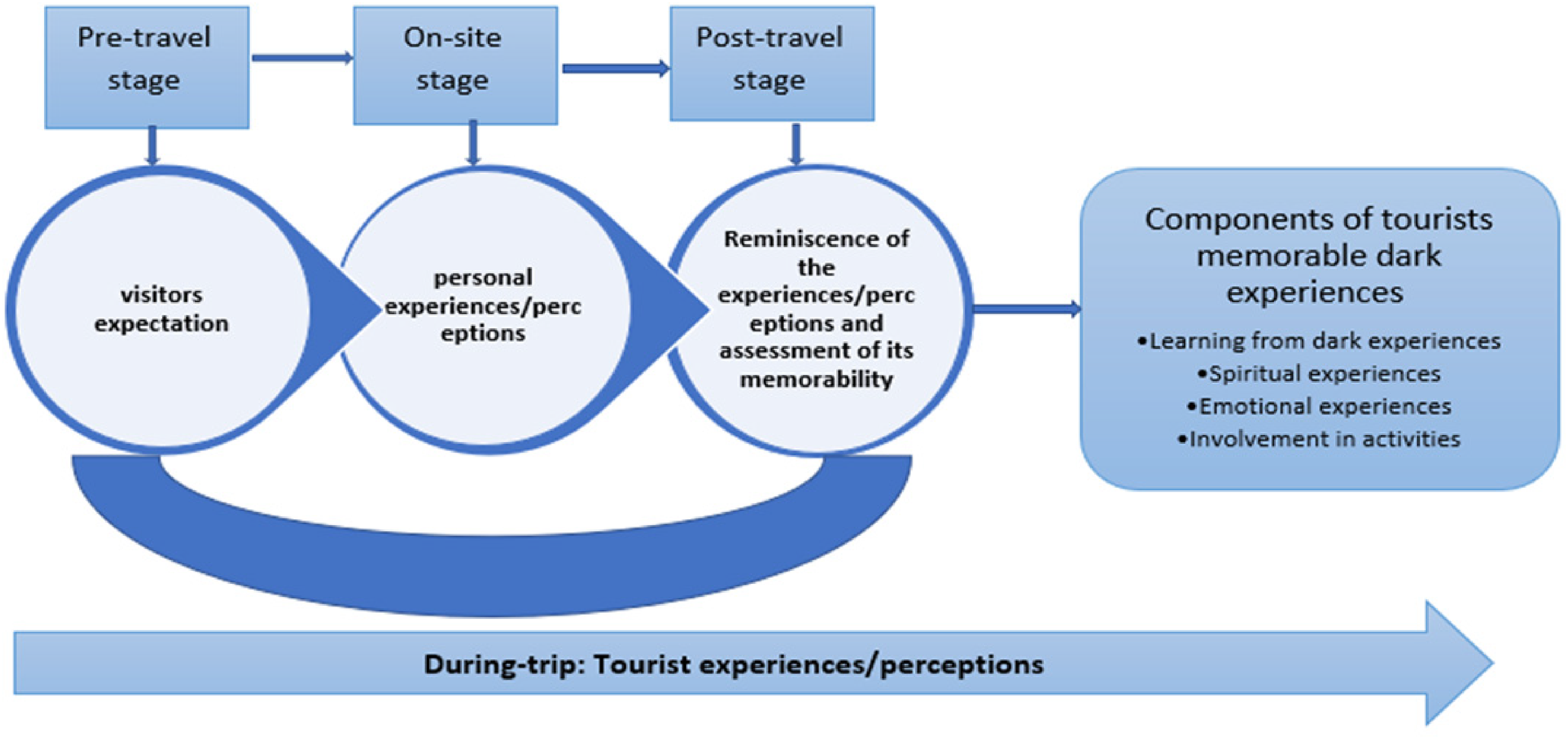
The conceptual framework of tourists’ memorable dark experiences.
The intricacy of memorable tourist experiences becomes apparent when we consider the tourist experience as comprehensive, encompassing a series of interrelated processes and dynamics that include anticipation of the trip, on-site experience, return and post-trip recollection (BraunLaTour et al., 2006; Iso-Ahola and Mobily, 1980; Park and Santos, 2017; Seyfi et al., 2020). Our results suggest that pull factors can have a significant impact on tourists’ travel motivation. del Bosque and Martín (2008) report that such perceptions before travel can influence people's initial decision to visit a destination and the contexts, they are likely to see during their visit. In addition, people remember certain experiences based on their on-site and post-trip experiences (Tung and Ritchie, 2011), that these experiences may be reflected in future travel expectations (Kim et al., 2012). Consequently, we can say that the different phases of memorable tourist experiences and their associated themes circulate in a sequential, cumulative, and dynamic manner. Our findings also are in line with previous studies (Park and Santos, 2017) which suggest that travel planning and decision-making processes are sequential. In short, participants in this study had personal, one-of-a-kind experiences that distinguished them from others. Participants recalled and described their own special experiences in great detail. Our findings are consistent with previous research showing that the most memorable tourism experiences are those that are unique (Kim et al., 2012; Park and Santos, 2017).
Visiting dark places will elicit a range of contradictory emotions. Light (2017) notes that negative stereotypes about dark tourism are mostly considered “transgressive, morally suspect and pathological” (p. 279). However, some of the dark literature has also investigated positive on-site experiences, such as historical learning, spiritual understanding and positive reflection (Kang et al., 2012; Zheng et al., 2018). Hence, tourists may experience sadness about the dark experience, or even celebrate and be relieved that tyranny has been defeated (Weaver et al., 2018). We can thus not say that all outcomes of dark tourism are negative. The discussion raises questions such as the following: what are the main experiences of tourists when they visit dark destinations? Do positive perceptions reduce the impact of negative stereotypes? The current study highlights that both positive and negative experiences are a critical component of memorable tourism experiences.
This study makes a significant contribution in that it aims to gain a comprehensive understanding of the factors that influence memorable dark tourism experiences at the destination level. Subdivisional examination of the tourism experience through the lens of dark tourism investigates the mechanism by which a memorable dark tourism experience is formed and broadens the research perspective on tourism experience. This study develops a theoretical memorable model in which the dark tourism atmosphere influences the formation of a memorable tourism experience via tourists’ emotions. This study discovered that a memorable dark tourism experience is a complex result of multiple concurrent causal factors, including environmental factors and internal psychology. The results of this study, which put the MTE scale to the test in a dark tourism setting, contributed to the growing body of knowledge about dark tourism experiences while also posing intriguing questions for future research, particularly regarding potential MTE influencers. Dark tourism, on the other hand, is a distinct type of experience rather than a general category of motivation, according to the findings of this study, which provides insights into dark and memorable tourism in non-Western geographic and cultural contexts. Additionally, this study contributed to theories about the perceived value of tourist experiences before and after they take place. As demonstrated by Gutman (1982) Perceived value significantly influenced affective commitment in a positive manner. emotional experience plays an important role to a destination's sustainability because it decreases the desire to relocate in search of alternative destinations (Fullerton, 2005).
Practical implications
This study has addressed a research gap in MTEs and their consequences for dark tourism literature, and the findings offer several key contributions.
Firstly, studies indicate that the most pressing issue for destination managers, tour operators and travel agents in dark destinations is improving the quality of the guest experience. When developing a sustainable strategy for dark tourism destinations, these issues should come to the fore. The overall experience that tourists seek in these locations may help tourism boards and travel agencies raise awareness of and promote dark tourism for specific demographics with specific motivations. For example, keeping the surrounding of a dark destination can enable tourists to understand, feel, and experience the tragedy of that destination. This could be a factor in the structure of tourists’ loyalty to dark tourism. Therefore, the management entities should therefore not only concentrate on product development but also on providing a satisfying and highly valued tourist experience in order to foster customer loyalty.
Secondly, although dark tourism products promote the memory of death and mortality and contain a central element of sadness (Seaton, 2018), dark tourism products should also include an element of attraction, as some tourists visit dark tourist sites on a recreational basis. It is important that destination managers provide tourists with a variety of activities, events, and superstructures that can meet their needs for novelty. Augmented and virtual reality could be used to facilitate this, rather than merely observing their surroundings. It is necessary to create, develop, and communicate a positive image of the destination to tourists who have visited or are planning to visit. It's safe to say that the more authentic an experience one has while visiting a dark site, the more likely a visitor will return or revisit the site in the future.
Thirdly, according to Molina et al. (2010) understanding how tourists obtain tourism information is critical to establishing and maintaining a positive image of a destination. destination managers should use marketing strategies to demonstrate how each element of the dark MTEs scale may arouse the attractions and qualities of the location. The goal is not only to entice potential tourists to visit, but also to inspire those who have already visited to remember their visit and decide to revisit. To improve tourist experiences, destination image, and revisit intention, DMOs should strive to facilitate more effective engagement of visitors in the destination as well as on-site, and they should strive to increase perceived authenticity. It has been shown that the image of a destination is an important factor in influencing the formation of MTEs in a tourism context (Kim et al., 2012). Additionally, tourist satisfaction is strongly related to tourists’ emotional attachment to the destination area following their visiting. Tourism authorities, legislators, and practitioners must therefore adopt a series of effective strategies to conserve, manage, and present tourist attractions in order to enhance tourists’ sense of place and satisfaction.
Fourthly, according to So et al. (2014) involvement in tourism is a two-way process. Thus, the interaction between the host community and tourists can have a significant and positive effect on establishing memorable tourism experiences. The quality of tourists’ interactions with residents influences the tourists’ experience, the perception of the visited destination, local socio-cultural and environmental status and the acceptance and tolerance of tourists by residents. Hence, for dark tourism to be successful it is important that residents support tourism development. The findings of this study support the idea that on-site activities (involvement) should be designed in a systematic manner to immerse tourists in the environment and local people. For instance, some experiential activities (such as special lecture series, cooking local cuisine, and cultural education activities) that provide a good opportunity to interact with other tourists and local people, resulting in stronger psychological and behavioral engagement connections with the destination.
Finally, Tourism is derived from tourist attractions, and its ultimate objective is to ensure the satisfaction of destination visitors. In overall, it is supposed that tourists’ discernment and assessments of the quality of attractions have a significant impact on their level of satisfaction. Therefore, a successful marketing strategy begins with an understanding of the factors that lead to tourist attraction, such as the antecedents, processes, and outcomes of post-visit behavior outcomes. Managers and marketers of dark tourism can differentiate their destinations from other tourist destinations by providing attractions offering visitors memorable experiences, helping them form long-term emotional bonds with their destinations.
Limitations and future research
Although the study provides new insights into the memorability of tourism experiences, this study is not without limitations. Firstly, this is a qualitative study based on a sample of Iranian students. It should be noted that the three dark sites studied (three war sites in Iran) simply reflect Iranian culture, religion and mindsets. Furthermore, because it is an exploratory study, the findings cannot be generalised to all destinations as personal, social, cultural and geographic factors all influence tourist experiences. With this in mind, future studies could use a wider, more diverse sample of visitors that represent a variety of cultures and backgrounds. For example, future research could look into whether these dark sites arouse (negative or positive) emotions in western visitors and how these visitors interpret them. Overall, it is critical that new research dimensions and constructs, as well as their interrelationships, be developed, validated and evaluated in a larger and multi-cultural study. Secondly, it would be worth investigating how dark tourism sites can promote traveller's resilience. We may be able to see how different information sources and stakeholders impact the formation of experiences visitors to dark sites. Thirdly, future research should focus on post-trip behaviour. For example, identifying factors that influence revisits and eWOM intentions. Quantitative techniques could be used in future studies to mitigate potential bias amongst variables, thus improving the generalisability of the findings. Fourthly, only the opinions of tourists who visited the area were evaluated in this research. It would be possible to measure local people's perceptions and stakeholders in future studies. With the use of qualitative research methods on tourism stakeholders (face-to-face interviews), the future studies could explore how the attractiveness of destinations can be increased across all seasons.
Footnotes
Declaration of conflicting interests
The author(s) declared no potential conflicts of interest with respect to the research, authorship, and/or publication of this article.
Funding
The author(s) received no financial support for the research, authorship, and/or publication of this article.
