



Abstract
Social media sites are an increasingly popular forum for loyal and engaged destination advocates to promote a place and encourage visitation. Motivation to advocate is related to one's identity, belonging and involvement with a place, factors of particular relevance to residents. Borrowing from the field of social psychology, this study examines the role of national identification as a determinant of residents’ destination advocacy behaviour. Adapted to a tourism context, it measures relationships between identity and advocacy for the first time. Canadian residents (n = 465) were surveyed online through Destination Canada's Facebook page, revealing that the stronger one's national identification, the more likely one is to advocate for their nation. The relationship positively impacts destination image and tourism ethnocentrism, newly identified relationships that contribute to destination marketing theory and practice. Further, it is not destination image that influences an ethnocentric sense of duty to travel within one's boundary; it is national identification.
Keywords
Introduction
The expansive growth of social media has enabled destination management organizations (DMOs) to be increasingly interactive and ready to engage with potential visitors. Social media create a space where users can interact without the direct involvement of the DMO, a co-creation of information blurring the role that DMOs play. This phenomenon challenges DMOs to understand better what motivates social media users to interact, particularly residents that spread positive information about the destination.
Residents often go beyond sharing positive information by actively encouraging others to visit the destination they call home (Kumar and Kaushik, 2017; Qayyum, 2015). The combination of presenting a positive attitude with the active promotion of a place above others is termed destination advocacy (Kumar and Kaushik, 2017). In a social media context, advocacy takes many forms, such as offering favourable comments or inviting friends to visit a page (Kwon et al., 2017). Since residents can influence a traveller's decision-making processes; thus, understanding what factors lead residents to advocate is essential. Palmer et al. (2013) found that advocacy is influenced by identity regarding one's sense of belonging with a place. Wassler et al. (2021) examined the impacts of residents’ brand empowerment and trust in destination brand ambassador intentions, while Nomm et al. (2020) studied the determinants and outcomes of advocacy as a destination management function across stakeholders. Notably, this provides an alternative perspective to support Kumar and Kaushik’s (2020) view that explicit encouragement or discouragement by an advocate can affect attitudinal reactions and purchase intentions. Although research on social media-based advocacy is found in the consumer behaviour literature, it has received less attention in a tourist behaviour context.
Further, other potential influences, particularly a resident's image of their country as a tourist destination or their sense of duty to support the domestic tourism economy, have been overlooked. As an important determinant of visit and post-visit intentions (Choe and Kim, 2021; De Nisco et al., 2015), destination image from a resident's perspective has been underexplored compared to the traveller's perspective (Stylidis, 2020). Similarly, tourism ethnocentrism explores residents’ preference and support of their domestic tourism economy (Stepchenkova, 2022). This research therefore considers destination image and tourism ethnocentrism as determinants of destination advocacy by exploring their impact on the relationship between national identification and advocacy.
Using social identity theory as a framework helps to understand how one's social relationships lead to the desire to advocate for one's residence, in that the stronger one's sense of belonging as a member of a country, the more favourable the recommendations will likely be of that country as a tourism destination. This sense of belonging, known as national identification, may impact their destination advocacy.
The study's objectives are fourfold: (1) to apply national identification from social psychology literature to a resident-travel context, (2) to explore residents’ national identification and its relationship to destination advocacy, (3) to measure the influence of destination image and tourism ethnocentrism on the identification-advocacy relationship, and (4) to capture the influence of destination image on tourism ethnocentrism.
The findings contribute to the literature by identifying national identification as a direct influence and destination image and tourism ethnocentrism as both direct and indirect influences of destination advocacy, providing a more holistic view of what leads to residents’ advocacy. As online communities flourish, understanding belonging, national identification, and advocacy relationships are of growing importance to destination researchers and practitioners.
Research hypotheses and model building
National identification
Rooted in an individual's need for positive group involvement, self-esteem and an overall positive social identity (Verlegh, 2007), national identification is defined as “the extent to which individuals view themselves as involved with a group, here a nation, that shares a historic territory or homeland, common myths and historical memories, a common, mass public culture, common legal rights and duties for all members, and a common economy with territorial mobility for members” (Ayouby et al., 2013: 2843). A study of Dutch children by Kinket and Verkuyten (1999) confirmed a positive relationship between national identification and in-group evaluations. Participants indicated their importance in being Dutch and their sense of associated pride. National identification of Israeli students was captured by two inter-related perspectives by Roccas et al. (2006): attachment to the in-group and in-group glorification. The authors found that a strong attachment without an equally strong glorification separates national identification from other constructs such as patriotism which may glorify one's nation but without a strong rationale. These delineations among nationally based constructs are far from straightforward. For instance, Sidanius et al. (1997) consider nationalism and patriotism related to the construct of national attachment and place attachment, along with a concern for co-nationals.
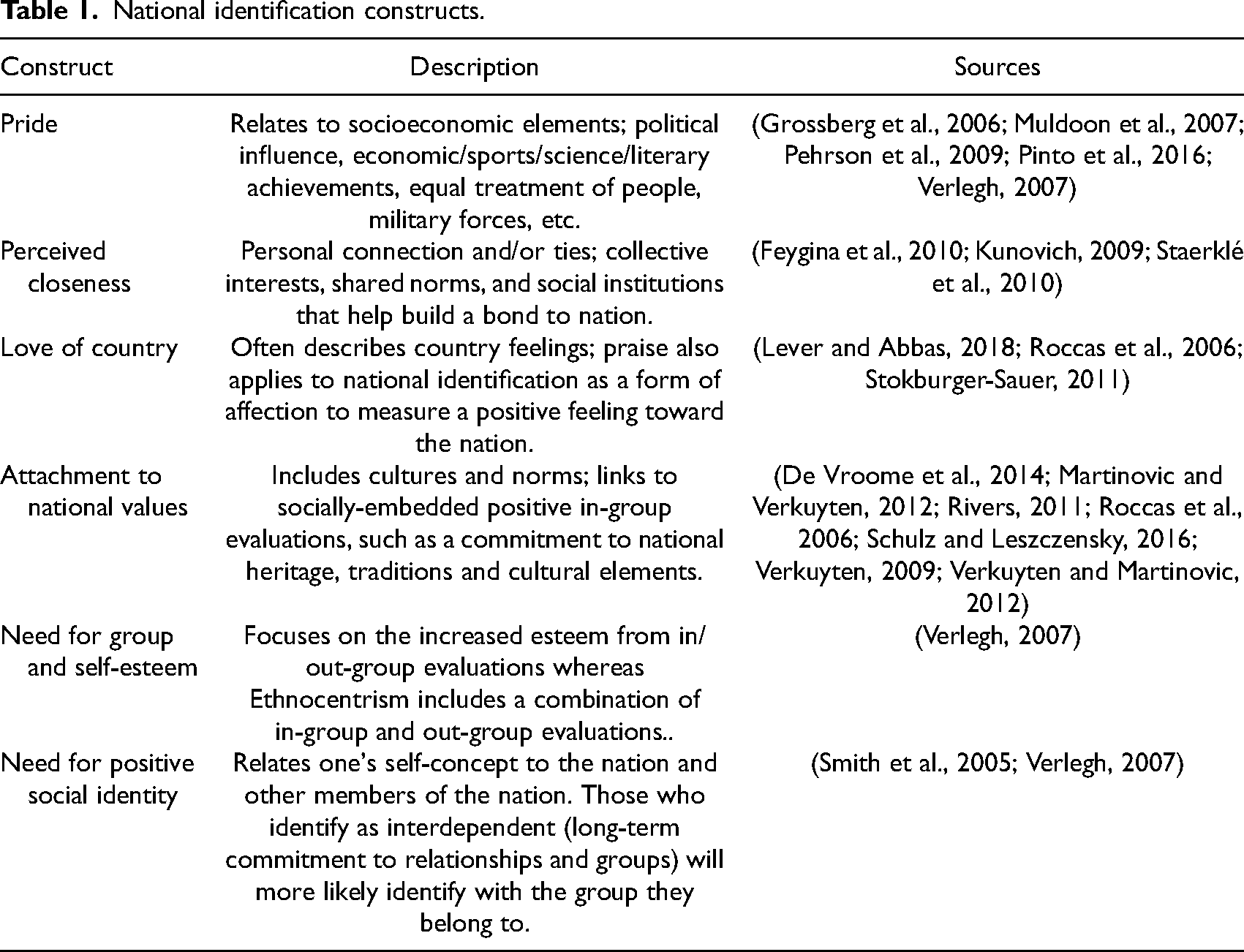
Attributes consistently identified as integral elements of national identification are pride, perceived closeness, love of country, attachment to national values, the need to enhance group and self-esteem, and a desire for a positive social identity. This study adapts these items to measure national identification. Table 1 provides a brief description of each.
National identification constructs.
Destination advocacy
Advocacy is emerging as crucial to the relationship between a tourist and a DMO, given its tendency to blur their roles by allowing tourists to offer unofficial and unsolicited promotion (Kozinets et al., 2010; Kumar and Kaushik, 2017). Destination advocacy is a unique combination of attitudinal loyalty and engagement. Whereas loyalty focuses on the intention to revisit a destination and can influence destination choice (Oppermann, 1999), destination advocacy also includes the active promotion of the destination to others (Lever et al., 2021). That is, a history of previously recommending the good or service and future intentions to revisit are indications of destination advocacy (Schepers and Nijssen, 2018). From a resident perspective, destination advocacy occurs when a resident demonstrates both positive attitudes toward their country as a tourist destination and the behaviour of encouraging visitation (Palmer et al., 2013). Residents as advocates are precious sources of information given their connection to the destination (Kesgin et al., 2019). Indeed, residents are often tourists within their home country when they dine out, visit landmarks and attractions, and engage in a range of touristic activities. If residents frequently visit an attraction, they are more likely to advocate for it, leading to a direct economic benefit (Kesgin et al., 2019). Destination advocacy has become a valuable complement to official DMO efforts to promote a destination, for example, through direct referrals from advocates to friends or family members (Kumar and Kaushik, 2020).
Broadly, within the product marketing literature, consumer brand identification has been positively linked with customer recommendations of that brand (So et al., 2018). In a tourism context, the destination is widely viewed as a brand, and national identification aligns well with the resident's perspective. When the nation is treated as a brand, the connection to visitor intention and advocacy is significant (Stokburger-Sauer, 2011). By extension, the robustness of one's national identification will likely influence one's advocacy of their nation as a destination. Nevertheless, a connection between national identification and destination advocacy has not been examined. It is hypothesized that the more a resident identifies as being nationalistic, the more likely they will advocate for their country as a tourist destination. Stated formally:
H1: A resident’s national identification positively influences their destination advocacy.
Destination image
The image of a destination is a critical determinant of a traveller's behavioural intentions, including the intention to revisit and willingness to recommend (Chen and Tsai, 2007; Pratminingsih et al., 2014). Destination image is defined as a tourist's beliefs, ideas, and impressions of a destination (Crompton, 1979). It is typically measured using a combination of cognitive and affective measures (Baloglu and McCleary, 1999), capturing a tourist's mental representations and feelings toward the destination. The factors that shape one's destination image are a combination of induced (i.e. DMO-created) and organic (i.e. user-created) sources.
Several studies link one's image of a place with identification (Chen and Phou, 2013; Kaplanidou et al., 2012; Prayag and Ryan, 2012), but without the specific construct of national identification. For instance, mega sporting events (e.g. Olympic Games) can increase a community's sense of pride, boosting the destination's image (Sung Moon et al., 2011). Place attachment has also been used as a determinant of one's perceptions of place (Chen and Phou, 2013; Kaplanidou et al., 2012; Prayag and Ryan, 2012) and includes the emotional strength with which one identifies with a given place along with one's functional dependence on that place to meet individual needs (Prayag and Ryan, 2012). Attachment and destination image are attitudinal constructs and share cognitive and affective components. Here, we examine the relationship between destination image and national identification, to date underexplored in empirical research. By extension, this study will explore whether these same relationships exist from a resident's perspective. It is hypothesized that national identification positively influences a resident's perception of their nation as a tourist destination:
H2: A resident’s national identification positively influences their destination image.
Supporting the relationship between destination image and the act of advocating for that destination, Hultman et al. (2015: 2228) observed that “a visitor who holds a positive overall image resulting from the destination's personality traits is more likely to both revisit and promote the destination”. The sentiment is evident in other research, which finds that alignment between social media influencers and destination image encourages repeat visitation (Xu and Pratt, 2018). This research will explore the relationship between an increase in a resident's perceptions of their home country as a tourist destination and the likelihood of advocating for their country as a destination. Thus:
H3: A resident’s destination image positively influences their destination advocacy.
Tourism ethnocentrism
The concept of ethnocentrism was introduced by Sumner (1906) to explain the view of one's in-group as the center of everything and entered the marketing literature as consumer ethnocentrism to describe the beliefs held by consumers that products made in one's home country are superior to those made elsewhere (Shimp and Sharma, 1987). Buying foreign products was perceived as hurting the domestic economy, causing a loss of jobs, and being “plainly unpatriotic” (Shimp and Sharma, 1987: 280). Shankarmahesh (2006) identified socio-psychological, political, economic, and demographic factors as direct antecedents of consumer ethnocentrism. To measure these antecedents and outcomes of consumer ethnocentrism, the consumer ethnocentrism scale (CETSCALE) was developed, comprised of 17 country-of-origin preferential statements such as: “American people should always buy American-made products instead of imports”, and “American products first, last, and foremost” (Shimp and Sharma, 1987). From a tourist perspective, ethnocentrism is described as “an individual's prescriptive beliefs and felt moral obligation to support the domestic tourism economy” (Kock et al., 2019: 427), and is focused on the positive in-group biases that reflect the systematic favouritism of the home nation.
National identification and tourism ethnocentrism are conceptually and empirically different from one another (Verlegh, 2007): while the latter is primarily concerned with the feeling of duty and support to travel within one's place (Kock et al., 2019), the former relates to an individual's overall sense of belonging to their country. Separating these constructs can determine whether one's pride in being a resident enhances one's belief that tourism bolsters the economy. This link has been demonstrated within the consumer behaviour literature to explain the preference for domestic products when national identification is strong (Gineikiene et al., 2017). This research will examine the relationship in a tourism context. The fourth hypothesis is:
H4: A resident’s national identification positively influences their tourism ethnocentrism.
Kock et al. (2019) measured positive word-of-mouth, but not advocacy, as a consequence of tourism ethnocentrism. Although these two concepts share commonalities, advocacy incorporates elements of both attitudes and behaviours (Kumar and Kaushik, 2017) and an unwillingness to support substitutes (Bilro et al., 2018). Kock et al. (2019: 434) focused on the behavioural elements of advocacy: “I bring up the US in a positive way in conversations about holiday destinations”, “I talk up the US as a holiday destination to people I know”, and “In social situations, I often speak favourably about the US as a tourist destination”. The authors have noted that mere intentions or recommendations (i.e. positive word-of-mouth) may not be enough to explain the residents’ hospitality. In contrast, the more active promotion of the potential visitors’ interests may be required for a deeper level of ethnocentrism to take place. They viewed the connection between positive word-of-mouth and ethnocentrism as an area for future research. Extending Kock's finding that positive word-of-mouth influences ethnocentrism, our fifth hypothesis will examine this link between one's ethnocentric tourism attitudes and one's propensity to advocate for the destination:
H5: A resident’s level of tourism ethnocentrism positively influences their destination advocacy.
Both tourism ethnocentrism and destination image involve beliefs and attitudes toward a destination. However, Kock et al. (2019) differentiate the two conceptually and empirically, claiming that destination image is focused on perceptions of a destination, while tourism ethnocentrism explores one's beliefs regarding their support of the domestic tourism economy. In this way, it is proposed that a stronger destination image will yield a higher level of tourism ethnocentrism. While this relationship was inconclusive in Kock et al.'s (2019) study based on USA image associations, this research explores whether destination image will influence tourism ethnocentrism in a different country context (i.e. Canada). Put differently, residents will have a stronger sense of duty to travel within their country if they perceive it to, say, offer great value for the money or quality attractions. The sixth hypothesis therefore states:
H6: A resident’s image of the destination positively influences their level of tourism ethnocentrism.
Mediating effects of destination image and tourism ethnocentrism
In their study of word-of-mouth intentions of residents, Papadimitriou et al. (2018) found both cognitive and affective images to be significant predictors. Stokburger-Sauer (2011) explains the influence of visitor identification with destination brand on visit intentions and advocacy, noting the importance of nation brand embeddedness to identification but not linking it directly to advocacy in their model. There is a surprising dearth of research into the link among destination image, national identification, and one's advocacy for a destination. It seems that a resident would be more inclined to advocate for a place they love and are proud of, believing that place to have an appealing image. To overcome this limitation, the seventh research hypothesis is:
H7: Destination image mediates the relationship between national identification and destination advocacy.
Since tourism ethnocentrism is a relatively new concept, its relationship with related constructs remains unexamined in the nascent literature. What is known is that a greater level of tourism ethnocentrism leads to increased positive word-of-mouth by tourists similar to the willingness to recommend aspects of advocacy (e.g. “I talk up Canada…”, “I bring up Canada in a positive way…”, and “In social situations, I often speak favourably about Canada…”) (Kock et al., 2019). It is yet to be seen whether tourism ethnocentrism can influence the more involved construct of advocacy, whereby residents recommend their nation and are unwilling to recommend substitutes. It stands to reason that the relationship between national identification and advocacy may be mediated by the presence of tourism ethnocentrism, in that one's moral obligation and sense of duty to travel within one's home country would impact positively on the link between, say, attachment to national values, and unwillingness to support travel to other places. That is, if a resident is genuinely attached to their home country, their sense of duty to travel within that country should further enhance their tendency to promote their country over alternatives. The eighth hypothesis summarizes this:
H8: Tourism ethnocentrism mediates the relationship between national identification and destination advocacy.
Research model
The study hypotheses are depicted in the conceptual model presented in Figure 1.
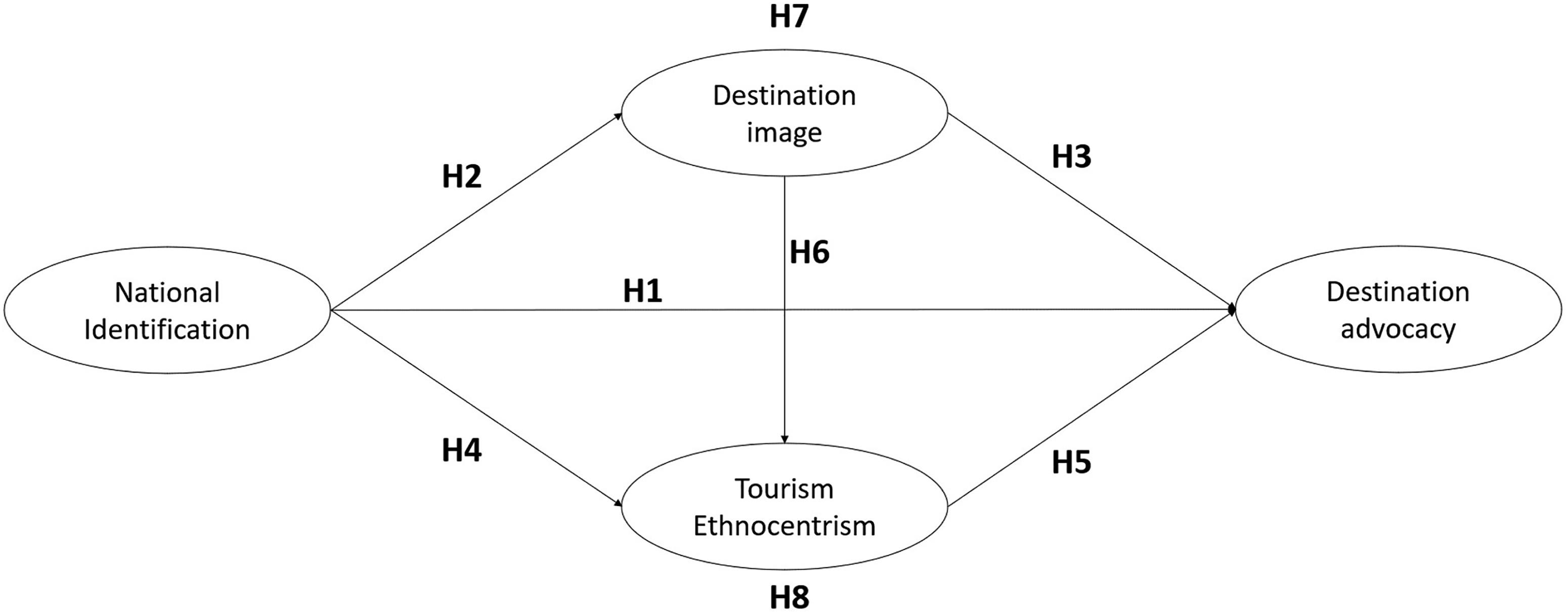
Conceptual model.
Methodology
Partial least squares structural equation modelling (PLS-SEM) is an advanced statistical method for social sciences that has proliferated in tourism research (Hair et al., 2016). PLS-SEM analysis combines factor analysis and regression to examine latent construct relationships simultaneously. PLS-SEM is preferred when research is exploratory rather than confirmatory. This research extends the national identification scales in a new context, a strong reason to adopt the method (Hair et al., 2011). As the model includes both first- and second-order constructs, the application of PLS-SEM is well justified (Pikkemaat et al., 2020).
Study design and measures
Canada and Canadian residents were selected as the study context and population because of the importance of domestic tourism, given residents’ foremost consideration of Canada as a tourist destination and the author's familiarity with the country. A survey was created using the Qualtrics XM platform. Before launch, the survey was piloted and pre-tested to ensure clarity in the questions’ wording and avoid potential bias. Following the screening questions regarding country of residence and age (must be Canadian residents aged 18 or older), eligible participants were briefed on the purpose of the study and asked to consent to participate. The survey was comprised of three sections (see Tables 2 and 3): (1) Likert-scale and semantic-differential questions to capture national identification, destination image, tourism ethnocentrism, and destination advocacy; (2) behavioural questions related to the frequency and usage of social media, and past travel experiences, and (3) demographic questions. The survey included nine demographic questions, four behavioural questions, and 39 Likert-scale or semantic differential questions for the study's indicators (17 national identification, nine destination image, six tourism ethnocentrism, and seven destination advocacy), three of which were reverse coded to assess response bias.
Validity and reliability summary report and indicator means.
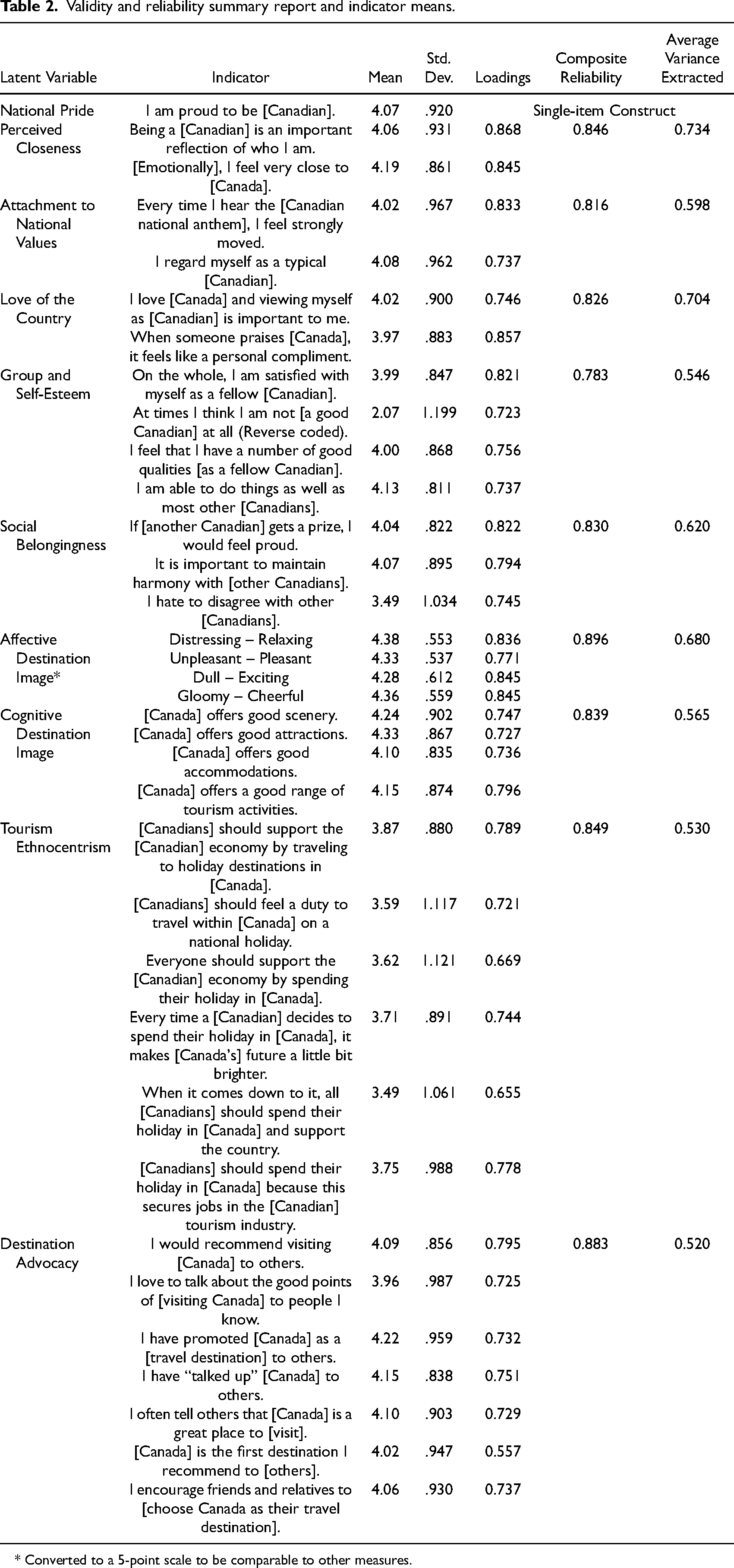
* Converted to a 5-point scale to be comparable to other measures.
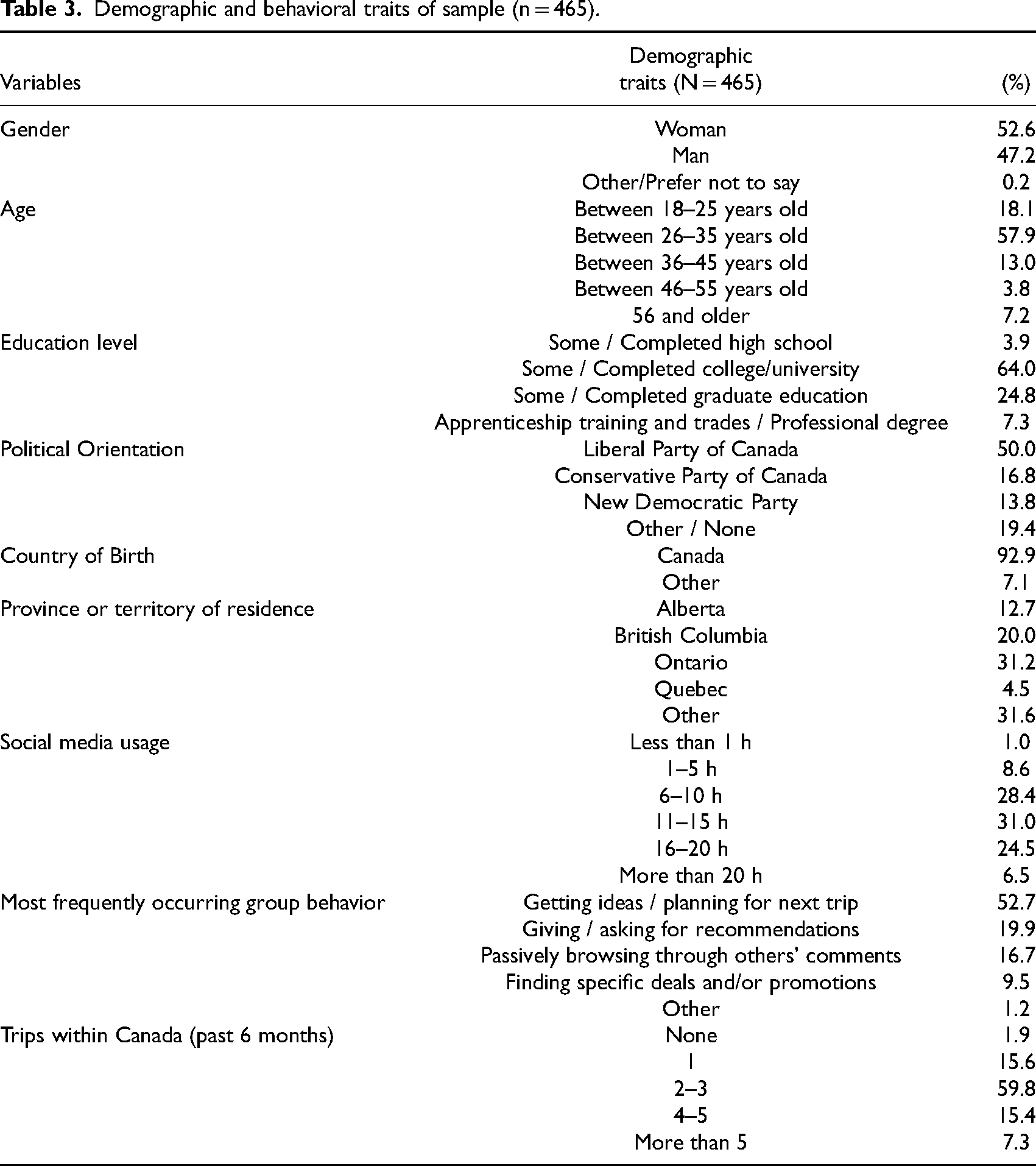
Demographic and behavioral traits of sample (n = 465).
To measure the study constructs, existing measures were adopted and, in some cases, adapted. The national identification construct combined 17 existing measurement items from multiple studies to capture the six indicators described earlier: pride (one item), perceived closeness (three items), love of country (two items), attachment to national values (three items), the need to enhance group and self-esteem (four items), and a need for positive social identity (four items). Recall Table 1 which provides an overview of each national identification indicator.
Tourism ethnocentrism was measured using six items from Kock et al. (2019).
Destination image comprised both cognitive and affective image. This study applied the measures used by Elliot and Papadopoulos (2016), which were based on the suggested scales in the seminal destination image papers by Echtner and Ritchie (1991) and Baloglu and McCleary (1999). The cognitive image items adopted measured perceptions of the destination's accommodations, attractions, range of tourism activities, value for money, and scenery. A 5-point Likert scale was used for consistency across constructs, relative simplicity for respondents, and superiority over ‘pick-any’ scales that may produce misleading results (Dolnicar and Grün, 2013). Affective image used semantic-differential scales adapted to a tourism setting by Baloglu and Brinberg (1997) to include arousing-sleepy, relaxing-distressing, exciting-gloomy, and pleasant-unpleasant – a common approach to measure affective image (see, for instance, Tapia et al., 2019).
Advocacy intention was measured using the single item from Kumar and Kaushik (2017). Advocacy behavioural items combined brand advocacy measures modified to be appropriate in a tourism context (Schepers and Nijssen, 2018) and the behavioural item by Kumar and Kaushik (2017). Finally, one's unwillingness to support alternatives was measured using adapted brand advocacy scales by Badrinarayanan and Laverie (2011).
Data collection and sampling
Cohen’s (1992) recommended sample size for PLS-SEM studies, referred to as the minimum R-squared method, is determined based on three elements: (1) the number of arrows pointing to the constructs within the measurement model to satisfy requirements for both convergent and discriminant validity as measured by composite reliability (between 0.6 and 0.7 in exploratory research as recommended by Hair et al. 2016), (2) the significance level, and (3) the minimum R2 value. With 12 paths in total, this study required a minimum sample of n = 205 participants using a 5% confidence interval and a minimum R2 value of 0.308. To go beyond the minimum to avoid errors in the analysis and to account for potentially invalid surveys, 350 responses was the chosen target.
The survey data was collected with the support of Destination Canada, the national DMO for Canada. An online population was targeted via their ‘Canada Keep Exploring’ Facebook community to meet the requirements for this research: membership for travel-related purposes, communication with one another in the group, and the member's page was kept active through near-daily content posted by Destination Canada. Recruitment posts were launched on the official Facebook group on two separate occasions in November 2019. A total of 479 survey responses were received, well above the target, at which point the survey was officially closed.
Results
Fourteen surveys were removed after data collection because participants did not identify as Canadian citizens or permanent residents or failed the reverse coded questions check. Table 2 presents the means and standard deviations of the study's indicators, along with the factor loadings, composite reliabilities, and average variance explained for each of the 465 valid surveys remaining. The analysis was completed using the SmartPLS 3.0 software (Wang et al., 2020). The behavioural data (social media use and social networking membership) were analyzed using descriptive statistics in SPSS software and compared against the PLS-SEM results.
Descriptive findings
Sample demographics
The average age of the study's participants was 34 years, six years below the Canadian population average, reflecting a younger age of social media users. A slight majority of survey respondents (52.6%) identified as women. This sample is representative of the Facebook group itself, where 54% of members (determined by number of page ‘Likes’) of 1,045,027 Facebook users are female. Destination Canada reports that the largest age segment of female members is between 25–34 (95,933 members or 17%), while 19% of male members (89,350) are in this age group. Participants were relatively well educated, with almost half (49.0%) having completed college or university. The vast majority (92.7%) were born in Canada, mainly residing in Ontario (31.2%), British Columbia (20%), or Alberta (12.7%). This geographic distribution is fairly representative of Canadian domestic tourists (Statistics Canada, 2020), and is closely aligned with the overall Canadian-based membership of the Facebook group, with the highest number of all current members located in Ontario, followed by British Columbia, then Quebec, and Alberta.
In terms of gender, women held statistically stronger socially embedded national ties, had more favourable perceptions of Canada as a tourist destination, and were more likely to be its advocates. Of all study constructs, only tourism ethnocentrism did not differ statistically in gender. All agreed that Canadians have a duty to travel within Canada to contribute toward its economic growth. This study also captured political orientation based on the advice by Roccas et al. (2006). Although the sample does lean toward a liberal political orientation (50%), there were no significant correlations between political views and national identification. All other demographic and behavioural variables were not statistically different.
Travel patterns
Given that the respondents were Canadian residents, it was not surprising that nearly all (98.3%) indicated they had taken a leisure trip within Canada at some point in their lives. In the six months from June to November 2019, 59.8% of survey respondents had taken 2–3 trips, 15.4% took 4–5, and 7.3% were heavy domestic travellers who had taken more than five trips. The remainder (15.6%) took a single trip in this period. This is reflected by the overall Canadian trend, which saw a continual rise of overnight domestic travel (Statistics Canada, 2020) until the appearance of the COVID-19 pandemic in early 2020.
Social media usage
According to the Canadian Internet Registration Authority (2020), Canadians spend an average of 12–21 h on social media per week, making this study's respondents typical users with the largest segment (31.0%), indicating that they spend between 11–15 h per week on social media. The next largest cohort – 28.4% – used social media less than the average at 6–10 h. Close behind, 24.5% or nearly one-quarter were in the upper tier of the average range, with 16–20 h of social media usage per week. 6.5% stated that they use social media for more than 20 h per week – ranging from 24 to 40 h per week on social media. Only 1.1% said they used social media less than 1 h per week. Referring to the Facebook group specifically, participants responded that they have been a member between one month and one year (40.6%) or more than one year (28.2%), with 2–5 years being the most common range. The remaining members (31.2%) could not recall when they had joined the group. Getting ideas for future trips (52.7%) was the highest self-reported behaviour, with giving/asking for travel recommendations (19.9%) second. A summary of all relevant descriptive findings is presented in Table 3.
Evaluation of measurement model
The SmartPLS model converged after three iterations, indicating a stable estimation. To test for variable independence, an examination of the average variance extracted from the measurement items was conducted. Each value was above the recommended cut-off of 0.5 (Hair et al., 2016). In descending order, they were 0.734 (perceived closeness), 0.704 (love of the country), 0.683 (affective destination image), 0.620 (attachment to national values), 0.598 (group and self-esteem), 0.585 (tourism ethnocentrism), 0.566 (cognitive destination image), 0.546 (need for positive social identity), and 0.520 (destination advocacy).
Next, collinearity was checked by measuring the variance inflation factors of the independent variables. The variance inflation factor of national identification was 2.631, well above the tolerance cut-off of 0.2, and well below the cut-off of 5 (Hair et al., 2014: 125), confirming that there are no collinearity issues with this independent variable. That is, none of the remaining indicators meaningfully impact upon another. This also holds for the other independent variables as they relate to destination advocacy (tourism ethnocentrism = 1.299 and destination image (cognitive = 2.268 and affective = 1.274)). Hair et al. (2014) offer a test to determine whether to keep an indicator based on its outer loading relevance. Using their test, three national identification indicators (two group/self-esteem and one positive social identity) and one cognitive destination image indicator were removed. The test was then re-run to reflect the new composite reliabilities and average variances extracted.
A test for discriminant validity was performed to ensure that the measures that should not be related across latent constructs are, in fact, not. Using heterotrait-monotrait (or HTMT), the cut-off point for the results of the HTMT in confirmatory research are 0.85 and 0.9 for exploratory research. Referring to Table 4, none of the values exceed.857 and therefore meet the conditions for discriminant validity.
HTMT test for discriminant validity.

Additionally, Table 5 confirms that the paths between the constructs themselves have also established discriminant validity, with all values in the upper level being under the 1.0 threshold.
Between-Paths HTMT test.

Evaluation of structural model
The coefficient of determination, R2, indicates that the three exogenous constructs (national identification, destination image, and tourism ethnocentrism) explain 66.6% of the variance in destination advocacy, as modelled in Figure 2.
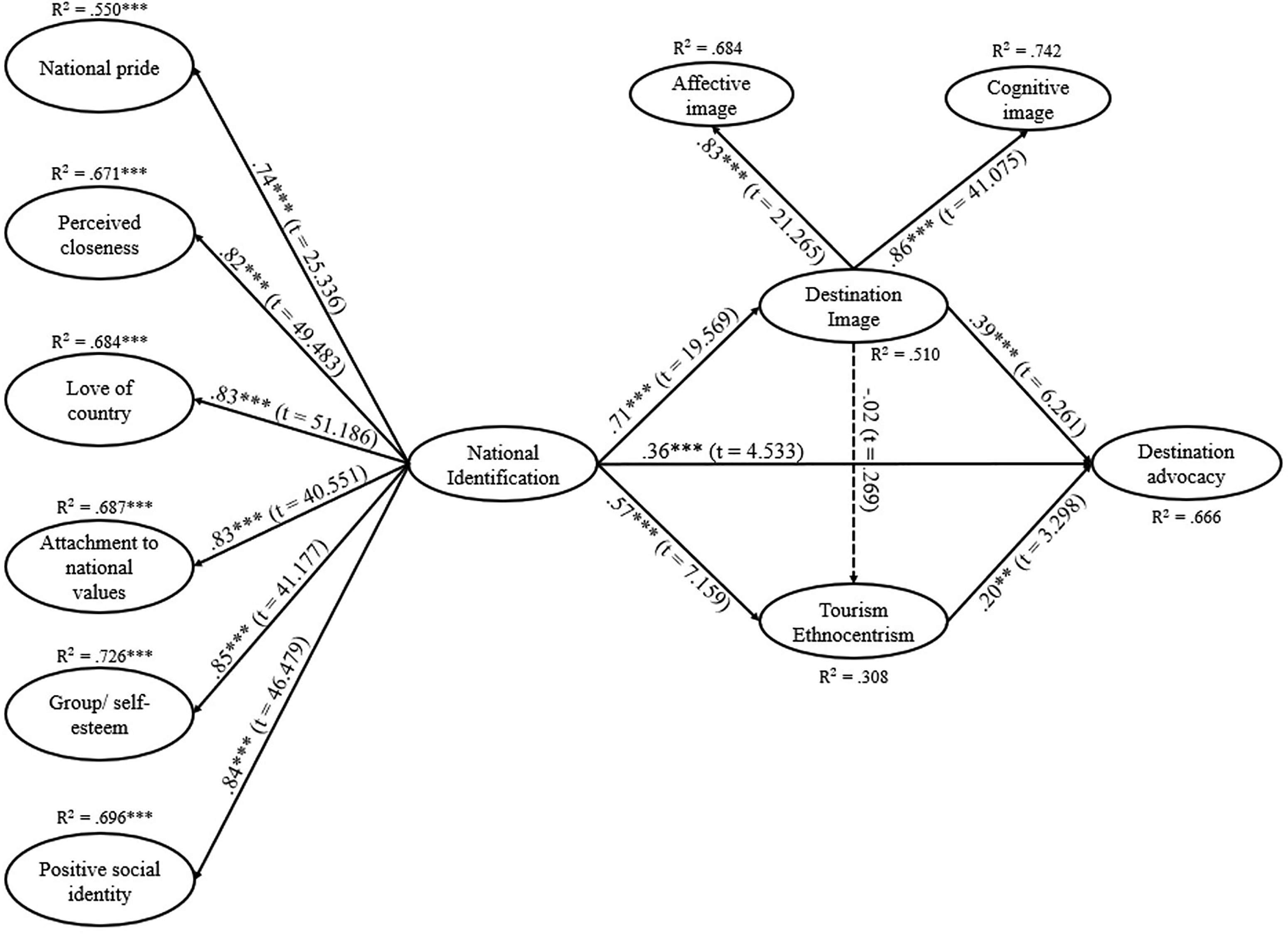
Final structural model. Note: Model fit for PLS-SEM: SRMR = 0.10, d_ULS = 22.838. ***p < .001; **p < .01; *p < .05.
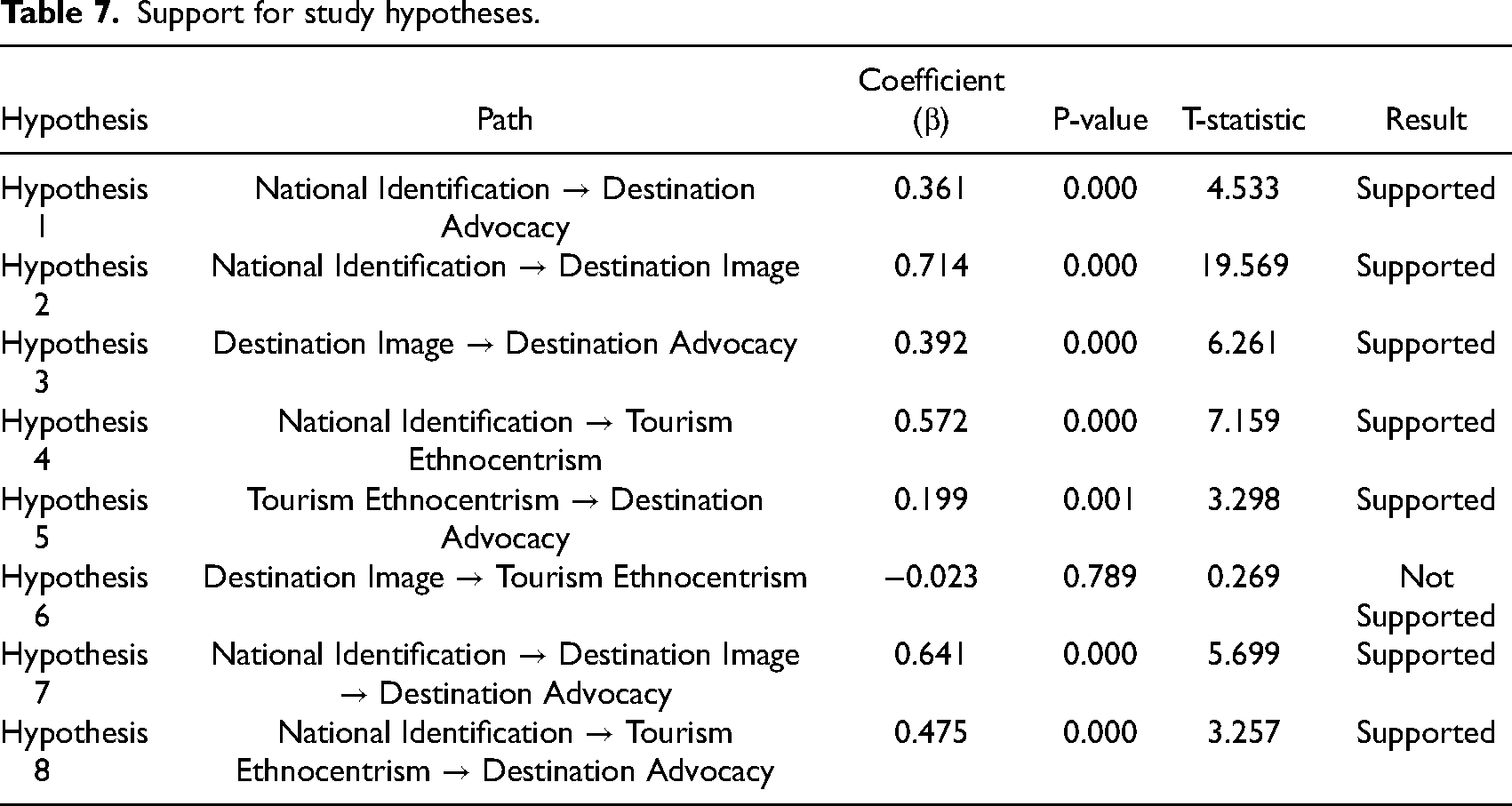
The model indicates that destination image has the strongest effect on destination advocacy (β = 0.392, p = 0.000), as formed by the indicators of cognitive image (β = 0.861, p = 0.000) and affective image (β = 0.827, p = 0.000). The hypothesized main path relationship between national identification and destination advocacy has a path coefficient of 0.361 (p = 0.000), supporting Hypothesis 1 that national identification positively influences destination advocacy. Hypothesis 2 is also supported as indicated by the model relationships between national identification and destination image (β = 0.714, p = 0.000). Destination image has an effect on destination advocacy (β = 0.392, p = 0.000), confirming Hypothesis 3. Additionally, the relationship between national identification and tourism ethnocentrism shows a coefficient of 0.572 (p = 0.000), supporting Hypothesis 4. Further, tourism ethnocentrism to destination advocacy is showing a moderate relationship (β = 0.199, p = 0.001), supporting Hypothesis 5. Destination image to tourism ethnocentrism (β = −0.023, p = 0.789) was found to be insignificant, which rejects hypothesis 6.
To test the indirect mediating effect of both destination image and tourism ethnocentrism on national identification→destination advocacy, the Preacher and Hayes (2008) procedure was used, preferred within the context of PLS-SEM (Hair et al., 2014). This procedure involves two key steps to confirm the presence of a construct's mediating effect: (1) the presence of a direct relationship, which is the case here as the national identification to destination advocacy path is significant, and (2) through a check of the significance of the indirect effect (national identification-destination image-destination advocacy and national identification-tourism ethnocentrism-destination advocacy) and associated T-Values. The results are presented in Table 6.
Indirect effects of mediating variables (destination image and tourism ethnocentrism).

Following a bootstrapping procedure of 5000 random sub-samples based on a two-tailed 0.05 confidence interval, the results confirm that destination image is indeed a partial mediator of national identification to destination advocacy as both the indirect and the direct effects from the independent variable (national identification) to the dependent variable (destination advocacy) are significant (p = 0.000). This supports Hypothesis 7. Using the same approach to measure tourism ethnocentrism's mediating effect on the national identification to destination advocacy path also reveals a statistically significant effect (p = 0.001), indicating that tourism ethnocentrism does indeed partially mediate the national identification to destination advocacy relationship and thus supports Hypothesis 8. Specifically, the path coefficient between national identification and destination advocacy went up by 0.280 and 0.114 for destination image and tourism ethnocentrism, respectively.
A summary of all supported/unsupported hypotheses is presented in Table 7.
Support for study hypotheses.
Discussion
The results reveal a direct and significant relationship between national identification and advocacy. In her study of nation brand advocacy of German visitors to Ireland, Stokburger-Sauer (2011) found a direct relationship between nation brand identification and advocacy. This research builds on such findings by focusing on the antecedent of one's social-influenced national identification as it impacts advocacy rather than the individual-influenced brand identification, thereby revealing key social influences on a resident's destination advocacy. For example, from the perspective of a resident's need for positive social identity, the well-being of fellow Canadians contributes to their national identification, which will lead to greater levels of advocacy to potential visitors. Demonstrated within a tourism context for the first time, all first-order constructs adapted from the social psychology literature to depict national identification – pride, love of country, group- and self-esteem, attachment to national values, and need for positive social identity – are important components of one's national identification and meaningfully connect to a resident's destination advocacy. National identification also directly correlates with destination image and tourism ethnocentrism, identified for the first time.
Through the PLS-SEM analysis, it was found that a resident's national identification has a significant impact on their perceptions of the country as a tourist destination. For instance, the greater the sense of ‘closeness’ to and ‘pride’ of the home country, the more likely one perceives it as a relaxing and pleasant place to visit, with attractions worth seeing and good value for money. A resident who has a deep sense of attachment to their nation's values would be more inclined to feel a sense of duty to travel domestically than one who does not. Further, a positive image of the destination has positively correlated with their advocacy of the destination. In other words, the more favourably one perceives their home country, the less willing they will be to support alternative destinations and the more they are going to ‘talk up’ their country's various attractions and features. These findings reveal for the first time that the identification - advocacy relationship is significantly mediated by the perception of destination image.
Tourism ethnocentrism was a predictor of destination advocacy in the measurement model, supporting the relationship between a sense of duty to travel within one's home country and impassioned support for others to visit the destination. This extends the research by Kock et al. (2019) of tourism ethnocentrism as a predictor of a tourist's positive word-of-mouth. Beyond word-of-mouth, destination advocacy emphasizes the individual's support of one's country as the first choice above alternative destinations. It focuses not only on intentions but also on recommending behaviours. It can be concluded that tourism ethnocentrism can influence beyond word-of-mouth and invoke one's desire to support and promote one's home country to others. As a mediator between national identification and destination advocacy, tourism ethnocentrism furthers its contribution, partially mediating the direct effect between the two main constructs. The results indicate that national identification is not only a predictor of tourism ethnocentrism, but tourism ethnocentrism also acts as a partial mediator between national identification and destination advocacy by strengthening the relationship.
This paper introduces national identification as an essential influencer of destination advocacy. The results of the hypothesis testing confirm the path from national identification to destination advocacy, and significantly, the positive mediation of the path by both destination image and tourism ethnocentrism. Interestingly, destination image did not influence tourism ethnocentrism, indicating that while a positive image will influence one's advocacy – “Canada is pleasant and offers a good range of tourism activities, so I encourage friends and relatives to choose Canada as their travel destination” – the positive image does not go as far as to influence attitudes such as – “All Canadians should spend their holiday in Canada, and should feel a duty to do so”. These findings shed new light on the attitudes of residents as travel influencers. They are willing to advocate for destinations they find attractive and feel national pride toward, and their support of the economy and travelling within their country also influences their advocacy. But it is not destination image that influences an ethnocentric sense of duty to travel within one's boundary; it is national identification.
Conclusion
This study aimed to understand the determinants of advocacy, specifically the adapted construct of national identification, both directly and mediated by destination image and tourism ethnocentrism. It builds upon social identity theory, which situates one's roles and relationships within a community (Jones and Volpe, 2011; Tajfel, 1974), as well as place image theory, particularly destination image (Elliot, 2015), by suggesting that not all social participation is created equal and that favourable perceptions of a place may be influenced by other members of one's social groups rather than by the destination itself. Findings reveal that the stronger one's national identification, the more one will advocate for their nation. Further, the link between identification and advocacy is positively impacted by an individual's favourable destination image and degree of tourism ethnocentrism. Finally, a resident's image and ethnocentrism have been found to partially mediate the direct relationship between identification and advocacy. The significant effect of the partial mediation of destination image demonstrates the importance of a resident's perceptions of the destination in their desire to advocate for it. When the destination is favourably perceived by the resident, such as finding it to be a relaxing, pleasant place to visit or through their belief that the destination offers good accommodations, it will further their desire to recommend their nation as the first option to others. In a similar light, the role of tourism ethnocentrism as a mediator of national identification and destination advocacy suggests that one's support of the local economy strengthens one's belonging to other Canadians within a social context and will lead to a higher rate of recommending and encouraging others to visit. It is hoped that these new linkages between national pride and destination promotion, empirically established for the first time, inspire destination researchers and marketers to continue to advance online communities for travel and tourism advocacy.
Theoretical contributions
This research set out to determine the relationship between a resident's national identification and their destination advocacy of their home country to others, along with the mediating roles of destination image and tourism ethnocentrism. Thinking of one's social identity and concept of place, this study explored the concept of identification in relation to one's national advocacy, which has been overlooked in the past. A more active form of positive word-of-mouth, destination advocacy proves to be positively influenced by national identification, demonstrated for the first time. This research confirms the important roles of pride, love of country, group- and self-esteem, attachment to national values, and a need for positive social identity through the structural model. By exploring the emotional attachment to their country as determined by their willingness to advocate on its behalf and encouraging others to explore its touristic offerings, this study contributes to social identity theory by expanding our understanding of national identification and its influence in a tourism context. Specifically, this research builds upon social identity theory by examining one's roles and relationships within a community (Jones and Volpe, 2011; Tajfel, 1974). In this case, the roles of national identification as a determinant of destination advocacy among members of a Facebook travel-based online community. This builds on the three interrelated processes of social identity theory: social categorization, self-evaluation through social identity, and intergroup social comparisons (Tajfel et al., 1979) by emphasizing the importance of establishing one's relationships among members of their unified community. Social identities serve two functions: first, to cognitively segment and give order to the social environment and second, to allow individuals to locate themselves within that social environment (Ashforth and Mael, 1989: 20–21). Regarding the first function, this study shows that a country's residents may give order to their social environment by establishing their belonging with other residents through a DMO-run social media channel such as Facebook. For the second function, the specific role of being a destination advocate for potential visitors describes their ability to locate themselves within that group by reinforcing their status as members engaging in pro-social behaviours.
Managerial implications
DMOs may use the study findings to advance destination marketing objectives in several impactful ways. First, social media channels provide opportunities to directly observe instances where residents express feeling proud, close, attached to national values, and so on through their posts. Knowing that stronger national identification is correlated with stronger destination advocacy, DMOs may choose to post more nationalistic imagery (e.g. a waving flag, national anthem, etc.) to enhance people's attachment to national values. Other model relationships also present opportunities for DMOs, such as the use of ethnocentric indicators in messaging to illicit advocacy. For example, a DMO might remind residents of the importance of travelling within their country rather than elsewhere, particularly during uncertain times. If done effectively, this can leverage residents’ ethnocentric beliefs and desires to promote travel within Canada to others.
Given the digital “real-world” application of this research, the implications for DMOs are timely and salient, especially as we prepare to move into a new version of tourism both during the current COVID-19 crisis and after, as destination marketers are required to adjust their strategies to adapt to a changing world where many economies are counting on domestic tourism for the recovery of this vital sector. For example, in 2018, 88% of Canadian trips were taken within Canada rather than abroad (Statistics Canada, 2020). When borders close for crises such as COVID-19, businesses’ hope of survival lies with domestic visitors, a situation that can be greatly assisted by the strong advocacy of individuals such as Destination Canada's Facebook group. Since sharing opportunities within the group is highly important to members, DMOs should consider building a ‘members page’ separated from the main page to post photos for members in a unidirectional approach. Often, ‘Community’ pages are devoid of meaningful engagement. Individuals interested in becoming members of an organized community related to travel to discuss and encourage others in a positive and like-minded space, by request, would perceive the community to be like an organized club (perhaps even requiring a rationale before ‘acceptance’ into the group). The rationale links back to social identity theory: people build their social identities through group membership and belonging and become stronger proponents of the group's mandate by being members. This could enhance the already strong desire of residents to advocate for their home country to potential visitors if they feel they are contributing in a pro-social way toward the mandate of the group.
Limitations and future research
Regarding the PLS-SEM methodology, the independent variables in the conceptual model accounted for 66.6% of the variance in destination advocacy, leaving an unexplained 33.4%. There is also a need to point out the relatively weak means of two of the reverse coded measurement items (“Overall, being a Canadian has little to do with how I feel about myself” and “At times I think I am not a good Canadian at all”) as a limitation.
Regarding the unsupported hypothesis, future research is required to determine why destination image does not influence tourism ethnocentrism. Kock et al. (2019) tested their construct of destination imagery using the association-strength-valence method rather than Likert or semantic-differential scales. Despite the different design, this study confirmed their finding that destination image and tourism ethnocentrism are not empirically linked.
Irrevocably impacted by COVID-19, the way ahead for tourism around the globe has shifted. There is a growing perception that travellers will feel a greater duty to their tourism economy. Thus, tourism ethnocentrism may play a significant role in shaping behaviours, making the study results timely as they shed light on the part of ethnocentrism, perhaps signalling a new era of tourism. The pandemic has also made the digital world even more vital to our social and economic actions and undoubtedly will play an integral role in tourism's future. The study findings provide critical insight into social media users’ advocacy, contributing to social identity theory and the evolution of DMO marketing.
Footnotes
Acknowledgements
Special thanks to Destination Canada for their continuing support of our research by allowing us to conduct this study using their Facebook group population.
Declaration of conflicting interests
The author(s) declared no potential conflicts of interest with respect to the research, authorship, and/or publication of this article.
Funding
The author(s) received no financial support for the research, authorship, and/or publication of this article.
