



Abstract
In recent years, there has been growing recognition of physical education (PE) as a vital platform for fostering holistic child wellbeing and thus supporting the physical, social, emotional, and cognitive elements of wellbeing. However, the approaches to promoting such development must continuously evolve in response to changing societal needs. While there is an increasing educational discourse on the effects of restorative practice (RP) on school communities and child learning, its potential impact within PE has not been sufficiently explored. This article explores how one Irish primary school teacher used RP to support children's social wellbeing in PE and considers the implications for the teacher's own professional practice. Framed as an autoethnographic self-study approach, Gráinne (the lead researcher) reflects on her two-year journey, drawing on critical incidents and personal reflections to explore the challenges and successes of integrating RP into PE. The findings highlight how RP shaped both student experiences and the teacher's evolving identity and development, requiring sustained self-reflection and emotional awareness. Contributing to the limited literature on RP in Irish PE settings, this research illustrates the potential of RP to positively impact children's social wellbeing and thus could be used to effectively support holistic development.
Keywords
Introduction
To remain transformative and relevant, school curricula must evolve in response to the shifting needs of contemporary society (Organisation for Economic Co-operation and Development, 2021). As child wellbeing becomes an increasing priority, physical education (PE) holds unique potential to foster holistic development by nurturing children's physical, mental, emotional, and social wellbeing. As Lynch (2019) notes, the debate is no longer if physical activity supports wellbeing, but how high-quality PE can act as a universal platform for this in all schools. When taught effectively, PE nurtures not only physical health but also children's social, emotional, and cognitive development. The United Nations Educational, Scientific and Cultural Organisation (UNESCO) (2015) highlights that quality PE offers age-appropriate experiences that foster psychomotor, cognitive, and socio-emotional skills, contributing to lifelong wellbeing. Thus, prioritising these elements positions PE as a key contributor to holistic health (Lynch, 2016; UNESCO, 2015). The questions surrounding how PE can support child wellbeing and in turn holistic development inspired the focus of this study.
Educational discourse exploring restorative practice (RP) in schools has grown, particularly in relation to children's social and emotional learning (SEL) and, thus, wellbeing (Collaborative for Academic, Social and Emotional Learning (CASEL), 2020; Moloney, 2022). RP is viewed as a potentially transformative approach that can support positive school climates by promoting social responsibility and learning from behaviour (Macready, 2009). In exploring strategies that promote wellbeing in PE, Gráinne, the lead researcher and a primary school teacher, began to investigate the potential impacts of implementing RP to achieve wellbeing-centred learning outcomes. Although community-based RP programmes exist in Ireland (Fives et al., 2013), there appears to be a gap regarding the experiences of primary school teachers implementing these practices within PE. Through an autoethnographic self-study, Gráinne explored her lived experience of using RP in PE to support children's social wellbeing. Thus, the research questions for this article are: (1) how did an Irish primary school teacher facilitate RP in supporting children's social wellbeing in PE? and (2) what implications did this approach have for the teacher?
Literature review
RP in education
RP centres around the ideology that individuals make positive behavioural changes when those in positions of power engage with them collaboratively rather than acting upon or for them (Wachtel, 2016). RP is described as ‘a way of thinking and being based on caring, collaborative, and respectful relationships’ (Restorative Practice Consortium, 2017: 10). RP aims to build and strengthen healthy relationships and communities, offering a framework to prevent, respond to and repair harm through a continuum of practices (Restorative Practice Consortium, 2017). This highlights its potential for fostering social cohesion and emotional wellbeing.
RP has become a focal point of international educational discourse, recognised for its transformative potential in schools. Effective implementation requires collaborative, proactive approaches that foster respect, care, community, and constructive responses to conflict (Stowe, 2016). Hopkins (2002) insists that whole-school approaches to RP are essential to successful practice. However, if there is limited buy-in from staff, especially at leadership level, the viability and sustainability of RP as a school-wide approach is brought into question. RP supports behaviour by emphasising accountability, responsibility, and relationship repair (Kehoe et al., 2017; Lodi et al., 2021; Zakszeski and Rutherford, 2021). Practice should be guided by core values, including participation, respect, honesty, interconnectedness, accountability, and empowerment. These values provide a framework for building positive relationships, promoting personal responsibility, and providing just processes to repair harm done to relationships (Evans and Vaandering, 2016).
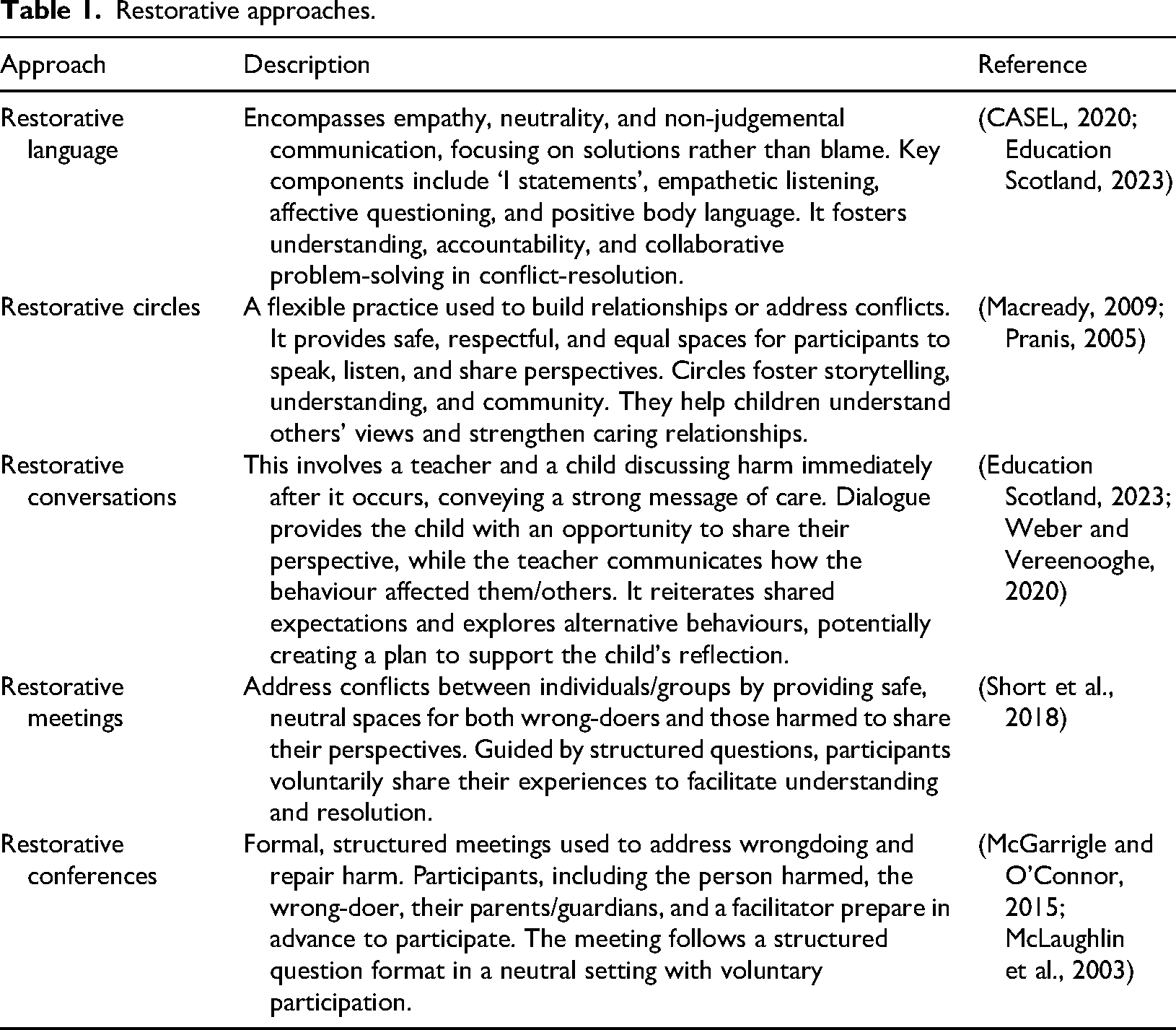
With growing recognition of RP's role in holistic development, exploring teachers’ experiences of using RP to support wellbeing in PE is timely. RP approaches are employed across a spectrum from informal to formal settings, both proactively to foster healthy relationships and community, and responsively to address conflict (CASEL, 2020; Kehoe et al., 2016; Thorsborne and Blood, 2005). Teachers can implement various approaches to promote restorative environments. Walgrave (2008) proposes several processes that lend themselves to achieving RP outcomes, including restorative circles, meetings, conferences, and conversations. Such approaches can be proactive to build relationships or reactive to restore relationships. For example, restorative language and informal chats/conversations are employed to foster relational environments (CASEL, 2020). Restorative circles function as talking or problem-solving circles, while restorative meetings and conferences are more structured, reactive processes, with conferences typically reserved for the most severe cases. Each approach referred to in this study is defined in Table 1. While teacher attitudes are central to successful implementation (Dhaliwal et al., 2021), there is limited research exploring teachers’ lived experiences of using RP in practice (Moran et al., 2024). Without deeper insight into these experiences, it is difficult to fully assess the effectiveness and long-term impact of RP in schools.
Restorative approaches.
RP in PE
With growing emphasis on holistic child development within schools and curricula, PE offers a unique platform to facilitate physical, social, emotional, and intellectual opportunities for children. Though widely recognised for addressing both physical-motor and socio-emotional objectives, the emphasis placed on these objectives varies across countries and curricula (Naul and Scheuer, 2018). While quality PE has the potential to contribute to the development of psychosocial skills and competencies, there is a lack of research focused on personal and social development objectives (Condello et al., 2021; Opstoel et al., 2019).
Current Irish policy acknowledges that to enhance children's wellbeing, the environment must ‘consciously foster warm relationships’, promote participation, ‘develop pupil and teacher autonomy, and cultivate clarity about boundaries, rules, and positive expectations’ (Department of Education and Skills, 2019: 15). Within the context of Irish primary PE, the existing curriculum states that ‘the child can experience the joy of physical exertion and the satisfaction of achievement while developing skills and positive attitudes that enhance self-esteem’. It also provides ‘opportunities to develop desirable personal and social attributes: the concept of fair play, the acceptance of success and failure, and the ability to cooperate in group situations’ (National Council for Curriculum and Assessment (NCCA), 1999: 2). Connecting to the discussion surrounding RP, such restorative approaches are noted as pivotal for resolving conflicts, promoting positive student behaviour, and building relationships and prosocial skills (Kehoe et al., 2017), thus the possibilities within the context of PE are promising. Moreover, the draft of the redeveloped Irish national curriculum captures the essence of what holistic PE will look like, suggesting it should ‘enhance relationships and ability to learn cooperatively with others, alongside the development of a sense of fairness’, and must incorporate affective learning that ‘empowers children to develop motivation, confidence, resilience, emotional awareness, and self-identity in movement contexts’ (NCCA, 2024: 4–5). The official NCCA (2025) curriculum, released in recent weeks, aligns closely with the draft in both its intent and content, reinforcing this vision for PE's contribution to holistic learning. Relating this to a key principle of RP, teaching young people how to engage respectfully, even in provocative situations, can foster emotionally literate citizens (Kehoe et al., 2017). Thus, RP could be utilised to achieve PE and wellbeing goals.
Literature also indicates that different PE models can support children in developing life skills, such as self-esteem, problem-solving, time management, decision-making, teamwork, communication, leadership, and emotional and social competencies, particularly when these models adopt relational and student-centred approaches (Cronin et al., 2023; Dyson et al., 2004; Smither and Zhu, 2011). Given that RP emphasises relational pedagogy by empowering students and offering diverse, meaningful experiences (Dyson et al., 2019; Macready, 2009; Morrison et al., 2005), there is potential for RP to complement and enhance the affective learning outcomes already supported by relational PE models. Making a connection between the two, RP could serve as a framework of approaches to support SEL, and thus holistic child development. PE offers an ideal platform for supporting psychosocial learning, and implementing RP approaches could be an effective means to enhance this environment. Thus, this study addresses the question that inspired its focus: how can PE support child wellbeing and, in turn, holistic development? At present there is limited research on RP in PE. Hemphill et al. (2021) examined the perspectives of a first-year PE teacher attempting to implement RP and highlighted the challenges and impact context had on delivery, while Hemphill et al. (2022) explored the feasibility of enhancing SEL by implementing RP through the development of an alternative PE programme. Additionally, Lynch et al. (2020) highlight how RP can support PE teachers in shifting away from traditional behaviour management approaches, repositioning PE as a subject that responds to students’ lived experiences. Though these studies discuss RP within PE, there is a lack of research relating to the lived experience of a primary school teacher. This paper will, however, explore how a primary teacher navigated RP approaches in PE in an attempt to promote social wellbeing, and what implications this had.
Methodology
Research design
While this article is fundamentally a self-study focused on Gráinne's professional practice and improvement as an educator (Ovens and Fletcher, 2014), it also draws from and contributes to autoethnographic traditions (Hamilton et al., 2008). Thus, this article will be presented as an autoethnographic self-study (Hamilton, 2021). This combined methodology moves beyond reflection on practice to engage with the cultural and social contexts in which that practice unfolds.
Self-study focuses on improving teaching practice by analysing professional development (Dinkelman, 2003; LaBoskey, 2004) and critically reflecting upon one's actions to achieve more conscious and intentional professional growth (Samaras, 2011). This is appropriate considering this article's focus on teacher practices within PE. However, as Keleş (2022) notes, autoethnography enables scholars to connect personal stories with broader social and cultural discourses. This highlights the uniqueness of a teacher's experiences, documenting individual emotions while enhancing self-knowledge and personal identification (Intansari Meilani et al., 2022). This study, while rooted in educator development, is embedded in the sociocultural context of working in a DEIS 1 1 school, a context influenced by challenges linked to socioeconomic status and educational disadvantage. In this way, Gráinne's narrative is not only about professional growth but also about negotiating the complex cultural and structural realities of educational disadvantage. Hamilton et al. (2008: 25) states that ‘in auto-ethnography, it is the cultural I shaped by cultural contexts and complexities that takes the foreground’. This resonates with Gráinne's position. She is not only reflecting on what she does but interrogating who she is as an educator within a specific school community. Gráinne's personal transformation is inseparable from the cultural landscape in which it occurs, a hallmark of autoethnographic work. Thus, this article adopts an autoethnographic self-study approach.
Participants and setting
This research employs an autoethnographic self-study, in which Gráinne is the lead researcher and main participant. Gráinne is a primary school teacher who had one year of teaching experience prior to project commencement. She assumed the role of a special education teacher (SET 2 ) at an urban, mixed-gender DEIS 1 primary school in Ireland. Thus, she worked within a school community with a statistically higher percentage of children at risk of educational disadvantages. As the SET, Gráinne worked with her assigned class groups daily. Her role included providing 1.5 hours of in-class support for Mathematics and Literacy which she was team-teaching with the class teacher, and additional group/individual withdrawal support. Gráinne also taught PE during the project period, a role that stemmed from her prior specialism in PE from her undergraduate degree and aligned with the focus of her PhD. Gráinne took over the PE teaching role from the class teacher at the start of the project and delivered all PE lessons as the sole teacher during this period. These weekly lessons lasted between 60 and 90 minutes.
Gráinne's educational philosophy centres on creating safe, relational learning environments where children feel valued, acknowledged, and respected. This study sought to align these values with the implementation of RP in PE to support children's social wellbeing. At the outset, Gráinne's understanding of RP was limited to informal observations and conversations as she had not previously incorporated it into her own teaching. As she explored relational approaches within PE, RP emerged as an effective and meaningful strategy. Gradually, it became more embedded in her approach. By year two, its use was intentional and aligned with the refined research focus of RP's role in supporting wellbeing. This shift from exploratory use to deliberate implementation reflects both professional learning and the evolving, responsive nature of the study.
Over two years, Gráinne worked as an SET for sixth class (aged 11–13) in year one and third class (aged eight to nine) in year two. As these were her assigned SET groups, they formed the focus of the research, following approval from school leadership. In year one, Gráinne taught sixth class for six months prior to data collection and was well-acquainted with the students through daily teaching and weekly after-school sports coaching. In year two, Gráinne began data collection in October with third class, having only known the students for a month but having worked with them daily in that time. Consequently, Gráinne's familiarity and relationships with the two groups varied. During the study, the NCCA (1999) curriculum was in effect and teaching activities were based on its content which is divided into Strands. Strands taught include Athletics, Games, and Outdoor and Adventure. PE lessons featured cooperative games, outdoor and adventure tasks, team games, and role play, among others to achieve/prioritise social wellbeing outcomes.
Ethical considerations
This research was approved by Mary Immaculate College Research Ethics Committee in Limerick, Ireland (Ref: A22-059). Prior to data collection, children and parents were provided with clear, age-appropriate information sheets and consent forms. Written consent was secured from parents/guardians (n = 40), alongside child assent (n = 40). Non-consenting children could not be identified by peers and continued to participate in PE as normal, but their data was excluded. All child data was anonymised and securely stored, ensuring accessibility to only the research team. The class teacher acted as the gatekeeper, distributing consent/information forms before data collection and was present for all PE lessons to help minimise teacher–student power dynamics. Children were regularly reminded of their right to withdraw by informing either the researcher or the gatekeeper, and ongoing verbal assent was confirmed during data collection by the researcher when collecting worksheets or notetaking during conversations.
Data collection
The research spanned two five-month periods across two academic years, involving two class groups and 16 PE lessons per group (n = 32). Working with two groups across two years allowed for a more comprehensive and in-depth analysis of Gráinne's experience and journey as an educator. Gráinne taught PE to sixth class (n = 24) and third class (n = 16) (separate academic years). The lessons referenced were part of a larger research project focused on wellbeing promotion in PE. This article, however, concentrates on the role RP played in wellbeing promotion.
This research relied on qualitative data to capture both Gráinne's experiences of teaching PE, and the children's experience as learners. Researcher-generated sources consisted of weekly reflections written in a personal reflection journal after each lesson, as well as a capstone reflection at the end of each data collection period. These were used to document Gráinne's observations, thoughts, feelings, and insights post-lesson (n = 34, ∼58,264 words).
Gráinne spoke online via Teams with her critical friend, Grace, on seven occasions over the two-year process, with discussions lasting from 60 to 90 minutes. The purpose of these meetings was to facilitate critical and constructive discussion around personal reflections and to challenge Gráinne's assumptions surrounding pedagogy and lesson design. While transcripts of these meetings (n = 7), along with critical friend written responses to reflections, formed a data source within the wider research project, their role in this article was primarily reflexive and analytical. These discussions functioned as a reflective sounding board, helping Gráinne to articulate the rationale behind pedagogical decisions, even where critical friend data are not drawn on directly within this paper’s reported findings.
Student-generated data consisted of written reflections in the form of worksheets completed during PE lessons at various stages (n = 123). These worksheets described personal PE experiences and facilitated teacher planning. Examples of worksheet questions include: ‘what is your most memorable moment from PE?’ (Y1, L16 3 ), ‘what has been your favourite/least favourite thing about PE?’ (Y2, L6) and ‘do you have any advice for Ms Regan to help make PE more enjoyable for you?’ (Y1, L11). Additionally, in-class discussions were captured through researcher notetaking. PE conversations that occurred as integral parts of PE between children and between children and the teacher were documented/handwritten in real time to understand child experiences and facilitate teacher reflection. To address the student–teacher power dynamic, the class teacher, who acted as the gatekeeper, was present for all conversations. Their presence helped ensure that children did not feel pressured to participate or respond in any particular way, and supported a comfortable, familiar environment where children could engage on their own terms.
Data analysis
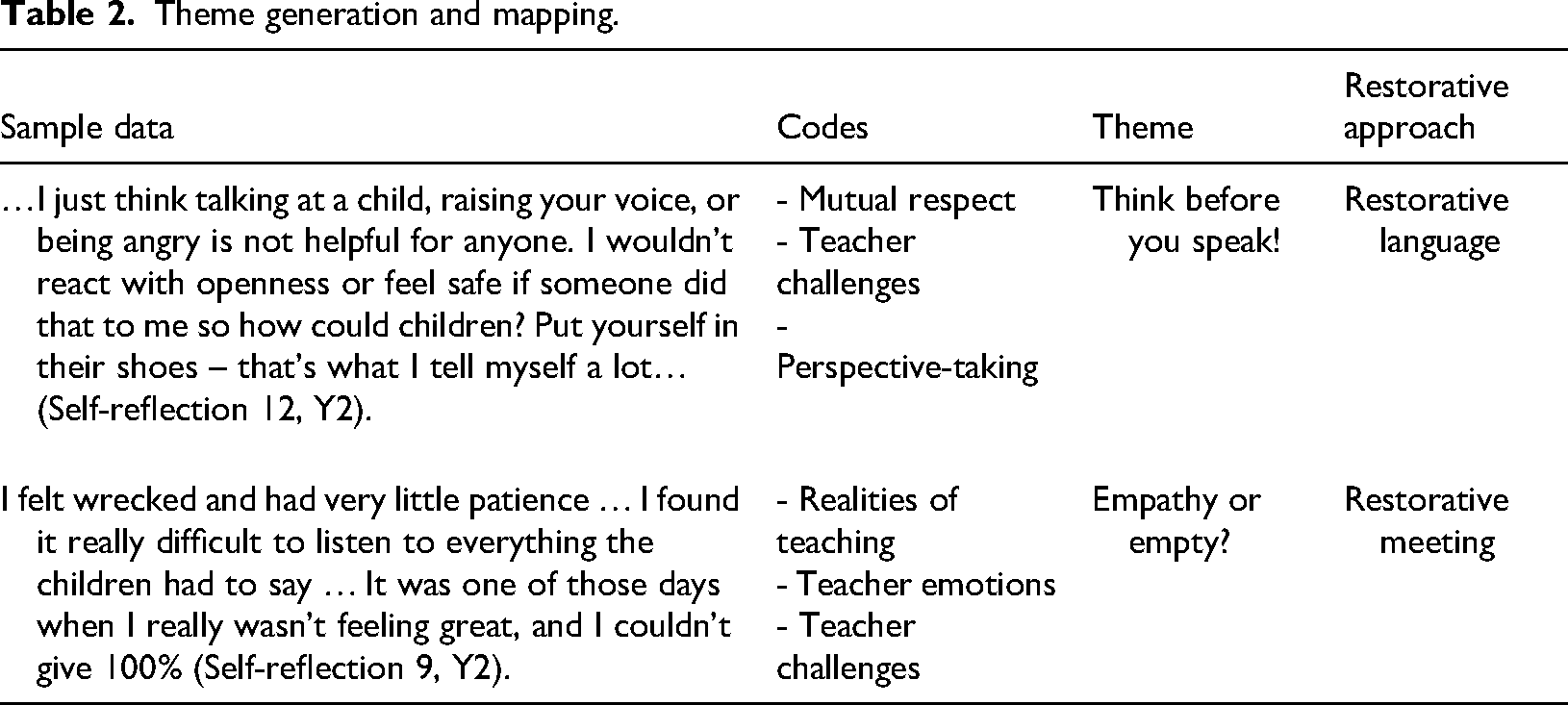
Reflexive thematic analysis, guided by Braun and Clarke's (2021) six-phase approach, was used to analyse the dataset. This included: dataset familiarisation, data coding, initial theme generation, theme development and review, theme refining, defining and naming, and writing up. The nature of an autoethnographic self-study necessitated an ongoing process of continuously reviewing the children's data throughout the project to facilitate deep reflection about Gráinne's teaching. This enabled immediate responses to, and actions based on child feedback and input. Once formal analysis began, all data sources were thoroughly reread to ensure familiarity and codes were systematically assigned to the data. Theme generation involved actively identifying patterns and connecting codes, which led to initial theme development. Through a process of review and refinement, themes were developed in consultation with the co-authors, followed by a detailed write-up. In the write-up, these themes were presented through an RP lens, mapping them to three RP approaches relevant to the study: restorative language, restorative conversations, and restorative meetings (Table 2). Restorative circles are explored in detail elsewhere (Regan et al., 2025).
Theme generation and mapping.
Data triangulation was used to enhance trustworthiness by drawing on multiple qualitative sources including critical friendship dialogues, reflective journals, classroom discussions, and student worksheets to cross-verify insights and provide a more nuanced understanding of the findings. This multi-perspective approach helped ensure credibility and in-depth data analysis.
Findings
The study's findings reflect Gráinne's lived experiences, feelings, and thoughts, guided by literature and the children's needs, when employing RP in PE. In presenting the findings, we chose to highlight Gráinne's voice, as the study focuses on her teaching practice and development. Thus, first-person language (I/my) is used throughout this section. Presented as reflective thoughts and critical incidents, the central themes were mapped onto the restorative approaches of restorative language, restorative conversations, and restorative meetings, and are discussed here.
Restorative language
It starts with ‘I’
At the beginning of my learning journey, I began exploring RP by using ‘I’ statements to express my feelings in PE. Over time, these statements became central to my interactions with the children, for example; ‘I felt so proud when I saw you taking a break from your game to help [child's name], who didn't really understand the rules. You were an excellent leader today’ (PE discussion, Y2, L9). I utilised this affective language to reinforce the idea that feelings and behaviours are linked. I realised that these statements could encourage a structured means for children to communicate their feelings. By associating feelings with behaviours it could promote self-awareness by helping the children to recognise the impact their actions can have. By modelling how to structure such sentences, in dedicated reflection times and providing visual prompts by means of classroom posters with sentence starters for reference, the children appeared to be given a platform to express their feelings and understand others’ feelings without fear of judgement. Some child reflections included: ‘I felt happy in PE today because I got to be partners with [name] and I enjoyed it more when I get to pick who I am with’ (PE discussion, Y2, L6, P27 4 ) and ‘I felt sad in PE, I'm not blaming anyone, but [name] called me a liar. But we sorted it and I'm happy now’ (PE discussion, Y2, L5, P32). Reflection time became a safe space for children to openly share. I came to understand the importance of giving children opportunities to express emotions and, in turn, shared mine with them. This space and shared language fostered community, supporting children to express themselves freely and build interpersonal skills.
Think before you speak!
When classroom incidents occurred, reviewing the data made me realise that my responses were key to fostering a restorative environment. My words, tone, and body language seemed to influence the children. Reflection helped me recognise how much I cared for the children and wanted to support their growth. When activities were successful and children demonstrated social competence, it reinforced my confidence in using affirming language and acknowledging positive behaviours. However, during instances of challenging behaviours or child distress, my choice of verbal and non-verbal language became especially important. To effectively support the children, I needed to understand the ‘why’ behind their actions: what had caused their distress, and how did the situation appear from their perspective (Self-reflection 12, Y2). By adopting this viewpoint, I found myself more willing to approach situations with compassion and empathy, rather than anger and frustration. Reflecting on my experiences, I realised that knowing the children and understanding their individual circumstances shaped my responses. For example, having spent time working with one child, I knew that when he arrived late to school, he needed time and lesson predictability before considering taking part. Acknowledging and welcoming him when he arrived, sitting with him to explain what was going to happen in PE, making jokes together, and then inviting him to join when he was ready were pivotal to his engagement (Self-reflection 12, Y2). I understood the lack of predictability and stability in his life, and his need for acknowledgement, care, and safety. If this teacher care was absent, he would not have been able to take part. By providing this safety with my words and actions, I was not only facilitating his engagement but instilling a sense of value in his presence among the group (Self-reflection 12, Y2). These insights into the ‘why’ behind behaviours were central to my actions and how I responded to the children. This was clear in my reflections: Thinking back over everything that has happened in the lesson, talking/discussing has been at the root of everything from a teacher's point of view. The way I approach conversations has changed so much. I look at everything through a problem-solving and relationship building lens. I just think talking at a child, raising your voice, or being angry is not helpful for anyone. I wouldn't react with openness or feel safe if someone did that to me so how could children? Put yourself in their shoes– that's what I tell myself a lot…. (Self-reflection 12, Y2)
Once I learned to view situations with greater emotional objectivity, by recognising and rationalising my feelings, it became easier to put myself in the child's shoes and ask myself, what is happening in their mind? Although I often felt frustrated, I consciously acknowledged my emotions without letting them dictate my actions. By remaining calm and empathetic, I could better understand the child's perspective, respond to their needs, and handle situations with patience and compassion instead of reacting impulsively. By approaching challenging situations in this way, I aimed to become a role model for expected classroom behaviours and hoped to show the children how I was communicating respectfully and resolving conflicts.
Restorative conversations
Looking back to move forward
In Y2 L2, one child chose to sit out of PE, claiming her leg was too sore. Already emotionally heightened due to other classroom issues like refusals to participate and arguments, I reacted impulsively and later felt guilty for my response. Instead of engaging with her to understand her situation, I dismissed her claim and walked away in frustration. Upon reflection, I realised my reaction was neither empathetic nor solution-focused (Self-reflection 2, Y2) and was not conducive to fostering a positive classroom environment. I invited this child to have a conversation, explaining, ‘I’m sorry I walked away earlier. I was feeling frustrated because of other things happening in the classroom, but I didn’t mean to ignore how you were feeling’. This prompted open dialogue where she shared that her leg was sore, and she might not be able to play. I acknowledged her upset, and together we discussed both her feelings and mine, and planned how we could handle similar situations in the future. This interaction helped me recognise the missed opportunity to respond more restoratively. While I aimed to build strong relationships with the children, I found it challenging to address when students opted out of activities. Despite my initial frustration, this experience highlighted the importance of responding to student behaviour in ways that model conflict-resolution and accountability. Apologising and engaging in a restorative conversation allowed me to acknowledge this child's perspective and demonstrate that educators, too, must take responsibility for their actions. Though I initially felt guilty, I saw this incident as an opportunity for growth, reinforcing the need for restorative approaches in my practice. Reflecting on this incident, I recognised how it shaped my PE lessons. I became more aware of how my emotions influenced my behaviour and began asking myself key questions before interacting with the children, such as: Am I ready to talk with them? What's going through my mind? Is this affecting my emotional response? Is this the right time to engage? (Self-reflection 2, Y2). While I cannot claim to have always got it right since then, this experience marked a pivotal moment in my journey towards teaching with greater emotional awareness and restorative intent.
A step in the right direction
During one lesson a child opted out, feeling upset, likely due to her team having one less player, which she found unfair despite my explanation (Self-reflection, Y2, L8). Instead of pressuring her, I waited a few minutes before inviting her back. When she declined, I respected her need for space to regulate. Later, I approached her with restorative questioning, asking her ‘what happened?’, ‘can you tell me how you are feeling?’ and ‘what do you need right now to help?’ (PE discussion, Y2, L8). When she initially refused to speak, I calmly suggested she write her thoughts and feelings so we could work towards a solution together. She nodded, and I assured her that I would check in soon, reinforcing the safety of our conversation. Her note explained that she was unwell and would rejoin when ready. I thanked her for sharing and invited her to return when she felt prepared. At the end of PE, we revisited the conversation. She explained that she had rejoined because she ‘didn’t want to let down the others’ on her team, adding, ‘if we are sad and stuff, there are places we can go or we can tell the teacher, and you don’t make a big scene. Then when I feel better, I can join in at any time’ (PE discussion Y2, L8, P25).
Reflecting on this conversation, I noticed a shift in my approach. I spoke calmly, demonstrated care, and helped remove barriers to her re-engagement. By modelling non-judgemental conflict resolution, I supported her to feel safe, trust me, and rejoin on her own terms. Though I initially thought, ‘What am I going to do now?’ (Self-reflection 8, Y2), I felt proud for staying calm and empowering her to open up in a way that mattered to her. By investing time into understanding this child's strengths and needs, and recognising the importance of regulation space, I tailored this conversation and my response to best support her. This conversation demonstrated my growing effort to approach interactions restoratively, focusing on understanding and repairing relationships rather than reacting impulsively.
Restorative meetings
Give respect to get respect!
In Y1 L16, a child had an outburst, shouting at her teammate when asked to complete a task and became visibly upset. I removed her from the situation to give her time and space to regulate her emotions. Once she was ready to converse, I utilised restorative questions, my knowledge of the child, and a caring tone to explore what had triggered her. She revealed that she had slept poorly and missed breakfast, which likely contributed to her behaviour. After arranging breakfast in consultation with the class teacher, I spoke with her teammate, who was also upset. Both children agreed to a mediated meeting to resolve the issue. During the meeting, this child calmly explained her feelings and her teammate empathised. Both children took responsibility for their actions and apologised. This process highlighted that with the right tools and space, children can regulate their emotions, engage in meaningful dialogue, and repair relationships.
Reflecting on this meeting, I realised it marked a significant milestone for both the children and me. As a teacher, I mediated the meeting and guided the children to collaboratively repair the harm. Conversely, earlier in the year, conflicts often went unresolved as the children lacked the tools and confidence to navigate them. Over time, however, respectful problem-solving became embedded in PE and was evident in this meeting. To address this need, I explicitly taught conflict-resolution skills through direct teaching, utilising sentence starters, role-play, and a designated solution area with visual prompts (sentence starter posters). Through a consistent emphasis on shared expectations, supported by a designated space and ongoing dialogue, the environment seemed to shift. Teacher modelling of such expectations and the co-construction of class norms fostered empathy, responsibility, and mutual respect. One student captured this transformation in their reflection: It's hard to tell why but I feel inside of the PE room is separate to the classroom. No matter if we are friends or not, in PE we talk to people we don't usually talk to … It's different in PE, we all want to work together. It's a different environment … you want respect, and you give respect to get respect. And we all respect and complement each other. Sorting it doesn't happen on yard [school playground] because people don't care. In PE, we sort it because we do care. The environment in PE is as good as it can be. Arguments will always happen, but we always think about resolving them. (PE discussion, Y1, L14)
In PE, an atmosphere of collaboration and mutual respect encouraged the children to engage with peers they would not normally connect with, fostering a sense of accountability. The concept of ‘giving respect to get respect’ became central to resolving disputes, showing how empathy and emotional safety underpin meaningful dialogue. The structured environment, paired with the intentional teaching of conflict-resolution skills, helped empower students to take responsibility and repair relationships.
Empathy or empty?
Despite understanding the importance of restorative approaches, my actions did not always align with this. On one occasion, I attended school feeling very unwell and having had very little sleep. Exhausted, I struggled to have the patience and willingness to mediate conflicts. When an argument occurred, instead of facilitating restorative dialogue where the children and I would collaboratively discuss feelings, listen to each other's perspectives, and work towards a mutual agreement, I gave the children a solution and told them how to resolve the issue. Although they exchanged apologies, their body language indicated that the conflict remained unresolved, yet I encouraged them to resume playing.
Reflecting on this incident, I noted, ‘It's not how I believe problems should be fixed but I didn’t have the patience today’ (Self-reflection 9, Y2). My actions surprised me and thus prompted critical self-reflection. I questioned why I had deviated from my usual restorative approach and realised that my physical and emotional state had directly influenced my actions. I noted, ‘I felt wrecked and had very little patience … I found it really difficult to listen to everything the children had to say … It was one of those days when I really wasn’t feeling great, and I couldn’t give 100%’ (Self-reflection 9, Y2). This reflection helped me understand that, just as I struggled to be present and compassionate when feeling unwell, many children likely face similar challenges on difficult days. While I did not meet my own expectations in this instance, this experience deepened my awareness of how important it is to consider how children might feel when they come to school.
Discussion
The findings reflect Gráinne's evolving efforts to support children's social wellbeing in PE through RP. As part of a larger study on wellbeing promotion in PE, RP emerged as an effective approach through Gráinne's engagement and reflective practice, an evolution typical of autoethnographic self-study. Further details on this study can be found in Regan et al. (2024, 2025). While the findings presented are mapped to specific RP approaches, the discussion that follows adopts a broader lens focusing on the teacher's role and the emotional links to RP. As this section represents the lead researcher's connection-making and professional development, it is written in the first person, consistent with the autoethnographic nature of the study and the findings themselves. It explores how RP, as a relational and reflective pedagogy, facilitated professional growth, supported children's social wellbeing, and is linked to broader educational discussions.
Shifting perspectives: Enhancing classroom connections through empathy
One key outcome from this study was the profound impact that displaying empathy and perspective-taking had on interactions. By viewing situations from a child's perspective and seeking to understand the underlying reasons for their behaviours, I adopted a supportive teaching stance. This was evident in the findings through my use of ‘I’ statements, where, for example, affirming a child's leadership using affective language helped build emotional awareness and showed the children how to communicate their own feelings more clearly. This structured use of affective statements aimed to provide a safe platform for child expression and foster a stronger classroom community. According to CASEL (2020), promoting children's SEL requires a supportive classroom climate in which students feel emotionally safe and part of a community of learners, as this is fundamental to their wellbeing. Equally, the significance of understanding the ‘why’ behind a child's behaviour emerged in my reflection on language, such as when one child arrived late to school. By taking the time to sit with him, share a joke, and outline the PE lesson, I displayed empathy and compassion while creating a predictable, welcoming space that aimed to meet his emotional needs. Stowe (2016) underscores the importance of cultivating a restorative mindset, which shifts the focus from blaming individuals to recognising wrongdoing as a sign of disconnection from oneself and others. For me, this involved pausing to ask myself critical questions (as described in the findings) that facilitated greater emotional objectivity. Thorsborne and Blood (2005) advocate for this practice, encouraging teachers to take time to reflect on the context of a situation rather than reacting impulsively. They highlight the importance of considering underlying factors, such as inadequate social skills or misunderstandings of rules, that may contribute to certain behaviours. Building on this, I suggest that teachers also consider each child's life circumstances, which shape how children interpret social interactions. Understanding their individual context allowed for more empathetic and effective conflict resolution, ensuring responses were tailored to their specific needs.
There were moments when I reacted impulsively, but upon reflection, I acknowledged my frustration and recognised the need for change. This tension was captured in my reflection where I noted the emotional impact of some situations and how my choice of tone and words seemed to shape the outcome. This shift towards adopting a restorative mindset marked the beginning of my journey as a restorative practitioner (Moran et al., 2024). Therefore, I began to understand that changing the way I perceived and interpreted children's behaviour became a fundamental process before implementing RP. As Mintz (2007) suggests, this helped me to understand the underlying reasons for certain behaviours and respond in a more appropriate manner. The findings revealed that when reflective approaches, such as journaling, were implemented, it led to critical self-inquiry that grounded more meaningful classroom interactions. Children seemed secure in my responses, understanding that my intention was to support them. My reflection journal served as a catalyst for this learning. Acting restoratively involved separating the behaviour from the child, assisting them in finding solutions, demonstrating empathy, and viewing the situation from the child's perspective. I realised that considering the children's viewpoints became central to my professional growth and the strengthening of classroom relationships. Relating to the second research question, empathy and perspective-taking emerged as foundational for facilitating RP and advancing children's social wellbeing in PE by promoting emotional safety and trust. By engaging in self-reflection and considering the underlying reasons for children's actions, I hoped to create an environment where children felt valued and understood. This approach aided conflict-resolution but also aimed to promote empathy and empowerment, which are crucial for social development (NCCA, 2024).
The central role of the teacher and the emotional demands of RP
This study reinforces the idea that teachers’ mindsets, actions, and beliefs cultivate a restorative environment, setting the tone for positive interactions. When teachers intentionally foster such environments, children are encouraged and empowered to engage, thereby contributing to their social-emotional growth. Therefore, teacher self-awareness regarding emotions and actions is pivotal to facilitating meaningful interactions as social and emotional competencies influence everything from teacher–student relationships to classroom management and effective instruction (Jones et al., 2013).
Research indicates that adults who are aware of their thoughts and feelings in response to behavioural events tend to handle such situations more effectively (Hopkins, n.d.). Understanding and identifying emotional responses can aid adults in regulating their reactions appropriately. Marzano and Marzano (2010) stress the importance of teachers accessing their inner world to recognise how interpretations of behaviour shape subsequent actions and student outcomes. Developing this awareness requires emotional labour, particularly in challenging moments. Hopkins (2011) explains that practitioners should pose silent questions prior to addressing situations involving conflict. This strategy helped me to manage my emotions and maintain a restorative stance even in difficult moments. For example, following my impulsive reaction to a child sitting out of PE, reflective self-questioning such as, ‘Am I ready to talk with them?’ enabled me to reset my response, apologise, and re-centre the child's emotional experience. This process prompted critical examination of assumptions shaping my interpretations of behaviour. These reflective tools helped me realise that feelings/emotions such as frustration are completely normal, but how teachers respond to these emotions defines their impact. This marked a shift towards a restorative mindset, where apologising and repairing harm became opportunities to model accountability and social expectations. Lynch et al. (2020) highlight that when teachers acknowledge harm and demonstrate remorse, students observe reparative behaviours and continue to feel loved and accepted. Similarly, Kehoe et al. (2017) emphasise the importance of teaching young people to engage respectfully in provocative situations, a process I aimed to model through my responses (Dyson et al., 2021). These practices reinforced the relational foundations of RP, particularly within a DEIS 1 context where emotional security can be fragile and the teacher plays a key role in fostering safety and trust.
The findings highlighted an incident where my failure to respond restoratively due to illness sparked critical self-reflection on how teacher wellbeing directly impacts student experiences (Jones et al., 2013). This incident revealed the complexity of sustaining RP when emotional resources are low for the teacher. Relating to the first research question, by reflecting on classroom responses, the importance of teacher emotional awareness became clear. While literature links self-awareness with more effective teaching (Jones et al., 2013), these findings raise questions about the challenges educators face in developing this awareness amid personal stresses and emotional complexities, such as illness. In addressing the second research question, I recognise that RP demands considerable emotional and time investment, as well as self-awareness and patience. Yet this emotional investment and self-awareness are not without limits. There were days when my personal wellbeing was compromised, where sustaining a restorative approach felt nearly impossible. However, as evidenced in the findings, moments of teacher emotional regulation facilitated conflict resolution and promoted empathy, self-management, and interpersonal skills, all competencies of wellbeing development (CASEL, 2020). I came to understand that for children to embrace RP, I had to be invested in the process and understand their feelings. This tension between regulation and exhaustion underscored the need for teacher wellbeing supports and acknowledgement of the emotional demands of RP approaches. If teachers were to include RP approaches within PE, professional development and wellbeing supports could prove beneficial in enhancing the climate in PE and contribute to child wellbeing.
Conclusion
This article offers insight into one Irish primary school teacher's experience of implementing RP in PE to enhance children's social wellbeing, highlighting the impact on the teacher and children. Framed as an autoethnographic self-study, this research addressed questions exploring how an Irish primary school teacher facilitated RP in PE to support children's social wellbeing, and the implications of this approach for the teacher. Through narrative, reflection, and lived experience, the study uncovered how embedding RP into PE seemed to foster inclusion, relational connection, and a more responsive approach to conflict.
As an autoethnographic process, the study demanded sustained critical self-reflection and emotional honesty. The findings demonstrate how RP challenged Gráinne to engage deeply with her personal values, emotions, and actions in ways that were not always comfortable but were vital to fostering authentic connection and social wellbeing. This research highlights the emotional demands of RP and the potential benefits of professional and emotional supports for teachers engaging in this work. By navigating this journey, Gráinne transitioned from an unaware practitioner to a more intentional restorative educator, aligning her teaching philosophy with broader wellbeing objectives. Stowe (2016: 369) describes RP as a ‘way of being’, emphasising its proactive and values-based approach, fostering teacher–student and student–student relationships by building self-awareness, empathy, communication, and conflict-resolution skills. Similarly, Vaandering (2013) notes that for RP to be effective, it must be embedded in the teacher's philosophy. However, given teacher buy-in is key to RP success (Thorsborne and Blood, 2005), there is a heightened need to reflect on educators’ values and their willingness to prioritise emotional awareness amid competing curricular demands. Negotiating this experience necessitated deep critical self-reflection and heightened emotional awareness. This study demonstrated that by adopting a restorative mindset and reflective stance, Gráinne began to encourage empathy, accountability, and community, a foundation for wellbeing. This is a timely contribution to the Irish primary context as the curriculum moves towards a more integrated focus on wellbeing. This study offers practice-based insight into what RP might look like for teachers in PE and how it could support the aims of the new Wellbeing curriculum area. Guidelines and resources relating to effective RP implementation could prove beneficial in helping teachers navigate RP in PE within this new context. By addressing a gap in literature on RP in Irish primary PE settings, this autoethnographic self-study makes an original contribution to understanding how restorative approaches can be lived and embodied in practice, not only supporting children's social development but also transforming the teacher's role and identity.
Footnotes
Acknowledgements
Gráinne was supported by a Departmental Assistantship at Mary Immaculate College, Ireland.

Ethical approval and informed consent statements
This study was approved by the Mary Immaculate College Research Ethics Committee in Mary Immaculate College, Limerick, Ireland (Approval No. A22-059) on 13 July 2023. All participants and their parents/guardians provided written informed consent prior to participating.
Funding
The authors received no financial support for the research, authorship, and/or publication of this article.
Declaration of conflicting interests
The authors declared no potential conflicts of interest with respect to the research, authorship, and/or publication of this article.
Data availability statement
Not relevant to this study.