



Abstract
The aim of this study was to examine students’ views on the extent to which uniforms are a barrier to physical activity (PA) and physical education (PE) participation in Irish secondary schools. Students (N = 1439; age = 14.7, SD = 1.5; 58.2% female) from a purposive sample of 18 secondary schools completed an online survey. A hierarchical loglinear analysis was used to examine the relationship between gender, age, and perception of uniform as a barrier. A qualitative content analysis of open-ended survey items was used to capture deeper insights and contextual understanding. Uniforms were perceived to be a barrier for over half of students in PE lessons (54.5%) and outside of PE lessons (58.1%). Approximately half (52.2%) were allowed to wear a PE kit to school on days with a timetabled PE lesson, and this was more evident in mixed-gender schools (65.4%) than in boys’ (28.7%) or girls’ (29.6%) schools (p < .001). Statistically significant three-way interactions were found between gender, school stage, and permission to wear PE kit (p < .001). A significant two-way effect was found between uniform as a barrier in PE lessons and school stage (p < .001). Notably, 30% of students’ recommendations for improving their general experience of PE referenced school uniform design and being allowed to wear PE kit all day, eliminating the need to use changing rooms. Modifying uniform policies to allow for more comfortable and practical attire could enhance PA levels and improve students’ overall PE experience.
Introduction
Regular participation in physical activity (PA) is crucial for adolescents’ future health (Raghuveer et al., 2020), yet more than 80% of adolescents globally fail to meet the recommended World Health Organisation guidelines of at least an average of 60 minutes moderate to vigorous PA per day across the week (Guthold et al., 2020). Schools provide an ideal environment to promote PA (van Sluijs et al., 2021), offering time, facilities, and guidance through physical education (PE), extracurricular activities, and unstructured breaks (Rocliffe et al., 2023). Gender disparities in PA are well-documented, with boys generally engaging in more PA than girls (Brazendale et al., 2021). While these differences might stem from a range of issues, including activity preferences, one potential barrier is the requirement by some schools for students to wear school uniforms that may restrict free movement (Baumann and Krskova, 2016; McCarthy et al., 2020).
School uniforms are a consistent and standardised set of clothes that all students are required to wear during school hours (Ryan et al., 2024). In numerous countries – including Australia, Ireland, the United Kingdom, Japan, and regions such as Southeast Asia, Africa, and South America – school uniforms are mandated (Baumann and Krskova, 2016; Walmsley, 2011). School uniform policies differ across countries; however, they commonly feature formal attire. Girls are typically required to wear dresses, skirts, or trousers paired with blouses, complemented by socks or tights and leather footwear (Nathan et al., 2021). Boys generally wear trousers and shirts, often accompanied by ties and leather shoes. In Ireland, unlike several countries including England, Scotland and Australia (McCarthy et al., 2020), there has been no collective effort to encourage more activity-enabling school uniforms. Indeed, the Irish government does not issue specific guidelines on school uniform. Instead, individual schools, through their boards of management, are responsible for developing and implementing their own uniform policies.
Many schools have PE-specific uniforms or ‘kits’ that are typically more activity-enabling and comprise tracksuit pants or shorts and t-shirts with sports shoes. Studies indicate that activity-enabling uniforms or ‘PE kits’ are positively associated with increased PA and improved fitness among students (Nathan et al., 2021; Norrish et al., 2012). Researchers in Australia concluded that when activity-enabling uniforms were worn, students were more active (Norrish et al., 2012) and had a higher likelihood of meeting the recommended daily PA levels (McCarthy et al., 2019b). Nathan et al. (2021) found improvements in school students’ accelerometer counts per minute, which were slightly higher for girls than boys. It should be noted that outcomes in this study were assessed based on a one-day intervention that was conducted in one region of New South Wales in Australia. Norrish et al. (2012) also reported that the prevalence of vigorous-intensity bouts increased for both boys (6.8% to 17.3%) and girls (11.5% to 23.3%) when activity-enabling uniforms were worn; however, this study involved a convenience sample from one year group in one school. The majority of research to date has predominantly focused on the primary school going age cohort (Gardner et al., 2025; McCarthy et al., 2019a; Nathan et al., 2021), with limited research examining adolescents’ perceptions in secondary schools (McCarthy et al., 2019b; Porter et al., 2025), including differences across key demographic variables such as age and gender.
Uniforms may have an important gender dimension that warrants exploration from the students’ perspective. Research indicates that many girls dislike their uniforms and feel uncomfortable wearing them (Elliott and Hoyle, 2014; Mills and Cooling, 2019). In the context of active transport policies, Hopkins and Mandic (2017) found that school uniform styles hindered some girls from cycling to school. Similarly, Ward et al. (2018) identified that both garment design and school uniform policies impeded active transport, particularly among girls. One of the few studies to examine secondary school students’ attitudes to changing from traditional school uniforms to sports uniforms reported that there were no differences in attitudes or beliefs between boys and girls (McCarthy et al., 2019a). However, the option to wear PE kit may not always translate to improved PE experiences for students. A recent Youth Sports Trust Active Girls survey in England demonstrated that only 21% of adolescent girls were satisfied with their PE uniform, and only 47% felt comfortable wearing it (Youth Sport Trust, 2024).
The experiences of minority youth in PE and school sport are similarly underexplored. In one of the few studies to examine the experiences of trans and gender-diverse youth, Neary and McBride (2024) reported that participants had difficulty with the school uniform in its prescription of a skirt for girls and trousers for boys in single-gender schools. The authors cautioned that gender-specific uniform policies, such as allowing students to wear tracksuit bottoms, may serve to further highlight differences, particularly in single-gender schools. In an examination of barriers to PE for Christian and Muslim girls attending comprehensive secondary schools in the United Kingdom, Elliott and Hoyle (2014) reported that the highest quotient was assigned to the ‘PE Uniform’ barrier factor, while the other barrier factors analysed received relatively low quotients. This further emphasises the need to explore the views of students directly and examine if variations in perspectives persist across ages in secondary education.
Despite growing international research on school uniforms as a barrier to PA participation, and increased national media attention on the issue (Travers, 2025), there remains a lack of empirical data on this topic in Ireland. Considering the potential impact of school uniform policies on PA levels, the aim of this study was to examine students’ views on the extent to which uniforms are a barrier to PA and PE participation in secondary schools in Ireland. Specifically, we aimed to investigate if there is a difference in students’ perspectives across gender and ages.
Methods
Study design and setting
This study employed a predominantly quantitative design to analyse data generated from a survey, with the open-ended items analysed thematically to provide additional insights into the quantitative findings. The data used is part of an ongoing longitudinal examination of students’ attitudes towards school-based PE in Ireland. Approval to conduct the study was received from the research ethics committee of the host institution (Approval No. 2022_06_03_EHS). This study focused specifically on students in secondary school. The Irish education system comprises three levels: primary, secondary, and third level. Secondary-level education consists of a junior cycle (years one to three, ages 12 to 15) and senior cycle (years five and six, ages 17 to 18), both of which are concluded with formal state examinations (Clerkin, 2012). In between the two examination cycles is an optional transition Year (year four, age 16) which is a non-examinable ‘gap year’ unique to the Irish education system (Clerkin, 2012)
Sampling and data collection
A purposive sample was utilised, involving 18 schools (10 mixed-gender, four boys’, four girls’) from a mixture of rural and urban regions in Ireland. Schools were selected based on the allocation of final-year pre-service teachers from the lead author's institution who had chosen the topic of this study as the theme for their dissertations. The first author was granted approval for the study to take place from school management and the head PE teacher in each school. For convenience and wide dissemination, an online survey was distributed via Qualtrics® cloud-based software and administered by pre-service teachers during a timetabled PE lesson. Written informed consent forms were signed by the parents/guardians of the student participants, and the students themselves. An effort was made to recruit a minimum of one class from each year group (first to sixth year) in each participating school; however, this was not achieved among senior cycle students in two schools due to difficulty in sourcing a suitable time to complete the survey. The survey items used in the current study are outlined below.
Measures
Participants were asked to provide their age in years and months, gender (female, male, nonbinary, prefer not to say), school year (i.e. grade), and the type of school they were attending (boys’, girls’, mixed-gender). The survey comprised 23 closed and three open-ended questions. Twenty items were based on a five-point Likert scale ranging from 1 (strongly disagree) to 5 (strongly agree), and were generated from Subramaniam and Silverman's (2000) students' attitudes towards physical education scale. Three additional dichotomous ‘yes/no’ items were included in the survey specifically for the purpose of this study, and these formed the basis of the data presented. Participants were asked: (1) Are you allowed to wear your PE gear to school on days you have PE? (2) Do you believe your regular school uniform (non-PE) is a barrier to participating in PE? (3) Do you believe your regular school uniform (non-PE) is a barrier to participating in PA outside of class time? Finally, three open-ended questions were included, asking participants to describe the most enjoyable and least enjoyable part of PE, and any recommendations for improving their experience.
Data analysis
Data were downloaded from Qualtrics, cleaned and sorted in a spreadsheet and analysed using IBM SPSS Version 29. Descriptive statistics were run to compare means using cross tabulation, chi-square tests and independent sample t-tests. Statistical significance was set at p < .05. Three loglinear analyses were conducted to examine the association between adolescents’ gender, school cycle (junior cycle and senior cycle), and wearing PE kit (permission to wear PE kit, as a barrier in and out of PE). A fourth loglinear analysis was conducted to examine the association between permission to wear PE kit to school on PE days, whether uniform was a barrier within PE class, and whether uniform was a barrier to PA outside of class. A loglinear analysis was chosen due to the nature of the survey questions (i.e. categorical) and the scope of the research questions. The loglinear approach is particularly useful in educational and behavioural research where data are often non-numeric and interdependent, offering a robust framework for uncovering patterns that may not be evident through simpler statistical methods (Nussbaum, 2024). Only males and females were included in the quantitative analysis, as the sample size for nonbinary and those who preferred not to say was less than 3% of the total sample; however, all responses were included in the analysis of open-ended data. A school stage variable was computed based on the students’ grade (years one to three = junior; years four to six = senior). A chi-squared test was conducted as a post hoc analysis after each loglinear analysis to examine where the effect occurred.
Responses to the open-ended questions were analysed using an inductive qualitative content analysis (Elo and Kyngäs, 2008). Firstly, all open-ended responses were read and re-read by two members of the research team to familiarise themselves with the data. They were two white Irish female researchers with over 10 years of experience working in secondary and tertiary-level pre-service PE teacher education. A conventional approach was employed whereby the open-ended responses were coded for anything related to the topic of uniform in the responses (Hsieh and Shannon, 2005). Once all data was initially coded, codes were then combined according to their shared meaning and placed into categories. Once categories were established, the frequency of the categories was calculated to capture a more detailed picture of the key issues around the topic. Finally, by examining the underlying meaning of the categories and further analysing the data, broader themes emerged that captured the essence of participants’ experiences (Erlingsson and Brysiewicz, 2017). This coding process and initial category and theme development were discussed and presented to the wider research team to explore multiple assumptions and interpretations of the data (Saldaña, 2021). Quotes included in this study were selected to reflect the most common themes. A socioecological framework (McLeroy et al., 1988) was applied to interpret both the quantitative and qualitative findings, enabling a comprehensive understanding of the multi-layered factors shaping adolescents’ perspectives across five levels of influence: individual, interpersonal, organisational, community, and policy.
Results
Demographic characteristics
The demographic profile of all participants is provided in Table 1. A total of 1439 adolescents (837 females) aged 12 to 18 years (Mean = 14.7 years, SD = 1.5) from 18 Irish secondary schools participated. The proportion of students in all boys’ and all girls’ schools (37.5%) and mixed-gender schools (62.5%) was broadly representative of the national sample. There was an overrepresentation of girls’ schools (28.6% survey; 20.5% national average). In total 61.6% of the participants were in junior cycle (years one to three) and 39.6% in senior cycle (years four to six). The sample was predominantly female (58%), followed by male (39%), with a small proportion preferring not to say (2.7%) or identifying as nonbinary (1%).
Demographic profile of participants.
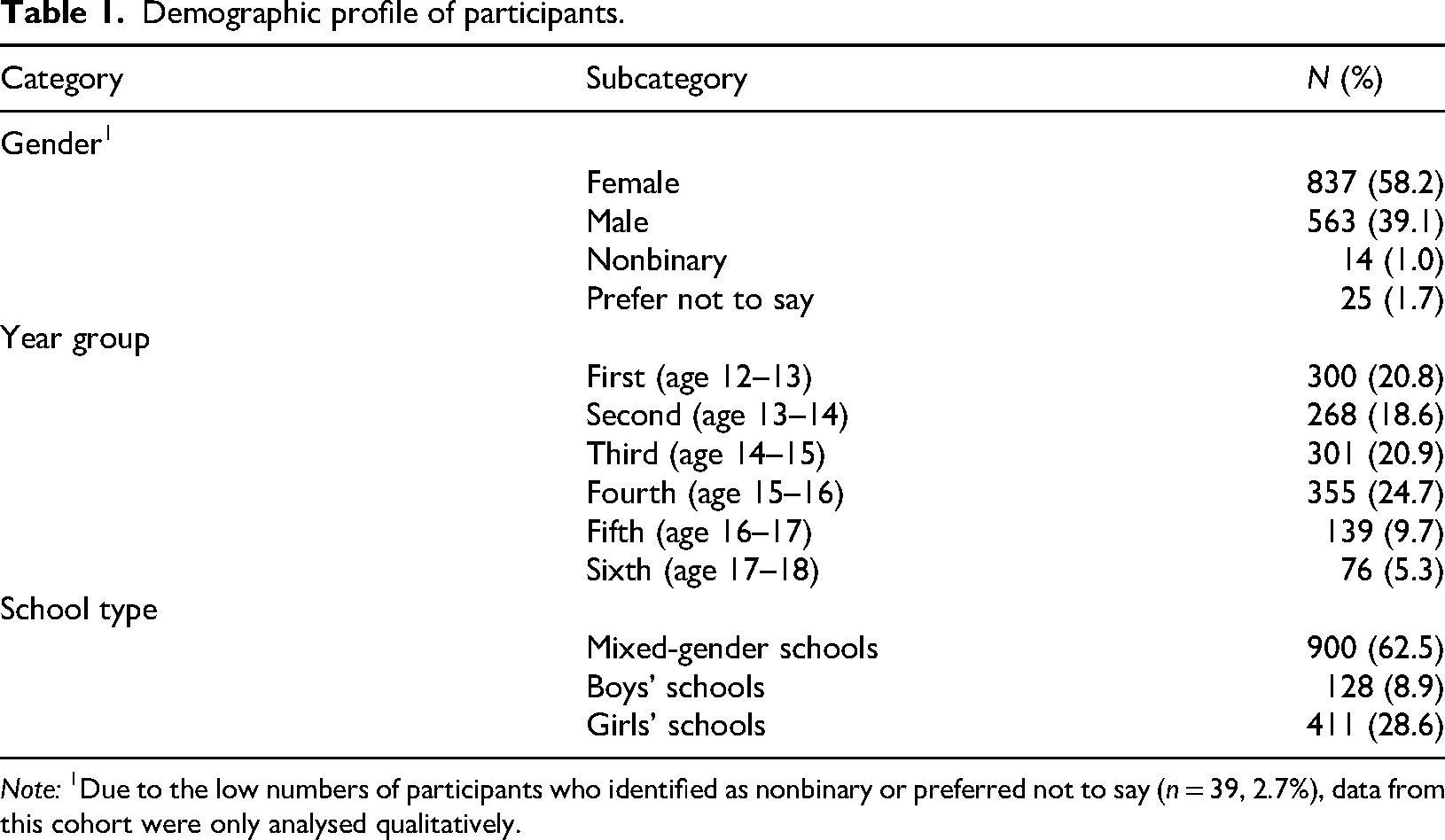
Note: 1Due to the low numbers of participants who identified as nonbinary or preferred not to say (n = 39, 2.7%), data from this cohort were only analysed qualitatively.
Permission to wear PE kit to school
Approximately half of students (52.1%) reported that they were allowed to wear their PE kit to school on days they had a timetabled PE lesson. Significantly more males (58.8%) than females (47.8%) were allowed to wear their PE kit on days they had PE, X2 (1, N = 1400) = 16.330, p < .001 (Table 2). Differences were also noted between school types, with 65.4% of students in mixed-gender schools allowed to wear their PE kit to school on timetabled PE days, compared to 28.7% and 29.6% in all boys’ schools and all girls’ schools respectively, X2 (2, N = 1400) = 168.426, p < .001 (Table 3). A statistically significant three-way loglinear analysis between permission to wear PE kit all day on PE days × gender × school stage produced a final model that retained all effects, X2 (1, N = 1400) = 16.28, p < .001. The strongest interaction was between gender and permission to wear PE kit all day (Z = −5.05, p < .001). Post hoc tests indicated that senior males (71.1%) were more likely to have permission to wear their PE kit all day on the days they had PE than senior females (45.7%), junior males (52.5%), and junior females (49.4%).
Student perceptions of the influence of uniform on PE and PA participation in schools, by gender.
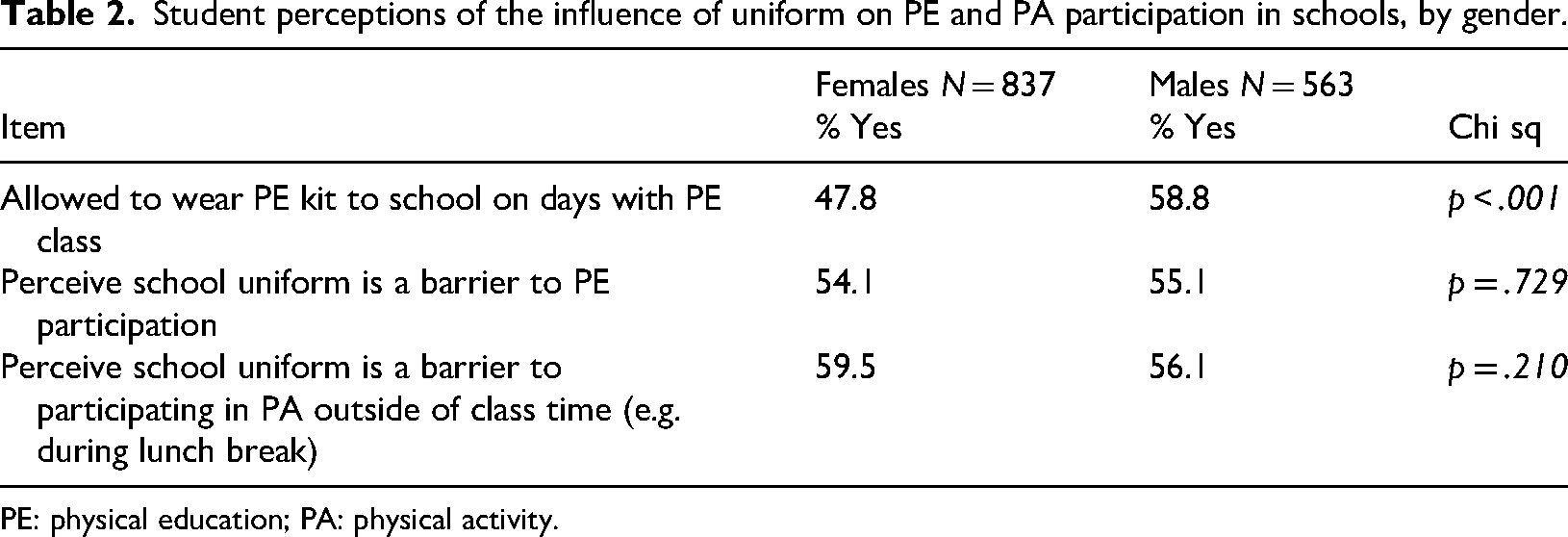
PE: physical education; PA: physical activity.
Student perceptions of the influence of uniform on PE and PA participation in schools, by school type.
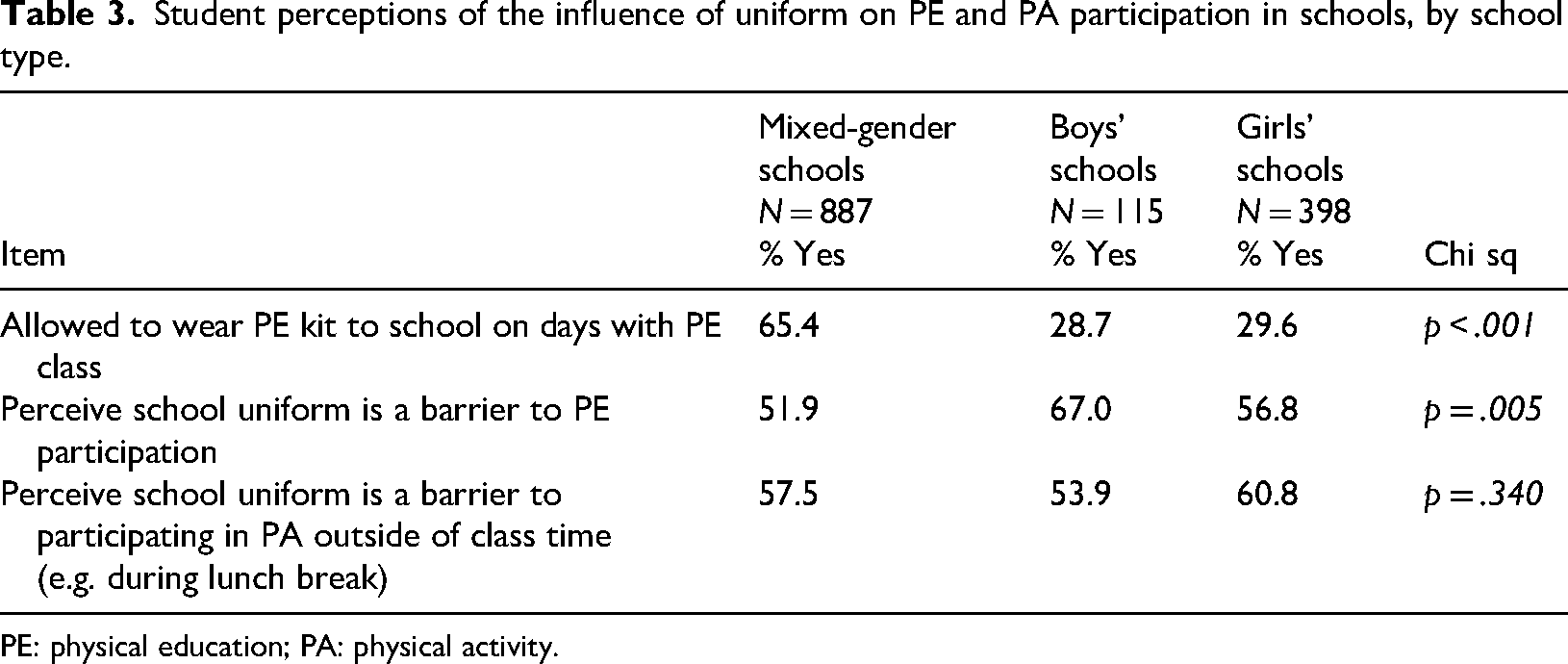
PE: physical education; PA: physical activity.
School uniform as a barrier to PE participation
Just over half of participants (54.5%) indicated that regular school uniforms were a barrier to participation in PE lessons and this was most prevalent among participants in boys’ schools (67%; X2 (2, N = 1400) = 10.526, p = .005). Notably, the proportion of students who indicated uniform was a barrier to participation in PE increased significantly from junior cycle (ages 12–15; 51%) to senior cycle (ages 16–18; 59.9%), X2 (1, N = 1400) = 10.649, p = .001 (Table 4). The loglinear analysis revealed a significant two-way effect between uniform as a barrier within PE class and school stage X2 (4, N = 1400) = 26.18, p < .001 (Z = −2.826, p = .005). Post hoc tests revealed that more senior (60.2%) than junior (50.9%) students found uniform to be a barrier to PA during PE class.
Student perceptions of the influence of uniform on PE and PA participation in schools, by school stage (junior: first to third, or senior: fourth to sixth).
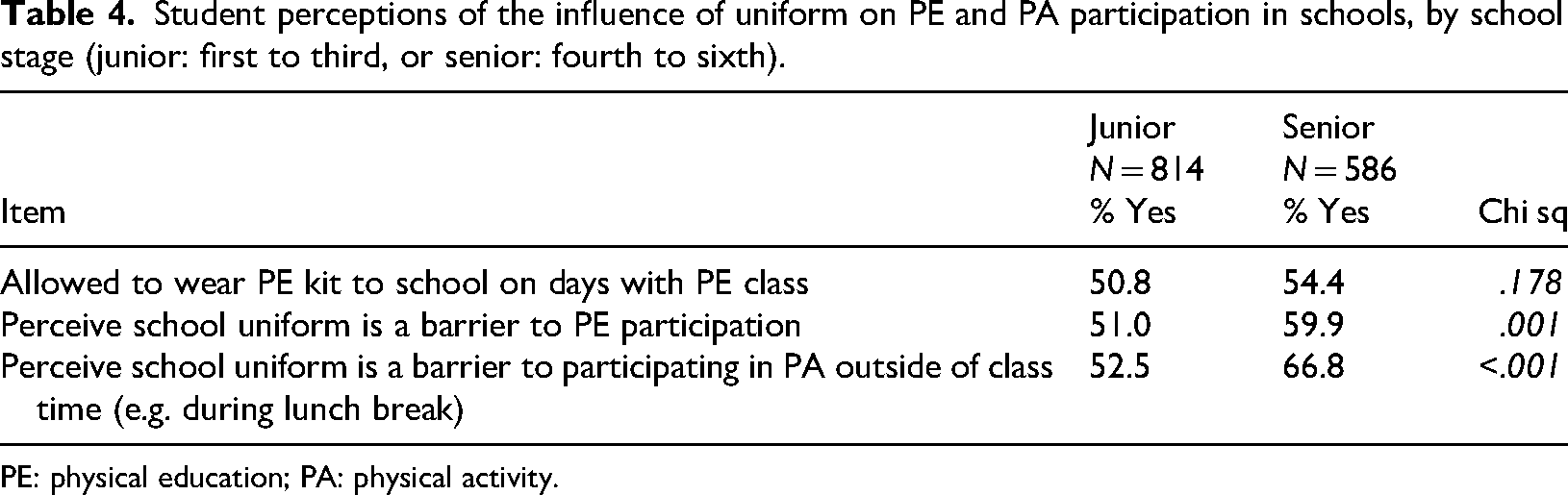
PE: physical education; PA: physical activity.
School uniform as a barrier to PA participation in schools
In total, 58.1% of participants stated that regular school uniforms were a barrier to engaging in PA at school. The proportion of students who indicated uniform was a barrier to PA at school increased significantly from junior cycle (ages 13–15; 52.5%) to senior cycle (ages 16–18; 66.8%), X2 (1, N = 1400) = 27.901, p < .001. Uniform as a barrier to PA outside of class × gender × school stage revealed a significant three-way effect X2 (1, N = 1400) = 26.011, p < .001. There was a significant two-way interaction between uniform as a barrier outside of class and school stage (Z = −6.163, p < .001), which was also the strongest effect but there was no interaction between uniform as a barrier outside of class and gender (Z = −.921, p = .357). Post hoc tests showed that more seniors (66.8%) than juniors (52.5%) found uniform to be a barrier to PA outside of class time.
Analysis of qualitative data
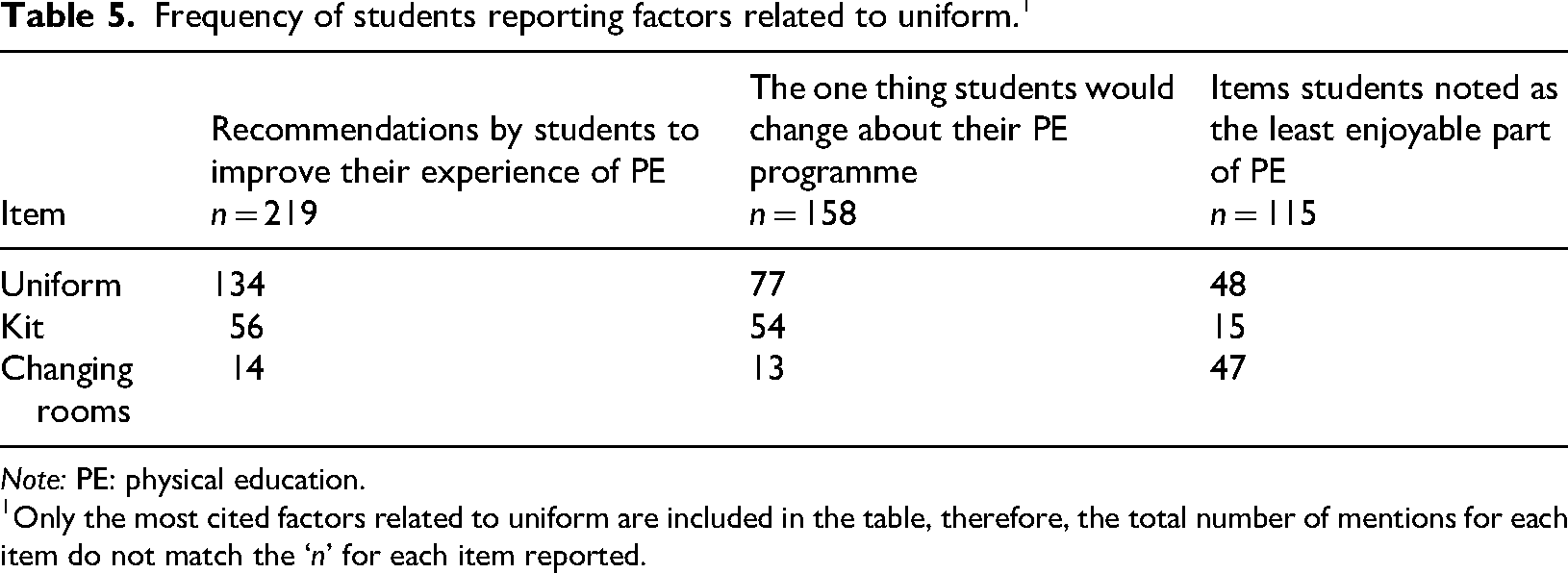
The most cited item when asked about the ‘least enjoyable aspect of PE’ and ‘changes/recommendations’ was the subject of school uniforms and specifically the need to change clothing prior to PE lessons. Of the 721 participants who responded to the open-ended question on recommendations to improve PE, 219 (30%) referred to uniform, 79% of whom were female (Table 5). Uniform was also cited as the second least enjoyable aspect of PE (n = 115) with a specific focus on students having to change into their PE kit before lessons and using the changing rooms.
Frequency of students reporting factors related to uniform.1
Note: PE: physical education.
Only the most cited factors related to uniform are included in the table, therefore, the total number of mentions for each item do not match the ‘n’ for each item reported.
Several recurring themes were identified in the responses to the open-ended questions, including (i) the desire for privacy when changing, (ii) the provision of comfortable regular school uniforms, (iii) the option to wear PE kit on days with timetabled PE class and (iv) requests for more autonomy regarding clothing. First, the desire for privacy was evident, with suggestions such as ‘add stalls to the changing rooms’ (Female, Year 1, mixed-gender school), indicating a need for more private and comfortable changing spaces. The second theme – the provision of comfortable regular school uniforms – highlighted concerns relating to comfort, with calls for a ‘better uniform design’ (Female, Year 2, mixed-gender school) and ‘an alternative to our uncomfortable uniform bottoms’ (Female, Year 2, mixed-gender school). All students across various year groups expressed frustration with the ‘practicality and (dis)comfort’ (Female, Year 4, girls’ school) of current PE kit, emphasising that more comfortable options are needed, particularly for girls. There was a desire to ‘make the PE kit more comfortable’ (Female, Year 3, mixed-gender school) as well as ‘in summer supply us with shorts as the sweatpants get really suffocating’ (Nonbinary, Year 3, girls’ school). The third identified theme illustrated that many students preferred the convenience of wearing PE clothes for the entire day. Students suggested that ‘we should be able to wear our PE kit into school as changing wastes unnecessary time’ (Female, Year 5, mixed-gender school) and ‘let us come to school dressed (in PE kit) or have it last class’ (Nonbinary, Year 5, all boys’ school). The final theme related to student requests for autonomy in PE clothing choices, with students wanting the freedom to wear ‘whatever we want’ (Female, Year 3, mixed-gender school) or their ‘own clothes’ (Male, Year 2, mixed-gender school) instead of uniforms, underscored by the emphatic ‘Let us wear our own Goddamn clothes!’ (Female, Year 4, mixed-gender school).
Discussion
This study was the first to explore students’ perspectives on how school uniforms act as either a facilitator or a barrier to participation in PE and PA in Irish secondary schools. More than half of the participants reported that school uniforms hindered their engagement in PE and PA. Nearly one-third of the recommendations for improving PE experiences focused on uniform design and the option to wear PE kits on days with scheduled PE lessons. Notable differences emerged across school types: students in single-sex schools reported more restrictive uniform policies compared to those in mixed-gender schools. Gender-based variations were also evident, with female students significantly less likely to be permitted to wear PE kits on PE days. To interpret these findings, we applied a socioecological lens (McLeroy et al., 1988), capturing the multi-layered influences shaping students’ views. Key themes are discussed across individual, interpersonal, organisational, community, and policy levels, highlighting how restrictive uniform design, peer norms, school policies, and broader cultural contexts collectively shape perceptions of school uniforms as barriers to PE and PA participation.
Individual level
The level of dissatisfaction among secondary school students with school uniforms reported in the current study is reflective of international research in multiple countries, including England (Porter et al., 2025), Australia (McCarthy et al., 2019b) and New Zealand (Ward et al., 2018). This is unsurprising, given the desire for autonomy in clothing choices, particularly among older adolescents, as reflected in a plea from a year four (age 16) female student in the current study to ‘Let us wear our own Goddamn clothes’. The limited disparity between males’ and females’ perspectives on uniform concurs with research by Ryan et al. (2024) and Nathan et al. (2021), who reported that uniforms are associated with lower compliance with PA guidelines regardless of gender in primary and secondary school students.
Although gender-based differences were not detected in the quantitative data from the current study, responses to open-ended questions highlighted a desire among female and nonbinary participants for ‘better uniform design’ (Female, Year 2, mixed-gender school) and to ‘let us come into school dressed (in PE kit) or have it last class’ (Nonbinary, Year 5, all boys’ school). An impractical, poorly designed regular school uniform can hinder participation in PA outside of school time. Hopkins and Mandic (2017) reported that school uniform designs, often including skirts for girls, hindered them from cycling to school. The requirement to wear formal skirts was also noted as a barrier in studies examining active transport patterns among adolescents by Higgins and Ahern (2021) in Ireland and Ward et al. (2018) in New Zealand. Therefore, although providing complete autonomy to students in their clothing choices may be improbable and perhaps impractical for educational and financial reasons (Shanks and McKinney, 2022), school leadership teams should consider the design of school uniforms to ensure they are activity-enabling rather than inhibiting.
Interpersonal level
Beyond personal factors, senior student participants (ages 16–18) in this study were significantly more likely to report that school uniforms were a barrier to engaging in PE and PA than junior participants (ages 12–15). Hemingway et al. (2023) explored students’ perceptions of PE throughout secondary school in England and found that younger students (ages 11–13) generally reported higher levels of enjoyment and engagement compared to older students (ages 14–16). The authors reported the decline in enthusiasm was due to increasing academic pressures and changing social dynamics. Building on the recommendations noted in the previous section, more autonomy in PE clothing choices for PE specifically among older adolescents might represent a straightforward strategy to promote greater engagement in the subject. The provision of more choice in school PE kit was cited as one of the three most popular recommendations to improve students’ experiences of PE in a recent Youth Sport Trust survey involving over 8000 participants in England (Youth Sport Trust, 2024). There is a clear need for more intervention-based research at the secondary school level, as most studies examining the impact of school uniforms on PA have focused on primary school settings.
Organisational level
The need to change into PE kit and use changing rooms before PE lessons was the most cited recommended change and least enjoyable aspect of PE highlighted in the current study. Consistent with our findings, the PE changing room has been identified as an environment that can trigger and intensify concerns about physical appearance (Elliott and Hoyle, 2014), where negative emotions and comparisons can exacerbate poor body esteem (Kalina et al., 2024; Tiggemann and Zaccardo, 2015). Hence, changing clothes in front of peers and a lack of options for changing rooms are consistently reported as negative experiences by many young people, particularly girls (Porter et al., 2025) and gender-diverse young people (Neary and McBride, 2024). Programmes, such as the Youth Sport Trust/Nike ‘Girls in Sport’ programme, recognised the importance of the changing rooms as influential in girls’ experiences of PE, and have suggested that PE departments invest funds in these facilities (Youth Sport Trust, 2024).
In addition to changing rooms as an organisational constraint, significant disparities in uniform policies between students attending all boys’ and all girls’ schools, and mixed-gender schools were identified in this study. Twice as many students in mixed-gender schools compared to all boys’ and all girls’ schools were allowed to wear their PE kit to school on days they had timetabled PE lessons. Extensive research has identified multiple differences in PE between school types. Lyu and Gill (2011) reported that the setting in which the PE lesson takes place, whether all boys’, all girls’ or mixed-gender schools, impacts PA levels and well-being of students. Additionally, gender-split uniforms and PE kits preserve binaries and cultural norms, but also structure the lived experiences of individuals, especially those negotiating gender or sexuality expression (Berg and Kokkonen, 2022; Howard, 2024). Therefore, beyond individual and interpersonal factors, organisational elements such as school type and changing facilities also play a crucial role in shaping students’ perspectives and experiences.
Community level
Cultural expectations around appearance or gender norms may influence how students perceive PA in uniform. Girls frequently express concerns about PE kits that emphasise body shape, which remains a significant issue (Velija and Kumar, 2009). Enhancing body confidence during PA is crucial, as a positive body image – regardless of size or shape – plays a key role in fostering better attitudes toward PE (Min et al., 2018). McIntosh-Dalmedo (2022) found that allowing students to choose their PE kit improved female body esteem as opposed to wearing the standard school PE kit. This highlights students’ desire for choice and autonomy in the design of school uniforms and PE kits. Furthermore, the importance of incorporating student voice into policy decisions is essential for creating meaningful and responsive strategies that effectively promote PA among adolescents.
Policy level
Policy is central in promoting PA by providing structured, evidence-based strategies that aim to support long-term behavioural change at local and population levels (Forberger et al., 2022). In Ireland, the government does not prescribe specific guidelines for school uniforms; instead, individual schools are responsible for developing and implementing their uniform policies through their boards of management. A study based in Australia by McCarthy et al. (2020) reported that the majority of school principals were not supportive of allowing students to wear sports uniforms (PE kit), even though most teachers and parents were in favour. This discrepancy indicates a potential area of conflict between school management (policy creators) and the wider school community regarding dress code policies. Although the case for changing school uniform policy may be compelling, as evidenced by participants’ experiences presented in the current study, further research is needed to examine the reasons for apprehension among school management in establishing a less restrictive uniform policy.
Strengths and limitations
The study has several strengths, including a large sample with representation across all secondary school grades, school types, and locations, spanning a wide geographical area throughout Ireland. Including open-ended items in the survey enriched the quantitative findings by offering deeper insights and contextual understanding, thereby strengthening the overall interpretation of the results. Furthermore, to the best of our knowledge, this is the first study to focus on adolescents’ perceptions of their school uniform and its impact on participation in PE and PA in Ireland. However, the findings of the study should be considered in the context of some limitations that are outlined below.
Firstly, our participants were taken from a purposive sample. Schools were selected based on the placement of pre-service teachers from the lead author's institution, who had chosen this study's topic as the theme for their dissertations. Therefore, it is not representative of all schools in Ireland. Secondly, there was an overrepresentation of students from junior cycle in comparison to senior cycle, and an overrepresentation of females and mixed-gender schools. In addition, participants identifying as nonbinary or preferring not to disclose their gender comprised less than 3% of the sample making an in-depth analysis of their views challenging. Building on the work of Neary and McBride (2024) and Devís-Devís et al. (2018), future research should specifically explore this cohort's perspectives in relation to school uniform. The limited depth to the survey items specific to uniform that formed the basis of the current investigation must be acknowledged, with only four items along with open-ended questions included. Finally, the authors acknowledge that their social identities and lived experiences may have influenced the lens through which data were interpreted; however, the development of themes was collaboratively reviewed with the broader research team to ensure diverse perspectives and interpretations of the data were considered.
Conclusion
Schools, and specifically PE programmes, have been identified as a crucial conduit for promoting active and healthy lifestyles among young people (Rocliffe et al., 2023). Findings from this study indicate that restrictive school uniform design and policy pose a significant barrier to PA and PE participation among secondary school students in Ireland. Significant disparities were reported by participants across school types, with less restrictive uniform requirements in mixed-gender schools in comparison to all boys’ and all girls’ schools. Concerns regarding uniform design were more prevalent among senior cycle students than among junior cycle students. School management should consider modifying uniform policies to allow more comfortable and practical attire, as well as permitting students to wear PE kits on PE days. However, management's views and potential concerns must also be taken into account when developing such policies. Less restrictive uniform policies have the potential to alleviate some stressors identified in this study, including the practicality of uniform design and changing room protocols for PE class. Addressing these barriers could improve students’ overall PE experience and potentially enhance engagement in PA throughout the school day.
Footnotes
Acknowledgements
The authorship team would like to acknowledge the substantial contribution of Leah Moffit and the pre-service teachers and schools who participated in the study.

Funding
The authors received no financial support for the research, authorship, and/or publication of this article.
Declaration of conflicting interests
The authors declared no potential conflicts of interest with respect to the research, authorship, and/or publication of this article.