




Abstract
In England, increasing numbers of pupils are being identified with a severe learning difficulty (SLD). However, limited research has been undertaken to examine these pupils’ perspectives of education broadly and, more specifically, within the context of special school physical education (PE). While current international policy recognises the right of pupils to have a say in matters that affect them, the challenges of facilitating ‘voice’ for pupils with SLDs – particularly those who are non-verbal – can make this difficult to achieve. Key adults within a special school context (e.g. teachers, carers, support workers) play a central role in supporting pupils with SLDs’ engagement and participation in education, yet limited research has focused on the mechanisms by which they facilitate pupil voice. This study highlights the specific contribution that these practitioners can make in facilitating and amplifying the voices of pupils with SLDs. Semi-structured interviews were conducted with adults (n = 7) who support educational provision for pupils with SLDs. Findings illustrate that pedagogies exist to empower these pupils, but they are often deemed to be tokenistic. Moreover, specialist education is required for practitioners, alongside a more person-centred approach that removes pressures of time and the sole use of physical ‘voice’ to communicate. In summary, this research demonstrates that practitioners working with pupils with SLDs are crucial to them voicing their experiences and informing practice within PE.
Keywords
Introduction
Effective communication is central to good teaching practice, helping to facilitate positive relationships between educators and pupils, enhance pupil engagement, and shape meaningful practices that better meet the needs of diverse learners (Francesco et al., 2019). However, the process of communication can be complex. For example, the communication challenges encountered by individuals who work with and for pupils diagnosed with a severe learning difficulty (SLD) within a special school context – and those faced by the young people themselves – can be significant and are strongly influenced by the nature of impairment. Such pupils can frequently be non-verbal and unable to read or write effectively (Mutumburanzou, 2018), and many have co-existing physical, sensory and social/emotional difficulties that mean they require support to navigate the school curriculum (Colley, 2018). Furthermore, these communication challenges vary greatly between contexts and are heavily reliant on the quality of the interactions between adults and pupils (Weiss et al., 2018). Indeed, the difficulties experienced by young people with SLDs are somewhat consistent in their inconsistency, which presents certain barriers regarding how their voices might best be shared, heard and understood (Stafford, 2017). Nonetheless, it is recognised that all young people – including those with SLDs – have experiences and perspectives that are worth understanding, making it important to undertake research that explores how we might better create opportunities to hear their voices (Chambers et al., 2023).
Research has traditionally emphasised the voices of professionals rather than the voices of pupils with disabilities, though it is increasingly acknowledged that directly seeking their perspectives is integral to understanding how physical education (PE) is constructed by these students (Ruin et al., 2021; Vickerman and Maher, 2018). Such views are reflected in a growing body of voice-based research with pupils with disabilities in PE (e.g. Meier et al., 2023; Sharpe et al., 2022; Tanure Alves and Carvalheiro Campos, 2024), though there remains less focus on facilitating the voices of pupils with SLDs. Indeed, Clish et al. (2023) noted that only eight studies working with pupils with disabilities were published between 2015 and 2020, and that these largely included participants with mild physical disabilities rather than those with SLDs. Furthermore, studies focusing on the experiences of pupils with SLDs remain more reliant on adult perspectives, such as those from teachers, carers or parents (Healy et al., 2013; Roberts, 2017) and often fail to consult sufficiently with pupils themselves (Colley, 2018). This raises questions about what voices are sought, valued and heard, as well as the impact of adult stakeholder perspectives informing the design of PE programmes (Allen et al., 2024; Fitzgerald and Stride, 2012). It is acknowledged that better understanding the lived experiences of pupils with disabilities in PE can support better engagement, participation and achievement, and that consultation with pupils is central to shaping more empowering, engaging and inclusive practices (e.g. Clish et al., 2023; Coates and Vickerman, 2010; Lamb et al., 2016). However, this can be challenging when pupils have extensive communication needs and, in such contexts, effective consultation may require the support of others (e.g. teaching assistants, carers, parents) ‘to aid interaction and engagement’ (Vickerman and Maher, 2018: 114). As such, school adults can be argued to play an integral role in facilitating engagement, participation and voice for pupils with SLDs (Male, 2015), allowing them to act as ‘expert mediators’ or ‘conversational partners’ (Wickenden, 2011: n.p.). However, more research is needed to better understand this process of allyship and advocacy and ensure it remains empowering for pupils with SLDs.
This paper shares findings from a research project which is centred on exploring the lived experiences of pupils with SLDs in PE and understanding how best to facilitate pupil voice within this context. Specifically, the paper details one phase of the research, which focused on the perspectives of school adults working with/for pupils with SLDs within a special school context, with the aim being to examine current practice and explore their reflections on how they work to facilitate pupil voices and the sharing of lived PE experiences. Given the discussion above, it is important to emphasise here that the perspectives of pupils with SLDs themselves are central to the broader study and will be reported in subsequent work. While it is acknowledged that adult voices have too often ‘spoken for’ pupils with SLDs, the intention of this paper is not to seek pupil views via school adults but rather focus on how practitioners themselves perceive their role in supporting communication and consultation activities. The sections that follow explore issues related to provision, practice and voice in PE for pupils with SLDs before discussing the research methodology and outlining key findings from adult participants.
Background literature
All local authority (LA) or maintained schools in England, including special schools, are required to follow the National Curriculum and, in doing so, offer the subject of PE. The National Curriculum for Physical Education (NCPE) in England outlined the core national requirements for the subject for all pupils between the ages of 5 and 16 (Department for Education [DfE], 2013). Gray et al. (2022) have stated that, within the NCPE, there is a core focus on a discourse of performance, which emphasises physical competency and participation in competitive sport. However, the performative and elitist nature of the NCPE, which focuses on excelling, succeeding, and competing – an agenda driven by successive governments (Dixon et al., 2022) – arguably does little to support the needs of learners with SLDs (Coates and Sharpe, 2024). The dynamics of team games and competitive scenarios require meta-cognitive skills that many pupils with SLDs do not have the ability to access (Lamb et al., 2016). For these pupils, a focus on fostering a positive physical literacy journey and experiencing the joy of movement might arguably be more appropriate. Fundamentally, they will need continuous support to develop skills at their own pace and cognitive ability, within a progressive mastery framework that accommodates their needs and provides opportunities to learn and express their feelings to shape effective practice. The Special Education Needs and Disabilities (SEND) Code of Practice (DfE, 2015) supports this position, allowing for adjustments to provision and curriculum to be made, but these have yet to find a place in the current curriculum landscape of the NCPE. Of the 1.5 million children in England identified as receiving SEND support in 2023 (DfE, 2024), just over 2% fell into the SLD category according to their primary need stated on their Education and Health Care Plan (EHCP), the statutory document in England which outlines learners’ provision needs. This population of over 30,000 children has seen an increase of 17% since 2010 (DfE, 2024). Despite this rise, it has long been recognised that further research is needed to better understand the PE experiences of these children (Allen et al., 2024; Coates and Vickerman, 2010; Vickerman and Maher, 2018), including in those most acute cases where pupils are educated in special school contexts.
A growing body of literature has recognised the need to ensure that the voices of all young people are accommodated in all research which involves them, including within the field of PE and youth sport (Chambers et al., 2023). Specifically, there have been calls to better consider the voices of pupils with SLDs, which are typically heard much less frequently than their peers (e.g. Allen et al., 2024). In recognising such views, this paper seeks to expand recent conversations in this area (e.g. Allen et al., 2024; Clish et al., 2023; Maher et al., 2020; Sharpe et al., 2021; Vickerman and Maher, 2018) and shed light on how we might best support pupils with SLDs to have a say in shaping their own learning, thereby avoiding a ‘done to’ approach (Chambers et al., 2023). Youth voice – and relatedly pupil voice – is enshrined in international policy through the United Nations Convention on the Rights of the Child (UNCRC, UNICEF UK, 1989). Significantly, it is acknowledged that all children have a right to express themselves and that governments should work towards ensuring that all children and young people receive the opportunities they are entitled to. Three specific articles hold particular relevance for this study: Article 7 (the right for children with disabilities to express views on an equal basis to other children); Article 12 (the right to speak and be heard); and Article 13 (communication by means other than verbal language). The UNCRC has been identified as the most prominent legislative driver towards increasing the participation of children and young people and acknowledging them as key stakeholders in their own lives. However, despite over 30 years of laws and legislations that stress the importance of the child's voice, it is acknowledged that the effective translation of children's rights relating to educational decision-making can be challenging to achieve in the local context (Lundy et al., 2024). England has been highlighted as one of the few countries not clearly embedding the UNCRC within daily practice (Bradwell, 2019). With regard to the context of pupils with SLDs, it has been noted that despite a perceived shift in ethos in the government narrative towards an inclusive and child-centred approach with the latest SEND Code of Practice (DfE, 2015), the imbalance of power in educational policy showcases a culture that still positions pupil voice as marginalised within adult-centric agendas (Bradwell, 2019).
Broadly, it has been noted that the voices of children with SLDs have often been trivialised, reformulated, truncated or simply not sought within research studies (Roberts, 2017). Researchers have historically found it difficult to create meaningful tools to support the engagement of pupils with significant impairments, resulting in some studies effectively excluding children with severe communication difficulties from pupil voice-focused research (Allen et al., 2024). Moreover, despite more children than ever being educated in special schools, few studies have explored the perspectives and lived experiences of children within these contexts (Clish et al., 2023; Coates and Vickerman, 2010). Instead, research has predominantly focused on teachers and pupils with SEND in mainstream education (Maher et al., 2020; Vickerman and Maher, 2018). While this is also important, there is a need for more focused research within special school contexts, which often have different structures that shape educational provision. For example, the education of pupils with SLDs frequently involves a multi-faceted approach, with contributions from professionals working across a wide range of health, education and social care settings, some of whom work as teaching assistants or support workers within the classroom itself (Pearlman and Michaels, 2019; Rutherford, 2012). These classroom-based practitioners require key skills and experience to effectively work with this group of young people and, as such, it is important to consider the important role that they might play in facilitating communication with/by pupils with SLDs. As these individuals typically form part of an interwoven mix of influences on the learning journeys of pupils, including working with broader networks beyond the school (e.g. parents and families) to facilitate positive educational experiences, it could be argued that they are well placed to support pupil voice activities (Clish et al., 2023). Indeed, their role can be seen to position them not only as educators but also as allies and advocates (Vickerman and Maher, 2018). However, the power of school adults to shape the educational environment for pupils with SLDs is perhaps also a point of tension, with the quality of pupil experience often dependent on the knowledge and experience of practitioners (Dixon et al., 2022).
Traditionally, capturing the views of young people with SEND in education has been interpreted as simply asking questions about their likes and dislikes using conventional methods of enquiry, with little guidance offered on how to adapt these (Sharpe et al., 2021). After the publication of the Convention on the Rights of Persons with Disabilities (United Nations, 2006), several changes to education policies and practices were made in England, including the SEND Code of Practice (2024) and the introduction of the EHCP process, which provides statutory guidance and a framework for organisations which support children and young people with SEND (DfE, 2024). Crucially, however, there has been little guidance regarding how to gain these views and what techniques to use, given the level of complexity some of these learners have in communicating (Pearlman and Michaels, 2019). Many children with SLDs communicate in a variety of ways, so their ‘voice’ may come through facial expressions or simple movements. A more traditional perception of voice being understood more as ‘vocal speech’ can be seen to somewhat defy Article 13 (UNICEF UK, 1989), which states that a child has the right to express themselves in any medium they deem appropriate. As such, research has begun to suggest that more creative approaches for consulting with children in special schools may be needed to enhance the research context, as current methods are perhaps not refined enough to be able to engage them effectively (Bradwell, 2019). In this respect, it could be argued that school adults working with pupils with SLDs within this space – and who are tasked with supporting their learning, facilitating their engagement, and advocating for them – have an important role to play in informing the development of such methods. Such views are central to the study outlined here, which sought to explore how school staff can/do facilitate the voices of pupils with SLD in PE. The research aims and objectives are outlined further in the following section.
Methodology
The research setting
This study forms one aspect of a larger research project that seeks to explore the PE experiences of young people with SLDs. The research context is a special school in the North of England which caters for pupils aged 2–19 years. The school is one of 540 within England that is designated to offer SLD provision (DfE, 2024) and services a wide range of young people with SLDs, including those with autism and Down syndrome, as well as pupils with profound and multiple learning difficulties (PMLD), 60% of whom are non-verbal with no form of written communication. All pupils enrolled have an EHCP in line with the current SEND Code of Practice in England (DfE, 2024). The school offers individualised learning for all pupils, and classes are grouped in sizes of around 8–10 pupils, with 5–6 members of staff, including the class teacher. The school has access to a wide range of facilities, including swimming pools, a hydrotherapy pool, sport/dance hall, fitness suite and AstroTurf pitches. It was chosen due to its designation, as well as being the school in which the lead author was (at the time of data collection) a member of the Senior Leadership Team, having 25 years’ experience of teaching in both mainstream and special school settings. While it is acknowledged that this will have impacted the data collection to some extent, for example, via power dynamics inherent in existing relationships with colleagues, efforts were made to minimise this impact via careful communication, conversation and reflection on/in practice (Poulton, 2023). Moreover, it is worth acknowledging that there were benefits to having a researcher embedded within the research context, most notably regarding access, recruitment and shaping contextually relevant research questions.
Participants
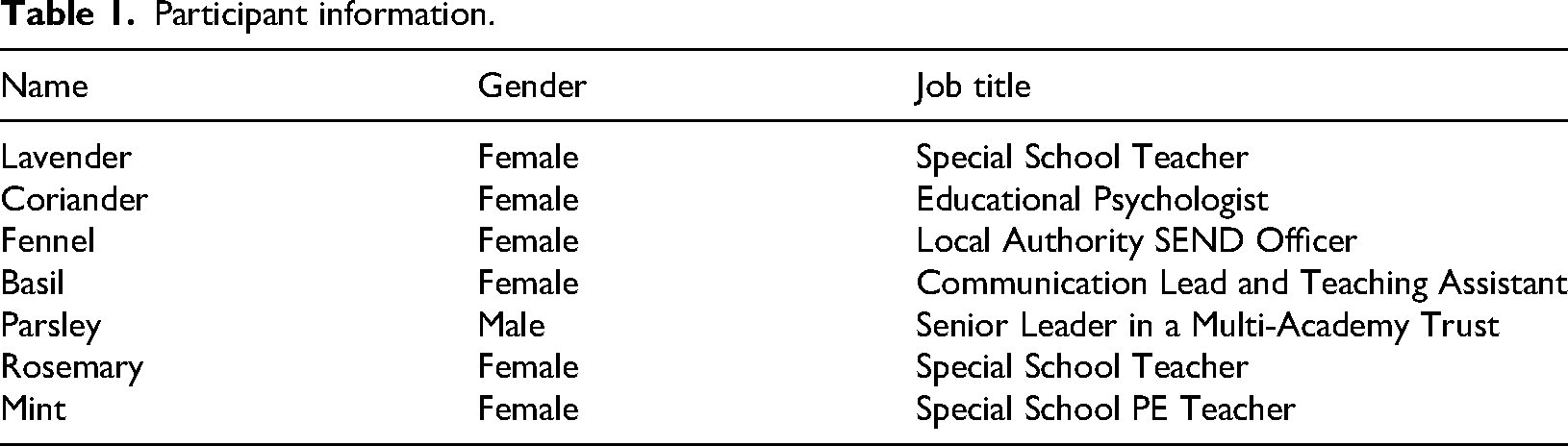
As noted, the nature of education for pupils with SLDs means that there are several professionals that contribute expertise, including with respect to supporting pupils’ communication pathways (Pearlman and Michaels, 2019). This was also the case within the research site, which enabled access to a wide range of professionals who supported pupil learning. In seeking to ascertain the perspectives of such individuals concerning the notion of facilitating the voices of pupils with SLDs, semi-structured interviews were undertaken with a core group of key adults (n = 7) who worked within the study school context. These professionals held roles such as Educational Psychologist, Local Authority SEND Officer, PE Teacher and Communication Lead, and were all involved in some way with the development and implementation of current practice at the school. Participants were recruited via convenience sampling, and all participants were fully informed about the research activities and ethical processes (including the right to withdraw without any penalty) before being asked to provide consent. Pseudonyms were chosen for participants relating to the school's sensory garden (see Table 1).
Participant information.
Data collection
The study was underpinned by an interpretivist framework and was designed to explore the voices and perspectives of professionals working with pupils with SLDs within the school, by making space for critical discussion concerning the current context of communication and considering implications for future practice. The impact of exploring the current landscape within the school, understanding more about the potential areas for development and then providing recommendations to improve this experience were deemed crucial to enabling the voices of pupils with SLDs to be better heard, understood and acted upon. The research was conducted with a commitment to supporting and developing practice within the school, as well as contributing knowledge to the wider PE field. Ethical approval for the study was obtained from the authors’ university (ID: 11272). All relevant protocols relating to safeguarding, consent and anonymity were followed throughout. Fieldwork for this aspect of the study was conducted over a 5-week period between April and May 2022.
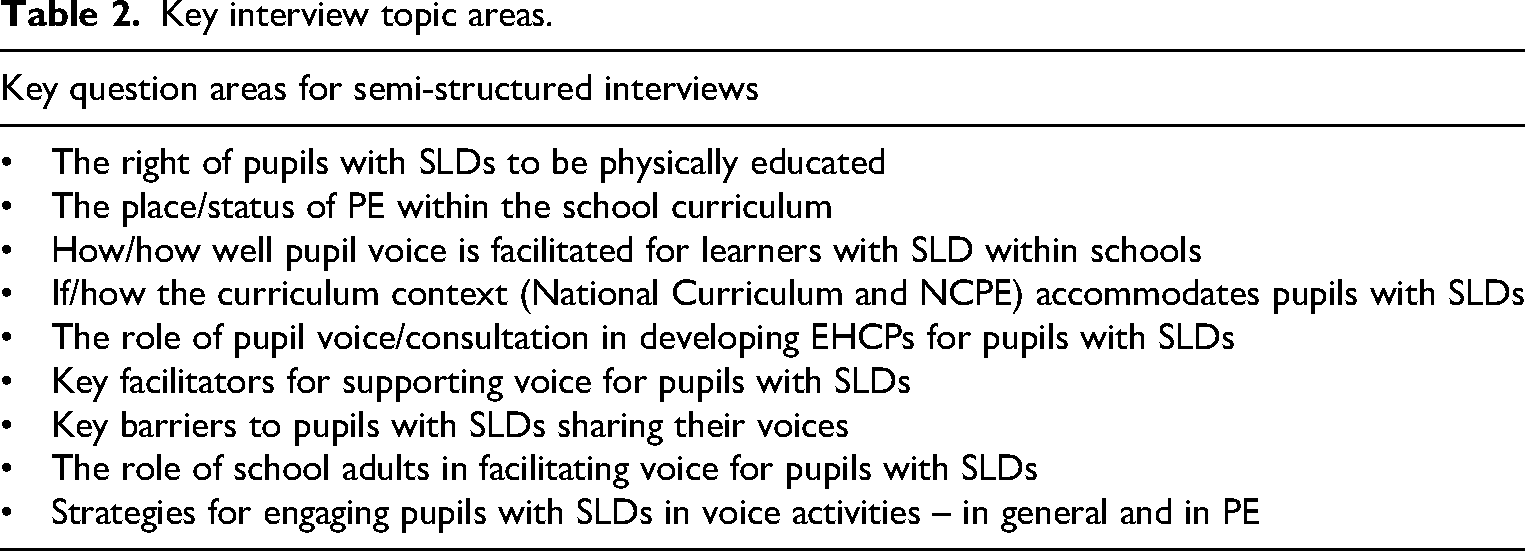
The study utilised semi-structured interviews for data collection, with pre-seen topic areas for discussion which allowed participants to have time to reflect and compose their thoughts (Ruslin et al., 2022). The interview was intended to allow participants to critically review current practice around pupil voice within the school, as well as reflect on this in the specific context of PE. The interviews comprised several questions covering a range of topics, including the perceived importance of pupils’ right to be physically active, the status of PE as a subject in the curriculum, and how pupil voice is currently facilitated, as well as how it might be improved (see Table 2 for key topic areas). Follow-up questions were then asked based on individual participant responses, to probe areas of interest and facilitate the collection of rich, contextualised data.
Key interview topic areas.
To create a comfortable context, participants were given the option of meeting face-to-face (n = 5) or via Microsoft Teams (n = 2). The interviews lasted on average 25 minutes and were audio-recorded to capture participants’ views.
Data analysis
Once recorded, interviews were fully transcribed to facilitate the analysis process. The raw data in these transcripts were then analysed thematically to draw out key ideas and perspectives, informed by principles of reflexive thematic analysis (Braun and Clarke, 2006, 2022). This involved the first author reading and re-reading the data to identify, interpret and report patterns of meaning. More specifically, it included initial coding of broad concepts, followed by a review of these codes (in conversation with the second and third authors) to identify commonalities and bring related ideas together to form initial themes. These were then checked against the whole dataset to ensure relevance and representation (by the first author again), before being refined and finalised as main themes. For example, conversations within the interviews around individuals’ capacity to support learning in PE, the lack of focus on PE in teacher education and uncertainty as to what pupils were expected to do/achieve in PE led to codes such as ‘lack confidence’, ‘unprepared’ and ‘individual bias’, which were ultimately drawn together into a theme of ‘practitioner confidence’ (see below). Braun and Clarke (2006) argue that this strategy for data analysis enables the researcher to organise, formulate and describe the dataset in detail, with themes helping to structure a narrative discussion. The inductive analysis process outlined here led to the development of six core themes, namely: curriculum and voice; practitioner confidence; being an advocate; the challenge of hearing voice; the influence of the interaction environment; and strategies for engaging pupils in verbal and non-verbal conversations. These themes are now outlined and discussed in the following section.
Findings and discussion
Curriculum and voice
Several participants noted the impact of curriculum on pupils with SLDs’ experiences of education – both broadly and in relation to PE. For example, some noted the role of the broad National Curriculum in shaping practice and identified a lack of recognition of provision for pupils who are not ready for ‘standard’ subject-specific learning. In relation to PE specifically, there was a perception that the NCPE did not currently recognise that such pupils often learn in non-linear ways. This narrow view of PE was therefore felt to be a significant inhibitor: The area of PE is massively overlooked [for pupils with SLDs]. The curriculum definition is a significant barrier versus the reality of early physical movement. (Basil) [Pupils with SLDs] can have unique patterns, and their learning is up and down – the National Curriculum [PE] doesn’t reflect that enough. (Coriander)
The consensus was that PE is important to pupils with SLDs but that there is a disconnect between what the NCPE currently aims to achieve and the wider potential of PE to impact on key skills for pupils with complex physical and emotional difficulties. For example, as Fennel explained: …people think PE is about running around or being part of the netball team [but there are] so many other aspects like leading a healthy lifestyle, developing good habits, the impact of wellbeing, teamwork, communication, fine and gross motor skills. It's easier to tie these [into PE] than some of the more academic subjects like English and Maths, as it's practical and real; for learners with SLDs, [PE] is an area where they can thrive.
There was further feeling among some participants that broader aspects of learning and experience not covered in the NCPE explicitly (e.g. the way we understand our senses through sensory development and physical development) are also important for pupils with SLDs. Moreover, these areas were interlinked and fundamentally included aspects of communication: A PE curriculum linked to sensory and physical needs includes communication. All the skills they learn in aspects of the curriculum link and ultimately lead to a connection to other people – rolling a ball to another person, understanding someone's sensory regulation needs, mutual regulation … If you can’t learn through others, your learning is limited … If you can’t imitate with another person, then you can’t understand the other person and understand the teacher is there. (Basil)
There is a suggestion here that if learning opportunities are to be maximised within PE – and education more broadly – it is important to ensure that pupils’ ability to regulate senses and understand proprioception and interoception at a basic level are developed. Moreover, it is implied that this needs to be done through physical activity, combined with structured support and teaching: A lot of [our] pupils can’t fully regulate emotionally or senses, so find a lot of proprioception and physical activity important. Vestibular, heavy work, sensory circuits to be more regulated to access learning. It's very important. (Lavender)
Finally, when discussing curriculum, participants noted that the subject of PE was not one that had a high enough profile: In a lot of settings there's no importance on PE. You might get an hour a week, PE is often the poor relative. It gets lost. (Fennel)
Whilst special schools may draw on the National Curriculum's core and foundation subjects, many also provide individualised sensory-based curricula (Allen et al., 2024). The data here also suggest that there is a need to develop strategies/guidance to help shape such PE practices, perhaps focussing more on core development needs and expressive communication.
Practitioner confidence
Within the interviews, there was a strong feeling from participants that many teachers within the school lacked confidence when it came to delivering PE. Moreover, it was felt that this lack of confidence was surprisingly consistent across both new and experienced teachers, and that it perhaps reflected a lack of experience and training: Teachers are still hesitant to teach it [PE] … It lets it down across all school. People trying to shy away, when it is one of the most important subjects. (Mint)
As Maher and Fitzgerald (2020) highlight, in England there are no specific undergraduate or postgraduate PE teacher education programmes aimed at developing specialist teachers for special school PE. Therefore, many teachers delivering PE in special schools may not be trained or qualified PE teachers. Participants in this study felt this was a concern: Not a lot of focus [on PE] in teacher training, you get half an afternoon [which is] not enough input [and you] don’t get a lot of CPD. (Mint)
Participants noted that it is often not clear what the expectations are for pupils with SLDs, nor how teachers should deliver a curriculum that enables these pupils to access it in a meaningful way. A lack of support, direction and training contributes to this and undoubtedly impairs how practitioners support young people with SLDs to engage in PE activities. There are important implications here for voice, given that engaging pupils with SLDs in PE is inherently connected with the process of accessing and understanding their perspectives of these activities. Indeed, Dickins and Williams (2011) have noted an active process of hearing/observing, interpreting and responding to communication is central to listening to young people. Thus, it is important that staff engaged in such activities receive ongoing support and training to ensure effective practice.
Being an advocate
Within the interviews there was an acceptance that the skillset of professionals working with pupils with SLDs was crucial in facilitating and understanding voice, allowing pupils’ thoughts to be captured and expressed. As such, many participants saw themselves (and their colleagues) as advocates, though it was noted that not all were confident in this respect: We rely heavily on the adults who know the child well to capture voice and it's also professional confidence about how to most accurately capture it that has a significant impact on how this is heard… (Coriander)
This points to a need for all adults involved in supporting pupils with SLDs to work together to collectively scaffold ideas and aid authentic voice. However, as noted by Coriander, this requires consistency and training, to ensure that staff do not simply speak for/on behalf of pupils but can amplify their authentic voices: Advocates [like us] need training…so you don’t put your voice, it's the pupil's voice. Sometimes when we’ve used interpreters, you wonder if they’ve asked the same question – same principle with an advocate for a child with SLDs (Coriander)
Such views identified an important training need for adults working with pupils with SLDs, to help them build the required skills and better understand pupils’ needs and experiences. For some, this was arguably more important than the standard career professional development on offer, which is delivered across core and foundation subjects to develop practice in the curriculum. This ‘professional confidence’ dilemma in working with pupils with a range of needs – including those with SLDs – highlights the complexity of the support and training needed to fully access pupils’ thoughts and feelings within educational practice (Vickerman and Maher, 2018; Wickenden, 2011). As a result of the perceived lack of confidence among teachers and support workers in the study school, it was noted by some participants that efforts at facilitating pupil voice were somewhat tokenistic. For example: [It's a] tick-box exercise, the whole pupil voice element is only there for pupils who can proficiently tell us what they feel, enjoy. For the rest, it is a guessing game, and reliant on the adults in that pupil's life coming together and saying what they really like. (Basil)
Participants also noted that more clarity was needed regarding the intentions of pupil voice activities, and that such processes need to be enacted flexibly and appropriately in accordance with the needs and abilities of the pupil. This can be complex, however, as approaches may need to be both diverse and personalised at the same time: [We need to think about] where their [the pupil's] cognitive ability lies, whether they’re verbal or non-verbal, their understanding of spoken language, as we need to present the information in the right way. For example, if we present the questions verbally, but they need it pictorially, [or if we need to] rephrase [to help them] understand the information. (Fennel)
It was seen as important that staff training and ongoing professional development were given and regularly refreshed, so that refinements and adaptions in practice could be used to ensure the needs of pupils with SLDs could be effectively met: It doesn’t have to be verbal [communication]. The most important thing is the individual who is capturing [voice], their skillset and their relationship [to the pupil]. (Fennel)
Notably, there was clear concern among some participants regarding how pupils’ views on their education were captured, as per the requirements in the EHCP (DfE, 2024). This reflects broader discussions in the field. For example, some researchers have questioned whether young people with SLDs can be said to have clear views about complex conceptual issues (Rabiee et al., 2005). Rather, for these pupils, communicating a choice may be the most basic way of assessing their consent and providing evidence of their preferences. Indeed, Ware (2004) considered a view to essentially be an opinion, standpoint or belief, which is not the same as a choice/preference or expressing a like/dislike. Thus, as noted by participants in this study, when looking to interpret the behaviours, gestures and responses of a pupil with SLDs in a school context, it is perhaps difficult to be sure, as their communication is often ambiguous. However, what practitioners can do is interpret ideas from a broader range of materials (e.g. photos, videos and observations) which are more likely to communicate experience, emotion and response to activities in the moment, that is, ahead of more structured conversation. This can provide a foundation for pupils later being able to express preferences and developing skills of choice and views. However, participants noted that such efforts were not always made, particularly when staff were not familiar with pupils: Too often [comments are made] by someone who has put what they think the young person should say. They often don’t have the time and patience to really develop relationships and get to know the learner [and] they also don’t always have the skills that are needed [when non-speech communication is used]. So, if [a pupil] uses an AAC [Augmentative and Alternative Communication] device like PECS [Picture Exchange Communication System] or augmented technology, staff might not have the skills to use it in the correct way. (Fennel)
Such views highlight once again, the important role played by those who work to support the educational development of pupils with SLDs and highlight the need for them to build close relationships and work collaboratively to facilitate authentic opportunities for voice (see also Clish et al., 2023).
The challenge of hearing voice
A key issue raised by several participants was the idea that facilitating pupil voice often depended heavily on the pupil having effective language understanding, which links directly to pupils requiring a higher level of cognition and understanding. Indeed, in her study looking at identity, voice and representation for young people using AAC, Wickenden (2011) discussed how non-speech communication works in interactions and highlighted how an individual's cognitive skills could be a limiting factor. Echoing arguments in broader literature, participants in this study felt that pupil voice efforts were often ‘light touch’ (Chambers et al., 2023). For some, there was a feeling that pupils were often overlooked or ‘rushed through’ a process of voice, often leading to pupils being ‘silenced’: For pupils who are lower [in ability] it's hard … But people don’t understand that the voice doesn’t have to be verbal. I often see ‘was unable to tell us’ on the EHCP and think ‘no, they will have had a way…we’ve just silenced those individuals’. (Fennel)
Further challenges to capturing pupils’ views mentioned by participants centred on non-verbal communication and how practitioners develop the skills needed to understand what is being said by young people in different ways, for example, via gesture and appearance, especially for the most complex learners: We need to look at other communication strategies, non-verbal approaches. Meaningful spontaneous communication is the key. Physical communication is one of the main ways large numbers [of our pupils] communicate. (Basil)
For a subject like PE, which places significant emphasis on the role of the body, such forms of communication other than verbal are routinely used for more able pupils to assess performance and pupil ability (Jovanović and Zdravković, 2017). However, as noted by participants in this study, this seems to be overlooked as a model for understanding the wants and needs of pupils with SLDs: I think we struggle [with communication] if they’re non-verbal or cognitive skills are low…we rely so much on that verbal mediation, although we say we do it more visually. It's too broad a thing and we can’t break it down into small enough steps for them to access it. (Coriander)
These views highlight the importance of recognising aspects of meaningful spontaneous communication between pupils and school staff, no matter how small they may seem (e.g. a facial expression, an eye movement), as these can represent small steps of progression to broader understanding. This relies heavily on interpretation, as Basil stated: We understand our pupils’ difficulties well but doesn’t mean we always capture the voice well, but that doesn’t make you always objective, you can get entrenched in it. At this moment in time, they’re not captured on a broad scale very well.
It was also noted that staff relationships with pupils were a significant yet complex factor – both supporting pupils to express their views but also, potentially, influencing these views through their own experiences of knowing the child. Striking a balance between supporting pupils’ wishes and projecting/misinterpreting pupils’ communication was noted as a complicating factor and raised some questions for staff about processes of voice: …but what is missing in this is that our pupils cannot communicate enough with us to grasp if they even hear that sound or see that letter correctly. If we can’t even understand if this element is happening, how do we know if it is even having any meaning? (Basil)
Thus, it is clear from a practitioner perspective that there is a need to further establish parameters for facilitating, collecting and understanding voice, both in terms of interpretation and representation of young people's views.
The influence of the interaction environment
The data highlight that the environment in which interactions took place played a significant role in facilitating (or not) pupil voice. For example, participants noted that whether the pupils were comfortable or not within the learning context (including both space and activity) might influence the extent to which they were willing to share their responses: The environment plays a huge role in how they feel, how they present [and] engage; it also massively [influences] understanding their views. For example, observation on a quiet day with 1:1 support, versus a busy day with no support. The same environment but small changes made a huge difference. (Basil)
Often, for pupils with SLDs, organising and processing all the adaptations that they are faced with in an open environment can be problematic, and their ability to manage this (or not) is important on several levels. For example, lessons in a large, noisy sports hall with other children moving in unpredictable ways can be challenging, and voice activities here will require a different approach to when learning takes place in a quiet classroom with pupils sat behind a desk. Nonetheless, despite the challenge, it is important that pupils with SLDs are supported to fully engage in PE to maximise the opportunities it can provide for learners to engage with their senses and facilitate lifelong physical literacy. As Almond (2013) described, these opportunities can hold great significance or value and overtly affect people, facilitating an understanding of their own bodies at the same time as developing written and verbal skills. Certainly, the unique environment of PE and its varied spaces (e.g. outdoor fields, sports halls, swimming pools) have been argued to afford learners the opportunity to communicate and use senses in different ways (Maher and Fitzgerald, 2020). In such varied settings, pupils can communicate through responses other than verbal speech or sounds to share thoughts and feelings ‘in the moment’. For pupils with SLDs there is also often a need to focus on the idea of single- versus multi-sensory environments and ensuring pupils are in a comfortable, calm and relaxed state. However, engaging pupils in verbal and non-verbal conversations is not straightforward; it needs to be an approach that is built up over time. Thus, there is a need to further examine how voice is captured within school processes and to ensure that approaches used to facilitate voice are pupil centred, incorporate relevant technology (if/as required) and are supported by skilled, trusted adults (Clish et al., 2023; Wickenden, 2011).
Strategies for engaging pupils in verbal and non-verbal conversations
Participants in the study spoke about the practicalities of facilitating voice and suggested several strategies that they themselves used in this respect. Repetition was one of the most common strategies and was perceived to be very important to allow pupils to learn, over time, routines and procedures that support their understanding. These routines bring familiarity and security to pupils with SLDs – as one participant noted, they help to ‘develop a communication system that holds the idea of ‘overlearning’ and repetition at the root of it’ (Parsley). Within the interviews, participants also noted the significance of time and of considering strategies for developing opportunities for communication at a suitable pace. This reflects broader calls for shifts in practice towards approaches that are highly personalised around the needs of pupils with significant learning needs (Sanderson, 2013). Many pupils with SLDs require longer processing time than their neurotypical peers (Dehn, 2013), and struggle with long-term and working memory (Carmichael et al., 2014). As such, many of their experiences are encased in the immediate present, which holds implications for facilitating voice: Many [pupils with SLDs] will need more time than that short burst of a five-minute or ten-minute task and you may have to do that task seven or eight times over to get to where you want to be, but that information is really valuable… So, time is a significant barrier and, particularly in special education, time is never on your side. (Fennel)
Participants also noted that it was critical in voice practices to look at what practitioners are trying to achieve within the educational contexts. However, as Mint commented, ‘the definitions of what we are asking and wanting are not always clear’. Therefore, it is crucial for special school staff to understand clearly what they are trying to report and enable for young people with SLDs. In this respect, Basil discussed the idea of ‘continuous reflection’ being an important feature of practice (see also Vickerman and Maher, 2018), which was also evident more broadly within the data when participants talked about giving thought to how they could best engage with pupils and capture their voices in a more holistic manner.
Concluding thoughts
This paper has presented findings from a study that sought to explore the role of key school adults in amplifying the voices of pupils with SLDs in a special school context. It is argued that establishing ‘mechanisms for consultation and empowerment’ are central to facilitating good communication and consultation practices within schools and, thereby, gaining a full appreciation of pupils’ views – including those with learning disabilities (Vickerman and Maher, 2018). In closing, we reiterate that we are cognisant of calls to ensure those working with pupils with SLDs do not mute the voices of the very people they are trying to represent (Chambers et al., 2023). However, findings within this research highlight a point of tension regarding pupil voice when working with young people with SLDs. Previous literature has expressed issues with adult-centric approaches that can restrict young people's opportunities for voice and called for more youth agency (Healy et al., 2013; Roberts, 2017). However, data from this research highlight that for pupils with SLDs within a special school setting, school adults (e.g. teachers, educational psychologists, teaching assistants) can be central to the process of voice. As such, this research echoes the findings of broader literature in confirming that key adults who support the lived experiences of their pupils within the school context are well placed to facilitate rather than restrict voice (e.g. Clish et al., 2023). Certainly, in this study, they were seen to support pupils’ expressions of their feelings towards the subject of PE and help to articulate their experiences. Therefore, this paper outlines the following recommendations as a step towards constructing a framework to allow the voices of learners with SLDs to be better heard.
Firstly, within the context of special schools, the role that the staff play is crucially more than that of an advocate. Rather, they work to translate, decode and co-construct meaning through several types of communication – often without verbal cues and understanding. As such, these key adults should be recognised as playing an active role in helping to facilitate, interpret and communicate the perspectives of pupils with SLDs and be supported to do so. Without this scaffolding approach, it can be extremely difficult to elicit real meaning from young people with SLDs.
Secondly, for those school staff working with pupils with SLDs, enhanced professional confidence is required regarding how to facilitate a person-centred approach and accurately capture voice in a framework that recognises the authentic perspectives of pupils with SLDs. There are implications here for initial teacher education as well as ongoing professional learning for special school staff in shaping the assessment, curriculum and support needs required (Maher and Fitzgerald, 2020; Vickerman and Maher, 2018). To this end, the development of a research-informed ‘toolkit’ for practitioners could be a means by which to deliver a more effective approach to accessing the voices of pupils with SLDs, particularly in PE.
Thirdly, this paper builds on Ware's (2004) concern that eliciting information is not the same as eliciting views and opinions. The importance of a ‘done with’ rather than ‘done to’ approach is central to these findings, though this is a difficult path to navigate. How pupils with SLDs understand meaning – and how they understand themselves in the world – can be a challenge, and any voice activities will therefore require an individualised approach. Considering when such activities happen is also important, and an in-time process may be more effective than a blocked end-of-unit approach. This allows for experiences and responses to be captured as they happen, rather than relying on pupils with SLDs to recall events through a more typical reflective approach. Finally, as one of the most expressive subjects on the curriculum, PE should be able to facilitate the inclusion and engagement of all pupils, including those with complex and additional needs. Just how this is done needs further consideration, particularly regarding how best to support pupils with SLDs to express themselves using a variety of senses and responses. Focusing on a multi-sensory approach to voice will be important here. Meaningful spontaneous communication for pupils with SLDs is important, so facial expressions, basic movements and technology-enhanced interactions can all interlink to shape communication (Wickenden, 2011). It is through fostering such interactions that we may come to better understand pupils with SLDs’ experiences in PE.
The recommendations of this paper provide a basis for overcoming the challenges raised in existing research about supporting pupils with SLDs to share their thoughts and experiences of PE. As a starting point for further work into facilitating the voices of young people with SLDs, this paper makes the case for key adults as ‘conversational partners’ (Wickenden, 2011) in the process of voice and suggests that practitioners working with/for these pupils are more than advocates in this respect. The symbiotic nature of the interactions between practitioner and young person means that identifying young people's root learning needs enables acknowledgement that their voices have value. Having the skills, familiarity and confidence to put these things in place takes training, time, patience and a consistent approach (see also Maher and Fitzgerald, 2020; Vickerman and Maher, 2018). Nonetheless, working towards such practice will allow the lived experiences of pupils with SLDs in PE to be accessed, acknowledged and amplified, thereby enabling their voices to be heard and inform future practice.
Footnotes

Funding
The authors received no financial support for the research, authorship, and/or publication of this article.
Declaration of conflicting interests
The authors declared no potential conflicts of interest with respect to the research, authorship, and/or publication of this article.