



Abstract
Physical education is now examined as part of the Leaving Certificate in Ireland. The primary aim of this study was to analyse the relationship between preservice physical education teachers’ perceived and assessed Leaving Certificate Physical Education (LCPE) subject-specific knowledge, referred to as common content knowledge (CCK). In total, 30 participants (73% female; undergraduate, n = 15; postgraduate, n = 15) were recruited from one teacher education institute in Ireland. Participants completed a perceived CCK survey followed by an assessment of CCK for all 10 topics on the LCPE specification. Mean perceived CCK was 60.1% (SD = 11.2); however, mean assessed CCK was 24.1% (SD = 7.7). The highest individual assessed CCK score was 51.3%. Over half (53.3%) of participants did not achieve a pass grade. Male teachers’ perceived CCK rating (63.3%, SD = 6.9) was significantly higher than females’ (52.8%, SD = 11.2, p = 0.03). However, female teachers’ assessed CCK (31.0%, SD ± 8.8) was marginally higher than males’ (27.7%, SD ± 11.3; p = 0.41). Postgraduate students’ perceived (58.5%, SD ± 10.27) and assessed CCK (33.1%, SD ± 9.24) did not differ significantly from undergraduates’ perceived (52.7%, SD ± 11.41) and assessed CCK (27.08%, SD ± 9.12) (p = 0.37). Findings demonstrated deficiencies in preservice physical education teachers’ CCK, despite higher levels of perceived CCK. The introduction of a terminal physical education examination in secondary schools in Ireland may require more emphasis to be placed on CCK in physical education teacher education programmes.
Introduction
Physical education, delineated by the curriculum, stands as the principal conduit facilitating adolescents in acquiring the requisite skills, knowledge and dispositions necessary for informed engagement in physical activity through their lifespan (Ennis, 2017; Johnson and Turner, 2016). Teacher content knowledge is considered an essential condition for effective teaching and promotion of successful student learning (Agathangelou and Charalambous, 2021; Chang et al., 2020; Ward and Kim, 2024). In the context of the current study, content knowledge is characterised as the amount and organisation of knowledge per se in the mind of the teacher (Shulman, 1986). Loewenberg Ball et al. (2008) developed a model detailing the domains of knowledge for teaching, concerning both subject matter knowledge and pedagogical content knowledge. The authors identified three domains of subject matter content knowledge: ‘common’, ‘specialised’, and ‘horizon’, as detailed in Figure 1. Studies on teacher education underscore the importance of common content knowledge (CCK) in fostering teacher growth, enhancing teaching practices and promoting student learning (Agathangelou and Charalambous, 2021; Ward and Ayvazo, 2016). Indeed, Dervent et al. (2022) reported that improvements in preservice teachers’ CCK are related to their instructors’ depth of CCK.
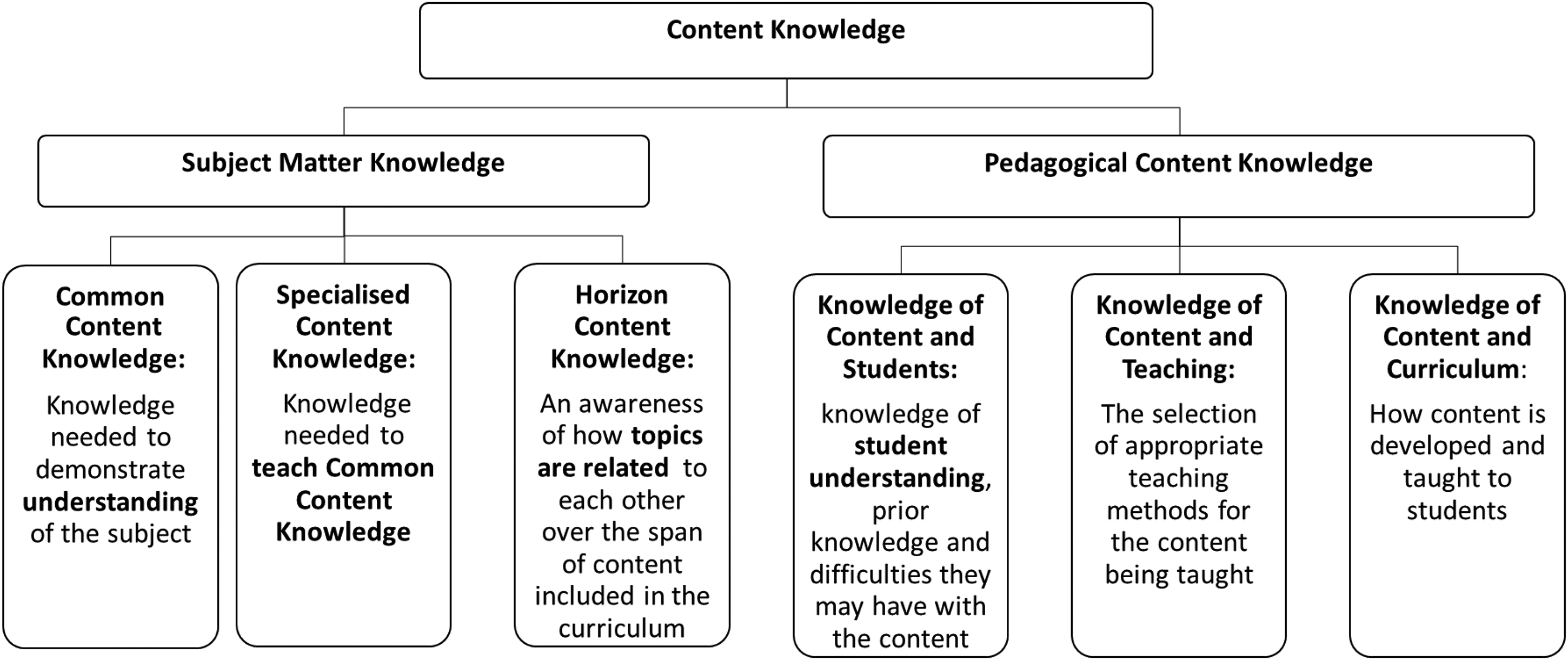
Proposed model for the categorisation of knowledge in teaching (Loewenberg Ball et al., 2008).
Multiple studies have reported low CCK levels among in-service and preservice physical education teachers (Dervent et al., 2022; Devrilmez, 2019; Santiago et al., 2016; Santiago and Morrow, 2020). Dervent et al. (2020) observed that the average scores of 1514 preservice physical education teachers on assessments of CCK in soccer and gymnastics were below the established 60% success criterion stipulated by the Turkish higher education authority. Similarly, among a sample of 384 Chinese physical education teachers, 78.2% were found to have low soccer CCK scores (Ward et al., 2018). Santiago and Morrow (2020) examined health-related fitness CCK among 621 preservice physical education teachers enrolled in 68 different teacher education programmes in the United States. The mean percentage assessment scores were 61.3%, leading the authors to infer a deficiency in participants’ health-related fitness CCK. In addition, the influence of demographic characteristics, including gender and level of education, are key considerations in examining CCK. Santiago and Morrow (2020) reported female preservice teachers scored slightly higher on the overall health-related fitness test than male preservice teachers; however, these differences were not statistically significant. In contrast, in a study examining health-related fitness CCK among in-service physical education teachers, Castelli and Williams (2007) reported that male teachers had higher predicted and assessed CCK compared to female participants. Again, these differences were not statistically significant. Despite research demonstrating low CCK among physical education teachers (Castelli and Williams, 2007; Santiago et al., 2012), and the increasing number of countries introducing an examination as part of secondary physical education (Scanlon et al., 2019), there is a paucity of research examining CCK in preservice physical education teachers in a terminal secondary school exam.
Physical education is frequently perceived as a minor subject in educational settings (Lee and Cho, 2014), with 33% of secondary schools in the Republic of Ireland (Ireland hereafter) found not to prioritise physical education to the same level as other subject disciplines (Rocliffe et al., 2023). The pursuit to legitimise physical education in Ireland likely originates from dissatisfaction with the absence of formal mechanisms for assessing teaching and learning in the field (MacPhail et al., 2005; MacPhail and Murphy, 2017), as well as inadequate facilities and a lack of allocated time (O’Keeffe et al., 2020). Globally, examinable physical education curricula were introduced between the 1970s and the 1990s, illuminating a significant paradigm shift. This evolution was underpinned by a desire among physical education teachers to fortify their professional and occupational standing within the secondary school education system (Green et al., 2018). Following the implementation of examinable physical education in England, there was a 221% increase in the number of students studying the subject between 1990 and 2002 (Green and Hardman, 2004). The introduction of Leaving Certificate Physical Education (LCPE) as an externally assessed state examination subject in 2018 represented a significant milestone in Irish educational policy. Since its phased roll-out in 2018, the subject has seen a 199% increase in uptake and is now available in over half of Ireland's 730 secondary schools (State Examinations Commission [SEC], 2024).
The LCPE curriculum specification (National Council for Curriculum and Assessment [NCCA], 2017) encompasses 10 thematic domains categorised into two strands: ‘Towards Optimum Performance’ and ‘Contemporary Issues in Physical Activity’. Assessment in LCPE consists of three components. The first is a physical activity project-based assessment worth 20% of the overall grade. Students complete an initial performance analysis in a selected physical activity and, based on the results, select three to four performance goals, and develop a training programme to achieve these goals. This project is conducted over an 8- to 10-week period and submitted as a digital booklet and supporting video. The second assessment, the ‘Performance Assessment’, is another digitally submitted component, worth 30% of the overall grade, in which students demonstrate performance and skills across a range of pre-specified criteria in a selected physical activity or sport. The video file may be up to 8 minutes in duration. The third component is a written examination worth 50% of the overall grade. The written examination assesses students’ understanding of all 10 thematic areas. The SEC is the authority with responsibility for the development, assessment, accreditation and certification of the State certificate examinations in Ireland. Since its introduction, data from the SEC confirmed that less than 3% of students have received a grade of 50% or less, with less than 1% failing (<30%). On average, 9% of students have achieved the highest grade band of ≥90% (SEC, 2024).
Despite the positive developments in the physical education curriculum landscape in Ireland, Scanlon et al. (2019) noted the challenges faced by teachers delivering the LCPE curriculum due to the depth and breadth of content to be covered in the curriculum specification (NCCA, 2017). Furthermore, a recent early enactment review of LCPE by the NCCA (2023) noted that teachers reported investing significant time in their own readiness to teach the subject, ensuring they were informed and confident in the specific theory relevant to the learning outcomes as well as upskilling in digital skills to support learning. These findings emphasise the importance of prospective physical education teachers developing a strong foundation in the content knowledge required during their preservice teacher education to teach the subject effectively. Therefore, the primary aim of this study was to analyse the relationship between preservice physical education teachers’ perceived and assessed levels of LCPE CCK. Accordingly, the study was guided by the following research questions: What is the relationship between preservice physical education teachers’ perceived and assessed levels of CCK? Do perceived and assessed CCK levels differ based on gender and level of education? What are participants’ experiences of preservice teacher education for teaching LCPE?
Methods
Participants
Research ethics approval for this study and the associated protocols was granted from the lead author's host institution. An invitation to participate was emailed to all final year students completing either a Bachelor of Science in physical education undergraduate degree (n = 68), or, a Professional Master of Education in physical education postgraduate degree (n = 21). The Bachelor of Science degree comprises 240 ECTS (European Credit Transfer and Accumulation System), of which 60 ECTS are specialist physical education credits. The Professional Master of Education requires applicants to have an undergraduate (level 8) degree in a relevant cognate discipline that meets the Teaching Council of Ireland’s subject requirements. In addition to school placement and 11 general education modules, Professional Master of Education students complete six specialist subject modules. Data collection was conducted between February and March 2023. Participants completed a perceived CCK survey and an assessed CCK examination (Supplementary File 1). To mitigate non-response bias and the occurrence of missing values, participants were required to answer each item associated with the survey and examination.
Instruments
Perceived CCK survey
A perceived CCK survey was developed for the purpose of the current study using a similar format to the self-efficacy questionnaire developed by Castelli and Williams (2007) (Supplementary File 1). The initial survey was divided into two sections. The first section comprised 13 two-part questions addressing all elements of the LCPE curriculum specification. This section included one question on each of the 10 topic areas from the curriculum specification (NCCA, 2017) and one question on the two continuous assessment components, namely, the Physical Activity Project and the Performance Assessment Project. Before completion of the CCK examination, participants were asked a binary yes/no question on their understanding of each of the 10 topic areas, and to rate their CCK of each topic on a scale of 1 (‘not at all confident’) to 10 (‘very confident’). A 10-point Likert scale was used over a 5-point scale to allow for more in-depth discrimination of perceived competence (Castelli and Williams, 2007). The final question assessed participants’ confidence level in their ability to teach LCPE content. The second section contained one open-ended question where participants were asked to evaluate guidance provided on the LCPE specification during their preservice physical education teacher education.
CCK examination
A CCK examination was designed specifically for the purposes of this study (Supplementary File 2). Questions for the CCK examination were sourced from LCPE examinations conducted between 2020 and 2022, focusing on the written examination. One item from each of the 10 topic areas of the LCPE curriculum was selected by an independent SEC examiner who was not directly involved in the study. The SEC examiner collated questions for each topic and selected one at random to ensure adequate representation. There were a limited number of questions in each topic area that were eligible for inclusion, inhibiting a detailed examination of each topic area. Consequently, the questions included were not a complete representation of the associated topic area. The CCK examination was corrected using grading criteria provided by the SEC (Supplementary File 3). The grading criteria clearly establish the allocation of marks for each question and contain support notes detailing key phrases which must appear in responses in order to merit the assigned marks.
Content validity and reliability
Three experienced sport pedagogy academics reviewed the survey to establish content validity and consistency. The lead author reviewed the survey with each expert individually. Using a 5-point rating scale, the team of experts was asked to evaluate the relevance of the items in each theme (1 = not relevant and 5 = very relevant). Using the thresholds as set out by Zhang and Chen (2017), it was determined that an item with a mean rating score below 3.0 and/or with substantial revision suggestions should not be accepted. All items scored 4.0 or higher, and thus no revisions were deemed necessary. A convenience sample of 10 preservice teachers, not involved in the main study, completed a pilot of the perceived CCK survey and examination. Participants involved in the pilot were asked to identify confusing or misleading questions. Based on feedback from the pilot, the time allocated for completing the CCK examination was extended from 30 minutes to 1 hour to better align with the time allocation provision for the LCPE examination. No structural adaptations were made to the perceived competence survey or CCK examination post-pilot.
The reliability of the perceived CCK survey was determined by the test–retest method. One week after the first administration of the questionnaire, 10 participants were selected at random from the overall sample and were asked to retake the perceived CCK survey. A Pearson correlation coefficient was computed to assess the relationship between responses from time point one and two. These correlations revealed that the yes/no responses were identical from the first to the second test (r = 1.0, p < 0.01), and 10-point rating scale questions were almost identical (r ≥ 0.93, p < 0.01). Furthermore, Cronbach's alpha measure of 0.813 was established for the perceived CCK survey, representing excellent reliability.
Procedure
An introductory email was sent to all preservice physical education teachers in both undergraduate and postgraduate programmes in their final year of study. The email detailed the purpose of the perceived CCK survey, CCK examination, and details regarding the time, location and confidentiality of collected data. Participants provided informed consent prior to commencing the study. Participants were instructed to spend 10 minutes completing the demographic information and perceived CCK survey and were allocated 60 minutes to complete the 10-question CCK examination. The perceived CCK survey and examination were administered on paper, mirroring the format of the LCPE examinations. The examination was conducted in a lecture hall at the lead author's institution. To ensure consistency in grading among the authorship team, all responses to the CCK examination were assessed using the grading criteria provided by the SEC (Supplementary File 3). Furthermore, two scripts were moderated by the authorship team, and no differences were observed in scores. Responses to the open-ended question were transferred to Microsoft Word for further analysis.
Data analysis
Three main analytical procedures were employed and are outlined below. Inter-rater reliability tests were used to determine the reliability among the three assessors. Inter-rater reliability was determined by calculating the intraclass correlation coefficient (ICC) with 95% confidence intervals (95% CI) using SPSS. Aligning with thresholds outlined by Koo and Li (2016), values <0.50 were classified as having poor reliability, 0.50–0.74 moderate reliability, 0.75–0.90 good reliability and >0.90 excellent reliability. An ICC of 0.90 was set as an acceptable level of inter-rater reliability for the purpose of this study. Spearman Rank Order correlations were used to compare the differences between perceived and assessed CCK as the data were non-parametric (Shapiro–Wilk test, p < 0.05). Spearman coefficients were interpreted as follows: 0.00–0.09 negligible correlations, 0.10–0.39 weak correlations, 0.40–0.69 moderate correlations, 0.70–0.89 strong correlations and 0.90–1.00 very strong correlations (Schober et al., 2018). A Mann–Whitney U test was used to determine if there were any differences in perceived CCK depending on gender and programme of study (undergraduate or postgraduate programme). For all analyses, the significance level was set at 5%.
Responses to the open-ended question regarding participants’ views of their preservice teacher education to teach LCPE were examined and organised thematically, consistent with the procedure outlined by Braun and Clarke (2006). These were refined in iterative steps. We started by familiarising ourselves with the open-text data, which involved repeated active engagement with the responses to the open-ended question by firstly reading the responses without taking notes, and following this, summarising data in the form of a high-level overview. We then created initial codes by identifying specific pieces of content relevant to our research questions and assigning labels to these codes. Next, the full authorship team identified potential themes by looking at similarities, connections and patterns between codes. Following this, we explored potential themes to determine if they accurately represented the data set. By labelling and defining these themes, we finalised the data analysis.
Results
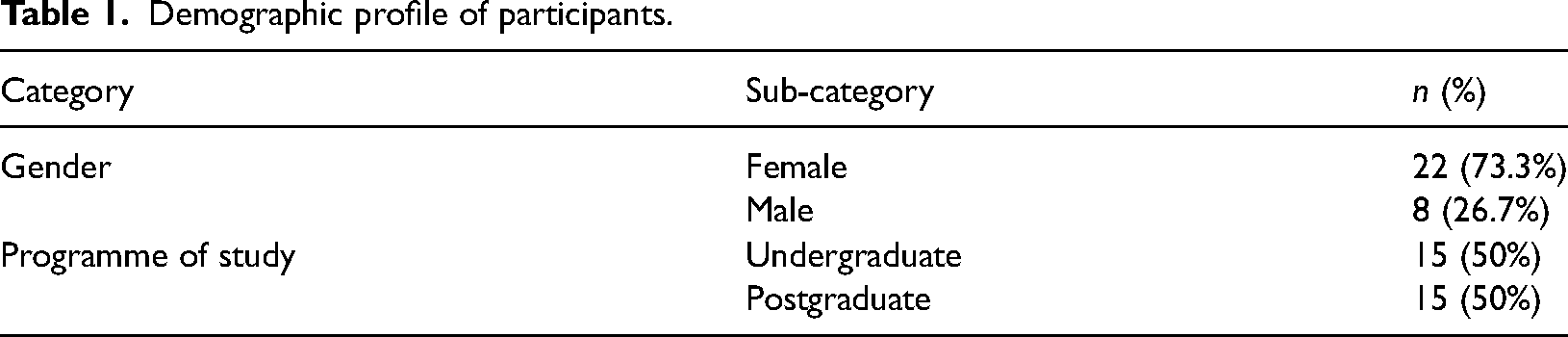
The demographic profile of the participants is provided in Table 1. In total, 30 preservice physical education teachers participated in this study: 22 females and eight males, 15 from the undergraduate degree (22% of the total cohort) and 15 from the postgraduate degree (81% of the total cohort). The inter-rater reliability for the assessment of the CCK was 0.99, indicating excellent inter-rater reliability (95% CI: 0.99, 1.000).
Demographic profile of participants.
Comparison between perceived and assessed levels of CCK
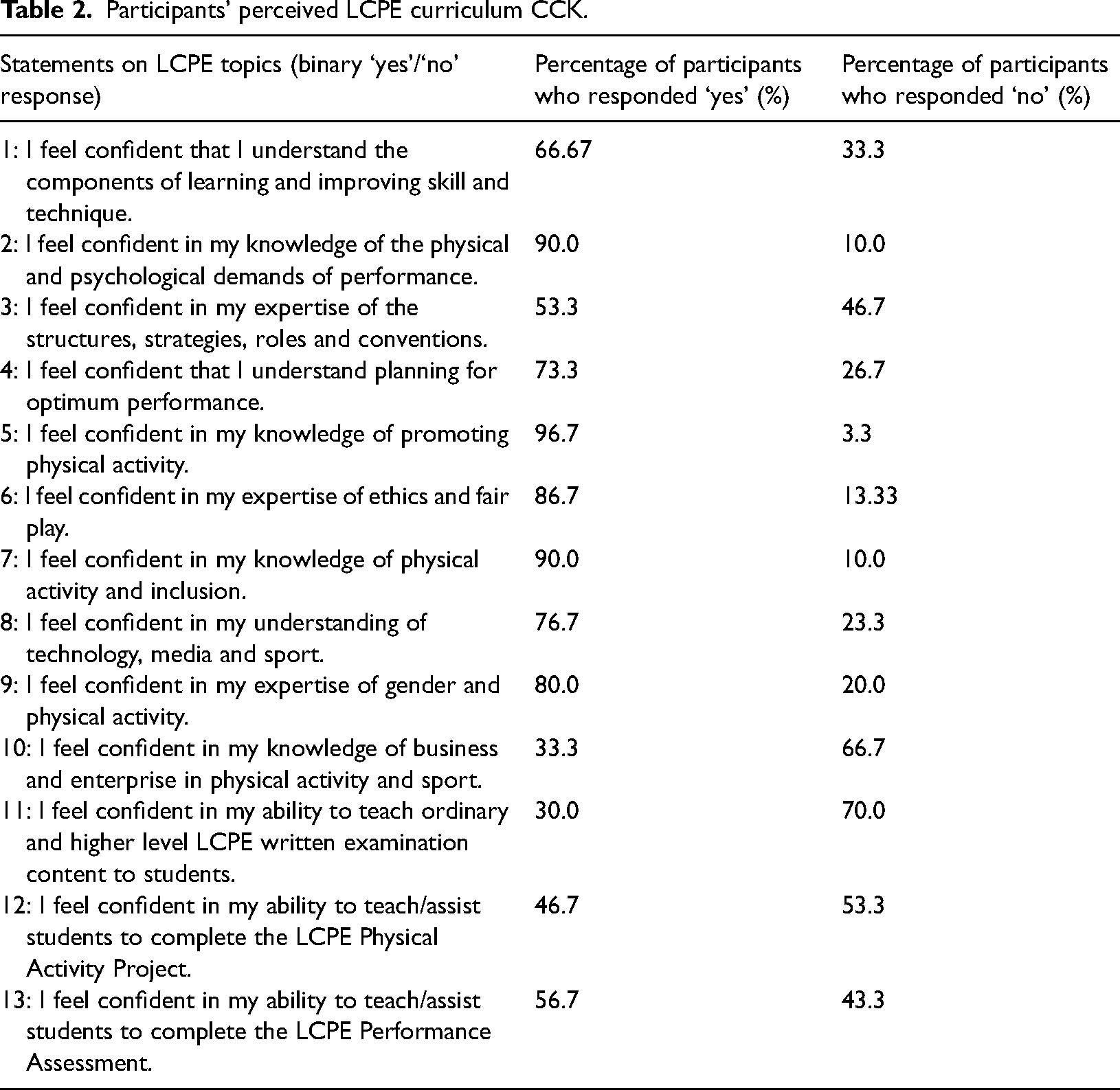
As detailed in Table 2, the mean percentage of ‘yes’ answers to the binary question across the 10 topic areas on the LCPE specification was 74.7%, and the mean percentage of ‘no’ answers was 25.3%. The participants’ mean perceived CCK in the 10 topic areas was 60.1% (SD = 11.2%). The mean perceived CCK in the ability to teach LCPE written examination content, the Physical Activity Project and the Performance Assessment Project was 39.67% (SD = 18.2%), 41.67% (SD = 20.2%) and 40.0% (SD = 21.8%), respectively.
Participants’ perceived LCPE curriculum CCK.
The mean assessed CCK examination score was 24.1% (SD = 7.7%). The highest individual score among all participants in the study was 51.3%. In total, 16 participants (53.3%) did not achieve a pass grade in the CCK examination, as they scored lower than 30%, the minimum percentage required to pass the examination. A Spearman's correlation was used to examine the relationship between perceived and assessed CCK levels. As detailed in Table 3, the relationship between perceived and assessed CCK was not significant, except for Topic 9, ‘Gender and physical activity’ (p = 0.027). Mean difference values were calculated by subtracting the assessed CCK percentage from the perceived CCK percentage. Participants scored lowest in Topic 8, ‘Technology, media and sport’ (Table 3).
Differences between participants’ perceived and assessed LCPE curriculum CCK.
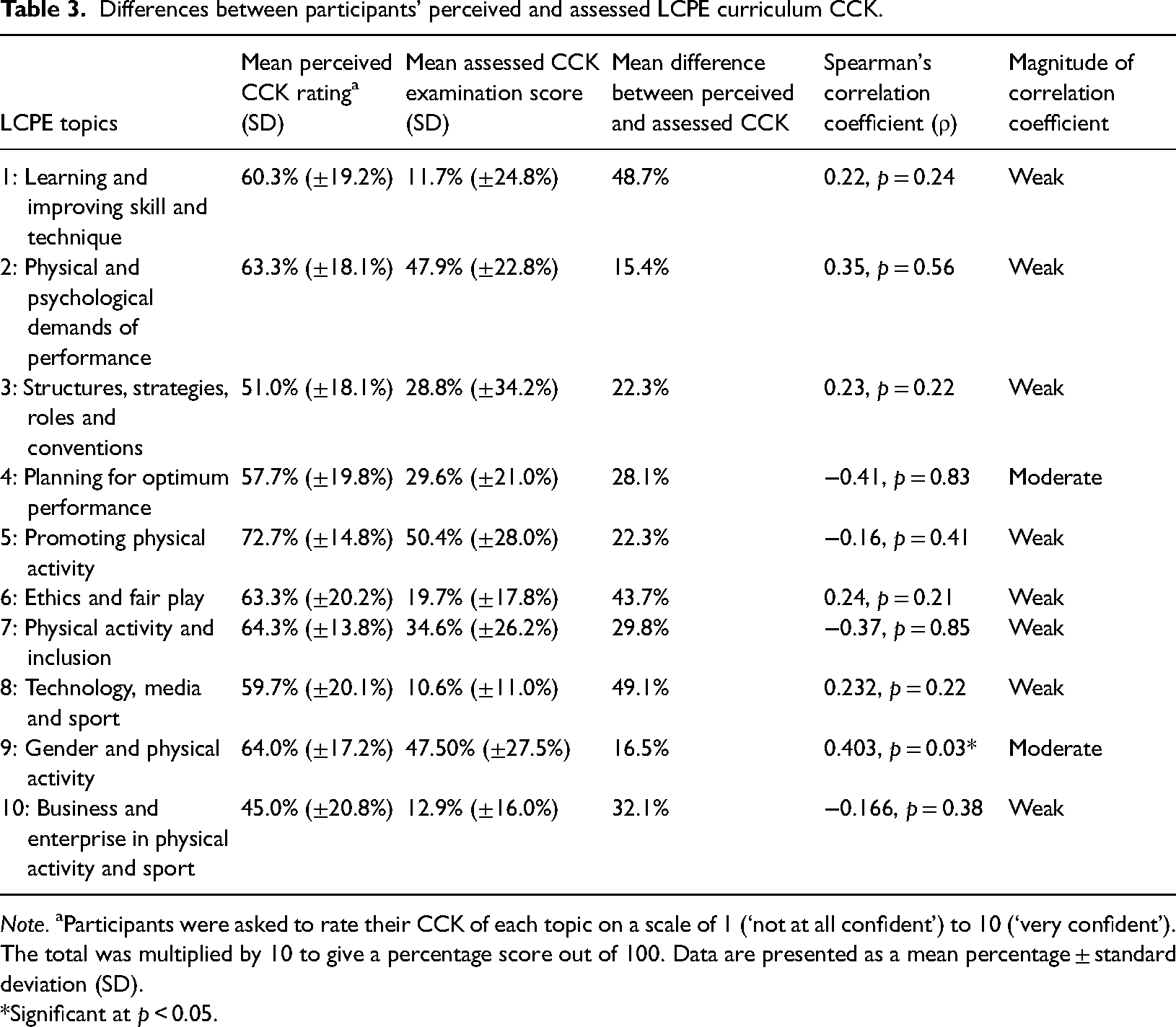
Note. aParticipants were asked to rate their CCK of each topic on a scale of 1 (‘not at all confident’) to 10 (‘very confident’). The total was multiplied by 10 to give a percentage score out of 100. Data are presented as a mean percentage ± standard deviation (SD).
*Significant at p < 0.05.
Comparison between perceived and assessed levels of CCK across key demographic variables
Male teachers’ perceived CCK rating (63.3, SD = 6.9) was slightly higher than females’ (52.8, SD = 11.2). However, female teachers’ assessed CCK examination score was marginally higher (31.0, SD = 8.8) than males’ (27.7, SD = 11.3). A Mann–Whitney U test revealed no statistically significant difference in perceived (p = 0.41) or assessed CCK levels (p = 0.73) between male and female participants. Given the under-representation of males (n = 8, 27%) in the current study, caution should be applied when interpreting gender-based comparisons. Postgraduate students’ perceived CCK rating (58.5, SD = 10.3) and assessed CCK examination score (33.1, SD = 9.2) were marginally higher than undergraduates’ perceived (52.7, SD = 11.41) and assessed CCK (27.1, SD = 9.12). A Mann–Whitney U test showed no statistically significant difference between undergraduate and postgraduate participants' perceived (p = 0.18) or assessed CCK (p = 0.13).
Responses to the open-ended question
The authorship team identified two themes from participant responses to the open-ended question. The most prominent theme constructed from our analysis was a desire among participants for increased exposure to the LCPE specification during their preservice teacher education. For example, one participant felt that there should be a module specifically on the LCPE assessment components: There really should be a mandatory module on the (LCPE) exam, so teachers know exactly what is required, understand the associated grading criteria and gain an element of practice before having to teach it to students. (Participant 22, Female, Postgraduate) We need more exposure to the LCPE course throughout the degree, much of what we know is based on our school placement experience, and I feel like school think we are more prepared than we actually are to teach an LCPE group. (Participant 27, Female, Undergraduate) I think it is important to include more specification content when teaching modules so we can see explicit links to what we are doing in these modules and how we can use this information to inform our delivery. (Participant 5, Female, Undergraduate) A big issue I feel is that we focus a lot on how to teach rather than the content we will be teaching. There should be more emphasis on the content that teachers need to know in order to teach their students, not just how to teach them. (Participant 9, Female, Postgraduate) Why can’t we as preservice teachers attend physical education teachers in-service CPD days delivered by the PDST (Professional Development Support Service for Teachers)? (Participant 3, Male, Undergraduate)
Discussion
The purpose of this study was to analyse preservice physical education teachers’ perceived and assessed levels of examinable physical education CCK. In addition, we sought to investigate if perceived and assessed CCK differed based on gender and level of education. In summary, participants’ perceived CCK was significantly higher than their assessed CCK. Over half of the participants did not achieve a pass grade in the CCK assessment. Furthermore, male teachers’ perceived CCK was higher than females’; however, female teachers’ assessed CCK was marginally higher than males’. Perceived and assessed CCK among participants completing a postgraduate Master of Education degree were not significantly higher than those completing an undergraduate Bachelor's degree. The results clearly demonstrate a deficiency among final year preservice physical education teachers’ CCK. Participants recognised this deficiency when commenting on their preservice teacher education, with many expressing a desire for increased exposure to the LCPE curriculum specification throughout their preservice teacher education. Caution should be exercised when interpreting the study results, given the small sample size from a single institution and the under-representation of males, which may have introduced biases and weakened the conclusions.
Fewer than half (46.7%) of the preservice teachers achieved a pass grade in the examinable physical education assessment in this study, thus confirming that many participants did not have the knowledge expected of the students they will be teaching upon graduation. Based on publicly available data from the Department of Education, on average, less than 1% of secondary school students failed the LCPE examination between 2020 and 2022 (SEC, 2024). Although using different instruments and in different countries, the low CCK results detailed in this study are consistent with those reported by Hunuk et al. (2013), Santiago et al. (2012) and Santiago and Morrow (2020) among preservice physical education teachers, and Castelli and Williams (2007) among in-service teachers. Castelli and Williams (2007) reported a marginally lower pass rate of 38% in their analysis of in-service physical education teachers’ health-related fitness CCK. Indeed, poor CCK among preservice teachers is consistent with studies in other subject areas, including maths and science (Loewenberg Ball et al., 2008), and has been noted as a challenge in the field of physical education for over 30 years (Barnett and Merriman, 1994). These findings are concerning given the negative impact of limited CCK on student experience (Sinelnikov et al., 2016). Ward et al. (2018) emphasise the importance of CCK being acquired from the act of learning and performing. Therefore, it is imperative that physical education teacher education programmes provide their preservice physical education teachers with opportunities to apply CCK through active teaching experiences, as recommended by Scanlon et al. (2023) in their exploration of an integrated theoretical and practical approach for teaching LCPE in Ireland. The authors noted that having so many learning outcomes in the LCPE specification (NCCA, 2017) encouraged the separation of theoretical and practical knowledge. This is despite students indicating that practical experience not only made it easier to understand theoretical knowledge, but also better prepared them for the written examination.
Santiago and Morrow (2020) reported that poor levels of health-related fitness CCK among a representative sample of preservice physical education teachers from the United States was not a function of gender or programme type. Similar to Castelli and Williams (2007), male teachers in the current study had slightly higher perceived CCK than females; however, these differences were not statistically significant. In contrast to the results of Castelli and Williams (2007), female teachers in this study scored slightly higher in the CCK examination than males. Al Rawahi and Yousef (2021) also found significant differences in favour of female perceived teaching efficacy over their male counterparts among physical education teachers in Kuwait and Oman. Santiago et al. (2012) reported gender and level of education were unrelated to health-related fitness content knowledge among in-service teachers in the United States. However, the authors reported that years of teaching experience did significantly influence content knowledge of physical activity and health-related fitness. The under-representation of males in the current study (n = 8, 27%) should be considered when interpreting gender-based comparisons that may fail to capture the full spectrum of experiences.
Findings from this study confirmed that preservice teachers anticipated a much higher CCK score than they actually achieved. Castelli and Williams (2007) also reported that in-service physical education teachers in the United States significantly overestimated their health-related fitness CCK. The overestimation of CCK is expected as people regularly overestimate their actual competence when it comes to knowledge of a topic or competence performing a task (Baartman and Ruijs, 2011). A weak to moderate relationship between perceived and assessed CCK was observed among participants in this study across all 10 topic areas of the LCPE curriculum. According to Bandura (1997), individuals with a high perceived competence are more likely to take action than those with low perceived competence; however, the benefits of high perceived competence are limited if the foundations of CCK are not there in the first place. Sinelnikov et al. (2016) stated that limited CCK had a negative impact on preservice teachers’ ability to deliver content, underscoring the importance of CCK to inform and enhance students’ experience of physical education.
A desire for more exposure to examinable physical education content during preservice teacher education was a key theme identified from the analysis of the open-ended question responses. Participants were given the opportunity to make suggestions or provide feedback on their preservice physical education teacher education. An over-emphasis on what Loewenberg Ball et al. (2008) identify as pedagogical content knowledge, at the expense of subject matter content, was echoed by participants on both the undergraduate and postgraduate degrees. As detailed in the Methods section, the undergraduate degree pathway comprises 240 ECTS, of which 60 ECTS are specialist physical education modules. The Professional Master of Education requires applicants to have an undergraduate degree in a relevant cognate discipline that meets the Teaching Council of Ireland subject requirements, during which much of the LCPE CCK should be addressed. A lack of emphasis on CCK in preservice physical education teacher education is not unique to the current study. In an examination of movement content knowledge in physical education teacher education programmes, Kim et al. (2015) reported a limited emphasis on CCK. Grossman and McDonald (2008) also reported a lack of focus on CCK in preservice teacher education in other subject areas. These findings, and those presented in this study, raise questions about the extent to which physical education teacher education is committed to producing teachers capable of teaching the CCK required as part of recent curriculum developments.
Limitations
This study has several limitations that must be acknowledged. Firstly, the results cannot be generalised for all physical education teacher education institutions in Ireland due to the small sample size (N = 30) and the purposeful sample of preservice teachers from one institution that may have led to potential biases and less robust conclusions. There was under-representation of males (n = 8, 27%) in the current sample that limited the depth and scope of comparisons by gender and may have failed to capture the full spectrum of experiences. Furthermore, although LCPE has been in existence since 2018, the first examination took place in 2020 (2-year examination cycle); therefore, there was a limited number of questions in each topic area that were eligible for inclusion. As such, although one element of each topic area was examined, the questions included should not be considered a complete representation of the 10 topic areas on the LCPE curriculum specification (NCCA, 2017). In addition, questions asked as part of the perceived CCK survey were, by their nature, very general, and thus may not be considered subject-specific. We support the calls from Ward and Ayvazo (2016) and Iserbyt et al. (2017) for the development of a standardised assessment of CCK, specific to the physical education context. A standardised assessment of CCK would facilitate longitudinal tracking among larger samples on both a national and international scale. Finally, the data generated were based on a single source; therefore, the data were not verified a second time, potentially resulting in a lack of depth in the interpretation of responses. Notwithstanding these limitations, the novelty of focusing on a terminal written examination, the rigorous assessment protocol, the authenticity of the CCK assessment and the representation across two distinct physical education teacher education degree pathways are distinct strengths of this study. In addition, the inclusion of an open-ended question on participant experiences of LCPE during their teacher education programmes allowed for added context to support the quantitative data.
Conclusion
There is consensus in teacher education and physical education literature that strong CCK is among the most influential facets of effective pedagogy and thus an essential component of teacher education programmes (Kim et al., 2015). What teachers know about the content they teach has been an enduring question among researchers who have written about teacher education (Ayvazo et al., 2010). As noted by Ward and Ayvazo (2016), although poor content knowledge is often lamented by teacher educators and researchers, few studies have directly measured CCK. This study highlights deficiencies in preservice physical education teachers’ CCK among participants, as well as disparities between assessed and perceived CCK. Our findings raise concerns about how committed physical education teacher education providers are to providing preservice teachers with the CCK necessary to meet the demands of recent curriculum changes. Participants’ desire for more exposure to LCPE content during preservice teacher education is justified based on the reported results. The introduction of a high-stakes physical education examination in Ireland has been transformative for the subject; however, preservice teacher education providers must ensure sufficient emphasis is placed on CCK to adequately prepare graduates. Although this study represents the first analysis of preservice physical education teachers’ CCK in Ireland, further research is needed with larger samples, using a standardised measurement tool to facilitate inter-institutional and international comparisons, as well as longitudinal tracking.
Supplemental Material
sj-docx-1-epe-10.1177_1356336X251329831 - Supplemental material for Preservice teachers’ perceived and assessed levels of examinable physical education content knowledge
Supplemental material, sj-docx-1-epe-10.1177_1356336X251329831 for Preservice teachers’ perceived and assessed levels of examinable physical education content knowledge by Brendan T. O’Keeffe, Conor Igoe and Padraic Rocliffe in European Physical Education Review
Supplemental Material
sj-docx-2-epe-10.1177_1356336X251329831 - Supplemental material for Preservice teachers’ perceived and assessed levels of examinable physical education content knowledge
Supplemental material, sj-docx-2-epe-10.1177_1356336X251329831 for Preservice teachers’ perceived and assessed levels of examinable physical education content knowledge by Brendan T. O’Keeffe, Conor Igoe and Padraic Rocliffe in European Physical Education Review
Supplemental Material
sj-docx-3-epe-10.1177_1356336X251329831 - Supplemental material for Preservice teachers’ perceived and assessed levels of examinable physical education content knowledge
Supplemental material, sj-docx-3-epe-10.1177_1356336X251329831 for Preservice teachers’ perceived and assessed levels of examinable physical education content knowledge by Brendan T. O’Keeffe, Conor Igoe and Padraic Rocliffe in European Physical Education Review
Supplemental Material
sj-sav-4-epe-10.1177_1356336X251329831 - Supplemental material for Preservice teachers’ perceived and assessed levels of examinable physical education content knowledge
Supplemental material, sj-sav-4-epe-10.1177_1356336X251329831 for Preservice teachers’ perceived and assessed levels of examinable physical education content knowledge by Brendan T. O’Keeffe, Conor Igoe and Padraic Rocliffe in European Physical Education Review
Footnotes
Acknowledgements
The authorship team would like to acknowledge the substantial contribution of Laura Clarke, Thomas Kearns, and all students who participated in the study.
Declaration of conflicting interests
The authors declared no potential conflicts of interest with respect to the research, authorship, and/or publication of this article.
Funding
The authors received no financial support for the research, authorship, and/or publication of this article.

Supplemental material
Supplemental material for this article is available online.
Author Biographies
References
Supplementary Material
Please find the following supplemental material available below.
For Open Access articles published under a Creative Commons License, all supplemental material carries the same license as the article it is associated with.
For non-Open Access articles published, all supplemental material carries a non-exclusive license, and permission requests for re-use of supplemental material or any part of supplemental material shall be sent directly to the copyright owner as specified in the copyright notice associated with the article.
