



Abstract
Given the important role of feedback in student learning, this scoping review investigated how feedback has been conceptualised and examined, and how the teacher and student have been positioned in feedback processes in physical education (PE) research. Following recommended processes for conducting a scoping review, 110 papers were included, and data were extracted and synthesised to address the aim. Findings identified a lack of conceptual and theoretical underpinnings, and considerable variability in feedback terminology used in PE. Feedback was mainly positioned as being transmitted verbally from the teacher to the student to evaluate performances. Research methods mainly focused on the teacher's feedback behaviours, with less attention given to how the student receives, interprets, and uses feedback to advance their learning. Based on the findings, we recommend that future feedback research in PE is underpinned by theory and frameworks that acknowledge the active role of both the teacher and the student in the feedback process. Additionally, given the critical element of feedback effectiveness is not in the provision of feedback, but how it is interpreted and used, research methods that further consider how students engage with feedback opportunities are required. If we are to maximise feedback's learning potential, future PE research and practices should consider how students can be further activated in the feedback process.
Introduction
Feedback has been widely researched and identified in education as having one of the most powerful, but variable, effects on student learning (Hattie et al., 2016; Kluger and DeNisi, 1996; Lee et al., 1993; Shute, 2008). As proposed by Ramaprasad (1983), feedback is information that can alter the gap between the desired and actual level of a system parameter. While minor variations in language exist, this general conceptualisation of feedback is widely accepted in broader educational research, whereby feedback serves to reduce the gap between desired goals and current levels of performance by providing information on where the learner is, where they are going, and how to get there (Hattie and Timperley, 2007; Sadler, 1989; Wiliam, 2018).
The variability of the effect of feedback is largely associated with the complexity of the feedback message and discrepancies between how feedback is intended and how it is received, interpreted, and actioned by the learner (Gamlem and Smith, 2013; Wiliam, 2018). Researchers have argued that the critical element of feedback effectiveness is not the provision of feedback, but the quality of students’ engagement with and use of the feedback they receive (Carless et al., 2011; Havnes et al., 2012; Winstone et al., 2017). Therefore, if information is provided to the learner, but never used, it is considered useless for enhancing student performance (Brookhart, 2018; Lipnevich et al., 2016). This work highlights the importance of understanding the role that the teacher and student play in the feedback process.
A common perception in education has been the transmissive view of teachers as the providers and students as the receivers of feedback (Van der Kleij, 2020). Such a perspective can position students as passive recipients of information, rather than active agents seeking feedback opportunities to provide them with control over their learning (Winstone et al., 2017). This transmissive, or teacher-directed, approach to feedback is based on behaviouristic models where feedback is provided by an expert to a novice to advance their learning (Brooks et al., 2019b). In contrast, a constructivist approach to feedback encourages learners and educators to view feedback as a system of learning, rather than discrete episodes of teachers telling students about their performance (Molloy and Boud, 2013). This student-centred approach to feedback considers students as central and active agents in the feedback process to support self-regulated learning (Black and Wiliam, 1998; Leirhaug and Annerstedt, 2016; Molloy and Boud, 2013). This approach also recognises the criticality of student engagement with feedback to realise its potential in enhancing student learning outcomes (Van der Kleij, 2020).
Student activation in the feedback process can be identified through approaches such as assessment for learning (AfL) or formative assessment. The priority in AfL design and practice is to promote students’ learning towards specific goals by providing information that teachers and students can use as feedback to evaluate and improve outcomes (Black et al., 2004). These AfL practices then become formative assessment when the feedback received is used by the learner to improve performance and the evidence of learning is used by the teacher to adapt their practices to further meet the learner's needs (Black et al., 2004; Wiliam and Thompson, 2008). This point highlights that feedback must be an opportunity for learning for both the student and the teacher (Brookhart, 2018). As differences have been identified in how feedback is both delivered and perceived in different teaching contexts (Havnes et al., 2012; Van der Kleij and Adie, 2020), it is important to explore feedback in specific subject areas in depth.
Feedback in physical education
The public and interactive nature of a typical physical education (PE) environment provides plentiful and unique feedback opportunities (Larson, 2006). This visible PE setting enables students to couple observation of performances with teacher feedback to advance their learning (Goudas et al., 2017). Additionally, peers and video can be useful sources of feedback to support learning in this visual and movement-oriented context (O’Loughlin et al., 2013; Palao et al., 2015; Weir and Connor, 2009). Therefore, given the variable and unique feedback opportunities in PE, specific attention should be given to how feedback is enacted and researched in this subject.
The last known and associated review of feedback in PE by Lee et al. (1993) focused on the instructional effects of teacher feedback in PE and primarily positioned feedback as information from the teacher to the student to improve performance outcomes. A more recent review in this area (Zhou et al., 2021) focused specifically on the effects of feedback on motor competencies in PE, rather than investigating a conceptual understanding of feedback in PE. It is therefore unknown if the transmissive view of feedback that featured in earlier research is still the dominant form of how feedback in PE is conceptualised. The increased interest in AfL research in PE in recent years (Moura et al., 2021; Tolgfors, 2018) and the advocacy for student perceptions to be considered in research examining feedback processes in PE (Koka and Hein, 2005) suggest the positioning of feedback and the role of the teacher and student in the feedback process may be changing, but this warrants further investigation. Accordingly, this paper aimed to synthesise relevant literature to examine how feedback has been conceptualised and examined, and how teachers and students have been positioned in feedback processes in PE. It is anticipated that outcomes from this study will strengthen our understanding of the use of feedback in PE and assist teachers and researchers in using feedback practices to advance students’ learning.
Methods
Investigating feedback to assist with mapping the field, and identifying how feedback has been conceptualised in PE, is well aligned with the intent of a scoping review (Arksey and O'Malley, 2005; Munn et al., 2018). Like systematic reviews, scoping reviews need to be conducted using rigorous and transparent methods to support the trustworthiness of results (Munn et al., 2018). Accordingly, this scoping review was conducted using Arksey and O’Malley's (2005) widely accepted five-stage framework, in conjunction with additional recommendations by Levac et al. (2010). The five stages were: (1) identifying the research questions, (2) identifying relevant studies, (3) study selection, (4) charting the data, and (5) collating, summarising, and reporting the results.
Identifying the research questions
To address this study's aim, two broad research questions were developed:
How has feedback been conceptualised and examined in PE research? How have students and teachers been positioned in feedback processes and research in PE?
The data used to address the questions are explained in the sections below.
Identification of relevant studies
Key search terms were identified from a broad search of general education and PE-specific feedback literature. Initially identified key terms were trialled in relevant databases to determine their usefulness and check for other related search terms. Key terms were refined and finalised by the research team, in consultation with an academic librarian. The final key terms of ‘physical education’, ‘PE’, ‘feedback’, ‘formative assessment’, ‘assessment for learning’, ‘self-assess*’, ‘self evaluat*’, ‘peer assess*’, and ‘peer evaluat*’ were used to search through the five relevant databases of ERIC, Scopus, SPORTDiscus, PsycINFO, and PubMed. Broader feedback search terms (e.g. formative assessment, self/peer assessment, and self/peer evaluation) were used to capture learning-related feedback processes that may not have been detected through only using ‘feedback’ as the search term. Additional database-specific search terms (e.g. thesaurus terms) were used where available to ensure a rigorous and comprehensive search. The search was originally conducted in November 2021, and updated in July 2023.
Study selection
The study selection process was based on predetermined inclusion and exclusion criteria collectively decided by the research team. As supported by Arksey and O'Malley (2005), these criteria were adjusted and refined after trialling them during the initial searching exercise. Given the study's aim, feedback relating to student learning or performance in PE needed to be a specific focus of the study to be eligible for inclusion. Therefore, studies involving ongoing, formative, and peer and self-assessment processes were included in this review, only if feedback was a specific focus in the study. It is important to note, while feedback is a part of formative assessment and self-regulated learning, it is embedded within a broader framework of student learning (Wiliam, 2018; Zimmerman, 2000). Therefore, feedback was not always a specific focus in these studies and accordingly not all formative assessment and self-regulated learning studies are reflected in this scoping review. Summative assessment-based studies were not included in this review, due to their focus on final evaluation, rather than learning (Wiliam, 2018). Given the focus of feedback associated with teaching and learning in a PE performance setting, online/COVID-related studies were excluded, as well as papers focused on physical activity levels rather than learning outcomes. The full list of inclusion and exclusion criteria is provided in Table 1.
Inclusion and exclusion criteria for scoping review.
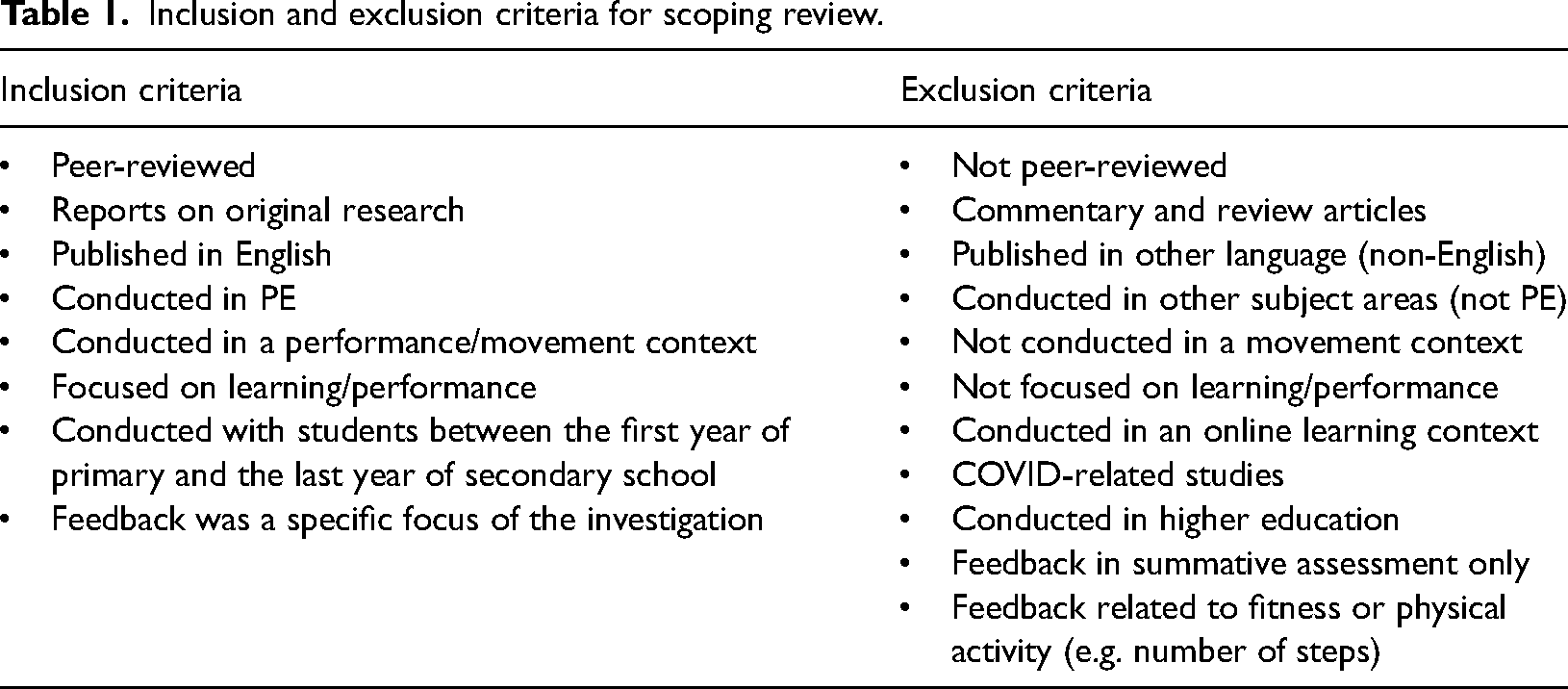
Search results were imported into EndNote and duplicates were removed through electronic and manual identification. Subsequently, the remaining papers were uploaded to Covidence (online screening tool for reviews) to support the study selection process. As proposed by Levac et al. (2010), two reviewers independently screened all papers at the title/abstract and full-text screening stages. Any conflicts were discussed and resolved by the two reviewers, and where required, a third reviewer was involved in this process. The final outcome was 110 papers deemed eligible for review. A detailed account of the study selection process is available in Figure 1 (Page et al., 2021).
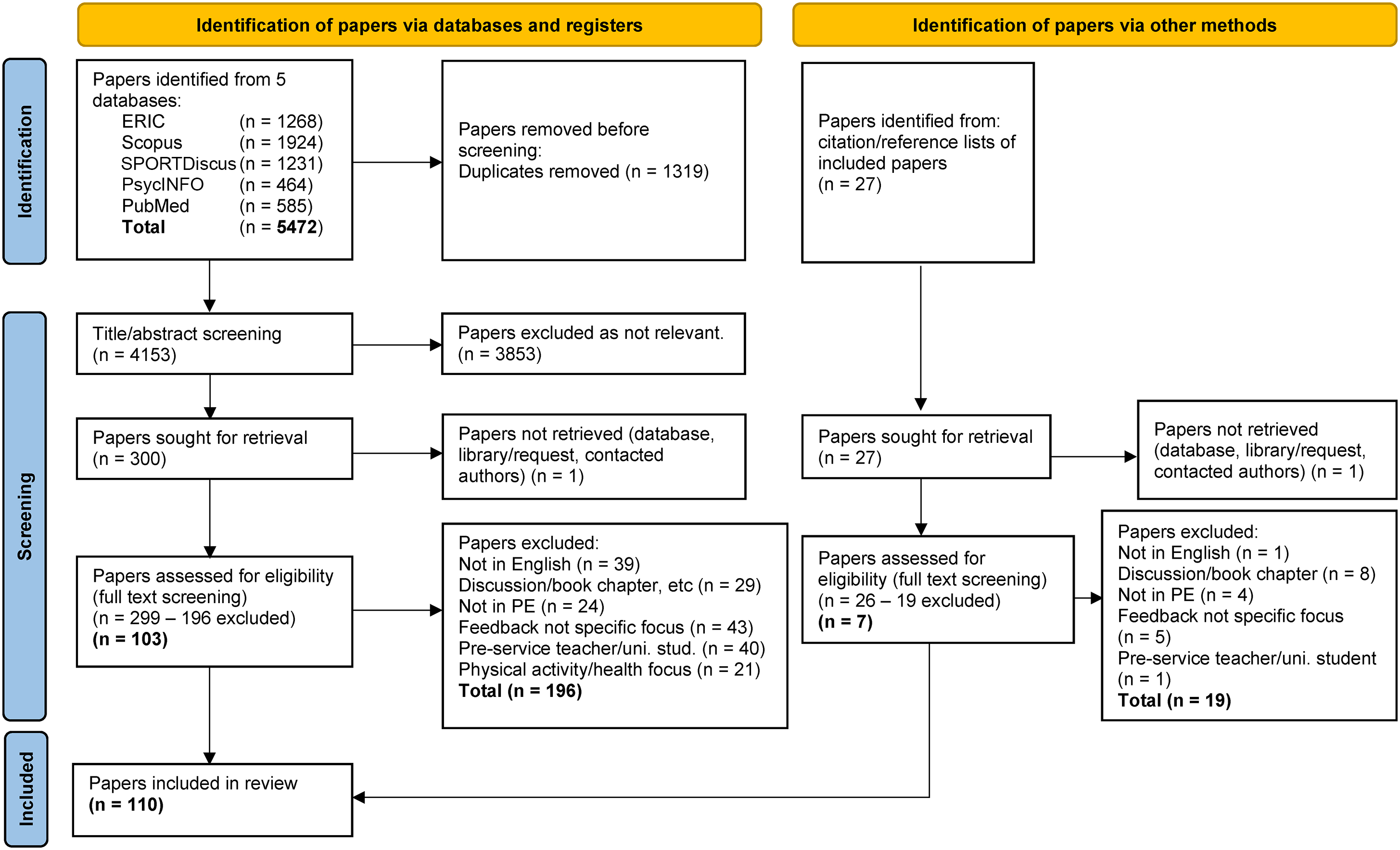
Study selection process.
Charting the data
Charting the data involved extracting clearly identified data from papers (e.g. feedback terms used) as well as coding data, where categories were used (e.g. the focus of feedback-related information categories). Only the specific details (e.g. descriptions and examples) made available in each paper were used to code the data into categories. This approach was deemed more appropriate than attempting to interpret the authors’ intentions; however, it is acknowledged that these examples and descriptions may not have fully captured authors’ conceptualisation of feedback.
As recommended (Arksey and O’Malley, 2005; Levac et al., 2010), data charting was an iterative process guided by regular team meetings to discuss progress and ensure alignment with the research questions. In this process, all three authors independently extracted and coded data from 20 papers to ensure agreement and accuracy of extracted data and coding. For example, authors independently extracted and subsequently compared feedback terms used in these papers. Where coding was necessary, such as when determining the focus of feedback-related information, authors independently coded information (e.g. where the learner is, where they are going, and how to get there) and extracted supportive information for their code for subsequent comparison. Disagreements were resolved by reviewing and discussing information from relevant sections in the paper. Through these discussions, coding criteria were also refined. Beyond these papers, any other cases requiring clarification were independently coded and/or discussed to reach consensus and support consistency of outcomes. As acknowledged by Sperka and Enright (2018), through the nature of a large-scale review, some unclear or well-hidden elements in the included papers may have been inadvertently missed. However, processes such as independent extraction and coding, and ongoing, consultative processes to reach consensus and refine our data charting criteria were employed to address this point and support the reliability of the outcomes.
The following paragraphs include specific information about the data, codes, and relevant processes used in charting the data to address how feedback was conceptualised (question 1, part 1) and examined (question 1, part 2), and how teachers and students were positioned in feedback processes (question 2), in included papers. We acknowledge that some data could potentially be used to address more than one of these elements and therefore the subsequent paragraphs clearly identify where and how data were used. Beyond the data directly corresponding to the research questions, broader contextual data (e.g. year of publication, country where study was conducted, length of study, year level, and physical activity context) were also extracted to explore other potentially relevant findings.
Conceptualisation of feedback
Data regarding conceptual and theoretical underpinnings, focus of feedback-related information, and feedback terminology were used to examine how feedback was conceptualised in included papers. Conceptual and theoretical underpinnings included details of theories, frameworks, or models involving feedback-related processes or stages that informed the study's procedures, data collection, or data analysis. The ‘focus of feedback-related information’ was coded as ‘where the learner is’, ‘where they are going’, and ‘how to get there’. These three categories align with the three areas that feedback-related information should address to reduce the learning gap (Hattie and Timperley, 2007; Sadler, 1989; Wiliam, 2018). The code of ‘where the learner is’ was used if a paper included information aimed towards helping students to understand their current level of learning and performance through evaluation of skills, actions, and processes. The ‘where the learner is going’ code related to information to support students’ understanding of desirable outcomes through processes such as providing clear success criteria, models, examples, and specific demonstrations of successful outcomes. Finally, the code of ‘how to get there’ related to processes, actions, and strategies aimed at improving student outcomes. Studies that investigated general perceptions of feedback practices were coded as ‘exploratory’. Terminology data included extracting specific terms used to identify feedback processes in the paper's methods (e.g. corrective feedback, process feedback, and knowledge of performance).
Examination of feedback
Information related to design, data collection methods, and types of data used was extracted and/or coded to address how feedback has been examined in PE. ‘Study design’ included coding studies as either intervention or observational studies. Intervention coding included studies where the researcher(s) actively interfered with the natural course of events. Observational coding was applied to studies where the researcher collected relevant data and observed relationships between factors and outcomes without acting upon the study participants (Thiese, 2014). ‘Data collection methods’ involved the methods used to collect feedback-specific data (e.g. observations, questionnaires, and interviews) as well as the specific tools used. ‘Types of data used’ involved recording whether studies used quantitative, qualitative, or a combination of quantitative and qualitative means of generating and presenting feedback findings.
Teacher and student positioning
To respond to the second research question, data relating to feedback interactions, mode of feedback, and focus of feedback measures were used. Coding of ‘feedback interactions’ was based on data from measures and procedures, to determine the actors involved, and direction of the feedback provided and received. More specifically, the interaction was coded as teacher-directed if feedback was only provided in a transmissive manner from the teacher to the student (Brooks et al., 2019b). If, however, the student was positioned as an active agent with more control in the feedback process (Winstone et al., 2017), the interaction was coded as student-activated (e.g. peer feedback, student-led feedback, dialogic feedback between teacher and student, or teacher-directed with additional peer or self-feedback). ‘Mode of feedback’ included how feedback was provided or received as part of the investigation (e.g. verbal, non-verbal, written, video, etc.). Studies exploring how feedback was being used were labelled as ‘exploratory’, rather than coding for modes that may have been identified in the study's findings. Data regarding the ‘focus of feedback measures’ were used to understand whether teacher or student behaviours and/or perceptions were the focus of the investigation. Perceptions were further categorised for a more specific account of their focus (e.g. perceptions of teacher's feedback behaviours).
Collating, summarising, and reporting the results
This stage involved calculating frequencies for extracted and coded data described in the charting phase. While contextual data were initially extracted, these data were perceived as not contributing meaningfully to addressing the research questions, and therefore, were not included as part of the results. Given this review contains 110 papers, it was deemed most appropriate to present the findings through a combination of text and tables with the use of numbers for paper identification. A separate reference list of included papers with numerical identification is provided in Supplemental Table S1.
Findings
Conceptualisation of feedback
Findings relating to the conceptual and theoretical underpinnings and focus of feedback-related information in PE are presented in Table 2. In most studies (68.18%), no feedback-related theory, model or framework was used to inform the procedures, data collection, or data analysis. The AfL framework was the most widely used, followed by the self-regulated learning model (18.18% and 9.09%, respectively). The Model of Feedback (Hattie and Timperley, 2007) was the only feedback-specific model identified in this scoping review but was only included in four studies. Findings related to the focus of feedback-related information demonstrated feedback has been primarily positioned to evaluate performance and inform ‘where the learner is’ in relation to learning outcomes (95.45%), followed by improvement-related information on ‘how to get there’ (74.55%). Feedback to support ‘where the learner is going’ (e.g. the use of success criteria and models) was less frequently considered (40%).
Conceptualisation of feedback: Conceptual and theoretical underpinnings and focus of feedback-related information findings.
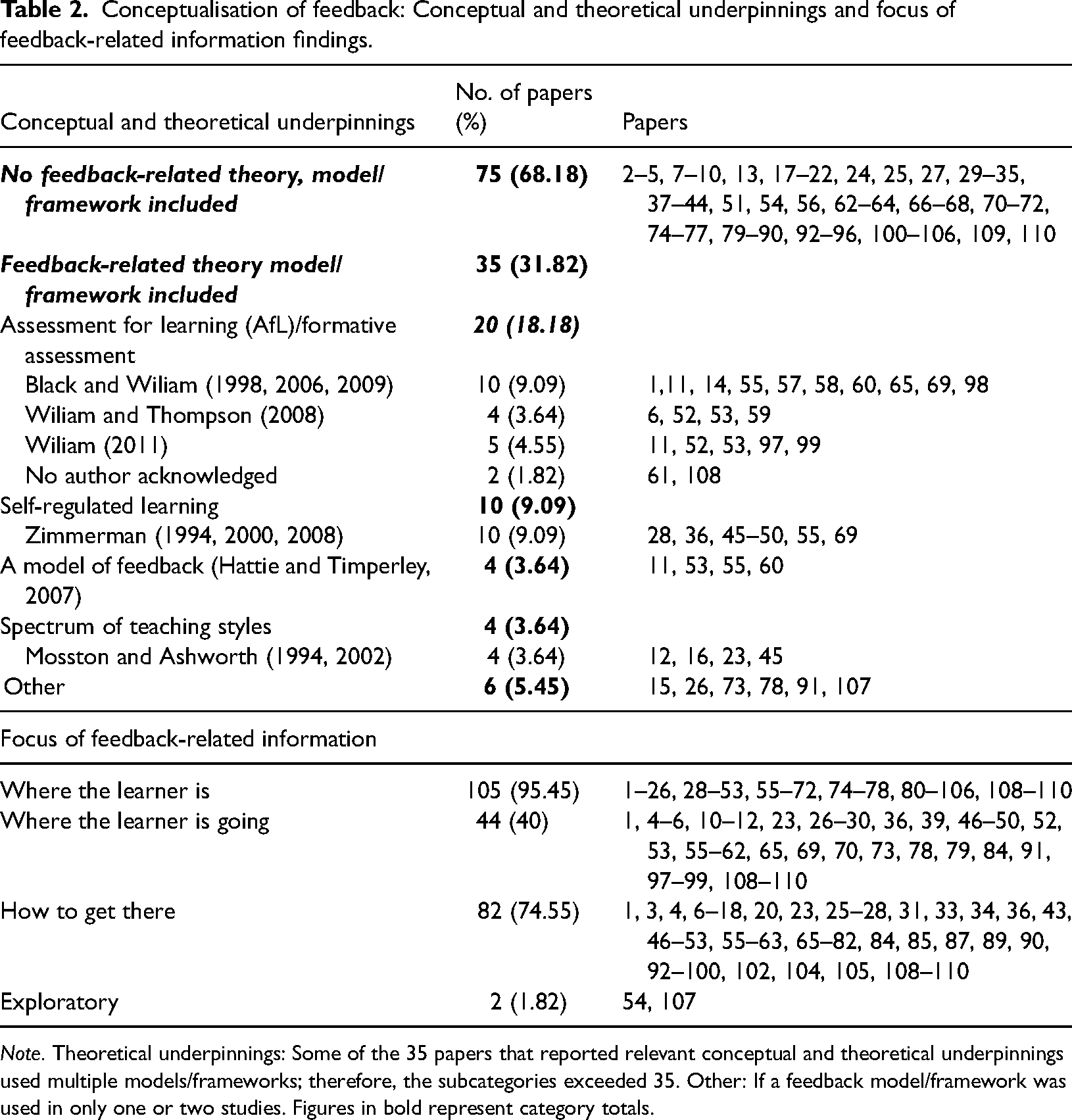
Note. Theoretical underpinnings: Some of the 35 papers that reported relevant conceptual and theoretical underpinnings used multiple models/frameworks; therefore, the subcategories exceeded 35. Other: If a feedback model/framework was used in only one or two studies. Figures in bold represent category totals.
The feedback terminology findings (see Supplemental Table S2) identified close to 50 different feedback terms used across included studies. Within some of these broad terms, there were multiple categories that contributed to an even greater number of feedback terms used (e.g. feedback: positive, negative, specific, and ambiguous). There were also examples of different feedback terms used to describe the same feedback process. For example, the terms motivational feedback (2), positive reinforcements (28), and positive general feedback (44) were all used for teacher praise or feedback comments such as ‘nice try’, ‘good work’, and ‘well done’. Likewise, there were examples of the same terms being used, but having different meanings between studies. For example, ‘negative feedback’ was used when focusing on errors or informing the learner of incorrect movements (e.g. 15, 87, 90, and 94), when referring to a negative comment designed to get the student to not repeat the performance (e.g. 32), or even relating to information about incorrect performance elements to help modify the next performance (e.g. 75). These findings highlight a lack of consistent terminology to describe the intent of the feedback process.
Examination of feedback
The examination of feedback findings are available in Table 3. Among included papers, there was a similar percentage of studies using intervention (47.27%) and observational (52.73%) designs. Author-developed observational tools (24.55%) and author-developed surveys (17.27%) were the most common data collection methods used. Finally, the majority of included papers used quantitative feedback data (60.91%). Considerably fewer papers used qualitative data (15.45%) or a combination of the two (6.36%).
Examination of feedback findings: Design, data collection methods, and types of data used.
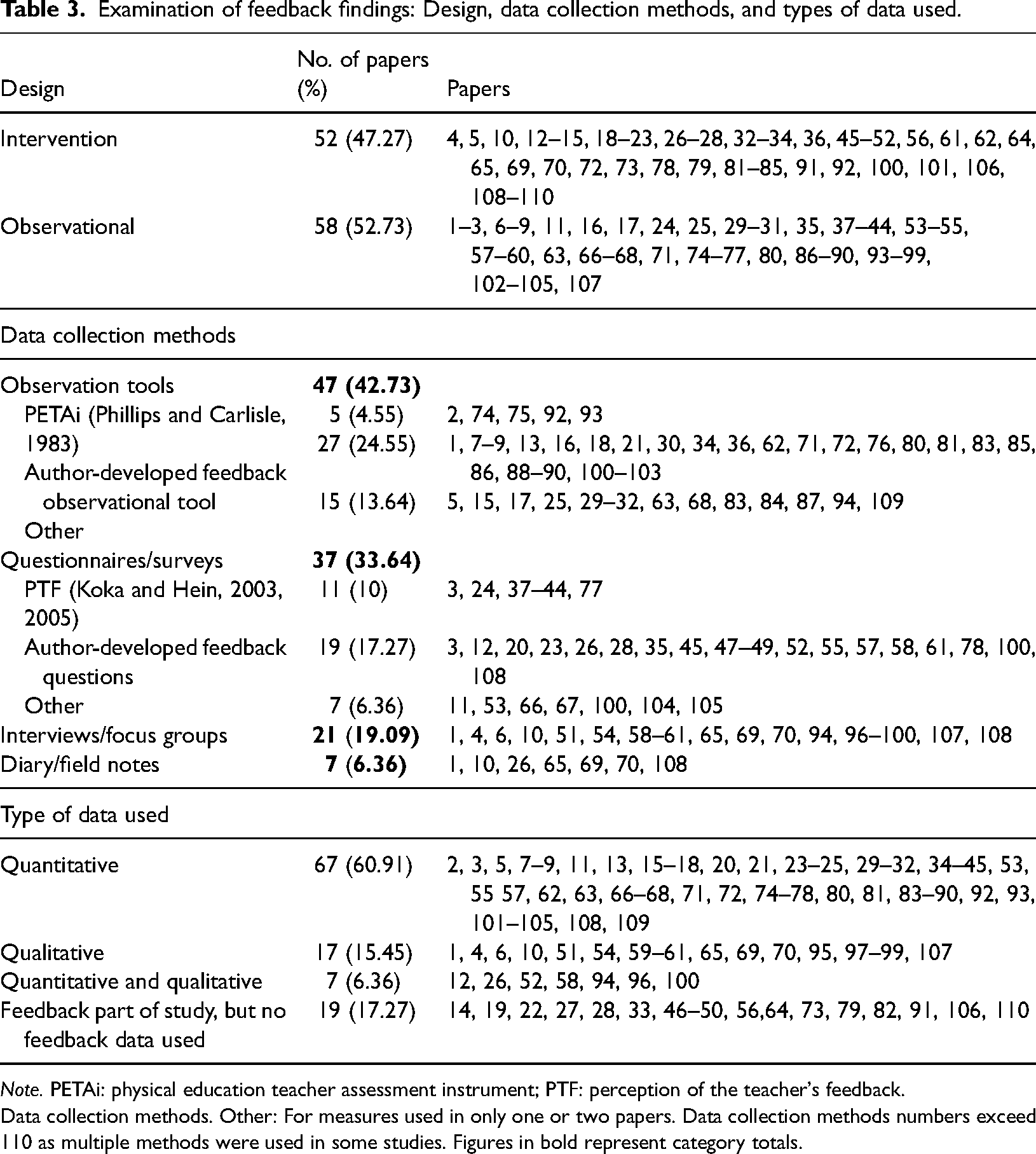
Note. PETAi: physical education teacher assessment instrument; PTF: perception of the teacher's feedback.
Data collection methods. Other: For measures used in only one or two papers. Data collection methods numbers exceed 110 as multiple methods were used in some studies. Figures in bold represent category totals.
Teacher and student positioning in feedback
Findings related to feedback interaction, mode of feedback, and focus of feedback measures are reported in Table 4. The feedback interaction findings highlighted most feedback studies in PE (59.09%) positioned feedback as only being transmitted from a teacher to a student in a teacher-directed manner. Within studies representing student-activated feedback (40%), there was a relatively even distribution of self-regulated, peer, and teacher-supported feedback approaches. Mode of feedback findings demonstrated verbal feedback was the most dominant mode of feedback investigated (86.36% of studies), with non-verbal feedback given considerably less attention (10%).
Teacher and student positioning in feedback processes: Feedback interaction, mode of feedback, and focus of feedback measures.
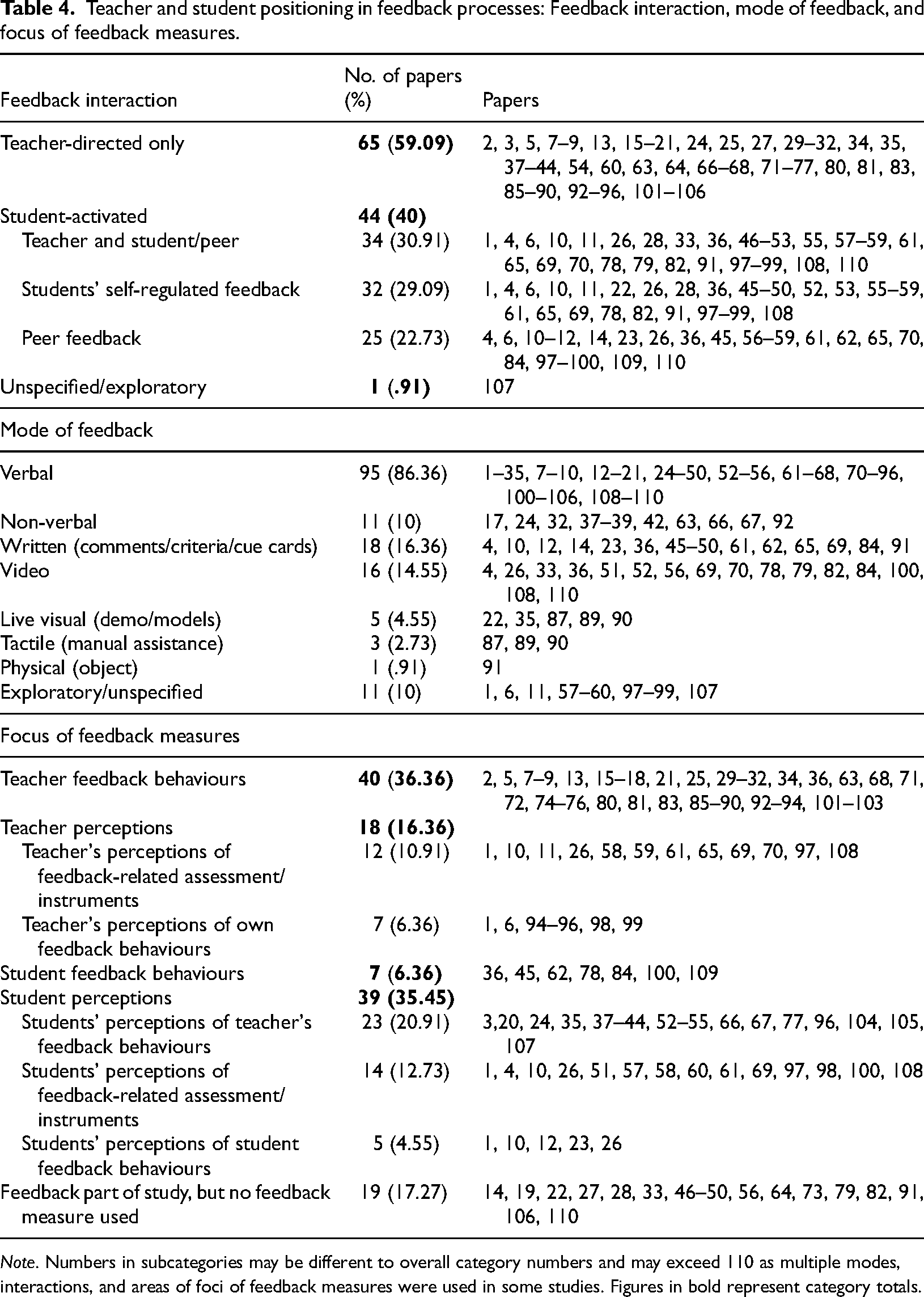
Note. Numbers in subcategories may be different to overall category numbers and may exceed 110 as multiple modes, interactions, and areas of foci of feedback measures were used in some studies. Figures in bold represent category totals.
Findings from the focus of feedback measures identified that most investigations focused on teacher feedback behaviours. This included measures that directly focused on teacher feedback behaviours (36.36%) or measures that focused on teachers’ or students’ perceptions of the teacher's feedback behaviours (6.36% and 20.91%, respectively). Only seven studies investigated students’ feedback behaviours, and only five papers (1, 20, 95, 96, and 99) investigated teachers’ or students’ perceptions of authentic and specific feedback episodes (e.g. video-stimulated recall).
Discussion
This discussion will use the findings to respond to the research questions on how feedback has been conceptualised and examined, and the role of the teacher and student in the feedback process in PE. Subsequently, recommendations for practitioners and researchers to optimise the learning value of feedback in PE will be provided.
Conceptualising and examining feedback
Findings demonstrated most studies did not use evidence-informed, feedback-related theoretical underpinnings, frameworks, or models to guide their investigations. Importantly, all feedback-related theoretical underpinnings or models identified in these papers included a specific focus on the activation of the student in the feedback process (e.g. peer or self-regulated feedback). One explanation for this finding may be that it has been broadly assumed in the PE literature that feedback is only information a teacher provides to a student. Therefore, only with the more recent consideration of the activated student in the feedback process in PE (Tolgfors, 2018) has there been a perceived need for theoretical models to underpin these investigations.
The lack of conceptual or theoretical underpinnings and feedback models in PE may also account for the considerable variability in the focus of feedback-related information and feedback terminology used in related research. It is proposed the purpose of feedback is to reduce the gap between current position and future learning goals (Ramaprasad, 1983) and to achieve this, feedback should respond to where the learner is, where they are going, and how to get there (Hattie and Timperley, 2007; Sadler, 1989; Wiliam, 2018). Despite students expressing their desire for information on how to improve (Brookhart, 2018; Brooks et al., 2019b) the findings from this scoping review suggest that feedback in PE is mainly positioned as being used by the teacher to evaluate students’ physical performances (i.e. where the learner is). This primary focus of feedback to evaluate student outcomes is aligned with research in general educational literature (Brooks et al., 2021). While many included studies in this review focused on improvement-related information in their approach to feedback (i.e. how to get there), there were considerably fewer studies that included clarity of criteria or models to inform the student of ‘where they are going’. Without clarity of where the student is going, it is hard to determine the effectiveness of feedback to reduce the learning gap (Hattie and Timperley, 2007). This is because feedback aimed at evaluating outcomes and improvement-related strategies to achieve a desired goal is predicated on the student having clarity on what the desired goal is. Therefore, understanding ‘where they are going’ is fundamental to enhancing students’ ability to become self-regulated learners (Nicol and Macfarlane-Dick, 2006). This improved clarity of what success looks like and how it can be achieved also promotes targeted task design and feedback, for better alignment of learning, assessment, and feedback practices (Brooks et al., 2021).
The vast and inconsistent use of feedback terminology in PE studies is further evidence of a lack of clarity of how feedback in PE has been conceptualised. Many of these variable feedback terms were used in author-developed observational tools and surveys, which were the dominant form of feedback measures used. This is a concerning finding, as it suggests a lack of coherence in how feedback in PE has been examined over the years. It also reinforces the need for a common language to describe feedback processes, which could be supported by a consistent conceptualisation of feedback in PE.
Teacher and student positioning in feedback processes and research
The mode and interaction findings demonstrated feedback in PE is predominantly considered as being provided verbally from the teacher to the student in a one-way transmissive manner. This ‘feedback as telling’ (Sadler, 2010) or teacher-directed approach to feedback can often position teachers as active providers and students as passive recipients of advice (Winstone et al., 2017). This reliance on teachers to provide individual feedback to students in PE is problematic, raising concerns over the effectiveness and sustainability of this approach (Kok et al., 2020). Instead, it may be better for teachers to provide all students with performance examples of varying levels of quality, so associated conversations can help students to understand the tacit criteria teachers often use to make their judgements (Sadler, 2010). As students’ knowledge of quality develops, asking questions and prompting students to reflect upon their learning can be useful teacher strategies to enhance student activation in developing their self-regulatory capacities (Brooks et al., 2019a).
Many studies involving teacher transmissive feedback included praise or positive/general feedback comments as part of their investigations associated with student learning. This is important because such feedback targeted at the ‘self’ has been identified as having limited learning benefits compared to process or self-regulated feedback that provides strategies to deepen and advance students’ learning (Hattie and Timperley, 2007). Additionally, numerous studies involved teachers providing prescriptive comments or internal focus of attention feedback (directed to conscious body movements), with limited examples of feedback directed at external focus of attention (focus on the movement effect). This raises potential issues because the latter has been largely identified as producing more desirable performance and learning outcomes (Wulf, 2013). These points reinforce the need for an evidence-informed framework that provides further guidance for teachers and researchers on effective feedback practices.
Studies involving student-centred feedback processes, such as formative assessment/AfL, and peer or self-assessment/feedback were identified in this review but were considerably fewer in number compared to teacher-directed investigations. These student-centred feedback approaches are proposed to enhance student learning in PE by activating the student in the feedback and learning process (López-Pastor et al., 2013; MacPhail and Halbert, 2010; Moura et al., 2021; Otero-Saborido et al., 2021). These practices are considered more sustainable as they reduce the dependency on teacher feedback to improve (Boud and Molloy, 2013). Despite these proposed student learning benefits, this review has highlighted these constructivist approaches are still largely overshadowed by behaviourist feedback processes in PE. These findings are aligned with the broader educational literature where the teacher is positioned as the main provider and the student as a more passive recipient in the feedback and learning process (Boud and Molloy, 2013; Van der Kleij and Adie, 2020).
However, in addition to concerns about teacher-directed feedback, challenges associated with student-activated feedback processes in PE have also been identified. These include difficulties associated with self-assessment (MacPhail and Halbert, 2010) and concerns over the quality and reliability of peer feedback (Trabelsi et al., 2020). Therefore, to address some of these challenges with teacher-directed and student-centred approaches, it is proposed that larger learning gains may be achieved by teacher feedback focusing less on transmission and more on helping students to make appropriate evaluations of their own and others’ performances (McConlogue, 2015). Such an approach positions feedback processes as a shared responsibility, aiding learning through enhanced feedback literacy for both teachers and students (Carless and Winstone, 2023).
To provide a more complete understanding of the effectiveness of feedback, PE researchers have advocated for student perceptions to be considered in related research (Koka and Hein, 2005; Lee et al., 1993). This student perspective is important, given the critical element of feedback effectiveness is not the provision of feedback, but the quality of students’ engagement with and use of the feedback they receive (Carless et al., 2011; Havnes et al., 2012; Winstone et al., 2017). This scoping review, however, identified that teachers’ feedback behaviours were the most common focus of feedback-related measures in PE. While students’ perceptions were widely considered, they were mainly investigated in relation to their perceptions of the teacher's feedback behaviours, rather than their perceptions of their own activation in the feedback process. These findings reinforce the positioning of the teacher as the provider of feedback and the student as the receiver in feedback-related research in PE. It also suggests PE research is largely evaluating the success of the feedback process based on the teacher's feedback behaviours, rather than focusing on the critical role students can play in receiving or generating their own feedback to support their learning (Winstone et al., 2017).
Feedback is an interactive and social process and the related elements of this social interaction influence how feedback is interpreted (Yang and Carless, 2013). This scoping review identified that the interactive feedback process in PE was mainly investigated through observations and questionnaires relating to teachers’ verbal feedback behaviours. Less clear, however, are how students perceive the non-verbal elements of the interactive feedback process, or the manner and environment in which feedback is received. Finally, there were limited studies that investigated teachers’ and students’ perceptions of personal and authentic feedback episodes within PE lessons. The lack of such investigations is likely limiting our understanding of specific factors that support and hinder students’ engagement with feedback. Therefore, if we are to realise feedback's potential to support students’ learning, a shift towards understanding students’ engagement with feedback must be further considered (Van der Kleij, 2020).
Recommendations and conclusions
Currently, the lack of consistent use of conceptual or theoretical underpinnings is inhibiting a coherent and evidence-informed conceptualisation of feedback and the role of the teacher and student in the feedback process in PE. Therefore, it is proposed that future feedback research in PE is underpinned by theory and frameworks that acknowledge the active role of both the teacher and the student in the feedback process. The Model of Feedback (Hattie and Timperley, 2007) and the five key strategies of formative assessment (Wiliam, 2018) are both widely used in broader educational research, and both recognise the role of the teacher and the student in the feedback process to reduce the gap between current and desired goals.
The Model of Feedback (Hattie and Timperley, 2007) makes a distinction between four levels of feedback, those of task (how well a task is performed or understood), process (processes and strategies relating to and extending learning), self-regulation (the way students monitor, direct, and regulate actions towards a learning goal), and self (personal or general comments/praise), which is considered the least useful type of feedback to advance learning. These four levels of feedback largely encompass the broad range of feedback terminology and their associated meanings identified in papers within this scoping review. The five strategies of formative assessment (Wiliam, 2018; Wiliam and Thompson, 2008) provide a useful framework to conceptualise how the three main actors (teacher, peer, and individual student) may collectively engage in the feedback and learning process. Importantly, this framework identifies the significance of designing learning experiences that help students to meet associated learning goals. Subsequently, the evidence of how effectively these goals have been met provides opportunities for teachers and students to be activated in targeted feedback practices to move the learner forward (Wiliam, 2018). Therefore, these models and strategies may be useful to provide a common language and cohesive approach to student-activated feedback investigations in PE that are currently lacking. The use of these models would also allow conceptualisations of feedback in PE research to more closely align with those in the broader educational literature, and promote opportunities for the development of teacher and student feedback literacy in PE.
Therefore, a shift from positioning feedback as transmissive from teacher to student, to opportunities for further activation of the student in receiving and generating their own feedback in PE is required. This shift appears to be underway with the increase in student-centred feedback approaches such as AfL and formative assessment in PE research (Tolgfors, 2018). However, it appears there is still limited use of these student-centred practices in school PE contexts (Moura et al., 2021). Tools developed to support translation of such feedback research to practice (e.g. Matrix of Feedback for Learning, Brooks et al., 2019a; Assessment Wheel, MacPhail and Halbert, 2010) may be useful to provide teachers with strategies to further activate students towards meeting learning goals.
A shift in feedback-related research methods to better understand how students interpret, engage with, and use feedback to advance their learning may also be required (Van der Kleij, 2020). Opportunities for more qualitative measures examining the key aspects of feedback interactions, including students’ perceptions of verbal, non-verbal, and student-centred forms of feedback in specific and authentic settings, may provide a deeper understanding of the feedback process in PE that is currently lacking.
Lastly, findings from this scoping review demonstrated there has been limited research on how teachers design for, and students use, the embedded feedback within tasks or feedback opportunities within lessons to advance learning towards specific goals. As students engage in learning experiences, they generate internal feedback, creating self-assessments of their progress (Sadler, 1989). This is particularly relevant in PE, where learners are aided with ongoing information to inform their learning through observation and kinaesthetic awareness in practical tasks (MacPhail and Halbert, 2010). This implicit feedback may be enhanced through teachers manipulating externally focused task outcomes or task and environmental constraints, as identified in some papers in this review (e.g. Cohen et al., 2012; Petranek et al., 2019; Simpson et al., 2020). These practices can reduce the over-reliance on and possible interference of prescriptive teacher feedback on movement outcomes, and instead, allow learners to solve movement challenges through natural self-organisation (Renshaw et al., 2010). Therefore, teachers can be active in enhancing self-regulated feedback opportunities by designing learning experiences where the feedback is embedded within the features of the task and environment (Wiliam and Thompson, 2008).
Through student engagement in these learning experiences, teachers can help students to understand the implicit and explicit criteria to gain a better understanding of conceptions of success (Sadler, 1989, 2010). This would suggest PE teachers may reduce their over-reliance on evaluations of student performances (where the learner is), and instead, increase opportunities for students to better understand conceptions of success in where they are going. To do so would enhance students’ opportunities to use feedback to self-regulate their learning to advance towards their goals (Krijgsman et al., 2019; Nicol and Macfarlane-Dick, 2006). Additionally, the majority of feedback studies in PE used a verbal mode of communication to support students’ understanding of feedback. Therefore, more visual feedback opportunities (e.g. video feedback and live models/demonstrations) may further support the activation of students in better understanding conceptions of success in this highly visible PE environment.
To shift from considering feedback as what the teacher needs to say, to what the student needs to understand, a fundamental shift in teaching pedagogy is required that considers the learner's use of feedback and not just the transmission of knowledge in the learning process (Brookhart, 2018). This requires a shift towards shared responsibility, where teachers design supportive learning opportunities for students to seek, generate, and use feedback to better understand their own learning (Carless and Winstone, 2023). To support this shift towards shared responsibility, future PE research and practices may benefit from considering how teachers can create opportunities for students to be further activated in the feedback process.
Supplemental Material
sj-docx-1-epe-10.1177_1356336X241230829 - Supplemental material for A scoping review of feedback in physical education: Conceptualisations and the role of teachers and students
Supplemental material, sj-docx-1-epe-10.1177_1356336X241230829 for A scoping review of feedback in physical education: Conceptualisations and the role of teachers and students by Paul Treschman, Michalis Stylianou and Cam Brooks in European Physical Education Review
Supplemental Material
sj-docx-2-epe-10.1177_1356336X241230829 - Supplemental material for A scoping review of feedback in physical education: Conceptualisations and the role of teachers and students
Supplemental material, sj-docx-2-epe-10.1177_1356336X241230829 for A scoping review of feedback in physical education: Conceptualisations and the role of teachers and students by Paul Treschman, Michalis Stylianou and Cam Brooks in European Physical Education Review
Footnotes
Acknowledgements
The authors would like to thank Dr Leigh Sperka for her contributions to this manuscript.
Declaration of conflicting interests
The authors declared no potential conflicts of interest with respect to the research, authorship, and/or publication of this article.
Funding
The authors received no financial support for the research, authorship, and/or publication of this article.

Supplemental material
Supplemental material for this article is available online.
Author biographies
References
Supplementary Material
Please find the following supplemental material available below.
For Open Access articles published under a Creative Commons License, all supplemental material carries the same license as the article it is associated with.
For non-Open Access articles published, all supplemental material carries a non-exclusive license, and permission requests for re-use of supplemental material or any part of supplemental material shall be sent directly to the copyright owner as specified in the copyright notice associated with the article.
