



Abstract
Historically fitness testing has been identified as a common but controversial physical education (PE)-for-health practice across the globe. Despite this, little is known about the current prevalence and implementation of fitness testing. This paper therefore reports on findings from a survey which gathered both quantitative and qualitative data to explore the ‘if?’, ‘why?’ and ‘how?’ of fitness testing and provide new insights into teachers’ learning intentions, pedagogical practices, and attitudes towards it. The survey was distributed to PE departments in secondary schools across the UK, and responses were analysed and reported descriptively and thematically. Responses from 260 schools highlighted that fitness testing remains a common practice in PE, with 80% of PE teachers reporting it to feature in their curriculum. There was less consensus surrounding the ‘why?’ and ‘how?’ of testing, with variation evident in teachers’ stated learning intentions, pedagogical practices, and attitudes. Despite its prevalence, PE teachers expressed concerns over negative pupil outcomes potentially arising from fitness testing, and over 60% of teachers were uncertain or agreed that fitness testing can have a negative impact on pupils’ psychological health. Given the findings and the reported widespread prevalence of fitness testing, further research should explore pupils’ perspectives, responses, and outcomes of fitness testing, including their motivational and emotional responses to testing. Working with teachers and encouraging them to critically reflect on the ‘if?', ‘why?' and ‘how?’ of fitness testing is recommended and will hopefully help to bridge the gap between research and practice.
Introduction
There are growing concerns related to child and youth physical activity (PA), health and mental health within and beyond the United Kingdom (UK) (Peralta et al., 2023; WHO, 2020). Therefore, providing opportunities for children and young people to learn about health is considered a global health priority (WHO, 2018). Schools, and particularly physical education (PE), have been identified as appropriate contexts within which to educate children about health (Hooper et al., 2022), and health is a component of the PE curriculum in most English-speaking countries. In the context of PE, health encompasses health-related learning (HRL), which refers to the ‘teaching of knowledge, understanding, physical competence and behavioural (and other) skills, and the creation of positive attitudes and confidence associated with current and lifelong participation in physical activity’ (Harris, 2000). Within the current National Curriculum for Physical Education (NCPE) in England, for example, ‘ensuring that all pupils: lead healthy, active lives’ represents one of the four aims of the subject, with health also featuring in the overarching ‘purpose of study’ (Department for Education, 2013). Likewise, health features explicitly in the curricula in Wales, Scotland, and Northern Ireland (Gray et al., 2022).
Over two decades ago, HRL outcomes were devised for children aged 5–16 years (Harris, 2000) to support teachers in interpreting and enacting the health-related requirements of the NCPE in England. This followed concerns that, although health was a statutory component of the PE curriculum, there was limited reference to it in the programmes of study. 1 Thus, teachers were provided with little detail on the types and range of HRL outcomes that should be achieved (Cale, 2020). Since then, and despite the breadth of learning advocated in and through these learning outcomes, researchers within the field have still highlighted the teaching of HRL within PE to be narrow in focus (e.g. Damant, 2020; Gray et al., 2015), with some key aspects such as ‘health benefits’ and ‘activity promotion’ being afforded less attention than ‘safety’ and ‘exercise effects’ (Cale, 2020). It has further been contested that although PE teachers adopt a ‘fitness for life’ philosophy (i.e. promoting PA to retain and enhance health), they generally enact a ‘fitness for performance’ philosophy in practice, teaching health in reductive, performance-focussed ways, and emphasising measurable outcomes (Evans, 2014; Harris and Leggett, 2015; Stirrup and Damant, 2022). One such example is the practice of fitness testing.
Fitness testing in PE has been and continues to be one of the most fiercely debated topics within the field (Simonton et al., 2019) but also reportedly one of the most longstanding and common PE-for-health practices in many countries (Alfrey and Gard, 2014; Keating and Silverman, 2004b; O’Keeffe et al., 2020a). Although research in the UK is limited, the studies that have been conducted confirm this trend (Alfrey et al., 2012; Cale et al., 2014; Harris, 2014; Hooper, 2018). Most recently, Hooper (2018) surveyed 52 state secondary schools in the East Midlands region of England and found fitness testing to be the most common PE-for-health practice (89%). This is despite fitness testing not being specified within the statutory NCPE programmes of study.
Proponents of fitness testing advocate various educational purposes for testing within the context of PE such as: (a) to assess, monitor and improve fitness (i.e. performance monitoring); (b) to serve as a means of formative assessment, to inform goal setting; and (c) to promote PA in pupils (Harris and Cale, 2006; Silverman et al., 2008). However, persistent concerns raised with fitness testing practice typically focus on its appropriateness and educational worth in the school setting. For example, research has suggested that fitness testing can lack meaning and be a limited learning experience for some students (Alfrey, 2023; Hopple and Graham, 1995). In a recent study by Phillips et al. (2021), some students commented that they did not understand the purpose of fitness testing and found it a pointless activity. These findings parallel those reported some years ago in another study in the United States by Hopple and Graham (1995).
Other criticisms levelled at fitness testing are that it can be a negative, embarrassing, and demotivating experience for some pupils, especially for the least healthy and active (Cale and Harris, 2009a) and turn pupils off rather than on to PA (Naughton et al., 2006). For instance, pupils might perceive themselves to lack competence if they do not reach set fitness standards and lose the motivation to take part in PA outside of school (Silverman et al., 2008). Indeed, adults have reported fitness testing experiences to be some of their worst childhood memories of PE (Ladwig et al., 2018). Such research raises questions concerning the value and purpose of fitness testing.
Research surrounding teachers’ perspectives on the educative purpose of fitness testing is sparse. Despite this, a study in Australia found that teachers showed signs of ambivalence when giving their reasons for fitness testing (Alfrey and Gard, 2014). Although a range of justifications were offered for testing, when given the space to reflect, many teachers were hesitant about why they used fitness testing while others were critical of using fitness tests as an educational practice. Alfrey and Gard (2014: 15) described the situation as ‘somewhat contradictory’ in that the prevalence of the practice failed to match the teachers’ ambivalences. The teachers in this study also expressed a need for more professional development and guidance in teaching health within Health and PE (HPE) (as it is known in Australia). The need for teacher professional development related to fitness testing has also been well documented elsewhere (e.g. Cale et al., 2014; O’Keeffe et al., 2020a).
‘Good’ practice recommendations for physical educators regarding how to teach in, through and about fitness testing, and enhance the educational experience of testing for pupils have been available for some time (e.g. Cale and Harris, 2005; Phillips et al., 2017). Although recommendations differ, they are largely underpinned by similar broad principles. For example, they advocate de-emphasising the public nature of fitness testing, avoiding comparison and competition, and using testing to prepare and encourage pupils to independently participate in PA outside of school. Whilst these recommendations are welcomed, the extent to which they are reaching teachers and influencing fitness testing practice is unclear, with some researchers highlighting a gap between the recommendations and practice (Cale et al., 2014; Mercier et al., 2016).
Considering the reported longstanding and widespread prevalence of fitness testing as a PE-for-health practice, yet the persistent concerns from teachers and researchers regarding its educational purpose and the apparent gap between recommendations and practice, an exploration of the ‘if?’, ‘why?’ and ‘how?’ of fitness testing in UK secondary schools’ PE curricula is needed. This study therefore aimed to answer the following questions: (i) is fitness testing still a common practice in secondary school PE in the UK?, and if so, (ii) why do PE departments include fitness testing in their curriculum?, and (iii) how do departments implement fitness testing? Whilst previous studies on fitness testing in schools have been conducted, these have tended to be quantitative in nature and have primarily reported on the prevalence of testing, i.e. the ‘if?’. Of particular interest in this study, however, was the ‘why?’ and ‘how?’ behind fitness testing. Thus, this research gathered both quantitative and qualitative data to provide new insights into teachers’ pedagogical intentions, practices and attitudes towards fitness testing.
Methodology
Prior to the commencement of the study, ethical approval was granted by the University's research ethics committee (project number 6038). An online survey was developed, with the intention to explore the ‘if?’, ‘why?’ and ‘how?’ of fitness testing and provide insights into teachers’ learning intentions, pedagogical practices, and attitudes towards fitness testing in as many secondary schools across the UK as possible. The following previously utilised and published surveys and scales were drawn on to inform the survey design and questions: the ‘Health, Activity and Fitness Monitoring’ survey (Chen, 2010), ‘Health-Related Physical Fitness Testing in Physical Education: A National Review’ survey (O’Keeffe et al., 2020a) and the ‘Physical Education Teacher Attitudes toward Fitness Tests Scale, (PETAFTS) (Keating and Silverman, 2004a). All surveys had been subject to previous validity and/or reliability checks. In addition, open and closed questions were designed to explore the pedagogy of fitness testing in more depth and teachers’ reasoning behind implementing fitness testing.
The survey comprised six sections: (1) The frequency and nature of test use, (2) The place of fitness testing in the broader PE curriculum, (3) The design of fitness testing lessons, (4) The recording, monitoring and use of fitness test results, (5) Attitudes towards fitness testing, and (6) Factors influencing the implementation of fitness testing in PE. The survey contained mostly closed but also a series of open-ended questions, with the latter giving teachers the opportunity to describe their intentions, practices, and reasoning behind implementing fitness testing. Likert-type scale questions made up sections 5 and 6 whereby the participants answered questions on a 5-point scale, ranging from 1 (strongly disagree) to 5 (strongly agree). The survey ended by asking the teachers to express the extent to which they agreed with the statement: ‘Fitness testing should be part of the PE curriculum in all schools’ and to then explain their reason(s) for their response. The survey was designed using Qualtrics (an online data analysis platform). Prior to distribution, the survey underwent a content and face validity check (via a pilot study and review by experts in the field). The pilot involved gathering and responding to feedback provided by a small sample of secondary school teachers, and the expert review involved the research team evaluating the survey items individually to check that each question was clear and relevant for the purpose of the study. Some minor revisions were made to the survey in response to the pilot and expert review.
The survey was sent to PE teachers in secondary schools across the UK (N = 4138). For the majority of schools (n = 4022), the survey link was sent to the generic school email address, and a request was made to forward it to the Head of Physical Education (HOPE). If the HOPE's email address was available on the school website, the email was sent directly to them (n = 116). The survey was directed to the HOPE as the individuals responsible for the design and delivery of the PE curriculum in schools. However, it was explained that it could be completed by another PE teacher in the department and that only one survey was required per school. In total, 260 responses to the survey were obtained, representing an overall response rate of 6%. The percentage response rate by country was as follows: England (6%), Wales (13%), Scotland (3%) and Northern Ireland (9%). 2
Once the survey closed, the responses were exported from Qualtrics into an Excel document. To answer the ‘if?’ and ‘how?’, the responses to each closed question were analysed descriptively, which involved calculating and reporting percentages. To answer the ‘Why?’ (qualitative data), NVivo12 (Version 12.6.0; QSR International Pty Ltd, Victoria, Australia) was used to support an inductive thematic analysis of the data (Braun and Clarke, 2006). For example, regarding the responses to ‘Fitness testing should be part of the PE curriculum in all schools’, the researcher initially organised the responses into strongly agree/agree, uncertain, disagree/strongly disagree. Then, Braun and Clarke's (2006) ‘6-phase guide’ was employed to analyse the qualitative data generated by the follow-up question, which asked the teachers to explain their reasoning for their response. This involved identifying initial codes across the data and searching for initial themes, reviewing these themes, and then defining and naming the themes. Quotes were subsequently selected to illustrate the themes.
Findings and discussion
In this section, the key findings of the survey are presented and discussed to address the research questions, under the headings of: ‘If?’, ‘Why?’ and ‘How?’ fitness testing occurs. Where the responses to the Likert-style questions complement a theme, or a quote complements a quantitative finding, they are woven into the narrative. Where quotes are provided, the codes indicate the nature and location of the schools from which they were derived and are as follows: State (STA), Independent (IND), Co-educational (COED), All girls (AG), All boys (AB), England (ENG), Wales (WA), Scotland (SCOT), and Northern Ireland (NI).
If?
The majority of the PE teachers (80%) reported that their department included fitness testing within their PE curriculum. Behind circuit training (96%), fitness testing was identified as the second most common PE-for-health practice. Figure 1 provides a breakdown of the prevalence of fitness testing for each year group.
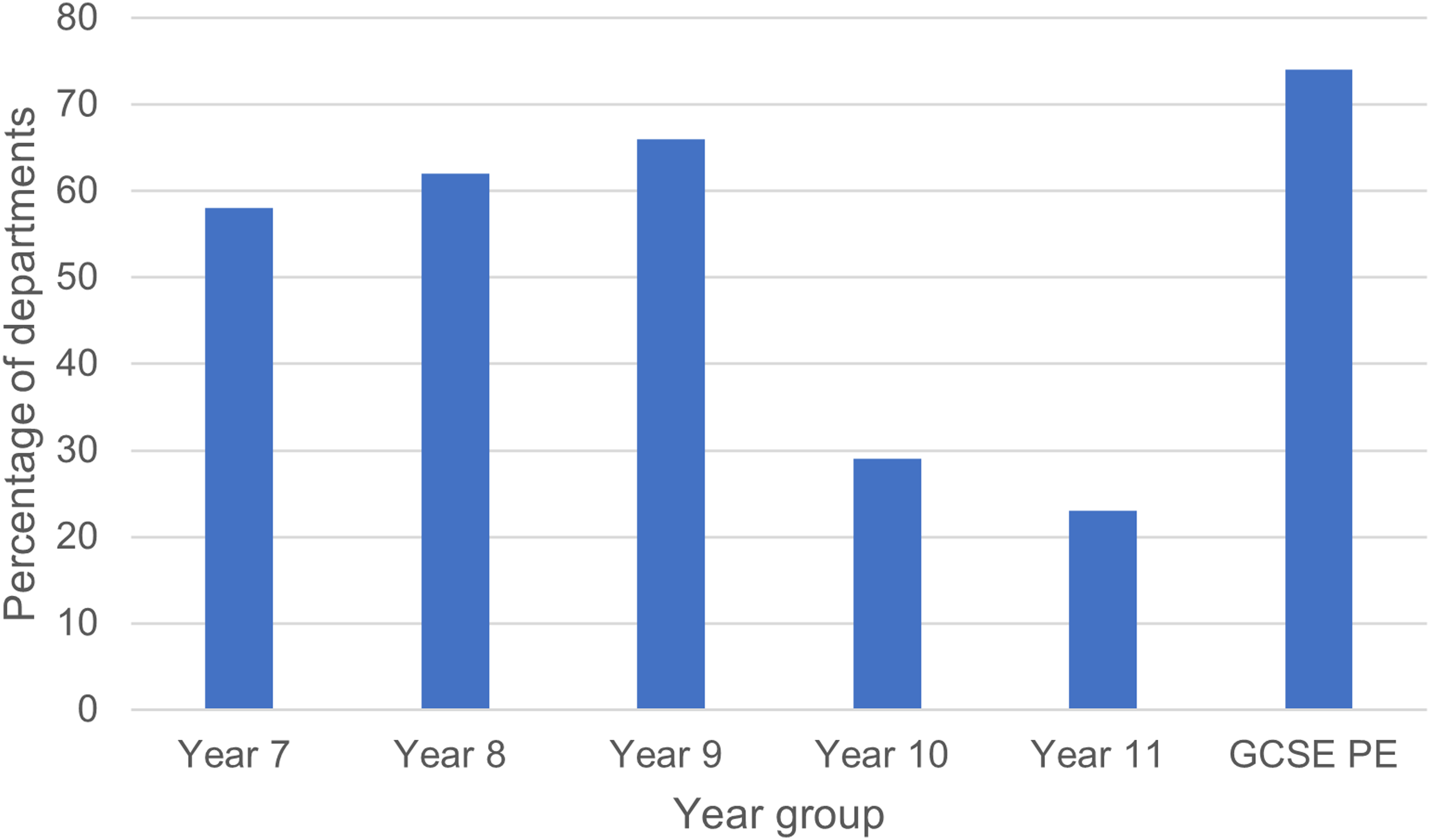
Prevalence of fitness testing by year group.
As Figure 1 shows, fitness testing was commonly employed in years 7 (ages 10–12), 3 8 and 9 (ages 12–14), as well as in General Certificate of Secondary Education (GCSE) PE. 4 There was a decrease in testing in year 10 and 11 core PE 5 (ages 14–16).
These findings concur with the small body of literature that highlights the prevalence of fitness testing as a PE-for-health practice within the UK (Alfrey et al., 2012; Cale et al., 2014; Hooper, 2018) and more widely, across the globe (Alfrey and Gard, 2014; Keating and Silverman, 2004b; O’Keeffe et al., 2020a). The frequency of testing might be reflective of the ever-increasing performative culture evident in schools and PE nowadays, pervaded by a neoliberal agenda (Evans, 2014; Stirrup and Damant, 2022). According to Macdonald (2014), fitness testing is situated within this agenda, valuing measurable outcomes and self-surveillance. It could also reflect teachers’ concerns surrounding accountability and/or the need to justify the status of PE as a worthy subject within the curriculum (Walters et al., 2022). Indeed, one of the teachers, when justifying their reasoning for strongly agreeing that ‘fitness testing should be part of the PE curriculum in all schools’, commented: ‘It gives PE academic weighting’ (IND-COED-ENG).
As proposed by Damant (2020), the increase in compulsory fitness testing from year 7 through to year 9 core PE could suggest that teachers are using lesson time to prepare pupils for examination PE in year 10. This point is revisited later when exploring the learning intentions underpinning fitness testing. The high number (74%) of teachers who reported including fitness testing in GCSE PE was expected, as it is part of the syllabus on multiple examination specifications.
The decreased prevalence of fitness testing in year 10 and 11 core PE might be a sign of a shift in the focus departments give PE with this age group. Core PE involves all pupils aged 14–16, including those who have not opted to take the subject at GCSE, and who are likely to engage in a maximum of just two hours of PE per week (Youth Sport Trust, 2022). Given the limited time available for core PE and a key aim of the NCPE being to ensure all pupils lead ‘healthy, active lives’ (Department for Education, 2013), it may be that departments prioritise this aim over formal fitness testing with this age group. For example, this might be by engaging pupils in different physical activities and working with them to develop positive relationships with (or attitudes towards) PA and confidence in movement. Arguably, a reduced focus on performance and measurement in favour of a more holistic approach might be considered more relevant and meaningful to this age group, given the statistics that show PA levels decrease through adolescence (Public Health England, 2020).
Why?
Over half of the teachers (59%) agreed that ‘Fitness testing should be part of the PE curriculum in all schools’, with the remaining teachers being uncertain (19%) or disagreeing (22%). Common reasons given to explain their responses centred around the place and purpose of fitness testing in the PE curriculum, pupil outcomes from fitness testing, and the notion of responsibility. These three foci are discussed next.
The place and purpose of fitness testing in the PE curriculum
Most teachers (90%) disagreed that fitness testing has no educational value for pupils. That said, there was less consensus concerning the specific educational purpose of testing and its positioning in the PE curriculum. The teachers who agreed that ‘fitness testing should be part of the PE curriculum in all schools’ typically provided reasons that related to education, but which were based on a performance, outcomes-based discourse. For example, a small number of respondents referred to the need for fitness testing to ‘set’ pupils into ability groups in PE, choose sport teams, provide quantifiable data, or to make students aware of their fitness levels and/or enable them to compare their scores against others. The privileging of fitness testing as a means of defining ability in PE has been highlighted within schools in England previously (Wilkinson et al., 2016). Yet, fitness testing to define ability or achievement in PE has been criticised and is considered to be limited and to potentially have undesirable consequences for pupils (Harris and Cale, 2019). For example, pupils may feel discouraged to partake in PA if they do not meet the expected standards.
Some teachers referred to ‘healthy, active lifestyles’ (HAL) when justifying why they felt fitness testing should be part of the PE curriculum. Such reasoning is underpinned by several assumptions. For example, that fitness scores are reflective of the amount of PA a person engages in (Corbin, 2002) and that fitness testing is effective in promoting PA. However, there is no empirical evidence to support either claim. Indeed, it has been suggested that testing represents a misdirected effort (Cale and Harris, 2009a) and is ‘antithetical to the goal of promoting physical activity in children’ (Rowland, 1995: 119). Given the above, Harris (2020) has argued that focusing solely on fitness test scores represents an inappropriate use of curriculum time.
One of the most frequently cited reasons teachers provided in support of fitness testing was that it could teach pupils about the components of fitness and/or how to monitor their fitness. Whilst this is true, and learning about the components of fitness clearly represents valuable learning for pupils, these outcomes can be achieved in other ways and without them necessarily performing fitness tests per se. Most examination specifications also include fitness tests and this content therefore requires coverage, but this can equally be addressed in different ways.
Teachers who disagreed or were uncertain that ‘fitness testing should be part of the PE curriculum in all schools’ referred to ‘lesson time being better used’ (STA-COED-ENG) and stated ‘there are more important things to do’ (STA-COED-ENG). This argument has also been made in the literature (Cale and Harris, 2005; Harris, 2020). A small number of teachers considered that fitness testing was important and appropriate with examination groups but not in core PE, which again highlights that some teachers are considering the appropriateness of fitness testing in core PE.
Other teachers referred to the purpose of PE and/or to the statement of intent for their school/department when giving reasons for why they disagreed that ‘fitness testing should be part of the PE curriculum in all schools’. For example, comments included: ‘physical education is NOT about how well you can perform in fitness tests’ (STA-COED-ENG), ‘Our statement of intent is to encourage participation; by testing it could deter that’ (STA-COED-ENG), and ‘PE is about enjoyment’ (STA-COED-ENG). Some teachers also recognised the broad and holistic nature and aims of PE. Comments illustrative of this included: ‘PE is about more than a person's fitness…’ (STA-COED-ENG); ‘Fitness should be wellbeing based on holistic idea, rather than a prescribed, data collection’ (STA-COED-WA) and ‘This isn’t part of education-it is assessment and often not necessary’ (STA-COED-ENG).
These comments perhaps reflect an increasing shift to and appreciation of more holistic notions of PE (Jess et al., 2023), aligning with an enhanced focus on the affective domain of learning (Kirk, 2019). This is promising to see, considering a focus on this domain should enhance pupils’ confidence and attitudes to participate in PA (Bowler, 2019). With respect to health and PE, it has been argued that if the focus (and PE time) is on PA, then the product (fitness) should take care of itself (Harris and Cale, 2019).
Teachers’ perceptions of pupil outcomes of fitness testing
Over two-thirds (68%) of the teachers felt that boys responded positively to fitness testing, compared with less than half (47%) believing girls did. Likewise, just over a tenth (11%) of the teachers perceived girls to respond negatively, but less than 1% thought boys did. The remaining teachers perceived boys (31%) and girls (42%) to respond neutrally. A subsequent chi square test of independence on this particular question revealed these differences to be significant, X2 (2, n = 308) = 23.0, p < .001. This corroborates findings from other researchers who have found differences in teachers’ perceptions of boys’ and girls’ attitudes towards fitness testing (Cale et al., 2014; O’Keeffe et al., 2020a).
There were mixed views on whether fitness test results motivated pupils to participate in PA on a regular basis, with just over half of the teachers (51%) agreeing they did, over one-third (37%) reporting they were uncertain, and over a tenth disagreeing (12%). A small number mentioned motivation as a reason to fitness test, but many more raised concerns over the practice demotivating pupils. This finding concurs with previous concerns surrounding fitness testing potentially demotivating pupils (Naughton et al., 2006).
Over 60% of the teachers (62%) were uncertain or agreed that fitness testing can have a negative impact on pupils’ psychological health, with only a small minority (2%) strongly disagreeing. Indeed, later in the survey, the teachers who disagreed or were uncertain that ‘fitness testing should be part of the PE curriculum in all schools’ typically referred to its potentially negative psychological pupil outcomes. Teachers’ comments included: Assessing could have adverse mental wellbeing with our less fit pupils who already have low self esteem. (IND-COED-ENG) Fitness testing can make students feel they are not good enough and are failing. (STA-COED-ENG) I would be worried that for some key students it would negatively impact their self-esteem and lead to them not liking PE even more than some of them already do. (STA-COED-ENG)
Whilst many teachers were sensitive to the issues and limitations of fitness testing, they continued to implement the practice. The vast majority (87%) who were uncertain, agreed or strongly agreed that ‘fitness testing can have a negative impact on pupils’ psychological health’ indicated earlier in the survey that they included fitness testing at some stage within core PE. Undoubtedly, if fitness testing explicitly features within the examination specification, then departments need to address it. However, it perhaps raises questions as to why, given the above, so many departments implemented the practice beyond examination classes. A similar paradox was found by Alfrey and Gard (2014). This enigma might also be partly explained by the increasingly dominant performative culture and level of accountability embedded within PE (Stirrup and Damant, 2022; Walters et al., 2022) which was highlighted earlier, and which reduces health to that which can be measured, compared and evidenced (Cale et al., 2014). Perhaps these pressures are so pervasive in PE that they overshadow teachers’ personal concerns and hesitancies about fitness testing.
If there is concern that fitness testing practice can serve to demotivate pupils, switch them off PA, and negatively influence their mental wellbeing, then this further reinforces the need to give serious consideration to whether testing is appropriate and constitutes the best use of curriculum time (Harris, 2020). As Alfrey and Gard (2019: 195) remind us: ‘school physical education is not an appropriate place to roll the dice to see if it lands on ‘motivating’ or ‘shaming’’.
Responsibility
A sense of responsibility was a commonly cited reason teachers gave for considering ‘fitness testing should be part of the PE curriculum in all schools’. Teachers’ thoughts surrounding the issue of responsibility were, however, mixed.
One teacher commented that they felt PE departments have the responsibility ‘to educate young people about health and wellbeing and fitness testing is part of this process’ (STA-COED-WA), whilst another explained they felt they should ‘give students the opportunity to know how to test the different types of fitness there are and help them see how these can help with overall health and fitness’ (STA-COED-ENG). Here the teachers highlighted the responsibility they felt they had for educating through fitness testing.
Over 60% of the teachers (61%) agreed that PE departments have a responsibility to monitor pupils’ fitness and a number inferred that it was the responsibility of PE teachers to address wider societal health concerns by fitness testing. Issues such as sedentary behaviour, obesity, the health of the nation and poor fitness were cited when providing reasons for why ‘fitness testing should be part of the PE curriculum in all schools’. The notion of fitness as a predictor of future health has been highlighted in the media for some time which might have led departments to resort to fitness testing in response (Cale and Harris, 2005). Indeed, policy and context are inescapable in shaping the school curriculum (Ball et al., 2011), and the use of fitness testing to address societal health issues could be illustrative of this. One teacher commented: ‘Curriculum should be driven by context’ (STA-AB-ENG). However, issues have been raised surrounding PE teachers’ assumed role in tackling public health (Evans et al., 2004; Tinning, 2014). Cale and Harris (2011: 439) caution that whilst PE does have a role to play in public health, ‘it is also important to be realistic about what physical education can achieve given the range of purposes it has and that it accounts for only a small proportion of young people's time’. As one teacher pointed out: ‘Think fitness is more than PE department's issue. It is a whole community education, circumstance, and monetary issue’ (STA-COED-SCOT).
The teachers who agreed that ‘fitness testing should be part of the PE curriculum in all schools’ commonly reasoned that pupils could become aware of their current fitness levels, suggesting individuals have a personal responsibility for their own fitness. Others indicated that parents shared the responsibility, with one teacher stating, ‘It is also useful to be able to give parents feedback as it is black and white’ (IND-AG-ENG) and another, ‘Pupils and parents need to face the reality of lifestyle choices’ (STA-AG-NI). Such remarks link with the discourse of healthism and the notion of individual responsibility for fitness (Gard and Wright, 2001). Similar responses were found from teachers in the research by Cale et al. (2014). Physical fitness is, however, a multifaceted concept and is influenced by numerous factors (genetics, maturation, the environment) which will not necessarily be within pupils’ or parents’ control. It has thus been argued that it is unhelpful and ‘misguided’ to frame responsibility for fitness in such a way (Cale and Harris, 2009a: 99).
Learning intentions
Teachers were asked what learning intentions underpinned their fitness testing lessons. ‘Knowing the components of fitness and how to measure these’ was the most common response to this question. This is perhaps not surprising, considering the percentage of teachers who reported including fitness testing with their GCSE groups and, as noted earlier, this being a requirement of examination specifications in England. However, the frequency of fitness testing in years 7–9 might also add weight to the notion that lesson time is being used to prepare pupils for examination PE in year 10. Indeed, when reporting on a secondary school in England, Damant (2020: 103) found that GCSE content was introduced in years 7–9 (age 11–14 years) as a ‘strategy to enhance GCSE output’. In fact, a number of teachers noted that the learning intention behind fitness testing was to prepare pupils for examination PE. This again aligns with the point highlighted earlier regarding the dominant performative culture in schools, with the focus being on examination preparation and assessment (Walters et al., 2022). The issue here is that spending time preparing pupils for future examination years can detract from achieving the learning outcomes that are suitable for their age group. Further, it can lead to a narrow and limited approach to teaching (i.e. teaching to the test), resulting in ‘shallow’ rather than ‘deep learning’ (Hutchings, 2015: 5) and limited progression in learning, which has been a criticism levelled at the teaching of health in PE previously (Harris, 2005).
A negligible number of teachers referred to evaluating fitness testing and/or tests with pupils. Encouraging pupils to adopt a critical approach to fitness testing, by teaching them how to evaluate fitness tests, procedures, and fitness test results, has been encouraged, and such approaches will likely provide valuable learning opportunities and lead to more meaningful experiences (Cale et al., 2014; Harris and Cale, 2019).
Other teachers focussed heavily on fitness test scores, with a small minority focusing on baseline testing and retesting 6–8 lessons later during a unit of work. The limitations of testing and retesting pupils have been highlighted since there is not usually enough time to see a measurable difference after only a limited period of time (such as 6–8 weeks) (Harris and Cale, 2019). One teacher highlighted ‘Pupils’ fitness in general does not improve drastically in PE lessons so there is little point in retesting’ (IND-COED-ENG). Further, if testing and retesting happens over a longer period of time, pupils could physiologically mature in between, thereby influencing their fitness test performance (Pangrazi, 2000). Harris and Cale (2019) have recommended making pupils aware of such misgivings if implementing retesting. One teacher referred to scores being ‘irrelevant’, and consequently whilst pupils tested one another, they did not record the scores.
Just under a quarter of respondents referred to fitness testing being employed for the purpose of promoting HAL or the benefits of fitness. Such learning intentions fall in line with the learning outcomes (health benefits and activity promotion) called for by scholars (Harris and Cale, 2019). Indeed, in previous research, these have been one of the key reasons often advocated for testing (Cale et al., 2014; Keating and Silverman, 2004b). It is thus interesting that most teachers in this study did not report fitness testing to have a role in promoting HAL. This finding may be reflective of teachers’ mixed attitudes towards testing and their hesitancies and perceptions surrounding pupil outcomes.
A small number of teachers noted that there were no learning intentions underpinning fitness testing in their department and/or responded that the question was not applicable. This finding aligns with research by Redelius et al. (2015), who found that teachers were sometimes vague about the learning intentions behind PE lessons. The issue here is twofold: firstly, learning needs to be explicit and should be the cornerstone of every lesson. If this is not the case, then the educative element is questionable and the ‘E in PE, is effectively under attack’ (Quennerstedt, 2019: 612). Secondly, pupils will not know what they are supposed to learn if the learning intentions are not explicit, clearly shared with them, or non-existent. It might be that fitness testing is framed by the activity (the fitness tests), yet by doing this, pupils are likely left not understanding what they have learnt in the lesson (Quennerstedt, 2019; Redelius et al., 2015). We agree with Quennerstedt (2019) that the why needs to come before the what and how in every lesson.
How?
The majority of the teachers (75%) agreed that the way in which fitness testing is carried out influences young people's attitudes towards their health, activity and fitness. The survey revealed varied pedagogical practices to be employed by departments when fitness testing. These are outlined and discussed next under the following subheadings: fitness tests used, the design of units, pupil grouping and pupil choice, the recording, monitoring and use of fitness test results, and factors influencing the teaching of fitness testing lessons.
Fitness tests used
A range of fitness tests was employed by PE departments, details of which are presented in Figure 2. As can be seen, the sit-and-reach test was the most frequently employed test, whilst the multi-stage fitness test (‘bleep test’) was the most commonly used cardiorespiratory test (82%). These findings are similar to other studies that have revealed these to be two of the most commonly implemented fitness tests in PE (Cale et al., 2014; O’Keeffe et al., 2020a). As maximal tests, however, their appropriateness for use with children has been questioned (Cale and Harris, 2009b). Weight and waist circumference were the least frequently cited tests (10% and 3%, respectively), with these percentages lower than those reported by Cale et al. (2014). This is pleasing to see, considering the concerns which have been raised over the educational purpose of weighing and measuring children and the potential negative consequences of doing so, such as body shaming (Alfrey and Gard, 2019; Cale and Harris, 2009b).
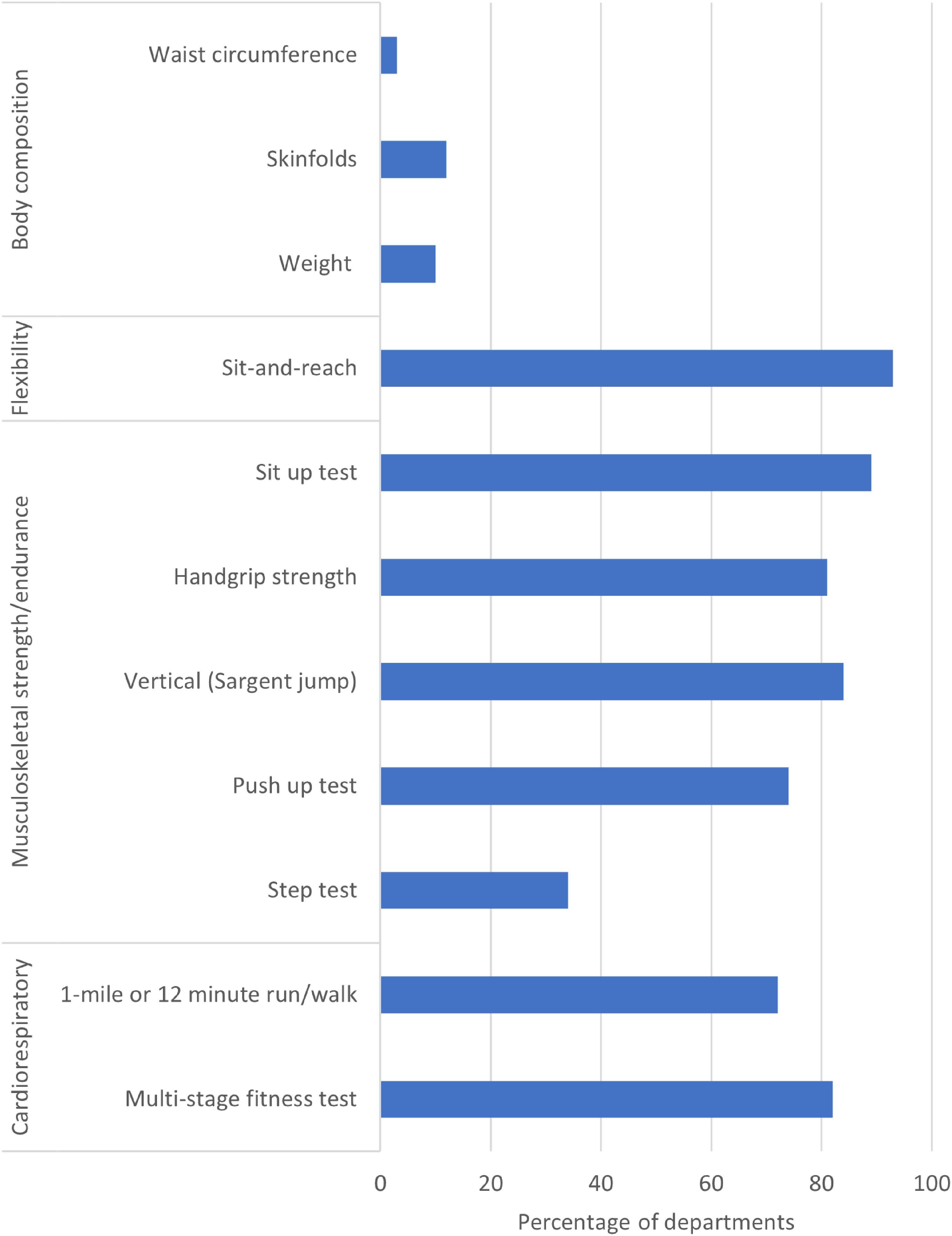
Fitness tests commonly used by departments.
The design of units
Approximately half of the teachers (49%) indicated that their department taught fitness testing as part of a broader unit of work, for example, on health-related fitness, and typically lasting between 6–8 lessons. These findings align with advice from researchers (Mercier and Silverman, 2014; Phillips et al., 2017) and organisations such as the Association for PE in the UK who advocate for a holistic approach to implementing fitness testing (Harris, 2020). Just under a third (31%) of the teachers reported fitness testing to be part of a fitness testing unit of work, but over a tenth (13%) reported fitness testing to be taught as individual lessons within their PE curriculum. Harris (2020) warns against the latter, claiming that isolated lessons of fitness testing which are not embedded within broader HRL experiences can be meaningless and the purpose unclear for pupils.
Pupil grouping and pupil choice
In terms of grouping, over a quarter (27%) of teachers reported fitness testing to be performed as ‘a whole class activity’, just under a quarter (23%) reported it to be performed in pairs or small groups, approximately a tenth (11%) reported it to be performed individually (self-assessment), while over a third (39%) indicated that it was performed as a combination of the three grouping styles. 6 Research highlights the importance of considering grouping when implementing potentially sensitive activities such as fitness testing (Naughton et al., 2006). Indeed, there have been particular concerns surrounding the public display of testing (Cale et al., 2014) which are heightened when pupils complete testing as a whole group. O’Keeffe et al. (2020b) proposed that giving pupils the opportunity to complete tests in smaller groups could potentially enhance pupils’ motivation to participate, particularly for girls. Consideration should thus be given to how pupils are grouped and organised when fitness testing, as this could have an impact both on pupils’ motivation and attitudes towards lessons (Huhtiniemi et al., 2021a). For example, Sampson (2008) found that when pupils conducted testing with a peer, they reported more positive attitudes towards the testing. It is thus pleasing to see that the majority of departments indicated adopting different grouping procedures when teaching fitness testing.
In terms of choice, 47% of the teachers reported they did not give pupils a choice as to which fitness tests they performed; however, the same percentage (47%) declared that they ‘sometimes’ did. Increasing pupils’ choice in PE has been perceived by teachers to have a positive impact on pupils’ motivation, enjoyment and learning (Bennie et al., 2017). Given the teachers’ concerns surrounding fitness testing demotivating pupils to participate in PA in this study, offering them elements of choice when teaching fitness testing would seem to be desirable.
The recording, monitoring and use of fitness test results
The majority (75%) of the teachers reported that their department compared pupils’ fitness test results against norm-referenced health standards. A small proportion (4%) reported that scores were compared against criterion-referenced standards, whilst approximately a fifth of the teachers (21%) commented that their department did not compare pupils’ test results against any standards. This finding indicates a common recommendation to avoid normative comparisons is not being met (Mercier et al., 2016). The educational purpose of spending lesson time applying norm-referenced or criterion-referenced standards to pupils’ fitness scores has been questioned (see for e.g. Harris and Cale, 2019). In particular, normative comparisons are considered problematic in that they do not indicate desired levels of fitness, but encourage comparison against a reference group and fail to take maturation into account (Harris and Cale, 2006). Such comparisons further imply that ‘more is better’, focusing on the quantity of movement and detracting from learning through movement (Harris and Cale, 2006: 212). This could lead to the majority of pupils leaving a fitness testing lesson feeling like they have failed (Graser et al., 2011).
Over half of the teachers (54%) reported that their department gave pupils feedback on their fitness test results, with over a third (37%) reporting they only sometimes did. A quarter indicated that pupils developed fitness test plans, whilst nearly half (49%) said they sometimes did. The vast majority of teachers (88%) reported that their department did not provide feedback to parents/guardians on their pupils’ fitness test results. Similar to other studies conducted outside the UK (e.g. Mercier et al., 2016; O’Keeffe et al., 2020a), these results suggest some potentially valuable learning opportunities are being missed by many schools. Developing fitness plans arguably represents a relevant and meaningful learning experience which may contribute to the promotion of HAL. For example, pupils can be encouraged to engage in PA outside of school by planning and adopting an individualised fitness plan. Indeed, Mercier et al. (2016) claim that if pupils do not develop a personal fitness plan, they are missing out on the benefits of fitness testing. One teacher highlighted, ‘If testing is done and nothing comes from the results, it becomes pointless’ (IND-COED-ENG).
Factors influencing the teaching of fitness testing lessons
Despite nearly all (97%) of the teachers agreeing that they had the required knowledge to make fitness testing educational, there were mixed responses regarding pre-service teacher education adequately preparing teachers to teach fitness testing. Less than half agreed (48%), whereas over half (52%) were uncertain or disagreed that their pre-service teacher education had prepared them to adequately teach fitness testing. This finding is consistent with the literature (Cale et al., 2014) and may partly explain the variable use of fitness testing and the limited learning intentions evidenced in this study. Further, two-thirds of the teachers disagreed or were uncertain as to whether they were aware of recent fitness testing recommendations proposed by researchers/professional associations. Many teachers may not therefore be aware of how best to implement fitness testing.
Limitations of the study
The main limitation of the study was the low response rate. Although the lead researcher reached out to the majority of secondary schools in the UK, the response rate was only 6%. The reasons for the low response rate are unknown, but it might reflect the ever-increasing pressure teachers are under at school and the lack of time they have to complete computer-based tasks (Brady and Wilson, 2022). There is also likely to be self-selection bias in the departments that chose to respond. Thus, caution is needed when interpreting the findings. It is recommended that strategies be explored to increase teacher response rates in the future. For example, consideration should be given to the potential benefits of contacting HOPEs directly.
Conclusions
This paper has explored the ‘if?', ‘why?' and ‘how?’ of fitness testing in secondary school PE in the UK. It has provided a current picture of fitness testing, presenting both quantitative and qualitative data to provide new insights into PE teachers’ learning intentions, pedagogical practices, and attitudes towards fitness testing. In agreement with the findings of previous studies, the research found fitness testing to be a common PE-for-health practice in secondary schools. However, there was less consensus surrounding the ‘why?’ and ‘how?’ behind fitness testing, with variation in teachers’ attitudes towards the practice and departments’ learning intentions and pedagogical practices.
A notable finding was that, despite the prevalence of the practice, just under two-thirds of the teachers expressed concerns about the negative impact of fitness testing on pupils’ psychological health and motivation to participate in PA. Given these concerns, yet the reported widespread prevalence of fitness testing as a PE-for-health practice, it would seem important for us to more fully understand teachers’ experiences, attitudes and the factors which influence their decision making with regards to fitness testing. It would also seem critical for future research to explore pupils’ perspectives, responses, and outcomes of fitness testing. This should involve exploring pupils’ motivational and emotional responses to testing, as well as gathering qualitative data on pupils’ experiences of and reflections on fitness testing.
Consideration should also be given to the limited number of PE teachers who were reportedly aware of current recommendations surrounding fitness testing and understanding the reasons for this. Without appreciation of alternative and recommended approaches to implementing fitness testing within the PE curriculum, it is no surprise that current practice, including some questionable practices with limited learning, prevails. Raising PE teachers’ awareness of fitness testing recommendations and supporting and encouraging them to critically reflect on the ‘if?', ‘why?' and ‘how?’ of fitness testing in PE through relevant initial teacher education and/or continuing professional development would seem to be key. This will hopefully help to bridge the gap between research and practice and enable teachers to make informed decisions about the implementation and practice of fitness testing, or not, in their PE curricula. In turn, this should lead to more positive PE experiences and outcomes for all young people.
Footnotes
Declaration of conflicting interests
The author(s) declared no potential conflicts of interest with respect to the research, authorship, and/or publication of this article.
Funding
The author(s) received no financial support for the research, authorship, and/or publication of this article.
