



Abstract
Flipped learning is a pedagogical approach that directs instruction from a group to an individual learning space. This approach can stimulate students’ motivation, promote adequate physical activity levels, and reduce sedentary (SED) behaviour. Addressing the literature gap regarding the correlations among these factors in school physical education (PE), this study aimed to examine the association of students’ motivation, physical activity levels, and SED behaviour with flipped learning in a four-lesson learning unit. Framed by self-determination theory, a quasi-experimental design was adopted to measure and compare the moderate-to-vigorous physical activity (MVPA), SED, and motivation levels of 111 primary school students aged between 10 and 11 years (mean = 10.07, standard deviation = .26) in Hong Kong. Fifty-two of the participants were female, and 59 were male. They were randomly assigned to experimental (n = 57) and control (n = 54) groups, in which a flipped learning approach was adopted in the experimental group for two weeks. A questionnaire survey and accelerometers were used to measure participants’ motivation (autonomous motivation, controlled motivation, and amotivation) and their physical activity levels. The findings revealed significantly higher MVPA levels and lower SED levels in the experimental group. Autonomous motivation was found to have a positive correlation with MVPA levels and a negative correlation with SED levels, indicating a positive predictor of the two. The findings of this study reveal the potential of flipped learning to enhance students’ MVPA and reduce their SED behaviour during primary school PE lessons.
Introduction
The problems of obesity and non-communicable diseases among school-age children are critical issues concerning the health status of the global population, which have worsened in recent years (Fang et al., 2019). The United Nations Children's Fund (UNICEF, 2019) reported that 40 million children under five years old, and 340 million children and teenagers aged between five and 19 years were overweight in 2018. One feasible solution to the prevention of obesity and non-communicable diseases, as suggested by the World Health Organization (WHO, 2016), is the modification of physical activity (PA) and sedentary (SED) behaviour through the promotion of a healthy lifestyle and participation in physical activities in early life. Since participation in various physical activities in schools, such as compulsory physical education (PE) lessons and optional extra-curricular activities, are effective in promoting PA and reducing SED among school-age children, some researchers have suggested increasing the intensity and duration of PA at school (Mayorga-Vega et al., 2018; Ruiz-Ariza et al., 2019). However, a contrary pattern was observed in schools where PE lesson time was reduced to accommodate other academic subjects (Weedon et al., 2022). A previous study also found that increasing the intensity of PE lessons did not significantly contribute to increased leisure-time PA levels (Reyes-Amigo et al., 2021). Considering the limited PA that can be engaged in at school, it is crucial for the younger generations to take responsibility for their health and actively participate in PA in their spare time for a healthier lifestyle.
Because of the importance of developing school-age children's self-determination in PE, attempts have been made to investigate the effectiveness of various pedagogical approaches in motivating students in schools. Crotti et al. (2021) reported the improvement of children's PA and motivation with linear and nonlinear pedagogy. Their randomised controlled trial assessed how these approaches in PE might affect children's PA and found no significant differences between the control and experimental groups with interventions based on the aforementioned pedagogical approaches. Fitton Davies et al. (2021) compared the effectiveness of creating a motivational climate for primary students in PE lessons among traditional, ecological dynamics and information processing theory-based approaches. Their findings revealed a significantly lower disempowering motivational environment and higher autonomy support for the group taught with concepts from ecological dynamics. The systematic review by Teraoka et al. (2021) found that offering choices, encouraging peer feedback, asking deductive questions, focusing on personal improvement, and differentiating are effective teaching strategies that strongly support effective PA for school children and adolescents in PE lessons.
Previous research has revealed the benefits of motivational interventions in enhancing students’ PA and shown a positive association between students’ motivation and PA levels in leisure-time and out-of-school contexts (Gao et al., 2008; Owen et al., 2014). Improving students’ attendance and engagement in PE lessons could result in higher levels of PA and lower levels of SED behaviour (Silva et al., 2018), which are essential in preventing the carry-over of obesity into adulthood (Pietiläinen et al., 2012). Studies in PE have reported that students lack access to PA opportunities at school (e.g. Aubert et al., 2022; Morgan et al., 2007); therefore, optimising PE lessons is essential to ensuring students get sufficient PA to contribute to their healthy growth. Meyer et al. (2011) found that students were more active on days with a PE lesson than on days without one, which suggested that PE provides PA in a way that could not be compensated by other means. This finding is echoed by Cheung (2019), whose study found that PA participation during PE lessons and after school hours was associated with children's overall moderate-to-vigorous PA (MVPA) levels. A similar association was found for SED behaviour, another essential indicator of PA (de Jesus et al., 2022).
Flipped learning has become a growing research interest as an approach to improving teaching and learning in schools, especially the design of tools and resources that effectively enhance students’ learning motivation. Flipped learning is a pedagogical approach that directs instruction from the group to the individual learning space (FLN, 2014). It explores the potential of learning outside a classroom and helps transform a formal classroom teaching environment into a dynamic interactive space where teachers guide students as they apply concepts and engage creatively with the subject matter (Hwang et al., 2015). Since the flipped learning approach provides instruction outside of class time, teachers can have more lesson time to guide and help their students with the problems they encounter during the self-learning process, thereby improving teaching effectiveness during formal lessons (Sirakaya and Ozdemir, 2018). The flexible learning environment allows students to become more active and engaged with the subject matter (McDonald and Smith, 2013). The individualised learning space afforded by flipped learning has been found to positively affect students’ internal satisfaction dispositions and fulfil their various needs for sustaining their motivation (Sergis et al., 2018). Studies across different educational stages and settings have also identified the association of various learning constructs with flipped learning in various contexts, including the enhancement of students’ learning motivation in multiple subjects (e.g. Lo and Hew, 2020; Ng et al., 2022; Webb and Doman, 2020).
To support their teaching of PE, teachers can prepare videos that explain key concepts for the subject matter and provide online exercises for students’ self-assessment before coming to class (Ferriz-Valero et al., 2022). Teachers can then devote more time to learning activities during lessons and execute individualised learning for students with learning difficulties instead of instructing students solely about concepts (Ming, 2018). In this way, students are better prepared and may be more motivated to participate in practical tasks (Gao et al., 2008). Østerlie (2018) conducted a quasi-experimental study to examine the impact of flipped learning on PE students’ motivation to participate in PA. Within the three-week intervention, the experimental group had access to pre-class instructional videos, while the control group only received a summary of the videos delivered orally by the PE teacher. The findings revealed that flipped learning significantly increased students’ expectancy beliefs and attainment values regarding participation in PE. Botella et al. (2021) adopted a mixed-method approach to analyse the effects of flipped learning on students’ motivation in PE. Framed by self-determination theory (SDT), the findings revealed significant increases in intrinsic motivation, identified and introjected regulations, and significant decreases in external regulation and amotivation. Segura-Robles et al. (2020) observed the improvement of intrinsic motivation based on interactions using gamification and flipped learning. Thompson and Ayers’s (2015) mixed-methods study similarly suggested that flipped learning could enhance peer interactions and engage students in coursework. The exploratory study by Sargent and Casey (2020) found that, when used in conjunction with digital technology, flipped learning has the potential to pedagogically support teachers’ teaching of PE. Lucena et al. (2020) found that adopting flipped learning can improve students’ motivation, autonomy, and interactions in PE lessons. The literature shows that flipped learning, and other well-established approaches, such as collaborative learning and gamification, effectively stimulate students’ motivation (Fernandez-Rio et al., 2017, 2020).
Flipped learning has also been found to be a practical approach to promoting PA and reducing SED among school-age children. Akers (2021) conducted a quasi-experimental study to examine the effects of flipped learning on increasing junior high school students’ MVPA levels in PE lessons through a two-week intervention. Comparing heart rate data collected from heart rate monitors attached to participants’ wrists revealed that the experimental group yielded significantly higher MVPA levels than the control group. Killian et al. (2022) compared the impact of a flipped learning approach to traditional instruction on secondary school students’ MVPA levels in PE lessons through observation. They found that students in the flipped learning class spent more time in MVPA than those in the traditional class.
Theoretical framework
This study is grounded in SDT, which explains the motivation behind people's choices (Deci and Ryan, 1985). In the SDT framework, motivation can be divided into three categories on a self-determination continuum: autonomous motivation, controlled motivation, and amotivation (Deci and Ryan, 1985). Autonomous motivation is the highest quality of motivation, in which individuals act out of their own choice; this happens when students are free to choose the type of activity they prefer in PE lessons. Controlled motivation lies in the middle of the continuum. It refers to acting for reward, behaving to avoid punishment, and trying to avoid feelings of guilt. Amotivation lies at the lowest end, corresponding to a lack of autonomous and controlled motivation. Controlled motivation and amotivation occur when students participate in a PE activity because of a reward or are forced to participate. Previous studies have shown that autonomous motivation has positive effects, such as enhanced learning outcomes in PE (e.g. Shen et al., 2009). In contrast, controlled motivation and amotivation pose adverse effects, such as students experiencing lower self-esteem, forgetting their PE kit, and being absent from class (e.g. Ntoumanis et al., 2004; Valero-Valenzuela et al., 2021).
Based on the assumption that individuals are naturally active and have an instinctive tendency to develop a sense of self, SDT hypothesises that the fundamental motive for an individual's behaviour is to have his/her intrinsic needs met (Deci and Ryan, 2002). Specifically, competence, autonomy, and relatedness are the basic psychological needs that must be satisfied (Vansteenkiste et al., 2020). In SDT, competence refers to the experience of mastery and feelings of being effective in one's activities (Deci and Ryan, 1985). It is achieved by providing optimal challenges and opportunities, the structure to mobilise and organise behaviour, a sense of initiation, and relevant feedback, all of which enhance the feeling of accomplishment. Relatedness refers to an individual's need to feel that he/she is connected to and belongs with others (Deci and Ryan, 1985). An individual feels related when others show an interest in his/her behaviour and regard him/her as significant. Autonomy is the degree to which an individual perceives him/herself as the origin or source of behaviour and endorses the behaviour by taking responsibility for the choice (Ryan and Deci, 2000). An autonomous student tends to participate in a learning activity for learning itself.
In the educational setting, SDT proposes that it is essential for students to feel competent and independent, as these feelings stimulate their intrinsic motivation to become autonomous (Deci and Ryan, 2013). Therefore, teachers could motivate their students by establishing a learning environment that allows them to perceive their competence, relatedness, and autonomy (Reeve et al., 2004). In PE, the teacher could ask students about their interest in different sports and allow them to decide on the activity they will participate in during a particular lesson. Also, the teacher could guide their students when participating in the activity, giving them the basis for developing their competence and overcoming challenges. Team building and communication between the teacher and students could also be encouraged to cultivate a sense of belonging and connection with each other.
Aim
While the correlations among motivation, MVPA and SED levels are vital to determining teaching and learning strategies for synergising the benefits of flipped learning, no previous study has been identified that investigates their associations in PE lessons. Since PE lessons are essential to students’ PA, the pedagogical approach to cultivate self-determined students in PE lessons may help them to further engage in PA after school. As the mode of delivery can affect students’ PA levels in PE lessons (Chow et al., 2008), flipped learning may help increase their PA levels and reduce SED behaviour in PE lessons. Therefore, this study examined the association of students’ motivation, PA levels, and SED behaviour with flipped learning during PE lessons. The hypotheses for this study were as follows:
Hypothesis 1 (H1): Students’ autonomous motivation is higher, and controlled motivation and amotivation are lower, with the flipped learning approach. Hypothesis 2 (H2): Students’ MVPA levels are higher and SED levels are lower with the flipped learning approach. Hypothesis 3 (H3): Students’ MVPA levels are positively correlated with their autonomous motivation, controlled motivation, and amotivation within the flipped learning approach. Hypothesis 4 (H4): Students’ SED levels are negatively correlated with their autonomous motivation, controlled motivation, and amotivation within the flipped learning approach.
Methodology
This study used a quasi-experimental design to examine the association of primary school students’ motivation, PA levels, and SED behaviour with flipped learning in their PE lessons. In their PE lessons, accelerometers measured participants’ PA levels and SED behaviour, and a questionnaire survey was conducted to determine participants’ motivation. During the four-lesson learning unit, a flipped learning approach was adopted for the experimental group in the second and third weeks, while the control group received the same content using a conventional teaching approach.
Participants and procedures
In total, 111 students from four Grade 5 classes at a primary school in Hong Kong were invited to participate in the study. They were aged between 10 and 11 years (mean (M) = 10.07, standard deviation (SD) = .26), with an average height of 144.09 cm (SD = 6.98) and an average weight of 36.69 kg (SD = 9.27). Fifty-two of the participants were female, and 59 were male. Their average body mass index (M = 17.49, SD = 3.32) was typical for their age (Yip et al., 2022). The four participating classes were randomly divided into experimental (n = 57) and control (n = 54) groups by drawing lots, and each consisted of two classes. There were no competence-based class groupings in the participating school. Both groups had two 25-minute PE lessons per week, which followed the standard time allocation established by the Hong Kong Education Bureau (Curriculum Development Council, 2017). The lessons were taught based on the curriculum guide provided by the Hong Kong government by the same PE teacher. The teacher was a qualified primary school teacher specialising in PE and had five years of teaching experience at the participating school at the time of this study. He has undergone professional development in flipped learning and other innovative approaches in PE as part of his postgraduate study. Permission was obtained from the participating school to conduct the experimental study during regular PE lessons. A formal invitation was then sent to the targeted participants and their parents or guardians to explain the purpose of the study and obtain their informed consent. They were assured of confidentiality and anonymity concerning the data collected. Ethical clearance was obtained from the human research ethics committee at the university where the authors worked during the project. A 15-minute briefing session was conducted with the participating students to ensure that they understood the purpose and procedure of the study as well as the measurement tools.
Participants’ body weight and height were measured before the four-lesson learning unit. The teacher and a teaching assistant conducted the questionnaire survey and helped them to attach the accelerometer to their wrist before each of the four lessons to avoid interrupting the teaching schedule. The experimental group received the flipped learning design during the second and third lessons, whereas the control group was taught conventionally with direct instruction by the teacher. The last lesson was conducted in the same manner as the first lesson and included data collection.
Flipped learning design
The study was conducted within a four-lesson learning unit, with ‘Dash and Relay’ selected as the theme. ‘Dash and Relay’ is a typical PE topic taught in Hong Kong primary schools and was chosen as the theme in this study because it involves both theory and practice for flipped learning. It consists of a relay race for a team of four students who take turns running short distances and completing a portion of the racecourse by passing a baton to the next teammate. After attending this learning unit, the students were expected to apply the down-sweep technique when passing the baton to a teammate at the changeover zone and maintain good communication with the team. They should be able to signal to the next runner to maintain the right pace and receive the baton in a timely manner, so as to ensure a smooth baton exchange at the changeover zone.
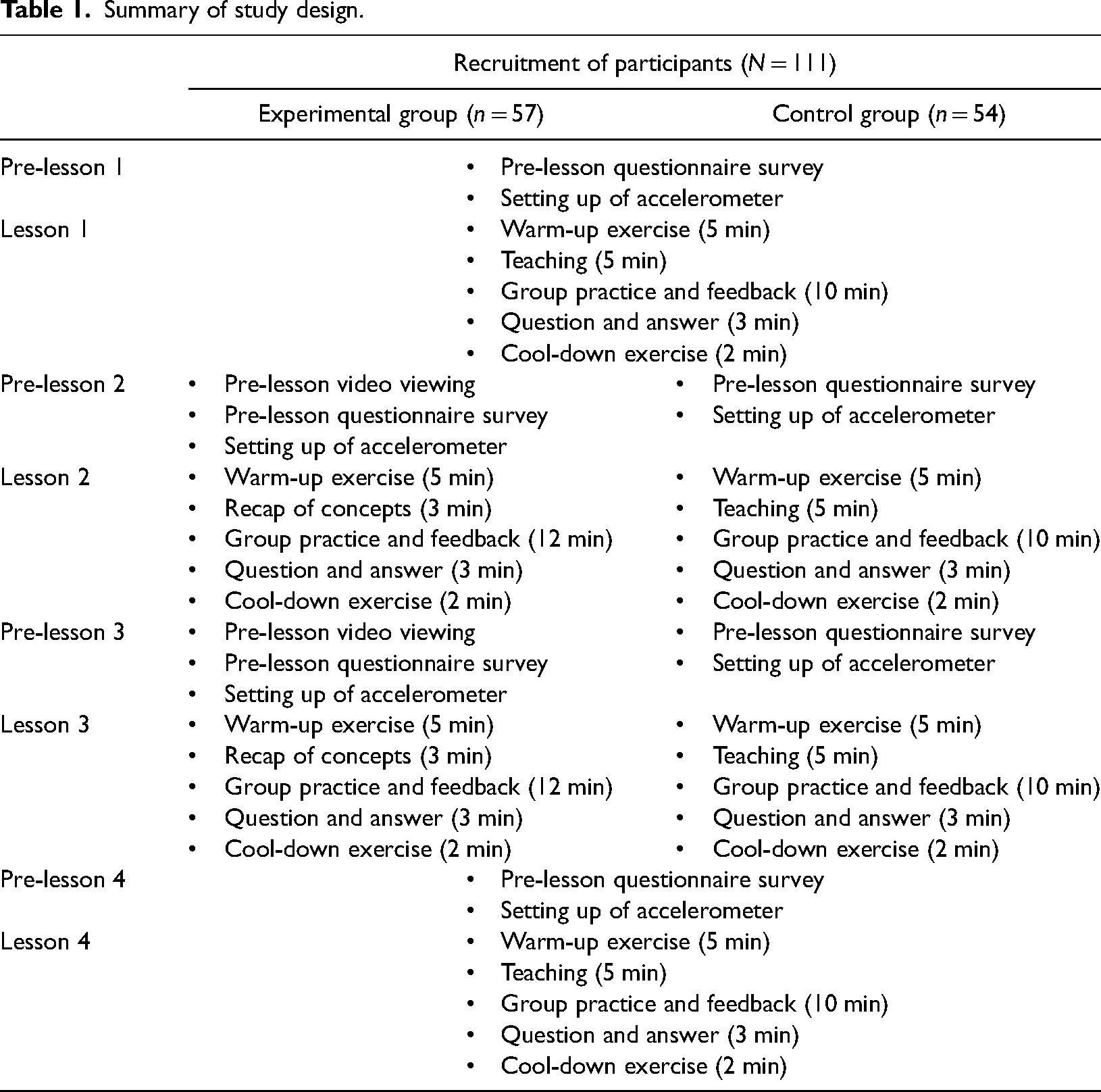
Both theoretical and practical content, such as the concepts, rules, and skills needed for the dash and relay, were presented to all participants. As part of the flipped learning design, the experimental group participants were asked to watch 10-minute teaching videos about the rules of the relay game and the suggested practice methods before lessons 2 and 3 in the same week. In contrast, the content of lessons 1 and 4 was approached and taught conventionally with direct instruction for baseline measurement. The students were guided to watch the video and complete an online assessment before the flipped learning lessons commenced to ensure their understanding of the subject content. If students performed poorly on essential concepts in the online assessment, those concepts were reinforced in the next PE lesson to ensure complete understanding. Since students from the experimental group had already learnt the concepts before the PE lesson, the teacher could skip the instruction and demonstration part of the lesson, allowing more time for active learning activities. The control group adopted an instructional approach that involved teaching students the subject matter, applying the knowledge and skills in practice, and providing feedback on their performance. Table 1 shows the study design of the learning unit.
Summary of study design.
Questionnaire and accelerometers
The questionnaire consisted of two parts. The first part collected demographic information, including gender, class, and student number. The second part assessed the participants’ motivation for PE using the Chinese version of the Children's Perceived Locus of Causality Scale (C-PLOC), developed by Pannekoek et al. (2013) and validated by Hsieh et al. (2018). The scale consists of five subscales, with three items corresponding to each of the regulatory styles of SDT, although integrated regulation is excluded since this form of behavioural regulation is not generally encountered in children who are too young to have developed a coherent sense of self (Vallerand, 2001). The subscales included in C-PLOC are intrinsic motivation, identified regulation, introjected regulation, external regulation and amotivation. The intrinsic motivation items inquire about the participant's enjoyment of the PE subject matter (e.g. I take part in PE because it is fun). Identified regulation questions whether the behaviour is explicitly recognised and valued by the individual, identifying how much importance students attach to the activities involved in a PE lesson (e.g. I take part in PE because I want to learn how to do new things). Introjected regulation refers to peer approval and contingent self-esteem (e.g. I take part in PE because I want others to think I am good at it). This regulation evaluates students’ and teachers’ social status and relationships in school education. External regulation refers to motivation controlled by external incentives such as praise, rewards, and punishment avoidance, as in PE and other school subjects (e.g. I take part in PE because I’ll get into trouble if I don’t). Amotivation occurs when students fail to recognize the value of PE and do not comprehend the reasons for attending PE lessons or the underlying purpose of the learning activities (e.g. I take part in PE but I don’t know why we should have it).
Because of the relatively small sample size concerning the number of independent variables in the motivation assessment, items from the five subscales were regrouped into three categories: autonomous motivation, controlled motivation, and amotivation (Ryan and Deci, 2000). Autonomous motivation was measured with six items from the intrinsic motivation and identified regulation subscales. Controlled motivation was measured with another six items from the introjected and external regulation subscales. The remaining three items from the amotivation subscale corresponded to the amotivation category. The responses to all 15 items were given on a 4-point Likert scale from ‘strongly disagree’ to ‘strongly agree’ based on the format of the validated scale. Cronbach's alpha was used to estimate the internal reliability of participants’ responses on the motivation scale. The alpha coefficients indicated ‘acceptable’ (α = .72) to ‘good’ (α = .85) internal reliability (George and Mallery, 2003).
The participants’ PA levels and SED behaviour were measured using ActiGraph GT3X (ActiGraph LLC, Pensacola, FL, USA) small wearable triaxial accelerometers. They provide information about the frequency, intensity, and duration of the user's PA. These data were used to calculate MVPA levels. Previous studies have measured adult participants’ PA levels at 1-minute (Trost et al., 1998) or 30-second intervals (Treuth et al., 2004). The younger children recruited in this study required more frequent measurement because of their uneven movements, so their PA levels were measured at 15-second intervals (Pate et al., 2006). Counts per minute (cpm) were used to estimate the overall mean intensity of PA, and the cut-off points for SED and MVPA levels were defined with age-specified criteria. The cut-off points were referenced from Evenson et al. (2008), who conducted a calibration study to determine the thresholds for the accelerometers used in this study. The participants were categorised as SED if they achieved fewer than 100 cpm and engaged in MVPA if they reached more than 2296 cpm. The accelerometer was attached to the participant's wrist during the experimental period, which was more comfortable than tying it to their hip. Previous research conducted by McLellan et al. (2018) has demonstrated that there is no impact on the accuracy of measuring PA levels and SED behaviours when the accelerometer is attached to either the wrist or hip.
To minimise the interruption to the participants and the teaching schedules at school, the accelerometers and the questionnaire survey were conducted before the first lesson of the school day. The accelerometers were collected at the end of the school day. After connecting each accelerometer to a computer, the data were downloaded using the bundled software.
Data analysis, normality and homogeneity
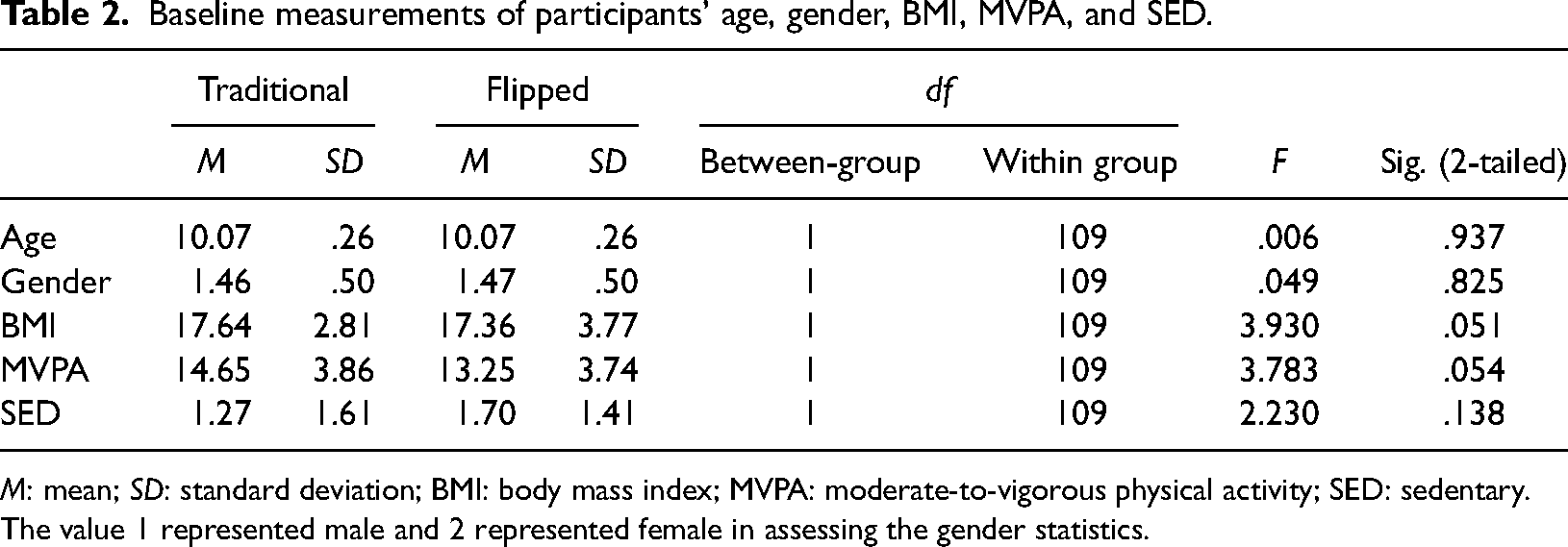
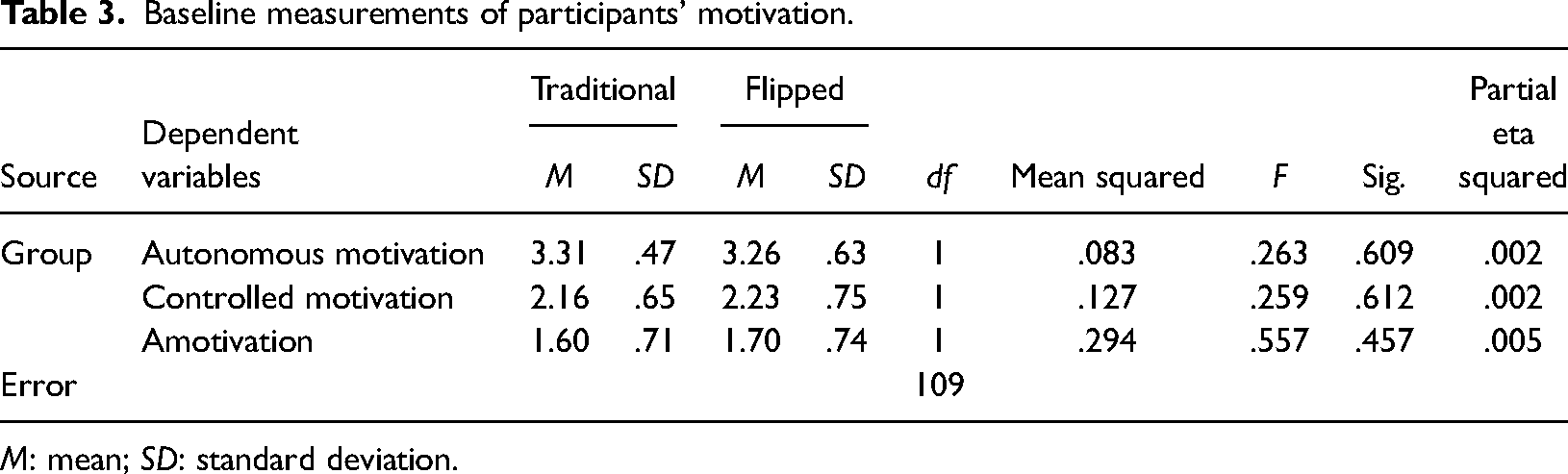
The participants’ responses in the questionnaire survey were converted into numerical representations for further analysis (1 = strongly disagree to 4 = strongly agree). The mean scores were analysed against the scores of individual items. SPSS was used to analyse the data's normality, homogeneity, Ms, SDs, correlations, predictions, and significance. The Kolmogorov–Smirnov test and Levene's test were conducted to assess the assumption of normality and homogeneity of variance. No violations were found in either test. A baseline measurement was performed to determine whether there were significant differences between the two groups in terms of their age, motivation, MVPA and SED levels before the experiment. The analysis of variance (ANOVA; Table 2) and multivariate ANOVA (Table 3) showed no significant differences between the dependent variables of the two groups before the experiment. The marginal difference in MVPA and SED levels may suggest possible baseline differences between the two groups before the experimental lessons. A mixed design with baseline adjustment for MVPA and SED levels was adopted in the statistical analysis to test this study's four hypotheses and reduce the variability of the difference.
Baseline measurements of participants’ age, gender, BMI, MVPA, and SED.
M: mean; SD: standard deviation; BMI: body mass index; MVPA: moderate-to-vigorous physical activity; SED: sedentary.
The value 1 represented male and 2 represented female in assessing the gender statistics.
Baseline measurements of participants’ motivation.
M: mean; SD: standard deviation.
Findings
Baseline measurement
The participants in the two groups did not exhibit any significant differences in terms of their age (F = .006, p > .05), motivation (autonomous motivation F = .263, p > .05; controlled motivation F = .259, p > .05; amotivation F = .557, p > .05), gender (F = .049, p > .05), body mass index (F = 3.930, p > .05), MVPA (F = 3.783, p > .05) and SED levels (F = 2.230, p > .05) before the experiment, as demonstrated in the baseline measurements in Tables 2 and 3.
Hypothesis 1 (H1): Students’ autonomous motivation is higher, and controlled motivation and amotivation are lower, with the flipped learning approach.
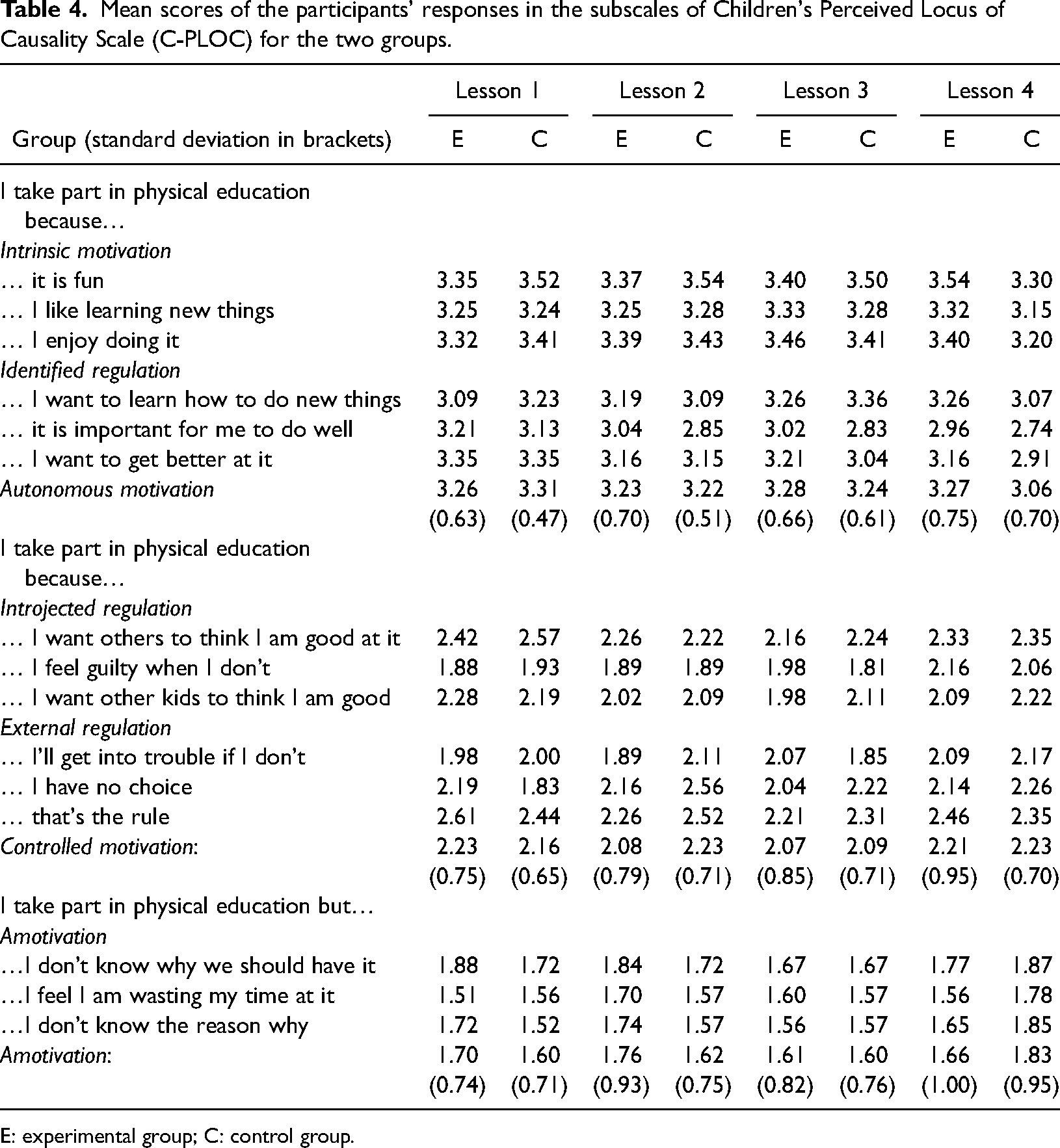
The Ms and SDs of all participants’ motivation scale items are presented in Table 4. The descriptive results showed that in lessons 2 and 3, where flipped learning was used, the experimental group scored higher on autonomous motivation and amotivation. The group scored lower on controlled motivation than the control group. Repeated measures ANOVA revealed significant differences in autonomous motivation (F [3, 327] = 1.99, p < .05) between the two groups but not controlled motivation (F [3, 327] = 2.36, p > .05) and amotivation (F [3, 327] = 1.89, p > .05). These results partially supported H1.
Hypothesis 2 (H2): Students’ MVPA levels are higher and SED levels are lower with the flipped learning approach.
Mean scores of the participants’ responses in the subscales of Children's Perceived Locus of Causality Scale (C-PLOC) for the two groups.
E: experimental group; C: control group.
The Ms and SDs of all of the participants’ PA levels are presented in Table 5. The descriptive results showed that in lessons 2 and 3, where flipped learning was used, the experimental group scored higher on MVPA levels and lower on SED levels than the control group. The results of two mixed ANOVAs indicated significant differences in MVPA levels (F [2, 218] = 32.22, p < .05) and SED levels (F [2, 218] = 7.96, p < .05) between the two groups during the quasi-experimental lessons. These results supported H2.
Hypothesis 3 (H3): Students’ MVPA levels are positively correlated with their autonomous motivation, controlled motivation and amotivation within the flipped learning approach.
Participants’ MVPA and SED within the four-lesson learning unit.
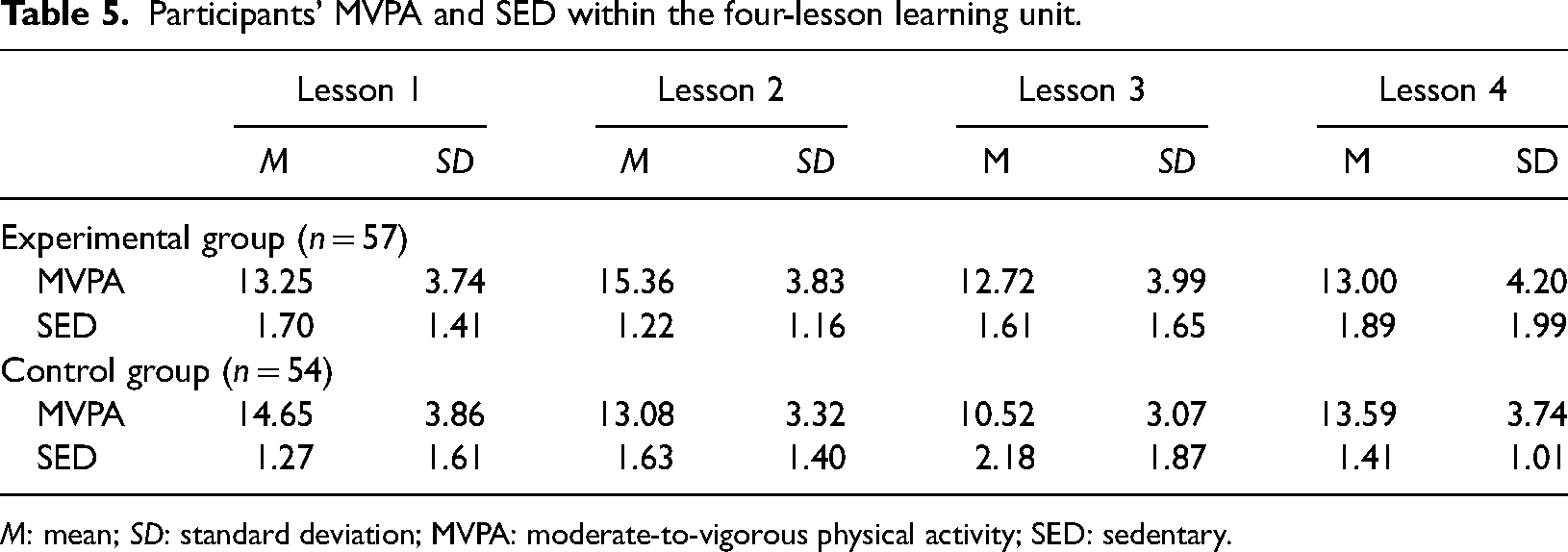
M: mean; SD: standard deviation; MVPA: moderate-to-vigorous physical activity; SED: sedentary.
A bivariate analysis was conducted to assess the correlations between MVPA levels and the motivation scale item ratings in the experimental and control groups. No significant correlation was found between MVPA levels and any of the ratings for the control group. The results in Table 6 showed no significant correlations between MVPA levels and the motivation scale item ratings in lesson 1 (n = 57, p > .05), lesson 2 (n = 57, p > .05), or lesson 4 (n = 57, p > .05) for the experimental group. A positive and significant correlation was found between MVPA levels and the ratings of autonomous motivation items in lesson 3 (r = .266, n = 57, p < .05) but not in the ratings of controlled motivation (r = −.222, n = 57, p > .05) or amotivation (r = −.204, n = 57, p > .05).
Correlations between MVPA and motivation scale items for the two groups.
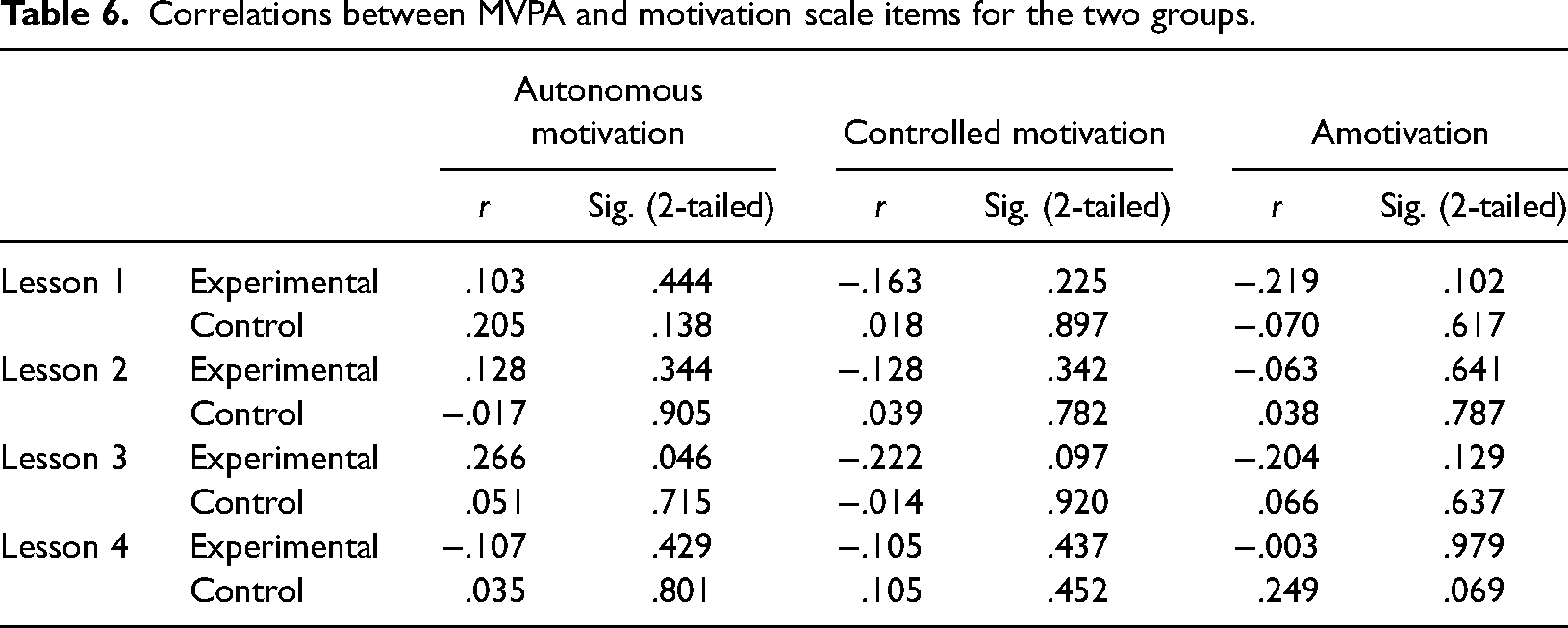
A linear regression was conducted to investigate the relationship between MVPA levels and the motivation scale item ratings for the experimental group in lesson 3. Results showed that the autonomous motivation items (p = .046, R2 = .071, R2adjusted = .054) positively predicted MVPA levels (β = 1.603, p < .05).
H3 was partially supported. Positive correlations were found between MVPA levels and autonomous motivation items for the experimental group in lesson 3, where flipped learning was used as the teaching approach, but not in lesson 2.
Hypothesis 4 (H4): Students’ SED levels are negatively correlated with their autonomous motivation, controlled motivation, and amotivation within the flipped learning approach.
A bivariate analysis was conducted to assess the correlations between SED levels and motivation for the experimental and control groups. No significant correlation was found for the control group. The results in Table 7 showed no significant correlations between SED levels and the motivation scale item ratings in lesson 1 (n = 57, p > .05), lesson 2 (n = 57, p > .05), or lesson 4 (n = 57, p > .05) for the experimental group. A negative and significant correlation between SED levels and autonomous motivation (r = −.313, n = 57, p < .05) was found in lesson 3 but not in the ratings of controlled motivation (r = .087, n = 57, p > .05) or amotivation (r = .213, n = 57, p > .05).
Correlations between sedentary (SED) and motivation scale items for the two groups.
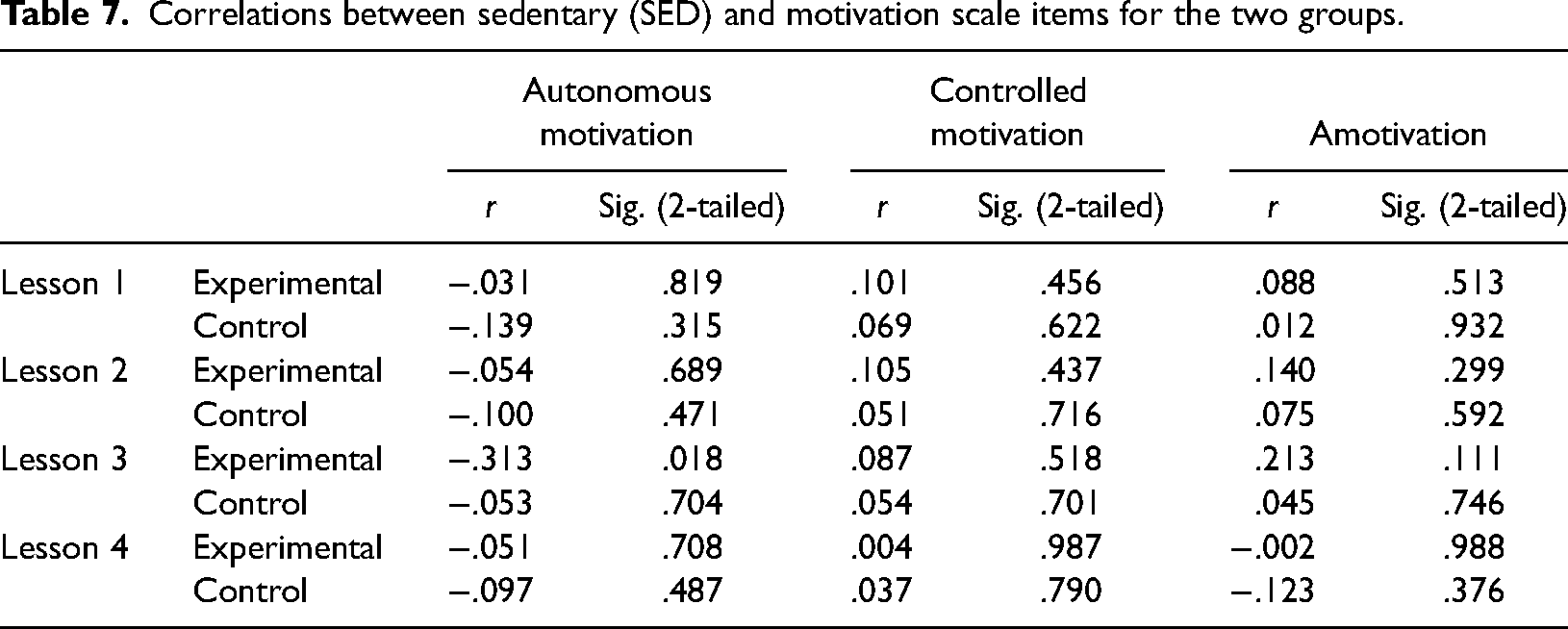
A linear regression was conducted to investigate the relationships between SED levels and motivation for the experimental group in lesson 3. Results showed that autonomous motivation (p = .018, R2 = .098, R2adjusted = .082) was a positive predictor of SED levels (β = −.780, p < .05).
H4 was partially supported. Significant negative correlations were found between SED levels and autonomous motivation in the experimental group in lesson 3, where flipped learning was used as the teaching approach, but not in lesson 2.
Discussion
This study examined the association of students’ motivation, PA levels, and SED behaviour with flipped learning during PE lessons. The findings revealed students’ autonomous motivation and MVPA levels were higher, and SED levels were lower, with the flipped learning approach. The enhanced MVPA levels and reduced SED behaviour were correlated with and predicted by their autonomous motivation but not controlled motivation and amotivation. These findings are consistent with previous studies in other sports or educational contexts (Botella et al., 2021; Fenton et al., 2014; Gao et al., 2008; Ha and Ng, 2015). While the association between autonomous motivation and MVPA levels/SED behaviour was consistent with the existing body of literature, other studies have reported inconsistent results about the association between them and controlled motivation (Fenton et al., 2014; Owen et al., 2013; Vierling et al., 2007) or amotivation (Aelterman et al., 2012; Standage et al., 2012). This may be explained by the different contexts where such associations were examined. While this study has contributed to clarifying the associations between students’ motivation and PA levels with the adoption of flipped learning in PE lessons, further studies are needed to distinguish the relationships in other settings to inform the design of teaching and learning strategies in promoting PA levels.
Since the association between autonomous motivation and MVPA levels/SED behaviour was more consistent than controlled motivation and amotivation, adopting a flipped learning approach may potentially help stimulate students’ motivation and cultivate them to become autonomous learners simultaneously. This could be beneficial to the development of PE in Hong Kong schools, where the younger generations have been found to be less motivated to formulate plans for their engagement in PA (Duan et al., 2015). Students with higher personal autonomy are more likely to take good care of their physical wellness and health (Williams et al., 2010).
Flipped learning may be new to some PE teachers, who may doubt its pedagogical usefulness due to a lack of experience with this type of teaching (Koh et al., 2020). While studies have provided evidence for the effectiveness of flipped learning in PE, teachers’ knowledge and skills are also important factors in the effective implementation of the flipped learning approach and the provision of autonomous learning experiences to students (Abula et al., 2020; Østerlie, 2016). As flipped learning is a novel approach in school education, professional development is needed to equip PE teachers with the relevant knowledge and skills for effective implementation in a school context.
Limitations
The study had several limitations. This study used ActiGraph GT3X wearable triaxial accelerometers, to measure and determine participants’ MVPA and SED levels. Previous studies have noted the limitation of this type of monitoring device regarding accuracy (Mantua et al., 2016; Mikkelsen et al., 2020), especially for the measurement of SED behaviour (Kim et al., 2015). However, it is still a convenient and cost-effective solution for PA measurement. All participants were from the same primary school in Hong Kong and may have shared similar socio-economic characteristics. Although these factors may not have had a significant impact on students’ behaviour during the PE lessons, future studies in various school settings may help clarify the association between students’ socio-economic background and the learning effectiveness of flipped learning. Since the intervention period of this study was limited to a four-lesson learning unit, a longer time is needed to investigate the effect of duration on students’ PA behaviour. The same PE teacher taught the traditional and flipped learning lessons because of the practical class schedule. Although the trust built between the students and the teacher could facilitate the experiment, bias might be introduced. For example, the teacher might have subconsciously guided the students towards specific results. To minimise the effect of this bias, the research team discussed and ensured the consistency of the teaching content and style in the four-lesson learning unit.
Conclusions
This study revealed the potential of flipped learning to enhance students’ MVPA levels and reduce their SED behaviour during primary school PE lessons. Autonomous motivation was found to be a positive predictor of MVPA levels and a negative predictor of SED behaviour, and it thus has the potential to synergise the motivational effect of flipped learning with prolonged engagement in PA. Further investigation into whether the effects of flipped learning could be sustained outside PE lessons is recommended. Further study directions could involve the triangulation of quantitative and qualitative data through a mixed-methods approach, which could provide different perspectives on how flipped learning could benefit the teaching and learning of PE.
Footnotes
Declaration of conflicting interests
The author(s) declared no potential conflicts of interest with respect to the research, authorship, and/or publication of this article.
Funding
The author(s) received no financial support for the research, authorship, and/or publication of this article.
