



Abstract
Body image has implications for child and adolescent well-being. Schools have been positioned as a suitable site to provide body image education and support the development of body image; however, little is known about the role of physical education in body image education. The aim of this study was to systematically review the evidence on the content and effectiveness of physical education-based body image or body-focused programmes published between 2000 and 2021. Using seven databases (Web of Science, SCOPUS, EBSCO, PsycINFO, MEDLINE, Science Direct, and SportDiscus), a total of 1185 non-duplicated articles were retrieved. The articles were selected using the following inclusion criteria: (a) intervention, programme or curriculum based in physical education that explores body image or related phenomena, (b) focused on children or young people, aged 18 years or younger, (c) conducted between 2000 and 2021, (d) quantitative and/or qualitative methods: and (e) published in English. Following the screening process, a total of 19 articles were included in this review. Results showed that most programmes reported successful outcomes, yet there was no consistent approach to the programme design and delivery. Physical activity and fitness-based programmes were the most frequently used intervention type, followed by critical sociocultural perspectives and programmes focused on movement experiences and body functionality. Whilst fitness-based programmes were generally effective in improving body image and related phenomena, future research should explore the mechanisms associated with these changes and further consider how sociocultural perspectives can be used to support body image programmes.
Introduction
In policy and practice, there is increased recognition of the role that schools, and specifically physical education programmes, can play in supporting the development of body image in the United Kingdom (Women and Equalities Committee Report, 2021; Youth Select Committee, 2017). It is generally accepted that body image is a multi-dimensional construct and consists of four main domains: perceptual (how we perceive our body), affective (how we feel about our body), cognitive (the thoughts and beliefs we have about our body) and behavioural (the behaviours we engage in when we are happy/unhappy with our bodies) (Ricciardelli and Yager, 2015). However, it is important to acknowledge that body image means different things to different researchers and can include concepts such as body anxiety, body esteem, body shame, appearance satisfaction, body concern, etc. (Grogan, 2016). There is also a growing emphasis on positive body image, which stems from positive psychology and explores the links between body image and well-being (Halliwell, 2015). In order to capture the diversity of definitions and conceptualisations of body image in the literature, the current review will define body image as an umbrella term that relates to the thoughts, feelings, emotions or perceptions of an individual, in relation to their physical appearance (Cash, 2004; Grogan, 2016; Yager et al., 2013).
Among children and young people, body image concerns have been described as a ‘normative discontent’ (Cash and Henry, 1995), with 66% of young people under 18 reporting negative or very negative feelings about their body image most of the time (Women and Equalities Committee, 2021). Whilst some research reports that body image concerns are more prevalent in female adolescents, compared to males (Bucchianeri et al., 2013), others argue that it is the manifestation of body image concerns that differ between boys and girls (Kerner et al., 2018). For example, in a physical education-based study, levels of body dissatisfaction were found to be comparable, with approximately 80% of boys and girls experiencing body image concerns (Kerner et al., 2018). The negative consequences associated with body image concerns are evident across a range of health and well-being outcomes in both boys and girls. For example, body dissatisfaction is positively associated with quality of life impairment in adolescents (Griffiths et al., 2017). Furthermore, adolescent body dissatisfaction also prospectively predicts depressive symptoms, disordered eating outcomes and risky health behaviours in early adulthood (Bornioli et al., 2019; Sharpe et al., 2018). Given the prevalence of body image dissatisfaction in young people, alongside the detrimental impact that these concerns can have on well-being, urgent action is needed to support the development of body image in young people (Youth Select Committee, 2017).
Schools have been positioned as a site to support the development of body image, as they offer a pre-existing learning environment, and provide core lifelong learning experiences and the opportunity to encourage positive health behaviours (e.g. Yager et al., 2013; Youth Select Committee, 2017). Yet, a recent UK government report by the Women and Equalities Committee (2021) found that 70% of young people had not learnt about body image at school, with 78% stating they would like the opportunity to engage in body image education. The majority of school-based body image interventions and programmes have been developed for use in Personal, Social and Health Education and focus on developing media literacy and self-esteem (Yager et al., 2013). Yet, the Youth Select Committee (2017) recommends that a whole-school approach to body image education needs to be implemented. Whilst it has been recognised that physical education has the potential to create state increases in body dissatisfaction (Kerner et al., 2018), it has also been positioned as a body-focused subject (Armour, 1999). It is a curriculum area that has a role to play in supporting the development of body image due to the relationships between body image and physical activity (Sabiston et al., 2019) and the potential for the subject to focus on the functional qualities of the body (Youth Select Committee, 2017).
Previous systematic reviews have explored the impact of body image programmes, interventions or curricula in classroom-based settings (Yager et al., 2013) and the relationship between body image and physical activity (Sabiston et al., 2019). The systematic review of classroom-based programmes included studies that the authors categorised as ‘regular classroom-curriculum settings’(Yager et al., 2013). Whilst the authors did not define ‘regular classroom-curriculum settings’ they did exclude physical education-based studies on the basis that this criterion was not met. This review concluded that effective programmes centred on themes such as media literacy, peer influence and self-esteem (Yager et al., 2013). The current systematic review specifically focuses on body image in physical education contexts. Based on the aforementioned, the purpose of this paper is to review research on physical education-based body image/body-focused programmes, interventions or curricula and explore the content and effectiveness of these.
Methodology
Search strategy
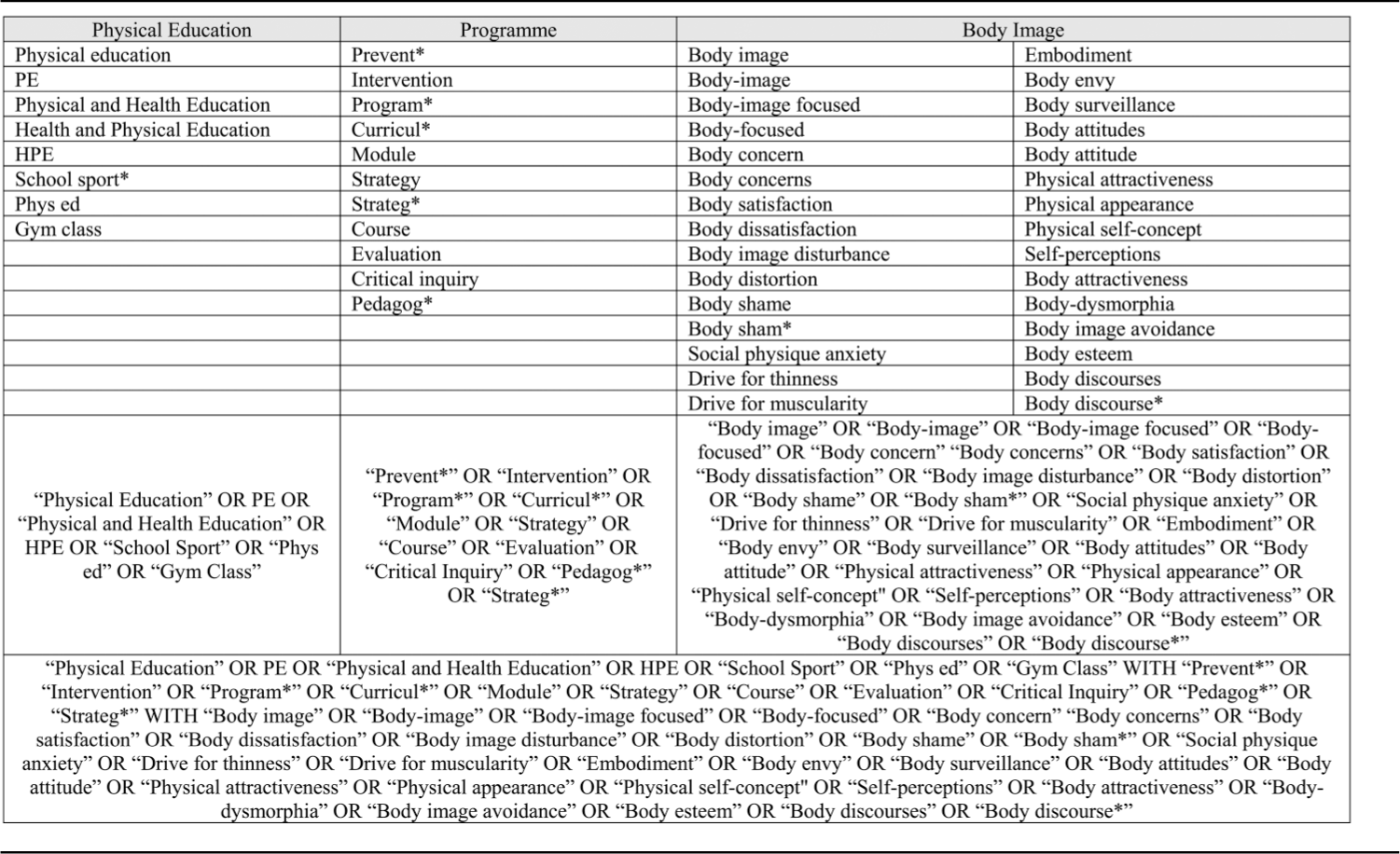
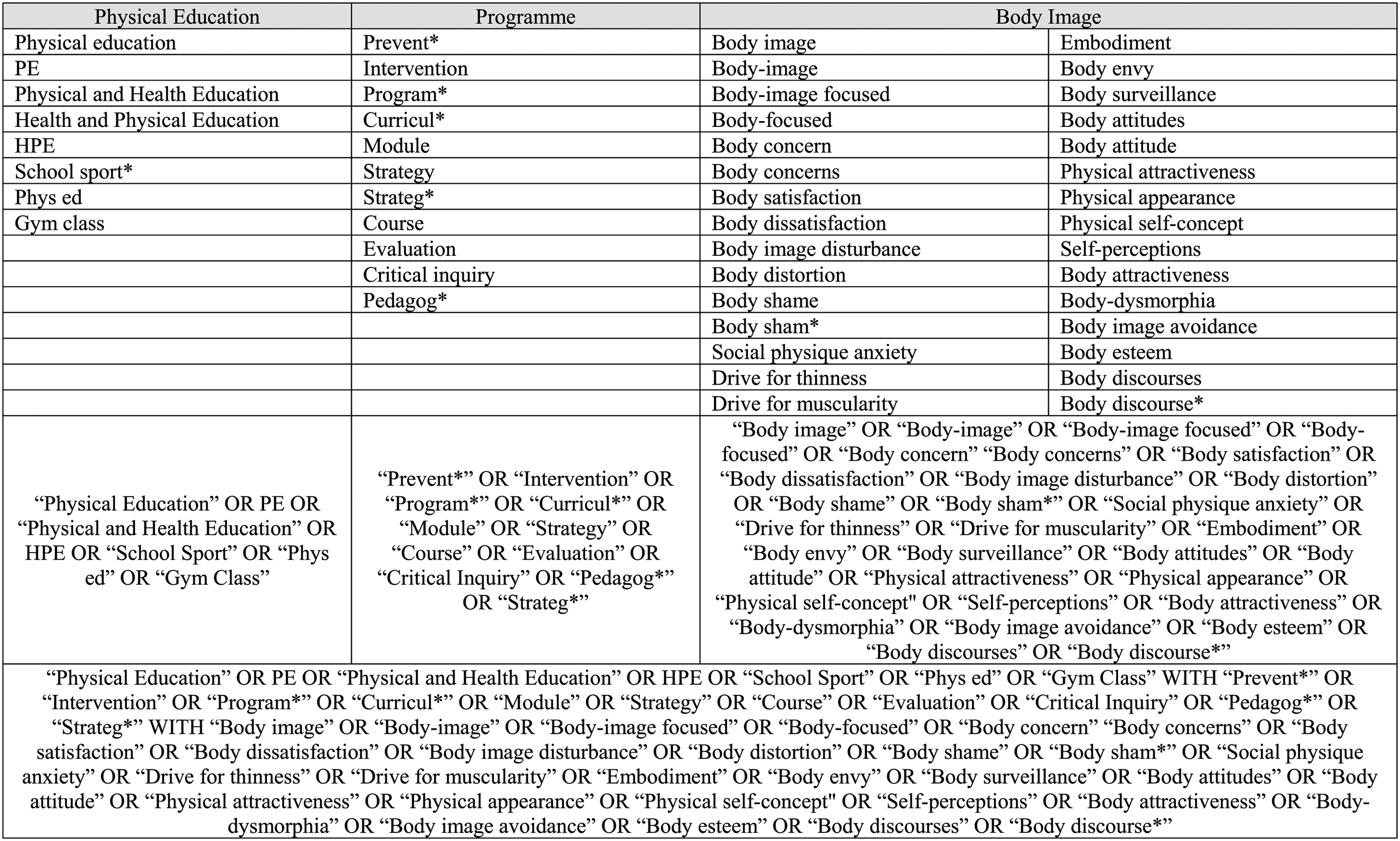
This systematic review was undertaken using the preferred reporting items for systematic reviews and meta-analyses (PRISMA) guidelines (2020) and employed a narrative synthesis of data. An extensive and comprehensive search of seven scientific databases (Web of Science, SCOPUS, EBSCO, PsycINFO, MEDLINE, Science Direct, and SportDiscus) was conducted by the second author. Following this, a range of journals publishing work in the areas of physical education and/or body image (Sport, Education and Society; Body Image; European Physical Education Review; and Physical Education and Sport Pedagogy) were also searched by the second author. This journal search was conducted as a supplementary approach to check the inclusivity of the search terms and identify studies that may not have been captured through the database search; however, no new studies were identified. A search for grey literature was also conducted, with the call for literature posted on the first author's professional social media account. To further strengthen the scope of the search, the first author identified five key papers related to the research question, while the second author conducted a manual search of reference lists. As can be seen in Table 1, the search strategy included a combination of the following terms: physical education, programme and body image. Each term was searched separately, then terms were grouped together within their category as a string. After all categories were searched, all terms were inputted together into the databases to yield the most specific articles. The English Boolean data types of ‘and’, ‘or’, and ‘*’ were used. Search terms for body image were developed using previous systematic reviews (Sabiston et al., 2019; Yager et al., 2013), whilst also considering the multi-disciplinary nature of physical education body-focused research and the varying ways that discontent with the body has been defined. This review therefore explored body image and related phenomena that considered content or discontent with physical appearance, with all terms discussed and agreed upon by the research team. Examples of body image constructs used in the current study include body dissatisfaction, body shame and body attitude. Related phenomena include the body attractiveness/physical attractiveness component of physical self-perceptions. This study included physical self-perceptions and related terminology in the search strategy. This was done because ‘body attractiveness’ or ‘physical attractiveness’ are components within the concept, i.e. an assessment of how physically attractive someone perceives themselves.
Search terms used in all databases.
Inclusion and exclusion criteria
In line with the PRISMA framework, detailed inclusion and exclusion criteria were created. Peer-reviewed papers and grey literature published between 2000 and 2021 and written in English were assessed for suitability. A grey literature search is an important component of a systematic review as it allows for a balanced picture of existing evidence (Paez, 2017). Further inclusion criteria included: (i) used an intervention/programme/curriculum based in physical education; (ii) explored body image or related phenomena as a primary outcome; (iii) involved children/young people aged 18 years or younger; (iv) used either a qualitative, quantitative or mixed method approach.
Eligibility
Eligibility was assessed across three stages during the review process (see Figure 1, for an overview of the screening process). During stage one, duplicate papers were deleted (602), leaving 1185 papers in the review process. During stage two, the paper titles and abstracts were reviewed for eligibility by the second and third author; papers were excluded if they failed to meet the detailed inclusion criteria listed above. At this stage 1118 papers were excluded, leaving 67. Full texts were then downloaded for independent screening by the second and third author. The research team met to discuss any concerns over eligibility until consensus was reached. Nineteen studies were included within the review, from which the following categories were extracted for analysis: year of publication, body image outcome, study objectives, participant characteristics, method of allocation to study group, study design, outcome measures, analysis, intervention, results, limitations and conclusions.
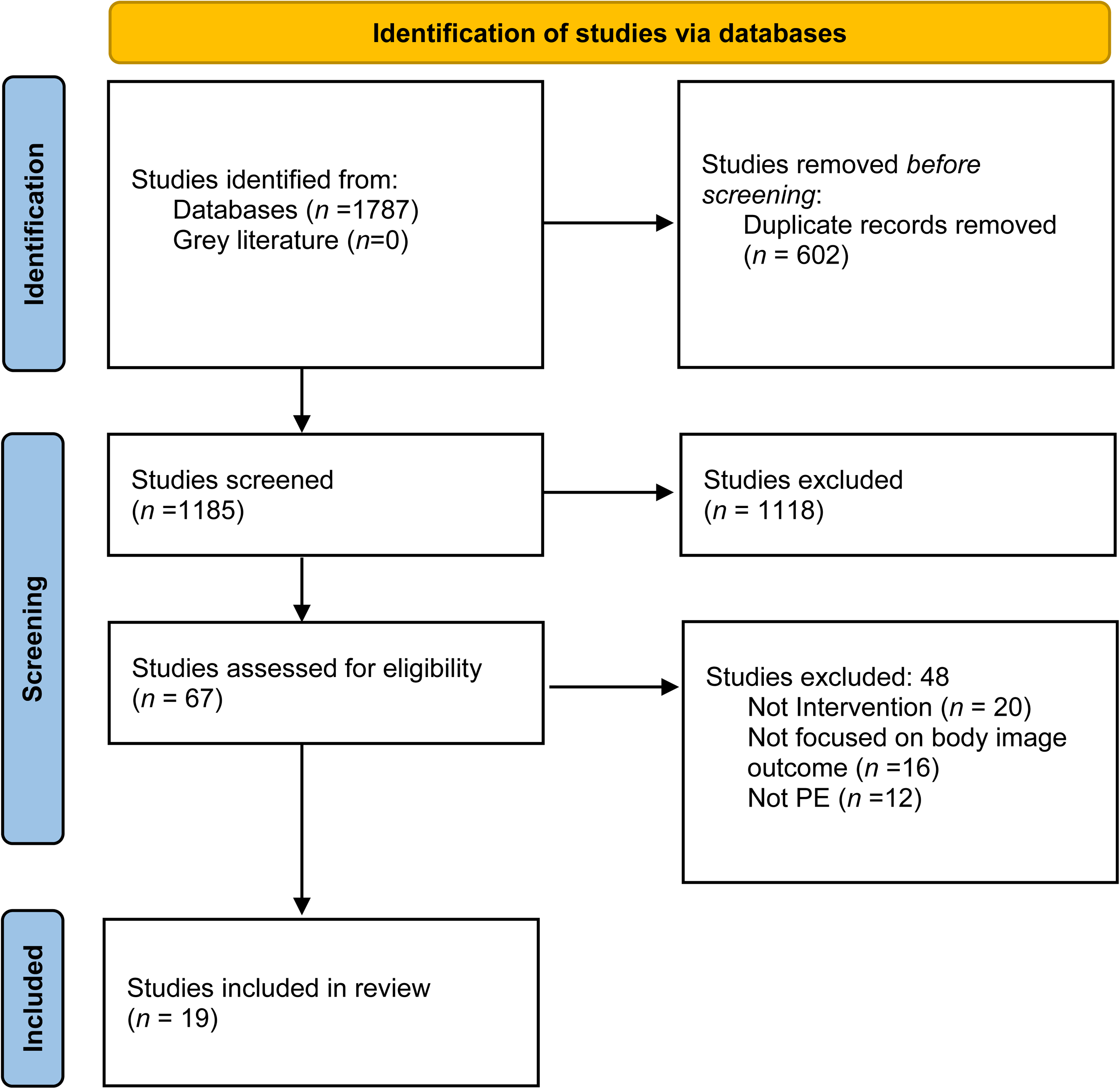
Preferred reporting items for systematic reviews and meta-analyses (PRISMA) 2020 flow diagram of the systematic review process (Page et al., 2021).
Reliability
To assess the quality of the appraisal process, the Mixed Methods Appraisal Tool (MMAT, 2018), one of the most reliable tools for appraising mixed method research (Crowe and Sheppard, 2011), was used. Three reviewers were involved in this process. The stages of the MMAT (Hong et al., 2018) involved: (1) responding to screening questions that assess the clarity and effectiveness of the research questions; (2) categorising the study design; and (3) completing a checklist for each study design category to determine relevant quality characteristics.
Results
Study design
Of the studies included in the review, 14 were quantitative, four were qualitative and one study was mixed method. Two of the qualitative studies used visual participatory methods (Azzarito et al., 2016, 2017), one used field notes and interviews (Gehris et al., 2010) and the other used a combination of observations, focus groups and interviews (Schubring et al., 2021). The mixed method study used a combination of pre–post questionnaires and focus groups (Catunda et al., 2017). Of the quantitative studies, eight were randomised control studies (Christiansen et al., 2018; Costigan et al., 2016; Gibbons et al., 2018; Halliwell et al., 2018; Mayorga-Vega et al., 2012; Neumark-Sztainer et al., 2010; Olive et al., 2019; O’Brien et al., 2008) and six were non-randomised studies (Annesi et al., 2007; Burgess et al., 2006; Cox et al., 2017; Hajihosseini, 2015; McNamee et al., 2016; Plevkova et al., 2018).
Participant characteristics
The majority of studies included both boys and girls in the programme (n = 11) (Annesi et al., 2007; Azzarito et al., 2017; Christiansen et al., 2018; Costigan et al., 2016; Cox et al., 2017; Gehris et al., 2010; Gibbons et al., 2018; Halliwell et al., 2018; Mayorga-Vega et al., 2012; Olive et al., 2019; Schubring et al., 2021) and a smaller proportion included girls only (n = 8) (Azzarito et al., 2016; Burgess et al., 2006; Catunda et al., 2017; Hajihosseini, 2015; McNamee et al., 2016; Neumark-Sztainer et al., 2010; O’Brien et al., 2008; Plevkova et al., 2018). There were no studies included in this review that focused exclusively on boys. For studies that included both boys and girls, no study explicitly stated if the programmes/interventions were conducted in co-educational or single-sex settings. For these studies, traditional gender binary classifications were used when discussing males/females, boys/girls, etc. (e.g. studies did not mention non-binary, gender fluid students). Sample sizes ranged between 3124 (Christiansen et al., 2018) and 17 (McNamee et al., 2016) in quantitative studies, between 11 and 74 in qualitative studies, and the mixed method study contained 102 participants. The age of the participants ranged from 8 to 18 years. Eight studies included participants aged 12 or younger (Annesi et al., 2007; Christiansen et al., 2018; Gibbons et al., 2018; Hajihosseini, 2015; Halliwell et al., 2018; Mayorga-Vega et al., 2012; Olive et al., 2019; O’Brien et al., 2008). Studies were predominantly conducted in the USA (n = 7), Australia (n = 2) and the UK (n = 2).
Purpose of the research
Specific details on the purpose of each programme or intervention can be found in Table 2. The objectives of the studies included in this review can be divided into four categories. First, studies that implemented a programme with the primary aim of impacting body image or related constructs (n = 9) (Azzarito et al., 2016, 2017; Burgess et al., 2006; Catunda et al., 2017; Cox et al., 2017; Halliwell et al., 2018; O’Brien et al., 2008; Plevkova et al., 2018; Schubring et al., 2021). Second, studies that employed a programme with a primary aim of impacting body image or related constructs but also included additional primary outcome measures (n = 2) (Neumark-Sztainer et al., 2010; Olive et al., 2019), such as physical activity, weight control behaviours (Neumark-Sztainer et al., 2010), depression and stress (Olive et al., 2019). The third category of studies focused on developing physical self-perceptions when perceived body attractiveness was included in the outcome measures as a primary aim (n = 6) (Christiansen et al., 2018; Gehris et al., 2010; Gibbons et al., 2018; Hajihosseini, 2015; Mayorga-Vega et al., 2012; McNameee et al., 2016). The fourth category focused on studies that examined physical self-perceptions when body attractiveness was used alongside other outcome measures (n = 2), such as fitness (Annesi et al., 2007; Costigan et al., 2016), mood (Annesi et al., 2007) and cognitive and mental outcomes (Costigan et al., 2016).
Overview of included studies.
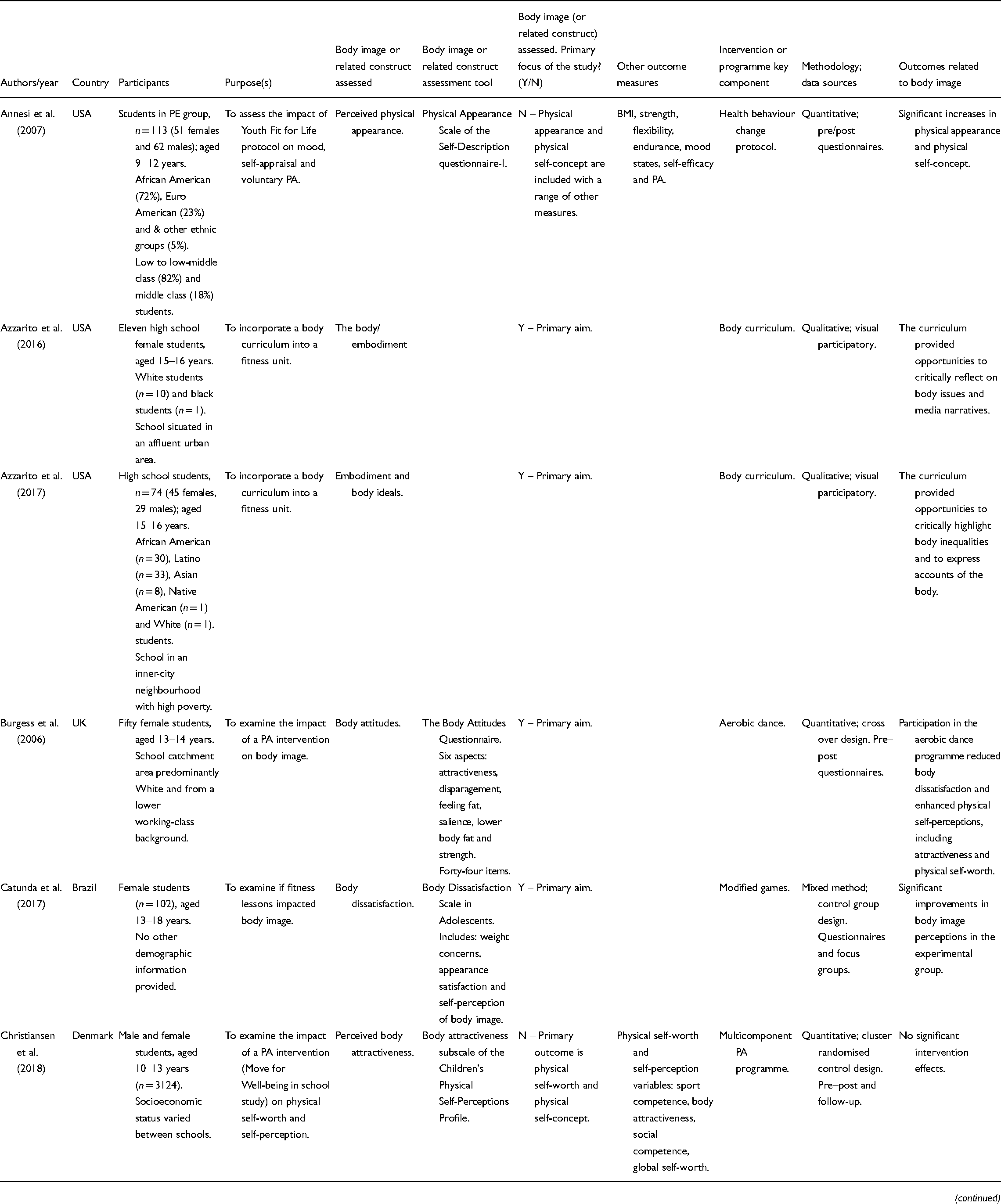
BMI: body mass index; HITT: high-intensity interval training; PE: physical education; RCT: randomised control trial; PA: physical activity; ACPE: adventure curriculum for physical education; TBPC: team building through physical challenges.
Body image or related construct
For body image or related construct measures explored in the studies, the most commonly used measure was the physical attractiveness domain of physical self-perceptions (n = 8). Of the eight studies that explored the perceived physical attractiveness domain of physical self-perceptions, seven were quantitative and were assessed using validated questionnaires, while the qualitative study used interviews (Gehris et al., 2010). For quantitative or mixed method studies that did not focus on physical self-perceptions (n = 8), most studies (n = 5) used one measure of body image, including body attitudes (Burgess et al., 2006), social physique anxiety (O’Brien et al., 2008), body dissatisfaction (Plevkova et al., 2018), body satisfaction (Neumark-Sztainer et al., 2010) and body self-esteem (Olive et al., 2019). Three studies included multiple measures of body image; two studies applied both body surveillance and body appreciation measures (Cox et al., 2017; Halliwell et al., 2018), while one study combined measures of weight concerns and appearance satisfaction (Catunda et al., 2017). Therefore, body surveillance and body appreciation were the second most frequently used quantitative measures after perceived physical attractiveness. Qualitative studies that did not focus on physical self-perceptions explored embodiment and/or ideal bodies (Azzarito et al., 2016, 2017; Schubring et al., 2021), adopted sociocultural perspectives (Azzarito et al., 2016, 2017) or were underpinned by health literacy (Schubring et al., 2021).
Intervention/programme characteristics
Table 3 provides an overview of the characteristics of each intervention or programme, including location, frequency, duration and key components. Five studies focused on increasing physical activity through a variety of means such as guided discovery, multicomponent programmes or modified games (Annesi et al., 2007; Catunda et al., 2017; Christiansen et al., 2018; Neumark-Sztainer et al., 2010; Olive et al., 2019). Five programmes were underpinned by fitness, and included strategies such as health-related fitness or circuit training (Costigan et al., 2016; Hajihosseini, 2015; Mayorga-Vega et al., 2012; McNamee et al., 2016; Plevkova et al., 2018). Two studies incorporated fitness alongside sociocultural elements (Azzarito et al., 2016, 2017), two studies were underpinned by yoga (Cox et al., 2017; Halliwell et al., 2018), and a further two studies incorporated adventure education (Gehris et al., 2010; Gibbons et al., 2018). Moreover, other studies included a sociocultural classroom-based programme (Schubring et al., 2021), an aerobic dance intervention that aimed to promote competence motivation (Burgess et al., 2006) and a curriculum combining critical inquiry with movement experiences (O’Brien et al., 2008).
Overview of intervention or programme characteristics.
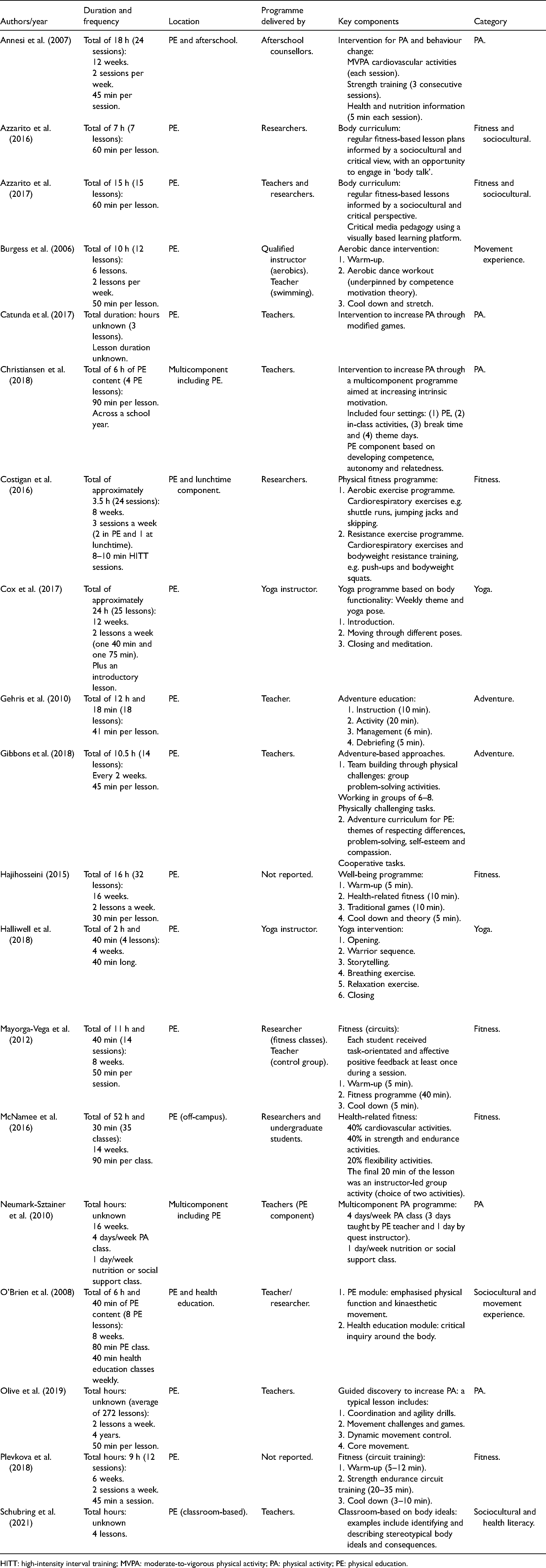
HITT: high-intensity interval training; MVPA: moderate-to-vigorous physical activity; PA: physical activity; PE: physical education.
Programmes focused on increasing physical activity assessed various outcomes including the perceived physical appearance component of physical self-perceptions (Annesi et al., 2007; Christiansen et al., 2018), body dissatisfaction (Catunda et al., 2017), body image (Neumark-Sztainer et al., 2010) and body esteem (Olive et al., 2019). Programmes focused solely on fitness strategies generally assessed the perceived physical appearance component of physical self-perceptions (Costigan et al., 2016; Hajihosseini, 2015; McNamee et al., 2016; Mayorga-Vega et al., 2012); however, one study assessed body dissatisfaction (Plevkova et al., 2018). Both programmes that focused on combining regular fitness-based classes alongside sociocultural elements (e.g. critical media pedagogy) focused on embodiment and body ideals (Azzarito et al., 2016, 2017). Both studies underpinned by yoga incorporated a range of measures including body surveillance, body appreciation and body esteem (Cox et al., 2017; Halliwell et al., 2018), but the two adventure education programmes explored the physical appearance component of self-perceptions (Gehris et al., 2010; Gibbons et al., 2018). Body ideals were the focus of the sociocultural classroom-based programme (Schubring et al., 2021), whilst social physique anxiety was the focus of the study that combined critical inquiry with movement experiences (O’Brien et al., 2008). The aerobic dance intervention assessed body attitudes (Burgess et al., 2006).
Intervention/programme effectiveness
The majority of studies (n = 15) reported that programmes had positive impacts on body image, e.g. decreases in body dissatisfaction, declines in body surveillance and increases in perceptions of physical attractiveness (see Table 2 for specific detail on outcomes). For programmes/interventions that reported no impact on body image outcomes, they varied in approach from a study that combined movement experiences with sociocultural components (O’Brien et al., 2008) to physical activity (Christiansen et al., 2018), adventure education (Gehris et al., 2010) and fitness (Mayorga-Vega et al., 2012). Whilst these particular studies did not report positive impacts on body image, studies underpinned by similar content did report positive outcomes. For example, positive outcomes were identified in studies underpinned by physical activity (Annesi et al., 2007; Catunda et al., 2017; Neumark-Sztainer et al., 2010; Olive et al., 2019) adventure education (Gibbons et al., 2018), fitness (Costigan et al., 2016; Hajihosseini, 2015; McNamee et al., 2016; Plevkova et al., 2018) and those that combined movement with sociocultural approaches (Azzarito et al., 2016, 2017). Therefore, studies underpinned by physical activity, adventure education, fitness and combined sociocultural/movement experiences provided mixed results. Both yoga studies reported positive outcomes on body image (Cox et al., 2017; Halliwell et al., 2018), as did the classroom-based health literacy study (Schubring et al., 2021), and the study underpinned by movement experiences/competence motivation (Burgess et al., 2006).
Eight of the nine studies that implemented a programme with the primary aim of impacting body image or related constructs reported positive outcomes on body-related measures (Azzarito et al., 2016, 2017; Burgess et al., 2006; Catunda et al., 2017; Cox et al., 2017; Halliwell et al., 2018; Plevkova et al., 2018; Schubring et al., 2021). Whilst the remaining study did not report a decline in social physique anxiety in the experimental group, pupils did decrease the value they placed on sex appeal and increase the value placed on physical health and strength (O’Brien et al., 2008). For the two studies that employed a programme with a primary aim of impacting body image or related constructs and also included additional primary outcome measures, improvements in body image were reported at different points during the follow-up period. The study by Neumark-Sztainer et al. (2010) reported significant improvements in body image at nine months follow-up but not directly post-intervention, whereas the study by Olive et al. (2019) reported a decrease in body dissatisfaction one-year post-intervention; however, these changes were not sustained over time (four years).
Of the six studies that focused on developing physical self-perceptions, when perceived body attractiveness was included in the outcome measures as a primary aim, four studies reported increases in the perceived physical appearance domain (Christiansen et al., 2018; Gibbons et al., 2018; Hajihosseini, 2015; McNameee et al., 2016). Of the remaining two studies, one qualitative study reported that students did not feel the appearance component was relevant to adventure education (Gehris et al., 2010), and the second study showed no significant differences in physical appearance perceptions post-intervention (Mayorga-Vega et al., 2012). Both studies that examined physical self-perceptions when body attractiveness was used alongside other outcome measures reported positive intervention effects (Annesi et al., 2007; Costigan et al., 2016).
The impact that overall programme duration had on effectiveness cannot be established in the current review, as there was a large variation in overall duration between successful and unsuccessful programmes. For example, successful programmes ranged from a total of 2 h 40 min (Halliwell et al., 2018) to 52 h (McNamee et al., 2016), whereas unsuccessful programmes ranged from 6 h (Christiansen et al., 2018) to 12 h 18 min (Gehris et al., 2010) (see Table 3 for further information). Information on who delivered programmes/interventions can be found in Table 3. Two studies that reported no impacts on body image were delivered by teachers (Christiansen et al., 2018; Gehris et al., 2010), yet five studies delivered by teachers alone had successful impacts on body image outcomes. Other studies that reported no impacts on body image outcomes were delivered by a teacher/researcher (O’Brien et al., 2008) and jointly delivered by a teacher and researcher (Mayorga-Vega et al., 2012).
Discussion
The aim of this systematic review was to describe the content and effectiveness of physical education-based body image/body-focused programmes, interventions or curricula. The review identified 19 studies that focused on delivering programmes, interventions or curricula that aimed to impact body image or related phenomena in physical education. This section reflects upon the findings and considers the implications for practice and future research. The review identified that most programmes reported successful outcomes, yet there was no consistent approach to the programme design and delivery, with a range of programme characteristics reported across the studies. Thus, it is evident from our findings that there is no clear consensus about the ways to deliver body image education in physical education. This discussion will consider the effectiveness of three broad categories of programmes, including studies that focused on (1) elements of physical fitness or physical activity, (2) sociocultural approaches and (3) approaches underpinned by movement experiences (e.g. yoga and adventure education).
The majority of studies in this review focused on increasing physical activity or were fitness-based programmes, including programmes that integrated components of fitness development alongside other programme elements. Fitness-based programmes tended to focus on physical self-perceptions, but were generally successful in positively impacting the appearance domain. However, the mechanisms through which changes in perceived physical attractiveness or body image occurred were unclear and often not reported in studies. It is proposed that physical activity impacts body image through changes to the physical self, perceptions of changes to the self or changes in confidence (Martin Ginis et al., 2012). In relation to changes to the physical self, five studies included in this review incorporated pre–post measures of body mass index (BMI) or body fat (Burgess et al., 2006; Hajihosseini, 2015; McNamee et al., 2016; Neumark-Sztainer et al., 2010; Plekova et al., 2018), with only one study demonstrating significant changes in body fat or weight measures (Hajihosseini, 2015). This highlights that body image and related outcomes can change independent of changes to the physical self. Nonetheless, a physical activity-based intervention included in this review hypothesised that intervention groups would decrease body fat and BMI while increasing physical activity levels (Neumark-Sztainer et al., 2010); therefore, it could be argued that some studies expect the actual physical changes in body composition to subsequently contribute to the psychological perceptions of the aesthetic body. Future research should report the proposed mechanisms of change associated with the intervention or programme.
Whilst increased physical activity is likely to be associated with more positive perceptions of the body (Sabiston et al., 2019), physical activity or physical fitness-based programmes alone do not seek to challenge dominant ideologies relating to body shape and size, and arguably instead reinforce them. For example, focusing on changes in body composition as a means of enhancing body satisfaction is likely to align with dominant ideals related to the gendered and ‘healthy’ body (e.g. slim and/or muscular). There is the risk that if interventions or programmes have an emphasis on using physical activity and exercise as a means of changing the physical self, young people may perceive that the route to body satisfaction is through using exercise to shape and control the body. This could be problematic, as appearance-related exercise goals are linked with lower levels of body image in adults (Hurst et al., 2017), and may impede the ability of young people to challenge the wider sociocultural contexts that their bodies inhabit.
The evidence from this review suggests that there is potential in programmes that promote movement whilst simultaneously providing young people with the skills to challenge dominant discourses around physical activity and body image. It could be argued that studies combining fitness-based components with sociocultural perspectives have the potential to harness some of the benefits of fitness only programmes, whilst also allowing young people to engage in critical conversations relating to the body. Programmes that incorporate opportunities to discuss, challenge and critique the impact of the wider sociocultural context with teachers and peers, provide a platform for young people to also develop a critical awareness of the role of society in shaping their perceptions of attractiveness and health (Azzarito et al., 2016, 2017). Previous successful classroom-based programmes have incorporated content related to appearance ideals, media messages and social comparisons (e.g. Diedrichs et al., 2021) and the success of these classroom-based approaches has been confirmed in a systematic review (Yager et al., 2013).
The current review also highlighted the potential of programmes that focus on movement experiences, such as yoga and adventure education. In relation to movement experiences, body image programmes underpinned by yoga focus on the empowering nature of movement and allowing individuals to appreciate functional components of the body (Halliwell et al., 2018). The yoga programmes were underpinned by body functionality and the notion that focusing on body capabilities would decrease the value placed on the physical appearance of the body (Cox et al., 2017). Body functionality interventions have been successfully used in adult body image programmes (e.g. Alleva et al., 2016), typically through incorporating reflective writing activities (e.g. Alleva et al., 2010); however, physical education provides a space to engage with body functionality-based programmes in an applied movement context. This review confirms that yoga interventions, when delivered in the context of body functionality, show promise in physical education. Adventure education may also impact body image through increased body functionality in adults (e.g. Mitten and Woodruff, 2010), yet the two adventure education studies included in this review provide mixed outcomes. Indeed, both of these studies were focused on changing multiple outcomes relating to self-concept; body attractiveness was not the sole programme focus. For studies focused on changing multiple outcomes, it is difficult to determine and isolate the proposed mechanisms through which the intervention impacts perceived attractiveness.
To our knowledge, this is the first systematic review to explore the content and effectiveness of physical education-based body image/body-focused programmes, interventions or curricula; however, findings should be interpreted in light of its limitations. Whilst this study acknowledged body image is a multifaceted concept (Cash, 1994) the lack of consistency in terminology and measurement (Kling et al., 2019) makes comparisons across studies difficult. However, the decision to include body image and related phenomena was based on the multi-disciplinary nature of physical education research. Furthermore, the use of English only publications has the potential to overlook research published in other languages, which may exclude important studies and disregard the importance of cultural variations. Furthermore, given that studies tend to focus on discussions of body image in relation to traditional gender binaries, future research may adopt more nuanced approaches to the exploration of body image in physical education.
Conclusions
This systematic review provides a comprehensive and critical overview of the literature that explores the content and effectiveness of physical education-based body image programmes or interventions and identified several promising programme types. The most frequently used programmes focused on either enhancing physical activity or implementing fitness-based strategies. Whilst these programmes appear to be effective in supporting body image, programmes focused on movement experiences (e.g. yoga and adventure education), body functionality and sociocultural approaches also show promise. The findings of this systematic review highlight that physical education-based body image programmes can have positive impacts on attitudes and perceptions of the body. The impact that the programme deliverer (e.g. teacher, researcher, and instructor) and programme duration had on programme outcomes cannot be determined in the current review and should be explored in future research. Future research and practice should also focus on determining the mechanisms of change associated with body image programmes and should explore the promising potential of content that focuses on movement experiences, body functionality and sociocultural approaches. Evaluating how physical education-based approaches compare to classroom-based approaches and how these approaches can be used to support a whole-school approach to body image education could also be a direction of future research.
Supplemental Material
sj-docx-1-epe-10.1177_1356336X221097318 - Supplemental material for A systematic review exploring body image programmes and interventions in physical education
Supplemental material, sj-docx-1-epe-10.1177_1356336X221097318 for A systematic review exploring body image programmes and interventions in physical education by Charlotte Kerner, Amy Prescott, Robyn Smith and Michael Owen in European Physical Education Review
Footnotes
Acknowledgements
The authors would like to thank Joanne Mcphie for the support provided in developing the search strategy. We would also like to thank Professor Louise Mansfield and Dr Kate Hoskins for their guidance with the project.
Declaration of conflicting interests
The authors declared no potential conflicts of interest with respect to the research, authorship and/or publication of this article.
Funding
This research was funded by the Brunel University London BRIEF award.

Supplemental material
Supplemental material for this article is available online.
Author biographies
References
Supplementary Material
Please find the following supplemental material available below.
For Open Access articles published under a Creative Commons License, all supplemental material carries the same license as the article it is associated with.
For non-Open Access articles published, all supplemental material carries a non-exclusive license, and permission requests for re-use of supplemental material or any part of supplemental material shall be sent directly to the copyright owner as specified in the copyright notice associated with the article.
