



Abstract
Visual culture affects the way people understand the world and themselves, contributing to the creation of certain roles and stereotypes, some of which are related to body image. This study focused on interrogating future physical education teachers’ beliefs about the body and physical activity to understand the construction of bodily subjectivities and their perceptions of how these are influenced by visual (physical) culture. Data were collected through the use of visual methods consisting of photo-elicitation and individual interviews with 23 students from a Primary Education Degree with a specialization in physical education at a Spanish university. Data were analyzed using thematic content analysis. The results of the study show that these future physical education teachers are aware of both the great influence of gender stereotypes and the values of consumerism in the field of physical activity stemming largely from the media, which inevitably will shape their future professional practice. However, the results also highlight how these future physical education teachers consider and position the subject of physical education as an important space where they could help students problematize and challenge these beliefs. We suggest that a focus on visual (physical) literacy is needed for future physical education teachers (and their students) to understand the world from a socially critical perspective and transform it in the interest of equity and social justice.
Introduction
Physical education (PE) is a subject imbued with different discourses—as associated with, for instance, health, sport, education, the body and physical activity—that make it subject to different perspectives and interpretations. Discourses are practices that systematically form the objects of which they speak (Foucault, 1972), thus playing an important role in the (re)production of subjectivities and influence on PE teachers’ practices since they embody and symbolize social meanings and relationships. Several studies indicate that students’ previous experiences influence the attitudes, beliefs, and practices of future teachers (González-Calvo et al., 2014; González-Calvo and Fernández-Balboa, 2018; Virta et al., 2019; Korthagen and Kessels, 2009). Thus, it is common for students who enter initial teacher education (ITE) programs to do so with deep-rooted conceptions of teaching and learning, of which they are sometimes unaware (Feiman-Nemser, 2001). As ITE PE teacher educators, we understand the importance of implementing learning opportunities that allow future PE teachers to give voice to and critically reflect on their own personal experiences (González-Calvo et al., 2020). Facilitating such a critical reflection can help both us as PE teacher educators and future PE teachers understand their perceptions of the subject and their valuing of what the subject’s educational contribution is as framed by defined curricular standards (Holt and Persse, 2015).
Although dominant discourses, power relations, and truth regimes are embodied by social institutions (e.g. schools) and thus resilient to change in the long term, they can also be challenged and transformed by people’s resistance (Foucault, 1988). In this sense, we believe that it is important to recognize that teachers (and students) are not simply passive victims of discourses. Rather, they are in a position to resist and/or negotiate those discourses and power relations (Azzarito et al., 2017), opening up for new perspectives and problematizing “absolute truths” (Foucault, 1972, 1988) such as “truths” about the body and physical activity in PE. To interrogate and problematize the beliefs about the body and physical activity held by future PE teachers, in this study we explored their visual representations and interpretations of images conveying different meanings of the body and physical activity. In doing so, this study aimed to add to our understanding of how future PE teachers’ beliefs about the body and physical activity, as seen and interpreted through the visual, influence their emerging development of embodied professional teaching subjectivities (Varea and Pang, 2018).
Visual culture, the body, physical activity, and PE
Nowadays, we are exposed to a great deal of visual information through social networks, cinema, advertising, and other media, whose content reaches a greater number of people (and in less time) than in past decades due to the development of Information and Communication Technologies (ICT) such as the internet and social media. A key aspect of this visual content is that its production is never “innocent”, since visual imagery helps us interpret the world and establish beliefs, mental representations, and attitudes that modify the conception of reality (Rose, 2012). Consequently, visual culture affects the way in which people understand the world and themselves, and it is therefore necessary to become visually literate and look beyond the text, in order to revise visual representations and rebalance traditionally subordinate subjective positions (Hernández, 2005) as associated with, for instance, gender, sexuality, ethnicity, class, etc. Such subordinate subjective positions also constitute and are constituted by the body (Butler, 1990; Foucault, 1972).
There now exists a wealth of literature that discusses the body and body image in PE from a sociocultural perspective (e.g. Azzarito, 2009; Evans and Rich, 2011; Kerner et al., 2018). This includes, for example, how PE teachers’ understanding of their bodies influences their teaching (e.g. González-Calvo et al., 2020; Wrench and Garrett, 2015), and how PE teachers are usually considered as (bodily) role models for students (Varea, 2016; Webb et al., 2008). Some studies show that PE teachers have narrow views of what it means for a body to be “healthy” and “fit” (Varea and Tinning, 2016; Welch and Wright, 2011) and how these body ideals have been shaped by sociocultural contexts (González-Calvo et al., 2019; Varea, 2013). Messages about the body produced in physical activity, health, sport, and mass media contexts pervade individuals’ lives (Azzarito and Solmon, 2006) where, for instance, an “attractive” appearance (e.g. fit, slim, athletic) is highly valued and emphasized as a core aspect of privileged subjectivities (Gill et al., 2005; Kling et al., 2016) despite such “attractiveness” ideals often being unattainable for most people (Furnham and Swami, 2012). These dominant aesthetic bodily discourses influence individuals’ ways of acting, being, and thinking in everyday life (Azzarito and Katzew, 2010). Such discourses also reinforce constructions of “good” and “bad” bodies (Burrows and Wright, 2007) which have damaging effects on people’s health (e.g. stigmatizing fat people, and being overly sensitive to one’s weight and body appearance) (González-Calvo et al., 2019; Varea and Tinning, 2016). Indeed, these “body image disturbances” have negative implications for both the psychological and physical well-being of children and young people (Kerner et al., 2018).
Moreover, there is an increasing amount of studies related to visual culture and the consequent internalization of roles and stereotypes linked to the body and physical activity. For instance, Oliveira and Parra (2018) highlight the rooting of gender stereotypes in physical activity due to the global dispersion of the conception of these roles in the collective imagination. Spencer et al. (2015) further show the influence that the media have on the body image and self-esteem of young people through the established canons of beauty, as well as the development of gender stereotypes in sport that can relate to young people developing certain eating disorders. Other studies focus on the relationship between gender roles and the amount and type of physical exercise, where boys and girls self-assign characteristics that are typified as male or female which either enable or constrain their participation depending on the gendered nature of different types of physical exercise (Matud et al., 2016; Gentile et al., 2018).
In the field of PE, Azzarito (2009) and Varea and Pang (2018) used visual methods to explore children and adolescents’ views about the male and female body which drew attention to students’ gendered and racialized constructions of the ideal body (Azzarito, 2009) and how understandings of healthy bodies were restricted to “attractive” and “white” bodies (Varea and Pang, 2018). González-Calvo et al. (2018) used photo-elicitation as a method to understand how the media influences the bodily subjectivities of future PE teachers, subjectivities that are also perceived contradictorily by PE teachers. This study also highlights problems with eating disorders and distortions in relation to the concept of the “healthy” body among future PE teachers (González-Calvo et al., 2019). Discourses of health, fitness, and the ideal body produce knowledge (Foucault, 1972) that shapes how PE teachers understand and use their bodies as well as what and how they teach about bodies (Evans and Rich, 2011; Evans and Davies, 2004; Kerner et al., 2018; Fletcher, 2012). In this normalization process of the body (Foucault, 1972), Edwards et al. (2016) claim that society plays a crucial role; that is, various socializing agents (e.g. friends, family, and the media) are influential in “encouraging” people to change their attitudes, values, and behaviors to conform with bodily ideals. Thus, the social culture promotes or normalizes the idea that a toned, athletic body is attainable for anyone willing to put in the amount of work required (Edwards et al., 2016) and this idea also largely determines the “ideal body” for PE teachers (González-Calvo et al., 2020). These “ideals of bodily perfection” (Malson, 1998), closely tied to the increasingly globalized consumer-oriented ideals of the youthful, strong and healthy body (Bordo, 2003; Fernández-Balboa and González-Calvo, 2018), are embodied by individuals through power relations (Foucault, 1972) and the “economy of visibility”, that “makes it possible to qualify, to classify and to punish” (Malson, 1998: 172) bodies depending on how they adhere to these bodily ideals.
At this point, we find it relevant to approach the problematization of the social effects that dominate bodies beyond nature, understanding that the natural does not imply a tension in itself but rather the way of interpreting and understanding bodies (Espinosa, 2003; Fausto-Sterling, 2000). Therefore, it is necessary to raise critical discourses and thoughts that make a break from the hegemonic traditional thought in which bodies are normalized, starting from the problematization of social constructions of the body (Butler, 1990). In this sense, a critical pedagogy is needed which is based on an educational focus on social change and the reduction of inequalities which in this particular case can support the importance of the body within the development of the human being and value the relationship between the body and personal identity, posing a criticism toward traditional models of PE, in which, for instance, bodily performances (Tinning, 2010) or sports techniques are prioritized (Kirk, 2010). Ukpokodu (2007) further argues that to make possible a change in students’ beliefs and values, a transformative pedagogy must be adopted, thus empowering personal and social change. Within the field of PE, the recent term transformative PE also emerges as an important and relevant approach to train future PE teachers from a critical orientation (Tinning, 2017; Tinning et al., 2016). Without a doubt, PE teachers have the opportunity to empower students to address social problems and injustices (Kirk, 2020). Indeed, the development of critical and transformative approaches in PE remains an exigent issue. Despite decades of research and curriculum reforms, PE continues to make “friends and enemies” (Evans and Davies, 2017) with many young people feeling excluded within PE classes and even developing an aversion to physical activity and the subject itself, as for example, happens with some students who identify as gay, lesbian, bisexual, trans, and/or queer (Fitzpatrick, 2019). This further stresses the need for pedagogical work from the perspective of critical pedagogy that supports the questioning and reflection of prejudices, the development of a critical view of what is established and normalized and also from the perspective of transformative approaches that focus on societal changes in the interest of justice and equality (Giroux, 2003; McLaren, 2005).
Building on for instance the works of Varea and Pang (2018) and González-Calvo et al. (2020), the point of departure for this study is thus that it is necessary to work in depth with the influence that stereotypes, as conveyed through visual culture have, in relation to the body and practice of physical activity in contemporary society. In this study, we particularly wanted to use the technique of photo-elicitation to investigate the deepest and most hidden nuances of the participating future PE teachers’ construction of bodily subjectivities. The aim of this study, therefore, was to explore the construction of the bodily subjectivities of future Spanish PE teachers and their perceptions of how these bodily subjectivities are influenced by visual culture (as expressed through, e.g. social networks, cinema, advertising, and other media) and their sociocultural context (e.g. friends, family, and others). As such, the study was guided by the following research question (RQ): “What are future Spanish PE teachers’ perceptions of visual culture and their socio-cultural context influencing the construction of bodily subjectivities?”
Methodology
Given the complex reality (in) which we investigate, we observe that arts-based research such as our use of visual methods in this study offers transformative research potential in the community, which goes far beyond the use of alternative techniques for data collection and analysis. In this sense, the use of visual methods makes it possible to reveal new nuances and to overcome the limits offered by verbal and/or textual language (Barone and Eisner, 2012; Abakerli, 2014; Ellingson, 2017), a fundamental aspect when it comes to deepening our understanding of bodily subjectivities. Visual methods also have the potential to generate multi-layered data, thus enabling other ways of discovering, generating, and representing knowledge, contributing to reflection, developing participants’ self-esteem, transforming participants and their communities, and even empowering young people (Ellingson, 2017; Sparkes and Smith, 2014). Specific to PE, the use of visual methods can provide a pedagogical space in which dominant discourses related to the body and physical activity can be destabilized and subverted (Azzarito, 2009).
Photo-elicitation
In this study, we used photo-elicitation as an image analysis technique (Harper, 2002; Rose, 2012), enabling participants to reflect on and give an account of aspects of their inner lives that with other techniques or methods might have been overlooked (Varea and Pang, 2018), giving rise to reflections and memories of significant body experiences for the participants. More concisely, photo-elicitation is based on inserting images within an interview with the aim of evoking a response from the participants and generating knowledge (Harper, 2002; Pink, 2013). This technique is used as a means to sensitize and deepen people’s experiences and thoughts through images (Baker and Wang, 2006; Keller et al., 2008; Ali-Khan and Siry, 2014), and is considered a methodology that assumes that people have interesting stories to tell and can tell them creatively (Gauntlett and Holzwarth, 2006). Furthermore, the use of this technique facilitates a great deal of stimulation and reflection by the participants throughout the research process (Miles and Kaplan, 2005), involving the participant actively in the research since they contextualize and give meaning to the images (Arias, 2011), making reflections that could not be achieved with words alone (Clark-Ibáñez, 2007). Thus, according to Guillemin and Drew (2010), the benefits of photo-elicitation are both for the study itself, since it allows for the exploration of complex realities, which sometimes cannot be expressed in words, and for the participants since they encourage active and meaningful participation for the participants of the study.
Participants
A total of 23 second-year students (13 men and 10 women) between 19 and 27 years of age, from the Primary Education Degree with specialization in PE at a Spanish university, participated in this study. At the time of the study, the students were enrolled in a course called “Physical Education and its Didactics” and delivered by the lead author of this paper. Out of the 44 students completing this course, 23 were invited to participate in the study since they had all elected to continue their studies and enrol in the subsequent specialty of PE courses. All the students and their parents were born in Spain, with the exception of two parents who came from Bulgaria and Romania. Ethical approval was obtained through the university where the study was conducted. All students volunteered to be part of the study and signed informed consent forms. All participant names referred to in this paper are pseudonyms to ensure anonymity in the reporting of results.
Data collection
In total 23 individual interviews lasting between 30 and 50 min were conducted by the lead author. Since the lead author was the students’ teacher at the time of the study, it was agreed to conduct the interviews after the end of the course, so that participation in the study would be completely voluntary and would have no impact on the final mark for the course. Before the interview, the students were asked to freely choose a maximum of five pictures per participant from different sources—e.g. the internet, magazines, newspapers, books—that somehow demonstrated certain beliefs and stereotypes about PE, sport, physical activity and the body. They were also asked to choose a title that described the selected pictures and provide an explanation for why they chose both the picture and title. To further facilitate the conversation with the students, we followed the SHOWeD guide (Wang and Burris, 1997) and asked the following questions to interrogate the meaning conveyed by the pictures: (i) What do you see here? (ii) What is really happening here? (iii) How does this relate to our lives? (iv) Why does this situation exist? (v) How could this image educate the community? and (vi) What can we do about it? The chosen pictures and titles enabled a conversation in which the students’ beliefs about the body and physical activity as related to PE and sport could be explored. All conversations were conducted at a time and place chosen by the students, and were audio recorded and transcribed using the Voice Assistant application.
Data analysis
The Atlas 6.0 qualitative software package was initially used to organize and code the data. The data were analyzed through thematic content analysis (Libarkin and Kurdziel, 2002) and constant data comparison (Miles and Huberman, 1994). The thematic content analysis focused on finding common patterns across all interviews. First, the transcripts were read several times to get a general sense of the meanings conveyed by all the respondents. This part of the data analysis that was conducted by the lead author also involved further coding of the data and the establishment of initial themes The coding categories and themes identified in the first steps of the analysis by the lead author were then critically examined through a reflective dialogue, which included discussed and dialogued interpretations among all four authors, for example, the perceived meanings and certain phrases spoken by the student respondents (Dale, 2000). Figure 1 provides an overview of what the process of data reduction and association involved to address the RQ posed. Following Miles and Huberman’s (1994) anticipated data reduction approach, a main theme was proposed (thematic declaration—TD) which helped to illuminate the RQ: “roles and stereotypes around the body and physical activity”. In turn, the TD was explored through a set of informative questions (IQ) that were generated from previous research on socially critical perspectives on PE, the body and physical activity (e.g. Varea and Pang, 2018; Hill and Azzarito, 2012; Kerner et al., 2018). Finally, the gathered data were organized into three subthemes to respond to the IQs, which are: (1) “Physical exercise, sport and gender”; (2) “Media, economics and body stereotypes”; (3) “Bullying and physical exercise”.
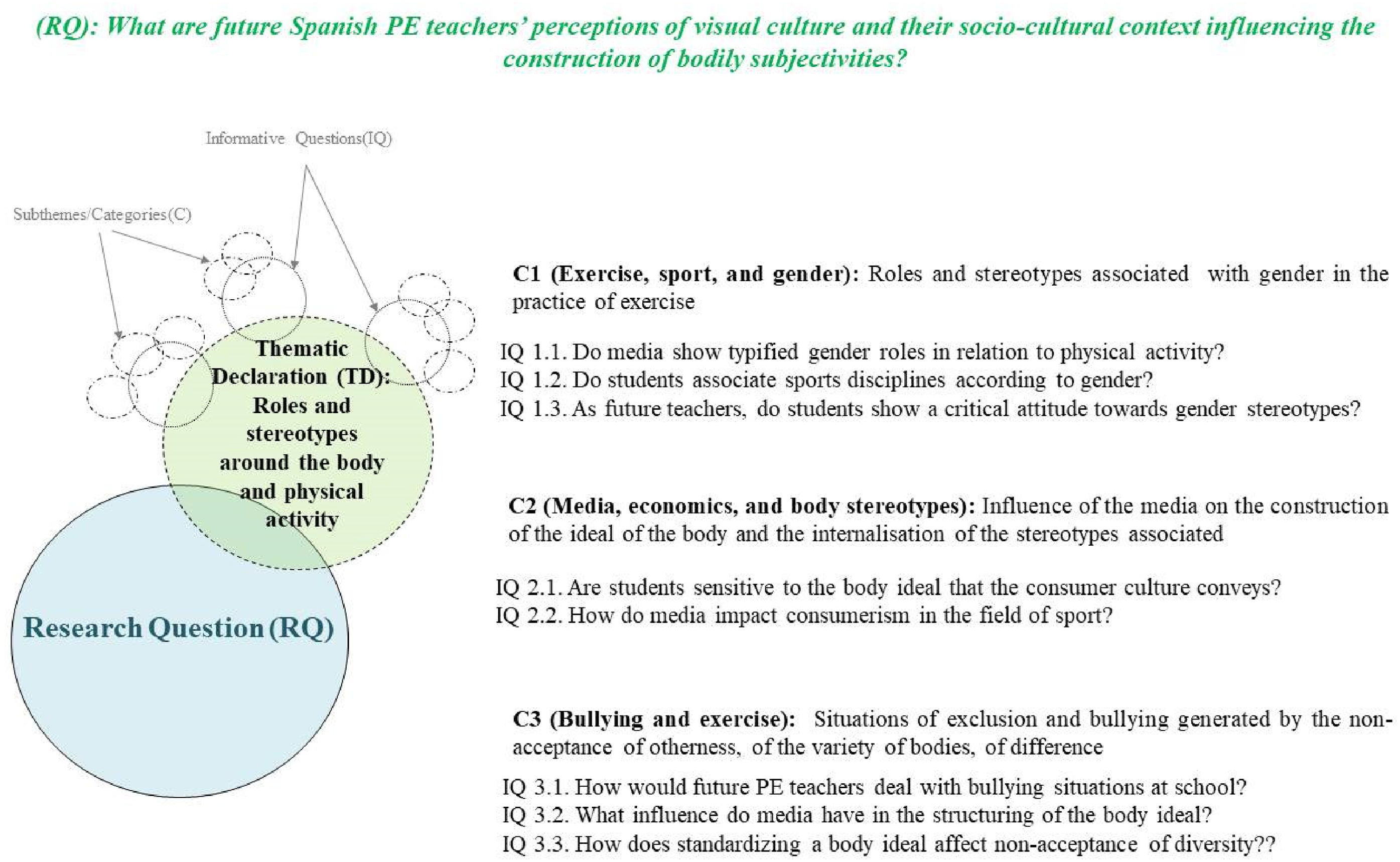
Graphic structure of the followed process for data reduction and association.
Results and discussion
In the following sections, we present and discuss the results from the photo-elicitation interviews with the 23 students under the overall theme of roles and stereotypes around the body and physical activity as consisting of three subthemes: (1) Physical exercise, sport, and gender; (2) Media, economics and body stereotypes; and (3) Bullying and physical exercise.
Physical exercise, sport, and gender
In this section, we explore the students’ beliefs about the gendered roles and stereotypes associated with physical exercise and sport. According to the students, boys and girls assign themselves characteristics classified as masculine or feminine, as evidenced in the following interview extract and chosen image: “At first glance, a girl invites us to do weights, smiling and relaxed. She seems to be comfortable, that it doesn't take much effort. But if we look closely, we see a boy concentrating, showing muscle, lifting much more weight than the girl. I think it reflects the gender distinction in sports and physical activities. For the male, this requires concentration and effort, and for the female, fun and exposure to the activity.” (Raúl) [Image adapted from sportadictos.com]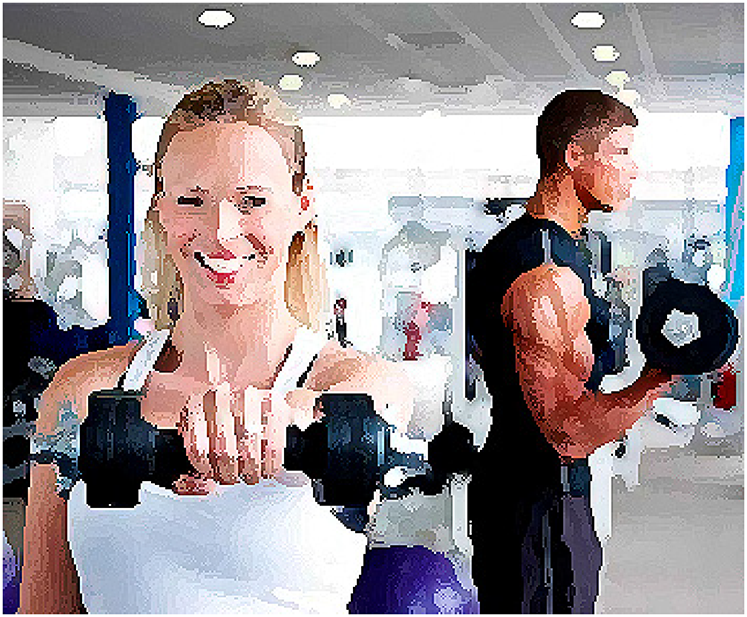
In this sense, the students pointed out that the media often portray typical roles of strength and effort in relation to boys, in contrast to those of enjoyment associated with girls, which also do not offer signs of the female making an effort during sport and physical exercise (Matud et al., 2016; Gentile et al., 2018). Similar to how Oliveira and Parra (2018) highlighted the rooting of gender stereotypes in physical activity due to the strong internalization of these roles in the imaginary, the students in this study also assigned differentiated (gendered) roles to be performed across different sport disciplines, such as girls doing ballet and boys doing judo (as we can see through the following interview extract and image): “From childhood we acquired different sporting roles according to our gender (for instance, girls to rhythmic gymnastics and volleyball, boys to basketball and weight-lifting).” (Barb) [Image adapted from ellahoy.es]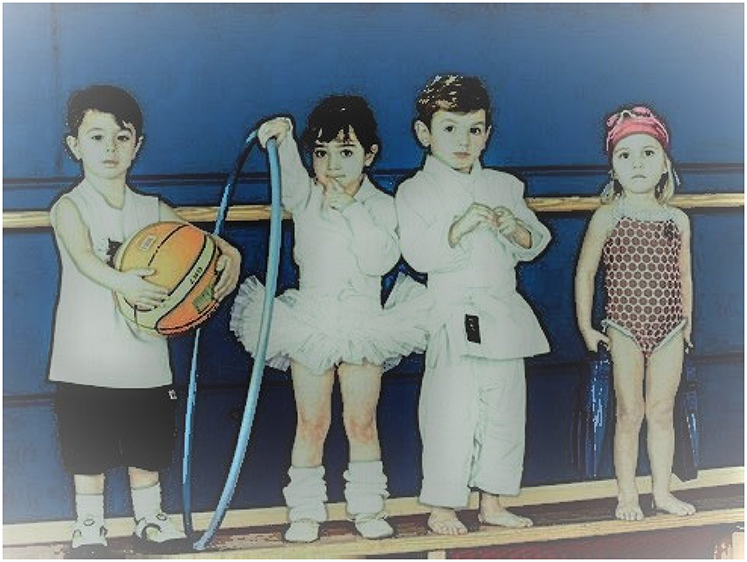
However, these future Spanish PE teachers also showed a critical orientation toward the images selected, considering that as future teachers they will be able to do pedagogical work on the strong influence of gender stereotypes in physical activity within their students’ collective imagination (Oliveira and Parra, 2018). Two of the students said the following in relation to the chosen images:
“These kinds of images are what make us believe that the male sex has better skills for certain kinds of sports and physical activities. We women have had to fight our way through the world of sport by confronting the stereotypes and prejudices that have existed and continue to exist around sport and gender. But it is the effort and work that must make the difference, not the sex.” (Lucy) [Image from es.wikipedia.org] “Children must be made aware of the sexism surrounding the world of sport. Every child must be free to choose which sport to play regardless of gender.” (Anthony) [Image from pixabay.com, free for commercial use – no attribution required]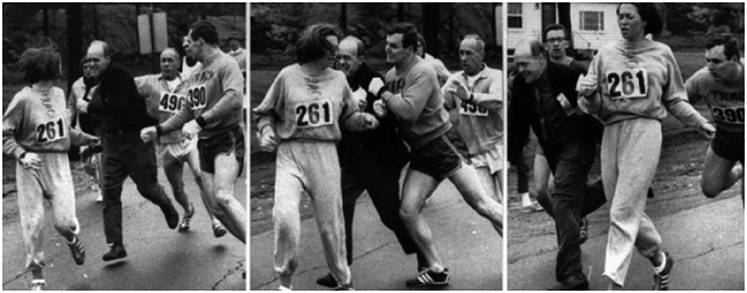
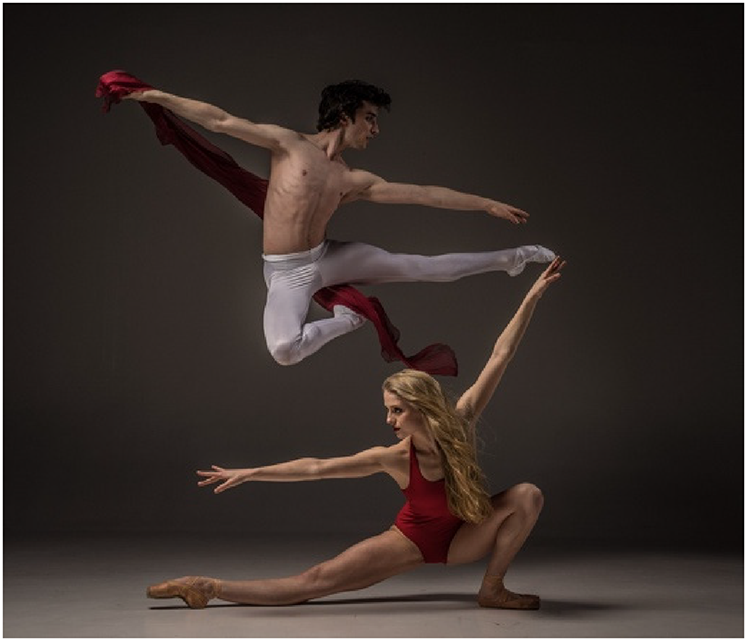
The articulation of this critical orientation and transformative agenda by the students signals a break with the pervasiveness of the gender order in physical activity and could help develop future PE teacher identities based on moral judgment and social criticism (González-Calvo et al., 2020; González-Calvo et al., 2019). However, the educational policy and curricular changes that have been taking place in recent years in Spain do not seem to have alleviated the situation of ongoing gender discrimination present in the PE subject (Tinning, 2017) which, for instance, is evident in the Spanish PE subject’s textbooks where a gender-differentiated body culture is still reproduced (González-Palomares et al., 2016). Despite this, the responses from the students in this study add to our existing understanding by drawing attention to how the PE subject may indeed be an optimal space to address and challenge gender roles and stereotypes. To make this possible, it is essential that future educators are aware of this and reflect on their own gendered beliefs and how they shape their daily performances of gender (Butler, 1990) in the PE classroom. Both PE teacher educators and future PE teachers are in this way important agents for change when it comes to not reproducing but instead actively challenging the gender order in front of, and together with, their students (Dowling, 2006; Dowling, 2008). ITE in PE, then, must promote spaces and pedagogical approaches to facilitate such socially critical reflections on the gendered nature of PE practice (Tinning, 2017).
Media, economics, and body stereotypes
In this section, we draw on the students’ responses to address the influence of the media on the construction of (gendered) body stereotypes and the internalization of these stereotypes within the practice of physical activity and sport, as framed within our consumer culture. This influence of media and consumer culture on body stereotypes is drawn attention to in the following interview extract and image: “The consumerist society in which we live today transmits to us a series of stereotypes or “ideal” canons that we must comply with, since if we do not, we would be considered “deviant bodies”. […]. Thus, more and more cases of eating disorders such as anorexia and bulimia, or psychological disorders such as depression, anxiety …” (Bob) [Image from Victoria's Secret]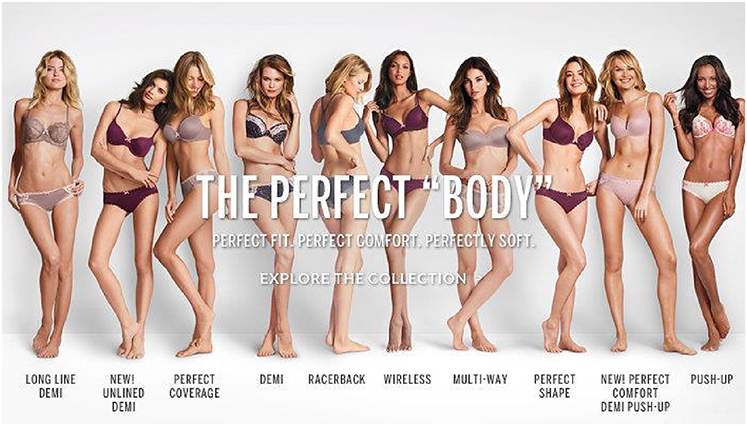
According to the results of the photo-elicitation interviews with the students, the media transmit a canon of beauty that affects people’s self-esteem and body image, even being associated with the development of eating disorders, since media affect the way we understand the world and ourselves (Estévez, 2012; Spencer et al., 2015). Consumer culture exerts increasing pressure on society and social practices through idealized images of thinness, athletic bodies, eternally young and attractive bodies, among others (Laliberte-Rudman, 2015; Schniter and Shields, 2014). For many people, adhering and living up to these bodily discourses helps them create a sense of status, belonging, and authority, although it has to be seen for what it is: a strategy of the markets to favor consumption (Holt, 2002; Varea et al., 2019). This consumer culture is at the heart of the globalization processes, accompanying the expansion of neoliberalism and the market economy (Featherstone, 2010; Featherstone, 2014). As a result, the students in this study voice their concerns about the existing fascination with trademarks and the body stereotypes that are nowadays widespread. The field of sport and PE does not escape from this consumerist dynamic (Fitzclarence, 1990; Varea et al., 2019), which has been particularly fueled by media in recent years, as stated and portrayed in the following interview excerpts and images:
“Sport is a tool for making money, something purely economic that has been growing in recent years. Especially sports like football or basketball that move huge amounts of money around.” (Robert) [Image from pixabay.com, free for commercial use – no attribution required] “If it wasn't for the money, brands and media, sport wouldn't be what it is today. Thanks to them you can make a living with sport and become famous because of the great impact it has.” (Isabel) [Image from unplash.com, the internet’s source of freely-usable images]
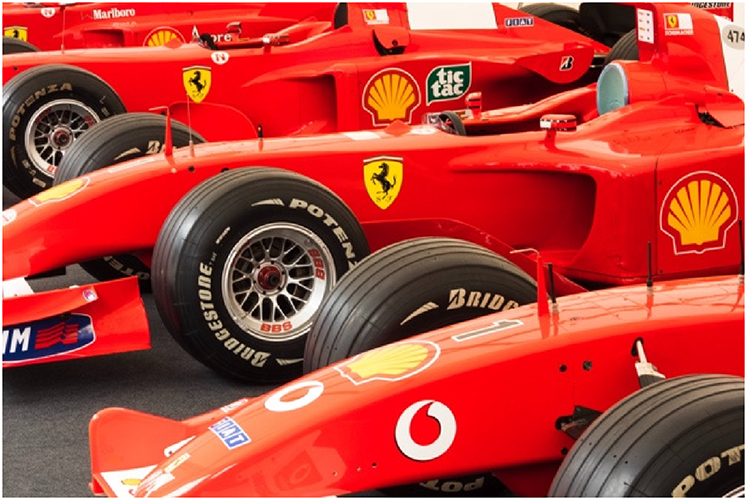
The discourses around the body and the consumer culture embrace competitive values and masculinized forms of sport and physical exercise. People then internalize them which in turn potentially could be associated with negative behaviors when people try to live up to these socially constructed bodily ideals based on competition and (hyper)masculinity (Hickey, 2008). However, in this study, the students demonstrate an awareness that they through their ITE in PE need to become critical consumers of visual (physical) culture (Macdonald and Tinning, 2003) and attempt to change some of these discourses and conceptions in favor of others of a more educational nature, as demonstrated by the following interview excerpts and images: “From our subject there should be a responsible consumption of the visual culture that surrounds us and from which ideals about the body are promoted that physical education should challenge. A culture which, as the image shows, brings us closer to a masculinized, violent sport, based on values of competition and domination of those who are heading towards this corporal ideal of strength.” (Mark) [Image from Nike] “Educating in the responsible consumption of sport is the task of the physical education teacher, in order to banish the idealization of the body and its use as a means of commodifying health, physical activity and the reality of the body.” (Carol)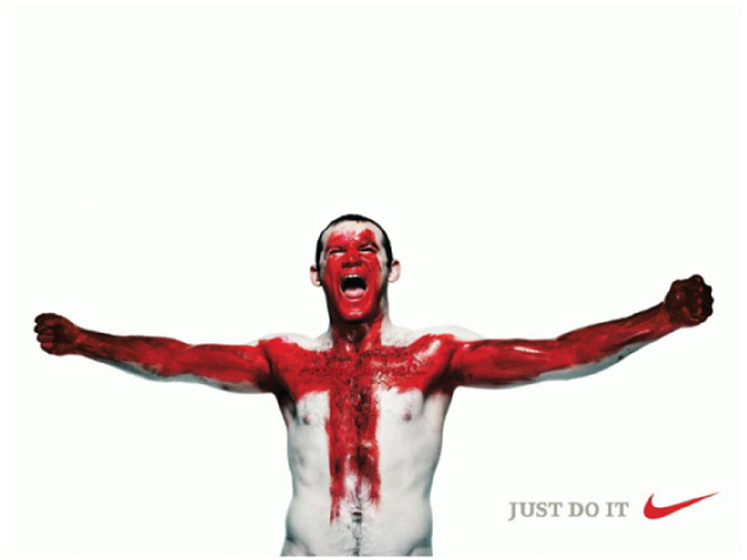
Consequently, there is a need for visual literacy and for looking beyond the textual, in order to revise visual representations and rebalance traditionally subordinate subjective positions (Hernández, 2005). The students, for instance, showed how the media focus on different themes according to the person’s gender, focusing on aspects related to the actual performance of sport in men’s sport, while the news in women’s sport, sometimes, is more about their personal life and even about physical appearances, fashion, etc. Other examples highlighted by students include the existence of sexism in the prizes of some championships, where the prizes for the female category are related to beauty and “enjoyment” products.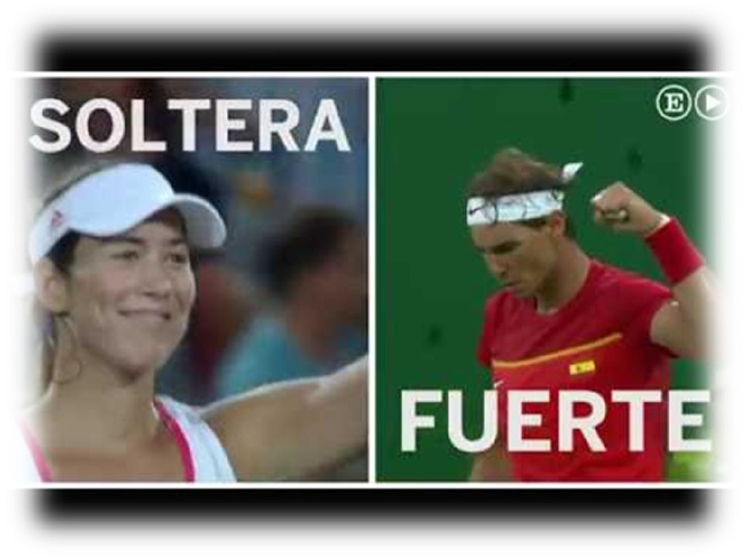
“Why do sports headlines that refer to male athletes focus on their sporting abilities, their successes or their latest events, and why do the headlines of female athletes often focus on aspects that have nothing to do with sport or with the sporting events that these women have performed, but only seek, as I said before, the popularity and dissemination of “gossip” that sells much more than objective information?” (Sarah) [Image from youtube.com] (The two words in the image are single (soltera) for the female tennis player and strong (fuerte) for the male tennis player).
“In a squash championship the prize for the winners was wax, a file for the hardness of the heels and a dildo. In addition to being a very sexist prize, it's assuming that because we're women, we have to wax.” (Ruth) [Image from fspa.info]
Bullying and physical exercise
In this final results section, we discuss the students’ highlighting of the situations of exclusion and bullying that are generated by the nonacceptance of otherness, of the variety of bodies, of difference, of diversity, in the sociocultural context of physical exercise and PE. Through their visual representations and interpretations, the students showed that this is in fact a reality very much present in PE classes and reflected on the importance of the PE teacher to act in these situations, supporting diversity and educating in values. Apart from the acceptance of the “other”, they also highlighted the importance of the “acceptance” of oneself, and how crucial it is that school children get to learn from an early age that ideals of the body are a sociocultural construction: “The photo shows that the girl is excluded from the class because she has a deviant body only […] Our task as future teachers will be to include all students with their different characteristics in order to make them aware of the importance of values such as respect for my partner.” (Laura) [Image from Jesús Císcar, at www.elpais.com]
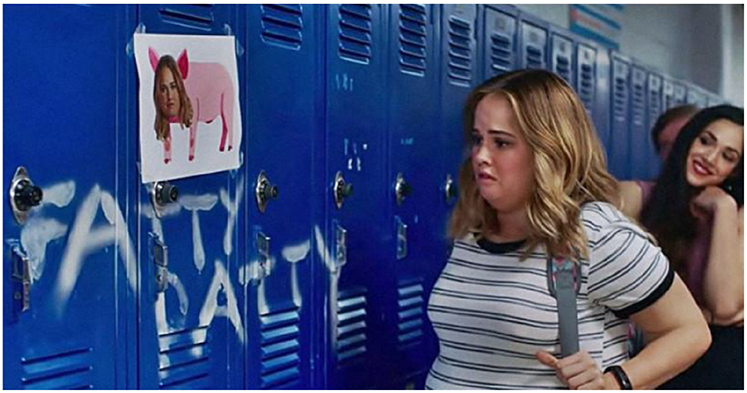
““The caterpillar does not always become a butterfly”, that is to say, for me children are small “caterpillars” that are continuously bombarded with the discourses that society emits, and if it is the case that a child is different from these “ideals”, he/she will try to do everything possible to reach them and be able to become a “butterfly”. But those canons that society establishes as “perfect” are based on something impossible to achieve, since it does not exist: perfection. This is how the child who wanted to become a “butterfly” fails in his/her attempt, unleashing in him/her terrible problems of self-esteem and lack of confidence.” (Anna) [Image from Insatiable, Debby Ryan]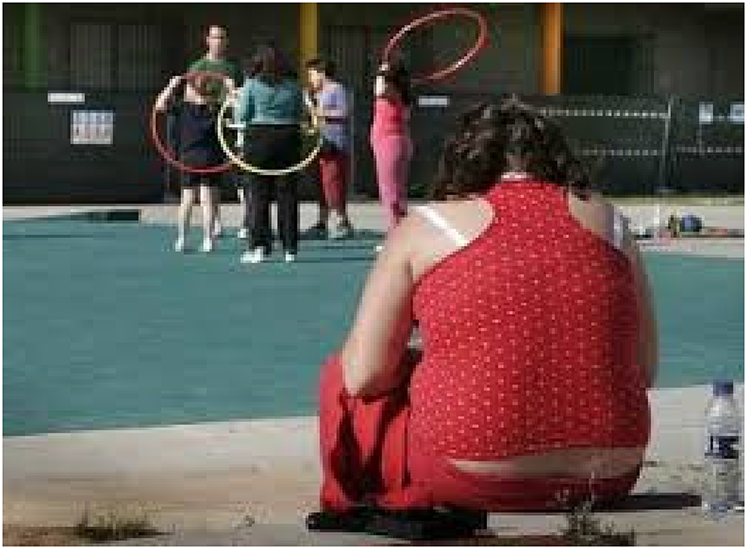
It is not new that in the PE class or in the organization of other sporting activities there are students who are separated and excluded from the activity by their peers, even developing later an aversion to physical activity altogether (Fitzpatrick, 2019). The students’ responses imply that PE teachers throughout their classes should favor critical thinking and bringing about a change in the beliefs and values of their students, thus implementing a form of transformative pedagogy, that involves empowering personal and social change (Lorente-Catalán and Martos-Garcia, 2018), questioning stereotypes and prejudices by critically reflecting on what is established and normalized, and ultimately transforming the social in the interest of justice and equality (Giroux, 2003; McLaren, 2005). One of the students stated:
“Today, we live in a society where prejudices and body stereotypes are constantly present, and until we are free of them, cases of harassment and rejection will continue to increase. In view of this, as a future teacher I will convey to my students the great importance of critical thinking in order to eliminate all possible cases of harassment and discrimination”. (Lamark)
The students also drew attention to the influence we are under from the media, through which we internalize ideals of the body, people who do not adhere to these archetypal bodily ideals suffer harassment and nonacceptance by the surrounding group, and may even develop psychological disorders such as anxiety, depression, etc: “This can result in children being cruel to other children their age who are physically “different” from them, that is to say, more obese children, children with glasses or braces, or they move away from those stereotypes that society instills in them as “perfect” or “ideal” and can cause devastating consequences in the psychological aspect of harassed children.” (Bob) [Image from Corbis, at www.theguardian.com]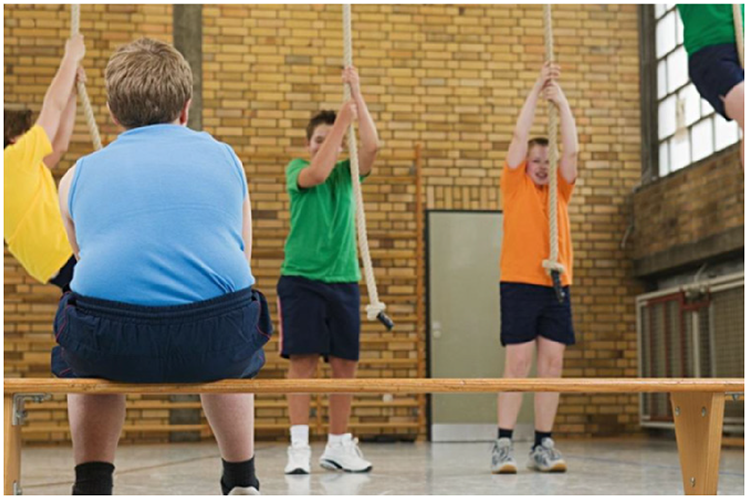
The physical activities that are developed, such as in PE classes, are also framed under this sociocultural construction of the ideal body, in which the ideal feminine and the masculine are differentiated and standardized (Foucault, 1972; Butler, 1990), in such a way that other practices that emerge in contrast to these discourses feel different, their practice is questioned and the identities and even sexual orientation of people involved in such practices are prejudged or taken-for-granted: “From the point of view of that society that refuses to evolve, a boy playing with other girls to rope-jumping is unusual. Many would say that the boy is “gay”, since this physical exercise activity is more associated with the feminine, unless it is in a gymnasium surrounded by a male audience, where you do not see something out of the ordinary.” (Hector)
Conclusions
In line with previous research (e.g. Varea and Pang, 2018; González-Calvo et al., 2020; González-Calvo et al., 2019), this study has shown how future PE teachers perceive that their bodily subjectivities are influenced by (gendered) stereotypical beliefs about the body and physical activity as portrayed through the media. However, this study also adds to the existing body of knowledge by highlighting how these future PE teachers, through the use of visual methods, problematized these beliefs and considered and positioned the subject of PE as an important space where they, in turn, could also help their students problematize these beliefs. In justifying such a focus, the students showed that the situations of exclusion and bullying generated by the nonacceptance of otherness, of the variety of bodies, of the diversity in relation to the socioculturally standardized body ideals, is very much a reality in many PE classes. The results of the study also highlighted how this sociocultural construction of the body is heavily influenced and framed by the media, where the media portray roles that are typified by the enjoyment of the female gender, and the strength and effort of the male gender. Another aspect that the media emits and that is internalized by people in their desire to achieve this socially constructed bodily ideal, is a canon of beauty, which for those who are unable or even unwilling to live up to this ideal body risk having negative repercussions on their self-esteem and body image, and even resulting in various eating disorders. This is why a focus on visual (physical) literacy is necessary from an early age so that the new generations can be critical of visual representations associated with the body and physical activity and break with the traditionally inherited cultural frameworks (Hernández, 2005; Rose, 2012).
The students in this study present beliefs about the body and physical activity based on the experiences they have received. Based on these experiences, future educators seem to be more sensitive to, and critical of, the commercial bias of the media around a specific and discriminating body ideal. One of the main factors influencing the critical awareness of the commercial phenomenon and the legitimation archetypal bodies in schools is the initial and ongoing formation of teachers (Hordvik et al., 2017). The type of experiences that the students have had in the past has an impact on the pedagogy used and their relationship with the students (Arbabisarjou and Bonjar, 2016). ITE in PE, therefore, has an important role to play both in engaging future PE teachers in critical examinations of body ideals and in helping them develop critical and transformative pedagogical approaches to be used with students in PE practice (Tinning, 2017; McLaren, 2005). The participatory visual method used in this study can be seen as another example of how future PE teachers’ beliefs about the body and physical activity can be problematized in ITE PE (Varea and Pang, 2018). Critically scrutinizing these beliefs is important in terms of PE teachers’ ongoing construction of an embodied professional subjectivity (González-Calvo et al., 2020). However, more work is still needed for PE teachers to develop critical and transformative pedagogies that can help students challenge and transform social norms of the ideal body in PE (Azzarito, 2009).
The study has also shown that future PE teachers have a socially determined professional teacher identity clearly embedded in the dominant social values. In this sense, future PE teachers are constantly influenced by consumerist values. Mainly through advertising, society and consumerism have repressive effects associated with the cult of the (youth) body (Tinning and Glasby, 2002) and the use of some commercial brands, among other aspects. All these aspects condition professional practice. In spite of this, the study encouraged these future PE teachers to further reflect on the relevance of them as the PE teacher in this process, and the importance of their intervention in the classroom through support for diversity, the “other”, educational values, and critical consumption of (visual) physical culture (Macdonald and Tinning, 2003). The students also highlighted the importance of school children being given the chance of learning to “accept” oneself from an early age, starting from the understanding of the body as a sociocultural construction and therefore open to myriad interpretations (Espinosa, 2003; Fausto-Sterling, 2000).
In summary, this study further highlights the influence that mass media and other visual sources have on the social construction of the ideal body as well as on the internalization of gendered stereotypes associated with different forms of physical activity. To conclude, it also highlights the need for developing visual (physical) literacy for both students and future teachers of PE to better understand the world and ourselves from an early age, and to become reflective and critical of the meanings about the body and physical activity that visual imagery (re)produce.
Footnotes
The authors would like to thank the editor and the anonymous reviewers for their valuable comments on this paper.
Declaration of conflicting interests
The author(s) declared no potential conflicts of interest with respect to the research, authorship, and/or publication of this article.
Funding
The author(s) received no financial support for the research, authorship, and/or publication of this article.
