




Abstract
Regular physical activity (PA) contributes to lifelong health and well-being. Adolescents in the Netherlands do not engage in sufficient PA, leading to serious health risks. The purpose of this study is to inform PA-enhancing strategies. This paper offers a unique method for analysing students’ perspectives about opportunities for PA in their school environments. The research method combines two approaches: a Health Promoting Schools (HPS) approach, which supports children’s development by using the school setting to promote PA, and a salutogenic approach, which engages all students in dialogue and reflection to identify factors or ‘assets’ that enhance their PA. Ninety-three students aged 12–14 from four secondary pre-vocational education schools participated in two group sessions in which the structured interview matrix and photovoice methods were employed. In these sessions, the students interacted with each other about four asset categories: talents, passions, the social environment and the physical environment. Thematic analyses of their dialogues led to three main insights: (a) students must perceive the activities as meaningful, appealing, contextually possible and manageable; (b) they use a wide variety of reasoning processes when deciding whether to engage in PA; and (c) it is valuable to invite students to share their individual perspectives on assets related to PA. All these aspects connect to the goals of both HPS and salutogenesis. We conclude that shifting the focus towards developing school-based interventions that build on student perspectives and active participation provides students with realistic opportunities for shaping PA and motivates them to be more physically active.
Introduction
It is widely accepted that being physically active contributes to health throughout life (World Health Organization, 2016). The Global Action Plan on Physical Activity 2018–2030 from the World Health Organization (WHO) (2018) states that regular physical activity (PA) improves physical health and contributes to mental health, quality of life and well-being. Bailey and colleagues (2015) argue that PA also contributes to developing other human capital (e.g. emotional, social, intellectual and financial). However, 81% of adolescents (aged 11–17 years) fail to meet WHO recommendations for PA (i.e. 60 minutes of moderate to vigorous daily activity) (World Health Organization, 2018). PA includes all movement such as active transportation, recreation and physical education (World Health Organization, 2010, 2018).
Schools provide an excellent setting for increasing PA among children and adolescents (Dadaczynski et al., 2020; World Health Organization, 1986, 2018). In its Health Promoting Schools (HPS) framework, the WHO stresses the potential of schools’ policies to enhance the physical, social and cultural environment to promote PA, as well as their potential to offer safe and appropriate spaces and facilities for students to spend time being physically active (Langford et al., 2015; Morton et al., 2016).
HPS is based on a whole-school approach that advocates the combination of health education and teaching to support children’s cognitive, physical, social and emotional development (Jensen et al., 2017). Studies have shown that schools that adopt socio-ecological approaches and frameworks to design multicomponent school-based interventions increase PA in children and adolescents (Cale and Harris, 2006; Kriemler et al., 2011; Zhang et al., 2012). However, contextual factors significantly contribute to the effectiveness of many health-promoting interventions in schools (Darlington et al., 2018; Kremers et al., 2018), making it challenging to translate interventions into different (school) contexts. Integrating health-promoting activities into curricula may also involve additional tasks for teachers, introducing unintended stress, work overload and frustration (Gugglberger et al., 2017).
The HPS approach emphasises the importance of listening to student voices and strives to create democratic learning processes that develop competencies that help young people understand and positively influence their lifestyles and contexts (Barnekow et al., 2006; Buijs, 2009; De Róiste et al., 2012). This contrasts with approaches focussed on health threats and risk behaviour, which are widely adopted to develop interventions that enhance PA but do not lead to sustainable change in student behaviour (Bernaards et al., 2012). The HPS approach implies a shift in focus from disease and risk factors towards an empowering social model (Simovska, 2004). This relates to a contextual assets approach (Morgan and Ziglio, 2007), which, translated to PA in the school context, involves helping students recognise and focus on their talents, abilities, experiences, places, contacts and networks of support with respect to being active, and allows them to voice aspects they need or perceive as hampering their PA. Recognising one’s assets could be a first step in the process of employing these assets towards generating realistic individual opportunities for PA.
Several studies have acknowledged that interventions should mirror student needs, preferences and interests. Choosing student-centred methods and teaching styles that involve students in decision-making empowers them to create opportunities for PA (Cale and Harris, 2006; Dzewaltowski et al., 2009; Hyndman, 2015). A recent review showed that PA interventions are more effective when embedded in the curriculum and tailored to (and with) participants (Van de Kop et al., 2019). However, Morton and colleagues (2016) concluded that most studies are somewhat biased as they pertain to active and competent students and hence miss out on the perspectives of those who are more inclined to drop out of PA.
According to Jensen and colleagues (2017), HPS resonates well with the salutogenic theory (Antonovsky, 1987). Salutogenesis, the theoretical framework for this study, is the process leading towards health. The salutogenic approach aims: (a) to focus on all people in the system (and not only those at risk); (b) to address and promote ‘salutary’ factors (and not only remove risks); and (c) to focus on the whole person (and not only on a specific disease).
A key concept in salutogenic theory is sense of coherence (SoC), which is described as a life orientation, providing the ability to choose various strategies for solving diverse problems or to manage life events (Lindström and Eriksson, 2010). SoC has three dimensions operationalising health (Antonovsky, 1987): Meaningfulness: a belief that things in life are interesting, motivating and a source of satisfaction (motivational); Comprehensibility: a belief that you can understand events in your life and the challenge is understood (cognitive); and Manageability: a belief that resources to act are available and issues can be dealt with and are within your control (behavioural).
Jensen et al. (2017) concluded that HPS could contribute to students developing their SoC by providing positive coping experiences. Regardless of whether high SoC is necessary for adolescents to stay physically active in a school context, Bronikowski (2010) found that a multi-level intervention to increase SoC and promote self-responsibility in health-related lifestyles led to more frequent and sustainable leisure-time PA. Furthermore, Deci and Ryan (2008) found that student motivation is enhanced when teacher support satisfies the basic psychological needs for competence, autonomy and relatedness. Thus, Salutogenesis inextricably links individual development with a supportive context.
In line with a salutogenic approach, HPS aims to engage all students in exploring assets related to PA. Exploring and understanding student perspectives within their contexts may increase the students’ options for employing and influencing their environments to create more and better opportunities for PA. Such a strategy also develops skills for planning and selecting options for PA, thereby expanding students’ agency in their daily lives. Teachers or professionals can encourage students to employ their assets to influence behaviours and contexts.
Our study looks at pre-vocational education (PVE) students in the Netherlands, also referred to as students in lower secondary education (level 2 of the ISCED-2011 (UNESCO Institute for Statistics, 2012)). 1 Compared to their counterparts at other educational levels, they exercise less both inside and outside school and are less likely to be members of sports clubs (Slot-Heijs and Lucassen, 2018). Therefore, it is vital that student participation in PA be given serious attention in PVE schools. Enhancing opportunities for this group to engage in PA is fundamental to their future health and well-being.
Based on the above, we concluded that a novel approach is required to inform PA interventions focussed on student voices, the principles of HPS and salutogenesis, and assets. This approach encourages PVE students to share their perspectives and invites them to employ their individually defined assets. It is important to ascertain how students identify assets or resources in their local environments and whether they perceive them as appealing and contributing to realistic opportunities for day-to-day activities. This approach requires students to actively contribute as agents in their own lives and actively identify and articulate the variables influencing these opportunities.
The present study is part of a larger three-year longitudinal and experimental project in 22 secondary PVE schools. The aim of the larger project is to provide input for the development of school interventions that enhance PA by aligning them with the perspectives and assets of PVE students. It is envisaged that developing school-based interventions that build on student perspectives and active participation, and creating options for them to exercise their agency, will encourage them to employ their assets to be physically active.
The purpose of this study is to inform PA-enhancing strategies by analysing the perspectives and assets of PVE students related to opportunities for PA in their school environments. This is a first step towards actively engaging students to identify and reflect on their own PA-related assets and encouraging them to employ these assets for PA. Therefore, our research question is: what are the perspectives of 12- to 14-year-old PVE students on their assets and contexts related to their PA, and how can they inform interventions for enhancing these students’ PA in the school environment?
Method
Participants
Participants in this study were 12- to 14-year-old students (n = 93; 52 girls and 41 boys) from four PVE schools in the Netherlands. One class from each school participated. The age-group selection was based on the possibility of following them for the larger project’s duration (2014−2017). Schools were from either urban or rural areas.
We obtained consent from all students and their parents by having the participating schools send a mailing that explained how students could opt out of the study. Students were informed about the sessions and encouraged to participate actively, emphasising that their contribution and engagement were important for translating their perspectives into future intervention(s) in their schools. At the start of each session, we again offered students the opportunity to opt out of participation.
Procedure
Data collection focussed on exploring students’ perspectives about four main asset categories derived from Foot and Hopkins (2010): (a) practical skills, capacities, knowledge and talents; (b) interests and passions that provide energy; (c) networks and connections, including friendships and the social environment; and (d) resources in the physical environment (e.g. (sports) clubs).
Structured interview matrix (SIM) and photovoice were used at each school site. These methods enabled students to explore PA from their own perspectives and increase awareness of their own experiences and opportunities as a first step towards influencing their lives and contexts. SIM is a facilitation technique that combines short individual interviews, focus group deliberations and plenary feedback in one session for up to 40 participants (O’Sullivan et al., 2009). Photovoice is a participatory research method that invites participants to visualise their understandings through photos and verbal explanations and to discuss their meaning (Wang et al., 1998). Both methods were adapted for their combined application in two sessions in a classroom setting and referred to as Triple-I: Interactive Interviewing and Imaging (Boonekamp et al., 2019).
The set-up of both sessions is summarised below. An important characteristic of our set-up was the employment of university students studying to become physical education teachers as co-researchers to supervise the PVE students during the sessions. This choice was based on two factors: (a) the PVE students’ young age and lack of experience with interviewing and focus groups, and (b) the fact that being much closer in age, the co-researchers’ supervision would interfere less with the deliberations of the PVE students.
SIM sessions were used to help students conceptualise PA based on the four asset categories. Results from these SIM sessions were not used as data but rather to prepare students to deliberate on their assets in the photovoice sessions. The photovoice sessions were audio-recorded and collected as data. SIM was used in a two-hour session using the following questions: What makes you happy or gives you energy (passions and interests)? What are you good at that helps you to be active (talents, practical skills, capacity and knowledge)? Who helps you to be active (social environment, networks and connections, and ‘social capital’, including friendships)? Where are you active? What do you have in the environment (at school, at home, in your neighbourhood or at a sports club) that helps you to be active in a way you enjoy (relating to the physical environment and available public and private resources)?
A SIM session consisted of four steps. First, the class was broken into four subgroups, each supervised by a co-researcher. Students were briefed about interview techniques and prepared interview questions relating to one of the four main questions. Second, individual students from the subgroups interviewed individual members of other subgroups in four five-minute rounds while taking notes. Third, they returned to their subgroups to share and compare notes, add their own ideas and categorise subgroup findings on a flipchart. Finally, the four subgroups presented their main findings to the full group for member-checking, and further findings were added from the plenary feedback. At the end of the SIM session, students received the assignment for the photovoice session: take one picture related to each of the above-mentioned asset categories. Students were allowed an average of two weeks to complete this task.
The photovoice session, which took about 2.5 hours, was used for data collection. The class was again broken into four subgroups of six to eight students each. Within each subgroup, students shared and talked about their photos, using a simplified version of the SHOWeD technique to ensure students would better understand the questions (Wilson et al., 2007): What do you see in this photo? What do you think is actually happening? How does this influence your/our PA? How can we use it to make the school more active?
Each photovoice session was facilitated by the co-researchers and consisted of a carousel set-up with one table for each of the four asset categories (skills, talents, social environment and physical environment). Four subgroups of students were formed and circulated between the tables. At each table, they deliberated on their corresponding photos. In this way, each of the four groups talked about each of the four asset categories. These conversations were audio-recorded and the 16 conversations per school formed the units of analysis for this study (Graneheim and Lundman, 2004).
Data analysis
Students produced the data while discussing important issues within the four asset categories (talents, passions, social environment and physical environment). However, we noted from their discussions that the salient issues often addressed more than one asset category. Taking this into consideration, we performed an inductive thematic analysis (Braun and Clarke, 2006; Graneheim and Lundman, 2004). The aim was to interpret what students stated explicitly and what they said implicitly when talking about their context for PA (Kondracki et al., 2002). Braun and Clarke’s (2006) procedure was followed throughout the analysis as described below. Three researchers with different disciplinary backgrounds participated in the data analysis.
The first analysis step was to gather all the audio recordings and transcripts from one class at one school. Researchers independently analysed the recordings and transcripts collected per asset category and wrote down quotes and key words containing meaningful aspects on Post-it Notes. These were then clustered and coded. The researchers compared and discussed their reasons for such clustering to refine a coding structure they could recognise and agree upon. This process was repeated for each of the four asset categories. Cluster codes for the four asset categories were compared and discussed to identify similarities and overarching ‘categories’ for a whole class.
This process was followed for three schools, resulting in a set of clusters and categories. Upon analysing the results of the third school, it was noted that no new clusters and categories needed to be created to accommodate the quotes. To check the resilience of these clusters and categories, the fourth school was analysed and its quotes assembled within the constructed cluster codes and categories of the previous three schools. All quotes fit into the cluster codes and categories grid. Therefore, it was concluded that saturation had been reached with data from the initial three schools.
Results
In our thematic analysis we clustered the students’ quotes into categories (Table 1). Discussing the clusters led to consensus about the core content of each category.
Examples of codes from the four schools, clustered into categories.
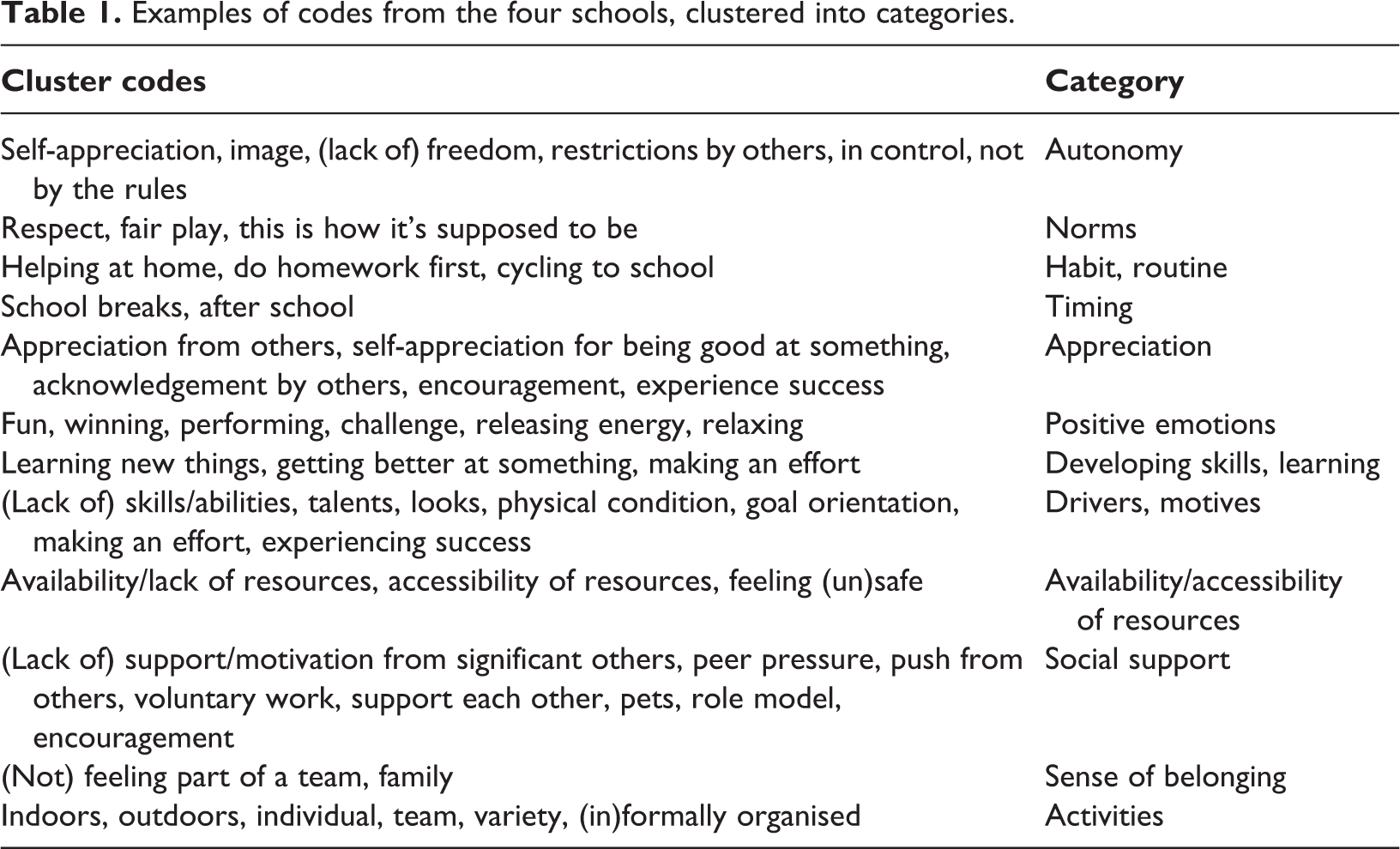
Upon reviewing the categories from the four schools and aiming for conceptual aggregation, some categories could be clustered in more abstract overarching themes. Acknowledging the interrelated nature of the quotes, these overarching categories sometimes contained several clusters, and some clusters fitted multiple categories depending on conversational context. For example, ‘being part of a team’ could mean they ‘felt supported’ (i.e. a facilitating factor in the social environment) but it could also refer to a ‘sense of belonging’ (meaningfulness).
Independent of the asset categories, five main themes were constructed across the schools: meaningfulness, motives/drivers, types of activities, (virtual) contextual stimulating or limiting factors, and conditional circumstances (see Table 2).
Examples of the categories from the four schools, clustered into themes and illustrated with student quotes.
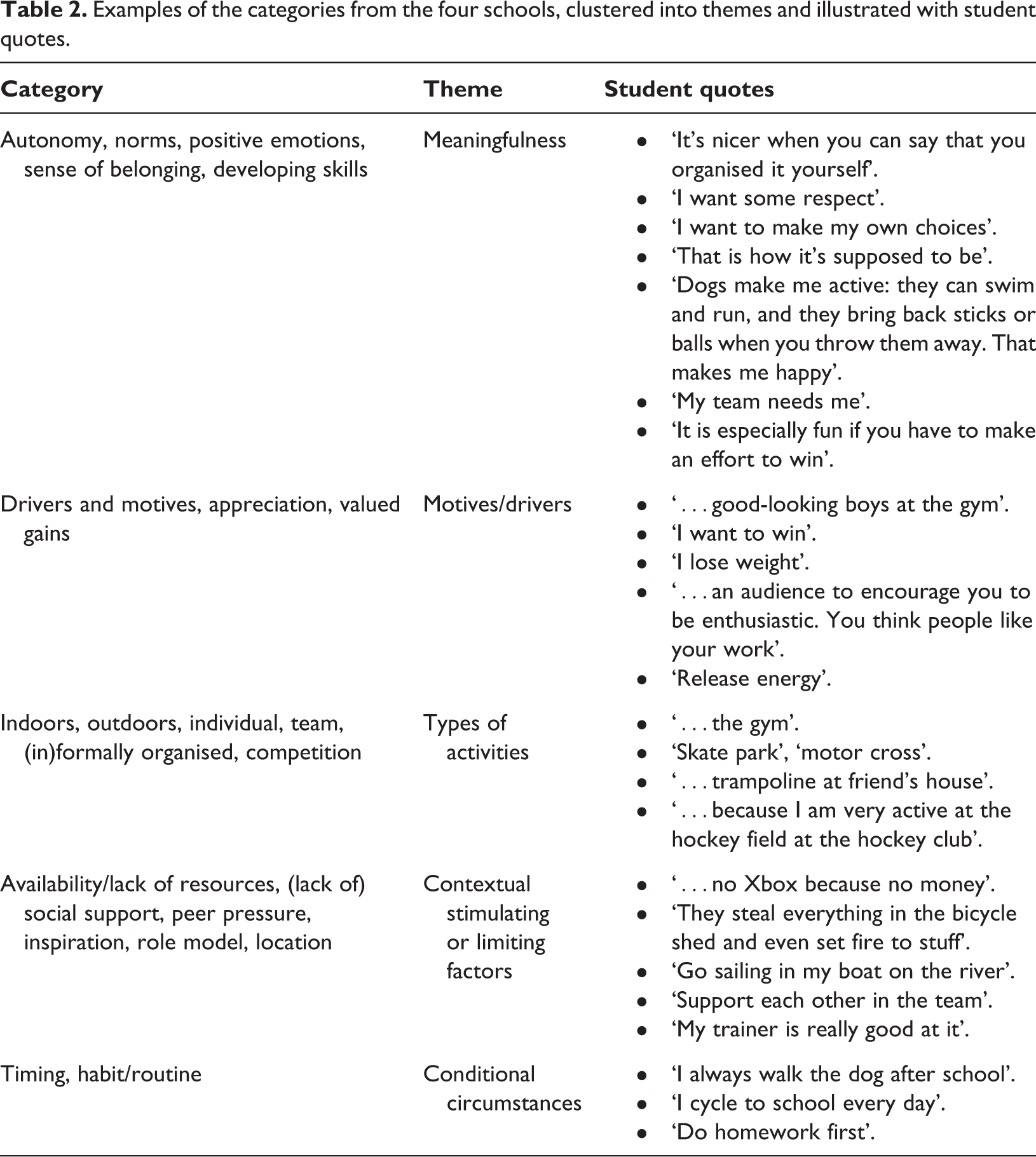
Results are further described by theme, with cluster codes and categories in italics.
Meaningfulness
PVE students mentioned aspects that were intrinsically meaningful to them such as autonomy, acknowledgement, freedom and developing skills. The quotes in this theme all involve the students valuing the events and actors around them. For instance, one student stated that compliments from others were important for feeling recognised for her qualities. Another student mentioned that the teacher only called her by name if she were to be punished. Some students talked about wanting to have ‘a say’ in the offered activities.
An important aspect was their feeling of belonging. Quotes that stood out concerned reasons to engage, such as ‘my friends support and help me’ or because they were ‘achieving a goal together as a team’. Furthermore, many students spoke of engaging in activities for the sake of the activities themselves. For example, activities created positive emotions such as: ‘it is fun to do’, ‘winning is awesome’, ‘scoring makes me feel fantastic’ or ‘doing dangerous things makes me feel excited’. Moreover, activities made them feel peaceful or calm, free from stress, happy, having fun in a good atmosphere, and entertained.
Motives/drivers
Students referred to various sorts of incentives for their behaviours, in the form of external drivers or conscious motives for their actions. For instance, they mentioned valued gains such as earning money, having a handsome appearance, getting the opportunity to show off, being respected by others (appreciation), feeling satisfaction, having opportunities to release energy, becoming physically fit and healthy, learning something new, or increasing one’s skills at the activity. Furthermore, some had positive connotations such as ‘having spectators when I play a game to cheer me on’ or the ‘support of/helping others’, or negative connotations such as peer pressure or ‘my parents make me go’. It was noted that some external drivers could have positive connotations for one student but negative connotations for another: for example, ‘being pushed’ by parents, friends or classmates or looking up to/feeling intimidated by good-looking boys at the gym.
Types of activities
Students chose a wide variety of PA. They named various sports activities, competitive activities such as a school soccer competition, and leisure activities or activities to unwind. They differentiated between these and daily and functional activities such as cycling to school or walking the dog. Students also made distinctions between organised and non-organised activities, indoor and outdoor activities, team and individual activities and activities they wanted to organise themselves. Students meandered between activities they already do or regard as available, and activities they would like to do in the near future, such as swimming (once there is a pool available) and kickboxing as an alternative physical education lesson.
Contextual stimulating or limiting factors
Student living circumstances appeared to impact their perspectives on their PA. Concerning social roles, it makes a difference (social environment) whether an inspiring coach, parent, brother, friend or sports hero as a role model motivates them to achieve or engage in activities or, vice versa, a teacher prohibits them from playing outside during school breaks. The availability or lack of resources in the physical environment also plays a decisive role: for example, having a swimming pool or limited access to the high-walled, unattractive schoolyard that makes them feel imprisoned determines whether they seriously consider the associated activities. They often voiced ideas for improving the physical environment. The availability of varying types of playgrounds in the neighbourhood or at the school was a topic. The importance of social norms and rules came up regularly: for example, fair play and respect during activities at school, as well as parents prohibiting them from biking to school because of the risk of their bicycles being damaged in the bicycle parking shed.
Conditional circumstances
In students’ accounts, they referred to specific conditions for undertaking time- or place-dependent activities. They mentioned activities such as cycling to school or helping out on the family farm, which they did not associate with PA at first, and which appeared to be habits and routines more than conscious decisions to be physically active. A second cluster determining the possibilities to be active was related to timing of physical activities: school breaks or free time between lessons or after school activities. For instance, remarks were made about not being allowed to play outside or hang around in the schoolyard in free hours between lessons.
The above five themes clarified what was most relevant to the students. Their choices of PA were not predictable, as they were subject to their individual perspectives on the contexts. For example, the availability of tennis rackets at home enabled one student to initiate playing tennis as an activity, whereas another student did not perceive a tennis racket as providing a meaningful opportunity because of lack of time or available friends with whom they might play tennis. Furthermore, the quotes that researchers labelled as pertaining to ‘meaningfulness’ or meaningful values seemed crucial for many students but could substantively vary (e.g. they wanted to ‘belong to a team’ or ‘have some freedom to decide what they wanted to do’).
Relations between the specific themes differed according to the circumstances of each student and context. However, a general pattern appeared in the relationship between assets and activities: students spoke about specific drivers motivating their activities (see Figure 1). This motivation is influenced by conditional circumstances limiting or stimulating their engagement in meaningful activity. In the quotes related to these themes, a distinction could be made between how students perceive and experience their contexts (world within) and how they interact with and respond to their contexts (world outside). This distinction is represented by the two semi-circles in the middle, representing the inner world and their interaction with the outside world, respectively. The connected themes reflect an integral understanding of how students develop perspectives.
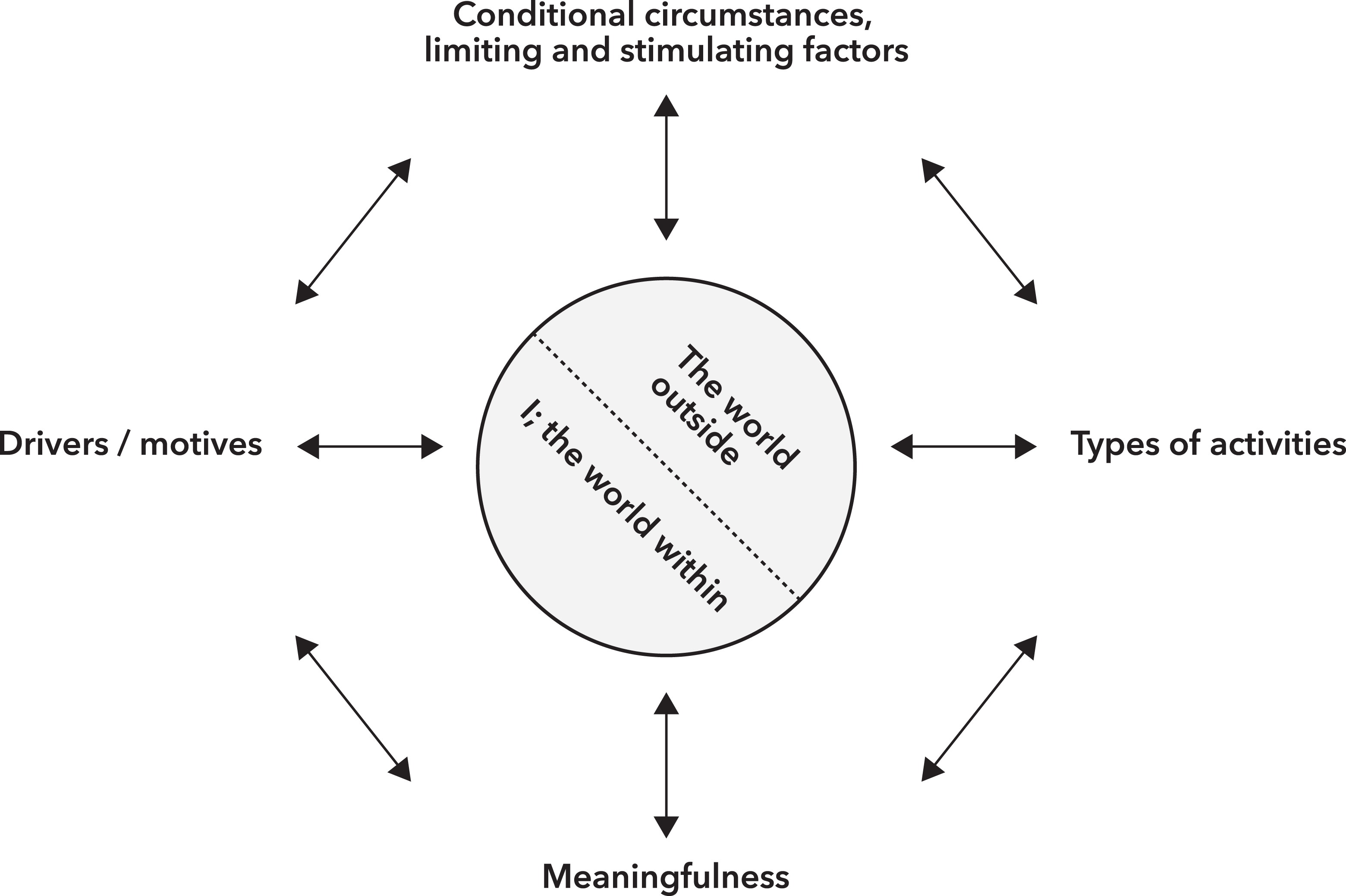
General pattern of results.
Whether activities are perceived as meaningful seemed to play a significant role in the students’ reasoning in that it answers the question: What does the activity bring to my life that is meaningful or valuable? In the results, ‘meaningfulness’ pertains to notions of (self) appreciation and recognition, the possibility to learn, emotional gains, aspirations, norms or belonging. ‘Limiting and stimulating factors’ and ‘activities’ students practised were explicitly articulated in the conversations. In contrast, ‘drivers, motives’, ‘conditional circumstances’ in terms of habits or timing or ‘normative values’ in terms of autonomy or feeling of belonging were sometimes more implicitly mentioned, for example: ‘having some time to themselves’ or ‘making up their own tasks’. The general pattern in Figure 1 provides a clearer understanding of the complexity in the students’ accounts of their PA within their respective contexts.
Discussion
Our study revealed three main insights. First, students’ perspectives on their PA are unpredictable and influenced by their motivations, what is meaningful to them and what social, physical and virtual circumstances they deem conditional. It follows that meaningfulness underlines sense-making as an important aspect in their reasoning and decision-making related to their PA. The students’ deliberations also showed the importance of the constituent themes such as ‘feeling competent’ and increasing one’s ‘feeling of autonomy’. The pattern in Figure 1 reflects the idea that student PA ‘needs’ depend on context and personal interest (Hagger and Chatzisarantis, 2008; Ryan and Deci, 2000; Ryan et al., 2008; Van Dongen et al., 2018), and corroborates the importance of the socio-ecological perspective, meaning-making, and the influence of specific contexts and psychosocial factors on the PA of adolescents as demonstrated elsewhere (O’Connor, 2019; Perez et al., 2017; Zhang et al., 2012). Our pattern provides the flexibility to understand such specific configurations and it is in line with socio-ecological models that advocate considering the plurality of influences on adolescents’ PA across contexts and time (Perez et al., 2017). Thus, the pattern provides a framework for action that assists in operationalising students’ priorities into PA within the context and structures of their lives.
The second insight concerns the variety in reasoning that motivates students to be physically active within and outside school. In some cases, we found that the availability of resources or presence of routines govern active behaviour (you do it because you can). In others, students feel uninspired by their schoolyard or experience a lack of autonomy to determine what to do in the spare time between lessons. The pattern in Figure 1 accounts for the complex interactions between the themes: a student’s capacity to engage in PA is shaped by specific and local contexts depending on her/his capacities, wishes, values and needs, as well as on realistic opportunities or available resources. The pattern emphasises the diverse influences at play, which work out differently for each student’s context. Thus, the constituent themes in Figure 1 are dynamic and illustrate those assets/resources that are available depending on the situation, timing and personal characteristics.
For example, a nearby river (interpreted as ‘stimulating factor’): in one situation the river goes unnoticed by a student as an available resource, in another it is noticed but consciously not employed for various reasons, and in a third it offers a chance to go and play on the banks, or to go sailing or swimming. In all three cases the river is present and provides an objective opportunity for active behaviour, but the student’s specific context, personal valuation and skills determine whether and how it leads to PA.
Changes in the situational specifics (availability of friends, time, available boat, mood, swimming skills, school policies, etc.) affect the interpretation of the other constituent themes. This complex assemblage of interacting factors affects a student’s decision to employ an asset or not. In other words, the use of resources is not directly contingent on their availability; all themes, visualised in Figure 1, influence the students’ reasoning and in some way were consciously articulated in their accounts. Importantly, these perspectives, influenced by the factors in Figure 1, vary accordingly within and across individuals and groups of students and with context and time. Enriching socio-ecological models that create PA options in specific contexts such as schools by engaging students to share their perspectives increase the potential for enhancing their PA.
The third insight is that students are willing and able to share perceptions of their PA as input for shaping their future PA options. Inviting students to map, reflect on and share their perspectives on their PA options is an initial step towards positioning them as agents in shaping meaningful PA experiences and, as such, developing and maintaining more active lifestyles (O’Connor, 2019). This has potential to enhance their awareness of personally meaningful options, corresponding with the aim of the HPS to develop student competencies to understand and influence their lifestyles and contexts (Buijs, 2009). This is in keeping with one of the findings of Perez et al. (2017): adolescent decision-making to promote their PA in their specific contexts leads to more motivated overall participation in PA.
Drawing on the introduction, key concepts of the salutogenic approach are present in the themes of Figure 1. The dimensions of sense of coherence (Antonovsky, 1987) either figure in the themes or their interconnectedness: comprehensibility, manageability and meaningfulness may be considered as ‘world within’ concepts that help students identify and understand how to manage those activities deemed valuable and/or the resources available within their environments. The salutogenic framework provides insight into contextual factors and how this relates to individual coping. However, it does not explain students’ actions in the ever-changing contexts of their daily lives. Do they ever feel free to decide according to their values? Do they have the capabilities to make choices? For that, they need to perceive themselves as having the potential for goal-oriented action towards achieving what is valuable to them or, in other words, agency (Jansen et al., 2018). Including agency could prove useful for properly understanding the different choices adolescents make in diverse situations, thereby further exploring how to elaborate the salutogenic framework for health promotion strategies.
By engaging all the students in mutual dialogue focussing on their assets, they were invited to reflect on PA efforts that were often incidental to them without the explicit intention or decision to be physically active (e.g. helping out on the farm, cycling to school, walking the dog). They also reflected on what they enjoyed doing, the availability of resources and how to influence their environments. This in turn enhanced the maintenance and frequency of activities they enjoyed, aspiring further towards PA. Students grew more conscious of their and classmates’ assets; discussions often started with how to combine strengths for a shared goal. Tapping into their experiences, talents and social relations in this way offers an entry point for their active involvement in developing and organising PA at school and it is this that we propose as an enhancement for the HPS approach (Jensen et al., 2017). Such fostering of student opportunities and responsibilities may also increase the frequency of undertaking leisure-time PA, as also found by Bronikowski (2010).
This account proposes our contribution to health promotion in school settings: an argument to focus on developing student competencies in understanding and influencing their behaviours and school contexts. Despite the HPS approach advocating students’ active participation (Dadaczynski et al., 2020; Turunen et al., 2017), in practice, projects with students are often unconcerned with building their capacities to contribute (Bozlak and Kelley, 2015). Critical engagement is fostered by involving students in dialogue about PA and respecting and enhancing their agency within the school context (Freire, 1973; Van den Berg, 2015). This requires authentic interest in their views and experiences and provides them with a voice to prioritise and implement local actions.
A limitation of the present study is that the empirical pattern found could be more detailed with regard to the specific mechanisms between the constituent themes. As this study was exploratory, it described those elements essential for discussion with students in developing health promotion interventions but did not formally test their directions and strengths. Future research could focus on further examining and testing the specific themes and mechanisms, developing the findings into an action model for health promotion in school communities.
A second limitation is that perspectives of boys and girls were not distinguished. From the audio recordings, voices were not always attributable to boys or girls, which was reason to exclude this aspect from further analysis. Nevertheless, some studies (e.g. Perez et al., 2017) suggest that girls and boys do have meaningful perspective differences that should be considered.
Recommendations
Our findings lead to several recommendations for enhancing PA in schools. First, the practical utility is the visualisation of a balance of forces: students are influenced by their motivation, contextual circumstances and assets, and the meaningful interpretation of them. This suggests the importance of actively aligning strategies to enhance students’ PA with their personal perspectives. It encourages student participation and development of competencies in understanding and influencing their lifestyles and contexts, allowing teachers and health promoters to better attune activities to the needs and preferences of their students.
Second, the asset approach assists students in becoming aware of and acknowledging their enthusiasm, talents and agency, and noting what they consider important. This allows them to consider what they enjoy doing and how that contributes to PA. Moreover, it shifts attention towards a value-driven process, capitalising on the students’ agency. Additionally, if interventions are based on student views, they are better aligned with the student world perspectives than traditional professionally driven interventions (Morgan and Aleman-Diaz, 2016) and are therefore likely to be more effective.
Third, our finding that various interlinked determinants mitigate a student’s PA corroborates the finding by Bernaards and colleagues (2012) that it takes at least six interventions to effectively stimulate PVE students to increase their PA. It also resonates with findings that more effective PA interventions in schools integrate education, context, organisation, and personal and social determinants (Kriemler et al., 2011; Van de Kop et al., 2019). Interventions should therefore cover all aspects in Figure 1 to produce an integrated and balanced intervention mix that encourages students to take initiative in discovering how to employ their assets in a way that is meaningful for them.
Although not strictly a recommendation, we noted in our findings that a student-centred approach requires a supportive school context that allows students to be honest, to learn, to enjoy, to build confidence, to develop competencies and autonomy, and to take ownership (Enright and O’Sullivan, 2012). Student engagement through participatory methods is oriented towards their agency; through assisting in creating PA opportunities that fit with what they value, students experience freedom and develop their autonomy. To what extent school environments provide such opportunities will be studied in forthcoming research that evaluates those actions undertaken locally, as a follow-up to this interactive process with their students. However, it is more than likely that including student perspectives provides all stakeholders with the opportunities for a joint development and learning process (Graham and Fitzgerald, 2010).
In conclusion, the approach in this study provides an appraisal of the variety in student perspectives on their PA. For students to be motivated to engage in activities, it is important that they perceive these activities as meaningful, resonating with their core values, appealing to their drivers and made possible by facilitating contextual factors. As such, the current findings provide a framework for action. However, the relationships are ‘fluid’, influenced by the moment and the students’ individual contexts and values. Because of this fluidity, it is necessary to stay abreast of the students’ changing perspectives on PA. We suggest that the conversation with students should be ongoing, focussing on what is valuable and important to them so interventions can be based on the ideas they perceive to be relevant. Moreover, by making them aware of their assets and their goals, students (in collaboration with their teachers) may recognise more opportunities to engage in the co-development of activities. Such an approach may seem less focussed on the desired outcomes (i.e. those behaviours practitioners and teachers declare as ‘healthy’ for their students) and more on the students’ own goals. By understanding and addressing what is meaningful to students and respecting and supporting their agency, students will likely become more motivated to engage in PA. This has the potential to stimulate students’ education and the development of school environments that enhance PA and active lifestyles.
Footnotes
Acknowledgements
We thank the students, teachers and school leaders from the secondary pre-vocational education schools involved in the SALVO project in the Netherlands for their time, effort and enthusiasm. Many thanks also to Pepijn van Hove and our HAN students who were co-researchers and instrumental in this study, and to Rita Cleveland for her valuable comments on previous drafts of this manuscript.
Declaration of conflicting interests
The authors declared no potential conflicts of interest with respect to the research, authorship and/or publication of this article.
Funding
The authors received no financial support for the research, authorship and/or publication of this article.

Notes
Gwendolijn Boonekamp undertook this study as part of a PhD in Health Sciences under the supervision of Professor Carlos Alvarez-Dardet Diaz at the University of Alicante and as a member of the Research Group for Social Support and Community Care at HAN University of Applied Sciences.