




Abstract
Internationally, patterns of participation in sport are changing, with so-called ‘informal’ participation displacing club-based and other formally structured involvement in sport. This paper reports research that is investigating changing forms of participation from an educational perspective. It directs attention to what physical education can learn from informal sport and how physical education can align pedagogically with contemporary participation trends, to help grow and sustain young people’s engagement in sport beyond schools. The paper presents findings from two sequential elements of an ongoing research project. The first is a systematic review of literature pertaining to informal participation that examined the skills, knowledge and understanding central to participation that occurs outside of traditional sport structures. Findings from this review highlight that social skills, cultural understandings, and knowledge relating to environment, alongside movement skills, are important in enabling participants to become engaged in, and maintain their involvement in, informal participation. The second element of the research involved documentary analysis to examine the alignment of contemporary curricula, and specifically, the Australian Curriculum Health and Physical Education (AC HPE), with the learning identified as important for informal participation. Findings illustrate clear opportunities for the AC HPE to bring to the fore knowledge, skills and understandings that may extend young people’s engagement with informal participation through their lives. The discussion addresses key issues for policy makers, teachers and teacher educators to consider in the light of this research, if they are to leverage the opportunities for teaching and learning that informal sport presents.
Keywords
Introduction
This paper addresses changes in society and trends in sport participation that in our view ‘change the game’ for physical education (PE), and health and physical education (HPE). We use the abbreviation H/PE throughout to reflect the relevance of this work for PE and HPE communities internationally. Our focus is what we refer to as ‘informal participation’, which is characterised as participation not linked to formal clubs or traditional competition or representative sport structures. As we discuss below, informal participation may be self-organised and/or involve organisation by fellow participants operating independently of formal sport structures, often via social media. Importantly, it does not refer to any specific sports or activities. Rather, it is a mode of participation that foregrounds personal meaning and challenge. It often centres on shared social experience and provides notable flexibility in relation to how, when and with whom people engage in a wide range of movement forms. ‘Informal participation’ thus encompasses activities widely recognised as sport but that are nevertheless clearly distinct from traditional forms of sport (see below and Crocket, 2015; Gilchrist and Wheaton, 2017; Jeanes et al., 2019; Wheaton, 2004), activities associated with health and fitness that are not readily defined as sport (Hitchings and Latham, 2017) and activities that are often labelled as ‘alternative’, ‘action’ or ‘lifestyle’ sports, including parkour and skating (Gilchrist and Wheaton, 2011; Thorpe, 2016; Wheaton, 2004).
Our research interest is to extend understandings of informal participation, particularly as it relates to young people and to H/PE. Following expanded discussion of informal participation as a contemporary participation trend, we turn to our specific interest in examining what is central to people establishing and sustaining involvement in informal participation. In the paper we report on two sequential elements of an ongoing research project. The first comprises a systematic review that examines the knowledge, skills and understandings that are central to young people establishing and sustaining engagement in informal participation. The second involves documentary analysis examining the alignment of contemporary curricula with the knowledge, skills and understandings identified, and thus, consideration of opportunities for H/PE to prioritise teaching and learning for informal participation.
Informal participation
According to Atkinson (2010: 1250), ‘doors are opened for the exploration of non-mainstream athletic forms, identities, lifestyles and physical cultural practices that do not emulate or replicate hyper-competitive, hierarchical and patriarchal modernist sport’. Indeed, a host of informal participation practices and sporting forms have emerged in recent years, both in response to societal demands for increased freedom, social connection, challenge, greater autonomy and fluidity of societal structures (Atkinson, 2010, 2013; Tomlinson et al., 2005; Wheaton, 2004), and as a form of resistance to the constrained nature of traditional sporting forms with their focus on ability, fees, responsibilities and fixed scheduling (Gilchrist and Wheaton, 2017; Hitchings and Latham, 2017; O’Connor and Brown, 2007; Wheaton, 2004, 2010). As others have stressed, the increased popularity of these new forms cannot be ignored (Harris et al., 2017; Hitchings and Latham, 2017; Jeanes et al., 2019; Thorpe, 2016) and is readily visible in many communities. Cyclists form early morning pelotons on city streets (O’Connor and Brown, 2007), runners meet regularly in parks (Stevinson et al., 2015), open water swimmers dive in year-round (Foley, 2015), community facilities are appropriated for informal games of cricket, soccer or basketball (Jeanes et al., 2019), young people engage in parkour through urban landscapes (Gilchrist and Wheaton, 2011), while tai chi, yoga, dance, strength training and a host of other easy-to-access movement forms feature in people’s everyday lives (Gilchrist and Wheaton, 2017; Hitchings and Latham, 2017).
Atkinson (2010: 1250–1251) uses the term post-sport to describe activities that ‘adorn the guise of mainstream sports forms’ but bear little resemblance, as they value cooperation over competition, are socially inclusive and ‘internally differentiated in their orientation and engagement’. We similarly draw attention to the inherently fluid nature of informal participation, such that we associate it with continua of competitiveness and a structure that is individually and collectively regulated by participants. In their study of informal cycling groups, O’Connor and Brown (2007) described bunches that ranged from aggressive, highly capable and competitive cyclists through to those who preferred the company of others over a ‘race’ to the coffee shop. Barratt (2017) highlighted that some informal participation involves digital scoreboards and rankings through the use of global positioning tracking software. For others the focus is primarily social, with people finding ‘their own “best” way to exercise, leaving them without any obligation to compare’ (Hitchings and Latham, 2017: 304). We suggest that this diversity acts as a significant drawcard, allowing different people to negotiate their preferred ways to engage in participation.
Ascertaining the full extent of participation that occurs outside of traditional sport structures, and furthermore examining the demographic detail associated with such participation, is inherently difficult nationally and internationally. Academic and grey research literature features inconsistencies in nomenclature associated with different types or forms of participation, in accompanying classifications of ‘sport’ and/or specific sports or activities (such as ‘fitness sports’ (Physical Activity Council, 2019)) and further variations in the accompanying classifications for participant or population groups. In Australia, Eime et al. (2015) have stressed ‘a critical need for more comprehensive sport participation data to provide the evidence for improved programme and policy development’ (207). In discussing informal participation, we therefore acknowledge the limitations of existing research and the accompanying need for more large-scale empirical research that specifically pursues the age, gender, ethnicity and socio-economic characteristics of participants.
With regard to young people’s participation, we recognise that traditional forms of structured sport remain significant for many children, not least because structured sport has long been at the core of school and junior sport. We point out, however, that as young people get increasing autonomy, they not only work out whether or not participation within formal structures appeals to them, but also whether or not it is accessible at all, with fewer age groups, and greater competition and investment needed to stay involved. Data from participation studies within Australia and internationally indicates that from age 14 years, many young people are no longer playing formal sport and many of those who do will likely not sustain this participation in their adult years (Australian Sports Commission, 2017a, 2017b; Sport England, 2019). Furthermore, as Jeanes et al. (2019) discussed, for young people from marginalised backgrounds, formal sport remains a challenging participation space. Thus, while Booth et al. (2015) suggested little change in participation rates of children in organised sport for the majority of countries, we point to reported shifts away from club-based sport as a basis for sustained participation across the lifespan (Australian Bureau of Statistics, 2015; Australian Sports Commission, 2017a; Gilchrist and Wheaton, 2011; Sport England, 2016; Sport New Zealand, 2012; Tomlinson et al., 2005).
In Australia, flat or declining club-based participation is associated with driving ‘a large and permanent loss of social capital’ (Australian Sports Commission, 2017b: 18), with established sporting infrastructure identified as lacking the versatility needed to respond to rapidly changing participation patterns, demographics, social structures and technology. In relation to young people specifically, Australian Sports Commission (2017a) data indicate that 40% of the 6600 young people of secondary school age surveyed had not engaged in organised sport within the last 12 months, with female students, older secondary students and students from culturally and linguistically diverse backgrounds over-represented in this group (Australian Sports Commission, 2017a). These students are also reported as wanting to ‘improve their skills and fitness for a healthier, more energetic life’ and ‘spend time with friends while having fun’ (Australian Sports Commission, 2017a: 3). Looking to the future, young adults, and particularly women, are predicted to experience more significant declines in sport participation ‘due to a combination of a less active childhood, an absence of free time, and insufficient flexible and appropriate sporting options’ (Australian Sports Commission, 2017b: 18).
In the United States, for people born after the year 2000, team sports participation remains dominant but has declined over the last six years, losing 0.2% on average annually (Physical Activity Council, 2019). Gen Z (born 2000+) are reported to be turning more to fitness and outdoor activities, with their participation in so-called ‘fitness sports’ gaining 5.2% since 2013 (Physical Activity Council, 2019). In 2018, over 60% of Millennials (born 1980–1999) and 50% of Gen Z were participating in this space (Physical Activity Council, 2019).
In the UK context, reporting Active People Survey (APS) data from England, Harris et al. (2017: 294) state that ‘over its lifetime [2005/6 – 2014/15] the APS has demonstrated the continued trend from traditional, formal and structured team sports to individualised “lifestyle pursuits”’, with ‘the growth sports (fitness and conditioning, athletics comprising road running/jogging, gym and recreational cycling)’ characterised as typically taking place outside of club structures, and as convenient to organise. Harris et al.’s (2017) analysis of the APS also revealed statistically significant declines in formal modes of participation, as defined by each of three indicators (club membership, receiving tuition/instruction and participation in competitive sport) and identified the trend towards individualised participation as most prominent amongst younger participants, with ‘the most significant decline in team sports being amongst the 16-24 years age category’ (300). More recently, Sport England data (2019) has indicated that formal sport participation remains popular in childhood, with 83% of English children aged 5–7 reporting that they find sport easy. However, it is also highlighted that as children age they have less enjoyment, less confidence, and feel less competent in sport and physical activity (Sport England, 2019). For children aged 14–16 years, the percentage who find exercise and sports easy is only 17.9%.
As the Australian Sports Commission (2017a) acknowledge, competitive sporting clubs prioritise the selection of participants based on skill and commitment to contribute to performance-based outcomes, with the result that individuals whose prime reasons for participation are social, and/or who are less-skilled, and/or who have limited resources or time to commit, have fewer participation opportunities. We contrast this with the orientation of parkrun, 1 which aims to ‘promote physical activity and community spirit by providing supportive opportunities for exercise’ (Stevinson et al., 2015: 171) and enable individuals to participate on their own terms, pursuing personal challenges at their own pace. For the individual participant in parkrun, the participation opportunity is structured yet inherently malleable. We suggest that much informal participation similarly blends structure and flexibility in new ways to align with individual and group interests and resources. We concur with Hitchings and Latham’s (2017) advice to consider an amplification of existing trends in informal participation and further propose that H/PE has an important role to play in achieving this. In the first instance, we therefore turn to an analysis of the knowledge, skills and understanding that can be regarded as centrally important in ‘informal participation’.
Systematic review
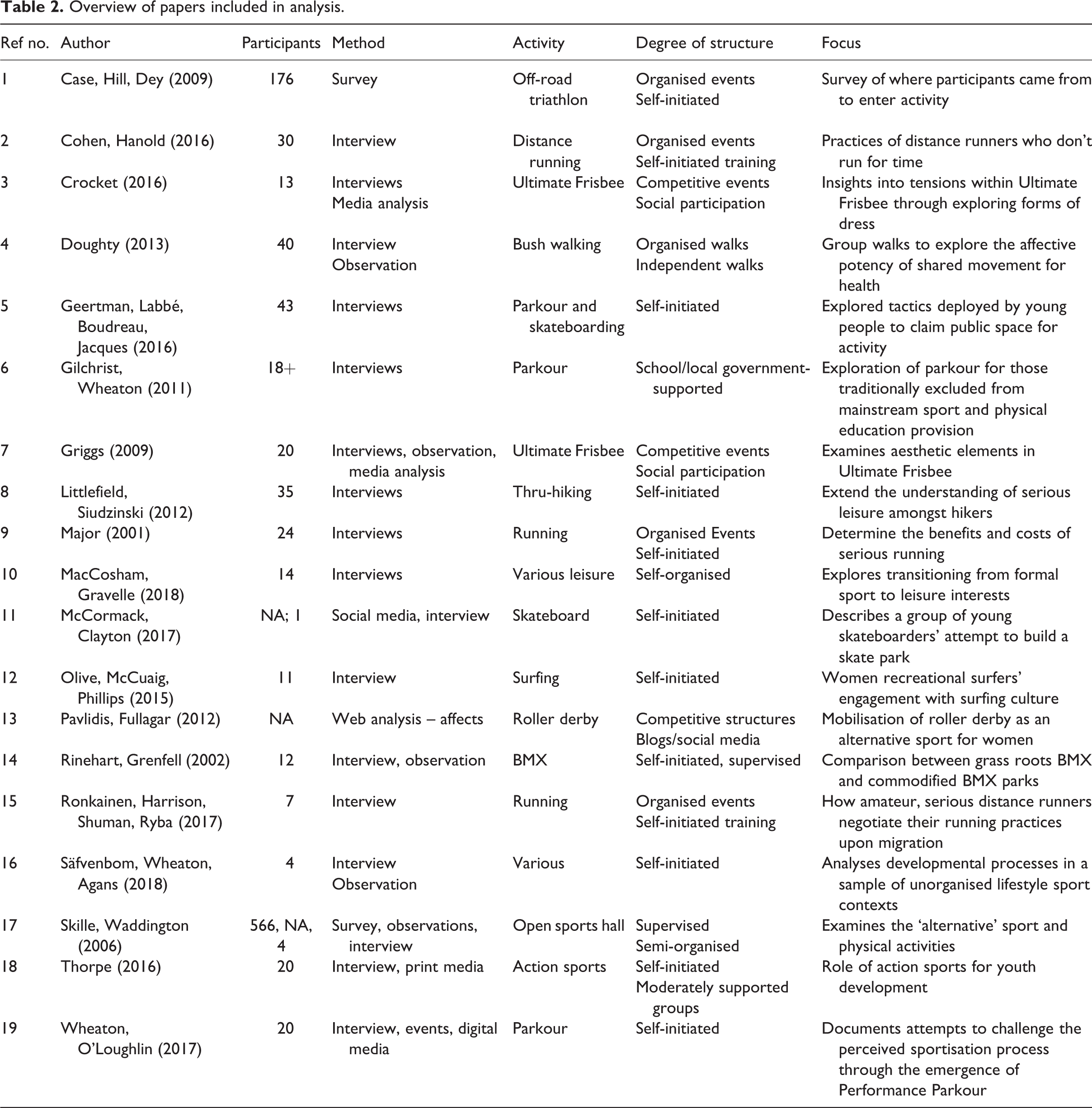
In seeking to understand the knowledge, skills and understandings that young people might need to successfully engage in informal participation within sports and physical activities, we conducted a systematic review (meta-synthesis) (Siddaway et al., 2019). In line with guidelines outlined by Thorne et al. (2004) and Siddaway et al. (2019), we developed inclusion criteria in relation to the types of research we felt would provide us with this information and outlined a retrieval process (see Table 1). As indicated in Table 1, the initial search used specific terms all known to be associated with informal forms of participation and employed the Sportdiscus database. The following points reflect the preferred reporting items for systematic reviews (PRISMA) checklist (Moher et al., 2009). Figure 1 provides an overview of the process for source selection. Table 2 details the literature sources included in the final sample.
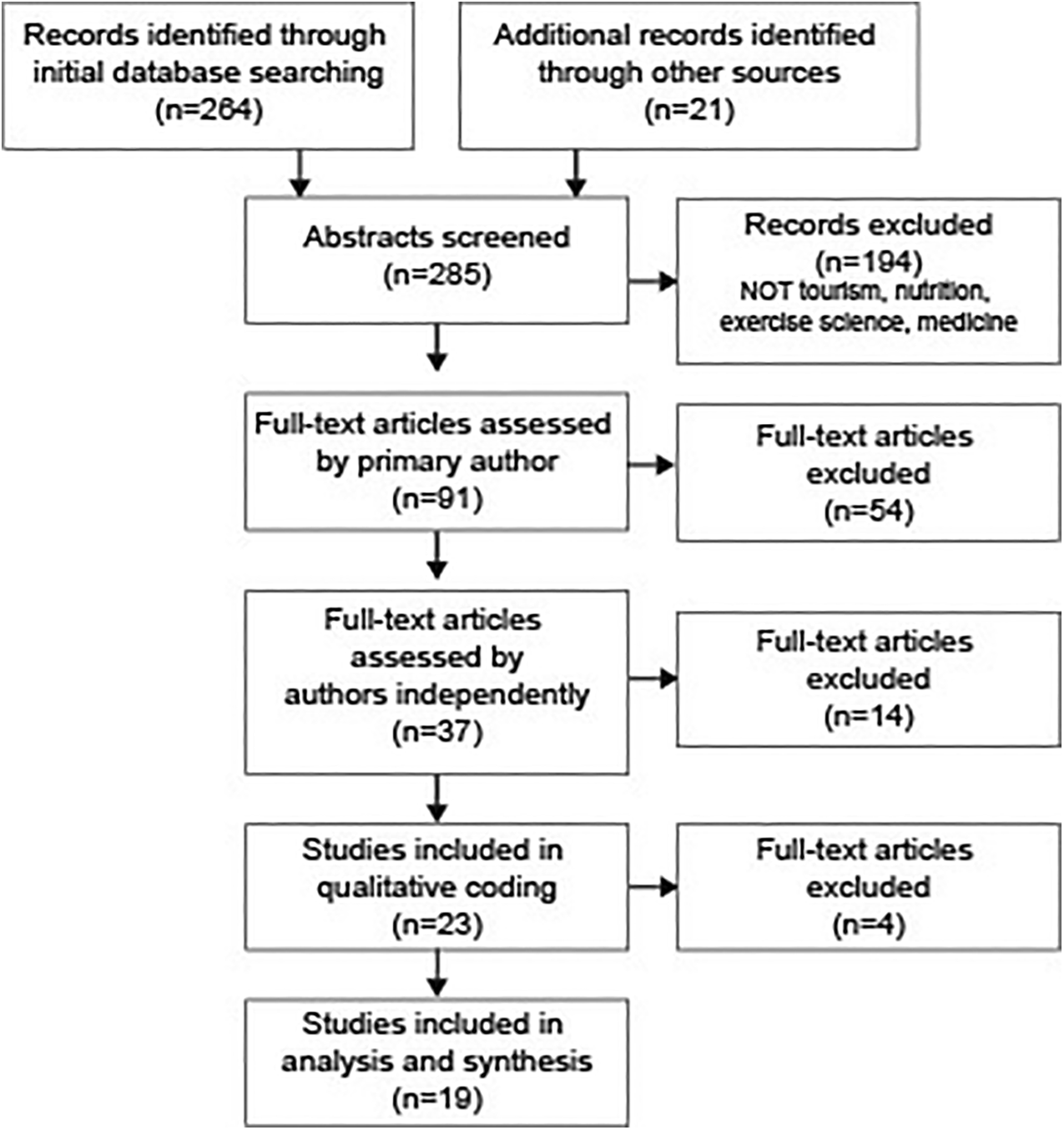
PRISMA flow diagram for item selection.
The electronic database Sportdiscus was initially searched using a range of terms (see Table 1). Sportdiscus was selected as an Elton B. Stephens Co (EBSCO) database with content relevant to physical activity, sport and movement. This process yielded 264 items. The low item count reflected the specificity of the terms used. Search criteria for meta-synthesis.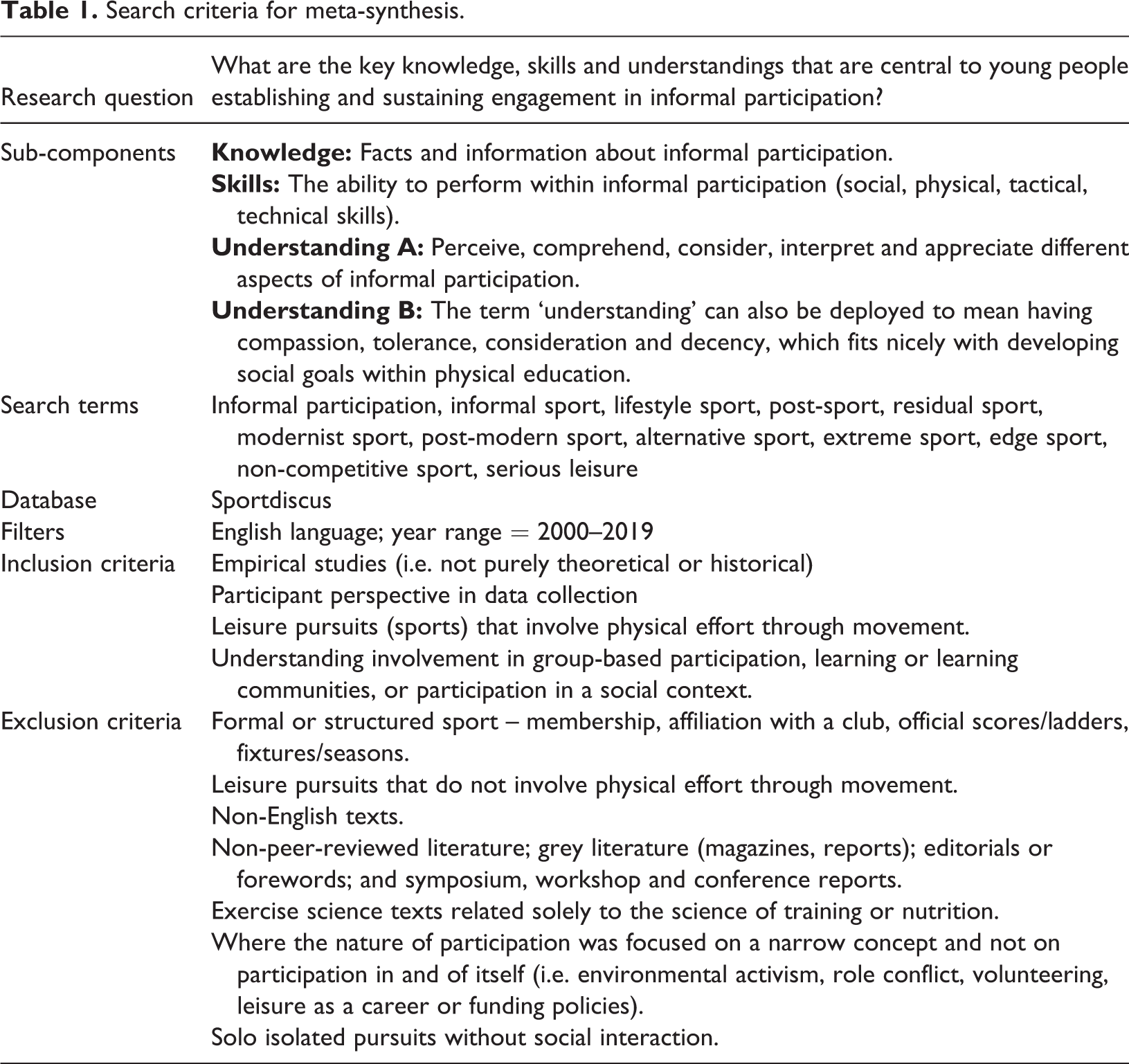
Overview of papers included in analysis.
Initial scanning of the abstracts identified that many of the items had a focus on tourism, mental health, exercise science or forms of serious leisure that did not involve gross bodily movement. The search terms were adjusted and expanded to: ‘informal sport’ OR ‘lifestyle sport’ OR ‘post-sport’ or ‘residual sport’ or ‘modernist sport’ OR ‘post-modern sport’ OR ‘alternative sport’ OR ‘extreme sport’ OR ‘edge sport’ OR ‘serious leisure’ OR ‘non-competitive sport’ AND exercise OR physical activity OR fitness OR movement OR health AND NOT tourism OR nutrition OR heart rate OR medicine. With filters, the final database search strategy (see Table 1) revealed a total of 70 sources, with an additional 21 sources recruited by manually searching reference lists.
A more detailed screening of abstracts by the primary author removed a further 54 papers based upon the inclusion/exclusion criteria (see Table 1). From here both authors independently read and screened papers to a final list with three papers contested. Following discussion, consensus was reached and a total of 23 papers were included for coding. During the coding process and closer examination, four papers were identified as not suitable due to specific aspects of the studies not matching inclusion/exclusion criteria. These four papers were consequently removed, leaving 19 papers in the final sample.
As explained below, we then adopted a process in which findings were identified, classified and coded. We aggregated the findings and conceptualised them with implications for educational practice. Given the nature of this exploratory analysis, we did not calculate indices of effect or magnitude in relation to published work as advocated by Thorne et al. (2004).
The first author (O’Connor) conducted the coding analysis of the text. The prime objective was to identify the features of informal sport participation that could be regarded as relevant to an educational context, with specific interest in knowledge, skills and understandings enabling participation. The limited direct engagement of literature with these particular interests necessitated a broader perspective in considering relevance for education. This expansion was reflected in nodes coded according to the following relationship with informal sport and physical activity: exemplars; motivations; barriers (including exclusion); understandings needed; skills needed; knowledge needed; social context; environmental context; aesthetics/embodiment; variation; policy and participant characteristics. The second author (Penney) undertook a verification process, coding a randomly selected sub-set of the selected papers, and undertaking additional checking of a sub-set of codes attributed within the other papers. A total of 617 passages of text were coded across the 23 papers.
As informal sport participants ourselves, we used critical reflection to interrogate potential gaps in the findings from the systematic review. Our own experience of informal participation has repeatedly reaffirmed for us the breadth of skills, knowledge and understanding that are variously needed for groups to function in supportive and inclusive ways and the importance of social skills in enabling our own and others’ participation. We also reflect that we have increasingly come to recognise and place higher value on affective aspects of participation (Brown and Payne, 2009; O’Connor and Brown, 2007; Penney, 2017). We acknowledge that these additional elements were not supported directly from the review of existing research, and we include them as specific prompts for future research to pursue.
Findings: knowledge, skills and understandings
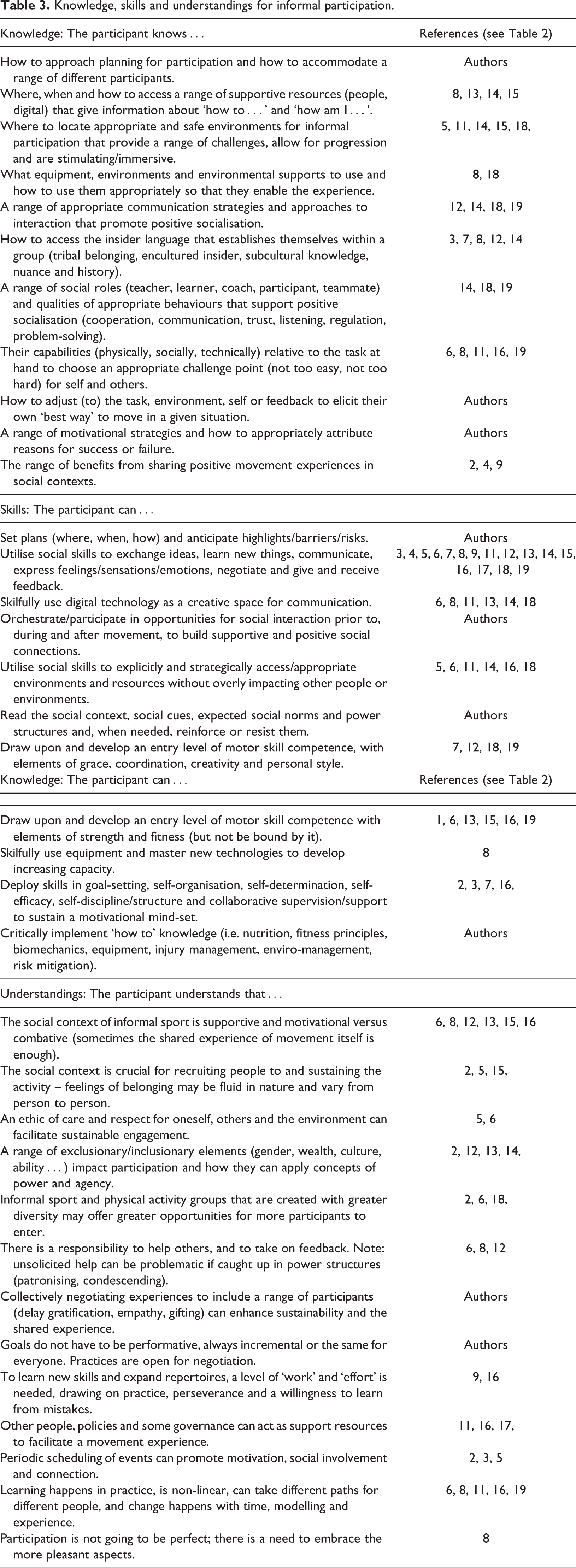
Table 3 below presents a summary of the knowledge, skills and understandings that were identified by the systematic review and our own identification of things associated with, and important for, informal participation. The commentary that follows expands upon the insights arising from the meta-synthesis to extend understandings of informal participation, particularly from an educational perspective. In presenting findings, we note that much of the data relates to adult, rather than youth, participation. Studies involving adults were deliberately included for the insights that they could provide about the knowledge, skills and understandings needed for lifelong participation in informal sport.
Knowledge
The meta-synthesis revealed a range of knowledges that participants in informal sport have developed or are developing. Hikers needed to develop knowledge about what equipment to pack (Littlefield and Siudzinski, 2012). Roller derby participants sourced a range of information about their activity from online sources (Pavlidis and Fullager, 2012), whilst parkour, surfing and skating participants demonstrated a knowledge of the types of environments/conditions that would suit their level of skill (Geertman et al., 2016; McCormack and Clayton, 2017; Thorpe, 2016; Wheaton and O’Loughlin, 2017). Participants had an embodied knowledge through experience of what their bodies were capable of and could match this appropriately to the task at hand. For example, Rinehart and Grenfell (2002: 303) describe beginners riding a course ‘self-consciously but tenaciously’ and jumps set ‘so that tricks can be challenging yet successful’. Additionally, there were examples of how this knowledge was being passed on; for example, in the case of parkour ‘everyone takes responsibility for training everyone else in what they know’ (Gilchrist and Wheaton, 2011: 122).
Variously, as insiders, participants are also identified as having learnt, or as learning, terms and phrases for effective communication, using correct terms for tricks and moves, knowing the appropriate dress, as well as social roles, behaviours and rules (Crocket, 2016; Griggs, 2009; Littlefield and Siudzinzki, 2012; Rinehart and Grenfell, 2002; Wheaton and O’Loughlin, 2017). Literature also provided examples where this knowledge was inadequate, particularly when it came to the inclusive use of language (see understandings) (Olive et al., 2015; Thorpe, 2016). From our own experience with informal cycling, swimming and running groups, we suggest that participants need to know about approaches to planning for their own participation and the enjoyable participation of others (i.e. knowing what information and resources they should consider, possible motivational strategies to employ, how to plan to be inclusive of different abilities, etc.). To do this, they need to know how they can manipulate different elements of the experience to facilitate and sustain their own and others’ positive engagement.
Skills
The literature acknowledges that there is a level of motor competence or motor skill that combines with a baseline of fitness, and where relevant some tactical knowledge, that contributes to successful informal participation. Indeed, many of the participants in studies identify or are identified as highly skilful and as demonstrating expertise that only comes with substantive levels of practice. Participants undertaking off-road triathlons, for example, came from a mix of lifestyle (cycling, skateboarding), individual (running, swimming) and formal team-based sporting backgrounds (tracking back to youth participation) (Case et al., 2009). However, what distinguishes informal participation from participation in competitive club-based sport is that skilful competitiveness is not the requisite for engagement that it appears to be within competitive structures. For entry into many informal participation activities, the requirement to be ‘skilful’ is minimal or reduced (depending upon the group), although the process of progressing skill competence becomes an important part of sustaining it. In the absence of an overt competitive focus, participants become more supportive of the skill progression of those around them. Säfvenbom et al. (2018: 2001) highlighted how participants in their study on ‘tricking’ were willing to work hard to improve their individual abilities, but that this happened in a supportive context where people ‘take care of each other’, motivate each other and empathetically ‘get happy’ on their behalf when they reach a goal. In describing facilitated parkour classes, Wheaton and O’Loughlin (2017) similarly refer to participants with diverse skill levels, including ‘non-sporty’ participants, training together in an atmosphere of mutual support. In Cohen and Hanold’s (2016) study, marathon runners reported that their goal was to run for fun, not time, whilst setting other challenges or simply talking to people and really enjoying the experience. Even the quite capable runners described by Ronkainen et al. (2017), while looking to improve their individual athletic performance, were not that interested in running ‘being too serious’ (Ronkainen et al., 2017: 375). Some of the most popular lifelong participation sports globally are walking, cycling, running, swimming, yoga and resistance training (Hulteen et al., 2017). In part the popularity is because these activities do not require high levels of skill competence (in competitive environments) for entry, yet they can all be advanced with effort and practice to offer increasing levels of challenge and to mark achievement. In the context of informal participation, Säfvenbom et al. (2018: 2002) suggest that ‘the power of will overrules the power of skill’.
The literature also referred to a range of social skills that were deployed by participants (and advocates) to engage in informal participation. The skateboarders in McCormack and Clayton’s (2017) study had to develop skills in communication and negotiation in order to secure a permanent site for their skateboarding community. The thru-hikers in Littlefield and Siudzinski’s (2012) research had to negotiate online search skills and social learning skills to better understand equipment use. The traceurs and skateboarders in Geertman et al.’s (2016) study had to develop spatial appropriation skills that involved: ‘(a) appealing to empathy, leading to gradual (informal) encroachment; (b) formulating positive arguments to gain social recognition and increase their collective presence in the city; and (c) silent reassessment and constant adaptation to avoid conflict’ (595). A self-described introvert in a walking group took the opportunity of parallel movement to ‘communicate with several people for a short time, interspersed with periods of walking silently by himself’ (Doughty, 2013: 143).
Skills were also referenced in relation to use of equipment and creating social media (Pavlidis and Fullagar, 2012; Thorpe, 2016). Thorpe (2016) describes skateboarders who use their mobile phones to capture footage and upload it to YouTube. Their skillset for posting videos progressively developed and became more sophisticated. Littlefield and Siudzinski’s (2012) thru-hikers demonstrated increasing levels of skill and expertise with planning, packing and using their equipment, sometimes in innovative ways.
We add for consideration the skilled enactment of planning, including the communication to others of where, when and how, as well as potential points of interest and barriers or risks. In informal participation, individuals (informally) assume various roles including coach, media liaison and committee member. Some participants can skilfully manipulate the opportunities for social interaction prior to, during and after movement to build a supportive and positive social atmosphere (for example, by changing the pace of a group to allow people to chat, or suggesting a route change to better accommodate a new member). They read the social context, social cues, expected social norms and power structures and, when needed, reinforce or resist them (put forward appropriate topics of conversation, use inclusive language, discourage various ‘isms’). They can apply their ‘know how’ and deploy skills to minimise disruption from weather, injury or equipment whilst heightening opportunities for positive experiences.
Understandings
Within formal sport, terms such as invade space, defend space, guard, steal, target, shoot, win, lose, teams, referee, opposition, etc. are common. In the literature analysed, these words were not prevalent and there was not a pronounced emphasis on tactical and games-based concepts. Instead, ‘understanding’ appears to centre on engagement with participation in a context of group inclusion, belonging, or mutual support and identity formation/management. Thorpe (2016: 100) suggests that informal participation is founded more on an understanding that it is about a ‘celebration of play, self-expression and creativity in the use of space and movement’. For ‘trick’ participants in Säfvenbom et al.’s (2018) study, a lack of external incentives resulted in a ‘collective urge to start, optimize and keep “the flow” of energy going’ (2003).
Data also suggests that simply opening the gym to informal participation opportunities tends to mimic gender structures found in traditional sports settings (Carlman and Hjalmarsson, 2019; Skille and Waddington, 2006; Thorpe, 2016), and informal participation is not immune to forms of racism, sexism and homophobia (Thorpe, 2016). Elements of exclusion (particularly sexism, ableism, bullying) emerged amongst rollerbladers (Pavlidis and Fullagar, 2012), in an open court setting (Skille and Waddington, 2006), amongst skateboarders (Thorpe, 2016), in BMX (Rinehart and Grenfell, 2002), amongst surfers (Olive et al., 2015) and in an open tricking space (Säfvenbom et al., 2018). According to Thorpe (2016), the activity itself is not a solution to inclusive engagement for a range of people. Participants therefore need to understand how a range of factors can impact participation and that they are agential in shaping the experiences for themself and others. Hence, developing understandings associated with empathy and etiquette for the shared, inclusive use of participation spaces is important (Geertman et al., 2016; Thorpe, 2016). As participants with strong interests in inclusion, we also highlight the importance of understanding about the negotiation of experiences, and understanding experiences from the perspective of different participants.
Returning to our introductory comments, if H/PE has an agenda to support young people to positively engage in movement experiences throughout their lives, then the analysis we have presented is a key point of reference for future curriculum planning at a system and school level. Below, we turn to the potential for H/PE to seriously engage informal participation, by exploring the alignment of current curricula with the knowledge, skills and understandings identified in Table 3.
Knowledge, skills and understandings for informal participation.
Informal participation and H/PE
In addressing the implications of our findings from an educational perspective, our focus is on examining the potential for teachers to legitimately foreground knowledge, skills and understandings that are central to informal participation, within the scope of current curriculum specifications. We are deliberately not addressing reform of official curriculum texts. In our experience, curriculum specifications are rarely prescriptive. Rather, they are designed to enable teachers to reflect localised contexts, needs and possibilities in their curriculum enactment. Our focus is therefore on the opportunities to leverage this flexibility in ways that will strengthen the alignment between teaching and learning in H/PE, and informal participation beyond schools. We suggest that addressing this alignment represents an important response to sustained calls for greater attention to be paid to notions of relevance and meaningfulness (Beni et al., 2017; Kretchmar, 2000; O’Connor, 2018), quality and equity (UNESCO, 2015) in H/PE.
The analysis that we present relates to a purposefully selected sample of official curriculum materials associated with the Australian Curriculum Health and Physical Education (AC HPE) (Australian Curriculum Assessment and Reporting Authority (ACARA), 2016). Theoretically, this step in our research is informed by education policy sociology, and particularly enactment theory (Alfrey et al., 2017; Ball et al., 2012; Lambert and O’Connor, 2018; Penney, 2013), which encourages teachers and teacher educators to be creative in translating official curriculum texts into meaningful lived experiences of H/PE for students. Our research seeks to support such creativity by examining the curriculum possibilities that are inherent in the flexibility of official curriculum texts, and the AC HPE specifically.
Bernstein’s (1971) conceptualisations of knowledge and pedagogical relations are also important foundations here, in that they enable us to articulate the shifts in thinking about curriculum and pedagogy that we contend are important in order for H/PE to clearly align with informal participation. Bernstein (1971) contrasted ‘integrated’ and ‘collection’ types of curricula, with the former emphasising connections between curriculum ‘parts’ and the latter emphasising the distinctiveness of parts. We suggest that if H/PE is to learn from and productively link with informal participation, there is a case for an ‘integrated’ type of H/PE curriculum that places greater emphasis on knowledge, skills and understandings that have utility across activity contexts. The fluidity of participation across a lifespan (Penney and Jess, 2004) and the dynamic nature of sport and leisure forms themselves (such that H/PE is challenged to support students to develop knowledge, skills and understandings that they can apply in contexts and ways that are yet to emerge as recognisable forms of physical activity and/or sport) support this stance. Further, Bernstein’s (1971) work points to the significance of the relationship between learning within and beyond schools, and the pedagogical relations between teachers and students. In foregrounding knowledge, skills and understandings for informal participation, our concern is to enhance links between learning in H/PE and learning with families, friends and in communities. From a pedagogical perspective, many features of informal participation, including the form an activity can take and how it is ‘organised’, point to a need for teaching and learning that emphasises students’ negotiation, shared ownership and participation in complex social and relational processes.
Exploring alignment: informal participation and the Australian Curriculum Health and Physical Education
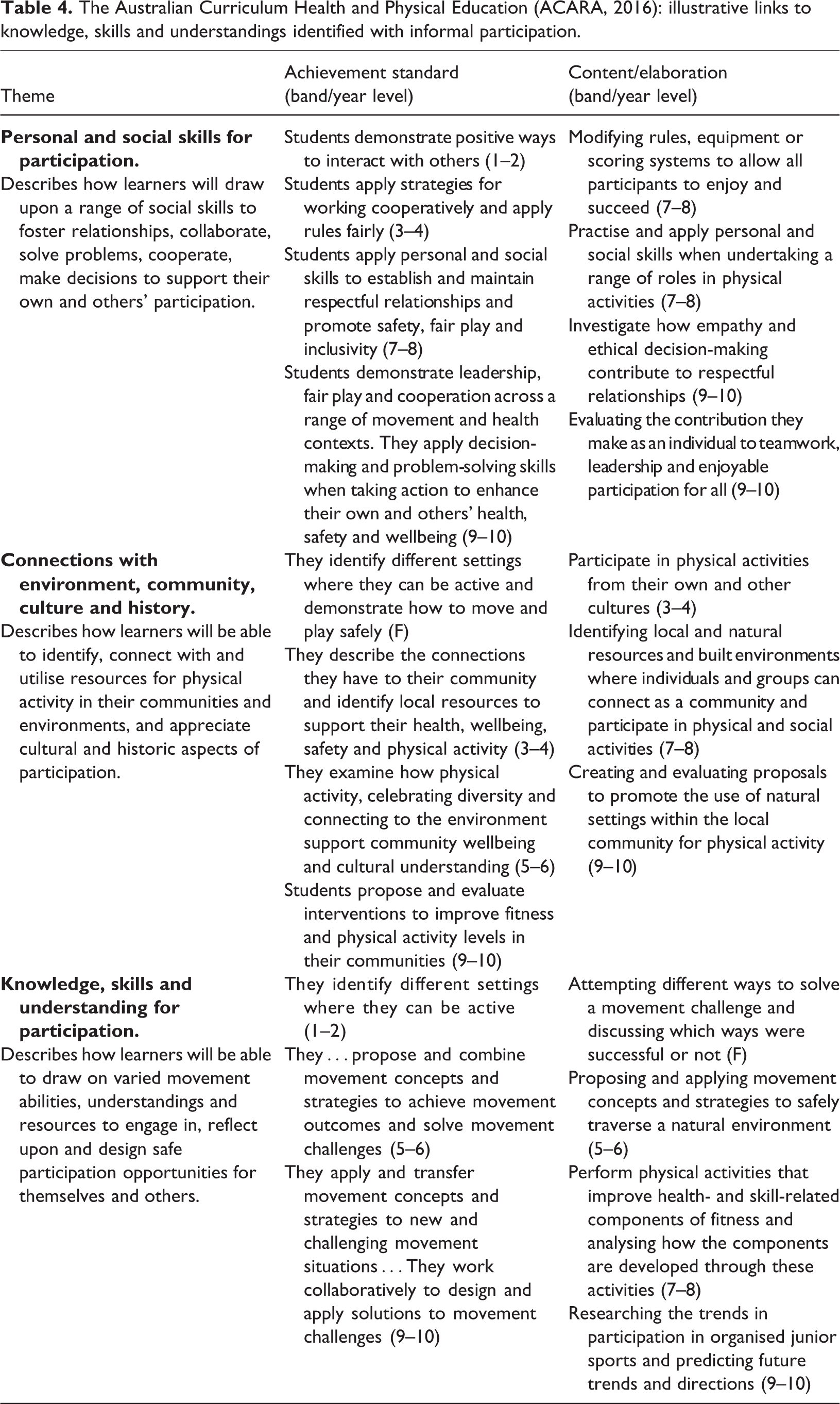
This element of our research involved a systematic audit of purposefully selected elements of the AC HPE curriculum text (ACARA, 2016), to identify content alignment with the results of our analysis of informal participation. This reflected our specific interest in identifying whether and how it may be possible for teachers to legitimately foreground knowledge, skills and understanding that are associated with informal participation, in enactment of the AC HPE. The systematic audit covered the full ‘F-10’ (Foundation to Year 10) scope of the AC HPE, and involved analysis of content associated with: The achievement standards, describing the envisaged learning progression and achievement across bands that span two years of schooling;
Band descriptors, describing the knowledge, skills and understanding incorporated in a band, indicating learning opportunities that students will be provided with, and detailing the ‘focus areas’
2
to be addressed in the band; and
Content descriptions and elaborations. These describe in detail the teaching and learning for each band, in relation to the curriculum strands and sub-strands
3
(ACARA, 2016).
Data from each of these three aspects of the curriculum specifications, for each band of schooling, was coded for alignment with the skills, knowledge and understandings identified with informal participation. The next step in the analysis involved the two researchers looking at the data across all bands to identify potential grouping of data in relation to themes that would capture key foci of alignment between the AC HPE and informal participation. The three themes identified through this process were: personal and social skills for participation; connections with environment, community, culture and history; and knowledge, skills and understanding for participation.
The Australian Curriculum Health and Physical Education (ACARA, 2016): illustrative links to knowledge, skills and understandings identified with informal participation.
Discussion: informal participation and curriculum futures
The systematic review has enabled us to bring to the fore characteristics of informal participation that are arguably critical for educationalists to engage with if H/PE is to support lifelong participation in contemporary societies. Our analysis of the AC HPE curriculum specifications has further illustrated important scope for H/PE to legitimately engage with the knowledge, skills and understandings that are central to informal participation. In this discussion, we draw out what H/PE can learn from informal participation and address key curriculum and pedagogical considerations emerging from our research.
A social orientation
Informal participation is grounded in social relations and interactions, and thus, social skills: to build and negotiate relationships, to establish and maintain ‘rules’ and boundaries of participation, to foster and sustain ‘membership’, to develop shared understandings of the social responsibilities that are needed for inclusive, enjoyable experiences for all participants. Importantly, individuals within informal groups lead negotiation of routes, pace, duration, game formats or rules, and/or maintain communication between the group outside of actual participation (via social media and/or text messaging). Individually and collectively, informal participants have a responsibility for inclusion, and for the social health dimension of the participation experience. Our analysis and personal involvement in informal participation has brought to the fore the importance of knowledge, skills and understandings that foster cooperation and inclusion, and that enable responsible and safe decision-making within groups that may well feature diverse motor abilities and participation interests. Consequently, we stress the importance of H/PE foregrounding learning that relates directly to the sociality of informal participation. Knowing how sociality acts as a health resource, having the self-awareness and interpersonal skills to negotiate group contexts, and understanding how participants must, on occasion, subjugate self-interest to the interest of the group for the possibility of long-term benefits, all become important underpinnings for participation (Dunbar and Shultz, 2007). Enjoying social interactions and friendship opportunities, encouraging and advising other participants, inspiring other participants, volunteering to support the event and fundraising were all considered by Stevinson et al. (2015) to be key elements sustaining participation in parkrun.
Social connection and social nurturing are also increasingly recognised as fundamentally important for health and wellbeing (Cacioppo and Cacioppo, 2014; Holt-Lunstad et al., 2015). Hence, informal participation can serve to mitigate against an increasingly disconnected and individualised society that fails to ‘provide for a full social existence of intimate, close connections with others’ (Arai and Pedlar, 2003: 187), and potentially can do this in ways that traditional performative sport contexts cannot (Jeanes et al., 2019).
We suggest that H/PE has a central role to play in leveraging this potential. The following sections address issues arising from our research that represent both notable challenges and opportunities for H/PE.
Re-aligning H/PE content and pedagogy
Looking at the most popular physical activities across the lifespan, and at informal participation as a context and form of meaningful, sustained involvement in physical activity for many people, it is clear that some level of movement proficiency is required. It is equally evident, however, that this participation does not demand a prime focus on technical proficiency, but rather, upon ‘other learning’ that centres on the social, interpersonal, cultural and environmental dimensions of H/PE. We point, for example, to the importance of children and young people learning how to appropriate and use space for an activity in ways that are socially acceptable and respectful to other community members. How many H/PE programmes or lessons currently direct attention to the skills, knowledge and understandings associated with making a space a meaningful, safe and inclusive place for being active? Yet, whether we participate alone or with others, place is important.
Hitchings and Latham (2017: 301) remind us that ‘all physical exercise takes place somewhere’. The physical or built environment, including parks, sidewalks, playing fields, bodies of water, school grounds and recreation centres, is consistently linked to increased physical activity (Sallis and Glanz, 2006; Sallis et al., 1998, 2006; Stevinson et al., 2015). More than merely a backdrop to activity, the interaction between environment and body is significant from a sensory perspective in giving meaning and richness to movement (Hitchings and Latham, 2017; Jack, 2010; O’Connor, 2018; Smith, 2007). Participants therefore need knowledge, skills and understandings that are associated with ‘reading environments’ in terms of their capacity to sustain safe and enjoyable participation. Similarly, young people need to develop knowledge, skills and understanding that relate to the manipulation of environmental constraints (i.e. rules, distance, speed, equipment, numbers) so that they and others can participate at an optimal level of challenge. Initiatives such as parkrun vividly illustrate the value and importance of individuals being able to engage at their own level, on their own terms, to suit their abilities and interests.
Prioritising learning such as that described above (and detailed in our preceding analysis of informal participation) disrupts long-established patterns of privileging particular skills, knowledge and understandings in H/PE. It also raises questions about the types of learning experiences that H/PE is expected to provide. We suggest that teaching and learning aligned with informal participation will necessarily include inquiry-based learning and student-centred pedagogies. Past research in physical education, including studies associated with sport education and other models-based practice, tells us that adopting pedagogies that empower students as owners of their own learning is inherently more challenging for teachers than directive pedagogy and requires extensive planning, structure and support (Alfrey et al., 2017; Kim et al., 2006; O’Connor et al., 2016; Thorburn et al., 2011). A pedagogy shaped around informal participation will similarly require in-depth planning, clear structure and detailed guidance; it should not be seen as legitimating unguided play with no clear educative intent or direction.
The personal dimension of curriculum enactment
The curriculum and pedagogical shifts described above also present challenges that relate to teachers’ established ‘everyday philosophies’ (Green, 2000). Our analysis brings to the fore questions about what skills, knowledge and understandings really matter in H/PE, and about the activity/sport contexts that should feature in contemporary curricula. As educators, we cannot say what the activities ‘of the future’ will be, but we are more confident about the sorts of knowledge, skills and understandings that will enable students to pursue new participation opportunities, and generate those opportunities for themselves and others. Not everyone in H/PE communities will welcome a move away from a ‘specialised sport’ curriculum orientation and structure, while others will be enthusiasts in re-aligning H/PE programmes and pedagogy.
Conclusion
The data is clear: participation in sport and physical activity is changing globally whether H/PE chooses to acknowledge this or not. Our research has also demonstrated that the current Australian Curriculum affords H/PE notable opportunities to engage in this changing landscape. It has signposted key knowledge, skills and understanding that progressive teachers might prioritise and pedagogical approaches that they can adopt in the interests of young people’s participation futures. We cannot claim to have captured the range of knowledge, skills and understandings that exist within informal sport due to limitations in our approach and the research base that it drew upon. Systematic reviews reflect the search process used together with the quality and breadth of the research available. For example, many of the papers returned within our search parameters featured qualitative studies. These provided considerable depth, but have limitations with representing a wide range of voices. Other limitations of this study included a single database search and the exclusion of grey or unpublished literature. Similarly, our curriculum analysis has been limited to a single official text. With these limitations, we hope that the work presented will provide a platform for future research and innovation in H/PE.
Footnotes
Acknowledgements
The authors wish to thank delegates at the AIESEP World Congress in Edinburgh for encouraging our development of this work, and the anonymous reviewers for very constructive feedback on earlier drafts of this paper.
Declaration of conflicting interests
The author(s) declared no potential conflicts of interest with respect to the research, authorship and/or publication of this article.
Funding
The author(s) received no financial support for the research, authorship and/or publication of this article.
