




Abstract
There are growing concerns over young people’s mental health, the academic pressures they face, and the association between school-related stress and health. Given this, alongside the known benefits of physical activity for psychological health, the need for school-based interventions with a physical activity focus seems justified. This paper reports on findings from the evaluation of a pilot of ‘Get to the Start Line’, an innovative school-based programme designed to address adolescents’ school-related stress and anxiety. The research adopted a mixed-methods approach and a pre- and post- design. Six schools from the East Midlands, UK, and selected year 11 pupils (aged 15–16) identified as experiencing examination-related stress and anxiety, participated in the programme. The programme was coordinated by a school champion (a staff member), delivered by an athlete mentor, and comprised six workshops. Data were collected from school champions and athlete mentors via an online survey following each workshop, and via semi-structured focus groups and interviews with pupils and school champions, respectively, pre-, mid- and post-intervention. Schools also provided relevant pupil data. The findings revealed the programme to be positively received by most pupils and to result in positive outcomes such as reported reductions in examination-related stress and anxiety for some, and fewer pupil well-being referrals. However, various challenges and limitations of the programme were identified, and recommendations were made for its future development. Therefore, whilst some of the findings were encouraging, further research into the implementation and impact of this and other such programmes is needed.
Introduction
There are growing concerns over the psychological well-being of school-aged children and young people (Tymms et al., 2016) with data from developed countries revealing the mental health of many to be ‘less than optimal’ (Biddle et al., 2019: 146). Worldwide, it is estimated that 10–20% of adolescents experience mental health conditions which account for 16% of the global burden of illness and injury in 10–19-year-olds (World Health Organization, 2018). Furthermore, the prevalence of poor mental health and emotional disorders amongst youth have reportedly increased in the last decade (Dale et al., 2019; Dore et al., 2016; NHS Digital, 2018) with depression and anxiety disproportionately affecting young people (Viner, 2005, cited in Biddle and Asare, 2011). In the UK, such conditions and rates of mental ill health in youth are likewise reported to be common and relatively high (Tymms et al., 2016). The recent Mental Health of Children and Young People Survey (NHS Digital, 2018) revealed one in seven 11–16-year-olds had at least one mental disorder, with emotional disorders being most common and higher amongst older age groups. The survey also reported an overall increase in the prevalence of mental disorders over time (from 9.7% in 1999 to 11.2% in 2017). This aligns with Public Health England’s (2014a) warning that children and young people’s well-being is in decline and 30% of adolescents are experiencing low levels of emotional well-being.
Whilst the causes of mental ill health in young people are varied and complex, the association between high levels of school-related stress and high levels of health complaints is noteworthy (Haugland et al., 2003). School-related stress has been found to be particularly prevalent during adolescence (Gerber and Puhse, 2008; Haugland et al., 2003), with approximately one-third of pupils reporting feeling under considerable pressure with their school work (Gerber and Puhse, 2008). Tymms et al. (2016: 2) cite an editorial published in the British Medical Journal which criticises educational policy in England for encouraging schools to maximise academic attainment whilst ‘ignoring’ well-being and health. Related to this, a 2015 report commissioned by the National Union of Teachers on the impact of accountability measures on young people in schools in England revealed that: Children and young people are suffering from increasingly high levels of school-related anxiety and stress, disaffection and mental health problems…caused by increased pressure from tests/exams; greater awareness at younger ages of their own ‘failure’; and the increased rigour and academic demands of the curriculum…
Of further importance is the growing recognition that being physically active is inherently psychologically ‘good’ for young people (Biddle and Asare, 2011). Regular participation in physical activity has been found to improve children and young people’s psychological health, with reviews revealing benefits such as enhanced self-esteem and cognitive function and reduced symptoms of anxiety and depression (National Institute of Clinical Excellence, 2007; Stensel et al., 2008; United States Department of Health and Human Services, 2008). A study conducted on 1670 15-year-olds in Norway examined the relationship between school-related stress, leisure-time physical activity and adolescent health complaints, revealing high levels of health complaints to be associated with high levels of school-related stress and low levels of leisure-time physical activity (Haugland et al., 2003). The researchers surmised that leisure-time physical activity may reduce negative health outcomes associated with school-related stress and ‘physical activity may be seen as a coping resource’ in this age group (Haugland et al., 2003: 132). Given this, and the broader context outlined, the need for effective interventions seems warranted.
Interventions focussed on young people’s mental health and physical activity have been summarised in various reviews (e.g. Biddle and Asare, 2011; Biddle et al., 2019; Brown et al., 2013; Dale et al., 2019; Keeley and Fox, 2009; Lubans et al., 2012; 2016; Marques et al., 2017; Spruit et al., 2016). These have drawn on a range of studies, many school based, which have revealed that physical activity can achieve positive mental health outcomes in young people. For example, an updated ‘review of reviews’ by Biddle et al. (2019) reports sustained evidence of links between physical activity and mental health in children and adolescents with respect to depression, anxiety, self-esteem and cognitive functioning. Further, the review claims that a case for a causal association can now be made between physical activity and cognitive functioning, and a partial case can be made between physical activity and depression. Similarly, an umbrella review by Dale et al. (2019) on the relationship between physical activity and depression, anxiety, and self-esteem in children and youth reveals physical activity to have positive mental health outcomes, particularly in terms of reducing depression/depressive symptoms and improving physical self-concept. Alvarez-Bueno et al. (2017) also undertook a systematic review and meta-analysis on the effectiveness of school-based physical activity interventions on children and adolescents’ academic achievement which revealed programmes significantly benefitted multiple facets of achievement. From a public health perspective, these findings are encouraging and suggest that physical activity programmes have the potential to improve both young people’s mental well-being and their academic performance.
This paper focuses on the evaluation of a pilot of ‘Get to the Start Line’, a school-based programme designed to address adolescents’ school-related stress and anxiety, and in particular that associated with examinations. Get to the Start Line was developed by the Youth Sport Trust (YST)
2
as an innovative, physical activity-focussed intervention in response to the concerns associated with young people’s mental health and well-being and in recognition of the potential of physical activity to positively influence this. The aims of the pilot programme were: To use physical activity to reduce the stress and anxiety of year 11 pupils (15- to 16-year olds) in order to support improvements in their academic attainment; To increase understanding of stress and anxiety disorders affecting young people and the role of physical activity as a mechanism for reducing their prevalence (Youth Sport Trust, 2015).
At the time of the study, Get to the Start Line involved identified pupils participating in six 1 hour 30 minute workshops coordinated by a school champion (a member of staff at the school) and delivered by an athlete mentor who was either a current or former elite athlete. The intention was that the athlete mentor would use their experiences of managing stress and anxiety when performing at a high level in sport to support pupils in managing their own stress and anxiety related to examinations. The workshops were intended to be delivered flexibly and at a time convenient to schools (either during curricular or extra-curricular hours). They were designed to be interactive, equipping pupils with techniques/strategies to manage their stress and anxiety and preparing and enabling them to perform to the best of their abilities in their GCSE examinations 3 . Specifically, sessions covered the following: (a) Programme Introduction (i.e. the purpose; potential benefits; expectations/commitment; building trust); (b) Stress and Arousal Levels (types of stress; identifying signs of stress; stress management techniques); (c) Understanding Personality (personality scales; own personality; personality preferences; the impact of personality on performance; planning, goal setting and confidence building); (d) Controlling the Controllables (autonomy and control; circle of control; circle of influence; reviewing goals; celebrating successes/achievements); (e) Managing Me (evaluating previous techniques; positive self-talk; pre-performance routines; leisure time; role of exercise; relaxation and visualisation); and (f) Team YOU (final planning/preparation; support networks).
The evaluation of the programme was commissioned by the YST and conducted by researchers from a university based in the East Midlands region of England, UK. The research aimed to: (a) determine the participants’ perceptions and experiences of the programme; (b) establish the perceived effectiveness of the programme in achieving positive pupil outcomes; and (c) make recommendations concerning future improvements to the programme.
Methods
The research utilised a mixed-methods approach, drawing on both qualitative and quantitative techniques (Johnson et al., 2007), thereby allowing a comprehensive evaluation of both the process and perceived influence and impact of the programme. Mixed methods are increasingly common within school-based research and represent ‘an intuitive and practical response to the varied demands of understanding the dynamic and multifaceted nature of human practices and the (social) world’ (Gibson, 2016: 382). Qualitative techniques in particular are recognised as being important for exploring the contextual, social and cultural aspects that are believed to influence the effectiveness of health-based interventions (Dixon-Woods and Fitzpatrick, 2001) which are not as easily illuminated using quantitative techniques in isolation (Beltrán-Carrillo et al., 2017; Patton, 2015). Thus, within this study, both qualitative and quantitative data were collected and a variety of methods were employed to generate contextually rich data and gain a comprehensive insight into teachers’ and pupils’ experiences, views and perceptions and pupil outcomes relating to the Get to the Start Line programme. A pre- and post-intervention design was employed to enable any changes to be evidenced and associated with the programme, where possible.
The research was conducted over a 14-month period (from September 2015 to October 2016). The schools involved in the evaluation were from a county in the East Midlands and were identified by the YST on account of their involvement in a wider Physical Education (PE) focussed initiative concerned with improving secondary school pupils’ health and well-being. Initially, eight secondary schools were invited and agreed to be involved in the research but two subsequently withdrew, leaving six participating schools. Each school was responsible for selecting the pupil participants for the programme. School champions were asked to liaise with relevant colleagues to identify year 11 pupils who were known to be experiencing examination-related stress and anxiety and who they felt would benefit from being involved in the programme. This led to the recruitment of between nine and 12 pupils per school.
A baseline visit to each school took place at the beginning of the academic year (September), with follow-up visits made in January and March. During each visit, pupil focus groups and interviews with school champions were conducted. At the time of the visits, schools were also asked to provide pupil data pertaining to attendance, attainment, behaviour and well-being referrals. In addition, an online survey was employed to collect data from school champions and athlete mentors following each workshop.
The study was granted full ethical clearance by the researchers’ University Ethics Approvals (Human Participants) Sub-Committee, following which the headteachers from the schools plus school champions, athlete mentors, pupils and parents were informed about the programme and the associated research. All groups provided their written consent or assent to be involved, prior to data collection.
Data collection
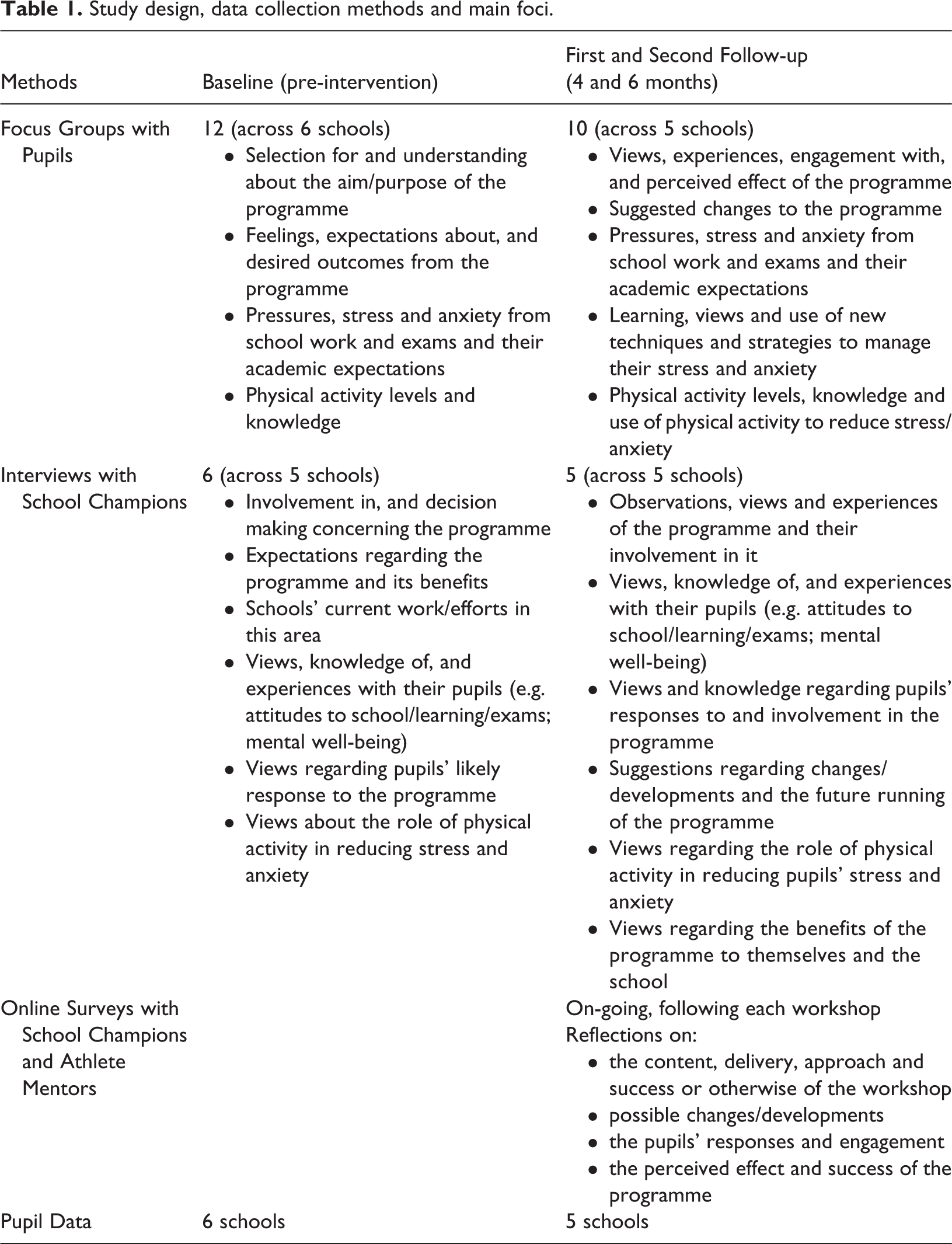
The study design, data collection methods, and main focus of each at the different stages of the research are summarised in Table 1. The pupil focus groups were semi-structured and guided by a schedule. Typically, they involved five to six pupils, lasted between 20 and 75 minutes, and were audio recorded to facilitate subsequent transcription. The focus groups were generally well attended at baseline (visit one), reasonably well attended at the first follow-up (visit two), but less well attended at the second follow-up (visit three). The interviews with school champions were similarly semi-structured, guided by a schedule and audio recorded, with these lasting between 45 and 60 minutes. During each visit, school champions provided pupil data relating to attendance, attainment, behaviour and referrals to well-being support, plus at the end of the academic year they provided details of the pupils’ GCSE examination results. Complete data sets were received for five of the six participating schools. The online survey was administered to school champions and athlete mentors following each of the six workshops via Bristol Online Surveys 4 . However, beyond the first follow-up visit, the completion rate of the survey was low.
Study design, data collection methods and main foci.
Data analysis
The research was guided by an approach akin to constructivist grounded theory (Charmaz, 2000; Harry et al., 2005). Constructivist grounded theory recognises that data are co-created by the researcher, those being researched, and the field as a result of their interactions, and assumes that there are multiple realities with multiple perspectives, thereby enabling more interpretive understandings of individuals’ meanings within the research process (Charmaz, 2000). This approach facilitated a reading of the data in line with the programme aims, expected outputs/outcomes and success criteria, whilst still providing opportunities to identify unexpected outcomes. Upon collection, the qualitative data were subject to thematic analysis within QSR NVivo 10 which involved identifying, interpreting and reporting patterns of meaning from the data (Bryman, 2012). The analysis involved six key stages: familiarisation with the data; generating codes; searching for themes; reviewing themes; defining and categorising themes; and writing up the data (Flick, 2014). The quantitative data gathered at each time point were collated within Microsoft Excel and used to generate descriptive statistics.
Five out of six schools completed the programme and the findings presented are based on the data collected from the school champions and pupils in these five schools 5 . This includes data from 50 pupils and five school champions. The qualitative data are reported and discussed first, followed by the quantitative data. The former are expressed in such a way as to indicate the relative weight/proportion of participants’ responses, as follows: all (100%); nearly all (>90%); the vast majority (75–90%); most (50–74%); many (30–49%); some (10–29%); and few (less than 10%).
Findings and discussion
Programme views and experiences
From the outset, schools were positive about their involvement in Get to the Start Line. All school champions recognised that mental health was a ‘real’ and ‘serious’ issue in their schools and felt there was a need for such a programme. This perceived need was also confirmed by the pupils themselves. Most reported feeling stressed, anxious and under considerable pressure at school and were thus positive about and receptive to the support. When asked how they were feeling and about any concerns they might have at the start of the programme, pupil comments included: Pupil 9, school (S) 6, female: ‘It’s school! It’s school that makes me as stressed as I am, there’s just so much work and I don’t even want to think about the exams at the end of the year’. Pupil 6, S2, male: ‘I’m worried about that breaking point for me that will mean I’ll just get too stressed and not get the grades I want, and it’ll just mess me up’. School champion, S1: ‘I don’t think we are very good at helping students to identify stress and anxiety…’. School champion, S4: ‘Something has to happen for us to do something. I think it’s more reactive than proactive at the moment and when that’s the case, we often pick them up too late’. Pupil 3, S1, male: ‘It was really good. It was just…something new…and something that we wouldn’t usually do at school…’. Pupil 3, S6, female: ‘I loved it!…It just really helped me like, having a break from school, for what was a positive thing’. School champion, S4, female: ‘We felt that we wanted to put PE back on the map with regards to…I mean, we’ve struggled a little bit with hours and staffing and we wanted to go back and do something at whole school level, so we were back on the map’. Pupil 9, S1, male: ‘I enjoy it because it’s not a teacher, so you can tell him more…more what you’d speak about in general. Like, you can have an actual conversation with him…He just makes you feel better about yourself’. Pupil 12, S6, female: ‘He’s really nice to be honest…he’s just nice to talk to, you feel you can’. School champion, S5, male: ‘She’s really engaged with the pupils and tried to get to know them individually, which hasn’t been easy with some of the pupils’. School champion, S1, female: ‘I think the range of strategies covered is a real strength’. School champion, S5, male: ‘The practical activities have been really good. They’ve enjoyed those the most and that’s what made them get involved with the programme the best’. Pupil 10, S6, female: ‘I really enjoyed when we got moving, and got involved, practical activities were best for me’. Pupil 5, S2, female: ‘It’s nice because…you realise that everyone feels the same…You’re sat in there, in the group, and everyone’s like ‘Yes, I feel like that’. It probably shouldn’t be reassuring, but it is’. School champion, S1, female: ‘It struck a chord with them, I think it’s allowed them to acknowledge that they are struggling, but so are other people’. Pupil 3, S1, male: ‘There needed to be more activities, more physically active activities. That would make the programme better’. Pupil 3, S5, female: ‘I thought there would be more activity than there was…I thought that was meant to be the link, like between physical activity and helping us with stress. There was some activity but not much really…’.
Further and perhaps related criticisms pupils shared during the focus groups concerned the rather ‘lesson like’ nature of some of the workshops and the perceived irrelevance of some of the content and activities. Some pupils, despite trying the techniques/strategies covered during the workshops, experienced little success with them and so questioned their utility and applicability. Several also felt the programme was not personalised enough and failed to take their particular needs into account. Pupils’ views reflecting the above are illustrated in the following quotations: Pupil 8, S3, male: ‘There was so much writing! It just became like another lesson really…’. Pupil 2, S1, female: ‘I wasn’t really sure why we did some activities, like what the purpose of them was…’. Pupil 6, S4, female: ‘It wasn’t specific enough. Like it was…I think we all went in thinking we were going to be shown how to deal with our stress and anxiety, but we didn’t get that…it needed to be more personalised for us’. School champion, S3, male: ‘The content can be a little bit abstract… I think some of the students have sometimes found it difficult…’. School champion, S6, female: ‘…I’m not sure it really catered for the less able pupils…The academic pupils have gained more from it…’.
Other delivery or implementation challenges identified with the programme stemmed from a lack of knowledge about the programme, the time pressures and time commitment involved in its delivery, and issues concerning programme support, engagement and continuity. In turn, lack of knowledge also hindered pupil selection for the programme, and consequently selection varied between schools and sometimes deviated from the intended target group. During the interviews and focus groups school champions and pupils were asked specifically about the selection process and their selection, respectively, which elicited varying responses from both groups. Some school champions voiced concerns about informing pupils about their selection as they felt uncomfortable highlighting the issues of stress and anxiety with them. Pupils’ responses ranged from welcoming the opportunity to be involved in the programme, to being confused, unclear or uncomfortable, through to being ‘annoyed’ or even ‘offended’ as a result, with a few assuming their selection was due to underachievement and/or poor behaviour. The varied responses are exemplified by these pupils: Pupil 9, S4, female: ‘I’m pleased that I got picked because I stress out about everything!’. Pupil 8, S3, male: ‘We thought that we were picked because we were like, stupid’. Pupil 7, S3, female: ‘At first I thought school was trying to say I’m angry or something. I thought it was trying to get me involved in anger management because of my behaviour’. Pupil 4, S5, male: ‘They took us out of lessons, that you kind of needed to be in, working towards the exam’. Pupil 12, S6, female: ‘We have other things to be doing after school, like we have other activities that we need to be at or revision to do. They shouldn’t put it after school’.
The final implementation challenge related to the sporadic delivery of the programme and the lack of contact between sessions in some schools. In response to the question about possible changes to the programme, more than half of the school champions as well as some pupils felt it could be enhanced by engaging the pupils more between workshops, with some noting: School champion, S3, male: ‘It needs to be taken beyond the six sessions…There needs to be more stuff in school, for example, to allow the pupils to have somewhere to go, to touch base, between sessions’. Pupil 3, S1, male: ‘We needed more than just the sessions…they weren’t really enough on their own’. Pupil 7, S3, female: ‘Like they should do it before they start doing their exams, so like year 9, that’s when they choose their options and stuff and it’s starting to get more stressful then’. Pupil 5, S2, female: ‘Yeah, we’re all just past that point and we’re like “what will be, will be”’. School champion, S5, male: ‘I think next time I would choose possibly younger pupils to do the programme, because I often find in year 10 and year 11 that their minds are kind of made up…’.
Perceived programme effectiveness
During and at the end of the year, school champions and pupils were asked about the perceived effects of the programme and content on pupils’ feelings (of stress/anxiety) and school work, alongside other effects. Positive outcomes from the programme were reported in relation to reduced stress and anxiety amongst pupils. Specifically, some pupils in all schools claimed that the techniques/strategies covered within the workshops had helped them to better manage their examination-related stress and anxiety. This was also reinforced by school champions, who were all able to identify at least some pupils who they felt had benefitted from the programme and used the techniques/strategies to positive effect. One pupil and one school champion, both females, commented: Pupil 10, S1: ‘I’ve been using the techniques and they’ve been helping…I used to get stressed about revision and stuff, but now I’m using the techniques I do feel less stressed…’. School champion, S2: ‘Pupil X has been using the techniques and she’s managed to start to overcome her anxieties around large crowds of people, so she can go into an exam hall now’.
Despite these positive outcomes, generally, school champions were unable to identify noticeable changes in the vast majority of pupils in response to this question and therefore considered the programme’s impact to be limited. This view was also shared by the vast majority of pupils. For example, one male school champion and two female pupils explained: School champion, S3: ‘On the whole, I don’t think it’s had a massive impact on them’. Pupil 5, S2: ‘The programme hasn’t really affected me’. Pupil 3, S6: ‘I’ve really enjoyed the programme, but I don’t feel like it’s been “life-changing” for me…I don’t think it’ll have too much of a lasting effect on me’.
An additional aim of Get to the Start Line was to increase understanding of stress and anxiety and the role of physical activity in alleviating these. Responses to this line of questioning suggest the former was achieved. School champions described the programme as a form of professional development through which they had learned how to better support pupils with stress and anxiety. One commented: School champion, S2, female: ‘It’s given me a better understanding of how to support pupils with stress and anxiety, so it’s been CPD [continuing professional development] for me really. It’ll be something I’ll share with other staff too’. Pupil 6, S4: ‘I felt a bit better when I found out that, obviously I know people get stressed, but to know that…’. Pupil 6, S2, male: ‘It makes your head clearer, doesn’t it?…It’s like endorphins…they make you feel better about yourself and you do feel good when you do it. Like, if I ever feel stressed, I go for a run and I feel better for it’. Pupil 2, S3, female: ‘It does relieve stress, it definitely makes you feel better’. Pupil 9, S2, female: ‘I do less now, that’s not because of the programme or anything, I’m just too busy with school work and revising for exams’.
Pupil data
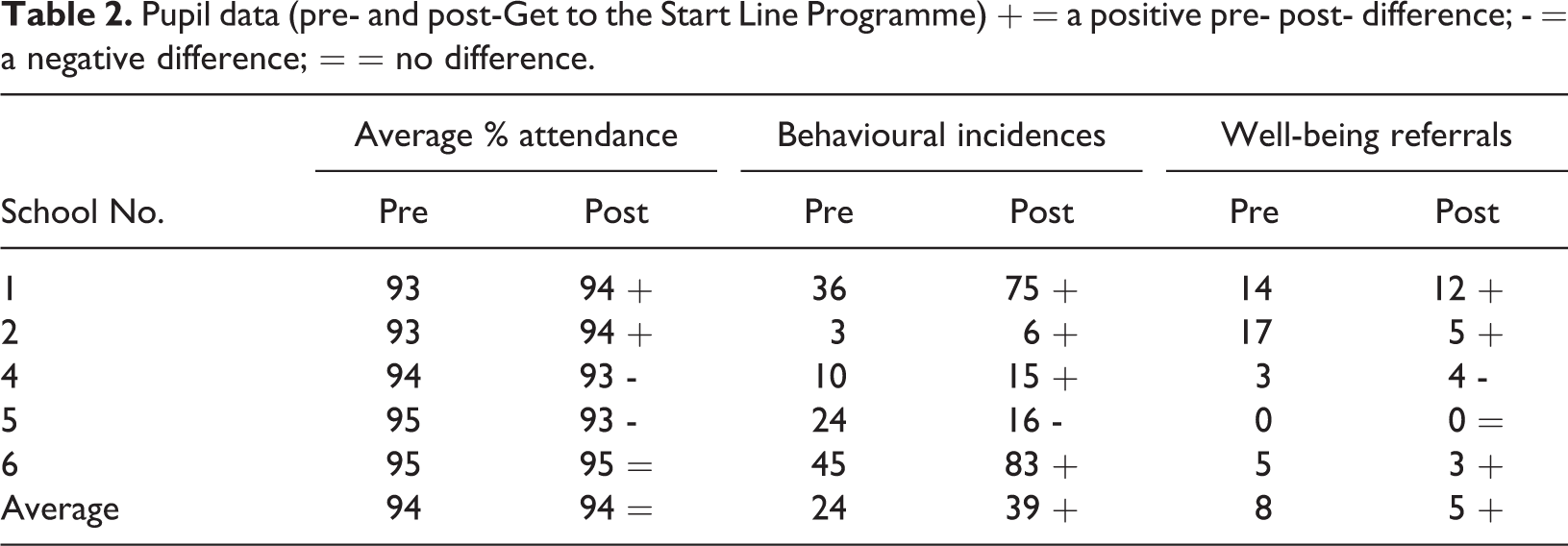
Further indicators of the effectiveness of the programme related to the pupil data collected at the time of each school visit. This is summarised in Tables 2, 3 and 4. As shown in Table 2, positive pre- and post- trends were seen in relation to pupil well-being referral, with these decreasing overall in three out of five schools, and for most pupils (52%) over the course of the year. For these pupils, associations could also be drawn between this reduction and their own reported perceived stress and anxiety levels during the focus groups. Pupil attendance meanwhile, remained on average the same but generally good (>90%), with no more than a 2% change reported in any school, whereas the number of behaviour incidents, whilst very variable between schools increased in all but one, suggesting a deterioration in pupil behaviour.
Pupil data (pre- and post-Get to the Start Line Programme) + = a positive pre- post- difference; - = a negative difference; = = no difference.
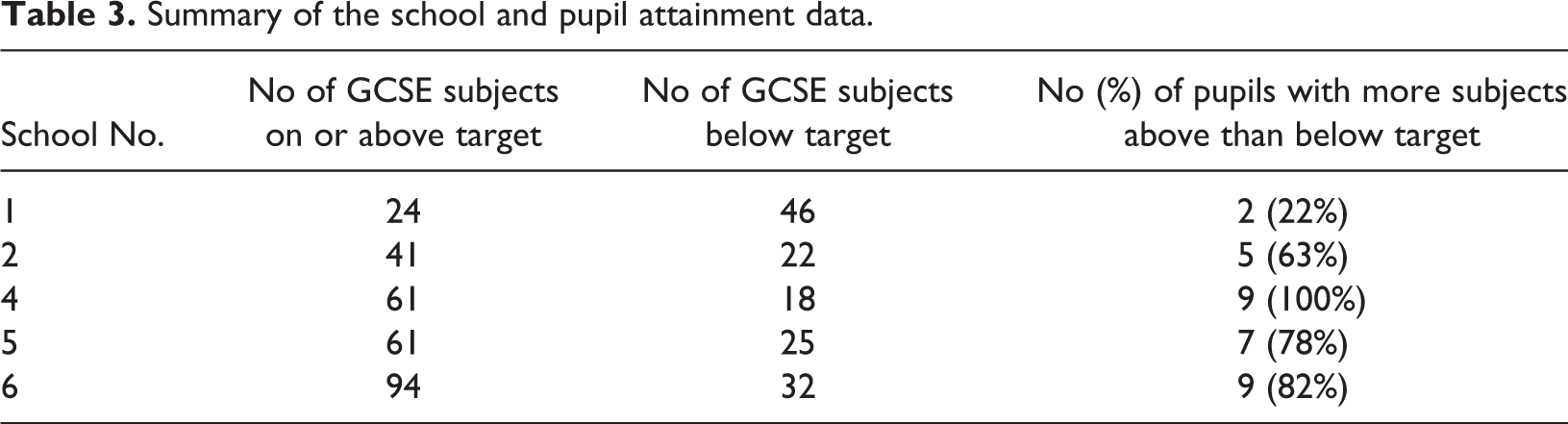
Summary of the school and pupil attainment data.
Summary of the individual pupil attainment data for each school.
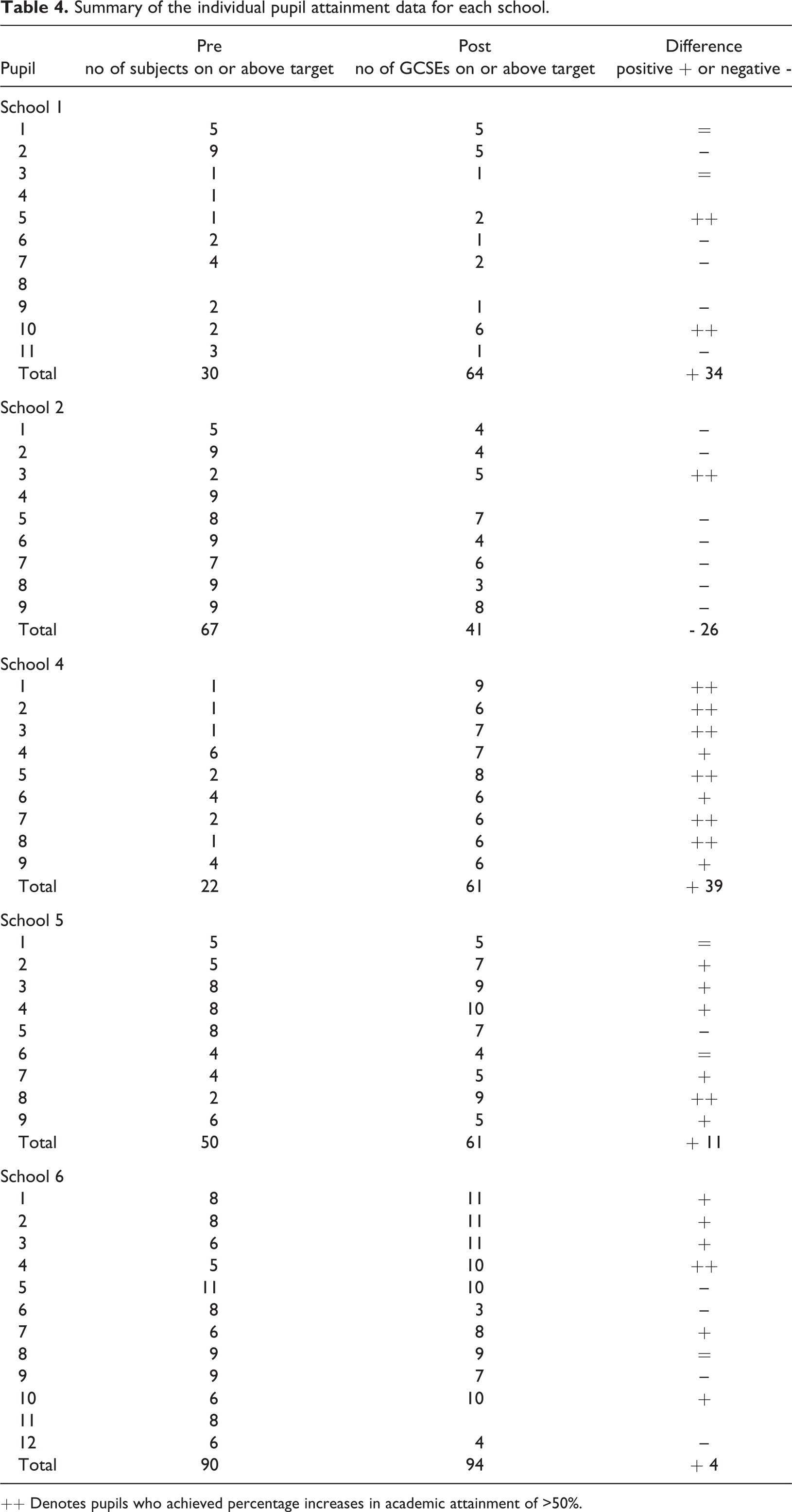
++ Denotes pupils who achieved percentage increases in academic attainment of >50%.
Pupils’ academic attainment was measured in terms of the number of GCSE examination subjects in which pupils performed at or above their predicted targets. Positive trends were evident in this data overall and in most schools (see Tables 3 and 4). The results revealed GCSE performance to be better than expected in four out of the five schools, with most pupils achieving above rather than below target in most of their GCSE subjects (see Table 3). In addition, over half of pupils (52%) performed better and 63% performed the same or better academically at the end compared with the beginning of the year. Of these, some (denoted with ++ in Table 4) made substantial improvements, achieving percentage increases in attainment of >50%. Equally though, it should be noted that some pupils performed worse.
The limitations with the quantitative data collected in this study must, however, be acknowledged. For example, the schools employed different assessment methods as indicators or predictors of pupil attainment, and the difficulty in accurately making predictions is widely recognised. Some attainment data were also missing. Furthermore, it was evident from the reporting that there were different interpretations between schools as to what constituted a behavioural incident or well-being referral. The different monitoring and measuring methods further meant that direct comparisons in the data between schools could not be made and inferential statistics were not appropriate. Whilst various objective measures of educational attainment and mental health and well-being are available, for various reasons these were not deemed suitable for use in this study. To reduce burden and minimise any added stress on pupils as well as teachers, the decision was made to ask schools to share the routine data they already collected as ‘indicators’ of their pupils’ attainment, behaviour and well-being, as opposed to introducing additional measures. The above aside, given the complex social settings of schools, it would still not have been possible to attribute any measured changes directly to the programme. Yet, the fact that the programme was perceived to reduce examination-related stress and anxiety for some pupils, that there were fewer well-being referrals, and that most pupils performed better academically post- than pre-intervention, suggests that it may have had a positive impact.
Programme recommendations
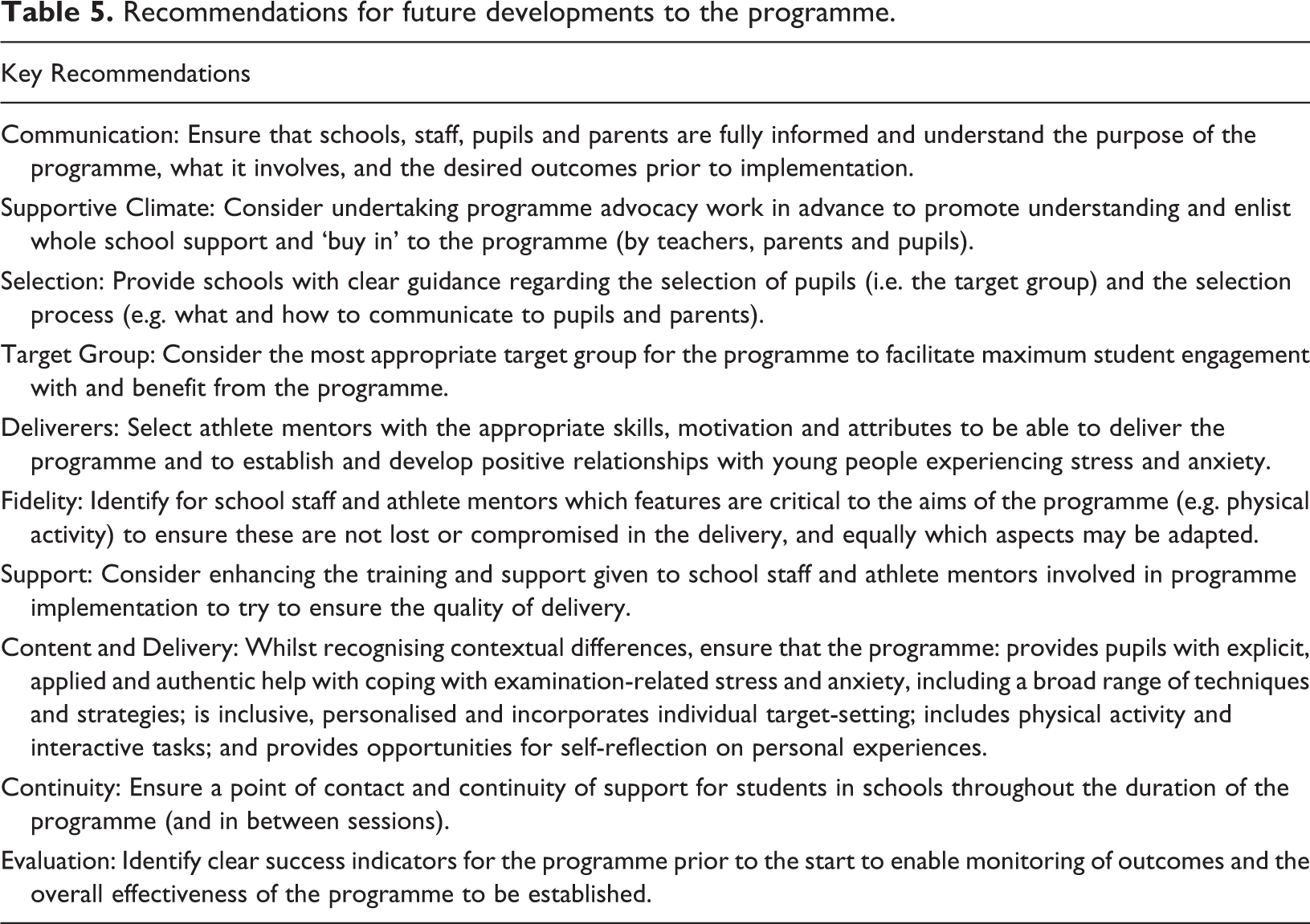
At the end of Get to the Start Line, school champions and pupils made a number of useful suggested changes which they felt would further improve or enhance the programme. Their suggestions, alongside the general findings and the literature, have been drawn on and their implications considered to inform recommendations for future developments to the programme. These are summarised in Table 5. Whilst the recommendations were developed for Get to the Start Line, a number are likely to be relevant to other programmes and could be useful in informing the development and enhancing the sustainability of future school-based initiatives or interventions, particularly those with a physical activity focus. Consideration of these recommendations in programme design and implementation should certainly help future school-based programmes to better realise goals relating to the use of physical activity in promoting mental health in youth. In this respect, this pilot study has been important not only in directing future work on this programme but also in the field. As applicable, the further enhancement of this and other such programmes should also help schools to fulfil their responsibilities in relation to supporting the mental health and well-being of their pupils.
Recommendations for future developments to the programme.
Conclusion
The aims of Get to the Start Line are well justified and this pilot programme was seen to address a perceived need. It was well received by most pupils in the vast majority of the schools and resulted in some positive outcomes. For example, there was an overall reduction in the number of well-being referrals for the vast majority of the pupils involved in the programme and, for a few pupils, associations could be drawn with reported reductions in examination-related stress and anxiety as a consequence of their engagement with the techniques/strategies learned. Furthermore, most of the pupils performed at the same level or better than expected in their GCSE examinations. Most notably, the programme reportedly reduced examination-related stress and anxiety for a few pupils in each school, which purportedly enhanced their psychological well-being, and these individuals all performed better than predicted in their examinations. It was also stated to increase understanding of stress and anxiety amongst pupils and staff. The delivery of the programme by an athlete mentor proved a popular feature in all but one school, with pupils establishing very positive relationships with the athletes. The evaluation thus confirms the prevalence of school-related stress amongst adolescents and the potential for targeted support to positively influence their mental health. However, in practice, the programme lacked a sufficient physical activity focus and consequently missed the opportunity to evidence the potential of physical activity in reducing pupils’ stress and anxiety and supporting improvements in academic attainment. Accordingly, programme fidelity alongside other recommendations stemming from the findings of this study need to be addressed in future programme design, delivery and evaluation. In conclusion, whilst some of the findings from the pilot were encouraging, this study has highlighted several considerations for work in this area, and further research into the implementation and impact of this and other such programmes is clearly needed. Given the responsibilities of schools in relation to mental health, and the need for schools to identify issues, provide early support, and develop tailored approaches and interventions, this work is considered both important and timely.
Footnotes
Acknowledgements
We are very grateful to the pupils, teachers, schools and athletes who contributed to this study and to the Youth Sport Trust for the opportunity to undertake it.
Declaration of conflicting interests
The authors declared no potential conflicts of interest with respect to the research, authorship, and/or publication of this article.
Funding
The authors received no financial support for the research, authorship, and/or publication of this article: This work was funded by the Youth Sport Trust.
