




Abstract
Although Blade Runner (1982) initially failed at the box office, Ridley Scott’s cyberpunk/neo-noir film has since become a seminal work, widely regarded for its enduring influence and inspiration. The release of Blade Runner: The Director’s Cut (1992) removed elements Scott considered to be producer-imposed weaknesses, a vision fully realised in Blade Runner: The Final Cut (2007). A belated sequel, Blade Runner 2049 (Denis Villeneuve, 2017), also underperformed commercially but reaffirmed the enduring relevance of Scott’s dystopian future, one drenched in perpetual rain, climate disaster, overpopulation, and moral decline. While Blade Runner has been extensively examined across philosophical, aesthetic, and cultural contexts, this article shifts focus to its lesser-studied 1997 videogame adaptation by Westwood Studios. By transposing Scott’s cinematic universe into a point-and-click adventure format, the game, in some respects, enhances the film by addressing the challenges of adapting cinematic narratives into interactive media.
Introduction
Despite its initial box office failure, Ridley Scott’s Blade Runner (1982) has become a foundational text in cyberpunk and neo-noir cinema, continuing to inspire and influence across media (Hamblin and O’Connell, 2020: 1). Subsequent re-edited versions – Blade Runner: The Director’s Cut (1992) and Blade Runner: The Final Cut – reflect Scott’s evolving vision, culminating in a version with full artistic control removing studio-imposed compromises (King, 2002: 112; Redmond, 2016: 82). The belated sequel, Blade Runner 2049 (Denis Villeneuve, 2017), though also commercially unsuccessful, reaffirmed the enduring relevance of Scott’s dystopic future, marked by environmental collapse, urban decay, and moral ambiguity. While scholarship has analysed and critiqued Blade Runner in a variety of contexts, including philosophy (Shanahan, 2014), fandom (Hills, 2012), postmodernism (Flisfeder, 2017), and even economics (Archibugi, 2017), its ancillary and transmedia extensions – particularly the 1997 videogame adaptation – remain underexplored. This article contends that Blade Runner (1997), developed by Westwood Studios and published by Virgin Interactive, presents a compelling transposition of Scott’s cinematic universe into interactive media. Through a comparative analysis of the film and the game, this study explores how the shift in medium reconfigures narrative structure, player agency, and thematic engagement, thereby challenging conventional modes of transmedia storytelling. Following a contextual overview of the film and its legacy, the article key narrative and aesthetic elements in the game, demonstrating how interactivity reshapes the viewer/player relationship and the experience of the Blade Runner world. To understand how the game reconfigures the Blade Runner universe, the following section outlines its narrative structure, technical innovations, and design philosophy.
Transposing cinematic narrative into gameplay mechanics
Blade Runner (1997) employs a distinctive real-time 3D technology for its era, combining 3D character rendering and real-time gameplay progression (Dowd, 2013: 190). Essentially, the game features pre-rendered backgrounds through which characters navigate a simulated 3-D space. Players assume the role of Ray McCoy (voiced by Mark Benninghofen), a Blade Runner authorised to kill androids on sight. Presented in the third-person perspective, the game allows players to explore a dystopian Los Angeles, visiting locations from the film alongside original environments. ‘Rather than retelling the film’s narrative, the game’s plot unfolds concurrently, enabling interaction with familiar characters in a parallel storyline. It adopts a linear “narrative game” structure, where the story is designed to enrich the gameplay experience’ (Ryan, 2009: 46). Unlike many point-and-click adventure games of its era, such as Sam & Max Hit the Road (1993), Day of the Tentacle (1993), and Discworld (1995), which emphasise complex puzzles, multiple playable characters, and nonlinear timelines, Blade Runner streamlines its mechanics. Players engage primarily in clue discovery, dialogue selection, and suspect interrogation. This apparent simplicity is intentional: the game prioritises narrative immersion and investigative progression over puzzle-solving. Its design choice reflects influence of the film’s core themes – moral ambiguity, character-driven storytelling, and detective work – resulting in a gameplay experience that stresses atmosphere and narrative depth over mechanical complexity. In doing so, Blade Runner redefines (gaming) genre expectations and demonstrates how transmedia adaptation can reshape interactive conventions and narrative fidelity.
Although not the first Blade Runner videogame – a 1985 ‘shoot-em up’ adaptation failed to innovate beyond generic mechanics (Aitkins, 2005: 81) – Westwood’s approach is worth exploring due to its narrative-driven design. Its use of real-time story progression, advanced AI for non-playable characters, and atmospheric fidelity to the film marks a significant departure from genre norms. Despite mixed reception at launch, particularly regarding its interactive and narrative elements (Crogan, 2002: 640), the game’s ludic limitations – defined by its rules, objective and values (Calleja, 2011: 148) – are not flaws but essential to its immersive adaptation.
Released during a period of rapid technological advancement and growing interest in videogame-to-film adaptations (Wolf, 2015: 602), Blade Runner exemplifies how transmedia storytelling can preserve and reinterpret narrative depth across formats. Unlike adaptations of games with minimal narratives, such as Super Mario Bros. (Annabel Jankel and Rocky Morton, 1993) – which struggled critically and commercially (Thomas, 2020: 5), or Mortal Kombat (Paul W.S. Anderson, 1995) which was a box-office success (Church, 2022: 123) – Blade Runner demonstrates how a game rooted in cinematic storytelling can offer a meaningful and innovative transmedia experience. Ultimately, transmedia storytelling is not about replicating content across different platforms but enabling narratives to evolve through contextually relevant material (Gambarato, 2012: 73). In this light, Blade Runner, should not be viewed as a conventional film-to-videogame adaptation, but a sophisticated act of worldbuilding that extends the thematic and narrative complexity of the original film.
Reimagining humanity: Blade Runner’s adaptation of Dick’s posthuman vision
The fraught production and reception history of Ridely Scott’s Blade Runner is not merely background detail but foundational to understanding the film’s evolving meaning and its eventual expansion into a transmedia franchise. This section argues that the film’s adaptation of Philip K. Dick’s Do Androids Dream of Electric Sheep? (1968) reframes the novel’s ethical questions through a cinematic lens that emphasises emotional ambiguity, visual spectacle, and existential inquiry. By examining the narrative and production shifts from page to screen, it will be illustrated that Blade Runner transforms Dick’s speculative fiction into a meditation on empathy, memory, and the blurred boundaries between human and machine, an approach that continues to influence subsequent adaptations and interpretations (Coplan and Davies, 2015: 10).
Dick’s novel presents a post-apocalyptic future where Earth has been ravaged by nuclear war, where San Francisco-based bounty hunter Rick Deckard is tasked with ‘retiring’ androids – referred to as ‘andys’ – who have escaped from a Martian colony. These androids are virtually indistinguishable from humans, and as Deckard interacts with them, he begins to question the moral legitimacy of his work. The novel’s central tension lies in its interrogation of empathy: the androids, though artificial, often display more compassion and emotional depth than the humans who hunt them. This ethical ambiguity – what it means to be human, and who gets to decide – is a core theme that Blade Runner adapts and intensifies.
Scott’s film relocates the story to a dystopian Los Angeles in 2019, where Deckard (Harrison Ford) is a retired ‘Blade Runner’ brought back to eliminate a group of rogue ‘replicants’ – a term replacing ‘andys’. These replicants, led by Roy Batty (Rutger Hauer), are not only physically superior but emotionally complex, forming deep bonds with one another in stark contrast to the exploitative and disconnected human world around them. The film’s most significant narrative shift lies in its emotional focus: Rachael (Sean Young), a replicant implanted with human memories, becomes a figure of both desire and ethical crisis for Deckard. His growing attachment to her, and his confrontation with Batty, culminate in a moment of existential reckoning that reframes the hunter-hunted dynamic as a meditation on morality and meaning.
Production as interpretation: Visual world-building and genre
The protracted and multifaceted production history of Blade Runner underscores the intent to which adaptation functions as a form of interpretation (Fernandez-Vara, 2016: 24). Initial efforts to bring Dick’s novel to screen in the early 1970s were met with resistance from the author himself, who rejected the reductive and comedic tone envisioned by early producers from page to screen was not merely a matter of adaptation but of interpretation – an act of reimagining (Sammon, 1996: 23). It was not until British producer Michael Deeley enlisted screenwriter Hampton Fancher and, subsequently, director Ridley Scott that the script began to take substantive shape. Scott’s initial hesitation to direct the project was ultimately overcome following the death of his brother – a personal loss that arguably informed the film’s pervasive atmosphere of melancholy and existential reflection (Lauzirika, 2007). Fancher’s early drafts, which were largely confined to interior settings and psychological dialogue, were later revised by David Webb Peoples at Scott’s request. These revisions introduced expansive exterior sequences that foregrounded the film’s dystopian urban landscape, thereby aligning the narrative’s thematic concerns with visual architecture.
The realisation of Blade Runner’s dystopian vision was made possible through the collaborative efforts of neo-futurist Syd Mead, and visual effects supervisor Douglas Trumbull. Mead was tasked with conceptualising a ‘future metropolis on the recognisable foundations of existing Los Angeles’ (Jenkins, 2006: 118), producing a cityscape that fused the familiar with the alien. The resulting urban environment – dense, vertical, and perpetually shrouded in darkness and rain – emerged not merely as a backdrop but as an active participant in the film’s narrative. Trumbull, whose earlier work on 2001: A Space Odyssey (Stanley Kubrick, 1968) had already redefined the visual language of science fiction cinema, contributed a tactile realism that grounded the film’s speculative elements in a credible and immersive world.
The film’s aesthetic, described by David Bordwell as comprising ‘neo-neo brutalist cityscapes, rooms strewn with detritus, and trembling hazy light’ (2006: 58), operates as more than visual ornamentation. Rather, it functions as a visual metaphor for the film’s central philosophical concerns: the erosion of stable identity, the dissolution of ethical boundaries, and the spectral persistence of memory. The fusion of science fiction and film noir conventions further amplifies these themes, positioning Blade Runner not simply as a narrative adaptation of Dick’s novel, but as a cinematic meditation on post-human subjectivity and the ontological instability of the self.
From production chaos to transmedia legacy: The evolution of Blade Runner
The chaotic production of Blade Runner – as detailed in Dangerous Days: The Making of Blade Runner (Lauzirika, 2007) – is often cited as emblematic of auteur-driven science fiction filmmaking (Coplan and Davies, 2015: 2). Yet beyond the interpersonal conflicts and logistical challenges, the film’s troubled genesis reveals a deeper instability that would come to define its legacy. On-set tensions between Scott and Ford, exacerbated by the director’s infamous perfectionism, and the film’s gruelling conditions, contributed to a sense of emotional detachment that permeates the final product (Sammon, 1996: 2010). This detachment, coupled with the film’s minimal narrative exposition and ambiguous character motivations, initially alienated audiences and critics alike. However, this very ambiguity became a source of interpretive richness. The release of the Director’s Cut in 1992 – stripped of the studio-imposed voiceover and ‘happy ending’ which depicts Deckard and Rachael leaving Los Angeles together – marked a turning point in the film’s reception. By restoring narrative ambiguity and suggesting that Deckard may himself be a replicant, the Director’s Cut reframed Blade Runner as a philosophical inquiry into identity, memory, and artificial life (King, 2002: 112). The Final Cut, released in 2007, further refined this version, solidifying the film’s status as a cult classic and a foundational text in posthuman and cyberpunk discourse (Bukatman, 2012: 45). This evolving textual history is crucial to understanding Blade Runner’s capacity for transmedia development. The film’s open-endedness and richly constructed visual world invited reinterpretation across media, most notably in the 1997 videogame. Its branching paths and multiple endings mirror the film’s thematic ambiguity, while its visual fidelity to Scott’s dystopian Los Angeles reinforces the coherence of the Blade Runner universe (Hills, 2019: 291).
Hollywood and videogames: Developing a new trend of storytelling
To contextualise Blade Runner (1997), it is important to note the development of adventure games during the 1990s and Hollywood’s relationship with interactive media. During this period, studios such as LucasArts, which originated from the film production company Lucasfilm (established by George Lucas), leveraged their cinematic heritage to create games with sophisticated narratives, character development, and innovative visual styles. The SCUMM engine (Script Creation Utility for Maniac Mansion), developed for Maniac Mansion (1987), enabled developers to craft experiences that mirror filmic storytelling, complete with dialogue trees, cutscenes, and mise-en-scène reminiscent of Hollywood productions (Perron, 2023: 148; Bevan, 2013). LucasArts titles such as The Secret of Monkey Island (1990) and Full Throttle (1995) were not only mechanically inventive but also tonally and structurally aligned with cinematic genres, blending comedy, noir, and action-adventure.
Hollywood’s influence extended beyond aesthetics. The industry began collaborating with game developers. For example, Steven Spielberg proposed the concept for Medal of Honor (Electronic Artists, 1999) in 1997, and Bethesda Softworks partnered with Centropolis Entertainment (founded by Roland Emmerich and Dean Devlin) on The 10th Planet, which was later cancelled (Campbell, 2012). This growing collaboration between Hollywood and the gaming industry extended beyond original concepts and co-productions. As the decade progressed, the relationship evolved into more reciprocal exchange, where not only filmmakers contribute to videogame development, but studios also began to see videogames as valuable platforms for extending already existing intellectual properties. This shift reflected a broader cultural movement toward convergence and cross-platform storytelling, where games became integral components of a franchise’s narrative architecture.
The 1990s witnessed a rise of transmedia storytelling and worldbuilding, where videogame spin-offs and adaptations would incorporate elements from their feature film sources. However, for these early 1990s games, the technological limitations at the time left many gamers disappointed (Hall, 2018: 95). This trend highlights videogame adaptations as fascinating and often complex extensions of films. According to Henry Jenkins, transmedia storytelling is an attempt to create expansive franchise universes, where to i, consumers must assume the role of hunters and gatherers, chasing down bits of the story across media channels, comparing notes with each other via online discussion groups, and collaborating to ensure that everyone who invests time and effort will come away with a richer entertainment experience (2006: 21).
This framework is particularly useful for games such as Blade Runner which, as mentioned previously, did not simply adapt the film but expanded the universe through an interactive narrative, embodying Jenkin’s notion of immersive, participatory storytelling. Transmedia worldbuilding in this context is not simply about narrative extension but about constructing a cohesive and layered universe in which each medium contributes uniquely to the whole.
Animal murder, morality, and adventure: Blade Runner as a videogame
Blade Runner entered development once critical reappraisal began and started to recoup some budgetary costs in the 1990s. In line with Hollywood’s growing interest in transmedia franchising, the film’s original producers, Bud Yorkin and Jerry Perenchino, actively sought to extend the Blade Runner universe into the world of interactive entertainment. Their outreach to major developers – including EA, Sierra, and Mediagenic – underscores the strategic intent to capitalise on the film’s cult status and narrative richness (Edge, 2013). Ultimately, it was the nowo that secured the project. While Command & Conquer emphasisedmilitaristic gameplay and AI opposition, Blade Runner would diverge sharply, opting for the slower, more investigative mechanics of point-and-click adventure genre.
In terms of gameplay formula and ludic controls, adventure and point-and-click titles require patience, problem solving, and often adopt detective story templates where players must solve puzzles and search for clues (Egenfeldt-Nielsen et al., 2020: 56). The genre is characterised by interfaces – text parsers, on-screen pointers, selection menus – that allow players to interact with diegetic elements, albeit with ae delay or incongruence, reinforcing the contemplative pace of gameplay (Perron, 2023: 101). This design philosophy was pioneered by titles such as the aforementioned Maniac Mansion, which combined textual input with graphical interaction via the SCUMM engine and later refined in games such as Day of the Tentacle and the Broken Sword series (Revolution Software, 1996–2013). These titles exemplify the genre’s evolution in response to increasingly sophisticated player expectations and technological advancements (Ip, 2011: 104; Egenfeldt-Nielsen et al., 2020: 88).
Compared to the dominant genres of the 1990s – first-person shooters and martial-arts orientated games – the adventure/point-and-click format invites players to ‘take time to explore the environment and find the elements that make it possible to solve puzzles and advance the story. Quest solutions are not supposed to be immediately obvious but must be discovered through exploration’ (Salter, 2014: 40). This slower, more deliberate mode of engagement is particularly well-suited to the Blade Runner universe, which privileges ambiguity, introspection, and moral complexity over kinetic action. The genre and gameplay mechanics thus provide an appropriate format to situate Blade Runner, diverging from the action-orientated videogames of its time. Moreover, the game’s design can be read as a subtle rebuke to Ford’s comments, where he believed he played a detective who did little detecting (Lauzirika, 2007). By casting the player as a Blade Runner and requiring them to engage in extensive detective work – interviewing suspects, collecting evidence, and making interpretive judgements – the game foregrounds the very qualities Ford once questioned. It invites the player to inhabit the role not through brute force, but through careful observation and reasoning. As Egenfeldt-Nielsen et al. note, the adventure/point-and-click game demand that players ‘exhibit skills of logic and deduction’ (2020: 56). This requirement resonates strongly with the investigative labour central to the Blade Runner mythos. In doing so, the game not only reinforces the thematic depth of the source material but also exemplifies Hollywood’s evolving approach to videogame adaptation, one that seeks to preserve narrative integrity while embracing the affordances and opportunities of interactive media.
‘Improving’ Blade Runner: Transmedia enhancement
One notable enhancement in the game is the use of voiceover narration. While the game aligns with the ambiguity of The Director’s Cut and The Final Cut, it reintroduces the voiceover technique from the theatrical release (despite Scott’s disavowal of that version). Although the original film’s narration was widely criticised for its flat delivery and redundancy, the game repurposes it to compelling effect. For instance, the opening film text (replicated in the game) reads: Early in the 21st century, the Tyrell corporation advanced Robot evolution into the Nexus phase – a being virtually identical to a human – known as a Replicant. The Nexus 6 replicants were superior in strength and agility, and at least equal in intelligence, to the genetic engineers who created them. Replicants were used off-world as slave labor, in the hazardous exploration and colonization of other planets. After a bloody mutiny by a Nexus 6 combat team in an off-world colony, replicants were declared illegal on earth – under penalty of death. Special police squads – Blade Runner Units – had orders to shoot to kill, upon detection, any trespassing replicant. This was not called execution. It was called retirement (Westwood, 1997).
When the audience is first introduced to Deckard, his voiceover states: ‘They don’t advertise for killers in a newspaper. That was my profession. Ex-cop, ex-Blade Runner, ex-killer’ (Westwood, 1997).
Ford’s delivery is notably unenthusiastic, and the narration merely reiterates the information from the opening scroll. In contrast, McCoy’s voiceover in the game is rich in detail, offering insight into his role and psyche. While the film’s narration aimed to reinforce its noir aesthetic, the game’s voiceover succeeds more effectively through its stylised tone and nuanced delivery. Rather than serving as mere exposition, McCoy’s narration adds texture to the gameplay, offering background on characters such as Guzza (Jeff Garlin), McCoy’s superior. McCoy states ‘Guzza was one of the old-time guys who took their knocks in the street. He had a friendly way about him. But you didn’t want to turn your back on him if you were less than a friend’ Westwood, 1997).
This brief character sketch foreshadows Guzza’s betrayal later in the gamet pays homage to the hardboiled prose of Raymond Chandler and Dashiell Hammett, whose protagonists – private detectives Phillip Marlowe and Sam Spade, respectively – often described others in similarly terse, evocative terms. It also underscores the emotional toll of McCoy’s profession; despite being a junior officer, he has already developed a hardened exterior. This trait becomes central to the player’s journey, influencing whether McCoy grows colder and more cynical or more empathetic by the game’s conclusion.
As the game unfolds concurrently with the events of Blade Runner, featuring cameo appearances film characters – most voiced by original actors – including J.F. Sebastian (William Sanderson), Eldon Tyrell, Leon Kowalski (Brion James), and Rachael. Only Gaff (Javier Grajeda) is voiced by a different actor. These encounters occur either before or after Deckard’s interactions with them, creating narrative links that enhance immersion (Ip, 2011: 107).
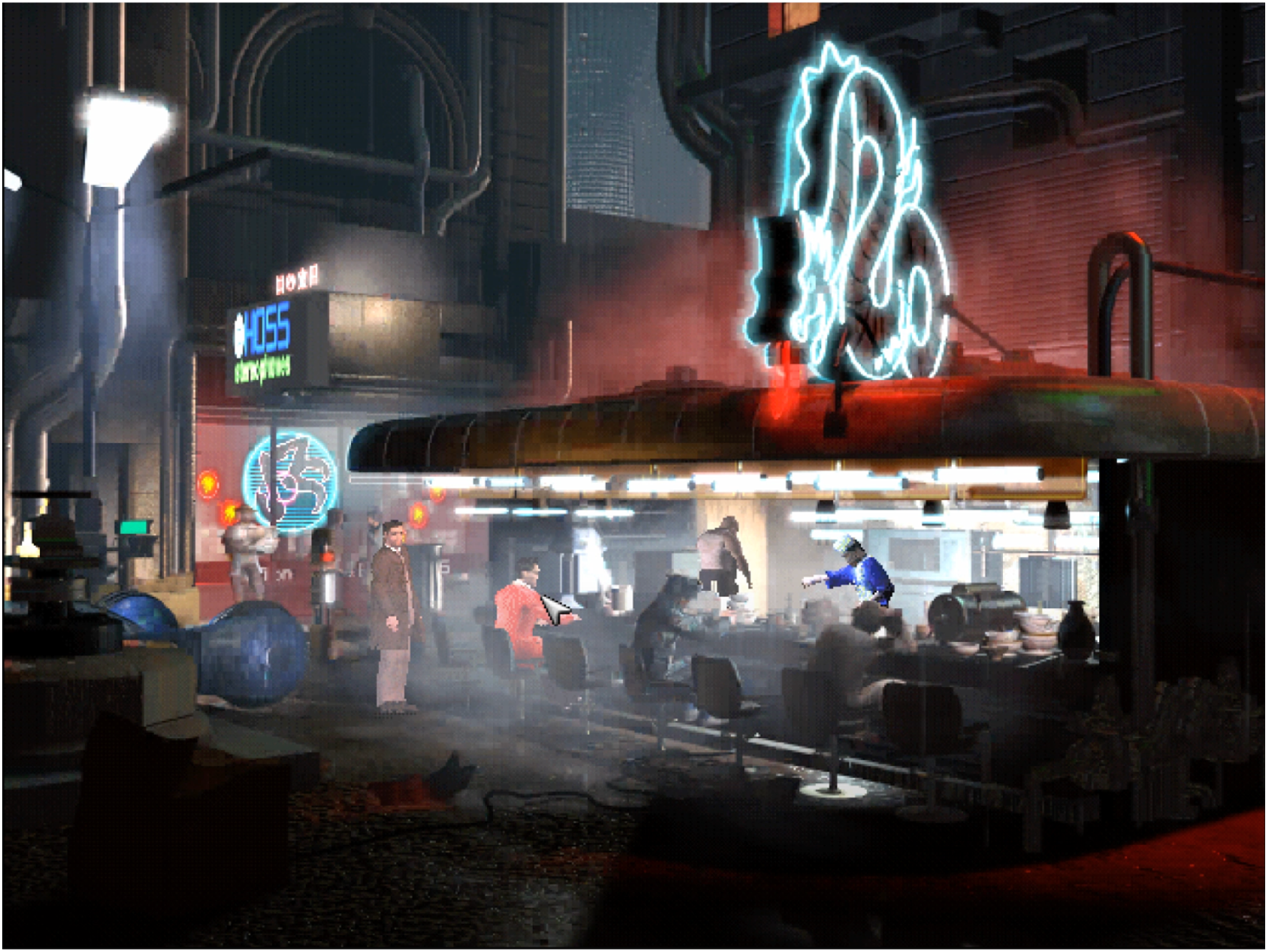
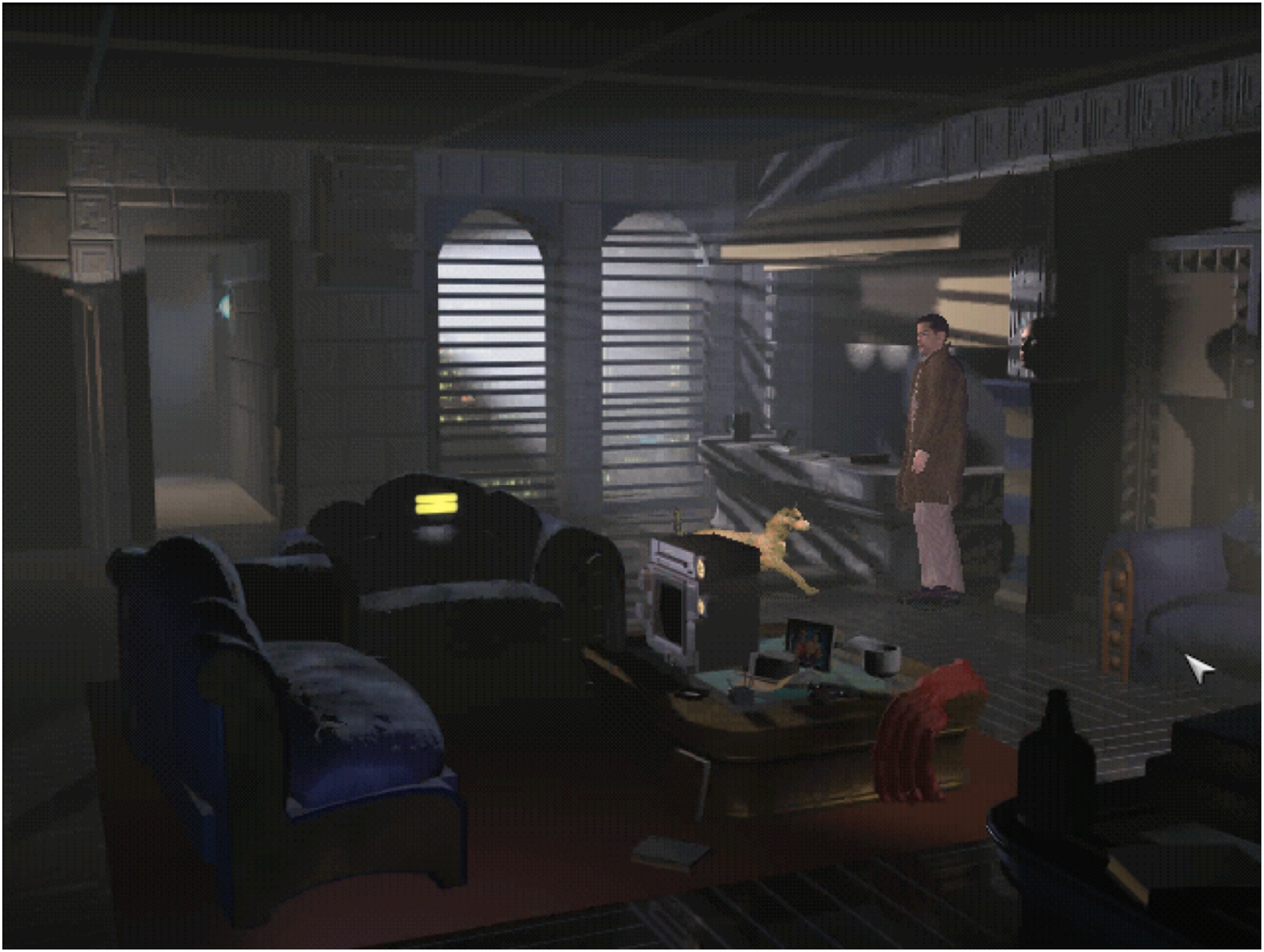
Familiar locations such as Chinatown, the police station, Tyrell Corporation, Bradbury Building and McCoy’s apartment (which mirrors Deckard’s) are faithfully recreated (Figures 1–3). The game also extends the dystopian landscape of Los Angeles with new areas to explore, enhancing the player’s experience. This exemplifies what Mark J.P. Wolf (2012) describes as ‘subcreation’, or a ‘world within a world’. The game does not merely replicate the film’s setting; it reshapes it by introducing new characters and geographies, deepening the player’s engagement with the Blade Runner universe: Bradbury building recreated from the film. Source: Blade Runner (1997). Noodle bar recreated from Blade Runner’s (1982) opening scene that introduces Deckard. Source: Blade Runner (1997). McCoy’s apartment – designed to imitate Deckard’s from the film. Source: Blade Runner (1997).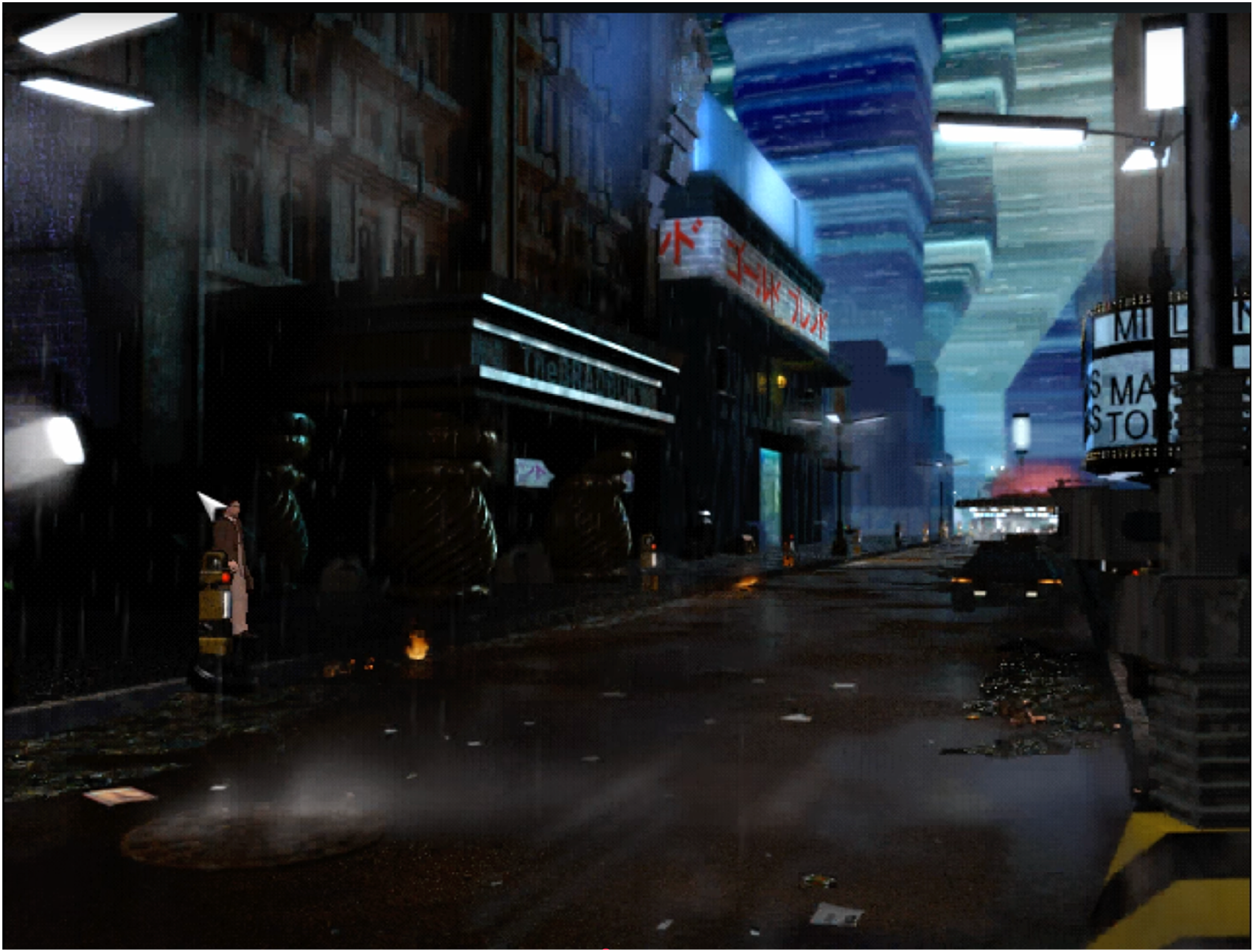
The more one changes these defaults, the more the secondary world becomes different and distinct from the Primary World. It is not surprising, then, that secondary worlds will in many ways resemble the Primary World; not only because it is the source of material but also because it is this familiarity that lets us relate to a secondary world, especially to its characters and their emotions. (24)
By weaving new narrative threads and spaces into the existing framework, the game invites players to inhabit the world more fully – not merely as observers of Deckard’s story (when watching the film) but as active participants in McCoy’s investigation.
This deepens immersion by allowing the player to experience the world’s complexity from multiple vantage points. The game’s subcreative additions thus serve a dual purpose: they preserve the aesthetic and thematic coherence of the original film while also enriching it with new possibilities for interaction and interpretation. In doing so, Blade Runner transforms passive spectatorship into active world-exploration, supporting a more dynamic and layered storytelling experience. This is reflective of Westwood Studios intent to ‘add value’ rather than simply ‘retelling’ what had already been depicted on screen (Edge, 2013). Because of the game’s events unfolding alongside those of the film, it can be classified as a ‘sidequel’ – a term defined by Kümmerling-Meibauer (2019), as a work that ‘narrates the story of minor characters or elaborates short narrative strands of the original work’ (535). By broadening the fictional universe of Blade Runner, the game opens new dimensions for exploration, enriching the experience of both the film and its expanded universe (Figure 4). Skid row – an area exclusive to the game not depicted in Blade Runner. Source: Blade Runner (1997).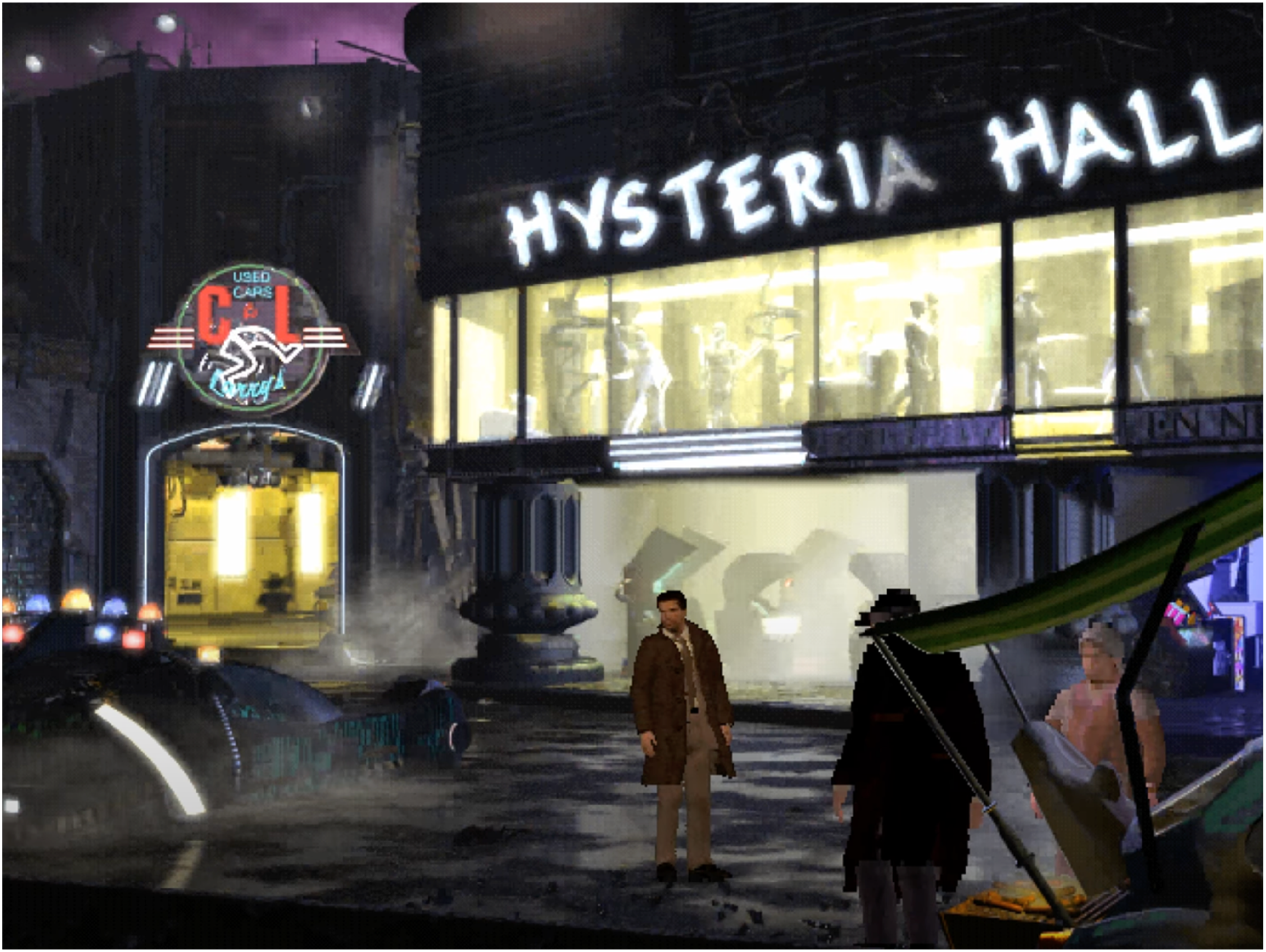
Blade Runner’s game narrative diverges from the film on several levels. Hollywood films typically follow a three-act linear structure, which generally includes: the establishment of a central crisis for the protagonist to overcome (act one); a series of escalating challenges culminating in a major test of the protagonist’s abilities (act two); and a resolution to the conflict (act three) (Bordwell, 2006: 28). In Blade Runner (the film), Deckard is coerced back into service to eliminate the replicants (crisis); he investigates while narrowly surviving two attacks and begins questioning his ethics and morality (test of abilities); and finally, he confronts Batty in a climatic showdown (resolution) (He, 2023: 77). In contrast, the game adopts a five-act linear structure – an architectural choice that arguably materialises its narrative form. The Five-act structure, derived from Gustav Freytag’s dramatic model (1863), allows for more expansive storytelling, making it particularly well-suited to linear videogames. The five-acts include: setup – introducing the world and background (act one); rising action – presenting challenges and obstacles (act two); climax – a major turning point or battle (act three); falling action – a decline towards resolution, allowing reflection (act four); denouement – the conclusion of the character’s (act five) (Gibson Bond, 2017: 51–2). In the game, the setup begins with the ransacking of the pet store ‘Runciter’s’ by replicants who threaten its owner (Warren Burton). McCoy is assigned by Guzza to investigate, initiating a sprawling search across Los Angeles for the rogue replicants, led by Clovis (Mark Rolston) whose poetic musings echo Batty’s philosophical depth. As the player uncovers clues and interacts with both original and film-established characters, the narrative complexity deepens (act two), maintaining continuity with the cinematic source. Mirroring the ambiguity of The Director’s Cut and The Final Cut, the game suggests that McCoy might also be a replicant, prompting players to decide whether to aid or eliminate the fugitives (act three). Eventually, Guzza is revealed to be corrupt, having framed McCoy, who must gather evidence to clear his name (act four). The story culminates in McCoy’s confrontation with Clovis (act five).
To some extent, this structure reflects conventional transmedia storytelling, as the game expands upon the world established by Scott. However, adaptation across media necessitates transformation. Each medium operates within distinct parameters and practices that shape how narratives are constructed and conveyed. For example, while literature can explore internal emotions and motivations over extended passages, film relies on visual storytelling – cinematography, performance, sound design, and dialogue – to express character psychology. Transmedia storytelling, therefore, must be understood as more than mere adaptation. As Colin Harvey argues, transmedia storytelling is ‘relational, emphasising the relationship between a particular transmedia articulation such as a comic book or website with the wider storyworld in question, and by extension the wider culture’ (2015: 2). Lev Manovich similarly contends that while comparisons to film are useful, they are limited: we may be better off thinking about games in terms of narrative actions and exploration. Rather than being narrated to, the player herself has to perform actions to move narrative forward: talking to other characters she encounters in the game world, picking up objects, fighting the enemies, and so on. If the player does not do anything, the narrative stops. From this perspective, movement through the game world is one of the main narrative actions (Manovich, 2000: 215).
Videogames also have their own formal requirement to facilitate immersion: input devices (controller/keyboard), avatars (first- or third-person perspectives), audio-visual design, and interactive mechanics. While transmedia storytelling involves adaptation, is often characterised by the creation of new stories within a consistent diegetic world (Harvey, 2015: 3). Videogames borrow heavily from film in terms of narrative structure, visual aesthetics, and sound design (Cassidy, 2011: 293; Papazian and Sommers, 2013: 11), yet their ludic elements – interactivity, player agency, and immersion – offer a distinct mode of engagement. These features enable a unique audiovisual and narrative experience, transforming the player from a passive viewer into active participant.
Gameplay choices: Player agency and narrative development
The Blade Runner game’s narrative is shaped by player agency, allowing for multiple outcomes depending on gameplay decisions. In a nod to the film’s many versions, the game features 13 possible endings (Smed et al., 2021: 20), enhancing replayability and encouraging players to engage in investigative work, modify character interactions, and choose whether to help or retire replicants (Hutchinson, 2019). Riccardo Fassone observes that videogames can be ‘interpreted as procedural artifacts because the code they execute, the story they tell, the world they project, and the freedom they allow, are all limited’ (2017: 168). Yet, within these constraints, the branching narrative structure offers players the illusion of choice and agency – something unavailable to the film spectator, who follows a singular predetermined path. This distinction is crucial: the player is not merely consuming a story but actively shaping it. The game transforms the viewer’s passive role into an interactive one, allowing them to embody McCoy’s moral compass and investigative decisions. These choices – whether to show empathy or enforce duty – do not just alter the narrative but also reflect the player’s own ethical stance. In this way, the game aligns more closely with the concept of procedural storytelling, where meaning emerges through interaction, and the player becomes a co-author of their experience. For example, a player may choose that McCoy let replicants escape, demonstrating compassion, or execute them to fulfil their professional obligations. While some shorten gameplay, they encourage replayability by inviting players to explore alternative paths in subsequent playthroughs. Gareth Schott highlights the importance of distinguishing between player’s intent and the role of the avatar: there is a need to acknowledge whether game play experience is being adjudged according to the belief that the actions of a player-figure constitute those of an ‘avatar’— in which the virtual entity corresponds to a manifestation of the player— or that of ‘player character’, that is, as a largely predetermined fictional character (2016: 115).
At a basic level, players can simply respond to voice prompts and retire replicants when encountered. However, for those seeking a more immersive experience, the game offers nuanced interaction through conversation choices – ‘polite’, ‘normal’, ‘surly’, ‘erratic’ or allow randomised settings (Figure 5). Selection of mood and tone to ask questions from the option menu. Source: Blade Runner (1997).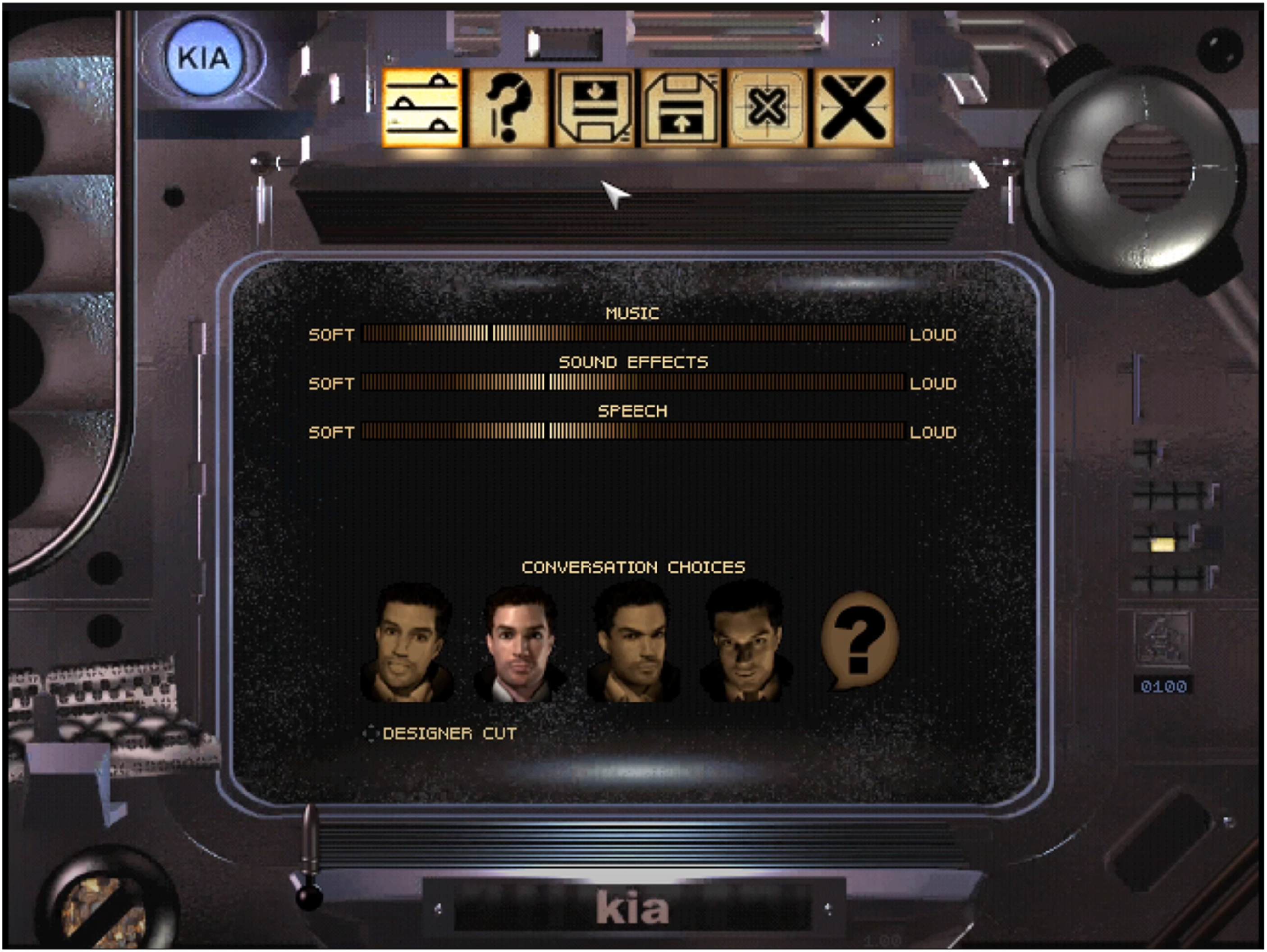
These choices, which can be adjusted at any point, influence character responses and narrative outcomes. As Vandewalle et al. note, emotional reactions in narrative situations can reveal psychological traits, and even the absence of emotion is narratively significant (2024, 729). A player who is polite in one interaction but surly in another will affect the story’s trajectory and conclusion. This dynamic reflects player agency, where gamers are ‘active participants in the creation of their experience through interaction with the underlying code during gameplay’ (Calleja, 2011: 55). In one sequence, McCoy interrogates a dancer, Dektora (Signy Coleman), to determine if she is a replicant – echoing a Deckard’s absurdist approach when questioning Zora (Joanna Cassidy) in the film. McCoy briefly adopts a similar façade before reverting to a more authoritarian tone of voice, which the player cannot modify. This leads to one of several Voight-Kampff tests the player must conduct to identify replicants (Figure 6). Voight-Kampff machine. Source: Blade Runner (1997).
The intimidating machine, designed by Syd Mead (who also consulted on the game), appears to breathe and requires the player to ask emotionally charged questions to assess subject’s responses – something only certain replicants can mimic. As Reeve notes, the Voight-Kampff test is not a lie detector or a moral sentimental gauge, but ‘more like a brief psychoanalytic session’ (2015: 79). In both film and game, the Blade Runner delivers these questions with emotional detachment, reinforcing the theme that humanity itself is cold and unfeeling. Throughout the game, players are never provided definitive answers about who is human or replicant. This ambiguity adds another layer to gameplay, where failure becomes an essential part of the experience (Schott, 2016: 136). For instance, failing to retire a replicant early in the game may lead to unpredictable outcomes: the player might reason with them, defend themselves, or be killed – requiring a restart from a saved point. These branching consequences create a ‘butterfly effect’ prompting players to question their decisions and navigate the game world with uncertainty. Ultimately this leads to several possible destinies for McCoy (Dhule, 2022: 46).
With player agency in mind - and reflecting the moral complexities of the film - Blade Runner presents its events from the third-person perspective. This viewpoint arguably offers a more ‘objective’ stance, one that can ‘oscillate between empowerment and disempowerment’ (Habel and Kppyman, 2014: 1). The perspective mirrors Scott’s directorial approach, which foregrounds the environment and establishes an intermedial relationship between film and game – what Summers describes as ‘created across the textual galaxies’ (2019: 207). Players predominately navigate the game from behind McCoy in an ‘over-the-shoulder’ view. In cinematic terms, this framing ‘allows audiences to more fully connect with the emotions of the character facing the camera and enhances their sense of engagement with the story while maintaining a sense of physical proximity to the other character in the scene’ (Mercado, 2022: 87). This visualisation deepens immersion, particularly during interrogations, while maintaining the continuity of the 3D world and ensuring a cohesive aesthetic experience. Although the game world is semi-open – allowing players to revisit locations and explore – it is more constrained than a sandbox game, which typically offers greater freedom for side-quests resource development (Johnson, 2014: 71). However, this limitation should not be viewed as a weakness. When reconceptualised as a narrative shaped by the player’s navigation, the game becomes: a model of storytelling-through-game that implicates the player as co-author, working within the game world to express intermediate agency. The player, then, is not a passive receptor of a story, but rather provides his/her own game-story as an integral part of the telling process (Bunting, Jr, 2013: 62).
One example of this co-authorship is the Esper system, a monitor operated by voice control in the film, which becomes a fully interactive mechanic in the game (Figure 7). In the film, Deckard uses the Esper to isolate frames within photographs for clues, advancing the plot and showcasing his investigative skills. In the game, this process is handed over to the player, who must manually scan images and click on specific areas to uncover clues and suspects (Atkins, 2006: 88). This shift transforms a passive cinematic moment into an active gameplay experience, where the player assumes the role of investigator. A ‘game within a game’; Esper machine with first two photographs to analyse. Source: Blade Runner (1997).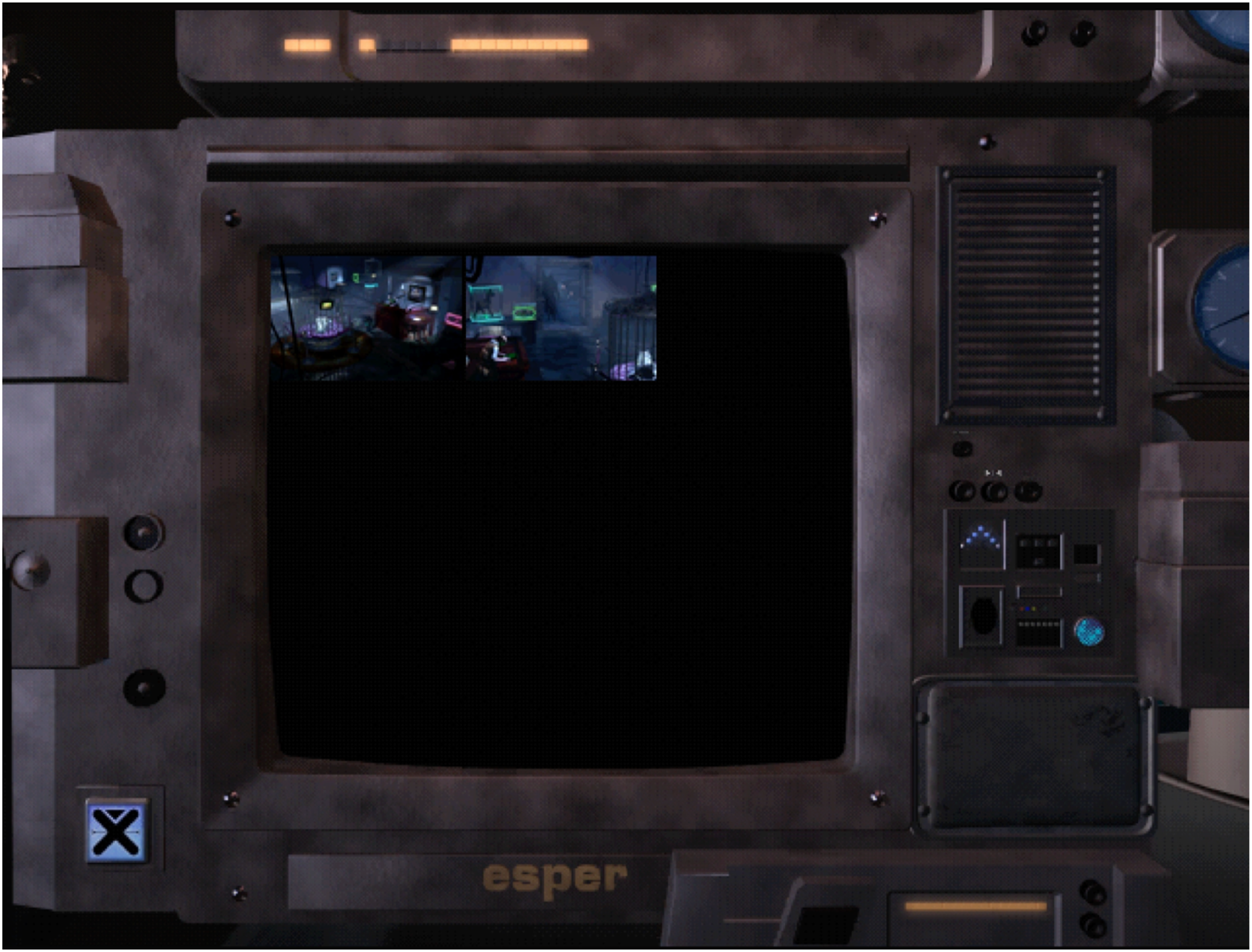
Throughout the game, players collect and analyse photographs to progress the narrative. Failure to locate key images at specific moments can halt progress entirely, reinforcing the importance of attention and interaction. The point-and-click mechanics of the Esper system function as a ‘game-within-a-game’ complete with its own rules and rewards, ‘allowing players to improve their skills or gain additional resources’ (Laskowski, 2019: 14). This mechanic exemplifies how Blade Runner reimagines filmic elements as procedural systems, deepening immersion by making the player responsible for the analytical work to complete the game.
Depending on the player’s choices, some images may never appear – especially if certain clues or characters are missed. This adds another replay value and encourages deeper exploration of the game world. One notable example is a hidden easter egg: a photograph of Deckard purchasing liquor at a bar, directly referencing the film. These subtle inclusions are ‘so brief as to be almost subliminal […] to activate the imagination of the most dedicated [users] and to reward their brand loyalty and story knowledge’ (Beaty, 2016: 322). Such elements enrich the gameplay experience and reinforce the transmedia relationship between film and videogame.
Like tears in the rain: Conclusion
The 1990s witnessed a surge in transmedia franchises that explored the potential of videogames as source material for cinematic adaptations. While some titles achieved commercial success, they often failed to meet expectations of gamers. Conversely, when films are adapted into videogames, the results vary widely. In the case of Blade Runner, its critical reassessment during the 1990s paved way for a videogame that not only expanded the film’s storyworld but also introduced its own distinctive identity – a subcreation of the primary world.
Translating Blade Runner into an immersive gaming environment adds value beyond mere narrative retelling. As Hamblin and O’Connell argue, its worth ‘extends far beyond its ability to generate profit’ (Hamblin and O’Connell, 2020: 13). The game’s successful adaptation of Scott’s aesthetics, mise-en-scène, and characterisation demonstrates the potential of videogames as tools for worldbuilding, enriching the film’s universe. As Atkins suggests, ‘the future possibility of sustaining the richness of Blade Runner’s elusive meanings rests […] in allowing a player to have access to a third dimension that would only be made available through its remediation as a computer game’ (2006: 89). Although videogames have since evolved in complexity, Blade Runner’s relatively constrained mechanics offer a focused and meaningful experience. At its core, the game mirrors the film’s premise: a Blade Runner tasked with hunting down replicants. Yet, by placing the player in the role of the bounty hunter, the game introduces philosophical dilemmas akin to those faced by Deckard. Players can choose to be ruthless enforcers or empathetic investigators, engaging with characters and reflecting on what it means to be human. These choices transform the player from a passive spectator into an active participant, deepening their connection to the world of Blade Runner. Whether through strategic dialogue, investigative mechanics like the Esper system, or moral decision-making, the game invites players to explore the boundaries of humanity and emotion. This interactivity not only enhances immersion but also sustains the film’s thematic richness. Yet, without thoughtful engagement, certain elements – like Batty’s memories – risk being lost, like tears in the rain.
Footnotes
Acknowledgements
Special thanks to Prof. Gareth Schott and Dr. Bill Cochrane for their support.

Funding
The author received no financial support for the research, authorship, and/or publication of this article.
Declaration of conflicting interests
The author declared no potential conflicts of interest with respect to the research, authorship, and/or publication of this article.
Data Availability Statement
Agreed and acknowledged.