




Abstract
This article summarizes literature on state-of-the-art (semi-)immersive – augmented reality (AR), virtual reality (VR), and mixed reality (MR) – games and applications in placemaking. Its methodology engages with PRISMA workflow, incorporating computational and qualitative analytic methods. Our findings reveal that while most digital tools share common placemaking goals, each (semi-)immersive technology excels in specific areas. AR Location-Based tools work best in encouraging active explorations of the urban spaces, while VR aces in facilitating real-time interactive co-design simulations and MR can bring virtual and on-site participants together in one platform. We also highlight the growing popularity of (semi-)immersive games, serious games and gamification in digital placemaking and explore their varying capacities. These findings contribute to an interdisciplinary approach that advances understanding of (semi-)immersive digital tool developments and informs better placemaking strategies and policies.
Keywords
Introduction
The concept of placemaking in architecture and urban planning refers to collaborative processes of shaping public spaces to generate a unique sense of place, enhance the quality of life (Wyckoff, 2014), give meaning to a neighborhood (Blokland, 2009), and foster social coherence (Ellery et al., 2021). Placemaking’s concept of participatory urbanism is recognized as the building block to cultivate active citizenship (Mohan, 2007), community resilience, and urban safety (Coaffee, 2013). Its efforts include physical improvement to a neighborhood (Madureira, 2015), community empowerment through various public educational programs (Strydom et al., 2018), cultural performances to boost public space vibrancy (Markusen and Gadwa, 2010), and more recently, the applications of (semi-)immersive technology – ranging from partially immersive augmented reality games such as Pokémon Go to fully immersive virtual reality simulations. This recent development is termed digital placemaking (Basaraba, 2023).
The concept of digital placemaking, however, is not exclusively applied to (semi-)immersive technology. According to Halegoua and Polson (2021), digital placemaking involves creating sense of place through various types of digital media, including mobile phone communication (Hardley and Richardson, 2021), government’s biometric registration and metadata tracing of migrants (Witteborn, 2021), selfies (Halegoua and Moon, 2021), and social media (Atteneder and Lohmeier, 2024). Nevertheless, digital placemaking is not merely about overlaying digital information onto physical spaces but involves the co-production of place through the interplay of digital representations, human agency, and spatial media. This interplay has in the recent decades shaped how places are experienced, perceived, interacted with, and co-created, as individuals navigate and contribute to hybrid spaces, challenging the traditional notions of place (Wilken and Humphreys, 2021) and shaping a hybridized urban imaginary (Melhuish et al., 2016). Adding to this, scholars point out how digital placemaking has not only reconstructed people’s attachment and embodiment of places, but also shifted urban governance (Pollio, 2016) and encouraged citizen to be collaborators in city-making (Foth, 2018).
Existing literature review has explored how digital placemaking has evolved along with technological transformations, from the early internet innovations to the current augmented reality games (Chen et al., 2024). Another review conducted by Basaraba (2023) interrogates how digital placemaking is applied across different disciplines including tourism, heritage, and migration. Although these reviews highlight the potentials of digital placemaking, they have not explored how different types of technologies – augmented reality (AR), virtual reality (VR), and mixed realities (MR) – are applied differently to achieve varying placemaking goals.
The current problem faced when designing a state-of-the-art digital placemaking project is that it is unclear which technology suits which placemaking focus and what limitations we should be aware of. Besides this, there is a lack of understanding of how (semi-)immersive placemaking trends are developing. Considering the speed of technological shifts, it is essential to know whether this technology is going toward obsolescence or still trending in applications. To fill these knowledge gaps, this review summarizes the applications of state-of-the-art (semi-)immersive digital tools in placemaking to understand their application trends and varying placemaking capacities. In doing so, we also identify current research gaps.
(Semi-)immersive technology in this study includes Augmented Reality (AR), Virtual Reality (VR), Mixed Reality (MR) and relevant games. The difference between each of these realities lies in their levels of immersion. VR technology fully immerses the users in the virtual environment, while AR works by adding digital elements to the physical environment, offering less immersion, and MR adds digital augmentations to the virtual environment. AR, VR, and MR all fall under the umbrella term XR (Extended Reality) which encompasses these various immersive technologies. Interactive digital games such as Minecraft are important features of digital placemaking, therefore they are also included in this review. Brown and Cairns (2004) argue that this type of games – though they are not using XR technologies – can be categorized as immersive technologies because their graphic displays and interactivity nature engross users physically and emotionally in the game realms, often detaching them from the physical worlds.
To focus exclusively on the most cutting-edge research, this review limits its search to works published from 2015. The review poses five research questions that address its three objectives as follow:
Objective 1. To obtain a high-level understanding of current SOTA (state-of-the-art) (semi-)immersive digital placemaking research. RQ1: How has research on (semi-)immersive digital placemaking progressed/regressed in the past decade? RQ2: How are research interests distributed globally?
Objective 2. To investigate the varying placemaking capacities of different (semi-)immersive technologies. RQ3: What are the different types of digital tools used? What are the common placemaking goals and specific empirical focus of each tool? RQ4: What do the authors say about the benefits and limitations of each tool?
Objective 3. To identify current key research gaps. RQ5: What are the areas that current research has overlooked?
This systematic review contributes to an interdisciplinary approach that brings together literature in urban studies, design, digital media, and computer science. Its findings hold significance to multiple stakeholders – including scholars, architects, urban designers, planners, policymakers, and computer scientists alike. Besides casting light on the advantages and limitations of current (semi-)immersive placemaking approaches, this review also contributes to a deeper understanding of how emerging technologies can enhance urban community’s participation in neighborhood design, and informs the harnessing of (semi-)immersive digital tools in crafting sustainable public spaces and addressing contemporary urban issues.
This review begins by explaining the methodology engaged and the software used in the next section (methodology section). This section is written in three subsections, each describing the methods and software used in the three research stages. The research findings are presented in the following section (results and analysis section). This section presents a high-level quantitative analysis in its first subsection and a low-level qualitative analysis of selected empirical studies in its second subsection. Finally, the last section concludes this study by identifying research gaps and discussing future research directions.
Methodology
Inspired by similar reviews conducted on relevant fields of studies (see Reisinho et al., 2024; Xiao and Watson, 2019), this research was conducted in accordance with the Preferred Reporting Items for Systematic Reviews and Meta-Analyses (PRISMA) 2020 guideline. Based on this guideline, a three-step process was developed to collect and analyze relevant literature in order to answer our research questions. This process, summarized in Diagram 1, consists of: (i) Identification of relevant studies; (ii) Screening for inclusion and exclusion; and (iii) Full text review for close analysis of included literature. Computational tools are used throughout the first two steps to extract high-level information and to identify critical areas for further investigations through close analysis in step three. These tools include Python programming language, VOSViewer – an open-source software developed by Van Eck and Waltman (2010) for bibliometric overview of large amount of literature – and ASReview – an AI tool developed by Van De Schoot et al. (2021) to help accelerate literature screening. The following three sub-sections further explain the methods used in each step of this review. PRISMA flow chart.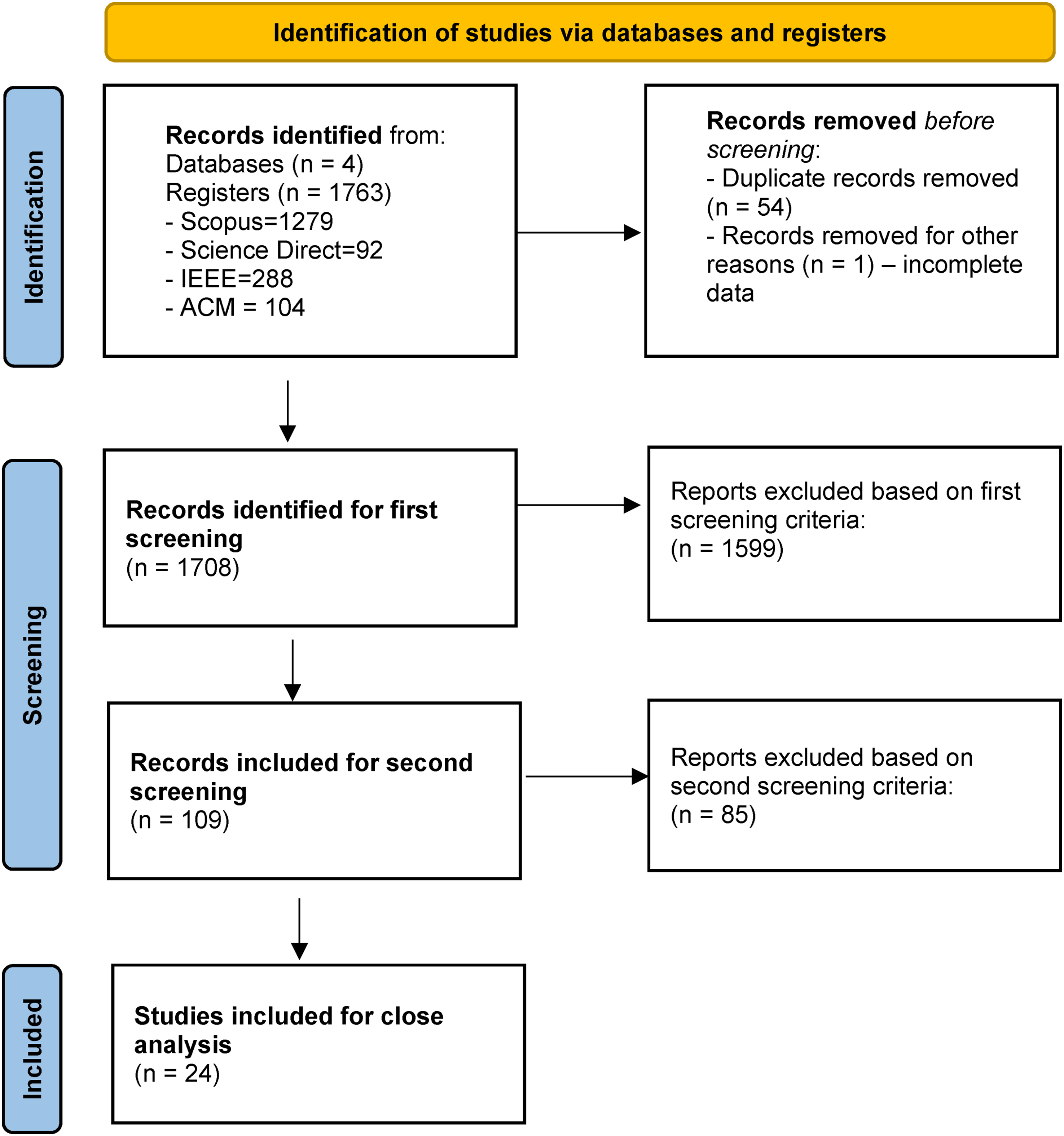
Identification of relevant studies
Relevant studies were identified and retrieved from four major academic databases, namely: Scopus, Science Direct, IEEE (Institute of Electrical and Electronics Engineers) Xplore, and ACM (Association for Computer Machinery) Digital Library. While Scopus and Science Direct cover research from broader fields of study, IEEE and ACM are essential databases for research featuring the latest developments in digital technology applications. This first step aimed to capture as many records as possible to avoid missing out on important research. The search included peer-reviewed journal articles, book chapters, and conference papers, and it was conducted with a set of three-level queries on each database.
Search terms.
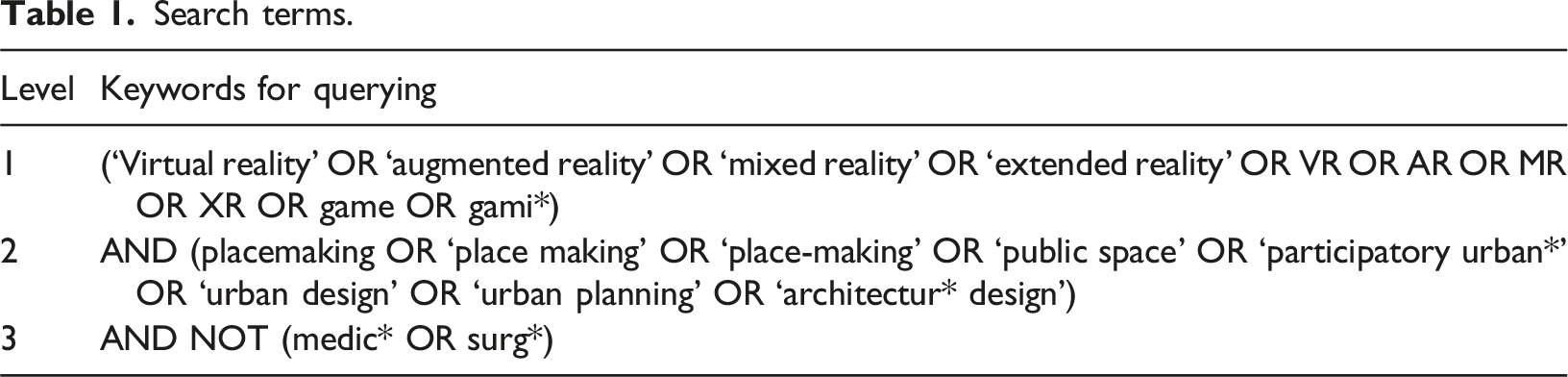
The search was limited to publications written in English – to avoid mistranslation – and published since 2015 – to ensure we capture the current SOTA digital tools that are not yet obsolete. A total of 1763 records were identified through this process. These records, with their details – such as title, abstract, author names, affiliation, year of publication, and paper types (conference paper, journal article, or book chapter) – were downloaded in CSV (comma-separated values) files which is compatible with Python programming language. Data wrangling and cleaning were then conducted using Python to concatenate records from multiple databases and to remove duplicates and incomplete records. Cleaned and combined data comprising 1708 records was then passed to the second step to screen for inclusion and exclusion.
Screening for inclusion and exclusion
Inclusion and exclusion criteria.
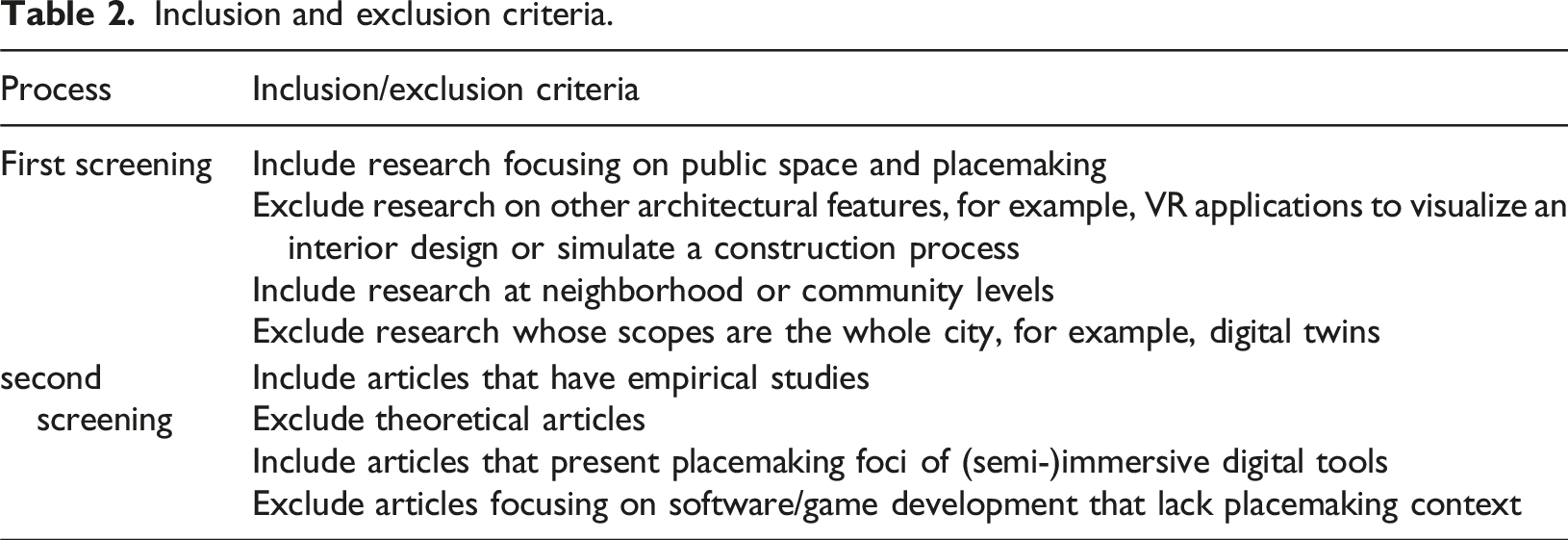
The first screening was conducted on the 1708 articles with the help of the AI tool ASReview. ASReview is an open-sourced machine learning framework developed by scientists at Utrecht University to make systematic review process involving large amount of literature more efficient, less labor-intensive, and transparent. Its algorithm works to automate the review process by filtering out the most relevant documents based on prompts given by the users, thus reducing the amount of manual work needed. Evaluation of the performance of ASReview using established software performance metrics, including Work Saved over Sampling (WSS) and Relevant References Found (RRF), shows that the number of relevant abstracts found after reading 10% of the total abstracts ranges from 70% to 100% (Van De Schoot et al., 2021). This means that by reading 10% of the whole data set, we can collect almost 100% of relevant studies, which translates to minimum time and labor needed to read through thousands of literature abstracts. After feeding the AI with one relevant and one irrelevant abstract, it filtered out 109 relevant abstracts for the second screening.
The second screening involves manual reading of the 109 abstracts to screen for only articles that have empirical studies and analysis of the placemaking outcomes. This process yields 24 final articles for full-text low-level analysis.
Full-text review for close analysis of included literature
This step involves manual reading of the final 24 articles to identify the digital tools used, their placemaking capacities, benefits, and limitations. The process of this systematic review is transparent and reproducible.
Results and analysis
Quantitative analysis
In answering RQ1 and RQ2, high-level observation was conducted on the initial cleaned and screened data to investigate the overview research trends on publication year, publication types, journals, countries, and overarching information on the application patterns of various digital tools. The goals are to gain a general understanding of the progress/regress of SOTA (semi-)immersive digital placemaking and the global distribution of their research interests. The large amount of data is visualized and analyzed using open-source programming language and software, including Python, ASReview, and VOSViewer.
General trends
Upon removal of duplicates and incomplete data, a total of 1708 records were identified from the four databases, dominated by Scopus, from which we collected 1274 records that accounted for almost 75% of records collected from all four databases (see Diagram 2a). Diagram 2b shows a general increase in the number of publications, peaking in 2019 for most databases except Science Direct, which shows a delayed response. Although the number of publications dropped during the pandemic years (2020–2022), it has quickly picked up again at a steady pace to match its number before the pandemic. This trend signals the significant impacts of the pandemic on placemaking, probably due to restricted public space access and conference attendance. Nevertheless, research interests in state-of-the-art (semi-)immersive digital placemaking after the pandemic are noticeably increasing and have reached the pre-pandemic level in 2023. This insight leads to a further question on how popularity varies between different types of technology. In answering this, a close analysis of a small number of shortlisted articles is conducted in sub-section 3.2. (a) Number of publications by year and database, (b) Number of publications by types, and (c) Top 20 publishing sources.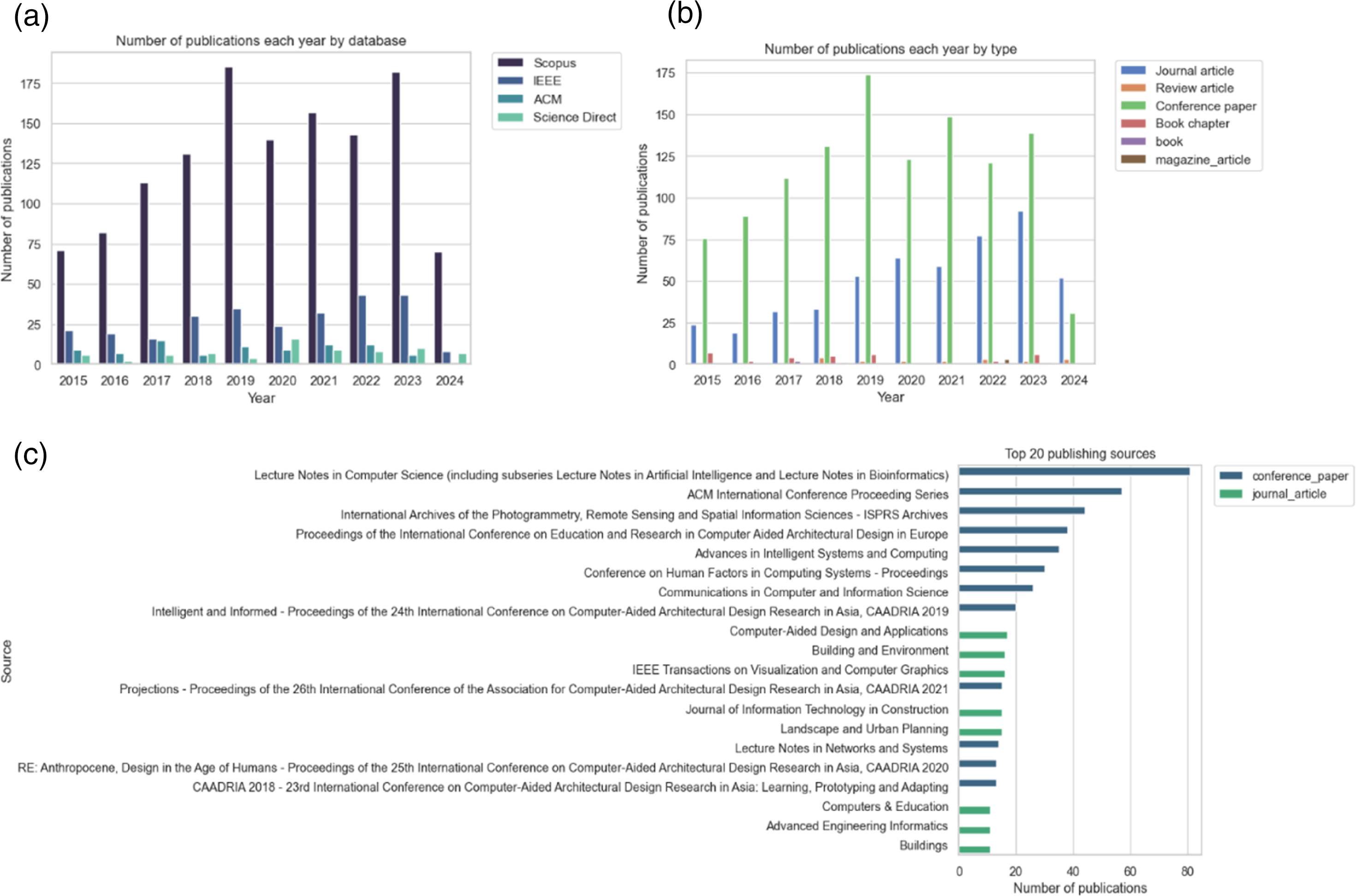
Publications are dominated by conference papers and journal articles, with a comparably small number of book chapters, books, and magazine articles (see Diagram 2b). The majority of works are sourced from computer science journals and conferences, while built-environment-related journals ‘Building and Environment’ and ‘Landscape and Urban Planning’ are also observed (Diagram 2c). Articles in these journals feature virtual reality uses for design education purposes (Hou et al., 2024), users’ preference evaluations (Payedar-Ardakani et al., 2024), and streetscape quality auditing (Kim and Lee, 2022).
Bibliometric mapping on VOSViewer of the 1708 initial records reveals that current studies are dominated by researchers affiliated with the United States, China, United Kingdom, Australia, Italy, Germany, Canada, and Spain (see Diagram 3). Collaboration networks are observed between North American countries of the USA and Canada with Western European countries, including the UK, France, Germany, Austria, and Norway. South American countries like Brazil and Peru are notably connected to Spain and Portugal as well as the USA. It is also observed that countries in the Pacific regions, such as Australia and New Zealand, have collaborated closely with East Asian countries such as China, South Korea, and Japan. No representations are noted from African countries, while representations from Eastern European, South and Southeast Asian countries are minimal. This finding signifies an evident under-representation of Global South affiliations, which suggests an area for further investigation. While it is understood that most researchers are affiliated with universities in the Global North countries, there is a possibility that the empirical studies were conducted elsewhere. This knowledge can only be obtained through qualitative analysis presented in the second subsection (subsection 3.2). Bibliometric mapping by countries.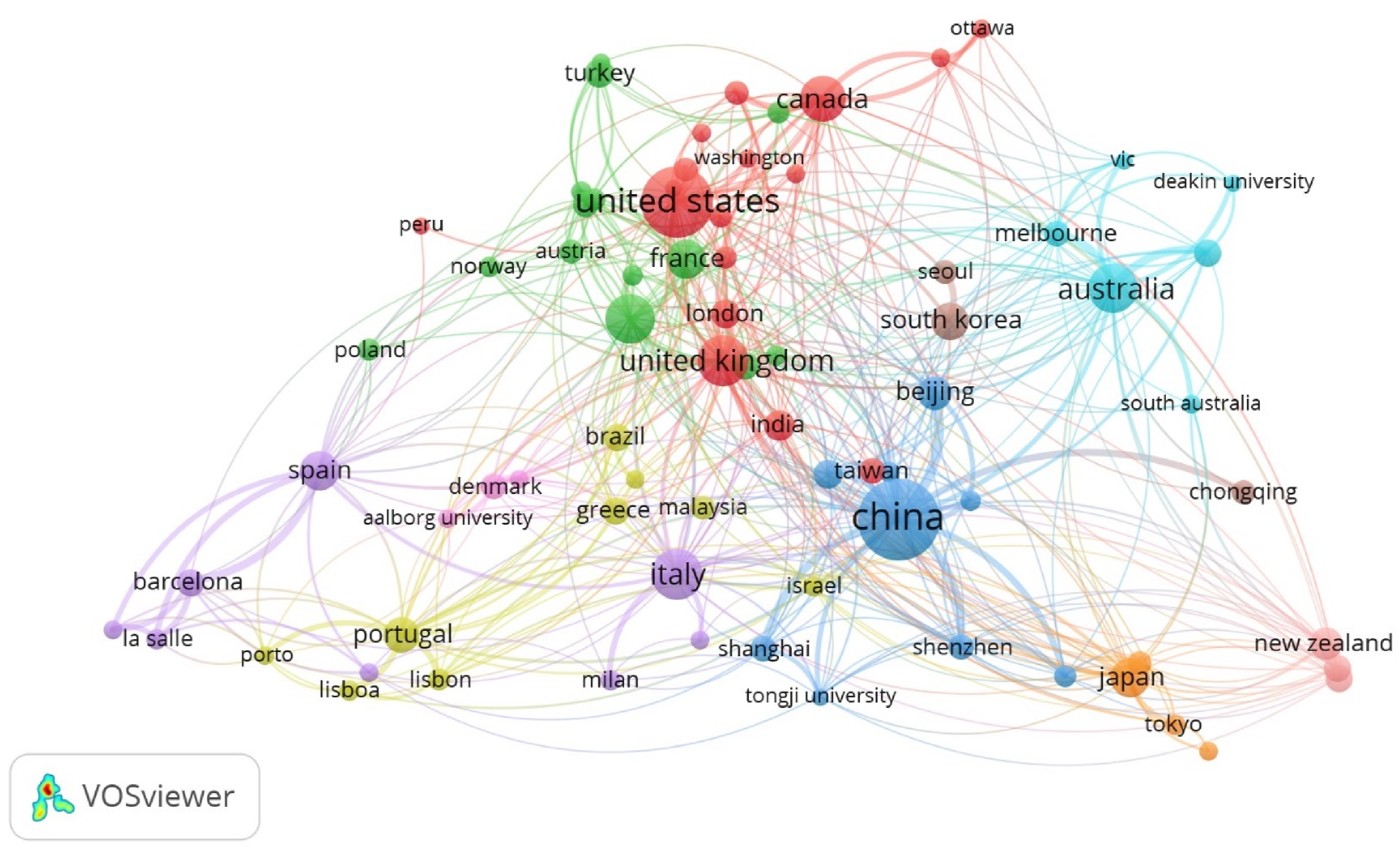
Application patterns: Which tools for which discipline-specific problems
Applying the inclusion criteria specified in subsection 2.2 (also see Table 2), the first screening conducted through ASReview resulted in 109 records. Bibliometric analysis conducted on VOSViewer on this smaller set of data reveals the connections between each tool and the subdiscipline-specific problems that they address (see Diagram 4 and Table 3). A few key findings can be identified from this relationality mapping. Firstly, the mapping identifies four clusters. In no particular order, the first cluster – marked by green bubbles – reveals the high occurrences of ‘virtual reality’ and ‘serious game’ with research that contains the keywords ‘architecture’, ‘participatory design’, and ‘student’. Their connections signify the common applications of VR for architectural co-design and education purposes. The second cluster – marked by lime bubbles – centers around research involving ‘urban planning’, ‘citizen’, ‘stakeholder’, and ‘participation’. Direct connections are also observed between “urban planning’, ‘virtual reality’, and ‘augmented reality’; even though they belong to different clusters. From the third cluster – marked by red bubbles – we discover the co-occurrence of ‘augmented reality’ with keywords that relate to placemaking research, such as ‘public space’, ‘community’, and ‘location’. Bibliometric analysis on disciplinary relevance of each technology. Disciplinary relevance of each technology.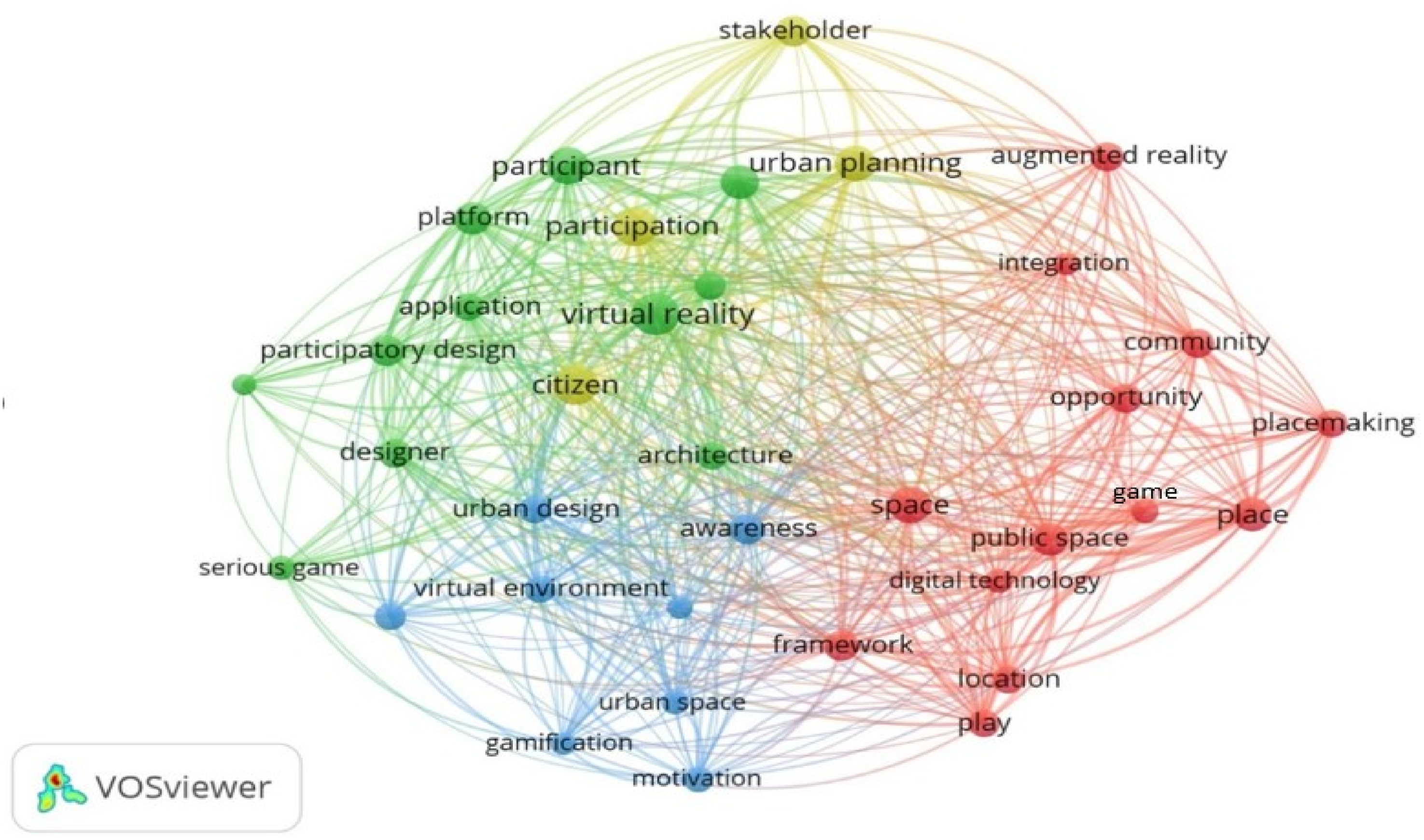

This network reveals that, although articles that specifically use the term ‘placemaking’ are also connected to VR and gamification, they have a higher correlation with AR. Finally, the fourth cluster – marked by blue bubbles – shows the co-occurrence of ‘gamification’ with ‘urban design’, ‘virtual environment’, and ‘motivation’. This observation signifies the varying approaches of each digital tool in facilitating users’ engagement, motivation, and navigation between virtual and physical environments. This bibliometric mapping also reveals the lack of MR study and the popularity of game and gamification. Despite MR’s capacity in bridging users in virtual and physical realms, the number of research featuring this technology is surprisingly low (only one relevant article). This outcome, paired with the high number of game studies related to digital placemaking, have shifted our bibliometric mapping to include VR, AR, and game/serious game/gamification (see Diagram 4).
Diagram 4 also illustrates how the three taxonomic forms – game, gamification, serious game – are connected to different digital media and sub-disciplines. The difference between game, gamification, and serious game lies in their purposes. While the term ‘game’ has a general meaning that implies leisurely play, gamification refers to digital applications designed to ‘influence a learning-related behavior or attitude’ through a combination of instructional prompts and fun game elements (Landers, 2014: 12). Serious games, as the name implies, are games designed for purposes beyond entertainment (Wilkinson, 2016). Exergames that engage users to achieve specific exercise goals in an intuitive and enjoyable video game environment are examples of serious games (see Shaw et al., 2015), while language learning games can be categorized as gamification.
As summarized in Table 3, our bibliometric mapping reveals that research on ‘serious game’ along with VR is closely related to architecture, ‘gamification’ belongs to the same cluster as urban design, and AR and ‘game’ are more commonly used in placemaking literature. While it is not our intention to suggest a clear differentiation between the various technologies, our finding reveals how some technologies are more likely to be used in certain sub-disciplines. VR’s capacity in simulating real-life scenarios can be tapped into architectural design processes, gamification can motivate participation in urban design, and AR games keep the users grounded in the physical landscape while being digitally immersed in fun and engaging placemaking activities. The following subsection 3.2 further explores these relations and the different placemaking approaches that these tools facilitate through qualitative analysis of selected articles.
In selecting articles for full-text analysis, the 109 records shortlisted from the first screening were sorted based on their citation numbers to identify influential works in the field. Diagram 5 visualizes the top 25 most cited titles, plotted with Python Seaborn. Higher citations were observed on conference papers presenting games developed for participatory urban planning and neighborhood design projects. Starting with these 25 articles, manual abstract screening was conducted on all 109 records based on the established inclusion and exclusion criteria (see Table 2). This second screening resulted in 24 articles for close analysis to explore in further detail the varying placemaking foci of these tools through qualitative analysis of selected articles. The titles of top 25 most influential papers and their citation numbers.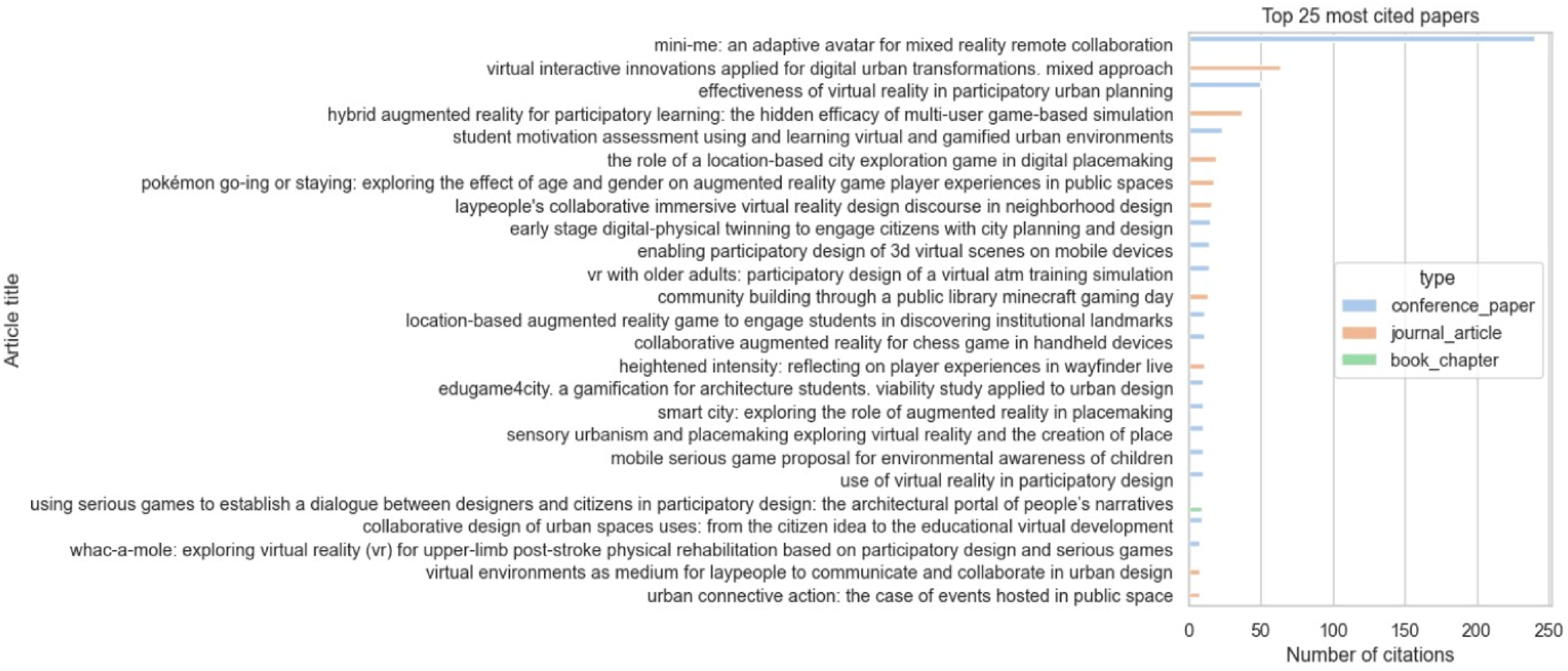
Qualitative analysis
Summary of state-of-the-art digital placemaking tools and their foci.
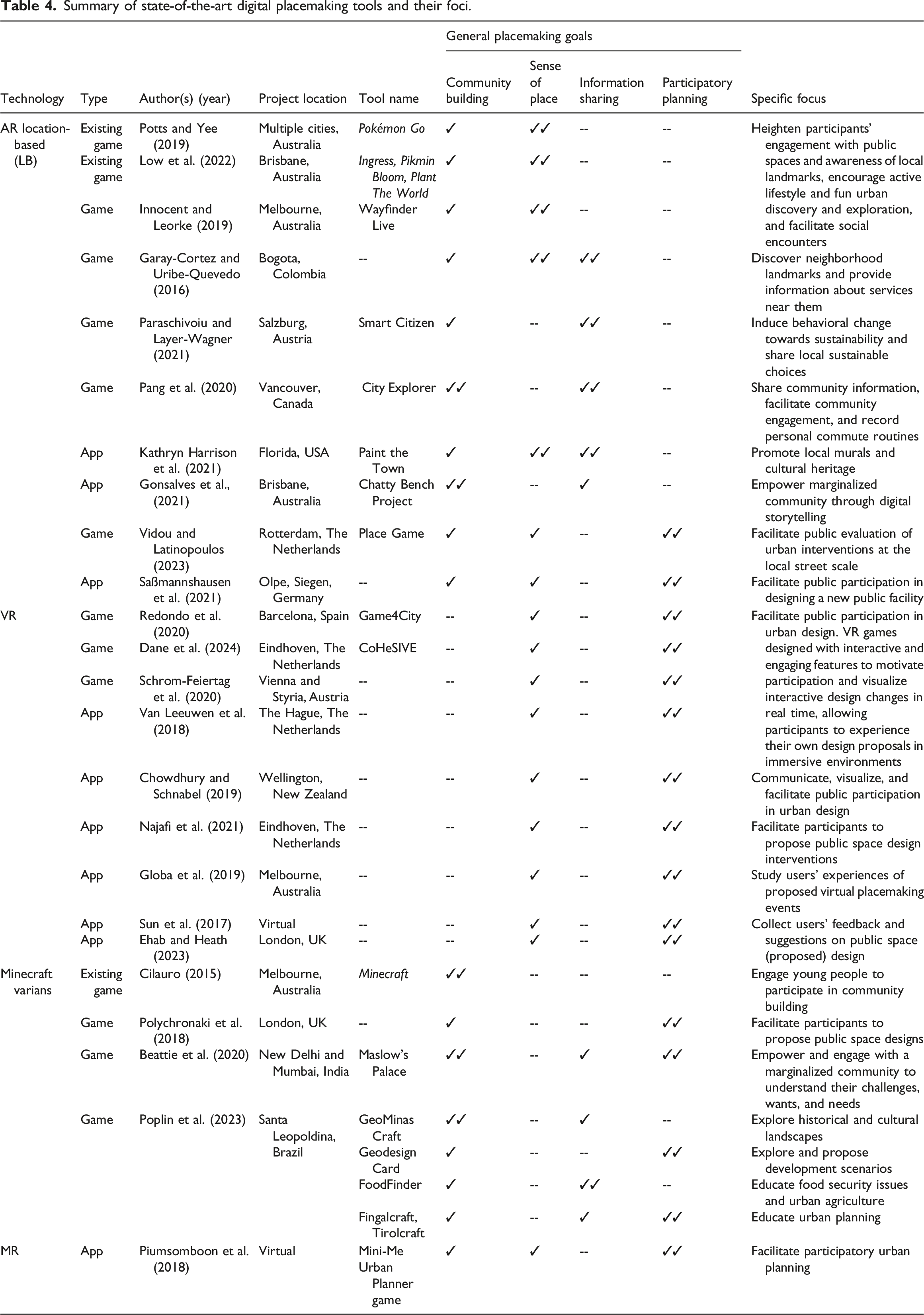
While most researchers were based in the Global North, as we observed in the previous subsection, their empirical studies could be conducted in various sites. Our qualitative analysis reveals that Australian urban neighborhoods are the most popular sites where the studies were conducted. They contribute to almost 30% of empirical cases. Other popular sites include European major cities such as London and Barcelona. Contributing to Global South approaches, (Beattie et al., 2020) and Poplin et al. (2023) deployed custom-designed Minecraft games to empower marginalized communities in India and Brazil, while Garay-Cortez and Uribe-Quevedo (2016) created a location-based AR game in Colombia to help people discover local landmarks and provide information about nearby services. Taking place virtually, projects conducted by Piumsomboon et al. (2018) and Sun et al. (2017) demonstrate that (semi-)immersive digital placemaking, unlike conventional placemaking, can be implemented without any physical contexts.
Our study also reveals that while most tools share common placemaking goals – community building, creating sense of place, information sharing, and participatory planning – each technology excels in specific areas. AR location-based tools are mostly applied to enhance the sense of place and to share information. Thus, they receive two ticks for these goals (see Table 4). At the same time, they can also facilitate community building when players meet other players through the games, although this is not their primary focus. Thus, they get one tick for this purpose. For projects that focus on participatory planning and simulations, VR is a more effective tool than others. Minecraft variants are mostly used for community building and public education, while MR tools are used when there is a need to accommodate virtual and on-site participants in one application. The main common placemaking goals observed from the literature are to cultivate participatory urbanism and active citizenship.
AR location-based games and applications add layers of digital augmentation onto the players’ physical environment – usually the urban public spaces and streets – to create partially immersive experiences that superimpose the virtual and actual worlds through location-based technology. AR location-based technologies encourage users to explore the neighborhoods through fun playful engagements, such as treasure-hunt-style games (Garay-Cortes and Uribe-Quevedo, 2016; Innocent and Leorke, 2019) or digital storytelling (Gonsalves et al., 2021; Kathryn Harrison et al., 2021). Common placemaking goals observed from the nine cases include enhancing community engagement with the urban environments and accommodating spatial co-productions either by facilitating participatory urban design of new public facilities (Saßmannshausen et al., 2021; Vidou and Latinopoulos, 2023) or by encouraging the community to assign new meanings to existing public spaces (Gonsalves et al., 2021; Innocent and Leorke, 2019). In a few cases, the AR location-based tools are designed to achieve specific placemaking goals. These goals include to share information on local services (see Garay-Cortez and Uribe-Quevedo, 2016; Pang et al., 2020; Paraschivoiu and Layer-Wagner, 2021), preserve cultural heritage (see Kathryn Harrison et al., 2021), and induce behavioral shifts towards more sustainable (see Paraschivoiu and Layer-Wagner, 2021) and active (Low et al., 2022; Potts and Yee, 2019) lifestyles.
Most authors agree that one main benefit of AR location-based placemaking is that it generates deeper engagements with urban environments. Their findings show that users are encouraged to tune into their urban surroundings rather than just passing through, resulting in heightened awareness of the local landmarks and neighborhood public spaces. Another benefit of this tool is its fun way of motivating the public, especially youths, to be involved in urban decision-making processes. This, in turn, encourages active citizenship. The authors also highlight a few technological challenges faced in their implementations, which include the need for constant and reliable internet connections as well as large mobile phone battery power consumption.
Active citizenship through participatory urban design is also featured as a common goal of VR placemaking. However, unlike previous technology, VR games and applications allow participants to manipulate public space designs in fully immersive virtual environments and experience real-time simulations of how their designs change these spaces. Game4City is one such game that promotes citizens’ participation in urban design through serious games (Redondo et al., 2020). In their experiment to co-design the London Sky Garden, Ehab and Heath (2023) designed a VR application that allows participants to change materials and move objects around the garden, and finally, give design suggestions based on their virtual experiences. Similarly, Van Leeuwen et al. (2018) reconstructed a virtual environment based on an actual public park and invited the community members to vote and suggest the new park design after experiencing a few different proposed design scenarios virtually. Dane et al. (2024) created a VR interactive game to facilitate public participation in co-designing healthy public spaces.
Most authors agree that the main benefit of VR placemaking is to democratize urban design by making design concepts accessible to laypeople (Chowdhury and Schnabel, 2019; Dane et al., 2024; Van Leeuwen et al., 2018). Another benefit of VR’s full immersion is its ability to capture an urban environment’s intangible or qualitative aspects and its changes (Globa et al., 2019). These benefits can increase the efficiency of design processes and improve design quality that satisfies users’ preferences (Sun et al. (2017), and ultimately lead to better architecture and urban design guidelines (Najafi et al., 2021). The main challenge of VR technology, as these authors highlight, is its learning curve and the high costs of tools. While AR location-based technology can be applied with smartphones, VR has higher technological requirements that often include HMD (head-mounted displays). Although a lot of VR games and applications were developed to minimize their learning curves, there are still brief challenges in navigating fully immersive environments.
Minecraft, a popular digital game released in 2009, involves placing blocks to create and modify virtual worlds, which can be designed to reflect and manipulate real-world environments. In Cilauro’s (2015) research, a public library in Melbourne was reconstructed in a Minecraft environment. Participants were then invited to freely design the virtual library to their creative imaginations. In a similar vein, Polychronaki et al. (2018) reconstructed part of London’s Hackney neighborhood in an immersive game and invited the public to propose new facilities. Their findings reveal that local resident participants were more interested in basic amenities like playgrounds and bike bays, while non-residents opted for monuments, fountains, and amphitheaters. Working with marginalized communities in an informal settlement in India, Beattie et al. (2020) designed a game where players constructed homes for other players and design the neighborhood to incorporate their needs and desires. Their goals were to empower the community and understand the pressing issues they were facing. Taking the context of a village in Brazil, Poplin et al. (2023) invited participants to propose, negotiate, and vote on design scenarios by building the virtual village on Minecraft.
Authors Cilauro (2015) and Poplin et al. (2023) argue that Minecraft is an effective tool to motivate and engage young people to participate in digital placemaking. Beattie et al. (2020) point out the benefits of Minecraft in creating a virtual environment where participants feel safe to communicate sensitive urban issues – such as desires for LGBT-friendly toilets – and experiment with potential solutions. These authors demonstrate how architects can collect data on a community’s preferences and challenges and how they vary between different groups of citizens through these games. Similar to other technologies, the costs of digital tools are also highlighted by these authors as the main disadvantage.
The last group of literature demonstrates the distinctive capacity of MR in facilitating collaborations between remote and in-person participants. Piumsomboon et al. (2018) use avatars to represent the remote participants who joined the application through virtual reality headsets, while participants who were present on-site joined through the AR interface. The main benefit of MR is its ability to bridge the virtual and actual worlds in one application seamlessly. However, as also highlighted by other tool users, the technological requirements and learning curve are the disadvantages. This tool also requires coordinating between virtual and on-site participants and synching the digital tools on both sides.
It is worth noting that more than half of these articles – 14 articles – applied various types and variants of games as (semi-)immersive placemaking tools. Only three of these cases used popular existing games, in contrast to 10 cases where the authors developed (semi-)immersive digital games. We also observe how different game taxonomies relate to different technologies. Existing AR games such as Pokémon Go are often played as fun leisure activities while at the same time the participants activate and co-create public spaces whether intentionally or unintentionally (Potts and Yee, 2019). Since their main purpose is entertainment, they fall in game category. However, custom-made AR games usually center around gamification of placemaking activities. An example of this is Innocent and Leorke’s (2019) treasure hunt style game that takes users to the neighborhood streets to search for hidden codes while they contribute to public space vibrancy – gamifying placemaking. VR games are often created for purposes beyond leisure entertainment. Hence, they can be categorized as serious games. For example, Schrom-Feiertag et al. (2020) created a VR game for the purpose of facilitating users’ participation in designing a railway station. As a serious game, the goal is beyond entertainment, its design comes with game features like storytelling and levels of achievement that unlock new features. In general, these authors highlight that the challenges of creating placemaking digital games include designing visually attractive interfaces, establishing engaging narratives, developing different levels of challenges while keeping the games fun, and maintaining the novelty of the games.
Overall, this low-level analysis demonstrates current understanding on how digital platforms are shaping contemporary urban spatial production processes (Sadowski, 2020). Authors draw attention to intensified public space engagement (Garay-Cortez and Uribe-Quevedo, 2016; Kathryn Harrison et al., 2021; Pang et al., 2020) and co-production (Chowdhury and Schnabel, 2019; Saßmannshausen et al., 2021; Van Leeuwen et al., 2018; ) facilitated by these platforms, which in turn enhance sense of ownership and place-attachment. These findings reflect Hjorth and Pink’s (2014) conceptualization of how the hybrid virtual and physical copresence accommodated by technologies has transformed the ways people embody social relationships and spatial connections.
Nevertheless, there is a lack of discussion about the socio-political implications of digital placemaking in different cultural and socio-economic contexts especially in the Global South (Udupa, 2012). Researchers warn against the asymmetrical power dynamics (Safransky, 2020) and class bias arising from digital technology applications (Berger et al., 2011). Focusing specifically on the complex power dynamics involved in community urbanism in the Global South, Lo (2024) argues that the benefits of such initiatives are not equally distributed to urban residents, often to the disadvantage of marginalized groups. These issues of power asymmetries have not been adequately addressed in current research. Apart from Beattie et al. (2020) and Poplin et al. (2023), there is a lack of study on how digital placemaking is understood and engaged with by marginalized communities in various cultural contexts, especially in the Global South.
Conclusion
Our research shows a steady growth in interest in SOTA (semi-)immersive digital placemaking research, which picked up again after a significant drop during the pandemic years. We also observe the patterns in which different technologies relate to different sub-disciplines due to their specific placemaking capacities. AR location-based technology – currently the most popular (semi-)immersive placemaking tool – is more relevant for facilitating fun neighborhood explorations, while VR has the capacity to simulate and visualize design proposals in real-time interactive immersive worlds. Minecraft’s specific capacity lies in its ability to recreate real worlds in its blocky game environments, allowing participants to manipulate them while interacting with other participants. Despite being less popular due to its sharp learning curve, MR is an effective tool that combines virtual and physical participants in one application. That said, all the technologies share a similar placemaking concept to promote participatory urbanism and active citizenship, with a broader goal of creating resilient and sustainable urban neighborhoods.
Another important finding that emerged from this review points to the growing popularity of games as fun and motivational tools for community engagement. Advancements in digital technology have made game development more accessible, partly thanks to data-driven design technology and real-time visualization (Hooper et al., 2024). Despite this, there are still inevitable learning curves in developing and implementing (semi-)immersive digital placemaking. On top of this, the high cost of devices and the need to maintain the digital platform’s novelty and attractiveness are general challenges when applying SOTA (semi-)immersive digital placemaking.
In terms of the geographical distribution of (semi-)immersive digital placemaking, it is observed that most researchers have Global North affiliations. A closer look at the selected literature shows that most empirical cases were conducted in Australian and major European cities, while Global South contexts are only represented by Indian and South American cities. These insights point to the lack of African and Southeast Asian representations. Although many authors highlight the implications of digital media on how urban places are understood, experienced, and engaged with; they have not adequately addressed the wider socio-political implications of digital placemaking in specific cultural contexts. How do different communities understand and make sense of these technologies? What tensions arise from their development and application? Who benefits from digital placemaking? These geographical and socio-political gaps are some of the areas that current studies have overlooked.
Further research can build on this study to understand the challenges of SOTA (semi-)immersive digital placemaking in broader urban South contexts, and its socio-political implications on different cultural contexts. Finally, our findings contribute to an interdisciplinary approach that advances understanding of (semi-)immersive digital tool developments and informs better placemaking strategies and policies.
Footnotes

Funding
The authors received no financial support for the research, authorship, and/or publication of this article.
Declaration of conflicting interests
The authors declared no potential conflicts of interest with respect to the research, authorship, and/or publication of this article.