




Abstract
This research investigates the impact of self-selected music, communal music sharing, and personal audio and video recordings within the pervasive game What We Take With Us (WWTWU) on player wellbeing, emotions, and narrative engagement. WWTWU is a wellbeing-focused pervasive game deployed across a Discord-based ARG, a physical room-based game, and game workshops. Players created personal playlists to use during play, vocalised self-reflections in some tasks, and shared these artefacts on the communal Discord server. Findings show that players reported music significantly enhanced their play experience, fostering community, supporting emotional regulation, and deepening their sense of engagement with the game. The personal playlists and communal interaction pivotally provided comfort to players while completing the game’s often emotional tasks. However, individual music preferences impacted the resonance of players’ experiences, with some participants finding the repetition of music-based tasks less engaging. Based on these findings, recommendations for developers include using audio interludes for reflection, music playlists as narrative tools, and integrating personal and communal music design to facilitate emergent narratives in games.
Introduction
The impact of sound and music has been studied in digital games (Jørgensen, 2008) and is increasingly recognised for its growing importance within immersive technologies like virtual and augmented reality (Bosman et al., 2024). Audio’s use as an aesthetic object extends to real-world spaces, such as art galleries and museums (Kaghat et al., 2020). However, the exploration of audio in pervasive games remains underexplored.
What We Take With Us (WWTWU) is a pervasive game – a genre that expands ‘the contractual magic circle of play spatially, temporally, or socially’ (Montola, 2005). Such games blur the lines between reality and the game, typically being played (at least in part) in reality through genres like alternate reality games (ARGs) and escape rooms. WWTWU comprise of three formats – an online alternate reality game, a physical room-based game, and a series of workshops based on the digital game at the centre of these formats. Using a values-conscious design approach (Flanagan and Nissenbaum, 2014), the game aims to improve wellbeing by having players complete a series of sequential tasks. The value of wellbeing was supported by supplementary values of music, community, and reflection, which inspire the game’s tasks. The present research focuses on the game’s integration of the value of music within the game’s design and explores its effects on the play experience.
WWTWU was partially based on the author and sole designer’s personal experience of the COVID-19 pandemic. The pandemic affected the musical engagement and listening habits of many, manifesting in increased listening patterns and even impromptu balcony performances with neighbours (Cabedo-Mas et al., 2021). To mirror this increased musical engagement, WWTWU tasked players with creating their own playlist of music prior to play that they utilise while playing. This differs from authored musical cues typically found in games or similar immersive experiences. Music also played a role in the game’s narrative, where the game’s protagonist Ana is an avid member of various musical subcultures. Specific songs are integrated into her epistolary narrative content (video and audio logs that are the fictional results of the game’s tasks), allowing players to learn more about her. Through the fictional play of WWTWU, Ana builds her own playlist of songs that she shares with players, which players can listen to instead of, or in addition to, their own playlists during play.
The research thus aims to investigate how the self-selection of music, the communal discovery of music, and the use of audio as self-reflective content can be utilised as a design tool to create compelling emergent narratives of individual player experience (Salen and Zimmerman, 2003). It discusses the approach to music and sound design in WWTWU before studying its effect on various stakeholders (the designer, a member of the development team, and players from each of the game’s three formats). Data from stakeholder observations and interviews was analysed using inductive thematic analysis (Braun and Clarke, 2012), with findings revealing that WWTWU’s music and sound design lead to a more memorable experience for players, enhanced reflection and therapeutic benefit, and deeper engagement with the game’s, and other players’, narratives.
Background
The cognitive power of music
Music is widely used in daily life as a tool for emotion regulation. People often turn to their preferred, self-selected music to alter or maintain their mood, a practice documented across numerous studies (DeNora, 2016; Juslin and Västfjäll, 2008; Van Goethem and Sloboda, 2011). Effects include the changing of a bad mood, increasing energy, or reducing tension (Skånland, 2013). Often, listeners choose ‘feel good’ music to regulate their mood (Juslin and Laukka, 2004) but also often use music as a refuge (DeNora, 2016). A survey of everyday music use identified several reasons why music is so handy for mood management: it is easily accessible; requires little effort; can accompany other activities; and draws on past experiences of emotional payoff, among others (Van Goethem, 2010).
Music also has the power to trigger memories. Hearing a familiar song can transport someone back to where they first heard it (Jakubowski and Eerola, 2022). Such experiences are called music-evoked autobiographical memories (MEAMs). They are a common experience and often arise involuntarily (Salakka et al., 2021). Research suggests that MEAMs evoke fewer, but more positively affective memories than similar interventions like sound/word cues (Jakubowski and Eerola, 2022). In some cases, these recollections can be more vivid than familiar faces (Belfi et al., 2016). Part of the reason music is such a potent memory cue is that it often accompanies distinctive life events, thus becoming intertwined with one's own personal narratives. This is supported by research that suggests that MEAMs are stronger during self-selected music than researcher-chosen music (Haj et al., 2015).
One interactive experience made to trigger such MEAMs is The Wilderness Downtown (Lavin, 2011). Built as a website for the song ‘We Used to Wait’ by Arcade Fire, it asks the user to input their childhood home address. The experience then pulls images of that neighbourhood from Google Street View and incorporates them into the music video in real time. As the song plays, windows pop up showing scenes of the streets where the viewer grew up, and at one point the user is invited to type a message to their younger self, which appears in the video. This provokes cognitive dissonance as one reckons with nostalgia (viewing the place they grew up), but also unfamiliarity (the music video’s differing context) (Lavin, 2011), suggesting that such experiences that merge familiar with unfamiliar should be handled cautiously.
Games and music as a coping mechanism
Given the cognitive power of the medium, music has often had positive associations with wellbeing. For example, music can be used to mediate environments: listening to music on headphones in public can allow one to both be ‘alone’ and mediate interactions with an environment. Listening to relaxing music in a bustling city, for example, may allow one to interpret the chaotic environment as something more beautiful (DeNora, 2016). Music has also long been used as a coping mechanism for stress reduction in a variety of environments and situations, such as workplace stress or during student exam periods (Linnemann et al., 2015).
Beyond daily stressors, music has also been instrumental in trauma recovery, with studies suggesting that survivors of PTSD and other traumatic experiences often turn to music as a means of processing emotions (Altun and Özdemir, 2018; Ophir and Jacoby, 2020). These often take the form of music therapy (e.g. listening, singing, dancing) and has been associated with increased wellbeing beyond the processing and coping functions (Daykin et al., 2018) Music therapy can also provide avenues for community building and anxiety treatment. One technique, guided music imagery therapy, has been found to help individuals reframe negative thoughts and process unresolved emotional conflicts, showcasing the medium’s potential for deep psychological impact (Jerling and Heyns, 2020). Community music therapy (CMT) utilises similar methods as individual music therapy, but highlights a shared love of music within a communal space (Stige, 2017). Notably, some CMT projects choose not to self-identify as music therapy to avoid stigma related to the term.
The COVID-19 pandemic and its detrimental effect on many peoples’ wellbeing (Razai et al., 2020) fundamentally changed some people’s relationship with music. While it had previously be used as a coping mechanism, discussed above, it has been increasingly used as such, and as a social outlet, since lockdown. The pandemic notably influenced individual music listening habits, with many using music listening to cope with lockdown measures (Fink et al., 2021) Both self-selected music and live-streamed concerts helped manage listeners’ moods and emotions, allowing them to have greater emotional responses to music (Carlson et al., 2021; Ziv and Hollander-Shabtai, 2022). These habitual changes were based on listeners’ sensitivity to music as reward and ability to regulate emotions (Ferreri et al., 2021). Increased listening resulted in positive association for life satisfaction scores during the early stages of the pandemic (Krause et al., 2021), as listeners found both hedonic pleasure and eudaimonic meaning in it (Hansen, 2021).
Music also increased feelings of community during the pandemic (echoing CMT interventions), as evidenced by the phenomenon of ‘musicking on balconies’ across the world (Calvo and Bejarano, 2022; Gupta, 2023). These public musical performances became a symbol of solidarity during the lockdown, fostering a sense of collective identity for participants. Chiu (2020) notes that such use of music for mood regulation and social cohesion was similarly present during previous plagues. Finally, new musical resources were created during the pandemic to document and study the evolving role of music in society (Hansen et al., 2021). This ‘CORONAMUSIC DATABASE’ was a crowdsourced collection of links to music videos and news media related to the pandemic, which allowed researchers to study how music-making and sharing helped people cope. These coping mechanisms included practices beyond mere listening, such as playing, dancing, composing, rehearsing, improvising, discussing, and exploring new musical domains. It is this variety of ‘corona-musicking’ practices (Hansen et al., 2021) as coping mechanisms that helped inform some of WWTWU’s audio design decisions.
Games similarly provided comfort and networked community to some during the COVID-19 pandemic due to global lockdown measures (Schreier, 2020). One game to benefit from such popularity was Animal Crossing: New Horizons (ACNH) (Nintendo, 2020). This may have been due to its mechanics allowing vicarious play (Zhu, 2021). Players could escape to an island full of vibrant characters, instead of being stuck alone at home. Friends could visit each other’s islands and socialise virtually, despite pandemic restrictions. Routines such as gardening, fishing, and landscaping were continued that may not have been possible otherwise (due to time commitments, local restrictions, etc.). In doing so, ACNH provided an escape that many used as a coping mechanism (Pearce et al., 2022). Some games were even based around the event, such as A Solitary Spacecraft (Douglas, 2020), a poetry game released in May 2020 that charts the developer’s first months in lockdown. It was lauded as particularly poignant upon its release, as noted by Brewster (2020): ‘I have seen so many think-pieces […] about what we should be doing with our quarantine time […] I’ve seen so many, and yet, none of them have resonated with me – too often they’re preachy or overwrought or (fittingly) miserable […] I don’t feel that way about this game’. Such praise showed the importance of tackling such a serious time in human history through play, which inspired elements of WWTWU’s design.
Musical aesthetics in interactive experiences
It is important to distinguish between music as a functional tool in games and other experiences and music appreciated as a self-contained aesthetic experience. In interactive media, music can serve various purposes. Game audio is most often used to communicate atmosphere and provide critical player feedback (Collins, 2013). Sound and music serve crucial roles in fundamentally orienting players in such experiences (Jørgensen, 2008). These elements can cue plot developments, signify emotional states, and ensure thematic consistency of the experience (Zhang and Fu, 2015). Here, audio is context-dependent, and gains value through its relationship to complementary elements. However, understanding music as an aesthetic object means engaging with it as the primary experience, for its own artistic qualities (Reybrouck, 2015). This often requires ‘active listening’, which requires listeners to engage with music beyond passive background consumption. Within such contexts, sound can become a significantly more interactive element that can be altered by physical movement, emotional responses, and social context (Volpe and Camurri, 2011). However, game music can also be functional, used for procedurally generating game elements. This can be seen in titles like BeatSaber or AudioSurf, which generate levels for players based on players’ self-selected music (Perry et al., 2023). Such games have the potential to fundamentally change players’ understanding and interaction with sounds they already know, providing a unique, customised experience to each player (Collins, 2013). These factors (communal context, use with movement, active listening to evoke emotional responses, and the importance of self-selection for re-experiencing music) all shaped WWTWU’s use of music.
Beyond digital games, music plays a pivotal role in many real-world interactive experiences such as live-action role-play (larp), pervasive games, and museum exhibits to guide participation and enhance cognitive engagement. In larp, music is often treated as a way to diegetically transition players from reality into the game. Carefully selected songs may be played to signal that ‘the veil of reality…is on the ground’ (Godoy, 2022). Outside of this, larps primarily use audio to provide atmosphere and feedback, though organisers note that audio design can significantly boost engagement, often triggering MEAMs or moments of ‘bleed’, where the line between player and character become blurred (Stenros and Bowman, 2018). However, there are potential risks when utilising audio for such engrossment. Ekman (2013) warns that audio design may disassociate players from the physical environment, which can cause safety risks. In this regard, they advocate for integrating sound and music into the game world as diegetically as possible, and to clearly distinguish between diegetic and non-diegetic sound. Additionally, players should easily be able to switch focus between in-game audio cues and the physical environment around them.
Advancements in binaural and ambisonic sound design offer ways to enhance spatial awareness in interactive experiences. Binaural audio, which replicates how human ears perceive directional sound, has been widely used in VR experiences to augment three-dimensional auditory environments, and has even been used to simulate feelings of touch through sound (Bosman et al., 2024; Grimshaw, 2016). Ambisonic sound allows for full-sphere spatial audio, has similarly been explored in museum installations and interactive performances to guide attention and heighten engagement (Bem et al., 2025). In pervasive games, these technologies could be leveraged to encourage real-world situational awareness while still providing engaging sound design.
Following some of these principles, museums and exhibitions leverage localised audio to enrich visitors’ experiences, both to augment the literal representation of what is shown and to aid interpretation. Brenner (2016) found that visitors stayed longer in a history exhibit when period-appropriate background music was playing, and reported learning more about the exhibit’s context when compared to a no-music condition. A similar study saw original ambient music composed for a science museum’s technology exhibit, which visitors described as inseparable from the venue itself (Jokić et al., 2022). The music piqued visitors’ curiosity, awakened memories, and even inspired playful interaction with the exhibits.
In WWTWU, music operates at the intersection of these approaches, functioning both as an aesthetic object and a functional mechanic for reflection and communal engagement. By requiring players to self-select music, it echoes games that use this to functionally alter the player experience, instead repurposing them to trigger MEAMs and promote personal and communal emergent storytelling. While music is sometimes used as ‘typical’ background ambiance, it is also used more actively to shape players’ emotional engagement. The next section explores how these principles informed WWTWU’s game design, and how it used music as a catalyst for meaning-making.
What we take with us overview
WWTWU was a practice research project was conducted as part of the author’s PhD, focussing on values-conscious design in pervasive games (Jerrett, 2024). The research took place at an experimental games research lab at the University of Portsmouth, where developers create games exploring values like disruption (Howell, 2015), ambiguity (Dansey et al., 2009), emergence (Dansey, 2014), and interpretation (Higgins, 2022). The WWTWU project stemmed from the designer’s previous experience with ‘empathy games’ (Jerrett et al., 2020b) and made in response to the emotional toll of the COVID-19 pandemic. The game was designed using three theoretical frameworks: a set of questions for values-conscious designers; a values-centred design framework; and design considerations for pervasive games (Jerrett et al., 2020a, 2022b; Jerrett and Howell, 2022). The designer’s values of community, reflection, and music helped create a game that they could have played throughout the pandemic to aid their own wellbeing.
WWTWU is a multifaceted game consisting of three parts: a physical room-based game, an online Discord-based ARG, and a website, each enriching an overarching narrative. This section outlines the game mechanics, describes the narrative, explains its structure, and discusses its audio design.
Mechanics
Originally conceptualised as an empathy-based escape room, WWTWU removed traditional escape room mechanics such as timers and locked doors, but kept the genre’s narrative structure (Nicholson, 2015). The game’s 11 sequential tasks are designed to encourage reflection, communication, and engagement with music. These tasks are: (1) Prepare your play space by tidying or organising it. (2) Write down how you feel. (3) Stylise and decorate the word to represent that emotion. (4) Listen to a song from your playlist and dance to it. (5) Connect with someone by asking them to share a story from the past 2 years, then record and share your own story. (6) Reflect on wellbeing within a shared online space. (7) Listen to another song while contemplating your experience of the game thus far. (8) Address your past self by speaking to a mirror or webcam. (9) Find and add a song to your playlist that resonates with your play experience. (10) Choose and print an image that represents your experience and display it in your workspace. (11) Pack away your play space, taking the image with you as a reminder of the game.
The tasks are presented on a website (Jerrett, 2022), allowing the game to be played anywhere (see Figure 1). This allowed for both remote play (mirroring the COVID-19 pandemic), as well as location-based play in the room-based game and game workshops. The WWTWU game website.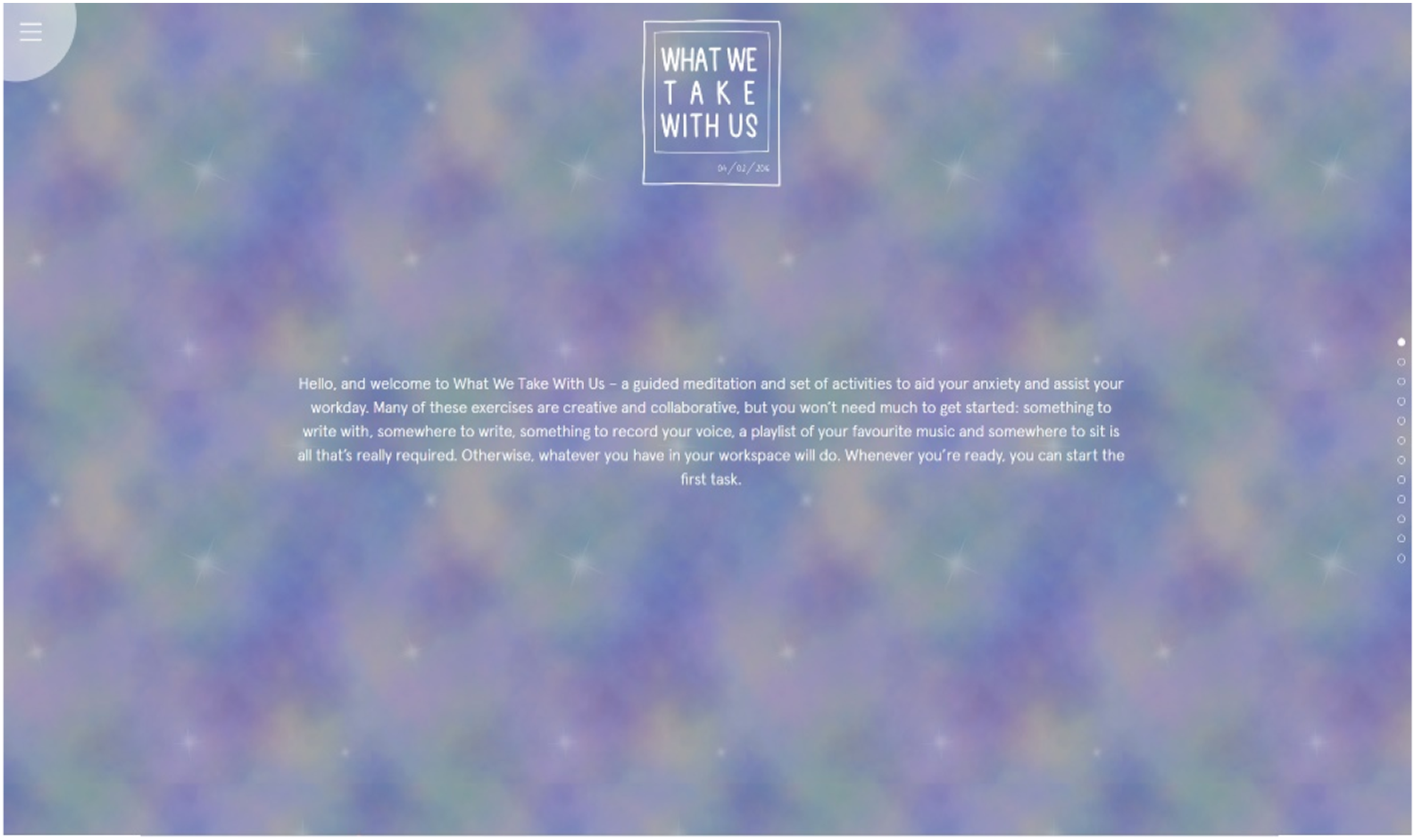
In both the ARG and room-based game, players utilise a Discord server where the creator of the server, game protagonist Ana Kirlitz, regularly shares ‘past playthroughs’ of the game that document her experiences from 2020 to 2023. Room players play WWTWU in Ana’s abandoned office in Portsmouth, UK, where they can additionally discover epistolary artefacts she has left behind.
Narrative
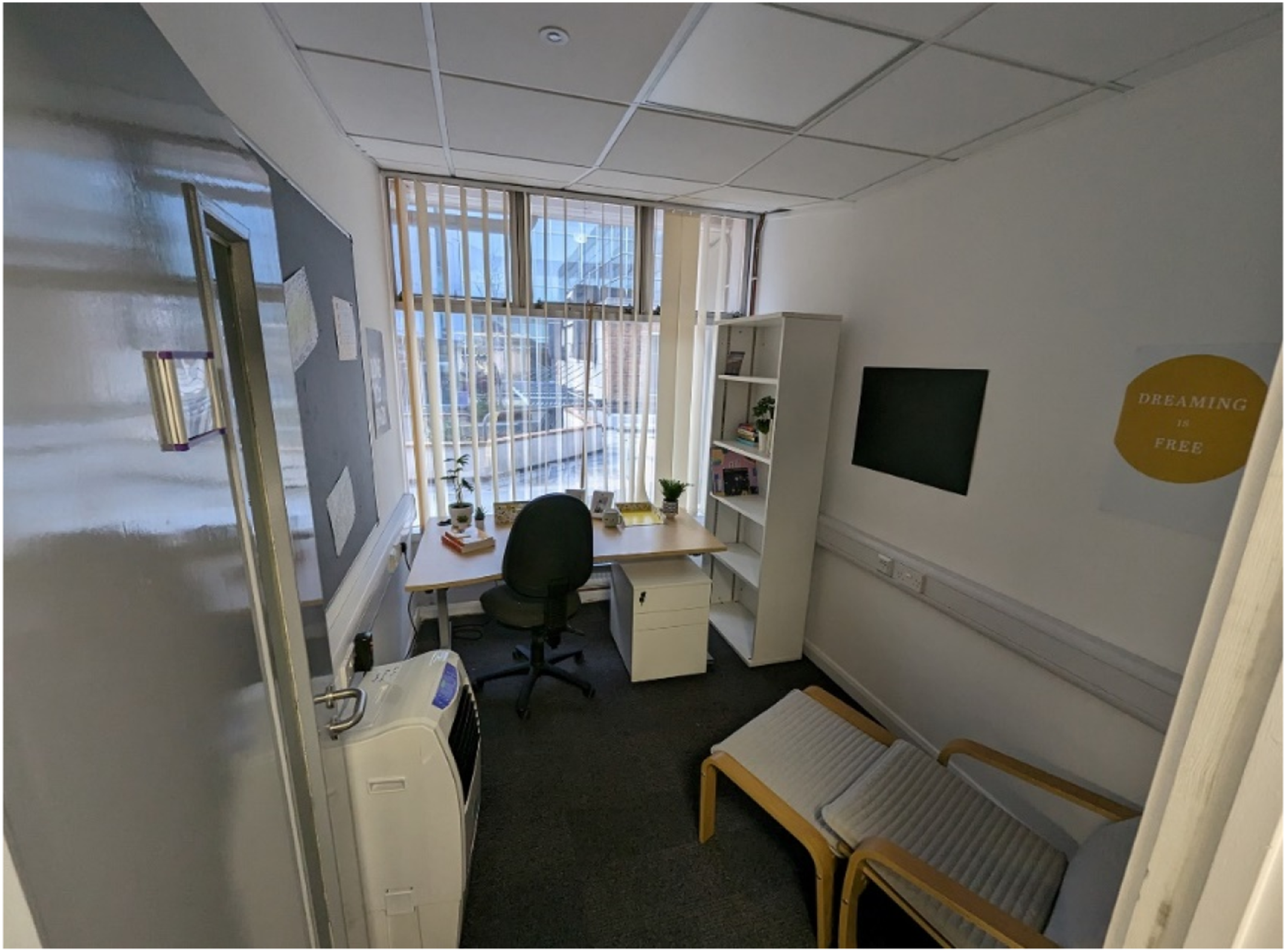
WWTWU follows Ana Kirlitz (see Figure 2), a character who moves to Portsmouth in early 2020 after a breakup, finding solace in the game’s tasks as she rebuilds her life. However, the COVID-19 lockdowns disrupt her progress, deepening her struggles with isolation and depression. Her struggles culminate in the loss of her mother in late 2021. She abandons her office in Portsmouth (see Figure 3) and returns to her childhood home to mourn and, in the process, documents her experiences through a private Discord server she uses as a journal. Later, Ana opens the Discord server to the public, inviting players to engage with her reflections, share their own stories, and complete the WWTWU tasks alongside her. This allows players to interact with Ana’s past stories and build a community together. Ana Kirlitz, WWTWU’s protagonist. Ana’s abandoned office, where the room-based game is played.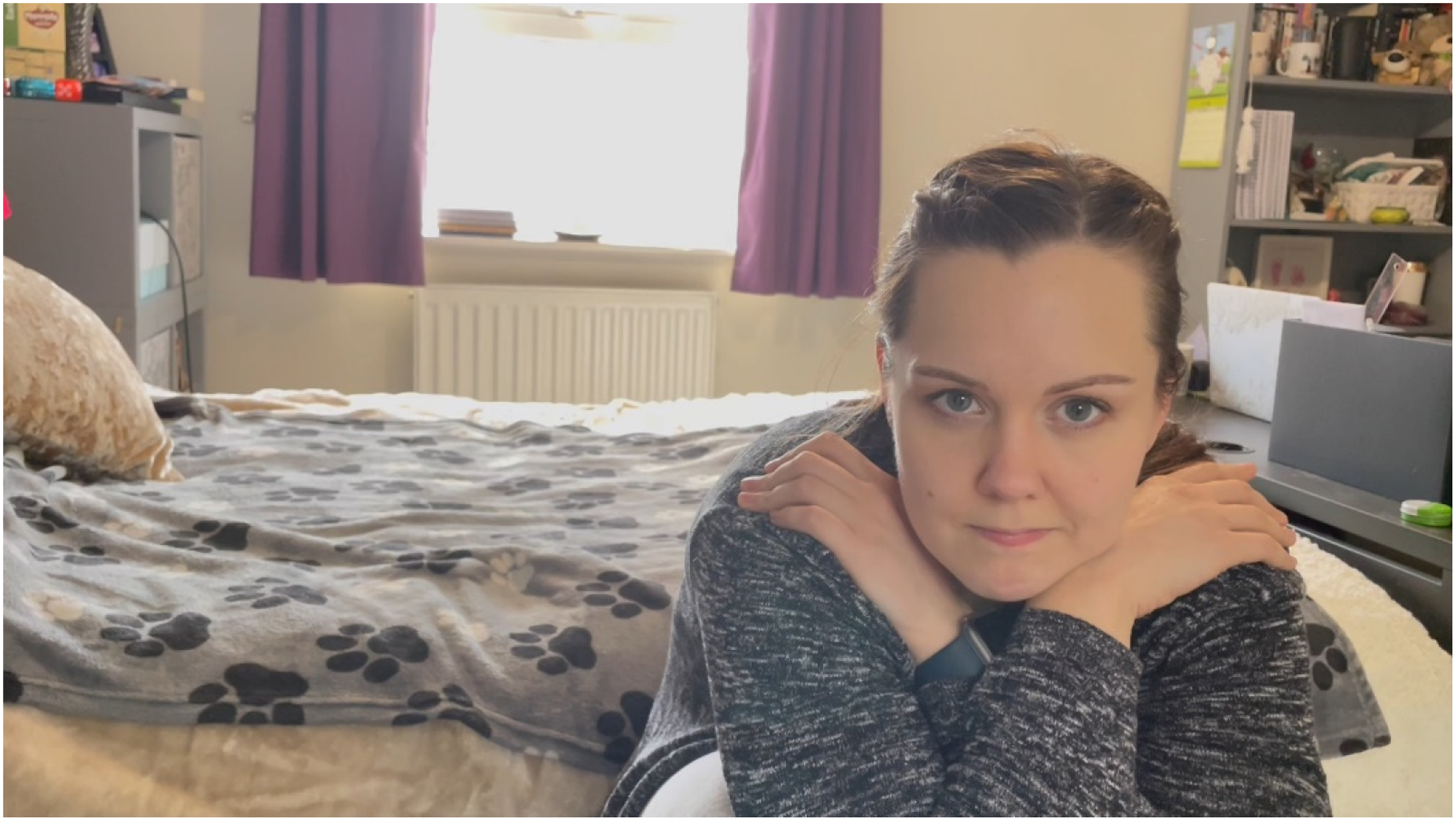
Structure
WWTWU unfolds across three interconnected formats: (1) A game website, which provided the structured task-based experience also used in game-based workshops. (2) A Discord-based ARG – where Ana’s narrative unfolds through past playthroughs, and players contribute their own reflections. (3) A physical room-based game where players why Ana has left, and what she left behind.
While the ARG and room game centre on Ana’s story, the website offers a standalone version, allowing for individual or group-based play in various settings, including workshops. This modular structure enables flexible participation while echoing WWTWU’s pandemic roots and its core values. Figure 4 illustrates the connections between these components. WWTWU’s game structure across its various formats.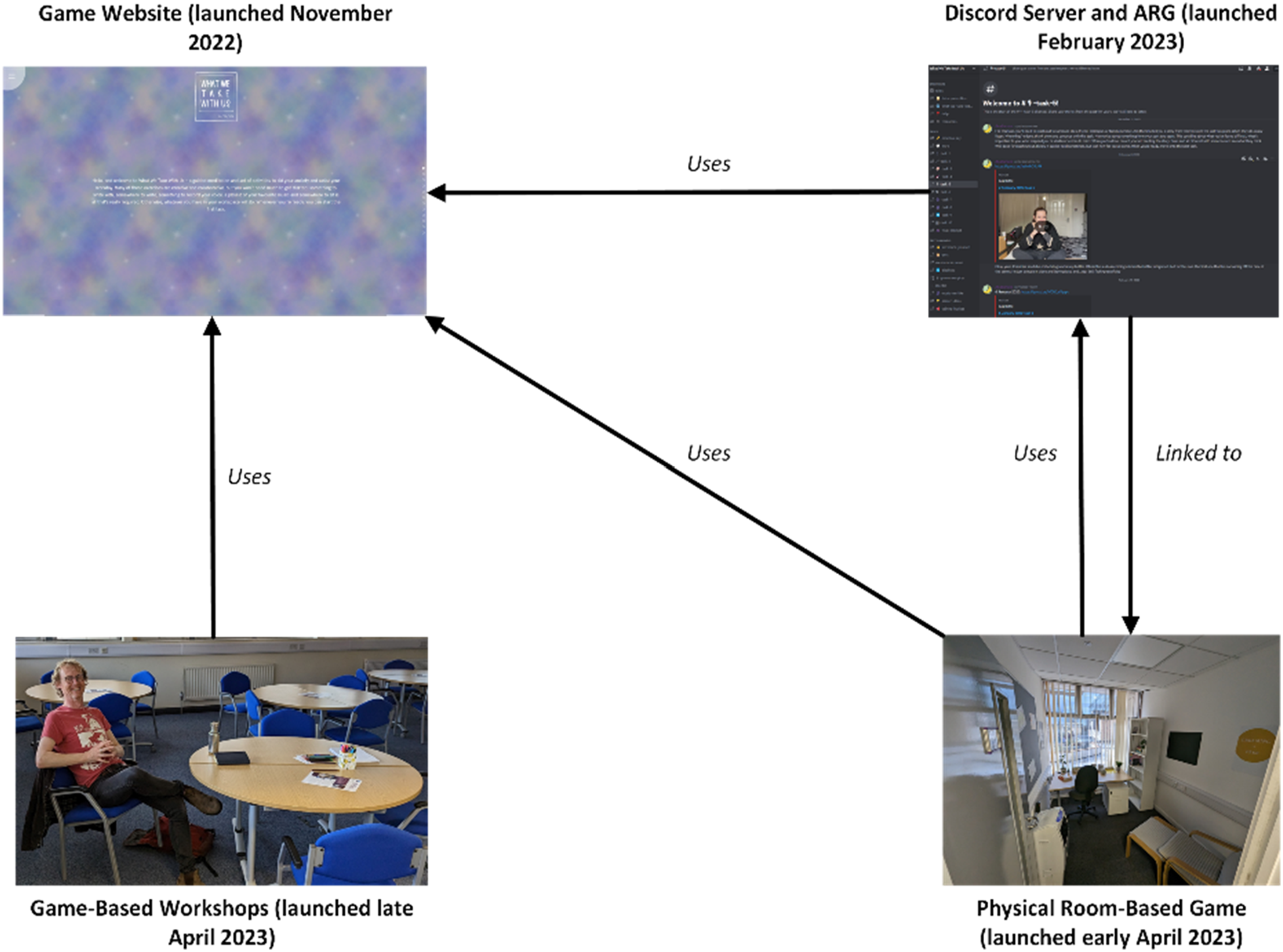
Audio design
The audio design of WWTWU involves the self-selection of music, music as a functional tool, its integration as a narrative aesthetic choice, and music as a communal process. This makes music both a passive, aesthetic element and a meaning-making tool. Instead of a fixed soundtrack, players must curate personal playlists, embedding their own emotional and autobiographical context into the game. This aligns with research on music’s role in emotion regulation and memory retrieval, where self-selected tracks evoke Music-Evoked Autobiographical Memories (MEAMs) and support mood management (Haj et al., 2015; Jakubowski and Eerola, 2022; Salakka et al., 2021). This player agency in music selection and use aims to support a player-driven, emergent narrative from the game that differs with every playthrough (Salen and Zimmerman, 2003).
Audio is also made functional through its embedding into gameplay tasks. Some tasks prompt physical engagement with music, such as dancing to a song, as such physicality increases emotional engagement (Isbister, 2016). Beyond listening, WWTWU also incorporates self-recording tasks, prompting players to vocalise reflections and personal stories, which can be shared on the ARG’s Discord server. These recordings, alongside playlist contributions, expand the game’s communal audio landscape.
Ana’s in-game playlist provides narrative context and an entry point for shared reflection. Featuring pop rock, emo, and punk, her selections mirror her emotional arc – from excitement and frustration to grief and recovery – while serving as a template for players to construct their own stories through music selection. Finally, the Discord server extends this engagement by providing channels for playlist sharing (#playlists, #music-we-like), collaborative listening through the Jockie Music Bot, and task channels for stories and personal reflections. This turns the self-selection and individual use of music in the typically single-player game into a communal sharing process, reinforcing WWTWU’s values.
Research methodology
Given the embedded nature of the researcher within the player communities of WWTWU, the research adopts an ethnographic methodological perspective, which has become increasingly popular within games research (Boellstorff, 2015). The embedded nature of the method mirrors the embeddedness of many game communities, and its focus on subjective, individual findings allow for nuanced description of in-game activity (Brown, 2015). However, while the research highlights some of the communal interactions players had with each other during play (e.g. on Discord during the ARG), it remains important to note that WWTWU as a game remains a solitary, reflective, player experience augmented by the game’s communal settings (in the ARG and game workshops). As such, much of the gathered data focuses on players’ internal, individual experiences of sound and music within the game. The research question that guided the study was: • How does the self-selection of music, communal music sharing, and the creation and contribution of personal audio and video recordings within the different formats of the pervasive game What We Take With Us influence player wellbeing and their emotional and narrative engagement with the game?
The research utilised the survey research method, employing questionnaires and interviews as research instruments for each game format (Pickard, 2013). Players were also observed using participant (i.e. researcher participation) and non-participant observation (i.e. mere observation) in the ARG and room-based game/workshops, respectively. The use of open-ended questions and a semi-structured interview schedule provided rich data for analysis (Riessman, 2007).
The study aimed to reach roughly 1000 individuals via Discord, email, and Reddit, hoping to recruit 30-45 players. This is similar to the 2%–3% conversion rate typical of ARGs (McGonigal, 2010). While the Discord server had 52 members, ultimately only 28 people participated in the formal study: 26 players across different formats and two designer/developers. It is important to note that the interviewed designer is also the researcher, who was self-interviewed (Keightley et al., 2012). The self-interview used the same interview schedule as other participants to standardise data collection across stakeholders.
From these 28 participants, 18 interviews were conducted: one designer, one developer, six ARG players, seven room participants, and three game-based workshops (with six participants total), amounting to a 25% interview attrition rate. Most were unfamiliar with their chosen game format, barring the designer, only one ARG player (a former ARG designer) and one room player (who played escape rooms) were familiar with their chosen game type. Workshop participants, in particular, lauded WWTWU as a unique wellbeing approach not previously experienced. All participants in the research, including the designer, are referred to by pseudonyms for anonymity, and provided informed consent prior to interviews taking place. All research activity was given a favourable opinion by the University of Portsmouth (reference number CCI-FEthC 2022-14) in July 2022.
This research conducts an inductive thematic analysis (Braun and Clarke, 2012) to understand stakeholders’ experiences of music in WWTWU. It used a single question on the interview schedule specifically about sound/music (‘How did you engage with the game’s playlist requirement?’) as a starting point for code generation (which provided a broad ‘music’ code). Additional codes were generated from researcher observation of stakeholders’ play experiences or reflection on discussions directly following the stakeholders’ interviews. These were augmented by reading the interview transcript shortly after it had occurred to provide additional codes. This array of codes represented critical incident-based ‘data domains’ (Braun and Clarke, 2019) that were used as the starting point for analysis. Following this, open coding (Saldana, 2021) grouped these codes into initial themes, some of which included: ‘personalisation of music choices’, ‘community engagement’, ‘therapeutic benefits’, ‘audio for reflection’, and ‘music as immersive device’. The initial themes were then reviewed against the interview transcripts to ensure they accurately represented the raw data, in a process similar to grounded theory’s constant comparative analysis (Strauss and Corbin, 1998). Identifying and understanding the relationships between these initial themes led to the creation of the finalised themes presented in this research in the Discussion section.
Results
Emotional regulation
Music played a central role in emotional regulation for many participants, helping them manage stress, process emotions, and structure the introspective moments within the game. ARG player Chris described how WWTWU’s musical interludes helped relieve the game’s emotional intensity, stating, ‘the music breaks in between the almost I’d say slightly heavier stuff at times… helped me like, step back, just enjoy myself and de-stress’. Similarly, Room player Oscar reflected on how music facilitated vulnerability, noting that it allowed him to ‘just be kind of more emotionally vulnerable and [allow] more honest reflection’. In the same vein, ARG player Nina deeply connected with the music tasks, as her music choices often mirrored her personal feelings. Reflecting on the lyrics of P!nk’s Trustfall and discussing the COVID-19 pandemic she says ‘“it’s all going to shit but I’m dancing”...Music definitely sort of narrated that’. For Nina, the music she chose was always conscious expression of her current state of mind. ARG player Diamond similarly noted music helped express difficult-to-articulate emotions, saying that ‘music really is like how we kind of wear a hat that announces that somebody else is saying something that you can’t really put into words’. She appreciated the way the game tasks kept her thinking about music daily, even if she wasn’t always active on Discord. Room player Ezra utilised his specific playlist called ‘Chill Beans’, which he described as his go-to for focus and relaxation. He explained that the playlist was, ‘very familiar, very repetitive, and it means that there is something that I’m processing auditorily[… but] it doesn’t take away focus’. This playlist allowed Ezra to stay engaged with the game while maintaining a calm and focused state of mind. Workshop participant Judy also noted that game’s use of music could be effective for concentration and emotional regulation, particularly for individuals with ADHD like herself, sharing that her playlist was made ‘a few weeks ago of just songs that my girlfriend always sings and I’ve found that really calming… I used that playlist as it was so soothing… and it really helped me get through these specific tasks’.
Beyond the music listening tasks, the recording tasks also facilitated deep introspection. Room Oscar emphasised that talking to himself when recording brought me a level of perspective and mental clarity that was beneficial. Similarly, Workshop participant Harry noted that WWTWU helped him reflect on his personal growth in relation to his own PhD journey, allowing him to reflect on how far he had come after a difficult few years.
Community
WWTWU also facilitated a strong sense of community through shared musical experiences, with players frequently highlighting how music encouraged collaboration, discovery, and social bonding. These communal aspects were particularly emphasised in the ARG format, given the Discord server’s role as a communication hub. ARG player Shaquille appreciated the communal aspect of music sharing, stating, ‘music [brings] a lot of people together… It was a well-done thing to incorporate music tasks’. He enjoyed exploring new genres shared by the community, which not only enhanced his play experience but also encouraged him to expand his musical preferences. Notably, the communal nature of the tasks made him feel more comfortable and connected to others on the server. ARG player Joe had a similar experience, noting that they would ‘[take] my comfort music but then integrating some of the suggestions from the different tasks… engaging in what I am comfortable with, but then bringing in what other people suggested’. This integration of both their personal playlist and the game’s communal elements fostered a sense of human connection through play, noting that the Discord server ‘felt like it would be a really lovely community space to be in and to have other people going through the same stuff and connect with the human aspect rather than just living in my own brain’. Nina’s used music to share her personal narratives with the community, at one point exclaiming with glee: ‘the lore is me!’. She also proudly noted a memorable moment of vulnerability when she shared a gospel song, given the importance of her faith. ARG player Shaun found the communal element of the Discord server to be an important part of his engagement with WWTWU, noting that ‘I don’t really know if I would have gone through all the tasks if I’d sort of done it in a vacuum’. The communal aspect thus motivated him to participate more actively, noting that even the audio and video recording tasks were valuable, and that sharing these with others provided him a positive outlet during a stressful time in his life. Shaun found it fun to share his musical tastes with others and appreciated the positive reactions he received, especially to a video he recorded of himself playing air guitar to The Eagles’ Hotel California. Diamond also found joy in discovering shared musical tastes with other players, which made her feel less alone in her emotions and experiences.
The importance of community also extended to other formats, as even players who found less value in the music-based mechanics still enjoyed the shared communal experience of playing the game and discussing music within it. WWTWU’s workshop participants specifically appreciated the opportunity to recreationally engage in music listening within the workshops’ fixed contexts, with Jane saying ‘I love music, but I feel like I never listen to it anymore apart from when I’m in the car (and that’s just the radio) so having a reason to listen to music for fun was really nice’. Similarly, workshop participant Anthony described how engaging with music in WWTWU rekindled personal memories, stating, ‘I hardly ever listen to music, but I used to as a young person. It was fun to dig into some of that stuff again because my partner listens to a lot of music’. This suggests that even for those who were not as deeply invested in music as a central element of play, the game’s communal structure encouraged reflection and reengagement with music as a social activity.
Music personalisation
WWTWU’s emphasis on self-selected music was a pivotal part of its design which shaped the experiences of most players. Participants frequently highlighted how choosing their own music influenced their level of comfort and engagement. Room player Xander described how familiar music helped him feel more at ease, stating, ‘You’re always more comfortable listening to your own music… it made me feel more comfortable, more like, yeah, this is a safe environment’. Ezra’s ability to personalise the music within the game room also allowed him to feel ‘safer’. Room player Selma initially struggled with the Ana’s playlist initially provided to players but found that switching to her own music increased her sense of connection, noting, ‘I could actually see myself in this space now because I’m listening to something that resonates with me’. Workshop participant Sally was surprised by how such music was often taken for granted. She ‘kind of assumed that everyone enjoys music and I didn’t really think about its effect on you, you know, in something like this… it sort of added new meaning… I’m hearing this with new ears’. Other players, however, were more practical and pragmatic in their personalisation. Room player Tom simply used YouTube to find energetic and upbeat music to listen to while playing. He reflected that ‘it put me in a better mood than I would have been otherwise’.
Room player Santiago highlighted how personalisation (and sometimes intentionally not doing so) encouraged reflection, noting that ‘listening to the game’s playlist was kind of like listening to the [Spotify playlist] Discovery Weekly… It was truly “discovery”’. This experience allowed Santiago to reflect on his emotions with fresh perspectives provided by the new music, making the tasks more meaningful and engaging. This culminated in him adding some personalisation to his playthrough by adding a Spanish song to the game’s server playlist to represent his heritage – an aspect of his identity the game drew him to explore. The personal nature of music was also echoed by designer/author Alex and developer/actor Emily. Alex, experienced a renewed passion for music throughout the creation and play of WWTWU, noting that the game ‘allowed me to think about music again in a way that I haven’t been thinking about it in the last couple of years’. He further shared how imbuing Ana’s playlist with his own personal experiences sparked distinct memories and nostalgia. When Emily engaged with this custom playlist, built for the character she was set to play, it helped her understand the character more deeply: ‘It had a big effect on how I understood Ana’s life and who she was [which is] very different [from] my choice of music’. This curated playlist allowed her to empathise with Ana (one of the design goals of the game), but also enhanced her connection to, and understanding of the game’s narrative.
Finally, this connection between music personalisation as self-expression was also evident for workshop participant Harry, whose playlist was shaped by his life circumstances: ‘My music playlist is a mess because my three-year-old daughter dominates my phone… so the playlist I jumped to was recently played songs. It had Radiohead, Belle and Sebastian, it had The Muppets. And that kind of actually quite represents my state of mind, as well as my daughter’s’. This reinforces the notion that such personalisation reflects individual identities and life contexts, affected by people like family. Broadly, he found engaging with such personalisation to be ‘really nice. I mean, I’m curator of playlists, but I just haven’t really arrived in the digital age… It’s nice to be invited to [listen to music again]’.
Challenges
While most participants found music to be a meaningful part of their experience, others encountered challenges with engaging in this game element, particularly regarding the repetitive nature of music tasks. ARG player Shaun noted that ‘music is not necessarily a super important aspect of my life, [so] leaning heavily into the music stuff for me didn’t really add a huge amount’. Similarly, Room player Zay critiqued the structure of the game’s music prompts, stating, ‘You just kept asking me to listen to songs. I lost count of the amount of times I was asked to do that’. Even for those who engaged with the musical elements of WWTWU, like ARG player Joe, ‘the tasks around music got a bit repetitive, and I wasn’t sure of their purpose after a while’.
Discussion
Sound and music can benefit emotional regulation and reflection
Music’s role in emotional regulation and reflection in WWTWU mirrors findings in therapeutic contexts, where it has been effectively used to manage anxiety and other medical conditions (Daykin et al., 2018). The game’s tasks, which included listening to music, recording audio and video reflections, and sharing these with others, created structured opportunities for players to process their emotions. The game aimed to create a musical sanctuary for players that provided them a space to explore their thoughts and feelings (DeNora, 2016).
Personalisation played a large role in this, allowing players like Oscar and Judy to better manage their emotions. Oscar’s choice of music allowing for more honest reflection and emotional vulnerability, while Judy’s calmed her. Such emotional management was critical during the COVID-19 pandemic (Ferreri et al., 2021). Further, the recording tasks allowed Oscar to engage in self-dialogue and introspection, avoiding him to avoid negative thought spirals. This was similarly true of Ezra’s experience in the room-based game, wherein his choice of music alongside the game’s reflective tasks provided an opportunity for personal growth in a different way to cognitive behavioural therapy (CBT), which he otherwise struggled with. Such findings advocate for the benefit of similar community music therapy initiatives, given their ability to provide emotional support and facilitate self-expression in a similar shared space (Stige, 2017).
In addition, music and the reflective recordings presented on the Discord server helped stimulate the memory and imagination of players (Jakubowski and Eerola, 2022; Salakka et al., 2021). Nina’s deep connection to music permeated her experience with the game, and in some ways guided her reflections on it, linking P!nk’s Trustfall to elements of the COVID-19 pandemic and WWTWU’s parallels to it. Santiago similarly used music within the game to stimulate reflection. By engaging with unfamiliar music from the game’s playlist, he was able to gain new perspectives on his thoughts and feelings. Chris, by contrast, used music listening to punctuate the reflective practice the game required, appreciating the emotional relief the musical interludes brought to the game’s heavier tasks. This showcases that WWTWU’s music use successfully directed player attention and managed their emotions (Van Goethem, 2010). Other games could similarly punctuate intense gameplay moments with periods of musical reprieve. This can be seen in the Life is Strange (Dontnod Entertainment, 2015) series, where players can direct their protagonist to sit in various places, upon which the character’s internal monologue plays atop relaxing music. This provides a safe space for players to relax before re-engaging with the game, which is especially important in real-world applications (Jerrett et al., 2022).
Music sharing can foster a sense of community in shared spaces
Music sharing in WWTWU played a critical role in fostering a sense of community among players, aligning with the social and emotional benefits of shared musical experiences noted in existing literature (Calvo and Bejarano, 2022; Stige, 2017). Further, the communal nature of the Discord server successfully mirrored the remote environments of the COVID-19 pandemic, allowing players to share and connect with each other. Sharing music, both as a function of the game design (through the tasks) and the community design (music-related Discord channels for sharing and listening) was common, with players like Shaquille, Joe, and Santiago all broadening their musical preferences by exploring suggestions shared on the server. This mirrors elements of community music therapy, where shared musical experiences can provide outlets for creativity while simultaneously fostering community (Stige, 2017).
The personalisation of music, as discussed previously, played a role in facilitating a culture of sharing. As Shaquille, Joe, and Chris noted, players would often start their musical journey within WWTWU with only their personal playlist, which provided familiarity and comfort, but also encouraged players to share this part of themselves. However, as they continued playing, the integration of new music into their playlists deepened their engagement with both the game and its community. This sharing fostered a sense of belonging and mutual understanding, epitomised by Nina’s proud sharing of a gospel song, despite initially being hesitant to do so. As such, when creating shared spaces in games, designers should consider how the explicit integration of audio elements like music, as well as told player stories, can create a culture of perspective-taking and empathy (Schrier and Farber, 2017) through auditory engagement.
Sound and music can deepen player engagement
The integration of personalised music and soundscapes generated by players sharing their personal reflections enhanced player engagement and emotional investment in WWTWU. Notably, the personalised playlists primed players by first creating a relatable environment, which lessened player anxieties around the experience, especially within the room-based game. This again aligns with DeNora’s (2016) discussion of music as sanctuary, which was a core element within the design process. Xander, for example, found that listening to his own music made him feel more at ease in the unfamiliar setting of Ana’s office. Selma and Santiago similarly initially found the music tasks confusing and uncomfortable until they were able to select their own music. Once players were comfortable, they allowed themselves to be immersed within the game world. This aligns with Collins (2013), who suggests that game sounds can be intrinsically tied to player actions and their resulting emotional experiences. Importantly, by integrating their own music, players were able to bring a part of their personal identity into the game. This guided the creation of their emergent narrative of play within the game (Salen and Zimmerman, 2003) while also deepening their engagement and immersion. Room player Oscar’s experience is testament to this immersion, where the combination of his own music choices, the immersive environment of Ana’s office (with its intentional ‘calming’ design choices like plants, light colours, and wellbeing paraphernalia), and his engagement with Ana’s personal story and those of other players, led to an experience he likened to being complementary to therapy. This, alongside Ezra’s discussion of WWTWU as more effective than CBT for him, suggests that games like WWTWU could have valid therapeutic uses. As a game, WWTWU’s use of music could thus provide new approaches to using music in therapeutic contexts based in individuals’ personal tastes, rather than merely community-focused (Stige, 2017) or individual, psychological (Jerling and Heyns, 2020) approaches.
Beyond players’ individual playlists, Ana’s playlist helped players empathise with her story, immersing them further into the game world. For Emily, engaging with Ana’s music allowed her to understand the character more deeply, enhancing her connection to the game’s narrative. ARG players Joe and Chris also both engaged Ana in discussion around her music choices. This aligns with the notion that sound, when tied to narrative elements, can enhance player immersion and emotional engagement with the game characters (Collins, 2013). Game designers could similarly use curated playlists, purportedly created by the game’s characters, to allow for further, paratextual understanding of the game’s narrative.
However, while player stories and music enhanced the immersive experience for some, the repetitive nature of the music tasks was noted as a drawback by players like Joe and Zay. In this regard, designers need to carefully balance the use of music as a repeated, ritualistic element (Jerrett et al., 2022) with other activities to maintain player engagement.
Individual preferences impact the resonance of musical experiences
The individual music preferences of players in WWTWU significantly influenced the resonance of their musical experiences within the game. The freedom to listen to their own music as part of the game encouraged personalisation of the experiencing, enhancing emotional connection and engagement for many players. This approach aligns with DeNora’s (2016) concept of music as a sanctuary, where personal musical choices serve as both an asylum and a medium for self-expression.
Participants’ interactions with music varied based on their personal relationships to it. Alex’s passion for music was reignited, as was Harry’s and Jane’s as the game provided them an opportunity to reconnect with music after it had lost prominence in their lives. The ability to personalise music within gameplay necessitates a more active engagement with the medium, which can spark rediscovery and provide notable benefit for lapsed listeners.
However, not all players found the music component equally impactful. Shaun and Anthony, who do not engage with music prominently in their everyday lives, found the music tasks less resonant. This suggests that the effectiveness of music in enhancing game experiences is highly dependent on the individual’s existing relationship with recreational listening. Similarly, Joe and Zay appreciated the inclusion of music but felt the tasks felt repetitive, lacking clarity and purpose. This suggests that while the use of personalised music can be effective in game contexts, it may not be effective for all players. To improve this, designers should ensure that personalised music is clearly and meaningfully integrated into the game. This can be done by guiding playlist/personalised music selection prior to the start of play, and providing rationale for its inclusion – perhaps during pre-play briefing: a common feature within larp design (Stark, 2019). As a result, designers must account for varying levels of auditory engagement among players (e.g. playing with/without sound/music, genre preferences, etc.) to ensure effective design.
Conclusion and implications
This study explored how self-selected music, communal music sharing, and personal audio and video recordings within What We Take With Us influenced players’ wellbeing, immersion, emotions and engagement with the game’s embedded and emergent narratives. Through thematic analysis of player experiences across the ARG, room-based, and workshop formats, findings showed that music and sound play several roles in immersive pervasive game design. These include that individual music preferences impact the resonance of musical experiences in games, music sharing can foster a sense of community, music and sound can be used to encourage reflection and emotional regulation, and that personal music and stories can significantly deepen immersion within games.
In this regard, the research provides a series of actionable insights for designers attempting to incorporate music in a similar way to WWTWU. These include allowing players to choose their own music for gameplay, potentially in briefing sessions; facilitating communal music sharing within game environments as an avenue for encouraging social connections and emotional support among players; using music as an interlude during intense gameplay sections to catalyse player reflection; and using character-specific playlists to provide narrative and paratextual enrichment to the game’s embedded narrative. These suggestions increase the possibility of individual player narratives emerging from gameplay sessions, creating a more personal gameplay experience.
However, the study has limitations, including the use of a primarily UK and South African participant sample, which may affect generalisability. Additionally, the discussion around music was only specifically addressed in one interview question, with other insights around audio/video reflections emerging from a broader thematic analysis of the data. Future research could see games like WWTWU deployed with more diverse player populations to further study the effects of music and sound design across cultures. Future research could also examine the longitudinal effects of sound and music on player experiences of such games (e.g. whether it is memorable long after play), or the effects of these on new platforms, such as within virtual or augmented reality.
Finally, it is important to note the study’s focus on sound and music as a tool for not just embedded narrative and storytelling, but more importantly for the emergent narratives that players can cocreate with games like WWTWU through play (Salen and Zimmerman, 2003). Within pervasive games, it is this type of storytelling that leads to the most affective experiences (Cox, 2019). When focussing on these emergent narratives, the inclusion of both personalised and communal audio experiences in other game types (e.g. digital games) can transform the use of sound within the medium.