




Abstract
The metaverse is considered by some to be the next big thing in the global economy. Despite technological progress and high expectations, scholars agree that a broader metaverse platform does not yet exist. Instead, it has been suggested that the metaverse exists mainly as an imaginary or a representation in various discursive contexts. However, studies that examine such representations are few, and the present study aims to – through the lens of social representation theory – critically explore how VR technology and the metaverse are discursively represented in Swedish news media. The analysis identifies three underlying themata: (a) The inevitability of technology, (b) The commodification of experience, and (c) The world of male pioneers. It is concluded that the news media’s representation of VR and the metaverse contributes greatly to maintaining the structural status quo. For traditional journalism to fulfill its democratic mission, a pervasive update of media logic is needed.
Keywords
Introduction
Discussion of the imminent emergence of virtual reality and a potential metaverse is far from new (Harley, 2024). The term ‘metaverse’ entered public consciousness more or less when Mark Zuckerberg renamed his company Facebook as ‘Meta’ in 2021 (Hwang and Hwang, 2022), but the term was coined as early as 1992, in Neil Stevenson’s novel Snow Crash (Green and Works, 2022). Virtual reality (VR) and augmented reality (AR) are considered to be the technological building blocks of the metaverse, enabling the construction of a simulated physical environment through 3D technology. This is done through multisensory devices such as VR headsets and is enhanced by modalities of vision, sound, touch, movement and interaction with virtual objects (Mystakidis, 2022). In this article, the term VR is understood as virtual reality technology, and the metaverse as the totality of ‘online universes available via VR’ (Green and Works, 2022).
Despite technological progress and high expectations, scholars agree that a genuine metaverse platform that appeals to a wide range of users does not yet exist (Kshetri and Dwivedi, 2023), not least because of the high cost of the not very user-friendly equipment (Mystakidis, 2022). Instead, it has been suggested that a virtual reality exists and flourishes primarily in the discursive register – as an imaginary or representation in various discursive contexts (Golding, 2019; Ryan, 2001). Accordingly, the theoretical premise of this article is that the emergence of a technology such as VR, and its potential to shape a metaverse, is not solely about scientific innovation. It also involves broader cultural and discursive processes that shape a ‘language terrain’ that becomes constitutive of the emerging technology (Chesher, 1994; Egliston and Carter, 2022: 74; Hockenhull and Cohn, 2021; Liao, 2018).
Despite the importance of examining the discursive and cultural context of emerging technologies, studies of VR and the metaverse are rare in the social sciences and humanities (Deng and Matthes, 2023). Most studies have focused on the practical applications of VR in, for example, education, architecture, marketing, medicine, and design, or on the metaverse as a ‘place’ and, more recently, as a ‘practice’ or ‘process’ (Preece et al., 2022). There are even fewer studies examining narratives or representations of VR and the metaverse as such (Egliston and Carter, 2022). Moreover, Preece et al. (2022) call for critical discourse studies that approach VR from a macro perspective to reveal the underlying ideologies and hegemonic meanings that underpin the technology. The present study aims to address this need by using the lens of social representation theory (SRT) to diachronically and multimodally explore how VR and the metaverse are discursively represented in the news media. As Creech (2020: 964) concludes, it is important to ‘draw critical attention to the discursive techniques that position the tech industry … as natural, legitimate, and even benign’.
The article consists of four sections, including this introduction. The second section accounts for the analytic framework of SRT. It introduces the material studied, which consists of Swedish national newspapers, both print and web-based, and the qualitative method, which builds on SRT. The third section presents the results, structured around the central findings: (a) The inevitability of technology, (b) The commodification of experience, and (c) The world of male pioneers. The article concludes with a discussion of the ideological implications of the ways in which VR and the metaverse are forged in news discourse and the role of media logic.
Previous studies
The body of research focusing on the ways in which VR and the metaverse are discursively represented is still small. There are a few studies of promotional material on social media, such as that by Egliston and Carter (2022), who qualitatively analyze Facebook posts about the Oculus suite of VR technology, and conduct a reception analysis of how YouTube users make sense of it. When it comes to studies of the news media, this particular genre is often included with several others in the studied material. Preece et al. (2022), for instance, conduct a critical discourse analysis (CDA) of books, films, TV shows, newspapers, and marketing materials, exploring the narratives and ideological values that inform the discourse on VR. Green and Works (2022) quantitatively investigate the news media alongside academic papers and social media. Another quantitative study (Deng and Matthes, 2023) uses framing theory to examine how the metaverse is represented in various kinds of popular news on social media. Similarly, and also using framing theory, though with a qualitative and critical approach, Harley (2024) analyzes social media posts, news media, and promotional media to identify the ways that industry-led claims about the ‘newness’ of VR are represented, and concludes that industry leaders and other VR professionals play a crucial role in shaping how VR will be understood. Lucia et al. (2025) quantitatively analyze reaction pieces in a variety of media artifacts, including popular media.
The field of journalism studies has so far not shown much interest in the discursive constitution of VR and the metaverse as such. One notable exception is a study by Creech and Maddox (2024) that examines the ways in which US news media represent Facebook’s/Meta’s CEO, Mark Zuckerberg, and finds that the reporting largely legitimizes the tech industry’s power over public life. Otherwise, journalism research has focused on the potential of VR and AR technology to deliver immersive news stories and visuals, and how people experience this type of immersive journalism (Aitamurto et al., 2020; Baía Reis and Coelho, 2018; Lin and Hsu, 2023; Shin and Biocca, 2018). Journalism scholars have also studied the relationship between VR and fake news and its consequences (Wang et al., 2023; cf. Creech, 2020), and documentary media (Rose, 2018). Moreover, the merging of news with games as a means of attracting attention has received analytical attention, as has the convergence of the logics of journalism and games (Ferrer-Conill et al., 2020). There are also studies of interactive documentaries (i-docs) as an innovative hybrid form at the intersection of film, journalism, and digital games, demonstrating the potential for i-docs to function as an empathic alternative to traditional news coverage (Dowling, 2022). Another study offers insights into the diverse forms that media labs can take, and how innovation in the media field is being organized through labs (Mills and Wagemans, 2021).
In short, journalism scholarship has focused on ‘the social and cultural implications of VR use within a changing media landscape’ (Harley, 2024), but the ways in which journalism itself represents VR and the metaverse have largely been neglected. Thus, the news media – one of the most important discursive sites, given its unique reach and discursive logic, as well as its exclusive role in society as the third or fourth estate – is an understudied object, and the present study addresses this knowledge gap.
Analytic framework
In order to capture the ways in which VR and the metaverse are discursively forged in the news media, the framework of SRT is used. This theory has often been used to study discursive constructions of science and technology (STS) (e.g., Devine-Wright and Devine-Wright, 2009; Olausson, 2019), but it has not yet been applied to (critical) studies of the discursive construction of VR and the metaverse. With its critical approach, the study addresses the concern that SRT does not sufficiently address power dynamics and inequalities, which are crucial in the context of technology. At the same time, SRT has been criticized for overemphasizing the role of social structures in shaping individual beliefs and behaviors, potentially underestimating individual agency and the dynamic interaction between users and technology (Voelklein and Howarth, 2005). While this may be true, the lack of social scientific studies focusing on the structural dimensions of VR technology and the metaverse needs to be addressed.
SRT emphasizes the collective dimensions of our everyday cognitions of the world that help us organize and familiarize our perceptions of uncharted phenomena (Moscovici, 2000), such as the emerging technology of VR. All representations aim to ‘make something unfamiliar, or unfamiliarity itself, familiar’, in the words of Moscovici (1984: 24). The relationship between cognition and communication is regarded as dialectical; all human communication presupposes social representations at the same time as social representations are maintained, transformed and renewed through communication (Moscovici, 2000). Social representations should thus be seen both as a product, that is, a collectively shared mental framework for interpreting, explaining and evaluating phenomena (such as new technologies), and as a process, that is, the whole set of meaning-making activities within and between various discursive sites (Moscovici, 1988), among which the news media are central. The present study focuses on social representation as a process. It examines the discursive contests between various ways of representing the metaverse and VR as an emerging technology in the news media, and the development of representations over time.
The SRT approach used in the present study complements previous studies of the discursive construction of VR and the metaverse. Several of these have applied the concept of sociotechnical imaginaries, as theorized by Jasanoff and Kim (2009) and discussed by Mager and Katzenbach (2021) (e.g., Egliston and Carter, 2022; Lucia et al., 2025; Preece et al., 2022), an approach frequently used in STS. Rather than being oriented solely towards imaginaries of the (desirable) future of VR, this study directs analytical attention to the ways in which VR and the metaverse are discursively and cognitively rooted in already familiar, common-sense representations of the world (Moscovici, 2000). In this way, social representations tie in with, reproduce, or transform existing ideologies and hegemonic meanings.
As suggested by Linstead (2019), the divergences between social imaginaries and social representations are often subtle. In fact, social imaginaries not only about the future, but also about the past, play a vital role in the constitution of social representations. Arruda (2015) argues that the ground on which the novelty is anchored may be precisely an imaginary, be it archaic, futuristic, urban, environmental, natural, etc. As a collection of collectively shared ideas, values and beliefs, the imaginary constitutes the creative and dynamic aspect of the social representation. Simply put, imaginaries help people to find solutions when trying to make sense of the unfamiliar, and they function dynamically as vehicles for the affective dimension of social representations (Arruda, 2015).
Material and method
Material and method of data collection
The material for this study consists of Swedish national newspapers, both print and web-based, including the broadsheets Dagens Nyheter (DN), Svenska Dagbladet (SvD), Dagens Industri (DI), and Dagen, as well as the tabloid Aftonbladet (AB), all of which were retrieved from the Mediearkivet database (the Media Archive). The Boolean search string ‘Virtual Reality OR VR OR Metaverse NOT Vetenskapsrådet’ 1 was used to identify relevant news articles. The choice of Swedish news media is justified by Sweden’s leading position in terms of capacity and willingness to adopt and explore digital technologies for economic and social transformation (IMD, 2022). Sweden thus constitutes a mature case for studying how VR and the metaverse are discursively represented. Analytical attention was given to everyday news reporting as well as to commentaries and other explanatory and analytical news items. Representations of VR and the metaverse are most often found in the latter categories, which, as Creech and Maddox (2024) propose, form a useful sample for studying the ideological underpinnings of news discourse (cf. Lucia et al., 2025).
Considering that (a) the emergence of VR and the metaverse is not a recent phenomenon, but has been going on (slowly) for many years, and (b) emerging technologies are constituted through discursive processes, the material of this diachronic study consists of news items from the years 2013-2014 (62 hits in total) and 2022 (196 hits in total). Since coverage of VR and the metaverse increased substantially over time, it was reasonable to include 2 years at the beginning and 1 year at the end of the ten-year-period. The selection process then proceeded in two steps. (1) In the 2022 material, 50% of the total number of articles per month was retained in order to obtain a manageable sample for a qualitative study. (2) In both time periods, articles that mentioned VR and/or the metaverse only in passing, or in brief stock market listings, for example, were removed. This selection procedure resulted in a total sample of 29 articles for 2013-2014 and 61 for 2022.
Method for data analysis
Broadly speaking, social representations help us organize and familiarize our ‘ways of world making’ (Moscovici, 1988: 231), and they need to be constituted within familiar domains in order to take root. This is particularly true for sense-making about science and technology related issues, such as in this study, which are inherently abstract in character (Moscovici, 2000). These processes of ‘familiarization’ are captured by the SRT concepts of anchoring, through which something unfamiliar, such as the nature of virtual reality, is brought into a well-known sphere of earlier representations, and objectification, where it is then materialized into something concrete that we can perceive through a simplified figure or image that corresponds to the object (Batel and Devine-Wright, 2015). Pictures and other visual elements play a central role in this process of materialization.
The mechanisms of anchoring and objectification have been systematized in an analytical model for the study of news by Höijer (2011), and a modified version of this model is used in the present study, as described below (Olausson, 2010, 2019). To ensure that the material was analyzed systematically, each news item in the sample – both text and images – was analyzed in chronological order using the following analytical tools:
Dichotomies
According to Marková (2003), thinking in antinomies constitutes the very foundation of sense-making, and organizing the construction of meaning around well-known dichotomies, such as good/bad, new/old, etc., is an important way of transforming the unfamiliar into part of a familiar interpretive framework (Olausson, 2019). What dichotomizing strategies relevant to the representation of VR and the metaverse are present in the news items?
Naming
A common way of giving a foreign or unknown phenomenon a more familiar face is to name it. By naming something ‘we extricate it from a disturbing anonymity to endow it with a genealogy and to include it in a complex of specific words, to locate it, in fact, in the identity matrix of our culture’ (Moscovici 2000: 46). In what ways do the news items give names to VR and the metaverse?
Metaphors and similes
Metaphors help familiarize new phenomena by transforming them into something more comprehensible, and they serve a number of different functions, not least legitimating ones (Olausson, 2019; Wagner and Hayes, 2005). As noted by Chesher (1994), ‘new ideas have to be introduced with old language. Therefore metaphor needs to be used’. Metaphors and similes are the constituents of analogies. What forms of metaphorical language that are relevant to the representation of VR and the metaverse are present in the news items and what analogies do they form?
Ontologization
In the process of materialization, concrete characteristics are ascribed to the unfamiliar phenomenon; it is ontologized in order to make it comprehensible and tangible. Here, the iconic quality of an imprecise idea or object is in focus, and abstract concepts are reproduced in concrete imagery or figures (Moscovici, 2000). In what ways do the news articles concretize their representations of VR and the metaverse?
Personification
The abstract or unfamiliar phenomenon is objectified and concretized by linking it to a particular person or group of people, such as celebrities or experts. How do the news items personify VR and the metaverse?
Emotions
Although not very well elaborated in the original version of SRT, emotions have been highlighted by Höijer (2011) as important components of social representations. In this affective dimension of SRT, imaginaries are of particular importance (Arruda, 2015). What emotions – of relevance to the ways VR and the metaverse are represented – are conveyed in the news items?
Together, these processes of anchoring and objectification form the more basic themata of social representations (Marková, 2003). They reveal the ideologies and hegemonic meanings that inform the discourse on VR and the metaverse, which are inert but far from static in nature. Identifying these latent discursive structures can expose both the reproduction and transformation of the status quo. Themata are often constructed through oppositional categories that prompt contestation (Castro and Gomes, 2005). The themata, around which the results are reported in the next section were thus identified inductively through the analysis of the anchoring and objectification mechanisms (Olausson, 2010, 2019).
Example of coding procedure (informed by Gioia et al., 2012).
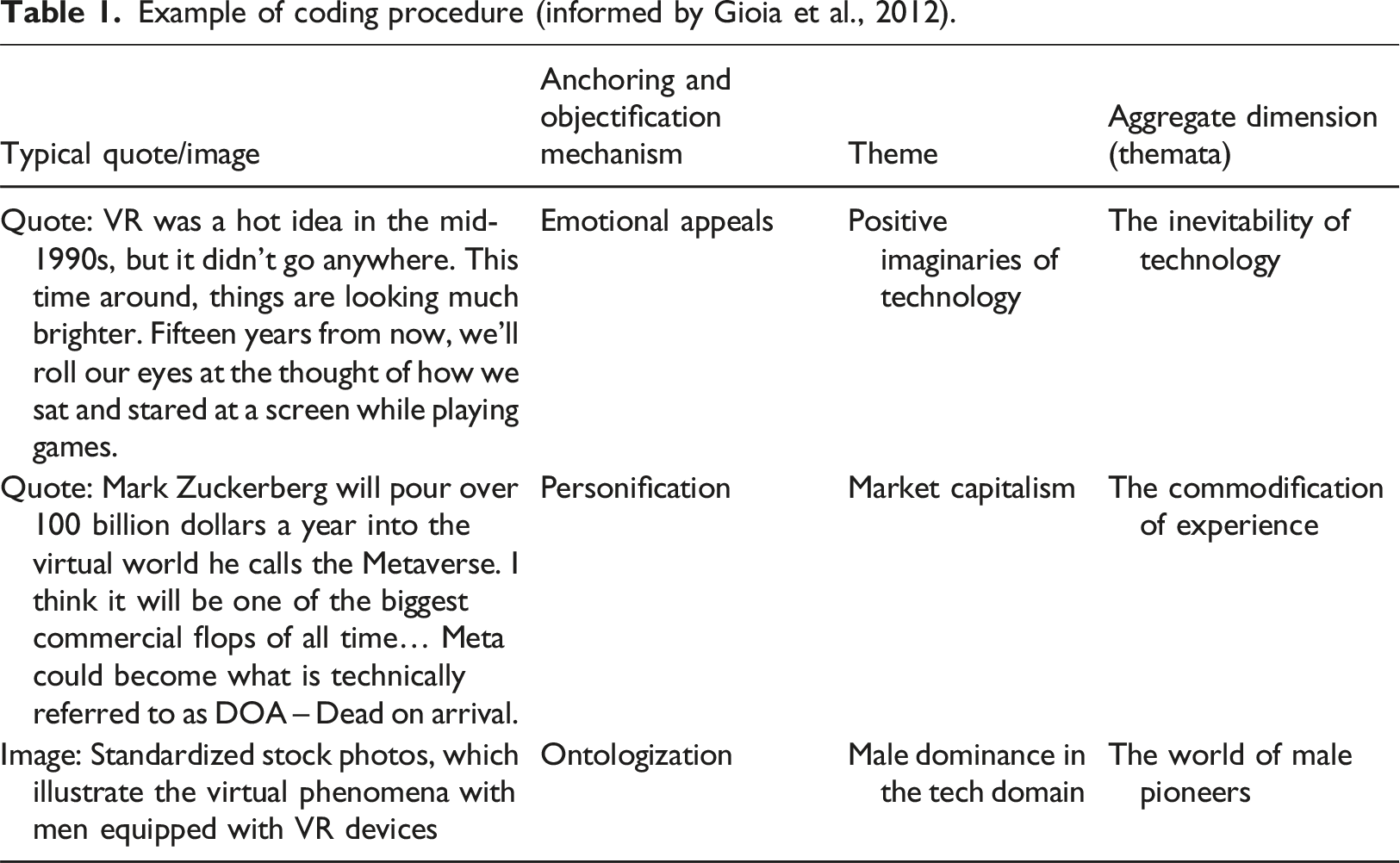
In order to ensure the transparency of the analytical procedure, in other words, to make visible the connection between analytical tools, empirical material, and interpretations, the operation of the analytical tools is made explicit throughout the analysis (Tracy, 2010). The selected quotations and images that illustrate the analysis are typical examples from the material as a whole.
Results
The results section is structured around three inductively identified themata: (a) The inevitability of technology, (b) The commodification of experience, and (c) The world of male pioneers.
The inevitability of technology
The first themata builds on the discursive struggle between dichotomous representations of VR as an imminent reality and representations of VR as little more than a drawn-out story. In the 2013-2014 material in particular, VR is represented as a great technological game-changer that is just around the corner. It is given concrete characteristics through affective imaginaries saturated with emotions of great hope and optimism. We’re not going to say that virtual reality is everything you’ve ever dreamed of. That would be an understatement. (AB, 13 June 2014)
The fortunate realization of VR is represented with hopeful emotional appeals and affective imaginaries of a less successful historical past that stands in contrast with a much brighter future. VR was a hot idea in the mid-1990s, but it didn’t go anywhere. This time around, things are looking much brighter. Fifteen years from now, we’ll roll our eyes at the thought of how we sat and stared at a screen while playing games. (DN, 15 December 2014)
The profound effect of the ‘VR boom’ (AB, 6 December 2013; AB, 30 May 2014) is anchored through analogies of dramatic upheaval – ‘suddenly the VR revolution is pounding so hard on the door that no one can turn a deaf ear to it’ (AB, 28 March 2014), and as an impending ‘Virtual reality soon for real’ (AB, 13 June 2014). Just around the corner, virtual reality gaming experiences await with a technological leap never before seen in the gaming world. (DI, 18 September 2014)
Furthermore, this unprecedented technological shift is anchored by religious analogies when represented as a ‘revival’ (SvD, 21 March 2014), and in similes such as the one below, where the virtual reality experience is compared to food with an indescribable taste. Writing about virtual reality is like writing about food; it doesn’t matter what words you use, what pictures you show. You’ll never be able to convey even one percent of the experience … (AB, 7 November 2014)
Extremely positive generic representations of the VR technology such as these appear mostly in the 2013-2014 material. However, representations of uncertainty about the ups and downs of VR are found in both time periods, and it is acknowledged that ‘the road to the metaverse is not a straight one’ (SvD, 9 March 2022). In the first quote below from the 2014 material, the uncertain future of a virtual reality is anchored through emotional appeals to disbelief as well as by naming it a ‘fad’. In the second quote, emotional appeals are made to fear of surveillance connected to Meta’s metaverse. Despite these uncertainties, the overall message in both cases is that VR technology and Meta’s metaverse are unstoppable forces that will eventually be realized. In the worst case, it will be like the 90s, a forgotten fad, and we may have to wait another twenty years for the next attempt at virtual reality. Hopefully, in 2015 we’ll find out. (SvD, 30 December 2014) There are many indications that the Metaverse will create an even tighter surveillance society ... But the resistance to the Metaverse is probably as futile as Proust’s skepticism about the telephone. The Metaverse is here to stay. So are AI, VR and AR. (AB, 1 January 2022)
Some representations are largely skeptical about a breakthrough of VR technology, naming it a potential ‘gimmick’ and anchoring it in affective imaginaries of an emotionally disappointing past. These representations thus challenge the hegemonic understanding of VR as ‘here to stay’, as suggested in the quote above: The potential of the technology was seen twenty years ago, and it became one of the biggest fads of the 90s. Virtual reality didn’t work then ... If you don’t use technology in a relevant way, it will die out. Gimmicks are short-term nuisances. (SvD, 7 August 2014)
In sum, the analysis reveals a dichotomous relationship between representations of an imminent breakthrough of VR technology and representations of VR as likely to fail, just as it has in the past. Despite this discursive struggle, the underlying themata that legitimizes VR as an inevitable technology and the metaverse as its natural extension remains largely unchallenged. For better or worse, VR as well as the metaverse in general and Meta’s metaverse in particular simply become unquestioned elements in the overall commercial logic. In this way, the news reporting lends them legitimacy and strengthens the promotional image of them as an inevitable outgrowth of the past (Chesher, 1994; Creech and Maddox, 2024), the natural next step in technological innovation, as Preece et al. (2022) also conclude in their CDA of the narratives and ideological values that pervade discourses on VR. Arguably, this diverts attention away from potential critical interrogation both of the technology per se, and Meta’s claimed ownership over the online universes, although signs of embryonic counter-hegemonic representations can be detected in the studied material, as also found in a media study by Lucia et al. (2025).
The commodification of experience
The second themata builds on the dichotomy between representations that predict a promising future for VR and the consumer metaverse (Kshetri and Dwivedi, 2023) and representations that do the opposite, highlighting its bleak prospects. However, the promising future for VR and the metaverse that is part of the current themata is different from the one identified above. In the 2013-2014 material, the analysis revealed generic representations of VR as the natural next step in technology, whereas in the 2022 material, VR and the metaverse are ontologized through familiar everyday phenomena and practices. As topical cases in point, the following quotations ascribe concrete characteristics to them through familiar aspects of modern life – exercising in the first quote and dating in the second. The reporting is imbued with emotions of hope through affective imaginaries of the great possibilities that VR and the metaverse will offer. Sprinting in the Tour de France or cycling in the British countryside. Virtual worlds can boost your motivation and keep you going. (SvD, 6 January 2022) You and your date first meet in a bar. You have a good time, and then you go to an enchanted forest, where you kiss each other for the first time with butterflies in your stomachs. And you don’t even have to nervously try on clothes in front of a mirror before the date, because it’s your avatar, not your physical body, that initiates the first contact. (DN, 3 April 2022)
VR and the metaverse are also ontologized in other modern phenomena, such as fashion. Through metaphorical language, as in the headline ‘The fashion houses are making a pilgrimage to the metaverse’ (DN, 19 April 2022, author’s italics), the fashion market is represented as if it is literally relocating to the virtual world. This suggestion of actual physical movement (‘are making a pilgrimage’) of the fashion market is further anchored in the body text of the same news item, suggesting that ‘the world of fashion is taking increasingly large steps into the digital world’ (author’s italics).
The health sector is yet another area of everyday life in which the studied news material ontologizes VR and the metaverse. Imaginaries of a promising future and positive emotional appeals saturate representations of a groundbreaking improvement for the health sector: ‘How the metaverse can be used to lead the health sector into the future’ (SvD, 8 March 2022). The imaginary of a promising future in this headline is further underscored by the image of a person – probably a healthcare worker, to judge by the face mask – wearing a VR headset.
Moreover, metaphors such as a ‘VR pharmacy’ (DI, 1 March 2022) firmly anchor the future possibility of treating both mental and physical problems through VR technology in a familiar context. The ontologization of VR as health care (the first quote below) and as a solution to several well-known pathologies (the second quote below) contributes to the affective imaginary of a promising future: A boom in VR health care is in sight. Digital therapies that can replace medication or other traditional treatments for both mental and physiological disorders are on the rise. (DI, 1 March 2022) Video games for autism and stress, or virtual reality, VR, for back pain and eating disorders? (DI, 1 March 2022)
VR technology is also represented as providing possibilities to enhance overall quality of life when it is ontologized in terms of tangible experiences for the benefit of various consumer segments. These are exemplified below by the elderly (first quote), the wine connoisseur (second quote), and the culturally interested (third quote). These objectification mechanisms highlight properties such as immersion, exploration and interaction, and describe VR technology as an ‘empathy machine’ that improves the world and addresses societal challenges at the individual level (Preece et al., 2022). This reflects the neoliberal ideology of not only techno-capitalism, but also individualism (Lucia et al., 2025). Virtual reality (VR) relieves the monotony of everyday life in Gävle’s nursing homes. 3D VR tours provide sensory experiences of worlds that the elderly can no longer visit. (Dagen, 5 January 2022) Go down into a southern European wine cellar and take part in a wine tasting – without leaving home. Or improve your reduced sense of smell after a case of Covid in a fun gaming environment. (DN, 3 November 2022) It will also be possible to use VR technology inside the (museum) building, which can heighten the feeling of being somewhere you otherwise would never have been able to visit. (DN, 22 February 2022)
In contrast to the 2013-2014 material, the 2022 material largely ontologizes VR visually. In particular, the images representing VR technology and the metaverse notably do not primarily focus on the content of the virtual experience (the metaverse itself), but on the material devices. As a relevant example, the third quotation above is accompanied by a large image of two men, one of whom is trying on the VR headset and the hand controls, while the other one – a scientist, to judge by the white coat – assists. Smaller embedded pictures show close-ups of the test person and the devices. Another typical example is the first quote above, which represents a positive immersive experience for the elderly. This message of a promising future is amplified by the visual ontologization of VR with an image of an elderly person wearing a VR headset while supported by a walker.
Alongside these kinds of visual ontologizations of the VR devices, there are also more literal ones in the studied material. In the following quotation from the 2014 material, the virtual reality headset Oculus Rift is presented as the next ‘hot gadget’ of the gaming world, thus supporting promotional narratives that suggest a promising consumer future for the new (Meta) technology: There, he has a chance to try out an Oculus Rift, a screen-based helmet for 3D experiences that is expected to become a hot gadget in the world of computer gaming, and walk around in a virtual version of Nottingham’s underground tunnel system. (DN, 25 February 2014).
Golding (2019) argues that the image of virtual reality has always emphasized its apparatus more than the hypothetical virtual spaces, and concludes that an important part of contemporary discourse on VR concerns the apparatus of virtual reality as an object in its own right. The present study confirms that the Oculus Rift has become an important visual symbol of this particular kind of mediated and promising future, and of a consumer object subject to technology fetishism (Golding, 2019).
The analysis also shows that the news reporting legitimizes and reproduces the hegemonic understandings conveyed in other discursive materials, such as advertisements and magazines, which, as Chesher already noted in 1994, represent VR as associated with freedom, opportunity, progress, exploration, interaction, and immersion. Thus, there is nothing new about the anchoring and objectification strategies identified here; they constitute yet another example of the naturalization of the ways in which Western market economies commodify human experience (Harley, 2024), not least through the material (Meta) devices associated with VR and the metaverse.
Despite these representations of a promising future for the consumer metaverse, the other discursive extreme is also present in the studied news material. In the wake of the Brexit vote and the first election of Donald Trump as the US president, the so-called ‘Techlash’ of 2016 caused a shift in public discourse, as Creech and Maddox (2024) note. The rapidly spreading idea of fake news transformed previously laudatory narratives of the tech companies as a force for good into accusations against their founders and CEOs. This is also reflected in Swedish news reporting.
In late 2022, a rather gloomy picture of VR and Meta’s metaverse is anchored by the personification of Mark Zuckerberg, CEO of Meta platforms: ‘Not even Meta believes in Zuckerberg’s metaverse’ (SvD, 13 October 2022). Similarly, in their study of US news coverage of Facebook in general and Mark Zuckerberg in particular, Creech and Maddox (2024) conclude that ‘a consensus emerged among reporters that… leadership – mainly Zuckerberg… was uninterested in or unfit for dealing with the problems’. Mark Zuckerberg will pour over 100 billion dollars a year into the virtual world he calls the Metaverse. I think it will be one of the biggest commercial flops of all time... Since the name change, Meta’s market capitalization has plummeted by 7,000 billion Swedish kronor... but the reason why Meta has lost far more than Nasdaq may be that many suspect Meta could become what is technically referred to as DOA – Dead on arrival. (DI, 27 October 2022).
This personification strategy operates within the logic of market economy and means that the economic risk scenario that Meta would turn up ‘dead on arrival’, as stated in the quotation above, takes discursive precedence over other potential and more generic drawbacks of VR and Meta’s metaverse such as surveillance and data integrity (Lucia et al., 2025).
In summary, the analysis identifies a dichotomous relationship between representations of a promising future for VR and the consumer metaverse on the one hand, and gloomy prospects for it on the other. This confirms the results of Deng and Matthes (2023), who conclude from a study of news on social media that the overall tone of the coverage was positive regarding the potential of the metaverse, but that it also contained a hint of dystopia. However, the findings of the present qualitative analysis suggest that these extremes only emerge and generate conflict at the surface layer of discourse. The anchoring and objectification mechanisms that constitute the dichotomy ultimately supersede it when VR technology and the metaverse are situated in the familiar setting of market capitalism. In this way, they actually work to maintain the status quo, legitimizing the commodification of human experience and the logic of the market as the guiding principles and concerns of development.
The world of male pioneers
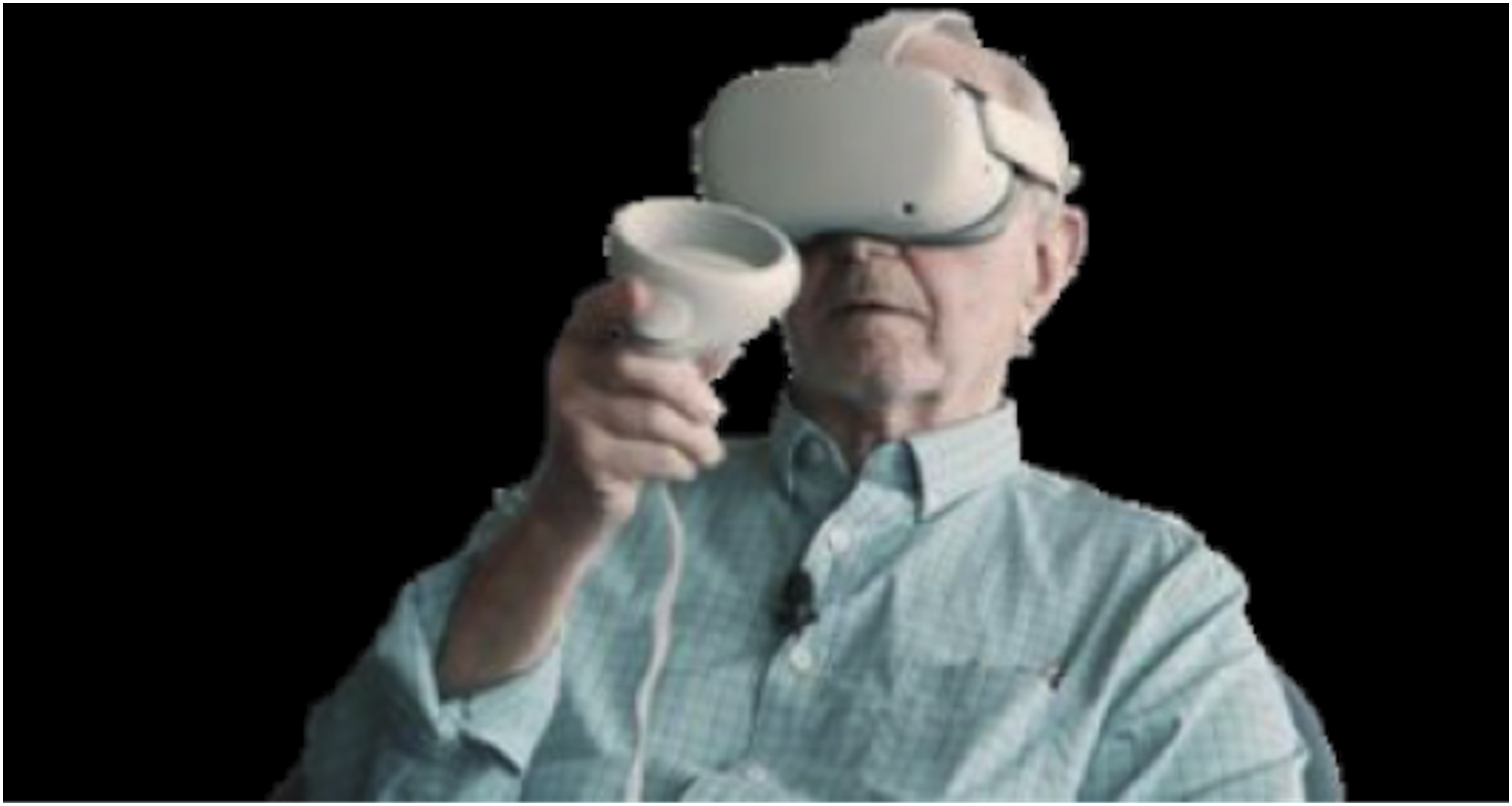
The third themata builds on representations where VR and the metaverse, as unfamiliar phenomena, are ontologized through images of (white) men and analogies of colonization – the mapping of new frontiers. The rather uniform representation of the metaverse as a man’s world occurs primarily visually with a focus on men in various capacities, as in the close-up photos of a serious medical expert wearing a white coat with a pen in the chest pocket and the VR headset, and the then head of Meta Sweden with the VR headset pushed up on his forehead (DI, 1 March 2022; DI, 11 July 2022). The male dominated visual representation is also reproduced through standardized stock photos, which illustrates the virtual phenomena with men equipped with VR devices as in the examples below (Figures 1 and 2). Young man with a VR headset (Photo: Robyn Beck/AFP, DN, 25 February 2014). Illustration to the headline ‘Look at that VR grandpa’ (Photo: Jam Press, AB, 29 April 2022).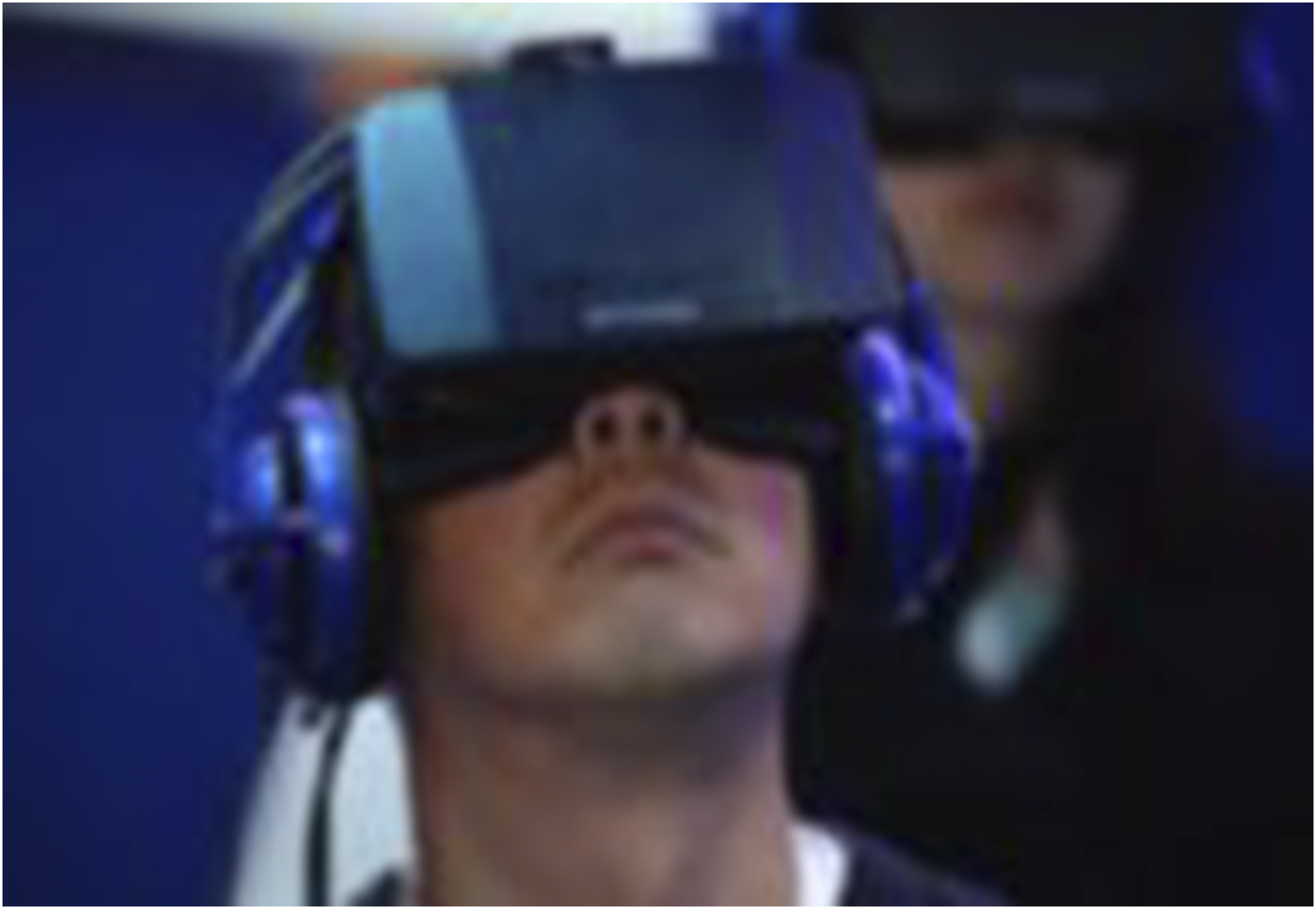
Images of women appear in the material on a few occasions, for instance, when VR is ontologized as a medium for dating. Like the men above, the woman in the example below is wearing the headset, but in contrast to the men’s serious demeanor, she is smiling and seemingly reaching for a hug (Figure 3). Illustration to the headline ‘Is there a love life beyond Tinder?’ (Photo: Ari Luostarinen, Alamy, DN, 3 April 2022).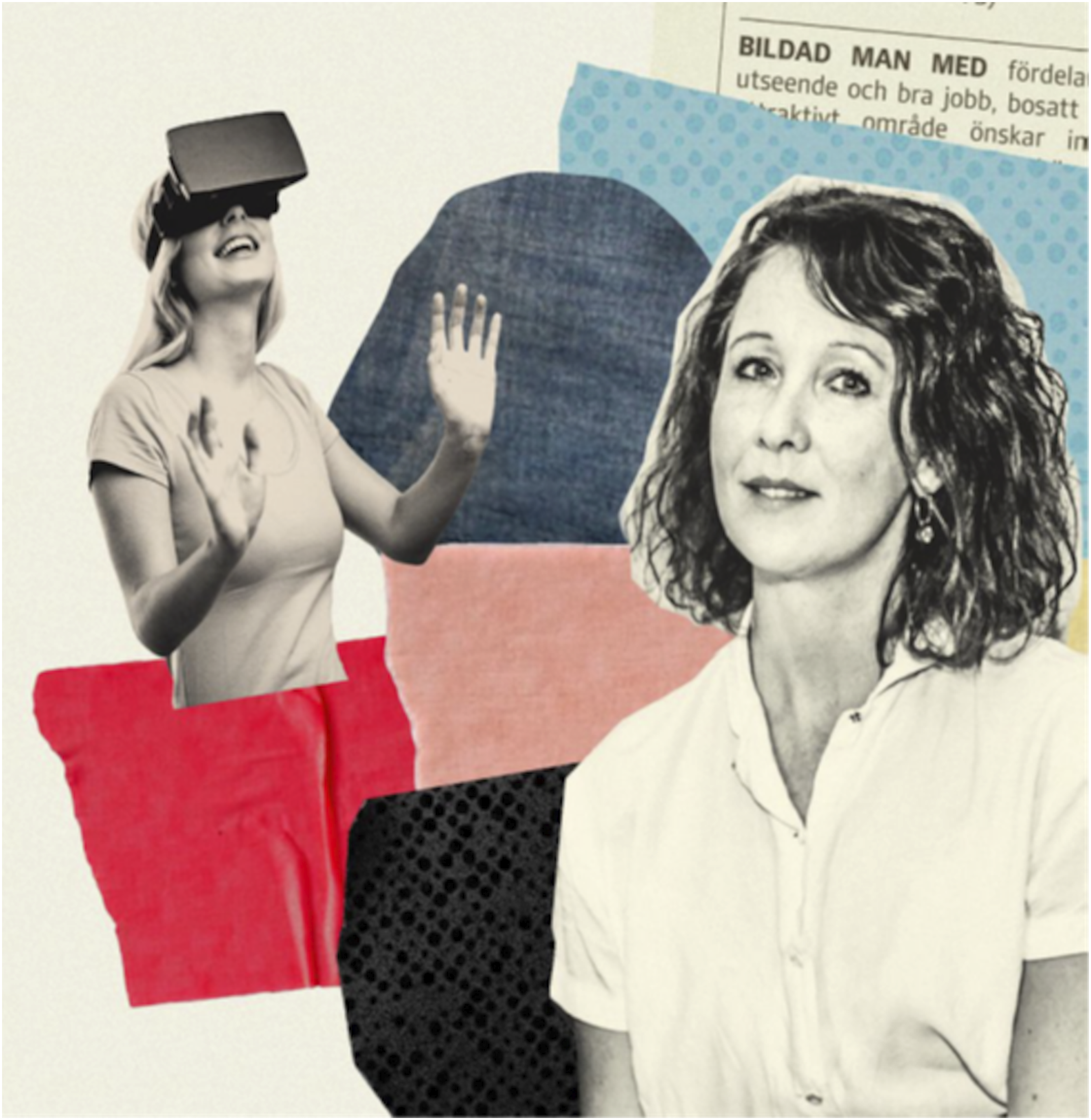
Preece et al. (2022) suggest that gender is key to understanding contemporary VR discourse and the relationship between the apparatus (the VR headset and hand controls) and the (male) body. According to them, many contemporary VR devices are designed with a larger, male body in mind. For instance, headsets may have lenses that are too far apart for women. And, as demonstrated here, this is also the discursive setting in which the VR technology is represented.
In addition, Harley (2024) identifies an evangelistic discourse based on the colonial and exclusionary language of ‘pioneering’ expansion, which is strongly linked to the gendered discourse. This is also present in the studied material. In both quotations below, the metaverse is anchored by metaphorical language as new territory to be conquered and claimed. The tech giants are mobilizing to be the first to colonize the metaverse. (SvD, 9 March 2022, author’s italics) Is Lego ready to take over the metaverse? (SvD, 13 April 2022, author’s italics)
This ‘new frontier’ analogy was already identified in Chesher’s (1994) study, which found that VR researchers were constructed as ‘pioneers’ involved in colonization. The same anchoring mechanisms are present in the studied material, where the struggle between competing colonizers is emphasized through metaphorical language such as the ‘VR war’ (AB, 30 May 2014), and ‘VR as a weapon’ (DI, 21 January 2022).
VR and the metaverse may therefore appear to be all about novelty on the surface level of discourse, but there are plenty of old structures lurking below (Harley, 2024). Stereotypical images of (white) men using VR devices and metaphorical language filled with analogies to war, colonization and conquest are used to give the virtual reality concrete features. This reinforces long-standing structures of male superiority and settler colonialism. Thus, news media’s representations of the VR technology and the metaverse largely align with and legitimize industry-led claims of promoting ‘change’, while discursively reproducing long-standing power structures (Harley, 2024; Nakamura, 2020).
Concluding discussion
In line with the findings of Lucia et al. (2025), the present analysis of how Swedish news media anchors and objectifies VR and the metaverse suggests that despite the media’s self-appointed watchdog role, its representations largely reflect the promotional discourses of the tech industry. It also shows that the critical scrutiny that does exist only scratches the surface of discourse. In other words, promotional discourses recontextualize in the journalistic field and, in a manner of speaking, colonize news discourse (Fairclough, 2009).
It is true that over a 10-year period the representations develop from expressing general approval of VR technology and the metaverse to becoming more specific, pointing to concrete social practices. Nonetheless, the legitimation of the latent market logic and power structures of the tech industry remains unchanged. As Creech and Maddox (2024) suggest, ‘as tech power becomes ubiquitous as common sense, the press as an institution inevitably contributes to such ideological expansion’. This naturalization of technology takes shape through representations of VR and the metaverse as inevitable – the question is not if the breakthrough will occur, but when. The criticism of Mark Zuckerberg’s alleged shortcomings also obscures the very structures – such as market logic, (lack of) regulation, etc. – that sustain his prominent position, thereby naturalizing them as common sense (Creech and Maddox, 2024).
Moreover, the analysis shows how VR and the metaverse are represented as a man’s world flavored with a touch of settler colonialism, naturalizing ‘a totalizing Western gaze, centering the perspectives and experiences of those in power’, in the words of Harley (2024). Overall, the fields of ICT (information and communication technology) and engineering tend to be perceived and constructed as male domains (Michie and Nelson, 2006), and VR technology is no exception. The male dominated discourse on VR has influenced the development and use of VR technologies, which means that the experiences and needs of marginalized communities, including women and non-binary individuals, have been excluded (Zhang, 2023). Despite the potential for the metaverse to be an inclusive space, issues such as gender bias and harassment persist, highlighting the need for conscious and inclusive design as well as representation – not least in the news media – to ensure equitable digital environments (MacArthur et al., 2024). More precisely, to challenge the male pioneer discourse, increased presence of women innovators in the historical context of VR, such as Nonny De La Pena, is necessary both in emergent and legacy media (Atkinson and Callahan, 2025). As it stands now, VR technology will develop within, and therefore strengthen, existing power structures, and the metaverse (or its virtual equivalent) will become yet another arena plagued by inequalities and controlled by those who profit from it. In short, the discursive context of technological innovation, of which the news media are a crucial part, helps to constitute the ways in which technology will progress and be understood.
The obvious question to ask is why the news media are failing so badly to address the deeper structures underpinning new media technologies. Creech (2020) suggests that there is a tacit understanding in news organizations that the tech industry and market logic are impossible to comprehend journalistically; they are too big and complex. This may be true, but many organizational structures unique to legacy media (Tuchman, 1980) also act as barriers to their independent watchdog role.
Most news media organizations are commercial enterprises, which means that news selection is not only, or even primarily, based on what might be considered societally important, but rather on what is expected to generate audience response, clicks and shares (Deephouse and Heugens, 2009). The concept of media logic (Altheide and Snow, 1979) captures the different ways in which social reality is transformed to fit the prevailing (commercial) factors that inform the process of news evaluation (Harcup and O’Neill, 2017). An important criterion of news is the ability to visualize the issue, and this is particularly important for abstract topics such as science and technology. As a similar case in point, previous research has shown that climate change was long considered difficult to cover, since it did not come with concrete visual elements. Instead, stock photos of its presumed causes, such as industrial smokestacks, and its consequences, such as melting glaciers, were used to anchor climate change in familiar contexts (Olausson, 2010). The results of the present study indicate a similar pattern. The abstract phenomena of VR and the metaverse are routinely visualized through photos of mostly (white) men wearing VR devices, with ideological implications as a result.
Another important aspect of media logic is that journalism is event-dependent; in other words, news is defined in terms of novelty. In order to make current events newsworthy, different journalistic strategies are used, one of which is personification. An excellent example of this in the present study is the focus on Mark Zuckerberg, when reporting on Meta’s economic crisis. Over the years media scholars have pointed out that focusing only on current events and well-known people leaves journalism ill-equipped to capture slow-moving processes (Shaw, 1996). Arguably, neoliberal capitalism, as well as other inert hegemonic structures, operate over the long term and rarely with identifiable events and people associated with them.
Furthermore, the professional identity of journalists is tied to a shared understanding and sense of identification with deeply ingrained ideals, values, and norms, including objectivity (Deuze, 2005; Olausson, 2017). According to Creech and Maddox (2024), the ideal of objectivity is problematic in the discursive construction of technology because when journalists use the ‘mirror metaphor’, that is, when they aspire to present the world of technology simply as it is, they actually represent it as something inevitable.
In conclusion, the news media, when anchoring and objectifying VR and the metaverse, contribute greatly to the reproduction of the structural status quo, and their commitment to the watchdog role, so central to their own legitimacy, does not run deep. Of course, the global economic crisis among news organizations does not make outlooks any brighter. The question is whether it is realistic to expect things to be any different, given the commercial incentives of both the tech industry and legacy media. The analysis does identify embryonic examples of ‘best practice’, journalistic work that in a counter-hegemonic way challenges, if not the status quo, then at least the promotional hype of VR and any kind of metaverse. But most of all, traditional journalism needs to reinvent itself to fulfill its democratic mission. The outdated media logic with its highly limiting view of newsworthiness needs a pervasive update to create openings for social representations of a radically different socio-technological future.
Footnotes
Declaration of conflicting interests
The author(s) declared no potential conflicts of interest with respect to the research, authorship, and/or publication of this article.
Funding
The author(s) disclosed receipt of the following financial support for the research, authorship, and/or publication of this article: This study was funded by the Swedish Research Council for Health, Working Life, and Welfare (Forte) (#2021-00660).
