




Abstract
The rapidly evolving nature of emerging technologies renders artworks made using such technologies a challenging category of objects to be handled by institutions. This paper presents real scenarios of how art made with Virtual Reality (VR) and Augmented Reality (AR) is acquired, exhibited and finally preserved by museums and art institutions, presenting a clear picture of a particular period. Though an extensive body of literature and studies deal with the preservation of ‘New Media’, very few focus on the challenges faced by museums and private institutions when it comes to artworks that use VR/AR. We used in-depth interviews with eight museum professionals working in six key institutions that engage with VR/AR artworks, and four artists, who create such works, in order to define current institutional practices, understand the challenges museum professionals face when dealing with VR/AR artworks, and identify the preservation-related concerns of artists working with these technologies.
Keywords
Introduction
With technology becoming an extension of our existence, various apparatuses are attempting to maximise the interconnections between the real world and the digital; virtual, augmented and mixed reality software and hardware are developing as portals to this new digitality. Following these developments, more and more artists experiment and produce artworks with virtual reality (VR) and augmented reality (AR) technologies. However, the rapidly evolving nature of these technologies renders such artworks a challenging category of objects for collecting institutions to handle. While an extensive body of literature can be found addressing the preservation of ‘new media art’, within it, only a handful of publications focus on the challenges faced by museums and other collecting institutions when it comes to acquiring and preserving artworks that use VR/AR. Because of these challenges, an important portion of contemporary art risks being excluded from museum collections and thus not being preserved for future generations. In an effort to understand how museums tackle the challenges – if at all – specifically around VR/AR artworks, we embarked on the ‘Museum ArtTech project, which examines current practices of acquiring, exhibiting and preserving VR/AR artworks. To explore the perceptions of museum professionals, as well as artists’ standpoints on the institutional handling of artworks, we interviewed eight museum professionals and four artists.
Three main goals were set at the start of the project. First, we aimed to examine whether museums were collecting VR/AR artworks and the potential barriers they faced in that effort. Second, we investigated how museums were handling VR/AR artworks and the challenges they faced in exhibiting and preserving them. Finally, we focused on how artists expect their work to be treated by museums and other institutions in terms of exhibition and preservation. An array of considerations spanning from methodology standardisation issues to the complexity of identifying collection-worthy artworks set the scene, driving the creation of ad-hoc synergies between museums, artists and industry.
New media: art, experiences and digital immersive realities
At the dawn of modernity, any art made with non-traditional visual mediums were defined as ‘new media art’ (Grau, 2016). In 1839, it was photography; about a century later, it was video, and in 1970s it was computer graphics (Dietz, 2005, n.d.). In the second half of the 20th century, the term became a comprehensive description of art that is produced, modified and transmitted by means of new media/digital technologies, utilising ‘new’ and emerging technologies originating from a scientific, military or industrial context (Grau, 2016). Clearly, defining new media art is ‘an elusive goal, since the technological and conceptual territory occupied by this art form is constantly being reconfigured’ (Paul, 2008b: 3). Throughout the relevant literature, the definitions and terms vary: new media, media-based, software-based, born-digital, technology-based, interactive, multimedia and web art, are the most frequently used (Media Art Resource, 2013). Paul (2008a: 8) explains that their ‘lowest common denominator […] is computational and based on algorithms. New Media Art is often characterised as process-oriented, time-based, dynamic, and real time; participatory, collaborative, and performative; modular, variable, generative, and customisable’. A detailed art history referring to the development of media art and its recent utilisation of immersive technologies can be traced in a number of sources (Gere, 2008; Geroimenko, 2014; Paul, 2008a; Rinehart and Ilppolito, 2014). From Nam Jun Paik’s video sculptures, John Cage’s electronic silence paradoxes and Mark Napier’s ‘Net Art’, to Char Davies’ immersive VR and KAWS’ augmented floating ‘Companions’, digital technologies have entered the practices of many artists creating new paradigms of art.
Immersive art experiences were employed by artists long before their digital expressions. Experimentations with stereoscopy, the moving image and sound of the cinematic experience go as far back as the 1780s with Robert Barker’s first patent of a panorama. These experiences evolved through the 19th and 20th centuries, introducing audiences to exotic places, planetariums, cinemas and digital immersive experiences (Uricchio, 2019). Indeed, digital virtuality enabled by computation and conveyed through VR/AR technologies is the evolution of immersion. The technical parameters, capabilities and complexities of these technologies (Milgram et al., 1995; Robertson, 2020) are employed by artists to create the feeling of a ‘living environment’ (Grau, 2016: 7).
While Char Davies’ 1995 ‘Osmose’, one of the most emblematic VR artworks, turns 29 this year, for more information about the work see McRobert, 2007), it is not yet in the collection of any museum. On the other hand, the first ever AR artwork to be auctioned premiered at Christie’s in October 2020: Marina Abramovich’s ‘The Life’, was set to open bidding at $600,000 (Shaw, 2019). However, it finally sold 53% below the mid-estimated price (Mutual Art, 2020). In between Davies and Abramovic, a number of VR/AR artists have created works that have stretched the boundaries of their medium, whether they have been noticed by the traditional art world or not.
VR/AR art inside and outside the museum
VR/AR art seems to flourish primarily outside the museum. VR/AR’s innate characteristics are anyhow bound to the digital, intangible space, thus fundamentally crafted to be experienced outside institutional walls (Dietz, 2005). This is also evident by the growing number of festivals and independent gatherings taking place each year. 2 At the same time, companies specialising in VR/AR artworks 3 cater to an evolving art landscape contributing to shifts in experiencing and sustaining such artworks in deep time. Museums, on the other hand, are hesitant when acquiring VR/AR artworks that may not function correctly in just a few years. This reluctance may be due to an incomplete understanding of the technology, or being aware of the challenges of preserving it (Besser et al., 2018). Consequently, as Post (2017: 717) explains, new media artworks (including VR/AR) do not benefit from existing institutional processes that are required to ensure their longevity and visibility.
However, as Gere (2008: 24) argues, ‘the museum cannot stand outside of, separate and resistant to the contemporary technical means that structure our memories’, as its role is to safeguard and make available cultural assets for future generations. To this end, different research projects, platforms and initiatives, both private and state-funded, are dedicated to the collection and preservation management of new media art. 4 Museum organisations and networks from around the world have also become involved with initiatives dealing with the archiving of interactive media and digital cultural heritage. 5 Nevertheless, while the number of initiatives and art institutions embracing new media art are increasing, very few acquire artworks specifically using VR/AR technologies.
Digital technologies and VR/AR in the art world and beyond
VR/AR technologies have been utilised to create an array of artistic experiences, spanning from headset-bound interactive environments, augmented installation formats and even video games. Their rapidly changing technologies, however, challenge the linear process of recording, storing, preserving and exhibiting that has been applied to traditional media artworks (such as painting, photography, and sculpture.) and even time-based media. Conserving and reinstalling VR/AR artworks in a museum collection requires a very particular skillset; it has been suggested that it involves a merger of artistic, conservation and curatorial expertise (Rinehart and Ilppolito, 2014: 10). Furthermore, the creation and institutional life of such art may benefit from interdisciplinarity, as a combination of ideas from disciplines such as art history, museum studies, conservation theory, and media and cultural studies seems essential to further expand new media methodologies and approaches (Grau et al., 2019: 21).
Digital instability, hardware and software obsolescence, and other technical or procedural preservation challenges affect not only VR/AR artworks, but also various other disciplines, practices, and digitally bound processes relevant to the museum ecosystem. For example, VR/AR technologies used as exhibition tools show great potential in storytelling, pedagogy, embodiment and presence, as well as spatial and social interaction. However, their high cost and technological immaturity, may cause operational and technical challenges, preventing them from being widely adopted (Muñoz and Martí, 2020; Parker and Saker, 2020; Shehade and Stylianou-Lambert, 2024). Kraemer (2018), referring to interactive museum education, digital heritage and conservation, identifies ‘the progressive obsolescence’ of such digital heritage assets and calls on both museums and tech companies to acknowledge the importance of achieving archiving sustainability.
Another industry that faces similar challenges – and one we can perhaps learn from – is that of digital games. Digital game preservation entails challenges like obsolescence and media decay; Lowood et al. (2009) also stress the crucial role of the digital game industry in issues like promoting sustainable distribution formats, archival and IP flexibility, and industry-academia synergies. Regarding the game-related preservation of virtual worlds, McDonough et al. (2010) focus on technological obsolescence, physical objects/experience boundaries, as well as collection and preservation strategies; this research also brings into the conversation the role of the gaming community as contributors to virtual world preservation. Acknowledging the multiple aspects of digitally bound cultural products and experiences offers a broadened perspective on new stakeholders and their role in preservation efforts. More recent projects on the institutional representation of digital games suggest community-driven, participatory, archival or preservation practices, identifying both advantages and limitations, as well as critical perspectives on matters of diversity and reflexivity (Nylund et al., 2020; Suominen et al., 2020). Also, emulation is discussed as an optimal tool for preservation, along with the complexities regarding ownership and authorship that arise regarding digital games (Prax et al., 2020).
VR/AR art literature and our discussions with museum professionals revealed that a conscious effort to create protocols for acquiring, exhibiting and preserving VR/AR art specifically is being undertaken by a few museums and private collections. 6 Recent VR/AR artwork studies (Campbell, 2017; Cranmer, 2017; Ensom, 2019; McConchie and Ensom, 2019) have focused on new media art methodologies and lessons learnt, adding layers of expert knowledge from information technologies, digital and software preservation, applied computing and software engineering. In their latest research which is based on case studies, Ensom and McConchie (2021a) discuss the technological aspects and additional complexities VR/AR artworks present compared to other time-based media, along with relevant acquisition and preservation challenges; the research concludes with valuable recommendations to time-based conservators, collecting institutions and artists (Ensom and McConchie, 2021a). The authors also develop workflows, mentioning that their contributions and suggestions ‘represent a snapshot of our understanding of this topic at this time’ and hope others contribute and build upon it (2021: 53). Another notable action that emerged from Ensom and McConchie’s work is the Preserving Immersive Media Knowledge Base (PIMKB) web resource, a community-based, information sharing platform in GitBook, which invites sharing and co-developing expertise between preservation experts and other related disciplines (PIMKB, 2024). Clearly, VR/AR artworks are affected by hardware and software discrepancies and obsolescence, while rapid changes in technology create new technical and theoretical challenges when it comes to documentation and exhibiting these artworks. This paper focuses on real case studies of leading collecting institutions to examine the current practices and barriers in acquiring VR/AR artworks. It also examines how these institutions are handling VR/AR artworks, preservation challenges and how artists themselves expect their VR/AR artworks to be treated in terms of exhibition and preservation.
Methodology
We employed qualitative research methodology in the form of in-depth interviews to map and understand the institutional practices and challenges museum professionals face regarding VR/AR artworks, as well as to identify other initiatives and formats of exhibiting, acquiring and preserving such artworks. The main research questions were: RQ1. Are museums actively collecting VR/AR artworks? What are the relevant practices and barriers? RQ2. How are museums handling VR/AR artworks? What are the challenges they face when it comes to exhibiting and preserving them? RQ3. How do artists expect their VR/AR artworks to be treated by museums and other institutions in terms of exhibition and preservation?
The body of literature on the subject clarified the broader context of these mediums and their relation with the museum over time, and revealed which art institutions are actively engaging with VR/AR artworks. Since the collection and preservation of this specific type of new media art has not yet been thoroughly researched, we decided to conduct 11 in-depth, semi-structured interviews 7 to understand the state-of-the-art. We used a strategic sampling approach, as described by Mason (2002: 124) to assemble a range of individuals, artists, and museum professionals to be interviewed. The interviews sought to capture on-the-field practices from both the institutions and the creator’s perspective. We used an interview protocol with 10 semi-structured questions for the interviews; however, in each interview we adjusted the questions to fit the individual’s position, background and practice. Each interview lasted between 25 and 60 min, and they were all conducted in during 2020.
The interviewees included professionals and artists from diverse contexts who helped shed light on current practices and attitudes. We put together a contacts list of museums/institution professionals and one of artists and sent them interview invitations. The artists were chosen based on their involvement with VR/AR technologies, their activity in the art scene and their artistic merit, details that were explored through extensive online research and relevant literature. The snowballing technique (Wildemuth, 2009: 121) was used to recruit additional participants, as contact referrals and recommendations were sourced from the original responders to these invitations or by academic and professional acquaintances working in relevant subject areas. Regarding museums and other institutions, we again conducted an extensive online search and relied on academic and professional acquaintances to identify and email those that collected VR/AR artworks. This venture proved to be a challenge as there was a paucity in museums directly dealing with VR/AR artworks.
The research participants were: Agathe Jarczyk, Media Conservator at the Solomon Guggenheim Museum, David Neary, Project Manager and Savannah Campbell, Media Preservation Specialist for Video and Digital Media, at the Whitney Museum of American Art’s ‘Media Preservation Initiative’; Seema Rao, Deputy Director & Chief Experience Officer and Regina Lynch, Curator of Community Engagement at the Akron Museum; Elizabeth Neilson, Director at the Zabludowicz Collection; Anaïs Castro, Managing Director & Special Projects Curator at Arsenal Contemporary; and Manuela Naveau, Curator and Producer at Ars Electronica. The artists interviewed were Racheal Maclean, Rachel Rossin, Rindon Johnson and Daniel Chudak, Project Manager for Char Davies’s studio ‘Immersence Inc.’, who represented Char Davies. A consent form was signed by the participants with no condition of anonymity; they all agreed that the explicit naming of their positions at their respective organisations was significant to this research.
All interviews were conducted via Skype, with the exception of Rachel Maclean, who was interviewed via email; specifically, the artist was sent the questions, to which she replied in writing. All interviews were transcribed and analysed using qualitative data methodologies based on grounded theory (Flick, 2009) and utilising CAQDAS software (NVivo 1.3). The strategic sampling technique was applied and expanded to an analysis of thematic cross-referencing (Mason, 2002: 141). This allowed us to identify a wider information set deriving from the interviews to be correlated to the existing literature and theories. The interview transcripts were analysed through an inductive approach of data analysis that produced a number of topics. The goal was to code the data based on the research questions.
The following sections present the views and practices of the interviewed artists and museum professionals on creating and exhibiting VR/AR art; and on collecting and preserving VR/AR art.
On creating and exhibiting VR/AR art
Being digital pioneers or digital natives, the reasons why artists are attracted to new media technologies, and VR/AR specifically, revolve around the intangible yet radical changes that emerged with the digital revolution (Lippard, 1973; Rush, 2005), like the democratisation of access to information, the expansion of creative expressions and relevant cultural shifts. Equally, museums and other institutions tasked with collecting and exhibiting artistic expressions face the challenge of deciphering a fresh aesthetic vocabulary and its changing material and immaterial aspects.
Artists’ vision and technical expertise
The transaction or ‘discussion’ between technology, materiality and concept is critical to create significant and exciting artworks. Notably, all the artists stated that their own artistic process led them to experiment with digital immersion, as opposed to the technology itself being the driving force.
The artists we interviewed had different levels of expertise concerning the technical aspects of creating VR/AR artworks and have devised different ways of working with collaborators. For example, Char Davies considers the technological development of a work an integral part of the artwork. Having produced artworks at the very early stages of VR technology, she has collaborated throughout her career with experts. She maintains a team of close collaborators, some of whom have worked on the original versions of ‘Osmose’ and ‘Ephemeré’. David Chudak, referencing his role as the mediator between Davies’ artistic vision and the programmer’s technical responses, mentioned that the communication between artists and technicians can be challenging. On the other hand, Rachel Rossin is the only artist amongst the interviewees with an advanced technical background on VR, which allows her to create VR projects on her own (see Figure 1). Johnson, despite his technological capabilities, prefers to work with a collaborator to speed up the production time and cover the more advanced technical requirements of his artworks. Maclean also uses close collaborators to realise her projects, stressing that her artistic vision is not affected. Rachel Rossin, ‘stalking the trace’, 2019, installation view at the Zabludowicz collection, London. Photo: Tim Bowditch. Courtesy of the artist and the Zabludowicz collection.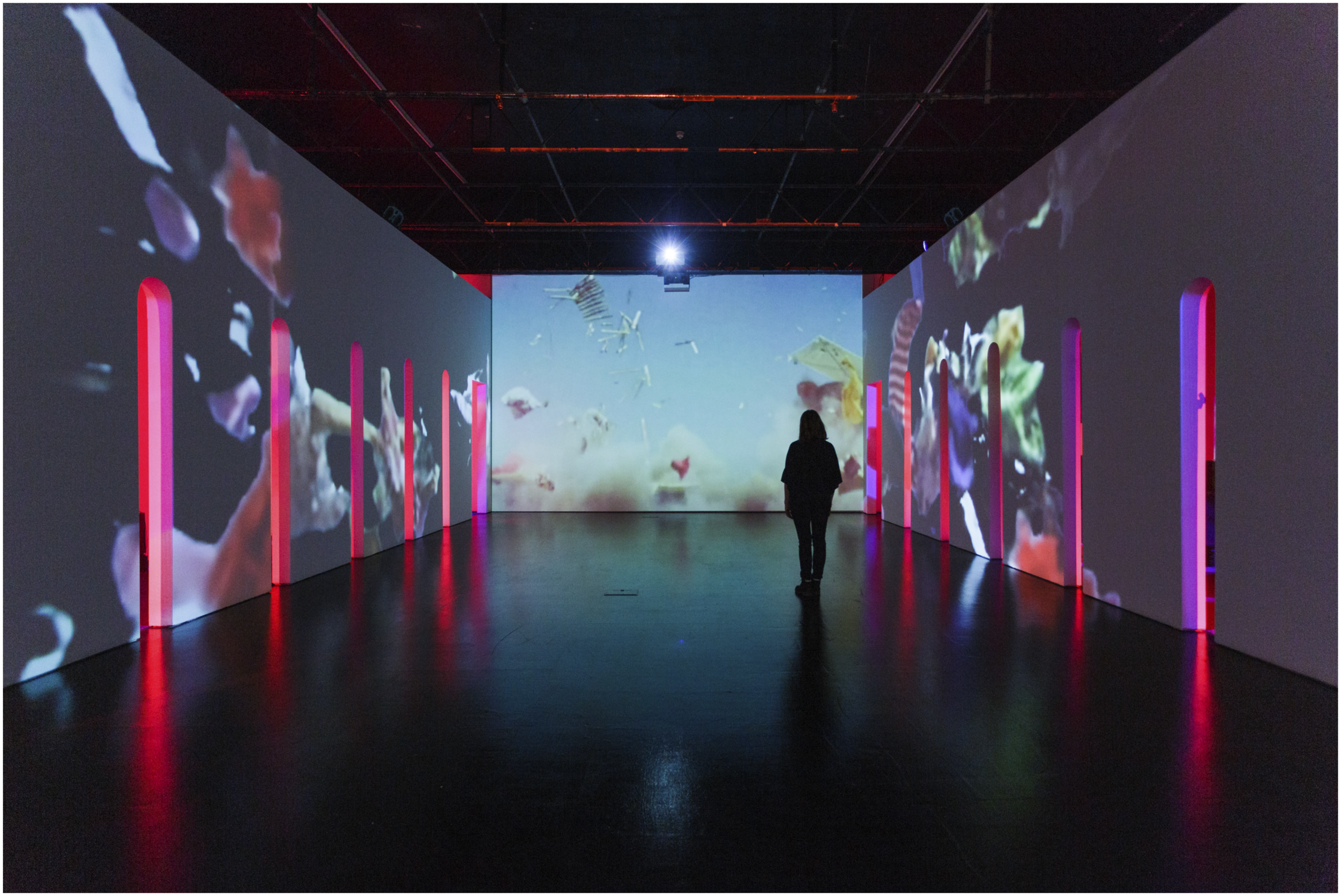
Museum professionals outlined their preference for VR/AR artworks that have a balance between their concept and medium; they considered these the artworks that should be made visible and safeguarded for posterity. Responding on whether artists’ technical capacities in VR/AR are significant for the collectability of such artworks, museum professionals raised two main points. First, if artists have the technical capacity to work on their project, this becomes an important advantage for all aspects of institutional handling – from the display and exhibition of the piece to the acquisition agreements and descriptions, to the future prospects of the artwork in terms of collection and preservation. Second, the quality of an artwork is greatly dependent on the artist’s own or their expert network’s technical capacities, as Neilson (Zabludowicz Collection) argued. She explained that artists with the ability to create VR artworks themselves or have a network that can support them in realising it cheaply, allows them to push the technology and create interesting VR works. Neilson raised another point, that of the difficulty in creating high-quality images given artists’ often limited resources. She explained that, as a result, viewers often ‘cannot fully recognise the labour put in the work’ as they compare the images with higher-quality commercial products; this comparison can result in a failure to fully grasp the artistic merits of the artwork.
Funding for VR/AR artworks
The hardware and software components of VR/AR are far more varied and inexpensive today than the technologies with which artists experimented in the late 90s. The third wave of the VR hype made the technology more widespread, while AR ‘graduated’ from the Gartner hype cycle (Panetta, 2021), becoming a technology mature enough to enter the standard industry workings from 2020 onwards. While the exhibition and collection of VR/AR artworks is becoming more affordable for institutions due to the growing VR/AR commercial market, the practical costs for creating any immersive experience remain significantly high; the constantly evolving technical expertise necessary and the respective manhours that go in morphing a 3D world (immersive of semi-immersive) are often unaccounted for. Relevantly, Neilson (Zabludowicz Collection) stressed that such rising production costs remain a challenge for many artists. Indeed, the participating artists stated that most of their VR/AR artworks were commissioned by museums, institutions or sponsored by tech companies, while only a few are self-funded. For example, Davies’ pieces, according to Chudak, are set up and presented with the support and funding of the exhibiting institutions.
Museums proceed both with exhibition and acquisition commissions, as the institutional professionals from the Whitney, Guggenheim and Akron museums explained. Museum professionals also discussed that most of their work entails the commissioning or purchasing of VR/AR artworks for their collection. Currently, the Whitney is acquiring an AR artwork which was initially exhibited at the museum in 2019, Tamiko Thiel’s ‘Unexpected Growth’ (see Figure 2). Neilson (Zabludowicz Collection) mentioned how they commissioned Jon Rafman’s and Rachel Maclean’s early VR works with Arsenal Contemporary, whilst the Zabludowicz Collection produced and oversaw the process. Similarly, Castro (Arsenal Contemporary) explained that the Majudia Collection
8
supports the production of a new body of work from an artist, funds its exhibition and finally acquires the piece; this was the case with Rafman’s artworks and Maclean’s VR piece. ‘Unexpected Growth’, Tamiko Thiel and/p, 2018. Three phases of bleaching on the Whitney Museum terrace. Courtesy of the artist.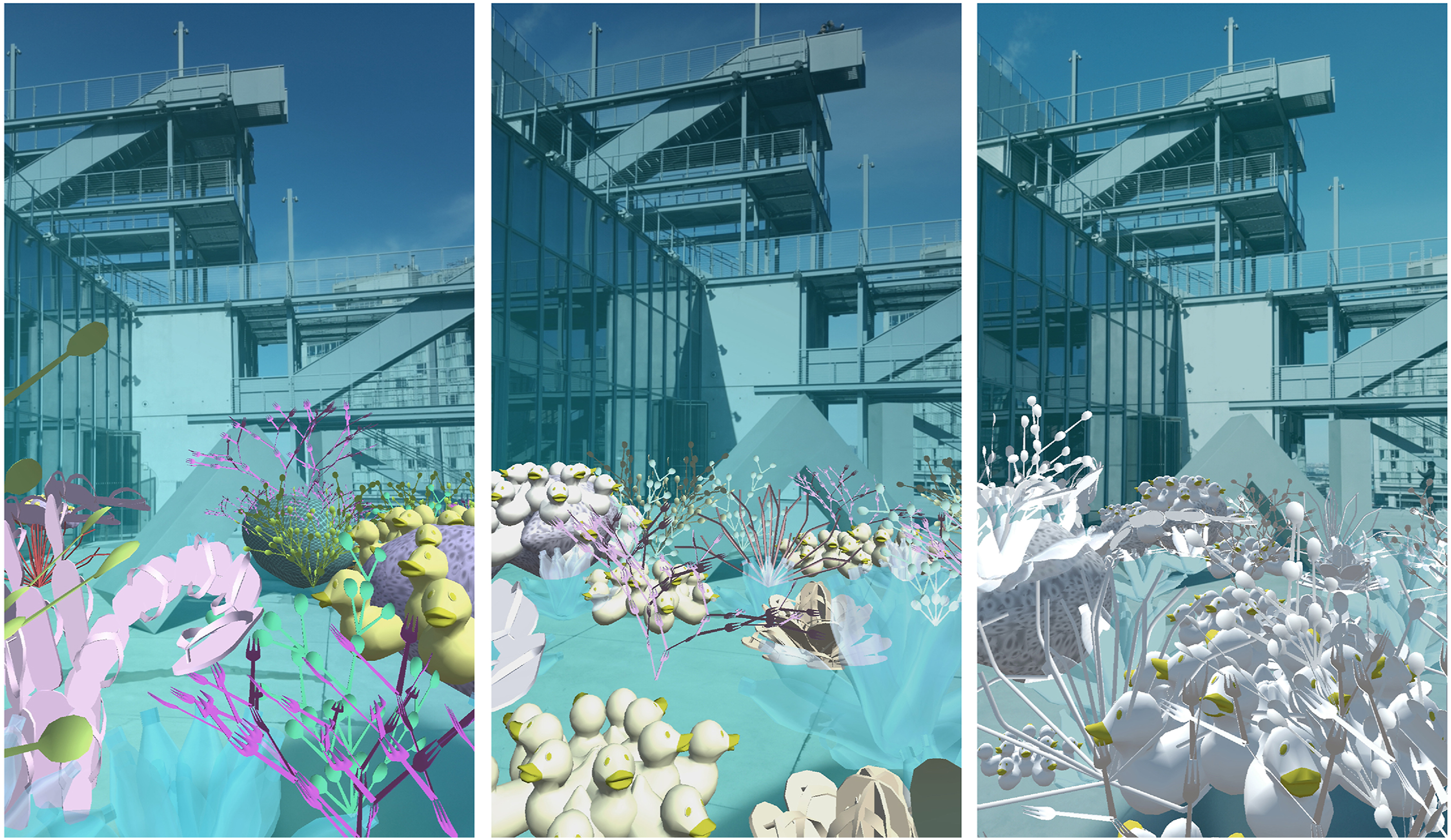
Arguably, funding resources targeted to VR/AR artmaking are made available by a few new media art-focused art institutions, academia, private initiatives, governmental and regional funds. This new media art-focused system appears to have formed more agile funding mechanisms (de Ridder-Vignone, 2021; Schnugg and Song, 2020) than the art-canonical museum ecosystems. Amongst the interviewees, Ars Electronica is the one most rooted in this ecosystem. While it’s not a collecting institution, it has a multifaceted exhibition program which supports the creation of new media art. As Naveau explains, the festival and Prix events that have been running since the early 80s have acted as pivotal platforms for new media art and consequently VR/AR artmaking. The artist residencies running through Ars Electronica’s Futurelab, as well as through other collaborative ventures like the Ars Electronica Collide @ CERN, or the S + T + ARTS residency programs (Ars Electronica Residencies, 2023; Arts at CERN, 2023) are good examples of this agile ecosystem. Rao also acknowledged the importance of private funding that support art & technology endeavours in promoting the inclusion of new media art in museums. Finally, Rao, from the Akron Museum, commented on how public museums in the USA need to compete amongst them for federal funding, something that influences the strategic planning and programs and consequently the inclusion of VR/AR artworks in their activities.
Exhibiting VR/AR artworks
VR/AR artmaking entered organically the institutional sphere, with the artists often introducing these technologies to institutions, as Nielson from the Zabludowicz collection points out. Interestingly, the exhibition of VR/AR art appears to be the least complex activity for the interviewed institutions. Having exhibited such artmaking in the past, each of the experts described distinct approaches and varied investment of resources in exhibiting VR/AR artworks.
For instance, the Zabludowicz Collection has gone beyond the conventional definition of exhibiting and transformed a 3.6 × 3.6 m anechoic chamber 9 into the first 360° physical space for experiencing VR artworks in London. In the case of the Ars Electronica Centre, Naveau mentions that the Centre exhibits numerous VR artworks and experiences through its world-acclaimed festival. The Centre has developed significant technical infrastructure and knowledge, but also strong links to technology companies and academia, constantly furthering their capabilities and expertise.
While all institutions have in-house curatorial expertise and technical staff with a wide understanding of new media artworks, the novelty of emerging technologies and the complexity of each setup leads institutions to seek advice from external technology teams and companies. Such external support serves not only exhibition purposes but also the furthering of internal skillsets. Jarczyk from the Guggenheim discussed a case, which will be presented below, that involved a close communication loop between the institution, the artist and their gallery, a production company, and an academic expert, thus describing a complex team and a valuable learning experience for the institution.
The artists have all exhibited their work in private and public institutions, and at different points have collaborated with museum professionals to set up their work. Chudak stressed how Davies prefers to provide her artwork pre-installed on a PC rather than sending digital files, provides lists of equipment, and instructions for the installation of the pieces to proactively secure the optimum presentation of her pieces. Another interesting case is that of Adana Tillman’s latest AR project at the Akron Museum, that is, the ‘InterPlay’ poster (see Figure 3). The artwork was to be presented physically in the museum, as Lynch explained, with AR interactions happening on site. However, COVID-19 restrictions forced the artist and institution to reimagine the work and present it in the form of a poster; audiences had access to the poster and could interact with the AR content in their own spaces. Rao (Akron Museum) explained that they ‘barely mentioned AR. [We were] just saying it has a digital experience with your phone’. This example highlights how AR artworks can be experienced effectively outside the physical space of the museum. Adana Tillman’s ‘InterPlay’ AR poster, 2020. Courtesy of the Akron art museum.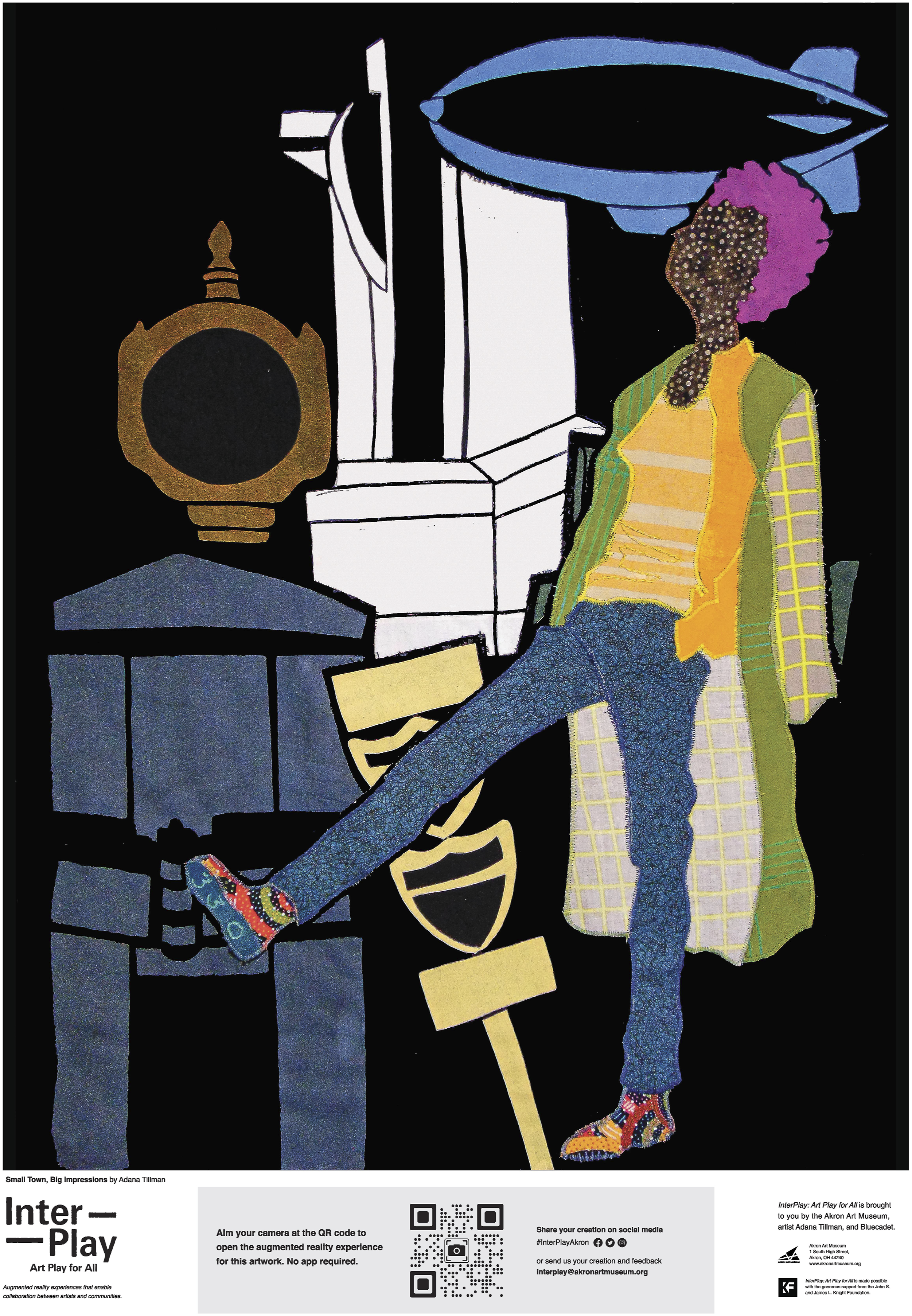
On the practicalities of collecting VR/AR art
‘It’s not like buying a drawing’ Elizabeth Neilson (Zabludowicz Collection) stresses, giving the general sentiment over the complexity of acquiring artworks made with emerging technologies. Besides the monetary and usage rights agreements between artists and institutions, the acquisition process of VR/AR artworks appears to greatly influence their preservation. As it becomes apparent both from the existing literature and the interviews we conducted, the foundations of each work’s longevity are placed during the acquisition process.
Acquisition and preservation approaches
All institutions, except Ars Electronica, engage in both commissioning and acquiring artworks. The Guggenheim, the Whitney and the Zabludowicz Collection have acquisition and preservation procedures in place, which are greatly informed by peer institutional methodologies, pre-existing research, and the evolving literature. The Akron and Arsenal Contemporary have yet to develop a stable methodology, performing case-by-case agreements.
The Whitney museum’s approach
The Whitney Museum of American Art initiated the Media Preservation Initiative (MPI) in 2018, to tackle time-based works across different media (e.g. video, film, digital formats). Through this 3-year project, the museum has built a digital preservation infrastructure that includes procedures addressing VR/AR artworks. Amongst them, the Digital Art Questionnaire, is the main template used by curators to interview artists whose work they are acquiring. This 11-page questionnaire (last updated in January 2023) is an integral part of the preservation procedures of the museum. Sections covering ‘production history’, ‘preservation and fabrication’, as well as ‘display and experiential’ are especially useful in exploring important aspects of the artworks. The museum has applied these templates to Ben Coonley’s ‘Trading Futures’ (2016), a 3D 360° video that is classified as VR and Tamiko Thiel’s ‘Unexpected Growth’ AR application, which was exhibited in 2019.
Through the MPI project, the museum aimed to further develop its digital preservation infrastructure by researching the works in depth and carefully re-cataloguing all their components (software and hardware). This approach facilitates a comprehensive understanding of preservation needs and the ability to rebuild documentation around the works. Neary also mentioned ‘experiential conservation’, a concept introduced by Carol Mancusi-Ungaro, Associate Director for Conservation and Research at the Whitney, which approaches the documentation of artworks based on how they are experienced. This includes documenting the production, installation, and preservation process of a work. Additionally, the MPI has produced supplementary Artwork Documentation and Condition Reports templates for recording an artworks’ ‘life events’ and iterations. These templates are now amongst the most holistic documentation methodologies made openly available for use. 10
The Guggenheim approach
The Guggenheim uses the Variable Media Initiative’s Protocol (Depocas et al., 2003) which was greatly expanded by Jarczyk’s predecessor, Joanna Philips. The protocol is based on the idea that artworks are more than their technology and that they are defined by various conceptual questions. The Guggenheim method, like that of the Whitney, includes a questionnaire for artists with sections about the artwork’s production. The information that is gathered helps stipulate what Jarczyk calls a ‘native master’ and an ‘archive master’. The Guggenheim also receives an exhibition copy as a reference for the work’s display. However, there are cases where the protocol is not strictly followed as in the case of ‘The Third 1/3 Monad’ VR piece by Lin Yilin. Jarczyk explained that this artwork was commissioned for a specific exhibition and the artist, lacking the technical expertise himself, hired a production company to create the VR artwork. The work – a VR video experienced though a head-mounted display (HMD) – was thus co-developed by the artist, the production company and the museum. At that point, the Guggenheim realised that what it acquired – the computer, the HMD, and the executable – were state-of-the-art at the time but it was questionable how the technology would function in the future. For this reason, it decided to obtain a 360° video file version for reference purposes as well as for potential exhibitions in the future. A narrative report was also requested directly from the production company, as some unavoidable compromises were made by the company during the export of this 360° video from the game engine. This example outlines some of the concerns, additional steps and technical challenges of VR artworks, even when the museum is in direct contact with expert collaborators.
Video and VR artwork preservation requirements can vary, according to Jarczyk, and ‘it really depends on how the VR [artwork] was created’. In her view, the creation process of an artwork is also a valuable piece of information for art history and she explains that preserving such artworks is always a learning process, which is why the Guggenheim strives to create and ingest relevant institutional knowledge. As a result, future conservators will have relevant information available to them, guiding them towards informed preservation choices.
The Zabludowicz approach
As Neilson shared, the Zabludowicz Collection collects ‘the most urgent work made at the moment’. To approach such works, they use an acquisition protocol – originally formulated for moving image works – that was extended to cover VR artworks. The original protocol was developed with help from their friend institution Julia Storshkin Collection, while Neilson explained that artists also informed their methodology. The protocol is a detailed questionnaire document, aiming to collect information and permissions around handling, cataloguing and preserving time-based artworks, with a special section focussing on VR artworks. The staff’s experience with moving image works includes knowledge about backing up in different states. Neilson mentions how technology is rapidly advancing; for example, it is now possible to view a piece across two platforms (e.g. VR headsets and VR-enabled smartphones). They focus also on preserving the hardware legacy, similarly to preserving an exhibition invitation card or the original USB the artwork came on through the artist’s archive. Moreover, younger individuals bring their technical expertise to the institution; for instance, one passionate gamer working there is learning how to preserve and transfer VR artworks. This high knowledge and expertise of the younger generation of museum employees, allows the Zabludowicz Collection to not currently require support from the industry to preserve or transfer VR works.
In terms of challenges, Neilson identified the high cost of acquisition components (such as head-mounted displays and software executables), associated preservation costs, the complexity of the pieces, the risk factor of acquiring mediums threatened by short-term obsolescence, and the difficulty of finding good quality and significant artworks.
The Ars electronica documentation approach
Ars Electronica is investigated as a special case as it does not actually acquire artworks. However, its extensive and comprehensive archive contains thousands of experimental new media projects (including VR/AR) and could be considered an alternative method of preservation. Naveau, Curator and Producer at Ars Electronica, explained that the institution has an open approach, and while no specific methodology has been developed for how to work with the data, maintain contact with artists or to keep the archive up to date, Ars Electronica is open to researchers who wish to explore and experiment with it. Currently, any artist with a submission for Prix Ars Electronica is informed that their work goes directly into the archive database. The staff try to give archival access to artists to update their work, especially for interactive artworks, with artists being able to include newer versions of their work by adding to or overwriting previous log versions. What Ars Electronica is setting out to preserve is the ‘theories that emerge […] reflecting the time each work was created’, as opposed to a history of technology or art, Naveau concluded.
Akron museum’s and Arsenal contemporary’s practises
The Akron Museum and Arsenal Contemporary are, at the time of writing this paper, still in the process of establishing acquisition and preservation protocols dedicated to new media/VR/AR art and are in the meantime relying on individual agreements with artists and tech companies. The Akron has begun setting up an acquisition protocol, as part of the process of reforming its entire operation framework, according to Rao. Castro (Arsenal Contemporary) explained that the Majudia Collection, guided by a general protocol, keeps only one copy of each artwork; she further explains that often the artist may choose to keep an exhibition copy which is not for sale, to be loaned to other museums/exhibition spaces. She stressed that they are working on expanding their processes, indicating their close collaboration with the PHI Centre, a multidisciplinary arts organisation based in Montreal, which allows their team to observe equipment handling and specialised protocols, highlighting again the collaborative spirit amongst institutions.
Artists’ involvement in preservation
When it comes to the relationship between artists and institutions once VR/AR artworks reach the stage of long-term preservation, different perspectives were observed in the interviews. While all interviewed artists were willing to communicate closely with institutions that acquired their work, their opinions vary when considering their long-term involvement with these institutions for the purposes of preservation. Technological expertise is one factor influencing the type of contribution they can make. Some are capable of reworking pieces for preservation purposes, while others are open to contributing as advisors in the museum’s preservation process.
Chudak explained that Davies and her studio already proceeded with conserving ‘Osmose’ and ‘Ephemeré’, two artworks created in early versions of VR technology, as they needed to migrate to newer versions of software and hardware, a process that proved both lengthy and challenging. Chudak firmly believes that artists should be proactive in matters of preservation – more so than museums – suggesting that they produce ‘museum packages’ that include detailed information about their VR artworks; Davies, for example, already took this step of making her artworks exhibition – and acquisition-ready.
Maclean is also proactive about preserving her work, preparing film and VR editions for collection purposes containing all the relevant files. Additionally, she produces a comprehensive written guide that includes visual aids giving detailed information about the technical requirements. She noted that exhibition agreements tend to contain non-binding clauses about an artist’s participation in preserving an artwork, which is essential as technology advances. Commenting on this subject, Rossin emphasised that she cares about her works’ survival in deep time, and her commitment to maintaining them, such as delivering their source files to the institution that acquire them.
Even though Johnson stays in touch with collectors and answers questions about re-displaying his artworks, he isn’t so concerned with preserving them. According to him, ‘like a sculpture made with a certain material will decay over time, so will this [VR artwork]’. Although he is fascinated with how a work may ‘slightly slip away’, he is more than willing to work with institutions interested in preserving his artworks. In his view, the best way to preserve VR artworks is by creating single-channel versions of running through the piece, as this is much more stable than attempting to maintain a game executable.
We also investigated whether artists preferred to have their work preserved elsewhere rather than in an institutional structure (Dietz, 2005: n.d.); for most of the interviewees this was not an issue. Neilson (Zabludowicz Collection) acknowledged this possibility but had not experienced this reaction herself, and Neary (Whitney MPI) had never encountered this as well. In imagining the artists most likely to have such a preference, Neary thought of those who had produced the software-based artworks in the ‘artport’ collection at the Whitney (currently numbering around 100 works), but none of the associated artists had any issue with their work stored at a museum. Naveau for Ars Electronica notes that their open archive allows artists to completely delete their work, but stresses that this has only happened in a few rare instances where artists chose to erase their works either because they were no longer proud of them or wanted to exhibit them elsewhere. Johnson was the only interviewee that raised the issue of accessibility; while he is happy to show his work in large museums, Johnson wondered whether these types of venues made his work sufficiently accessible to the general public, something that for him is a priority (Figure 4). Rindon Johnson, ‘Meat Growers: A Love Story’. Commissioned by rhizome and tentacular 2019, animation by Pariah interactive. Courtesy of the artist.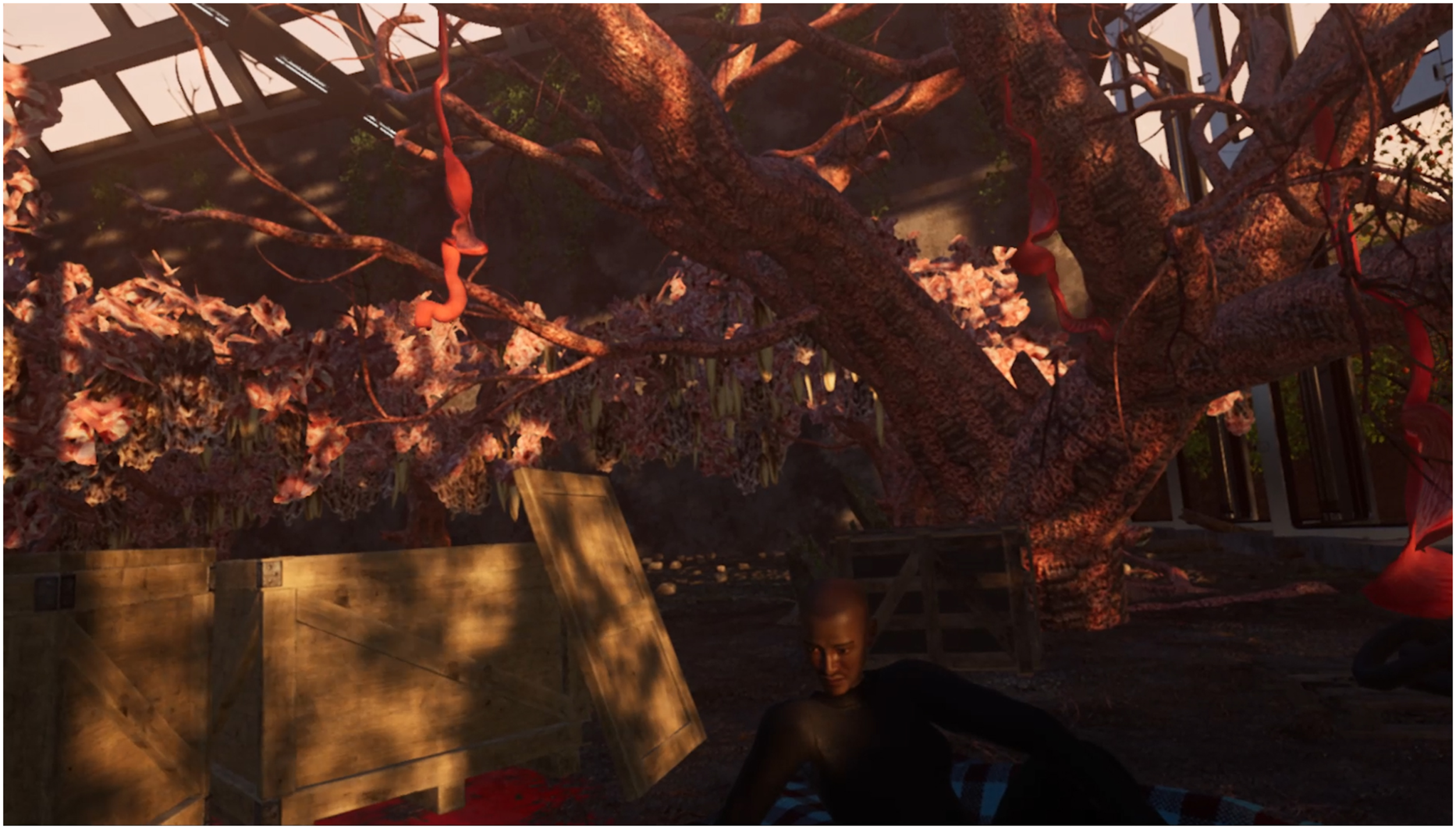
Technical challenges
Challenges around VR/AR, such as rapid technical changes and obsolescence, emerged as serious concerns for all interviewees. For the artists, the most urgent issues are the absence of standardisation and the large discrepancies between software versions, which tend to complicate the migration process of artworks. For Davies, this particular difficulty has progressively eased. While in the past both software and hardware needed to be invented specifically for the artworks, now, at least the hardware aspect has become relatively straightforward, with off-the-shelf options readily available. However, as Chudak explained, software becomes obsolete and difficult to transfer to new formats, posing thus the main challenge. Rossin characteristically explained that ‘as long as the technology stays electronic […], the problem will always be the software’. Both Maclean and Johnson stressed that they are conscious of their work’s lifespan and that technological changes may affect it.
Museums, too, are expected to keep VR/AR artworks operable and viewable, despite these technical shifts. Campbell (the Whitney Museum) explained that one of the main challenges for VR/AR preservation is hardware and software incompatibility issues, while Jarczyk (Guggenheim) asserted that artworks can quickly transform from state-of-the-art to outdated, and thus cannot be sustained without updating. At the same time, VR is slowly growing out of being an emerging tech and becoming recognised as a more streamlined area of art, making it more accessible to collectors while software is being updated. For example, Neilson (Zabludowicz Collection) mentioned that a 2020 software update finally allowed them to play an early VR work that the collection had acquired using a new operating system and headsets. Castro (Arsenal Contemporary) explained that the most challenging aspect of approaching such artworks is definitely the technology, as is the possibility of not being able to support it, as Lynch (Akron Museum) commented. Essentially, for museums, the technical requirements of an artwork play an important role in deciding whether to acquire it.
Sharing preservation knowledge amongst institutions
Interestingly, all the institutions interviewed were very open with sharing knowledge and methodologies on preservation, both with artists as well as other institutions. The museum professionals mentioned keeping formal and informal communications or collaborations with other institutions and fellow experts regarding preservation methodologies. There is a common understanding among the relatively small digital conservation community of the value of sharing experiences, knowledge and methodologies. As Neilson mentioned, conservation is a ‘communal effort with the artists and with other institutions. […] this almost utopian idea of co-creating and developing has always been a basic characteristic of digital technologies’, adding that this is a constant learning-through-doing process that must be shared with others.
Arsenal Contemporary is in close collaboration with at least two institutions, 11 while the Guggenheim, as Jarczyk mentioned, maintains a number of loose, informal exchanges with various institutions and welcomes external expertise and opinions on their processes. Neary also confirmed that the Whitney regularly communicates with colleagues at other museums. Rao (Akron Museum) mentioned a number of colleagues and companies with whom they stay in contact. She characteristically commented that ‘it is a lot easier to solve things after somebody else has solved it!’. Overall, the museum professionals value the experience that is brought to the art and museum world by companies working with VR/AR. Sharing and collaborating are essential in setting up procedures for acquiring and preserving VR/AR artworks in these early stages.
Discussion and concluding remarks
Artworks using new technologies have a long history in museum collections. VR/AR artworks are just a continuation of a long line of new media artworks, following the emergence of technologies such as photography, video and interactive installations. This study gives us the opportunity to explore the rapidly growing area of tech-based artwork more deeply by observing how art professionals create processes and policies that allow VR/AR artworks to be acquired and preserved for future generations. It captures a moment in the history of art where there is a need to acquire such artworks, but at the same time, serious challenges make institutions think twice before committing to such acquisitions. This study captures the challenges faced and efforts of museums, art institutions and artists to arrive at a common understanding about the future of these artworks.
The 11 interviews we conducted with museum professionals and artists revealed current practices, as well as certain main directions. Our discussions indicated that while there is a desire to collect VR/AR artworks, these efforts are hampered by technical and funding challenges, with technical challenges presenting the biggest obstacle (RQ1) to museums collecting and preserving VR/AR artworks. The few museums that are committed to acquiring VR/AR artworks are continuously adapting and extending their documentation processes (RQ2). Detailed acquisition protocols filled in with the help of the artists is emerging as a key practise addressing both preservation and re-exhibition needs. Relevantly, while artists have more nuanced stances towards the lifetime of their artworks in the institutional sphere, their active involvement in the developing acquisition and preservation methodologies is considered necessary (RQ3). Taking into account these results, we argue that the essential actions towards effective representation and preservation of VR/AR artworks in the museum context are to (i) further develop, disseminate and put in practise more thorough and reflexive documentation methodologies for VR/AR artworks, and (ii) extend and maximise collective efforts between all stakeholders, not only for facing technical challenges and promoting preservation models, but also to advocate for higher level policy changes for the representation and safeguarding of VR/AR artmaking (see Figure 5). Schematic presentation of key practises for VR/AR artworks as they emerged from this research.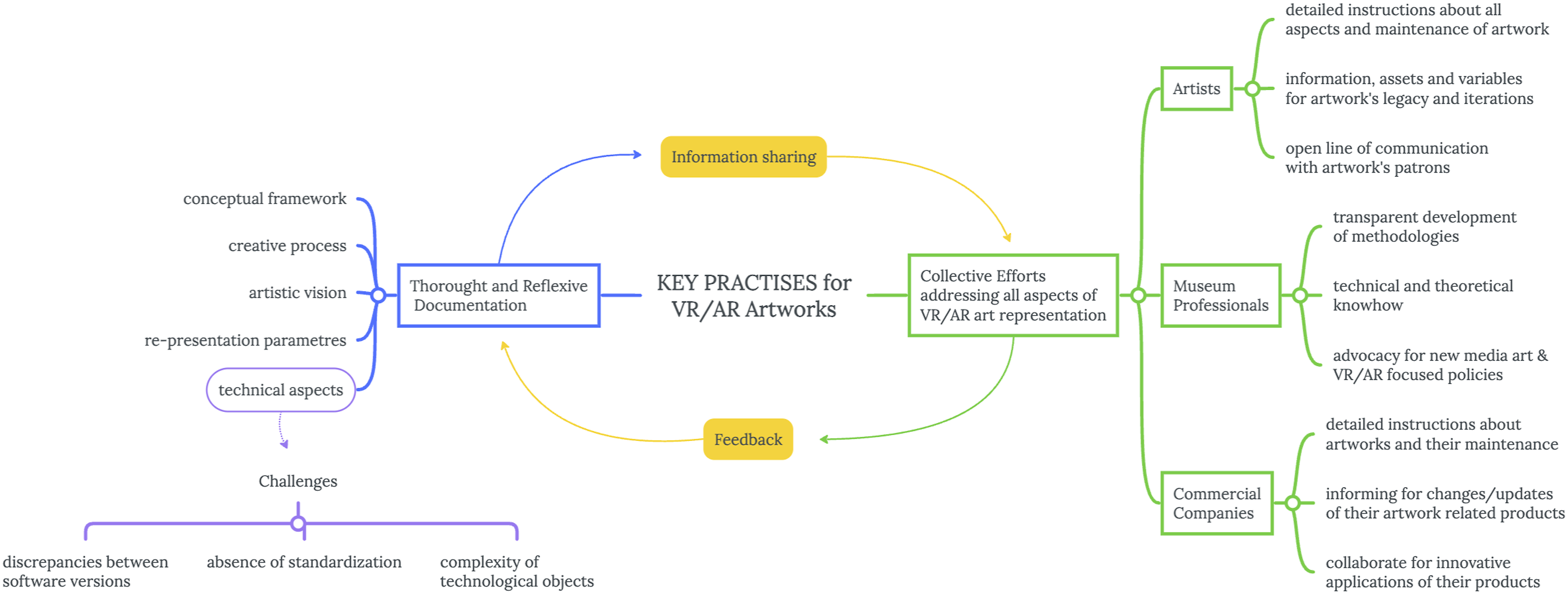
The interview analysis showed that both artists and museum professionals are well aware of the technological challenges in preserving VR/AR artworks in the long term. The existing methodologies to introduce new media artworks in museum collections are clearly challenged by VR/AR artworks, something also stressed by Ensom and McConchie’s (2021a) research and efforts of creating a collaborative knowledge base. The biggest hurdles faced by museum professionals are the absence of standardisation and the large discrepancies between software versions, which can quickly render both software and hardware components instable or obsolete. While the interviewed institutions do invest in maintaining the physical components of the artworks they collect, they also make efforts to preserve the experience itself; this is because the hardware components might become inoperable and the experience is considered an important, if not the most important, element of the artwork’s materiality. Another hypothesis that emerges is that these technical complexities of VR/AR artworks also affect their collectability within the current art value system and its funding mechanisms.
It has become clear that preservation methodologies are tightly bound to an institution’s acquisition procedures, stressing that the two processes cannot exist separately. As in the case of the museum professionals in the institutions we interviewed, those that have new media acquisition procedures in place have invested in expanding them to include VR/AR parameters. Each new artwork entering the collection thus informs and, where necessary, expands the institution’s acquisition and preservation methodologies. Understanding the cultural legacy of a VR/AR artwork depends on a thorough recording of the concept, the creative process, the artistic vision and the implementation parameters of the artwork, information that is gathered mainly during the acquisition process. Interestingly, one of the artists stated that he is not overly concerned about the preservation of his work, as he considers a fleeting nature to be part of the work. This statement highlights that, prior to any preservation actions, museums need to gather information and have in-depth discussions with artists regarding the artwork, both on how to handle it in its current state, and on how to preserve it for posterity. The rest of the artists characterised themselves as proactive in offering their assistance, including giving detailed instructions about the exhibition and conservation of their work.
Finally, an important collaborative and knowledge-building process emerged among the practising museum experts. It is obvious that the conservation community maintains close ties and is quite open when it comes to developing preservation techniques, as institutions frequently collaborate and exchange good practices and knowledge. The smooth collaboration between art and museum professionals, artists and private technology companies has given rise to valuable knowledge and introduced technology companies as a significant new stakeholder in the field. Tate’s latest research contributions in preservation and acquisition protocols, as well as the PIMKB resource (Ensom and McConchie, 2021b; PIMKB, 2024) are good examples of this collaborative and open spirit. Ensom and McConchie’s report, as well as the developing knowledge base on preserving VR artworks includes technical insights and recommendations for artists, collecting institutions and future work, as well as the ‘Virtual Reality Artwork Acquisition Information Template’, a document available under a Creative Commons license (Ensom and McConchie, 2021b). What is important is that this template is freely available and has been produced with the help and insights from the broader digital preservation community.
Museums, institutions and artists are evidently becoming innovators instead of mere users of technology; artworks are progressively acting as both cultural objects and knowledge generators, as they feed a process of co-creation between museum professionals, artists and the technology industry. Collaborating with technology companies can be framed as an integral early-stage practice, one that is assisting museum professionals to cultivate more technical knowledge to achieve an in-depth understanding of each artwork. Forging stronger collaborations and working alongside technology companies can also greatly inform and speed up the standardisation in acquisition and preservation; it can also offer relevant solutions and applications to the broader VR/AR landscape. For museums to have in-house technical expertise in VR/AR works, the education of time-based curators and conservators should expand to include such artworks and how to exhibit and preserve them. Similarly, Ensom (2019) considers that a skillset closer to that of a systems administrator is required in the hybrid role of the time-based media conservator.
Rinehart and Ippolito argue that preservation efforts should ‘move from preserving media to preserving art’ (Rinehart and Ilppolito, 2014: 46). And museums are indeed already striving to preserve these novel cultural assets for future generations, with museum professionals crafting new methodologies to safeguard artworks’ physical and digital aspects, but also to capture the actual experience of each artwork by developing new acquisition frameworks. Notably, this seems to be happening as a collective effort, which may eventually lead to distilling a set of acquisition and preservation practices.
The technical complexity of VR/AR artworks is recognised as perhaps the most challenging aspect, as institutions work hard to standardise acquisition and preservation practices. However, technical considerations are not the only crucial challenge presented by these artworks. There are, without a doubt, important subjects which were not addressed in this article. An in-depth exploration and analysis on the actual, experiential, ephemeral and non-tangible aspects of VR/AR artworks is a subject that requires further analysis. Furthermore, contingencies with other artforms and intangible heritage like performing arts, music and installations, as well as the game sector, could bring forward significant contributions to new media art conversation. Another aspect that needs further investigation is whether the funding mechanisms of ‘traditional’ art institutions are impeding the collectability of VR/AR artworks, as their economic models prioritise established art forms, something that potentially hinders equal attention to VR/AR acquisitions – and thus the development of effective preservation mechanisms. Lastly, a more critical approach towards issues of creative authorship, control and matters of deletion that underlie artworks created with digital mediums is worth undertaking in future research.
At this point, it is crucial for museums to consider and even participate in the research performed by experts inside and outside the museum sector, as well as by other relevant disciplines, such as the digital games sector. Such interdisciplinary correlations and knowledge convergence can greatly contribute to formulating a solid body of knowledge around VR/AR cultural objects in general.
It remains to be seen whether the efforts to achieve an encompassing methodological framework for introducing VR/AR artworks in the museum collection will flourish in the broader museum ecosystem and equip more institutions to exhibit and safeguard such artworks. Currently, the capacity-building resources are underutilised by the majority of stakeholders who could contribute to the collection and preservation of VR/AR artworks. Very few institutions worldwide are actively interested in these types of artworks, jeopardising the safeguarding of important artworks that may easily be lost to technological obsolescence. The interviews presented here include diverse institutions situated across the US and Europe, both public and private, and with different organisational structures, practices and agendas. However, this research chose not to address fundamental institutional structures and politics. Future research that focuses on the public/private interests and funding mechanisms that drive the museum sector and concurrently the politics behind acquisition and preservation decisions is also essential. Aiming for high-level policy changes either in state-dependent or privately funded institutional ecosystems would indeed shift the dynamics of representation of the media art world in the traditional art world environment of galleries, libraries, archives, and museums (GLAM institutions). Grau (Besser et al., 2018: 11) underlines the necessity of museums to work together, and additionally proposes a higher structure that could be driven by cultural state politics; he suggests a government-level study examining the breadth of digital art acquisition by museums. Ping Huang (Besser et al., 2018: 11) adds that a survey regarding the collecting, preserving and showing of digital art revealing the current museum and archives status would be useful, as ‘surveys of digital practices [relevant to other] arts and humanities research, [have] made visible really interesting transnational results’. These strategies could be embraced by more museums if the relevant incentives were secured via governmental or other structures.
We conclude this article with two key questions around VR/AR artworks in the museum, as we feel they would productively contribute to the ongoing discussions and developments in the field. Could the goals around an effective engagement with VR/AR artworks be reached by re-envisioning the museum’s role from a passive protector and collector to an active player in technological innovation? Which course of action is likely to offer a significant incentive to a wider group of museums to actively engage in the safeguarding of VR/AR artworks?
Footnotes
Acknowledgements
We would like to thank Dr. Doros Polydorou, Dr. Marinos Koutsomichalis, and Dr. Kleanthis Neokleous for their invaluable contribution in the early stages of the research and CYENS Centre of Excellence for hosting the authors. Finally, a very big thank you to all interviewees who offered their experiences, expertise and insights that inform this research.
Funding
This paper is the result of the ‘MuseumArtTech’ project which was funded by the Cyprus Research Promotion Foundation ‘Restart 2016–2020’ program and coordinated by the Visual Sociology and Museum Studies Lab of the Cyprus University of Technology (now merged with the CYENS CoE's Museum Lab).
