




Abstract
In parallel with the rapid growth of the digital games market, the modding phenomenon has been gaining momentum. Mod culture, a manifestation of the convergence and the remix cultures, emerges as a way to adapt digital games to the needs of their players and incorporate content from other media, such as books, movies, or series, into the game world. This systematic literature review aims to discuss the ethical considerations of modding by understanding its impact on the overall gaming experience and comprehending how players and game companies perceive and respond to modders’ motivations. 15 studies from various scientific fields were analysed. Overall, mods impact the gaming experience in a variety of ways, ranging from educational purposes to deeper social concerns. While modders find motivation to create mods stemming from a myriad of reasons, including leisure and self-improvement, the stance taken by game companies, gaming communities, and players tends to discourage them from developing new mods and deter new modders who aspire to contribute with creative content. In conclusion, it remains important to recognise that specific ethical dilemmas linked to mod culture require in-depth debate to reach a consensus. Furthermore, other aspects demand more stringent scrutiny to ensure that we can all benefit from the enriching playground of personal experimentation and exploration that modding offers in this contemporary era of convergence.
Keywords
Introduction
Digital games are one of the fastest-growing markets, with revenues surpassing the combined earnings from digitally sold video, digital publishing, and music in 2021, reaching a total of 118 billion euros (Richter, 2021). Digital games, as a subset of the universe of all games, can be defined as computer-mediated experiences that borrow entertainment techniques from other media, such as films or books (Adams, 2014), combining them, which makes digital games a meta-medium or a form of convergent media (Kjeldgaard-Christiansen, 2016). This concept is strongly linked to the convergence culture defined by Jenkins (2006) where multiple media systems coexist and the content flows fluidly across them (Jenkins, 2006), establishing the gaming experience as we know it today.
Since the dawn of society, the act of playing has been inherently viewed as a social activity, with this being the primary motivation for some players, and the game itself being only a secondary factor (Adams, 2014). Digital games are recognised as a social context and a form of social interaction, fostering either cooperative or collaborative dynamics (Ruggles et al., 2005). Nowadays, social interaction facilitated by digital games is, more than ever, one of the key motivations for players, emphasising the importance of connecting with new people, staying in touch with friends, and participating in online communities related to digital games (Clement, 2021). These online fan communities, whether for single-player or multiplayer games, emerge from the desire of fans to share content and discuss the game – a behaviour intrinsically linked to the concept of collective intelligence (Lévy, 2004), which, in turn, is related to the convergence culture (Jenkins, 2006). In these communities, players indirectly promote a game by encouraging and supporting new players, developing strategies, plots, and content, or even by sharing their knowledge and experiences about the games (Ruggles et al., 2005). For this reason, the companies recognise that online fan communities represent a highly effective and inexpensive form of marketing (International Game Developers Association Online Games Committee, 2002).
The Internet, specifically Web 2.0 or Social Web, has connected people from distinct parts of the world and contributed to further improving an already existent participatory culture, where the barriers between consumer and producer have been broken down, originating the term prosumer – enabling users to progressively engage in communities and activities related with remix culture (Lessig, 2008). At its core, ‘remix is collage’ (Lessig, 2008: 76), whether of text, images or another type of content, with the meaning of creating something new. This new content can emerge from synchronous or asynchronous contributions of various community members, thus facilitating a wider and more diverse community to engage in the activity, making it more compelling and dynamic. When they do the remix, the community members show one another their personal views regarding the content and gain a sense of shared authorship. Even when the results exhibit lower quality, this process of showcasing their work to peers is valuable for their self-improvement over time (Lessig, 2008).
Despite being in practice for nearly 40 years (Au, 2002), Web 2.0 and the remix media culture values helped the mod culture to expand. A mod, short for modification, can be defined as an amateur modification of a game and modders – players who engage in modding activities – are described as being amateur game designers who modify various elements of existing games, namely, characters, environments, and the gameplay experience (Jenkins, 2006). Adams (2014) claims that mods are extremely popular within gaming communities and an almost unavoidable aspect of all popular games. This is a compelling strategy to maintain player interest in the game for longer, as players will want to continue buying the game since new mods are always being released, which equals new content or new ways to play (Adams, 2014). The mod culture also finds its way within the convergence culture, since some ideas present in the latter include the flow of content across multiple media platforms and the migratory behaviour of media audiences to seek the kind of entertainment experiences they want (Jenkins, 2006). Mods are tools that enable the player to bring content from different media or other game franchises into the game world (Small, 2018) and decide how he/she wants to play, being the determination and the knowledge of modders their only limitations (Alcázar and Francisco, 2021).
However, a lingering question remains: To what extent can these adjustments and the adaptability of content from alternate media forms into digital games be considered ethically sound? Ethics, as a concept, may be defined, according to Velasquez et al. (1987), as something based on well-founded standards of right and wrong that prescribe what humans ought to do, usually in terms of rights, obligations, benefits to society, fairness, or specific virtues. Constantly, we struggle with decisions about what we should, what we can, and what we want to do (Lopes, 2017). Despite the standards, laws, obligations, and teachings according to which each one of us is moulded, as an ongoing, never-ending work in progress, there always comes a moment when subjectivity plays a role in decision-making, either minor or significant. What is regarded as ethical evolves (Schultze and Mason, 2012), and research in any scientific field is constantly driven to review its grounds on this matter. We may venture to state that any scientific field, no matter its expertise, is not and cannot be fully aware of its ethical challenges when dealing with its relationship with and within the digital world. When examining over some of the relevant ethical issues in technological contexts, some of which were debated by Leonhard (2016), there is a myriad of challenges that, although not of the same relevance to everyone and every context, do share the ability to, to some extent and in a particular context, impact our society and the environment on a large scale. Issues such as AI, singularity, transhumanism, data privacy, gender representativity, social inequality based on digital access and competencies, the ‘Always-On’ Culture versus the Right to ‘Turn-off’, and excessive information tailoring resulting from algorithms, are just a fraction of a list that only tends to grow over time, spreading across social, political, scientific, and economical contexts. Modding is, for better and for worse, an exceptional playground to tackle a limited number of these concerns, particularly in enhancing the availability (Messias, 2020) and inclusiveness of digital games (Howard, 2021). It also serves, however, as an environment in which discussions surrounding digital ethics-related matters are likely to unfold, given that the unrestricted creativity within mod culture and the ambiguous legal framework continue to reside within a realm of uncertainty (Deng and Li, 2021; Kretzschmar and Stanfill, 2019; Postigo, 2008).
Considering the significance and inevitability of mod culture within the contemporary landscape of digital games, it becomes imperative to debate the ethical considerations of modding. A foundational step in this assessment involves understanding the impact that mods wield over the overall gaming experience. Equally crucial is exploring how players and game companies interpret and react to the motivations of modders. To achieve this objective, the authors sought to answer the following research questions:
How does the mod culture impact the overall gaming experience?
How do players and game companies perceive and respond to modders’ motivations?
Method
The electronic database search for this systematic literature review was conducted during December 2021. To ensure the validity of the data present in this study and its replication, the authors adhered the Preferred Reporting Items for Systematic Reviews and Meta-Analyses (PRISMA) guidelines (Page et al., 2021). The search and selection protocol will be discussed subsequently in this section.
Search strategy
The results comprised in this systematic literature review were retrieved from Scopus and Web of Science databases using the following search query: (‘DIGITAL GAM*’ OR ‘VIDEO GAM*’) AND (‘MOD’ OR ‘MODS’ OR ‘MODDING’). Albeit the term mod is a shortened form of modification, the latter was deliberately excluded from the search query. This decision was made considering that, in the context of modifying digital games, mod might be more commonly employed than the word modification. Additionally, to present a more comprehensive perspective on mods, the search was not restricted to specific scientific areas.
Selection process
In order to be included, a study had to meet the following criteria: 1) be published within the last 5 years; 2) be published in a journal or conference proceedings; 3) be written in English; 4) discuss the impact of mods on the gaming experience or the motivations of modders.
Conversely, a study would be excluded if: 1) the publication date was 2016 or earlier; 2) the article was a book, book chapter, thesis, systematic literature review, position paper, report, unpublished paper or not peer-reviewed; 3) the text was not written in English; 4) the full text could not be retrieved; 5) the discussion was unrelated with the impact of mods on the gaming experience or the motivations of modders.
Data extraction
The data extracted from each included study were analysed based on the following categories: 1) author; 2) title; 3) publication year; 4) source; 5) type of publication; 6) general findings; 7) contribution to the first research question; 8) contribution to the second research question; 9) impact axis.
The authors autonomously extracted data from each study included in this review. Following this, the data was collaboratively organised, structured, and analysed using spreadsheet software. Subsequently, each author individually assessed whether a study addressed the first research question, the second research question, or both. For articles considered relevant to the first research question, an impact axis was also assigned. Lastly, all authors discussed and deliberated on the contributions and impact axis of each article.
Results
Study selection
Figure 1 illustrates the selection process of the studies comprehended in this systematic literature review. The search in the Scopus and Web of Science databases initially yielded 140 results. After removing duplicates or results published in 2016 or earlier, a total of 36 records remained. The screening process, which involved reading each article’s abstract, led to the exclusion of 14 records – 1 for analysing board game modding instead of digital games, 6 for addressing the development of a game, mod, or dataset, and 7 for being unrelated with the impact of mods on the gaming experience or the motivations of modders. Subsequently, 22 reports were sought for retrieval. During this process, 1 report could not be retrieved and was consequently excluded from the systematic literature review. Lastly, another 6 reports were excluded – 1 was written in Polish, 1 was a position paper and, after reading the full text, 4 did not discuss the impact of mods on the gaming experience or the motivations of modders. Therefore, a total of 15 studies were included and examined in this review. Prisma flow diagram. Model retrieved from Page et al. (2021).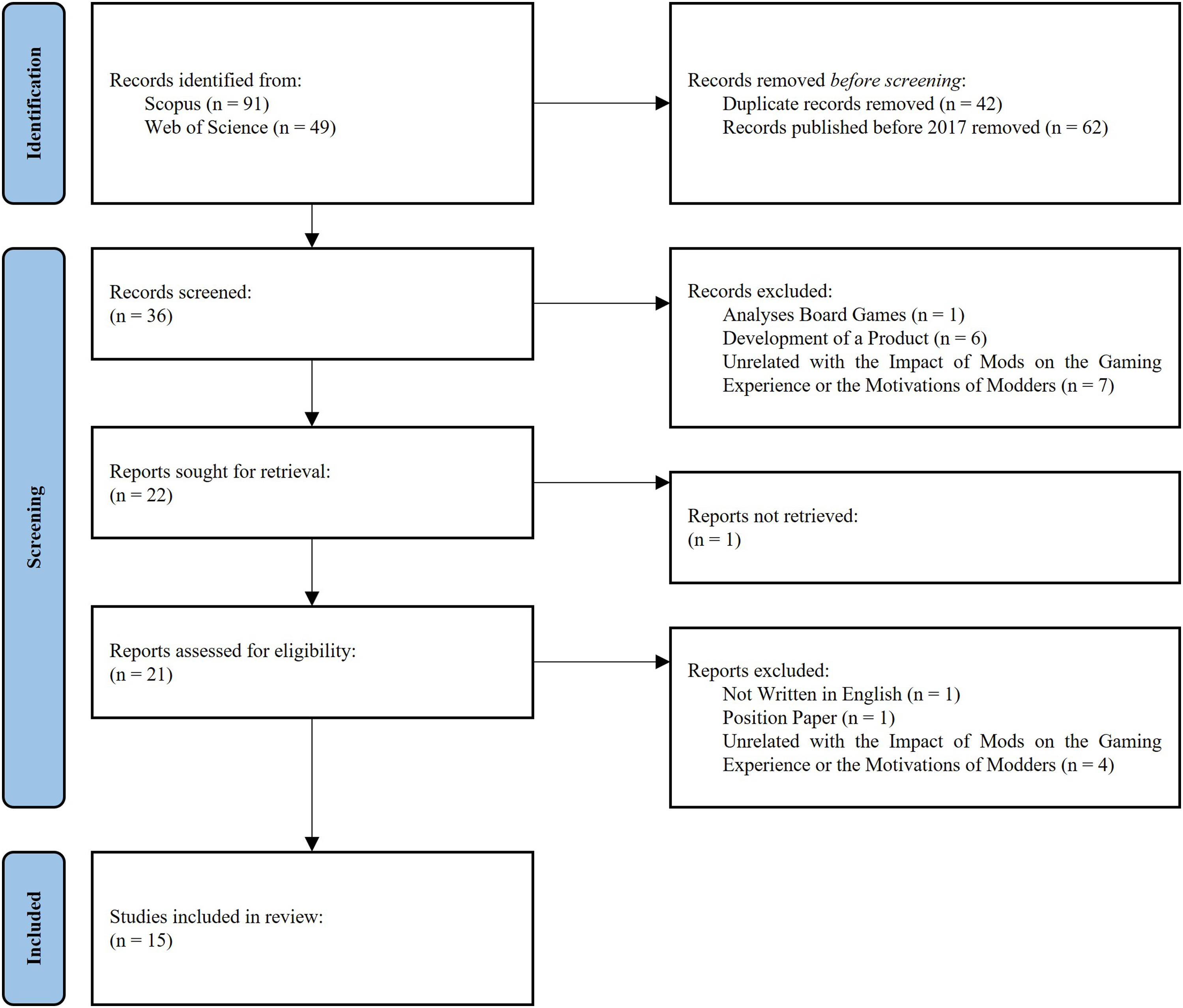
Study characteristics
Regarding the publication year, it is noteworthy that 47% of the studies coincided with the year of this systematic literature review (Figure 2). Publication year.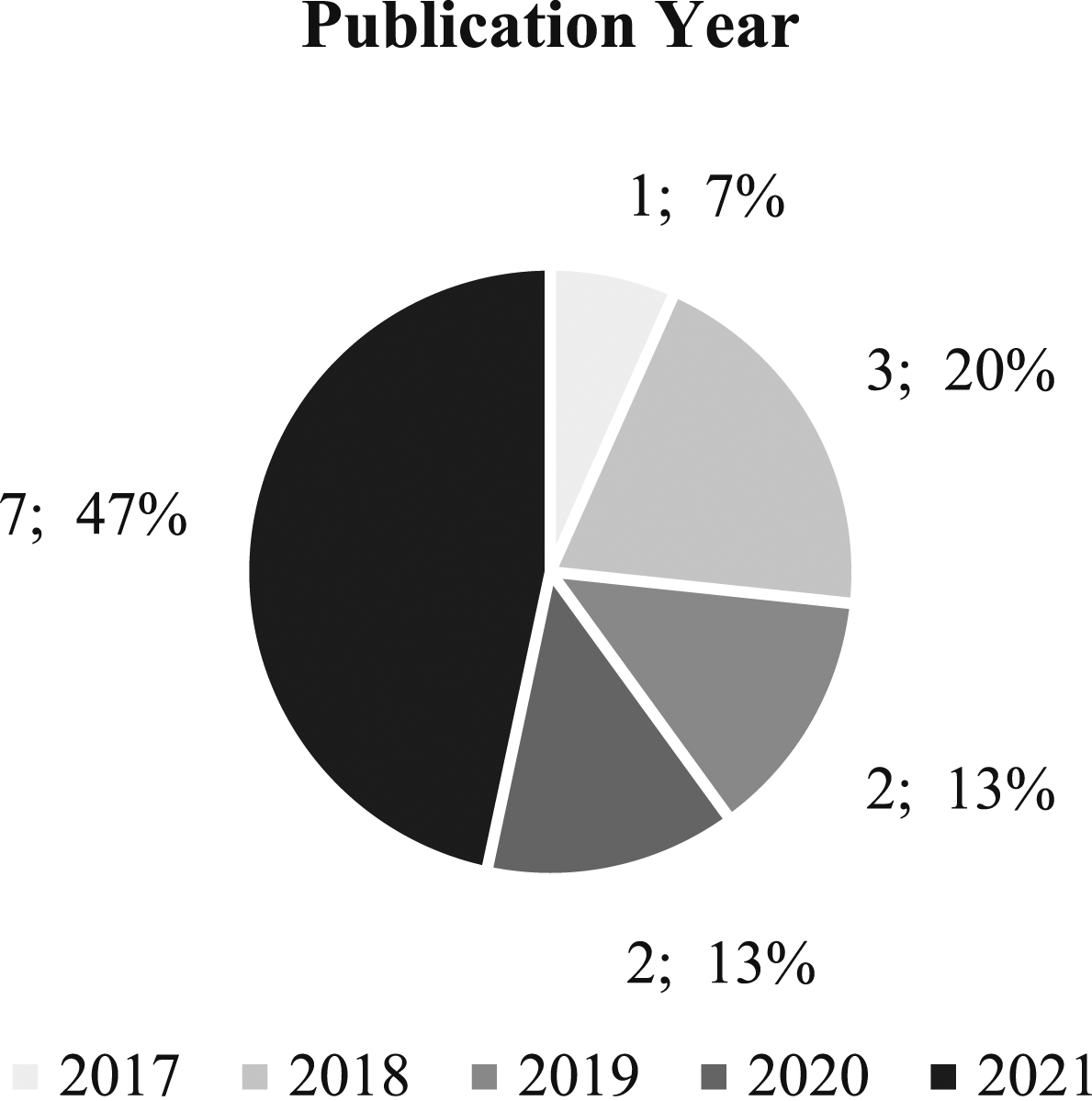
A notable 93% of studies were found in the Scopus database, a reflection of its status as one of the most widely utilised databases in the scientific field of communication sciences and technologies (Figure 3). Database.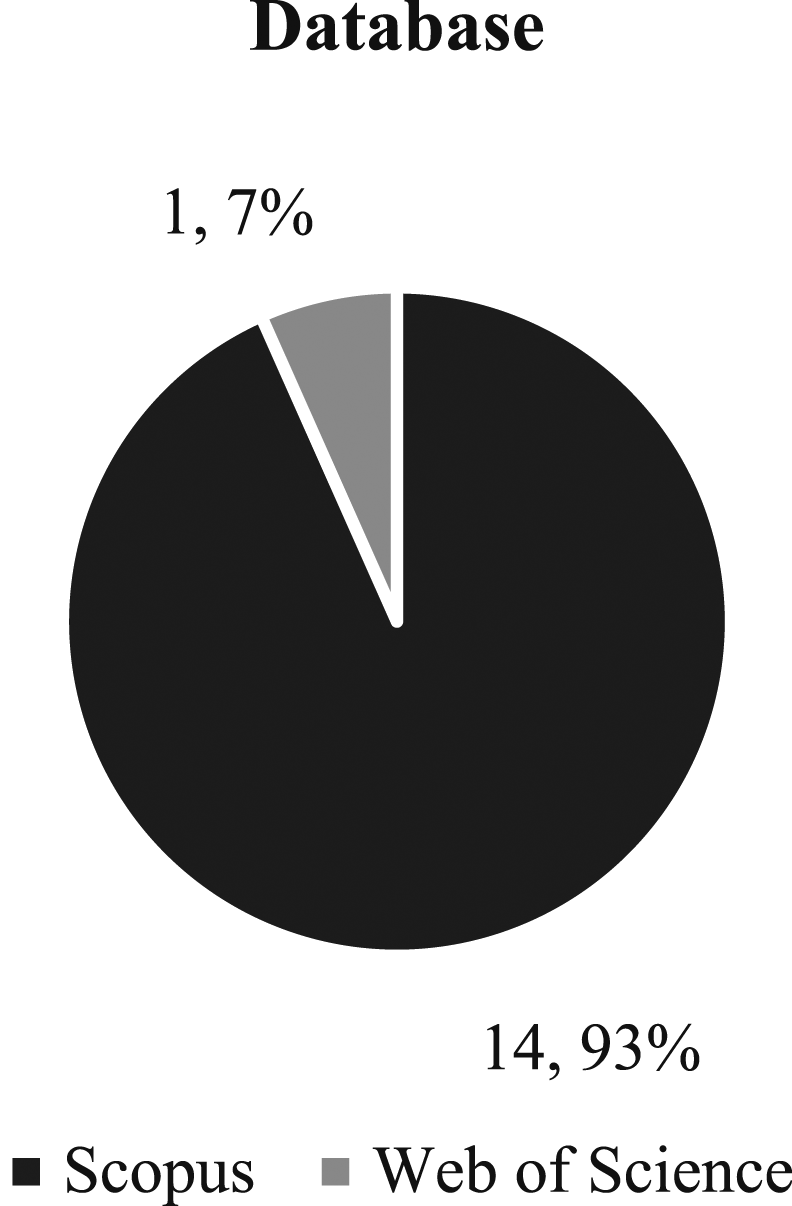
In terms of publication type, the majority of studies originated from conference proceedings (60%). This may be due to a variety of reasons, such as the periodicity of the Journal or Conference, the minimum requirement to publish in a Journal, among others (Figure 4). Publication type.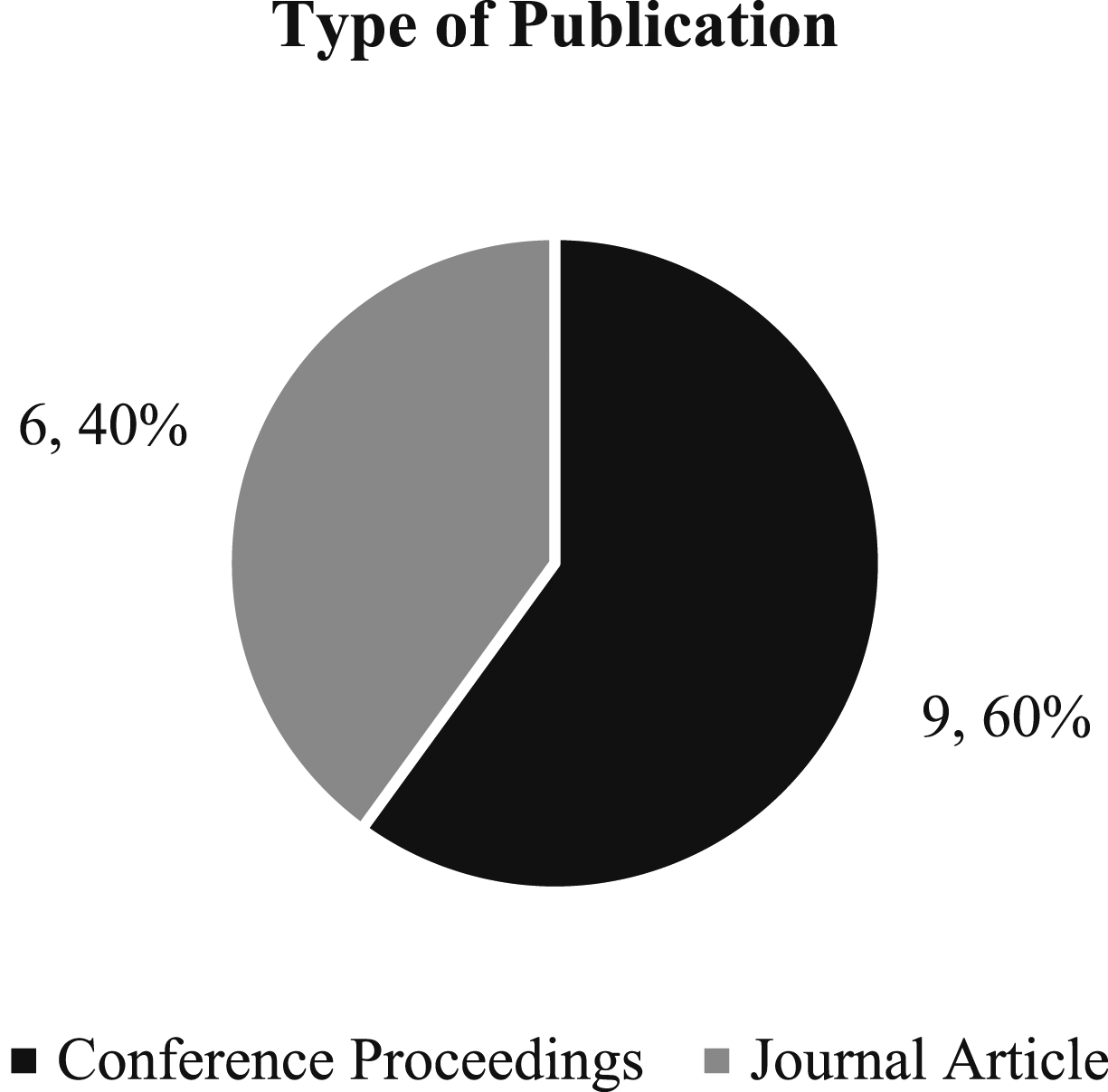
Most studies address both research questions (6 studies), followed by the impact of mods on the gaming experience (5 studies), and the motivations of modders (4 studies) (Figure 5). Contribution to research question.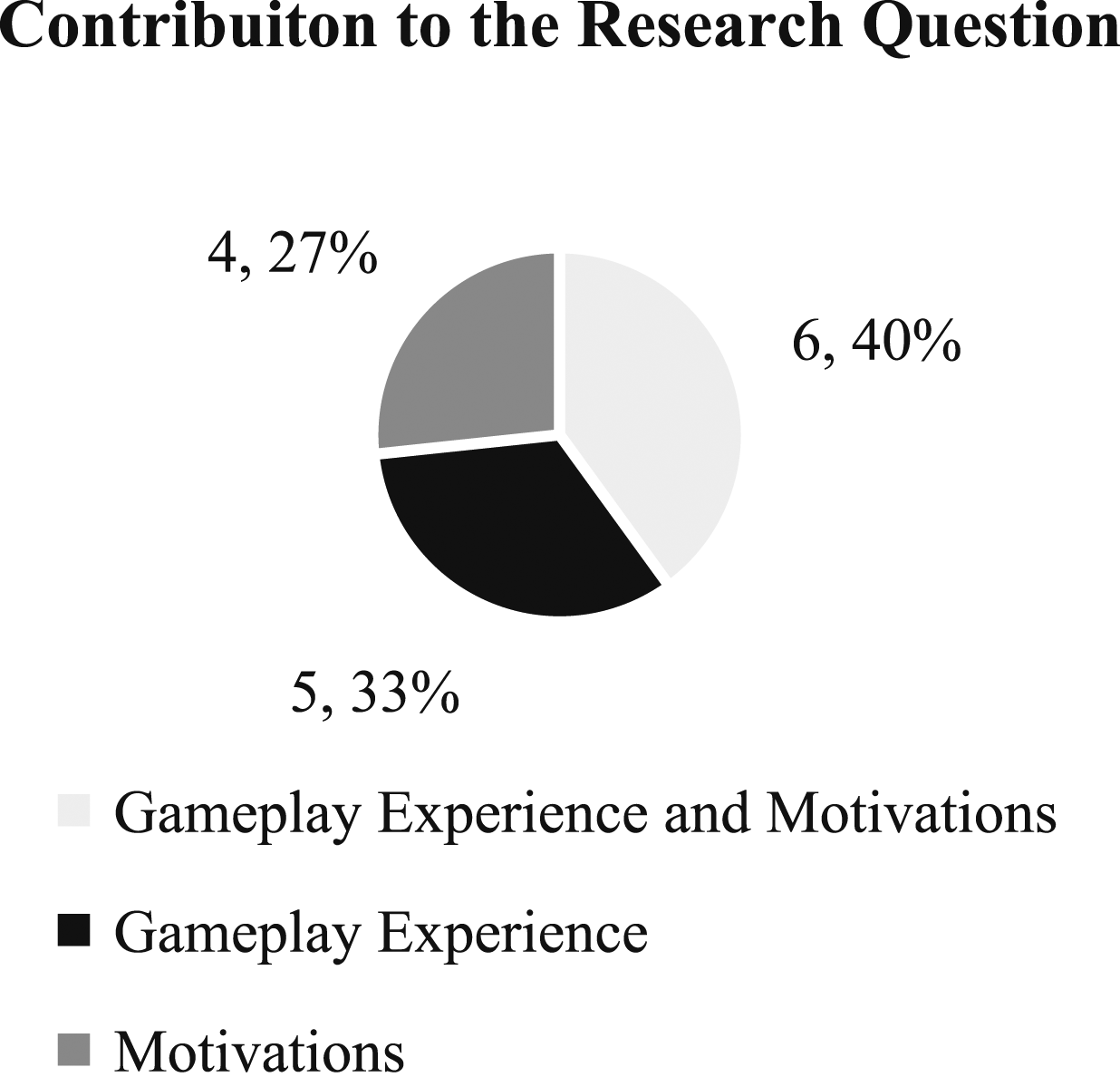
For an in-depth understanding of each article’s contributions towards the impact of mods on the gaming experience, the authors identified nine different axes (Figure 6). The chart reveals that most articles delve into the influence that mods exert on the digital games market (5 articles), followed by the convergence axis, encompassing 4 articles exploring co-creation, remix culture, and participatory culture. Additionally, 2 articles address how modding practices can be beneficial to the business sector, while another 2 explore their role in maintaining the veracity of historical content. The remaining axes – Educational, Bigotry, Marketing, Political, and Social – are each represented in only 1 article. Axes of impact.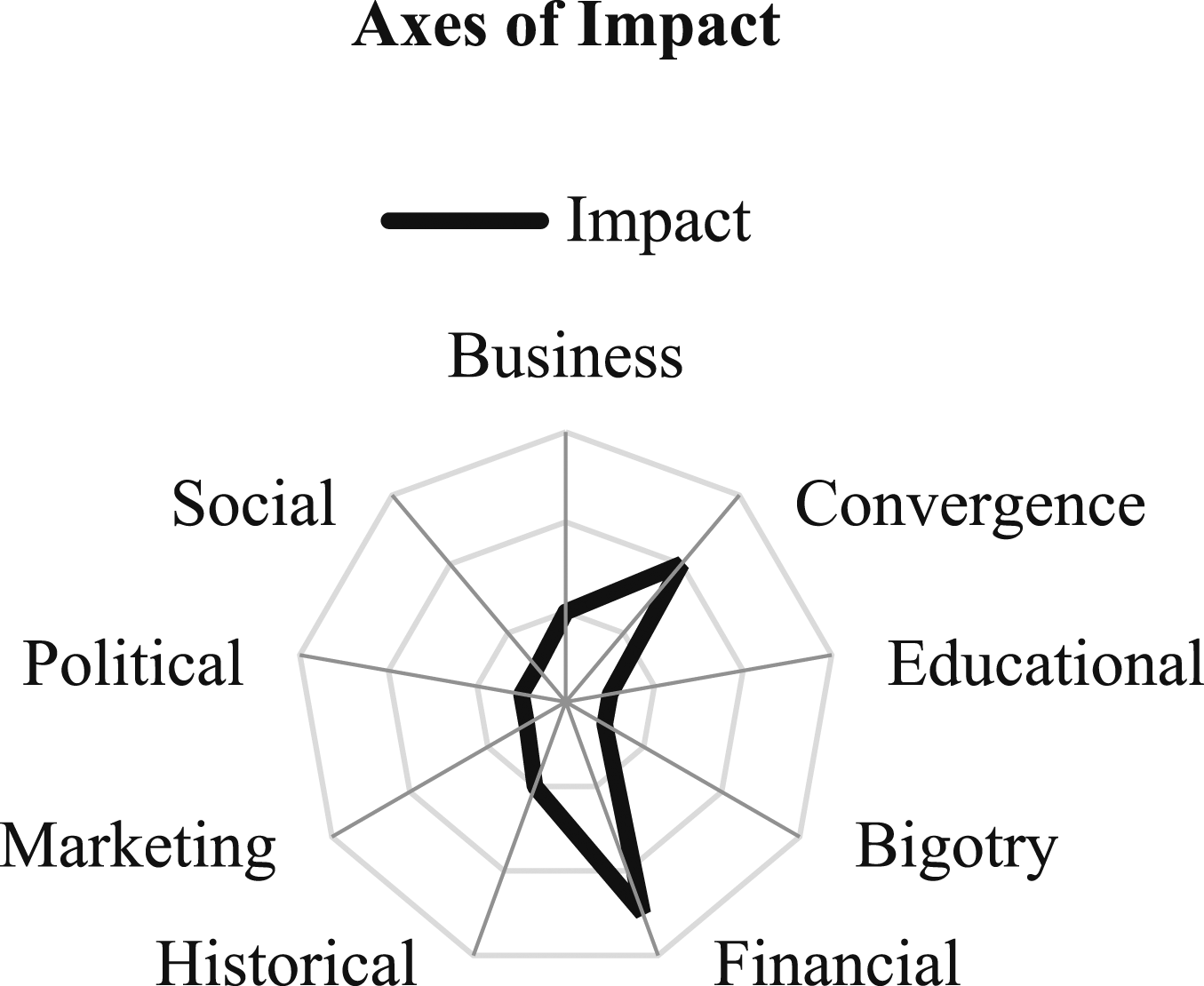
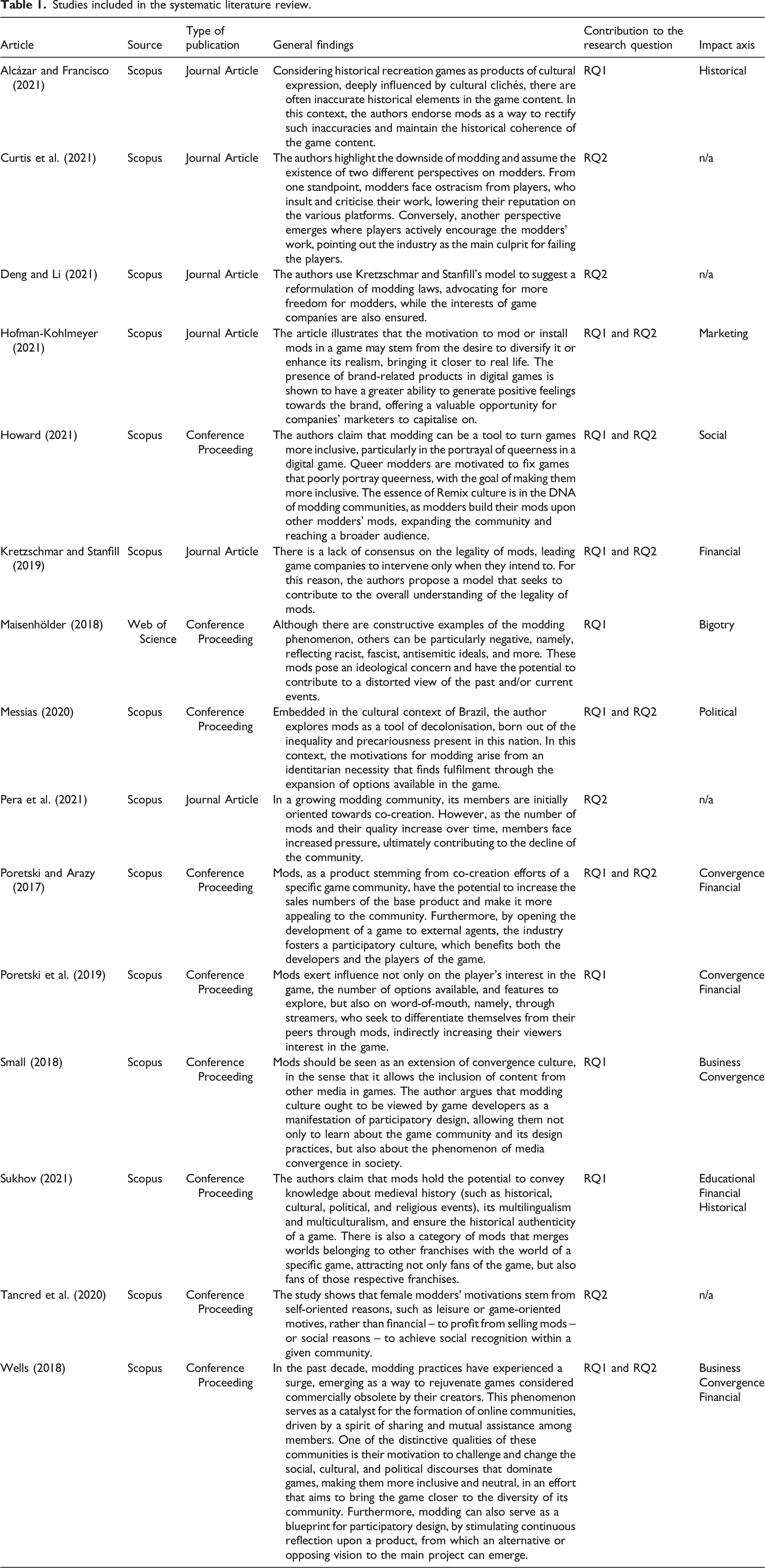
Studies included in the systematic literature review.
Discussion
Considering the expansion of mod culture that is being witnessed over the last decade (Wells, 2018), this systematic literature review sought to explore the ethical implications inherent in modding practices. To this end, the authors started by comprehending the impact exerted by mods on the overall gaming experience. Additionally, they delved into understanding how both players and game companies observe, interpret, and subsequently respond to the underlying motivations of modders.
How does the mod culture impact the overall gaming experience? Game companies recognised that modding was not a transient trend, but an inevitable phenomenon that significantly influences the digital games market (Deng and Li, 2021) and contributes to technological innovation within it (Pera et al., 2021). Recognising this situation, some companies have been including external agents in the process of developing a game (Poretski et al., 2019; Poretski and Arazy, 2017), fostering a participatory culture, which benefits both the companies and the community. One way to stimulate it is by providing modding platforms – such as Steam Workshop (Poretski and Arazy, 2017). Within these platforms, modders form communities with their own unique social dynamics (Pera et al., 2021), to which they hold a deep and strong sense of belonging (Hofman-Kohlmeyer, 2021), engaging in co-creation behaviours of mods for their favourite games (Poretski et al., 2019), sharing their work (Wells, 2018), and being helpful to one another (Pera et al., 2021; Wells, 2018), generating and disseminating knowledge that otherwise would be lost. The technology behind the online platforms where these communities thrive, reflects the informal nature of mod culture, where the most important element is the practicability of disclosure and interaction between its users (Wells, 2018). While it is undeniable that mods can negatively impact the gaming experience (Poretski et al., 2019), either by providing the player with an unfair advantage over his/her peers or by erroneously portraying or ridiculing certain social groups (e.g., Howard, 2021; Maisenhölder, 2018), the benefits outweigh any negative effects (Poretski et al., 2019). Accordingly, numerous studies advocate the potential of mods as a tool capable of enhancing or expanding games that have been on the market for quite some time (Alcázar and Francisco, 2021; Kretzschmar and Stanfill, 2019; Poretski and Arazy, 2017; Sukhov, 2021; Wells, 2018), which sometimes are already considered commercially obsolete (Wells, 2018) or technologically outdated (Sukhov, 2021). As a consequence of these enhancements – for example, graphics, rules, mechanics, and bug fixing – and expansions – delivering new quests, characters, items, and features – (Curtis et al., 2021; Poretski et al., 2019; Poretski and Arazy, 2017), the total amount of hours the game can offer increases substantially (Kretzschmar and Stanfill, 2019; Wells, 2018). This enhanced or expanded content not only makes the game more attractive to its community (Poretski and Arazy, 2017), but also ensures that players’ interest endures longer (Poretski et al., 2019; Small, 2018). Another aspect indirectly influenced by modding is word-of-mouth practices related to games, especially those perpetuated by streamers. Seeking to differentiate themselves from their peers by producing original content, streamers modify the games they play, indirectly piquing their viewers’ interest in the digital game (Poretski et al., 2019). Recognising these benefits, game companies have been introducing modding communities within the game development process in an effort to mitigate the costs and risks associated with it. This mutually beneficial approach fosters the activity and productivity of the modding community, causing it to develop more mods, which, in turn, will contribute to the financial success of the game (Poretski and Arazy, 2017). Because it follows the natural tendency of a market, the sales figures of a digital game grow substantially at its release, stagnating shortly afterwards (Poretski and Arazy, 2017). In this sense, mods are a way to counteract this pattern, by showing the ability to significantly increase the sales number of a digital game, with a strong correlation observed between the number of mods developed and the sales numbers of the game. Interestingly, the authors observed that this ability only applies to mods, since DLCs, official modifications developed by programmers affiliated with the game’s company, exhibit a lower capacity to impact the number of game sales (Poretski and Arazy, 2017). In fact, the role of the mod culture is so prominent within our contemporary society that the presence or absence of mods for a game becomes a decisive factor for many players when deciding to buy or skip it (Poretski et al., 2019) or opt to buy the PC version of a game in detriment of the console version. However, whether a game has more or less modding activity is not solely dependent on its players. Certain game characteristics are less likely to attract modders. Among these characteristics are games with closed worlds and linear narratives, simply because the goal of these games is to present a unique one-time experience to the player, akin to a movie. In contrast, open-world games exhibit a higher modding activity, precisely because, in general, the mod will not affect the main structure of the game, but rather complement it. This modular perspective fosters the ecology of mods and cooperation between teams of modders (Poretski and Arazy, 2017), that combine and recycle resources from different mods, building new mods on top of existing ones (Howard, 2021; Poretski and Arazy, 2017; Small, 2018), a practice intrinsically linked to the participatory and remix culture, contributing to the growth of the modding phenomenon and the diversity of the digital game audience (Howard, 2021; Small, 2018). One of the main hallmarks of online modding communities is their commitment to contest and reshape the social, cultural, and political discourses that dominate games, making them more inclusive and neutral, an endeavour that seeks to bring the game closer to its community’s diversity (Wells, 2018). A study conducted by Messias (2020) focuses precisely on the political dimension surrounding digital games in Brazil, highlighting the use of mods as a tool for decoloniality. According to the author, mods are a way of countering the inequality and the precariousness that affect people from the Southern Hemisphere. Modders, stimulated by co-creation practices and mutual support, are able to provide games that otherwise would not be available in the country, either for market or infrastructure reasons (Messias, 2020). From a social perspective, Howard (2021) introduces the modding phenomenon as a means to make games more inclusive, specifically by altering how queerness is portrayed. Modders who engage in the activity with this purpose primarily modify the game’s discourse and elements so that they either have a greater emphasis on queerness or portray it positively. In contrast to past decades, there is a growing effort among game companies to address the theme of queerness in games, although not always with the necessary sensitivity. In this respect, the role of indie games must be highlighted, often approaching the topic in a more considerate manner compared to mainstream games. Despite existing some clichés or flaws that demand attention, they often go unaddressed, particularly in the indie game market where mods are less common, and the potential audience is significantly narrower compared to more popular games. For this reason, modders are mainly dedicated to developing mods that rectify deficient or missing portrayals in widely played games, as is the case with Fallout 4. In this game, while the player can engage in a homosexual relationship, the visual art constantly references the character’s prior heterosexual marriage. This is where modders intervene, altering the game’s visuals to have a greater emphasis on same-gender attraction, either by modifying the game so that the player can be in a same-gender relationship right from the start or making it possible for the player to have the appearance of a femboy. Notably, the latter mod was built upon another mod that sexualised the appearance of female characters in the game, thus queernessing both the original game and the mod that objectified the female gender (Howard, 2021). On another front, the authors Sukhov (2021) and Alcázar and Francisco (2021) explore the modding phenomenon in historical role-playing games. Since this genre of digital games is a product of cultural expression, it is susceptible to cultural clichés, which leads to inaccuracies in its historical content (Alcázar and Francisco, 2021). In this sense, mods offer a solution to ensure the historical accuracy of the events represented in the game (Alcázar and Francisco, 2021; Sukhov, 2021). One of the features often incorporated in historical role-playing games is the possibility for the player to choose in which faction he/she wants to fight for. However, some may be locked, misdescribed, or simply inaccessible. Mods can be employed in this case as a manner of diversifying the game in terms of the available choices, encouraging players to embark on a virtual journey where the identity of the chosen faction is reflected in their individual actions and interactions with peers (Alcázar and Francisco, 2021). Sukhov (2021) also highlights that the continuous development and update of mods for this genre of games, sometimes in collaboration with professional historians, underscores their potential to transmit knowledge about medieval history – such as historical, cultural, political, and religious events – as well as aspects like multilingualism and multiculturalism. These mods can serve as a tool to motivate students to learn medieval history, either through the ludic aspect of the game, such as graphics or mechanics, or its narrative aspect. Moreover, depending on the content of the mod, it can also contribute to the development of administrative, military, and economic competencies. Furthermore, in alignment with the contemporary convergence culture, mods categorised as neo-medieval fantasy mods enable the transportation of worlds belonging to other franchises, such as Game of Thrones, Lord of the Rings, or The Witcher, into historical role-playing games. This not only engages the gaming community, but also attracts fans of these modern pop culture sagas to play with the game (Sukhov, 2021). Apart from the historical and educational dimensions, another recurring approach is the development of mods that embed brand logos and products (or that somehow are connected to the brand) in the context of a digital game. The main motivation for players to install mods with this specific content is the fact that they seek a way to build characters and spaces that are mimetic of their real life. An example of this transversality of brands can be found in Euro Truck 2, where a group of modders released a mod that allows players to explore cities, towns, and villages from Poland. While driving the truck, players pass by Aldi, Tesco, or McDonald’s buildings, see advertising for these brands on billboards along the road or even advertise them on their trucks. Unlike other media, the presence of such products in digital games exhibits a greater ability to generate positive feelings related to the brand, which can be profited by the companies’ marketers. Furthermore, there is an increase in the advertisement not only in the game, but across other media. Since modders often share their work on blogs, social networks, or video and streaming platforms, the brand’s message is also disseminated to their followers (Hofman-Kohlmeyer, 2021). The contribution of mods also extends into the business sector, where certain game developers and designers view them as a form of participatory design (Small, 2018; Wells, 2018). By analysing the mods that are being developed for a certain digital game, game developers and designers can familiarise themselves with the game’s community, its design practices (Small, 2018), and what kind of features it expect to find (Curtis et al., 2021; Messias, 2020), but also can solve social concerns, such as understanding what content the queer community wants to see amended or incorporated into digital games (Howard, 2021). Furthermore, modders’ behaviour can also serve as inspiration for the development of other products, since the team is stimulated to continuously reflect upon an artifact, from which an alternative or opposite vision to the main project can emerge (Wells, 2018). Even though many constructive examples of modding have been described throughout this section, other examples can be particularly negative, reflecting racist, fascist, or antisemitic ideals. A study conducted by Maisenhölder (2018) portrays this negative and intolerant aspect of mods through an analysis of those available for Prison Architect, a game where the player is required to manage a prison. Some of the mods for this game, which can be found on Steam Workshop using terms like Nazi, Jew, or Auschwitz, reveal a transformation of the game’s concept to an ideology entirely opposed to that of a prison. While in the latter the goal is to reintegrate the individual back into society, concentration and extermination camps promote ideologies that seek to remove individuals or specific religious and cultural groups from society, reminiscent of historical events like World War II. One of these mods, named Final Solution, supplies players with creative means to build concentration and extermination camps. Even though the term Jew is not used in the description of the mod, it is hinted that the groups that are going to inhabit the spaces are Jewish. This is noticeable by reading the mod description, which recommends hiring doctors from the Schutzstaffel (SS) to operate the furnaces or to put prisoners to work in the Sonderkommandos. The development of mods with such content raises ethical concerns because it is not just a matter of managing an extermination camp, which is already an uncommon desire by itself. These mods, sometimes accompanied by easily identifiable visual descriptions or symbols (e.g., swastikas), glorify the Nazi regime and the behaviour of its members. Moreover, the comments made by different players across the platforms where these mods are available only further contribute to the ridiculing of the regime’s victims. An example of this can be found in the description of another mod that glorifies the Nazi regime, where it is suggested that dead prisoners can be burned and turned into trash. Although it is unknown the psychological impact that such content may have on players, these mods may contribute to a wrong or undesirable construction about this historical event, as well as its implications for the present and the future. One example of this, particularly relevant in the European context, involves refugees seeking shelter. Another mod created for the game Prison Architect, named Refugee Centre Mod, endorses the placement of refugees in prison-like camps, where, in the comments section, incitement to torture can be observed. The motivation for both creating and using these mods may stem from the players’ culture and education, where it is socially unacceptable to ridicule or take advantage of the suffering of others, causing them to turn to games to vent such actions (Maisenhölder, 2018).
How do players and game companies perceive and respond to modders’ motivations? Just as the gaming experience is influenced in diverse ways, the motivations propelling modders’ actions are equally varied and multifaceted. Studies indicate that these motivations may stem from an identity need that is only fulfilled by expanding the available options in the game (Messias, 2020), from a sense of unfairness fostered by game companies (Curtis et al., 2021), from a desire to diversify or increase the game’s realism, bringing it closer to real life (Hofman-Kohlmeyer, 2021), from being a satisfying self-improvement activity (Deng and Li, 2021), or from having inadequate or inaccurate portrayals of queerness, prompting modders to rectify or reconfigure existing content (Howard, 2021). Expanding on the aforementioned motives, Tancred et al. (2020) provide additional insights into the motivations of female modders, emphasising self-oriented motives – for example, leisure or self-learning – or game-oriented motives – for example, a desire to adapt the game to their preference – rather than financial or social reasons. Indeed, challenging the stereotypical belief within modding communities that female modders predominantly focus on creating cosmetic mods, Tancred et al. (2020) asserts that there is no singular archetype for female modders. Women modders engage in the creation of different mod types, play different games, and exhibit diverse motivations for mod development. Although a large number of women modders contribute to the development of cosmetic mods, there is also a noticeable rise in the participation of female modders in the creation of more complex mods, such as those that modify the game environment or mechanics (Tancred et al., 2020). While there is a wealth of motivations to develop mods, there are also multiple factors that discourage modders from continuing their activity. Although competition in the early stages of a modding community fosters co-creation practices, the subsequent increase in the number and quality of mods creates pressure on community members, resulting in a decline in modding activity and, consequently, in the community itself. Apart from competition, the theft of mods and ideas perpetuated by other modders, the lack of support from game companies, and the deliberate reduction of resale value of previous editions in order to introduce new ones – thus contributing to the programmed obsolescence of a game – not only dissuade existing members of the community from developing new mods, but also deter new modders who intend to contribute with creative content (Pera et al., 2021). However, this demotivation cannot be solely attributed to game companies or other modders. The gaming community holds a dichotomous view of the modding phenomenon. While some players encourage modders’ work, blaming game companies as the main culprits for failing the community, others ostracise modders as a heterogeneous group, insulting and criticising them, purposely damaging their reputation within modding communities. This distorted perspective, misclassifying modders as cheaters or hackers with malicious motivations, significantly impacts players’ experiences, leading some to play less or delete friends whom they suspect of being modders. It is indeed undeniable that there are modders who purposely disrupt other players’ gaming experience or, in the process of installing a mod, install malicious software that allows them to spy on, harass or even control other players. This behaviour, however, is not the norm in modding communities, but is rather related to the individual personality of the modder. Just as there are modders who engage in malicious behaviours, there are also modders whose intent is to help other players (Curtis et al., 2021). In parallel to these factors, the industry perspective also presents a contrasting dichotomy. This spectrum spans from an antagonistic stance, as exemplified by Ubisoft, vehemently opposing mods under the conviction that their games inherently hold the capacity to captivate players devoid of modifications, to a collaborative perspective, illustrated by Steam and Blizzard, which claim that modders’ creative endeavours should be acknowledged and remunerated (Deng and Li, 2021; Kretzschmar and Stanfill, 2019). This divergence helps to accentuate the existing duality within the legal and regulatory framework governing modding. In reality, game companies do not consistently adhere to this framework (Kretzschmar and Stanfill, 2019). As emphasised by Kretzschmar and Stanfill (2019), companies’ legal actions hinge on the content of the mod and who stands to benefit from its development: the company, consumers, both, or neither. In this regard, the authors propose a model that contributes to the understanding of the social and economic factors surrounding the legality of modding. In the first quadrant are featured mods that benefit both parties – the game company and the community –, typically requiring no legal intervention. The second quadrant illustrates cases in which it is legitimate to pursue legal action since the mods developed do not benefit either party (e.g., rape mods). In the third quadrant is presented a business perspective wherein, as long as the game company profits, concerns about exploited or harmed consumers may be overlooked. This quadrant covers nudity mods that objectify women, which, despite being culturally and socially unacceptable, may be tolerated if they boost game sales. In the fourth and last quadrant are mods that benefit the community, but the game company either has no benefit or is harmed (e.g., mods that remake games), prompting the latter to seek legal action. The authors then outline three possible scenarios for the future legal framework of the mod culture: 1) consensus remains elusive; 2) game companies will try to gain more control over modding activity; 3) modding becomes normalised, leading to the creation of laws that financially compensate modders for their creative work (Kretzschmar and Stanfill, 2019). It is precisely on this last point that Deng and Li’s (2021) study comes into focus. The authors build upon the Kretzschmar and Stanfill’s (2019) model, expanding it a suggesting a reformulation of the legal framework so that modders are allowed to have more freedom, while the interests of game companies are also granted. Thus, Deng and Li (2021) propose a bifurcation of Kretzschmar and Stanfill’s (2019) model into two branches. The right branch of the model revolves around the social benefit of mods and seeks to reshape the copyright regime by giving modders the legal right to modify digital games without the need for permission, but with the obligation to compensate the game company if they decide to sell their creative work. Despite this proposal, the question of remuneration remains a point of contention within the modding community (Deng and Li, 2021). Whilst some modders argue that their creative work should be remunerated (Deng and Li, 2021; Pera et al., 2021), others contend that the gratuitousness is what allows mods to maximise the enjoyment and entertainment of those who seek to use them. In the opposing branch of the model, the focus is on the potential harm that mods can inflict. As a matter of fact, low-quality mods can undermine the players’ experience and, inherently, damage the reputation of the game company. Yet, this behaviour is not exclusive to modders; in the heat of the competition, rival game companies might develop mods that deliberately introduce bugs into a rival game or generate entropy in their community, once again pushing players’ interests into a corner. In response to this, the authors propose a regulatory system, operated by game companies, where they would take responsibility for the mods released, being forced to cease having an exclusively profit-oriented perspective and consider the broader impact of mods on all stakeholders (Deng and Li, 2021).
Conclusion
The evidence derived from the analysis of the studies included in this systematic literature review underscores the need to move beyond the narrow perception of mods as mere tools for updating a game’s interface. Instead, mods should be embraced as an integral component of the convergence culture defined by Jenkins (2006), as well as the remix culture (Lessig, 2008), since they provide players with the necessary tools to bring content from different media or other game franchises into the game world (Small, 2018). Nevertheless, to what extent can this malleability of content from different media forms into digital games be considered ethically acceptable? In this systematic literature review, the authors sought to debate the ethical considerations of modding by scrutinising the impact of mods on the overall gaming experience and how both players and the industry perceive and react to the motivations of modders.
As a result of this review, it became clear that mods are a powerful tool that has transformed the digital gaming industry. Mods’ ability to revitalise a commercially or technologically invalid game, using co-creation practices grounded in participatory culture and remix culture, attests to their ability to unite players from different socio-cultural backgrounds and counter political, social, and cultural discourses that may dominate digital games. Its benefits also spill over into the business sector, where an analysis of modding practice can prove to be an enriching way to understand a game’s community and its design practices, and consequently provide a more adequate response to their needs. Moving away from the broader implications on the gaming experience, the understanding of modders’ motivations reveals a lack of uniform alignment between players and the industry. As previously identified by Sotamaa (2010) and Poor (2014), modders are predominantly driven by motives of self-improvement, leisure, or the desire to adapt the game to their ideals. While this constitutes the prevailing norm within the modding community, a marginal subset of modders engage in intentional malicious actions, aimed at disrupting other players’ ecosystems (Curtis et al., 2021), thereby tarnishing the term modder. Beyond this aspect, the planned obsolescence of a game, the negativity expressed by the gaming community, and the lack of support from the developers disincentivise modders from continuing their modding activities. Additionally, modding a game presents a double-edged sword scenario. Even if problems are addressed and the community is satisfied and fulfilled, it might create a ‘problem solved’ perception for game companies, which can cause them cease proactive efforts in addressing certain aspects, assuming modders will resolve them (Howard, 2021). Moreover, the legal intricacies persist as one of the most pivotal issues to address. The appropriation of third-party content has been an ongoing theme for more than a decade (Deng and Li, 2021; Kretzschmar and Stanfill, 2019; Postigo, 2008). While Web 2.0 and participatory culture have contributed to breaking down boundaries between producers and consumers, copyright legislation concurrently provides cultural industries with a tool to control the form and flow of cultural goods, erecting a barrier between consumers and the content they desire to obtain (Postigo, 2008). A comparison with the conclusions drawn by Postigo (2008) underscores the glaring inadequacy of the existing legal framework for modding, operating as a tool of censorship that favours the gaming industry, suggesting that little or no progress has been made in the past almost 15 years. Within the digital games context, modders and players view the current copyright legislation a major impediment to participatory culture (Postigo, 2008). The demarcation between legality and copyright infringements becomes delicate in this scenario. Modding communities contend that the transformative nature of mods alters the original copyrighted content, thus justifying their free usage (Kretzschmar and Stanfill, 2019). Moreover, asserting that their creations should not be considered copyright violations due to the absence of monetisation, modders advocate for creative rights over their content, as long as they do not intend to commercially exploit it. This proposal reflects modders’ desire to reconcile divergences and address ethical constraints between modders and the game industry (Postigo, 2008). Beyond delving into its ethical legality, another dimension open for debate is its social implications. Regrettably, certain modders engage in the creation of offensive or inappropriate content that propagates violence or fosters hatred towards individuals, social, political, ethnic groups, or even entire nations. The example given by Maisenhölder (2018) is sounding and demonstrates the exploiting of modding’s unrestricted creativity to glorify the Nazi regime and the behaviour of its members. Nevertheless, it is equally undeniable that certain modders have been making concerted efforts to contribute to the inclusivity of games, as is addressed in Howard’s (2021) example. Considering these two extremes of boundless creativity, it becomes evident that altering a digital game with the intention to incite acts of violence stands in stark contrast to modifying a digital game with the purpose of enhancing inclusivity and challenging the representation of queerness. Some ethical issues can also be identified between modder-to-modder and modder-to-player relationships. The juxtaposition of white-hat and black-hat modders, analogous to the white-hat and black-hat hackers, illustrates the divergent intentions within the modding community. While white-hat modders’ purpose is to help players, mainly by fixing bugs in the game, improving menus or integrating content from other games or media, black-hat modders engage in nefarious behaviours by stealing mods and ideas from other modders, purposely disrupting other players’ gameplay through the use of cheats, or releasing mods that install malicious software on the other player’s computer, allowing the modder to spy, harass, control or even steal the player’s data (Curtis et al., 2021; Pera et al., 2021).
Current challenges and research gaps
Revisiting the ethical discourse on what we should do, what we can do, and what we want to do, modding emerges as a wondrous playground for personal experimentation and exploration along these decision paths. Nevertheless, there are some challenges that require further exploration so the ethical or unethical nature of modding practices can be fully understood. The legal framework is a paramount example of these challenges and one set to be complex, as it has been debated for the past 15 years without reaching consensus. Additionally, defining what is ethically right or wrong presents an extra layer of complexity when subjectivity intertwines with the process, and the interpretation of a mod can be swayed by each player’s culture, education, and life experience. Beyond these challenges, the analysis of existing studies has unveiled research gaps that deserve consideration. The identification of these gaps not only underscores the complexity of the ethical dilemmas associated with modding, but also advocates for ongoing research to enhance our overall understanding of mod culture and its dynamics.
Unethical mods
The presence of intensely violent games on websites affiliated with extremist movements, modded to replace enemies with minorities, is not a new phenomenon (Selepak, 2010). However, a new concern arises when mods depicting condemnable behaviours – such as torture, paedophilia, or rape – or endorsing homophobic, racist, fascist, or antisemitic ideals are disseminated in open communities, frequented by a diverse audience of distinct age groups. Hence, it is crucial to research this phenomenon and the psychological impact that these mods have on both the players who engage with them and those who have lived through traumatic life experiences and come into contact with these mods. The hate speech perpetuated in these mods poses a challenge for conventional censorship measures (Munn, 2023), emphasising the need to adopt stricter control policies, such as introducing verified accounts as a prerequisite to publish mods or increasing the efficacy of reporting tools. The core of the issue, however, should also be comprehended. It ought to be analysed whether there is a potential connection between engagement with such mods and real-world behaviour and attitudes. Are these mods merely attempts at ‘humour’ by random modders (Jessie and Nicolas, 2012) or do they function as recruitment and indoctrination strategies for extremist groups (Selepak, 2010)?
Further concerns arise when considering the potential psychological impact for players who have experienced traumatic life events. While certain extremist movements websites may ‘conscientiously’ present content warnings due to the violent nature of the modded games they share – mainly with the intent of protecting them from legal actions – (Selepak, 2010), similar precautions are usually not observed in most of the platforms where these mods are disseminated: open communities with weak or minimal moderation, lacking filters and gatekeeping. These characteristics contribute to an environment where content may not be adequately screened or controlled, facilitating the dissemination of a wide range of mods to a large audience, including those that can be harmful or objectionable, analogous to those reported by Maisenhölder (2018). Here, the discussion extends beyond the age-based gaming rate debate or hide disturbing content features, where players have control over what they want or do not want to experience while playing a game. In this scenario, players may unexpectedly come into contact with these mods without actively seeking or participating in these communities, either by encountering them while reading social media posts or stumbling upon them in other online forums or platforms. For this reason, it is important to research the extent to which exposure to such mods, whether intentional or unintentional, affects the psychological well-being and vanilla game experience of those players who have had traumatic life experiences. For example, can a player who has experienced a refugee situation continue playing a game like Prison Architect after reading or seeing a publication about the Refugee Centre Mod without being reminded of those events during gameplay?
Subjective mods and cross-culture concerns
The digital games market has experienced rapid growth, firmly establishing itself as one of the fastest-growing markets and a staple of contemporary culture. This surge in popularity has not only positioned it as a major player in the entertainment industry (Richter, 2021), but has also resulted in a larger and more diverse community participating in the world of gaming than ever before. With this expansion, a series of concerns regarding subjectivity and the perception that mods may have across different cultures begin to emerge. This prompts the need to understand how and to what extent modded content, especially when depicting historical or socio-political events, sways players’ perceptions and biases. Here, the focus should not be on whether the content is objectively right or wrong, but rather on how cultural values shape the understanding of modded content and whether this understanding carries over into the real world and influences the way people see each other, especially in critical areas such as human rights, religion, and politics.
Mods for inclusivity
Although modders contribute to inclusivity in themes related to gender and queerness, as Howard (2021) reports, in this systematic literature review no studies were found addressing mods as a method to enhance accessibility. Games, like any other form of media, present challenges to people with disabilities, ranging from visual or hearing impairments to motor disabilities, cognitive impairments and more. Despite the complexity of creating a universal solution, formulating guidelines specific to the gaming context could help modders not only in developing new mods that improve the accessibility of a game – whether by increasing the customisation of visual and audio settings or developing entirely new mechanics tailored to a specific audience – but also in adapting existing mods so that they can be used by a wider and more diverse audience.
Artificial intelligence and modding
With the ongoing expansion and broader adoption of artificial intelligence, it is increasingly important to understand its potential impact on reshaping the entire modding ecosystem. While it can be used to streamline mod development and gradually attract new modders with limited technological skills, attention must be drawn to the potential drawbacks of relying on artificial intelligence, particularly in terms of transparency, data privacy and copyright, which introduce additional challenges to the already complex legal framework.
Limitations
The conclusions the authors draw should be considered in the context of certain limitations. Regarding the search query, it is necessary to confirm whether there were any studies that utilised the term modification instead of mod when addressing digital games. Additionally, since modding is not a novel concept and has been around for a few decades, increasing the time span or removing the publication year restriction from the inclusion and exclusion criteria could potentially increase the number of studies analysed and enrich the findings of this systematic literature review.
Footnotes
Acknowledgements
The authors would like to acknowledge Fundação para a Ciência e a Tecnologia for funding this project, under the Grant Agreement No. 2021.06634.BD.
Declaration of conflicting interests
The author(s) declared no potential conflicts of interest with respect to the research, authorship, and/or publication of this article.
Funding
The author(s) disclosed receipt of the following financial support for the research, authorship, and/or publication of this article: This work was supported by the Fundação para a Ciência e a Tecnologia (2021.06634.BD).
