



Abstract
This article investigates the power of audio as a storytelling medium and its capacity to provide immersive narrative-based experiences. In particular, it examines the potential of immersive or spatial audio to engage young people with the complex and pressing issue of racism by focusing on the artwork [re]locate: a multi-channel sound installation revisiting the racially motivated murder of Stephen Lawrence in 1993. [re]locate metaphorically places the audience at the bus stop where Stephen Lawrence was attacked, and allows them to experience an audio-only reconstruction of events associated with his murder and its aftermath. Based on a reflexive thematic analysis of the qualitative feedback elicited after encounters with the artwork, the article seeks to understand young people’s perspectives on events, their sense of engagement with the story and the aesthetic and technical features of the installation that create a sense of immersion, and induce presence. It argues that the perceived potency of the artwork and its ability to engage young people with the issue not only resides in the inherent qualities of sound, but also in the capacity of the spatial audio design of the installation to heighten the sense of immersion, induce presence and enhance cognitive and emotional perspective taking.
Keywords
Introduction
The audience for immersive storytelling – typically favouring experiences involving visual media technologies through 360-degree video and virtual reality (VR) – is growing (Bennett et al., 2021), offering creative practitioners the potential to experiment with new ways of engaging audiences to explore representations of real life and address social issues. Whilst these immersive technologies have found their way into new spaces such as gaming, heritage, theatre and journalism (Bennett et al., 2021), research into audience perspectives on the capacity of audio-only environments to provide highly immersive narrative experiences remains underexplored because of the primacy of visual storytelling, and the design and rendering of sound in simulated or virtual environments typically serves to reinforce the veracity of visual media (McArthur, 2017).
This article investigates audio storytelling as a representational form, and examines the potential of immersive or spatial audio to engage young people with the complex and pressing issue of racism in contemporary life. It focuses on [re]locate, a multi-channel sound installation revisiting the racially motivated murder of Stephen Lawrence in 1993, experienced by pupils from secondary schools in the Chichester area during an exhibition of the artwork at the Otter Gallery (University of Chichester) in late 2015. The sound installation places the audience in the position of ‘bystander as witness’ by metaphorically transporting them to the bus stop where Stephen Lawrence was fatally attacked, and allows them to encounter an audio-only reconstruction of events that took place on the night of his tragic murder and its aftermath. The immersive story is conveyed through pre-recorded dialogue, derived from witness testimony from the Stephen Lawrence public inquiry (Macpherson report, 1999), and ambient or environmental sounds of the street.
Based on a reflective thematic analysis (Braun and Clarke, 2006, 2019) of qualitative feedback gathered during the outreach work with secondary schools in Chichester, the article seeks to understand students’ perspectives on their experience of the installation, their sense of engagement with the story and, related to this, the technical and aesthetic features of the installation that create a sense of immersion and a feeling of being present within the story. Emphasis is placed on students’ thoughts, emotions and feelings and their descriptions of mental imagery arising from the experience, rather than on measuring or evaluating the persuasive potential of the story or its ability to bring about attitudinal and behavioural change. The interrelationship between immersion, the psychological feeling of presence and their emotional responses to the story is also explored.
A theoretical framework for understanding audience experience of immersive story environments
To gain a better understanding of audience experiences of immersive stories, consideration is given to theory underpinning the ability of new media technologies to induce a sense of immersion as well as to key narrative constructs: transportation, narrative engagement and identification, all of which describe aspects of the mental or psychological processes involved in being absorbed in a story.
Immersive media, technical immersion and presence
Popular claims of the special power of new media technologies (360-degree video and virtual reality, etc.) to provide unique, individualised and embodied narrative experiences are based on their affordance of immersion. Described by Murray as ‘the experience of being transported to an elaborately simulated place’ (1997: 99), ‘technical’ immersion refers to the technological features of a simulated or virtual environment that create the illusion of being surrounded by an alternative reality, and the degree to which the system can deliver this immersive effect to our senses; that is, the extent (objectively quantifiable) to which it is inclusive, extensive, surrounding and offers a vivid illusion of reality, etc. (Slater and Wilber, 1997). 1 An alternative view of ‘technical’ immersion, proposed by Witmer and Singer (1998), is that of a psychological state involving the perception of being surrounded by, and included in, an environment that delivers a constant flow of technology-provided stimuli. The assumption is that the more isolated from the actual physical environment one feels, the greater the sense of immersion in the simulated world.
Immersive media technologies thus allow the audience to feel as if they are part of the simulated environment, and this immersive effect induces ‘the (psychological) sense of presence’ within the story world, often described as the feeling of ‘being there’ (Slater and Wilbur, 1997). Witmer and Singer (1998) proffer a definition of presence (derived from the experience of teleoperators and relating to telepresence) as ‘the subjective experience of being in one place or environment, even when one is physically situated in another’ (1998: 225). Other conceptualisations of presence have been described in the broader literature, highlighting the complexity and multi-dimensionality of this psychological construct. Physical or spatial presence, for example, is concerned with the feeling of being physically located in a simulated space, whereas social presence refers to the sense of being co-located and involved in social interaction with others, either virtually or remotely (Rowe et al., 2007). These dimensions of presence are of particular interest for immersive audio design, given the absence of visual stimuli.
Narrative experience: Transportation, narrative engagement and identification
The experience of being mentally drawn into a story or the feeling of being ‘lost in a story’ is a well-known psychological effect triggered by a narrative itself, that is, by particular features of its content and structure (Green, 2021). Scholars in a number of disciplines including cognitive and media psychology have focused on the cognitive mechanisms involved in being ‘pulled in’ to a story and the conditions under which these processes occur, seeking to objectively measure different aspects of the narrative experience (Busselle and Bilandzic, 2009; Cohen, 2001; Gerrig, 1993; Green and Brock, 2000).
According to narrative transportation theory (Gerrig, 1993; Green and Brock, 2000, 2002), transportation is a distinct mental process involving the convergence of attention, imagery and feelings, ‘where all mental systems and capacities become focused on events occurring in the narrative’ (Green and Brock 2000: 701). When stories are absorbing, audiences become engrossed in them: [they] leave the real world behind and step into the world created…their interest is captivated, they may experience strong emotions and have vivid mental images. They may not notice their immediate surroundings or the passage of time. (Green, 2021: 87)
Transportation has been compared to the experience of flow (Csikszentmihalyi, 1997), and whilst these constructs share similarities in that they both involve the individual losing track of time and a sense of self when absorbed in an activity, flow states occur in a wider range of contexts including games, sports and the arts. In contrast, transportation is a response to a narrative text and involves emotional engagement and the construction of mental imagery (Green, 2021; Hamby et al., 2018). The degree to which an individual is transported into a story world is thought to influence the potential for the story to modify their opinions and beliefs (Green, 2021).
Busselle and Bilandzic (2009) have developed a more general framework for considering narrative experience in the construct of ‘narrative engagement’, proposing four interrelated dimensions: narrative understanding, attention, emotional engagement and narrative presence. Taking a mental models approach, they foreground narrative understanding and the mental activity and attention involved in building models to represent a story, its settings, characters, situations or problems. From a mental models perspective: flow with or transportation into a narrative occurs when a reader or viewer becomes completely focused on the activity of comprehension – creating and updating the mental models that represent the story. (Busselle and Bilandzic 2009: 324)
In order to comprehend a story, audience members make a deictic shift involving mentally switching to the time and location of the story to adopt a particular point of view or perspective from within the story world (Hamby et al., 2018).
2
According to Busselle and Bilandzic (2009), this deictic shift constitutes cognitive perspective taking – a process that is necessary for the audience to understand story-related events and situations (narrative understanding), but also for them to be involved in the process of emotional perspective taking (emotional engagement). Emotional engagement with a story may include feelings of sympathy for and empathy with one or more of the characters, with the latter arising through the process of identification: when an audience member adopts the perspective of a character and effectively puts themselves in the character’s shoes to understand and experience his or her emotions (Cohen, 2001). Cohen describes identification as: a process that culminates in a cognitive and emotional state in which the audience member is aware not of him- or herself as an audience member, but rather imagines being one of the characters in the text (2001: 252).
Narrative presence, the final dimension described by Busselle and Bilandzic (2009), is the feeling of having left the real world and entered the story world, or the sense of being transported into the story world, and involves ‘the sensation of being present in a narrative world due to comprehension processes and perspective-taking’ (2009: 325). In contrast to the earlier definition of technology-mediated presence, narrative presence is viewed as an affective-cognitive construct that emphasises the meaning of the experience, and is concerned with the audience’s perceived relationship with the content of the story including judgements about plausibility, coherence and realism; it engenders feelings of participation in the story world, but may also give rise to disembodied observer experiences (Rowe et al., 2007).
Conceptually speaking, transportation, identification and narrative engagement share some core similarities, but each construct highlights a different way of being absorbed or engrossed in a story. Transportation involves cognitive and emotional processes with the generation of mental imagery. Identification, however, narrows the focus of these processes to take the perspective of specific characters. Narrative engagement foregrounds narrative understanding and is able to promote different forms of emotional engagement; however, it does not describe mental imagery (Hamby et al., 2018).
Immersion and empathy: The mediating role of presence
The capacity to offer experiences of alternative, self-contained story worlds as if witnessing them first-hand is a hallmark of immersive media technologies, and underpins popular claims of their empathy-enhancing potential. The underlying premise is that these technologies heighten the feeling of being present within the story world, and this in turn has the effect of enhancing the audience’s empathic responses to the story. This empathy-inducing capacity of immersive media technologies is thought to be directly linked to their ability to aid perspective taking. However, empirical studies into the relationship between technical immersion and empathy have yielded mixed results, indicating that the role of presence as a mediating influence may in fact be more complex (Cummings et al., 2021).
More recent research by Cummings et al. (2021) has uniquely focused on the subdimensions of presence: namely, self-location, co-presence and social realism and their influence on empathy states, where self-location involves perceiving oneself as inhabiting a spatial environment; co-presence is the feeling of being present (co-located) with others depicted within the simulated environment; social realism refers to judgements about the perceived reality of the story (Rowe et al., 2007). Comparing the experience of a news story via 360-degree video (using a head-mounted display) with that viewed as video on a desktop display or delivered as text only, Cummings et al. (2021) examined the effect of these presence subdimensions on cognitive, affective and associative empathy (respectively corresponding to the process of perspective taking to adopt a viewpoint, one’s emotional reactions to others, and the sense of bonding or identification with others). The study revealed that 360-degree video generated stronger self-location and co-presence. Significantly, self-location and co-presence enhanced both affective and associative empathy, while co-presence alone increased cognitive empathy; social realism, however, had a negative effect, decreasing associative empathy (Cummings et al., 2021). So the fact that the audience had a stronger sense of inhabiting the story world (self-location) and of being co-located with others (co-presence), increased their emotional engagement with the story and the events portrayed. This nuanced approach to empathy and presence as multi-dimensional constructs may be key to elucidating the mechanisms by which technical immersion may augment empathic responses.
Immersion, embodied cognition and aesthetics: Sensing and sense-making
Immersive media technologies have the capacity to offer audiences embodied experiences by perceptually situating the audience within the immersive story world. This intertwining of the body and mind is in keeping with the concept of embodied cognition: ‘the idea that the body or the body’s interactions with the environment constitute or contribute to cognition’ (Stanford Encyclopedia of Philosophy, 2021). The neuroscientist Antonio Damasio in his pioneering research dating back to the 1990s eloquently countered dualist theory in which Descartes split the mind from brain and body. In his book, Descartes’ Error (1994), Damasio explored the link between emotions and rational thought, proposing that: the body, as represented in the brain, may constitute the indispensable frame of reference for the neural processes that we experience as the mind; that our very organism rather than some absolute external reality is used as the ground reference for the construction we make of the world around us and for the construction of the ever present sense of subjectivity that is part and parcel of our experiences; that our most refined thoughts and best actions, our greatest joys and deepest sorrows, use the body as a yardstick. (Damasio, 1994: xxvi)
This notion of embodied cognition is highly relevant to audience experiences of immersive stories, and it is assumed that interactions with these environments via the body and its sensorium have a role to play in shaping our thought processes and emotional responses and, consequently, how we understand stories. The experience of spatial immersion, for example, involves sensory-motor responses and adjustments by the audience, and is thought to contribute to the psychological feeling of ‘bodily presence’ (Zhang et al., 2017). Spatial immersion, therefore, may aid both cognitive and emotional perspective taking, and this has implications for immersive story design.
Closely related to the embodied experience of immersive stories is the question of aesthetics and aesthetic reaction. In its more general sense, aesthetics can be understood as a ‘theoretical enquiry into sensations and thoughts that arise within art experience’ (Marchiori, 2013: 82), where the aesthetic reaction or response by the audience may be linked to the content and media form. In Investigative Aesthetics, Fuller and Weizman build upon this definition of aesthetics, focusing on technological design and the development of techniques that have the effect of rendering the audience attuned for ‘sensing – the capacity to register or be affected – and sense-making – the capacity for such sensing to become knowledge’ (2021: 68-69). This extended definition warrants consideration in the design of immersive stories; the psychological state of presence may have a crucial role to play in this process.
Immersive (spatial) audio and sound installation art
Immersive or spatial audio refers to a range of formats – binaural, multi-channel, surround and 3D sound – designed to produce an expanded sonic field (or sound space) to give the impression that the sound is coming from around the listener; that is, a sense of spatial immersion (Wincott et al., 2021). All these immersive formats produce a soundscape in a 360-degree horizontal plane to envelop the listener. While innovations in cinematic and theatrical sound design have been bringing spatial audio experiences to cinema-goers and live theatre audiences for decades, the latest 3D audio technologies (e.g. Dolby Atmos) can provide a more fully immersive or multidimensional experience by placing audio above and below the listener. These advanced spatial audio formats are expanding to supersede traditional stereo sound, particularly in the field of gaming. Their availability on music streaming platforms such as Apple, Amazon Music and Tidal in recent years is thought to be driving consumer interest and demand in other areas, offering new immersive experiences designed to deliver a diverse range of content for art exhibitions, live music concerts, theme park attractions, etc. (Inavate, 2021). With binaural audio technology now readily available for streaming, downloading and sharing, there has been a resurgence in the use of this 360-degree format in radio and podcasting (McHugh, 2014; Wincott et al., 2021), and a growth in popularity of other audio-only experiences such as headphone theatre (Kendrick, 2017).
Spatial sound has a history pre-dating its visual counterparts in VR and 360-degree video. In Stereophonica (2021), Gascia Ouzounian traces the evolving relationship between sound and space from the scientific experimentation and military and commercial applications of binaural spatial listening during the early 19th century to the mid-20th century, to the more recent aesthetic and social practices of artists working in sound. Prior to the 19th century, the concept of space was regarded as a function of visual perception, with auditory stimuli considered to simply offer an indication of location or directionality. Ouzounian (2021) describes how this ocularcentric notion of space was disrupted and transformed in the 1960s and 1970s with the development of the field of sound installation art, when the science of spatial listening (and audio technologies associated with it) found its way into experimental artistic practices with the birth of a new aesthetics of space. 3
Occupying a liminal space between the traditional disciplines of sculpture, music and architecture, the emergence of sound installation art marked a fundamental shift in our understanding of sound and space, with the ‘ascendency of site in the aural imagination’ (Ouzounian, 2021: 105) and new modes of audience interaction in aesthetic experience. Ouzounian argues that ‘sound artists profoundly reconceptualised the meaning of “spatial sound” and its abilities to reflect multiple dimensions of social and political life’ (2021: 123). Creative exploration of the art form offered the potential to contribute to an existing body of ‘critical-sonic-spatial practice’ through the unique convergence of sound installation art and storytelling, and to deepen audience engagement with and understanding of the complex issue of racism.
Representing Stephen Lawrence’s story in immersive (spatial) audio
Racism and the murder of Stephen Lawrence
Stephen Lawrence was a black teenager who was fatally stabbed in a racist attack by a gang of white youths near a bus stop in Eltham southeast London on the evening of 22 April 1993, as he made his way home with his friend Duwayne Brooks. His murder received extensive coverage in the British media but only after an inquest inquiry returned a verdict of unlawful killing in 1997, stating that Stephen Lawrence had been the victim of a ‘completely unprovoked racist attack by five white youths’ (Cited in Macpherson, 1999: 2.5). Focussing national attention on the issue of racism in British society, the case revealed both the abhorrent racism of the suspects and the deep-seated racism within the police force, with Stephen Lawrence becoming a household name (Macdonald, 2003).
The Stephen Lawrence Public Inquiry, published as the Macpherson Report in 1999, was highly critical of the police handling of the murder investigation, concluding it was ‘marred by a combination of professional incompetence, institutional racism, and a failure of leadership by senior officers’ (Macpherson, 1999: 46.1). The report defines institutional racism as: the collective failure of an organisation to provide an appropriate and professional service to people because of their colour, culture or ethnic origin. It can be seen or detected in processes, attitudes and behaviour which amount to discrimination through unwitting prejudice, ignorance, thoughtlessness and racist stereotyping which disadvantage minority ethnic people. (Macpherson 1999: 6.34)
This public inquiry marked a turning point in British race relations, stimulating widespread public debate about the nature of policing of black and minority ethnic communities. The Macpherson report proposed a raft of recommendations designed to tackle institutional racism, with the introduction of measures specifically aimed at transforming police attitudes to race relations and improving police accountability, but its influence extended more widely to effect change in other public institutions and bodies such as the civil service, national health service and judiciary. Notably, the partial abolition of the ‘double jeopardy’ law in 2012, paved the way for a retrial of Gary Dobson, one of the five key suspects (Quinn, 2019). Based on new forensic evidence coming to light, both Gary Dobson and David Norris (also identified as a key suspect) were convicted of Stephen Lawrence’s murder, and sentenced to life imprisonment the same year.
Three decades on, and in the wake of the murder of George Floyd by Minneapolis police officer Derek Chauvin and the growth of the Black Lives Matter movement, the issue of racism has resurfaced once again (McCurry J, 2020). The global street protests that took place in over 40 countries (Smith et al., 2020) led to widespread calls to tackle structural racism as a root cause for racial discrimination and inequality in society. In the UK, the report into racial and ethnic disparities (Commission on Race and Ethnic Disparities, 2021), initiated by the government, has been widely criticised for concluding that Britain does not have a systemic problem with racism. With the Metropolitan police under renewed public scrutiny following a series of scandals including allegations of racism, such as in the strip-search of Child Q and the deeply offensive and racist language exchanged between police officers that was passed off as ‘banter’ (Dodd, 2022), the legacy of Stephen Lawrence continues to be relevant today.
Developing the story content and themes through a meta-discursive inquiry
The Macpherson (1999) report was the primary source of information for developing the story, providing accounts (transcribed) of witnesses and bystanders who were there on the night of the murder as well as documents relating to the police investigation, including maps and other artefacts. A close reading of relevant chapters of the report was undertaken to identify the key events associated with Stephen’s murder and its immediate aftermath, and this involved engaging in a ‘dialogue’ with the material in the form of notes, reactions, observations and questions. A visual timeline was created of what happened, who was present and the location where the activity took place in order to build up a detailed picture of the sequence of events with regard to the victims, witnesses, police, bystanders and suspects.
According to the report, there were three eyewitnesses at the bus stop when the attack took place. The fact that they all boarded a bus shortly after this violent incident raised a series of perplexing questions, the most obvious concerning the issue of witnessing and social responsibility: Why did the witnesses get on the bus? Why didn’t they stay behind to offer assistance to the victims? Did the fact that Stephen Lawrence managed to get up and run across the road lead them to think he was okay? Would I have responded any differently if faced with the same situation? With the details of events mostly derived from witness testimony, the act and experience of witnessing became pivotal to retelling the story; the strategy of positioning the audience as witness emerged alongside a desire to provoke questions about social responsibility.
Other documented accounts from the inquiry report were deeply troubling, in particular those relating to police activity at the crime scene, supporting the accusation of racism made against them by the Lawrence family and Duwayne Brooks: for example, the failure of police officers to give Stephen Lawrence basic first aid as he lay dying on the pavement despite being first aid trained, and the treatment of Duwayne Brooks by the police as a suspect involved in criminal activity rather than as a victim and key witness to a violent racist attack (Brooks, 2006; Macpherson, 1999). This meta-discursive approach to examining the inquiry report provided a mechanism for gaining visibility on the story content and story-related themes.
As the mainstream media had been central to framing public debate, analysis of the media portrayal of the case and its handling of the issue of racism was considered. This approach offered the potential to unearth alternative or oppositional narratives to those that had dominated the mainstream media, opening up new spaces to interrogate the social and racial injustices associated with the case. A specific example of this was the widely publicised claim – propagated by the police and offered as a justification for belated arrests of the suspects – of the existence of a ‘wall of silence’ with respect to witnesses coming forward to give information. However, evidence presented at the public inquiry totally countered this claim: The truth is that although people were reluctant to give their names there was no ‘wall of silence’. In fact information purporting to implicate the suspects was readily and repeatedly made available, albeit hard evidence other than that of Mr Brooks and later the three bus-stop eyewitnesses of the murder was lacking. (Macpherson, 1999: 13.30)
The report concluded that the police had enough information within 48 hours of the murder to make arrests and that the decision not to do so, and to set up surveillance of the suspects instead, was a ‘fundamental error made in judgement and decision making’ by senior officers (Macpherson, 1999).
In Exploring Media Discourses (2003), Macdonald describes the ‘media’s difficulties with the growing implication of racism in both the murder itself and the police behaviour following the attack’ (2003: 45). She points to a discursive strategy in which the issue of racism was ‘consistently downplayed by most of the media’ (2003: 48). This distancing from any association with racism or charges of racism was evident in the almost total disregard by the media of the allegation of racist treatment made against the police by Duwayne Brooks. Instead, his status as a key witness was undermined by the portrayal of him as a ‘stereotypically aggressive black male youth’ (Macdonald, 2003). These socio-political dimensions associated with the case were important for developing the story and designing the installation. The challenge was to find an appropriate storytelling form to frame audience experience as witness and to explore the issue of social responsibility.
Sound as a storytelling medium and theatre of the mind
The decision to work solely in sound was in part driven by a desire to address an ethical concern with using visual modes of representation to reconstruct events because of the violent and traumatic nature of the attack. Furthermore, the use of sound only offered the opportunity to explore its potential to convey meaning by creating its own diegesis. As Lynne Kendrick points out, ‘without any visual reference, sound can take us where it bloody well likes’ (2021: 114). Transporting us into imaginary worlds, the experience of listening to stories can profoundly shift our sense of reality and unleash our imagination as we engage in them. In describing essential qualities of the medium, the sound artist Isobel Anderson alludes to the benefits of crafting stories in audio: Sound seamlessly conjures up imagery, emotion and atmospheres but can only be held onto through remembering its characteristics in our minds. As soon as sound has arrived, it has gone, and yet it fills every inch of space…surrounding us in an invisible presence. (Anderson, 2012)
The potential of sound to create multi-sensory images in the mind of the listener – the notion of ‘theatre of the mind’ – was key to retelling the story. Rooted in popular literature relating to classical radio, the term refers to the staging of a story in the mind of the audience through audio, and flows from the perceived power of the medium ‘to paint pictures in the imagination of listeners’ (Bolls, 2002: 537). This unique characteristic of sound, of compelling audience members to actively participate in the construction of their own mental imagery, allowed for subjectivity and agency in the interpretation of events. Working solely in audio also offered a creative mechanism for exploring the complex nature of witnessing, most notably in relation to the attack – described as being ‘sudden and short’ and probably lasting no more than 15-20 seconds (Macpherson, 1999) – and ambiguity in the eyewitness accounts of what took place.
Given the tragic circumstances of Stephen Lawrence’s murder, exploration of the dramatic audio narrative form seemed appropriate, with its potential to create its own diegesis, express deep emotion and move the audience. Sonnenschein (2001) describes how the spoken voice expresses ‘shades of emotion’ as well as communicating meaning: ‘speech carries two meanings, one verbal that describes the speaker’s experience, the other intonational that reflects the speaker’s feelings’ (2001: 138). The uniqueness of sound as an immersive, multi-discursive and event-oriented medium (Altman, 1992) presented an opportunity to experiment with the spatiality of sound and its ability to present a multiplicity of voices through a critical-sonic-spatial practice, to find a new way to engage audiences with the multi-layered, socio-political discourses associated with the case and the racism permeating it.
Designing the prototype sonic story environment and sound installation
[re]locate was produced from a prototype sonic story environment developed from practice-led research. 4 Design of the prototype involved attending to the story content and structure (plot), as well as exploring the immersive potential of spatial audio and its ability to metaphorically position the audience as a witness within the story. The initial focus of the practice-led research was to experiment with deploying spatial audio design techniques to create the illusion for the audience of being situated in the street, and to find the most effective way to spatially position the characters, dialogue and action in the reconstruction of events whilst maintaining a sense of narrative continuity. A conceptual framework was sought to consider audience perspective taking, and the prototype was developed through a number of iterations, each of which was evaluated by eliciting feedback about the experience from an invited audience.
Conceptually, the prototype design was inspired by the ‘violence hub’ model, a hypertext narrative format where writers ‘place an account of a violent incident…at the cent[re] of a web of narratives that explore it from multiple points of view’ (Murray, 1997: 136). With the act of witnessing in mind, the research involved adapting this model to situate Stephen Lawrence’s murder at the heart of an immersive sonic story environment, and to offer the audience a multi-perspectival experience by shifting between different characters’ perspectives (i.e. between that of the victims, witnesses and police.) whilst maintaining narrative continuity. However, ethical concerns about representing trauma and violence from the first-person perspective of the victims rapidly surfaced, and the decision was taken to metaphorically position the audience as ‘bystander as witness’, and to keep this perceived relationship to events consistent within the story.
Early experiments involved using the distinct characteristics of multi-channel audio to present a multi-dimensional illusion of space (Isaza, 2014) and induce a sense of spatial immersion. Binaural field recordings taken on location at the bus stop on Well Hall Road at night, containing the ebb and flow of the traffic, were used to define the ‘expanded sound space’ – the environment of the street – and to create a sense of place. Image 1 shows the initial multi-channel speaker arrangement in which the flow of the traffic is positioned along a linear axis with the events and ‘action’ taking place on opposite sides of the sound space, helping to demarcate the road from pavement area and give shape to the street. The pervasive and continuous sound of the traffic, combined with other environmental sounds (e.g. car alarms and sirens, etc.), created the zone of listening or audition (Chion, 1994) within which the sonic story-related events unfolded. Initial four-speaker configuration used to create the simulated environment of the street and a sense of place.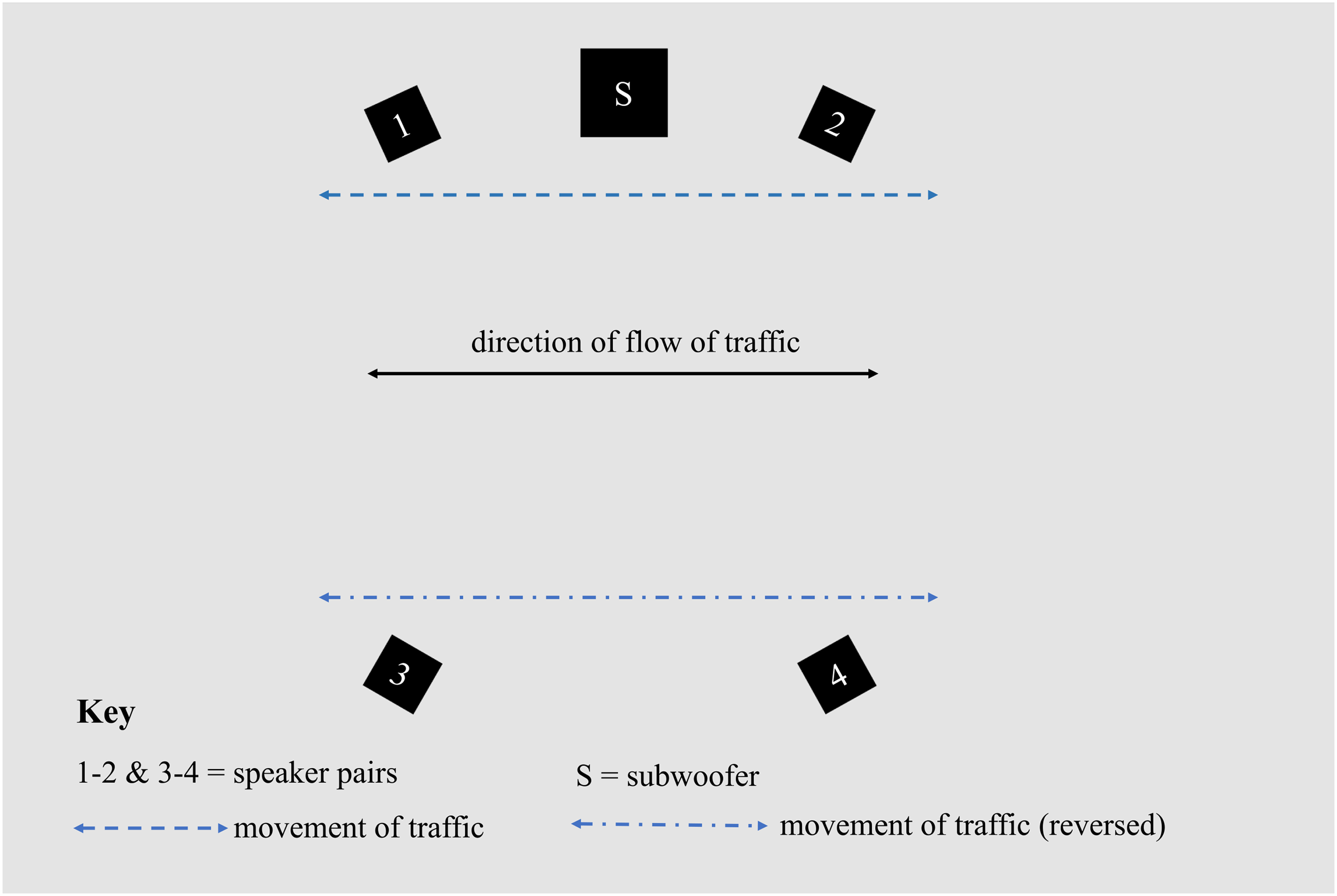
The human voice has unique features that characterise that individual alone (Chion, 1994). As the audio story was conveyed through dialogue, it was important when casting the characters to pay close attention to both the unique qualities of each character’s voice as well as the ease with which they could be differentiated on an audio recording (Ferrington, 1993). Consideration was also given to how the dialogue and action were recorded: simultaneous audio recording techniques were used, with each actor wearing a stereo lapel microphone and a portable audio recording device while enacting the scenes. In addition, a boom microphone was used to follow the action and record the characters’ movements (e.g. footsteps, etc.). The close voice recordings, which included nonverbal sounds or expressions (e.g. breath sounds, grunts and moans, etc.), captured the expressive detail in the characters’ voices; use of these recordings was intended to create a sense of intimacy with respect the audiences’ perceived relationship to the characters and how they experienced the audio story.
The main advantage of utilising spatial audio (in this case, in a multi-channel configuration) was that it permitted audio sources to be spatially positioned with greater accuracy and in a wider range of positions, making it easier for listeners to discriminate between the voices of the characters and the ambient or environmental sounds (Wincott et al., 2021). Spatial composition and sound design techniques were employed to carefully place the characters’ voices and action within the expanded sonic field so as to mirror the spatial relationship between the actors during their performance of the scenes. Image 2 shows the final speaker arrangement for the installation. The addition of satellite speakers (A and B) allowed for movement of audio around the space (as indicated by the direction of the arrows in the attack scene), helping to create the illusion of being totally surrounded. The satellite speakers were also used to broadcast reconstructed police radio (normally illegal for the public to tune into) and an intermittent flow of answerphone messages from anonymous callers. These punctuating audio recordings were designed to disrupt the acoustic zone of the street; the pre-recorded, anonymous messages were based on actual information gathered by the police during the early stages of the murder investigation, originating from a number of different sources: a police informant, anonymous calls made to the police incident room and hand-written notes left near the crime scene. They were used as a creative device to highlight the ‘generous flow of information’ and to counter the false claim of a ‘wall of silence’ (Macpherson, 1999). Final six-speaker configuration showing the movement of sounds during the attack scene.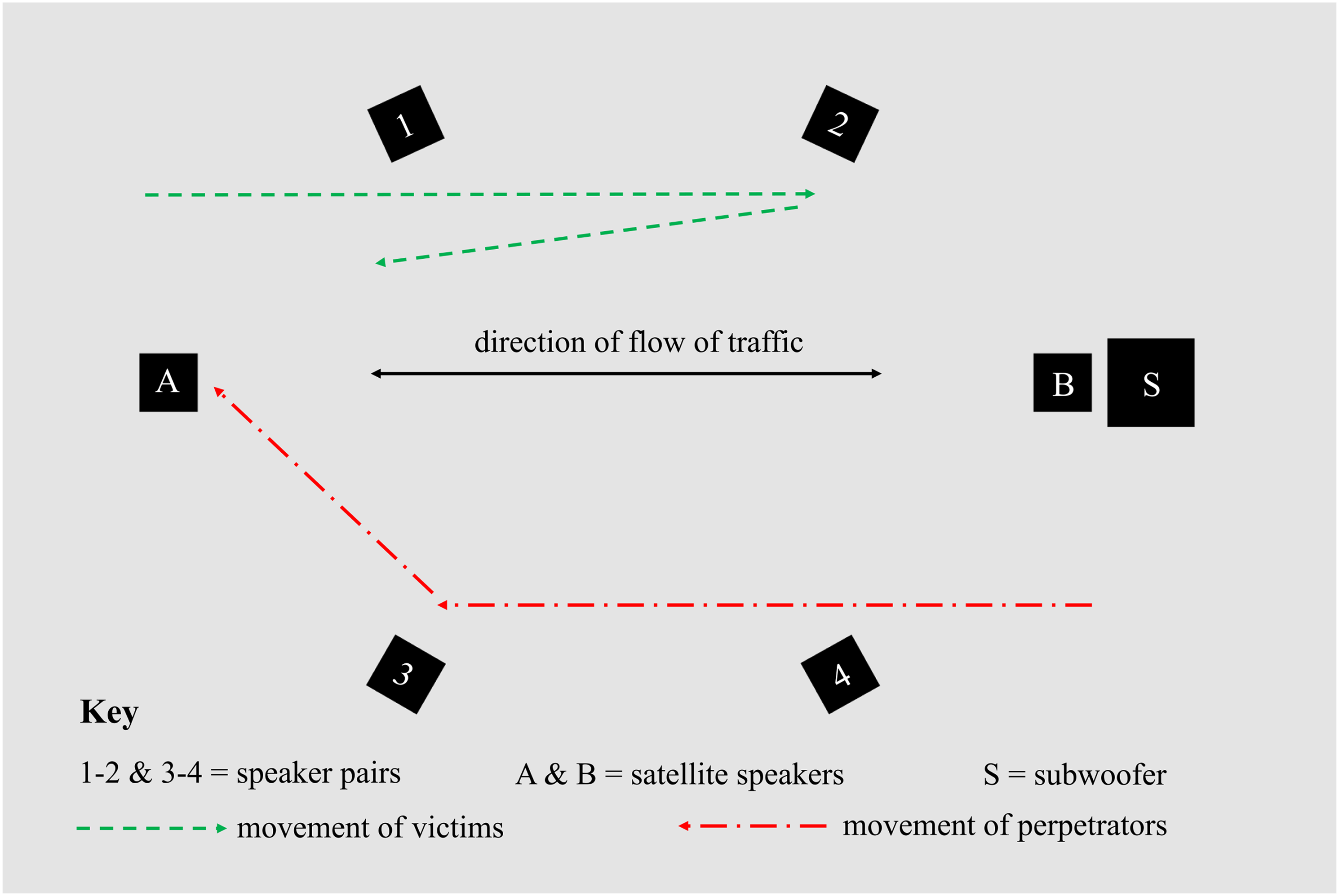
As Stephen Lawrence’s murder took place at around 10.30pm at night (Macpherson, 1999), darkness was used to replicate the time of day, and the installation space was configured as an empty black box with the multi-channel speaker system hidden behind a black muslin screen that formed the perimeter of the sound space. Apart from the darkness indicating the time of day, it provided a blank canvas on which to paint the ‘sound picture’ and create the illusion of being physically located in the street. Moreover, it served as a dramatic device to ‘highjack’ the visual sense and compel the audience to focus their attention on listening, to fine tune the aural sense (Espiner and Home-Cook, 2017). 5 Designing the installation to confront the audience with near/pitch darkness also offered a mechanism to generate uncertainty and unlock the power of the imagination through the aural sense, foregrounding the relation of sound to witnessing and spectatorship: revealing the problematics of vision by ‘making a subject of looking’ (Kendrick, 2017).
Summary of Method and Analysis
Description of the exhibition
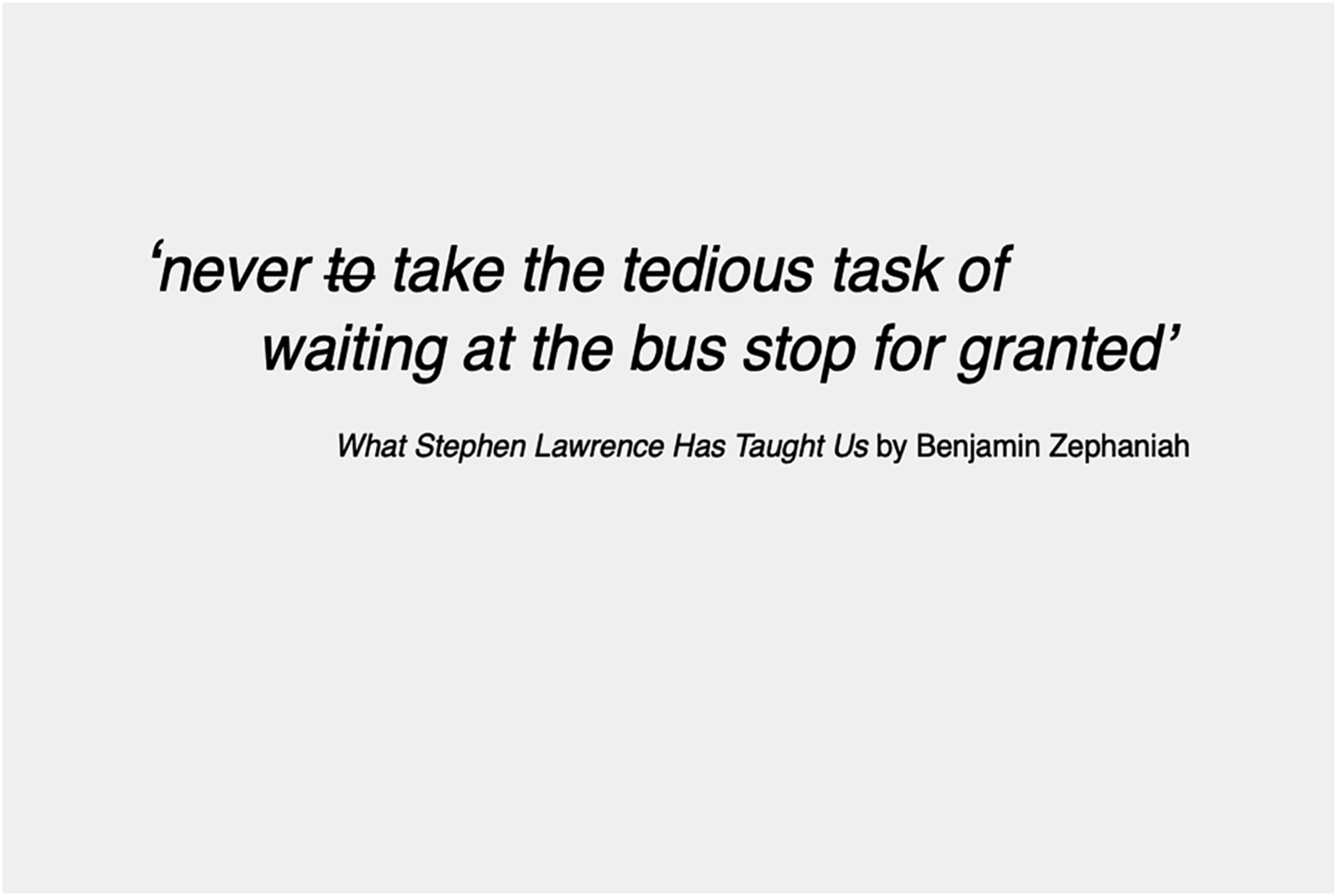
[re]locate was exhibited at the Otter Gallery, University of Chichester, over an 8-week period from 9th October to 6th December 2015. The installation was accompanied by a supporting visual display offering insights into the creative process and some background to the case. Two visual elements were displayed immediately outside the entrance to the installation: a photograph of the Well Hall Road sign (see Image 3), and an extract from Benjamin Zephaniah’s poem What Stephen Lawrence Has Taught Us (see Image 4). A photograph of the Well Hall Road sign displayed to the left of the entrance to the installation © Tahera Aziz. Extract from poem What Stephen Lawrence Has Taught Us (Zephaniah, 2001) displayed in vinyl text to the right of the entrance to the installation.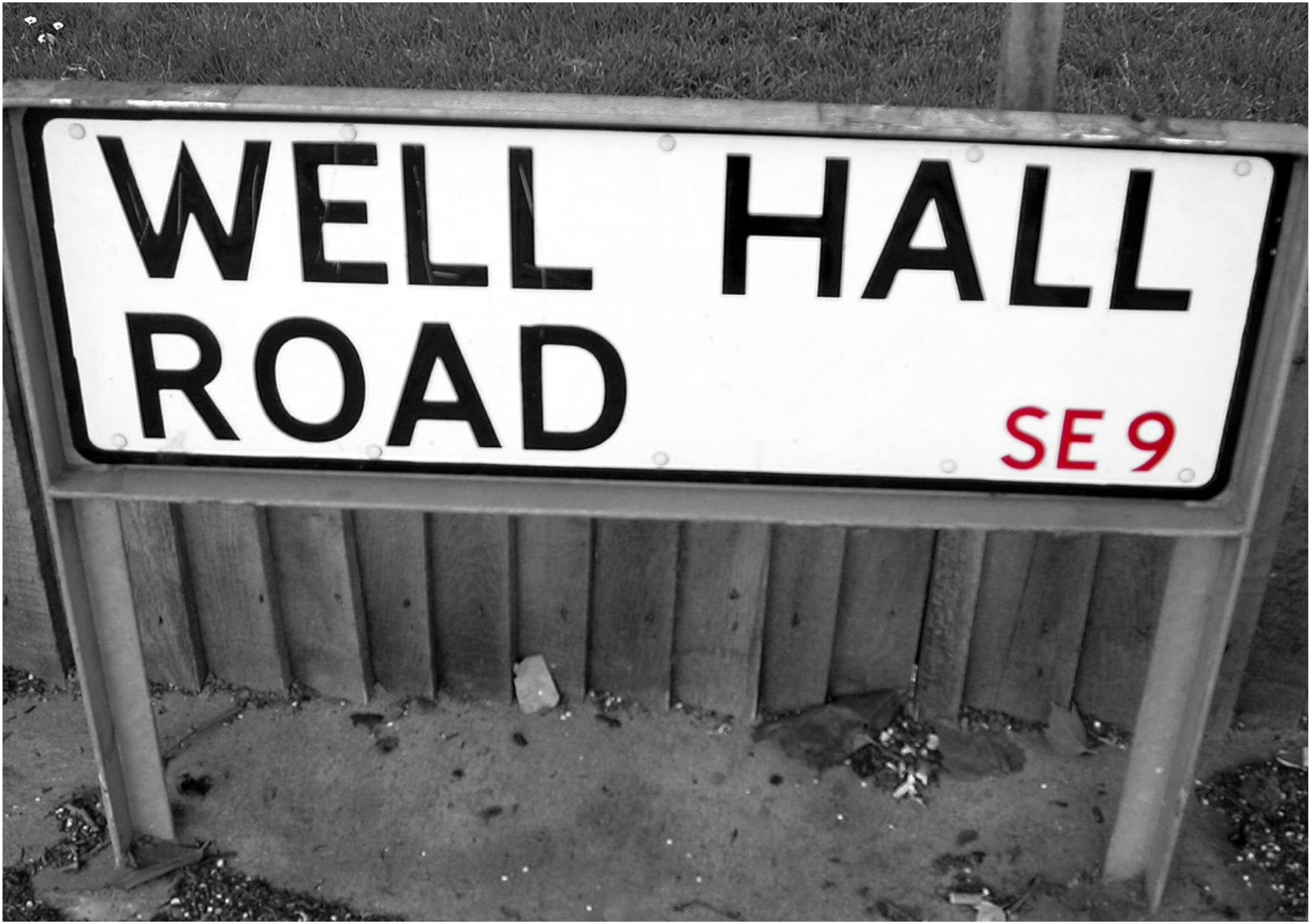
On entering the darkness of the installation space, audience members are immersed within a sonic environment that ‘re-locates’ them on the street at night, near the bus stop on Well Hall Road where the attack took place. Taking the quotidian activity of waiting for a bus as its starting point, the artwork places audience members at the heart of the story in the position of ‘bystander as witness’ as they follow the tragic sequence of events that befell Stephen Lawrence and his friend Duwayne Brooks as they made their way home – from moments before the fatal attack to approximately two weeks after the murder. The piece runs for approximately 18 minutes.
Participants & Procedure
Over 100 school students, aged between 13 and 14 years, from local secondary schools were invited to visit the exhibition with their teachers. 6 The teachers had the opportunity to experience the installation during an INSET session in advance of the school visit, and to prime their students about the exhibition themes prior to the class trip. 7 During the school visit, the students experienced the installation in small groups (no more than 10). They were prewarned that the content was emotionally challenging and that it contained offensive and racist language. They were guided into the installation by an invigilator and given the option to stand, sit or move around the space. Immediately after the encounter, the students were invited to reflect on their experience, giving anonymous pen-to-paper feedback, guided by three open-ended questions:
What was your initial reaction on entering the space?
How did you feel as events unfolded?
What pictures came into your head? What did you see? The questions were aimed at gaining insights into individual students’ perspectives on the audio story, including how the immersive experience affected their senses, feelings and emotions, and understanding the nature of the mental imagery evoked by the sonic environment.
Method of analysis
Thematic analysis was used to analyse the student feedback (data), adopting a reflexive approach developed by Braun & Clarke following their inaugural paper in 2006, which is now probably one of the most thoroughly delineated methods of thematic analysis (Byrne, 2021). Reflexive thematic analysis involves the researcher actively ‘identifying, analysing, and reporting patterns (themes) within data’ (Braun and Clarke, 2006: 6), where themes represent patterns of shared meanings, coalescing around a ‘central organising concept’ (Braun and Clarke, 2013). Placing emphasis on ‘the researcher’s subjectivity as analytical resource, and their reflexive engagement with theory, data and interpretation’ (Braun and Clarke, 2019: 594), this qualitative method deliberately avoids positivistic notions of data interpretation. The value of this method of analysis is that it is not bound to a pre-existing epistemology or theory, making it a flexible research tool that can be applied across a diverse range of theoretical frameworks, research topics or questions concerned with qualitative paradigms (Braun and Clarke, 2006).
Reflexive thematic analysis allows for interpretation of the data along a continuum: from simple reflection on the meanings and experiences articulated (an essentialist approach) towards understanding the language/experience relationship (a constructivist approach) and the meaningfulness of the recurrence of a theme (Byrne, 2021). A hybrid approach was taken to the analysis using open coding, or an inductive approach, to generate codes (and themes), as well as identifying codes deductively by drawing upon the theoretical framework provided earlier. In particular, dimensions relating to narrative experience, described within existing validated scales used to measure transportation (Green and Brock, 2000), narrative engagement (Busselle and Bilandzic, 2009) and identification (Cohen, 2001), provided a lens through which to analyse and interpret students’ responses. Following the six-step guide provided by Braun and Clarke (2019), the process involved: 1) reading and familiarisation with the data, 2) generating codes, 3) generating initial themes across the entire data set, 4) developing and reviewing the themes, 5) refining, defining and naming the themes and 6) finalising the analysis to present the findings.
Findings and discussion
Main themes and subthemes and related question(s).
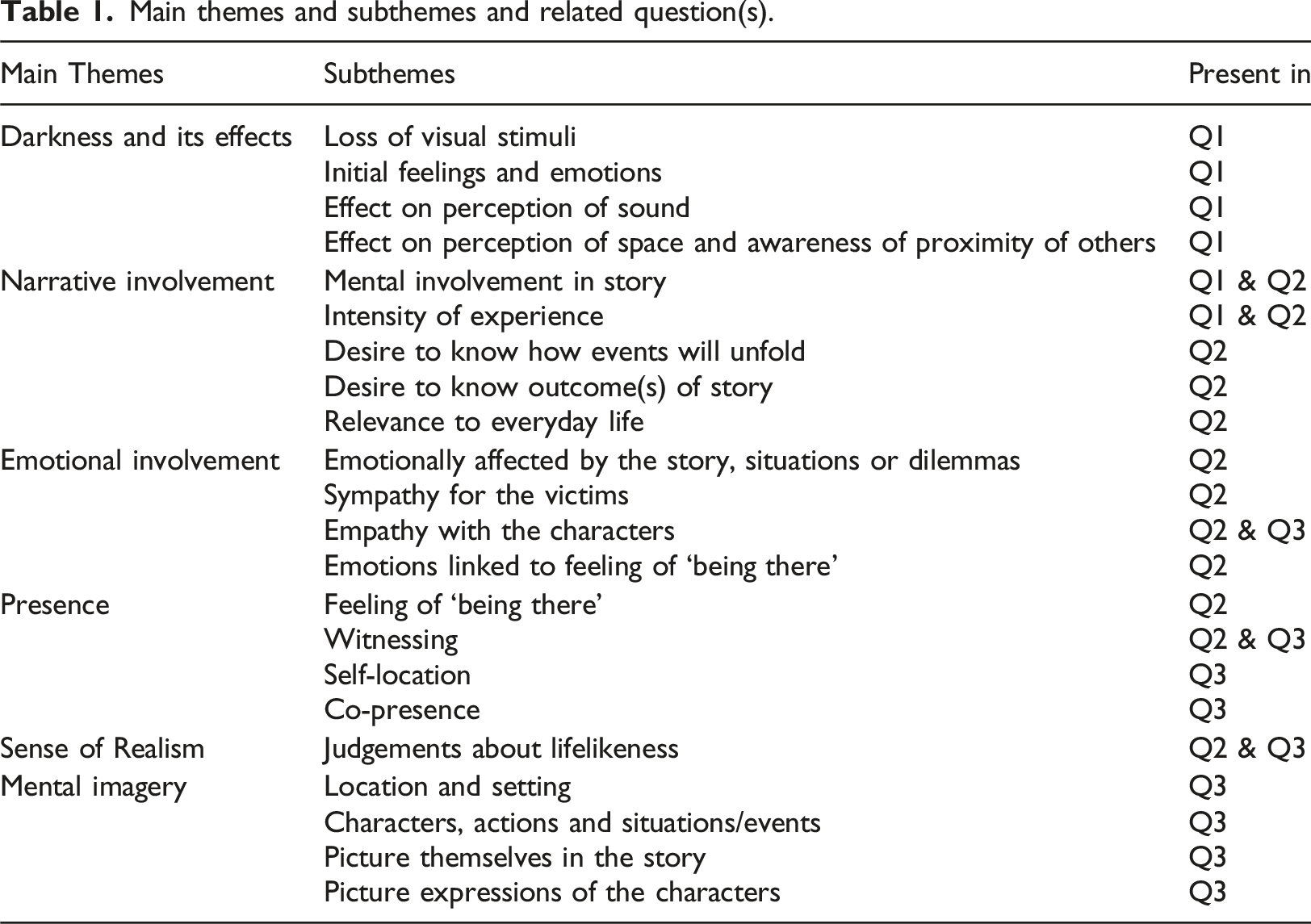
Darkness and its effects on the senses
The students’ initial responses, unsurprisingly, focused on being confronted by the sudden darkness and the effect this had on their senses. Making note of the near pitch darkness in the space, they registered a sense of surprise and confusion: ‘I didn't really expect it to be so dark inside the room’ [Participant 42]; ‘I was confused at first because it was so dark’ [Participant 52]. The students found the darkness disorientating and intimidating and hinted at the immersive qualities of the experience: ‘The pitch blackness was very disorientating’ [Participant 47]; ‘I found it quite intimidating as there were no lights, and sound all around you’ [Participant 30]. This destabilising effect of the darkness, triggered by the sudden removal of visual stimuli and loss of bearings, was wholly anticipated, and the experience provoked an array of other reactions: feeling nervous or anxious, uneasy, worried, vulnerable, trapped.
The students expressed strong feelings of uncertainty, and fear of not knowing what was going to happen next: ‘It was creating suspense as it was dark and silent at first’ [Participant 97]; ‘Confused as to what was going to happen as it was dark and the only thing was sound’ [Participant 69]; ‘Quite scared because it was pitch black and I didn't know what to expect’ [Participant 57]. The unexpectedness of the sudden darknes is likely to have contributed to their feelings of uncertainty, generating a sense of anticipation and suspense. In shifting attention to listening, the students remarked on the strangeness of not being able to see: ‘Weird not being able to visualise what was happening, but only being able to listen’ [Participant 27]; ‘Weird that the sounds moved around the room without any visual indication’ [Participant 3]. They described how the darkness affected the aural sense: ‘Your sense of hearing sharpens when you are in the dark; you can really hear the sounds’ [Participant 38]. They also commented on how listening in the dark unlocked the imagination: ‘All you have to do was listen and use your imagination [Participant 70]; ‘Single focus makes you imagine more’ [Participant 82]. The use of darkness as a dramatic device clearly compelled the students to shift their focus to listening – a necessary sensory adjustment to engage with the story – and appeared to heighten their sense of hearing and activate their imagination.
The near pitch darkness seemed to alter students’ spatial perception, and the descriptions suggest that the darkness created uncertainty about the dimensions and limits of the space, which for the most part appeared to be more expansive than expected: ‘There was a lot of space’ [Participant 4]; ‘A really big space’ [Participant 106]. Furthermore, the inability to appreciate their position in relation to others manifested itself as discomfort and concern about bumping into fellow students: ‘I didn't like it at first because I didn't know how close people were to me, and there were lots of noises coming from different areas of the room’ [Participant 61]; ‘Will I walk into somebody?’ [Participant 77]; ‘My initial reaction was to stay with someone and stand still’ [Participant 88]. Given that the installation space was essentially an empty black box, without physically pacing the floor the extent and boundary of the space were imperceptible in the dark. Designing the installation in this way, provided the conditions for the immersive sonic diegesis to ‘exceed visual space’ (Kendrick, 2017) by unlocking the imagination through the aural sense.
Narrative involvement
The students found the encounter with the artwork powerful, and they indicated that the experience captivated their interest and raised their curiosity from the start. There was a sense of anticipation about how events would unfold and a desire to know more about the murder case and it outcomes: ‘I was interested on what would happen next’ [Participant 6]; ‘I felt like I wanted to know more and if the killers got convicted’ [Participant 73]. It was evident that the students were absorbed in the story and that their attention was focused on understanding what was happening as the story progressed. In relation to the theoretical framework of narrative experience, the dimension of narrative involvement represents conscious engagement with the story at a holistic level (Busselle and Bilandzic, 2009). The descriptions of being mentally absorbed in understanding the story and its outcomes indicate that the students were actively engaged in cognitive perspective taking.
Interestingly, the students’ comments about engagement with the story were associated with reports of the feeling of being present in the story world, and remarks about how true-to-life the experience was for them: ‘[I] felt it was very realistic. [I] felt involved and as if I was there’ [Participant 53]; ‘Realistic – maybe too much so they drew us in, kept it interesting emotional[ly] reactive as the story developed’ [Participant 54]. This linking of the themes of narrative involvement and presence suggests that they are interrelated, raising the possibility that technology-induced presence may have had a mediating role in enhancing cognitive perspective taking. The association between presence and realism is explored later. (See Presence and social realism).
Emotional involvement
The students’ responses indicated that they were emotionally affected by the encounter: ‘It was a very moving experience’ [Participant 93]; ‘I was moved and inspired’ [Participant 91]. The experience appeared to provoke intense, story-related feelings, with the students describing how their emotions changed as the story developed: ‘Intimidated – young adults shouting around me… Annoyed at the policeman’s response – telling them [the victims] they must’ve done something to provoke them; threatened to arrest’ [Participant 45]; ‘Anxious – I didn’t know what was going to happen. Angry – the reason for the crime and how little was done about it. Upset – I don’t understand why people would commit a crime like this and it makes me upset’ [Participant 65]. Other reactions included being shocked, worried, annoyed, frustrated and enraged. The range and strength of their emotions is evidence that the students were deeply affected by the events portrayed, actively involved in understanding the story, and emotionally reactive to the situations faced by the characters.
Two scenes featured heavily in the students’ descriptions: the attack scene, which occurs shortly after Stephen Lawrence and Duwayne Brooks arrive at the bus stop, and the scene in which Duwayne Brooks is questioned by police officers. There was a genuine sense of shock when the attack took place: ‘I thought it was quite shocking starting off as a normal day, then they were attacked’ [Participant 18]; ‘I was shocked because I didn’t originally know the story, but I was able to imagine what was going on’ [Participant 43]. Students with prior knowledge about the case responded in a similar way: ‘Shocked although I had previously read the story’ [Participant 37]; ‘Shocked even though I knew what was going to happen’ [Participant 90]. Descriptions of their emotional responses were repeatedly associated with the feeling of ‘being there’ as if they were witnessing the events unfolding in front of them: ‘I felt like I was actually there…scared and angry for them/with them’ [Participant 62]; ‘Upsetting because it felt like I was there when it happened’ [Participant 29]; ‘I got quite scared, and it felt as if I was actually in the story’ [Participant 31]; ‘I felt like I was there when it happened; it was very moving and emotional’ [Participant 96]. The multi-channel set up, with the street sounds enveloping the audience (spatial immersion), evidently induced a strong sense of presence and the illusion that they were physically located in the street witnessing the events directly.
The students seemed to relate to Stephen Lawrence and Duwayne Brooks and, on an emotional level, this manifested itself in two ways: Firstly, they exhibited signs of sympathy for them, expressing feelings of sadness, concern and apprehension about the situations that confronted them: ‘I felt sorry for Stephen and Duwayne because Stephen got attacked, and when the police came they argued with Duwayne when Stephen was losing blood’ [Participant 2]; ‘I felt bad for Duwayne as no-one was helping Stephen’ [Participant 9]; ‘I felt more devastated as the story went on. Stephen’s situation just kept getting worse’ [Participant 39]. Secondly, the students described feelings of empathy, strongly identifying with Duwayne. Adopting Duwayne’s perspective enabled them to better understand his experience (cognitive empathy) and to feel his emotions (emotional empathy). This was particularly evident when Duwayne was seeking help for Stephen shortly after he collapsed on the pavement: ‘Duwayne was really upset that they didn’t call the ambulance’[Participant 9]; ‘Frustrated because he [Stephen] wasn’t helped quick enough’ [Participant 102]; ‘I also felt angry towards the police officers and paramedics who didn’t help as much as they could’ [Participant 63].
In the scene with the police, students reported being negatively affected by the way in which they treated Duwayne (and Stephen) during the heated exchange at the roadside: ‘I was a bit disturbed, that they [the police] kept questioning the friend [Duwayne], instead of helping him [Stephen] to the hospital a couple of minutes away’ [Participant 42]; 'The police officers’ reaction was shocking/disappointing’ [Participant 46]. These responses indicate that the students were able to understand the situation from the perspective of the victims and, through the process of identification, were exposed to the racial profiling and stereotyping underlying the poor treatment of Duwayne by the police officers (later acknowledged as institutional racism as a result of the Stephen Lawrence inquiry). The sense of presence, with the perception of being physically situated in the simulated street environment (self-location), may have aided emotional perspective taking, enhancing the students’ emotional responses to the story. Aesthetically, the creative approach taken to recording the audio (i.e., of capturing close recordings of the voice actors) is likely to have contributed to the process of emotional perspective taking and identification (associative empathy) by allowing the emotional state of the characters to be experienced as physically proximate, and thereby creating a sense of intimacy with them (co-presence). Significantly, this approach to spatial audio design was key to enabling the students to share the range and intensity of emotions conveyed by Duwayne and, crucially, for them to experience vicariously what racism, racial stereotyping and discrimination feel like.
The racist nature of the attack provoked strong emotional reactions: ‘I found it quite emotional as he got murdered only because he was black’ [Participant 97]; ‘Upset because it’s a horrible thing to happen to someone just because they’re black’ [Participant 101]; ‘I felt sad because his skin colour was different and the people [the perpetrators] thought that it was an acceptable reason to kill him’ [Participant 104]. McHugh (2014) notes how the use audio only frees the ’speakers’ from being judged on account of their appearance. The fact that the audience members were compelled to create their own interpretation of events based on the quality of the actor’s voices and accents alone (unless they had prior knowledge of the case), meant that the character’s physical attributes such as skin colour were not readily known. This situation offered a creative device to heighten the sense of shock in that moment of revelation, when the perpetrators shout racist abuse (including the ‘N’ word) immediately before they attack Stephen and Duwayne. The realisation that the murder was purely motivated by racism was clearly emotionally distressing for the students.
The students focused their attention on the motives for the attack and their descriptions ranged from general confusion about why the attack took place to emotional distress at the fact that Stephen was targeted simply because he was black: ‘Confused. Analysing the information and trying to figure out why the boys [the perpetrators] did such a thing’ [Participant 82]; ‘Confused. Unsure why they killed him just because he was black’ [Participant 75]; ‘[I] felt sad why black people are treated like this. Also, lots of cars but no-one helped’ [Participant 80]; ‘I found it quite emotional as he got murdered only because he was black’ [Participant 97]. The students also questioned or commented on the inaction of the witnesses/bystanders: ‘A bit confused as to why people didn’t stop and help’ [Participant 78]; ‘Shocked about what happened and that no one helped him until later’ [Participant 100]: ‘Scared, devastated as no one took any action’ [Participant 111]. This perception of inaction was also directed at the police: ‘As the story unfolded, I was shocked that the police and society didn't even take action’ [Participant 7]. It is notable that students also detected a distinct lack of urgency on the part of the police (and paramedics), alluding to a desire for an ethics of care and social responsibility.
Presence and the sense of realism
The students described a strong sense of physical or spatial presence: ‘I felt like I was actually there’ [Participant 36]; ‘[I] felt like I was actually at the scene’ [Participant 58]; ‘I felt like I was there at the time he was stabbed’ [Participant 72]. Implicit in these descriptions of ‘being there’ is the experience of witnessing events first-hand, suggesting that the sense of immersion created by the spatial audio design of the installation was effective in triggering the feeling of being physically located within the simulated environment of the street. This sense of physical presence is clearly articulated in this example: ‘Considering we were standing in such a dark empty room, I physically felt like I was at the side of the road watching it all’ [Participant 38]. The experience of simultaneously inhabiting the simulated world of the story (the street) and the actual physical environment (the installation space) suggests that this psychological state was set in motion by the aural stimuli.
It is significant that the sensation of being present within the story world was reported in response to the question about feelings (Q2.), and closely linked to the students’ emotions: ‘I felt like I was there when it happened – it was very moving and emotional’ [Participant 96]; ‘It was very interesting but upsetting as it felt like I was there with them in the same position and just hearing everything that was happening’ [Participant 30]. These descriptions of physical and social presence, expressed as self-location and co-presence, are important given that these subdimensions have been found to heighten affective and associative empathy (Cummings et al., 2021). The contribution of presence to empathic reactions is evident in this example: ‘It was very realistic and I felt like I was there. Scared because I felt like I was there’ [Participant 40].
As mentioned earlier, reports of ‘being there’ were associated with comments about how realistic or true to real-life the experience felt, raising the question of how immersion, through inducing presence, influences the audiences’ sense of reality. While technology-induced presence involves judgements about the quality and fidelity of the flow of sensory stimuli (perceptual realism), narrative presence relates to the audiences’ judgements about the perceived reality of the story (social realism). An immersive story environment that delivers an increased level of immersion through a flow of high-fidelity sensory information should, therefore, lead the audience to perceive the events depicted as more realistic. Interestingly, previous research has suggested that when the portrayal of the story is perceived as realistic, empathic responses are more strongly triggered (Cummings et al., 2021). This appeared to be the case with respect to the students’ experience of the immersive audio story.
Mental imagery
The students were able to construct their own mental images of the scene in response to what they heard, and they commented on how the sounds aided this process: ‘I could kind of imagine the situation by a bus stop, next to a busy road. I felt that the narration [dialogue] helped to picture the scene’ [Participant 51]; ‘The accents and the way they talked helped me to imagine normal people who were the characters’ [Participant 74]. While some of the detail imagined originated from the dialogue (e.g. the fact that it was cold and the time of day, etc.), the descriptions suggest that the ambient or environmental street sounds (e.g. cars and sirens, etc.) also contributed to how the students imagined the scene.
The students described mental imagery relating to the location and setting as well as the characters and their actions. While some responses were brief – ‘a bus stop’, ‘traffic’, ‘a busy road’, ‘lots of cars’, ‘two boys’ – others elaborated on what they ‘saw’ with a clear sense of time and place, providing sufficient detail to delineate the street: ‘[I] pictured [the] bus stop next to a main road; lots of cars’ [Participant 67]; ‘A cold night at a bus stop’ [Participant 52]; ‘I could imagine a bus stop on a dark night in a dodgy area like the story said’ [Participant 98]; ‘The bus stop. The different corners and the different streets where everything was happening’ (Participant 68); ‘I pictured a busy London street and Stephen standing at the bus station’ [Participant 112]. The spatial audio techniques employed in designing the installation provoked visual mental imagery depicting the geography of the street, with the audience using their imaginations to fill in the detail to evoke a sense of place. This was ‘theatre of the mind’ in play, laying the ground for staging the story in the mind’s eye.
The attack scene featured strongly in the students’ imaginations, and they described one or more elements of the unfolding scene in vivid detail – the victims arriving at the bus stop and waiting for a bus, the perpetrators approaching and running at them with weapons, the attack itself, the witnesses, people running, people getting on the bus. The students remarked on the demeanour and backgrounds of the attackers: ‘I saw them as very chavvy all British, white, in shiny tracksuits’ [Participant 76]; ‘I could see the bus stop in my head and the gang of five coming towards it and speaking loudly and recklessly’ [Participant 97]. They visualised the expressions and emotions of the characters: ‘I pictured two boys running away from a gang being scared’ [Participant 19]; ‘I saw the whole crime unfold and what happened after. The panic and horror of the witnesses/bystanders’ [Participant 65].
Without the aid of sight, the primary source of information about the characters was their voices; their physical appearance remained unknown unless it was described in the dialogue. It was noted, however, that the students described the skin colour of the victims (black) and perpetrators (white) in their descriptions of events: ‘Two black men waiting at a bus stop, the five white men running from the opposite side of the road’ [Participant 41]. In the absence of any visual cues, the most likely explanation for this is that the students had prior knowledge of the case and therefore understood the racist nature of attack, and this filtered into their mental imagery. What is evident is that the experience of listening in the dark, without any reference to vision, highlighted the subject of looking and its relation to the aural sense.
Conclusion
The findings from the analysis offered unique insights into the students’ experience of the sound installation, and indicated a deep level of engagement with the immersive sonic story environment. The following example illustrates both involvement in the story and its themes and the feeling of presence within the story world: I was very involved in the situation. I felt as though I was experiencing it, like a witness of the situation. I was quite concerned by the police’s reaction to the situation. They did not seem concerned to help the man dying, just concerned to gain knowledge about the event. They treated the witnesses and victims as criminals. Later we heard that the police treated it like an inconvenience. [Participant 51]
The act of witnessing was a crucial strategy for revisiting Stephen Lawrence’s story and exploring the socio-political dimensions of the case. Inducing a feeling of presence within the sonic story environment was key to reconfiguring the audience as ‘bystander as witness’. The student responses suggest that the multi-channel arrangement and the spatial audio techniques employed in the design of the installation, based on adapting the violence hub model, created a heightened sense of immersion, and that this was associated with the ‘inclusive’, ‘surrounding’ and ‘vivid’ properties of the sonic environment. This immersive effect generated strong feelings of presence, with the students reporting the sensation of being physically situated (self-location) in the simulated environment of the street as well as the perception of being with the characters (co-presence) witnessing events first-hand. It is reasonable to assume that the spatial design and audio compositional techniques used to create the illusion of the street facilitated a deictic shift to the time and location of the story (transportation), and that this aided cognitive perspective taking and contributed to enhancing the students’ emotional reactions to the story.
Returning to the question of aesthetics, the effect of the darkness was to compel the students to shift their attention to the aural sense, and this appeared to make them more receptive to listening and feeling (sensing), putting them in a state of readiness for imagining and understanding the story (sense-making). The concept of embodied cognition, with the intertwining of body and mind, lends weight to this interpretation and provides a deeper understanding of the processes by which sensing becomes knowledge. In the absence of visual cues, the politics of looking and ethics of witnessing were interrogated through the aural sense. As Lynne Kendrick points out: ‘sonic spectatorship is not just a case of seeing through a different medium, but is a critical position from which darkness reveals the ways in which seeing is organized’ (2017: 115).
The theoretical framework presented, focussing on a range of constructs relating to narrative engagement and technical immersion, helped to conceptualise the audiences’ experience of the immersive audio story in a holistic way. The themes generated by the qualitative analysis broadly fell into two groups that combined to together provide considerable insight into the students’ experience of the installation: the first group relates to involvement with the audio story (narrative experience); the second is concerned with sensory perception and the quality and nature of the interaction with the sonic environment (immersive experience). Exceptionally, presence as a psychological state occupies a unique position: on the one hand, it constitutes an affective-cognitive construct involving mental activity that emphasises meaning or ‘sense-making’ through the perceived relationship with the story; on the other hand, it refers to ‘sensing’ and the mental processes arising from the audiences’ interaction with the flow of technology-provided sensory stimuli. The proposition is, therefore, that presence has a unifying role acting as a bridging concept between these two aspects of audience experience.
Analysis of the qualitative feedback revealed the power of spatial audio to provide a rich immersive and multi-sensory narrative experience in which detailed mental imagery was evoked, uniquely engaging the students with the complex issue of racism through the lens of Stephen Lawrence’s story. Given the resurgence of racism and the renewed concern about racial inequality, it is all the more important to continue to raise awareness of the legacy of the case. The next step involves exploring the potential of the sound installation to bring about attitudinal change, and to act as a catalyst to instil an ethics of care and social responsibility, motivating young people, many of whom may not have heard of Stephen Lawrence, to become proactive in tackling racism in their schools and communities.
Footnotes
Declaration of conflicting interests
The author(s) declared no potential conflicts of interest with respect to the research, authorship, and/or publication of this article.
Funding
The author(s) received no financial support for the research, authorship, and/or publication of this article.
