




Abstract
In this article, we focused on data drawn from two Brazilian Facebook groups that discuss on-demand driving (Uber and 99Pop). We focus particularly on the use of humour in the stories that on-demand drivers (ride-hailing) share, as it was identified that humour is widely used within these groups. This article has three objectives: (1) to detect the types of stories shared by on-demand drivers in the Facebook groups; (2) to determine the relationships these stories have with the work of on-demand driving; and (3) to understand the dimensions of professional identity and negotiation of platform labour conditions. Therefore, three dimensions of the stories shared by on-demand drivers were identified: the relationships they establish with their clients, their relationships with the platforms (the affordances and limitations the platforms provide and represent), and the everyday work relationships among the drivers developed by establishing Facebook as a digital workspace. These dimensions lead to the formation and negotiation of their professional identity and reveal how they deal with precarity through humour.
Introduction
We are currently living in a context that Van Dijck et al., (2018) have named as a platform society, that is ‘a connective world where platforms have penetrated the heart of societies—affecting institutions, economic transactions, and social and cultural practices’ (p. 2). Thus, a paradoxical relationship is formed between social innovation and progress through the flexible use of technologies. It is in this context that one type of flexible workforce has emerged, and which has generated controversies across the globe: work-on-demand via apps and online platforms (De Stefano, 2015).
This type of work has been classified as part of the emergence of a gig economy (Woodcock, 2019) and implies a workforce of individuals who obtain work by using the Internet, smart devices, and private platforms to contact with other organizations and potential clients to do traditional jobs in a flexible way, including transportation, food delivery, and cleaning, among others. This type of work is usually promoted as a way of increasing the advantages of ‘peer-to-peer relationships, building social connections and creating community; the ease and promptness of services for consumers; and the ability for workers to flexibly work full or part-time, as their primary job or to supplement their income’ (Shade, 2018: 38). However, it also reinforces already existing inequalities. These gigs are managed by companies that offer services and set a minimum quality standard without giving any social guarantees (De Stefano, 2015). Moreover, they promote a reputation capital (Botsman and Rogers, 2011), that is, the workers are constantly evaluated by ratings, rankings, and users’ comments in the format of reviews (Rosenblat et al., 2017). Grohmann and Araujo (2021) state that the platformization of labour is materialized in different ways, referring to the heterogeneity of workers in terms of gender, race, class, and geography. Particularly in the countries of the Global South, the combination of platform logics and historical labour precarity is a phenomenon with complex consequences. Considering these conditions, Grohmann and Qiu (2020) propose that ‘analyzing platform labour in the South means that patterns in the North are often erroneously assumed to have also existed in Latin America, Africa, and Asia’s developing regions, as if labour precarity is a novel phenomenon’ (p. 5). Thus, the concept of uberization emerged in Brazil (Abílio, 2020), referring to new forms of work control, management and organisation that got more evident with the emergence of the hail-riding company Uber. However, it is not restricted only to Uber but to other on-demand platforms. Furthermore, in this process, Brazilian Uber drivers do not face it as a novelty, instead ‘driving for Uber – and dealing with the pragmatic and emotional ways of knowing the platform – may be “simply” the new stage of a permanent process of survival management’ (Guerra and d’ Andrea, 2022: 3). Moreover, it is not uncanny that Uber drivers are using social media to learn and share their experiences related to the platforms (Chan, 2019).
In this article, we focus on the data coming from the stories shared in two Facebook groups of drivers from different applications that operate in Brazil: Uber and 99Pop. The objectives of this article are (1) to detect the types of stories shared by on-demand drivers in the Facebook groups; (2) to determine the relationships these stories have with the job of driving-on-demand (ride-hailing) and the main actors who are involved in these stories; and (3) to understand the dimensions of professional identity and the negotiation of platform labour conditions implicated in the humorous stories, as we have identified that humour is widely used in these groups.
During the research, we identified that memes and humorous content are the narrative artefacts used and shared most by the on-demand drivers with a prevalence of visual elements like photos, image-macro memes, and screenshots. The results indicate that humorous content addresses the intersection between the drivers, their relationship with the passengers and the platform, and the economic and socio-political context. Humour is a convergent point where on-demand drivers cope with the difficulties, navigate different pressure points such as precarity, and express their everyday work relationships. Humour becomes a coping mechanism for on-demand drivers to navigate everyday issues and practices, and they use Facebook as a ‘workplace’ where they create a community. This allows humour to go beyond ‘mere jokes’ and generate discriminatory work environments, since there are no established workplace ethics or rules.
Storytelling, memes, and identity
One of the oldest ways of making meaning and communicating is through stories. This is because humans can be considered storytelling organisms who, individually and socially, lead storied lives (Connelly and Clandinin, 1990). Storytelling allows to understand social and cultural practices because it is the most common way people make sense of the context they are living in and the situations they come across in their daily lives. Stories can be told through traditional ways, connected to the oral and performative tradition, they can be told through written literature, the mass media or by more modern ways that include the use of digital technologies, such as the stories shared on social media platforms (Roig, Pires and San Cornelio 2018; Roig, Hofman and Pires, 2021).
Storytelling also helps identify social and cultural practices because it describes the ‘narrative sharing of worlds’ (Klapproth, 2004: 127). That is, stories can be collective ways of understanding the world because we can access them through different kinds of media and popular culture ‘pre-existing cultural narratives or metanarratives about how the world works and where it is headed’ (Veland et al., 2018: 42). Therefore, looking at the stories shared by on-demand drivers on social media can help to understand the main actors involved in these work practices as well as the drivers’ routines. We observed across the studied group that memes and humorous content make up a large part of these stories, which serve to stimulate debate, and to generate, share and develop ideas, as well as to express personal experiences on different subjects related to driving work.
Memes are, as defined by Shifman (2014), ‘(a) a group of digital items sharing common characteristics of content, form, and/or stance, which (b) were created with awareness of each other, and (c) were circulated, imitated, and/or transformed via the Internet by many users’ (p. 41). They are not made or disseminated arbitrarily, rather they emerge as a response to cultural, social or political contexts, appealing to a specific group of people (Burgess, 2008). Memes are considered to be a practice of ‘vernacular creativity’ (Burgess, 2008), in which different groups make and negotiate collective identities through creating and disseminating these cultural artefacts (Gal et al., 2016). Therefore, producing and sharing memes online goes beyond self-representation and becomes a social practice (Ask and Abidin, 2018), which shapes the identity, behaviours, and actions of groups (Milner, 2018; Nissenbaum and Shifman, 2017; Shifman, 2014).
Humour is an integral part of the meme culture, which can create an affinity among people in a group (Miltner, 2014). The humorous nature of memes reinforces through laughter the collective identity, the sense of community and also solidarity (Ask and Abidin, 2018; Gal et al., 2016; Outley et al., 2021). While memes tend to go beyond being trivial ‘jokes’ and sometimes disparage, belittle and harm certain groups of people by using stereotypes, and discriminatory and racist language (Duchscherer and Dovidio, 2016; Eschler and Menking, 2018; Yoon, 2016), the humour of memes can also be used to express struggles and failures through self-deprecation (Ask and Abidin, 2018). Self-deprecating humorous content has the potential to generate community-building and strengthen in-group identity since those who struggle within the same community in similar ways can relate and empathize with it. Therefore, memes should not be approached as light expression, but rather as ‘partial stories’ that provide different perceptions to social and political realities (De Saint Laurent et al., 2021).
Furthermore, Brazilian digital culture strongly relates to memes and humorous content. Therefore, it is no surprising that Vieira (2021) observed internet memes' strategic role in the collective conversation in Brazilian digital environments. In his findings, the author proposes the idea of ‘Zuera’ – an informal term in Brazilian Portuguese that can mean the behaviour or posture of being loud, laughing, joking, mocking, etc. – as a media genre that encompasses the countless interpretations and reappropriations from the memes and humorous content configuring communicability strategies in Brazilian society.
Humour and labour
Historically, humour is considered a part of popular culture because even in satiric and public publications from the past centuries it has shown ‘the ability to express discontent at contemporary political events by invoking popular-festive, elementary imaginary’ (Hart, 2007: p. 5). However, in this work, we see humour as social practice that is context-dependent. That is, it is always shaped by socio-cultural institutions, or as Hui et al. (2017) say, by larger to smaller institutions, such as governments, corporations, families, friends, and workspaces, as online groups dedicated to discussing the practice of on-demand driving.
In the research on humour related to workspaces and corporate labour, humour has been detected as an important element able to improve group cohesion. Moreover, it is a fundamental tool for communicating and transferring information within an organization, as well as defusing anger and helping with stress relief (Mathew and Vijayalakshmi, 2017). In addition, it is considered a coping strategy (Moran and Hughes, 2006), a way ‘to discuss personal painful events within a format that reduces distress and anxiety’ (Plester, 2009: 90). Or as Hart (2007) points out, humour does not necessarily have the capacity to change the status quo of an organization, but on some occasions, it can make the work environment more bearable.
Humour can be dictated by a particular dynamic of a determined workspace. This is because workspaces form communities of practice, which group people together around a common activity, people who talk about particular beliefs, and who have certain motivations, values and established norms (Holmes and Marra, 2002). Nevertheless, humour does not always unite groups, it can also divide and exclude depending on the group that is targeted (Hart, 2007) ‘while also enacting and defining forms of hierarchy and power’ (Wise, 2016: p. 482).
Most of the research conducted about humour and labour is focused on the physical workplace and interactions among colleagues in these spaces (see; Hart, 2007; Holmes, 2007; Holmes and Marra, 2002; Korczynski, 2011; Plester, 2009; Taylor and Bain, 2003; Wise, 2016). In this study, we consider online platforms, in this case Facebook groups, as a metaphor of a ‘workplace’ created by platform workers. Facebook is a popular social media in Brazil, being one of the most accessed in this country (Statista, 2022). Since the on-demand workers lack a common physical work environment where they can share their experiences in person and have peer-to-peer interactions, Facebook groups provide an alternative space to the physical workplace thanks to the platform’s affordances, such as creating groups to have an exclusive exchange among the community members, determining the group rules, and monitoring them through admins. However, community-building and subcultural humour shared in these groups might lead to extreme views shared by its members (Tuters, 2021). As Tuters (2021) states, ‘vernaculars are shaped by the contingencies of the milieus in which they circulate’ (p. 51). Thus, it is necessary to understand what kind of relationships are formed in these online spaces among on-demand drivers, what role humour acquires in these relationships and how humour is used for communicating work-related issues.
Methodology
The case study methodology was used because it is appropriate when the researcher has little to no control over the events that are under investigation (Stake, 2005), as in the two studied Facebook groups created by the Brazilian on-demand drivers. Moreover, case studies bring researchers close to real-life situations so they can understand a social phenomenon that is context-dependent (Flyvbjerg, 2006). One of the main strengths of using this approach is that various sources and multiple techniques can be used to understand the object of study (Pires, 2018; Thomas, 2015). The case study methodology makes it possible to combine various methods for collecting data (Stake, 2005). Therefore, we have used two complementary methods to better comprehend our cases: qualitative content analysis and observation. In this article, we focus on the data coming from two Facebook groups of on-demand drivers who use two different applications that operate in Brazil (Uber and 99Pop). To select these groups as our instrumental cases, we used a purposive sample (Rubin and Babbie, 2016), which allowed us to choose the groups with most users and activity on the Facebook platform. At the moment of study, both groups had more than 120,000 members and had a high flux of publications. Both groups were mainly composed by native Brazilian residents in Brazil who drive with Uber or 99 Pop. However, it was also possible to see that a few people identified themselves as passengers within the two studied groups.
The researchers contacted the group administrators to request their consent to observe the group. We opted to conduct a systematic non-participatory observation of these two Facebook groups due to the large number of users. As the researchers were participants of these groups, this helped to understand the relationships drivers have established and the content and stories they shared in a particular social context. The observation was performed over a 12-month period starting in March 2020. During this period, we conducted systematic observations of the interactions within these groups, manually capturing the links and images of posts that represent the most common topics discussed. Then, we did a qualitative inductive content analysis following the principles of grounded theory (Glaser and Strauss, 1967), which aims to identify the basic social patterns. That is, to identify the recurring themes present in the data. The grounded theory requires identifying theoretical categories derived from the data by constantly doing data comparisons. Thus, the identified categories in the shared humorous content and memes were the types of stories drivers have with this kind of labour, the different actors involved (passengers, platforms, and drivers), and the social inequalities.
In order to protect the participants of the groups, in the results section we do not use the name of the groups to avoid recognition. Furthermore, we have contacted the administrators after no longer being able to access the groups and discovered that both groups do not exist anymore because they have violated the Facebook rules and were banned. The authors translated the content into English, which further prevents recognition. All the translations were proofread and revised by a Portuguese speaker outside the research team. In addition, the figures used to illustrate the memes and humorous content were re-created by the authors to ensure anonymity while keeping the main message intact.
Results
In the observation of the humorous content shared in the Facebook groups, it was possible to identify the on-demand drivers’ relationships, experiences, meanings, and purposes related to this type of work. Considering this, we divided the findings into three subsections: (1) Relationships with Passengers, (2) Relationships with the Platform, and (3) Everyday Work Relationships and Professional Identity. These sections are intertwined and some aspects of them overlap. In each section, we explain the dimensions of the relationships, and the socio-economic and political context in which these workers are immersed.
Recurrent stories of on-demand drivers.
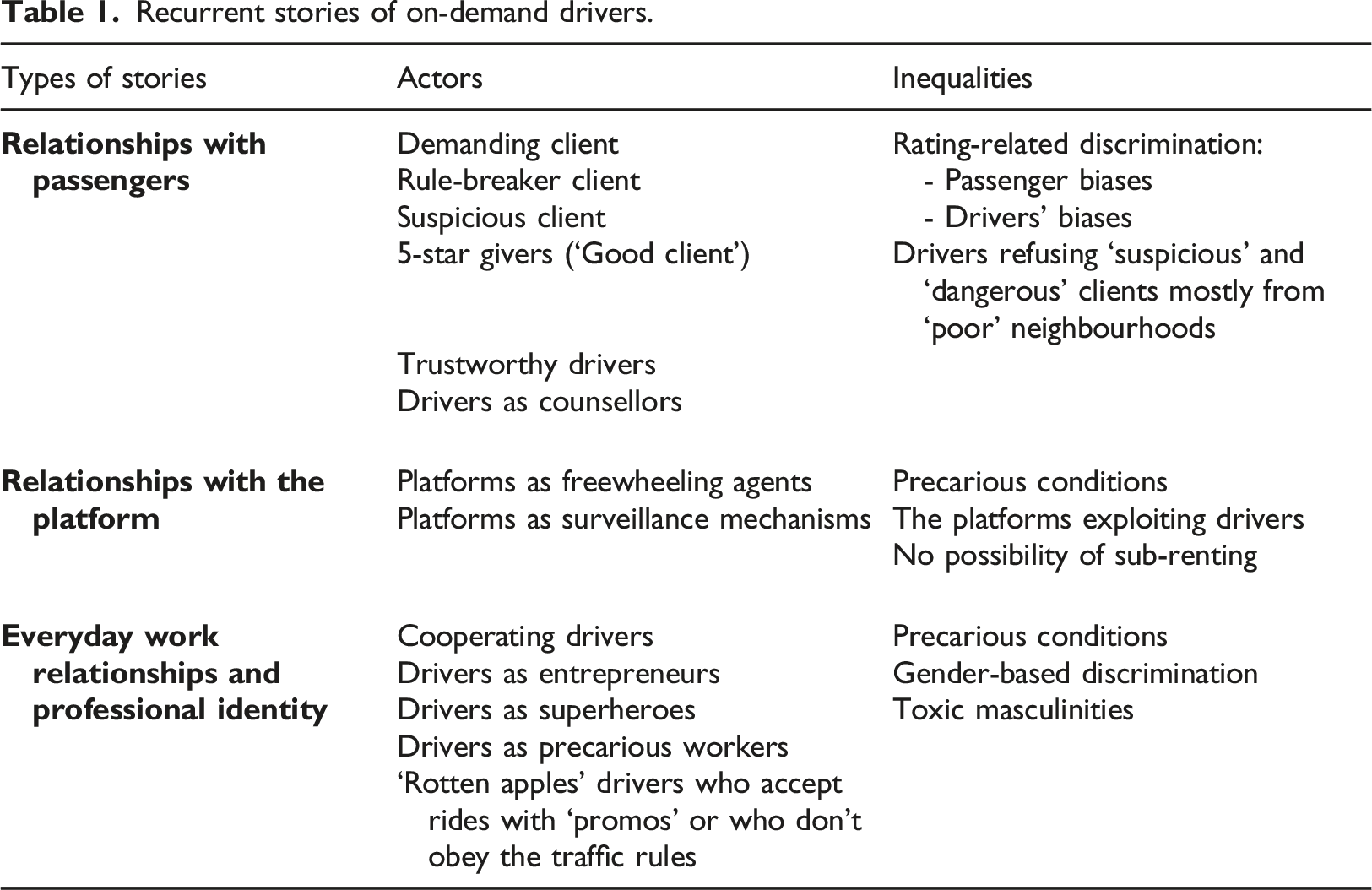
Relationships with passengers
One of the most recurrent types of stories expressed through memes and other kinds of humorous content are those about the relationship between on-demand drivers and their clients: the passengers. The drivers’ relationships with passengers tend to be sustained in binary opposition (bad vs. good clients) usually expressed through irony. Although oppositions may ignore the wide range of relationships between different actors and spaces within a story, they help to describe them by identifying the main aspects that are portrayed in one of the extremes of this range. In the case of on-demand drivers, this binary opposition was recurrent in the humorous content, one example can be seen in Figure 1. Clients portrayed as bad clients.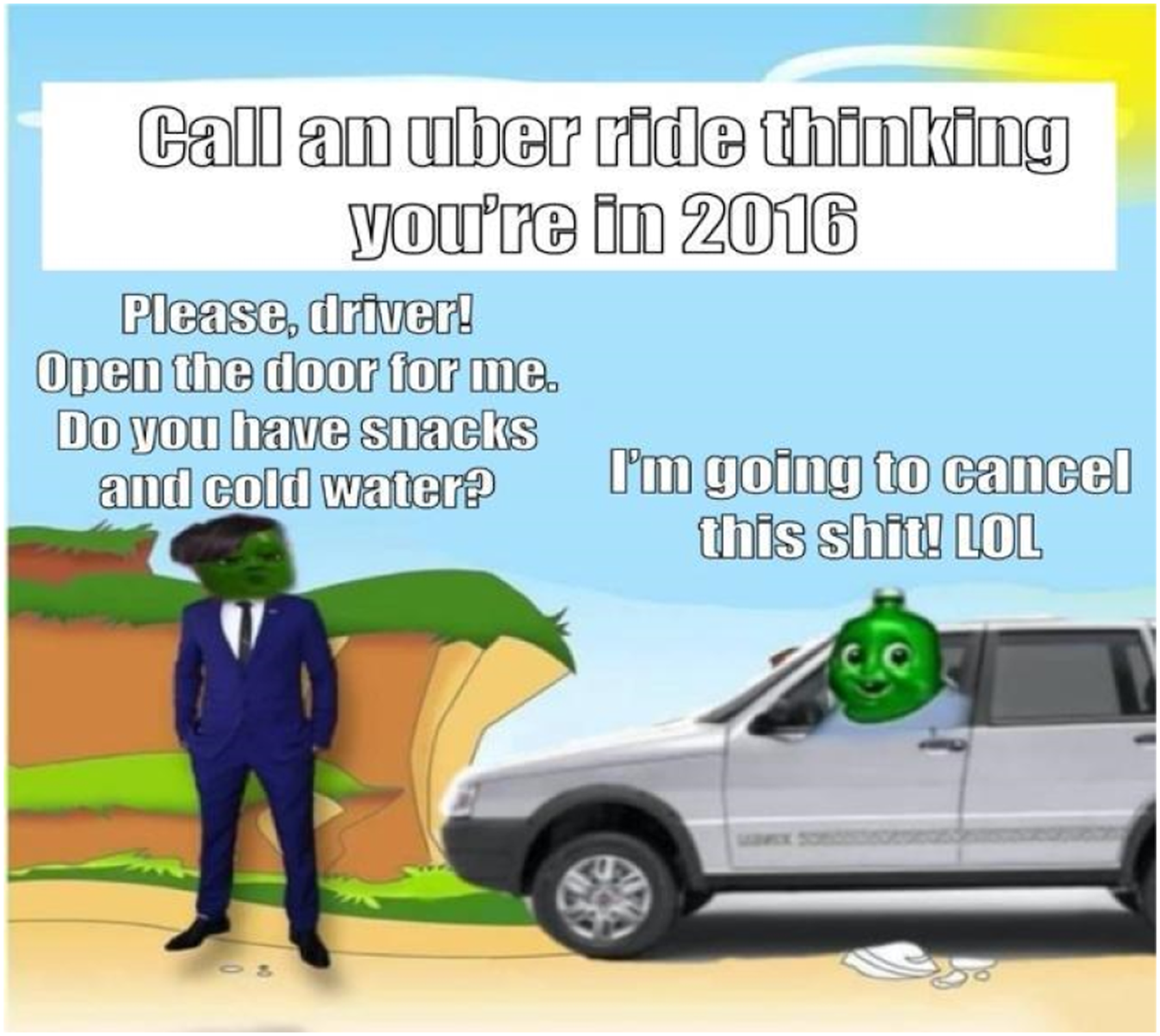
In Figure 1, we see that drivers use humour to complain about the stereotype of a client who is too demanding: a client who wants the driver to be a person who opens the door and offers soda or cold water for free. They do this by using a mascot of a Brazilian brand of soda called Dolly to portray the characters, which adds a fun layer to the image as the characters are beverages themselves. This image reflects some complaints found in the studied groups, in which drivers express that they want to cancel the ride because of this profile of client: the demanding client. However, in Figure 1, the appearance of the demanding client is related to the emergence of on-demand-driving applications, when the ride-hailing drivers tried to differentiate themselves from classic taxi drivers. From the authors’ experience while using Uber when the service started, it was not unusual to hop into a car and get offered water to drink. Hence, the joke also makes reference to the year of 2016, when Uber was still starting to become popular in Brazil.
Clients are identified as ‘bad’ actors not only because they are too demanding in the drivers’ view, but also because they are considered rule-breaker clients. The clients are given this label for two main reasons: (1) they often ask for a cheaper price than the price already established by the application, or they use promotions; or (2) they do not comply with the rules established for using the app.
Therefore, it was common to see visual complaints about the discounts that are used by clients, which are provided by the actual platform. In Figure 2, an Uber driver has posted a photo of a ride that had cost 10,96 Brazilian reais, and the client gave 11 reais as the payment. This image comes with a text by the driver: ‘The Ministry of Memes warns: this post contains irony. This is for those passengers who deserve six stars because they say you can keep the change. It is a meme’. The driver that affirms that this is a meme because in the image the client is giving a tip of only 4 cents of reais, which corresponds to less than one cent of a euro or dollar. You can keep the change. Ministry of memes.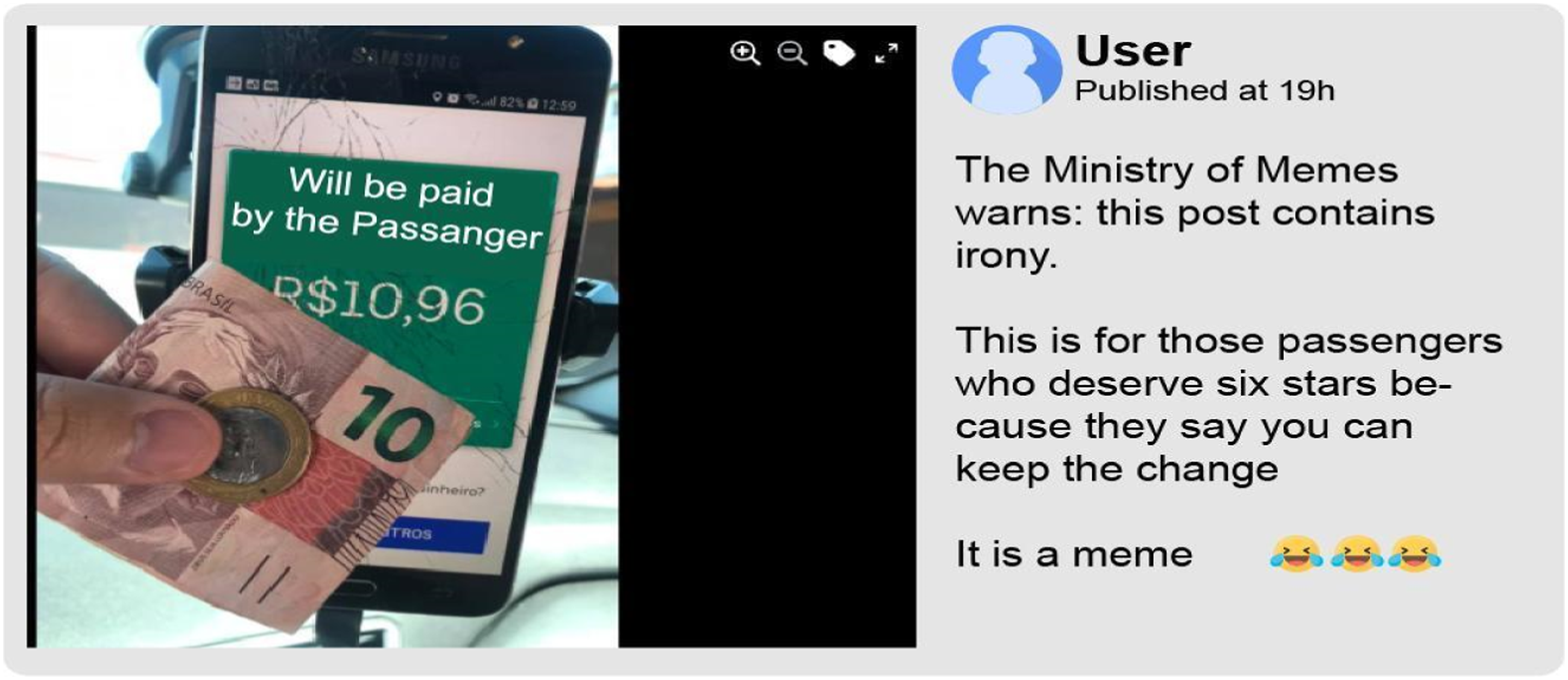
Clearly, the driver clarifies that it is a meme because it is something that happens all the time. Therefore, it is memetic. Nonetheless, this ironic image served to open a debate about blaming the client. The debates revolved around the promotions and prices that are not set-up by the clients, but rather by the platform. In addition, it indirectly touched upon the rating system that is based on a scale of one to five stars.
Complaints about clients not following the rules for using the services of the apps were common. However, the outbreak of the COVID-19 health crisis in 2020 brought up another problem that on-demand drivers externalized through humour: the recurrence of clients who were not willing to wear a mask in the middle of a global pandemic. This cannot be dissociated from the context experienced in Brazil, where the highest political figure, the president, took a negationist attitude from the very beginning of the crisis (Friedman, 2020), and thus helped to promote this type of attitude among the population. Pandemic negations were heavily criticized in both studied Facebook groups because of the risk drivers had to face with rule breaker clients.
The good clients are rarely mentioned in these stories and memes, but when they are, it is usually because they tip the driver or use the most expensive ride options, as it can be seen in the meme with the chihuahua (Figure 3). The good client is portrayed as the one who uses the most expensive riding option offered by the applications (not the promotions). Thus, the chihuahua (the driver) gets happier when the client opts for this price of the service and angry when promotions are applied in the ride. Bad versus good client Chihuahua meme.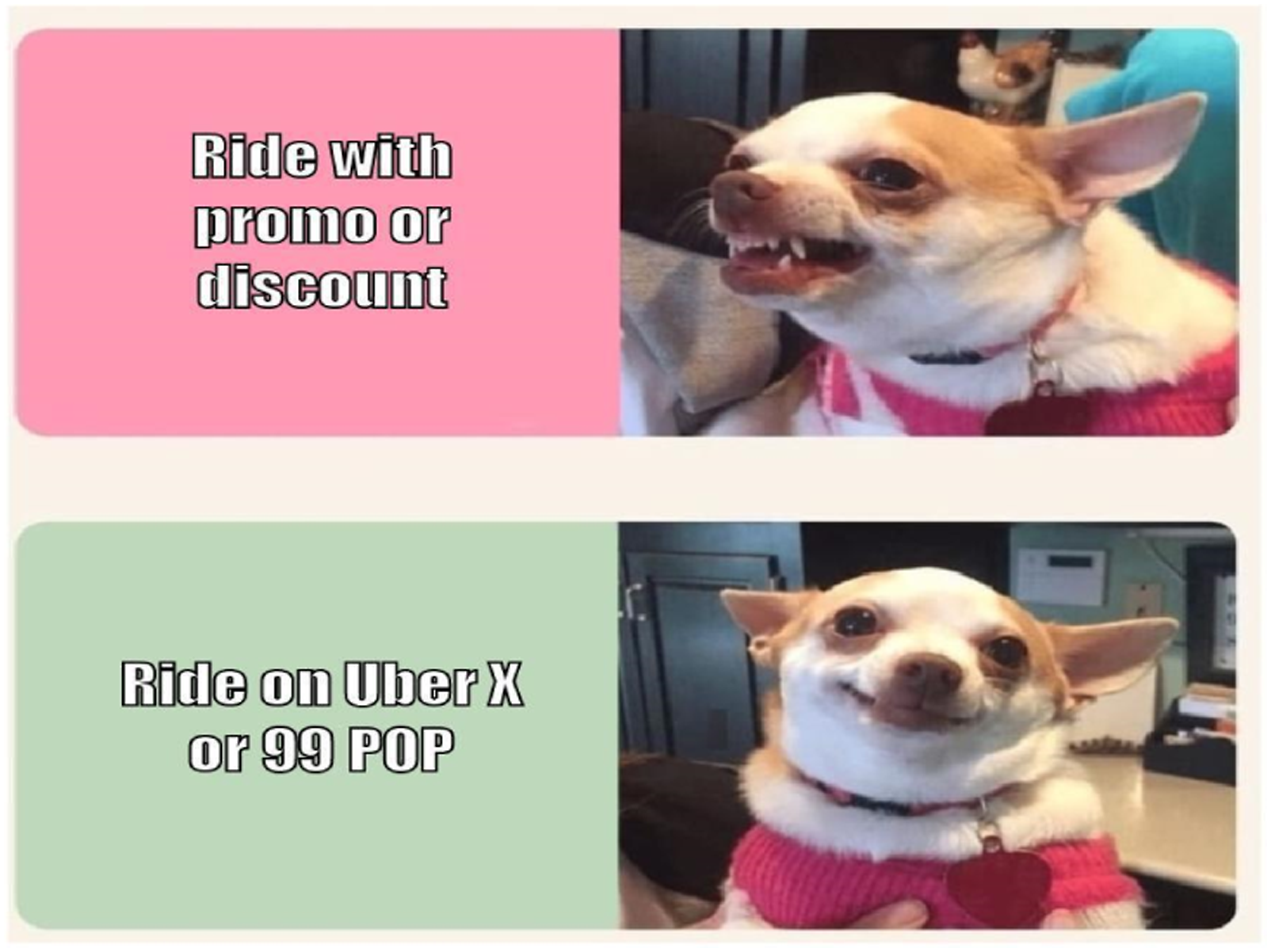
The good client is also often depicted as the client who rates the drives with ‘five stars’. Therefore, showing how the ratings system directly affects not only the client-driver relationship, but also driver-client relationship. As pointed out by Rosenblat et al. (2017), these systems implemented through apps, like Uber and similar, can be a liability for prospective workplace discrimination. They also may lack reliability because ratings risk being subjected to consumers’ biases or drivers’ biases. Thus, it is not surprising that some humorous content evidenced an expectation among the drivers that can be considered biased. The common expectation is to have a relationship that positively correlates with mutually good ratings. That is, if a driver gives a high rating to a passenger, they expect that the client will give them a positive rating as well, and not the other way around.
Observing the memes and publications, makes it clear that the Facebook groups serve as a digital space to release the stress and pressures related to the drivers’ daily interaction with passengers. In some stories, it was also evident that there was a need for an escape from certain situations that could be considered uncomfortable encounters with clients. Therefore, a common practice in these groups is to share app screenshot posts about these uncomfortable situations experienced by the drivers and make them comic. In Figure 4, a driver is in a situation, in which a client asked him to wait a minute, the driver replies OK, and the client confesses he is in the toilet. Client in the toilet.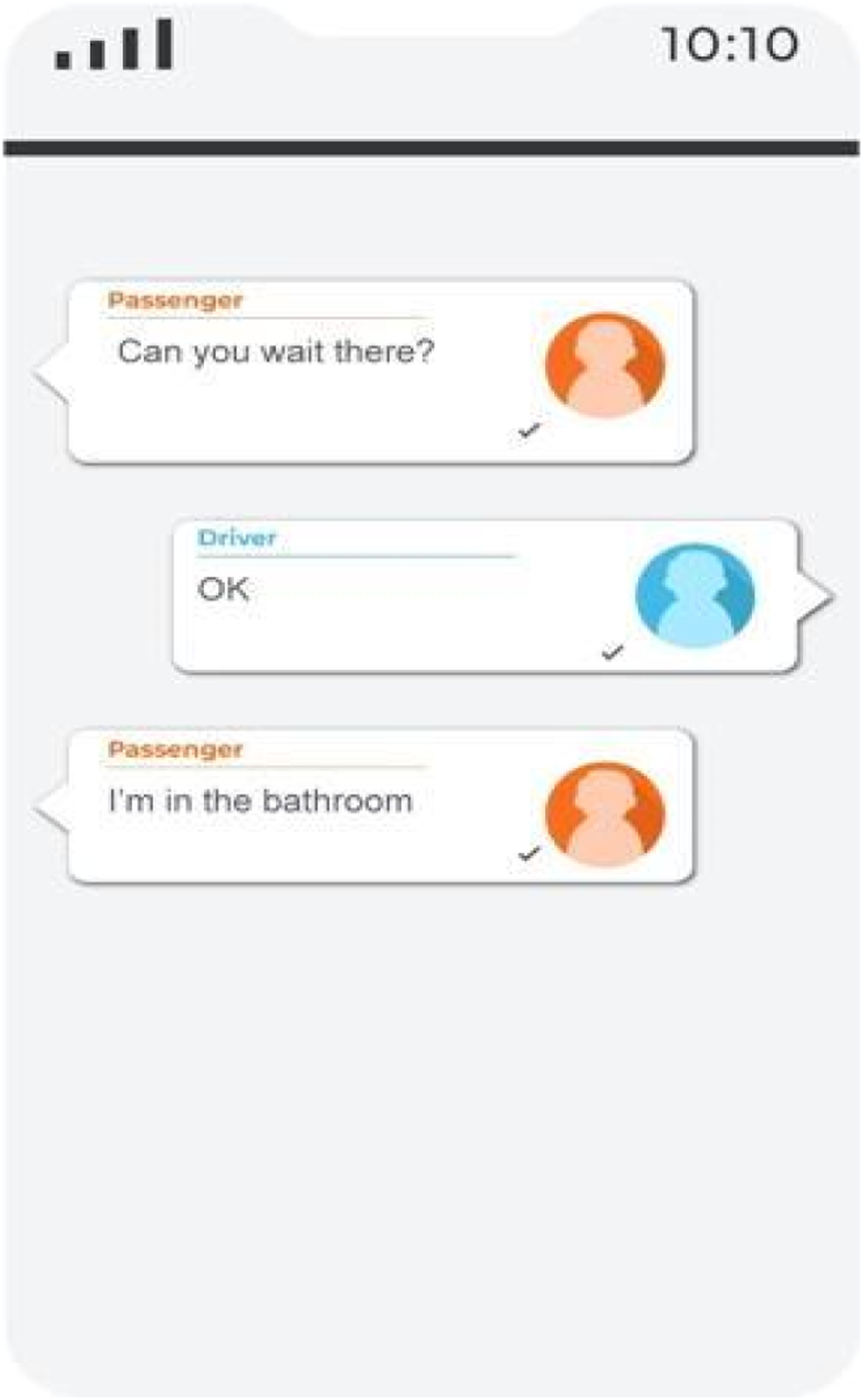
Some clients see the drivers as trustworthy and treat them as their counsellor. For example, a passenger that had ordered an Uber for his boyfriend told the driver how much he was suffering because the boyfriend had cheated on him on this very same day: the client’s birthday (see Figure 5). Uber’s chat used for counselling by the client.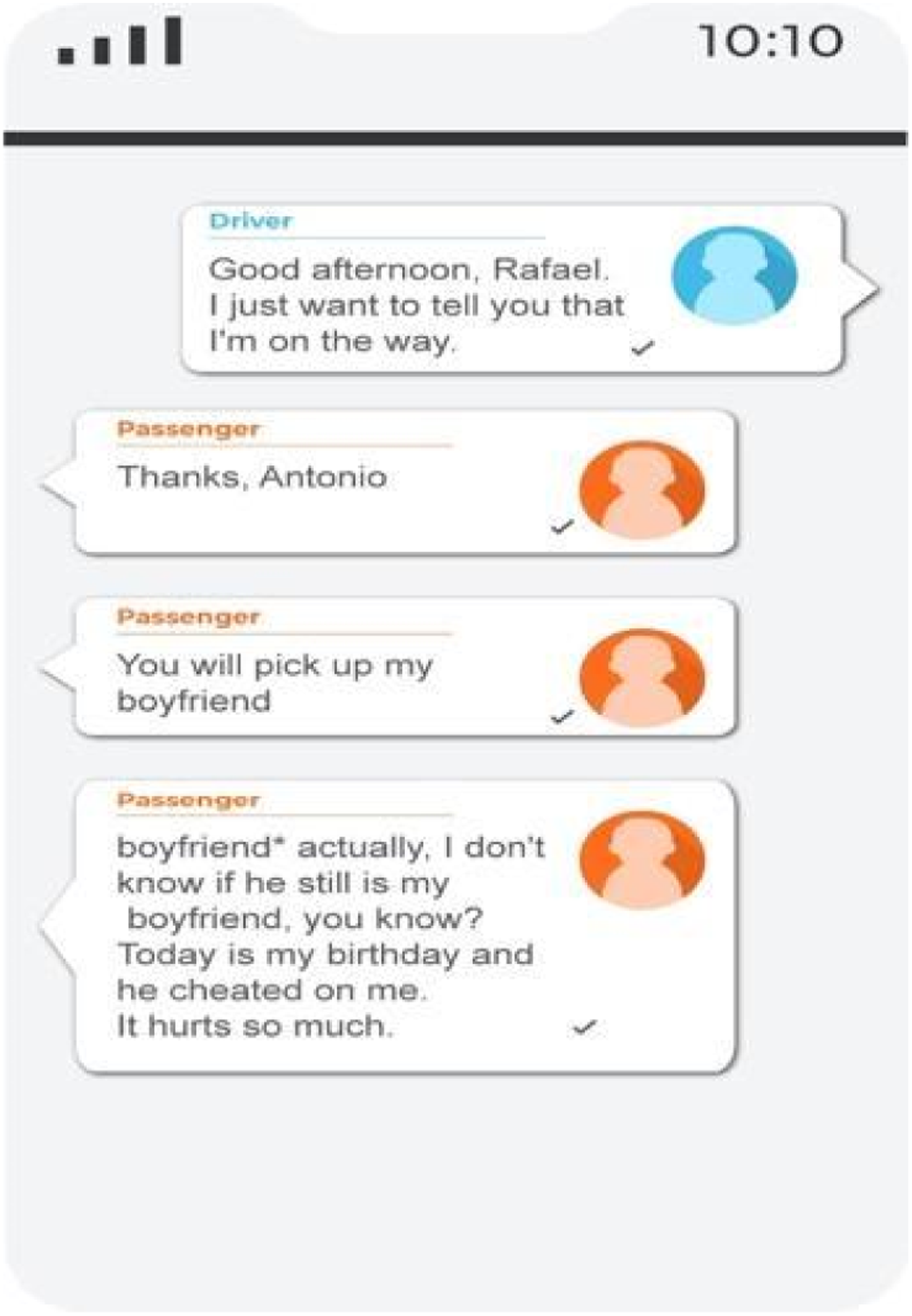
These uncomfortable situations and personal passenger stories transformed into the format of brief counselling sessions with the drivers can be traced back to taxi-driving situations (Egunjobi, 2017). However, they were shared only on the go, and today with the emergence of technologies they can also be carried out digitally through the instant messenger of the on-demand applications, as we can see in the screenshots shared in the Facebook groups.
Nevertheless, there is not always this relationship of trust. Brazil has a high crime rate, particularly in urban areas like Rio de Janeiro and São Paulo, and street crime is still a problem for the population (Country Reports, 2021). Historically, in Brazil, there is a situation of deep marginalization of the poor that was inherited from the period of slavery. People who inhabit low-income areas and the slums tend to be discriminated against because organized crime has controlled these areas for decades (Felbab-Brown, 2011). Consequently, people living in these regions are labelled as criminals, even if they are not. Connected to this, we observed some content that created a humorous representation about those who are pictured as the ‘enemy’, the ‘dangerous people’. This representation tends to portray people from the poor outlying neighbourhoods of the cities as suspicious passengers, as we can see in Figure 6. The relationship of mutual suspicion.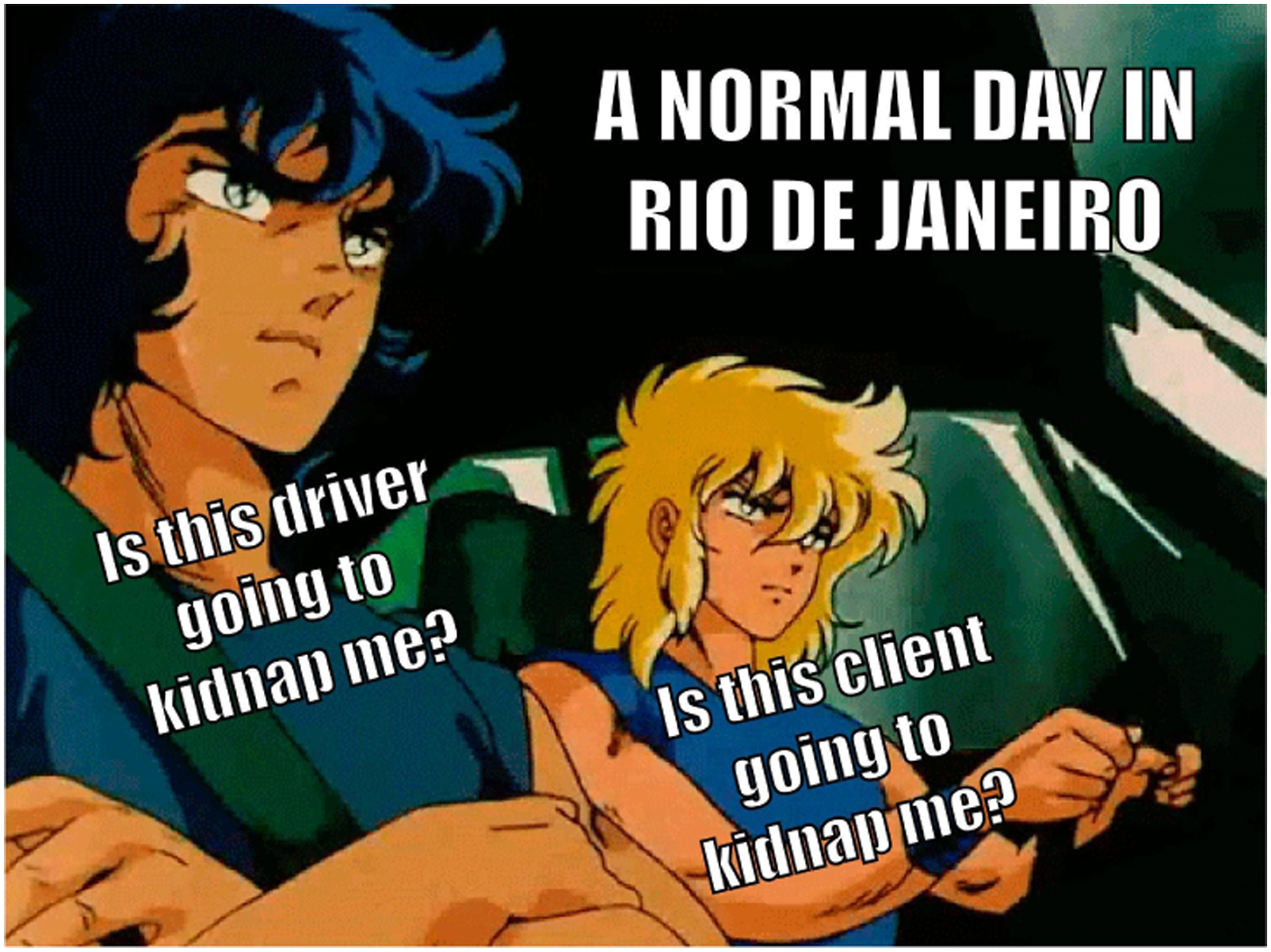
This discriminatory idea is also manifested when drivers laugh about refusing rides ordered from these places. Thus, humour, as pointed out by Hart (2007), is used as a way of dividing and excluding a particular group: in this case the passengers that live in poor regions. In Figure 6, we can see that the driver believes the client will probably kidnap him. However, as Brazil is filled with incidents of robbery, murder, kidnapping, and sexual harassment on transportation (Country Reports, 2021), the meme pictures a mutual suspicion.
Relationships with the platform
Another recurring kind of story that was marked by the use of humorous content and memes concerned the on-demand drivers’ relationship with the platform. In this case, Uber or 99Pop were the main platforms mentioned among the drivers because they were the intermediaries that drivers use to offer their driving services.
The drivers’ relationships with these platforms tend to be non-symmetrical. That is, drivers expressed that these platforms have superior power in offering promotions to the passengers, which are largely not beneficial to the drivers. Moreover, the platforms were commonly described as the entities that control the work processes, and therefore, drivers are at the mercy of their actions and decisions. It was not unusual to see memes similar to Figure 7. First day working with Uber versus one year later.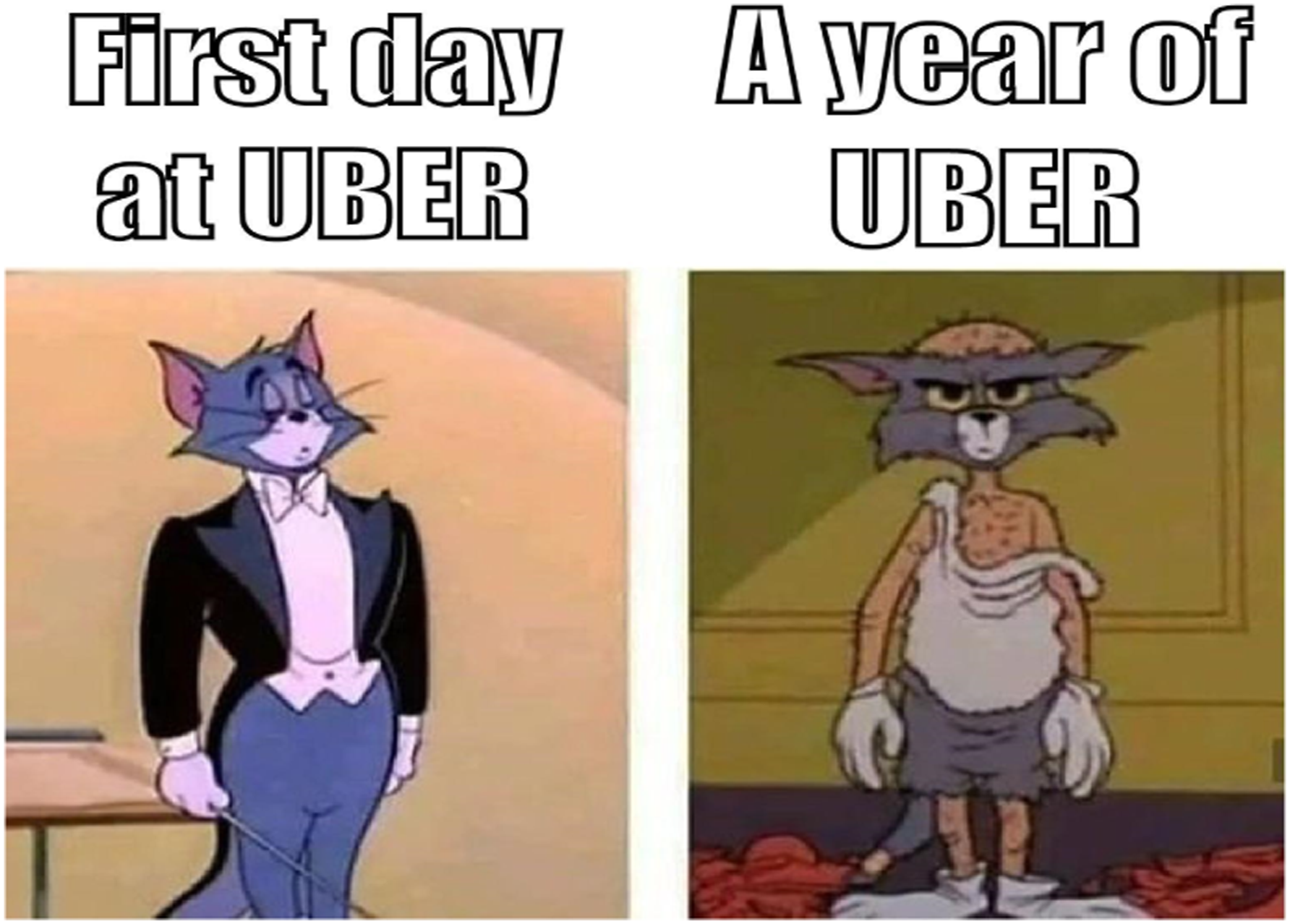
This type of meme was a form of expressing how the workers feel after working a while in platforms like Uber and 99Pop. Complaints about drivers’ expectations versus reality could be related to a particular expectation that this type of work offers: to work freely, without a boss and apparently without rules. Nonetheless, as time goes on, workers who have this initial expectation can come to realize that this type of work does not offer total autonomy. On the contrary, workers have to follow the terms and conditions of the platforms they use for carrying out the work, and are subject to the platform interface characteristics, and ‘to their own needs for income, as well as to the market and its particular demands’ (Ashford et al., 2018: 26).
The platform’s power of control and the relationships with the driver becomes more visible in the price arrangement: discounts and promotions that the platform offers passengers are paid by the drivers and not by the platform. These platform decisions further complexify the relationship drivers have not only with the platform itself but also with the passengers that ask for the offered discounts. However, the discounts promoted to the passengers are not in the budget of these workers. Workers accept to do a ride because of the combined platform-passenger pressure and their need for work. This can lead to bad maintenance of their main work tool: the car. Therefore, a common practice among workers in the Facebook groups is to make fun of the condition of their car after accepting the platforms’ promotions. One example of this can be seen in Figure 8. Rundown car shown to highlight the economic losses involved in discounts.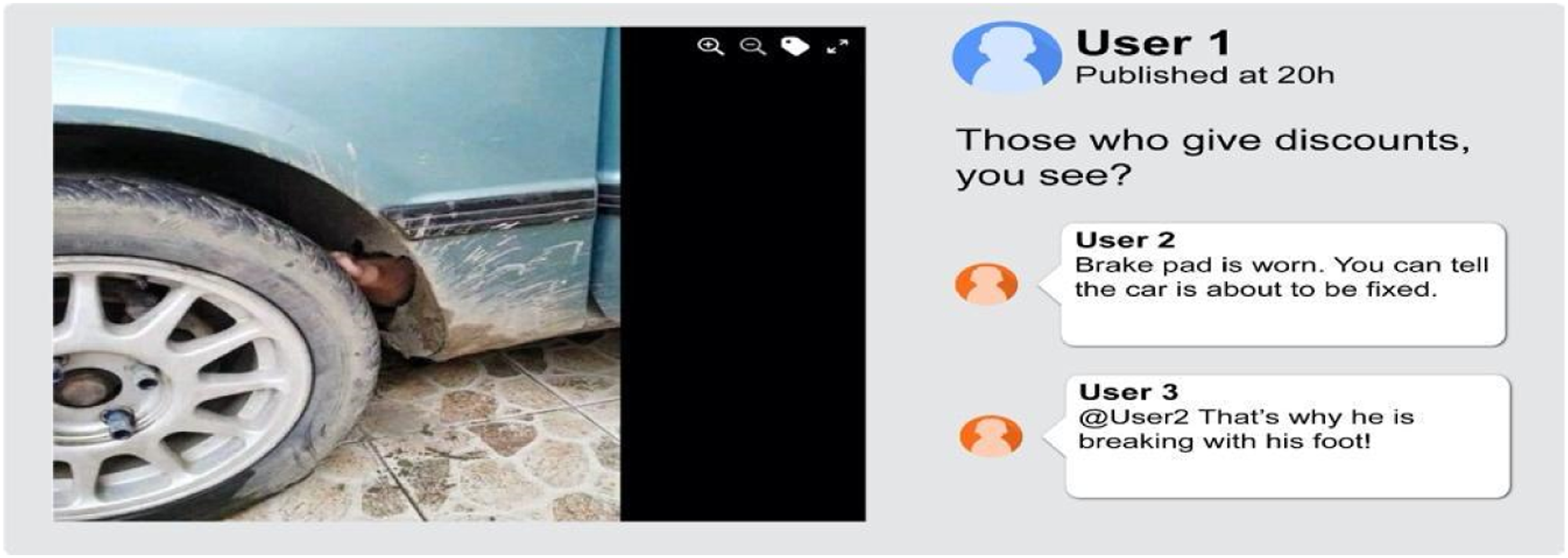
The promotions are constantly criticized and usually contrasted with images of damaged cars, even when the cars do not actually belong to the drivers and are only used to express their extreme discontentment.
However, drivers establish their own relationship with platforms. That is, some of the drivers are more satisfied with one platform compared to another, or use only one of them. Therefore, there was a division of opinions. These divisions can be related to what Ravenelle (2019) said about the nature of platform operating algorithm management. This can affect the satisfaction of the drivers in relation to the platform they use to carry out their work. This is because the platform operating algorithms are developed with a previously set-up management mindset that can affect platform decisions towards workers, and certain measures that can punish or reward the workers (Ravenelle, 2019). Thus, some drivers identify with and follow one of the platforms, and discuss the differences of the platforms through humour.
Finally, facial recognition was one of the tools included in these platforms that came with the COVID-19 health crisis (Istoé, 2020; 99app, 2021). Facial recognition technology started to be implemented at the end of 2019 in Brazil (Extra, 2019), and became mandatory for Covid prevention as a measure for controlling the pandemic with the request of facial recognition for the use of masks. However, a common practice, not only of on-demand drivers, is to sub-rent accounts in order to have access to more hours (a practice observed and advertised within the groups). The use of facial recognition in these platforms was mocked by the drivers by using costume masks (see Figure 9.) Uber’s facial recognition system fooled by a driver wearing a Darth Vader mask.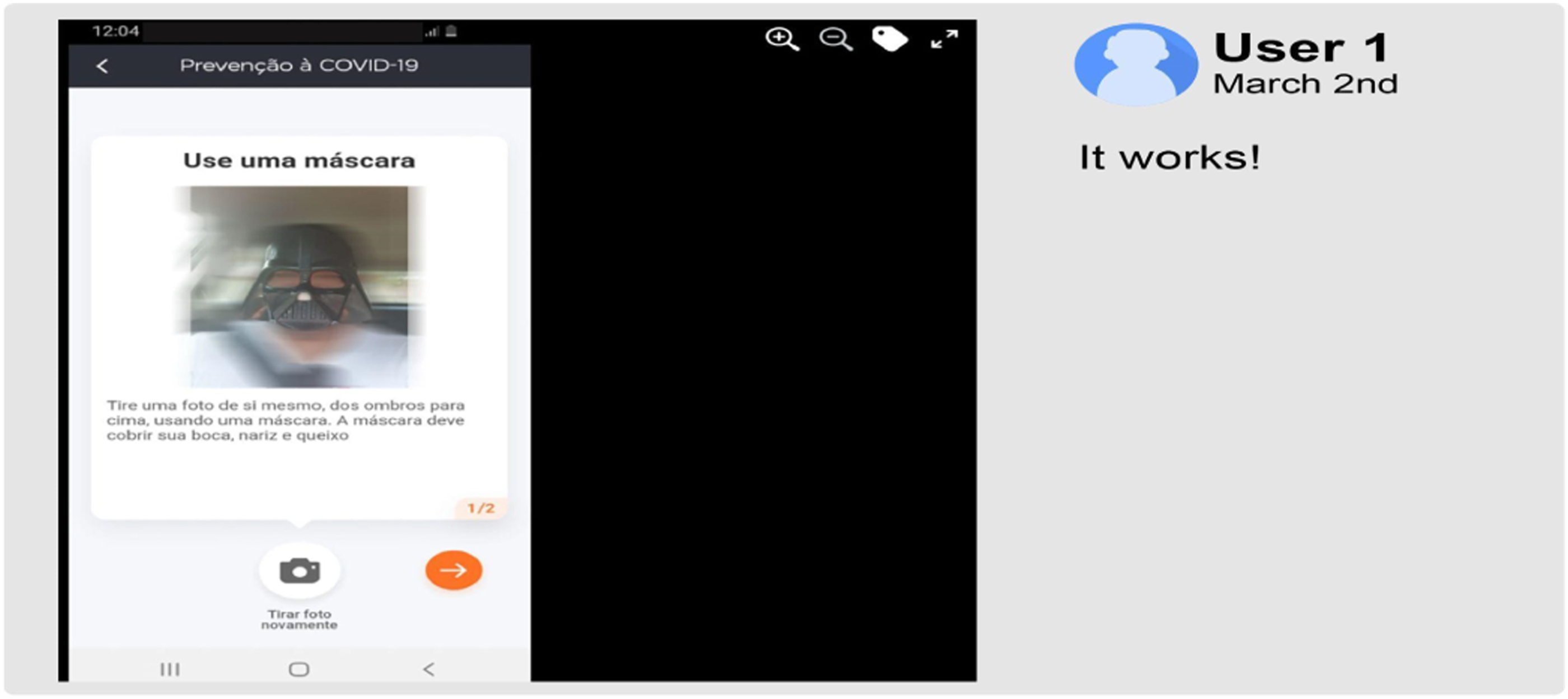
The use of a Star Wars costume or ID to simulate a mask was used to criticize using humour the workers’ freedom to sub-rent accounts and the control implied by this type of technology. It is essential to highlight that work-on-demand is marked by a discourse of self-employment and the possibility of being your own bosses. Therefore, this criticism is present in the relationship between drivers and the platforms.
Everyday work relationships and professional identity
Workplaces are crucial spaces for building relationships among peers and for professional identity-making (Sulphey, 2019). As on-demand drivers do not have a physical space for sharing their everyday work routines with peers, the Facebook groups fill this gap. Through these Facebook groups, drivers cooperate with each other to overcome difficulties, act together to achieve a similar goal, such as increasing their income, and acquire new skills through the experiences of other drivers. As mentioned before, in most cases these exchanges are disseminated through memes and humorous content. For example, drivers discuss their daily routines by posting and uploading humorous photos of cars in poor condition or memes about their relationship with their mechanic (See Figure 10). Meme with Queen of England representing the drivers’ daily conditions of resource management.
The representation of this daily life through humorous content emphasizes the difficulties associated with the material and mechanical conditions and the search to increase their earnings. Most of this content is shared to create a space for support, such as giving and getting tips about car brands or humorous, and at times cynical, advice on how to avoid extra expenses with alternative solutions, such as washing the car with the rain to avoid paying for the car wash (See Figure 11). Washing the car with the rain.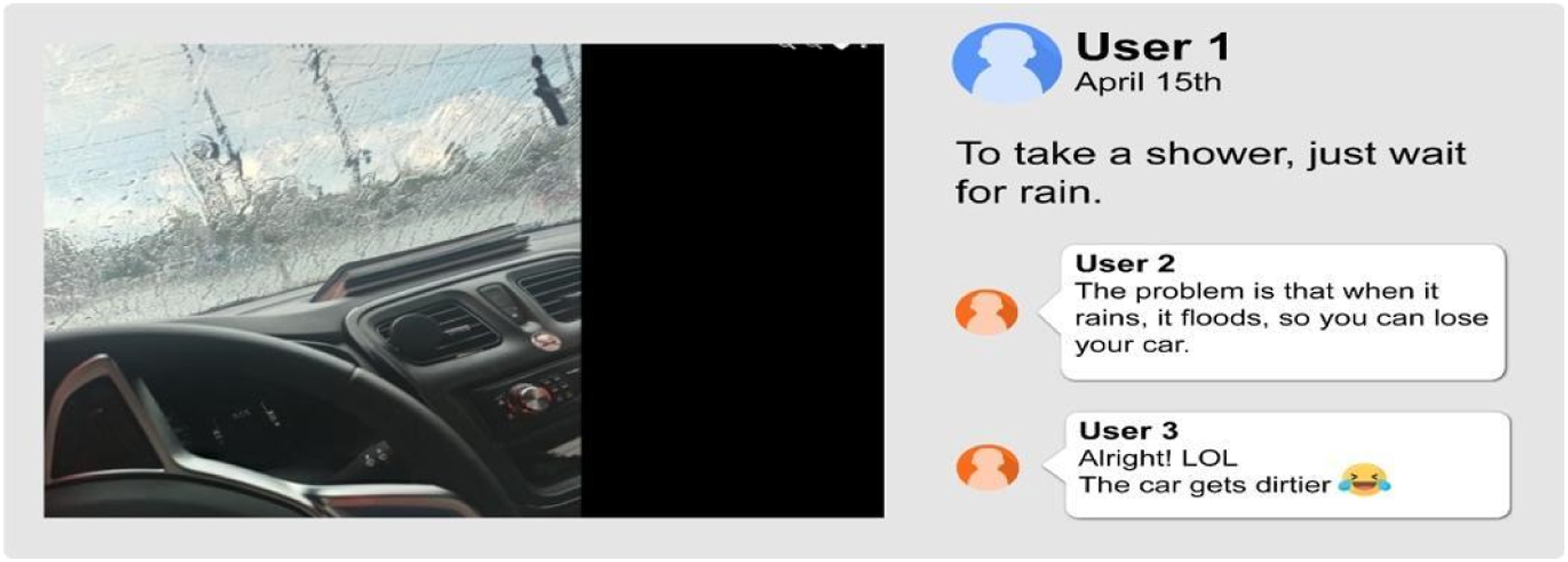
One of the common patterns of driver-to-driver cooperation and advice sharing is related to the ways of increasing income through on-demand platforms. For example, in a post (Figure 12) one driver demonstrates how, with a ‘fancy and better car’, he rarely gets cancellations, his grade has gone up and he earns better tips. Demanding passenger choosing the ride according to the car.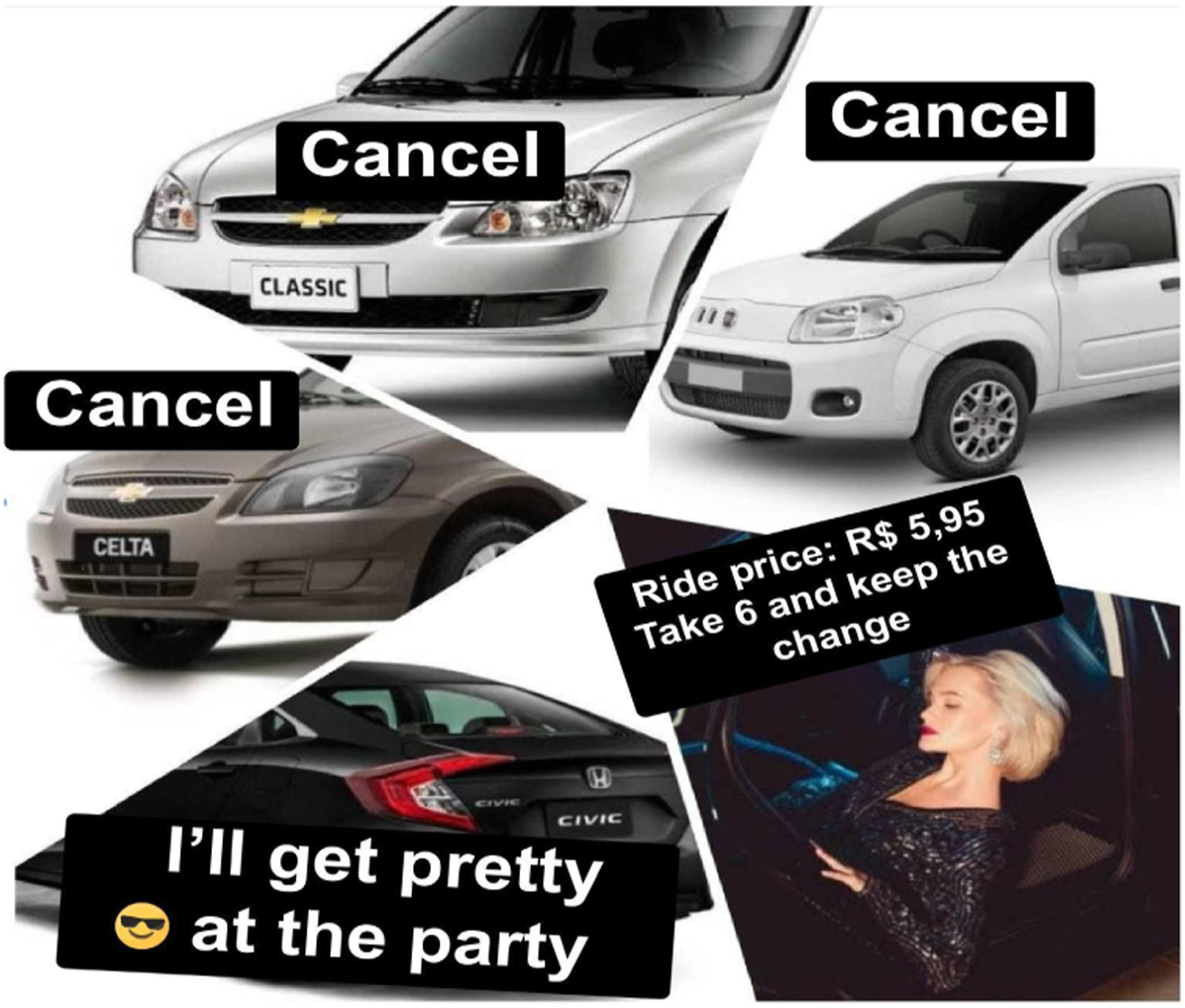
However, the conversations and interactions in these spaces also lead to unequal power relationships, interpersonal conflicts and discrimination that could also be seem in some of the humorous and visual content shared within these groups.
Beyond the drivers’ discussions on alternative ways to earn money and change their old cars for new ones, they make jokes about how a ‘bunch of chicks’ like to ride in better looking cars. While these online spaces generate community-building through cooperation, advice sharing, solidarity, and skill acquisition, they also engender unequal relationships, interpersonal conflicts and discrimination like in physical workplaces, particularly in relation to female clients. These disadvantages are even more accentuated due to the lack of regulations that physical workplaces normally have. It is not surprising that there are various accusations and investigations related to gender discrimination and sexual harassment in applications like Uber (Zerbino, 2019).
The drivers in the groups tend to use dark humour and derisive, at times, sexist jokes to convey their messages, which could be hurtful and offensive to certain groups of people.
Through this humorous content, we also observe that everyday work relationships reinforce a toxic masculinity that keeps women out of work conversations since the group members consider this kind of work-on-demand to be a male-dominated profession. Thus, the solidarity among drivers tends to result in only-male unity, while women are regarded to be out of the work frame. The humorous content that is shared to mock the precarity of work-on-demand often depicts men as ‘breadwinners’ and indirectly assigns women traditional patriarchal roles, as we can see in Figure 13. Precarity represented through the nuclear family.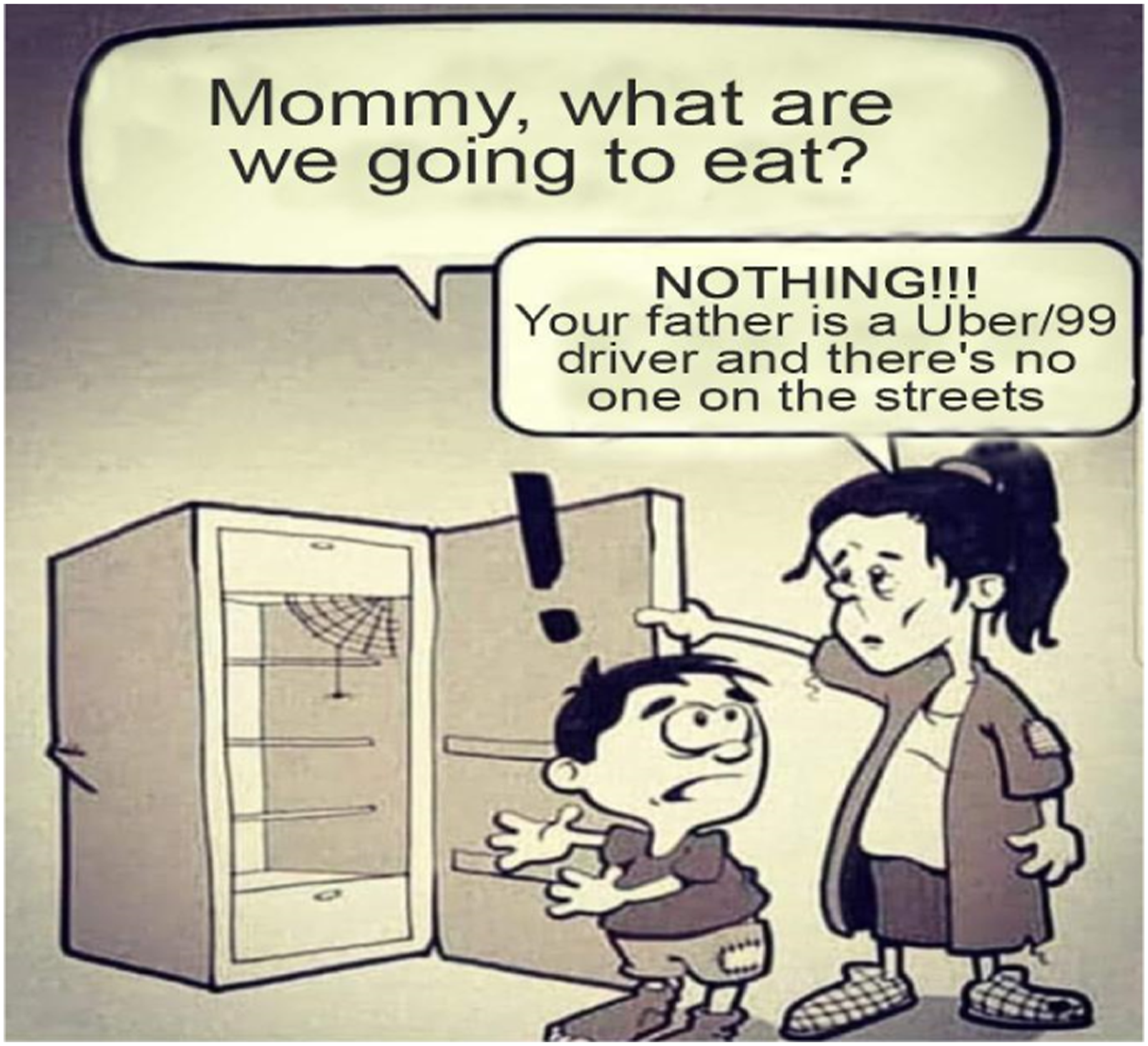
In the particular case of Figure 13, precarity is represented through the nuclear family via a conversation between a mother who is at home with her child with the empty fridge because the father is outside trying to make money with Uber/99Pop and having difficulty doing so.
In certain cases, the concept of ‘manhood’ becomes related to being a ‘good driver’; that is, when there are ‘bad apples’ that do not align with the idea of a ‘good driver’ they are also attacked through their manliness. For example, in Figure 14 the meme shows skulls of different ethnicities, demonstrating that they are all the same regardless of their ethnicity except the driver ‘who doesn’t give a turn indicator’. Driver ‘who doesn’t give a turn indicator’.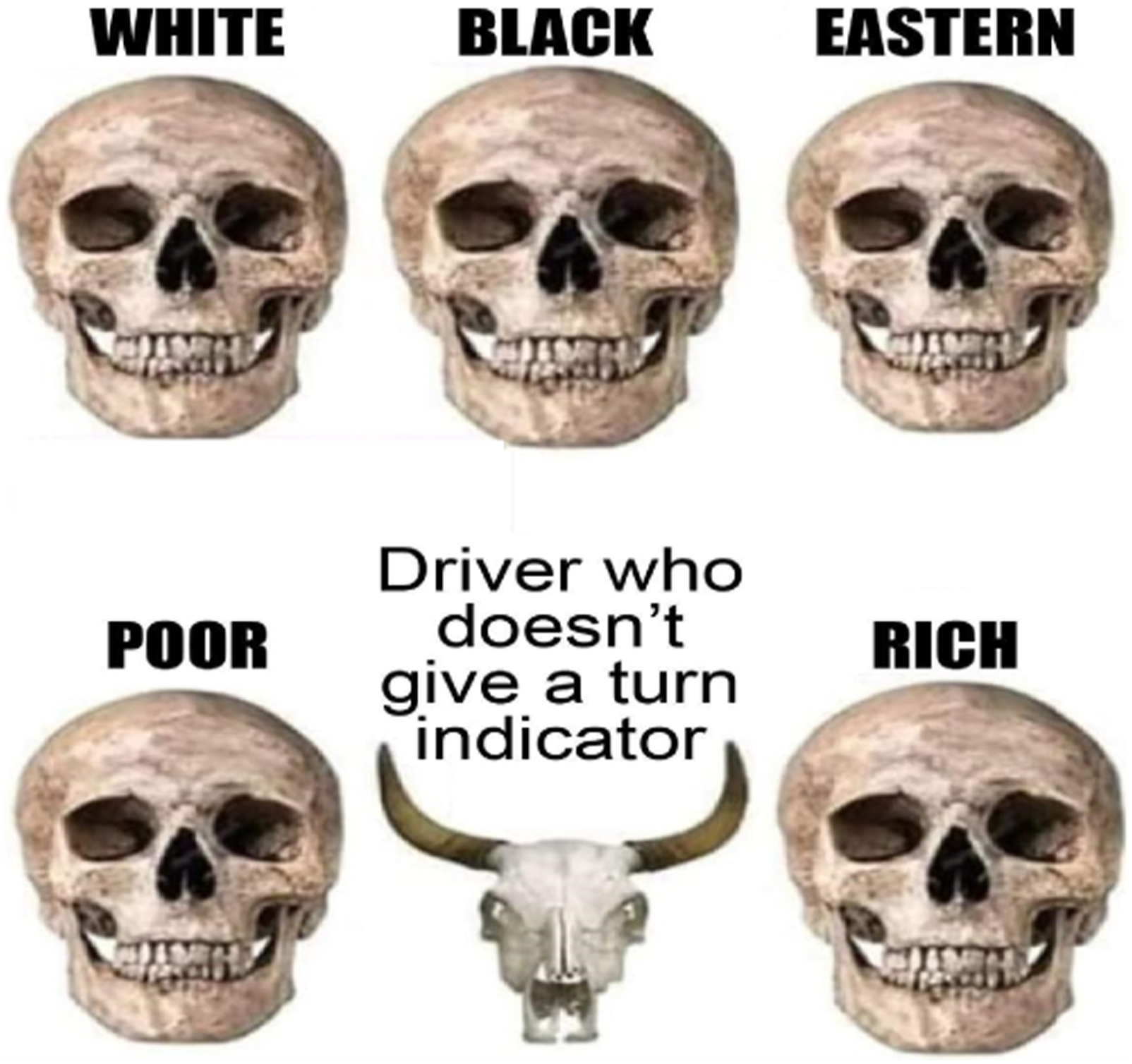
This type of driver is depicted with a bull skull, which is ‘corno’ in Portuguese and is used as a name for men who are cheated on by their female partners. The comments under the post also define those drivers who do not fit the ‘good driver’ definition, such as not accepting rides with promos or driving ‘correctly’, as ‘cornos’, that is ‘not man enough’.
Another way of portraying the on-demand drivers’ personal identity through jokes about precarity was through constant negotiations of an ethos of what it means to be an on-demand driver. This is illustrated by several elements of the drivers’ daily lives, including the low economic return they receive for their work, the constant reduction in the amounts paid by clients, the condition of the streets and roads, technical issues, etc. This type of self-image and identity negotiation is also associated with other work sectors such as the music industry or sales industry. Drivers shared cartoons and memes not only relating the profession to other precarious professions, but also to beggars. Therefore, referring to the lack of social welfare and the lack of job security that these professions can have.
In some cases, on-demand drivers consider themselves ‘superheroes’ that can overcome all challenges and thrive financially. However, this kind of positioning leads them to ‘take action’ and ‘fight back’ against the threats they face on a daily basis, which also manifests itself from the socio-economic and political context of Brazil. Drivers frequently mention assaults and robbery as one of their daily problems. In a video posted by a driver in one of the Facebook groups, we see that the driver runs over a person who allegedly robbed his mobile phone. Although the video represents a brutally violent scene, it was framed as humorous content, in which the driver was identified as a ‘real hero’ to the group members who commented on the post. A large part of the conversations about violence in these groups tend to assume a different approach to the human rights issues in the country. Human rights are represented as ‘something that protects the real criminals’.
Conclusions
This article had three main goals. First, to detect the types of stories shared by on-demand drivers in the Facebook groups. Second, to determine the relationships these stories have with the work of on-demand driving and the main actors who are involved in these stories. Finally, to understand the dimensions of professional identity and negotiation of platform labour conditions implicated through the manifestation of humorous stories in the two studied Facebook groups.
We have detected three main story types that usually involve passengers (clients), the drivers, the applications (Uber and 99Pop) and their algorithm system and characteristics. These stories portray the relationships on-demand drivers have with their passengers, the relationships they have with the platform they use for carrying out their work, and stories about their everyday work relationships and professional identity. Although they are different types of stories, they are inter-related through the platform used for offering the on-demand driving service, and due to the social and political context where these work activities are developed. Therefore, different inequalities were also identified in the stories, which are a reflection of the society in which the workers are members.
In their stories about their relationship with passengers there is a clear binary portrayal of the clients. Passengers are good or bad depending on the tips and ratings they give and also according to the driver’s expectations about the passengers. For many years, it has been well-known in narrative and linguistic studies that binary oppositions can indicate different types of relationships in a story because they help to identify myths, rites, and moral values (O’Toole, 1980). This is no different when drivers share their experiences through humour and memes about the people who ride with them. Moreover, in the case of on-demand drivers, in many instances, the memes are stories that come from the drivers’ actual life experiences. Memes, humour and sarcasm are used to deal with complex subjects indirectly through humour, that is, when drivers become the passengers’ temporary counsellors. Moreover, these relationships are clearly marked by the characteristics of the platforms (Uber and 99Pop), such as the ratings systems that make client-driver relationships more complicated because they have to rate each other.
The stories about the relationship between the on-demand drivers and the platforms are revealed to be asymmetrical because drivers portray themselves as powerless in the face of some actions (like promotions) implemented by the platforms, and the rules and technologies used to enforce these rules (facial recognition). These stories portray not only the drivers’ precariousness, but also how some on-demand drivers realize that these activities are not so autonomous as they initially thought. Moreover, the algorithmic policies of the platforms, beyond rewarding and punishing the workers, also seem to create a kind of fandom between drivers, as some of them actively support one or the other platform (Uber vs 99Pop).
The stories about their everyday work relationships and professional identity reveal a very interesting trait of the use of Facebook groups, that is, they have become on-demand drivers’ virtual workspace. Since on-demand drivers in this study carry out their jobs through driver apps such as Uber and 99Pop, they lack a common physical space to socialize with each other. Therefore, the workers turn to social media platforms like Facebook to establish a space to discuss difficulties, form relationships, participate in everyday conversations about work, share advice and learn from each other. As in physical workplaces, these online spaces also provide a place for cooperation, solidarity, and skill acquisition, as the drivers are constantly in contact with each other. However, the conversations, interactions, and shared humorous content in these spaces also lead to unequal power relationships, interpersonal conflicts and discrimination because there are no policies and rules that are usually implemented in a company’s physical workspace. Although there are group rules that were determined by the admins of the groups, these rules were mostly ignored by the users, which led to the closure of the groups by Facebook due to the violation of its community rules.
The closure of the groups indicate that future research should seek to understand the violence in to include personal stories and an intersectional perspective (Crenshaw, 1991) that helps to understand other possible oppressions and discriminations that emerge within virtual workspaces as well as during the on-demand driving work, such as gender, social class, age or country of origin, among others.
Footnotes
Declaration of conflicting interests
The author(s) declared no potential conflicts of interest with respect to the research, authorship, and/or publication of this article.
Funding
The author(s) disclosed receipt of the following financial support for the research, authorship, and/or publication of this article: This work was supported by the Planetary Wellbeing – Universitat Pompeu Fabra-Barcelona; Action 1.2 – Planetary Wellbeing Initiative.
