



Abstract
Games are trouble. As faculty members in a Game Development program we are aware of the troubles. As inside–outsiders, given our status as queer women in the male-dominated Games field, both with interdisciplinary art-tech-humanities backgrounds as opposed to STEM, we are the ones commonly tasked with ‘fixing’ these troubles. This tasking comes to us in the form of both assumptions and requests about our providing particular types of education to others, both faculty and students, as fixes to Game-troubles: teaching the gender module; sitting on an LGBTQ+ committee; advising a particular student who is also outside the more comfortable purview of Games; and so forth. While our labor is often assumed, it is not fully valued, evidenced by the ways in which it is chronically under-resourced. And, given this lack of sustainability, our labor is not effective in the ways we intend. Often, our fixes only serve to a fix ourselves, further cementing us as outsiders. Our fixes are diluted until they become performative gestures, absolving others of the need to act, but changing little else. Acting ‘in a fix’ is something we no longer wish to do. Instead we untangle and re-tangle in a new way, drawing on the work of Feminist New Materialists (Ahmed, 2008; Alaimo, 2016; Alaimo and Hekman, 2008; Barad, 2011; Bennett, 2010; Braidotti, 2013; Coole and Frost, 2010; Dolphijn and Tuin, 2012; Grosz, 1994; Kirby, 1997) to develop imaginative new models for a more just and joyful future Games pedagogy. We share not only our research on this topic, but also invite you into our own intimate experiences of play-making, foregrounding this as knowledge-making too. We offer these crossings between text and context, history and future Ahmed, 2008, memory and fiction as a speculative fabulation for future Games pedagogies.
Keywords
Worlds of trouble
Games are trouble. As faculty members in a Game Development program we are aware of the troubles. As inside–outsiders, given our status as queer women in the male-dominated Games field, both with interdisciplinary art-tech-humanities backgrounds as opposed to STEM, we are the ones commonly tasked with ‘fixing’ these troubles. This tasking comes to us in the form of both assumptions and requests about our providing particular types of education to others, both faculty and students, as fixes to Game-troubles: teaching the gender module; sitting on an LGBTQ+ committee; advising a particular student who is also outside the more comfortable purview of Games; and so forth. While our labor is often assumed, it is not fully valued, evidenced by the ways in which it is chronically under-resourced. And, given this lack of sustainability, our labor is not effective in the ways we intend. Often, our fixes only serve to a fix ourselves, further cementing us as outsiders. Our fixes are diluted until they become performative gestures, absolving others of the need to act, but changing little else. Acting ‘in a fix’ is something we no longer wish to do. Instead, we untangle and re-tangle in a new way, drawing on the work of Feminist New Materialists (Ahmed, 2008; Alaimo, 2016; Alaimo and Hekman, 2008; Barad, 2007; Bennett, 2010; Braidotti, 2013; Coole and Frost, 2010; Dolphijn and Van der Tuin, 2012; Grosz, 1994; Kirby, 1997) to develop imaginative new models for a more just and joyful future Games pedagogy. We share not only our research on this topic, but also invite you into our own intimate experiences of play-making, foregrounding this as knowledge-making too. We offer these crossings between text and context, history and future, memory and fiction as a speculative fabulation for future Games pedagogies.
Games are trouble, and yet, also in need of troubling. Writing from inside the game, as Games researchers and educators, we find ourselves at the apex of murky relations between industry and their disciplinary narratives of success and growth, and the ‘troubles’ engaged by games education, often positioned to ‘service’ the industry. Growing exponentially and crossing disciplinary and cultural boundaries, many believe that Games education and attendant Games research have also progressed. University programs in particular have increased in number and matured to attain a form of powerful subject-status within the academy. In the last two decades, departments and research fields are now explicitly dedicated to Games, offering literal and figurative space and time to support and validate their meaningful existence. However, left un-checked, progress narratives are legitimized, and wield economic power both because of and in spite of their exclusion of other social issues, rendering them unreliable narrators of success. And subjectivity is in itself a form of trouble. Dominant, non-reflexive modes of epistemic boundary-marking around disciplines, classrooms, and (human) subjects creates insiders and outsiders and may normalize exclusionary and oppressive practices while hiding other significant material factors in such simple world-building endeavors. At the core of the trouble, progress narratives leave out the affective and embodied registers and resonances of influence within games. These complexly configured, materially composite, and entangled configurations must be attended to. Our aim then is to invite you to join us with more attention to putting ourselves in relation with the murky matters of game histories and education. Being in-relation together with these entanglements allows us to explore our pedagogical practices and to become co-evolutionary and co-emergent with them.
Many layers across the larger Games community, including academia, industry and consumers of games are in fact quite aware of the many troubles with games. These Game-troubles are often decried, but little addressed, particularly in Games pedagogy which generally lacks deep critical perspectives. The Game-troubles are not even new, despite the contemporary rhetoric circulating around games as they are legitimized as dominant cultural media and both evangelized and critiqued in popular and academic media. But the troubles go deep, as we will see, and they are embedded and integrated into the entangled configurations comprising Games and their worlds, as Games are called into relation by dominant industrial, cultural and academic power structures. Game-troubles as such include a ‘diversity’ problem (which we may more accurately refer to as an accessibility and retention problem), as well as a violence and extremism problem. These troubles have been researched and discussed widely, across both academic scholarship and policy reports. Examples include: the Anti-Defamation League’s report on high levels of hate-based harassment between players within games (ADL, 2019); the Higher Education Video Game Alliance’s survey of recent graduates finds that men are satisfied in the Games industry following graduation, but women alumni have extremely high industry attrition rates after the first two years of employment (HEVGA, 2019); scholarship on GamerGate and the violent hate-based harassment of women (Sarkeesian and Cross, 2015); and the Penny Arcade Dickwolves controversy around industry support of rape culture (Kocurek, 2016). In addition, recent scholarship highlights the voices of Games industry workers who hold marginalized identities, in frank discussion of the many challenges faced in a toxic working environment (DePass, 2018). Given the breadth and depth of these Game-troubles, a closer examination of the trouble that games and games pedagogy have fostered is needed.
Donna Haraway’s Staying with the Trouble (2016) offers a generative foundation to consider such turbulent times, these ‘mixed-up times [that] are overflowing with both pain and joy’ where we now find ourselves. Exploring the roots of the word itself, Haraway reminds us that the response to trouble is not to seek and find simple solutions. The word trouble, she tells us, has an etymology linking it to French origins: ‘“to stir up”, “to make cloudy”, “to disturb”’ and it is not then helpful to invent historical narratives of success and progression, or racist story-arcs marking a movement from ‘darkness to light’ and onward to a ‘bright future’. This familiar form of story–world-building carries its own troubles, including the oppressive practices and discourses of colonial empire-building, as well as resonating with the burdens of ‘enlightenment knowledge-making’ that privileges epistemic subjects in-the-know. For Haraway, history is more complex, intertwined in past-present-future timeframes and less positioned to march onward to place of certain clarity and perspective: Staying with the trouble does not require such a relationship to times called the future. In fact, staying with the trouble requires learning to be truly present, not as a vanishing pivot between awful or edenic pasts and apocalyptic or salvific futures, but as mortal critters entwined in myriad unfinished configurations of places, times, matters, meanings. (Haraway, 2016: 1)
Inviting us to stay with the present and its ongoing entanglements with the past, Haraway instead imagines a space filled with the drives and forces of relational, material intra-action: Terrapolis. Terrapolis is a magical, responsive site able to support our speculative imaginations for recovery and discovery. Here, we may find new things and draw connections among otherwise un-remembered, deconstructed or unconfigured phenomena in the materials we encounter, but possibly do not really know: ‘Terrapolis is n-dimensional niche space for multispecies becoming-with; Terrapolis is open, worldly, indeterminate, and polytemporal; Terrapolis is a chimera of materials, languages, histories’ (Haraway, 2016: 11). This open, indeterminate site can hold ‘speculative fabulations’ for change and innovation while still connecting them to ‘speculative realism’ (Haraway, 2016: 10). These are not reconstructive happily ever after fantasies, recovery spaces for ‘reconciliation or restoration’ (Haraway, 2016: 10). These world-building matters are a different kind of mutual configuring that include human, non-human and more-than-human figures (stories, cultures, technologies and affective forces) and they resist perfect reconciliation, while still being responsive to change: ‘These are stories in which multispecies players, who are enmeshed in partial and flawed translations across difference, redo ways of living and dying attuned to still possible finite flourishing, still possible recuperation’ (Haraway, 2016: 10). Here, we believe, we may find a model for our recuperative do-over for Games education. Here, we may both imaginatively muse and critically attune ourselves to some of the troubled sites of games pedagogy, past, present and future. Our Terrapolis makes movement possible, and the creation of new passageways and connections to forces that can allow transformation to flourish.
Terrapolis inspires another mode of world-building, distinct from the colonialist power fantasies common to game worlds. Like Karen Barad’s concept of the agential ‘cut’ and the ‘apparatus’ that enacts it (Barad, 2007), this is a form of boundary making that is not a marking-off of sameness and difference from a body that orders it. Rather it is the construction of a functioning system through which agency passes, moving bodies toward awareness and discovery. We recognize it as one of the ways in which we can enact research about games education as generative of and inseparable from the thing itself we examine. Terrapolis worlds can be sliced many ways, glued back together, folded, un-folded and re-folded to offer a variety of entry-points, leaving creases in place to illustrate the work-path. This messy, morphic quality stands in opposition to colonialist world-building rhetorical aesthetics of stability and absolutism, concrete borders, and solid walls and to enlightenment quests for truth.
Drawing on Terrapolis as a model, we suggest a form of knowing and learning that is expansive, but also personally engaging, where each of the relational matter(s) of games, curricula, teachers, students, institutions and cultures may emerge to become an ‘active participant in the world’s becoming’ (Barad, 2007: 136). Here, we are becoming-with all manner and matters of games related phenomena as a way to discover their trouble and ours. We can be inside and outside the world-building at once, aware of our shiftiness and accountability. This kind of becoming-with perpetuates intra-connectedness that resists privilege across many vectors, but also reveals privilege among others. This may be privilege of perspective, or privilege of power, for example, as teachers controlling knowledge-making practices for students. In a state of becoming-with, we may evolve more sympathetically ‘in a contact zone where the outcome, where who is in the world, is at stake’ (Haraway, 2008: 241). Here, knowledge production is cooperative and emergent, sensitive and responsive, but also accountable to the stakes, to the on going dynamic conditions of a world-in-the-making and to its discursive operations, functional and disruptive. Terrapolis, far overflowing the defined space of the classroom, is entangled in our many unbounded encounters with others, perpetuating a flow of shifting perspectives. Terrapolis is informed by the different agential forces, cuts and apparatus-making endeavors (curricula, games, research) that continually reconfigure themselves in open fields of inquiry and experimentation. This kind of playful, experiential discovery can be vast, far-reaching, and global in its reach, pulling us out of the micro-space of the games classroom perspective and offering grander views. Here, education is more dialogic, expansive, and inclusive in its scope.
In the Games classroom, awareness of such world-building connections are vital if we are to understand the impact and consequences of our media-making, knowledge-making, and culture-making – more specifically, our world-making. Our approach offers a more ontologically inclusive formulation, not an exclusively epistemological one. In fact, if we shift our focus in games pedagogy from teaching the how-to design of artifacts (games) and tools (hardware/software) to the students themselves and their interconnectedness to the worlds games engage, we can begin to shift our paradigms on a more global scale. We can move our understanding of teaching and learning as constructed events that ‘happen to subjects’ in pre-determined worlds (universities, game studios), to teaching/learning as emergent co-discovery in worlds made together with all manner and matter of materials and ‘critters’, human, non-human and others. In this configuration we can rethink our classrooms, and the institutions that contain and dis/empower them, so that many current so-called bugs become features.
One method of troubling is to examine a naturalized status quo by digging into and demystifying the history of how it came to be, highlighting its constructed qualities. Games at large, understood in an expansive way as encompassing childhood games, sport, card and board games, pen and paper games, puzzles, word games and even toys is a far more welcoming configuration of the games concept. Widening the concept further to include play at large increases the capacity to welcome yet more into the discipline. After all, every human plays, and most play games when the concept of games is so generously defined. But instead, the Games field is largely tied to a specific industry, which caters to a narrow group of consumers, within which we find an even narrower group who define themselves ‘as gamers’, taking on their consumptive practices of a particular commercial media as a core component of their social identity. We are far from the first to point out these Game-troubles, and many scholars have indeed worked from within to research and implement a range of ‘fixes’ for Games and related STEM pedagogy problems. We can group this work under the umbrella category of Radical Pedagogy, discussed below. But first, a game. Being a game that was played some time ago, it is a memory game.
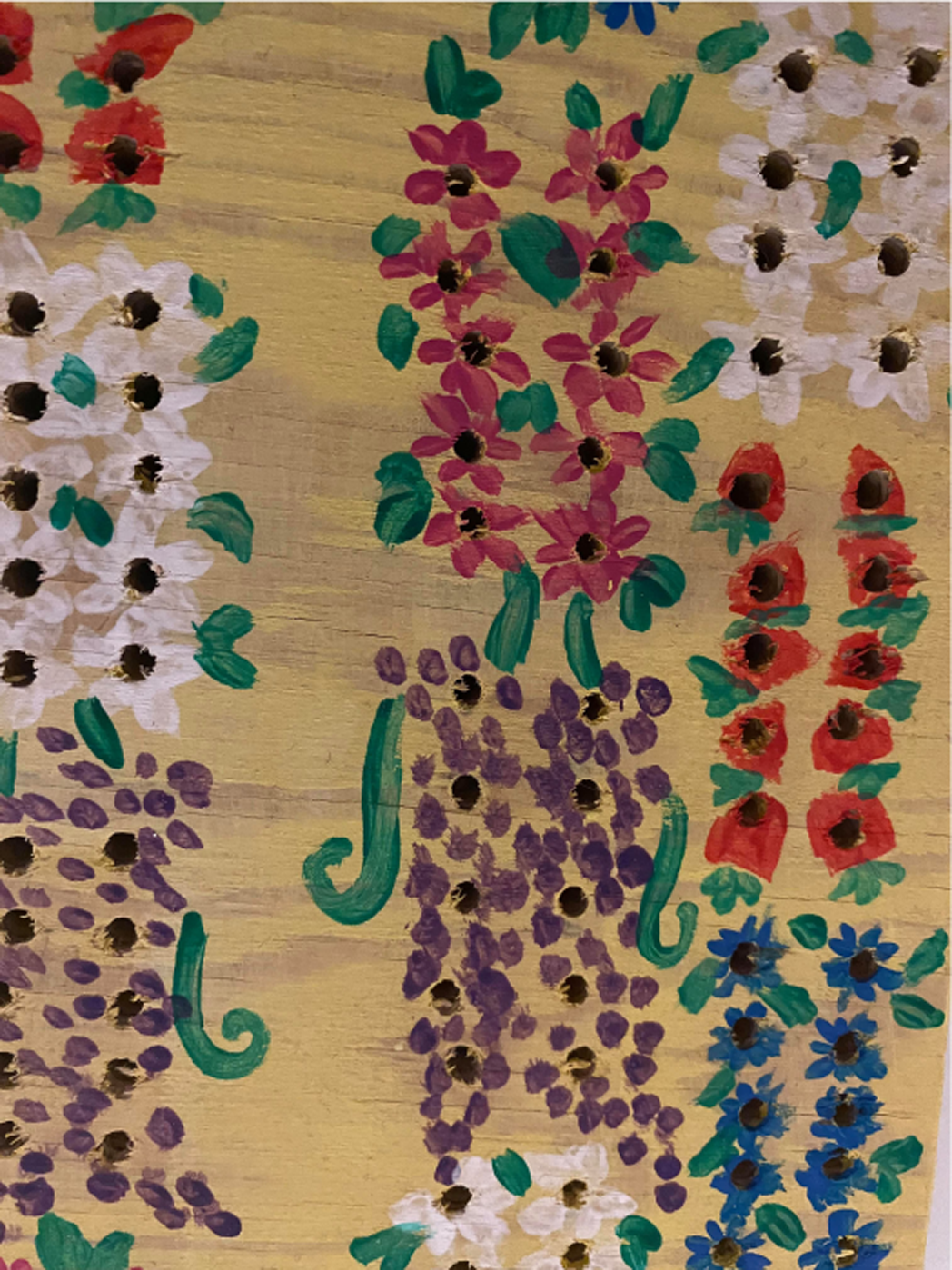 Beginnings are hard. Origin stories in general are difficult to believe. “Once upon a time…” and “In the beginning… impose an artificial mark on the world, stacking a deliberate, colonizing claim on a site from which all else follows. “Now it begins,” they say. “We made it.” Before that beginning is an emptiness, and after comes the dawning knowing, and the universal unfolding, some say, moving a story forward like a ticking clock, making manifest time like numbers on a dial, a dis-remembering of the indigenous thing before the clock, the stake, the cleaving. Such is a movement toward teleology. Here I show how history is made. Tick, Tick. On and on it goes until the designated stopping place. “They lived happily ever after. The end.” It’s done now. But we know that is a lie. Clocks only go in circles, endless repetitions. And so it is with our story, our memory game. There was no clear beginning. “Why did we make it? What made us do it?” we asked. One thing we remember: we wanted to play.
Radical pedagogies in the games classroom
In spite of many feminist and queer interventions in the games field at large (Chess, 2020; Gray et al., 2018; Ruberg, 2019; Shaw, 2015) and in specific games classrooms (Flanagan, 2009; Rouse and Corron, 2020), the project to revolutionize games pedagogy in radically queer and feminist ways has largely not (yet) succeeded. Rooted in instrumentalist approaches to games as simplified technologies, separated from complex socio-cultural-technical spheres of material influence, games pedagogy often reinforces structural oppressions where created and circulated, both in academia and culture at large. As university-level games pedagogy reaches a first stage of maturity, many curricula are entering their second and third major revisions. Many undergraduate game design programs have been in existence for between 10 and 15 years now, having first emerged in the early 2000’s and 2010’s. This milestone marks not only the accomplishment of many working to incorporate game design into higher education, but also provides an opportunity for reflection.
At the University of Skövde the undergraduate Games program is particularly robust, with roughly 500 undergraduates spread across the subfields of Game Design, Programming, Game Writing, Sound and Music, and Graphics. This undergraduate program is accompanied by five graduate level Masters Programs focused around different topics in Games, as well as Games research at the PhD level. As with many Games programs, while critical topics are included at the graduate level, at the undergraduate level this engagement is lacking. As the undergraduate curricula is revisited and revised, overtures are made to incorporate more theoretical perspectives, including awareness of inclusive design and feminist pedagogies, albeit in small ways. These moves, while well-intentioned, often have the impact of being incorporative, not radicalizing, which is unsurprising given the challenges.
For the most part, games curricula focus on the skills needed to make games as well as the standards and practices graduates should understand in order to fit in well in the contemporary videogame industry. The designs of student games are often praised for qualities such as replayability, balance in design and originality in concept. Skills in interdisciplinary teamwork collaboration are emphasized, as is the command of the iterative and proceduralized game design workflow process. In some courses, connections to legacy media may be discussed, such as a film history or creative writing course. Rarely, there may be a stand-alone course in Game Studies, or the critical humanities approach to games, but often this type of scholarship is ‘saved’ for graduate study. In this way, the undergraduate games curriculum is largely vocational and demonstrates a classic STEM perspective on the instrumentalization of technology and techniques, choosing to present games, ways of making them and playing them as de-politicized and neutral in terms of their role in contributing to power or oppression in society.
This marginalization of critical humanities perspectives in game design education is not surprising, however, given the disciplinary roots of games and routes through which games pedagogy often enters the academy. Many game design programs have origins in STEM disciplines, such as Computer Science, or, in our case at the University of Skövde, Informatics. STEM education has long struggled with a lack of critical perspectives, and fostered instead a largely instrumentalist approach to education. As discussed by Rouse and Holloway-Attaway (2018) much of STEM education seeks to separate technology from culture, as if technology can exist beyond any particular use case or context. This fantasy of separation can result in furthering oppressive effects of technologies and systems, particularly for students who are not aware of the entanglement of their own social identities, the work they produce, and larger social and cultural contexts. To be clear, students should not be faulted for this lack of awareness since traditional STEM teaching does little to facilitate this type of learning.
While it is the case that several scholars have developed alternative STEM pedagogies from the 1920s to today (Nieusma, 2015; Noble, 1979; Poirier, 2017; Ratto, 2011; Wisnioski, 2003, 2009) this has yet to result in a significant shift in pedagogical method. Notably, these innovative STEM pedagogy approaches belong to the tradition of Critical Pedagogy, which shares some commonalities but many differences with Feminist Pedagogy. As Jennifer Gore (1993) has discussed, while both forms of radical pedagogy are ‘… fundamentally concerned with democratic education, feminist pedagogy sees gender as a fundamental category and views the personal as political’ (Gore, 1993: 46). In Gore’s overview of the field, we see a strikingly strong gender correlation with scholars and practitioners of Critical Pedagogy most often identifying as male, and those in Feminist Pedagogy most often identifying as female. Gore notes, ‘While women do not want men to appropriate feminist discourse, many would like men to intellectually and politically engage with feminist discourse’ (Gore, 1993: 47). Instead, this separation speaks to the fact that many male scholars of critical pedagogy still feel feminism is not for them, or outside the purview of their project in some way. Gore goes on to point out this lack of connection as an essential crisis in radical pedagogy, and states that if both critical and feminist pedagogies feel it is their aim to improve education for all people, their ongoing gendered separation will act as a hindrance to achieving that goal. Indeed, this lack of coalition-building may contribute in part to the general lack of success radical pedagogies have found in their quest to truly transform education at a large scale.
To add to this larger context of radical pedagogies in games, we also share our own past and ongoing work in the area, and reflect candidly on the shortcomings of these projects’ outcomes. At Rensselaer Polytechnic Institute, Rouse collaborated with Amy Corron on a multi-year research project bridging radical pedagogies and game design education (Rouse and Corron, 2020). This project focused on using a critical feminist approach and dialogic pedagogical technique to ‘fix’ a single course, required for all Game Design majors and taught in the first year. While the project met with success in learning outcomes, student satisfaction and engagement, and quality of student work, the project was not sustained, and was ultimately abandoned in favor of the maintenance of dominant methods.
‘Fixes’ have also been proposed by Graduate Students we co-supervised at University of Skövde, who have utilized their Master’s Thesis projects to carefully examine the Games undergraduate curriculum and suggest insightful modifications. Tom Yngvesson and Maria Levander’s 2020 thesis, ‘Diversity and Inclusion in the Game Development Classroom: Creating a Game to Initiate Dialogue’, builds on the research from Rouse and Corron (2020) to design and test a gamified method for critical dialog around issues of gender and identity in games. Their conversation game is intended for students to play both in and out of class time, within the context of a first year course that includes the curriculum’s single lecture on gender and games (Yngvesson and Levander, 2020). Emma Arltoft’s 2020 thesis ‘Women as Characters, Players, and Developers: an Educational Perspective’ examines the role of women across multiple frames including within the games industry, in representations within games themselves, and in the university educational setting. Multiple recommendations are made for changes at the structural level of the undergraduate games education program to address issues of gender representation at all levels (Arltoft, 2020). While these thesis projects were highly praised by the faculty, with Arltoft’s recognized with a University award for research in diversity, and many faculty were involved in their development, particularly due to interview methodologies used in both projects, neither have been taken up for consideration for implementation within the actual curriculum.
In ongoing work aimed at ‘fixing’ problems in the curriculum which are certainly not unique to University of Skövde, the single lecture and seminar that focuses on issues of gender and games in the undergraduate curriculum during the first year for all students is being expanded, and concepts are slowly being introduced into other courses and project production. And teaching is changing too, while the lecture has traditionally been given by a single female faculty member, or an ‘external expert’, the lecture has been expanded and is now co-taught with a male faculty member’s involvement as well. Additional topics are being incorporated, including related discussions of inclusion, diversity and other intersectional topics, along with player accountability and socio-cultural impacts. Addressing broader issues such as violence and discriminatory representations at large in games, a new upper-level course is being developed for undergraduate Game Writing students on the topic of Moral Philosophy. In student-driven project courses, individual teams may be coached in project work to consider issues of bias, discrimination, violence and oppression. A focus on gender bias has been a particular focus at our university, and this includes a group founded in 2011, DONNA, dedicated to supporting gender equality within the games industry and games culture. Including both faculty and students, DONNA has been successful connecting with local and national interests around games and in particular, working with community and industry partners to provide mentorship for female students interested in entering the Games industry.
As valuable as these curricular revisions, awareness-generating campaigns, and mentorship activities are, they do not include actions to meaningfully or systemically include feminist or critical approaches in curriculum with an eye toward large-scale, global impact or world-building beyond the virtualities of the digital systems and artifacts we teach and make. Even while we continue to work in this mode of providing the ‘fix’ for Games pedagogy, we have an acute awareness of the limits of this approach. We recognize the cost – benefit analysis for those who work to implement such ‘fixes’ is not good. Immense effort is expended, at great cost in terms of time and emotional labor, as well as political capital, with little to no impact long term. The many factors behind failures such as ours have been enumerated in recent research investigating both Computer Science and Engineering pedagogies’ lack of innovation by Taylor et al. (2018) and Reeping et al. (2018). However, the weight of dominant pedagogical structures, politics and techniques in Games pedagogy is particularly heavy. Why is this the case? Before we move toward suggesting speculative futures for feminist games pedagogy, and a truly radical ‘break’ with the past in which we no longer focus on fixing the brokenness of dominant structures, we need to look back at how Games curricula came to be where it is today, and why. But first, a cut, a break, to look back at our own memory game, and how we came to play.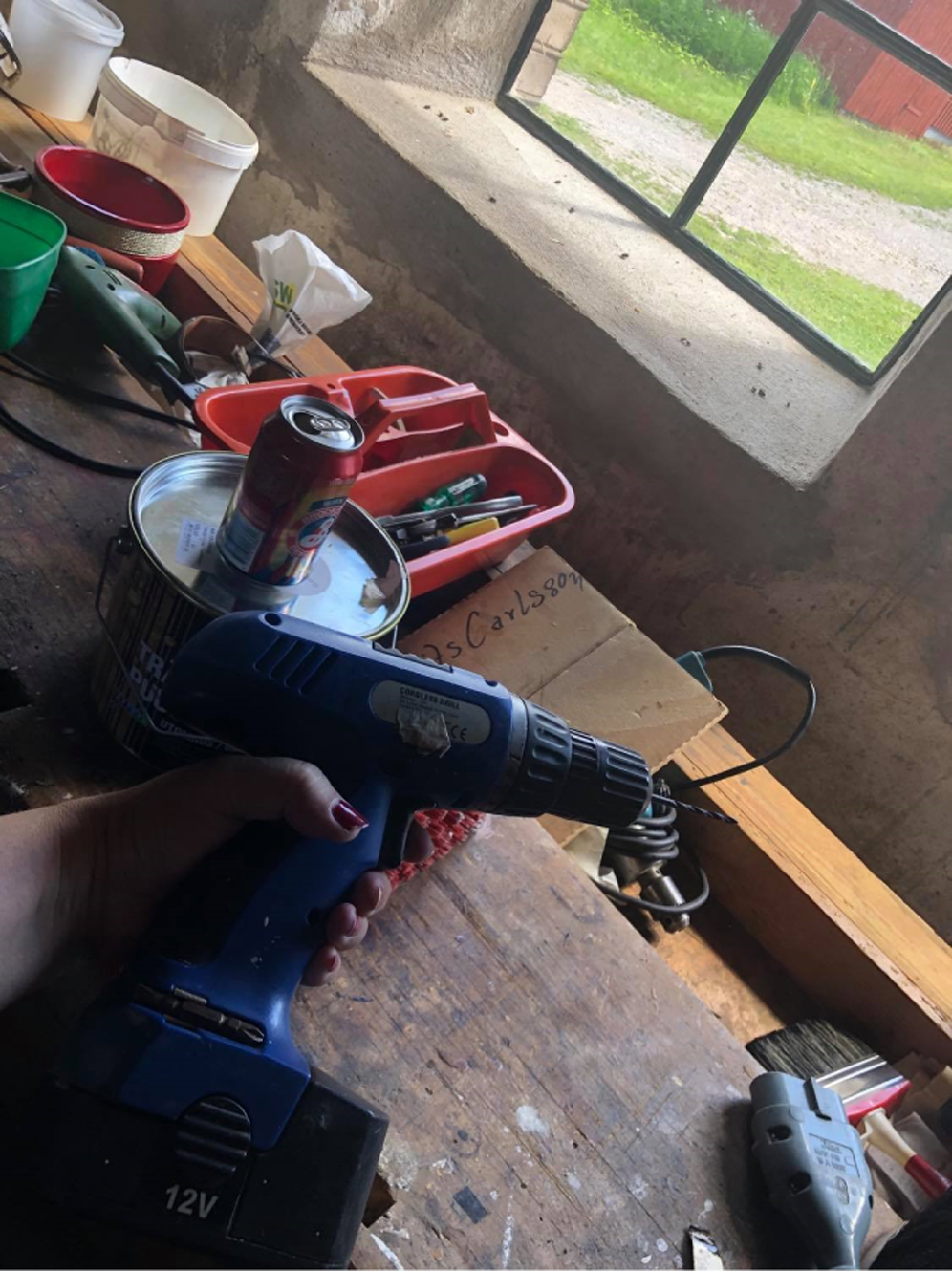 So together we gathered the threads for recalling the doing for making a meaning, following knots, and pulling up stakes. “It was Midsummer, right, in Sweden? It was a conversation about family traditions, sitting outside by the barn in the sun. It was memories of childhoods, about play-time and passing time. About grandparents. About timeless time spent together counting, scoring, touching, whispering, writing, watching, learning, resonating. Passing the cards back and forth and learning what they meant, forces contracted and reconfigured into possibilities. It was back in time already then, but we were bringing it forward in our wor(l)ds, creating repetitions, marking rhythms, moving back and forth and in between. So it was not so much a beginning we found in our telling, and now in our retelling here, through our writing. But it was an unfolding and ultimately a moment of mattering. “Let’s make the board, together,” we decided, “and then let’s play, together, here in the yard, in the sun, over Midsummer, the longest day of the year” (as if a day is a thing). “Let’s remember how we did it and then do it. And so we began, (but not really). And so we re-membered, putting our play into matter. We began to make a world, find and make a thing. “Let’s play” was the refrain.
History of games, Computer Science and military-industrial entanglement
It is not by happenstance that the Games discipline has arrived at its present configuration, and the history of Games pedagogy is in no way ‘natural’ although it may feel naturalized to those operating within it. Powerful institutions, structures and cultural forces shaped the contexts, tools and techniques of the curriculum we work with today. In particular, the long history of entanglement in military technologies must be discussed, as well as Game Design’s curricular legacy in Computer Science. Through exploring these branches of game history, we can see that games as objects and technologies, as well as game design practices and curricula, all have a shared inheritance from a past (and present) deeply entangled with the development of a range of military technologies and paradigms. Tracing the deep military history of Games can help illuminate reasons why violent, colonialist and White supremacist games remain a dominant force economically and culturally. Demystifying these origins can also help us envision other possibilities, other ways of worlding or world-building, in which we think more intentionally about which tools, systems and structures we want to think with. Looking across four threads of this complex history can provide a foundation that is by no means exhaustive but is substantial enough to enable the envisioning of alternatives. These four threads are the histories of: War Games; Game Culture; Immersive Image Environments and the Computer Science discipline.
War games
While chess is often colloquially cited as a kind of ‘war game’ origin point in games history, the actual gameplay experience of chess is far less like modern warfare than the gameplay of the Kriegsspiel. The Kriegsspiel was developed in Prussia in 1811 first by Georg Leopold von Reisswitz, who was the military advisor to King Friedrich Wilhelm the Third (Smith, 2010), and later refined by Reisswitz’ son. This game or simulation brings together advances in mathematics and the science of cartography, as well as concepts such as representational terrain, time-based turns, asymmetrical opposing sides, hidden information, umpiring (the game master function), scenario design and the use of dice-driven probability tables (Kirschenbaum, 2016). Reflecting on these attributes, we can see how different the Kriegsspiel is from chess, and how similar it is to other contemporary games such as resource management games like Settlers of Catan, and tabletop role playing games like Dungeons and Dragons. One difference to note between the Kriegsspiel and chess are the aesthetics of the plain, unadorned pieces representing multiple units (people) in the Kriegsspiel. This depersonalization contrasts with the highly elaborate representational design of some chess pieces. Another important difference was the use of actual 1:8000 scale military topographic maps as the playing board for the Kriegsspiel, meaning that if terrain had been mapped, you could rehearse war on it.
Connections to contemporary games through this thread of games history are many. One key example is the history of the development of UnReal Engine for the US military as a means to create valuable training and the recruitment tools, which also led to the popular America’s Army game, distributed with every copy of the engine (Malazita, 2018; Zyda et al., 2005). It was also the case that the Kriegsspiel influenced commercial game design in its own time. The Victorian age brought with it the dawn of ‘domestic gaming’ or games within the home (Huhtamo, 2012). An example of the Krieggspiel influence in this era of gaming can be seen in early board games such as the 1851 Crystal Palace Game, a souvenir of the first World’s Fair, focused on teaching geography to the British subject, and is also played on an accurate political map. The legacies of these colonialist game mechanics, narratives, and logics are continued in many games today, as Games scholar Souvik Mukherjee has extensively traced (Mukherjee, 2017).
The context of the war game also connects with the more recent history of AI (Artificial Intelligence), which is also part of game technologies today, and also shares military origins. Connected to Cold War game theory, AI finds one part of its origin story in the post-World War Two arms race between the US and Russia, and the desire to utilize game theory to predict the actions of an opaque opponent. Early research in AI focused on machine game playing, with games as a Petri dish for studying intelligence, which was defined by AI researchers as evidenced by decision making and puzzle solving skills. This AI research then fed back into game design for entertainment. Early videogame designers such as Carol Shaw, who most famously designed Atari’s RiverRaid but also VCS Checkers and Qubic made use of early AI research in their designs (Shaw, 1979). This is the same time period when we see the first video games, such as Spacewar! (1962). This game was developed by graduate students working in Department of Defense and computer industry funded labs at the Massachusetts Institute of Technology, and emerged from research on graphical displays for ballistics analysis and aviation control. While Spacewar! itself may have had limited reach (Monnens and Goldberg, 2015), it is notable as an early example of a computerized war game played for entertainment, developed within the military-industrial research context.
Game culture
During the same time period as the von Reisswitz’ Kriegsspiel, we also see the emergence of a new generation of hunting for sport and a more cohesive ‘game culture’ related to this. The first use of the phrase ‘game culture’ was indeed in reference to this particular type of hunting during the early 1800s (Reynolds et al., 2016). Part of what enabled the new popularity of game hunting for sport was the development of gun technology, initially developed for the military but which also had the follow-on effect of making hunting easier. With the rise of game culture, hunting is developed quite explicitly as a game. There are rules, winners, losers, bad sports, all-stars, detailed concepts of what constitutes ‘fair play’ and not, and so forth. (Durie, 2008). Game culture also leads to the development of Edwardian target shooting, due in part to the development of air gun technology, also developed initially for the military. Competitive target shooting became increasingly popular from the 1890s on, and by the early 1900s, we see the emergence of carnival shooting galleries, which we can of course connect to the later videogame arcade shooters, and first person shooting computer games today (Schweizer, 2019).
Immersive Image Environments
Immersive image environments long pre-date contemporary VR. Many media and art historians have noted the connections between earlier forms such as the 18th century painted panorama and 20th century widescreen cinema formats with later VR (Grau, 2003; Griffiths, 2008; Oettermann, 1997). Interestingly, both precursors share military origins. The panorama was developed in 1787 by Robert Barker, a landscape painter for the military. Prior to the invention of photography, landscape painting was utilized as a military technology crucial for reconnaissance, documenting terrain and the documentation of battles. Following Barker’s 1787 patent, the panorama became an early mass medium due to its popularity (Oettermann, 1997). A ‘panomania’ expanded across Europe and North America from the late 1700s through the early years of the 20th entury. Over time photographic and then film technologies were incorporated. The stories told in panoramas, however, remained constant, and presented either experiences of military history or virtual travel. Travel experiences were often the result of colonial expansion, and so also related to military history. Battle scene panoramas were exhibited shortly following the actual conflicts, and not as a fictionalization but as immersive documentary and propaganda. The military leadership at the time was in favor of the panoramas, with Admiral Nelson personally thanking Robert Barker and his son for their help, via the panorama, in prolonging the public’s admiration for the country’s military victories (Garrison, 2013: lxiii)
Just as the Kriegspiel brought together many disparate elements into an innovative, and influential synthesis, so did another key example in the long shared history of game and military technologies. Cinerama, initially created by Fred Waller as a tank gunnery training simulation system for the US army during World War Two, brought together advances in motion picture technology, recorded sound, immersive techniques and sensor technologies (Sterritt, 2014). Waller’s gunnery trainer immersed the soldier in a dome film projection and headphone sound, with an actual tank gun turret as interface. Projected film displayed enemy planes, while the gun shot a light beam instead of bullets. Soldiers in training could be evaluated for accuracy at a new level of fidelity, and experience immersive training in safety. The gunnery trainer was widely used during the war, and credited with ‘saving the lives of 100,000 soldiers’ (Cinerama Inc, 1954).
Following the war, after the system was declassified, Waller reconfigured the gunnery trainer as a large-scale immersive film format known as Cinerama. Removing interactivity to focus on mass immersion, Cinerama used an extra wide, curved screen to fill the viewer’s field of view, presenting footage shot from a bank of three cameras. Spatialized sound was piped in through speakers located in a 360-degree arrangement around the audiences. Cinerama was a commercial and critical success, in spite of the fact that its offerings were not traditional Hollywood films but rather, as described by presenter Lowell Thomas in his introduction to the first Cinerama feature: ‘The pictures you are now going to see have no plot, they have no stars, it is not a stage play, nor is it a feature picture, nor a travelogue, nor a symphonic concert, nor an opera. But it is a combination of all of them’ (Cinerama Inc, 1952). Following Cinerama, we see the development of more commercialized widescreen cinema formats, and eventually, IMAX in 1971. In the military technology sector, during this same time period following Cinerama, we see the development of immersive image environments both with the CAVE approach and head mounted display approach to VR. Contemporary commercial VR gaming head mounted displays such as the Oculus Rift and Samsung Gear VR were initially developed in military contractor research and development labs, such the MxR: Mixed Reality Lab at University of California’s Institute for Creative Technologies, for use in military training simulations.
Computer Science
Just as World War Two provides an important node for the development of both Cinerama and birth of the modern AI discipline, World War Two also brings us to a key point in the development of Computer Science in the US as an academic discipline. This is relevant to the history of Games pedagogy as many Games courses and degree programs originate within Computer Science departments at the university level. Following the war, computer technologies developed for aid in airplane stability control and analysis of ballistics data, and perhaps most famously code breaking were quickly commercialized (Hicks, 2017). The professional association, ACM (Association for Computing Machinery) was founded in 1947. Both industry and the US government saw the potential in computers, and the National Science Foundation worked to provide machines to all major universities. Early funding for this distribution project came from the Department of Defense, the Office of Naval Research, and the Atomic Energy Commission (Atchison, 1985: 325). Industry also contributed to the spread of early computers to college campuses, with IBM providing deep discounts on purchases or rentals to universities, a practice that continues today.
Once the computers were housed on campuses, the need to staff the machines with trained people became apparent. Early courses were offered at the graduate level to help create a pool of trained computer workers, with faculty involved in teaching these new courses drawn from the mathematics departments and electrical engineering departments (Atchison, 1985: 326). Over the next 20 years, faculty debated the merits of considering Computer Science as a new discipline and by the early 1960s, US academics had decided to create CS as a distinct field, with a stand-alone curriculum. The ACM formed its first curriculum committee in 1962, and over the next three years worked to develop an undergraduate college-level CS curriculum. Part of the work of developing this curriculum took place at the IBM corporate campus in Poughkeepsie, New York. This illustrates the early, significant involvement of commercial industry in the formation of CS as an academic discipline.
Initial versions of the curriculum, published in 1965 and 1968, show no evidence of any courses on ethics or the impacts and role of computers in culture or society in this curriculum. This bold move constituted a significant and highly successful erasure, since computers had been developed as military technologies. This absence continues to be noted today, some 60 years later, and is yet to be corrected. The persistence of the anti-ethical, anti-cultural positioning of CS curriculum speaks to a reality some may be reluctant to name; the curriculum cannot be fixed. Despite these inadequacies, the curriculum was used to develop CS departments across the country and even around the world (Atchison, 1985: 331). Ten years later, the 1978 version of the curriculum includes for the first time an elective course titled ‘Computers and Society’. The new curriculum was criticized by many faculty for not containing enough mathematics content (Atchison, 1985: 333).
During this same time period the ACM also created a set of accreditation recommendations for evaluating CS programs in 1977. None of these accreditation recommendations make any mention of curricula that focus on ethics or the impact of computers in society and culture (Atchison, 1985: 334). Also during this same time period in the late 1970s, computing conferences were host to increasing calls for the implementation of CS education in lower schools, still with little to no discussion of the ethical, social, or cultural impacts of the technology and its embedded politics. MECC (Minnesota Educational Computing Consortium) was founded in 1973 as a new state agency dedicated to the integration of computing in education at all levels, with support from local industry. MECC was prolific in its development of educational software and played an impactful role in the integration of CS education at all levels. Following the loss of state funding in 1991, MECC was privatized, and then closed in 1999. However, the evangelizing mission had been a success, and CS, or at the very least computer aided instruction, is a part of many peoples’ education at every level globally today.
Prof. William F. Atchison, former chair of the ACM curriculum committee and co-designer of the 1965 and 1968 curricula, authored a comprehensive report on the history of the development of CS curriculum in 1985. This 57 page report provides valuable documentation of the many organizations, structures and ways of thinking that provided the context for the invention of CS as an academic discipline. It is on the final page of this extensive report, in the very last paragraph that Atchison finally states: Last, but not least, is the issue of computers and society. Many colleges and universities offer courses on computers and society and many more will. Since computes now affect nearly every aspect of society, it is encumbent on all of us in computer education to keep before us at all times the major social, ethical, philosophical, political and legal issues related to computers and their use. (Atchison, 1985: 369)
‘Last, but not least […]’ Sometimes structures speak louder than words. By relegating this mention of the social entanglements of CS to the final paragraph of the report, as a kind of final obligation, and offering no serious engagement with the topic other than to admonish CS faculty to keep the issues ‘before us’, a clear message is sent. The message is that social issues are tangential at best, and at worst a kind of undeserved thorn in the side of CS education. Still, today, many attempts have been made to re-make, fix, or re-fashion CS curriculum to incorporate vital humanistic, critical perspectives, with little progress. Sepehr Vakil’s (2018) paper on a justice-centered approach to CS education makes many incisive and thoughtfully articulated arguments and concrete recommendations for how to advance the cause of equity in CS pedagogy, rightfully pointing out a key failing of ethics in CS education today as the individualistic framing that relegates issues of morality in CS to personal responsibility, rendering complex histories, power structures, and continued legacies of violence and oppression invisible and therefore unexamined. Yet, it is unlikely the recommendations of scholars such as Vakil, innovative and insightful as they are, will be taken up in any meaningful way, given the history of curricular and ideological entrenchment in the field.
Games curricula, closely linked with CS, finds itself in a similar position of entrenchment. The largely instrumentalist approach to teaching games shows little sign of abating, while calls continue to be made for ‘fixes’. Perhaps the brokenness of these curricula signals another way forward: starting fresh from the ground up. Sarah Sharma’s ‘A Manifesto for the Broken Machine’ reflects on the ways in which attempts to fix from within broken systems render those who take on the labor of ‘fixing’ as complicit as the ‘assistive technologies’ they may seek to repair (Sharma, 2020). Curricular stasis is not the only impact of this long, entangled history traced above across war games, Game culture, immersive image environments and Computer Science. The ramifications of the naturalization of this largely unexamined history reverberate far. This trouble is not confined to the Games classroom, or the Games industry, or those who identify as Gamers. Rather we see in Game-troubles an imprint for wider mimicry. The recruitment of the White Supremacists who orchestrated an invasion of the U.S. Capitol on January 6th, their methods, common narrative, access to military simulation training, easy normalized violence and rhetoric of the ‘siege’ – these all bear the imprint of game-troubles. Bearing in mind this history and its many consequences, we move to world-building anew, seeking to construct different structures that provide opportunities for new imprints, and alternative material-human-system interrelations, capable of justice and even joy.
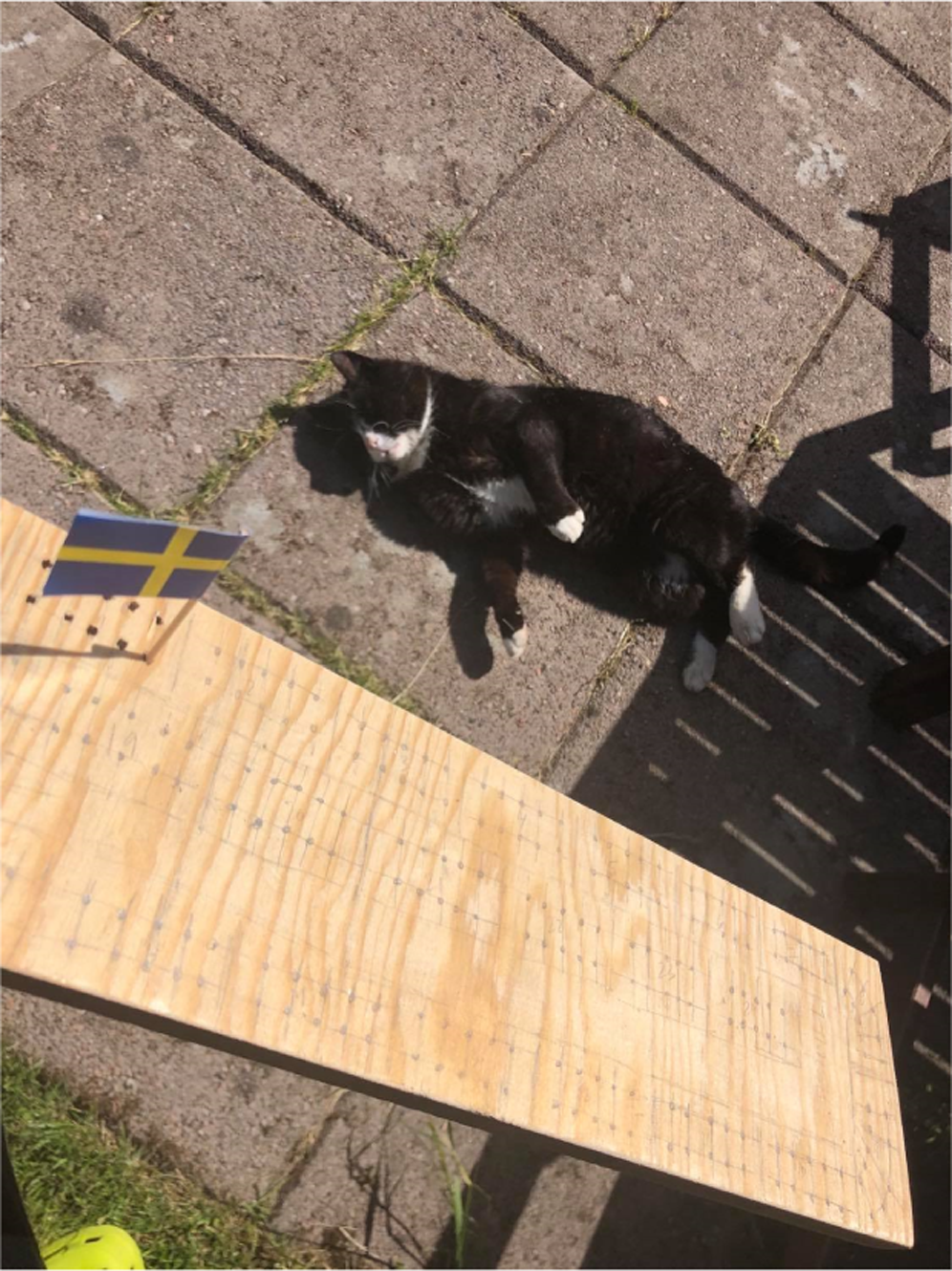
The encounter was as was meant to be, a passage of in-between-ness, a kind of resonant belonging with the visceral forces that came together in the matter of a making of a thing. “We need a board, to make a board, to remember how it works, how to play together.” And so became the embodiment of the play—the finding of the flat piece of wood in the barn, and then the series of scoring its surface. Scoring as marking a repetition on the world, making and marking a worlding refrain, enabling an encounter. “Let’s play.” Scoring first with a pencil, an affective representation of a re-membering, marking the holes to make a playing. And then the drilling through, the deeper commitment to material composition, going beyond surface, helping to shape our belonging-ness to the thing by going deep, returning through the passages of the making of the board. “How many holes were there? 60? 60 x 2, was it? Or was it 80? What was the deal with 15 and 31? Was that the cards, or the board? No, it was 120, or 121 if you want to go home. That’s it!”
World-building as a speculative fabulation for games pedagogy
At the heart of conversations around Games pedagogy are incommensurable ideas about the ontology of Games, their desired role in society, and the aims of education at large. Just as Karen Barad discusses the wave-versus-particle duality in physics, in which two different machines built to measure the nature of light and matter result in two different ontological understandings of the nature of the core building blocks of the universe, the pedagogical machine of Games education produces ontologically specific objects. Observed through one set of conditions or context, matter behaves in particulate form; observed in another context, matter is perceived as a wave (Barad, 2007: 82). We cannot keep ‘fixing’ the same machine and expect a different output. We cannot keep mending current Games curricula, particulate in nature, and expect waveforms to emerge.
Bringing a reflexive awareness to Games curricula alone is not enough, since reflexivity ‘[…] remains caught up in geometries of sameness’ (Barad, 2007: 72), just like the sinister sameness of ludologist Roger Caillois’ theorizing of insect mimicry as psychosis (Caillois, 1935). Caillois’ pensive meditation on insect mimicry of the environment and related human impulses, concludes that ‘[…] alongside the instinct of self-preservation, which in some way orients the creature toward life, there is generally speaking a sort of instinct of renunciation that orients it toward a mode of reduced existence, which in the end would no longer know either consciousness or feeling [....] blurring in its retreat the Frontier between the organism and milieu’ (Caillois, 1935). The strength of context is highlighted here and relevant to our discussion of the struggle to transform Games curricula from within. Just as the insect in the garden may shift its colors and proportions to fit into a pattern, without any cognitive deliberation, but as instinct, so too are we as educators and curriculum designers susceptible to survival instincts that foreclose possibility and even endanger us in the moment. Of course the caterpillar that turns a bright purple in the green grass is more likely to be picked off by a hungry bird. So caterpillars that live in green grass stay green. But for those of us seeking change from within in Games, the cost of constraining our imaginations about what Games could and should be may come at a much higher cost. Our burnout is at stake, and professional success within the field may hang in the balance, but also larger issues of morality, equity and justice both within the field and in society at large.
In Barad’s discussion of diffraction as a counterpoint to reflexivity, as a more productive possibility for change-making, she points out the crucial role of world-building in knowledge-making: ‘Making knowledge is not simply about making facts but about making worlds, or rather, it is about making specific worldly configurations—not in the sense of making them up ex nihilo, or out of language, beliefs, or ideas, but in the sense of materially engaging as part of the world in giving it specific material form’ (Barad, 2007: 91). Similarly, in ‘Learning as Worlding’, Karin Murris offers a ‘radical’ model for what it might mean to put human and non-human relational forces at the very center of educational ideals and pedagogical processes (2017). This approach decenters the restrictive demands of a subject-based education. Drawing on the philosophical foundations of material philosophy and critical posthumanism (Braidotti, 2013; Deleuze and Guattari, 1987) and feminist new materialisms (particularly through Karen Barad’s Agential Realism model), Murris reveals the value of rethinking causality as the result of individual agency or singular accountability. Like Jane Bennett in Vibrant Matter (2010), Murris reminds us there is a ‘mutual performativity’ at-play when we consider the material manifestations of agency as distributed across many sectors. In this way, we must then not approach ‘revision’ (or re-mattering if we resist semiotic representational models) from overly simplistic solution-making activities. Games classrooms may not be failing because of poor curricula, student gender imbalances (or other intersectional diversity issues), cultural stereotypes, or institutional bias from education and industry. They might be failing because of all of these together. They are deeply entangled.
In Murris’ examination, the focus is presenting a Philosophy for Children (P4C) approach to primary education, but it could be extended and refined for the university games classroom. Significantly we find ourselves at a timely ‘place’ in the world order – critically speaking, but also from a fundamental place of non-human, human and more-than-human existence. We are in the speculative possibility ‘bloom spaces’ that Kathleen Stewart attributes to the worlding refrains of affective and ‘collective attunement’ (Stewart, 2010: 340). Here, in these resonant spaces, things come to meaning. From here, we may rethink the privileged positions, impacts and the loci of power that situate the straight, white, able-bodied, Western male in and out of the classroom. But, we may also acknowledge our situatedness in a deeper time of change, the alluring threat beyond subjectivity, human exceptionalism and its attendant consequences. Marked by the devastation of anthropocentric subject-identities holding power over other elemental, natural objects, we experience the fallout. We feel the material human impacts and human influences as defining and determining factors across more-than-human earthly systems and ecosystems (such as climate change), and find their legacies in our classrooms. The limitations we have imposed on educational practices by ascribing agencies to privileged phenomena (to teachers, industry, software) at the expense of the student-learner and game-objects wherein we imagine these powerful subjects produce knowledge, is its own form of global disaster. Without a relational framework to understand how diffractive powers (Barad, 2007) and distributed agencies (Bennett, 2010) engage in intra-relational networks of exchange, including forms of material knowledge production, Games and even Games pedagogy, will continue to be imagined and enacted as inert and stable bodies comprised of rule sets that give comfort to the status quo.
A focus on the affective relations between bodies is key to pushing back against this dominant construction of Game worlds, as well as attention to material forms. Gregg and Seigworth’s Introduction to The Affect Theory Reader (2010) reminds us that beginnings are difficult in a world order where one presumes there are no pure origin stories. If the world is emergent, then it never is in a consistent state, and we must discover it, open passages between bodies, and engage with the visceral forces of affective, not cognitive relations. And here is the trouble. Here one works in the margins, in the fray: ‘Affect arises in the midst of in-betweenness: between-ness: in the capacities to act and be acted upon’ (Gregg and Seigworth, 2010: 1). Action is key to world-building and becoming, but so is being acted upon: reciprocity, body to body, matter to matter, becomes the way towards knowledge as ontological, not epistemological discovery. This affective knowing, deliberately non-cognitive (at least not in its sense of a purely situated binary cognition), and beyond emotional response is more visceral and keeps a body in a state of becoming, of open-ended encountering in the worlds that it builds. This is Barad’s onto-epistemological state of being-knowing (Barad, 2007). And, important to note, despite such resonant intensities, the world’s intractability is a possibility—the possibility of not-knowing, when the world withdraws itself from examination, leaving us suspended and unsupported in our material thought experiments. Our encounters, immersive and on going, are filled with ‘failures’ to connect, finding ‘the world’s obstinacies and rhythms, its refusals as much as its invitations’ (Gregg and Seigworth, 2010: 1). How may we conceive of pedagogy as a space for obstinate refusal, as well as welcomed transformation? Attention to the material form of our pedagogy is a good place to begin.
The current material form of Games pedagogy is the pipeline. It is an industry pipeline, with a long, entangled military-industrial history, designed to seamlessly produce compliant workers for the production of commercial games. In a pipeline, bugs are a problem. An infestation stops flow, clogs drains, and necessitates ‘repair’ in unending, exhausting cycles. We argue here that an entirely new form is needed, and suggest the hive as an alternative way of building the curricular machine. In a hive, the bugs are the machine, with the focus on not the game/object/output but rather the students and faculty who co-construct the learning experience. The technology of the pipe is smoothly industrial; the technology of the hive is collaboratively hand-made. The arrangement of the pipe is linear and centered in rhetorics of progression, production, completion, and waste–although the waste is carried away, usually unexamined by design. Indeed, the entire pipeline is often buried completely, meaning leaks and ruptures often go unnoticed initially, with horrible environmental and human costs made visible only later, once the damage has already been done.
In contrast to the pipeline, the structure of the hive is multi-dimensional, offering many pathways through and within. Whereas the pipeline is rigid and resists change (indeed the pace of change in curriculum design can be glacially slow), the inhabitants of the hive, the bees, will at times feel the need to abandon the current hive completely and co-construct a new one. In this way, the hive is never really complete, but always a living, growing entity. In the wild, the hive form may have multiple entry-points, rendering access more inviting from different positions, as opposed to the single, narrow entry point of the pipeline. In addition, while the pipeline seeks a complete separation and impermeable barrier from the outside (although this is never achieved), the hive is characterized by an intentionally flexible membrane exterior that does not completely seal the community off from context. As Parikka discusses, ‘The analysis of bee architecture demonstrates how insect life is imagined as one of folding the outside (material elements that are used to build nests, or, for example seasonal variations in temperature, etc.) as part of the architectural inside’ (Parikka, 2010, 34). In addition, Parikka discusses the ability of bee architecture to ‘tolerate anomalies’ as ‘a demonstration of this smooth folding of outsides and insides’ (Parikka, 2010: 34).
Imagine a hive curriculum for Games, accessible to many, not only tolerant of those with differences but meaningfully incorporative of differences as valued. This flexible, co-constructed Games curriculum would put forth a generously broad definition of what a game is, what materials it may be constructed from, and what purposes it may serve. This opening-up would also open the curriculum to joy, as in the joy shared in our cribbage narrative. This is the joy of self-direction, the joy of making something from nothing, the joy of work with humble materials in service of meaningful connection. We set this in opposition to the pipeline curriculum’s emphasis on achievement, mastery, and its narrow definitions of success. Instead of training pipeline students to master a particular software package, hive students are guided to learn on their own to make their own tools. Students graduating from the hive program would not necessarily become the next Game industry stars, but would instead create entirely new industries, indeed new industrial paradigms, having learned the power and craft of world-building by having participated actively in their own pedagogical machine-making.
What would a hive plan of studies look like? Surely no two would be exactly the same. Each student would be encouraged to take ownership of their own knowledge-making process, and move through the matrix of curricular offerings in their own way. We envision this as a hexagonal matrix, both referencing the form of the beehive and as a re-claiming of the colonialist uses of the hex-grid in resource management and territory acquisition games (see Figure 1). Of course, the hive curriculum would necessitate more faculty advising, but perhaps less ‘teaching’ as in ‘training’ time from faculty. Assuming a scarcity model from the start with the hive is not needed, however. Unlike the pipeline model, within the hive we can work together to make what we need. Organized less as a linear series of courses, and instead as a collection of interlinked workshop spaces for students to traverse at their own pace, the hive ‘workshops’ might include foci on a range of topics, all with a critical-making approach threaded throughout (see Figure 2). Hive curricular structure. The curriculum includes multiple entry-points to maximize accessibility. Blank hexagons are included to emphasize the always unfinished nature of the curriculum, and the ease in which the structure allows for addition, subtraction, and revision. Hive workshop descriptions for a new Games curriculum, in no particular order. An incomplete list, intended to inspire collaboration.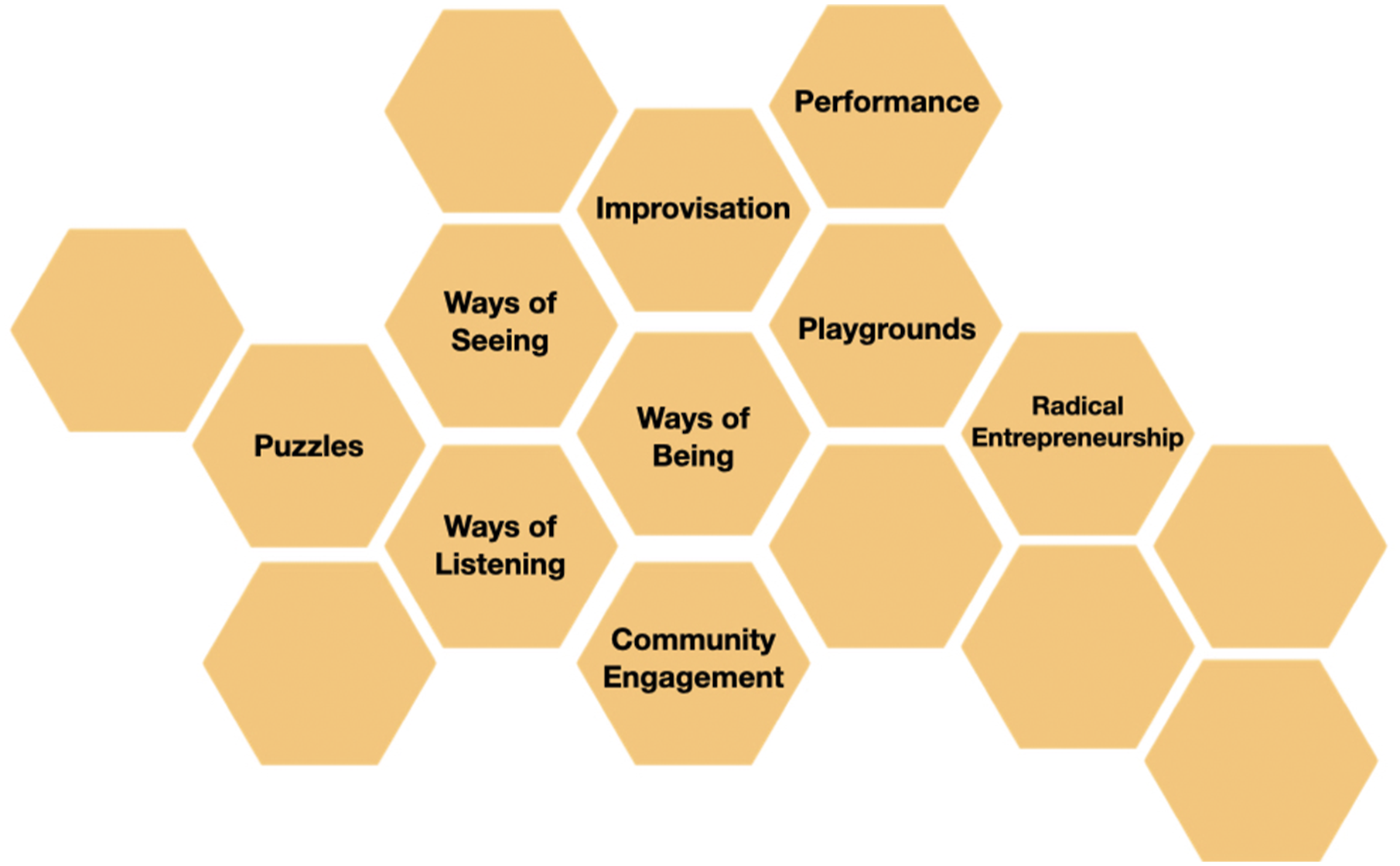
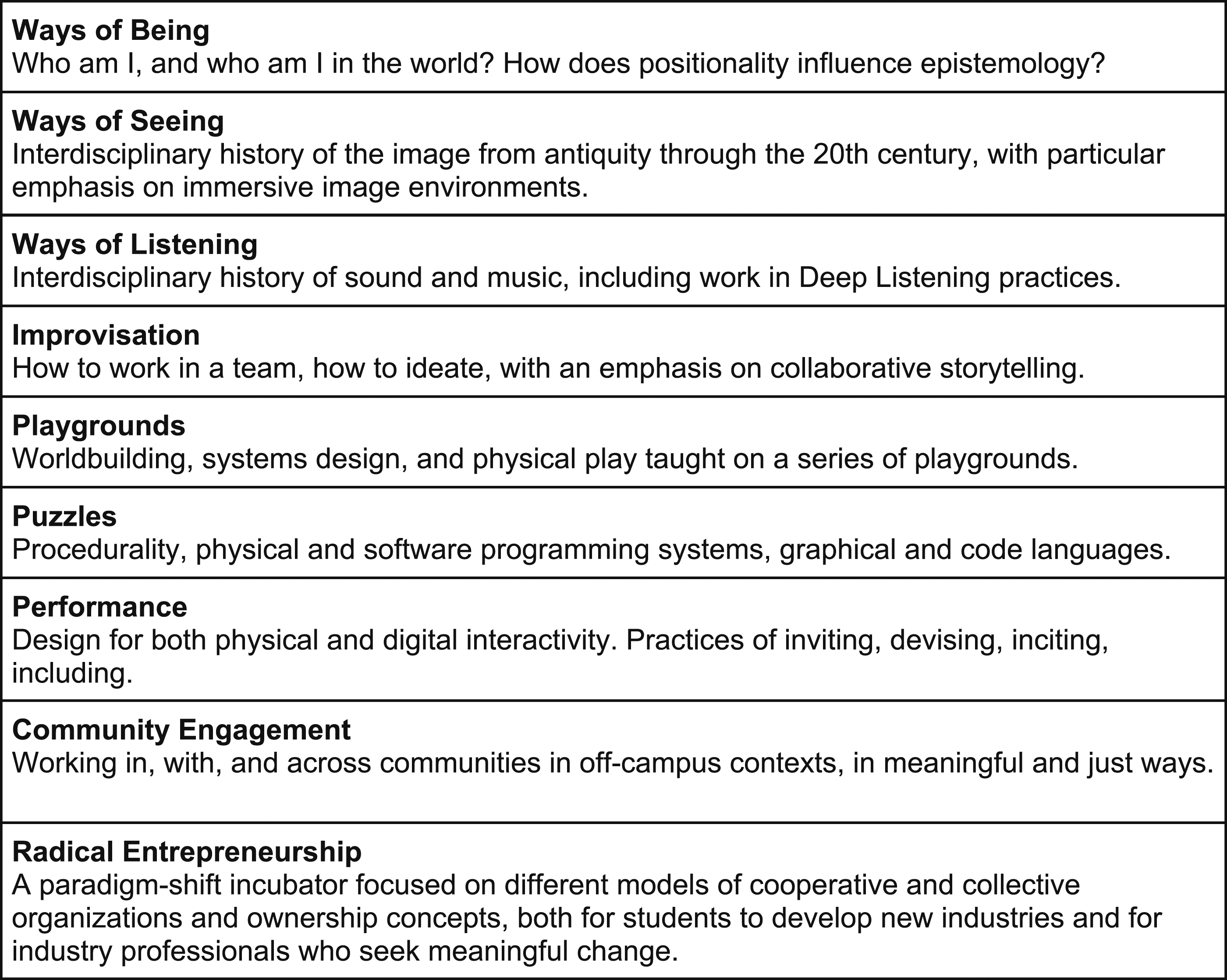
Just as the hive is always connected and entangled with its surrounding environment, so too the hive Games curriculum must include explicit engagement with the radical politics of games and games in culture across all nodes. This means addressing the themes that many faculty are too scared to talk about. These topics include fascist aesthetics, oppressive mechanics, colonialism, racism, sexism, transphobia and ableism in game artifacts, game practices, how games operate in culture, and the culture of the games industry. These topics must be addressed by first intentionally world-building the context in which these conversations and actions can actually take place. At least in part, this will certainly entail providing specific and ongoing education to faculty in social justice pedagogy (Adams, et al., 2018). After all, in the hive, all inhabitants are explicitly co-learning and co-creating knowledge together, faculty and students alike. Deep observation and description of student work and faculty teaching, by both students and faculty, may replace both grading and teaching surveys. For those still sounding the refrains of - What about resources! Grading! Evaluation! Outcomes! Accreditation! While important questions may lie underneath these refrains, they are echoes reverberating in the pipeline, a siren call that pulls us back into the old machine, in servitude to old ontologies that do not see us as fully human on a basic level.
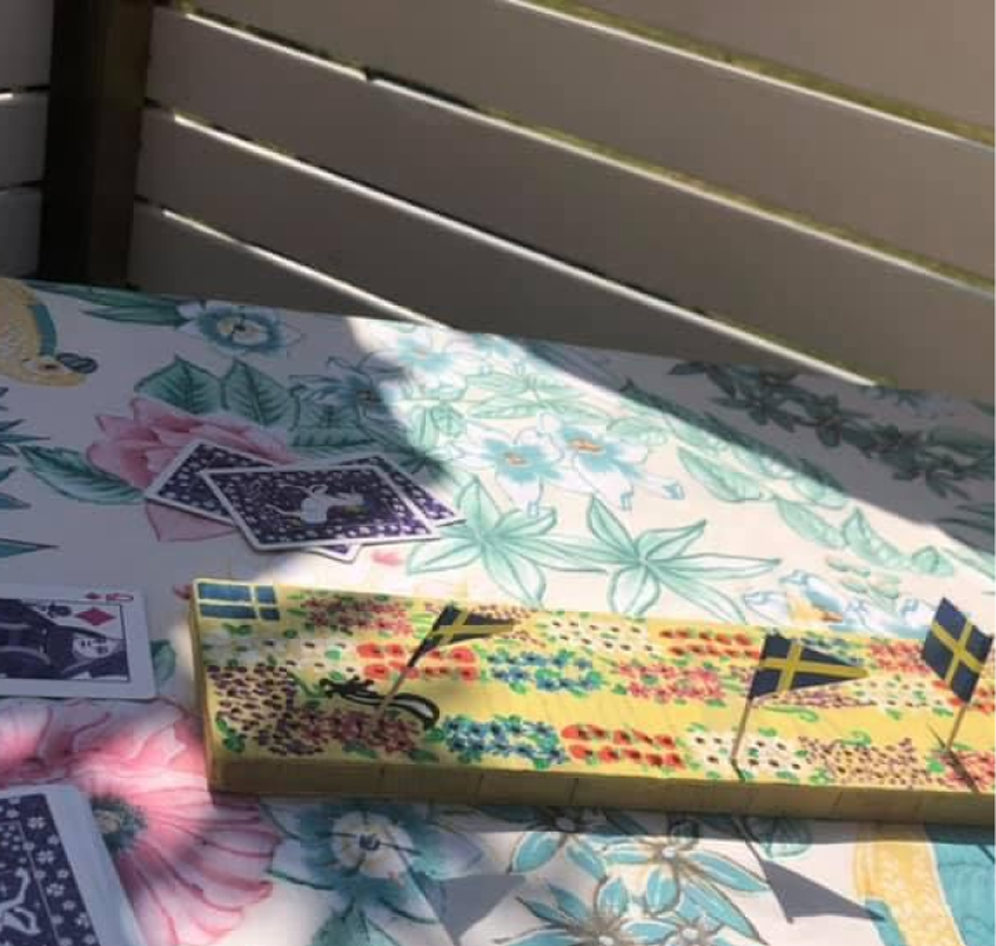 Ultimately the encounter was a tangled looping, a repetition, a refrain underscoring the creating of a back and forth. It was a scoring on and of the board, but also between us, marking a space for composition, composed out of time-cuts through an encountering. That’s how you do it, really. You go forth and then up, and then come back down, on the board, but of course beyond. It’s like following a street that loops on itself and brings you home, to the familiar place, and then leads you back out again, a wandering of belonging, distance, and return. After an attunement, there’s another deeper scoring, drilling the holes to impose the counting, then brushing, marking the surface with color, marking a deep passage through time, cleaving a duration, making a cut to mark an encounter, to do the thing. Tick, tock. Tick tock. Endless repetitions of circular time, narrative unfolding, connecting stories and landscapes, past and present. A brushstroke, a cut, a barn, a cat! That’s how you make a deep thing for playing. Do you want us to deal you in?
Footnotes
Declaration of conflicting interests
The author(s) declared no potential conflicts of interest with respect to the research, authorship, and/or publication of this article.
Funding
The author(s) received no financial support for the research, authorship, and/or publication of this article.
