




Abstract
This paper develops a dynamic Ramsey-Cass-Koopmans (RCK) model to analyse the macroeconomic impact of terrorism-induced fear on tourism and growth. We introduce a behavioural mechanism where households’ utility from tourism consumption is distorted by a time-varying security perception index,
Introduction
Tourism has emerged as one of the fastest-growing and most economically significant sectors globally, accounting for over 10% of global GDP and supporting millions of jobs across both developed and developing nations. For many countries, particularly small island economies and developing regions, tourism represents a primary source of foreign exchange earnings, infrastructure investment, and socio-economic development. However, the industry is vulnerable to exogenous shocks: none more psychologically potent and economically disruptive than tourism. Acts of terror, even geographically isolated or limited in scope, can lead to disproportionate declines in international tourist arrivals due to fear-driven behavioural response. These events often result in long-lasting reputational damage, reduced investor confidence, and structural shifts in consumption patterns, particularly in sectors like hospitality, transport, and cultural services.
A large body of empirical literature has documented the adverse effects of terrorism on tourism flows. Enders and Sandler (1991) provided early evidence that tourist incidents in Spain led to significant reductions in tourist arrivals. Similar findings were documented Drakos and Kutan (2003), who documented that terrorism adversely affected regional tourism in Mediterranean countries. Neumayer (2004) used dynamic panel estimation techniques to show that political violence and terrorism have strong and persistent negative effects on international tourism across a wide set of countries. These impacts often extend beyond the immediate aftermath of attacks, as tourists adjust their perceptions of safety based on both direct threats and media portrayals.
Recent contributions have emphasized the psychological and behavioural dimensions of terrorism’s economic toll. Sönmez and Graefe (1998) found that perceived risk and safety concerns significantly influence travel behaviour, often outweighing actual statistical probabilities of harm. Frey et al. (2007) further argues that the fear induced by terrorism affects not only immediate consumer decisions but also shapes long-term expectations and utility, leading to broader macroeconomic consequences.
Recent research in tourism economics literature provides fresh evidence that terrorism and related insecurity shocks have lasting macroeconomic consequences for tourism demand. Krajňák (2021) offers a systematic review covering two decades of empirical work and shows that terrorism consistently depresses tourist arrivals and receipts, with the magnitude and duration of losses depending on attack intensity and persistence. This persistence mirrors our “long-lasting fear” trajectory, where the perceived-safety index
Despite these insights, most existing studies remain empirical or descriptive, with limited formal modelling of the dynamic interaction between fear, consumption, investment, and economic growth. We address this gap by developing a continuous-time Ramsey-Cass-Koopmans (RCK) model that incorporates behavioural security perceptions into the household utility function. We model tourism as a distinct consumption category whose marginal utility is distorted by perceived safety, represented by a time-varying index
We explore three representative scenarios: (i) a one-time shock with moderate recovery; (ii) a persistent shock with prolonged fear; and (iii) an intervention-based recovery driven by government policy. Through analytical derivations and numerical simulations, we show how different trajectories of perceived safety affect consumption allocation, capital accumulation, and long-term welfare. Our main findings are threefold. First, persistent terrorism-induced fear generates the largest long-run welfare losses by depressing both tourism and capital accumulation. Second, while government intervention can accelerate recovery, aggressive short-run stimulus to restore tourism may crowd out investment and trigger capital collapse if not properly timed. Third, optimal policy must balance between restoring confidence and maintaining investment incentive, avoiding excessive intertemporal shifts in consumption behaviour.
Our contribution lies in bridging behavioural macroeconomics and tourism economics by providing a formal theoretical model that captures the long-run economic implications of terrorism-induced fear. The findings have practical relevance for policymakers, particularly in designing post-crisis recovery strategies that align tourism promotion with sustainable economic growth.
Model
Set-up
In this section, we develop a Ramsey-Cass-Koopmans (RCK) model to analyse the dynamic effects of terrorism-induced fear on tourism demand and economic growth. We embed a behavioural security perception mechanism into a representative household’s intertemporal optimisation problem, and explore the role of government intervention in restoring confidence and stabilising long-run welfare.
Time is continuous,

Household allocates total income to consumption, tourism, and savings. Capital accumulation evolves according to:

We model terrorism as a negative psychological shock to tourism demand through the time-varying fear factor

Firm’s production function is Cobb-Douglas:

Household’s problem
We now solve the household’s optimization problem. The representative household chooses consumption

The first-order conditions (F.O.C) are:



Substituting equation (4), the consumption growth equation becomes:
1
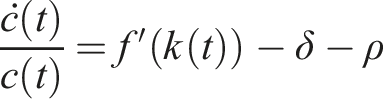
Steady-state
In the steady state,


The steady-state level of capital, consumption, and tourism are fully determined by fundamentals and the perceived security level

Figure 1 shows the phase diagram. The equation for blue dashed line is: Phase diagram in (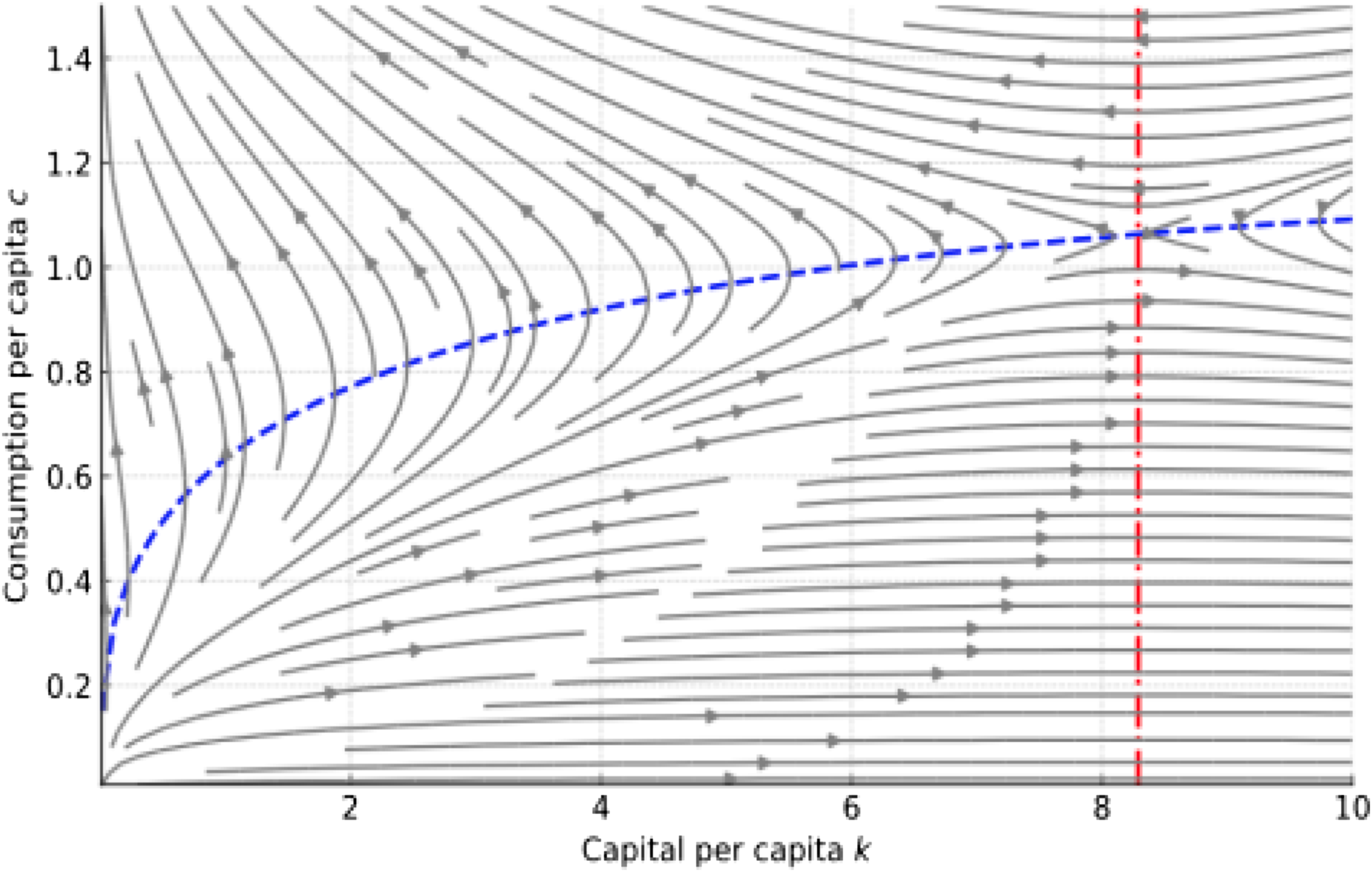
Simulation
We first simulate the dynamic adjustment of the security perception index Dynamic paths of security perception 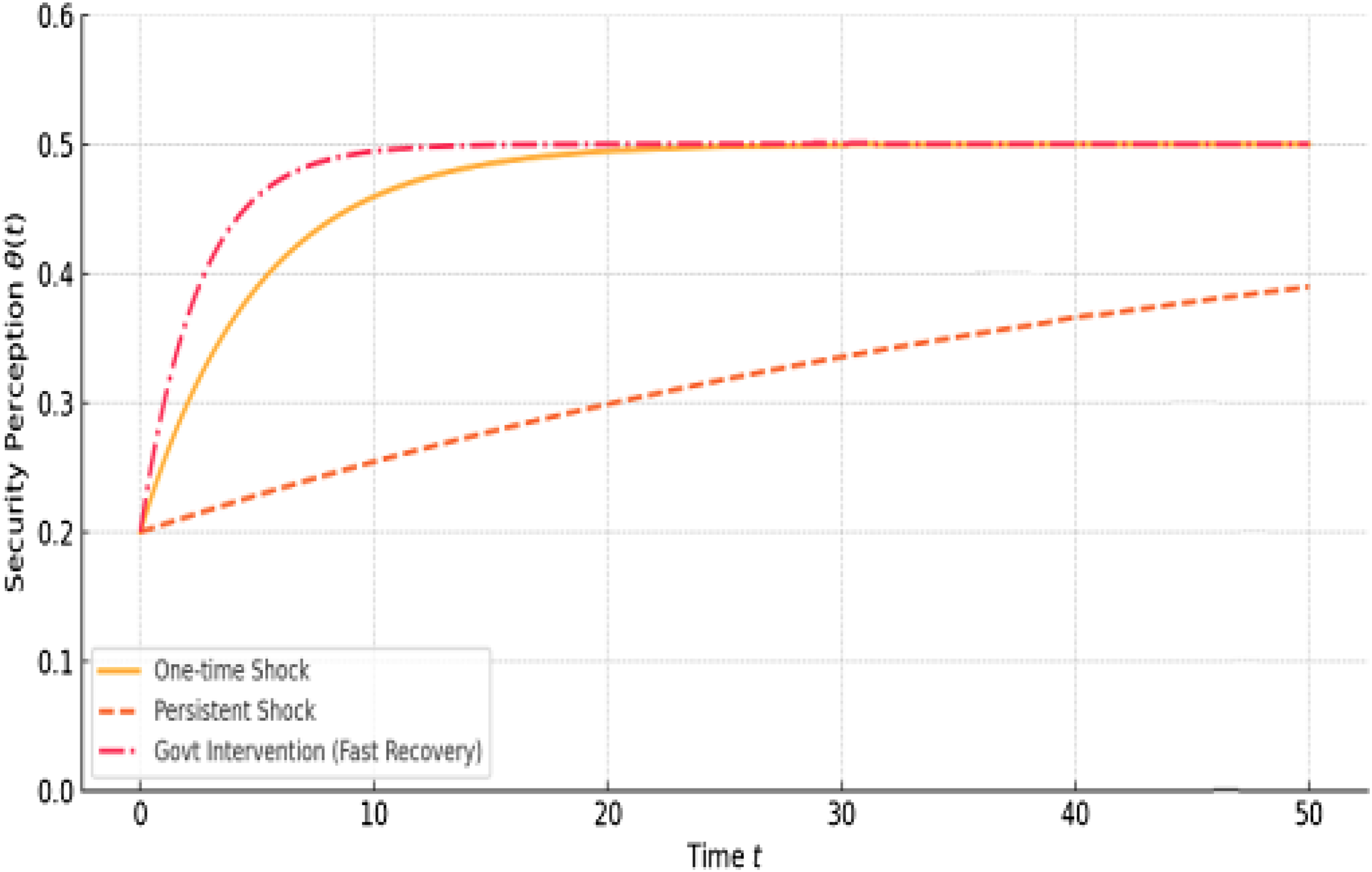
The one-time shock scenario (solid yellow curve) models an exponentially decaying fear response, where public confidence gradually returns in the absence of follow-up attacks. This case captures a typical psychological recovery from a single event. The persistent shock scenario (dashed orange curve) assumes a much slower recovery process, mimicking situations where repeated minor threats, prolonged media exposure, or structural fear inhibit the restoration of perceived safety. In this case,
Next, to assess the quantitative implications of terrorism-induced fear on tourism and macroeconomic dynamics, we again simulate the model under three distinct scenarios for the evolution of

Using a forward-shooting method over a 50-year horizon, initializing from
Figure 3 shows the dynamic evolution of capital per capita Capital dynamics 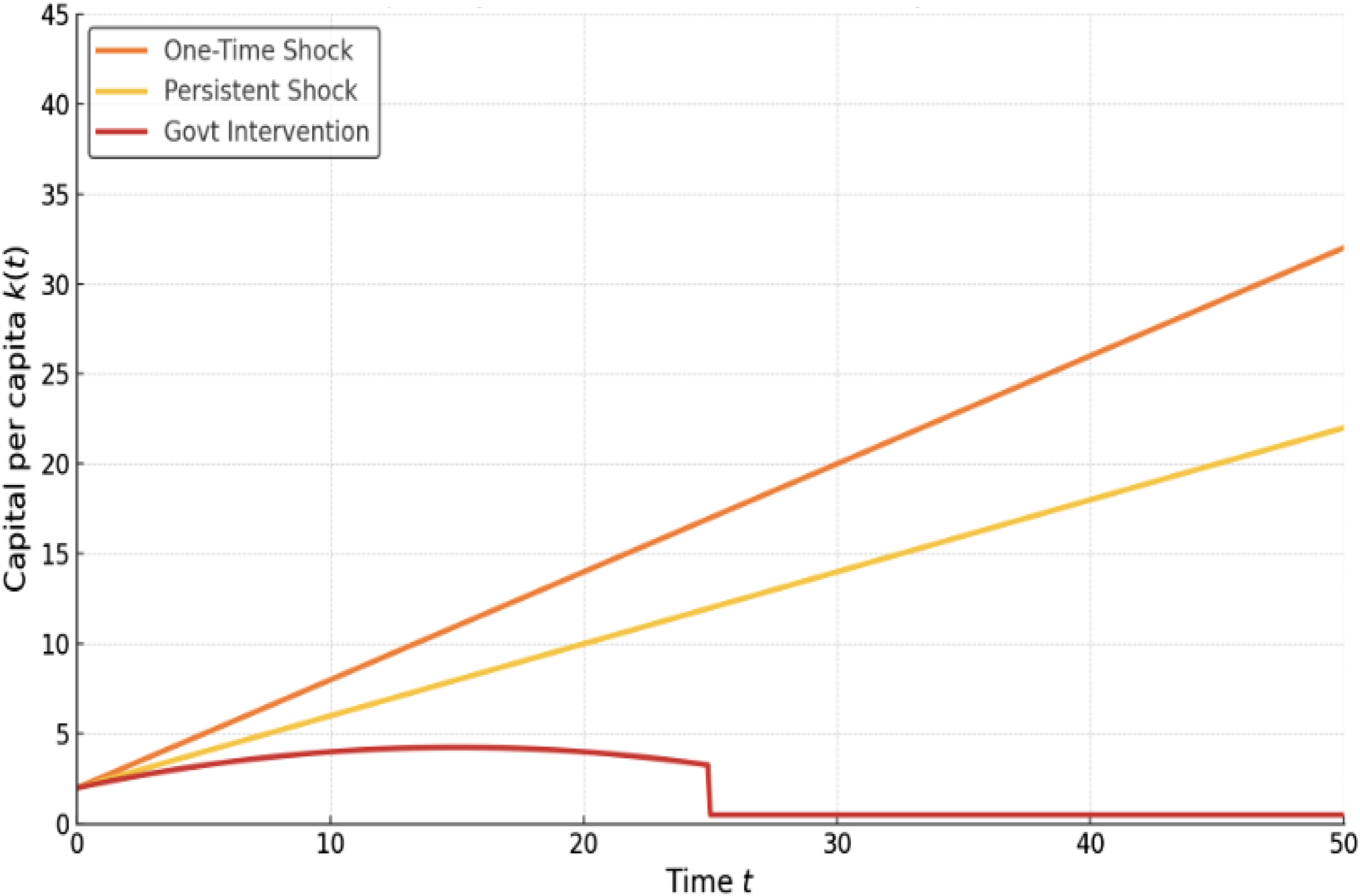
Figure 4 illustrates the simulated time paths of consumption per capita Consumption dynamics 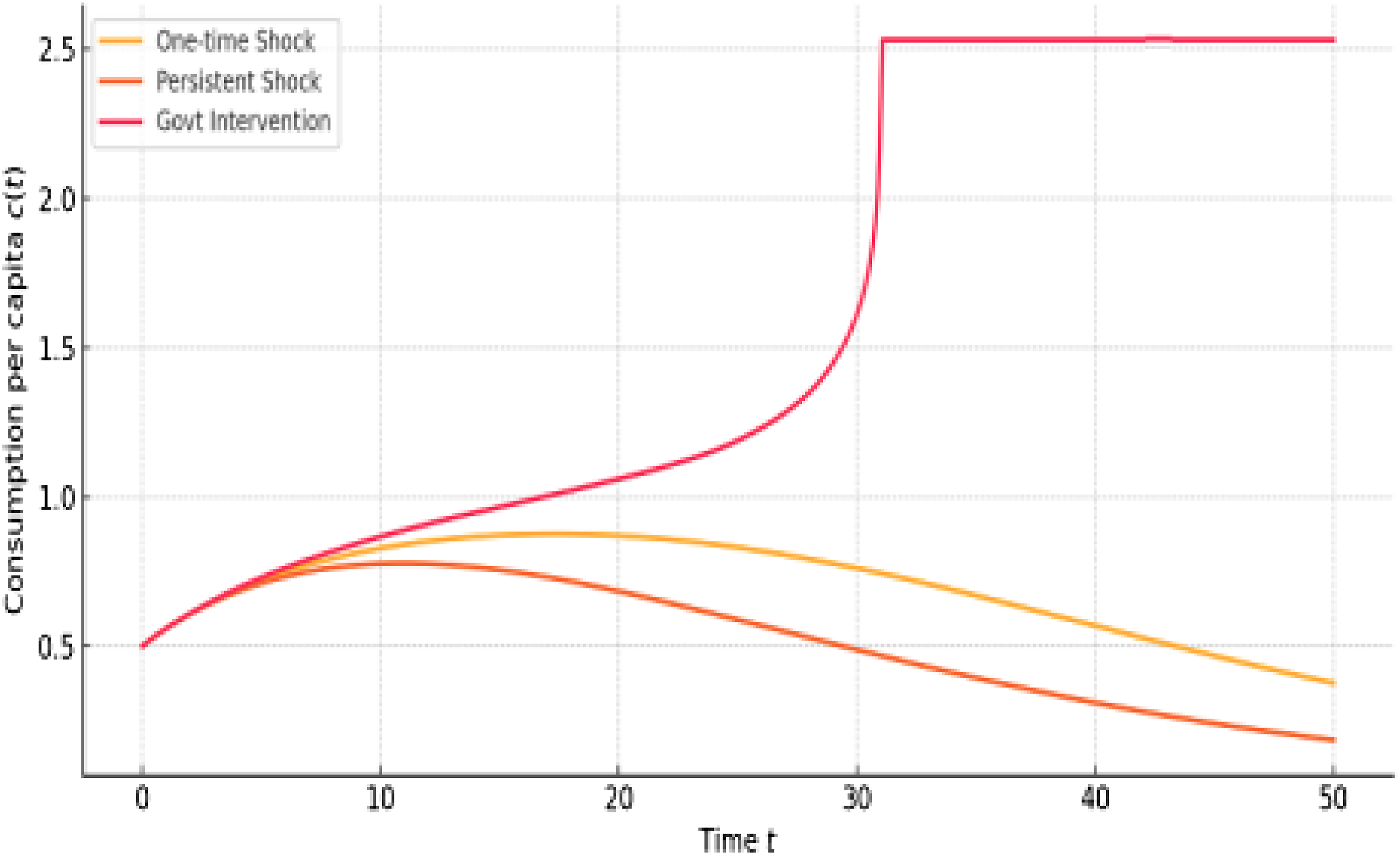
Overall, Figure 4 emphasizes that faster recovery of perceived safety boosts short-run consumption, but the macroeconomic effects depend critically on the interplay between behavioural responses, capital formation, and sustainability constraints. Policymakers must calibrate interventions not only to restore confidence, but to avoid excessive intertemporal shifts in household behaviour that could undermine long-term economic resilience.
Welfare comparison and losses
Figure 5 shows the welfare losses associated with three different trajectories of Welfare loss under different 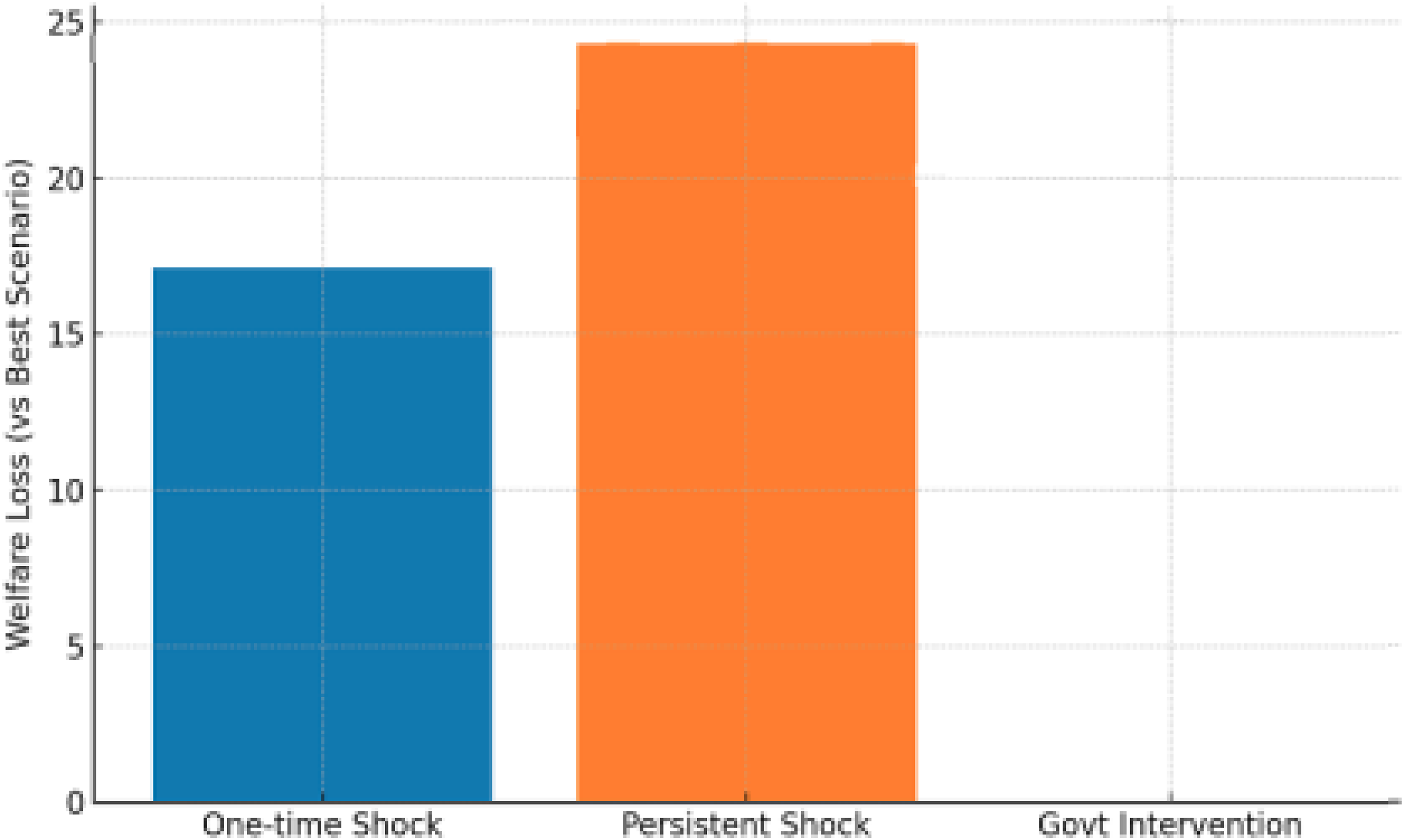
Figure 5 reveals that the persistent shock (orange bar) yields the highest welfare loss, amounting to nearly 25 utility units below the best-case outcome. This reflects the prolonged period of reduced perceived safety, which depresses both direct utility from tourism and investment-driven growth. The one-time shock (blue bar) performs moderately better, but still exhibits substantial welfare loss due to the slower economic rebound in the absence of policy intervention. As expected, the government intervention results in no welfare loss by construction, since it serves as the benchmark.
In summary, the figure underscores the macroeconomic cost of fear persistence, and highlights the powerful welfare-enhancing role of timely and effective government action. While even a temporary confidence shock can reduce long-term welfare, persistent uncertainty exerts particularly damaging and irreversible effects.
The dynamic of our model is consistent with stylized facts from major terrorism incidents. In the aftermath of the 9/11 attacks in the United States, international tourist arrivals fell sharply and the recovery of traveller confidence was protracted, with flows taking several years to return to pre-attack levels. This trajectory mirrors our persistent fear scenario, where slow restoration of perceived safety suppresses saving, capital accumulation, and long-run welfare. By contrast, following the 2015 Bataclan terrorist attack in Paris, the French government deployed strong security measures and communication campaigns to reassure visitors. Although arrivals initially dropped steeply, confidence and tourism flows recovered relatively quickly compared with the U.S. case. This experience resembles our policy-driven recovery scenario, in which public intervention accelerates the rebound in perceived safety but also requires careful calibration to avoid crowding out investment. Together, these stylized facts reinforce the relevance of the behavioural fear channel in our framework and demonstrate that the trade-offs highlighted in the simulations are not purely theoretical but also observed in real-world post-terrorism tourism dynamics.
Threshold effects of government intervention
To further investigate the dynamics of government intervention, we extend the baseline simulations by varying the intensity of public safety investment, captured by the parameter Capital dynamics under varying government intervention intensity Consumption dynamics under varying government intervention intensity Perceived safety recovery under varying government intervention intensity 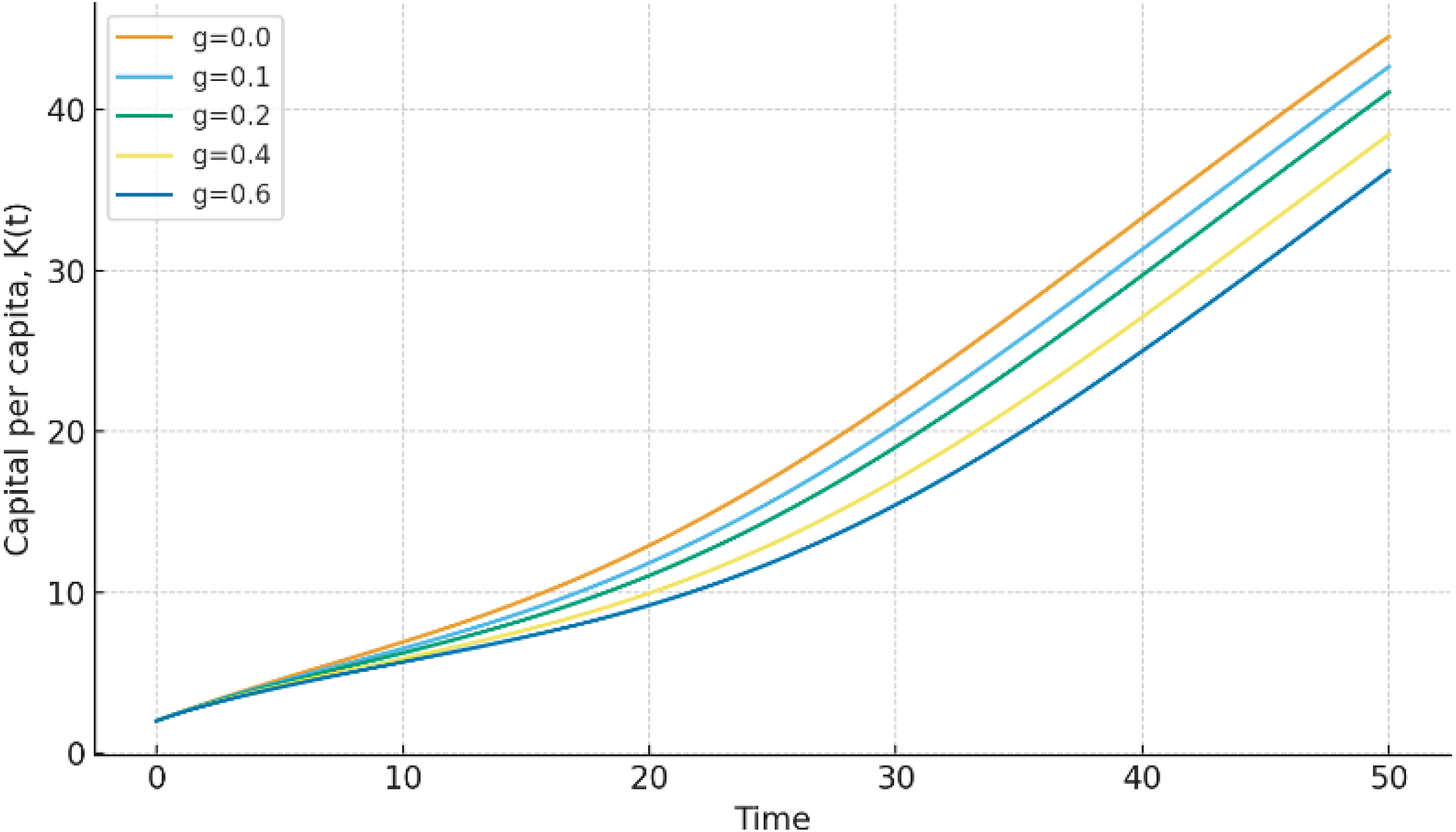
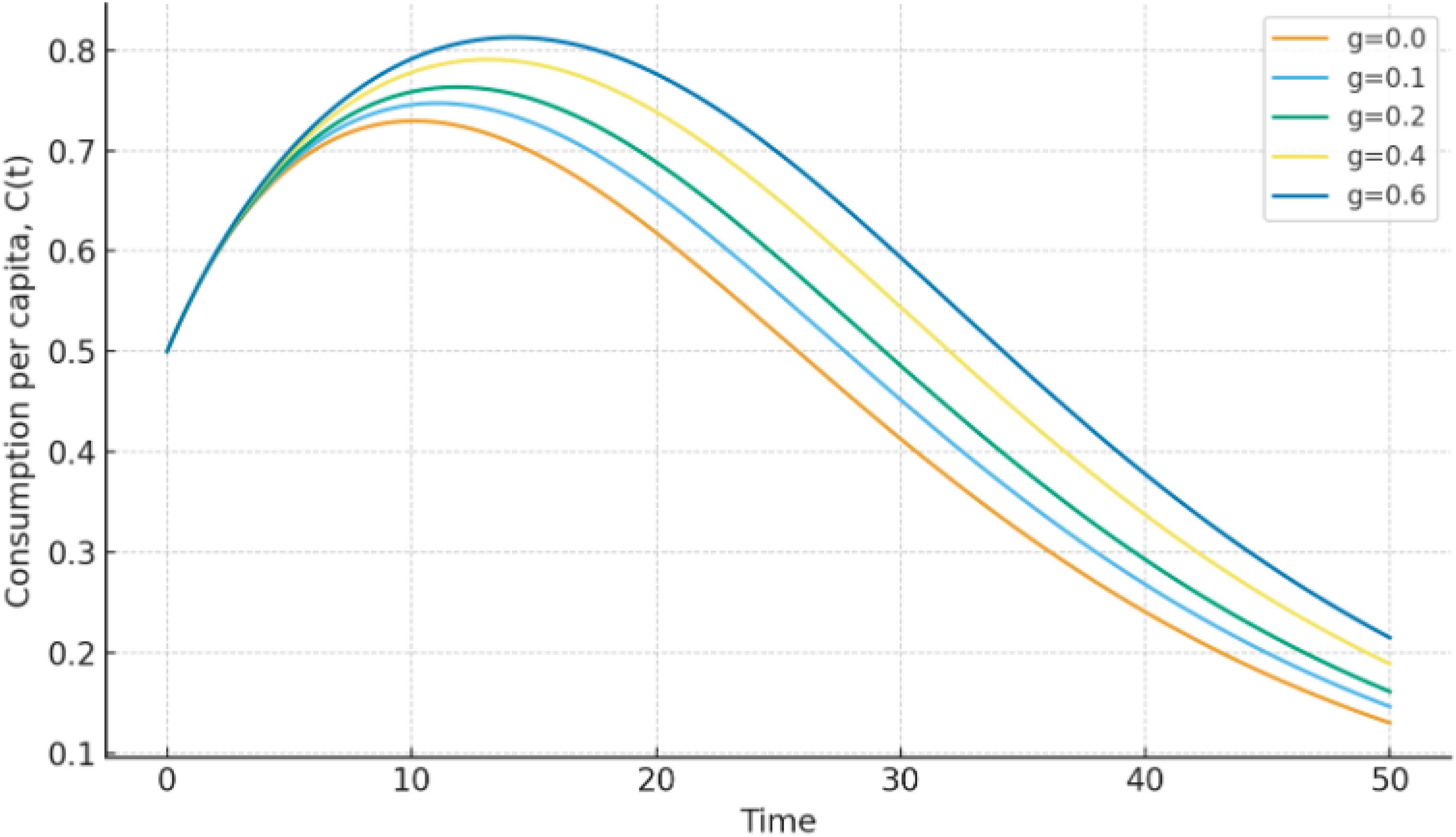
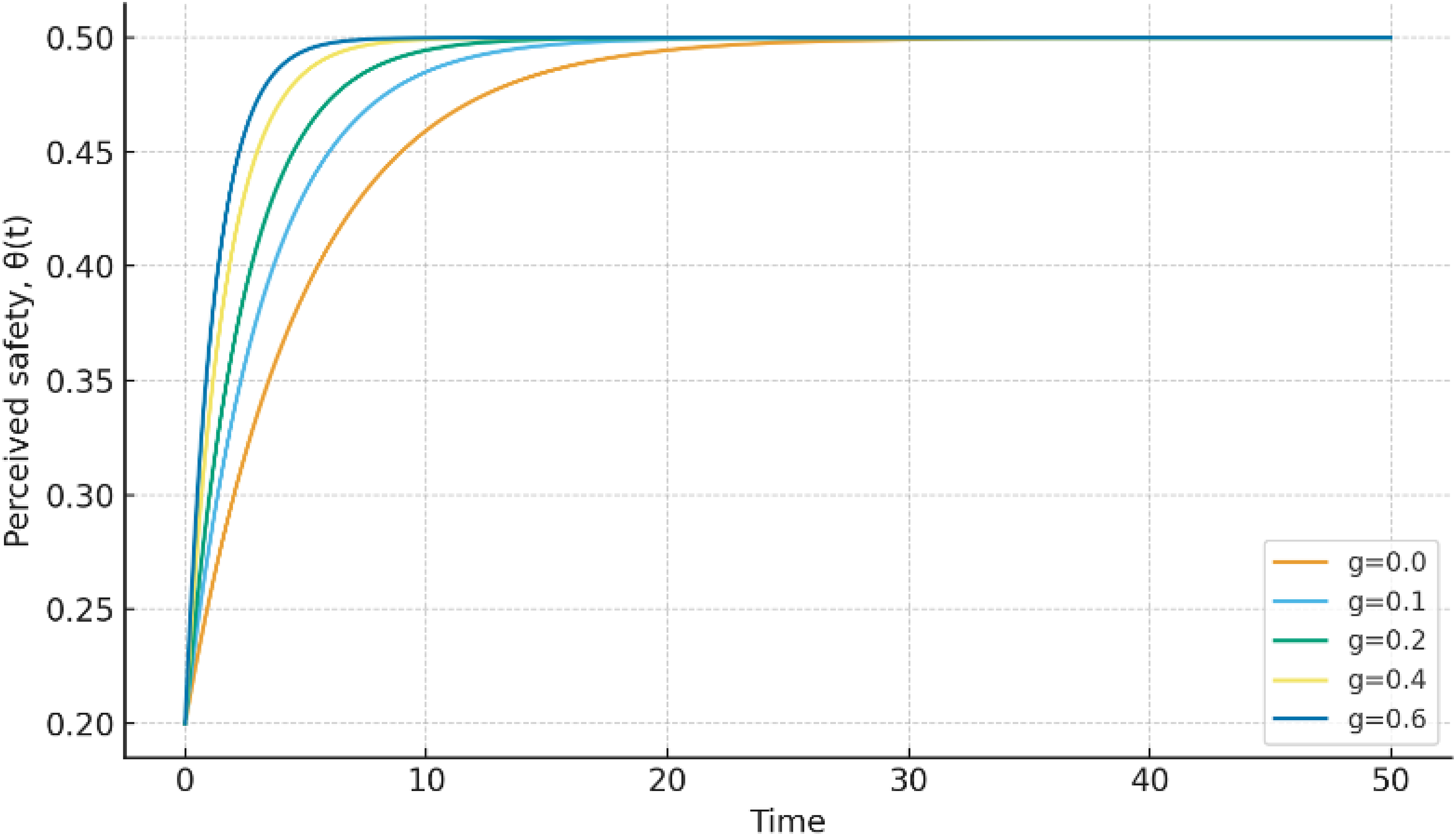
Importantly, the extended simulations suggest that under the baseline calibration, no outright collapse of
Managerial and policy implications
Our results regards the government intervention scenario carry clear implications for both managers in the tourism sector and policymakers. From a managerial perspective, rapid restoration of traveller confidence—though attractive in the short run—can generate unintended macroeconomic vulnerabilities if demand surges faster than productive capacity. Destination managers and firms in hospitality, transport, and culture services should therefore align recovery campaigns and promotional efforts with the gradual rebuilding of infrastructure, workforce capacity, and investment. This implies that recovery strategies should prioritize resilience-building measures such as skill training, diversification of tourism products, and phased promotional activities, rather than relying solely on short-term marketing or subsidies.
For policymakers, our model highlights a delicate trade-off in post-terrorism recovery design. Timely public spending on safety, infrastructure, and communication can accelerate confidence restoration, but if implemented too aggressively, it risks crowding out investment and destabilizing long-run growth. Calibrated, time-phased interventions are therefore essential. Recent OECD reports emphasize the importance of staging fiscal and promotional measures so as to balance immediate relief with investment sustainability (OECD, 2020; OECD, 2022). Similarly, policy analyses stress that stimulus measures are most effective in less resilient economies, while more resilient destinations require more nuanced strategies (Okafor et al., 2022). The broader implication is that public recovery efforts must be carefully tailored to local economic structures, with governments deploying confidence-building policies in parallel with long-term investment frameworks.
Taken together, our results suggest that successful recovery strategies require integrated coordination between government agencies and private sector actors. Tourism recovery is not only about restoring confidence but also about safeguarding macroeconomic resilience. As the OECD (2022) underscores, post-crisis periods offer a window of opportunity to embed sustainability, inclusiveness, and resilience into tourism policy frameworks. Our theoretical findings therefore complement applied policy advice by demonstrating, in a formal setting, the potential risks of overstimulation and benefits of calibrated, staged interventions that ensure both short-term recovery and long-term growth.
Conclusion
This paper develops a dynamic macroeconomic framework to analyse the long-run effects of tourism-induced fear on tourism and growth. By embedding a time-varying perception of security into a RCK model, we formally incorporate the behavioural distortions that arise when fear alters the marginal utility of tourism consumption. Our model captures how tourism shocks, though non-economic in origin, can trigger substantial and persistent economic disruptions through changes in consumption, savings, and capital accumulation.
Our analysis shows that the fear channel operates as a behavioural wedge that depresses tourism demand, reduces effective saving rates, and impedes long-term capital formation. This distortion, if left unaddressed, can push the economy toward a low-growth trajectory characterized by underinvestment and declining welfare. Our model also reveals that the recovery path of perceived safety—whether fast, slow, or policy-induced—critically determines the severity and persistence of macroeconomic losses.
Simulation results across three fear trajectories highlight the nonlinear and often counterintuitive dynamics of post-terror recovery. A one-time shock with natural fear decay leads to moderate welfare loss, while persistent fear results in the most severe long-run consequences. Interestingly, our model cautions against overly aggressive government intervention aimed at rapidly restoring tourism demand. If public policies stimulate tourism-related consumption before productive capacity has recovered, the resulting shift away from savings can induce capital collapse, undermining long-run growth and stability. Our findings thus call for calibrated, rather than purely reactive, post-crisis tourism and security policies—ones that rebuild confidence while preserving macroeconomic resilience.
Future research can extend the model in several directions. One promising avenue is to endogenize government behaviour, allowing public investment in security to be determined optimally in response to shock size and economic conditions. Another is to incorporate international spillovers—where tourism in one country affects tourism demand in neighbouring regions—within a multi-country general equilibrium framework.
Ultimately, our work underscores that while terrorism is a physical act of violence, its most enduring economic damage often arises from fear—and that managing this fear is as much an economic challenge as a psychological one.
Footnotes
Acknowledgements
We would like to thank the Editor Prof. Raffaele Scuderi and one anonymous reviewer for insightful comments that greatly improved the paper. All remaining errors are our own.

Funding
The authors received no financial support for the research, authorship, and/or publication of this article.
Declaration of conflicting interests
The authors declared no potential conflicts of interest with respect to the research, authorship, and/or publication of this article.
Notes
Author biographies
Appendix
Raw welfare values and losses under different 
Scenario
Lifetime utility W
Welfare loss (vs. benchmark)
One-time shock
125.3
17.0
Persistent shock
117.8
24.5
Govt intervention (benchmark)
142.3
0.0