




Abstract
Despite increased interest both from scholars and policymakers, most research on digital transformation in the tourism sector focuses on demand-side factors. However, supply-side factors, specifically how the adaptation of information and communication technology benefits the industry, are somewhat scant. Applying Institutions and Economic Theory, this study examines the role of digitalisation in tourism development by employing the advanced bias-corrected method of moments dynamic panel model along with the Arellano-Bond, Arellano-Bover/Blundell-Bond method of moments for around 123 countries, including economic categorisations from 1995 to 2020. The results reveal that tourism is found to be positively and significantly correlated with digitalisation. Notably, mobile phone subscriptions consistently show a significant effect on tourism demand for all countries, including developing countries. The findings imply that touristic destinations in developing economies started to follow the path of digital tourism by enhancing human connectivity between local communities and tourists through digital technologies.
Keywords
Introduction
Over the past few decades, hospitality and tourism technologies have driven digital transformation across all sectors, including the tourism industry (Bekele and Raj, 2025; Dogru et al., 2025; Hernandez and Lee, 2025; Kim et al., 2022; Lee and Lee, 2025). Information and communication technology has significantly contributed to the global GDP, ranking as a key contributor to global economic growth and development of countries (Lin et al., 2025; International Telecommunication Union (ITU), 2024). Furthermore, the ITU reported that in 2024, 68% of the global population (equivalent to 5.5 billion individuals) used the Internet, while broadband and mobile phone subscriptions reached 82%. The major advantage of digital technologies is that they serve as a vital tool in maintaining connectivity between individuals, governments, and businesses, particularly during times of crisis relating to natural disasters or pandemics. However, vulnerable populations in both developing and developed countries who lack access to or proficiency in digital technologies face the risk of being excluded from the post-pandemic recovery, potentially resulting in significant negative consequences. As such, the digital infrastructure, as measured by metrics such as Internet users, broadband subscriptions, and mobile phone technologies (Habibi et al., 2020), plays a crucial role in creating new service and process models, market channels, and organisational complexities including technological advancements (Myovella, 2020).
The travel and tourism industry is widely considered as an essential component of economic growth for any nation. For example, in the aftermath of the 2009 financial crisis, tourism sector emerged as a key driver of economic recovery for many countries (Sarıışık et al., 2011) that draws the attention of researchers and policymakers. While the major corpus of that research focuses on demand-side factors, while supply-side factors, specifically communication technology, are ignored. In addition, in the most recent domains regarding digital tourism, empirical and experimental pieces of evidence are missing, while conceptual studies dominate. As a result, it prevents decision-makers to formalise the role of digitalisation for tourism development at the strategy management level.
Furthermore, much of the existing research on technology in the tourism sector focuses on the effects of the individual decision-making (demand side) process (Lee et al., 2021), overlooking the institutional role (supply side) in which both people and businesses exist (Soares et al., 2021). In this study, the role of digitalisation is examined by applying the Institutions and Economic Theory by North (1992). North (1992) theorised that the existence of information asymmetric and imperfect information limits mental capacity of human being to process information, and therefore, calling for institutions to use technology to reduce uncertainties. While several studies highlighted institutional logics of service ecosystems (Polese et al., 2018) and the understanding of firm-level technology adoption (Oliveira and Martins, 2010), no study has examined the roles of digitalisation as a vehicle for the tourism industry from an institutional perspective. Moreover, as tourism sector is regarded as an information and labour incentive industry, the importance of perfect information for the tourism industry to address moral hazards, travel risks, and asymmetric information is beyond doubt.
Digital tools play a significant role in connecting both the demand (travellers and travel agencies) and supply sides (government and businesses), as shown in Figure 1. Developing digital infrastructure, by providing health and other services and accelerating internet and broadband facilities all depend on the institutions and economic capacity of a country, as initiated by North (1992). Hence, this study seeks to address three key research questions. First, how can we conceptualise the roles of digitalisation as a vehicle for tourism? Second, what are the key impacts of digitalisation on global tourism and developing evidence on several economic categorisations? Third, why do policymakers need to prioritise digital facilities for tourism development? Conceptualising roles of digitalisation as vehicle for tourism industry.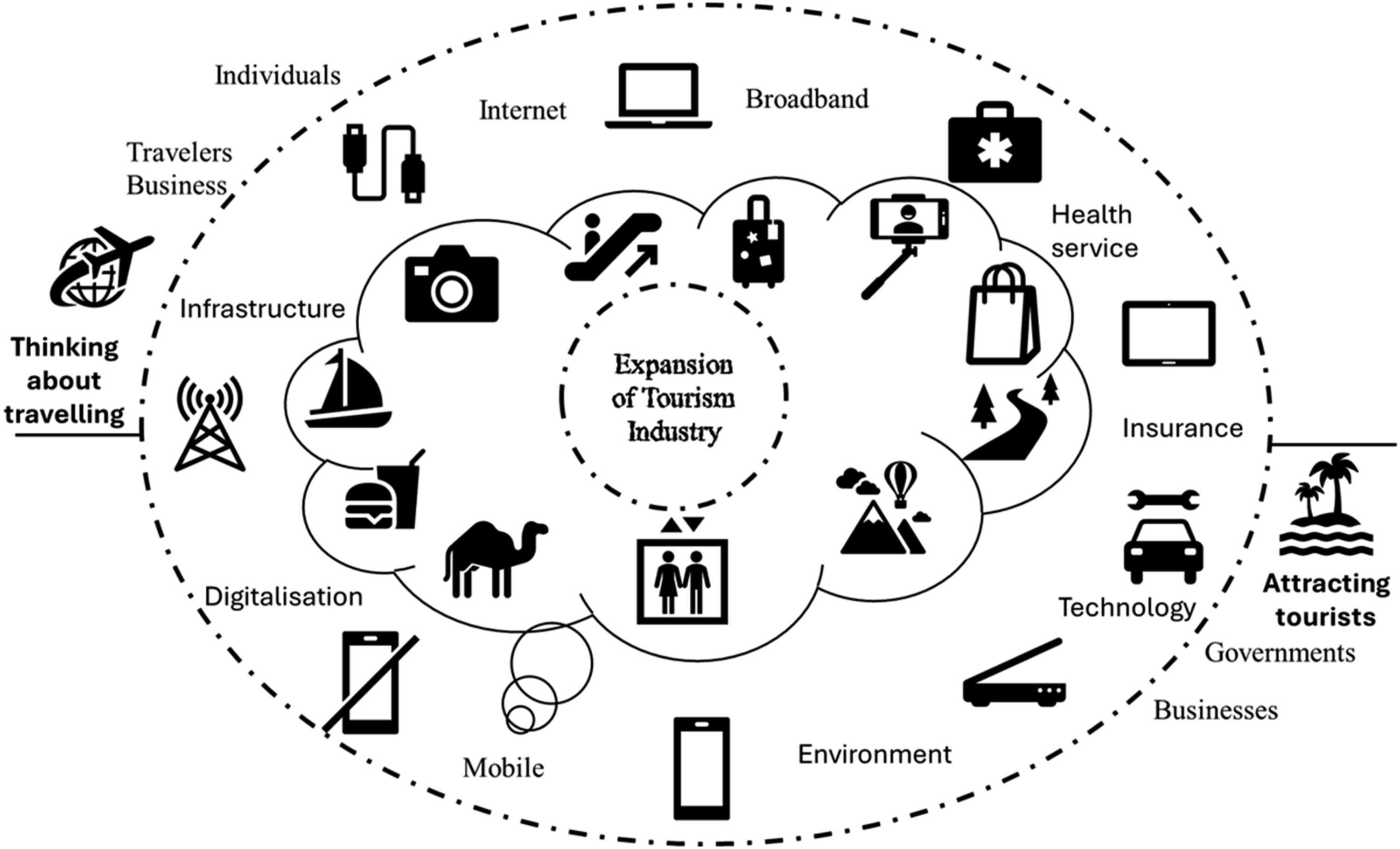
Using an advanced bias-corrected method of moments dynamic panel model along with standard dynamic panel data models for 123 countries from 1995 to 2020, astonishingly, our findings uncover the fact that digitalisation plays a significant role in determining the demand for inbound tourism in developing economies more than in developed nations. Accordingly, the study implies that the development of information technology is imperative for tourism growth in less-developed regions. In addition, integrating digital technologies in emerging economies can create an impression to potential tourists that these countries are moving towards a more modern thinking society, economic progression and technological advancement into the new century as presented in Figure 1.
The following section discusses the literature review, which then leads to the development of the hypothesis. Then, it presents the methodology used in the research, followed by empirical results and conclusion.
Literature review and hypothesis development
Conceptual framework
North (1992) developed Institutional and Economic Theory, postulating that institutions face constraints in resource allocation when efficient information feedback among human-to-human interactions is lacking. He further stressed the importance of efficient information feedback, combined with technology, to reduce the barriers of human interactions. However, the existence of information asymmetry is inevitable, and perfect information is virtually impossible to find without information technology. Löfgren et al. (2002) state that the consequences of information asymmetry and moral hazard adversely affect the relationships between demand and supply factors, like producers and consumers, which leads to uncertainty regarding quality and adverse selection in markets. Similarly, Puciato et al. (2013) argue that tourism is affected by imperfect information and moral hazard because of its complexity and information sensitivity. However, tourists often need various forms of information to make rational choices. Therefore, conforming to perfect information is a prerequisite for potential tourists and the tourist-oriented development of destinations, which eventually boosts inbound tourism for a country (Klimova et al., 2020).
Given the importance of efficient information flows, on the one hand, digital technologies can meet the demand for perfect information in an information-intensive tourism industry on a real-time basis. On the other hand, the easy access of technologies, perceived usefulness, and informativeness increase the demand for digital technologies among tourists (Ukpabi and Karjaluoto, 2017). Furthermore, tourism is recognised as an industry with a strong external spillover effect on other sectors, the regional economy, and social harmony, for which tourism security is essential. Moreover, digitalisation can be a potential driver to ensure accurate and up-to-date information for both demand-side and supply-side stakeholders (Xiang, 2018). Furthermore, Seetanah and Fauzel (2025) recently find positive interaction effects between digitalisation and economic growth on tourism development, suggesting that digitalisation provides social benefits to tourism and economic growth. Hence, the conceptual model of this study is summarised in Figure 2, where three sets of variables, i.e., digitalisation, inbound tourism, and the tourism determinant control variable, are interconnected and influencing each other to complete the whole process. Conceptual framework.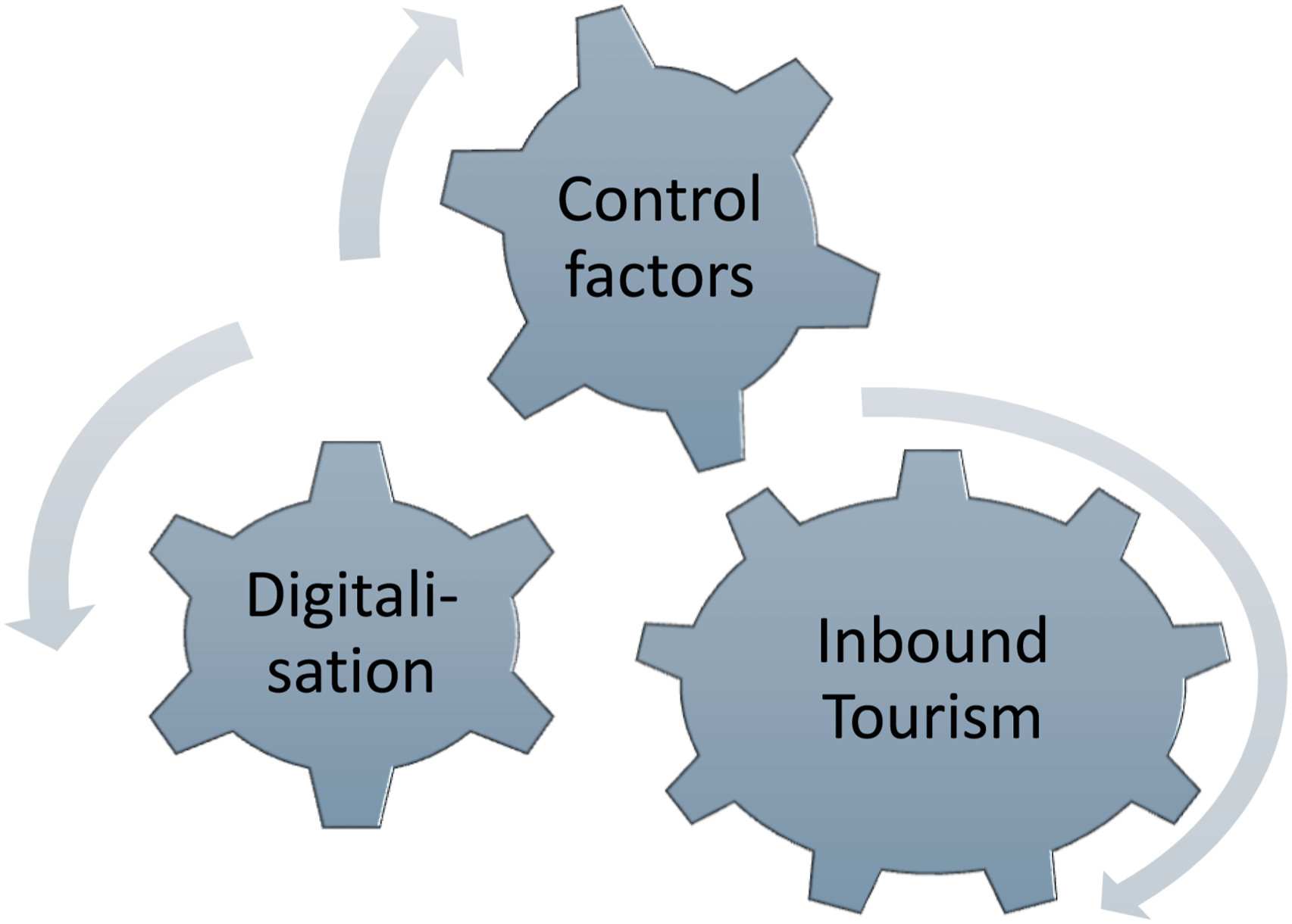
Digitalisation and international tourism
The travel industry has demonstrated consistent growth over the years, and it is projected to continue expanding, with an estimate that it will surpass 1.8 billion by 2030 (WTTC, 2017). While the travel sector grows with international arrivals, it is also witnessing an era of radical evolution in technology-dependent environments for several reasons. Firstly, the impact of technological advancements on the hospitality industry is evident in the way it influences issues related to accommodation, food and beverage establishments, and cultural heritage sites (Figueredo et al., 2017). This is primarily with the use of reviews, ratings, and tourist-generated suggestions, which can have a significant progressive impact on the decision-making process of international travellers. Figueredo et al. (2017) find that 85% of international travellers use portable devices such as iPods, tablets, or smartphones during their trips, while 97% of mobile phone subscribers share pictures of their tourism activities on social media platforms like Instagram, Facebook, and Twitter. These digital technology trends have enabled travellers to personalise their destination-related activities, resulting in a more fulfilling and satisfying travel experience that extends beyond their trip (Harris, 2017; Lee et al., 2018).
Secondly, the emergence of the digital revolution has significantly altered the transformation of tourism industry (Bekele and Raj, 2025). Tourists can access information about their intended destinations, including details about climate and weather patterns, available accommodations, scenic attractions, geopolitical and economic conditions, as well as the ability to make travel bookings, engage in online shopping and payments, and capture memories (Adeola and Evans, 2019; Law et al., 2018). Recent studies have shown that technologies like smartphones and internet connectivity can have growth enhancing impacts on the tourism industry as international tourists can now easily access travel information from abroad, thus, increasing their confidence in worldwide destinations, including language and cultural barriers, which were previously impossible (Tay, 2020).
Thirdly, digital tourism is characterised by consumer demand, technological innovations, and industry functions. From the consumer demand perspective, it enables tourists to access up-to-date information on reservations at a fraction of the cost and provides relevant information regarding destinations, resorts, and hotels, as well as a suite of activities (Athari and Çağlar Onbaşıoğlu, 2019; Buhalis and Law, 2008; Li and Buhalis, 2005; Mills and Law, 2004; O’Connor et al., 2001). In this regard, digital tools can promote the word-of-mouth effect through reviews and post-travel reports on websites and travel forums (Gelb and Sundaram, 2002). Subsequently, it can reduce time lags due to lengthy information searches and the uncertainty through quick access to the internet that may arise from expensive travel and bad experiences (Spencer, 2019). Furthermore, numerous service providers utilise a range of interactive tools, such as push SMS, promotional emails, and live chat, to engage with potential tourists regarding pricing and special promotions. Consequently, this leads to cost savings through reduced prices, commissions, or airfares, which in turn allows tourists to allocate more funds towards their intended destinations (Clemons et al., 2002; Luo et al., 2004).
Finally, global tourism is experiencing high inter-industry competition, so destinations are striving to increase their competitiveness to attract more tourists (Dogru and Suess, 2021). Literature reveals a series of determinants where technology, infrastructure, digital capability, and technological readiness, including wired and wireless internet connectivity, are very common and conform to the access of information. Thus, the following hypothesis can be constructed:
Digitalisation is positively associated with tourism development.
Data, model, and methodology
Data
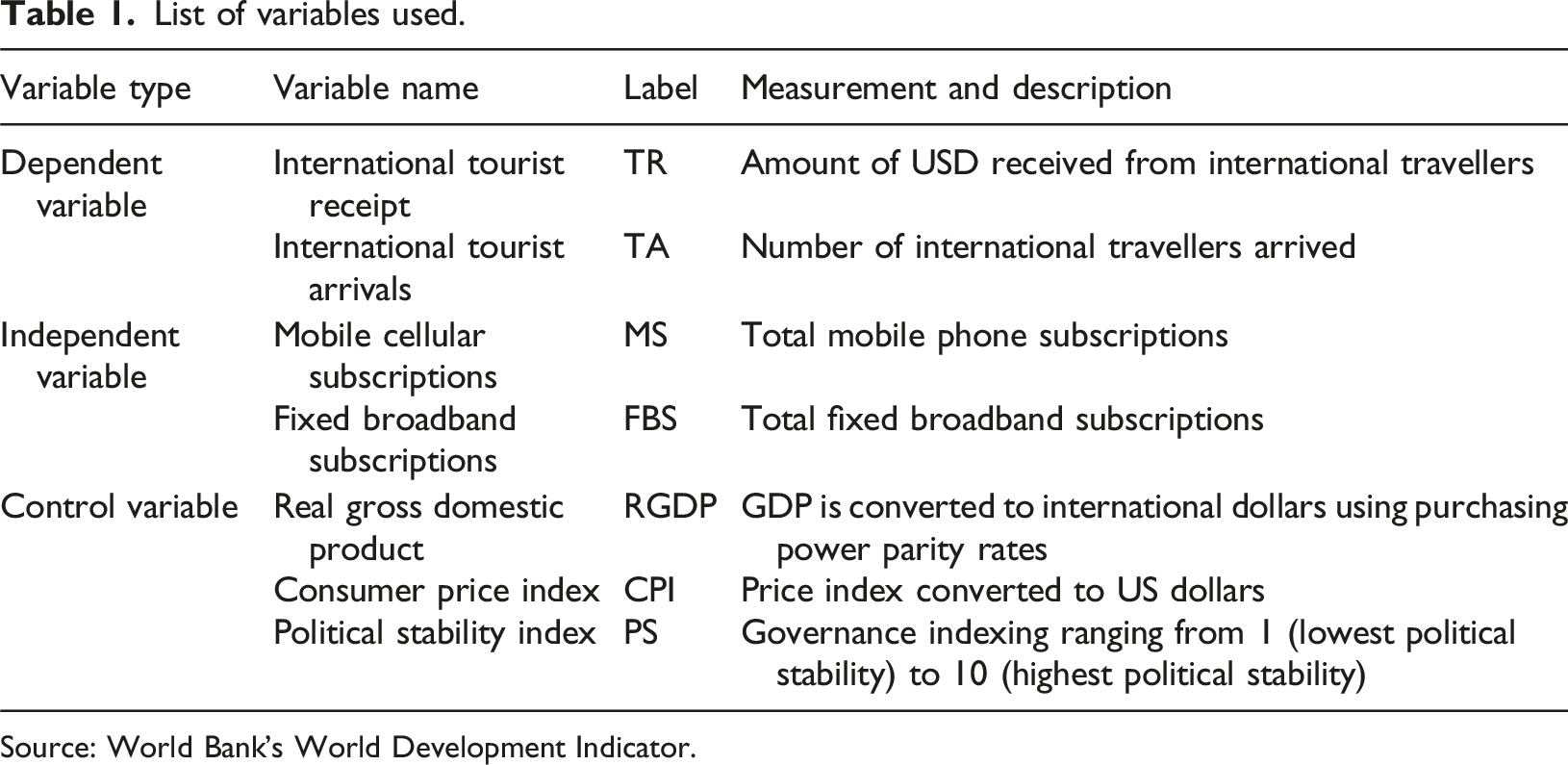
The dependent variable of this study is tourism demand, which typically involves the assessment of visitor arrivals, the corresponding international tourist receipts within the host countries and is frequently employed within academic discourse (Saha and Yap, 2014). International tourist arrivals (TA), which refers to international inbound tourists (overnight visitors), are the number of tourists who travel to a country other than that in which they have their usual residence but outside their usual environment for a period not exceeding 12 months. The data on inbound tourists refers to the number of arrivals, not the number of people travelling. Thus, a person who makes several trips to a country during a given period is counted as a new arrival each time. On the other hand, international tourism receipts (TR) are used for the robustness check and are calculated by counting expenditures by international inbound visitors, including payments to national carriers for international transport. The data are in current U.S. dollar. These receipts include any other prepayment made for goods or services received in the destination country and receipts from same-day visitors, except when these are important enough to justify separate classification. International tourist arrivals data strictly identify tourists as foreign tourists in a country, whereas tourism receipts include expenditure by both domestic and international tourists.
Digitalisation of a country is the prime focus and independent variable of this study. The present research aims to determine variables based on the significance and accessibility of data. Hence, the process of digitalisation has been operationalised through the utilisation of mostly used indicators such as mobile phone subscriptions (MS) and fixed broadband subscriptions (FBS). MS represents the total mobile cellular telephone subscriptions that offer voice communications. The succeeding variable pertains to the metric of FBS, which refers to the invariable subscriptions for the provision of high-speed access to the publicly accessible internet through a Transmission Control Protocol/Internet Protocol (TCP/IP) connection, with downstream speeds matching or surpassing 256 kilobits per second (kbit/s).
In addition, the current study incorporates various control variables, particularly related to country risks, to effectively model tourism demand. According to Athari et al. (2023), country risks arising from domestic economic and political uncertainties can adversely affect tourism development, which is detrimental to international tourism. Moreover, Carmignani (2005) finds that strong institutions are essential for maintaining political stability by reducing the Gini coefficient and increasing average income, growth, and income of the poor people. In this study, we utilise real GDP to comprehensively assess the level of economic advancement achieved by the target nations because an elevated level of economic development can yield superior tourism products and infrastructure, including digital infrastructure. Furthermore, the consumer price index (CPI) is incorporated in this research as a proxy of living costs at the intended tourist destination (Song and Li, 2008). The higher CPI value can indicate higher affordability for a particular economy (refer to Wang, 2009). Regarding country-specific characteristics, political stability can influence tourists’ risk perceptions of travelling to a destination. Nations with high political stability levels are considered safe destinations for tourists, and they witness more tourism activities and international visitors than those politically unstable countries (Athari et al., 2021).
List of variables used.
Source: World Bank’s World Development Indicator.
Furthermore, our investigation is based on the data availability from the WDI. Due to extensive missing data, 123 countries are selected with the most data values. These countries are categorised into two subgroups, namely developed and developing nations. Supplemental Table 1 provides a list of the chosen countries for this research.
Figure 3 presents the average of annual percentage change in international tourism and digitalisation data between 1995 and 2020 by countries. However, in the year 2020, the outbreak of COVID-19 pandemic caused the closure of international travel borders globally, affecting both international tourist arrivals and tourism receipts. In fact, the data shows that the pandemic event alone affected developing countries worse than developed countries in terms of tourism revenue. In other words, the annual growth rates of global tourism flow were relatively stable before the pandemic. In addition, Figure 3 reveals that the mobile cellular and fixed broadband subscriptions were at their peak in the year 2000 due to the rise of the technology revolution, where technology devices became more personal and portable and the massive growth of social media (World Economic Forum, 2020). However, the average annual increase in digital subscriptions presents declining trends for developed and developing nations over the years, indicating the momentum of technology adoption has reached its stability and steady state level (DATAREPORTAL, n d). The average of annual percentage change in international tourism and digitalisation data between 1995 and 2020.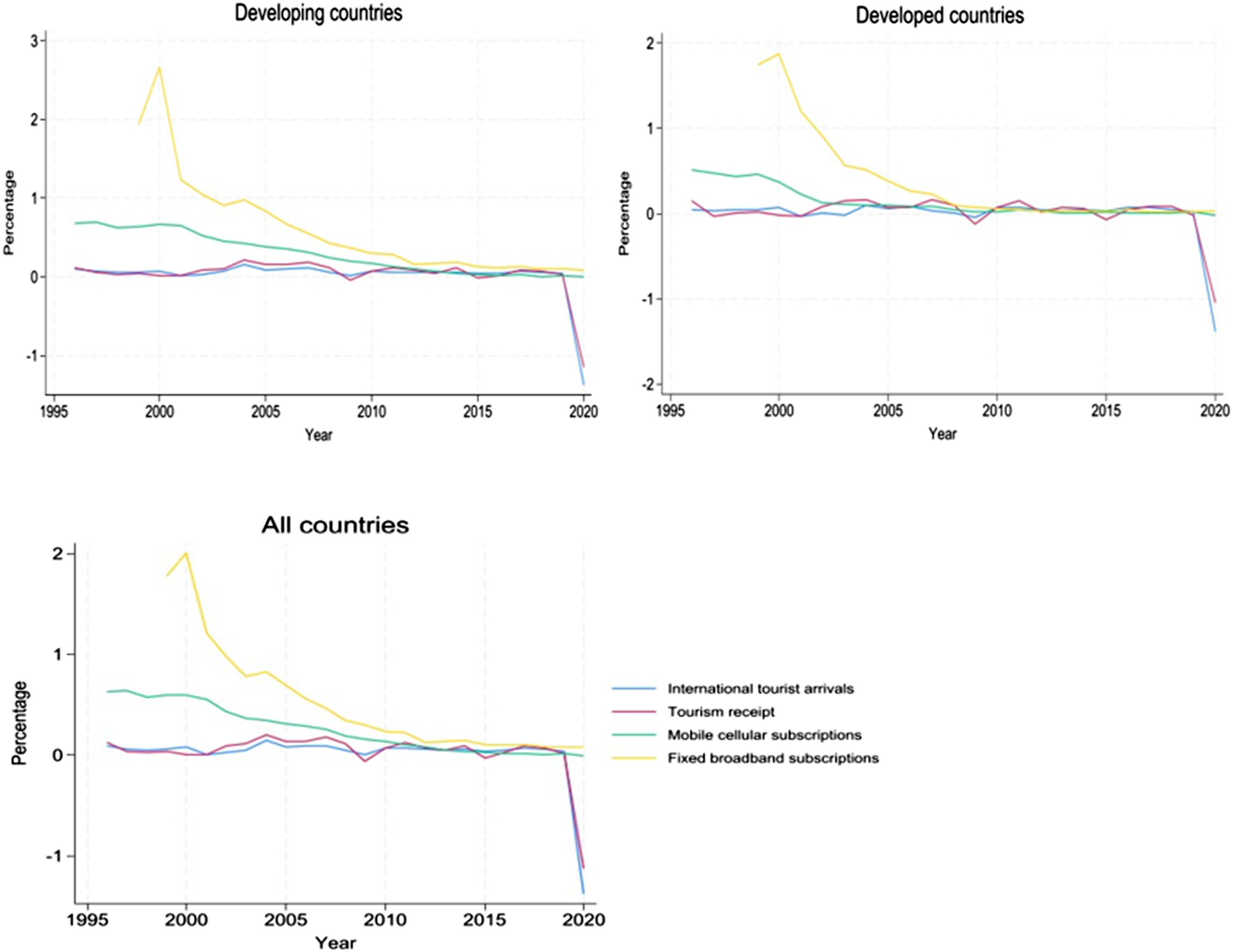
Panel unit root test
This research delves into an examination of the effects of digitalisation on tourism demand. To achieve consistent variance and facilitate unambiguous interpretation of coefficients, the present study employs the natural logarithm transformation for the considered variables, which is commonly used in panel data analysis. Next, we adopt Karavias and Tzavalis (2014) panel unit root test to determine the stationarity of the data in the presence of structural breaks, trends and cross-sectional dependency. According to Chen et al. (2022), structural breaks are unanticipated shocks that have permanent effects on model parameters, and hence, disregarding structural breaks in unit root tests can mislead the conclusion of accepting an incorrect hypothesis.
Panel unit root tests.
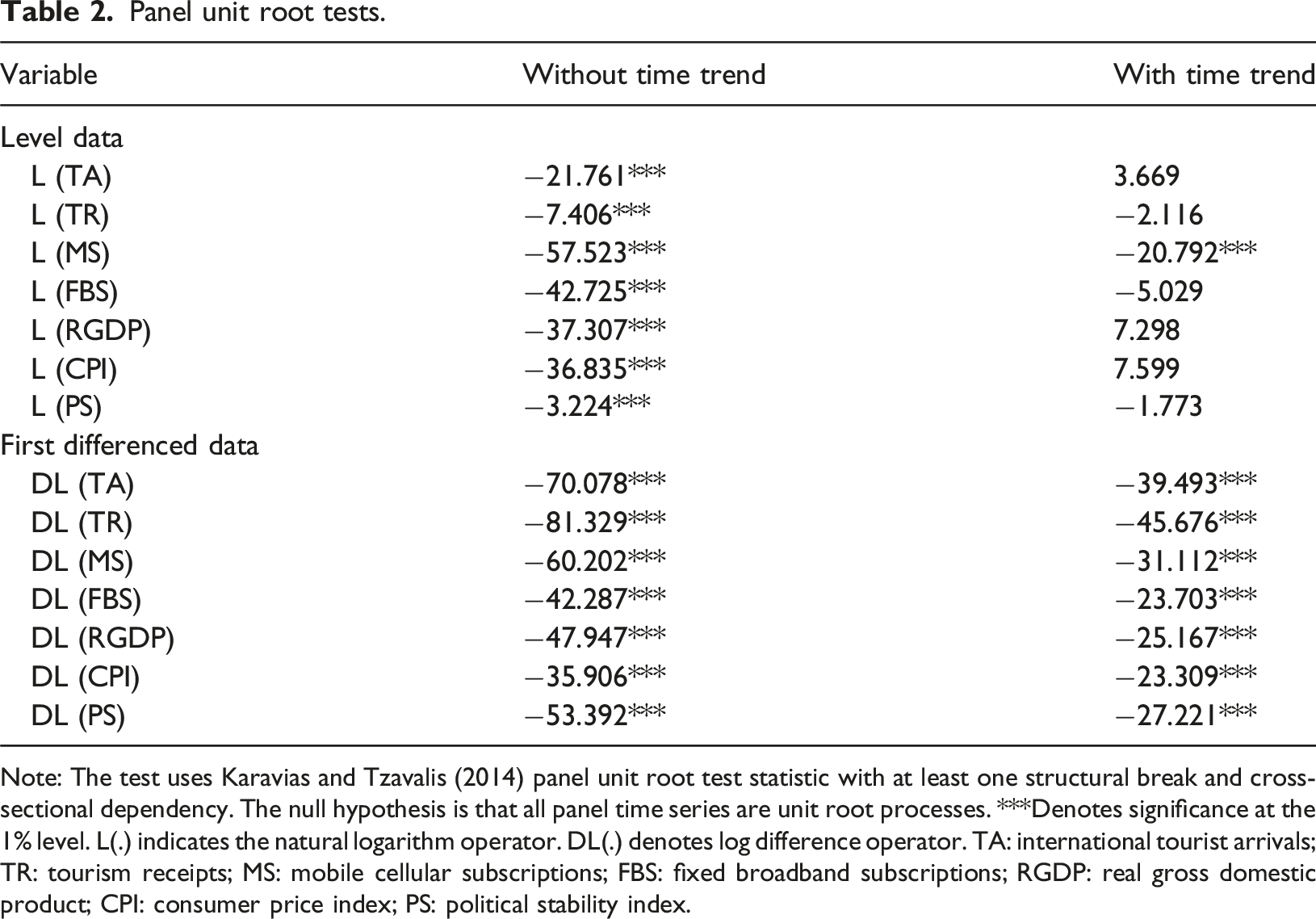
Note: The test uses Karavias and Tzavalis (2014) panel unit root test statistic with at least one structural break and cross-sectional dependency. The null hypothesis is that all panel time series are unit root processes. ***Denotes significance at the 1% level. L(.) indicates the natural logarithm operator. DL(.) denotes log difference operator. TA: international tourist arrivals; TR: tourism receipts; MS: mobile cellular subscriptions; FBS: fixed broadband subscriptions; RGDP: real gross domestic product; CPI: consumer price index; PS: political stability index.
The model and estimation procedures
In this study, for simplicity, we propose a linear panel data model where the log-difference of tourism demand is a function of its lag-dependent variable and log-difference digitalisation and economic indicators. Furthermore, as the COVID-19 event impacted global travel markets significantly, including the one-off event in our model, is crucial. Therefore, mathematically, our estimation model is written as follows:
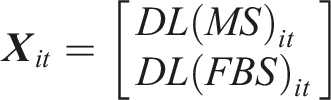
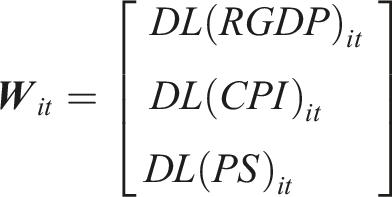

As part of the robustness check, we constructed three empirical models to determine whether the focus variables, namely MS and FBS, have consistent outcomes regarding significance and coefficient signs across different econometric models.
Model 1

Model 2

Model 3

Model 1 focuses on the effects of digitalisation on tourism demand using economic variables as the control variables. Model 2 extends Model 1 by including political stability as the control variable for country risk, whereas Model 3 expands Model 1 by analysing the interaction between real GDP and digitalisation, as a higher level of income of a country makes the country able to invest more in digital infrastructure, which in turn enhances inbound tourism industry.
Preliminary tests on normality, slope heterogeneity and cross-sectional dependency
Preliminary tests on normality, slope heterogeneity and cross-sectional dependency.
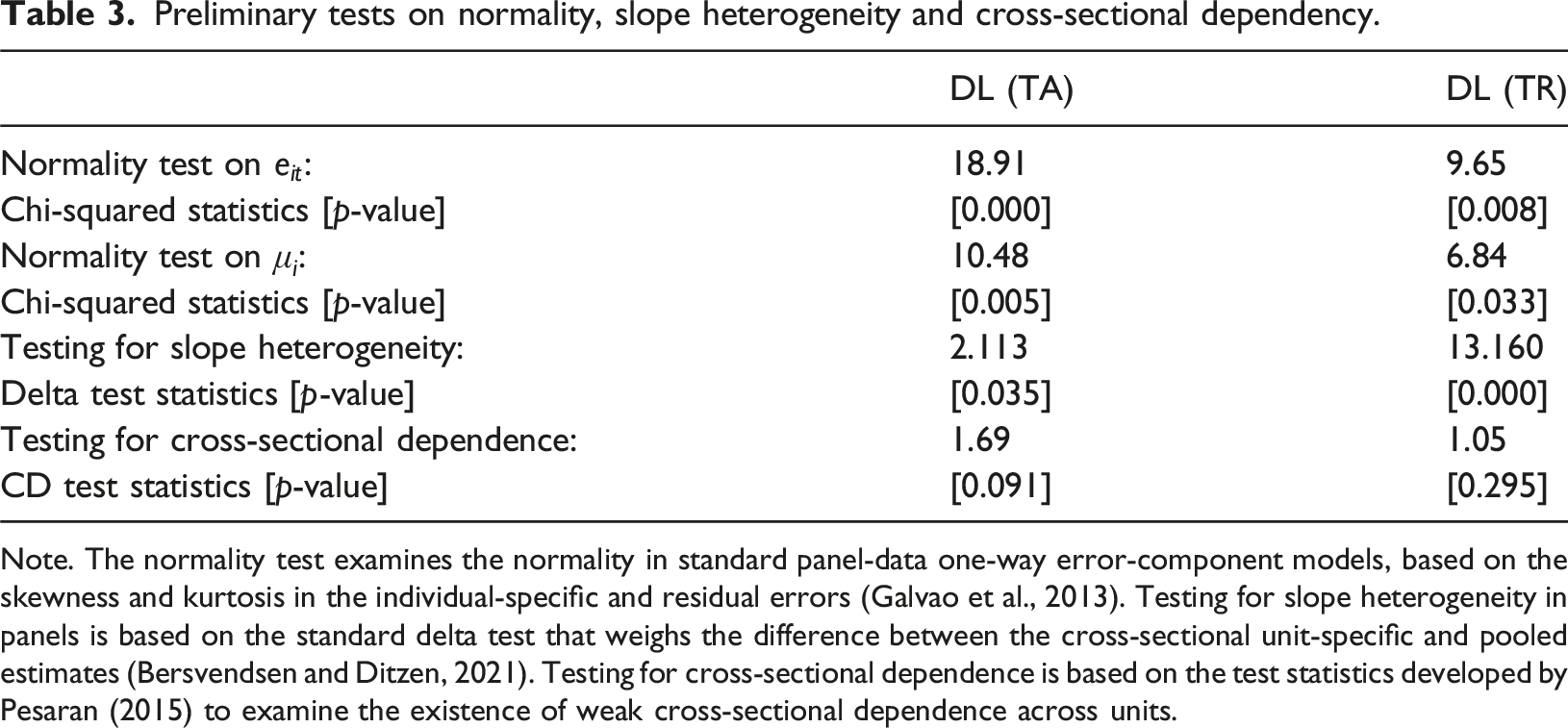
Note. The normality test examines the normality in standard panel-data one-way error-component models, based on the skewness and kurtosis in the individual-specific and residual errors (Galvao et al., 2013). Testing for slope heterogeneity in panels is based on the standard delta test that weighs the difference between the cross-sectional unit-specific and pooled estimates (Bersvendsen and Ditzen, 2021). Testing for cross-sectional dependence is based on the test statistics developed by Pesaran (2015) to examine the existence of weak cross-sectional dependence across units.
Dynamic panel data models
Endogeneity is another issue for estimating equation (1), where the explanatory variables on the right-hand side of the equation must be strictly exogenous regressors, and the correlation between the variables and 
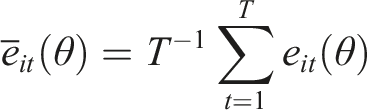
The estimated variance of the within-group least square can be expressed as:
The moment conditions suggested by BKH can be specified as follows:
From equation (2), the estimators can then be solved as follows:
Equation (3) solves the fixed effects biased-corrected estimators. To obtain the random effects 2-step biased-corrected estimators, equation (4) below is the extension from equation (3) by including a weighting matrix, as follows:
According to Kripfganz and Breitung (2022), the biased-corrected dynamic panel data model presents several advantages. The model can compute fixed- and random-effects estimators, and the method of moments specified in the model follows an asymptotic distribution. Moreover, the model works well with small sample properties. Hence, a biased-corrected dynamic panel GMM model is employed as the main econometric technique to estimate the relationship between digitalisation and tourism. We further tested our models using Arellano-Bond and Bond-Blundell methods to check for robustness.
Estimation results
The empirical analysis of the relationship between digitalisation and tourism demand is conducted using cross-country panel data. Based on the unit root test results, the annual percentage changes (log difference) of the dependent and independent variables are estimated. We first start with the scatter plots of percentage changes in digitalisation and its impact on tourism demand in a country. The horizontal and vertical axes in Figure 4 measure the percentage changes in digitalisation and tourism variables, respectively. In Figure 4(a), scatter plots for all countries (upper panel), shows that the growth in MS leads to increase in tourist arrivals as most of the dots are in the positive quadrant, with some exceptions. Similar movements are seen when FBS is measured on the right panel. However, the movements are a bit limited compared to the MS. The lower panel in Figure 4(a) displays a similar relationship between digitalisation and tourism revenue. Figures 4(b) and 4(c) show the same relationship for developed and developing countries, respectively. The findings indicate that nations characterised by high amounts of digitalisation exhibit greater appeal to travellers, exemplified by the notable influx of international tourists into countries such as the United States and Australia. Conversely, realms of limited digitalisation are inclined to discourage tourism, as evidenced by the scant number of visitors to destinations such as Burundi and Sudan. (a)Scatter plots of log difference tourism and digitalisation data for all countries. (b) Scatter plots of log difference tourism and digitalisation data for developed countries. (c) Scatter plots of log difference tourism and digitalisation data for developing countries.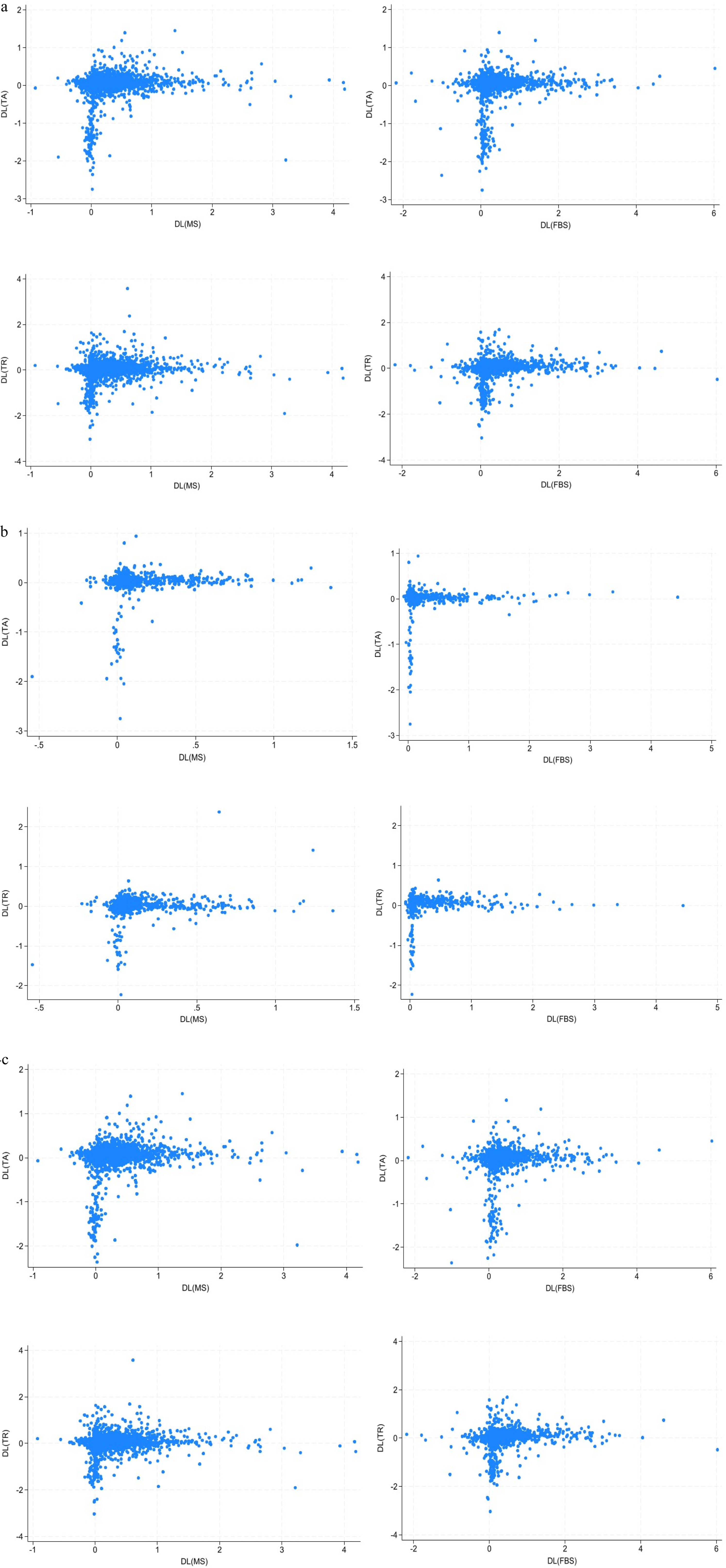
Bias-corrected estimation of linear dynamic panel data models for all countries.
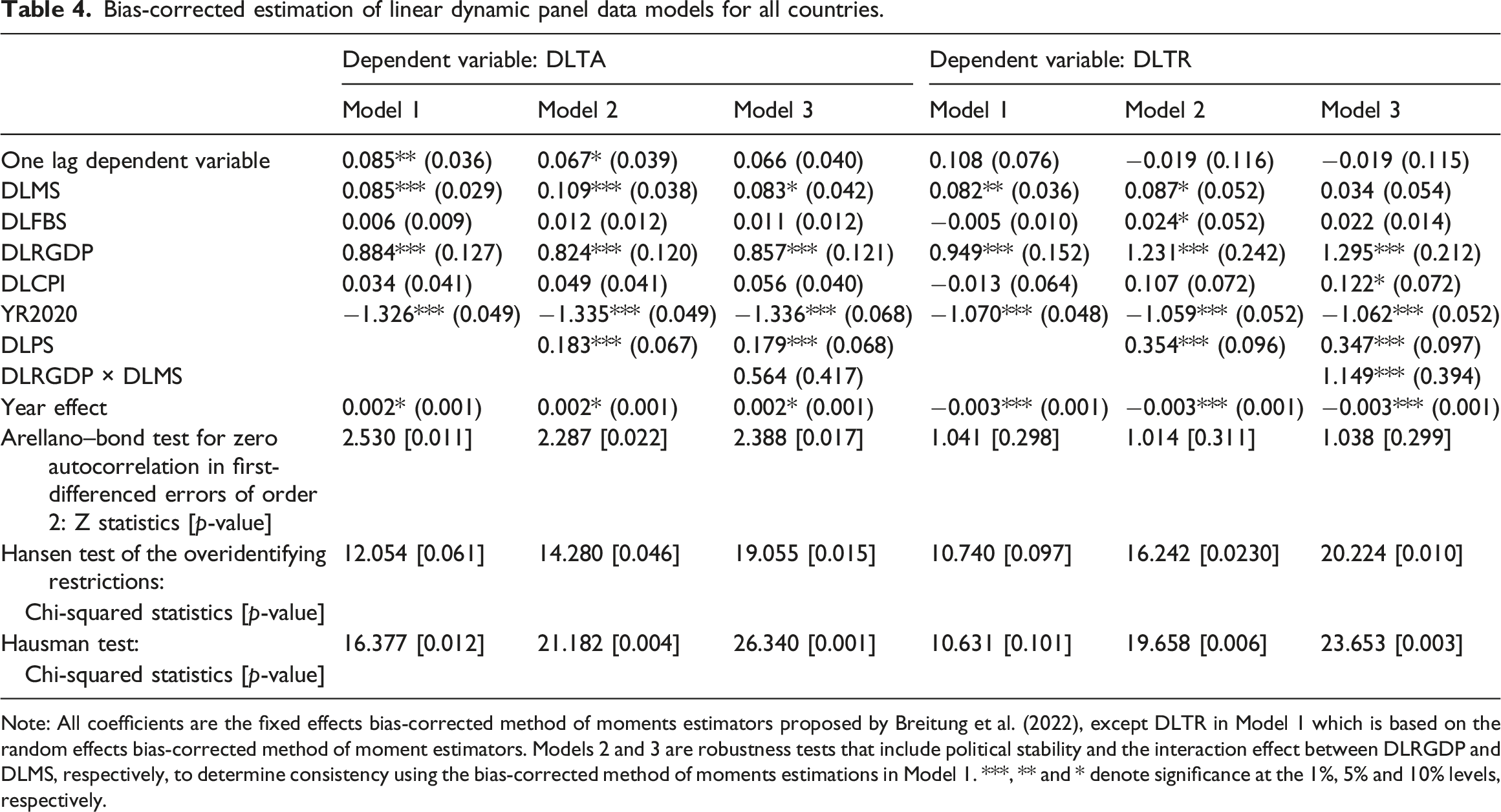
Note: All coefficients are the fixed effects bias-corrected method of moments estimators proposed by Breitung et al. (2022), except DLTR in Model 1 which is based on the random effects bias-corrected method of moment estimators. Models 2 and 3 are robustness tests that include political stability and the interaction effect between DLRGDP and DLMS, respectively, to determine consistency using the bias-corrected method of moments estimations in Model 1. ***, ** and * denote significance at the 1%, 5% and 10% levels, respectively.
Although, both fixed broadband and mobile subscriptions are reliable digital tools for both residents and businesses, however, mobile broadband provides a lot more flexibility as fixed broadband is tailored for stationary locations. In contrast, mobile broadband is designed for users who need internet connections while on-the-go. Quaglione et al. (2020) argue that mobile broadband offers have become the main wireless market option for accessing internet in the rural areas in EU member states. With the deployment of third-fourth-and-fifth-generation mobile standard enhances data transfer speed and relaxes the existing service constraints and thereby reduces the gap with the better performing wired options and increases its appeal to those territories where wired networks are considerably unviable. Moreover, Prieger (2013) finds that the availability and adoption of high-speed fixed broadband are lower in rural than urban areas in the US. However, mobile broadband holds a great potential to benefit rural areas through economic development. Hence, it is reasonable to argue that fixed broadband has some limitations for the tourists to access information in the tourist places that are in rural and remote areas. Also, over the years mobile technology has grown at a much faster rate that postulates more flexibility and access to both tourists and the provider of tourism services which in turn helps enhancing tourism industry. Overall, dependable and simple internet or hotline accessibility plays an important role in improving the satisfaction of travellers during their vacation. For instance, the travel applications, encompassing Tripadvisor, Airbnb, and Booking.com, serve as travel planning and support tools to assist tourists in efficiently executing all scheduled activities before and during the holiday period, utilising online connectivity for operations and maintenance. As a result, information and communication connectivity are extremely important for the advancement of the leisure industry.
The coefficient for lagged growth in tourist arrivals is positive and significant at a 5%–10% level of significance, except in Model 3 of Table 4, indicating an opposite catch-up effect where growth in tourist arrivals in a previous year boosts growth of tourist numbers for the subsequent year. It is reasonable to argue that digitalisation provides better information to tourists through feedback, which supports North’s Institutional and Economic Theory. If tourists are satisfied, then the consequence of tourists’ satisfaction, word of mouth (Lang and Hyde, 2013), attracts more tourists in the coming years.
The coefficients for the real GDP growth reveal the expected positive sign with 1% significant level in all models, suggesting that high economic development in a tourist destination increases inbound tourism by providing better infrastructure. The coefficients of CPI do not show the expected sign and are insignificant. Interestingly, the coefficients of 2020 year dummy is negative and highly significant (1% level of significance) with a greater magnitude in all models. The results confirm the worldwide adverse impact of the COVID pandemic due to lockdowns and border closures in many countries.
The coefficients for political stability reveal a boosting effect. They are highly significant (Models 2 and 3), indicating that political stability is a crucial factor for inbound tourism, as tourists feel safe and less risky while enjoying travel. A 1% increase in DL (PS) leads to 0.18% growth in tourist arrivals, ceteris paribus, manifesting that political stability generates an international tourism flow in a country. The result is consistent with Athari et al. (2023), suggesting that political stability encourages tourism growth. Finally, the moderation effect between real GDP and digitalisation shows a positive sign in boosting international tourism.
The results are very similar when tourism revenue is replaced with tourist arrivals (Table 4), and the magnitude of the coefficients, particularly real GDP, political stability and the moderation coefficient, are much stronger when TR is the dependent variable. The moderation coefficient is positive and highly significant, suggesting that a higher level of GDP supports digital infrastructures, which generate positive outcomes for the tourism industry (Model 3), Table 4. Also, the models (both in TA and TR) are tested for serial correlation and overidentifying restrictions for endogeneity, and the results satisfy no serial correlation and control for endogeneity. The next subsection examines the impact of digitalisation on inbound tourism for both developed and developing countries to identify differences in the effects of digitalisation.
Developed and developing countries
Bias-corrected estimation of linear dynamic panel data models for developed countries.
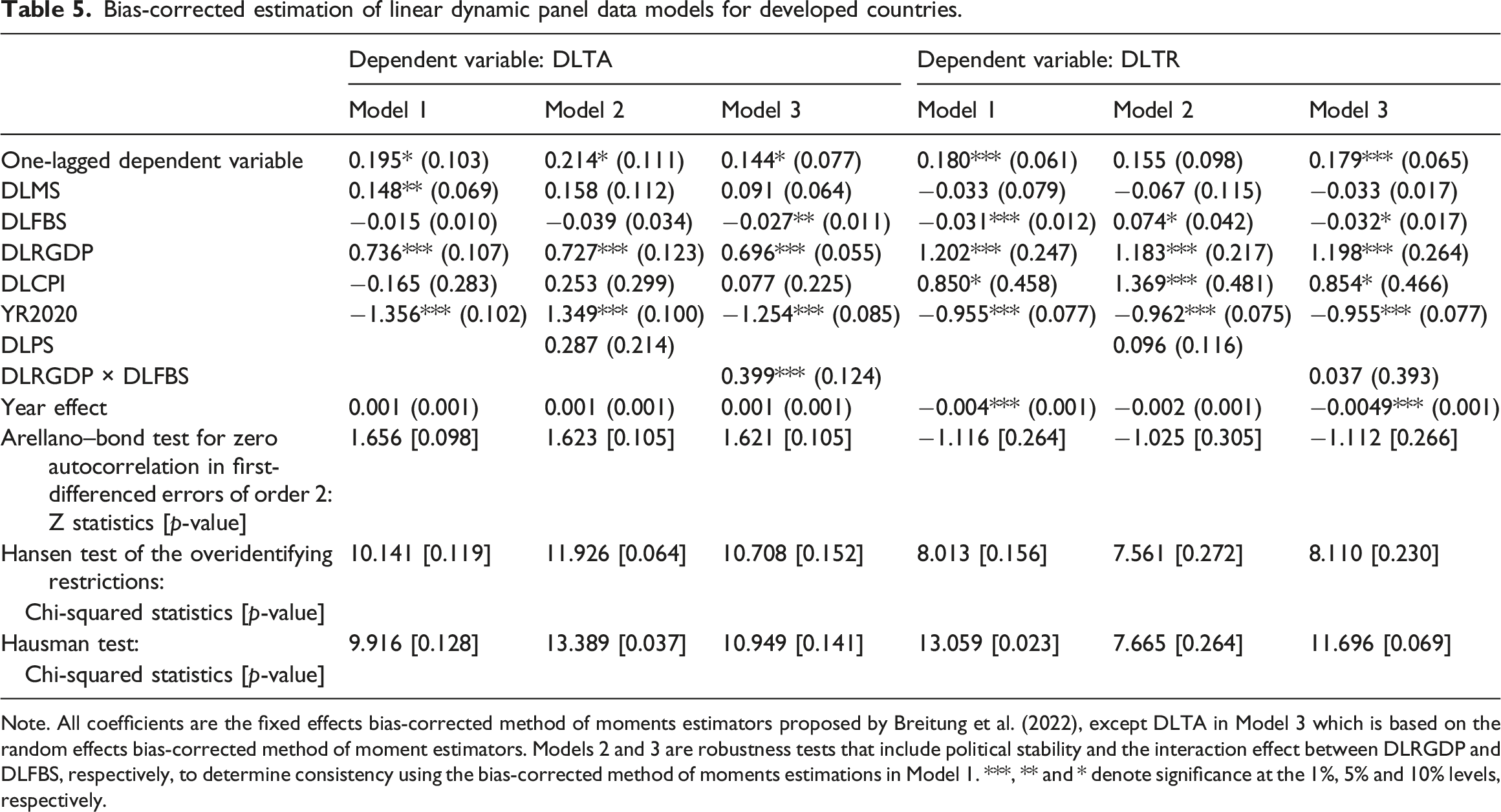
Note. All coefficients are the fixed effects bias-corrected method of moments estimators proposed by Breitung et al. (2022), except DLTA in Model 3 which is based on the random effects bias-corrected method of moment estimators. Models 2 and 3 are robustness tests that include political stability and the interaction effect between DLRGDP and DLFBS, respectively, to determine consistency using the bias-corrected method of moments estimations in Model 1. ***, ** and * denote significance at the 1%, 5% and 10% levels, respectively.
Bias-corrected estimation of linear dynamic panel data models for developing countries.
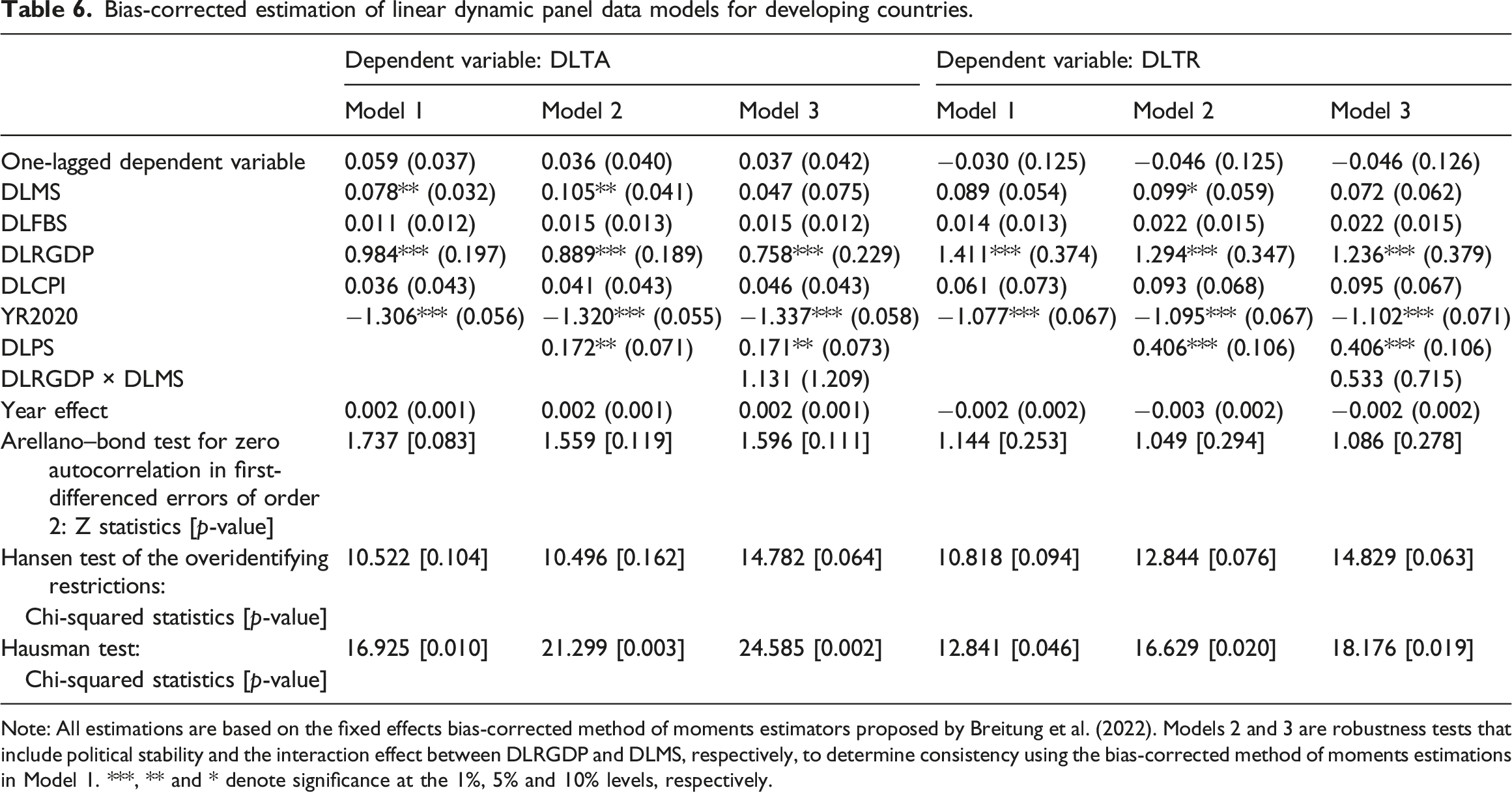
Note: All estimations are based on the fixed effects bias-corrected method of moments estimators proposed by Breitung et al. (2022). Models 2 and 3 are robustness tests that include political stability and the interaction effect between DLRGDP and DLMS, respectively, to determine consistency using the bias-corrected method of moments estimations in Model 1. ***, ** and * denote significance at the 1%, 5% and 10% levels, respectively.
Robustness results
The results using Arellano-Bond and Arellano-Bover/Blundell-Bond linear dynamic panel data regression are reported in Supplemental Tables 3–8. The results are very similar to bias-corrected dynamic panels, with some exceptions. Mobile phone subscriptions show a positive effect but not always significant. In contrast, fixed broadband results are mostly insignificant. In other words, mobile subscriptions are more crucial for tourism than fixed services. Interestingly, lagged dependent variables show a catching-up effect, but not always significant. However, an increase in real GDP and political stability boosts inbound tourism, but COVID dummy poses a significant hostile effect on the tourism industry overall. Furthermore, mobile subscriptions are vital in attracting tourist flows in developing countries. Other than the methodology for the robustness check, we have used alternative measures for both dependent and independent variables, and the results remain the same with some exceptions. Overall, the findings support our hypothesis that digitalisation is a vehicle for tourism growth. Most importantly, mobile phone subscriptions are vital for enhancing the growth effect. Economic development and political stability can further enrich the effect.
Conclusions and further implications
The tourism industry, as an economic booster, has been fundamentally changing due to the adaptation of digital technologies. This paper empirically investigates the effects of digitalisation on the travel and leisure industries worldwide. The models are tested using a dynamic panel setting, along with the categorisations of developed and developing countries.
Theoretical implications
This study provides some theoretical implications. First, the study applies Institutional and Economic Theory to understand the critical role of institutions in ensuring perfect information flow using technologies. If a country aims to grow inbound tourism, the policymakers should focus on improving its level of digitalisation to maintain a competitive advantage. Furthermore, information technology helps the tourism industry revisit and update organisational policies and strategies in response to changes in the external environment. Second, this study contributes to the development of literature in the fields of tourism and information technology. It proves the critical role that digitalisation can play in improving international tourist flows and revenues for a country. This study has gone a step further and expanded the literature by unravelling the positive linear relationship between digitalisation and tourism by adding broadband connections into account for information, communication and technology adaptation. Therefore, including digitalisation variables into the conventional tourism demand model can improve forecasts of international tourist flows and revenues to a country.
Practical implications
Digitalisation has shown a positive and significant relationship with tourism. Hence, digitalisation should be fundamental to successful tourism development, especially in developing countries. Tourism stakeholders have the responsibility to collaborate and develop policies and applications that will extend the benefits of information, communication and technology to tourism, travel, and hospitality enterprises. The current findings can offer some practical implications. Firstly, this study provides macro-level insights and guidelines for policymakers to select and address the dominating digitalisation factors that can effectively influence the tourism industry. For instance, the relationship between the variables of digitalisation and tourism arrivals, as well as tourism receipts, was found to be positive. Therefore, they should consider investments in information technology to develop sustainable tourism. Secondly, the current results are also useful for the government and other concerned regulatory bodies in formulating legal guidelines ensuring ethical information sharing in the tourism industry. Not only does the digitalisation of tourism facilitate sustainable tourism development, but it also helps the government pursue the Sustainable Development Goals. Thirdly, accelerating digitalisation in the tourism industry will benefit tourists. For example, potential tourists can get updated information on costs, quality of services, accessibility to facilities in host countries, and make rational decisions. Fourthly, government incentives to support information technology industries will improve inter-connectivity among other sectors, such as tourism and hospitality, resulting in a win-win situation for all the stakeholders.
Future research
The empirical study of the nexus between digitalisation and tourism development is rare in the literature. Our current paper has developed a comprehensive understanding of the relationships between digital technology and tourism, and the importance of technology in breaking the barrier of information asymmetry for institutions and society. However, several scopes of this topic can be extended for future research. It would be interesting to apply other contesting theories, such as open system and stakeholder theories, to explore how individual tourism firms can benefit from digital tourism through capital investment in artificial intelligence and how rising artificial intelligence can impact tourism. Furthermore, given the emergence of fake news in the digital world, examining how digitalisation can cause negative externalities will enrich the existing literature.
Supplemental Material
Supplemental Material - Digitalisation as a vehicle of expansion of tourism industry
Supplemental Material for Digitalisation as a vehicle of expansion of tourism industry by Nehad Laila Sanju, Ghialy Yap, Shrabani Saha, and Mahfuzur Rahman in Tourism Economics
Footnotes

Funding
The authors received no financial support for the research, authorship, and/or publication of this article.
Declaration of conflicting interests
The authors declared no potential conflicts of interest with respect to the research, authorship, and/or publication of this article.
Supplemental Material
Supplemental material for this article is available online.
Note
Author biographies
References
Supplementary Material
Please find the following supplemental material available below.
For Open Access articles published under a Creative Commons License, all supplemental material carries the same license as the article it is associated with.
For non-Open Access articles published, all supplemental material carries a non-exclusive license, and permission requests for re-use of supplemental material or any part of supplemental material shall be sent directly to the copyright owner as specified in the copyright notice associated with the article.
