




Abstract
This study investigates the effects of tourism industry training (TIT) on poverty alleviation, considering both direct and indirect pathways. Integrating labour mobility theory, human capital theory, and the tourism-led growth (TLG) hypothesis, we propose a new theoretical framework. Based on panel data from 29 Chinese provinces between 2000 and 2019, the empirical results show that TIT has a significant negative effect on poverty level, depth, and severity, with a larger direct impact than the indirect effect through tourism development. We also find significant regional differences in the impact of TIT on poverty reduction, with TIT having a more substantial impact in less economically developed regions. The findings support our new theoretical framework that accounts for both direct and indirect effects, regional heterogeneity, and multiple dimensions of poverty, suggesting important implications for policy interventions aimed at leveraging tourism training for poverty alleviation.
Keywords
Introduction
In the face of persistent global poverty, the transformative power of tourism has emerged as a beacon of hope. As the world’s largest and fastest-growing industry, tourism has the potential to uplift communities, drive economic growth, and create opportunities for those who have been left behind. The United Nations has recognised this potential, making poverty alleviation the first of its Sustainable Development Goals (Falatoonitoosi et al., 2022). Yet, amidst this promise, a critical question remains: how can we harness the full potential of tourism to combat poverty and create a more equitable future?
Existing literature has recognised the positive impact of tourism development on poverty alleviation through promoting economic growth, contributing to GDP, and achieving competitiveness (Croes and Vanegas, 2008). Scholars have also highlighted the importance of tourism industry training (TIT) in creating high-quality human resources for tourism development (Anderson, 2015; Tracey and Swart, 2020) and enhancing skills and income to reduce poverty (Anderson, 2015; Luo et al., 2021; Xue and Kerstetter, 2019). However, our understanding of the specific mechanisms linking TIT, tourism development, and poverty reduction remains incomplete. Previous studies have often focused on singular theoretical lenses, such as the tourism-led growth (TLG) hypothesis (Folarin and Adeniyi, 2020; Solarin et al., 2023), overlooking the potential synergies and interactions between different theoretical perspectives, such as labour mobility theory and human capital theory. Moreover, the existing literature has largely neglected the regional heterogeneity in the effects of TIT on poverty, assuming uniform impacts across diverse contexts. There is also a lack of in-depth analysis of the extent to which tourism training has distinct impacts on different dimensions of poverty, namely poverty level, depth, and severity (Zhao and Xia, 2019).
Our study seeks to address these gaps by providing a comprehensive and nuanced analysis of the relationships between TIT, tourism development, and poverty alleviation in China. By integrating the perspectives of labour mobility theory, human capital theory, and the TLG hypothesis, we aim to unravel the complex pathways through which TIT can contribute to poverty reduction, both directly and indirectly. We examine panel data from 29 Chinese provinces between 2000 and 2019, offering fresh insights into the direct and indirect effects of TIT on multiple dimensions of poverty while accounting for regional heterogeneity.
The findings of this study have the potential to fundamentally change our understanding of the role of TIT in poverty alleviation. By demonstrating the significant direct and indirect effects of TIT on poverty reduction, we challenge the prevailing focus on singular theoretical lenses and highlight the importance of considering multiple pathways and dimensions of poverty. Our results also underscore the critical role of regional heterogeneity, suggesting that a one-size-fits-all approach to tourism and poverty alleviation may be inadequate. The study strengthens the theoretical explanation of TIT effects on poverty alleviation using labour mobility and human capital theories, extends the line of TLG hypothesis research by focusing on the critical role of vocational training in tourism development, and advances our understanding of how developing the tourism sector through training can lead to positive outcomes on poverty alleviation.
The implications of our study extend far beyond the realm of academia. By providing empirical evidence and a comprehensive theoretical framework, we aim to inform policy interventions and strategic decisions in the tourism industry, enabling stakeholders to leverage TIT for poverty alleviation and ultimately contributing to the achievement of the United Nations’ Sustainable Development Goals. In the following sections, we invite you to embark on a journey of discovery as we unravel the complex relationships between TIT, tourism development, and poverty alleviation in China, shedding light on the transformative potential of tourism and inspiring a new era of research and practice dedicated to harnessing the power of tourism for a more equitable and prosperous world.
Theoretical background and hypotheses
Theoretical background
To comprehensively understand the relationship between TIT, tourism development, and poverty alleviation, we integrate three key theoretical perspectives: labour mobility theory, human capital theory, and the tourism-led growth (TLG) hypothesis. Each theory offers unique insights into the mechanisms through which TIT can contribute to poverty reduction, and their integration allows for a more holistic understanding of this complex phenomenon.
Labour mobility theory posits that the movement of labour from low-wage to high-wage sectors can lead to increased income and reduced poverty (Rufai et al., 2019). This theory is rooted in the seminal works of Lewis (1954) and Harris and Todaro (1970), who argue that labour migration from the traditional agricultural sector to the modern industrial sector can drive economic growth and development. In the context of tourism, TIT can facilitate the movement of workers from low-wage, informal sectors to the higher-wage tourism industry, thereby improving their income and reducing poverty (Luo et al., 2021; Xue and Kerstetter, 2019). This perspective highlights the direct effect of TIT on poverty alleviation through labour mobility, as it equips individuals with the necessary skills and knowledge to access better employment opportunities in the tourism sector (Anderson, 2015; Qin et al., 2019; Tracey and Swart, 2020).
Human capital theory, developed by Becker (1962) and Schultz (1961), emphasises the role of education and training in enhancing individuals’ skills, knowledge, and productivity, leading to increased income and economic growth. According to this theory, investment in human capital, such as education and training, can yield significant returns regarding higher wages, improved employment prospects, and overall economic development (Sweetland, 1996). TIT represents a specific form of human capital investment tailored to the tourism industry, which can improve the quality of tourism services, increase the competitiveness of the tourism sector, and ultimately contribute to tourism development and poverty alleviation (Saner et al., 2019). This theory underscores the indirect effect of TIT on poverty reduction through its impact on tourism development, as a better-trained workforce can enhance the attractiveness and sustainability of tourism destinations (Mayaka and Akama, 2007; Torabi et al., 2019). For example, providing systematic training to tourism practitioners can inspire their support for sustainable tourism development policies, such as imposing tourism taxes and limiting overtourism (Tovar et al., 2023), thereby creating ethical resource utilisation in tourism without significantly compromising the environment and supporting long-term poverty alleviation through tourism.
The TLG hypothesis suggests that tourism development can drive economic growth and, consequently, contribute to poverty alleviation (Shahzad et al., 2017; Solarin et al., 2023; Song and Wu, 2022). This hypothesis builds on the broader concept of export-led growth, which posits that the expansion of export sectors can stimulate economic growth through increased foreign exchange earnings, economies of scale, and technological spillovers (Brida et al., 2016). Tourism can generate substantial foreign exchange earnings, create employment opportunities, and stimulate the development of related industries, thereby contributing to overall economic growth and achieving poverty reduction (Dogru and Bulut, 2018). In fact, tourism can significantly enhance its impact on poverty reduction through a combination of inclusive policies, strategic investments in marginalised areas, and a focus on fair distribution of tourism revenues (Alam and Paramati, 2016; Anderson, 2015; Mahadevan and Suardi, 2019; Zhao and Xia, 2019).
By integrating the TLG hypothesis with labour mobility and human capital theories, we can better understand how TIT, through its direct and indirect effects, can lead to poverty alleviation. In other words, the integration of these three theories allows us to develop a comprehensive framework for understanding the relationship between TIT, tourism development, and poverty alleviation. Labour mobility theory highlights the direct effect of TIT on poverty reduction through the movement of workers to higher-wage tourism jobs. Human capital theory emphasises the indirect effect of TIT on poverty alleviation through its impact on tourism development. The TLG hypothesis connects tourism development to economic growth and poverty reduction (Njoya and Seetaram, 2018; Vanegas et al., 2015). By considering these theories together, we can better understand the multiple pathways through which TIT can contribute to poverty alleviation and develop more targeted and effective policies and interventions (Anderson, 2015; Saner et al., 2019).
To ensure the relevance of the above mentioned theoretical framework in our study, we need to address several concerns raised in the existing literature. First, Fasone and Pedrini (2022) found that the phenomenon of occupational gender inequality suppressed women’s willingness to participate in industry-specific training in tourism, limiting their opportunities to improve skills, employment prospects, and income levels. However, not all countries experience overall gender inequality caused by tourism (Mitra et al., 2022). In emerging economies like China, tourism development has a positive impact on gender equality (Su et al., 2024) in its own way by combining it with economy, employment, and education (Zhang and Zhang, 2021). Therefore, occupational segregation by gender may not significantly hinder the positive effects of TIT on tourism development and poverty reduction.
Second, public health emergencies like COVID-19 weaken the validity of the TLG hypothesis. Wang et al. (2021) argued that the COVID-19 pandemic led to a severe contraction of the global tourism industry, particularly in China, and a loss of 97% of tourism revenue. In addition, such a once-a-century event halted global tourism flows, which can distort the purpose of our current investigation. Therefore, including anomalous data from the pandemic years could violate the inherent logic of the theoretical framework. Therefore, in our opinion, when studying the TLG theory on how TIT can achieve poverty reduction through tourism development, we should examine data during normal periods when tourism activities were uninterrupted by the unprecedented global shock. Hence, for this reason, our investigation excludes the period when COVID-19 occurred.
Hypotheses development
Following labour mobility theory, we posit that the acquisition of skills and knowledge through TIT enhances individuals’ employability in the tourism sector, leading to increased income and reduced poverty (Anderson, 2015; Luo et al., 2021; Xue and Kerstetter, 2019). The tourism industry often has a dual labour market structure, with a formal sector offering higher wages and better working conditions and an informal sector with lower wages and less job security (Szivas and Riley, 1999). By equipping individuals with the necessary skills and knowledge, TIT can help them transition from the informal to the formal tourism labour market, leading to improved economic well-being and reduced poverty. The underlying mechanism is that TIT facilitates the movement of workers from low-wage, informal sectors to higher-wage jobs in the tourism industry, thereby directly contributing to poverty alleviation across all three dimensions: level, depth, and severity (Anderson, 2015; Tracey and Swart, 2020). Following Mahadevan and Suardi (2019) and Zhao and Xia (2019), we use the poverty headcount ratio (H), poverty gap (PG), and squared poverty gap (SPG) to measure poverty level, depth, and severity, respectively. The poverty headcount ratio represents the level of poverty, and it is the proportion of the population below China’s 2010 official poverty line (i.e., RMB2300 or US$340 per person per year in 2010 purchasing power parity) over the total population in a province. The poverty gap refers to the extent that the real income is below the poverty line. It reflects the country’s poverty depth by measuring the distance between a poor person’s income and the poverty line. The squared poverty gap measures income inequality within the poor populations, denoting the severity and difficulty of eliminating poverty.
TIT can foster entrepreneurship by providing individuals with the knowledge and skills needed to start and manage their own small businesses, such as guesthouses, restaurants, or tour operators (Mshenga and Richardson, 2013). These small businesses can generate income, create jobs, and stimulate local economic growth, thereby reducing poverty levels in the community (Zhao and Ritchie, 2007). Furthermore, by developing a skilled workforce in the tourism sector, TIT can help communities diversify their economic activities and reduce their reliance on traditional industries, which makes the local economy more resilient and less vulnerable to poverty (Erskine and Meyer, 2012).
TIT has a direct negative effect on poverty level, depth, and severity. Integrating human capital theory and the tourism-led growth (TLG) hypothesis, we argue that TIT can indirectly contribute to poverty alleviation by promoting tourism development (Saner et al., 2019). Specifically, by enhancing the skills and competencies of the tourism workforce through TIT, a destination can improve the quality of its tourism products and services, leading to increased visitor satisfaction, repeat visitation, and positive word-of-mouth (Mayaka and Akama, 2007). As tourism development progresses, it can positively impact the broader economy through various channels. First, tourism growth can lead to the creation of new jobs, both directly within the tourism sector and indirectly in related industries (Njoya and Seetaram, 2018). These employment opportunities can provide a source of income for individuals and households, helping reduce poverty. Second, tourism development can stimulate investment in infrastructure, such as roads, airports, and public utilities, which can improve the living conditions of local communities and create a more conducive environment for economic growth (Vanegas et al., 2015). Moreover, tourism growth can contribute to poverty alleviation by promoting entrepreneurship and the development of small and medium-sized enterprises (SMEs) in the tourism value chain (Scheyvens and Russell, 2012). As tourism expands, there are increased opportunities for local businesses to provide goods and services to tourists, such as accommodation, food and beverage, transportation, and handicrafts. The growth of these SMEs can generate income, create jobs, and stimulate local economic development, thereby reducing poverty levels in the community (Zhao and Ritchie, 2007).
TIT has an indirect negative effect on poverty level, depth, and severity through its positive impact on tourism development. Considering the regional heterogeneity in China, the effects of TIT on poverty alleviation are expected to vary across regions with different levels of economic development. In less developed regions where poverty is more prevalent and the tourism industry is less established, TIT may have a stronger direct impact on poverty alleviation by providing new employment opportunities and increasing income for the poor. The underlying mechanism is that in these regions, the marginal impact of TIT on labour mobility and income generation is likely to be higher, given the limited alternative employment options and the greater potential for tourism growth (Folarin and Adeniyi, 2020). In more developed regions where the tourism industry is more mature and the poverty level is lower, the indirect effect of TIT on poverty alleviation through tourism development may be more pronounced (Mahadevan and Suardi, 2019). In these regions, TIT contributes to the further enhancement of tourism competitiveness and sustainability, which generates positive spillover effects on the broader economy and contributes to poverty reduction (Snyman, 2019). Therefore, by examining regional heterogeneity, we will be able to reveal the provincial economic conditions where TIT is most effective in reducing poverty and implementing policy interventions (Alam and Paramati, 2016; Zhao and Xia, 2019).
The effects of TIT on poverty alleviation vary across regions with different levels of economic development.
An overview of tourism industry training and poverty in China
Brief history of tourism development in China
Since China’s reform and opening-up policies started in 1978, there has been rapid growth in the inbound travel market (Wu et al., 2012) and foreign exchange earnings from tourism (Tang, 2017). However, tourism was not officially incorporated into the industry as part of the country’s national economic and social development plan on the reform agenda until 1986. The Chinese government introduced the Seventh Five-Year Plan from 1986 to 1990, where tourism was targeted as a development tool for alleviating poverty (Donaldson, 2007).
Since the late 20th century, the Chinese government has also prioritised the training of tourism industry professionals to enhance the quality of tourism development and promote broader societal development. In 2009, the General Office of the State Council of China published the Opinions on Accelerating the Development of the Tourism Industry explicitly stating that “tourism is a strategic industry” and emphasising the goal of “cultivating the tourism sector as a strategic pillar of the national economy and a modern service industry that meets the satisfaction of the public” (Tang, 2017). To achieve this objective, the Chinese government outlined guidelines, including the introduction of vacation policies such as “Golden Week” to boost travel demand and the integration of tertiary industries to build human resource capital specifically for tourism and hospitality (Zhao and Liu, 2020). Since then, tourism industry training in China entered a new phase of development.
TIT and poverty in China
In China, the number of tourism workers rose from 2.0804 million in 2000 to 3.0935 million in 2019. However, the industry experienced a dip between 2009 and 2013 attributed to the 2008 financial crisis and economic reforms (China Tourism Academy, 2016). Training sessions in tourism surged from 0.7991 million in 2000 to 5.1369 million in 2019, fuelled by industry expansion, skill shortages, job openings, and growing consumer demand for high-quality services (Lin et al., 2015). The TIT ratio, which gauges the proportion of training to workers, climbed from 0.38 in 2000 to 1.66 in 2019, with fluctuations observed from 2014 to 2019 (See Figure 1). Number of tourism employees, training, and the ratio of training. Source: Authors’ computation based on data from China Tourism Statistical Yearbooks (2001–2020).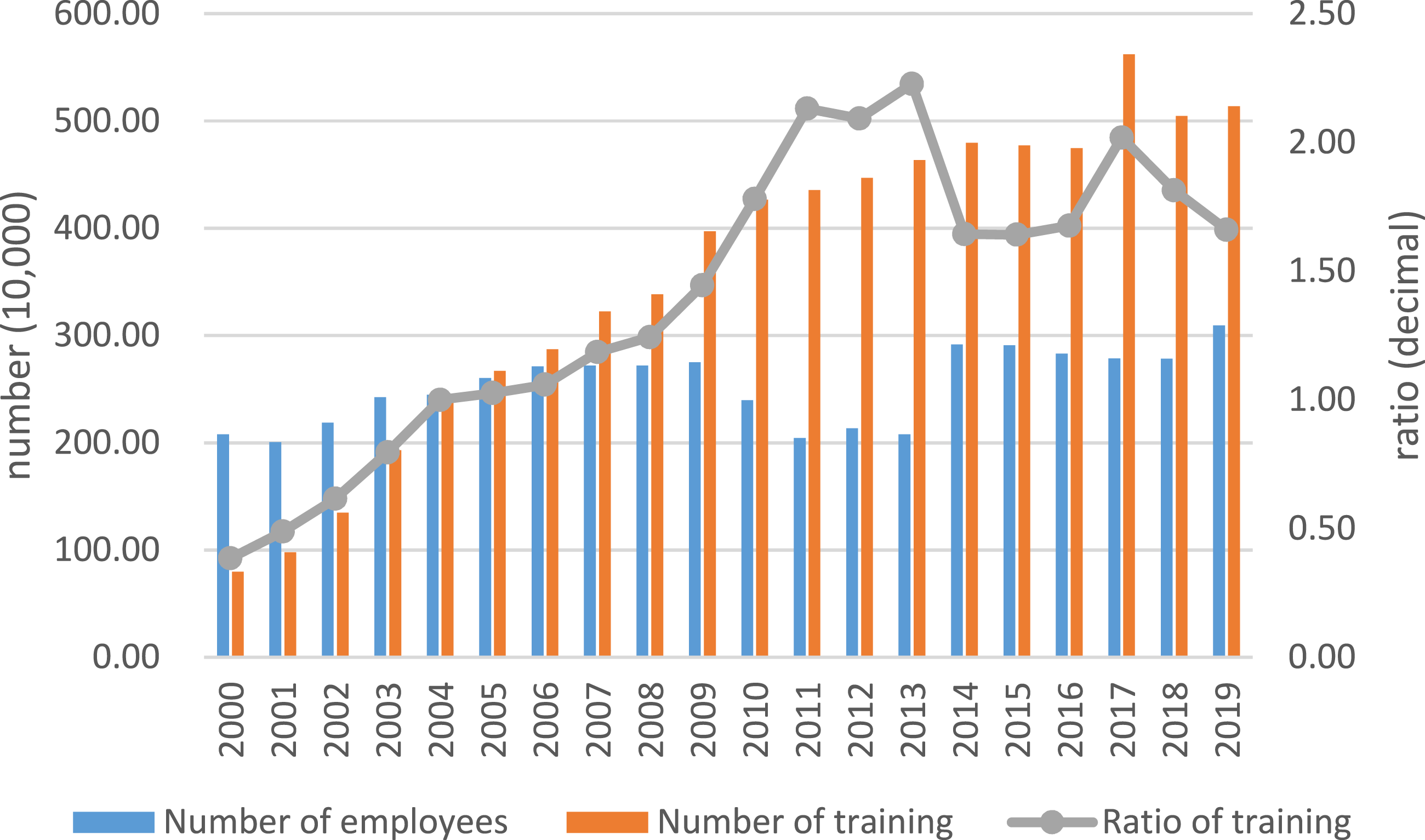
China’s poverty is assessed through the Foster-Greer-Thorbecke (FGT) decomposition index, which measures poverty level (H), depth (PG), and severity (SPG) (Mahadevan and Suardi, 2019; Njoya and Seetaram, 2018; Zhao and Xia, 2019). Between 2000 and 2019, China consistently reduced poverty levels, depths, and severity by average annual rates of 13.24%, 12.15%, and 10.39%, respectively (refer to Figure 2). Poverty level, poverty depth, and poverty severity in China. Source: Authors’ computation based on data from China Statistical Yearbook (2001∼2020).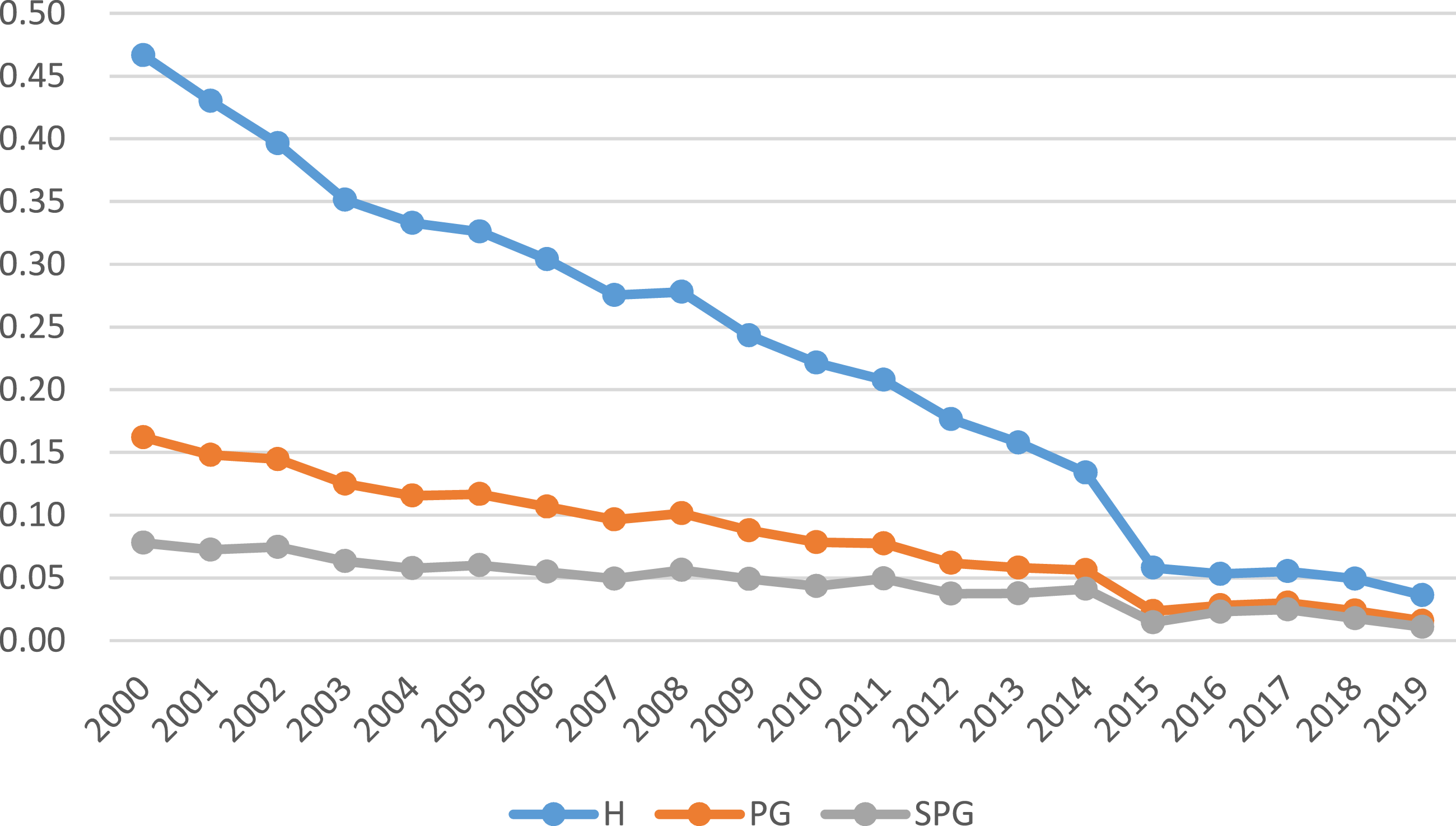
Model specification, variables, and data
Model specification
Unlike the existing literature that only examines how tourism development affects poverty (Folarin and Adeniyi, 2020; Zhao and Xia, 2019), our current research investigates the impacts of TIT on poverty alleviation. We analyse both the direct and indirect effects of TIT on various types of poverty and consider regional differences. Model (1) expresses the total impact of TIT on poverty, whereas Models (2) and (3) examine the direct and indirect impacts of tourism industry development on poverty.



As for other variables, POV is the measure of poverty; TOUR represents the level of tourism industry development; X as a group of covariates, which include economic growth (EG), rural residents’ education levels (EDU), the intensity of foreign direct investment (FDI), level of financial assistance to rural regions (FIN), trade openness (TRA), agricultural and industrial development status (AID), and the government’s research and development investment intensity (GRD), as suggested by Ezzat (2018), Magombeyi and Odhiambo (2018), Mei et al. (2015), Sinclair (1998), Sukhadolets et al. (2021), Yameogo and Omojolaibi (2021), and Zhao and Xia (2019). ŋi, vi and ςi are the province-fixed effects; γt, ĸt and wt are the year-fixed effects; εit, τit and ρit are the random error terms; i denotes province (referring to 29 provinces in mainland China, excluding Hunan and Tibet), and t is year. α, β, and λ are the corresponding vector of parameters to be estimated. α1 represents the overall impact of L.TIT on poverty. If α1 is statistically significant and negative, it indicates that TIT has a positive effect on alleviating poverty. The greater the absolute value of α1, the more substantial the impact of TIT on poverty reduction. β1 indicates how L.TIT affects the development of the tourism industry, while λ2 shows the effect of the tourism industry development on poverty, accounting for the influence of L.TIT. The product of β1 and λ2 illustrates the indirect effect of L.TIT on poverty. λ1 denotes the direct impact of L.TIT on poverty, independent of the tourism industry development.
For the preliminary investigation, statistical mediation analysis proposed by Hayes (2009) and Baron and Kenny (1986) is adopted to ensure that the mediation effects of tourism industry development between TIT and poverty alleviation exist. To do that, we test models (1), (2) and (3) to determine the significance of α1, β1, λ1, and λ2. There are three possible outcomes. First, if α1 is found statistically significant, whilst both β1 and λ2 are also statistically significant, the mediating effect of tourism industry development can be confirmed. Second, if all the α1, β1, λ1, and λ2 are statistically significant, we can conclude that tourism industry development plays a partial mediating role. In other words, TIT directly impacts poverty and can also indirectly impact poverty through tourism industry development. Third, if all the α1, β1, and λ2 are statistically significant, but λ1 is not statistically significant, this implies that tourism industry development plays a fully mediating role, which means TIT can only impact poverty through tourism industry development. It is worth noting that if α1 is statistically significant, but either β1 or λ2 is statistically insignificant, we then should apply a bootstrap method by Preacher and Hayes (2008) to test H0: β1×λ2 = 0. This method is robust in detecting the mediation and it provides a 95% confidence interval estimate of the mediation. If the 95% confidence interval includes zero, it indicates that the mediation is not statistically significant. However, if the mediation is statistically significant, it confirms the presence of indirect effects of TIT on poverty reduction, we can proceed to determine whether the mediation effect is full or partial by observing the significance of λ1. As mentioned above, if λ1 is also significant, the mediation effect is partial; Otherwise, the mediation effect is full.
Variable definition and measurement
Poverty (POV) is defined as economic poverty, covering poverty level, depth, and severity, as explained in Sections 2.2 and 3.2. These are represented by the poverty headcount ratio (H), poverty gap (PG), and squared poverty gap (SPG), respectively. L.TIT refers to lagged TIT, and this study uses 1-year lagged TIT (L1.TIT) to assess whether TIT from the previous year can reduce the current year’s poverty level.
Tourism industry development (TOUR) is measured by the ratio of a province’s total tourism receipts to its GDP, as used in studies by Croes (2014) and Mahadevan and Suardi (2019). Economic growth (EG) is gauged by the annual growth rate of GDP per capita, a measure also applied in the research by Croes (2014) and Sukhadolets et al. (2021).
Control variables include rural literacy level, trade openness, government financial support, and capital investment. EDU is the ratio of the literate rural population over the age of 15 to the total rural labour population. FIN is measured as the ratio of government financial support to agriculture’s gross value output. AID is measured by the proportion of agricultural and industrial added value in GDP. GRD is the ratio of government research and development investment to GDP. FDI is indicated by the ratio of total FDI to GDP, while TRA is measured by the ratio of total imports and exports to GDP, as suggested by Alam and Paramati (2016).
Data description and source
The main variables.
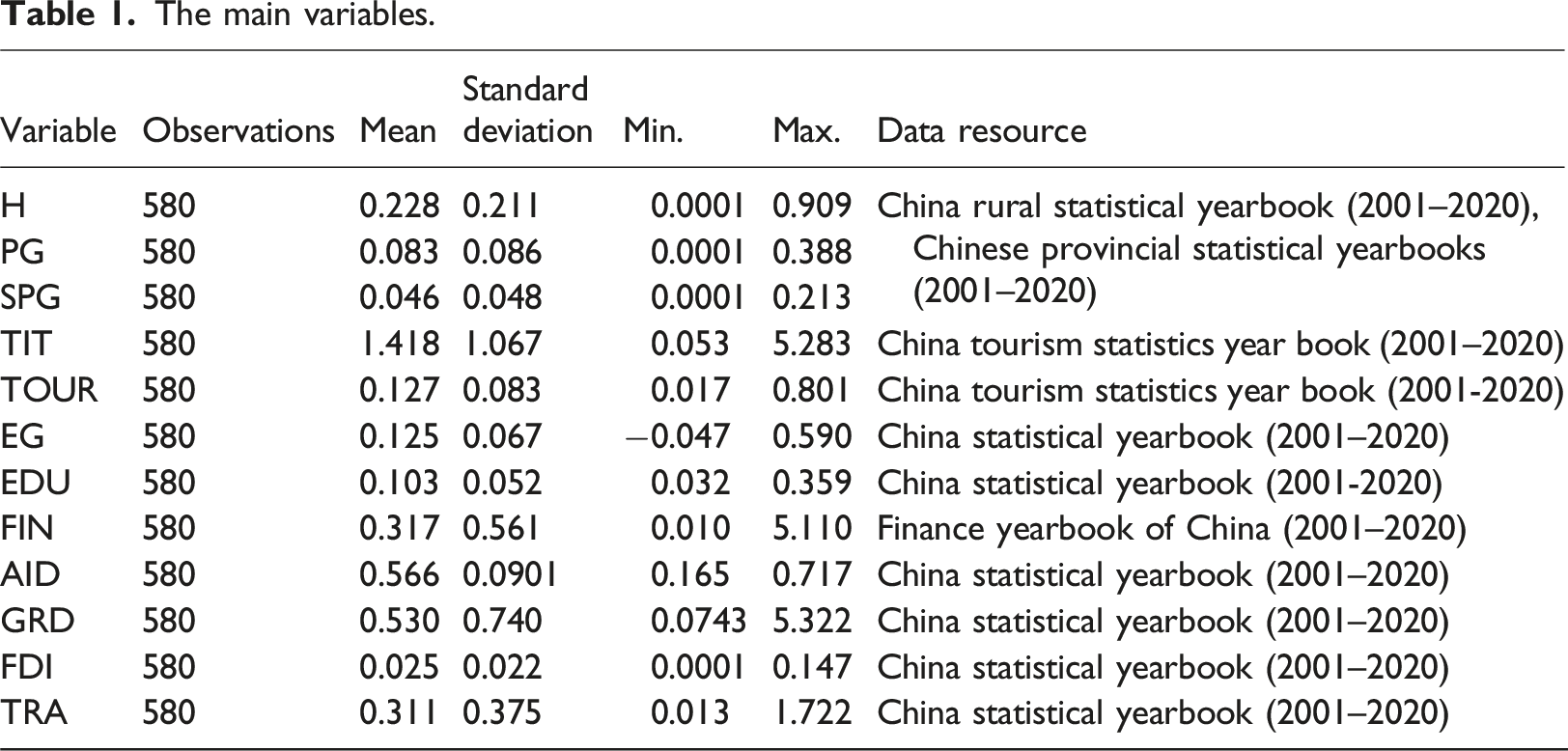
Due to the late development of China’s tourism industry, early tourism statistics suffered from significant missing data and frequent changes in statistical standards. It was not until the year 2000 that a unified statistical framework for tourism was established. Moreover, data on tourism industry training began in the year 2000, which marks the starting year for the dataset used in this study. In 2018, the Chinese government merged the Ministry of Culture and the National Tourism Administration to form the Ministry of Culture and Tourism. Consequently, the data on tourism industry training based on the original statistical standard became unavailable after 2019. Therefore, the scope of our data analysis ends in 2019.
The outbreak of the COVID-19 pandemic in 2020 caused a severe impact on the global tourism industry and significantly affected people’s incomes (Wang et al., 2021). Hence, data on tourism and poverty during this period were abnormal compared to other years. For this reason, selecting the time range from 2000 to 2019 is well-suited to examine the relationship between TIT and poverty alleviation under normal conditions. Furthermore, regarding the time span for macroeconomic analysis, data spanning more than 10 years are sufficient to reflect long-term effects (Mankiw, 2022). The 20-year dataset used in this study should provide robust insights into the long-term impact of tourism industry training on poverty reduction.
Empirical results
Data autocorrelation, cross-sectional dependency, stationarity and cointegration
To ensure unbiased parameter estimation due to multicollinearity, cross-sectional dependency, data nonstationarity and cointegration, we conducted sequentially Variance Impact Factor (VIF) test (De Hoyos and Sarafidis, 2006), Pesaran’s, Friedman’s, and Frees’ tests (De Hoyos and Sarafidis, 2006), IPS test for unit root testing (Yameogo et al., 2022) and the Pedroni method. The results (see Table S2, S3, and S4) listed in the supplementary document show that there is no multicollinearity and no cross-sectional dependency. In addition, data are stationary and a long-term cointegration relationship between TIT and poverty measures.
The total effects of TIT on poverty
Effects of TIT on poverty.
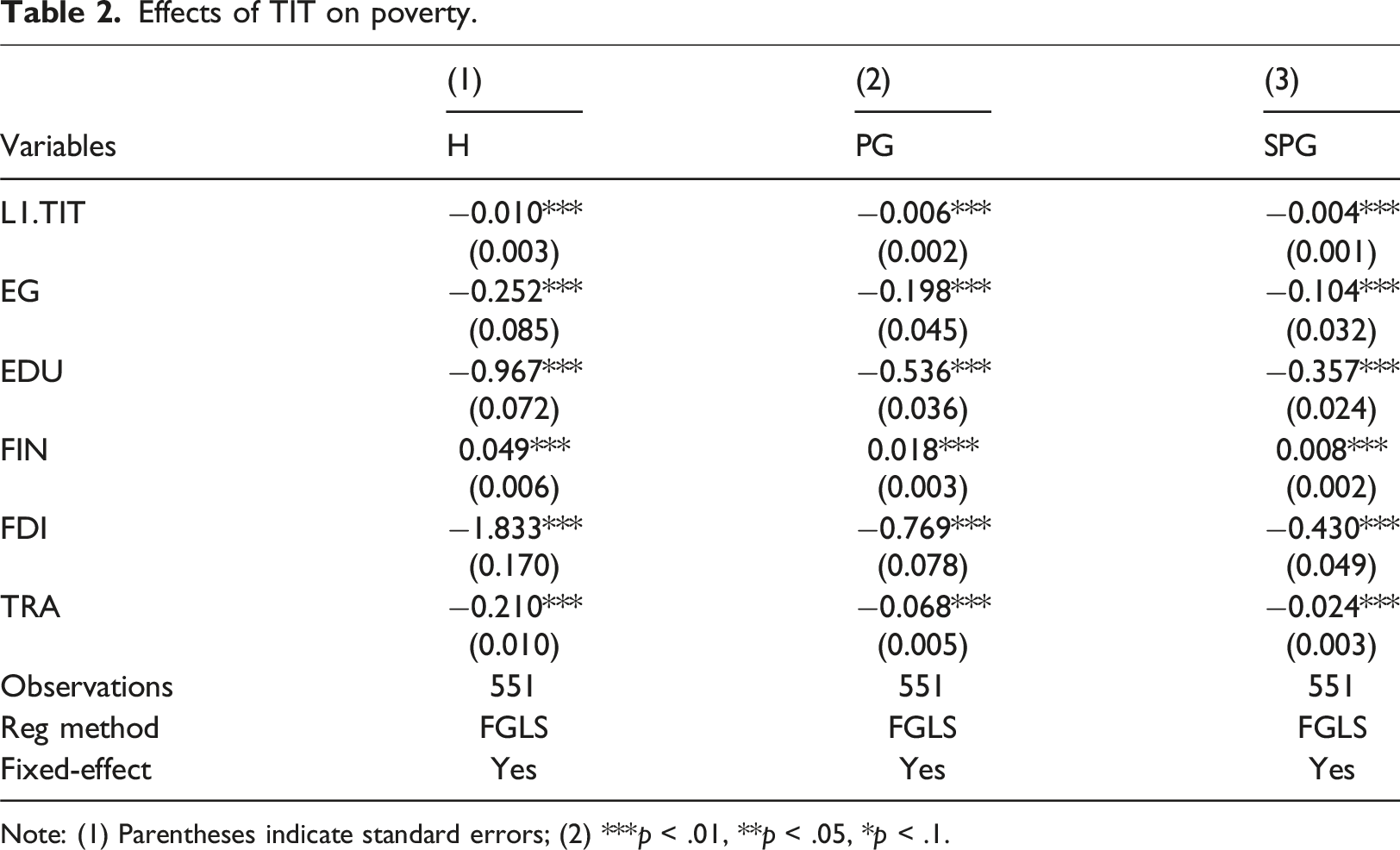
Note: (1) Parentheses indicate standard errors; (2) ***p < .01, **p < .05, *p < .1.
Economic growth (EG) and education level (EDU) show negative and significant coefficients, aligning with previous studies (Croes, 2014; Sukhadolets et al., 2021; Zhao and Xia, 2019). Additionally, negative and significant coefficients for FDI and TRA suggest their potential in poverty reduction, as supported by previous research (Ezzat, 2018; Magombeyi and Odhiambo, 2018; Sukhadolets et al., 2021; Yameogo and Omojolaibi, 2021). However, the positive and significant coefficients for FIN contrast with previous findings (L. Zhao and Xia, 2019), possibly due to low overall impact and uneven distribution of financial subsidies across regions.
Endogenetic test of the effects of TIT on poverty.
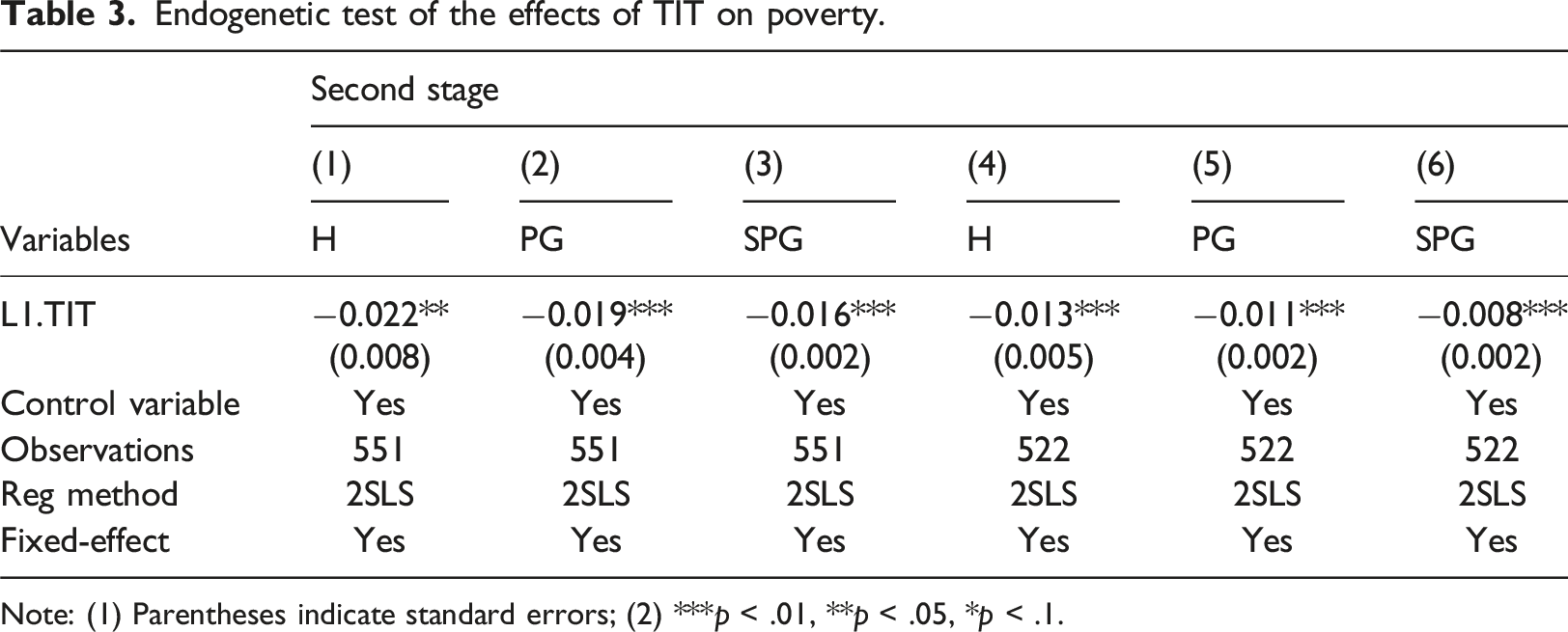
Note: (1) Parentheses indicate standard errors; (2) ***p < .01, **p < .05, *p < .1.
Robustness test of the effects of TIT on poverty.
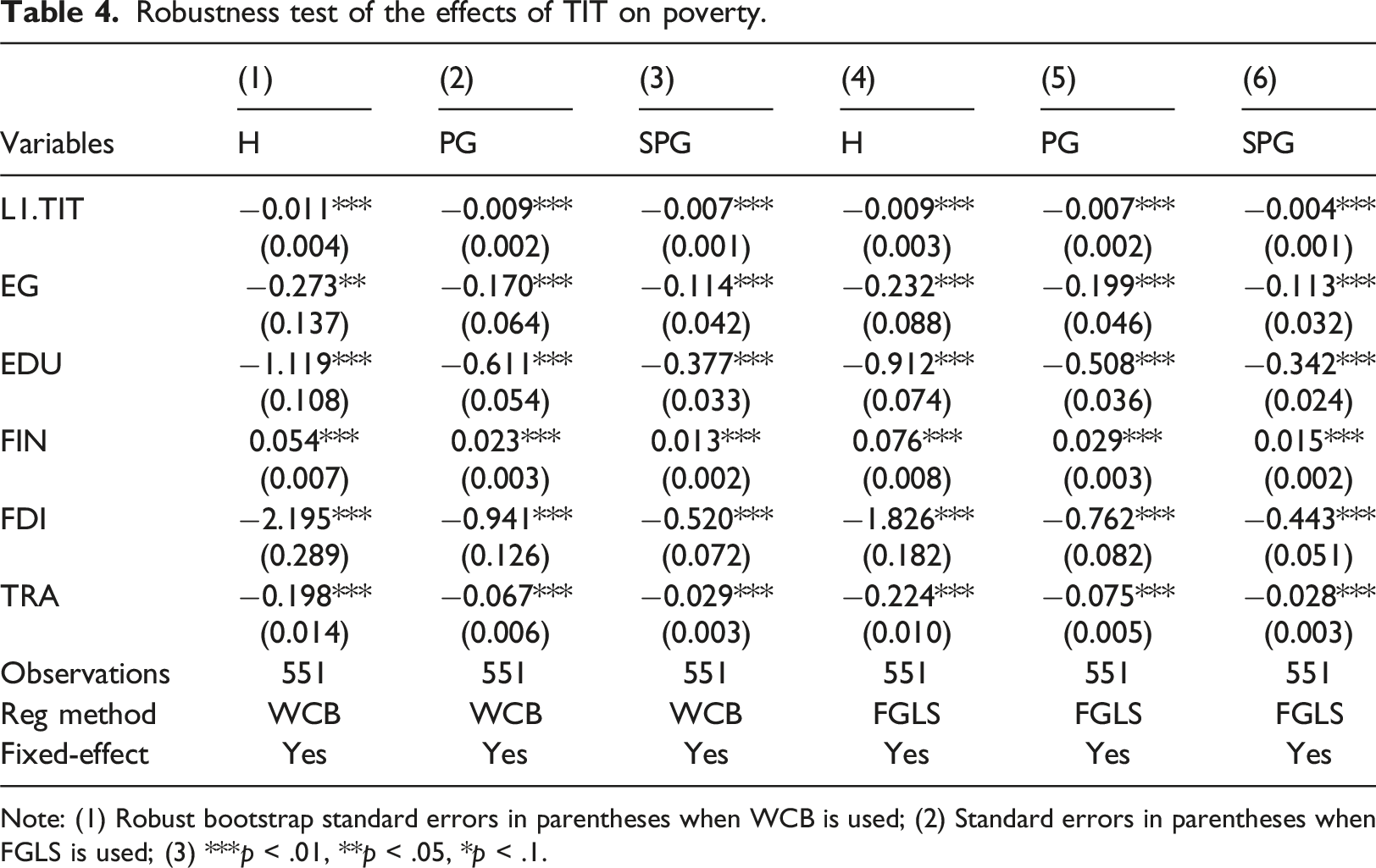
Note: (1) Robust bootstrap standard errors in parentheses when WCB is used; (2) Standard errors in parentheses when FGLS is used; (3) ***p < .01, **p < .05, *p < .1.
The direct and indirect effects of TIT on poverty
The direct and indirect effects of TIT on poverty.
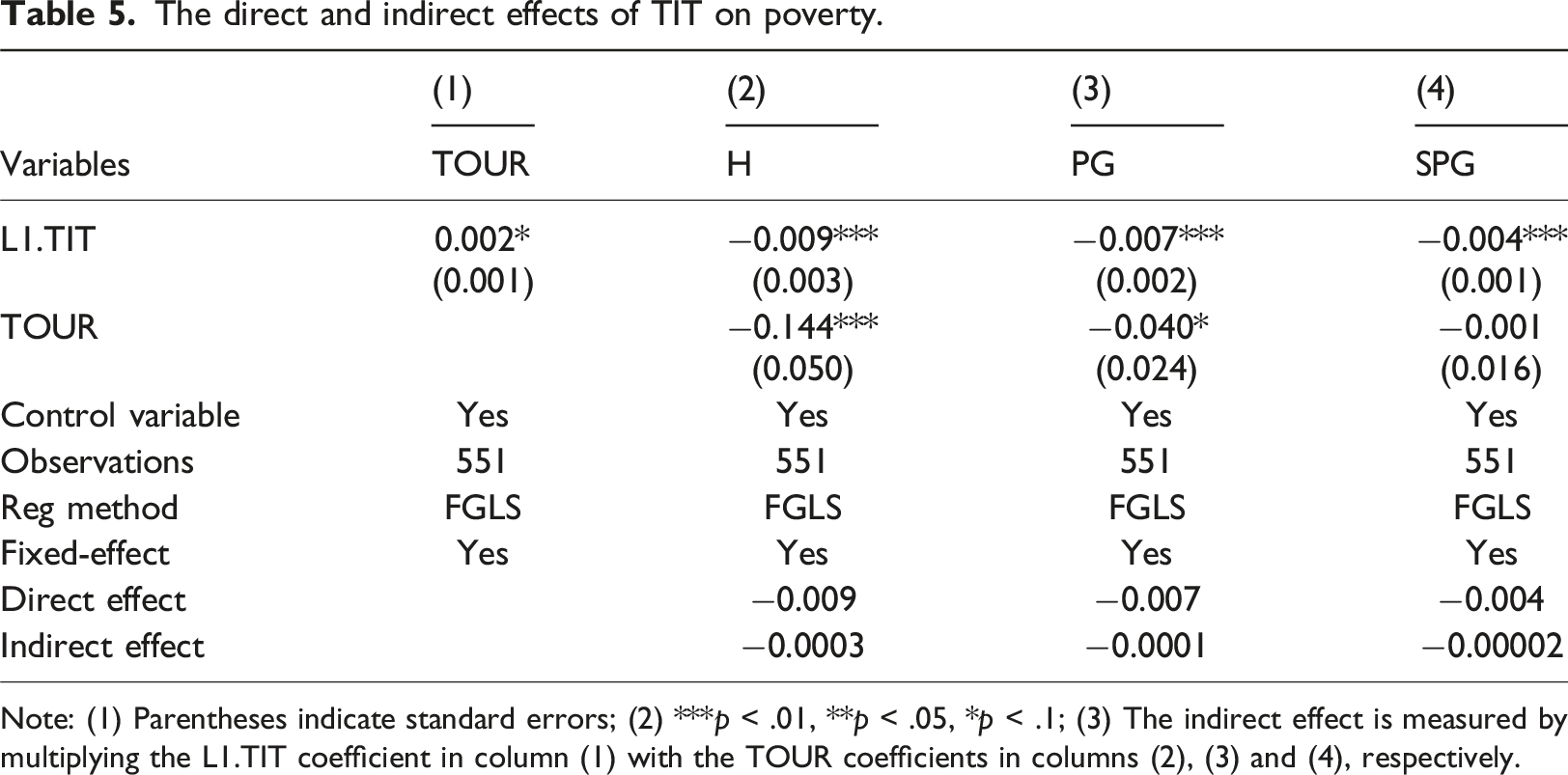
Note: (1) Parentheses indicate standard errors; (2) ***p < .01, **p < .05, *p < .1; (3) The indirect effect is measured by multiplying the L1.TIT coefficient in column (1) with the TOUR coefficients in columns (2), (3) and (4), respectively.
Columns (2) and (3) of Table 5 reveal the mediating effects of tourism industry development on poverty level (H) and poverty depth (PG). The regression coefficients of TOUR and L1.TIT for H and PG are negative and statistically significant, indicating that tourism industry development partially mediates the relationship between TIT and these poverty measures. However, the coefficient for poverty severity (SPG) is not statistically significant initially. Yet, after employing the bootstrap method, the results show significant mediation. Furthermore, in column (4), L1.TIT is negatively correlated with SPG, which supports our second research hypothesis, indicating that tourism industry development strengthens TIT’s impact on SPG.
The direct effects of TIT on poverty outweigh its indirect impact. For instance, in Figure 3, the direct effect of L1.TIT on H is −0.009, while the indirect effect is only −0.0003. The coefficient of influence of L.TIT on tourism development is statistically significant at 0.002. Tourism development significantly impacts the three dimensions of poverty, with coefficients of −1.144, −0.040, and −0.001, respectively. The limited indirect impact of TIT on poverty can be attributed to the relatively small effect of TIT on tourism development, the first part of the indirect impact path. Similarly, for poverty depth and severity, both halves of the indirect impact path have relatively minor effects. Thus, enhancing both the positive impact of TIT on tourism development and the influence of tourism development on poverty reduction is crucial for leveraging tourism’s potential in poverty alleviation. A summary of TIT impacts on poverty via tourism development. Note: (1) The solid lines indicate the existence of impacts, and the arrows indicate the direction of the impacts; (2) ***p < .01, **p < .05, *p < .1; (3) The Bootstrap test proves that the impact of tourism development on the severity of poverty is statistically significant at the 10% level.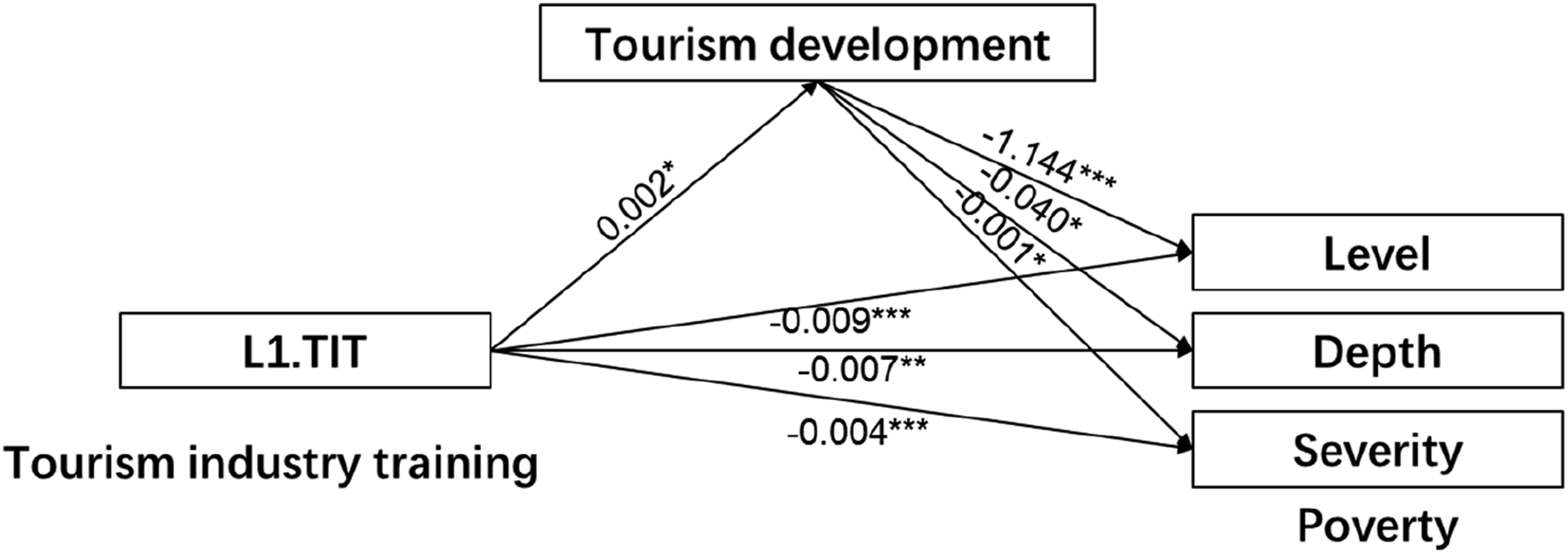
Robustness test for the direct and indirect effects of TIT on poverty.
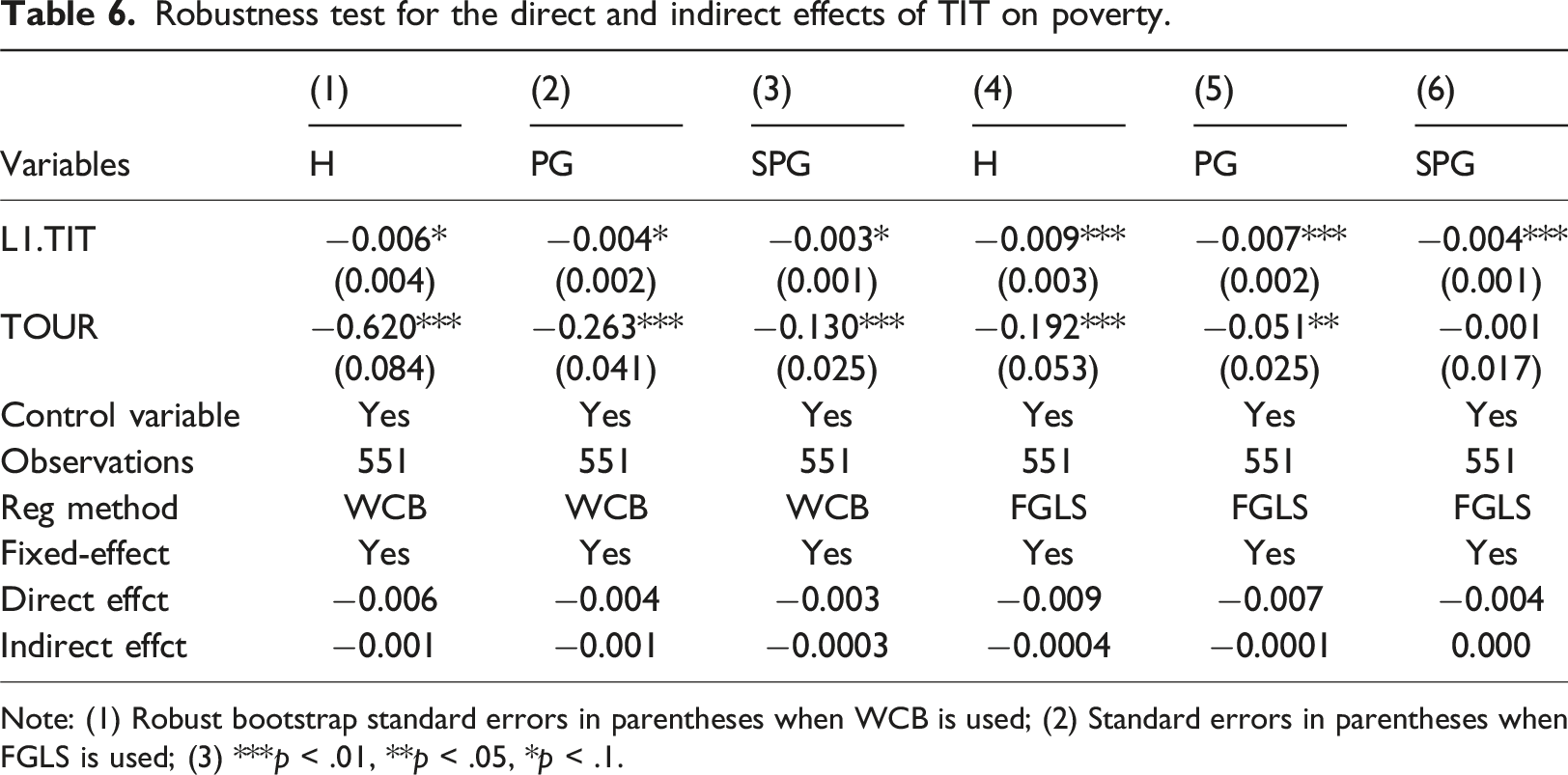
Note: (1) Robust bootstrap standard errors in parentheses when WCB is used; (2) Standard errors in parentheses when FGLS is used; (3) ***p < .01, **p < .05, *p < .1.
Variation across regions
To analyse whether different regional economic development can influence the effects of TIT on poverty reduction, this paper further disaggregates the samples into two
1
types of regions, namely better economic development (BED) regions and less economic development (LED) regions. To achieve a more accurate classification, we first calculate the average GDP per capital (apgdp) of the 29 provinces’ GDP per capital from 2000 to 2019 using
Regional heterogeneity test for the direct and indirect effects of TIT on poverty.
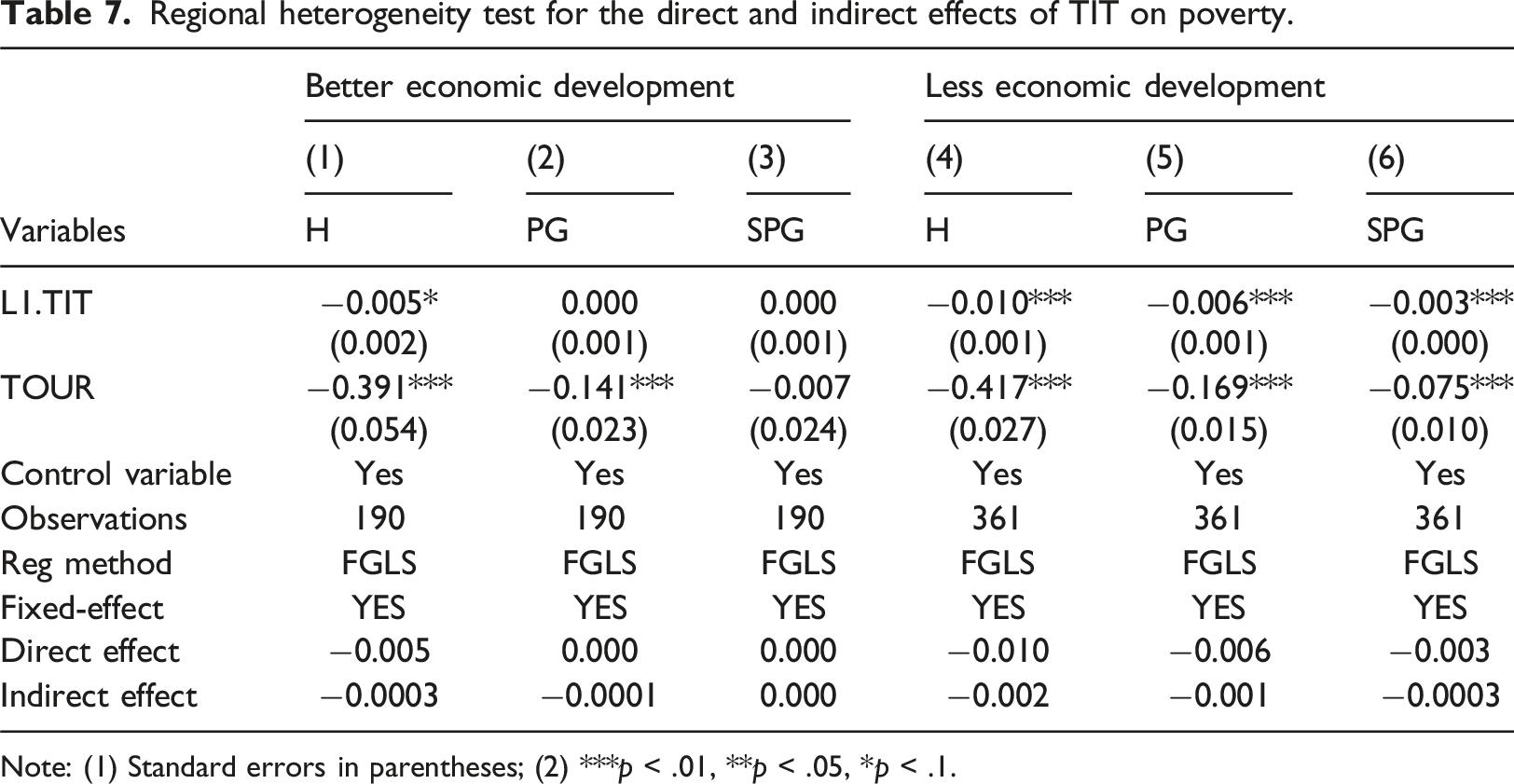
Note: (1) Standard errors in parentheses; (2) ***p < .01, **p < .05, *p < .1.
Our findings in Table 7 reveal significant regional heterogeneity, which supports the third research hypothesis. TIT demonstrates both direct and indirect effects on all poverty variables in LED regions, while only affecting H in BED regions. Furthermore, the effect size is larger in LED regions than in BED regions. Additionally, tourism development in BED regions mediates the reduction of poverty level and depth through TIT, while in LED regions, it plays a partial mediating role across all poverty variables. Notably, the TOUR coefficients for LED regions are higher across all poverty variables, suggesting that TIT can more effectively reduce poverty in less developed regions through regional economic development. Two explanations arise from our results. Firstly, advanced economic regions have seen a significant decrease in poverty population growth since 2015, with labour mobility providing opportunities for the poor to break the poverty cycle. Secondly, most impoverished individuals in China reside in less economically developed regions, which offer the potential for tourism development, thus improving rural livelihoods and investing in tourism infrastructure.
Effects of TIT on poverty alleviation when controlling for non-tourism sectors
Robustness test for the effects of TIT on poverty in conjunction of agricultural and industrial sectors and government capital investment.
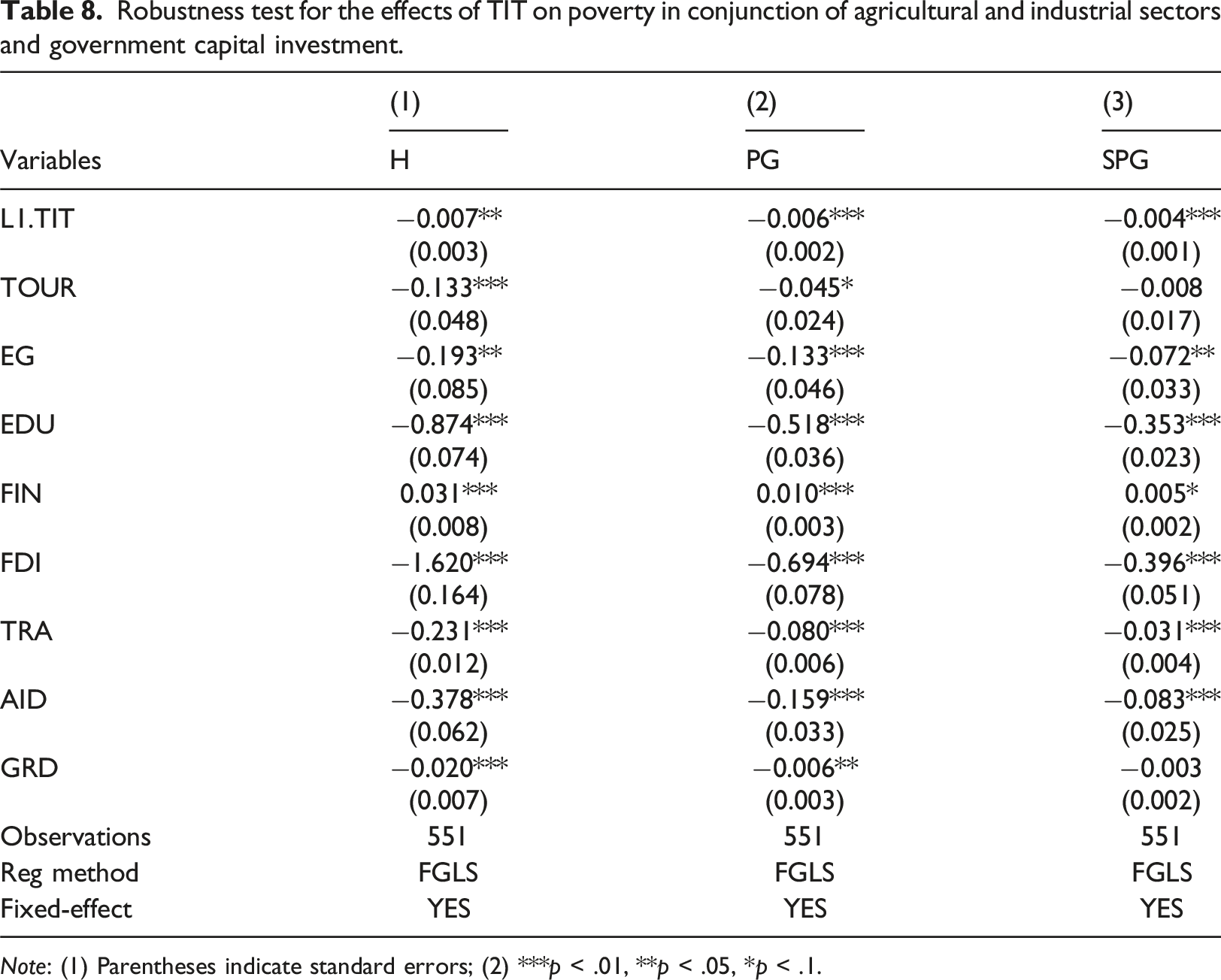
Note: (1) Parentheses indicate standard errors; (2) ***p < .01, **p < .05, *p < .1.
Interestingly, while TIT significantly affects general poverty measures, our analysis reveals a distinction regarding extreme poverty. For reducing poverty severity, improvements in agricultural and industrial production appear to be more effective than tourism development alone. This finding suggests complementary roles for tourism and non-tourism sectors in overall poverty reduction strategies. While tourism training can reduce the general poverty levels, coupling tourism with industrial development can address extreme poverty more effectively.
Conclusion and discussion
Conclusion
This study was motivated by the need to comprehensively understand the effect of TIT on poverty alleviation through tourism development. We sought to address the research gaps by integrating multiple theoretical perspectives, examining both direct and indirect effects of TIT on poverty, considering regional heterogeneity, and analysing the impact of TIT on different dimensions of poverty. By integrating labour mobility theory, human capital theory, and the tourism-led growth (TLG) hypothesis, we developed a fresh framework for understanding the multiple pathways through which TIT can contribute to poverty alleviation. Our empirical analysis, based on panel data from 29 Chinese provinces between 2000 and 2019, provided empirical support for the hypothesised relationships and shed new light on the complex dynamics between TIT, tourism development, and poverty reduction.
The current study reveals several important findings. First, TIT has a direct impact on poverty reduction, consistent with the labour mobility theory (Rufai et al., 2019), reinforcing the notion that TIT enhances individuals’ employability in the tourism sector, leading to increased income and reduced poverty (Luo et al., 2021; Qin et al., 2019; Xue and Kerstetter, 2019). However, the findings reveal that TIT is less effective in alleviating poverty depth and severity. It makes logical sense since China encounters challenges such as income disparities, an aging population, natural disasters, and climate change which impede China’s endeavour to eliminate extreme poverty (Glomsrod et al., 2016). Second, the study shows the indirect effect of TIT in reducing poverty through its positive impact on tourism development. However, the indirect effects are significantly smaller than the direct effects, suggesting that while tourism development can contribute to poverty reduction, its impact is limited due to diverse tourism structure and wealth distributions between the eastern and western regions (Donaldson, 2007). Third, the study uncovers regional heterogeneity. The direct effects of TIT on poverty alleviation are stronger in less developed regions (Folarin and Adeniyi, 2020), while the indirect effects are evident in more developed regions (Mahadevan and Suardi, 2019; Snyman, 2019). Fourth, our analysis confirms the robustness of TIT’s poverty reduction effects even when accounting for agricultural and industrial development and government research investment.
Discussion
The current research integrates the theories of labour mobility, human capital, and TLG to examine the impacts of TIT on poverty. The results confirm that training provides job opportunities, increases human capital, and improves capabilities of earning a higher income, which supports our integration of the three theories. Thus, this current research offers a significant theoretical contribution by shedding light on the mechanisms by which TIT can effectively contribute to poverty alleviation. In addition, the results have important real-world implications for policymakers, tourism professionals, and organisations that aim to reduce poverty in China and other developing countries.
First, this research is pioneering in assessing the effect of TIT on various dimensions of poverty, namely poverty level, poverty depth, and poverty severity, which enriches the labour mobility theory in addressing different dimensions of poverty. The impact of TIT on poverty reduction highlights the need for targeted TIT programs that provide relevant skills and knowledge to people from disadvantaged backgrounds, especially in less developed areas. Policymakers should focus on creating accessible and affordable TIT programs that address the specific needs of the poor, such as language training, customer service skills, and entrepreneurship education. They should also work with local communities and tourism businesses to ensure these programs are relevant and effective.
Second, the result highlights the role of TIT as an investment in human capital specific to tourism, enhancing the quality of tourism services, increasing competitiveness, and ultimately driving tourism development and poverty reduction (Mayaka and Akama, 2007; Saner et al., 2019; Torabi et al., 2019). The indirect effect of TIT on poverty reduction through tourism development emphasises the importance of integrating TIT into broader tourism development plans. Policymakers should create a supportive environment for tourism growth by investing in infrastructure, marketing, and product development to ensure economic equality across developed and underdeveloped regions. TIT should be a key part of these plans, improving the quality and competitiveness of the tourism sector and contributing to sustainable and inclusive growth.
Third, the impact of TIT on various dimensions of poverty exhibits regional heterogeneity. This finding reconciles seemingly divergent perspectives in the literature by highlighting the importance of considering regional differences in understanding the complex relationships between TIT, tourism development, and poverty alleviation (Alam and Paramati, 2016; Zhao and Xia, 2019). This finding underscores the need for policies that are tailored to specific contexts. Policymakers should implement TIT programs that align with the needs and conditions in each region, such as the level of economic development, types of tourism, and local population demographics.
Fourth, our study finds that the impacts of TIT on the depth and severity of poverty are small, suggesting that TIT policies alone may not instantly eliminate extreme poverty. The governments should combine with other effective poverty reduction measures, such as providing financial support for education in rural and remote areas, improving the well-being of tourism and hospitality workers, strengthening infrastructure and capital investment in both tourism and non-tourism industries, and attracting talented individuals to work and live in regional areas. In addition, collaboration and partnerships are essential for using TIT to reduce poverty. Policymakers, regional businesses, educational institutions, and development organisations should work together to design and implement effective TIT programs, share knowledge and best practices, as well as track and evaluate the effectiveness of these interventions. These collaborative efforts can help ensure that TIT initiatives are sustainable and scalable and contribute to achieving the United Nations’ Sustainable Development Goals.
Overall, this research is the first to empirically verify that tourism development is an important mediator in reducing poverty through TIT, revealing the causal mechanism between TIT, tourism development, and poverty reduction based on the tourism and economic growth nexus in the TLG theory (Shahzad et al., 2017; Solarin et al., 2023). This contribution fills an important gap in the literature, as previous qualitative studies have not quantified the effects of tourism training on poverty alleviation (Anderson, 2015; Torabi et al., 2019; Xue and Kerstetter, 2019), and previous studies have primarily focused on the relationship between tourism development and poverty reduction (Folarin and Adeniyi, 2020; Zhao and Xia, 2019).
Our study has several limitations that need to have specific research directions. First, even though we establish a causality between TIT and poverty, it is beyond the scope of this paper to comprehensively examine their respective relationships with tourism. Perhaps, future researchers could investigate these pathways through detailed case studies. Second, our measurements focus on quantitative aspects rather than training quality. Therefore, subsequent studies should develop frameworks capturing both quality and effectiveness of tourism training. Third, the 1-year lag structure simplifies potentially complex temporal relationships. Hence, longer longitudinal datasets could be used to identify optimal timing between training and outcomes. Fourth, the Chinese context limits generalisability, which requires more comparative studies across developing countries. Fifth, sample size constraints prevented analysis of interaction effects between tourism training and economic growth, which requires future research to examine these synergies. Sixth, our current finding shows that tourism has a limited impact on reducing extreme poverty compared to agricultural and industrial sectors, suggesting the need for research on integrated cross-sector approaches. Finally, studies examining the resilience of tourism in poverty alleviation during the ever-increasing global uncertainty would provide practical guidance for building economic stability in tourism-dependent countries.
Supplemental Material
Supplemental Material - Pathways to prosperity: How tourism industry training reduces poverty
Supplemental Material for Pathways to prosperity: How tourism industry training reduces poverty by Panpan Sun, Songshan (Sam) Huang, Ghialy Yap, Zhibin Lin and Lei Zhao in Tourism Economics.
Footnotes
Acknowledgements
We would like to thank the two anonymous reviewers for providing constructive feedback on our first submission. In the first draft, our first author acknowledges the use of Generative AI for Mandarin to English translation purposes only. The final draft has been checked and revised to ensure accuracy, validity and appropriateness of the content. The views expressed herein are those of the authors and are not necessarily those of the National Social Science Fund of China.
Declaration of conflicting interests
The author(s) declared no potential conflicts of interest with respect to the research, authorship, and/or publication of this article.
Funding
The author(s) disclosed receipt of the following financial support for the research, authorship, and/or publication of this article: The research was funded by the National Social Science Fund of China (Funding number: 22BGL157).
Ethical statement

Data Availability Statement
The data are the sole property of the National Bureau of Statistics of China. Therefore, consent is required to access the data.
Supplemental Material
Supplemental material for this article is available online.
Note
Author biographies
References
Supplementary Material
Please find the following supplemental material available below.
For Open Access articles published under a Creative Commons License, all supplemental material carries the same license as the article it is associated with.
For non-Open Access articles published, all supplemental material carries a non-exclusive license, and permission requests for re-use of supplemental material or any part of supplemental material shall be sent directly to the copyright owner as specified in the copyright notice associated with the article.
