




Abstract
This study investigates servitization in the global wine industry, focusing on nearly 5300 wineries across 23 countries. Servitization, the integration of services with core wine offerings, remains underdeveloped, with 40.2% of wineries reporting no service revenue and 32.3% earning less than 10% from services. The paper identifies ten stylized facts that characterize the current landscape of servitization, revealing varying levels of service adoption across different regions and winery types. These facts provide a foundation for understanding how service integration is emerging within the industry. The findings underscore the need for further research to explore the drivers and impacts of servitization, as well as regional variations and their implications for winery performance. This study paves the way for future investigations into how servitization could influence the global wine market.
Introduction
In the last decades, the concept of servitization - the process by which firms enhance their core offerings by adding services - has gained significant traction across various industries, including the wine sector (Baines et al., 2009; Vandermerwe and Rada, 1988). As global wine consumption patterns evolve, marked by a decline in volume, yet a rising focus on premiumization, wineries have increasingly adopted service diversification as a strategic response (Anderson and Pinilla, 2018; Villanueva et al., 2023). This shift is particularly evident in the growing significance of wine tourism, where wineries extend their offerings beyond mere product sales to include immersive experiences (Getz and Brown, 2006; Quadri-Felitti and Fiore, 2012). Younger generations are particularly driving this trend, placing a higher value on experiential interactions such as guided tours, tastings, and events, which have become integral to the modern wine business model (Charters and Fountain, 2006; Getz and Carlsen, 2008; Nowak et al., 2006).
While the literature on wine tourism is both extensive and evolving, it often focuses on destination marketing, consumer experiences, and the role of wine tourism in regional development (for extensive literature reviews see Carlsen, 2004; Gomez et al., 2019). These studies have provided valuable insights into how wine tourism contributes to regional economies and enhances consumer engagement with wine. However, research on the broader scope of winery-based services beyond tourism - such as winemaking services, equipment rental, and regional product sales - is relatively scarce. Much of the existing literature is concentrated on specific case studies, individual wine regions, or wine routes, limiting our understanding of the global landscape of servitization in the wine industry. Comparative studies are particularly lacking, leaving a gap in our knowledge about how servitization strategies differ across wine producing countries and regions (Ruggeri et al., 2024). This absence is partly due to the lack of comprehensive, comparable data at the winery level across multiple countries, which has hindered efforts to conduct broad-scale analyses.
This study aims to address these gaps by utilizing a unique new dataset of nearly 5300 wineries across 23 wine-producing countries, enabling a detailed cross-country comparison. The research will first assess the extent of servitization among wineries globally and explore variations in these practices across different countries. Next, it will identify and categorize the types of non-wine activities that are most commonly undertaken by wineries. Finally, the study will analyze how specific winery characteristics - such as size, location, and market positioning - affect the likelihood and extent of engaging in these diversified services. By establishing these stylized facts, the research aims to provide a comprehensive understanding of servitization in the global wine industry and highlight key patterns. This foundational analysis will contribute valuable insights into current industry practices. It will also lay the groundwork for future research exploring the implications of these findings and potential strategies for wineries to optimize service diversification.
This paper begins with a thorough literature review, identifying key knowledge gaps and establishing the context for this research. Following this, the objectives of the study are defined, accompanied by a detailed description of the dataset and an outline of the methodology employed for the analysis. The subsequent section offers an in-depth examination of the findings, focusing on the patterns identified in the data. The paper concludes by summarizing the key insights, discussing the study's limitations, and suggesting directions for future research.
Literature review
Servitization (Vandermerwe and Rada, 1988) or service transition (Oliva and Kallenberg, 2003) has gained prominence as a value creation strategy, transforming traditional product-centric business models into service-oriented ones (Lay et al., 2010). This shift enables companies to build enduring customer relationships, establish recurring revenue streams, and achieve differentiation in competitive markets. The academic literature has extensively explored servitization across various industries, providing insights into its implementation and impact. For instance, Neely (2008) details Rolls-Royce’s transition to a service-based model, focusing on “power-by-the-hour” agreements, which redefined Rolls-Royce’s customer engagement strategy. Similarly, Harreld et al. (2007) analyzes IBM’s transformation from a hardware provider to a service-centric enterprise, emphasizing the role of service innovation in its strategic evolution. Other research, such as Kowalkowski et al. (2017), highlights instances of firms overextending in their shift to services and subsequently retracting certain initiatives. These studies reveal common patterns: servitization often involves a fundamental redefinition of business models to emphasize service delivery, enhancing customer relationships, and creating new revenue streams. The literature underscores the strategic benefits of this transition, including enhanced customer loyalty and a stronger competitive advantage, and illustrates how various industries have navigated the complexities of integrating services into their core offerings.
The wine industry also presents substantial opportunities for servitization, extending beyond traditional wine offerings to encompass a range of services. For instance, wineries have increasingly embraced activities such as guided tours, wine tastings, wine-related events, and vineyard experiences to enhance customer engagement and generate additional revenue streams. This shift towards service diversification reflects a broader trend in creating immersive and experiential offerings that go beyond mere product sales and that can have important economic, social, and environmental impacts. Wine tourism offers significant advantages for wineries (Dodd, 1995), enhances the economic well-being of local residents (Ashton, 2014; Williams, 2001), fosters regional and national economic growth (Martínez-Falcó et al., 2023; Tafel and Szolnoki, 2020), and enriches the tourism sector by providing alternative leisure activities (Szivas, 1999).
This trend is accompanied by extensive academic literature focused on the tourism and hospitality aspects of servitization in the wine industry. Research has extensively explored how wine tourism contributes to regional development and enriches consumer interactions with wine. Hall and Mitchell (2000), Hall et al. (2009), Correia and Brito (2016), and Poitras and Donald (2006) provide various analysis of how wine tourism fosters regional economic development. Several studies focus on wine routes in different countries, including France (Frochot, 2009), Italy (Festa et al., 2020), Spain (López-Guzmán et al., 2009), Portugal (Correia et al., 2004), South Africa (Bruwer, 2003), and Chile (Hojman and Hunter-Jones, 2012).
Moreover, the concept of destination branding has become increasingly significant within the context of wine tourism. Destination branding involves creating a unique and compelling image for a wine region, which helps attract tourists and enhance the region’s overall appeal (Tasci and Kozak, 2006). This process strengthens the wine region’s identity and enhances the brand equity of individual wineries. Research by Johnson and Bruwer (2007), Gómez et al. (2015), and Bruwer and Lesschaeve (2012) highlights how effective destination branding can transform a wine region into a recognized and desirable tourism destination.
Another important focus of the literature is the determinants of wine tourism demand. These studies show that individuals are motivated to participate in wine tourism for various reasons, including the desire to indulge in hedonic experiences associated with wine, such as savoring the cultural, culinary, and scenic aspects of wine regions (Bruwer and Rueger-Muck, 2019; Charters and Ali-Knight, 2002). Wine involvement and knowledge play crucial roles in shaping these motivations by influencing visitors’ expectations and enhancing their engagement with the experience (Charters and Ali-Knight, 2002; Gaetjens et al., 2023; Nella and Christou, 2014; Vecchio et al., 2024).
Additionally, the literature has found that by adding complementary visitor-oriented services, wine businesses can build brand loyalty, improve consumer awareness and knowledge, create a positive image of the wine product, and develop strong consumer relationships through planned on-site experiences (Asero and Patti, 2011; Byrd et al., 2016; Priilaid et al., 2020). Enhancing the visitor experience directly contributes to the brand equity of both individual wineries and the broader wine region, as a positive and memorable experience strengthens consumers’ perceptions and attachment to the brand (Gómez and Molina, 2012). Understanding these motivations helps tailor marketing strategies to attract and satisfy wine tourists, ultimately contributing to the success and growth of wine tourism destinations (Kim and Bonn, 2015; Nella and Christou, 2021).
While existing studies provide valuable insights into the tourism aspects of servitization within the wine industry, they often concentrate on specific regions or case studies, leaving a significant gap in understanding servitization beyond tourism, particularly in comparing service practices across wine-producing countries. Gómez et al. (2019) highlight the limited number of cross-country comparative studies, with only ten out of 176 papers reviewed focusing on international research. These studies largely address cross-cultural issues but neglect the broader comparative analysis of servitization practices. Additionally, there is a lack of exploration into which types of wineries engage in servitization and the factors influencing their service performance. This scarcity of cross-country comparative studies can be attributed to a significant methodological challenge: the absence of comprehensive, comparable winery-level datasets across countries. This limitation has restricted the ability to conduct extensive analyses, leading to a fragmented understanding of global servitization practices. This research bridges these gaps by providing a comprehensive cross-country comparison of service-derived revenue in wineries across 23 countries, identifying prevalent service types, and analyzing the influence of winery characteristics on service performance.
Objectives, data and methodology
Objectives
The primary objective of this paper is to delineate key stylized facts about servitization within the global wine industry by examining the extent and variation of service-related revenue among wineries across different countries. It also seeks to identify the types of non-wine activities most commonly undertaken by wineries and their contribution to total revenue. The study will specifically examine activities such as tourism, events, and restaurant services to understand their contribution to winery revenue.
Additionally, the research will explore how various winery characteristics - such as size, age, human capital, equipment, wine price ranges, and export behavior - affect the likelihood and extent of engaging in servitization. This includes analyzing whether larger, older wineries, or those with greater human capital and advanced equipment, are more inclined to participate in a broader range of non-wine activities. The study will also investigate how these factors influence revenue derived from service-related activities.
By addressing these objectives, the paper aims to provide a comprehensive overview of the status of servitization in the wine industry, highlighting the impact of different winery characteristics and regional factors on service-related income.
Data
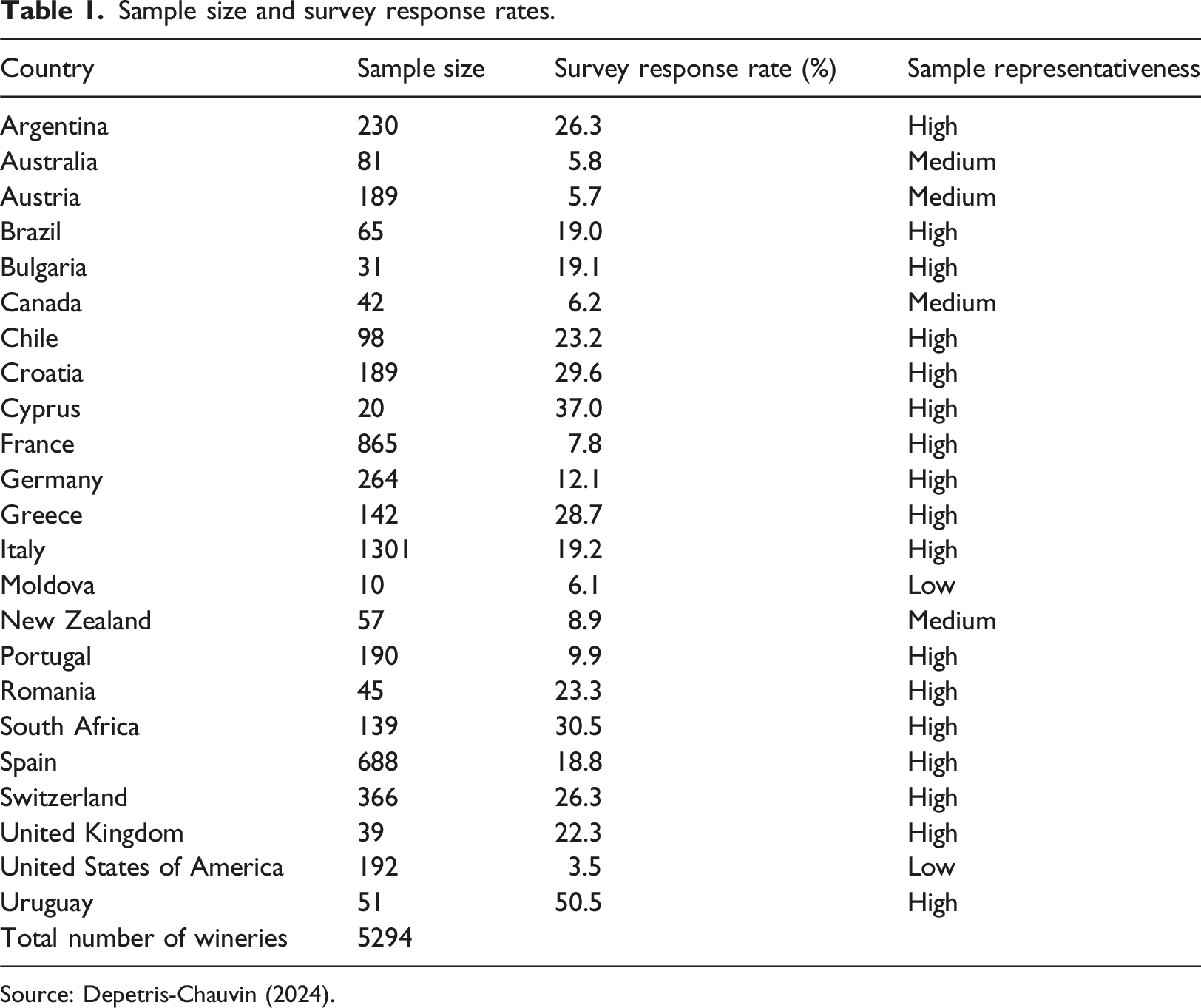
Sample size and survey response rates.
Source: Depetris-Chauvin (2024).
The survey included 137 questions across five areas: winery profile and characteristics; production function to capture quality differentiation activities; firms’ skills, technology capabilities, and management and commercial practices; export activities; and innovation and creativity processes. Most surveys were completed online. Extensive measures were taken to ensure the survey’s quality and relevance. To refine the survey, two pilot studies were conducted - in Argentina and Switzerland - followed by additional testing in Spain, France, and Italy to ensure contextual applicability.
Wineries were stratified geographically and by production size to ensure an accurate reflection of regional diversity. Our sampling approach aligned with industry standards (Sellitto, 2006), and the achieved response rate was similar to or higher than that of comparable industry-level surveys. The resulting dataset was rigorously checked for data correctness and consistency before further analysis. We contacted producers directly to verify any suspicious figures, ensuring the accuracy and reliability of the data. Because the data is self-reported, biases or inaccuracies may persist. However, the methodological precautions taken -such as anonymity, structured response options, and the use of revenue shares rather than exact figures- were aimed at minimizing such biases and enhancing data reliability. Consequently, while some risk of bias remains, we believe these measures support the robustness of the patterns identified in the study. The representativeness of our sample was evaluated by comparing key characteristics of the population, such as winery size, region, production capacity, and export performance, against those of the sample obtained for each country.
Methodology
This study employs three regression models -logistic regression, Poisson regression, and ordered logistic regression- to comprehensively analyze servitization in the wine industry. Each model examines distinct dimensions of servitization, offering a comprehensive view of how wineries diversify into and benefit from non-wine services. This approach is grounded in the Resource-Based View literature (RBV), which posits that firm-specific resources and capabilities significantly influence strategic decisions and performance. In the context of the wine literature, several studies have demonstrated how resources serve as key drivers of competitiveness across various countries. For example, research has highlighted the role of resources in export success in Argentina (Depetris-Chauvin and Villanueva, 2024), Italy (Duarte Alonso and Bressan, 2016), Greece (Karelakis et al., 2008), France (Maurel, 2009), Portugal (Bashiri et al., 2019), and Spain (Depetris-Chauvin and Fernández-Olmos, 2024).
The logistic regression model addresses whether a winery engages in servitization by examining a binary outcome. This model utilizes variables such as the capital index, which reflects the technological capabilities of a winery, and the human capital index, indicating the skill level of its workforce. According to RBV, these capabilities are crucial for a winery’s ability to expand beyond traditional wine production into services. Additionally, the number of variety of grapes vinified is included, representing product diversification, which can be associated with a greater likelihood of engaging in servitization. This model provides insights on the factors influencing the adoption of service activities.
The Poisson regression model examines the number of different services offered by wineries, thereby measuring the extent of service diversification. This model also uses the capital index and human capital index, emphasizing the importance of technological and human resources in supporting a broad range of services. Furthermore, winery size is considered, as larger firms often possess the resources necessary to offer a greater variety of services. The RBV framework supports this approach by highlighting that firms with more substantial resources and capabilities are generally better equipped to diversify their service offerings.
The ordered logistic regression model focuses on the share of revenue derived from services, offering insights into the significance of servitization within a winery’s overall revenue structure. Here, the capital index and human capital index are again key variables, as they impact a winery’s capacity to generate substantial revenue from services. This model helps in understanding the financial impact of servitization and is consistent with RBV, which asserts that firms with advanced resources are more likely to successfully convert service activities into a significant revenue stream.
In all three models, the same set of variables is employed to ensure a comprehensive analysis of servitization. These variables capture both the capabilities of wineries, such as technological and human resources, and strategic decisions, such as product diversification. By applying RBV principles, the study examines how these resources and capabilities influence the decision to engage in servitization, the extent of service diversification, and the revenue generated from services. Detailed definitions of the dependent and explanatory variables, along with key statistics, are provided in the Appendix.
Stylized facts
Revenue contributions from non-wine activities
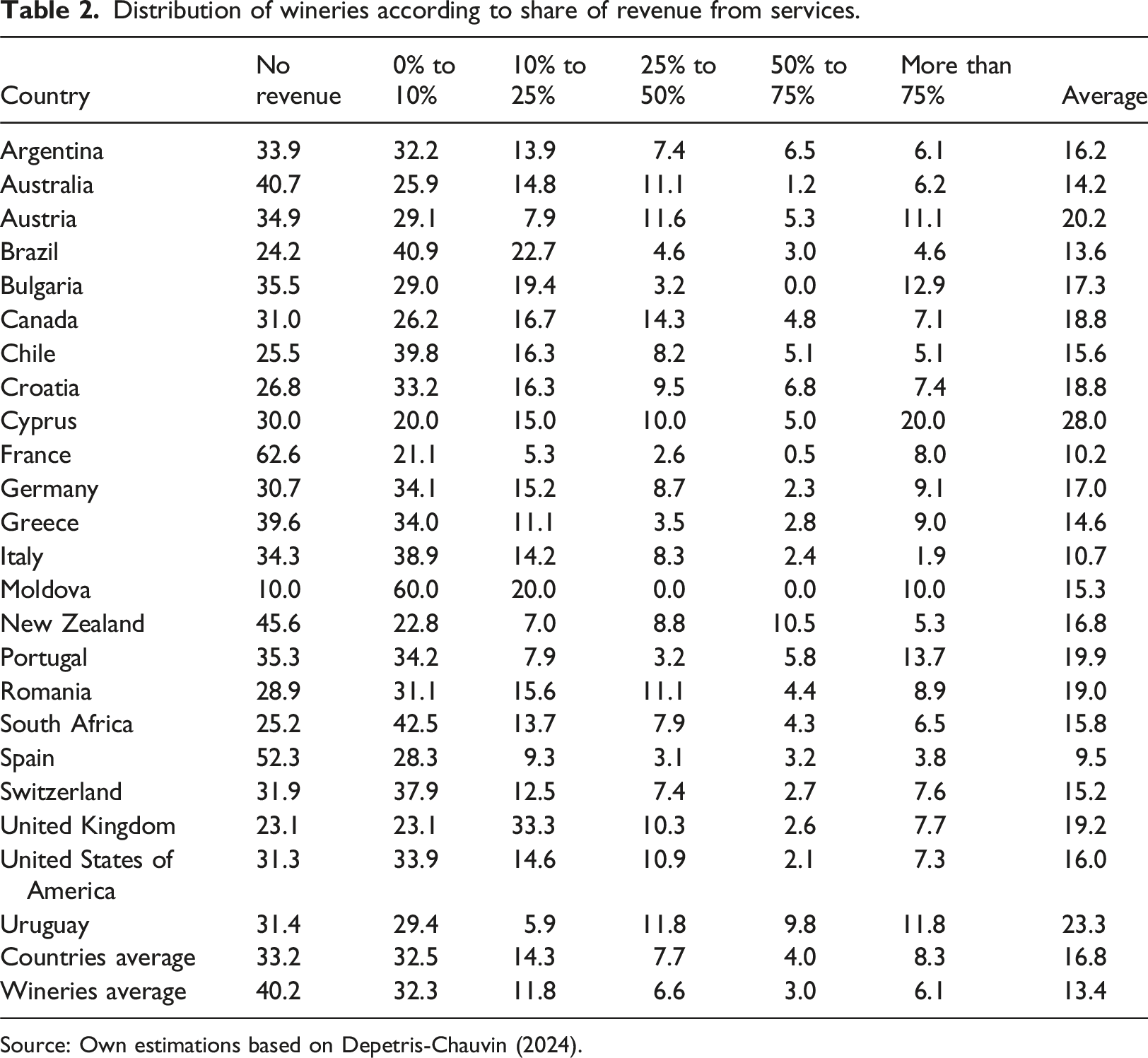
Distribution of wineries according to share of revenue from services.
Source: Own estimations based on Depetris-Chauvin (2024).
The analysis reveals that a significant portion of wineries have not diversified beyond traditional wine sales. Specifically, 40.2% of the wineries in the sample reported receiving no revenue at all from other activities. Additionally, 32.3% of wineries generate a very modest amount - less than 10% - of their total revenue from these diversified activities. This suggests that additional services contribute minimally to most wineries’ overall revenue. Notably, this finding is consistent across countries when averaging equally, with 33.2% of wineries in each country, on average, receiving no revenue from other activities, and 32.5% earning less than 10%, indicating that these patterns are not influenced by varying sample sizes across countries.
Stylized fact 1: The extent of servitization in the global wine industry is still modest.
Stylized Fact 2: France, Spain, and Italy have a limited integration of tourism and other ancillary services into their wine industry, focusing predominantly on traditional wine sales.
For the mid-range performers in terms of average revenue from diversified activities, the analysis reveals a diverse group of countries that defy easy categorization based on traditional factors such as wine industry size, region, or market orientation. These mid-performers include a mix of small and large wine producers, spanning old and new world regions, and including both traditional exporters and significant importers of wine. For example, Australia (14.2%) and New Zealand (16.8%), both established as significant exporters of wine, exhibit moderate levels of diversification. They are joined by Chile (15.6%), South Africa (15.8%), and Argentina (16.2%), other key exporters, which similarly show a balanced approach to incorporating additional revenue streams. In contrast, the United States (16%) and Germany (17%), key importers with substantial wine markets, also fall within this mid-range, demonstrating that diversification is a relevant strategy for wineries in major wine-consuming countries. Countries like Canada (18.8%) and Greece (14.6%) further illustrate the lack of a clear pattern, with Canada being a new producer and Greece a more traditional wine-producing nation. The varied levels of revenue from diversified activities suggest that each country’s approach to revenue diversification is influenced by a unique set of local factors and business strategies, highlighting the complexity and individuality of each wine industry’s adaptation to evolving market demands.
Stylized fact 3: Factors influencing diversification are not easily attributed to wine industry size, market orientation, or regional traditions.
Types and prevalence of service offerings in wineries
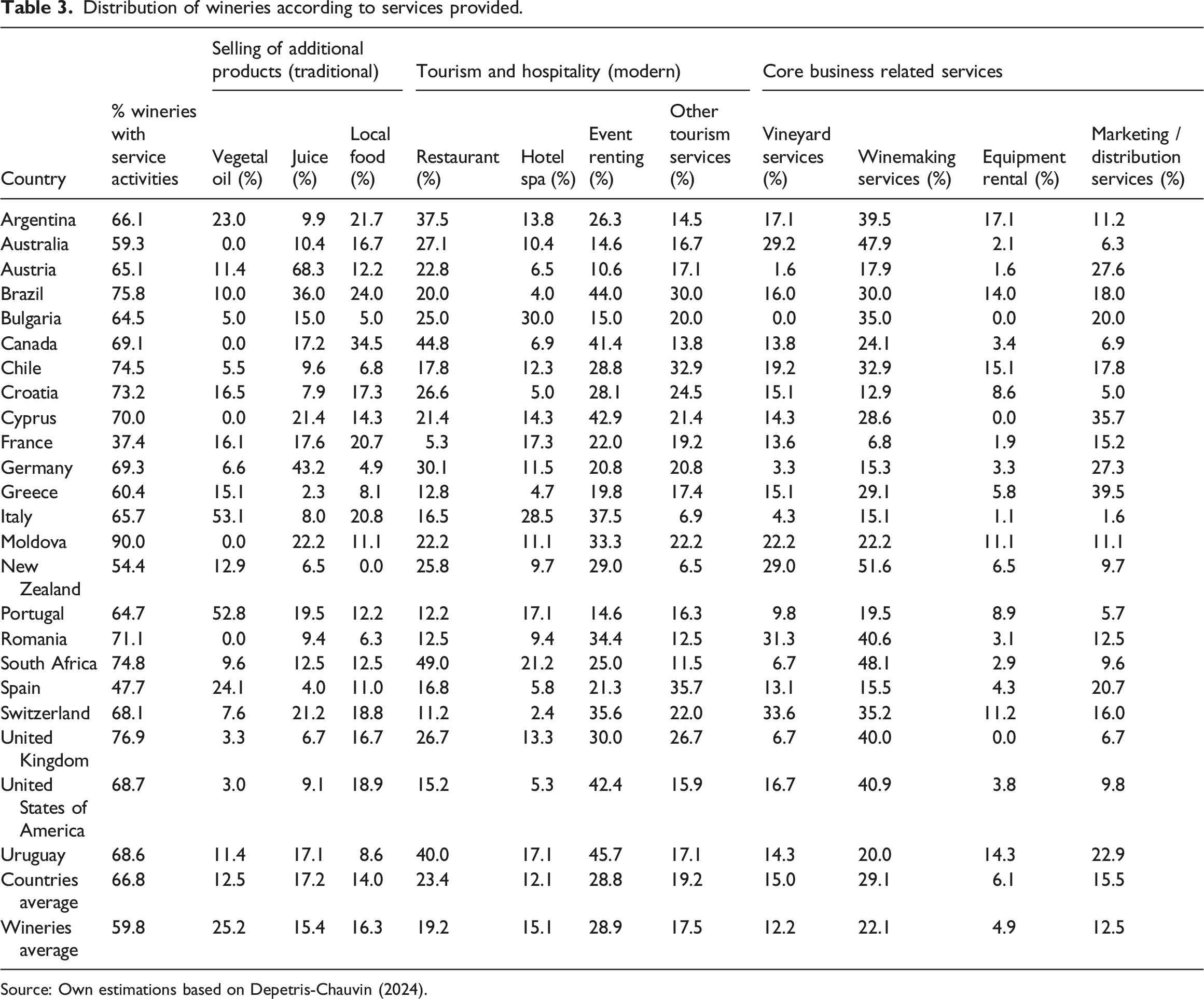
Distribution of wineries according to services provided.
Source: Own estimations based on Depetris-Chauvin (2024).
The sale of additional products like local food, fruit juices, and vegetable oil reflects a traditional approach to diversification. Local food offerings, with an average prevalence of 14% across countries, are particularly prominent in countries like Canada (34.5%), Brazil (24%), Argentina (21.7%), Italy (20.8%), and France (20.7%). This traditional strategy enhances the winery experience by integrating regional culinary delights, appealing to visitors seeking an authentic, local experience. Similarly, the sale of vegetable oil, with an average prevalence of 12.5%, is notably high in Italy (53.1%) and Portugal (52.8%). This practice underscores a longstanding tradition of incorporating local agricultural products into the winery’s offerings, aligning closely with regional agricultural practices, and adding value for visitors. The sale of fruit juice has the highest incidence among additional products, averaging 17.2%, with particularly high rates in Austria (68.3%) and Germany (43.2%).
Stylized Fact 4: Traditional services such as the sale of local food products remain prominent in wineries, particularly in regions with strong agricultural traditions.
Stylized Fact 5: Modern diversification strategies related to tourism and hospitality are more prominent in New World and emerging wine regions.
Stylized Fact 6: New World wineries are more likely to offer core winemaking services, such as vineyard management and winemaking support, compared to Old World wineries.
Stylized Fact 7: Most wineries are not diversifying extensively into multiple service offerings.
Characteristics of wineries engaging in servitization
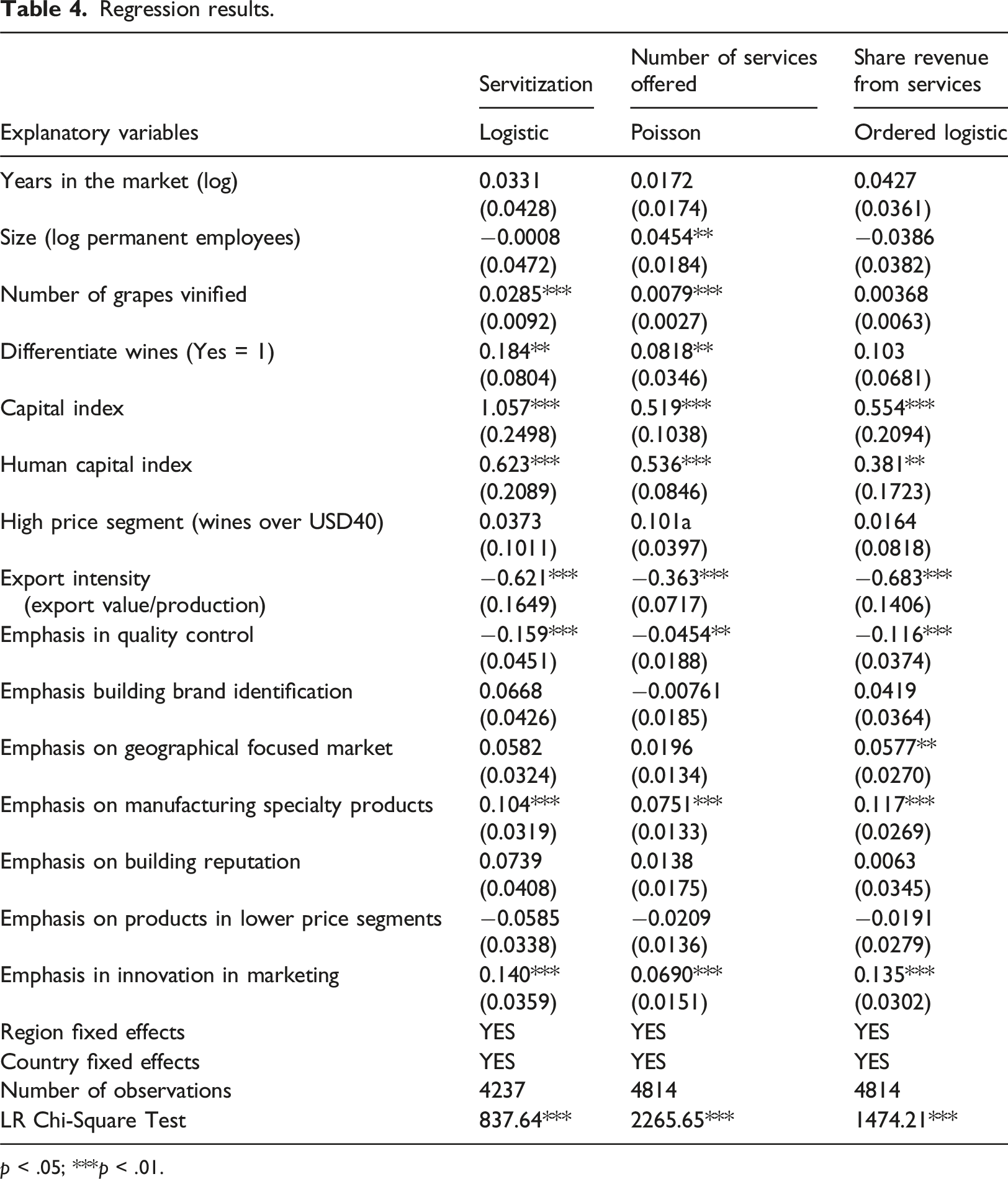
Regression results.
p < .05; ***p < .01.
The positive association between the capital index and servitization indicates that more technologically advanced wineries are more likely to offer services. This may reflect the enhanced capabilities afforded by technology, enabling wineries to support service offerings more effectively. Human capital is also positively related to the likelihood of servitization, suggesting that wineries with a more skilled workforce are better equipped to implement and manage services.
Conversely, the negative relationship between export intensity and servitization implies that wineries prioritizing exports are less likely to engage in servitization. This could be due to a strategic emphasis on production and distribution efficiency over the development of additional services. The negative correlation with an emphasis on quality control may suggest that wineries prioritizing product excellence focus more on their core offerings.
Other factors such as a focus on specialized products and innovation in marketing are positively associated with the likelihood of servitization. These findings suggest that certain strategic orientations and resource allocations align more closely with the decision to engage in servitization in the wine industry.
The Poisson regression results for the number of different services offered by wineries reveal noteworthy patterns (Table 4, second model), many of which align with the findings from the logistic regression on the likelihood of engaging in servitization. However, there are also some differences worth noting.
First, the size of the winery (measured by the log of permanent employees) has a positive and statistically significant effect on the number of services offered, a contrast to the earlier model, where size was not a significant factor in determining whether a winery engages in servitization. This suggests that while larger wineries might not be more likely to engage in servitization per se, those that do can offer a broader range of services, likely due to greater resources and capacity.
The number of grapes vinified continues to be positively and significantly associated with servitization. As in the previous model, wineries vinifying a wider variety of grapes tend to offer more services, reinforcing the idea that product diversity supports the expansion of service offerings. Wineries that differentiate their wines are not only more likely to engage in servitization but also tend to offer a greater number of services when they do so. This consistent finding across both models underscores the strategic importance of differentiation in initiating and expanding service activities.
The technification index (Capital Index) remains a strong positive predictor, further underlining the role of technological advancement in enabling wineries to provide a broader array of services. This suggests that technological investments are crucial not just for initiating servitization but also for scaling it effectively. Similarly, the human capital index continues to show a strong positive association with the number of services offered. This reinforces the idea that a skilled and knowledgeable workforce is critical not only for the decision to engage in servitization but also for the breadth of services that can be effectively provided.
Interestingly, wineries that target the high-price segment (wines over USD40) are also more likely to offer a greater number of services, indicating that premium positioning may be linked with more comprehensive service offerings. This was not as evident in the previous model, suggesting that premium wineries, once they choose to engage in servitization, are more committed to offering a wide range of services.
The negative and significant relationship between export intensity and the number of services offered is consistent with the previous findings, suggesting that more export-oriented wineries tend to focus on core operations rather than diversifying into multiple service offerings.
The emphasis on quality control is again negatively associated with service provision, mirroring the earlier results. This suggests that a strong focus on quality control may limit a winery’s ability to diversify into multiple service offerings, possibly due to the allocation of resources toward maintaining product excellence.
Other variables, such as innovation in marketing and producing specialty products, continue to be positively associated with the number of services offered. These findings suggest that innovative and specialized wineries are more likely to offer a broader range of services, consistent with their overall strategic orientation toward differentiation and innovation. In contrast, the emphasis on building brand identification and on products in lower price segments are not significant predictors of the number of services offered, just as they were less significant in the previous model. This further supports the idea that these strategic focuses may not be as closely linked to the breadth of service offerings in the winery context.
Finally, the ordered logistic regression results offer further insights into the determinants of the share of revenue that wineries derive from services (Table 4, model 3). This model complements the previous two analyses by focusing not just on whether wineries engage in servitization, nor the number of services offered, but on how significant these services are to the wineries’ overall revenue.
Several patterns from the previous models carry over in this regression. For instance, the technification index (Capital Index) is once again positively and significantly associated with the share of revenue from services. This suggests that technologically advanced wineries are not only more likely to engage in servitization and offer a broader range of services, but also tend to derive a larger portion of their revenue from these services. Similarly, the human capital index continues to show a positive and significant relationship, indicating that wineries with a more skilled workforce are more capable to generate substantial revenue from services.
Export intensity again shows a strong negative association with servitization outcomes. In this model, the more a winery focuses on exports, the less likely it is to derive a significant share of its revenue from services. This consistent negative relationship across all models suggests that export-oriented wineries may prioritize core production and distribution activities over developing and monetizing services.
The emphasis on quality control also shows a negative and significant correlation with the share of revenue from services. This reinforces the idea that wineries with a strong focus on maintaining high product standards might allocate fewer resources toward developing services that contribute significantly to their revenue.
Interestingly, winery size is not a significant factor in determining the share of revenue from services, despite its positive association with the number of services offered in the Poisson regression. This suggests that while larger wineries may offer more services, these services do not necessarily make up a larger portion of their overall revenue.
Product differentiation is positively associated with servitization, but it is not statistically significant in this model, suggesting that while differentiation may encourage servitization and an increase in the number of services, it does not necessarily result in a higher share of revenue from those services.
In contrast, the emphasis on manufacturing specialty products and innovation in marketing both show positive and significant relationships with the share of revenue from services. This indicates that wineries focusing on specialized products and innovative marketing strategies are more successful in monetizing their service offerings, leading to a larger share of revenue derived from these activities.
In conclusion, the analysis of servitization in the wine industry across the three models reveals several key insights that we summarize in our last stylized facts.
Stylized Fact 8 (Key Resources for Servitization): Wineries with advanced technological capabilities and a skilled workforce are more likely to engage in servitization, offer a broader range of services, and generate a significant share of revenue from these services.
Stylized Fact 9 (Non-Essential Resources): Variables like winery size and product differentiation, while associated with offering more services, do not significantly impact the share of revenue from services, suggesting they are less critical in monetizing servitization.
Stylized Fact 10 (Strategic Focus): Wineries that prioritize innovation in marketing and specialization in products are more successful in converting service offerings into revenue, whereas a strong focus on exports and quality control tends to limit servitization efforts.
Conclusions
The analysis of servitization within the global wine industry is particularly relevant given the current challenges of declining wine consumption and overproduction, which have led to the eradication of some vineyards and intensified competition among wineries. This study constitutes the first large-scale comparative examination of servitization in the wine industry, providing valuable empirical insights into how wineries are diversifying their revenue streams to sustain profitability. Findings reveal that servitization remains modest overall, with 40.2% of wineries generating no revenue from ancillary services and 32.3% deriving less than 10% of their revenue from such activities. This pattern is especially evident in historically significant wine-producing countries like France, Spain, and Italy, where traditional wine sales still dominate despite potential synergies with tourism. Conversely, smaller, or emerging wine regions show a more pronounced reliance on diversified revenue streams, indicating a shift towards integrating additional services to enhance financial resilience.
Theoretically, this study contributes to the literature on servitization and diversification strategies in traditional, experience-good industries, such as wine, where product attributes are deeply intertwined with cultural and regional identity. The findings underscore the unique challenges that well-established industries face in shifting to a more service-oriented model. They reveal that, while servitization can provide a buffer against demand fluctuations, it may require a more adaptive approach in regions where traditional product sales are deeply rooted in cultural and economic practices. By extending servitization theory to the wine industry, this study lays the groundwork for understanding how established practices, heritage, and market maturity impact firms’ capacity and willingness to diversify.
From a practical standpoint, these findings have significant implications for wineries and their stakeholders. As consumer preferences increasingly emphasize experiential aspects of wine consumption, such as winery tours, gourmet dining, and events, wineries in traditional regions may benefit from expanding their service offerings. National governments and regional promotion agencies can support this transition by offering targeted incentives and resources to support service diversification. These measures might include funding for infrastructure improvements, marketing campaigns, and training programs to help wineries develop and manage additional services effectively. Promotion agencies could further aid this process by showcasing successful examples of service diversification, providing practical guidance and best practices. Such support not only helps wineries adapt to evolving market dynamics but also bolsters regional economic development by capitalizing on local tourism potential.
While this study offers valuable insights, it has certain limitations. The reliance on estimated revenue ranges for ancillary services rather than precise figures may affect revenue assessments’ accuracy. Our focus is on identifying patterns of servitization rather than providing exact financial metrics. Future studies could enhance these findings by gathering precise financial data through case studies or region-specific datasets, enabling a more detailed examination of servitization’s financial implications. Additionally, the cross-sectional nature of the data limits our ability to establish causal relationships or track long-term trends in servitization and revenue diversification. Future research should address these limitations by employing longitudinal studies to capture the evolution of servitization over time and by collecting more granular financial data, enabling a deeper understanding of its long-term impact on business sustainability and resilience.
Future research should also explore several key areas to enhance the understanding of servitization in the wine industry. Investigating the specific drivers behind varying levels of servitization - such as regional market conditions, consumer preferences, and technological advancements - could offer deeper insights into why certain wineries successfully diversify while others do not. Examining the balance between servitization and traditional wine sales is also crucial for identifying the optimal level of service integration, as overextending service offerings may dilute a winery’s brand or strain operational resources. Understanding these boundaries could help wineries strategically navigate the fine line between core production and service diversification. Comparative studies across regions with differing levels of servitization, both within and beyond the wine industry, could reveal best practices and actionable strategies for wineries aiming to adapt to evolving market demands.
This study makes a significant contribution to both policy and academic debates on servitization in traditional industries, particularly where the product is closely tied to cultural identity. By paving the way for further research, we aim to deepen the understanding of servitization’s role in the wine industry, providing valuable insights for wineries, policymakers, and scholars on leveraging service diversification as a pathway toward resilience and sustained competitiveness.
Supplemental Material
Supplemental Material - Tourism and services diversification in the global wine industry: Ten stylized facts
Supplemental Material for Tourism and services diversification in the global wine industry: Ten stylized facts by Nicolás Depetris Chauvin in Tourism Economics.
Footnotes
Declaration of conflicting interests
The author(s) declared no potential conflicts of interest with respect to the research, authorship, and/or publication of this article.
Funding
The author(s) received no financial support for the research, authorship, and/or publication of this article.

Supplemental Material
Supplemental material for this article is available online.
Author biography
References
Supplementary Material
Please find the following supplemental material available below.
For Open Access articles published under a Creative Commons License, all supplemental material carries the same license as the article it is associated with.
For non-Open Access articles published, all supplemental material carries a non-exclusive license, and permission requests for re-use of supplemental material or any part of supplemental material shall be sent directly to the copyright owner as specified in the copyright notice associated with the article.
