




Abstract
This paper investigates the Environmental Kuznets Curve (EKC) in developed and developing countries, examining the nonlinear impact of tourism on carbon emissions and ecological footprint from 1990 to 2019. Using a panel fixed effects model, results show a tourism-extended EKC for developed countries but a U-shaped relationship for developing countries. The study uniquely distinguishes between trade and financial globalization, de jure and de facto globalization, to assess economic globalization’s potential to moderate tourism’s environmental impact. Developed countries experience detrimental effects from trade de jure globalization, while developing countries benefit from expanding trade de facto and financial de jure globalization. These findings inform eco-friendly tourism initiatives and globalization strategies.
Keywords
Introduction
Global travel and tourism in 2019 was a US$8.9 trillion business.Despite the initial decline in tourist numbers during and post-COVID-19 pandemic, a noteworthy resurgence in tourism is evident as countries reopen borders and ease travel restrictions. 1 While this growth is poised to contribute significantly to post-pandemic economic growth recovery, it rekindles concerns about the environmental repercussions of tourism.
Theory establishes tourism’s role in promoting growth and its impact on the environment. Marsiglio (2015) shows tourism drives green economic growth through incentivizing abatement. Tourists’ choice of destinations, influenced by environmental quality shaped by residents, fosters sustainable development. The income-pollution relationship theory examines income elasticity of demand for environmental quality, abatement technology returns, and structural change (Brock and Taylor, 2005; Copeland and Taylor, 2004; Kijima et al., 2010). Economic development, per the structural change hypothesis, shifts from polluting industries to cleaner services. Marsiglio et al. (2016) analyze this shift in industrialized economies, emphasizing transitions from manufacturing to services, elucidating the Environmental Kuznets Curve (EKC) dynamics.
The empirical literature on the tourism-environment link adopts two approaches. The first assumes a linear relationship between tourism and carbon emissions, incorporating a nonlinear relationship (quadratic) between GDP and emissions, known as the tourism-induced EKC. This aligns with the theoretical income-pollution relationship, indicating emissions initially increase with economic growth but decrease after reaching a certain development level. Studies like Cevik (2023), Gao et al. (2021), and Le and Nguyen (2021) follow this approach. In contrast, Bi and Zheng (2019), Ehigiamusoe (2020), Ghosh (2020), and Sherafatian-Jahromi et al. (2017) employ the tourism-extended EKC approach. Here, the model features a quadratic relationship between tourism and emissions, controlling for GDP. This dual approach enriches understanding of how tourism and economic development influence carbon emissions dynamics in empirical research.
This paper contributes to the tourism-extended EKC empirical literature. We take a pioneering step by investigating how carbon emissions from tourism can be effectively managed, considering the moderating impacts of trade and financial globalization—two components of economic globalization with distinct effects on carbon emissions, as demonstrated by Gaies et al. (2022). Addressing the emerging research agenda highlighted by Song et al. (2018), our paper is a novel contribution that fills a critical gap by examining the tourism sector within the context of globalization. In so doing, our study advances previous tourism-extended EKC research by delving beyond identifying support for the tourism-extended EKC in our sample of countries.
Additionally, we distinguish between de facto and de jure measures of globalization from the KOF Swiss Economic Institute as moderating effects when examining the relationship between tourism and the environment. Gygli et al. (2019) highlight that de facto measures reflect actual flows and activities, while de jure measures encompass policies, resources, or institutions facilitating these activities. Lombarede and Iapadre (2008) and Marten et al. (2015) also stress the significance of this differentiation. For instance, Quinn et al. (2011) demonstrate that using either de facto or de jure measures of financial openness yields different outcomes in studies on financial openness and economic growth. Therefore, analyzing both types of measures contributes significantly by offering nuanced insights into the impacts of globalization on sustainable tourism, particularly amid current efforts by economies to stimulate tourism growth.
We validate our findings using both carbon emissions and ecological footprint as environmental measures, differing from prior studies that solely examine carbon emissions. The ecological footprint directly reflects individual impacts on the ecosystem (Gossling et al., 2002; Pappairis and Lagos, 2021). Our tourism proxies, inspired by Ghosh (2020), include international tourism receipts and arrivals per capita.
In addressing methodological challenges in empirical studies, we address concerns raised in previous tourism-extended EKC research. Bi and Zheng (2019) omitted testing for variable stationarity before estimation, potentially leading to spurious results when combining unit root and non-unit root variables. Conversely, Ehigiamusoe (2020), Ghosh (2020), and Sherafatian-Jahromi et al. (2017) utilized a cointegration framework, acknowledging the nonstationarity of CO2 emissions and tourism variables. However, Pedroni (2019) cautions that nonlinear transformations of unit root variables in cointegration analysis may compromise superconsistency, essential for precise parameter estimation. Without superconsistency, establishing cointegration between carbon emissions, tourism, and tourism squared becomes challenging, casting doubt on result validity. Furthermore, Pedroni (2019) noted that nonlinear transformations alter the stochastic properties of variables, potentially obscuring their statistical distribution properties and complicating the interpretation of relationships in empirical analysis. These considerations underscore the need for rigorous methodological approaches in studying tourism’s environmental impacts.
We estimated a panel fixed effects model on stationary variables to analyze a panel sample of 117 countries from 1990 to 2019. We subdivided the sample into 75 developing and 42 developed economies to unmask differences related to different economic developmental stages. Our research broadly seeks to explore the complex relationship between tourism and environmental degradation. Specifically, we investigate whether there is a nonlinear connection between tourism activities and environmental decay, as measured by carbon emissions and ecological footprint. Additionally, we explore how this relationship varies across developing and developed countries. Furthermore, we examine the moderating roles of both de facto and de jure measures of financial and trade globalization on tourism’s environmental impact. Our study also assesses the robustness of these findings for different environmental indicators across diverse economic contexts.
The rest of the paper is organized as follows. The next section summarizes the literature review, followed by the section on Data and Methodology, which also sets out the empirical model. This is followed by a section which presents and discusses the empirical results. The final section concludes with policy implications.
Literature review
Adverse environmental effects of tourism are inevitable as most tourism-related activities induce energy consumption in the transport and accommodation sector, thus leading to significant CO2 emissions (OECD 2018). According to the World Travel and Tourism Council, tourism accounts for an estimated 8%–11% of global greenhouse gas emissions, which is more significant than the construction sector. 2 It was, however, not until early 2000 that the relationship between tourism activities and CO2 emissions became increasingly explored.
Several studies in this area (Lee and Brahmasrene 2013; Paramati et al. 2017) first provided evidence of a linear negative relationship between tourism and environmental degradation while controlling for economic growth. It is important to control economic growth because economic growth could aggravate environmental degradation if it is accompanied by an increase in energy use and a rise in human activities such as production, consumption, transportation, urbanization and industrialization, which produce high carbon emissions (Alkhathlan and Javid 2013; Mirza and Kanwal 2017).
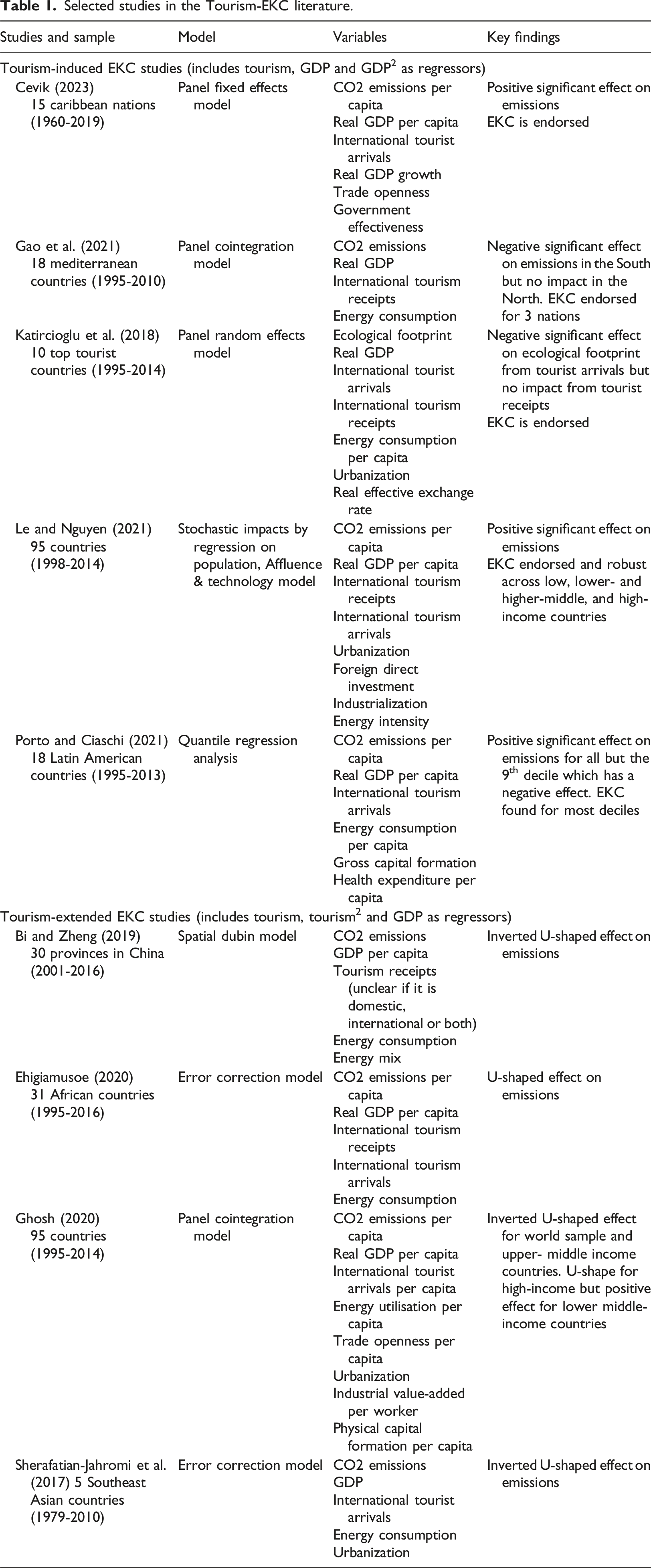
Selected studies in the Tourism-EKC literature.
Tourism-induced EKC
The first extension of examining the tourism-induced EKC was based on the concept pioneered by Grossman and Krueger (1991), and named after Simon Kuznets (1955), who described an inverted U-shaped relationship between economic growth and income inequality. The EKC mirrors this by suggesting a similar inverted U-shaped relationship between economic growth and environmental degradation. Studies on tourism-induced EKC explore the potential nonlinear relationship between GDP and environmental decay by including GDP and GDP 2 as independent variables alongside tourism, with environmental degradation as the dependent variable. As shown in Table 1, these models often incorporate variables such as energy consumption, trade openness, foreign direct investment, and urbanization to minimize omitted variable bias. Consequently, the results on the linear impact of tourism on carbon emissions and the evidence for EKC are mixed, depending on the sample of countries, proxies used, and models adopted. Porto and Ciashi (2021) provide a comprehensive summary of these studies. They also develop an environmental legal index capturing countries’ climate policies and further show that it has varying impacts on the link between environment, tourism and GDP.
More recent studies by Katircioglu et al. (2018) and Kocak et al. (2020) found that tourism’s effect on carbon emissions and ecological footprint varies when tourist arrivals versus tourism receipts measure tourism. Consequently, research by Katircioglu et al. (2018), Li and Lv (2021), and Zaman et al. (2016) use a composite index of tourism development, including tourist arrivals, tourism expenditure, and tourism receipts. Li and Lv (2021) examined 95 countries from 2000 to 2014, while Zaman et al. (2016) analyzed 34 countries from 2005 to 2013. Both studies supported tourism-induced carbon emissions and the EKC relationship between GDP and carbon emissions. However, Katircioglu et al. (2018) found evidence of tourist arrivals impacting the ecological footprint but no significant effect from tourism development or receipts, although there was support for the EKC between GDP and ecological footprint in the top 10 tourist destinations.
Tourism-extended EKC
The tourism-extended EKC literature explores the relationship between tourism, economic growth (represented by GDP), and environmental degradation. Only four empirical studies, detailed in Table 1, have incorporated tourism and tourism squared alongside GDP as independent variables, with environmental degradation as the dependent variable. Theoretical studies by Pigram (1980) argues that tourism perceives the environment as both a resource and opportunity, underscoring an interdependent relationship where tourism’s sustainability relies on environmental conservation for visitor satisfaction and natural preservation. Despite potential environmental degradation from tourism, it also offers opportunities for significant environmental enhancement, as discussed by Tisdell (1987), who outlines various impacts of tourism on environmental conditions.
Tourism’s impact on carbon emissions can vary depending on the depth and breadth of sustainable tourism in a country. Parmati et al. (2017) suggest that this variation could be influenced by government tourism policies that provide necessary tourist facilities and promote green technologies and sustainable tourism practices. Initially, when tourism arrivals are low, the demand for energy-intensive support industries is minimal, potentially leading to a U-shaped relationship with environmental decay. However, after reaching a certain threshold of tourism arrivals, tourism can begin adversely affecting the environment. Conversely, Tisdell (1987) described an inverted U-shaped relationship, where environmental quality initially deteriorates with rising tourism but improves once tourism reaches a sufficient level.
Findings from studies in Table 1 present varied evidence on the quadratic relationship between tourism and environmental degradation. Ehigiamusoe (2020) reveals that tourism mitigates the impact of economic growth on environmental degradation in African nations. Sherafatian-Jahromi et al. (2017) find in Southeast Asia that carbon emissions’ elasticity with tourism shifts from above one to below one as tourist arrivals exceed 17,000, pinpointing 4.397 million tourists as the threshold for zero elasticity. Bi and Zhang (2019) use Chinese provincial data to illustrate tourism’s impact, including a spatial lag effect on carbon emissions, showing an inverse U-shaped relationship. However, ambiguity surrounds their use of tourism receipts as a proxy, leaving unclear whether it pertains to domestic, international, or total receipts.
The effect of globalization
Globalization, as conceptualized by Gygli et al. (2019) and initially defined by Dreher (2006), builds upon the works of Clark (2000). It is a transformative process eroding national boundaries integrating economies, cultures, technologies, and governance systems. Facilitated by flows such as people movement, information exchange, capital circulation, and trade in goods, globalization reshapes tourism and the economy. It boosts marketing, spreads technical know-how, enhances infrastructure, diversifies tourism products, and alters sociocultural landscapes (Dwyer, 2015; Mustafa, 2010). Javid and Katircioglu (2017) and Chiu et al. (2021) highlighted globalization’s contributions to tourism development.
Although Rahman (2020) has explored globalization’s impact on carbon emissions, few have examined its role in the tourism-environment nexus. Yet, tourism is inseparable from globalization, as economic globalization, reflected in international trade, finance, and people mobility, underpins tourism (Cohen, 2012; Song et al., 2018). Turner and Witt (2001) suggest that increased globalization boosts tourism access, with international trade significantly driving business tourism demand, alongside the notable influence of destination prices and GDP.
Akadiri et al. (2020) and Danish and Wang (2018) found globalization’s insignificant effect on carbon emissions in specific contexts. However, Balsalobre-Lorente et al. (2020) and Ehigiamusoe et al. (2022) discovered that globalization reduced carbon emissions from tourism, with varying impacts based on economic, social, or political globalization.
Distinguishing our study, we pioneer an exploration into the moderating effects of financial and trade globalization, differentiating between de facto and de jure measures for both. This methodological refinement addresses concerns about prior studies amalgamating globalization dimensions into a single measure. Thus, our investigation offers unique insights, departing from previous approaches (Kose et al., 2009; Martens et al., 2015), and enhances understanding of globalization’s nuanced role in shaping the tourism-environment relationship.
Data and methodology
Data and variables
definition of variables and data source.
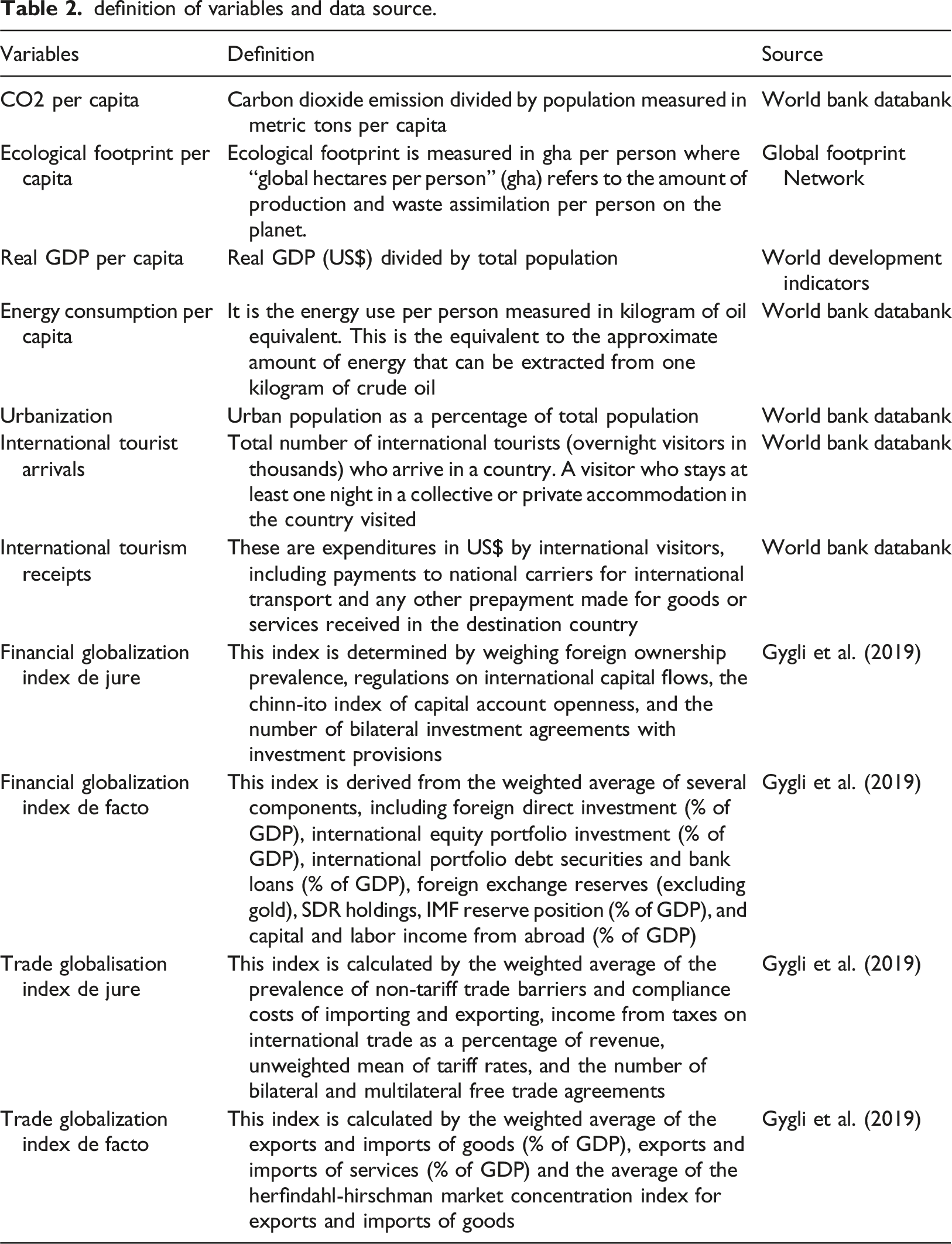
To examine tourism’s impact on carbon emissions, we use TOURARR (number of international tourist arrivals) and TOURREC (international tourism receipts). Both are expressed per capita, as defined in Ghosh (2020), to maintain consistency with the dependent variables and account for population density effects on tourism. We include the squared terms of these tourism variables to explore their nonlinear relationship with carbon emissions.
Recognizing that various factors influence environmental degradation, we incorporate several control variables to address potential omitted variable bias. Real GDP per capita (RGDPCAP) accounts for economic growth’s influence on environmental degradation. We also introduce energy consumption per capita (ENERCAP), measured in kilograms of oil equivalent, as a crucial determinant of CO2 emissions. Urbanization (URBANPOP) is included as the percentage of the total urban population. We primarily focus on financial and trade globalization as moderating factors, so we exclude trade openness and financial development as control variables.
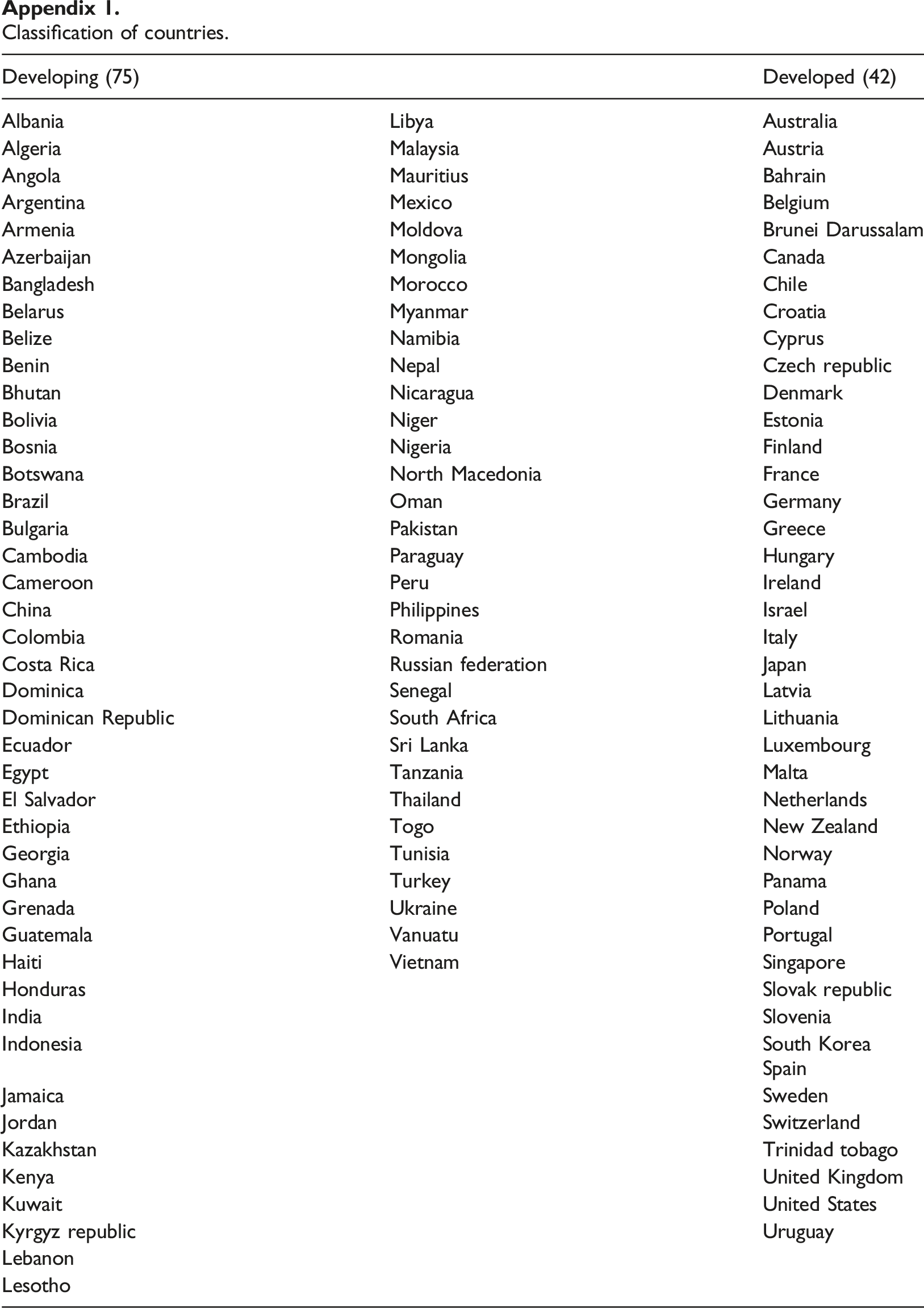
Increasing urbanization is preliminarily expected to raise energy consumption. However, greater energy consumption can drive the development and adoption of energy-efficient technologies, potentially mitigating the impact of urbanization on energy use. Thus, the net effect of these variables is complex. Appendix 1 categorizes the sample by United Nations M49 into developed and developing nations.
For moderating variables, we use financial and trade globalization indices from the KOF economic globalization index by Gygli et al. (2019). These indices measure economic globalization and utilize 43 variables with dynamically adjusted weightings over time. They are differentiated into de facto globalization (real-world flows and activities) and de jure globalization (supportive policies, resources, conditions, and institutions). Specific definitions for de facto trade globalization (TRDF), de facto financial globalization (FINDF), de jure trade globalization (TRDJ), and de jure financial globalization (FINDJ) are detailed in Table 2. The indices range from 1 (least globalized) to 100 (most globalized).
Empirical methodology
We perform robust panel unit root tests to assess the variables’ stationarity. For cross-sectional dependence in panel data, first-generation panel unit root tests (Im et al., 2003; Levin et al., 2002) may be unreliable. We use the Pesaran (2004) CD test to check for cross-sectional independence, where the null hypothesis asserts independence of error terms across individual series. Based on the CD test results, we apply the Pesaran (2007) second-generation panel unit root test, which includes the cross-sectional augmented IPS unit root test (CIPS) and the cross-sectional augmented Dickey-Fuller test. This test evaluates whether all individual series are stationary.
After conducting unit root tests and panel Granger causality tests to ascertain bidirectional causality between tourism and environmental variables, we proceed to estimate panel fixed effects models for CO2CAP (equation (1)) and ECO (equation (2)):

We evaluate trade and financial globalization’s moderating impact by integrating de jure and de facto measures, interacting them with the tourism variable. For instance, financial globalization’s moderation with CO2 emissions and TOURARR is modelled:
The moderating effect is given by the sign and significance of
Empirical results and discussion
Data
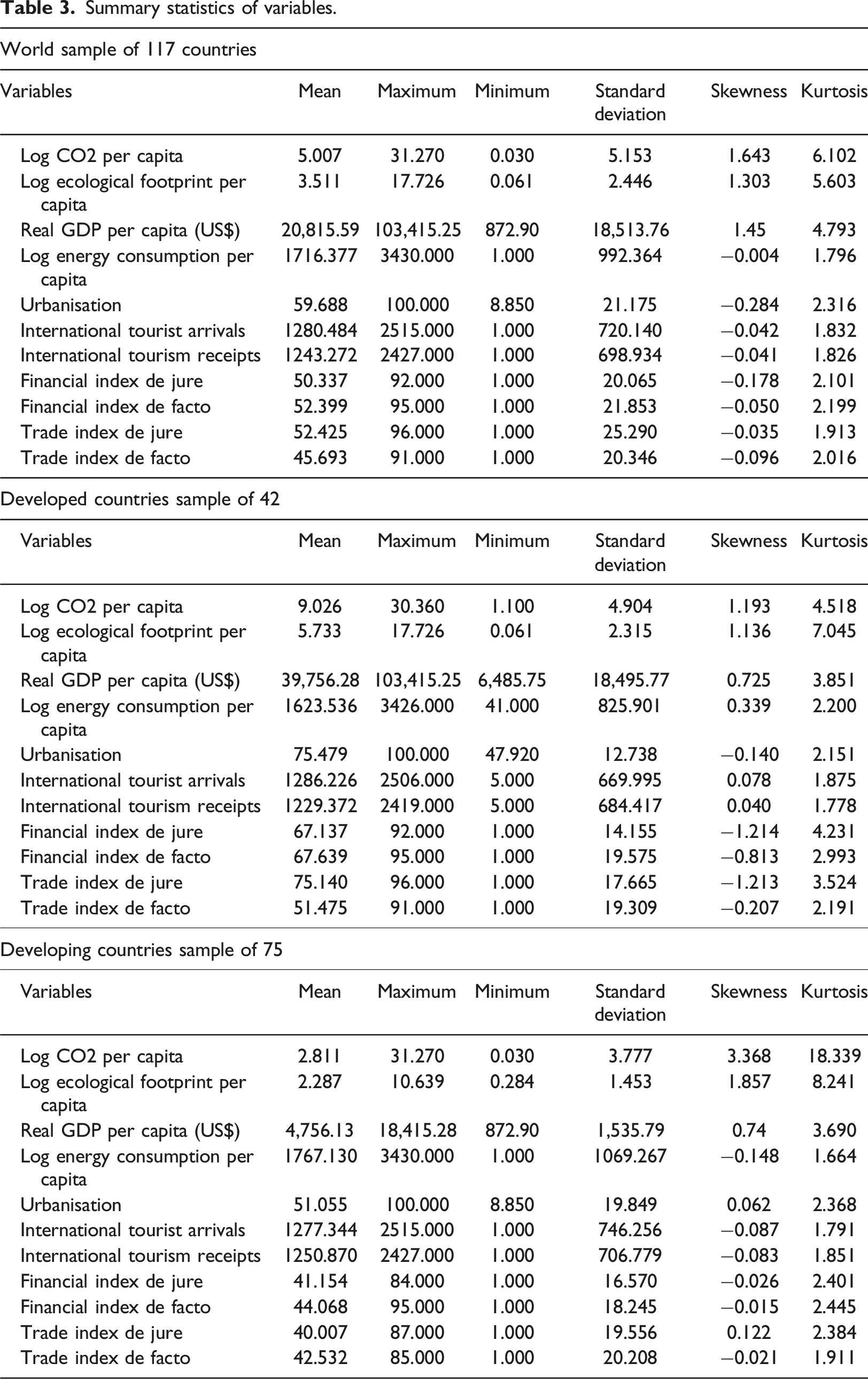
Summary statistics of variables.
Stationarity and panel granger causality
Panel unit root test results.
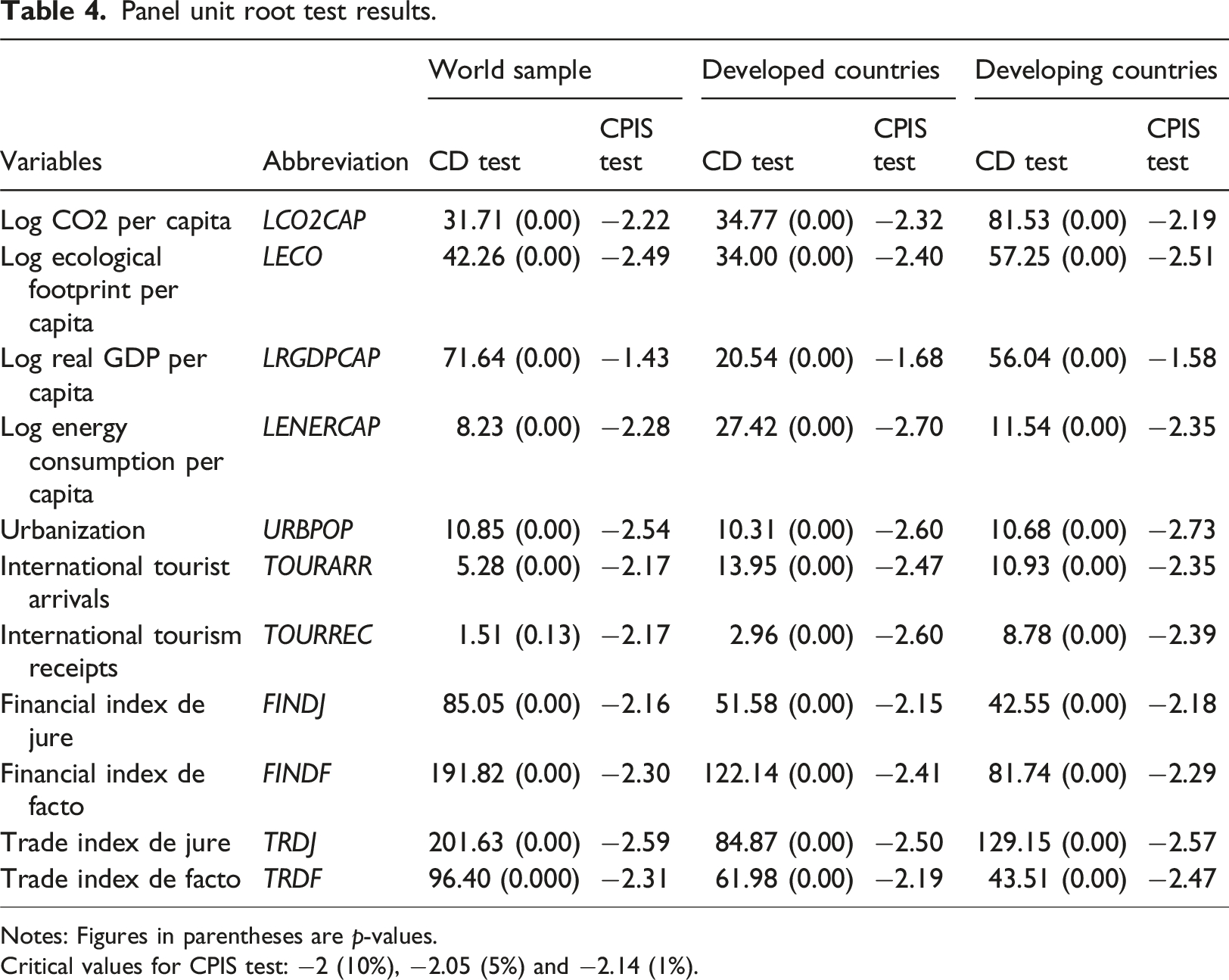
Notes: Figures in parentheses are p-values.
Critical values for CPIS test: −2 (10%), −2.05 (5%) and −2.14 (1%).
We conducted panel Granger causality tests per Abrigio and Love (2016) to ascertain causality direction between tourism and environmental variables (carbon emissions, ecological footprint per capita). 3 Table 2 of the online Appendix reveals unidirectional causality from tourism to environmental variables. This validates the panel fixed effects model in equations (1) and (2), as no evidence of reverse causation from environment to tourism was found.
Results on tourism-extended EKC
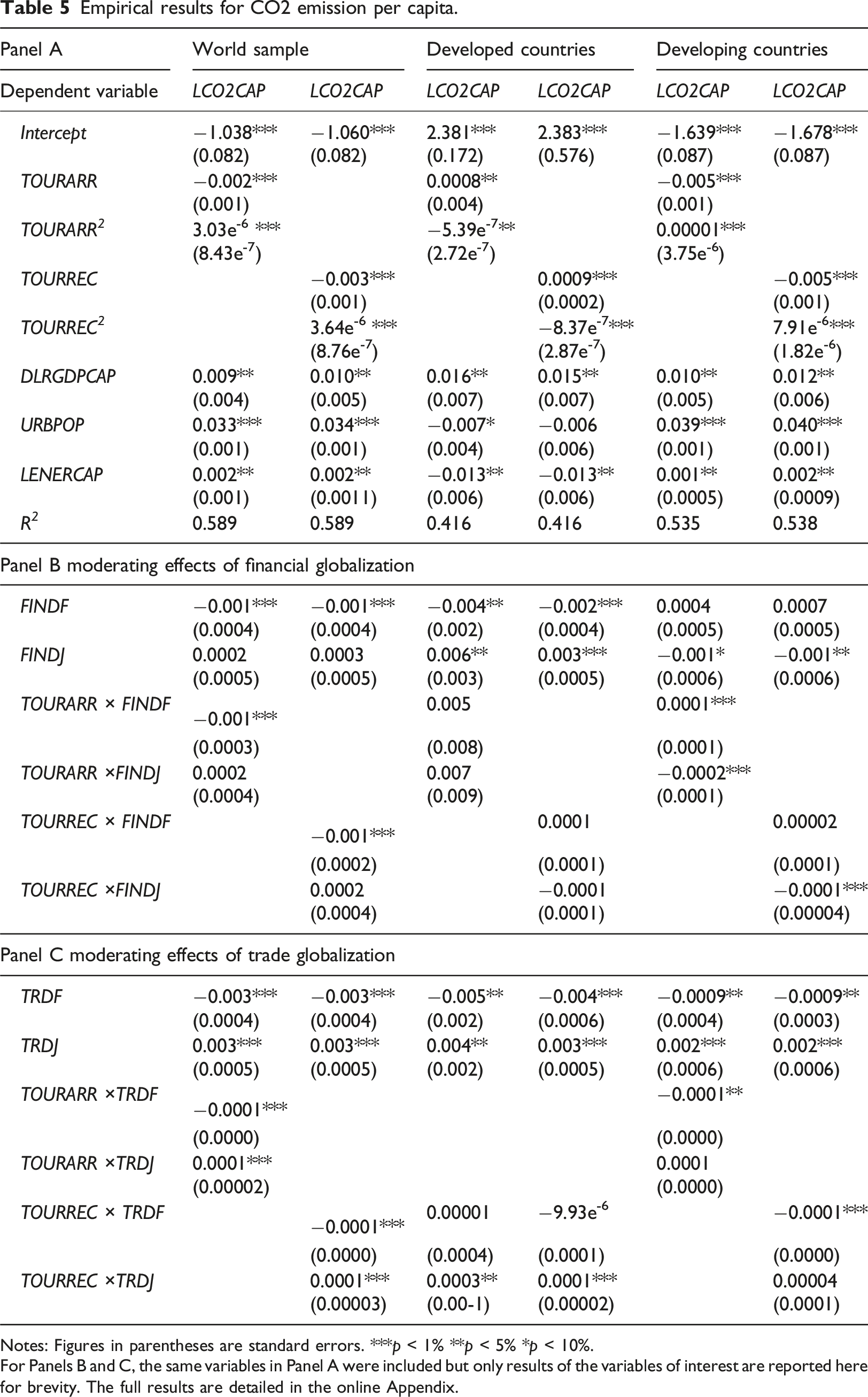
Empirical results for CO2 emission per capita.
Notes: Figures in parentheses are standard errors. ***p < 1% **p < 5% *p < 10%.
For Panels B and C, the same variables in Panel A were included but only results of the variables of interest are reported here for brevity. The full results are detailed in the online Appendix.
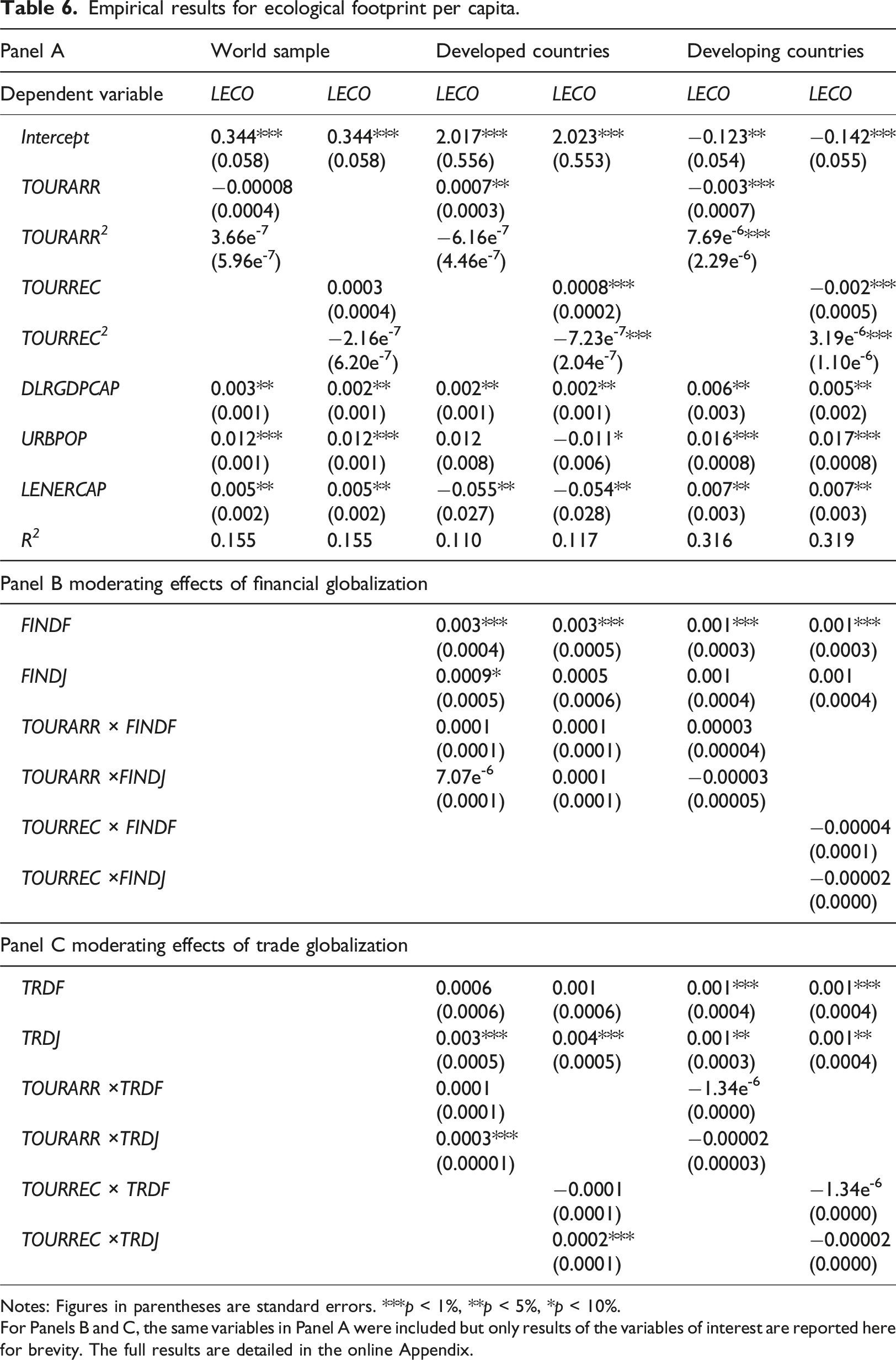
Empirical results for ecological footprint per capita.
Notes: Figures in parentheses are standard errors. ***p < 1%, **p < 5%, *p < 10%.
For Panels B and C, the same variables in Panel A were included but only results of the variables of interest are reported here for brevity. The full results are detailed in the online Appendix.
For the world sample, Panel A in Tables 5 and 6 shows that tourism does not significantly impact the ecological footprint, unlike carbon emissions. This finding aligns with Ehigiamusoe et al. (2022) that carbon emissions and ecological footprint measure different environmental impacts. Carbon emissions are the primary contributors to greenhouse gases, while the ecological footprint assesses the environmental strain from waste absorption and individual resource consumption. The insignificant effect of tourism on the ecological footprint in the world sample likely stems from the combined impacts on developed and developing countries. Specifically, the opposing effects of tourism on the ecological footprint in these groups appear to cancel each other out. This underscores the importance of analyzing samples comprising countries at similar development stages.
Conversely, for carbon emissions, Panel A of Table 5 indicates that tourism arrivals and receipts have similar effects, exhibiting a U-shaped relationship. Initially, carbon emissions decline as tourism develops, but emissions begin to rise after reaching a certain level. This pattern is also observed in developing countries, suggesting that the larger sample size of developing countries may dominate the global effect. The U-shaped relationship for developing countries is robust across tourism and environmental variables.
In contrast, developed countries show an inverted U-shaped relationship between tourism receipts (and tourist arrivals) and environmental proxies. These findings differ from Ghosh (2020), who reports a U-shaped relationship for high-income countries but an inverted U-shape for the world sample and upper-middle-income countries.
Regarding control variables, real GDP per capita negatively affects both environmental variables in the world, developed, and developing country samples. Energy consumption has a negative and significant effect in developed countries, suggesting a shift towards energy-efficient technologies and renewable energy sources, possibly driven by government regulations, subsidies, and incentives. For instance, the European Renewable Energy Directive of 2009 pressures EU nations to adopt alternatives to fossil fuels. 4
Urban population impacts differ by development stage. Urbanization has a detrimental effect in developing countries, likely due to the need for infrastructural development as more people move to cities. This contrasts with developed countries, where urbanization has little or no impact. Table 3 shows that urbanization rates are higher in developed countries (75.5%) compared to developing countries (51.1%). Developing countries will likely accelerate urbanization further, contributing to environmental decay, as young people move to cities for jobs. Conversely, developed countries may have reached or are nearing the limits of urbanization, reducing the likelihood of increased carbon emissions or ecological footprint. Additionally, developed countries may have more regulations and heightened awareness of sustainable practices, encouraging residents to recycle and adopt greener lifestyles.
In summary, the impact of tourism on environmental variables varies significantly between developed and developing countries. The different stages of development and corresponding policies influence how tourism affects carbon emissions and ecological footprints. These findings highlight the complexity of the relationship between tourism and environmental impact and the importance of tailored policies to address these issues effectively.
Moderating effects of globalization
Panels B and C of the regression model incorporate the moderating effects of financial and trade globalization, respectively. While Panel A’s variables were included, only results of interest are reported in Panels B and C for brevity, with detailed results reported in the online Appendix. Addressing potential multicollinearity between globalization variables and others is crucial, as indicated by correlation coefficients detailed in the online Appendix Table 1. Model estimations were conducted by excluding some explanatory variables and including others to mitigate multicollinearity concerns, with findings remaining consistent in terms of signs and significance.
In the world sample, examining globalization’s impact on moderating tourism’s effect on ecological footprint seems unnecessary initially, as tourism had no significant impact on ecological footprint. However, FINDF and TRDF reduce carbon emissions, while TRDJ exacerbates them. 5 Additionally, FINDF and TRDF mitigate the harmful effect of tourist arrivals (and tourism receipts) on carbon emissions, effectively reducing carbon emissions. TRDJ and TRDF exhibit opposing moderating effects on tourism’s impact on carbon emissions within the world sample. Upon dividing the sample into developed and developing countries, notable differences in globalization’s moderating effects on tourism’s environmental impacts emerge.
In developed countries, FINDJ and FINDF exhibit no moderation of tourism’s impact on carbon emissions and ecological footprint, hinting at potential limitations in further financial globalization benefits, given high mean levels at 67.135. Similarly, TRDF shows no moderation on tourism’s environmental impact. Conversely, TRDJ detrimentally moderates the environment, consistent across tourism and environmental variables. It is possible that removing trade taxes, non-tariff barriers, and compliance costs in developed countries may lower quality control in green goods trade, encouraging production of low-cost, energy-intensive goods and increasing carbon emissions. Reduced revenue from trade restrictions could limit government funding for incentivizing energy-efficient technologies adoption.
In developing countries, financial and trade globalization, whether de jure or de facto, do not moderate tourism’s ecological footprint impact. However, TRDF effectively reduces carbon emissions from tourism, possibly due to increased trade facilitating technology transfer and access to renewable resources (Gaies et al., 2022). Conversely, FINDF exacerbates tourism-related carbon emissions, while FINDJ mitigates them, potentially due to foreign direct investment inflow enabling brown technological transfer (Dissanayake et al., 2018; Mehmood and Tariq, 2020). Additionally, greater financial resources ease financing for non-renewable energy, increasing carbon emissions (Sadorsky, 2010). These findings suggest a complex interplay between globalization and tourism’s environmental impact in developing countries, warranting careful policy considerations to balance economic growth with environmental sustainability.
FINDJ measures investment restrictions and capital account openness, indicating greater financial integration and deepening. Access to international markets fosters local financial sectors, encouraging environmentally friendly practices through green funds and regulatory enforcement (Boufateh and Saadaoui, 2020; Brogi et al., 2022). This leads to improved productivity via cost reduction and efficient, less polluting technologies (Gaies and Jahmane, 2022).
Conclusions and policy implications
This study emphasizes caution when drawing conclusions from diverse country panels. Notably, the impact of international tourism receipts on environmental degradation varies significantly between developed and developing nations, as seen in both carbon emissions and ecological footprint. Developed countries exhibit an inverted U-shaped relationship while developing countries show a U-shaped pattern. Although developed nations demonstrate an inverted U-effect on carbon emissions, they display a positive linear relationship with ecological footprint, indicating limited mitigation of the environmental impact of increased international tourist arrivals.
Given the imperative to control environmental decay from tourism, the paper explores whether globalization can mitigate this damage while facilitating tourism growth. However, the evidence is mixed. Financial and trade globalization, regardless of de jure (legal framework) or de facto (actual flows), prove ineffective in curbing the ecological footprint from tourism in both developed and developing countries.
In developed countries, while financial globalization and trade de facto globalization have no moderating effects, trade de jure globalization increases carbon emissions from both tourism proxies. Therefore, the removal of trade taxes, non-tariff barriers, and compliance costs of trading should primarily aim to encourage green goods and products designed to be reused or recycled. Firms in developed countries can be incentivized to pioneer green product innovation, allowing them to differentiate their products from traditional goods and gain a competitive advantage in trade. Additionally, trade agreements, especially those up for renewal or renegotiation between developed countries, should prioritize incorporating trade in sustainable or eco-friendly products to promote environmentally conscious practices in the global marketplace.
Financial de jure and trade de facto globalization have favorable moderating effects, suggesting that developing countries can benefit from liberalizing their capital accounts and easing investment restrictions to become more financially integrated. However, careful consideration is necessary to ensure this financial capital deepening serves as a source of green finance. These green funds can be strategically utilized to enhance energy efficiency in various tourism-related sectors, including infrastructure, transportation, hotels, and accommodation services.
Moreover, by embracing trade opportunities, developing countries can diversify their trade partners and engage in both exports and imports. Increased efforts in green trade would be beneficial to the environment. The incentive for this lies in the evidence of the favorable moderating effect, demonstrating that international tourism can grow in developing countries alongside these types of globalization. This growth can be more eco-based and decarbonized with appropriate government incentives.
However, a cautionary note arises from the adverse moderating effect of financial de facto globalization on carbon emissions in developing countries, especially those reliant on tourism for economic growth. These countries need to strategize and target foreign direct investment that brings in or utilizes environmentally friendly technologies. Additionally, governments in developing countries should channel international equity towards green investments, with tourism being a significant component of this green investment strategy.
Despite these insights, the study has limitations. It focuses solely on financial and trade globalization dimensions, excluding other forms such as social and political globalization. Moreover, variations in international tourism levels across countries may impact results, while the differentiation between international and domestic tourism could provide valuable insights. The specific channels through which these de jure and de facto measures moderate the effects of tourism on the environment need to be more comprehensively explored.
Future research could investigate how globalization affects the environment across various geographic regions and how differences in renewable energy usage and environmental regulations influence these environmental outcomes. Additionally, investigating factors like green financial development, green trade, and renewable energy consumption could help assess their moderating effects on the tourism-environment relationship. This would contribute to a more comprehensive understanding of the interplay between economic and environmental factors in tourism.
Supplemental Material
Supplemental Material - Globalisation, tourism and environmental kuznets curve
Supplemental Material for Globalisation, tourism and environmental kuznets curve by Renuka Mahadevan and Sandy Suardi in Tourism Economics
Footnotes
Declaration of conflicting interests
The author(s) declared no potential conflicts of interest with respect to the research, authorship, and/or publication of this article.
Funding
The author(s) received no financial support for the research, authorship, and/or publication of this article.
ORCID iDs

Classification of countries.
| Developing (75) | Developed (42) | |
|---|---|---|
| Albania | Libya | Australia |
| Algeria | Malaysia | Austria |
| Angola | Mauritius | Bahrain |
| Argentina | Mexico | Belgium |
| Armenia | Moldova | Brunei Darussalam |
| Azerbaijan | Mongolia | Canada |
| Bangladesh | Morocco | Chile |
| Belarus | Myanmar | Croatia |
| Belize | Namibia | Cyprus |
| Benin | Nepal | Czech republic |
| Bhutan | Nicaragua | Denmark |
| Bolivia | Niger | Estonia |
| Bosnia | Nigeria | Finland |
| Botswana | North Macedonia | France |
| Brazil | Oman | Germany |
| Bulgaria | Pakistan | Greece |
| Cambodia | Paraguay | Hungary |
| Cameroon | Peru | Ireland |
| China | Philippines | Israel |
| Colombia | Romania | Italy |
| Costa Rica | Russian federation | Japan |
| Dominica | Senegal | Latvia |
| Dominican Republic | South Africa | Lithuania |
| Ecuador | Sri Lanka | Luxembourg |
| Egypt | Tanzania | Malta |
| El Salvador | Thailand | Netherlands |
| Ethiopia | Togo | New Zealand |
| Georgia | Tunisia | Norway |
| Ghana | Turkey | Panama |
| Grenada | Ukraine | Poland |
| Guatemala | Vanuatu | Portugal |
| Haiti | Vietnam | Singapore |
| Honduras | Slovak republic | |
| India | Slovenia | |
| Indonesia | South Korea |
|
| Jamaica | Sweden | |
| Jordan | Switzerland | |
| Kazakhstan | Trinidad tobago | |
| Kenya | United Kingdom | |
| Kuwait | United States | |
| Kyrgyz republic | Uruguay | |
| Lebanon | ||
| Lesotho | ||
Supplemental Material
Supplemental material for this article is available online.
Notes
Author biographies
References
Supplementary Material
Please find the following supplemental material available below.
For Open Access articles published under a Creative Commons License, all supplemental material carries the same license as the article it is associated with.
For non-Open Access articles published, all supplemental material carries a non-exclusive license, and permission requests for re-use of supplemental material or any part of supplemental material shall be sent directly to the copyright owner as specified in the copyright notice associated with the article.
