




Abstract
This study investigated how price and non-price content disparities on online travel agencies (OTA) and hotels’ direct booking websites affect consumers’ hotel booking decisions, focusing on the role of cancellation flexibility and OTA credibility. Price parity across channels can significantly shift consumer preference toward the direct hotel booking website. Conversely, price disparities can prompt further evaluation of non-price content attributes, particularly cancellation flexibility and OTA credibility. Two experimental studies showed that the uniqueness of an offer, cancellation flexibility, and the credibility of OTAs moderate the effect of price on consumers’ willingness to book. Maintaining price parity and managing non-price content disparities is crucial for fostering consumer trust and preference for hotel brands’ booking websites. This study expands the understanding of consumers’ hotel booking behavior beyond using price as the decision criteria, emphasizing the importance of holistic online content management and OTA credibility.
Keywords
Introduction
Consumers expect to find identical pricing for the same hotel room for the same travel dates, irrespective of the booking channels, whether making a reservation directly through the hotel’s direct booking website or an online travel agency (OTA) such as Expedia. This expectation is grounded in the notion of price parity (Haynes and Egan, 2015; Toh et al., 2011). In the United States, regulations aim to maintain price parity (Starkov, 2023). Yet, discrepancies in price and booking conditions continue to surface for two main reasons. First, hotels sometimes offer lower prices on OTAs as a part of short-term financial plans to boost their revenue (Starkov, 2023). Second, smaller OTAs might distribute reduced prices that are meant for wholesale, not directly to consumers, which can also result in differences in the prices that customers see (O’Neil, 2024). Even though it is widely acknowledged, the challenge of the lack of price parity persists globally, with extensive research underscoring the negative implications of price inconsistencies on consumer behavior (Demirciftci et al., 2010; Sharma and Nicolau, 2019). Most recently, at the Americas Lodging Investment Summit in January 2024, Expedia’s CEO Peter Kern raised concerns (O’Neil, 2024), pointing out the prevalent issue of price discrepancies stemming from the leakage of wholesale prices to smaller OTA (O’Neil, 2024). The industry still grapples with this ongoing dilemma despite advice advocating consistency in pricing across all channels to bolster consumer confidence and brand trust (Gazzoli et al., 2008).
Expanding on prior research that focused exclusively on how price disparity influences consumer behavior, this study aimed to investigate the effect of two new attributes on consumers’ choice of booking channels between the direct hotel website and an OTA. The first of these new attributes we incorporate in this research is non-price content, such as elements besides the room price that consumers consider before purchasing (Kimes, 2009). Discrepancies in this content are often observed between a hotel’s direct booking website and the OTAs. They can include aspects such as cancellation policies, policies regarding early arrivals, payment options like full or partial pre-payments versus payment at check out, and the availability of room types. In this study, we operationalize the concept of perceived uniqueness as cancellation flexibility. The second attribute we incorporated in this study is the credibility of OTAs. Some OTAs are highly recognized names that convey credibility, while others may be less known to the average consumer. Our study investigated how the OTA’s credibility, specifically in the context of price disparity, influences consumers’ preferences for booking directly with the hotel or through an OTA.
In the subsequent section, we examine the literature on pricing disparities, perceived uniqueness, and the channel source’s credibility to lay the groundwork for our hypotheses. Then, we present results from two experimental studies that investigated the moderating roles of cancellation flexibility and credibility of OTAs on consumer preference to purchase directly using the hotel’s booking website versus choosing the OTA. We conclude by outlining our findings’ theoretical significance, practical applications, and suggestions for future research.
Literature review
Price disparity
In the late 1990s, with the rise of OTAs, the hotel industry underwent a significant shift in the distribution of room inventory, pricing, and content, moving away from previously predominant booking channels that relied on global distribution and central reservation systems (Connolly, 1999). Price differentiation among online distribution channels became a strategic tool to drive bookings. Hotels.com pioneered the best available rate (BAR) approach to gain a competitive advantage. While it is possible that prices lower than those on the hotel’s direct site might cause skepticism among consumers, the term BAR was still perceived as fair, acceptable, reasonable, and honest (Rohlfs and Kimes, 2005, 2007). Following Hotels.com, this pricing strategy was swiftly adopted by other OTAs, ultimately leading to a more significant expansion of the OTA channels (Rohlfs and Kimes, 2005, 2007). As hotels increasingly relied on OTAs, which involved higher commission fees and reductions in direct bookings, they started to experience a decrease in net profitability (Raab et al., 2018). At last, hotel brands and operators adopted the BAR strategy via their direct online channels to compete against OTAs, advertising the best prices on their websites (Rohlfs and Kimes, 2005, 2007). Over time, this strategy became standard practice, leading to widespread acceptance and normalization of price disparities. These disparities have become an expected market occurrence over the past 20 years. The BAR strategy aims to offer the most competitive prices, making securing the most compelling price a primary goal for hotel managers and distribution channels. Both hotels and OTAs strive to offer the best or cheapest prices, resulting in price exclusivity and disparities. For instance, Marriott International implemented a member rate program, offering slight discounts from retail price exclusively to loyalty members to attract OTA users (Starkov, 2023). Similarly, other major hotel brands adopted comparable strategies, providing exclusive prices for elite members on their channels (Starkov, 2023). OTAs also seek exclusive discounts from hotels for an immediate boost in occupancy rates. The pursuit of competitive pricing has driven hotels and OTAs to seek price exclusivity, leading to disparities across channels.
This trend toward price disparity does not translate into long-term financial benefits from the hotel brand’s perspective. Gazzoli et al., 2008; Nicolau and Sharma, 2019; Xia et al., 2004 investigated the negative consequences of price disparity on hotel brands by adopting the principle of dual entitlement (Kahneman et al., 1986). Simply put, although often unintentional, a higher price on the brand’s direct booking website than the price advertised on OTAs or pricing inconsistencies across the distribution channels would be characterized as unfair pricing practices because the discrepancy did not stem from increased costs of doing business but from the purpose of the firm’s profitability (Lu et al., 2020). Research has found this could lower hotel brand customer loyalty and satisfaction scores (Gazzoli et al., 2008; Lu et al., 2020). Furthermore, Demirciftci et al. (2010) noted that hotel operators commonly offered lower prices on OTAs to quickly enhance a hotel’s revenue performance through increased occupancy, particularly for hotels facing difficulties in depressed markets. While this practice is effective for revenue, it comes at the cost of reduced profitability due to the high commissions charged by OTAs (Martin-Fuentes and Mellinas, 2018).
Non-price content disparity
Hotels and OTAs go beyond pricing to enhance the appeal of their offerings by using non-price strategies known as non-rate fences designed to establish a competitive edge (Kimes, 2009). Non-price content disparity refers to attributes other than price that consumers evaluate before purchasing. These variations are frequently seen between a hotel’s direct booking website and OTAs and encompass discrepancies in policies and the range of available room types. For instance, cancellation policies can often differ across various online distribution channels, resulting in a non-price content disparity. Similar to price parity, similarity in cancellation policies is also generally expected for an identical room offering. The hotel’s direct site may mandate full payment upon reservation, which is non-refundable and stipulates a no-cancellation policy, indicating limited flexibility. In contrast, OTAs may offer more flexible, free cancellation policies that allow guests to cancel a day before their scheduled arrival date (Kimes, 2009). In this study, we used variations of cancellation policies to operationalize the concept of non-price content disparity and examine its impact on consumer purchasing decisions.
The non-price content disparity is increasingly important for consumers. Advancements in technology, coupled with the increased dependency on OTAs, have enabled the adoption of dynamic pricing, allowing prices to be adjusted in response to market demand and supply fluctuations (Abrate et al., 2012; Mohammed et al., 2019; Ropero, 2011). As awareness of demand-based pricing practices has grown among consumers over the last two decades, travelers have become cognizant of the potential for prices to decrease shortly before their travel date, adding to uncertainty and reducing the consumers’ willingness to book early (Chen and Schwartz, 2008). In such a dynamically priced market, consumers may opt for more flexible booking conditions that permit cancellations.
This preference ties into the concept of a real option theory, which articulates the framework for evaluating and managing strategic investments under uncertainty (McGrath, 1999; McGrath and Nerkar, 2004). Real option theory posits that firms will exercise a right or make a strategic decision now regarding actions to be taken in the future only if it benefits them. This has been demonstrated in previous literature through various forms such as patents, investment rights, and R&D (Trigeorgis and Reuer, 2017). Among the five types of real options outlined by Trigeorgis and Reuer (2017), the option to defer allows firms to delay investments in response to demand uncertainty (Dixit and Pindyck, 1994). The option to grow involves making initial small investments with the potential for future expansion (Kulatilaka and Perotti, 1998). The option to alter scale lets firms adjust operations to match market conditions (Leiblein and Miller, 2003). The option to switch provides flexibility to change resources in response to market changes (Huchzermeier and Cohen, 1996). Finally, the option to abandon enables firms to exit markets or divest technologies if conditions deteriorate (Chi, 2000). Collectively, these options enhance strategic flexibility, allowing firms to adapt to competitive markets.
The hotel room cancellation policy is an example of the option to defer. From the consumer’s perspective, uncertainties around fluctuating hotel room prices are driven mostly by market demand, comparing today’s price to the price on the day of arrival. Rather than committing to a non-cancellable reservation, real options give consumers the flexibility to defer the purchase based on changing market conditions (McGrath, 1999; McGrath and Nerkar, 2004). Consumers are likely to prefer a reservation with the freedom to either actualize the booking at the pre-agreed price or opt out if the reservation value falls below the option price before the arrival date (McGrath, 1999; Trigeorgis, 1996).
Perceived uniqueness
Perceived uniqueness pertains to a brand’s distinct features that make it stand out from its competitors (Dwivedi et al., 2018). It involves a notable point of difference and indicates the extent to which a brand is distinguishable, making it more easily identifiable, recognizable, and memorable compared to alternatives (Dwivedi et al., 2018; Keller, 2013). In the cluttered landscape of metasearch results, where consumers are presented with numerous alternatives from various online distribution channels, it is the uniqueness of an offering that differentiates one brand from the rest (Dwivedi et al., 2018; Netemeyer et al., 2004). When consumers struggle to discern differences among similar products from various brands that lack distinctive elements, they may hesitate and delay purchasing decisions.
In the context of purchasing hotel accommodation, various attributes are considered by consumers, as shown by previous literature (Masiero et al., 2015; Roman and Martín, 2016). These attributes include price (Masiero et al., 2015; Roman and Martín, 2016).), room amenities (Heo and Hyun, 2015), staff friendliness (Roman and Martín, 2016), view (Masiero et al., 2015), and even the presence of green hotel certifications (Chia-Jung and Pen-Chun, 2014). Despite the multitude of factors, for leisure travelers, price frequently emerges as the primary attribute influencing hotel reservations (Jones and Chen, 2011; Kim and Park, 2017). Given the importance of price in hotel room purchase decisions, when price parity exists across booking platforms, the need to further assess other attributes tends to subside once consumer price alignments are met. Consistency in pricing across different channels enhances brand trust (Demirciftci et al., 2010) and reduces the need for further comparison (Bennett, 2023). This effect decreases the comparative importance of non-price features, such as cancellation policies, thereby potentially increasing the likelihood of consumers booking directly with the hotel, even when OTAs may offer seemingly better deals.
Conversely, when initial price expectations are not met due to price disparities, whether the price on an OTA is higher or lower than the hotel’s brand website, additional prevailing attributes will be considered as criteria for the consumer’s choice decision. Consumers will lose brand confidence (Gazzoli et al., 2008) and trust (Lee et al., 2022), prompting them to compare more offers from different channels using metasearch tools (Hunold et al., 2020). While evaluating these additional attributes, consumers will focus on unique features that differentiate offerings. A non-price attribute, such as an OTA’s free cancellation policy, becomes a distinctive factor. This unique feature will likely influence the consumer’s booking decision, favoring the greater flexibility OTAs offer. Hence, we propose that in scenarios of price parity, the primary evaluation of price suffices for decision closure, leading consumers to favor direct hotel bookings. In contrast, when faced with price discrepancies, consumers are prompted to consider additional attributes, where the uniqueness of an OTA’s offering, particularly flexible cancellation policies, becomes a differentiating factor, steering consumer preference towards OTAs.
In the subsequent sections, high uniqueness means offering more flexible cancellation policies on OTAs compared to the hotel’s direct website, while low uniqueness means providing the same flexible cancellation policies on both distribution channels. Based on this prior understanding of price parity (and disparity) conditions and the potential role of flexible policies on willingness to book, we propose the following two directional hypotheses:
In price parity conditions, the offer’s uniqueness moderates the relationship between price and willingness to book such that at high uniqueness (vs. low uniqueness), the preference for OTA is lower.
In price disparity conditions, the offer’s uniqueness moderates the relationship between price and willingness to book such that at high uniqueness (vs. low uniqueness), the preference for OTA is higher.
Credibility of OTA
Metasearch results of hotel accommodations display offers from various online distribution channels ranging from well-known ones, such as Expedia and Booking.com, to some that are unfamiliar to general consumers. Hovland et al. (1953) defined credibility as “a source’s perceived ability and motivation to provide accurate and truthful information” (Dwivedi et al., 2018, p. 101). In other words, brand credibility measures the expertise and trustworthiness of the firm, evaluating a brand’s performance on its core competency and flawless product delivery. Previous studies have shown that high brand credibility signals higher quality, and low brand credibility signals more inadequate quality information. In situations where a brand has high credibility, consumers often perceive lower risks and information costs associated with their expected utility (Erdem and Swait, 2004; Ruekert and Rao, 1994).
Applying the same logic used for H1 and H2, when price parity exists across various online distribution channels, OTA credibility may not matter, thereby increasing the chances of booking directly with the hotel, even if an OTA appeals to be more credible. Alternatively, consumers will likely evaluate OTA’s credibility when price discrepancies are evident. In such instances, purchase decisions will be based on both attributes: price disparity, either lower price on OTA or higher price on OTA, and the OTA’s credibility, with a higher tendency to complete their booking through the OTA. High credibility indicates a more well-known OTA with higher trustworthiness and less perceived risk, while low credibility signifies a less-known OTA with lower trustworthiness and greater perceived risk. Based on this prior understanding of price parity (and disparity) conditions and the potential role of credibility on willingness to book, we propose the following two directional hypotheses:
In price parity conditions, OTA credibility moderates the relationship between price and willingness to book such that at high OTA credibility (vs. low OTA credibility), the preference for OTA is lower.
In price disparity conditions, OTA credibility moderates the relationship between price and willingness to book such that at high OTA credibility (vs. low OTA credibility), the preference for OTA is higher.
Methodology
Study 1 – Moderating effect of cancellation flexibility
Sample
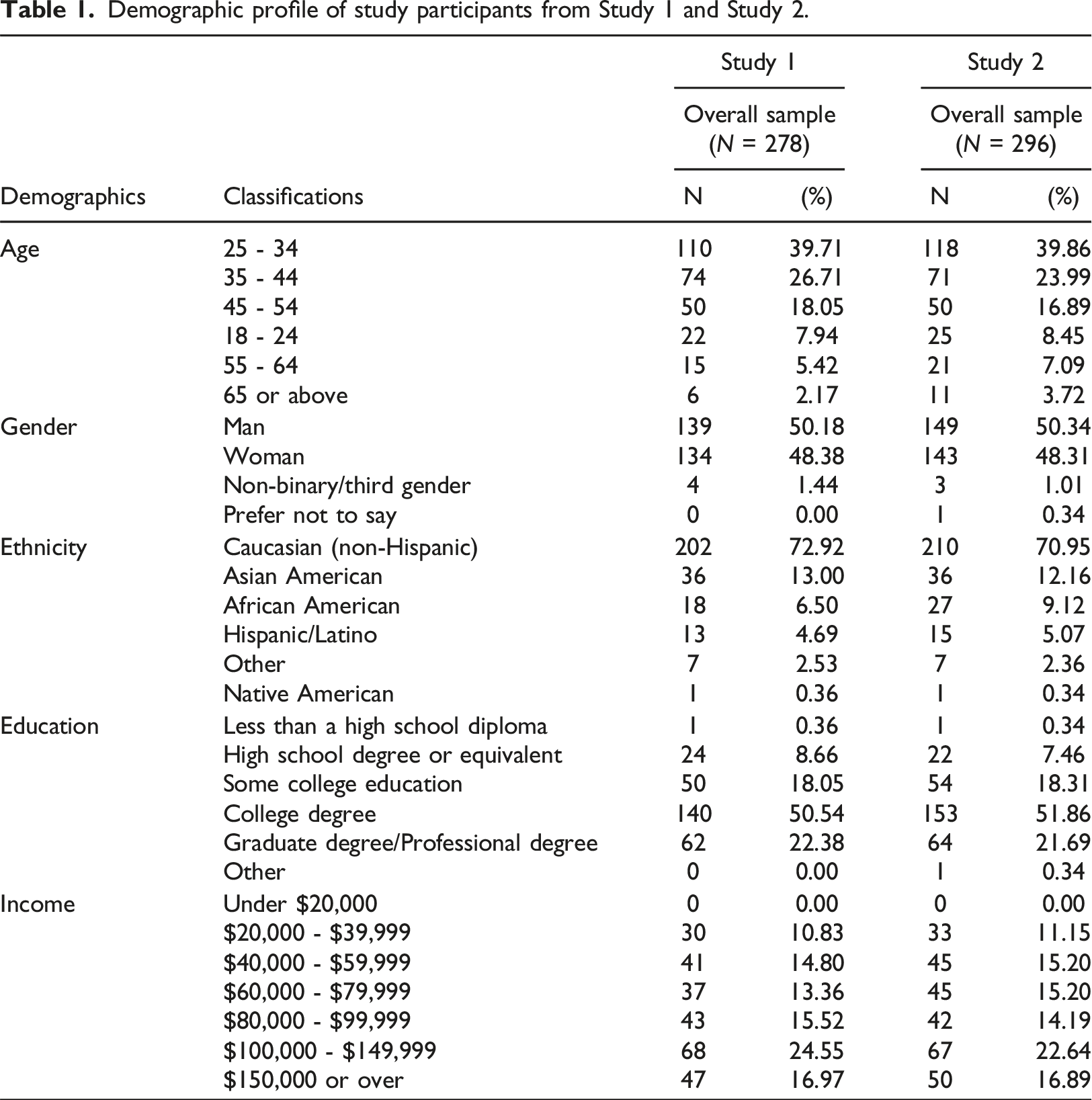
We recruited 280 survey participants (Mage = 37.6 years; 48.4% women) in the United States through the Prolific online platform, and the participants completed the online survey in exchange for a small compensation. All participants were screened to ensure they used the metasearch engine to book hotel accommodations in the past six months. Three respondents who did not correctly respond to an attention question designed to assess attentiveness were excluded from the study, resulting in a total sample of 277.
Study design
We employed a 3 (price: lower OTA price vs. same price vs. higher OTA price) X 2 (uniqueness: low vs. high) between-subjects design. Approximately equal numbers of participants were randomly assigned to one of six conditions. Given the complexity of choosing a hotel room, which involves evaluating various attributes like location, cleanliness, and amenities (Lockyer, 2005), the booking process is a multi-stage decision where each attribute is considered separately (Schrift et al., 2018; Wright and Barbour, 1977). This is similar to planning a vacation by reviewing various aspects, such as destination, flights, and rental cars, before making a final decision (Schrift et al., 2018). Each attribute is assessed independently before moving on to the next.
Following this attribute-by-attribute approach, Study 1 and Study 2 were designed to evaluate the effect of each attribute one at a time. Specifically, we investigated the interaction of room price with two attributes: cancellation flexibility and OTA credibility, as price is the foremost consideration for leisure travelers in their purchase decisions (Jones and Chen, 2011; Kim and Park, 2017). Rather than examining several variables simultaneously, our study focused on the interaction of price with cancellation flexibility in one stage (Study 1) and price with OTA credibility in another stage (Study 2) to understand their individual effects. Loyalty programs, especially for hotels, play a significant role in the consumers’ decision-making process (Tanford et al., 2011). Since the focus of our study was to understand price disparity across booking platforms (irrespective of the hotel brand), we isolated the effect of each attribute and controlled for loyalty by using fictitious hotel names (Manganari et al., 2014).
Procedure
All participants were asked to imagine that they were preparing for leisure travel and were searching for hotels through one of the metasearch travel agencies such as Trivago or Kayak. Within each condition, they were given two hotel room offers, one from the hotel’s direct booking website, HotelBrand.com, and the other from an OTA, TravelGOTO.com. For the scenario with a lower OTA price, TravelGOTO.com’s price was $229, while HotelBrand.com’s was $259. In contrast, for the scenario with a higher OTA price, TravelGOTO.com’s price was increased to $289, but HotelBrand.com’s price remained at $259. Additionally, in the same price scenario, TravelGOTO.com and HotelBrand.com offered the room at $259 per night. The rationale for selecting these price points was based on the year-to-date 2023 average daily rate for hotel rooms in the three leading leisure destinations, Oahu, New York City, and San Francisco, ranging from $224 to $301. The average rate of $269 was used as a benchmark to determine the low and high prices (CoStar Group, 2024; Grisler, 2023). Next, we manipulated the high and low unique features of the offer. In the high unique condition, TravelGOTO.com’s offer showed a free cancellation policy, whereas HotelBrand.com had a more restrictive non-refundable/non-cancellation policy. For low unique conditions, both offers had a free cancellation policy. Both room types, one king bed and two double beds, were priced identically in all conditions.
Measures
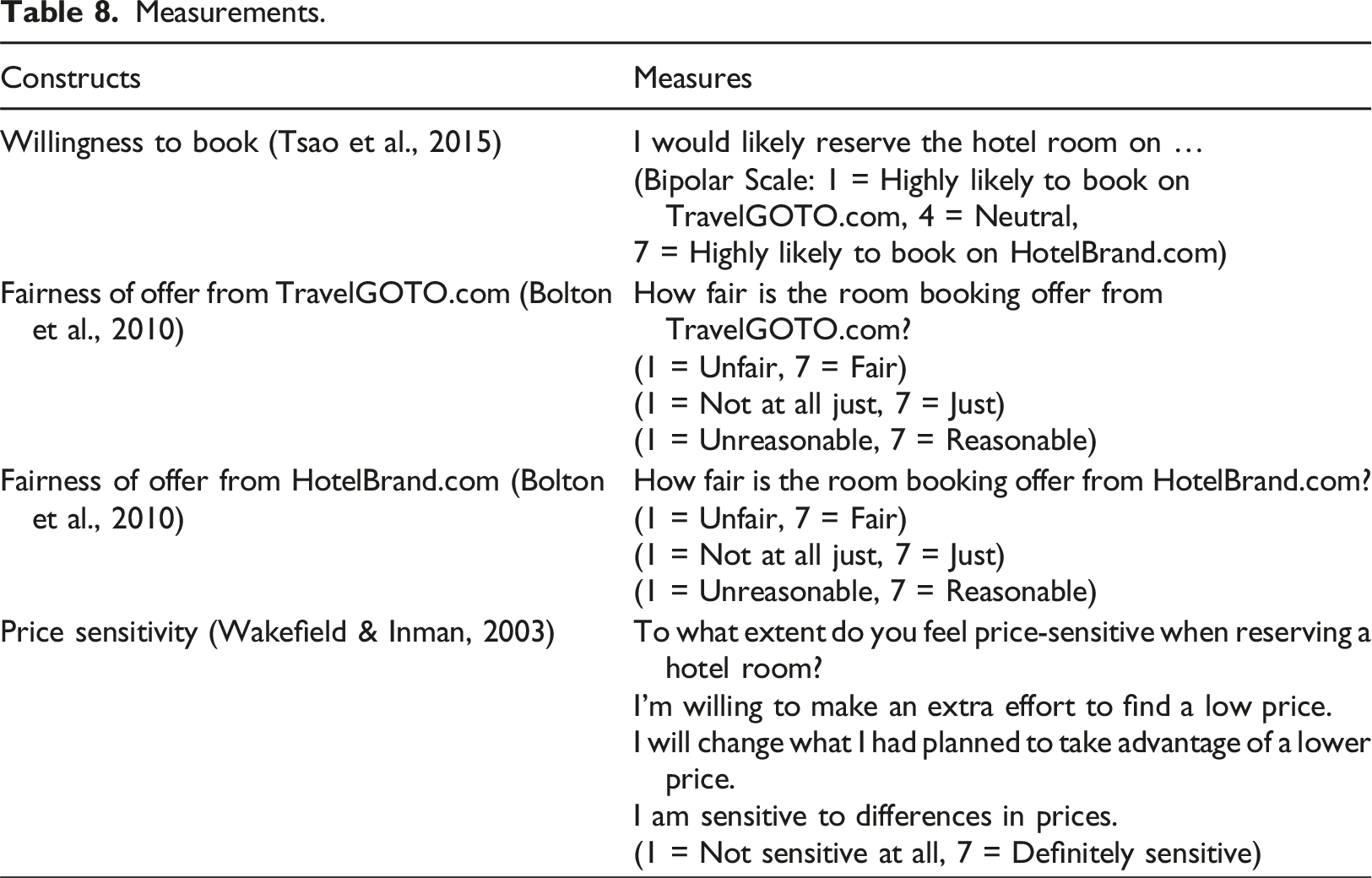
After reviewing the assigned conditions, all participants completed a questionnaire that contained items used as measures for the key variables of interest, manipulation check, realism check, attention check, and demographic questions (See Table 8). Willingness to book was modified from Tsao et al. (2015) to a 1-item bipolar scale anchored on 1 being highly likely to book on TravelGOTO.com and 7 being highly likely to book on HotelBrand.com. Then, to ensure price manipulation, participants recorded the perceived price difference using a bi-polar scale (1 = strongly disagree, 7 = strongly agree) for high and low OTA prices and (1 = definitely equal, 7 = definitely different) for the same price between OTA and brand.com. In addition, perceived cancellation policy difference was measured using a bi-polar scale (1 = not different at all, 7 = definitely different). We also asked participants how realistic the scenario was (1 = not realistic at all, 7 = very realistic) and presented questions on the control variables, fairness of offers by the OTA and the hotel’s direct site (Bolton et al., 2010), and price sensitivity (Wakefield and Innman, 2003). Lastly, participants’ demographic information was also collected.
Study 1 – Results
Manipulation and realism checks
Demographic profile of study participants from Study 1 and Study 2.
Willingness to book
Moderation results: Uniqueness.
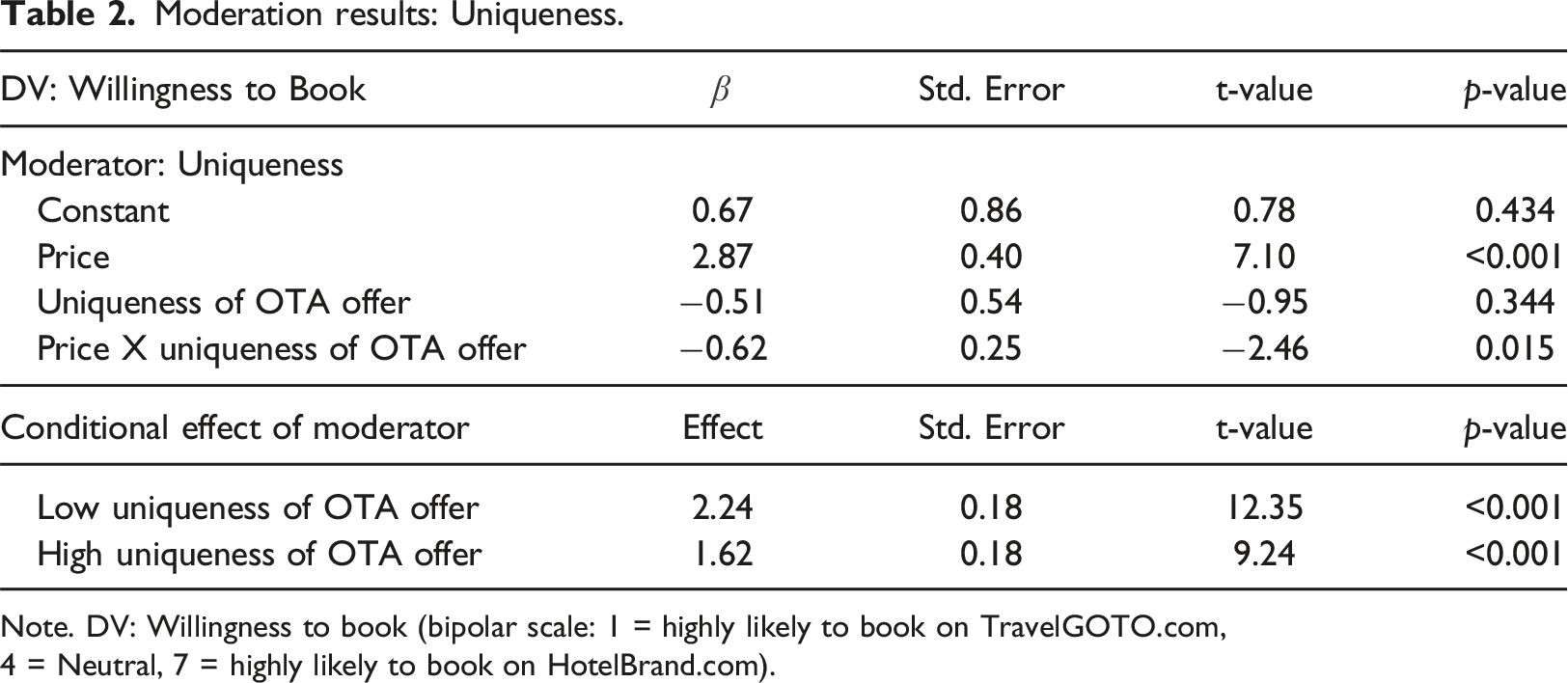
Note. DV: Willingness to book (bipolar scale: 1 = highly likely to book on TravelGOTO.com,
4 = Neutral, 7 = highly likely to book on HotelBrand.com).
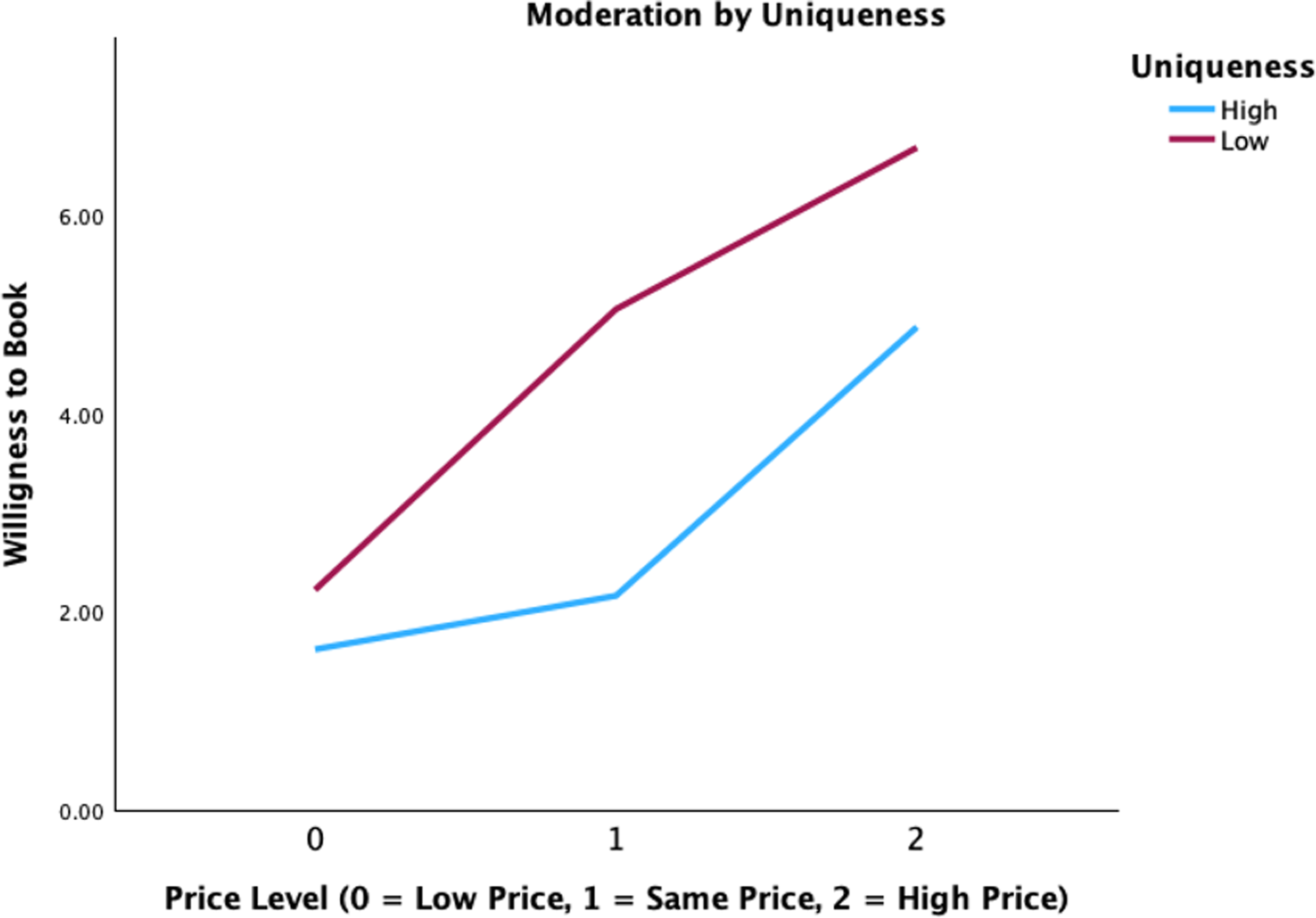
Moderation by uniqueness.
Planned contrast
Planned contrast results: uniqueness.
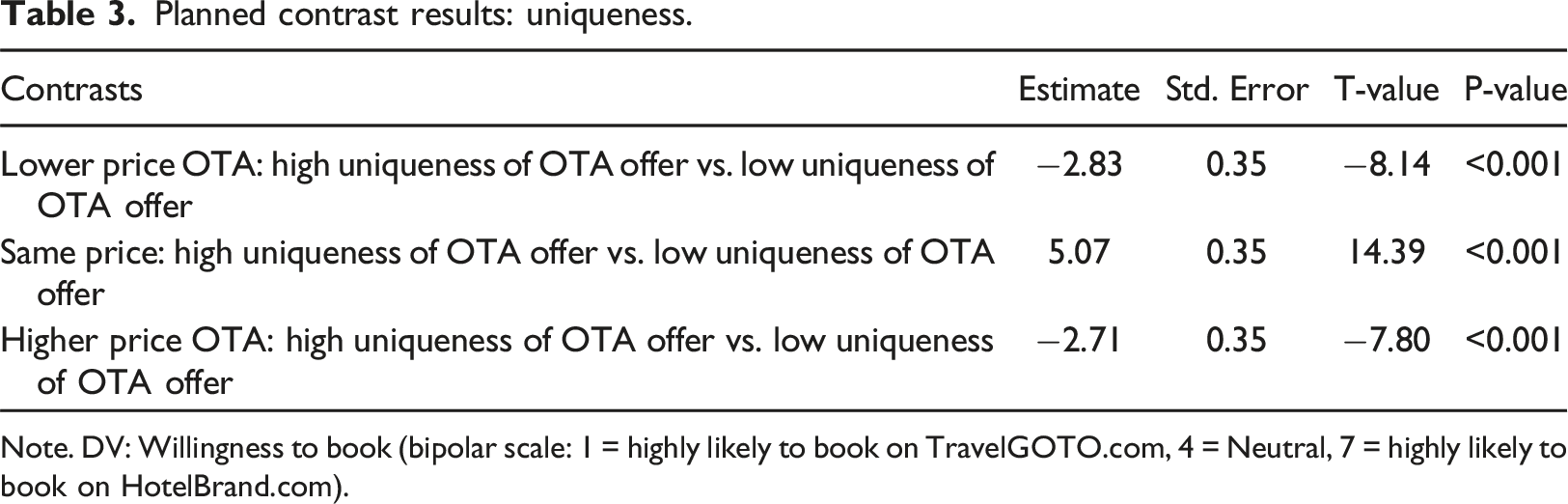
Note. DV: Willingness to book (bipolar scale: 1 = highly likely to book on TravelGOTO.com, 4 = Neutral, 7 = highly likely to book on HotelBrand.com).
Sensitivity analysis
Sensitivity analysis results: Uniqueness.
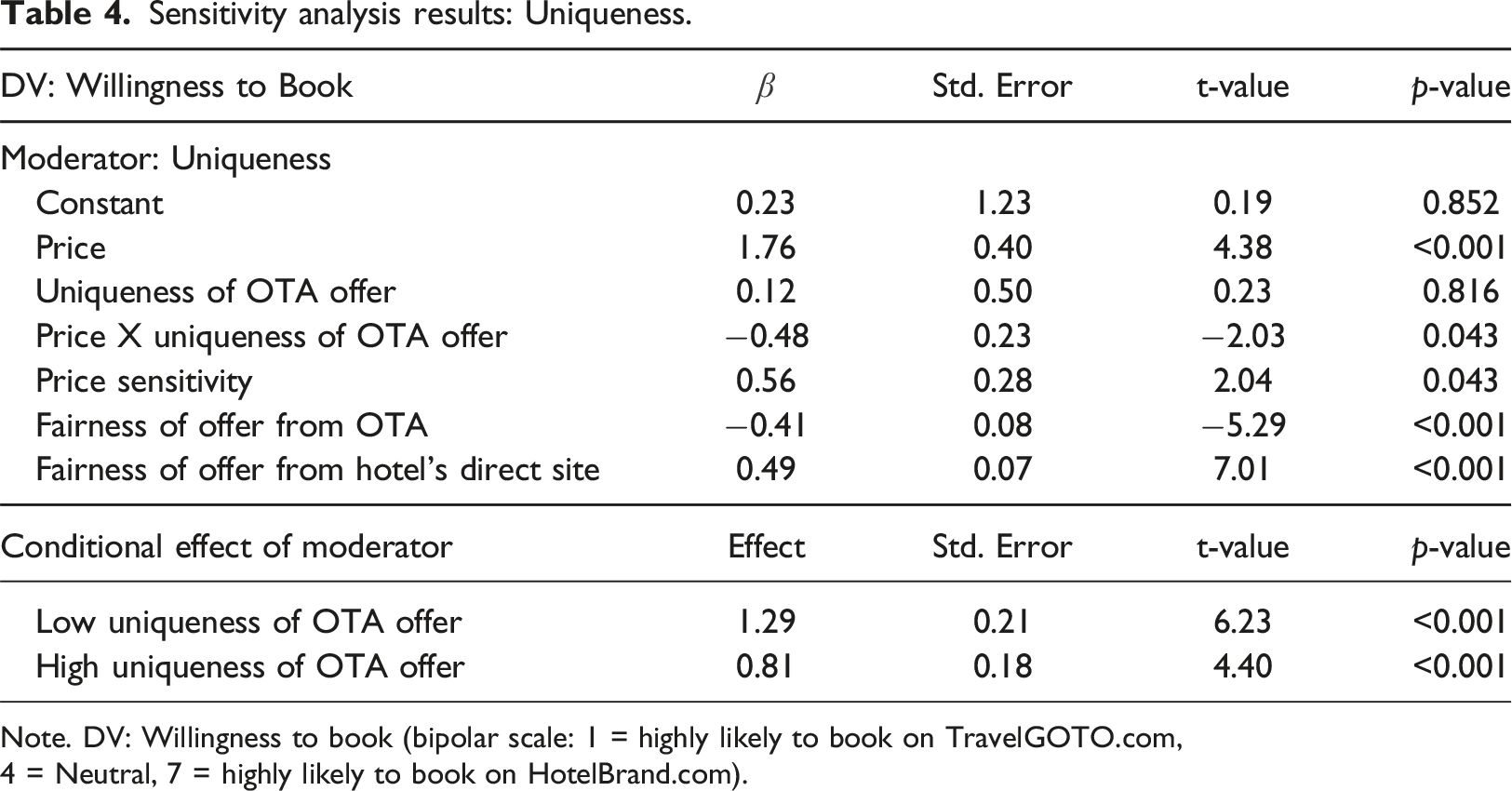
Note. DV: Willingness to book (bipolar scale: 1 = highly likely to book on TravelGOTO.com,
4 = Neutral, 7 = highly likely to book on HotelBrand.com).
Study 1 - Discussion
In Study 1, we investigated the effects of price and non-price content disparities on consumers’ decisions about where to book their hotel reservations. In scenarios where prices matched between the OTA and the hotel’s direct website, we observed a stronger preference for booking through the hotel’s direct website, although more flexible cancellation was offered on the OTA. This signaled the importance of price parity in hotel operations to reduce dependency on OTAs. When price parity is satisfied, the disparity of non-price content becomes irrelevant in booking decision-making (Akdeniz et al., 2013). However, based on the results of disparity conditions, we infer that respondents compare the additional attribute (offer uniqueness) when the parity is disrupted on OTAs (Schrift et al., 2018). In this study, we noticed a significant reversal in preference when OTA’s offer had a more favorable cancellation policy, with consumers gravitating more towards OTAs. This further highlights the critical role of price parity as a determinant in booking decisions.
Study 2: Moderating effect of credibility of OTA
Sample
Study 2 was conducted independently, separate from Study 1. Through Prolific, we recruited 302 survey participants (Mage = 38.0 years; 48.3% women) from the United States. Participants who used a metasearch in the past six months completed a survey for nominal compensation. After excluding six respondents for failing an attention check, the sample size was refined to 296.
Study design
We employed a 3 (price: lower OTA price vs. same price vs. higher OTA price) X 2 (credibility: low vs. high) between-subjects design, with participants evenly distributed across six conditions. An approximately equal number of participants were assigned to each experimental condition. Similar to Study 1, in Study 2, we continued using the attribute-by-attribute approach to evaluate each attribute individually. Specifically, Study 2 examined the interaction of price and OTA credibility independently from brand loyalty to understand their individual effects.
Procedure
Like Study 1, the conditions simulated a scenario where participants were planning leisure travel and compared hotel accommodations on metasearch. Within each condition, they were given two offers, one from the hotel’s direct site, HotelBrand.com, and the other from an OTA, TravelGOTO.com. To minimize the effects of prior experience and brand loyalty, we used fictitious names for the hotel and OTA, based on recommendations from previous literature (Manganari et al., 2017). The use of fictitious names continues in Study 2. To manipulate the lower OTA price condition, $229 was listed for TravelGOTO.com and $259 for HotelBrand.com, while for the higher OTA price condition, $289 was listed for TravelGOTO.com and $259 for HotelBrand.com. Both were offered $259 per night for the same price condition. Next, we manipulated the high and low credibility of TravelGOTO.com using the two dimensions, trustworthiness, and perceived risk (Erdem et al., 2002). In the high credibility condition, participants read, “TravelGOTO.com is a well-established online travel agency (OTA). It has maintained a top-ranking position in the online travel agency ratings. These ratings represent the company’s ability to deliver customers a flawless hotel reservation experience. In addition, TravelGOTO.com has received the highest ranking in consumer surveys conducted by a prestigious travel magazine, rated as the most trustworthy OTA.” On the other hand, in the low credibility condition, a lower ranking reflected a newer and less proven ability to deliver an expected service level. Whether it was a room with one king bed or two double beds, they were listed at an equivalent price.
Measures
Participants then assessed the scenarios, completing a questionnaire probing key variables, including willingness to book, measured on a 1-item Likert scale adapted and modified from Tsao et al. (2015), with 1 being highly likely to book on TravelGOTO.com and 7 being highly likely to book on HotelBrand.com. Price perception and OTA credibility were assessed on bipolar scales, and the realism of the scenario was also rated. Additional queries covered control variables such as fairness of pricing offers by OTA and the hotel’s direct website (Bolton et al., 2010) and price sensitivity (Wakefield and Inman, 2003) (See Table 8). Demographic data was also collected.
Study 2 - Result
Manipulation and realism checks
Participants perceived a higher price under the high OTA price condition and a lower price under the low OTA price condition. No significant price differences were noted when comparing the same OTA and HotelBrand.com price under the same price conditions (Mlower OTA price = 6.49, Msame price = 1.54, Mhigher OTA price = 6.46, F2,292 = 421.78, p < .001). Furthermore, the manipulation check for the credibility of the OTA was also successful: the high credibility condition was significantly higher than the low credibility condition (Mlow credibility = 2.89, Mhigh credibility = 5.71, F1,275 = 507.78, p < .001). Finally, the experimental manipulation of the conditions to influence realism was effective (Mlower OTA price and low credibility = 5.08, Mlower OTA price and high credibility = 5.65, Msame price and low credibility = 5.36, Msame price and high credibility = 5.49, Mhigher OTA price and low credibility = 5.26, Mhigher OTA price and high credibility = 5.37, F5,290 = 0.91, p = .475).
Willingness to book
Moderation results: Credibility.
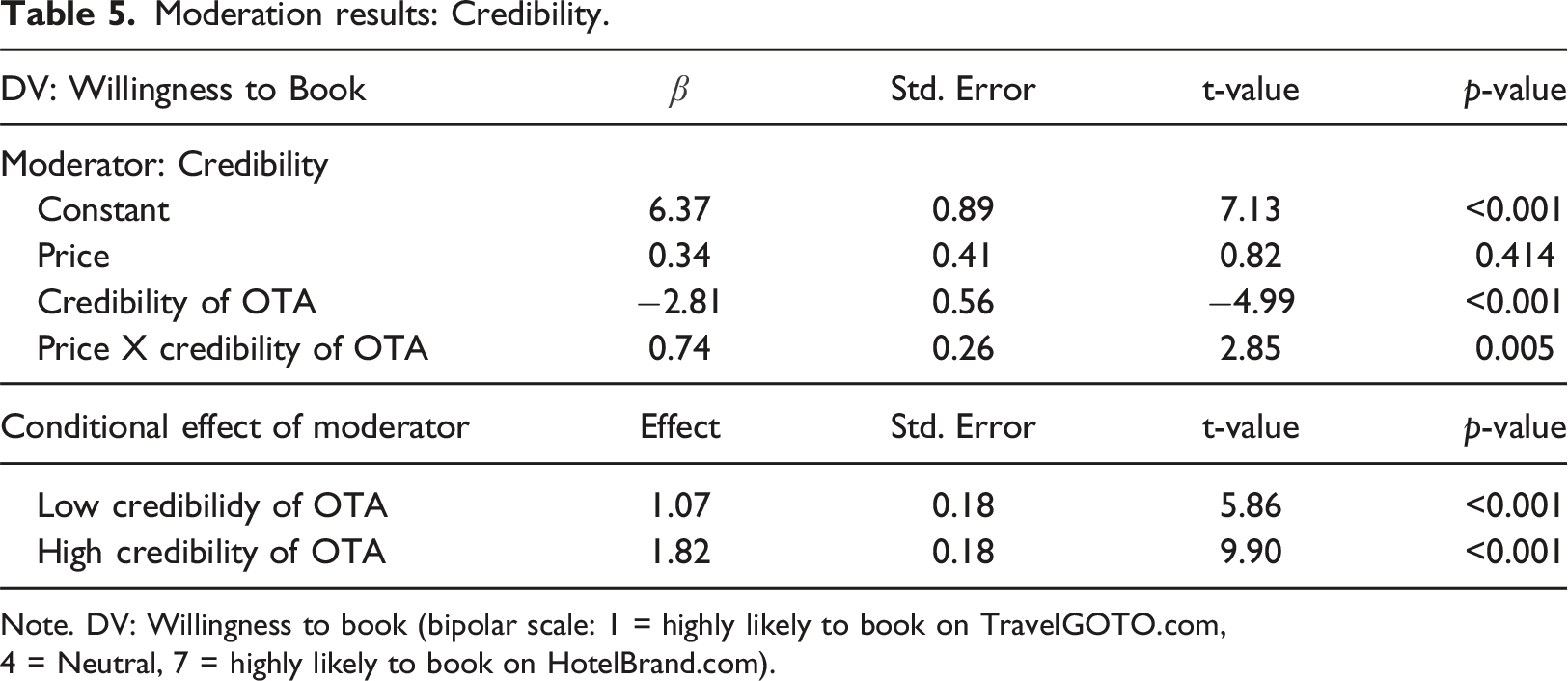
Note. DV: Willingness to book (bipolar scale: 1 = highly likely to book on TravelGOTO.com,
4 = Neutral, 7 = highly likely to book on HotelBrand.com).
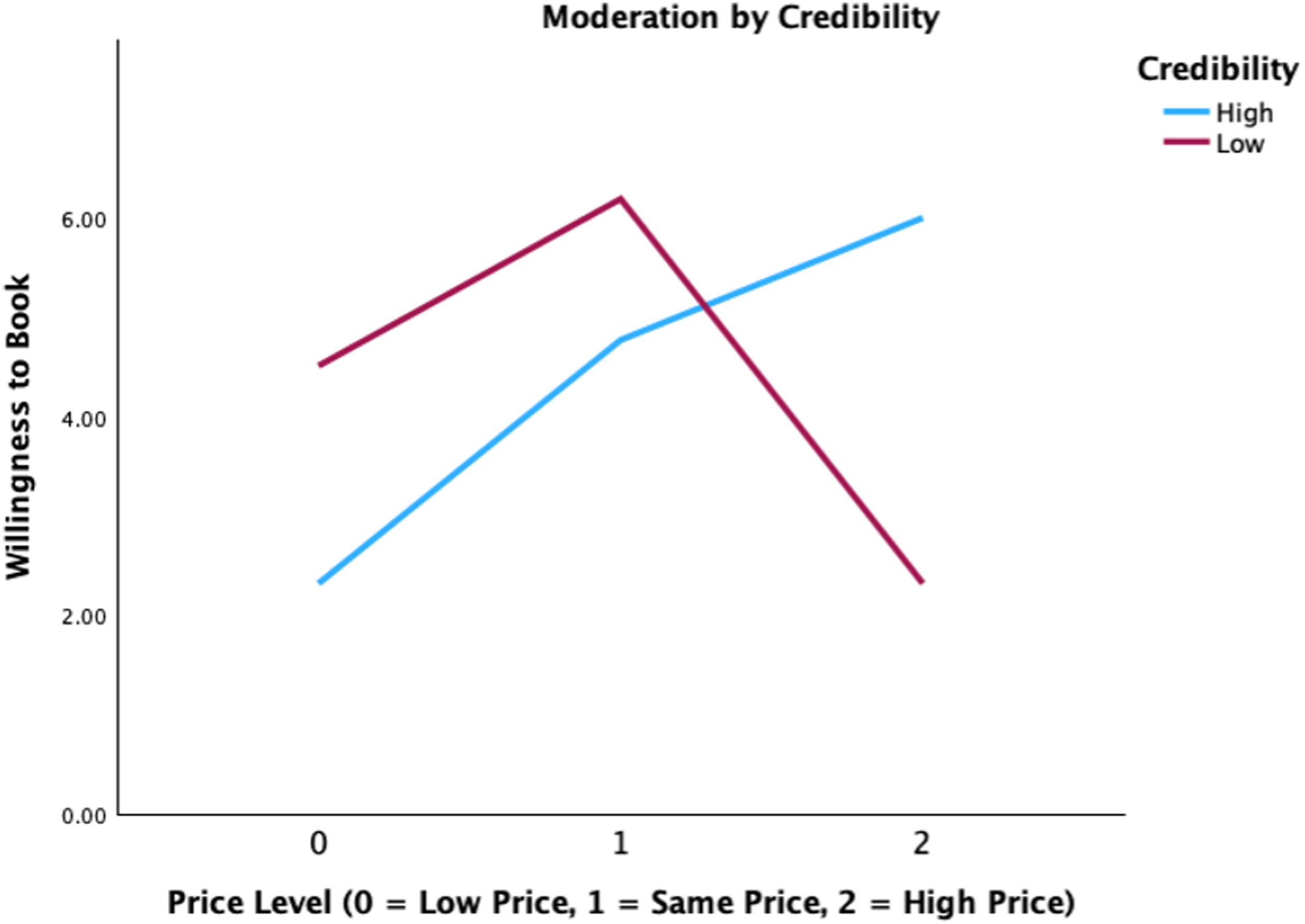
Moderation by credibility of OTA.
Planned contrast
Planned contrast results: Credibility.
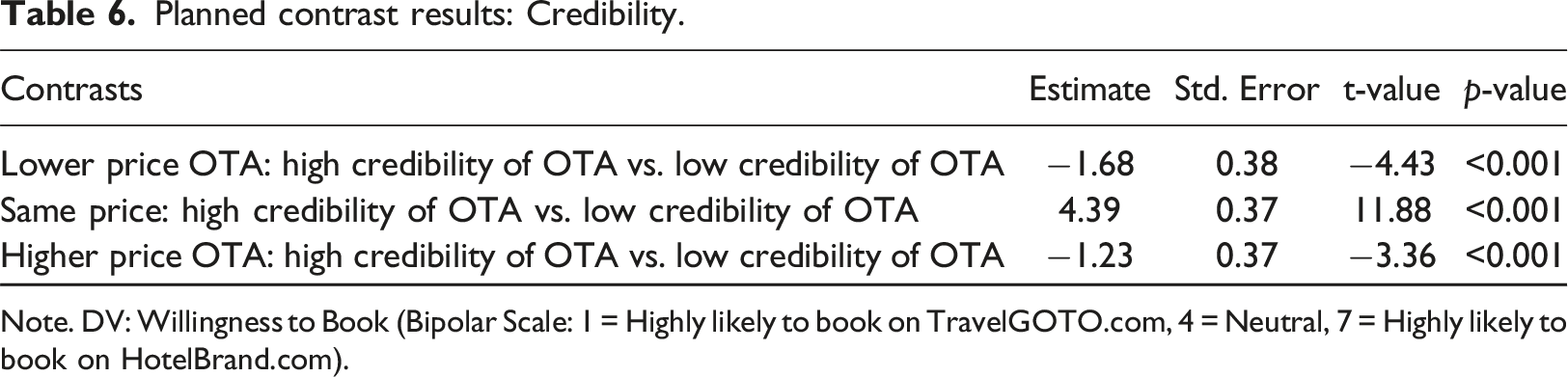
Note. DV: Willingness to Book (Bipolar Scale: 1 = Highly likely to book on TravelGOTO.com, 4 = Neutral, 7 = Highly likely to book on HotelBrand.com).
Sensitivity analysis
Sensitivity analysis results: Credibility.
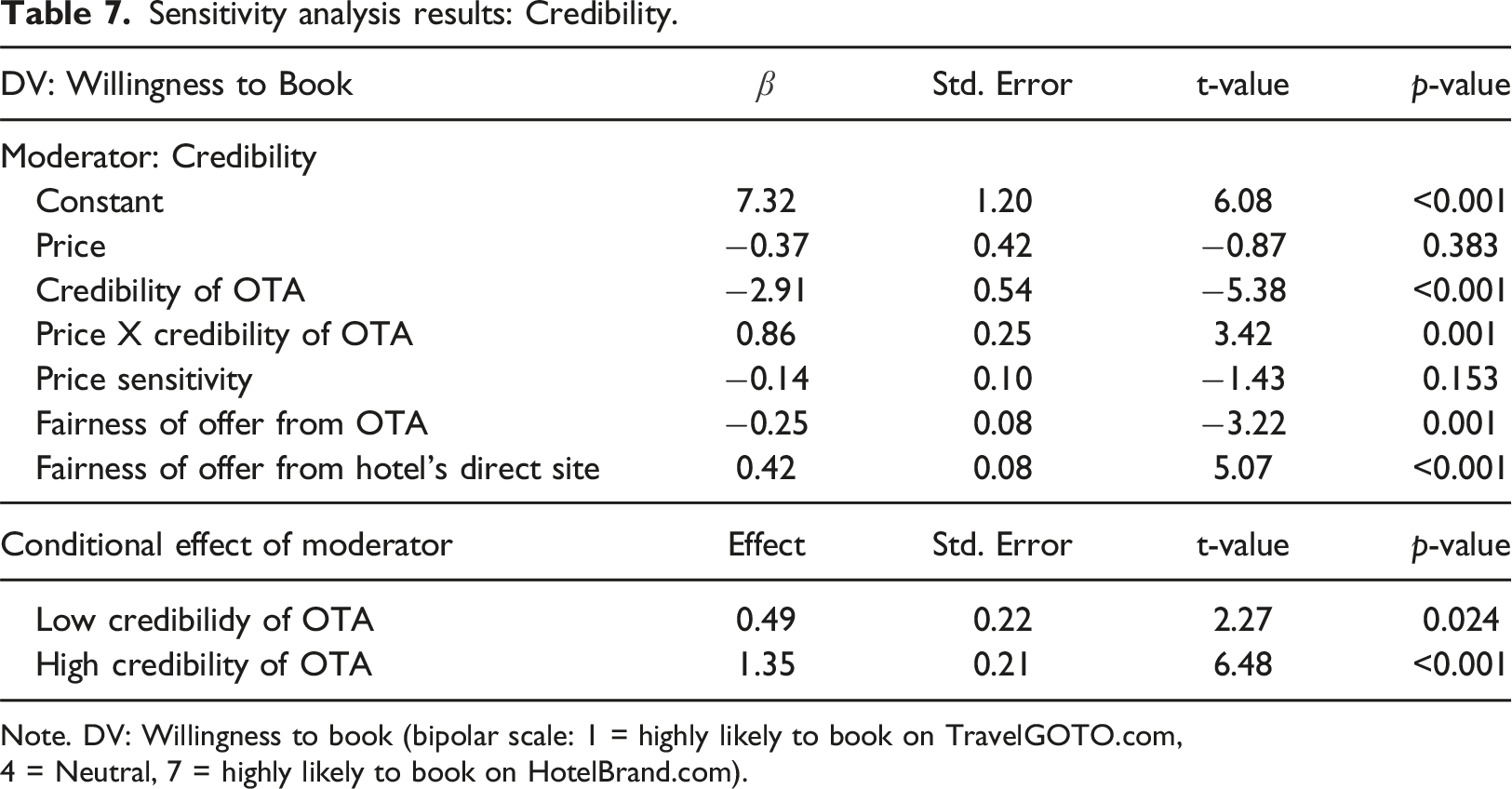
Note. DV: Willingness to book (bipolar scale: 1 = highly likely to book on TravelGOTO.com,
4 = Neutral, 7 = highly likely to book on HotelBrand.com).
Measurements.
Study 2 - Discussion
The results of Study 2 signify that the credibility of OTA is influential in shifting consumer preferences. The results show that credibility shifts consumer preferences toward OTA in price-disparities conditions. This mirrors the conclusions drawn from Study 1, where the need to consider additional attributes is reduced in the price parity condition. On the other hand, price disparity in this study led to an assessment of OTA credibility. Collectively, price disparity and OTA credibility contributed to booking intentions redirected in favor of OTA when OTA’s credibility was high.
General discussion
Overview
Pricing and content inconsistencies across distribution channels provided another business opportunity, and metasearch engines gained prominence. These platforms allow consumers to compare prices and content from different sales channels before making a hotel booking (Anguera-Torrell and Langer, 2022). Metasearch engines continue to increase their utilization among consumers and play a significant role in the hotel industry, contributing to around 10% of global hotel revenue (Garner, 2017). However, it is unclear how such price and content disparities impact consumers’ choice of booking on OTAs versus directly through the hotel website. In fact, academic research in this context is scarce and only limited to mainly pricing. This study addresses the current gap in the literature and incorporates two additional factors to price, cancellation flexibility, and channel credibility, to investigate their impact on willingness to book, whether directly with the hotel or with OTA.
There are two types of room price disparities that consumers can encounter: one within the platform caused by attribute-based pricing related to physical room types like views and policy attributes and cancellation flexibility (Masiero et al., 2015; Skodol and Wiersma, 2023), and the other between platforms for identical products. To illustrate the first type, Masiero et al. (2015) conducted a discrete choice analysis on hotel rooms priced based on various attributes. They found that leisure and business travelers, as well as new and returning guests, have different willingness to pay for various attributes like views, high floor, club lounge access, complimentary mini-bar, smartphone services, and flexible cancellation policies. The Masiero et al. (2015) study highlights how intra-platform price disparities arise from attribute-based pricing. While both types of disparities are important in influencing consumer purchase decisions, our study focuses on the latter, comparing the same product across different platforms. By holding constant the room type variability, we conducted a like-for-like comparison, providing a clearer understanding of the price disparity phenomenon from the perspective of cross-platform price differences.
The findings from Study 1 show that when there was price parity between OTA and the hotel’s direct website, the impact of an exclusive unique offer on OTA became less significant, and there was a heightened preference for booking through the hotel’s direct website. However, in scenarios with a price disparity, whether a lower price on OTA or a higher price with a more favorable cancellation term, we noticed a significant reversal in preference. Consumers gravitated more toward OTAs. This highlights the critical role of price parity as a determinant in booking decisions, and the impact that the non-price content of hotel offerings can have.
Study 2 investigated whether distribution channel credibility moderated the relationship between price disparity and booking intentions. Like in Study 1, the findings of Study 2 indicate that when prices were matched between OTAs and the hotel’s direct website, consumers tended to prefer booking directly through the hotel, regardless of the OTA’s credibility level being low or high. In contrast, when there was price disparity, whether the lower or higher price on OTA and the OTA had higher credibility, consumers were more likely to opt for booking through the OTA. Once again, price parity mitigated the impact of OTA’s credibility, resulting in a stronger preference for the hotel’s direct website. However, under the conditions of price disparity, there was a greater inclination towards the OTA, especially when channel credibility was incorporated.
The current two studies have illustrated that consumers adopt multiple attributes of the offer in their decision-making process when booking hotels ((Masiero et al., 2015; Roman and Martín, 2016). When prices are equal across channels, additional factors like non-price product features, cancellation policies, or the credibility of OTAs become less significant in the decision-making process. When there is price parity, consumers prioritize completing their booking directly through the hotel’s website without further consideration of additional attributes. When there is a difference in prices between channels, consumers move beyond price comparison to evaluate other factors, such as cancellation flexibility and the credibility of the OTA. This shift results in a higher preference for OTAs, as consumers weigh both price disparity and the cancellation flexibility or credibility of the OTA in their decision-making process. Simply put, in both studies, enhanced preference for OTA was conditional, and it only emerged under specific conditions where price disparity was prevalent.
Theoretical contributions
Our research makes two significant theoretical contributions to the literature on disparity in hotel room offerings. Firstly, while studies from the early 2000s in the hotel context predominantly focused on price disparities between hotel brands’ direct channels and OTAs, emphasizing the negative impact of such disparities on brand loyalty and customer satisfaction, our study broadens this perspective (Carroll and Siguaw, 2003; Rohlfs and Kimes, 2005, 2007; Pan et al., 2004; Gazzoli et al., 2008). We extend the discourse beyond price, introducing non-price content factors as additional elements of disparity. Specifically, we demonstrate that in conditions with price disparity, price and non-price attributes like cancellation policies can significantly sway consumer purchase intentions.
Secondly, our study enhances the price disparity literature by introducing a second attribute, the credibility of OTAs, a previously underexplored factor. We investigate how the perceived credibility of OTAs influences consumer purchase decisions, revealing a nuanced aspect of consumer behavior in the hotel booking process. By doing so, we provide a more comprehensive understanding of the dynamics in the consumer decision-making process. The study highlights that the credibility of the booking platform becomes a critical determinant in addition to pricing and policy differences when the price disparity is initially introduced. Figure 3 depicts two moderation studies that incorporate the two new attributes, non-price content factors, and OTA credibility, into the early price disparity literature. Conceptual framework based on studies.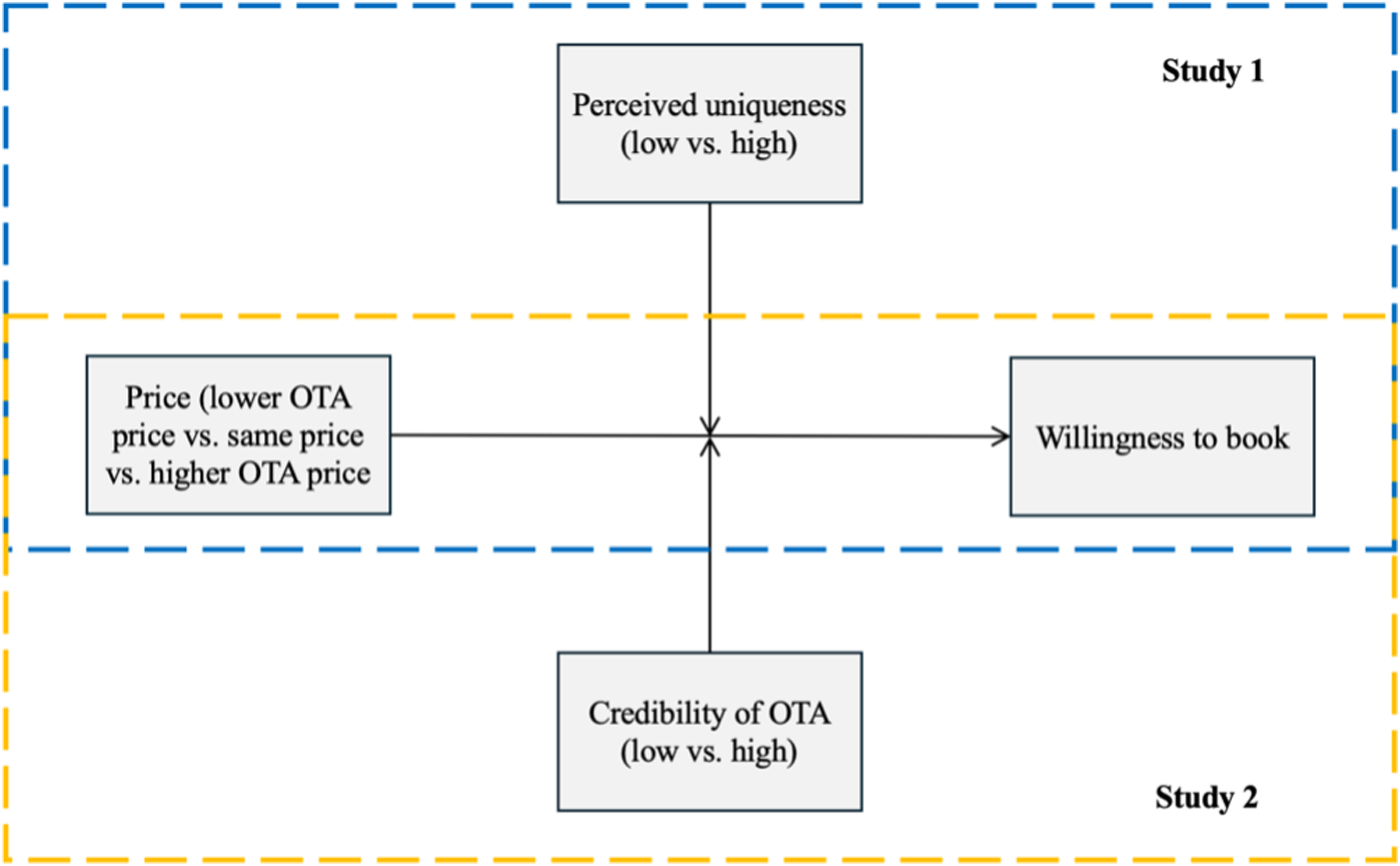
Practical implication
Although logically, price and non-price content should have equal weight on a consumer’s decision to book a specific distribution channel. However, Study 1 revealed that one holds more significance than the other in preserving direct bookings and reducing potential profit loss (Demirciftci et al., 2010; Gazzoli et al., 2008; Lu et al., 2020). The managers should not neglect the non-price disparity, but the importance of non-price content disparity is only recognized prices differ across distribution channels. Therefore, while hotel managers must pay attention to non-price content disparity, their positive impact on OTA bookings only becomes apparent after the primary factor of price disparity. This fact highlights that price parity is the priority for managers. As long as price parity remains unchanged, the variations in non-price content differences are unlikely to affect consumers’ decision to book directly with the hotels.
Furthermore, the overwhelming presence of numerous OTAs, as evident in metasearch results, poses a challenge for managers. With a mix of well-known and lesser-known OTAs, detecting and addressing unintended disparity issues becomes complex. Our research points out that once price parity is maintained, the significance of the OTA’s credibility is considered immediately after the price diminishes, and hotels can maintain their direct bookings. Essentially, OTA’s credibility is no longer a factor in deciding where to book a hotel room when prices are equal across online distribution channels. However, introducing price disparity tends to shift bookings away from the hotel’s website. If the price disparity were found against OTA with a high credibility level, the hotels would lose the booking to OTA and face higher expenses in booking commission. Once again, price parity is the decisive factor in retaining reservations on a hotel’s direct site.
Limitations
This study has made strides in elucidating the interplay between non-price content, OTA credibility, and consumer purchase decisions on OTA platforms. Some limitations must be acknowledged. One notable limitation is the potential influence of other content disparities in metasearch hotel results, such as image variations, discrepancies in leading room type offerings, hotel, and room type descriptions, and exclusive complimentary inclusions like breakfast, early check-in, and late check-out options. The current study did not examine these disparities but focused solely on cancellation policies. Other disparities may significantly impact consumer decisions. Another limitation lies in the study’s experimental design, which presented participants with only two booking offers—one from the hotel’s direct website and another from an OTA. Metasearch engines often display more than two offerings from distinct distribution channels, frequently exceeding twenty alternatives for hotels in a complex market. The implications of such information overload (Jacoby et al., 1974) and its effects on the cognitive processing abilities of consumers (Lee and Lee, 2004) were not considered in this study, which may restrict how the results can be applied to real-world settings.
Additionally, the experimental design used the logic of the attribute-by-attribute approach; however, it was limited to cancellation flexibility and OTA credibility, omitting other determinants of hotel room purchase, such as location, service levels, and brand loyalty, which have been previously examined as crucial factors (Lockyer, 2005; Tanford et al., 2011). Including these additional attributes would provide a more comprehensive understanding of all stages and factors involved in hotel accommodation decisions. Finally, in our study, we used fictitious names for the hotel and OTA to minimize the effect of brand loyalty, which allowed us to test experimental manipulations in a controlled setting. However, manipulating the fictitious name is not without its limitations, as it cannot fully capture the entire range of brand information that consumers may rely on in real-world settings (Swaminathan, 2003). As Keller and Aaker (1992) suggest, consumers’ knowledge and evaluations of a brand extension can be influenced by multiple sources of information, including product experience and advertising, which are not accounted for with fictitious names. Thus, while the use of fictitious names helps control for brand loyalty, it does not eliminate the influence of all brand-related factors.
Future research
First, Dwivedi et al. (2018) investigated the indirect effect of brand experience on willingness to pay through credibility and perceived uniqueness. In other words, the brand experience can signal the brand’s credibility. Extending that logic, it is also plausible that brand credibility is used as a signal of perceived uniqueness. We believe this could be a natural extension of the current research to assess whether there could be an interaction between those two constructs. Second, it would be valuable for future research to replicate this study using field data to validate the findings further. Collaboration with hospitality analytics firms, such as Amadeus and Fornova, could provide a robust dataset for dissecting revenue performance between direct and third-party distribution channels (Heshmatisafa and Seppänen, 2023; Medina and Hadwick, 2019). Such a study could compare frequent price parity violators with non-violators to deepen the understanding of how these practices affect revenue. Lastly, exploring other content disparities more comprehensively could shed light on their relative impact on consumer choice, potentially leading to a more nuanced understanding of the factors driving booking decisions. Lastly, investigating the effects of information overload on consumer behavior in the context of metasearch engine results would also contribute to developing more effective marketing and distribution strategies in the hospitality industry.
Footnotes
Declaration of conflicting interests
The author(s) declared no potential conflicts of interest with respect to the research, authorship, and/or publication of this article.
Funding
The author(s) received no financial support for the research, authorship, and/or publication of this article.
