




Abstract
Contrary to initial expectations derived from traditional labor market theories, which predicted digital platforms would narrow the gender earnings gap, recent studies suggest this gap remains persistent. This research focuses on Airbnb, where trust and hospitality, often perceived as favoring female hosts, play a critical role. Using data from Airbnb in Tel-Aviv and supported by experimental evidence, we find a surprising result: the gender earnings gap is not merely reduced on Airbnb but is reversed, with female hosts earning more than their male counterparts. This reversal is attributed to the market mechanism of Airbnb, combined with a guest preference for female hosts. These findings offer a crucial insight: the influence of information and communication technology (ICT) on women’s empowerment is not straightforward or universal. Instead, it is influenced by the specific characteristics and mechanisms of each digital platform.
Introduction
The gender earnings gap, where men earn more than women, is a prevalent phenomenon observed across labor markets globally. Since 2021, the average gender wage gap 1 was about 12% across OECD countries (OECD, 2023). In Israel, where the current study was conducted, this gap was even higher, reaching 25% during that period. Over the years, empirical studies have consistently examined the gender wage gap, revealing a trend of gradual narrowing (Blau and Kahn, 2017) but has not been entirely eradicated. The gender earnings gap in tourism has been widely documented across nationalities and countries, affecting both executives and low-paid workers (Guimarães and Silva, 2016; Muñoz-Bullón, 2009; Skalpe, 2007; Thrane, 2008). This gap is evident across various sectors, such as hospitality (Fleming, 2015) and aviation. In more feminised sectors like hospitality and travel agencies, the gap increases across the wage distribution, while in transportation, a more masculinized sector, it shows a decreasing trend (Marfil-Cotilla et al., 2024).
The aforementioned cases studied the gender earnings gap in traditional job markets. The current study explores whether the gender earnings gap also prevails online, within a primary digital accommodation marketplace, Airbnb.com. This research aims to determine if this gap persists in such an online environment where it has been suggested that women might have an advantage over men.
Addressing the gender earnings gap is essential for promoting sustainable economic growth, economic justice, gender equality, and overall societal well-being (European Commission, n.d.). The UN targets for achieving these goals include, “End all forms of discrimination against all women and girls everywhere” (Target 5.1). One of the suggested solutions for the gap closure is: “Enhance the use of enabling technology, in particular information and communications technology [ICT], to promote the empowerment of women” (Target 5.B; United Nations, 2015). Indeed, the rise of digital markets and peer-to-peer platforms, often referred to as the sharing-economy or the gig-economy, has opened a new way of empowering women through the use of ICT. The tourism industry can be a significant force in driving progress towards these goals, as it employs more women than men (World Tourism Organization, 2019; Zhang and Zhang, 2020). A recent study of 27 European Union countries between 2008 and 2019 found that tourism development improves the gender gap in employment among these countries (Bolukoglu and Gozukucuk, 2024). Moreover, the UN target of empowering women through ICT (5.B) may be especially relevant to tourism, given that this industry is well known for its rapid adoption and development of digital technology (Fleischer, 2022). In fact, the most prominent examples of peer-to-peer digital markets, Uber and Airbnb, are focused on transportation and hospitality respectively.
The extensive research of the gender earnings gap in traditional labor markets has suggested both structural and individual-level drivers. They could be generally categorized as one or more of the following: (1) employers overt or subtle discrimination (Santos and Varejão, 2007), (2) Time constraints and flexibility, (3) Negotiation and socialization, including societal expectations, and differences in negotiation skills (Kessler, 2006), (4) Human capital, referring to differences in education, skills, training, and work experience (Hull and Nelson, 2000). Peer-to-peer digital marketplaces, such as Uber and Airbnb, have the potential to render these explanations for the gender gap less applicable. These platforms introduce new dynamics and market structures that can significantly alter the factors influencing earnings and opportunities, challenging conventional understandings of economic behavior in traditional markets. For example, digital self-employment prevents employers’ discrimination and also increases workers flexibility. Despite these expectations, however, preliminary evidence from digital platforms suggest the persistence, rather than reduction, of the gender earnings gap (Cook et al., 2020; Litman et al., 2020).
This study explores the gender earnings gap on Airbnb, chosen due to its unique characteristics that distinguish it from other platforms. First, Airbnb allows easy identification of a host’s gender by consumers. Second, it operates in a market-driven pricing system (unlike algorithm or bids driven prices). Third, the only indicator of human capital is the host’s experience, as opposed to extensive professional backgrounds. Additionally, Airbnb provides a diverse range of properties (apartments) and hosts attributes, all of which can be identified and controlled. Importantly, Airbnb relies on hospitality and perceived trust, and previous research (Ert and Fleischer, 2020) suggests that women may have an advantage in these aspects compared to men. Such differences could play a crucial role in influencing an earnings disparity, potentially tilting it in favor of women.
The paper utilizes econometric models to analyze the Airbnb market and scrutinizes how individual factors and the market mechanism of Airbnb influence the gender earnings gap. Following the econometric analysis, experiments are employed to further elucidate the findings, and explore the role of perceived trust in the context of the gender earnings gap under controlled conditions. The findings of this analysis indicate a reversal of the traditional gender earnings gap on Airbnb, a divergence from common trends observed in other marketplaces and sectors. This reversal underscores the unique features of the Airbnb platform and its influence on gender-related earnings disparities.
Conceptual framework and hypotheses: The gender earnings gap in digital markets
Digital markets and peer-to-peer platforms offer a promising pathway towards closing the gender earnings gap. These platforms mitigate many traditional workplace challenges, such as biases and unequal opportunities. The expectation of digital platform-facilitated labor is that it can empower women by providing workers (service providers) equal access and greater independence than traditional job markets. As such, digital markets may mitigate the abovementioned drivers of the gender earnings gap, as follows: (1) people are self-employed, which rules out the potential for employer’s discrimination, (2) there is higher temporal and spatial flexibility in both working time, and location, (3) negotiation skills are less relevant since prices are determined by an algorithm, bids or by the market, and (4) human capital is less relevant or can be controlled for on most platforms. These reasons led to the expectation that digital platforms would reduce the gender earnings gap (Goldin, 2014). Supporting evidence for these expectations is highlighted in a recent report from Hyperwallet, a digital payment platform. It indicated that 86% of women workers in digital markets believe they can receive equal pay to men (Cook et al., 2020). Yet in contrast to these expectations, the few pertinent studies of digital platforms suggest the persistence of the gender earnings gap.
The gender earnings gap on digital platforms
While research on the gender earnings gap in peer-to-peer platforms is still limited, existing studies indicate that the gap continues to exist. This suggests that even in these digital marketplaces, gender earnings gap is a persistent issue, highlighting the need for further investigation of this inequality. A recent study on Uber (Cook et al., 2020) revealed a significant earnings gap of roughly 7% in favor of men based on U.S. Uber data. The results suggest that although Uber is a flexible digital market, it is subject to a gender earnings gap due to gender differences in drivers’ behavior. Specifically, men earn more than women by driving faster (and completing more rides per time unit), and being more willing to drive in questionable neighborhoods. Another study focusing on eBay (Kricheli-Katz and Regev, 2016), also found that men earn more than women, but suggested a different mechanism. It examined auction-type transactions (sellers set the initial price but do not affect the final price) to find that women received lower bids by 20% than men for an identical new item, and 3% lower for an identical used item. These disparities were explained by buyers’ undervaluing products sold by women. Evidence of gender earnings disparities was also found in a study of a platform-facilitated labor. Despite women working more hours on the platform, their average hourly rates where about 33% lower than those of men, casting doubt on the expectations of such platforms for empowering women (Barzilay and Ben-David, 2016). A significant gender earnings gap was also documented in a recent study on Amazon Mechanical Turk (MTurk), a platform that connects “requesters” (employers) with “workers” (employees) for completing specified tasks (Litman et al., 2020). The results indicated that, on average, women’s hourly earnings were 10.5% lower than men’s. The pay difference was mostly explained by the workers’ task completion speed and women’s tendency to select tasks with a lower advertised hourly pay.
Additional evidence for gender earnings gap on digital platforms is suggested by studies of online crowdfunding. Gafni et al.’s (2021) study on Kickstarter and Chen et al.’s (2020) study on Renrendai (the Chinese equivalent of Kickstarter) found that, while women entrepreneurs seem more credible than men, they have a lower funding success rate, suggesting they are being discriminated against by investors.
These studies indicate, contrary to expectations, that the gender earnings gap persists on digital platforms, and some even term it “Discrimination 3.0” (Barzilay and Ben-David, 2016). Our examination of the evidence suggests that the origin of the gap is platform-specific and contingent on its features. It is noteworthy that on eBay, Kickstarter, and Renrendai the gender gap was attributed to customers (buyers, investors) favoring men, while on Uber and online labor markets it was attributed to the behavior of the service suppliers (drivers, workers). In all instances, the gap does not stem directly from unlawful discrimination, labor market flexibility, human capital, or negotiation skills, factors traditionally considered as sources in conventional labor market theories.
Airbnb as a case study for the gender earnings gap
Airbnb is one of the most prominent digital platforms to date, with a global revenue of about 8.4 billion U.S dollars in 2022. It includes over 6.6 million global active listings in more than 100,000 cities. Airbnb’s listings are operated by more than four million hosts, with women being 55% of its worldwide hosts community and their earnings are steadily increasing (Airbnb, 2018).
Airbnb provides a unique platform for exploring the gender earnings gap. Its structure allows a detailed analysis of both structural and personal factors affecting income differences. This approach offers a deeper insight into the gender earnings gap in digital environments. Our choice of Airbnb for this investigation is strategic for several reasons: 1. 2. 3. 4. 5. 6. 7.
The analysis of Airbnb provides a clear, focused examination of the gender earnings gap in a digital marketplace, and given its self-employment, flexibility, and market-driven pricing it seems to be free from most traditional employment biases. Moreover, the unique features of Airbnb may benefit women, potentially leading to a reduction, elimination, or even a reversal of the gender earnings gap typically seen in other environments. Conversely, despite these potential benefits, the prevalence of the gender earnings gap across various digital platforms, suggests that it might occur on Airbnb as well. Therefore, we expect a disparity in earnings between male and female hosts on Airbnb, mirroring trends observed in both traditional and other digital labor markets. However, the direction of this earnings gap on Airbnb is still uncertain and requires further investigation.
Hosts’ earnings on Airbnb are represented by their revenue. The aforementioned evidence from the literature suggests that, on Airbnb, the traditional gender earnings gap benefiting men may persist, but might also take the opposite direction, benefiting women, given the advantages for women, which results from the specific characteristics of Airbnb. Accordingly, we hypothesize:
The revenue of female hosts on Airbnb will differ from that of male hosts for comparable listings.
The effect of Airbnb host profiles on discrimination and trust
Airbnb.com is a peer-to-peer accommodation platform matching hosts (sellers) with guests (buyers). Guests base their booking decisions on both listings and hosts’ information that includes the host name and photo, revealing their gender and exposing them to potential discrimination. It is noteworthy that our paper exclusively centers on gender discrimination potentially resulting in earnings gaps, and price premiums. Consequently, we omit examinations of other gender disparities, which, while intriguing, fall outside the purview of this study. Previous studies of Airbnb have examined mainly race-based, rather than gender-based, discrimination. A notable study discovered that Caucasian hosts appear to benefit from a price premium compared to African-American hosts on Airbnb in NYC (Edelman and Luca, 2014). Other studies have reported similar evidence for price disparities for Asians in San Francisco (Kakar et al., 2018; Wang and Nicolau, 2017). A study of Airbnb data covering 40 cities around the world revealed additional evidence for these price disparities among Caucasian, African-American, and Asian hosts (Marchenko, 2019). The public profiles of hosts and guests on Airbnb could facilitate discrimination against individuals based on their characteristics, such as belonging to racial minorities. By the same token, if gender discrimination exists in this context, it should be easily detected given the prevalent use of these public photos.
Drawing on existing research, we hypothesize that the public profiles on Airbnb may also confer advantages to women hosts. Specifically, studies have shown that host photos enable quick assessments of trustworthiness and attractiveness. Hosts perceived as more trustworthy may experience increased demand and enjoy a price premium compared to counterparts perceived as less trustworthy. This suggests that the visual presentation on Airbnb profiles can significantly impact hosts' earnings potential (Ert et al., 2016). A recent study of Airbnb hosts’ photos suggests that women are perceived, on average, as more attractive and trustworthy than men (Ert and Fleischer, 2020). This advantage can also boost women’s personal reputation, which is crucial to their success on Airbnb and digital markets in general (Abrate and Viglia, 2019).
Based on the previous literature, we expect that female hosts will be perceived as more trustworthy than male hosts on Airbnb.
Female hosts are perceived as more trustworthy than male hosts assuming all other factors are equal.
In addition, we hypothesize that the higher perceived trustworthiness of women will facilitate guests’ preference for female hosts:
Guests will prefer apartments hosted by women due to a perception of higher trustworthiness associated with female hosts compared to male hosts.
This research employs econometric methods and controlled experiments to explore the existence of a gender earnings gap on Airbnb. It examines whether Airbnb replicates the gender earnings disparity common in other digital marketplaces or if, as some research indicates, its distinctive benefits for women might reverse this pattern. The study goes beyond merely identifying the presence and direction of the earnings gap on Airbnb; it seeks to unravel the underlying causes contributing to this disparity. This investigation should facilitate the comprehension of the impact of ICT on gender-based income differences.
Research design and methodology
This paper reports two complementary studies, designed to evaluate whether the earnings of female hosts differ from that of male hosts (H1), and if so, what is the source and nature of this difference. Study 1 is designed to econometrically test the direction of the gender earnings gap on Airbnb. It analyses data from Airbnb Tel Aviv, utilizing a differentiated goods market model (Berry, 1994; Fleischer et al., 2022) that tests the effect of gender on host’s revenue per available night (RevPAR 2 ), while controlling for all other hosts and apartments attributes. The econometric model also tests for gender difference in Average Daily Rate (ADR) and occupancy rate in order to explore the source of the difference in RevPAR, should such difference would be found. Importantly, the econometric analysis accounts for the endogeneity between ADR and occupancy rate, both being part of the market equilibrium.
Study 2 comprises two controlled experiments designed to explore potential gender-related factors contributing to an earnings gap on Airbnb. The first experiment examines how host gender influences guests' willingness to pay for accommodation, impacting the Average Daily Rate (ADR). The second experiment investigates the effect of host gender on guests' apartment selection, which influences the occupancy rate. Central to both experiments is the manipulation of the gender depicted in the hosts' personal photos. This is done to measure the impact of host gender on perceived trustworthiness, and to determine if any gender-based differences in perceived trustworthiness lead to a preference for apartments managed by female hosts, as hypothesized in H2a and H2b.
Study 1: Econometric analysis of the gender earnings gap on Airbnb
The first objective of the paper is to assess whether a gender earnings gap exists on Airbnb, and if so, what is its direction. As stated, the hosts earnings on Airbnb are determined by their revenue. Accordingly, our main economic performance measure of interest is the revenue per available night (hereafter RevPAR), which refers to the revenue received per available night over a period of a month.
The host’s revenue is fully dictated by two other performance measures: The first measure is the “average daily rate” (ADR), which states the average daily price received by the host over a period of one month. The second measure is the “occupancy rate,” referring to the monthly proportion of days the apartment was booked whenever it was offered for rent. Formally, RevPAR is obtained by the multiplication of ADR by occupancy rate. We are therefore interested to also test for a potential effect of gender on ADR and occupancy rate, because these measurements could give us insights about the source and nature of the differences in RevPAR should such be found.
The differentiated goods model
In an Airbnb market, a consumer chooses a listing based on its attributes (Fleischer et al., 2022). Therefore, we adopt a differentiated goods market model, originally applied to various B2C markets (Berry et al., 1995), as a framework for analyzing an Airbnb market 3 . Services in peer-to-peer markets, such as Airbnb, differ in their attributes (e.g., number of rooms, location), but unlike B2C markets they also vary in their sellers’ characteristics (hosts attributes in Airbnb).
A guest derives utility from each listing, based on the property attributes (e.g., location, price), but also its host (e.g., gender). Two noteworthy hosts characteristics is their gender and their perceived trustworthiness, which can be discerned from their published photographs. Specifically, the model posits that:
The utility of guest i from staying in listing j is:


Guests book their preferred listing that yields the highest utility, and their decisions in turn affect the price, occupancy, and revenue of each listing. The core question of our analysis is whether a gender earnings gap exists on Airbnb.
Data
To empirically examine the presence of a gender earnings gap on Airbnb, an analysis was conducted using monthly transaction data for all Airbnb listings in Tel Aviv, Israel, from 2018 to 2019. 4 This data was sourced from AirDNA, a leading provider of Airbnb data and analytics (available at https://www.airdna.co). We chose to focus on a 12-month timeframe in order to balance between the dynamic nature of Airbnb, requiring attention to the most recent and concise periods, and the need to capture seasonality effects. The analysis focused on the main rental performance measures: RevPAR, ADR, and occupancy rate. Therefore, we limited the data to listings that were rented at least once during this period, resulting in 14,534 active listings. 5 In addition, we obtained the following information on the listings’ attributes on the day of scraping the data: Number of bedrooms, number of bathrooms, maximum number of guests allowed, minimum stay required, number of photos of the apartment, whether an instant booking was possible (yes/no), whether the apartment was assigned an “Airbnb+” badge (yes/no) for verified quality, whether pets were allowed (yes/no), neighborhood, overall rating 6 , and the number of ratings. We utilized the apartments’ coordinates to compute their distance to both the beach and the city center in meters, providing a better understanding of geographic variation (Yang and Mao, 2020). We also accounted for the hosts’ characteristics: The number of apartments they host, whether they are verified by Airbnb (yes/no), and whether they are accredited with the “Superhost” certification (Ert and Fleischer, 2019; Gunter, 2018).
The hosts’ gender was identified on the basis of their personal online photos, resulting in 4729 female hosts (33%), 6950 male hosts (48%), and 2855 hosts whose gender could not be revealed by their photos (19%) and were thus excluded from the analysis. 7 The final data includes 11,679 listings, with 60% featuring male hosts and 40% featuring female hosts.
Results
Female and male hosts on Airbnb in Tel Aviv: Performance and apartments’ attributes
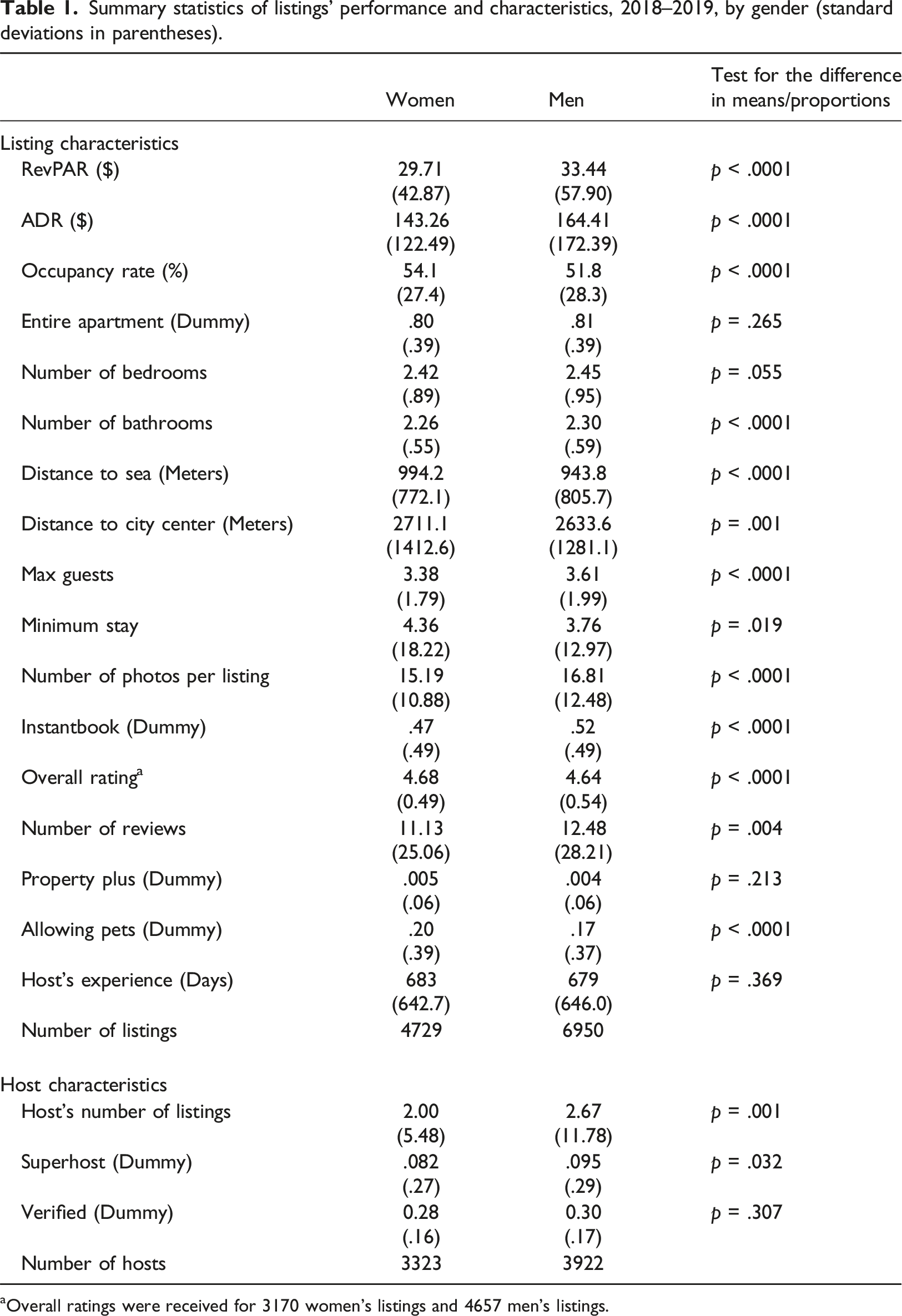
Summary statistics of listings’ performance and characteristics, 2018–2019, by gender (standard deviations in parentheses).
aOverall ratings were received for 3170 women’s listings and 4657 men’s listings.
A comparison of the means of the performance measures between women and men suggests significant differences in the average RevPAR ($29.71 vs $33.44 respectively, p < .0001). In addition, the table shows that ADR of female hosts is lower on average than that of male hosts ($143.3 vs $164.4 respectively; p < .0001), while occupancy rate is actually a bit higher (54.1% vs 51.8%; p < .0001). These differences, at least in part, seem related to men owning more listings and better located apartments than women. While the difference in means provides an initial picture of the differences between male and female hosts, they could not allude to a gender earnings gap. Therefore, we move on to conduct a comprehensive econometric analysis that controls for the listings and hosts attributes, to assess whether there is a gender gap in the hosts’ revenues ceteris paribus.
Gender earnings gap on Airbnb
We conducted an econometric analysis to test for differences in market performance between women and men, controlling for the aforementioned listing and host characteristics. The econometric model to be estimated consists of the revenue (RevPAR), pricing (ADR), and demand (occupancy rate) equations. We used the following three equation system to estimate our model:


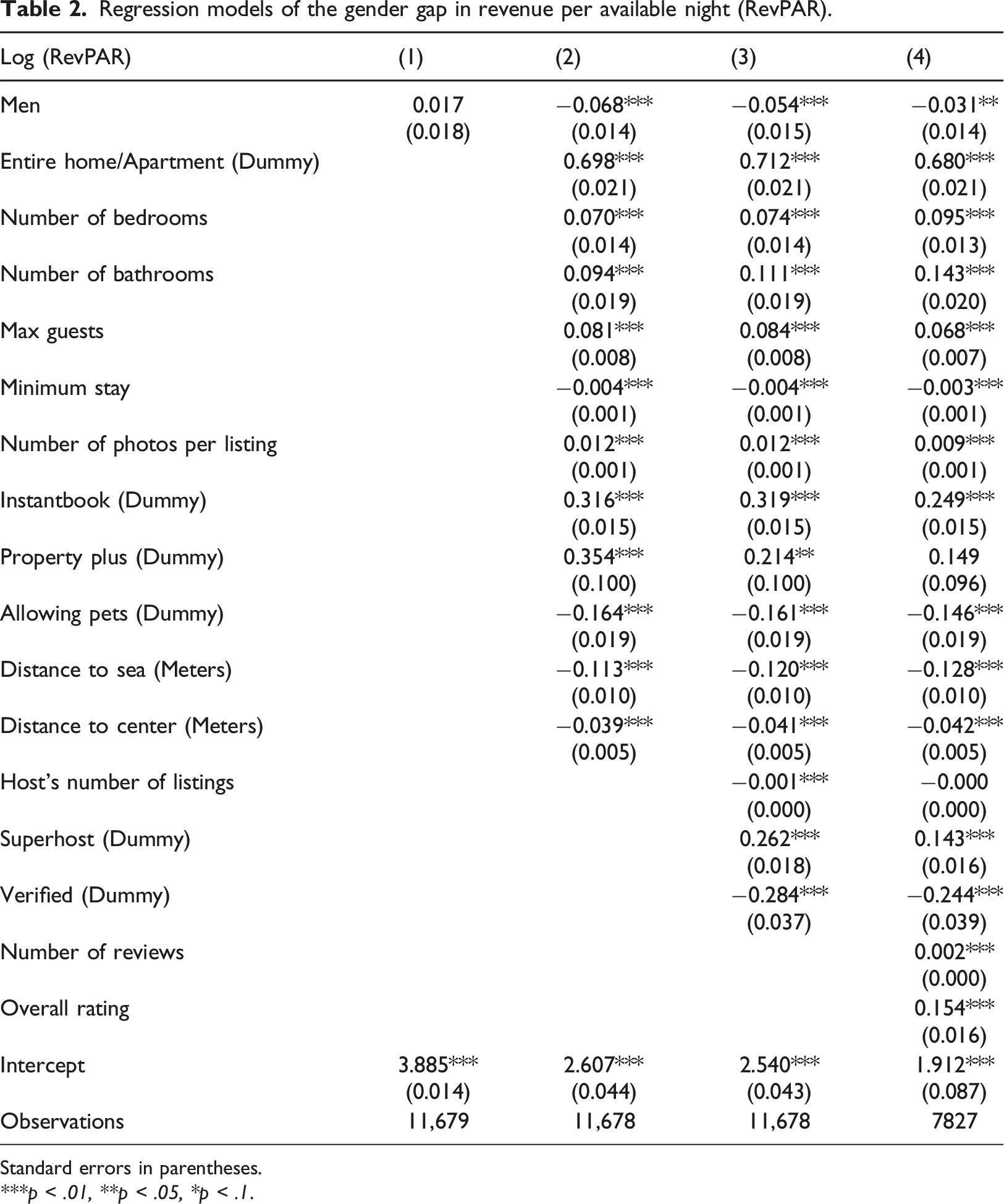
Regression models of the gender gap in revenue per available night (RevPAR).
Standard errors in parentheses.
***p < .01, **p < .05, *p < .1.
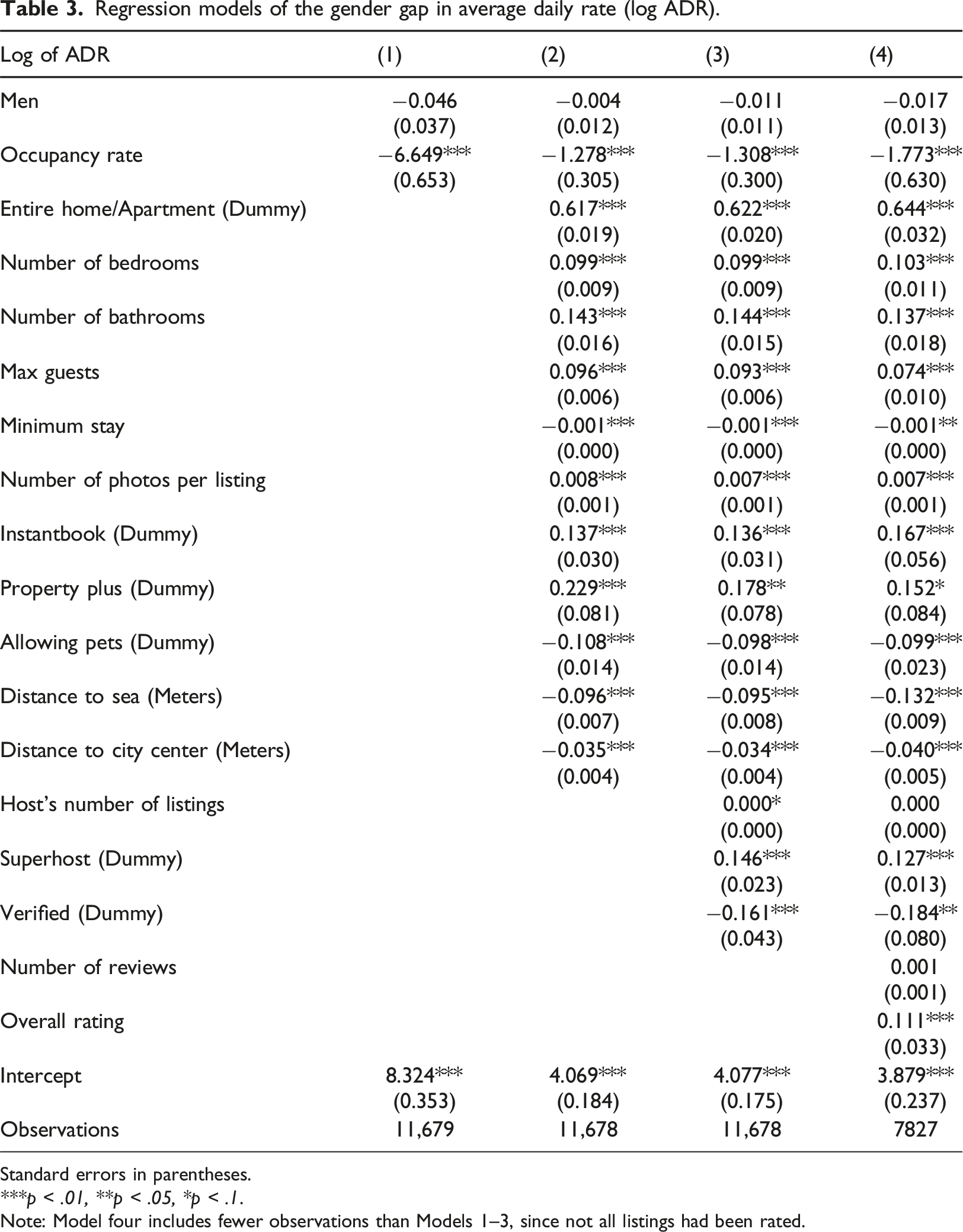
Regression models of the gender gap in average daily rate (log ADR).
Standard errors in parentheses.
***p < .01, **p < .05, *p < .1.
Note: Model four includes fewer observations than Models 1–3, since not all listings had been rated.
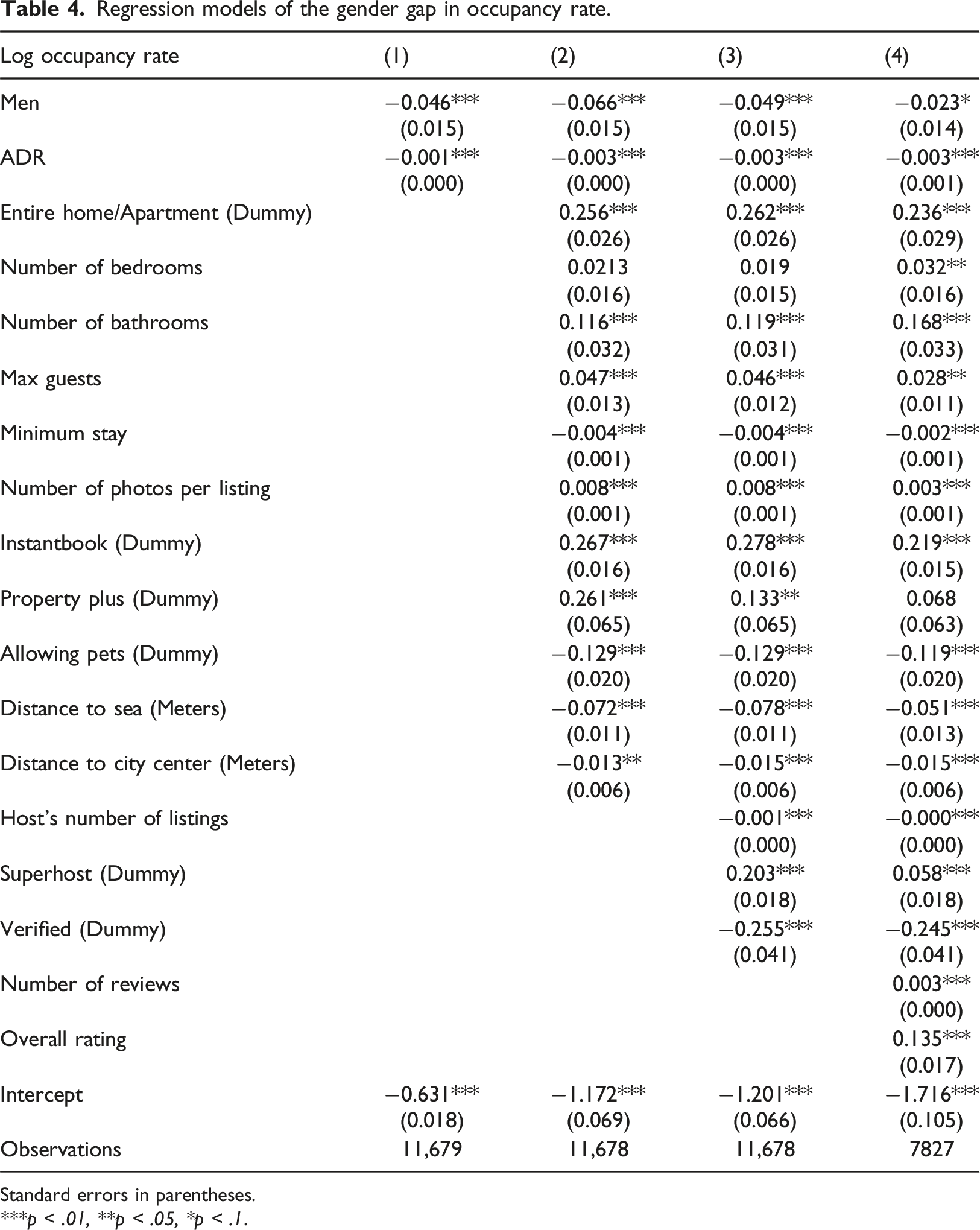
Regression models of the gender gap in occupancy rate.
Standard errors in parentheses.
***p < .01, **p < .05, *p < .1.
The results presented in Table 2 suggest a significant gender gap in the host’s earnings, as represented by their RevPAR, in support of H1. Interestingly, the direction of the gap is such that women gain a higher RevPAR than men for similar apartments they host. This pattern suggests a reversal of the traditional gender earnings gap found in other digital platforms. The analysis of the ADR and the occupancy rate (Tables 3 and 4) shows that the higher earnings do not result from the room rates, as they show no difference in ADR between male and female hosts. Rather, women gain higher earnings for similar apartments (RevPAR) because they enjoy a significantly higher occupancy rates than men. In Models 2 and 3, the RevPAR and occupancy rate are higher by 5% to 6% for listings hosted by women than by men, ceteris paribus. In Model 4, which controls for the overall ratings, the difference is reduced to about 2% to 3% but is not diminished. The coefficients of the control variables are in the expected direction, and almost all of them are significant. To the best of our knowledge, these results indicate the first evidence for a “reversed gender earnings gap” in a digital platform market, whereby women earn more than men.
Study 2: Consumers’ valuation and preference for apartments hosted by men and women: An experimental analysis
The results of the econometric analysis indicate that while women’s and men’s ADRs do not differ, women’s occupancy rates and consequently their revenues per available night are higher than those of men. One possible explanation for this finding is that guests value an apartment hosted by a woman differentally than one hosted by a man. Another explanation is that guests differ in their preferences for the host’s gender. To assess directly the role of guests’ valuation and preferences, we conducted two controlled experiments. Experiment 1 assessed the participants’ valuation of apartments hosted by women versus men, while Experiment 2 tested the participants’ preferences for an apartment hosted by a woman versus a man. Importantly, both experiments measured the host’s perceived trustworthiness based on the host’s photo to evaluate whether it affects guests’ preferences (H2a). The purpose of this was to discern the direct impact of the host’s gender on the guests' decision, and the indirect effect of gender mediated by the perception of trustworthiness (H2b).
Experiment 1: Guests’ valuation of women’s and men’s apartments
The results of the econometric analysis in Study 1 revealed no significant difference in the ADRs between male and female hosts, controlling for all other attributes (Table 3). Yet previous studies of other digital platforms, such as eBay, have found gender price discrimination in favor of men (Kricheli-Katz and Regev, 2016). To examine the apparent discrepancy between the two findings, we conducted a controlled experiment testing whether the host’s gender affects the guest’s willingness to pay (WTP) for an Airbnb rental. Participants examined Airbnb apartments (Figure 1) and stated their willingness to pay for a night stay in each apartment. Participants were randomly assigned to one of two experimental treatments: half the participants saw a photo of a female host, and the other half viewed the same person as a male host. The Hosts’ gender in the photograph was manipulated using www.faceapp.com, an AI-driven photo-editing application, that includes multiple options to manipulate the photo uploaded such modifying hair colors, hairstyles, glasses, age, and gender. The only characteristic manipulated in the experiment was gender, controlling for all other face characteristics. A screenshot of the experimental screen. Note: Hosts’ photos are blurred for privacy and are only used for illustration. The experiment used photos of real hosts and apartments.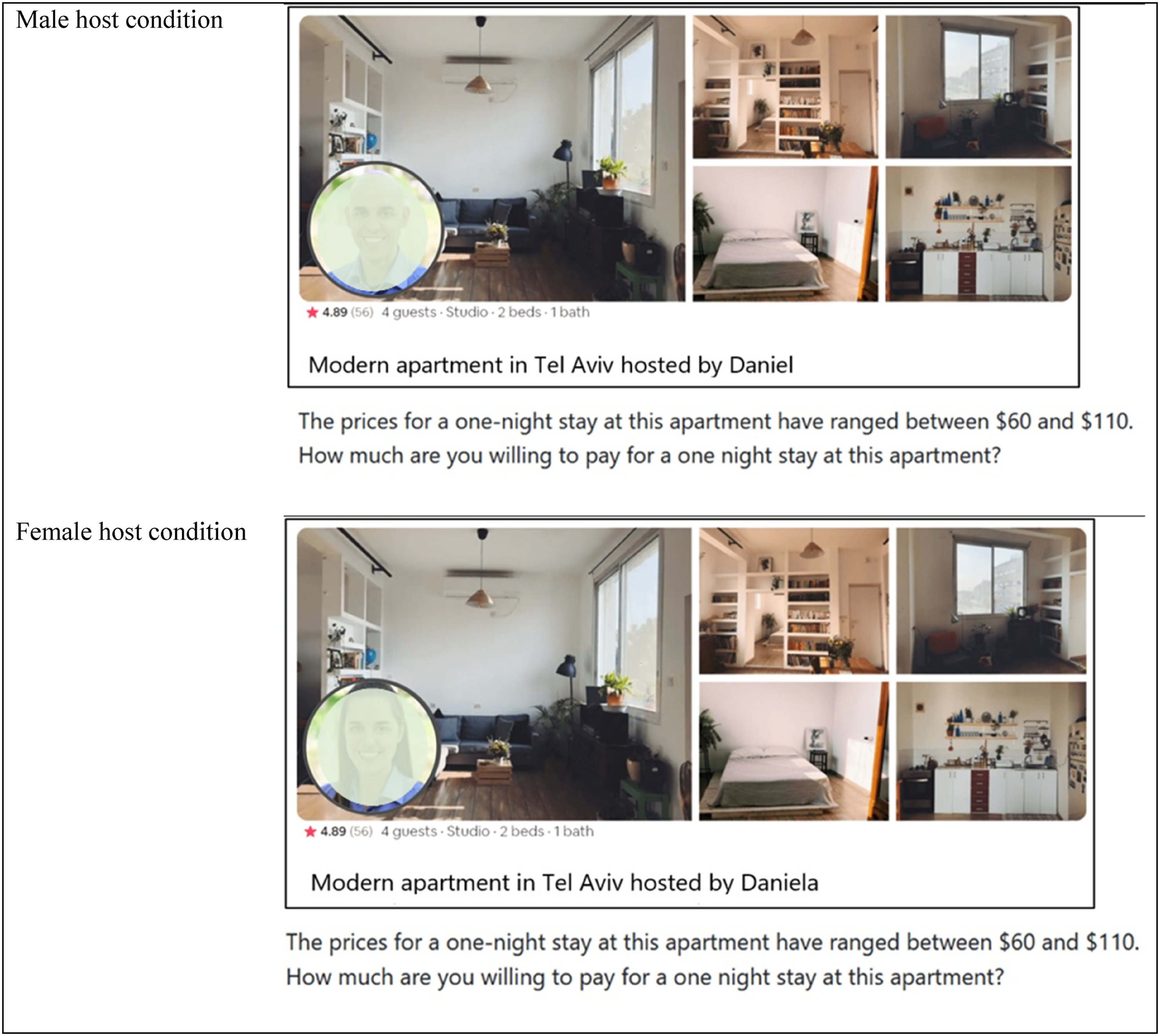
Experimental method and procedure
The experiment was conducted on Prolific (Palan and Schitter, 2018) with 219 participants from the United Kingdom, the United States, and Canada, aged 20–70 years, who had traveled within the 24 months that preceded the study and were familiar with Airbnb. The experiment focused on international tourists since the Tel Aviv accommodation market relies mostly (80% of its activity) on incoming tourism. Participants were paid $5/hour for their participation.
Each participant faced two apartments on two consecutive screens. They viewed the actual photos of each apartment and its data (description, number of reviews, rating, number of bedrooms and bathrooms, number of guests allowed, and the host’s photo and his/her name) and were given a price range of previous bookings. The participants were asked to state the price they were willing to pay for one night in that apartment (Figure 1). The host’s name and face in the photo were manipulated to feature the host as a man for half the participants, and as a woman for the other half.
In both experiments, upon completion of the main task (WTP or choice), participants were presented once again with each of the host’s photos consecutively on separate screens, and they marked their perception of the host’s trustworthiness (“How trustworthy is the person in the picture?” 1 = “not at all trustworthy” to 10 = “highly trustworthy”), and his or her attractiveness (“How attractive is the person in this picture?” 1 = “not at all attractive” to 10 = “highly attractive”). The data were used to evaluate whether perceived trustworthiness differs between female and male hosts and whether it mediates the effect of hosts’ gender on the guests’ decisions, should such a difference exist.
Results
The results of Experiment 1 reveal no significant difference in the mean WTP for female hosts ($96.3; Std = 28.2) and male hosts ($94.4; Std = 27.6). This finding suggests that participants did not discriminate between female and male hosts in their WTP for their rental. The participants WTP for male and female hosts was independent of their own gender. The WTP did not differ between men and women participants, neither when they valued a female host’s listing ($95.7 and $97.0, respectively, t (217) < 1), nor when they valued a male host’s listing ($94.4 and $94.3, respectively).
The results further show that when a host was presented as a woman, their perceived trustworthiness was higher than when the host was presented as a man (7.22 vs 6.46, t (436) = 4.58, p < .0001), in support of H2a; the same applies to hosts’ perceived attractiveness (7.26 vs 6.53, t (436) = 4.57, p < .0001). As expected, perceived trustworthiness increased a guest’s WTP by about 2% (t (1) = 2.40, p = .017), which potentially could have translated to an average value assigned to women’s apartments that is higher than men’s (Ert et al., 2016), but it did not.
Experiment 2: Do potential guests prefer male hosts over female hosts?
The results of the econometric analysis in Study 1 revealed a higher occupancy rate for apartments hosted by women than apartments hosted by men, ceteris paribus (Table 4), suggesting a potential preference for female hosts. Experiment 2 is designed to test this possibility directly, and evaluate the role of the perceived trustworthiness of hosts. In this experiment, participants were presented with two apartments, one hosted by a woman and the other hosted by a man. They were asked to choose the apartment in which they would prefer to stay.
Experimental method and procedure
In Experiment 2, participants viewed two apartments on the same screen, hosted by either a man or a woman, and were asked to choose the apartment in which they would prefer to stay (Figure 2). The host’s identity was manipulated, following the same procedure used in Experiment 1. For each apartment, a different face and gender were used, and these were counterbalanced across participants. Participants were randomly allocated to one of the eight possible treatments resulting from these combinations. A screenshot example of Experiment 2. Note: Hosts’ photos are blurred for privacy and are only used for illustration. The experiments used photos of real hosts.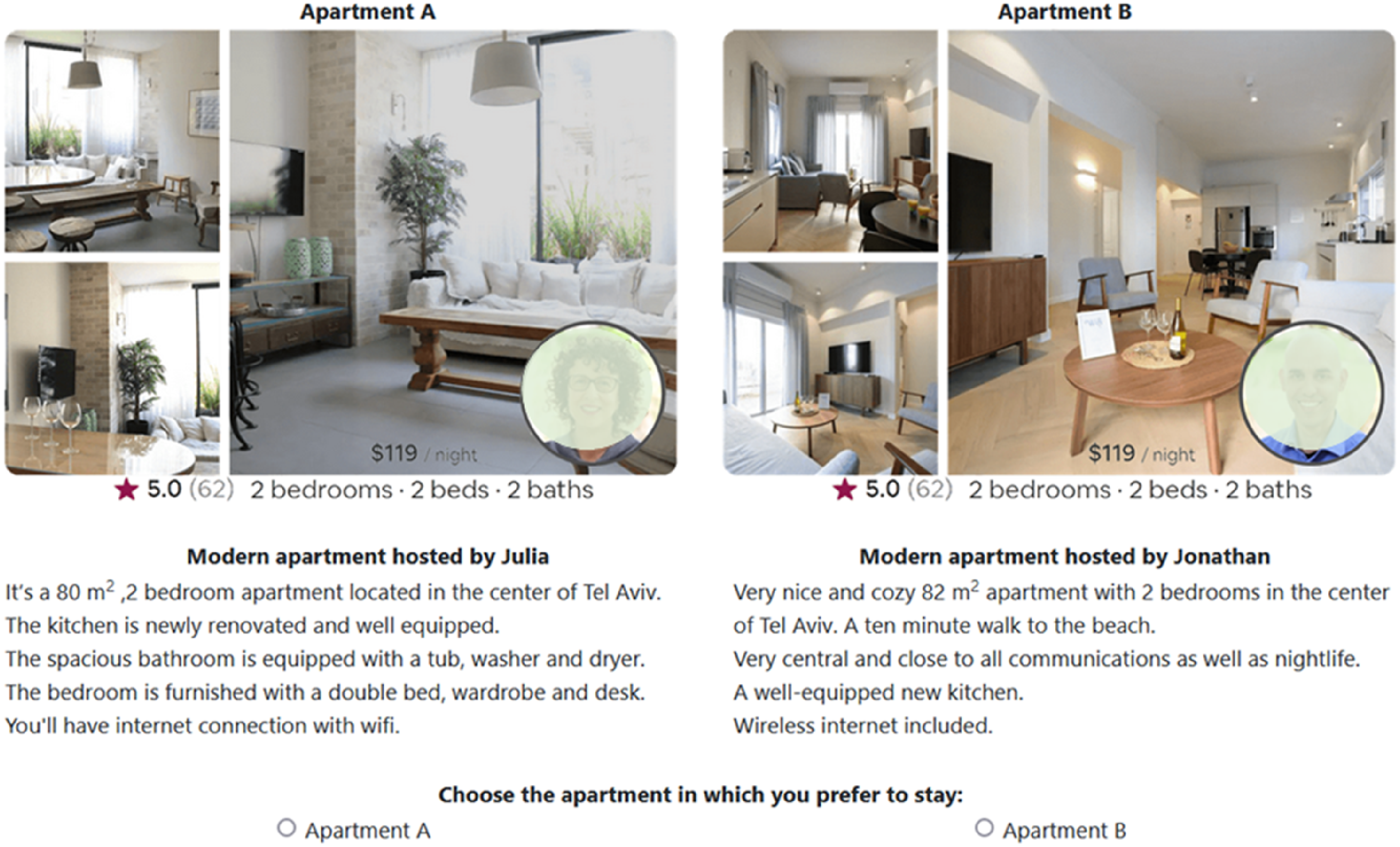
The experiment was conducted on Prolific, and included a total of 393 participants from the UK and the US, aged 20–70, who had traveled abroad within the last 24 months and are familiar with Airbnb. They were paid $5/hour for their participation. Similar to Experiment 1, after making their choice, participants rated the trustworthiness and attractiveness of each host based on their photos. Accordingly, each choice had the following attributes: Woman/man, apartment A/B, face A/B, and the trustworthiness and attractiveness ratings (the average across participants for each face).
Results
The results of Experiment 2 reveal that most participants (55%) preferred apartments hosted by women over those hosted by men, at a rate that is significantly higher than 50% (Z = 2.17, p = .03). Next, we evaluated whether this finding could be attributed to a gender congruity bias, as suggested by Su and Mattila (2020). The proportion of guests favoring apartments hosted by women is higher among female participants (58%) than their male counterparts (52%). Despite this difference aligning with a gender congruity bias, the difference is insignificant, t (391) = 1.00, p = .316.
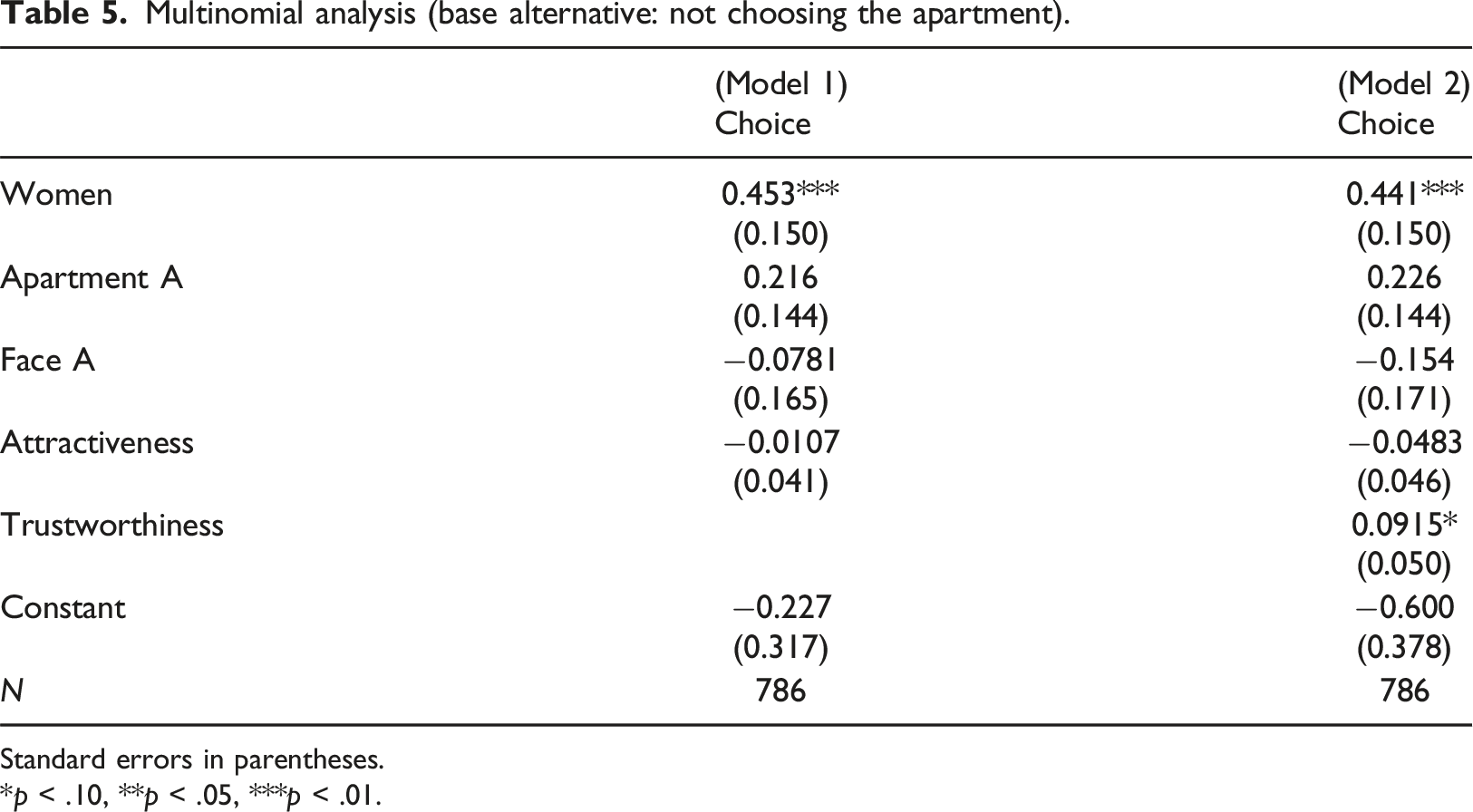
In line with the findings of Experiment 1, participants consistently rated the perceived trustworthiness of a host higher when the host’s face was presented as a woman compared to when presented as a man (7.41 vs 6.85, t (784) = 4.92 p < .0001) supporting H2a. Additionally, participants rated the host attractiveness higher when presented as a women (6.90 vs 5.91, t (784) = 6.81, p < .0001). These results suggest that participants prefer female hosts over male hosts and that they perceive women to be more trustworthy than men.
Multinomial analysis (base alternative: not choosing the apartment).
Standard errors in parentheses.
*p < .10, **p < .05, ***p < .01.
We also used the model parameters to estimate the expected probability of choosing an apartment for counterfactual gender type (woman/man) and level of trustworthiness rating (women average/men average), while fixing the other variables at their averages (Table A6 in the Appendix). The expected probability of choosing an apartment when the host is a woman with the trustworthiness score at the average level for women, is 0.56. When the gender is changed, the probability decreases by 0.11, but when the trustworthiness score is lowered to the average level for men, the probability decreases by only 0.01. Therefore, most of the gap in the expected probabilities of a choice between men and women is attributed to gender properties other than the perceived trustworthiness conveyed by their photos.
General discussion
The gender earnings gap, well-documented in traditional labor markets, persists in digital peer-to-peer markets despite initial expectations of reduced bias due to features like self-employment and flexibility. Our brief examination of the previous studies of earnings gap in digital markets uncovered that, although the gap remains evident across all studied markets, its causes vary considerably and are closely tied to the distinctive features of each platform. This discovery implies caution in extrapolating findings from one market to another. It highlights the importance of carefully analyzing market-specific mechanisms to understand and address the earnings gap, rather than making broad generalizations.
In this study, we explored the gender earnings gap on Airbnb. Our choice of Airbnb was driven not only by its preeminence in the digital hospitality platform realm, but mainly by its distinct features that distinguish it from other platforms. Notably, on Airbnb, hosts’ gender is revealed to potential guests through profile photos, while prices are determined by the market. In addition, human capital information is limited to the host’s experience, and there exists significant heterogeneity in both the product (apartment) and host attributes that were controlled in our analysis. Perhaps most importantly, Airbnb stands out from other platforms due to its emphasis on hospitality and perceived trustworthiness, two crucial dimensions where women have been observed to excel over men (Ert and Fleischer, 2020). While Airbnb offers unique potential benefits for female hosts, it may still reflect the gender earnings gap seen in other digital platforms and traditional labor markets. These two opposing forces make it challenging to predict the direction of the gender earnings gap on Airbnb.
Our analysis of Airbnb in Tel-Aviv revealed that Revenue-Per-Available-Night (RevPAR) of female hosts was consistently three to six percent higher than that of male hosts, depending on the model type. This intriguing discovery highlights a distinctive gender earning gap on Airbnb where women outpace men in earnings rather than trailing behind, deviating from the conventional pattern documented on other digital platforms (e.g., Barzilay and Ben-David, 2016; Cook et al., 2020; Gafni et al., 2021; Litman et al., 2020). The earning gap on Airbnb could stem from difference in the average daily rate (ADR) that male and female hosts receive, the higher occupancy rate they achieve, or a combination of both. The system of equations we used enabled us to investigate this source. The analysis revealed that the gap does not result from differences in the average daily rate (ADR), but rather from women achieving higher occupancy rates for their apartments. Specifically, female hosts occupancy rate was two to six percent higher than that of male hosts, depending on the model type.
In line with these results, our controlled experiments showed that guests are not willing to pay higher prices for apartments hosted by women. However, they do prefer to stay in women’s apartments over those hosted by men, explaining the higher occupancy rate of female hosts’ apartments. The experiments further reveal that, although women are perceived as more trustworthy than men, this difference accounts for only a small part of the guests’ preference for women’s apartments. In other words, guests prefer female host simply because they are women. This finding may suggest that guests perceive female hosts through feminine stereotypes, which often include warmth and concern for other’s welfare (Pino et al., 2020), attributes associated with exemplary hospitality.
Theoretical and practical implications
Traditional theories of the gender earnings gap in labor markets point to discrimination, worker attributes, and market structure. Digital platforms, expected to mitigate these factors, have not uniformly succeeded. On these platforms, the pay gap stems from task structure, seller behavior, and gender biases of customers. For instance, eBay studies reveal buyers' tendencies to assume women would accept lower bids than men due to the buyer-driven pricing mechanism, influencing the earnings gap (Kricheli-Katz and Regev, 2016). Conversely, on UBER and Mturk, the choice of tasks by workers drove the gap (Cook et al., 2020; Litman et al., 2020).
Airbnb, the focus of the current study, stands apart from other digital markets such as eBay, UBER, and Mturk. Airbnb operates on market-driven pricing, in contrast to eBay where buyers influence prices, or UBER and Mturk where sellers influence prices or task selection. Here, guest choices are influenced not only by the attributes of the rental unit but also significantly by the host’s characteristics. This setting provides a unique perspective on how guests' gender preferences towards hosts can impact earnings.
We explored how Airbnb’s pricing structure, combined with the perception of women being more trustworthy hosts, could potentially reverse the typical gender earnings gap. This study demonstrates that under a market-driven pricing model and specific consumer beliefs, the gender earnings dynamic can shift, providing an insightful contrast to other digital platforms. To our knowledge, this study is the first to show a reversal of the gender earnings gap. Our findings also indicate that existing theories are insufficient to explain the gender earnings gap, as do the existing studies of digital labor market. There is a need to better understand the specifics of the platforms, including factors external to the platforms such as consumers’ perceptions.
The current findings present an intriguing implication, offering a novel perspective on gender earning gaps. According to this interpretation, individuals may psychologically associate certain tasks more with either women or men. The greater popularity of apartments hosted by women, coupled with the negligible impact of their trustworthiness on this popularity, suggests that potential guests may view hospitality as a profession better suited for women.
Anecdotal evidence from other studies appears to support this notion to some degree. For instance, a recent study revealed that the gender gap in hourly rates across various occupational categories within a gig economy platform becomes insignificant for fields like “design & creative,” “translation,” and “writing,” while remaining pronounced in categories such as “accounting & consulting,” “engineering & architecture,” and “legal” (Barzilay and Ben-David, 2016). While this evidence is somewhat anecdotal, it aligns with the hypothesis of perceived occupational fit contributing to the gender earning gap.
It is conceivable that stereotypes about women could play a role, e.g., in STEM occupations, and through this perception of occupational fit, contribute to the earning gap. Conversely, however, the present study indicates that occupations perceived as better suited for women, such as hospitality, may alter the direction of this gap in favor of women. Future research aimed at testing this hypothesis of perceived occupational fit could provide further insights into this suggested phenomenon.
The discovery of the ‘inverse earnings gap' on Airbnb provides preliminary support for the UN assertion that gender equality and empowerment can be facilitated through the effective utilization of enabling information and communication technology [ICT] (SDG target 5.b). Yet our study also highlights that the empowerment of women is contingent upon the characteristics and functionalities of the digital platform, as they directly influence by how women are perceived and behave. This observation clarifies that merely enabling ICT for women’s empowerment may be insufficient. Instead, it is important to develop platforms that effectively highlight and leverage women’s perceived strengths to empower them.
An intriguing venue for future research lies in exploring the potential benefits of incorporating features that can influence and reshape existing gendered perceptions and attitudes. For instance, one possibility is to automatically assign women a default quality certification on digital labor platforms in fields traditionally associated with men, that would be taken away if required standards are not met. This could challenge gender stereotypes and promote equal opportunities. Another important aspect to consider in future studies is the potential for algorithmic gender biases, even when the algorithm is explicitly designed to be gender-neutral. Such bias has been recently documented in a study investigating algorithm-delivered advertisements promoting job opportunities in science, technology, engineering, and mathematics fields (Lambrecht and Tucker, 2019). The study revealed that fewer women were exposed to these ads than men, as younger women are considered a valuable demographic and are more expensive to target with ads. Consequently, a cost-effectiveness algorithm unintentionally resulted in discriminatory ad delivery.
The current study further contributes to the research on social attribution from faces (Todorov et al., 2015), being the first to examine the gender effect on trustworthiness by manipulating the gender of real faces while controlling for all other facial features. Previous studies demonstrated that women are perceived as more trustworthy and attractive, but these findings were based on either computerized mocks (Todorov et al., 2015), or photos of different individuals (Ert and Fleischer, 2020). The current study identified the gender effect on trustworthiness perception using identical facial images of real hosts in the manipulation process. An intriguing question for future research is the extent to which this perception persists when individuals have the opportunity to interact with the person in the photograph and gain firsthand experience. Additionally, it is interesting to explore whether individuals perceived as more trustworthy, such as women, live up to this perception and do not exploit the trust placed in them.
Limitations and future research
The current study focused on the Airbnb Tel-Aviv market. As such, a natural question is whether the current findings can be generalized to other Airbnb markets in different locations, and even other online platforms. As we emphasized earlier, we do not think that one could infer from one market and apply it to another, given the differences in the fundamental mechanisms that underlie the different digital market platforms. The question as to whether the results can be generalized to other Airbnb markets is interesting and should be further examined in future research. It is possible that cultural differences, for example, may hinder the ability to make such a generalization. Nevertheless, we do have some evidence suggesting that certain results can be generalized. In particular, the finding that women are perceived as more trustworthy and attractive than men has been found in Stockholm as well (Ert and Fleischer, 2020).
Another potential limitation is that the identification of gender has been based on hosts’ personal photos on the Airbnb website. We cannot exclude the possibility that some hosts might have posted photos of their spouses or other people, rather than of themselves. We have two responses to this concern. First, the study focuses on how gender information presented on Airbnb influences potential guests. Accordingly, the important question is what gender guests actually see on the Web site, rather than whether this information is accurate or not. Second, it is hard to speculate about reasons for hosts to strategically manipulate this information. If male hosts believe that being presented as a woman helps them on Airbnb, we should have expected a higher proportion of women in our dataset. Conversely, if female hosts believe that presenting themselves as men would yield better outcomes, the gender effect observed in this study would be underestimated and the actual effect would likely be even more significant. In any case, we believe that investigating the strategic manipulation of self-information on digital platforms is an intriguing question that warrants further research.
Concluding remarks
The question of whether the gender earnings gap exists on Airbnb, a digital platform with both advantages and disadvantages for female hosts, has yielded a surprising answer. It appears that female hosts earn higher revenues than their male counterparts for similar apartments due to guests' preference for female hosts in this market. This finding provides the first evidence of an “inverse gender earnings gap” on digital platforms. Furthermore, the current analysis sheds light on how the gender earnings gap relies on the mechanisms of each platform. Understanding and predicting the conditions under which digital platforms are susceptible to biases, given their unique operations and mechanisms, is crucial in comprehending the direction in which such biases may operate.
Supplemental Material
Supplemental Material - Gender earning gap on digital platforms: The Airbnb case
Supplemental Material for Gender earning gap on digital platforms: The Airbnb case by Eyal Ert, Aliza Fleischer and Daniel Kopolovich in Tourism Economics
Footnotes
Declaration of conflicting interests
The author(s) declared no potential conflicts of interest with respect to the research, authorship, and/or publication of this article.
Funding
The author(s) received no financial support for the research, authorship, and/or publication of this article.

Supplemental Material
Supplemental material for this article is available online.
Notes
Author biographies
References
Supplementary Material
Please find the following supplemental material available below.
For Open Access articles published under a Creative Commons License, all supplemental material carries the same license as the article it is associated with.
For non-Open Access articles published, all supplemental material carries a non-exclusive license, and permission requests for re-use of supplemental material or any part of supplemental material shall be sent directly to the copyright owner as specified in the copyright notice associated with the article.
