




Abstract
Cultural heritage and local attractiveness entertain an inextricable relationship. Cultural visitors and tourists are willing to discover and admire different, unique, and outstanding forms of culture and local inhabitants recognize themselves in the symbolic meanings and values carried by their heritage, which inspires proudness and sense of belonging. Furthermore, cultural tourism represents a contributor to local economic conditions and a resource to support cultural heritage maintenance and preservation costs. However, concerns related to excessive flows of tourists towards cultural destinations have been raised from many parts. In fact, over-tourism might generate social, cultural, environmental, and economic costs, mainly affecting and damaging local communities. This paper aims at investigating the nexus between cultural tourism and local economic development. A Structural Regression Model is applied to Italian provincial (NUTS3) data to simultaneously identify the direct effects of cultural tourism on economic conditions as well as its indirect and potentially controversial effects.
Cultural heritage, tourism, and local prosperity: A holistic approach
The relationship between cultural heritage and development has been discussed for a long time, with culture being considered either as a burden to bear for the sake of moral reasons supporting preservation, or as an important asset favoring growth and well-being. The latter interpretation has been prevalent in the last 20 years and the main transmission channel through which cultural heritage is widely recognized as an engine for local economic development remains undoubtedly tourism.
Tourism is in fact a valuable and important sector that benefits local economies in several ways. As it has been broadly remarked, tourism exercises strong push–pull effects through significant intersectoral relationships. In fact, not only direct revenues for tourism-related activities and sectors are generated by tourists’ expenditures but several induced beneficial effects concern the whole local economies (see, among others, Kadiyali and Kosovà, 2013; Liu and Song, 2017; Morely et al. 2014). Touristic attractiveness is therefore frequently thought of as a strategic territorial resource to be taken advantage of for its economic returns. In addition, it is strictly linked to several territorial characteristics such as natural landscapes, urban agglomerations, coasts and waterfronts, or heritage sites. This work focuses precisely on this last local attribute, that is, heritage sites. Heritage tourism, in fact, seems to be a good opportunity for local development from (at least) two different perspectives. On the one hand, a touristic utilization of heritage sites could help raising funds for the preservation and conservation of important pieces of material culture. On the other hand, being cultural heritage deeply rooted in the territory and strictly connected with intangible peculiar features, heritage tourism could well be a sustainable way towards regional development through the valorization of important immaterial local characteristics. In this sense, the interest in this particular topic has been evident also at the political level, with cultural tourism being a core element within the Italian National Recovery and Resilience Plan (NRRP).
Nevertheless, risks and challenges related to detrimental consequences of excessive touristic pressure might arise. As highlighted by the European Commission, even though tourism represents an excellent way to promote cultural heritage, it also brings with it several issues such as congestion and overcrowding, loss of authenticity and cultural appropriation 1 .
This work aims at reasoning on the relationship between heritage sites and local economic development through tourism, holistically considering the potentially beneficial and, simultaneously, controversial connection between heritage tourism and local prosperity. As explained by Fusco Girard and Nijkamp (2009), in fact, cultural heritage has a love-hate relationship with tourism. It plays indeed a key role in attracting travelers from many different parts thus stimulating local socio-economic development together with a sense of local identity and pride. However, high volumes of tourists may threaten the ecologically benign development of places and negatively affect social fabric generating controversial consequences. As Throsby (2009: 14) puts it “tourism may be the only viable source of recurrent revenue to maintain certain heritage assets, but at the same time may threaten the very survival of those assets.”
Therefore, if, on the one hand, attracting visitors represents an important economic potential, on the other hand, excessive or disproportionate tourist flows might generate disadvantages in terms of overexploitation of local resources and discomfort for local inhabitants (Garcia-Hernandez et al. 2017; Richards 2017), increased costs for heritage conservation (Albaladejo and Gonzalez-Martinez, 2018; Du Cros and Kong 2020; Riganti and Nijkamp 2008), as well as risks of losing the authenticity and symbolic values carried by local heritage (Adie et al. 2020; Rasoolimanesh et al. 2019). Local communities might be forced to move towards the outskirt of their cities because of touristic congestions in the urban centers (Russo, 2002), and increased costs in terms of crime (e.g., Biagi et al. 2012) or negative environmental externalities (Akis et al. 1996; Fang et al. 2018; Romao et al. 2017) could challenge local administrations.
It is worth noticing, however, that cultural and heritage tourism is often associated with sustainability in the sense that a crucial potential is recognized to local cultural heritage in fostering and promoting a sustainable kind of tourism 2 . One of the pillars of the European Commission Framework for action on cultural heritage 3 is dedicated to sustainability. Cultural heritage is considered as an important asset to secure environmental sustainability and sustainable development through three clusters of actions: regenerate cities and regions, promote adaptive re-use of heritage buildings, and balance access to cultural heritage with sustainable cultural tourism and natural heritage.
The present paper aims at investigating the nexus between heritage tourism and local economic prosperity from a more holistic perspective, simultaneously accounting for potential economic advantages and congestion/over-tourism-related costs. More specifically, the work explores the (expected positive) role of heritage tourism in local wealth together with its (potentially controversial) relationship with crime and environmental damage, which in turn are detrimental elements for local economic conditions since they reduce the attractiveness of the area towards economic activities that could even opt for leaving regions particularly affected by these challenges. In addition, the presence of crime and environmental damage also implies related management costs, which further harm the overall economic situation. Furthermore, possible over-tourism and the potential stronger connection between heritage tourism and sustainability with respect to tourism in general will be explored.
In greater detail, this work contributes to the existing literature by employing an original approach to the issue. It involves applying a Structural Regression Model to an appropriate spatial scale—specifically, the Italian provinces (NUTS3). This methodology allows for the empirical testing of the direct link between heritage tourism and regional prosperity. Moreover, it facilitates the exploration of potential negative indirect links, such as those associated with crime and environmental damage.
Furthermore, the study delves into the investigation of potential over-tourism issues. There is an anticipation that heritage tourism may be susceptible to general over-tourism and congestion problems. Nevertheless, it is hypothesized that heritage tourists might have a lower impact on environmental damage due to their, on average, higher level of education and a greater inclination toward sustainability 4 .
Conversely, it is also considered that heritage tourists might exhibit a stronger relationship with crime, given their, on average, higher socioeconomic status compared to other tourist categories 5 .
The paper is structured as follows: the next section provides a background literature review related to the critical and controversial aspects—especially focused on crime and environment—of heritage tourism; subsequently, the empirical methodology, the model, and the results are presented. A thorough discussion of the implications stemming from the empirical results is then provided and eventually concluding remarks are put forward.
Heritage tourism and its potentially critical aspects: Crime and environmental damage
The importance of tourism as an economic sector is widely recognized and empirically investigated by a large scientific literature (see for instance, Balaguer and Cantavella-Jorda 2002; Dritsakis, 2004; Durbarry, 2004; Fahimi et al., 2018; Santamaria and Filis, 2019). However, the relentless and persistent growth of tourist flows generate concerns related to the medium and long-term sustainability of large floods of people, referred to as overtourism, that, in some cases, invade popular touristic destinations. A precise definition of overtourism in fact does not exist and the extent of the phenomenon is subjective and case-specific. In addition, overtourism describes an issue that is multidimensional and complex, since it is not only associated with both tourism and non-tourism stakeholders but also with wider societal and urban/local developments (Koens et al. 2018).
In this sense, concerns regarding the potential consequent damages in terms of overexploitation of natural resources as well as socio-cultural pressures, overuse of infrastructure facilities, and deterioration risks for heritage sites are indeed legitimate. As explained by Biagi et al. (2020), local inhabitants and tourists compete for consuming local goods and services. In fact, tourism can be considered as a form of trade in services (Morley et al., 2014) and it allows local economies to export non-tradable services since it implies tourist flows rather than good flows (Copeland, 1991; Faber and Gaubert, 2019). In other words, local services are consumed in the same place where they are produced (i.e., tourism destination). Furthermore, tourism necessarily requires the engagement and interaction of tourists both with local natural and built environment and with the local community. As reported by Canale and De Siano (2021), an excessive growth of tourist flows might negatively affect territories in terms of environmental deterioration (Apergis and Payne, 2012) and higher carbon emissions (Alkhathlan and Javid, 2013). Increased congestion, crowding, and overload of infrastructure could generate unpleasant conditions for both residents and tourists themselves resulting also in higher maintenance costs for services and infrastructures or prohibitive house prices (e.g., Biagi et al., 2015), costs mainly paid by the local communities (Albaladejo and Gonzalez-Martinez, 2018; Du Cros and Kong, 2020; Garcia-Hernandez et al. 2017; Riganti and Nijkamp, 2008).
Concerning the potentially adverse consequences associated with tourism and, potentially, heritage tourism as well, both crime and environmental damage are well-established in the literature as widely acknowledged and currently relevant issues. As emphasized by Montolio and Planells-Struse (2016), the significance of tourism, marked by a continual rise in tourist numbers, is steadily growing. Consequently, there is a parallel increase in attention towards the costs linked to the presence of visitors. More specifically, crime represents a major concern in many countries, as it may negatively affect efficient economic development. Several scientific studies confirm that tourist flows boost criminal activity (see for instance, Biagi et al., 2012; Biagi and Detotto, 2014; Montolio and Planells-Struse, 2016). Tourists, in fact, represent an attractive target for crime as they are more likely to carry large sum of money or expensive and valuable items, for example, cameras or jewelry (Mehmood et al., 2016), and they might be generally perceived as wealthy (Boakye, 2010). Besides, the attitude of tourists tends to be less prudent and more relaxed as well as their propensity to report the crime to the police might be reduced (Biagi et al. 2012; Ryan, 1993). Holidaymakers might themselves engage in criminal activities contributing, for instance, to the demand for illegal goods or services or by adopting irresponsible and altered behaviors possibly linked with alcohol or drugs consumption (Sharpley, 1994).
Costs of excessive and uncontrolled touristic pressure might also be related with negative environmental externalities (see, for instance, Holden, 2009; Kousis, 2000). As Budowski (1976) pointed out, when a critical threshold is passed, several environmental damages can be linked with tourism such as noise, ecological disturbances, poor waste disposal, or even radical changes in land uses potentially in contrast with traditional attitudes towards natural resources. The intertwined relationship between tourism and other sectors exacerbates its polluting influence. As Balsalobre-Lorente et al. (2020) highlights, transportation, infrastructures, accommodations, and management of tourists’ attractions all contribute to increase pollution levels. Several studies empirically confirm the nexus between mass tourism and intensified environmental deterioration especially in terms of increased carbon emissions (see, among others, Dedeoglu et al., 2021; Haseeb et al., 2018; Khan et al., 2019; Li et al. 2021; Liu et al., 2022; Udemba et al. 2020).
The allure and potency of cultural heritage make it a compelling component of tourist attraction. However, territories endowed with significant and remarkable cultural sites may experience the challenges associated with the touristification of these locales. In this sense, heritage tourism poses in fact specific challenges to local communities and administrations. As argued by De Luca et al. (2020), on the one hand, heritage preservation and conservation expenditures are supported by cultural tourism but, on the other hand, risks related to authenticity loss and impoverishment of cultural identity or sense of belonging felt by local inhabitants emerge with over-tourism (see for instance, Adie et al. 2020; Neuts and Nijkamp, 2012; Popp, 2012; Rasoolimanesh et al., 2019). As highlighted in Russo and Van der Borg (2002), an appropriate balance should be looked for between the advantages and opportunities offered by heritage and the respect of the authenticity and integrity of the heritage itself that is a non-reproducible precious resource collectively owned by the local community. Costs related both to crime and environmental damage might be exacerbated by a disproportionate number of heritage tourists.
While existing research has extensively examined the positive economic effects of tourism and the controversial issues surrounding over-tourism, both in general terms and its correlation with heritage tourism, the two strands of literature—namely, the positive effects of tourism and the potential detrimental aspects of over-tourism—remain largely independent of each other. In addition, the relationship between heritage tourism and local development often tends to be just assumed and the availability of data on heritage tourism is extremely limited. Therefore, the works looking specifically at heritage tourism, even though very interesting, are usually based on case studies and/or surveys. 6
This paper aims instead at investigating the nexus between heritage tourism and local economic prosperity from a more holistic perspective, trying to find out some generalizable messages. In particular, the novelties of this work contribute to the literature as follows: first, the potential positive effects of tourist attractiveness on local economies but also its controversial consequences are taken into consideration at the same time. The intention is to simultaneously identify the (expected positive) direct link between heritage tourism and economic conditions as well as its indirect—and potentially adverse—link to crime and environment. Subsequently, the potentially detrimental effects of over-tourism on economic conditions are empirically explored and finally, possible differences between heritage tourism and overall tourism related to the functioning of these mechanisms are investigated.
The empirical analysis is conducted at the level of Italian provinces (NUTS3), thus ensuring an appropriate territorial disaggregation that balances local specificities with the generalizability of the results. In fact, the provincial scale is quite detailed and able to capture local specificities in terms of how history and cultural heritage affect their economic outcomes, but it still allows to apply our holistic perspective by identifying the functioning of generalizable mechanisms. Besides, since we are dealing with tourism, the provinces tend to better overlap with tourist destinations.
Heritage tourism and local prosperity
The data
The data used to test the previously mentioned reasonings in empirical terms (see next sub-section) are mainly retrieved from ISTAT (Italian Statistical Office). The units of analysis are Italian provinces, that is, NUTS3, since this level of geographical disaggregation is quite detailed (small regions for specific diagnoses in the Eurostat definition), but still involves a whole region characterized by specific tangible and intangible features.
As the main goal of this work refers to the investigation of the relationship between heritage tourism and local economic development, heritage tourism represents our main variable of interest. In general, cultural tourism is defined as “the movement of persons to cultural attractions away from their normal place of residence with the intention to gather new information and experiences to satisfy their cultural needs” (Bonet, 2003: 187). However, systematic data that specifically provide the number of tourists that visit destinations for cultural purposes are not available. Some previous studies suggest a strong relationship between tourism flows and heritage sites (Borg and Costa 1996; Murrillo Viu et al. 2008; Patuelli et al. 2013; Panzera et al. 2021; Yang et al. 2010, among others), nevertheless, identifying different types of tourism in different areas is extremely difficult, since there is a complete lack of detailed direct data.
Some attempts have been made, for instance by the JRC (Batista e Silva et al. 2021) and ISTAT (2022), 7 to categorize municipalities (ISTAT) and small regions (JRC on NUTS3 regions) based on their main touristic inclination. Nevertheless, these classifications do not provide a specific category for heritage tourism 8 and in general, we preferred to use a continuous variable, in order to catch more nuanced situations.
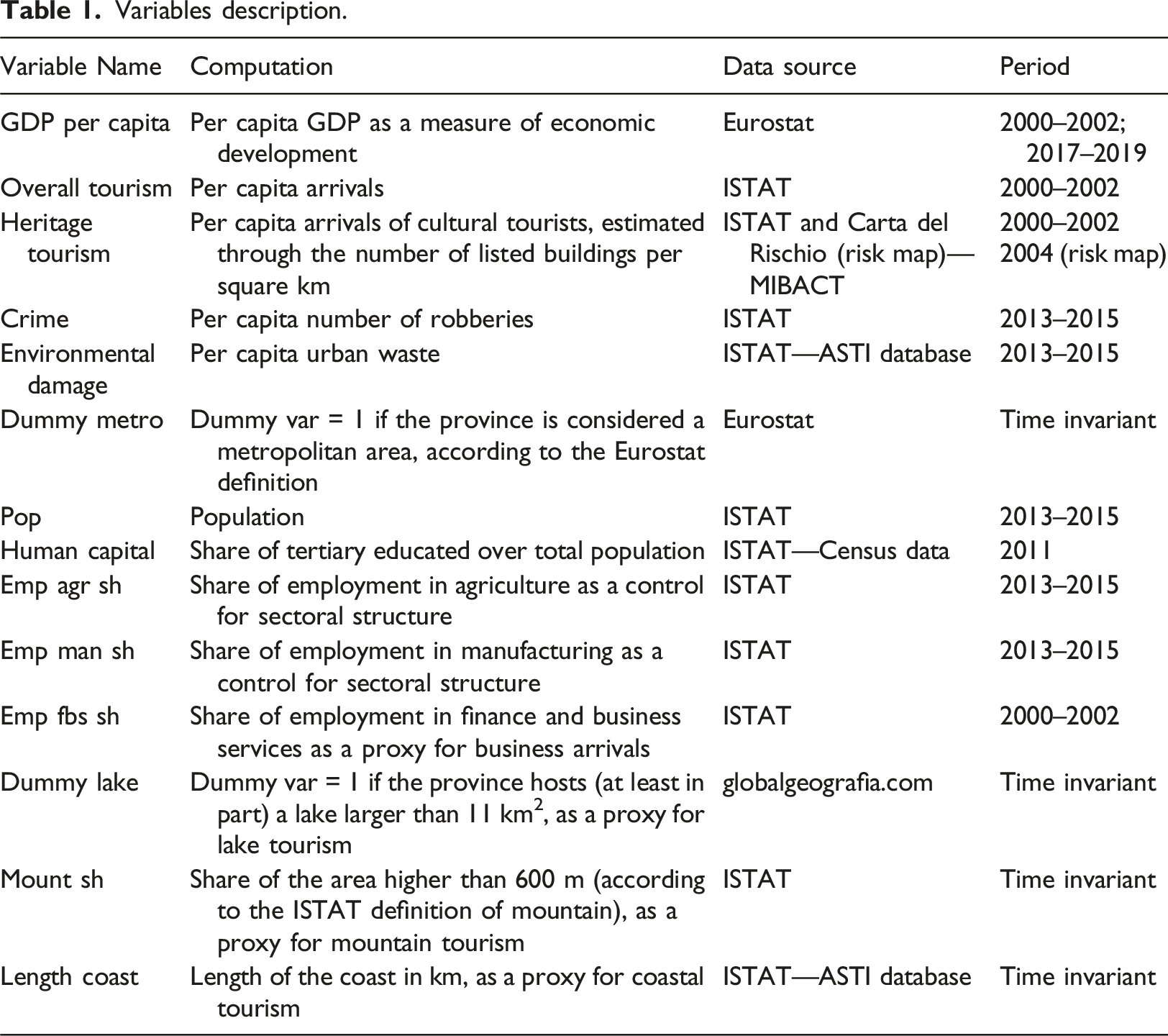
Therefore, a novel methodology—conceptually consistent with the ISTAT approach mentioned above—is proposed in the attempt of estimating heritage tourism in the Italian provinces. We start from the belief in the strongly intertwined relationship between cultural heritage and tourism. In fact, cultural assets are widely considered as key attributes and components of the attractiveness of places. Borrowing from the Cultural Heritage Counts for Europe report “Cultural heritage provides European countries and regions with a unique identity that creates compelling city narratives providing the basis for effective marketing strategies aimed at developing cultural tourism and attracting investment” (p. 20). In this work, we start from the assumption that a remarkable territorial endowment of material cultural heritage is associated with and attracts flows of heritage tourists. The local endowment of material cultural heritage for each Italian province has been retrieved from the Italian Ministry of Culture (MIBACT) website that provides a Risk Map of the Italian material cultural heritage. More specifically, artistic and historic buildings are listed as deserving protection through the legal recognition of cultural interest. In a nutshell, all the immovable built cultural heritage older than 70 years can be subject to a ministerial assessment to verify its architectural, artistic, historic, or ethno-anthropological value based on the Codice dei Beni Culturali e del Paesaggio (Code of Cultural Heritage and Landscape). This measure could include both visitable and non-visitable sites. While in the case of visitable sites, tourists can fully experience the pieces of built heritage, many visitors can enjoy looking at heritage sites also from the outside and, even if non-visitable, such pieces of built heritage contribute to the creation of an overall heritage landscape.
The reference year of the Risk Map is 2004. Since we are dealing with (mostly extremely old) tangible immovable heritage, it is reasonable to assume that the endowment of sites has not changed significantly over years. The following map (Figure 1) shows the geographical distribution of listed heritage sites per square km. As can be inferred from the map, although in Italy the presence of cultural heritage is important in most provinces, there is still variability among different areas. Listed heritage buildings per square km in Italian provinces (2004).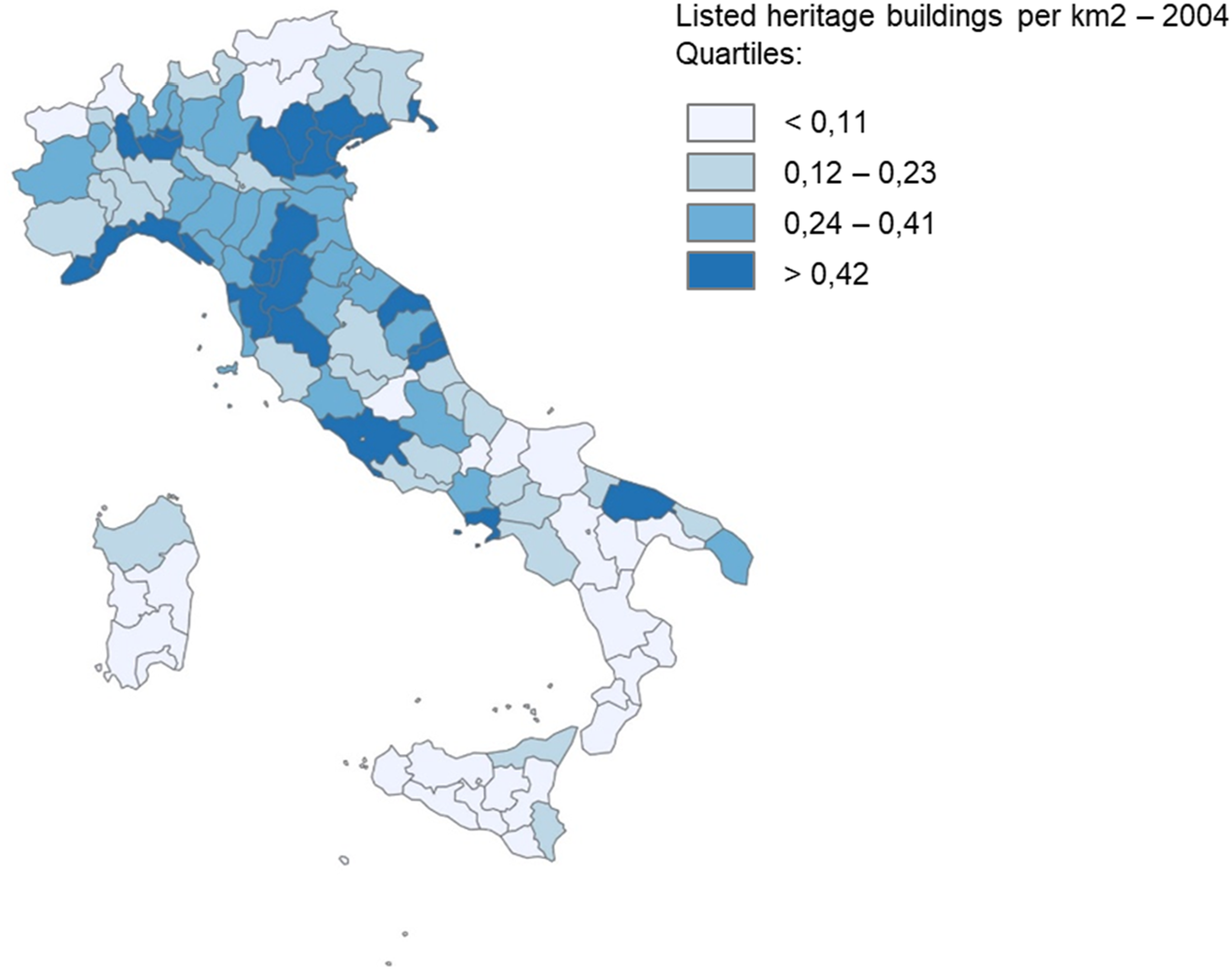
As explained, this measure has been adopted as a proxy for cultural heritage endowment in Italian provinces. Drawing on Cerisola (2019), the choice of weighting the number of cultural heritage elements by area was intentionally made to obtain an indicator that is also a measure of the type of environment that characterizes a local area in terms of intensity of cultural heritage (intuitively, how likely an individual is to run into a piece of tangible cultural heritage on his or her way). Cicerchia (2002) uses the same measure to study the idea of the so-called museo diffuso (widespread or extended museum) in Italy.
It is important to note that the procedure for granting a site listing follows a proactive intention and request, often initiated by local administrations. Therefore, this measure takes into consideration not only the sheer number of heritage sites but also the commitment and eagerness to preserve and enhance local cultural heritage.
Subsequently, heritage tourism has been estimated by weighing the total arrivals of tourists by the standardized (0–1) number of listed heritage buildings per square km. Both overall tourist arrivals and heritage tourism have been divided by each province population to obtain a measure of touristic pressure. The following figure (Figure 2) shows how overall tourism (2a) and heritage tourism (2b) are distributed across Italian provinces in 2000. Geographical distribution of overall tourism and heritage tourism across Italian provinces in 2000.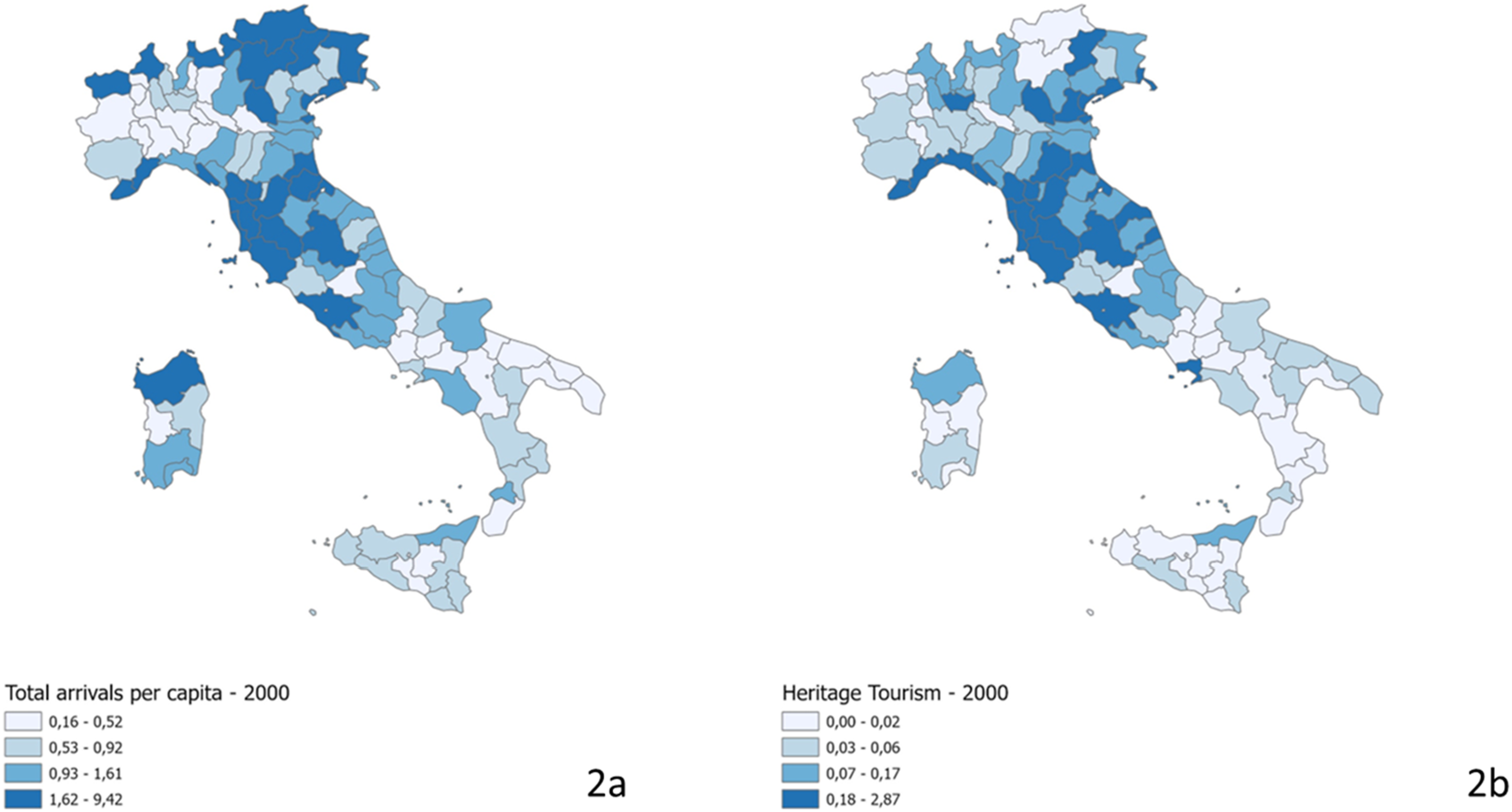
Variables description.
The model
The empirical strategy adopted to test our reasoning consists in the application of a Structural Regression Model. This particular empirical methodology has been selected because of the possibility to detect different links of a variable of interest (in this case heritage tourism) on a set of interrelated dependent variables. More specifically, we put forward the hypothesis that heritage tourism could have a positive relationship with economic prosperity (direct link) but, at the same time, it might be associated with negative consequences in terms of social security and environmental sustainability that, in turn, could induce adverse effects on local economies (indirect links). Figure 3 graphically shows the specification of our model. In particular, X is the exogenous variable of interest (i.e., heritage tourism), Y1 (i.e., crime), Y2 (i.e., environmental damage), and Y3 (i.e., GDP per capita) are the interrelated dependent variables, and D1, D2, and D3 are disturbances
9
. The straight arrows represent the hypothesized directional causal effects, or direct effects, on endogenous variables, while two-headed curved arrows that exit and re-enter the same variable represent the variance of an exogenous variable. We assume the covariances between exogenous variables to be absent, which is confirmed by the software used for the analysis (STATA 16, see footnote).
10
Conceptual hypothesized links.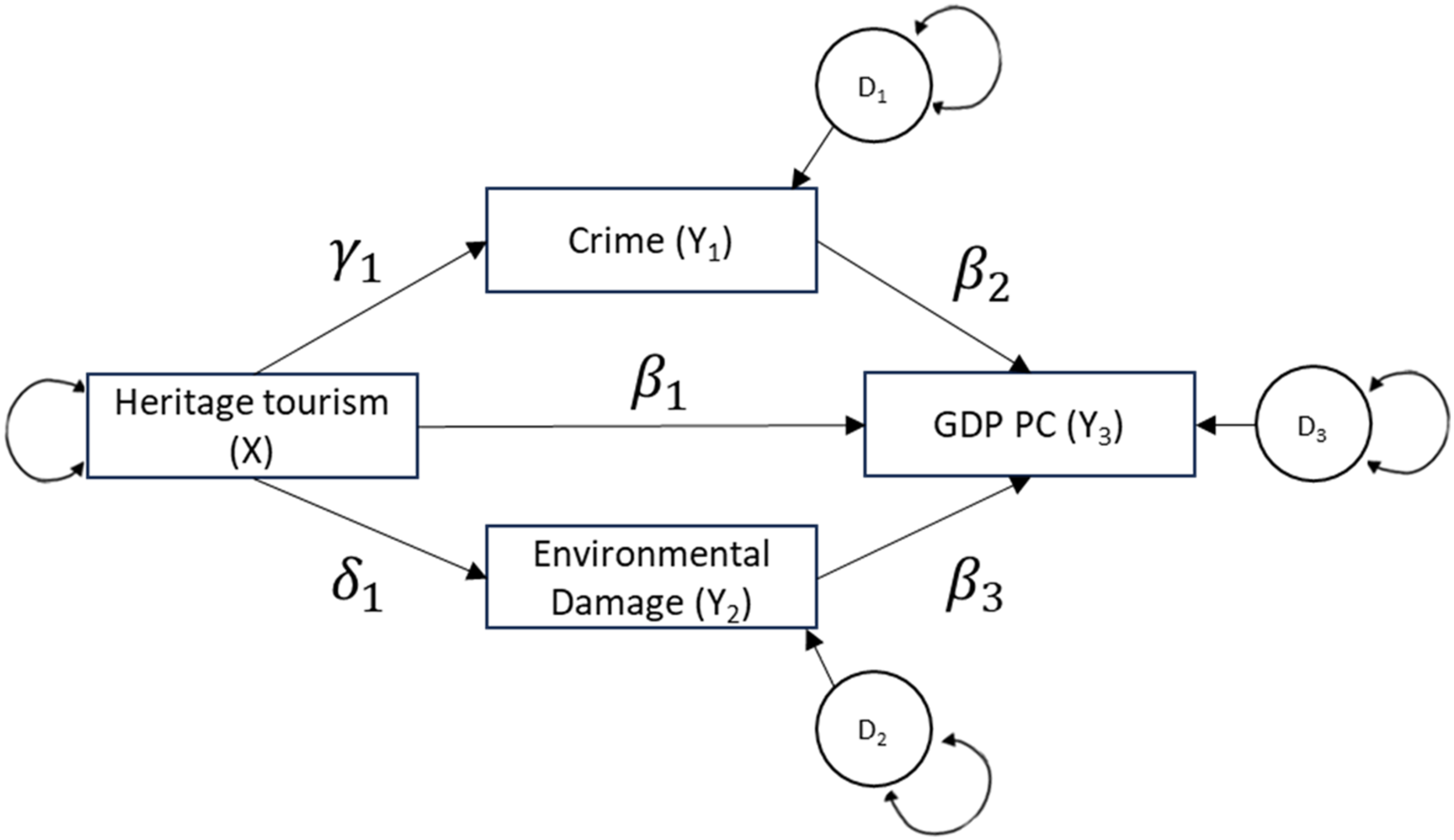
In Figure 3, there are three direct effects on Y3 from other measured variables, that is, the exogenous variable X and the two endogenous variables Y1 and Y2. This specification gives Y1 and Y2 a dual role as both a cause (of Y3) and an outcome (of X). The pathway X → Y3 represents the hypothesized direct relationship between heritage tourism and GDP per capita. The pathways X → Y1→ Y3 and X → Y2→ Y3 represent the indirect effects of X on Y3 through the intervening variables Y1 and Y2, respectively (Kline 2016: Chapter 6). In words, heritage tourism causes some changes in crime and environmental damage, which in turn leads to changes in GDP per capita. All the coefficients represented in Figure 3 control for the direct effects. The terms (
A Structural Regression Model seems to be a suitable empirical strategy as it allows to take simultaneously into consideration and to test multiple relationships. Since all the variables included in the model are observed (i.e., no latent variables are included), our empirical specification is better categorized under the label of path analysis (ibidem). The following specification has been tested on Italian NUTS3 regions through a maximum likelihood estimator, being (1a) the structural equation and (1b) and (1c) the sub-equations


Other important variables are crime (per capita number of robberies) 13 and environmental damage (per capita urban waste) as controversial elements potentially specifically related with tourism. They are also the dependent variables of the two sub-equations, respectively.
Z is a set of standard control variables representing other potential determinants of local economic prosperity, that is, agglomeration economies (population and a dummy variable equal to 1 if the region includes a metropolitan area), human capital (share of tertiary educated people over total population), and sectoral structure (share of employment in agriculture and manufacturing). In addition, drawing on the touristic typologies identified by the ISTAT (Italian National Statistical Office), O is a set of variables controlling for other types of tourism (coastal, mountain, lake, business). This was specifically added to consider possible measurement errors in the heritage tourism variable and therefore to be as sure as possible to avoid catching effects that are instead to be associated with different types of tourism 14 .
In the sub-equations, X controls for agglomeration economies (population and a dummy variable for metropolitan areas) 15 and wealth (GDP per capita). Since the computational power of the model and the number of observations do not allow to include the regional fixed effects at NUTS3 level, they are entered at the NUTS2 level. Time fixed effects are also inserted, and the standard errors are robust.
The base specification reported above was augmented through the inclusion of a squared term, to explore the potential nonlinearity of the relationship between heritage tourism and the interrelated dependent variables testing the further assumption that excessive touristic pressure might bring with it detrimental effects that might damage or counterbalance the beneficial ones. However, it is important to note that while the first model facilitates a clear disentanglement of direct, indirect, and total effects, this last specification primarily aims to identify potentially existing congestion effects. Indeed, in this case, the computation of direct, indirect, and total effects would not be entirely accurate, as heritage tourism and heritage tourism squared are not independent variables but rather represent the squared relationship of one with the other.
Finally, the model has also been modified to consider the overall tourism to explore whether there are some peculiarities in the functioning of the mechanism related to heritage tourism with respect to generic tourism. 16
The results are displayed in the next sub-section.
The results
The present section aims at displaying the econometric results. To report them more intuitively, they are summarized in graphs, while the specific detailed regression outcomes and the goodness of fit statistics are fully shown in the Annex.
The subsequent figure (Figure 4) presents a summary of the results pertaining to the relationship between heritage tourism and local economic prosperity, including the mediating factors of crime and environmental damage. The holistic relationship between heritage tourism and local prosperity. Legend—Sign of the coefficients and statistical significance of the direct effects as follows: * p-value <.1, ** p-value <.05, *** p-value <.01.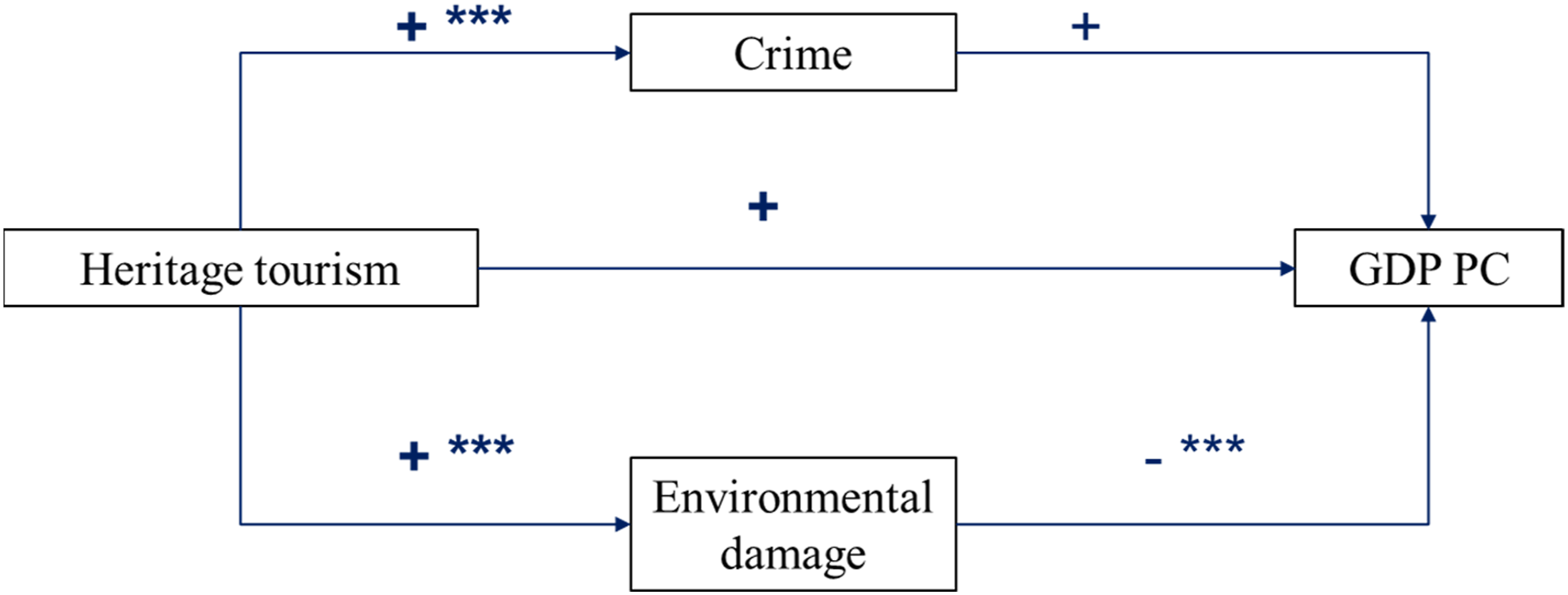
As evident from the Figure, heritage tourism seems to be significantly related to higher levels of both crime and environmental damage (which in turn negatively affects local GDP per capita), as well as non-significantly associated to local prosperity.
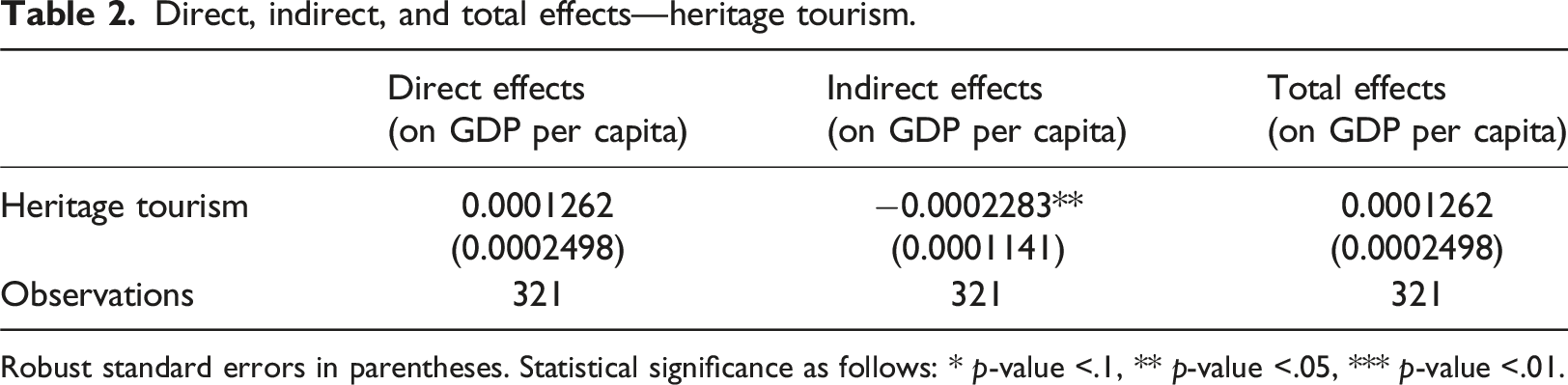
Direct, indirect, and total effects—heritage tourism.
Robust standard errors in parentheses. Statistical significance as follows: * p-value <.1, ** p-value <.05, *** p-value <.01.
While the indirect effects of heritage tourism on local prosperity through crime and environmental externalities are both negative and significant, their magnitude is not substantial enough to significantly influence the total effects.
The following step of our reasoning implies the inclusion of the squared term of the variable of interest (i.e., heritage tourism) to explore the role of the expected congestion issues. The results are displayed in Figure 5. The holistic relationship between heritage tourism and local prosperity: potential congestion effects. Legend—Sign of the coefficients and statistical significance of the direct effects as follows: *p-value< .1, **p-value< .05, ***p-value< .01.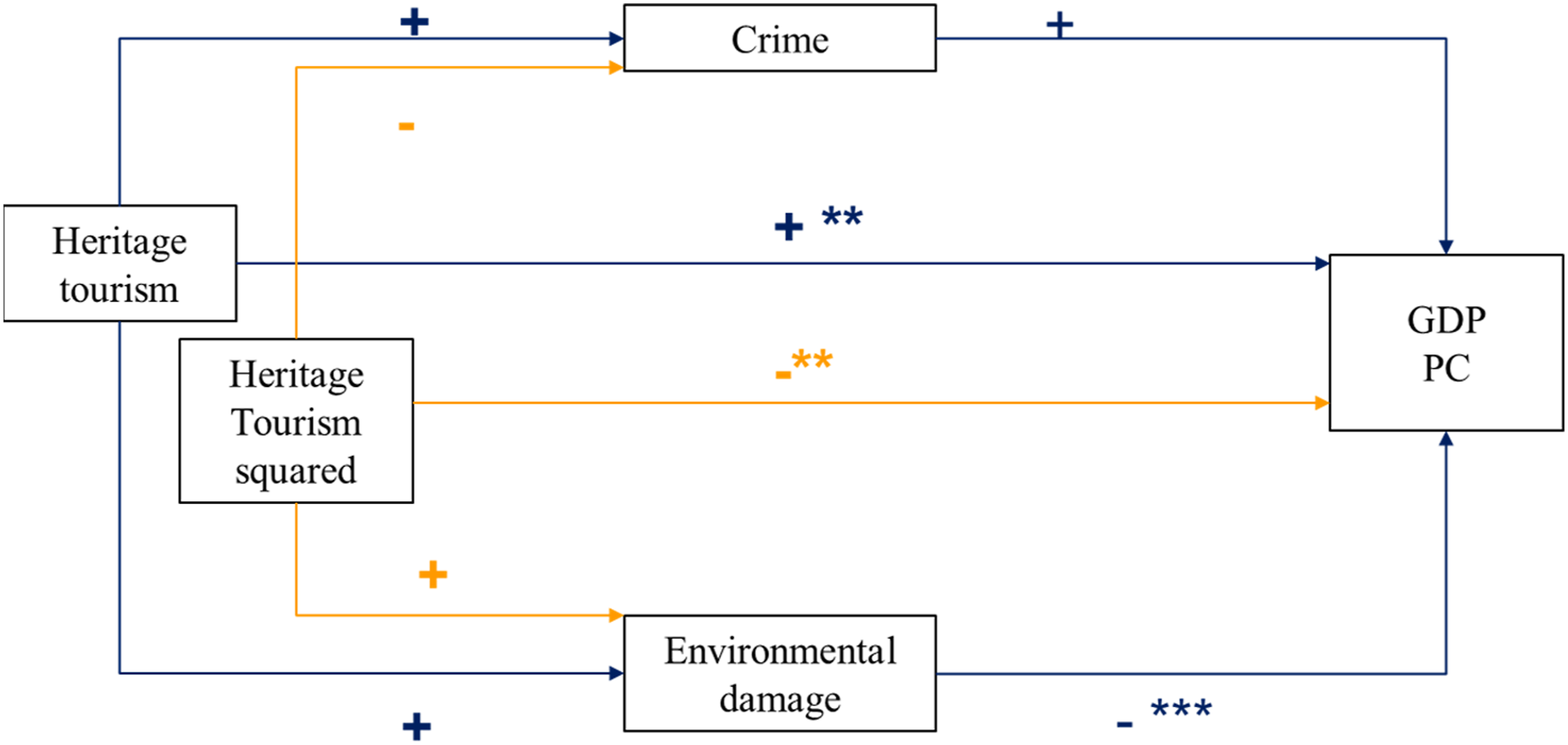
What can be confirmed by the results is that there appears to be a heritage over-tourism issue in its relationship with local wealth. In other words, an existing positive direct effect of heritage tourism does exist, but it seems to be offset by negative over-tourism externalities: while a certain level of heritage tourism is positively related to the Italian NUTS3 prosperity, the squared term shows that the returns are significantly decreasing. As far as crime and environmental damage are concerned, the existence of potential non-linearities in the effect of heritage tourism on these variables can instead be rejected.
By concurrently interpreting Figures 4 and 5, it becomes evident that heritage tourism plays a beneficial role in fostering local prosperity up to a certain extent, with the relation weakening when congestion-related issues come into play. Negative externalities related to crime and environmental damage are also linked to heritage tourism; however, they do not invalidate the overall relation between heritage and local GDP per capita (the total effects remain non-significant. See Table 2).
Figure 6 displays instead the output of the model that considers overall tourism, carried out to compare the results with heritage tourism. The holistic relationship between overall tourism and local prosperity. Legend—Sign of the coefficients and statistical significance of the direct effects as follows: *p-value < .1, **p-value < .05, ***p-value < .01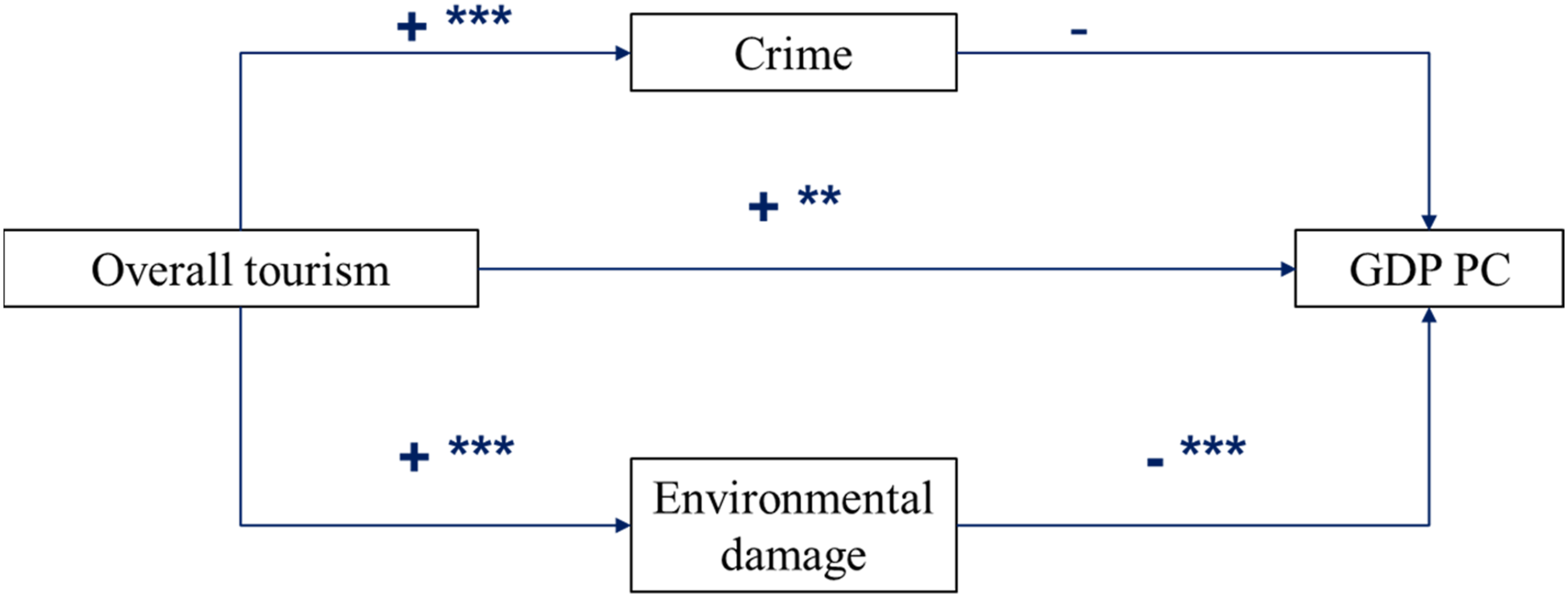
Direct, indirect, and total effects—overall tourism.
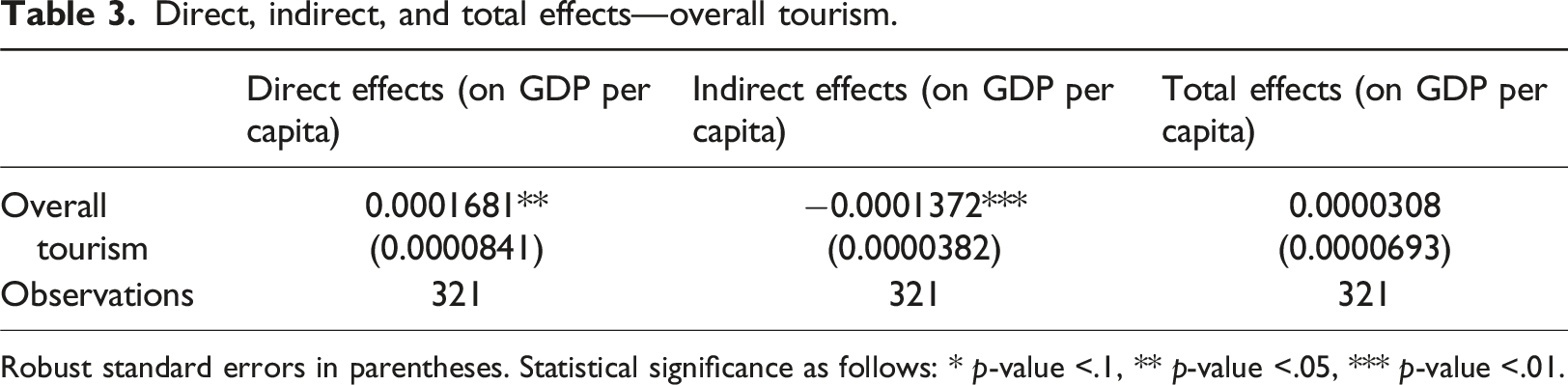
Robust standard errors in parentheses. Statistical significance as follows: * p-value <.1, ** p-value <.05, *** p-value <.01.
As done before for heritage tourism, the following figure (Figure 7) displays the results of the model augmented with the squared value of overall tourism. The holistic relationship between overall tourism and local prosperity: potential congestion effects. Legend—Sign of the coefficients and statistical significance of the direct effects as follows: *p-value < .1, **p-value < .05, ***p-value < .01.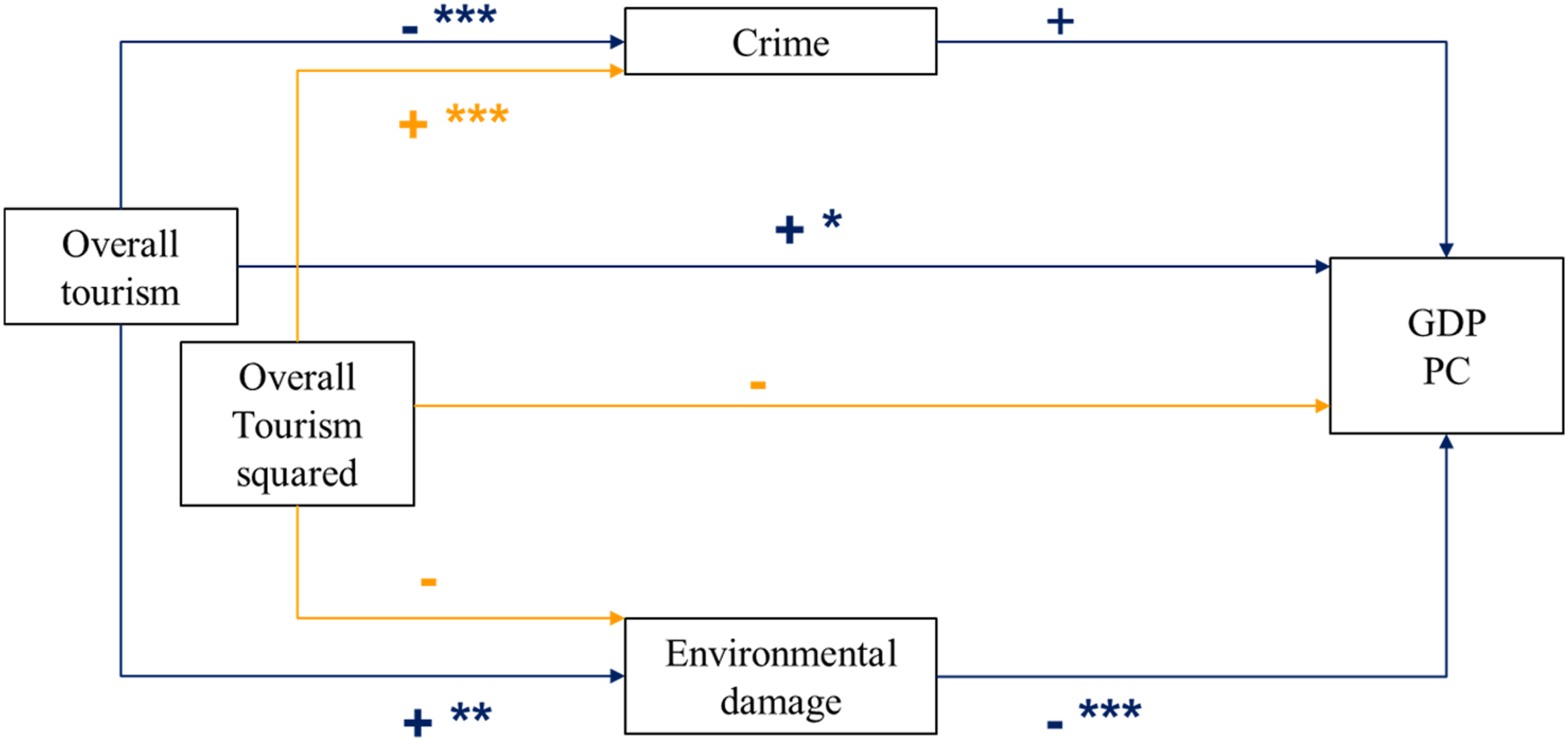
In comparison to the previous specification, the primary additional findings indicate that the positive relationship between overall tourism and crime appears to be exclusively attributed to situations involving significant (excessive) flows of tourists (squared term). On the other hand, the significant association of overall tourism with environmental damage emerges as linear.
Some robustness checks were also carried out. Firstly, we ran the model using a GSEM (Generalized Structural Equation Model); secondly, we ran the model using a different definition of material cultural heritage (including more buildings with respect to the pure “listed” unities) 17 to identify heritage tourism; and finally, we removed the outliers of the listed buildings per square km and of the arrivals per capita. In all cases, the results remain fully consistent.
A more in-depth discussion on the meaning of the analysis and of the associated results is provided in the next section.
Discussion
The present work aimed at exploring the relationship between heritage tourism and local wealth, considering both (expected positive) direct effects and (potentially controversial) negative ones, in the belief that heritage tourism may be potentially an effective and sustainable way to favor regional economic prosperity. This type of tourism could be indeed considered as more desirable with respect to “mass-tourism,” since “cultural” tourists travel to enrich their lives and explore new ways of thinking, in this way establishing a more genuine, and possibly more economically effective, relationship with the territories they visit. Of course, as this may be true in principle, there are situations (e.g., “superstar destinations”) where disentangling heritage and mass tourists is tricky and where an overall lower number of tourists may be desirable. In fact, even heritage tourism came out to be affected by some controversial consequences that should be considered when designing relevant policies.
By looking at the empirical results, indeed, it is interesting to note that the relationship between heritage tourism and local wealth is not as straightforward as oftentimes assumed. In fact, if, on the one hand, it is true that attractiveness towards heritage tourism may act as a stimulus for local economic prosperity, on the other hand, there may be adverse consequences in terms of issues related to over-tourism. Tourist attractiveness linked with heritage sites appears indeed to be significantly beneficial for local wealth but only up to a certain point. When the flows of people visiting heritage sites becomes excessive and overwhelming for local cultural destinations, the returns are significantly decreasing. It is reasonable to think that the exacerbated costs generated by excessive touristic pressure might be related, among other elements, to the loss of economic attractiveness in the involved provinces, and to the expenses associated with heritage conservation and with the needs for additional provision of public and private services. Moreover, the negative indirect effects associated with crime and environmental damage should not be neglected.
Furthermore, different—and more intangible and sophisticated—indirect transmission channels, not explicitly explored within the present paper, might be at work. For instance, touristic pressure might cause discomfort for local inhabitants in terms of loss of authenticity of their heritage or weaker feelings of sense of belonging or local identity.
In addition, it is fair to admit that the cultural tourism potential of a territory does not depend exclusively on the quantity of heritage sites and buildings, but also on the quality of conservation, and on the creativity to maintain the historical coherence between buildings, landscapes, and artefacts (Jansen-Verbeke, 2009). In this sense, future research could be devoted to considering cultural tourism in its interaction with intangible heritage assets and to how this affects local development.
Two noteworthy limitations affecting this work are worth mentioning, and both are related to data availability. On the one hand, the lack of precise data on the motivations for traveling at the provincial level led us to estimate heritage tourism. On the other hand, when visiting a heritage destination (e.g., Venice) for multiple days, a tourist may decide to pick one day to visit a nearby area (e.g., Padua). The unavailability of data counting the day trippers prevented us from including this category of travelers in the analysis. This setting possibly resulted in inaccuracies, especially since we are dealing with heritage tourism in which many day trippers might be involved.
Conclusions
The relationship between cultural heritage and local development has been studied extensively for the last 20–30 years and the main (although not exclusive) channel through which cultural heritage may benefit regions and countries has been identified in tourism.
This work entered the topic with the aim of investigating the nexus between heritage tourism and local prosperity according to a holistic perspective. It is widely recognized, in fact, that (heritage) tourism is strictly intertwined with economic consequences which are usually considered as beneficial for territories. However, intensive and excessive tourist flows might cause congestion and environmental concerns as well as tensions between local inhabitants and tourists. The original contribution of this work consists in the simultaneous empirical investigation of both potential economic benefits and indirect, and possibly adverse, consequences on social and environmental sustainability stemming from heritage tourism flows (especially comparing them with overall tourism).
The results of the empirical analysis conducted at the provincial (NUTS3) level using Italian data confirm the expectations that heritage tourism can play an important role in local development.
Nonetheless, the negative effects stemming from crime and environmental damage should not be overlooked, and situations of heritage over-tourism should be minimized as much as possible. Such instances can result in adverse externalities, leading to heightened economic and societal costs, including the loss of the area’s attractiveness and increased maintenance expenses for heritage sites.
In addition, since the main drawback of heritage tourism as an engine for local prosperity seems to be associated with over-tourism issues, policies for sustainable tourism might be considered as a feasible way forward, allowing at the same time to catch the potential benefits without incurring in an excessive depletion of economic, human, and social resources.
This work represents a first step in the attempt of simultaneously considering (and empirically testing) multiple and, potentially, opposite mechanisms in the relationship between heritage tourism and local economic prosperity. Further research could explore different and possibly more sophisticated channels through which heritage tourism may indirectly affect local development (e.g., sense of belonging or well-being of the local inhabitants).
Furthermore, an aspect that couldn’t be explored in the present work, but warrants greater attention in general, is the (economic) accessibility of material cultural heritage. This opens the door for possible future research in this specific area, connecting it to the ongoing debate on entrance fees.
Lastly, it would be highly desirable to reach a greater and more detailed availability of data measuring both cultural heritage and heritage tourism.
Supplemental Material
Supplemental Material - Heritage tourism and local prosperity: An empirical investigation of their controversial relationship
Supplemental Material for Heritage tourism and local prosperity: An empirical investigation of their controversial relationship by Silvia Cerisola and Elisa Panzera in Tourism Economics.
Footnotes
Acknowledgement
Silvia Cerisola gratefully acknowledges funding from the Italian Ministry of University and Research, under the grant PRIN (Research Project of National Interest) number 2022M87K4F “Towards Local Development Through a Sustainable Valorization of Cultural Heritage”.
Declaration of conflicting interests
The author(s) declared no potential conflicts of interest with respect to the research, authorship, and/or publication of this article.
Funding
The author(s) disclosed receipt of the following financial support for the research, authorship, and/or publication of this article: This work was supported by the European Union ‐ Next Generation EU, Italian Ministry of University and Research, under the grant PRIN (Research Project of National Interest) number 2022M87K4F “Towards Local Development Through a Sustainable Valorization of Cultural Heritage”.

Supplemental Material
Supplemental material for this article is available online.
Notes
Author biographies
References
Supplementary Material
Please find the following supplemental material available below.
For Open Access articles published under a Creative Commons License, all supplemental material carries the same license as the article it is associated with.
For non-Open Access articles published, all supplemental material carries a non-exclusive license, and permission requests for re-use of supplemental material or any part of supplemental material shall be sent directly to the copyright owner as specified in the copyright notice associated with the article.
