




Abstract
It is impossible to overstate the importance of culture and literature in tourism. Most studies have relied on qualitative evidence to the exclusion of precise secondary data to show a direct link between literature and tourism. Using a novel and unique index of Tang poems ranks as a proxy for cultural status and heritage accumulation to quantify the effects of Tang poetry on the expansion of domestic and international tourism, this research adds significantly to the body of knowledge on literary tourism. Based on ordinary least squares and bias-corrected propensity score matching regression analysis, the top 100 Tang poetry rankings are favorably associated with domestic tourist growth but not with international tourism expansion. These findings are crucial for the development of literary tourism.
Keywords
Introduction
Literary travel is a type of tourism that centers on great works of literature, literary movements, the literature that supports cultural, social, and political movements, or renowned authors (Ferreira et al., 2020). As an integral part of a culture, literature purifies the mind and aids in the development of tourism. Literary tourism emerged in the 18th and 19th centuries, following the growing popularity of literary realism (Yiannakis and Davies, 2012). Literary tourism results when writers or works of literature achieve widespread popularity, attracting visitors to locations associated with the authors or featured in their works (Busby and Klug, 2001). For instance, many tourists visit Chawton House in the United Kingdom (UK) as a result of Jane Austen, and others travel to Prince Edward Island, Canada after reading Anne of Green Gables (Herbert, 2001; Squire, 1996). Yiannakis and Davies (2012) reported that literary tourism has had a sizable economic impact on urban and rural areas in the UK and North America.
Literature and tourism studies are an emerging area of research with obvious signs of growth (Baleiro and Quinteiro, 2019), but there is a lack of statistical data to quantify its economic impact. Critical indicators of the success of literary tourism are the number of tourists and their economic contribution to the location (Çevik, 2020). Unfortunately, the literature has failed either to validate a direct link between literature and tourism revenue, or to demonstrate a clear positive correlation between the two using accurate secondary data. Most of the research on literary tourism is qualitative (Arcos-Pumarola et al., 2020). There are two plausible explanations for this result. The first explanation is that most articles focus either on a single or a few locations, precluding cross-sectional comparisons with large samples, or they cannot determine the contribution of literature to tourism revenue without time-series data for a single location (Çevik, 2020). The second explanation is that literary works defy direct comparison. Quantifying literary works in the exact location or period is therefore nearly impossible.
We used the unique setting of the Tang poetry ranking to assess the impact of literary tourism on tourist arrivals and tourism revenue. This setting has the advantage of avoiding the causality issue, as the historical ranking of Tang poetry could affect a city’s tourism revenue, but modern tourism revenue cannot affect the historical ranking of Tang poetry. Secondary data, by supporting studies based on firsthand data, adds a new dimension to our understanding of how literature influences tourist development. Figure 1 depicts the conceptual scheme for our study. Additionally, this study is based on a large sample of tourism statistics from across China. Yan and McKercher (2013) asserted that historians’ quantitative methods make their conclusions more credible. Conceptual scheme of this study.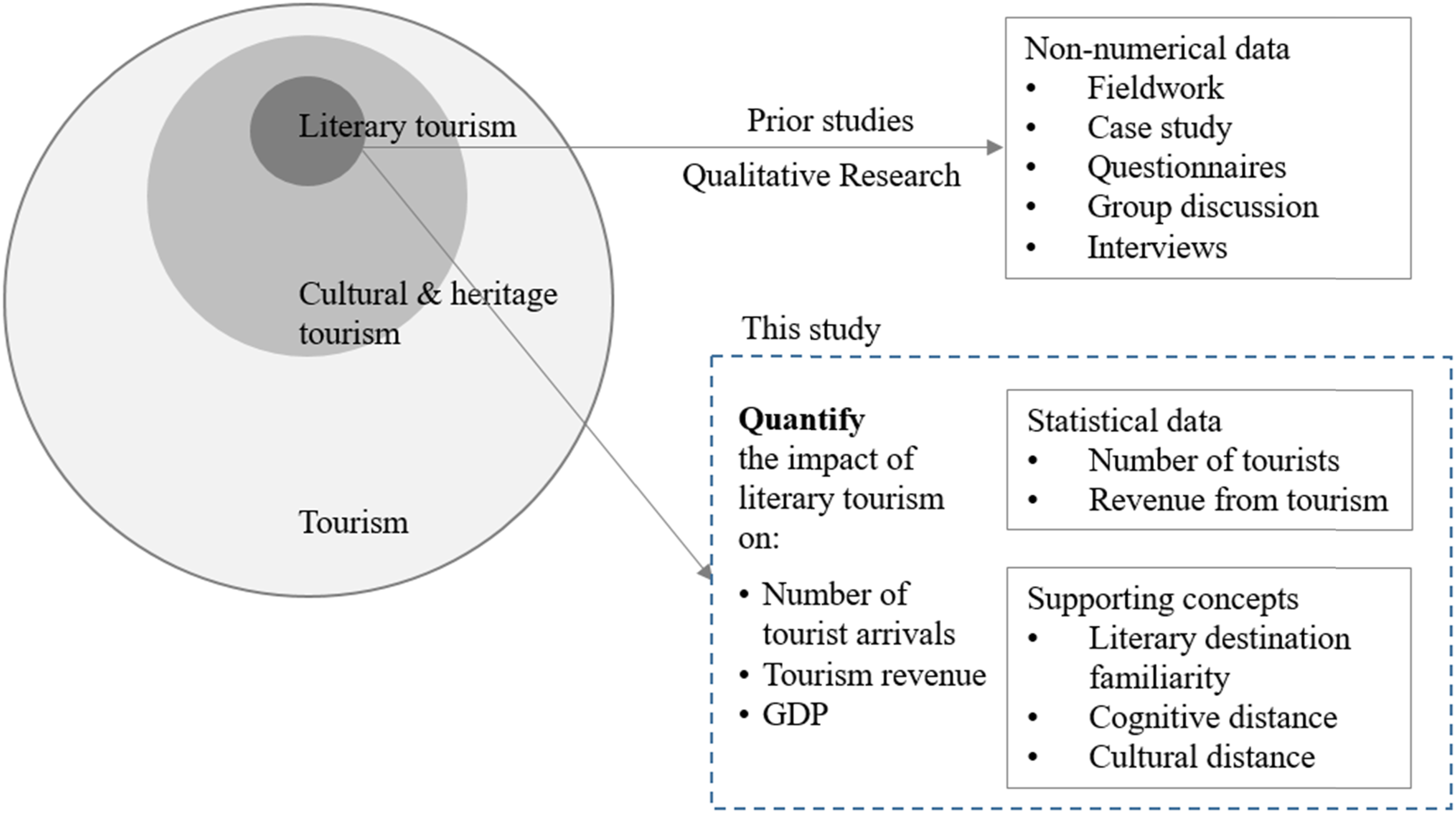
Poetry has deep roots in Chinese culture (Yu and Xu, 2016). There are many famous Chinese poets. For generations, Tang Dynasty (A.D. 618 to 906) poets such as Li Bai (A.D. 701 to 762) and Du Fu (A.D. 712 to 770) were the most prominent figures in Chinese poetry and have had a great influence on the Chinese people (Liu, 1962). The Chinese people revere their poets, and poetry has a strong presence in Chinese society. Chinese poetry frequently enriches tourism (Yu and Xu, 2016) and educates tourists (Yan and Bramwell, 2008) about the natural or cultural resources at their destination. When western tourists look at the Yangtze River, they see only one river; Chinese people think of the many poems that have been written about it. The historical presence of poets at a destination and their praise of it can enhance its value as a tourist destination (Yu and Xu, 2016). Thousands of Chinese flock to monuments dedicated to their poets and artists (Fofield and Li, 1998). Yu and Xu (2016), for example, examined how classical poetry was used to guide Chinese tourists in their study of the Three Gorges and its environs. This philosophical interpretation of China’s holy land has become ingrained in Chinese popular culture.
Chinese poetry reached its zenith during the Tang Dynasty (A.D. 618 to 907), with the emergence of renowned poets, such as Du Fu. Chinese children began learning and reciting Tang poetry in primary schools. Tang poetry, taught in secondary and primary schools, has become ingrained in the Chinese psyche. Chinese people frequently cite Tang poetry in daily life. Chinese tourism businesses that rely on the best-known cultural and natural resources enjoy more visitations and higher revenue than businesses that do not (Wang and Xu, 2014). The popularity of Tang poetry, we hypothesize, is therefore positively correlated with tourism.
Moreover, Chinese tourists value the traditional Chinese aesthetic approach to environmental interpretations and are less receptive to the scientific approach associated with the western model of natural management (Xu et al., 2013). Unfamiliar with the Chinese cultural environment, visitors from outside of China often struggle to bring the same experiential understanding to Chinese locations (Fofield and Li, 1998). As a result, they are less likely to be inspired by Tang poetry. Therefore, we hypothesize that the Tang poetry rating has a beneficial effect on domestic tourism growth but not on international tourism expansion.
Ancient poetry can have a profound economic impact on a destination’s tourism expansion. We believe the present work is the first to quantify the effects of Chinese classical poetry. Most cultural tourism is qualitative, consisting of fieldwork, case studies, questionnaires, focus groups, and interviews (Çevik, 2020). Consequently, there is scant direct evidence of literature’s contribution to the tourism industry. We therefore adopt a novel approach, using Tang poem popularity as a proxy for cultural status and heritage accumulation to investigate the effects of Tang poetry popularity on tourism. To our knowledge, this is the first study to quantify secondary data on tourism revenue and visitor numbers, thereby providing direct evidence for literary tourism research and supplementing the qualitative evidence (Çevik, 2020).
This study contributes in three ways and establishes explicit parameters for examining the effect of literary tourism. Notably, the following distinguishes our study from Borowiecki and Castiglione’s (2014) study, which examined cultural participation and tourism flow using a quantitative approach. First, we employ a 1000-year-old proxy to measure the cultural status and heritage accumulation, eliminating the causality issue. Second, in contrast to Borowiecki and Castiglione’s (2014) study of the connection between tourism flows and engagement in a range of cultural activities, our investigation focuses on the impact of Tang poetry’s popularity on the growth of local tourism. Third, we have a literary tourism focus, whereas Borowiecki and Castiglione (2014) were more interested in cultural and leisure tourism metrics like museums, theaters, concerts, sports, and so on.
Theoretical framework
What is literary tourism?
Literary tourism is a subset of cultural and heritage tourism. Heritage tourism places a higher premium on the uniqueness of the physical location, the local landscape, architecture, traditions, history, and people. In contrast, cultural tourism is closely related to heritage tourism but is less concerned with location (Hoppen et al., 2014).
Literary locations are associated with a writer’s life or works. They foster a strong emotional connection between literary tourists and writers, and are sometimes associated with a turning point in the writer’s life (Herbert, 2001). Most studies of literary locations focus on individual sites, such as Jane Austen’s Chawton House in the UK, and Prince Edward Island, Canada, where L. M. Montgomery set the Anne of Green Gables novels (Herbert, 2001; MacLeod et al., 2018; Smith, 2003; Squire, 1996). Additional examples include Beatrix Potter’s home in the Lake District (Squire, 1994), Native American travelogues (Walle, 1996), rural municipalities in Sweden (Müller, 2006), a Korean literary hamlet (Lee and Weaver, 2014), Italy’s Il Vittoriale degli Italiani (Gentile and Brown, 2015), Brittany in France (Mansfield, 2015), and the graves of Jean-Paul Sartre and Simone de Beauvoir in Paris (Brown, 2016).
Literary tourism occupies a distinct but growing niche within cultural and heritage tourism (Brown, 2016). The limitations of the studies include a lack of statistical data (Hoppen et al., 2014) and a dearth of research (Busby and Shetlife, 2013; Çevik, 2020; Smith, 2003). Taylor (2009) made an exception, reporting that Edinburgh’s UNESCO literary title has generated £2.2 million in revenue for the city and another £2.1 million for the rest of Scotland since 2004. Çevik (2020) reviewed 132 articles on literary tourism published between 1997 and 2016, and concluded that academic research on literary tourism “has not yet reached an adequate level…that studies cannot be generalized and may vary according to literary figures” (p. 1). Of these 132 studies, 124 are empirical. Only nine (7.26%) of the 124 studies use quantitative methods, eight (6.45%) use both quantitative and qualitative methods, and the largest percentage (107 articles) use qualitative methods (86.29%) (Çevik, 2020). The most frequently used quantitative technique is the questionnaire (Çevik, 2020). As Çevik (2020) noted, the disadvantage of qualitative methods in literary tourism research is that “results cannot be generalized and may vary according to literary figures, literary places, or destinations” (p.8), leading to the case study being the most frequently used qualitative method.
Literary destination familiarity
The familiarity of a destination is believed to have a significant impact on tourists’ decision-making processes (Casali et al., 2021). Destination familiarity is defined as prior experience with and knowledge of a destination (Baloglu, 2001a). Prior research indicates that destination familiarity positively influences tourists’ destination search (Baloglu, 2001b). Three factors contribute to familiarity with a destination: geographic distance, previous visitation experience, and general knowledge about the destination (Hu and Ritchie, 1993). For instance, Milman and Pzam (1995) discovered that people who have previously visited central Florida have a favorable opinion of it and are more willing to return there than are those who have heard of the region but not visited it. When travelers choose destinations, they first reference their memories and previous travel experiences for familiar information (Horng et al., 2012). Baloglu (2001a) found a favorable link between destination image and familiarity. Familiarity with a destination also moderates a tourist’s brand loyalty and perceived quality in travel inclinations (Horng et al., 2012). Zhang et al. (2017) provided additional evidence that familiarity moderates in “the relationships between extremism and attitudes toward slogans and destinations, and the relationship between relevancy and attitudes toward destinations.”
Cognitive distance
Cognitive distance, defined as the estimated distance between two points based on memory and cognition, is the psychological representation of the real distance generated because of the processing of individual social, cultural, and personal experiences (Cao et al., 2018). While cognitive distance is critical in explaining why travelers choose their destinations, previous research also indicates that cognitive distance has a positive effect on tourists’ satisfaction and the destination’s image (Cao et al., 2018; Crompton, 1979a; Li, 2000; Zhang et al., 2011).
Hypotheses development
Culture and education are usually highlighted as motivations for travel (Gnoth, 1997). Certain Chinese values, such as regard for history, education, and knowledge, directly affect the travel behavior of Chinese tourists (Hsu and Huang, 2016). According to Sun (2006), 54% of China’s cultural attractions are associated with literature. In China, poetry can provide the groundwork for a place’s attractiveness as an object to Chinese tourists (Yu and Xu, 2016) and continues to exert a positive influence on Chinese tourism (Lin et al., 2020).
Familiarity correlates with destination choice (Busby and Shetliffe, 2013; Çevik, 2020). Poetry is the most precious cultural heritage of the Tang era. Most Chinese have studied Tang poems from childhood and are comfortable visiting tourist attractions that feature well-known Tang poems. The familiarity of Chinese tourists with Tang poetry helps them close that psychological distance, which explains why they travel to specific locations.
Cognitive distance also contributes significantly to explaining Chinese tourists’ destination-choosing behavior. Tang poetry uses simple language to highlight the image of scenery, provide creative conception, construct the discursive image of a tourist location, and become the carrier of local brands (Lin et al., 2020). Wu et al. (2020) found a positive correlation between the number of visitors and the popularity of scenic locations. Therefore, when deciding between two comparable cities, Chinese tourists favor the one more strongly associated with a famous Tang poetry. Indeed, as part of the “integration of culture and tourism,” Tang poetry can be exploited as a cultural resource to infuse tourism destinations with values (Yu and Xu, 2016). For instance, the slogans “travel with Tang poetry” and “travel with Shanxi Tang poetry” (Lin et al., 2020) were used in Xi’an’s urban tourism campaign (Lin et al., 2020). Well-known poems such as “Chang’an is full of the moon, and thousands of households smash clothes (长安一片月, 万户捣衣声)” are referenced to promote Xi’an’s poem travel. Another illustration is the Three Gorges tourism. Using participant observation and content analysis of travel guidebooks, Yu and Xu (2016) researched the Three Gorges and neighboring locations along the Yangtze River and found that “The boundless forest sheds its leaves shower by shower; the endless river rolls its waves hour after hour (无边落木萧萧下, 不尽长江滚滚来)” by Du Fu is one of the most frequently mentioned poems in travel guides. Xu et al. (2021) demonstrated that, as a result of historical inheritance, the poetic spirit permeates the destination, imbuing visitors with a particularly emotional and cognitive hue. Hence, to quantify the economic impact of Tang poetry on the development of domestic tourism, this study combined the concepts of familiarity in conjunction and of cognitive distance to formulate the following hypothesis:
The Tang poetry ranking is positively correlated with the number of domestic Chinese tourists and related tourism revenue. Hofstede (1980) coined the term “cultural distance” to describe the degree to which one society’s cultural features diverge from those of another, and the concept of cultural distance is now accepted in tourism research to explain tourists’ destination selection (Crotts, 2004; Liu et al., 2018, 2021). The cultural distance between destination and source markets can significantly affect individual travel intentions to visit a destination (Ng et al., 2007). Ng et al. (2007) identified four major factors in a tourist’s destination choice: the tourist’s national culture, the tourist’s personal culture, the destination’s culture, and the distance between a tourist’s home culture and the destination’s culture. As stated by McKercher and Du Cros (2003), most tourists prefer destinations whose cultures are close to their own; in other words, the greater the cultural distance, the greater the resistance. Yang and Wong (2012) applied social axioms to quantify cultural distance and discovered that it has a considerable negative influence on China’s inbound tourism. Liu et al. (2021) confirmed that cultural distance has a negative association with tourism demand. Given that international visitors come from all over the world and may be unfamiliarity with the cognitively distant from Tang poetry, unfamiliarity and cognitive distance are therefore likely to influence their travel decisions when they visit area with a strong Tang poetic culture. Besides, despite the fact that the majority of China’s inbound tourists are from Japan and South Korea, who may have a higher understanding of Chinese culture than other international tourists, this does not necessarily imply that they are particularly interested in the Tang Dynasty. Hence, the following hypothesis is put forward:
There is no correlation between the ranking of Tang poetry and the number of foreign tourists and related tourism revenue.
Data and methodology
Data and variables
Tourism data is derived from the CEIC database. The database contains annual data on the number and revenue of domestic and international tourists at the city level. Our primary findings are based on year 2003 data, with a robustness check conducted in 2017. This study examines 340 cities in China.
The data for the Tang poetry ranking comes from Wang et al.’s (2011) book, the Tang Poetry Ranking. Wang et al. (2011) statistically calculated the impact index of a poem. The index of a poem is weighted according to five factors: frequency of mentions in ancient and modern collections (30% and 20%, respectively); historical comments (30%); number of mentions in academic papers (10%); frequency in histories of literature (10%, full transcripts count for 7% and partial for 3%). This index was the basis for the compilation of a list of the top 100 Tang poems. Wang et al. (2011) described the index’s construction and listed the top 100 Tang poems with numerical values for each component. We manually checked each poem to see if it was connected to a specific city in China and excluded those that did not mention city names. Finally, we identified 38 cities from 31 provinces as having produced the top 100 Tang poems as listed in the Internet Appendix.
To quantify the impact of Tang poetry, we create a dummy variable (DPoem) and a continuous variable (IPoem). If a city is mentioned in a poem listed in the Tang poetry ranking (referred to as TPR cities), DPoem is set to 1 and 0 otherwise (named as non-TPR cities). IPoem is a metric that measures the collective impact of poetry on a city. For instance, four poems about Nanjing made the top 100 list: “Mooring on the Qinhuai River,” “Blackgown Alle,” “The Town of Stone,” and “Ascending the Phoenix Terrace of Jinling City.” Nanjing has an IPoem value of 1.9006 (IPoem = 0.5415 + 0.5194 + 0.4736 + 0.3661).
Figure 2 depicts the geographical distribution of cities in the Tang poetry ranking by IPoem value. Xi’an has the highest IPoem value of the 38 cities. This is not a surprise given that Xi’an is the capital of the Tang Dynasty, and many of its poets, including Li Bai and Du Fu, lived there. Map of cities in the Tang poetry ranking. This figure displays the distribution of IPoem among China’s cities. The colored cities (green, yellow, orange, and red) are the top 100 Tang poetry ranking cities. IPoem is the index of the aggregate impact of Tang poetries related to a specific city. Out of sample means the city does not appear in the top 100 Tang poetry ranking, and the value of IPoem is zero.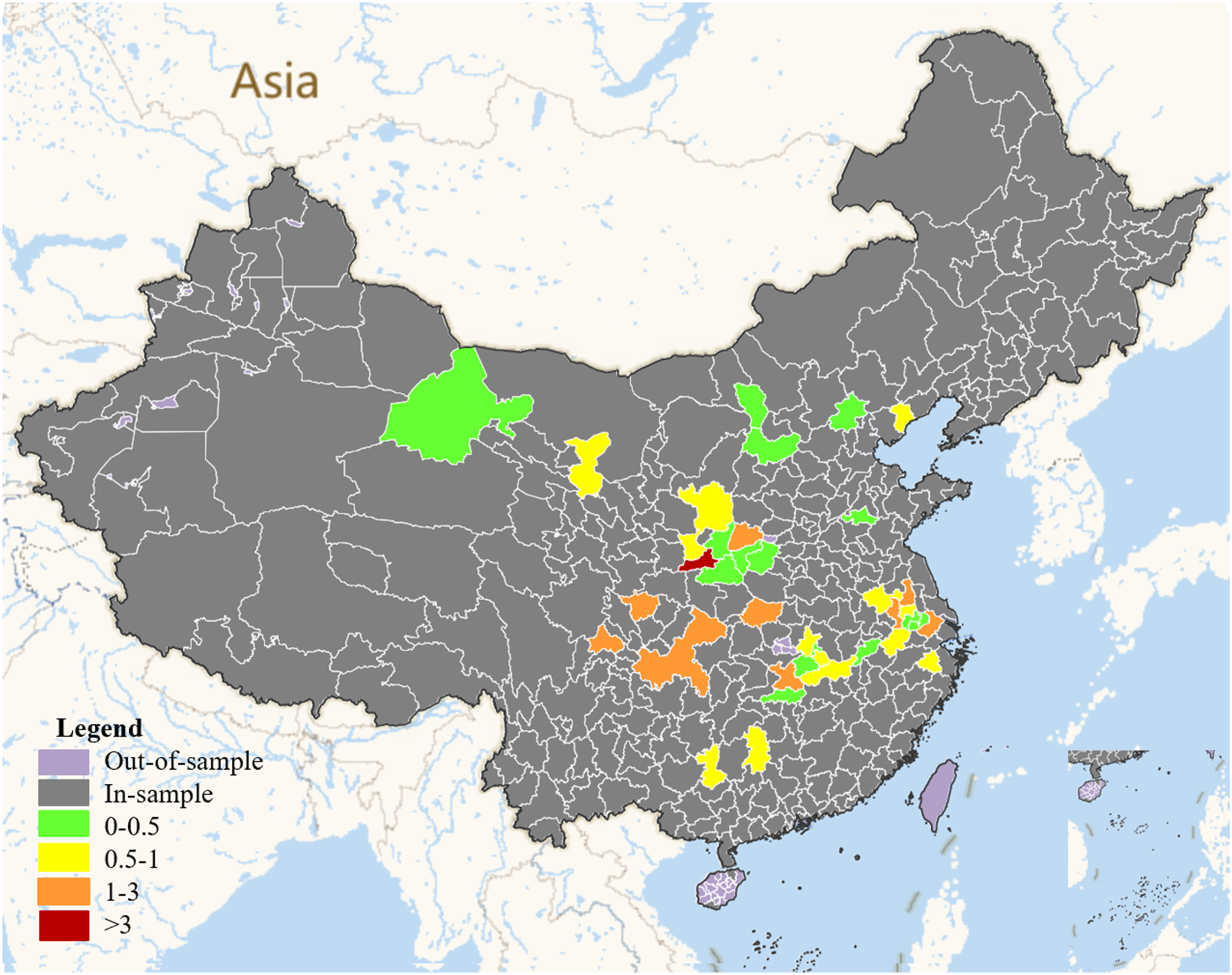
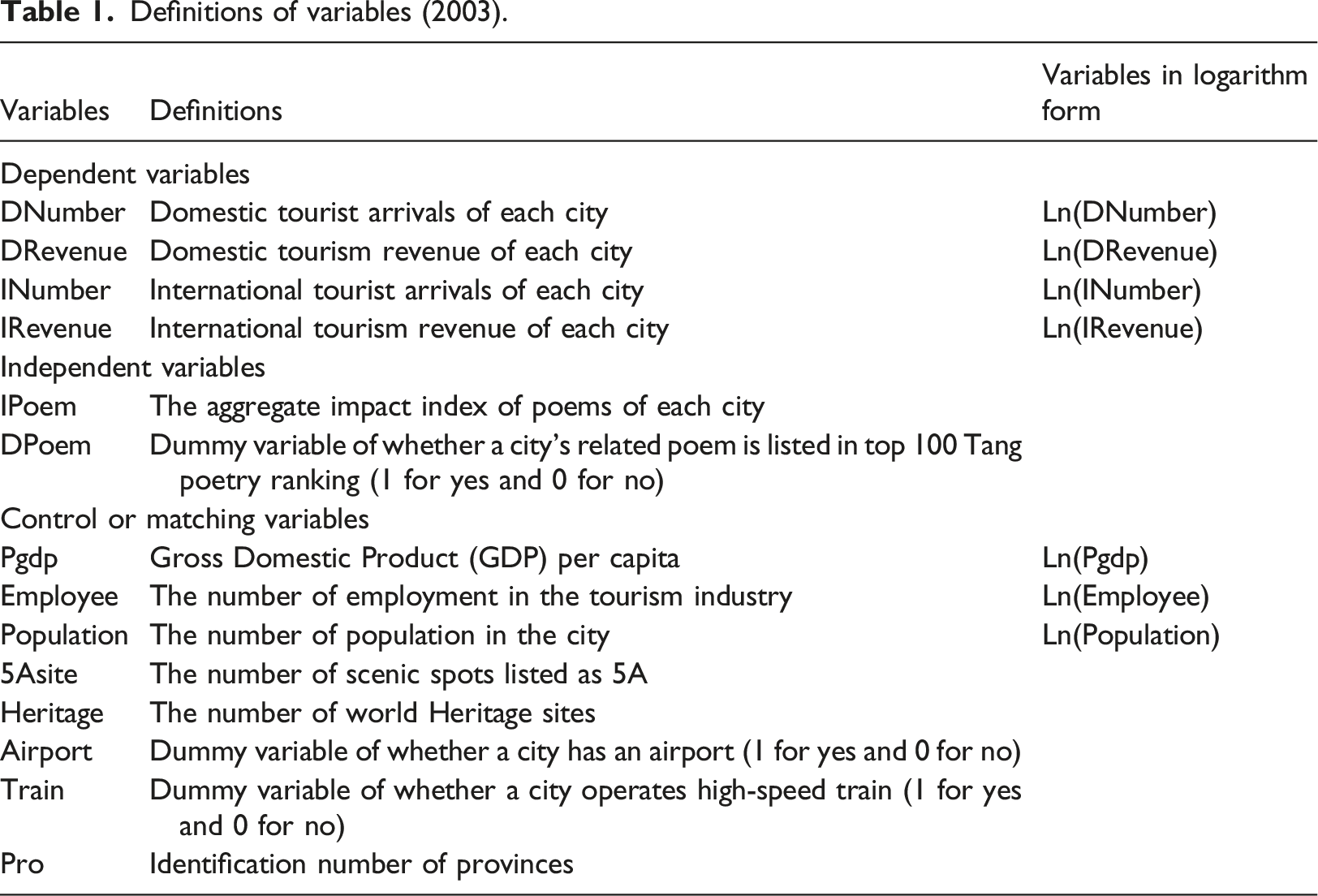
Definitions of variables (2003).
Descriptive statistics
Descriptive statistics of variables (2003).
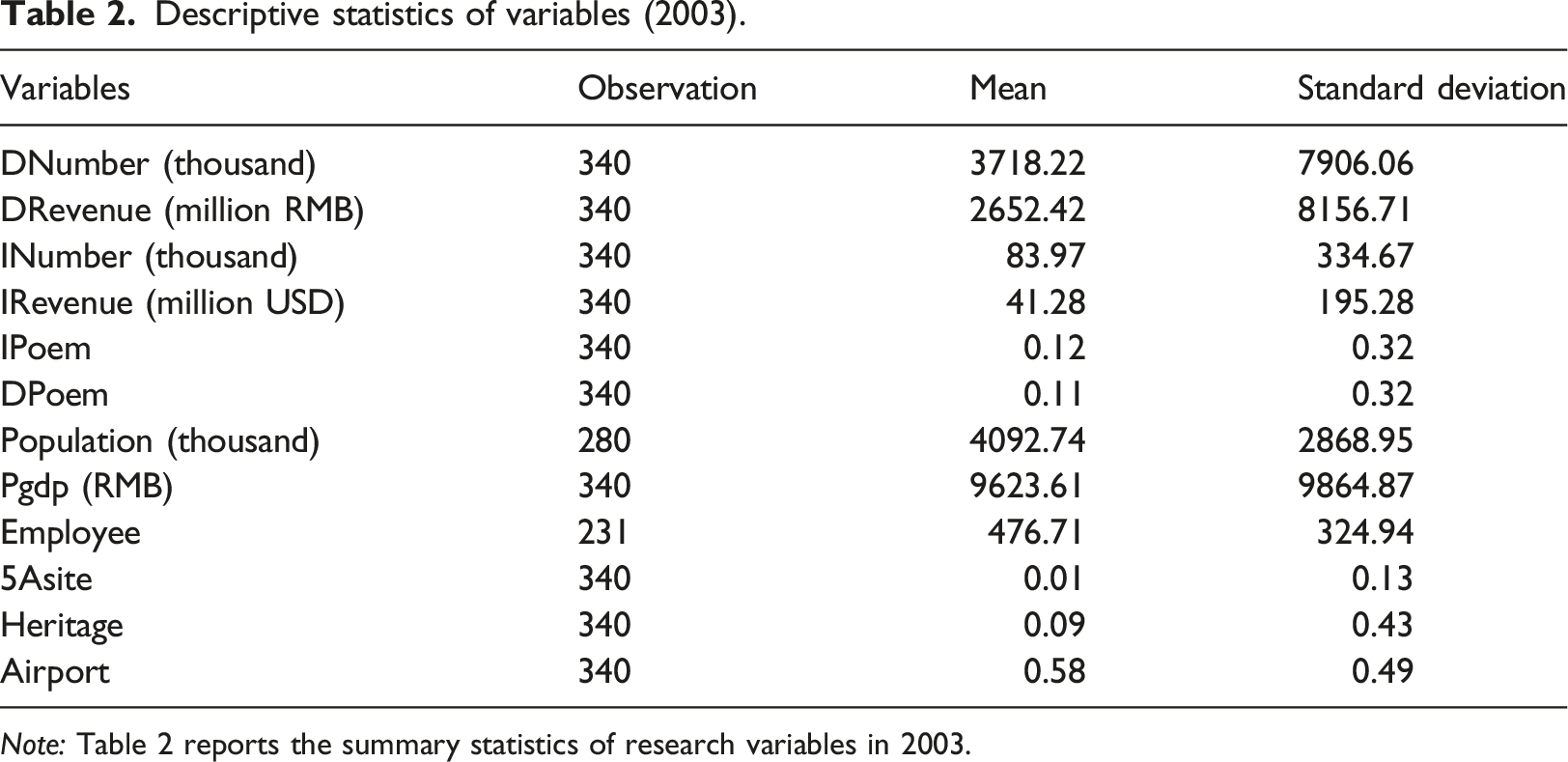
Note: Table 2 reports the summary statistics of research variables in 2003.
Correlations among variables (2003).
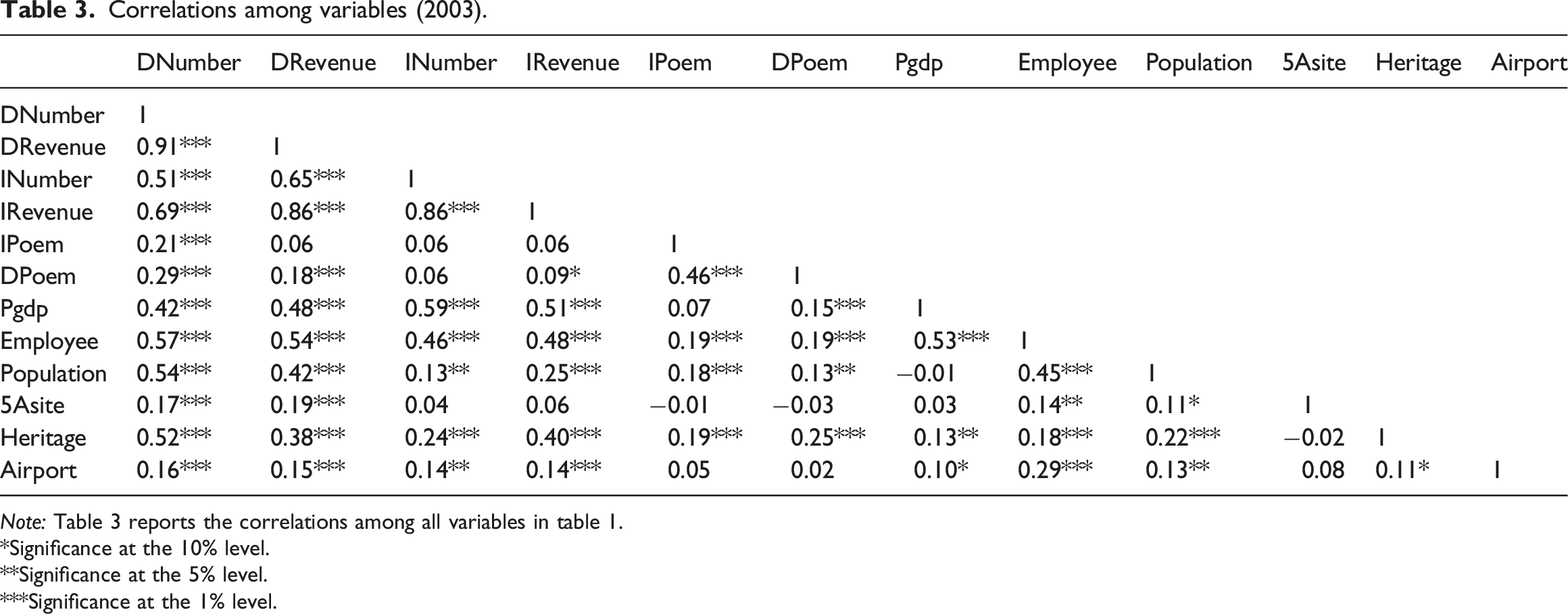
*Significance at the 10% level.
**Significance at the 5% level.
***Significance at the 1% level.
Multivariate regressions
As a baseline model, we use data from 2003 to examine the impact of Tang poetry ranking on tourism development. Equation (1a) is specified to investigate the effects of poetry’s collective impact index (IPoem) on domestic tourist arrivals and tourism revenue.
Then, we use equation (1b) to examine how the dummy variable DPoem affects domestic tourist arrivals and tourism revenue:
Similarly, Equations (2a) and (2b) investigate the effect of DPoem and IPoem on international tourism, specifically tourist arrivals (INumber) and tourism revenue (IRevenue):

Bias-corrected propensity score matching model
The purpose of this study is to determine the difference between participants’ outcomes 

The preceding standard linear regressions treat cities as homogeneous, even though cities exhibit strong heterogeneity. The premise of this problem is to identify a large group of nonparticipants who share all relevant pretreatment characteristics with participants (Caliendo and Kopeinig, 2008). Nevertheless, it is difficult to ensure that non-TPR cities (control group) and TPR cities (treated group) have similar characteristics. Therefore, matching methodologies are appropriate (Bilbao-Terol and Bilbao-Terol, 2020).
PSM accounts for the selection bias inherent in TPR cities. The PSM method employs non-TPR cities with characteristics similar to those of the TPR cities undergoing treatment, namely X
i
= X
j
(see equation (4)). The propensity score por conditional probability of treatment in the PSM method quantifies the degree of similarity between TPR city 
When the matching is not exact, the simple matching estimator will be biased in finite samples (Abadie et al., 2004). By allowing individual observations to be used as a match multiple times, Abadie and Imbens (2002) developed the bias-corrected matching estimator (BC-PSM). This method reduces bias and provides a robust estimator that takes heteroskedasticity into account (Abadie et al., 2004). Hence, this study uses BC-PSM to assess the treatment effect of Tang poetry ranking. Moreover, as Abadie et al. (2004) suggested, four matches are used in this study because they contain sufficiently similar information. Three sets of matching variables are used to generate more robust treatment effect estimates. The terms “Pro, Pgdp and 5Asite,” and “Pro, Pgdp and Heritage” are used interchangeably.
Empirical results and discussion
Tang poetry ranking and domestic tourism using data in 2003
Tang poetry ranking and domestic tourism (2003).
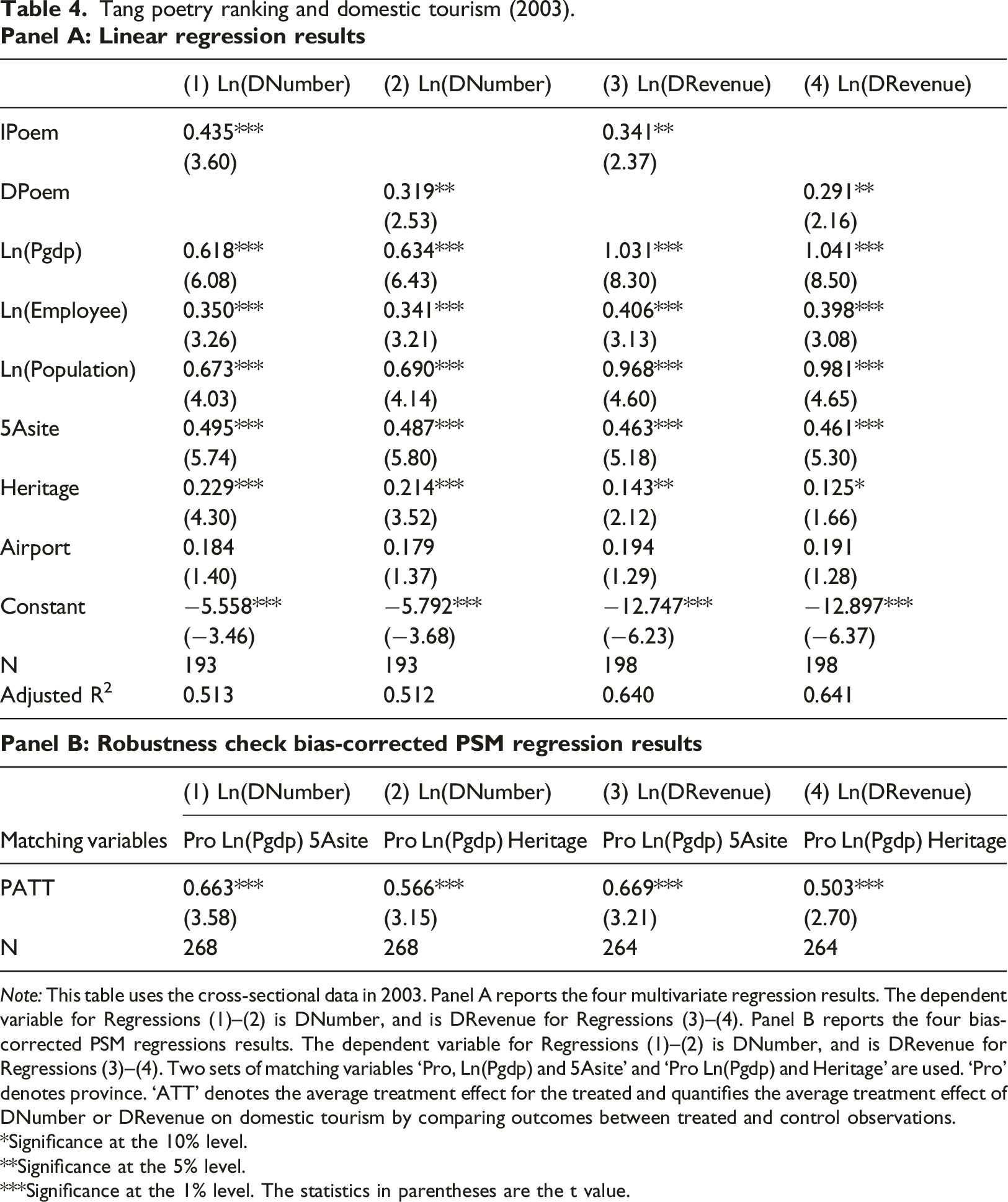
Note: This table uses the cross-sectional data in 2003. Panel A reports the four multivariate regression results. The dependent variable for Regressions (1)–(2) is DNumber, and is DRevenue for Regressions (3)–(4). Panel B reports the four bias-corrected PSM regressions results. The dependent variable for Regressions (1)–(2) is DNumber, and is DRevenue for Regressions (3)–(4). Two sets of matching variables ‘Pro, Ln(Pgdp) and 5Asite’ and ‘Pro Ln(Pgdp) and Heritage’ are used. ‘Pro’ denotes province. ‘ATT’ denotes the average treatment effect for the treated and quantifies the average treatment effect of DNumber or DRevenue on domestic tourism by comparing outcomes between treated and control observations.
*Significance at the 10% level.
**Significance at the 5% level.
***Significance at the 1% level. The statistics in parentheses are the t value.
Furthermore, the number of employees was included in regression models since it is a revenue-determining factor in the tourism market and the equilibrium result of demand and supply of human resources in the tourism industry. Wei et al. (2013) discovered that tourism employment in China does not always expand in parallel with the tourism economy, indicating that in China, the number of employees is primarily a proxy for supply, not demand, in the tourism markets. In a robustness check, we exclude Ln(Employee) from Table 4, but the statistical significance of IPeom and DPoem remains unaffected. Specifically, the coefficient of DPoem in Model 2 is 0.352 and statistically significant at 1% level.
Moreover, the coefficients of 5Asite are consistently higher than those of Heritage, indicating that 5Asite has a greater impact on local tourism than Heritage. This finding is consistent with the fact that there are over 200 5A scenic spots but only 56 heritages in the sample.
The treatment effects of Tang poetry ranking on domestic tourism using BC-PSM are shown in Panel B of Table 4. In Panel B, using province (Pro), Ln(Pgdp), and 5Asite as matching variables, Regression (1) shows that the treatment effect of Tang poetry ranking is 0.663, which is statistically significant at the 1% level. Similar findings are obtained when additional set of matching variables are used: “Pro, Ln(Pgdp) and Heritage.” Regressions (3)–(4) of Panel B also demonstrate that the treatment effect of Tang poetry ranking on domestic tourism revenue is significant at the 1% level.
We also carried out placebo tests to confirm the validity of our research results. In particular, we randomly selected cities, assigned them pseudo DPoem, and conducted a univariate regression on Ln(DNumber), predicting that the coefficient of DPoem is not substantially different from zero. The placebo tests were repeated 500 times, and the distribution of coefficients in Figure 3 shows how important poetry is to tourism. The graph clearly demonstrates that the average coefficient of DPoem in placebo testing is near zero and statistically distinct from the actual coefficient of DPoem, which is displayed as a dashed line in Figure 3. Although not reported, the results are robust when control variables are included in the regressions. Placebo tests. This figure displays the distribution of the estimates from the 500 simulations for the regression coefficients of pseudo DPoem on Ln(DNumber). The dashed line is the benchmarked estimate from the true DPoem. We randomly pick the city and run the regression for 500 times, and the sample for the simulation test is the same as the baseline sample.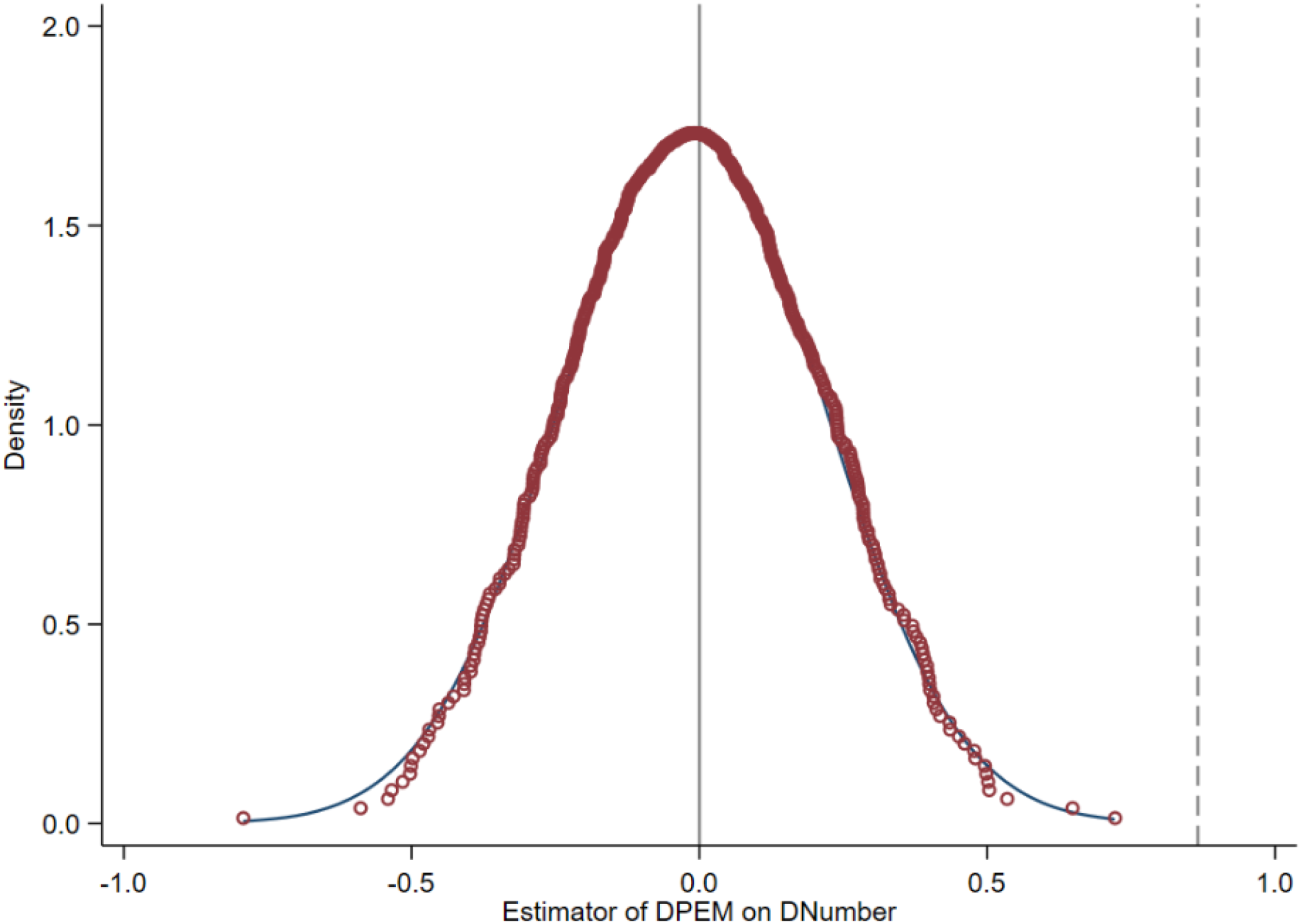
Tang poetry ranking and international tourism using data in 2003
Tang poetry ranking and international tourist arrivals (2003).
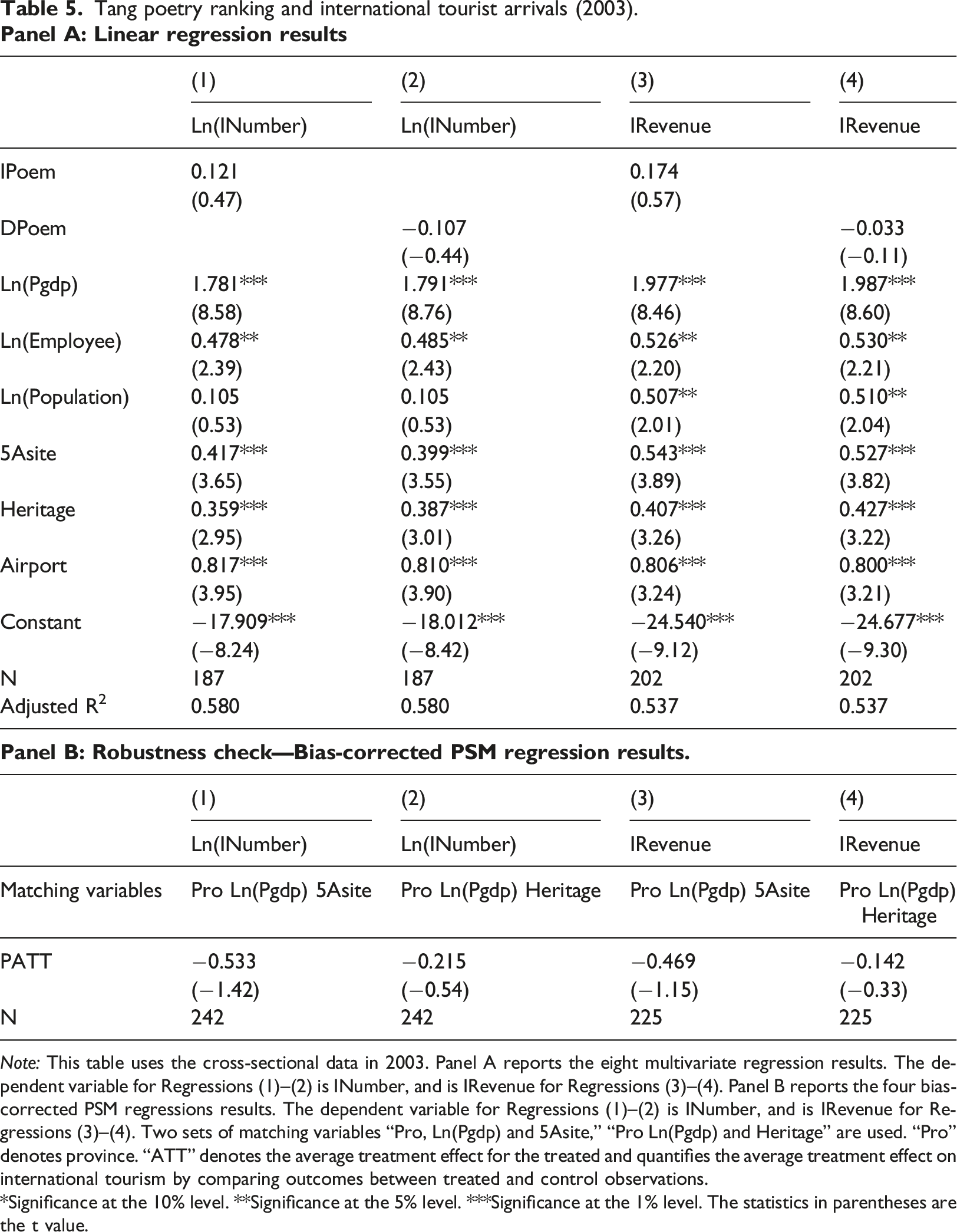
Note: This table uses the cross-sectional data in 2003. Panel A reports the eight multivariate regression results. The dependent variable for Regressions (1)–(2) is INumber, and is IRevenue for Regressions (3)–(4). Panel B reports the four bias-corrected PSM regressions results. The dependent variable for Regressions (1)–(2) is INumber, and is IRevenue for Regressions (3)–(4). Two sets of matching variables “Pro, Ln(Pgdp) and 5Asite,” “Pro Ln(Pgdp) and Heritage” are used. “Pro” denotes province. “ATT” denotes the average treatment effect for the treated and quantifies the average treatment effect on international tourism by comparing outcomes between treated and control observations.
*Significance at the 10% level. **Significance at the 5% level. ***Significance at the 1% level. The statistics in parentheses are the t value.
Panel B employs BC-PSM to assess the robustness of the Tang poetry ranking’s impact on international tourism. Regressions (1) and (2) examine the treatment effect of Tang poetry ranking on international tourist arrivals, while Regressions (3) and (4) examine the treatment effect of Tang poetry ranking on international tourism revenue. Both sets of regressions’ findings indicate that there is no impact on international tourist arrivals and revenue. Panels A and B came at consistent conclusions.
We therefore conclude that Tang poetry has no discernible effect on international tourism, based on the data in Tables 4 and 5 and the discussion in the theoretical framework section. Additionally, because international tourists travel a long distance, the quality of scenic areas (such as world cultural heritage sites and 5A scenic spots) plays an important role in determining tourism destinations (Lin et al., 2020). As a result, it is reasonable to conclude that the influence of Tang poetry was minimal.
Recent effect of Tang poetry ranking on tourism using data in 2017
Tang poetry ranking and domestic tourism (2017).
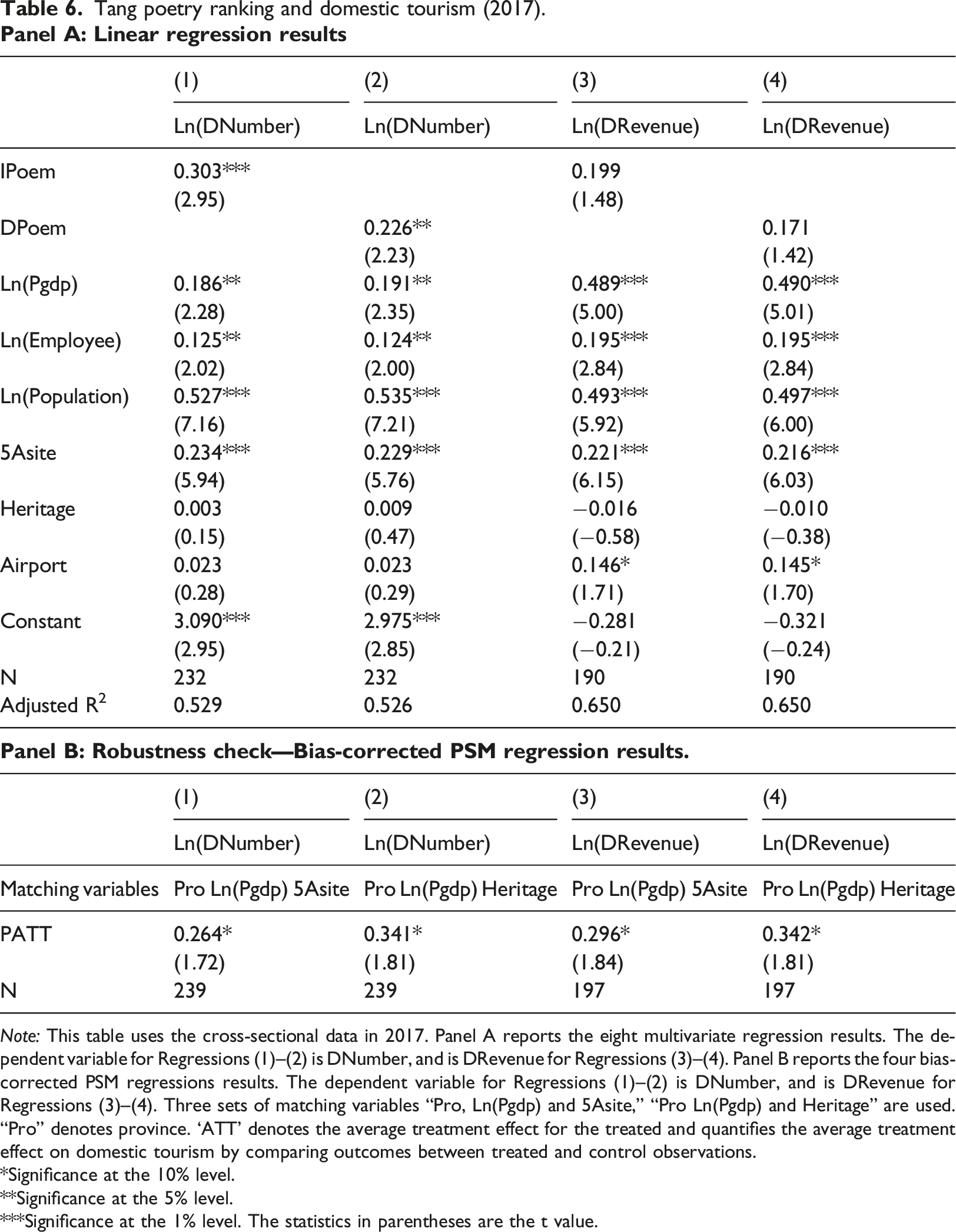
Note: This table uses the cross-sectional data in 2017. Panel A reports the eight multivariate regression results. The dependent variable for Regressions (1)–(2) is DNumber, and is DRevenue for Regressions (3)–(4). Panel B reports the four bias-corrected PSM regressions results. The dependent variable for Regressions (1)–(2) is DNumber, and is DRevenue for Regressions (3)–(4). Three sets of matching variables “Pro, Ln(Pgdp) and 5Asite,” “Pro Ln(Pgdp) and Heritage” are used. “Pro” denotes province. ‘ATT’ denotes the average treatment effect for the treated and quantifies the average treatment effect on domestic tourism by comparing outcomes between treated and control observations.
*Significance at the 10% level.
**Significance at the 5% level.
***Significance at the 1% level. The statistics in parentheses are the t value.
Table 6’s Panel B summarizes the BC-PSM results. Regressions (1) and (2) test the treatment effect of Tang poetry ranking on domestic tourist arrivals in 2017 and demonstrate a significant treatment effect at the 10% level for any set of matching variables. Regressions (3) and (4) consistently find a statistically significant treatment effect of Tang poetry ranking on domestic tourism revenue at the 10% level. Though not disclosed, we again analyzed the data in 2004 and discovered that they were similar to those in 2003, easing concerns that SARS influenced the 2003 results. IPoem and DPoem both have comparable coefficient magnitudes and levels of significance as shown in Tables 4 and 6, signaling that traditional culture, such as Tang poetry, was more influential in the early stages of China’s tourism development, but that influence has gradually waned.
Discussion and implications
Culture and tourism are widely regarded as mutually beneficial. Tourism generates additional revenue to sustain and enhance cultural resources that might otherwise be lost (Hughes, 2000; Hughes and Allen, 2005). In 2007, cultural tourism accounted for 40% of all international visitors, according to the OECD and UNWTO (Mintel, 2010). Cultural tourists are considered upscale visitors due to their wealth, education, and willingness to travel (Holcomb, 1999; Hughes and Allen, 2005). Cultural tourism has a non-seasonal feature and is widely recognized as one of the primary resources for tourist destinations to combat seasonality (Butler and Mao, 1997; Vergori and Arima, 2020). To promote cultural tourism, it is necessary to begin with cultural assets that can attract tourists (Hughes and Allen, 2005). With its 5000-years history, China possesses more cultural resources than many other countries. Using a unique Tang poetry ranking index, tourism revenue, and the number of tourists at the city level in China, we find a positive effect of the Tang poetry ranking on domestic tourists, but not on international tourists. Besides, our results show that between 2003 and 2017, the effect of Tang poetry on domestic tourism decreased. These findings have the following significant implications for the tourism industry.
To begin, Tang poetry has a diminishing influence on tourism as a proxy for cultural status and heritage accumulation. The tremendous accumulation of personal wealth and economic progress in China over the past two decades have led to a boom in the tourism industry, which is partially attributable to the country’s admission to the World Trade Organization in 2001. In the early years, such as 2003, the mode of domestic tourism was very straightforward; hence, cultural influences had a substantial impact. Nonetheless, after more than a decade of expansion, domestic tourism has become far more varied, and the influence of Chinese culture has diminished considerably. Even though a famous Tang poetry may have motivated a traveler to visit a particular destination, the likelihood of her returning to the same city is low. This conclusion is similar with the observation in Italy that domestic tourists rarely visit museums but engage in theater-related activities more frequently, as museum exhibitions remain unchanged and the theater consistently presents new performances (Borowiecki and Castiglione, 2014).
Moreover, novelty-seeking is one of the primary tourism demand drivers (Blomstervik and Olsen, 2022; Crompton, 1979b). Tourism demand is driven by an appreciation of cultural desires. With the progression of time, particularly the development of the Internet and new media technology, the popularization and diversification of cultural knowledge have diminished people’s motivation to experience culturally related knowledge through tourism, thereby diminishing its impact on tourism demand. For Chinese tourists, cultural popularization and advertising in basic education have diminished the appeal of culture as a tourism draw, therefore the allure of cultural tourism that is only shown is diminishing.
Second, products that incorporate but are not limited to Tang poetry, might enhance the aesthetic experience and attract literary tourists. As one example, Xinchang County in eastern China has offered a travel package titled “Road of Tang Poetry in East China.” It demonstrates the potential to grow a niche market for Tang poetry to expand the domestic tourism markets. In other countries, literary tours, literary trails, and walks are critical products of literary tourism, enriching the content of literary tourism and achieving economic success (Carson et al., 2013; Yiannakis and Davies, 2012). As Tang poetry is not China’s sole cultural heritage, it may be combined with other elements such as calligraphy and Song Ci to enliven cultural products sold in tourism markets.
Third, the COVID-19 pandemic has restricted foreign tourists’ access to China, leaving the Chinese tourism market entirely reliant on domestic visitors. Short local tours will be popular. Wu et al. (2020) proposed the “market conversion rate,” which quantifies the degree to which tourism destination popularity and awareness translate into real visits. They discovered a correlation between popularity and number of visits. According to Wu et al. (2020), destination marketing organizations (DMOs) should establish differentiated marketing strategies for tourism markets located at different distances. It is crucial to increase the revisit rate in short-distance markets, and to prioritize the most important target markets in long-distance markets. While the Tang poetry rating has a favorable influence on domestic tourists, DMOs must consider ways to entice tourists to return, such as offering discounts on lodging and scenic location admissions.
Lastly, cultural tourists as upscale visitors are frequently portrayed as older, more affluent, more cosmopolitan, and with a higher educational and socioeconomic status than other tourists (Falk and Katz-Gerro, 2016; Holcomb, 1999; Hughes and Allen, 2005; Vergori and Arima, 2020). The higher the quality of the cultural product, the more likely residents are to spend money within a region, province, and country. Therefore, tourism firms should invest additional resources in developing products that cater to this market segment. Notably, cultural products can attract and extend the stay of long-haul tourists (Silberberg, 1995). To boost tourism earnings, tourism organizations and local governments should make every effort to entice travelers to stay an additional night or two.
Conclusion, limitations, and future research
Using the distinctive Tang poetry index, this study investigated the effects of literary tourism on tourism growth. Although prior research has emphasized the importance of qualitative analysis (Arcos-Pumarola et al., 2020; Çevik, 2020), this is the first study to our knowledge that relies on a sizable secondary data set and regression analysis methods to demonstrate direct cultural effects on tourism development. We discover that the Tang poetry ranking had a significant favorable impact on both the number of domestic tourists and their revenue, using data from 340 cities in 2003 and the top 100 Tang poem ranking index. For international tourists, there is no such effect for international travelers. Furthermore, our findings are robust when BC-PSM methods and data from 2017 are used.
There are some limitations of our study. Even while we included the most popular control variables such as GDP per capita, number of employees in the tourism industry, the existence of 5A sites and heritage, and airport as a proxy for convenience, it is probable that many other unobserved factors are driving the results. Non-poem-related accomplishments, such as education level and cultural norms, may influence the results. Besides, Tang poetry cannot capture Chinese culture as a whole; other forms, such as calligraphy, are as important (Zhou et al., 2013). Consequently, utilizing Tang poetry as a proxy for Chinese culture is inadequate and is biased in favor of the Tang Dynasty.
Moreover, the possibility that the Tang poem-ranking index is subjective, even though Wang et al. (2011) construct the index scientifically. Furthermore, we are unable to distinguish Asian tourists from other incoming tourists, as Asians, particularly those from Japan, and South Korea, who are more familiar with Chinese culture. A lack of city-level data also prevents us from determining if the Tang poetry effect exists among Japanese and Korean tourists.
Our findings suggest numerous directions for future research. For instance, the Tang poem is only one part of the Chinese cultural heritage; other forms of cultural heritage such as Song Ci and calligraphy also contribute significantly to cultural tourism but lack quantitative supporting evidence. Wang et al. (2011) constructed a Song Ci ranking. This study could also be extended to other Asian countries such as Japan and Korea, which place a high premium on literature. For instance, the Japanese poet Bassho was a traveler whose memoirs are still used as guides for today’s Japanese tourists (Graburn and Jafari, 1991). As travel is the second-largest category of online purchases (Nielsen, 2018; Quaglione et al., 2020), it is critical to develop online marketing strategies to promote cultural tourism, but research on this topic is scarce. Lastly, the importance of Tang poetry and related cultural heritage is gradually waning, owing to the influence of other causes, such as the increasing popularity of international travel and the variety of entertainment available in contemporary China. These deserve future investigation.
Supplemental Material
Supplemental Material - Tang poetry and tourism: Cultural effects after 1000 years
Supplemental Material for Tang poetry and tourism: Cultural effects after 1000 years by Hung Wan Kot, Ming-Hsiang Chen, Ching-Hui (Joan) Su and Yu-Xia Lin in Tourism Economics
Footnotes
Declaration of conflicting interests
The author(s) declared no potential conflicts of interest with respect to the research, authorship, and/or publication of this article.
Funding
The author(s) received no financial support for the research, authorship, and/or publication of this article.

Supplemental Material
Supplemental material for this article is available online.
Author biographies
References
Supplementary Material
Please find the following supplemental material available below.
For Open Access articles published under a Creative Commons License, all supplemental material carries the same license as the article it is associated with.
For non-Open Access articles published, all supplemental material carries a non-exclusive license, and permission requests for re-use of supplemental material or any part of supplemental material shall be sent directly to the copyright owner as specified in the copyright notice associated with the article.
