




Abstract
This paper aims to analyze and explain how urban centrality influences tourism development in a city. Based on the panel data of 295 prefecture-level cities in China from 2005 to 2018, the paper develops explanatory mechanisms and discusses the influence theoretically and empirically. To advance the analysis, this paper constructs a new index for urban centrality. Our empirical findings are as follows: (1) urban centrality promotes tourism income significantly. (2) Mechanism analysis illustrates that urban centrality fosters tourism through the agglomeration and industrial structure effects. (3) Heterogenous analysis suggests that the influence of urban centrality on tourism varies with city sizes and locations.
Keywords
Introduction
The spatial pattern of China’s economic development has changed dramatically in recent years. Central cities and urban agglomerations have become the primary spatial forms that possess resources and production factors and are the main engines for general economic growth (You and Chen, 2021). Traditional analysis based on the geographic location of a city can no longer meet the requirement of the current economic development (Pereira et al., 2013). As a result, the study of the centrality of a city in the urban agglomeration or urban network has gained important theoretical and practical significance. In addition, the service industry is becoming the dominant form of China’s economy, where tourism is the most growing sector of the service industry. Tourism’s development has contributed to higher economic output (Zhang et al., 2021). The tourism economy is considered a “Cgreen” driver of regional economic growth and industrial upgrading. Considering that the hierarchical position of a city in an urban network is closely related to its accessibility to various resources needed for the city’s economy, it is reasonable to assume that the change in a city’s urban centrality might influence tourism development in the city. This paper investigates such influence and the main mechanisms through which urban centrality affect the development of the regional tourism economy.
Literature has described how urban systems or networks form and organize (Neal, 2013). The “Globalization and World Cities Study Group and Network” (GaWC), led by Taylor (2004), is dedicated to exploring the formation and evolution mechanism of world city networks and the interactive relationship between network structure and economic globalization. The GaWC team regards cities as nodes in the network and believes that the city’s role and status depend on the city node’s interaction with other nodes in the network (Derudder and Taylor, 2021). The closer a city interacts with other cities in the network, the stronger the “space-time compression” effect it produces. This effect can be reflected in the changes in regional spatial accessibility. It can intensify the agglomeration effect, which causes the resources to gather in a particular area and accelerate the area’s economic growth. It leads finally to a “central area” with a higher income level, while the relatively backward surrounding areas are called “peripheral areas”. This is precisely the “central area and peripheral area” argument in the unbalanced growth theory of regional development (Hirschman, 1958). The urban network argument has considered the dynamic interconnection between cities and thus complemented the insufficiency of previous research treating the urban system as a static and relatively independent system (Taylor et al., 2014). With the widespread application of multi-source data, the urban network gradually becomes a new paradigm for global urban research. As a result, urban centrality has become an important topic in the study of urban development and urban system (Pereira et al., 2013).
Scholars have investigated urban centrality from various perspectives. Some researchers have focused on developing the concept of urban centrality and proposed using different research methods and theoretical perspectives to measure it. For example, Pereira et al. (2013) introduced an extension to the spatial separation index to construct a new measure of urban centrality. Curado et al. (2020) analyzed and compared several measures of centrality applied to urban networks and presented a new measure (called Adapted PageRank Algorithm) with real data on the city of Rome. Other studies related the concept of urban centrality or network centrality to issues in transportation infrastructure (Ma et al., 2019), energy consumption and pollution (Rüttenauer, 2019), industrial structure, etc.
Although some researchers have related the network or centrality concept to the tourism industry, they focused mostly on the network of the tourism economy (e.g. Gan et al., 2021) or transportation network (e.g. Chen et al., 2020). Moreover, many studies were only case studies or related to a specific urban destination (e.g. Aranburu et al., 2016; Sugimoto et al., 2019). Even when there were studies involving centrality, the measurement relied on the traditional social network analysis method (e.g., Luo et al., 2020; Ledesma González et al., 2021). Unlike previous literature, this paper links the concept of urban centrality with tourism development and explicitly discusses them in one framework.
Benefiting from its specialties, the tourism industry has a strong comprehensive driving effect on other industries in a city. Tourism is an intangible and unmovable trade product. The development of the tourism industry mainly relies on the flow of people and thus depends on transportation infrastructure. Good tourist attractions need to satisfy a variety of demands, such as hotels, restaurants, leisure centers, and shopping centers in the local area. It means that the development of the tourism industry depends on the local industrial structure. Therefore, the tourism industry is more sensitive to the city’s centrality than other industries.
Based on the above analysis, this paper explores the influence of urban centrality on the tourism industry and investigates the mechanism of this influence. By employing theories from agglomeration economy, network science theory, and urban study, we discuss the agglomeration effect and industrial structure effect as transmission mechanisms. This paper applies data about 295 prefectural administrative cities in China from 2005 to 2018 for empirical analysis, overcoming the problems caused by insufficient samples, and conducts a large number of tests to ensure robustness and reliability. The empirical results show that urban centrality has a significant positive effect on tourism income. The results are important for the sustainable and healthy development of the tourism industry and optimizing the industrial layout of cities and urban agglomerations.
Our study contributes to the agglomeration economy and network science theory, tourism research, and urban study. First, by including the concept of “urban centrality” from network science and urban study, this paper fills a research gap in the study of determinants of tourism development. Although previous tourism literature has adopted a social network perspective in the analysis, most focused on the network structure of the tourism economy but not the position or the status of a city in the urban network. Second, this paper elaborates on two transmission mechanisms through which urban centrality influences tourism: the agglomeration effect and structural effects. It complements the theoretical and empirical discussion about the intersection of agglomeration economy and network theory. Third, this paper constructs the urban centrality index based on Taylor’s GaWC interlocking city network model (2001) and the data from China’s leading producer service company (PS). Considering the spatial location of cities in urban networks and the service-oriented economic environment of modern cities, this approach overcomes the limitation of geographic centrality in traditional network analysis. In this regard, it provides new theoretical insights for network analysis in future research. Network analysis needs to consider the role of non-geographic factors such as spatial and economic structures. Fourthly, the data used in this paper ensures a comprehensive heterogeneity analysis. Considering the imbalanced situation in the economy, institutions, and culture in Chinese regions, the results of this paper can provide reasonable implications for policymakers.
The remainder of the study is arranged as follows: The literature review section presents a literature review. The mechanism analysis section theoretically explores the transmission mechanism of urban centrality to the development of the tourism economy. The methods and data section introduces econometric models and data. The empirical results and analysis section reports the empirical results and additional tests. The last section concludes with theoretical and managerial implications, limitations, and future research suggestions.
Literature review
This study is based on two main strands of literature. The first strand of literature concerns factors affecting the development of the tourism industry. The second lies in the research field of urban centrality and the development of the tourism economy.
Literature on factors affecting the development of the tourism industry
Existing literature has investigated the determinants of tourism’s development from various perspectives, such as culture, language, or other mental and emotional characteristics (e.g., Ritchie & Zins,1978; López et al., 2018). Researchers usually take a tourism destination such as a country or region as a case study. For example, López et al. (2018) found that residents’ perceived benefits significantly affect tourism sustainability in Trujillo, the third-largest city in Peru. Similarly, a study from Sharma and Nayak (2020) confirmed that experience quality is a dominant construct of interest for India’s tourism industry’s success.
Traditional studies have believed that resource endowment in the tourism industry, such as reception facilities, natural and cultural landscape, and personnel qualifications has a significant and direct influence on regional tourism development (Xiang et al., 2012). By analyzing the correlation between tourism competitiveness in Southeast Europe countries and the level of competitiveness of tourism infrastructure, Jovanović and Ivana (2016) pointed out that tourism infrastructure is a significantly important factor in the tourism sector.
Some literature has evaluated the regional differences in tourism development from the perspective of the macro environment. For example, Ramkumba et al. (2012) found that macro policies regarding market guidance, staff training, and financial support stimulate related enterprises or corporations to improve tourism products and thus promote local tourism development. The study by Liu et al. (2018) showed that the evaluation activity performed by the Ministry of Housing and Urban-Rural Development in China had enhanced the role of the National Scenic Spot in the local tourism economy.
In recent years, researchers have begun to study regional tourism development with the application of spatial economy. Factors like spatial dependence and location accessibility resulting from agglomeration significantly affect the regional tourism economy. For example, Yang and Fik (2014) examined and identified the influence of two types of spatial effects, spatial spillover effects and cross-city competition effects, on regional tourism.
Urban centrality and the development of the tourism economy
As mentioned above, the existing literature rarely discussed urban centrality and tourism economy specifically in one explanatory framework. Most relevant studies have used the concept of centrality from the perspective of the transportation network, the network of business or non-business tourism organizations, or the network constructed through tourist behavior and mobility (Stienmetz and Fesenmaier, 2015; Liu et al., 2017). In addition, they have applied social network analysis to discuss tourism-related issues. For example, a study by Wang et al. (2016) used social network analysis to explore the effect of high-speed rail (HSR) on the spatial structure of regional tourist flows. The research pointed out that HSR can strengthen the aggregation effect, and the tourism nodes in the network can take advantage of the endowment of tourism resources, hospitality capacity, tourist transportation network density, etc. In addition, Xie et al. (2021) constructed the spatial structure of the European Union (EU) by the modified gravity model and social network method. They analyzed the effects on the EU tourism economy. One of their main findings was that the improvements in the complete network connectedness and a reduction in graph efficiency can significantly reduce differences in EU tourism economic development levels and improve spatial equity. With the Chinese empirical setting, Kong and Li (2021) proposed that the city’s centrality, intermediary, connectivity, and other network characteristics in the HSR network affect the development of tourism to a different degree. Many scholars have discussed the relationship between spatial network structure and the tourism economy. Some examined the characteristics of the spatial network structure in tourist destinations by adopting the tourism economic gravity model and social network analysis (e.g. Gan et al., 2021). Some tourism literature insisted that tourism and leisure significantly influence urban space when considering tourism’s spatial organization (e.g. Derek, 2018). Conversely, others thought regional spatial structure changes affect the tourism economy (e.g. Fang et al., 2021).
Some researchers have applied networks of the tourism economy to construct indicators of centrality in tourism networks (e.g. Shih, 2006; Zhang et al., 2015a). However, urban centrality differs from traditional network centrality (Neal, 2011). It results from regional economic links in urban networks constituted by productive services networks, population flow networks, and others. The concept of urban centrality is reflected in the difference in a city’s spatial pattern, location advantage, and economic status (Luo et al., 2020; Neal et al., 2020). The variation in the city’s hierarchical structure in the urban network represents unequal city functions. As cities and urban agglomerations play more important roles in the development of the modern economy, the upgrading and improvement of the urban centrality of a city can promote the regional economy as well as the development of the tourism industry.
Altogether, the literature review shows that most previous studies on determinants of the tourism economy have paid attention to the influence of some absolute indicators such as urbanization or integration degree while very few have underlined the impact of changes in the relative position of cities in the urban network. To fill this research gap, this paper explores the influence of a city’s urban centrality on tourism development.
Mechanism analysis
Agglomeration effect
The theory of new economic geography proposed that the agglomeration effect exists with the opening of the high-tech service industry. With the establishment of high-level production service industry networks, improving urban status in areas with high urban centrality will stimulate the accumulation of human and social resources. It ultimately results in an agglomeration economy. A larger local market resulting from an agglomeration economy expands the supply and demand for regional tourism with the improvement of accessibility. Many researchers have studied the effect of agglomerations in tourism, such as cooperation and competition among tourism-related firms or visitor attractions (e.g. Denicolai et al., 2010), labor pool effect (e.g. Kim et al., 2021), and knowledge diffusion and spillover (e.g. Majewska, 2015).
One important feature of an agglomeration economy is the co-existence of cooperation and competition effects (Sosnovskikh, 2020). From the supply perspective, the agglomeration effect facilitates travel and tourism marketing firms to share resources, risks, and costs. In addition, it helps firms gain advantages from the mutual learning and exchange of information. Literature has documented that collaborative behavior via agglomeration economies enhances tourism competence and favors sustainable tourism development (e.g. Denicolai et al., 2010). From the demand side, tourism is very susceptible to concentration. For example, the spatial concentration of tourist attractions can induce tourism flow. The study from Kalnins and Chung (2004) focused on demand-side agglomeration and found that agglomeration increases demand in the US lodging industry. In addition, the competition effect strengthens tourism firms’ need to be innovative constantly to maintain their position in the tourism industry. Moreover, competition effects in tourism promote productivity spillover, which drives, in turn, intense competition because the tourism firms locate in the relatively homogeneous visitor market segment (Kim et al., 2021).
The agglomeration effect influences regional tourism in different ways (Wang et al., 2016). Labor market pooling and knowledge spillover exist in the tourism context (Kim et al., 2021). Benefiting from the agglomeration economy due to high urban centrality, the cost of labor force transfer and movement is greatly reduced, resulting in a more efficient allocation of labor (Lin et al., 2021a). Moreover, a large labor pool makes it much less expensive for tourism companies to search and find workforces, thus improving labor productivity. The matching friction between the labor force and the job position can be reduced, thus improving the matching efficiency (Liu and Wen, 2015).
The movement of the labor force in the tourism context can generate significant knowledge spillover. Unlike other sectors, knowledge in tourism is more tacit, and tourism employees are more likely to share incremental knowledge (Shaw and Williams, 2009). Moreover, products in the tourism industry are mostly similar, and knowledge sharing is more critical than radical knowledge (Zhang et al., 2015b). Knowledge accumulation and sharing results in knowledge spillover occurs along with labor mobility. This process stimulates learning and innovation, ultimately contributing to tourism growth (Kim et al., 2021). In addition, the higher concentration of the tourism industry in a specific area encourages the diffusion of knowledge among enterprises inside the tourism industry, which is conducive to the enterprises’ innovation activities and thus promotes the development of the tourism industry (Boschma & Ter Wal, 2007). Moreover, the attractiveness of tourism products needs to be complemented by other industry sectors, such as the transportation and service sectors. The spillover of complementary knowledge across diverse firms and economic sectors becomes much easier because of a high degree of agglomeration (Kim et al., 2021). The diversification of industries within the region benefits the tourism sector (Marshall, 1890; Jacobs, 1969).
Industrial structure effect
Urban centrality has a positive influence on the urban industrial composition. The continuous development of urban centrality is also the process of larger market formation. Benefiting from larger markets and more supporting infrastructure, areas with high urban centrality are more likely to produce synergy among different industries, possess diversified products, and thus shorten the spatial distance of products in cities. Therefore, such cities are more inclined to produce high-complexity products (Sun et al., 2021). The tourism sector in such cities is more able to add value to both diversified tourism products and tourists’ experiences (Majewska, 2015). Since tourism cannot be developed without the complement of other service industries, changes in tourism products and attractions further promote the adjustment and upgrading of the industrial structure in the whole city.
The industrial re-composition includes two aspects. One is the head effect. Because of its higher position of centrality in the regional network, the city can attract the agglomeration of industries with regional barriers. In addition, the city can meet the development of industries with high demand thresholds due to the shared labor pool, services, and infrastructure. As a result, industrial transformation leads to the dominance of tourism firms which provides high-level tourism brands and image. The other is the long-tail effect. Cities with high urban centrality choose to raise their entry barriers and attract higher-end industries to enter. As a result, it crowds out the lower end industries to regions with lower centrality. The transformation of the regional industrial structure saves time and communication costs for the spatial transfer of production factors required for economic activities in the tourism industry. It also makes the transaction of tourism products and the supply of services more convenient.
Methods and data
To examine the influence of urban centrality on tourism growth, this paper adopts an econometric panel regression method by controlling other factors that may also affect tourism’s development. Considering the potential impact of provincial effect, time trend, and time effect on the model results, this paper uses a fixed-effect model for regression analysis. The empirical model of this paper is as follows:

Among them,
Explained variable
As introduced above, this paper uses the tourism income ( City-level distribution of tourism income in China. Figure (a), (b), (c), and (d) are the income distribution in 2005, 2009, 2013, and 2018, respectively.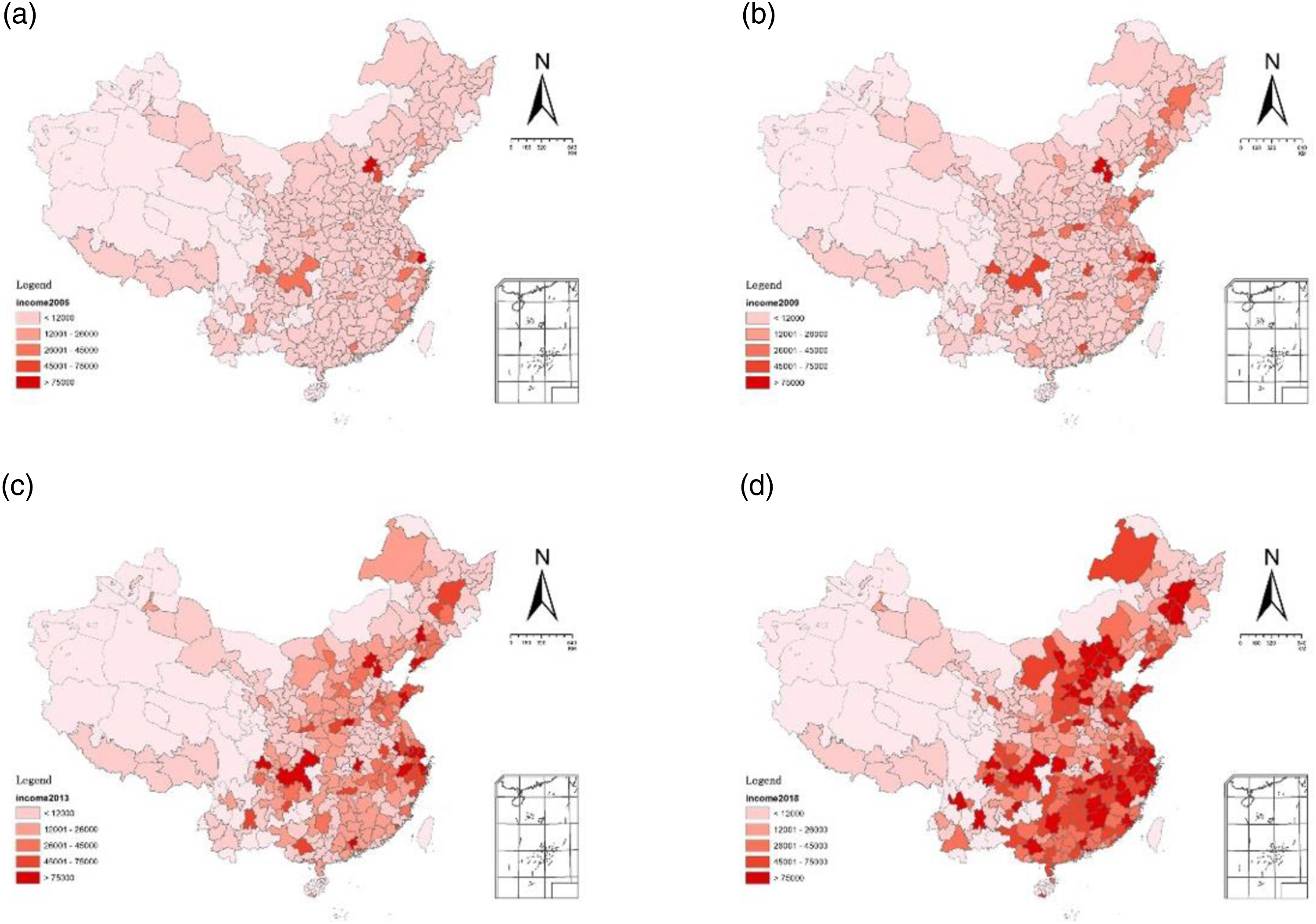
Explanatory variable: construction of urban centrality index
This paper selects the urban centrality
We assume there are j high-level producer service companies with branches distributed in n cities. The service value

The same method is used to measure the strength of an enterprise’s service ability, expressed by the enterprise’s service value

Although the variable
In network analysis, the service value matrix V is usually called a two-mode network (Liu and Derudder, 2012). In the one-mode network, the main body is directly connected, while the two-mode network is connected through two separate node data sets. The service value matrix V is a two-mode network that connects cities and enterprises. There is no direct correlation between nodes of the same type. We can use a “projection function” to map a two-mode network to a one-mode network. The chained city network model is essentially a projection function, which infers the association among cities based on the hierarchical information flow of enterprises co-existing in different cities, and transforms the service value matrix V into the correlation matrix R reflecting interactions among cities.
The key to the chained city network model’s projection function is to define the intercity network’s connectivity. The model believes that the connections between internal branches of a company are greater than those with other companies in the same industry. Moreover, the importance of a branch leads to its more connections to other branches, which eventually produces a multiplicative effect on the relationships among cities. Therefore, based on each pair of cities and companies in matrix V, we can calculate the connectivity of company i between city a and city b.

The total network connectivity of city a is,

A city’s higher total network connectivity indicates a higher degree of the city’s integration into the entire producer service industry network. In network analysis, “network connectivity” is usually regarded as the centrality of a city. Based on the above method, we get each city’s urban centrality from 2005 to 2018. Figure 2 describes the centrality distribution in the years 2005, 2009, 2013, and 2018, respectively. We find that urban centrality has generally increased during these years. However, the degree of agglomeration in some cities has become higher. As a result, the concentration of urban agglomerations has emerged. The urban centrality map of each city in China. Figure (a), (b), (c), and (d) are the distribution in 2005, 2009, 2013, and 2018, respectively.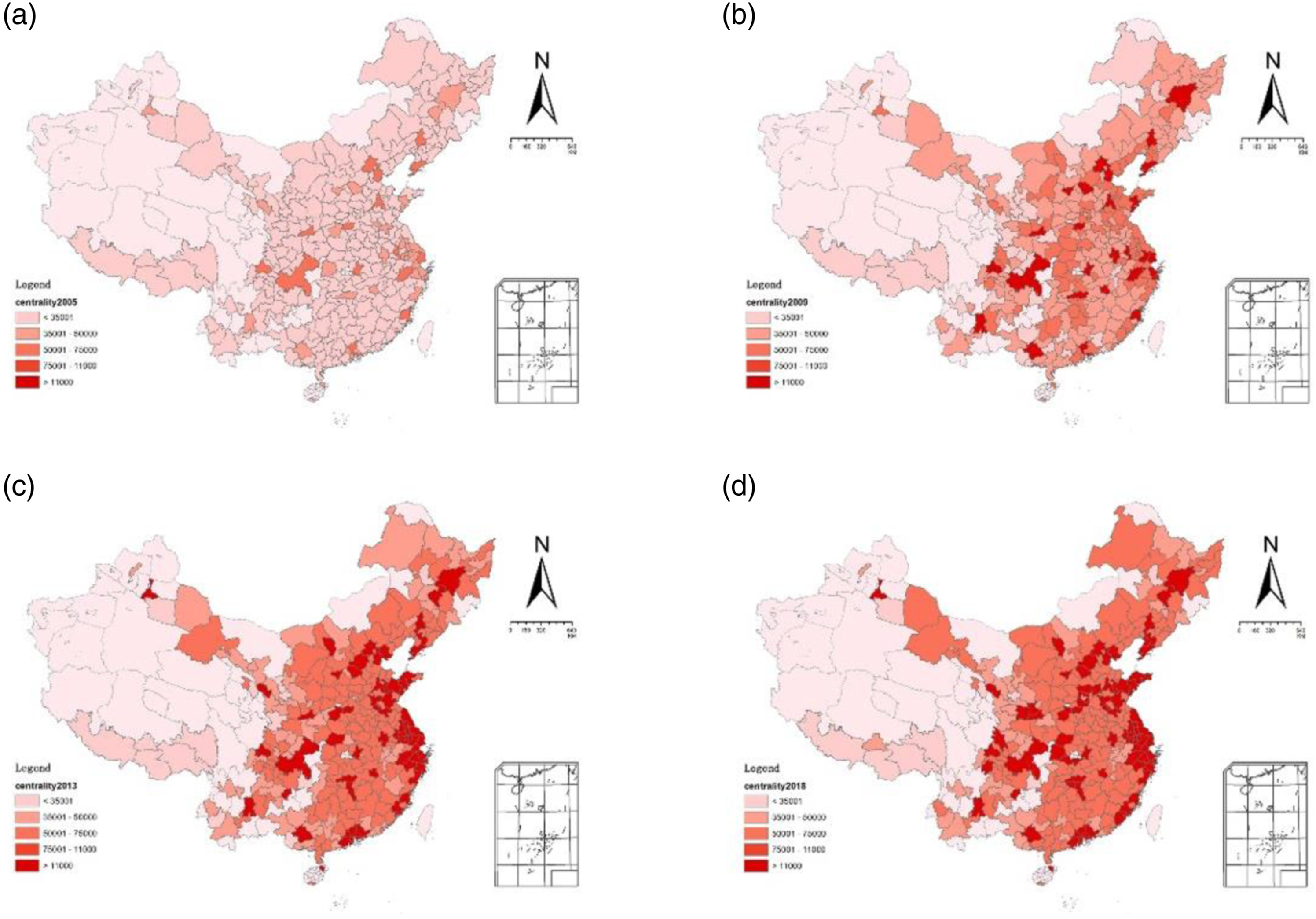
Control variables
To control other features that may influence the development of the tourism economy, this paper adds eight control variables.
The paper considers the influence of population size and economic development level on the tourism industry. It takes the population density (
In addition, previous literature has shown that level of transportation infrastructure influences the development of the tourism industry as well (Khadaroo and Seetanah, 2008). We use the highway mileage of each city
Moreover, the development of the tourism industry is based on the construction and sufficient supply of tourism-related infrastructure. The adequate supply of tourism infrastructure benefits the free flow of production factors and the reasonable allocation of resources, thereby promoting the agglomeration effects in the tourism economy. In this paper, we use the number of star-rated hotels
Instrumental variable
The development of a city’s tourism industry could also be influenced by some unobservable factors. Missing variables might result in an endogeneity problem. In addition, a causal relationship might exist between urban centrality and tourism development if one questions that areas with a high level of tourism development have a larger flow of people, which may, in turn, lead to an increase in urban centrality. This paper adopts the city’s geographic slope (
Mechanism variables
The widely accepted measure of the agglomeration effect is the location quotient (LQ) (Majewska, 2015). In this study, we employ the LQ to measure the degree of specialized agglomeration in a city. The equation is shown as follows:
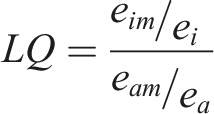
where
In addition, we use the indicator “the ratio of the tertiary industry to GDP” (structure) to reflect the structure effect because industrial structure or composition effect accompanied by the change of the city’s position in the urban network encourages industry structure upgrading from the primary and secondary industry to the tertiary industry, namely service industry.
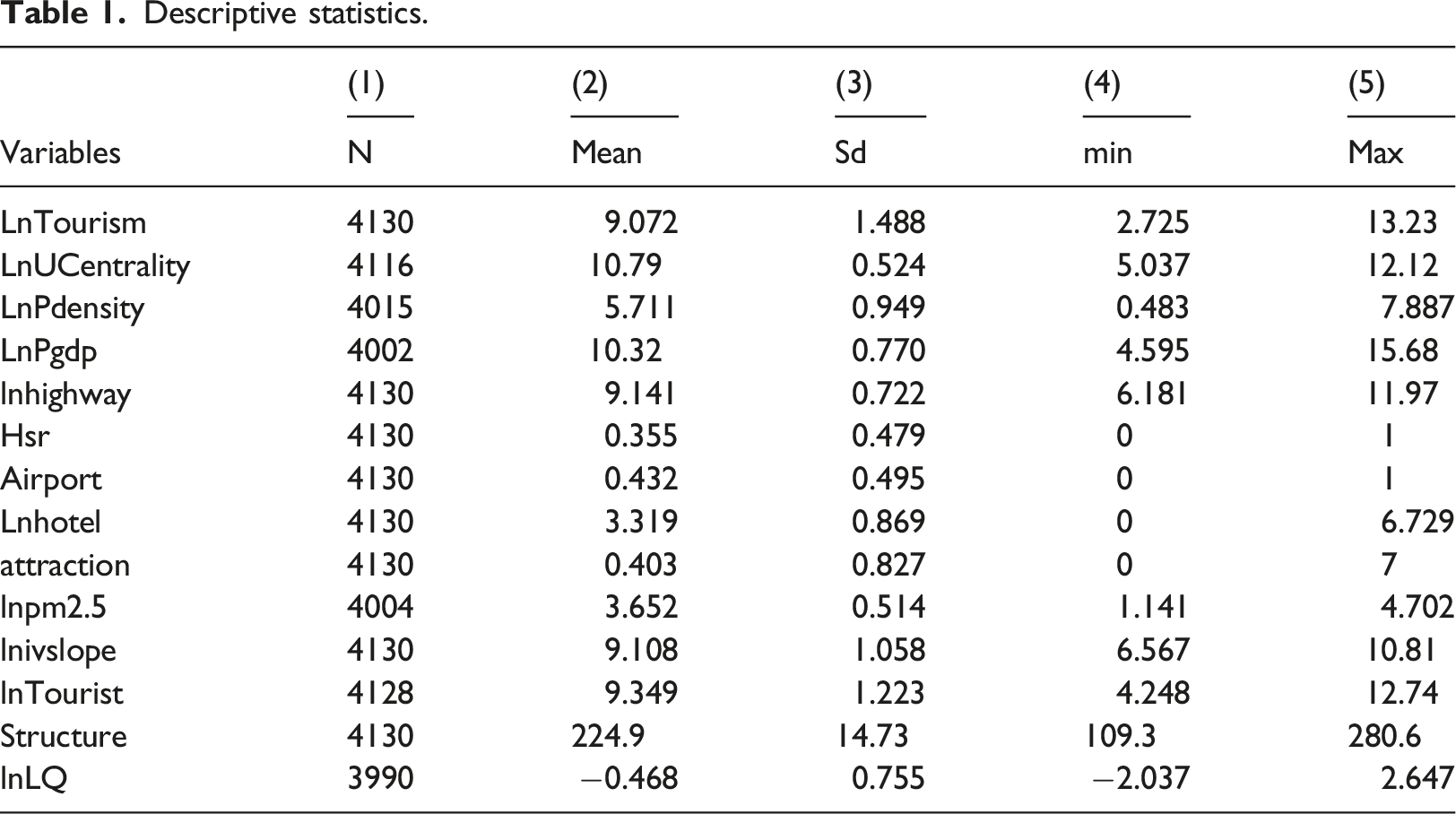
Data sources and descriptive statistics
Descriptive statistics.
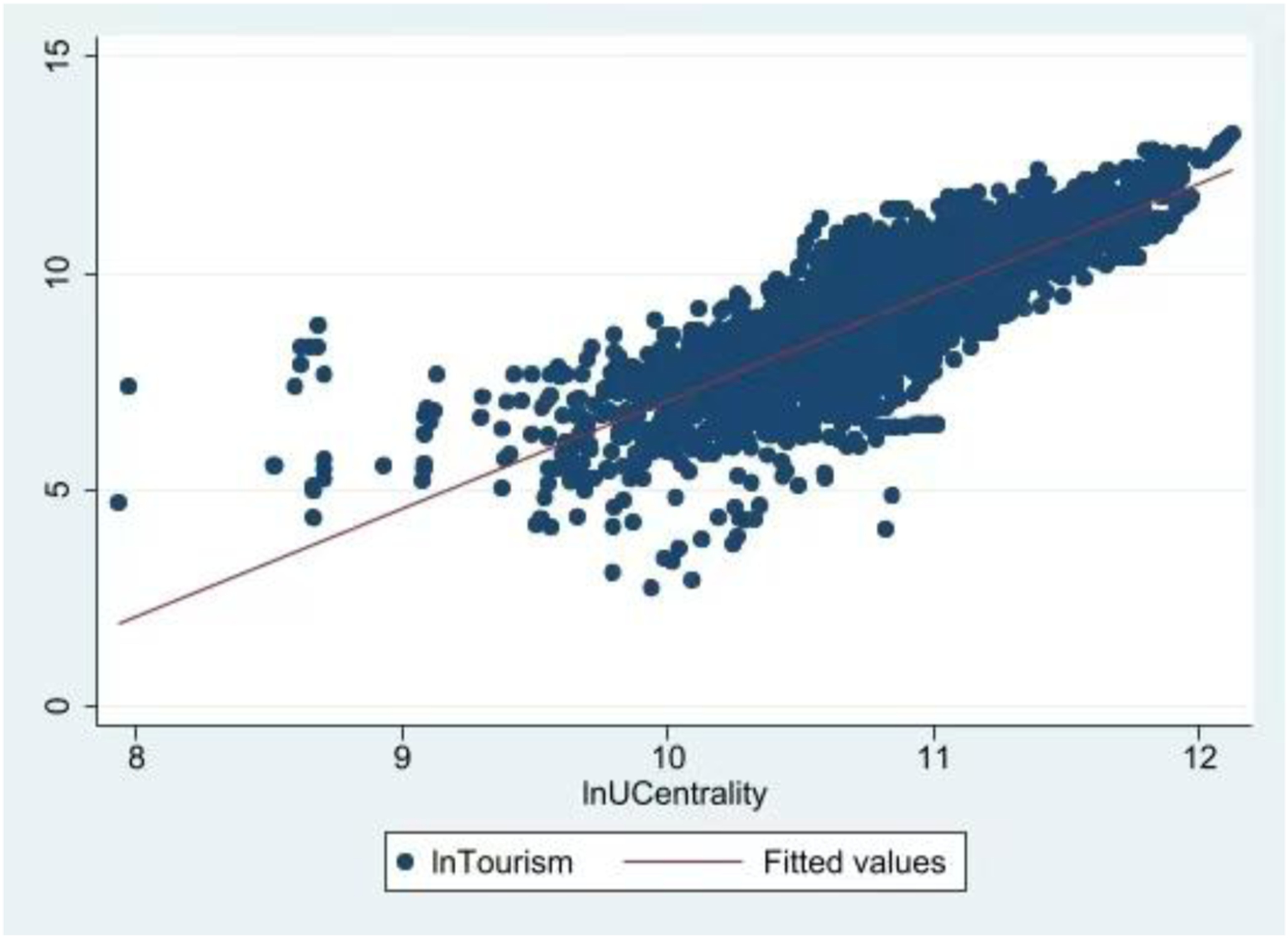
Scatter plot (2005–2018).
Empirical results and analysis
Results of baseline model regression
The results of the baseline regression.
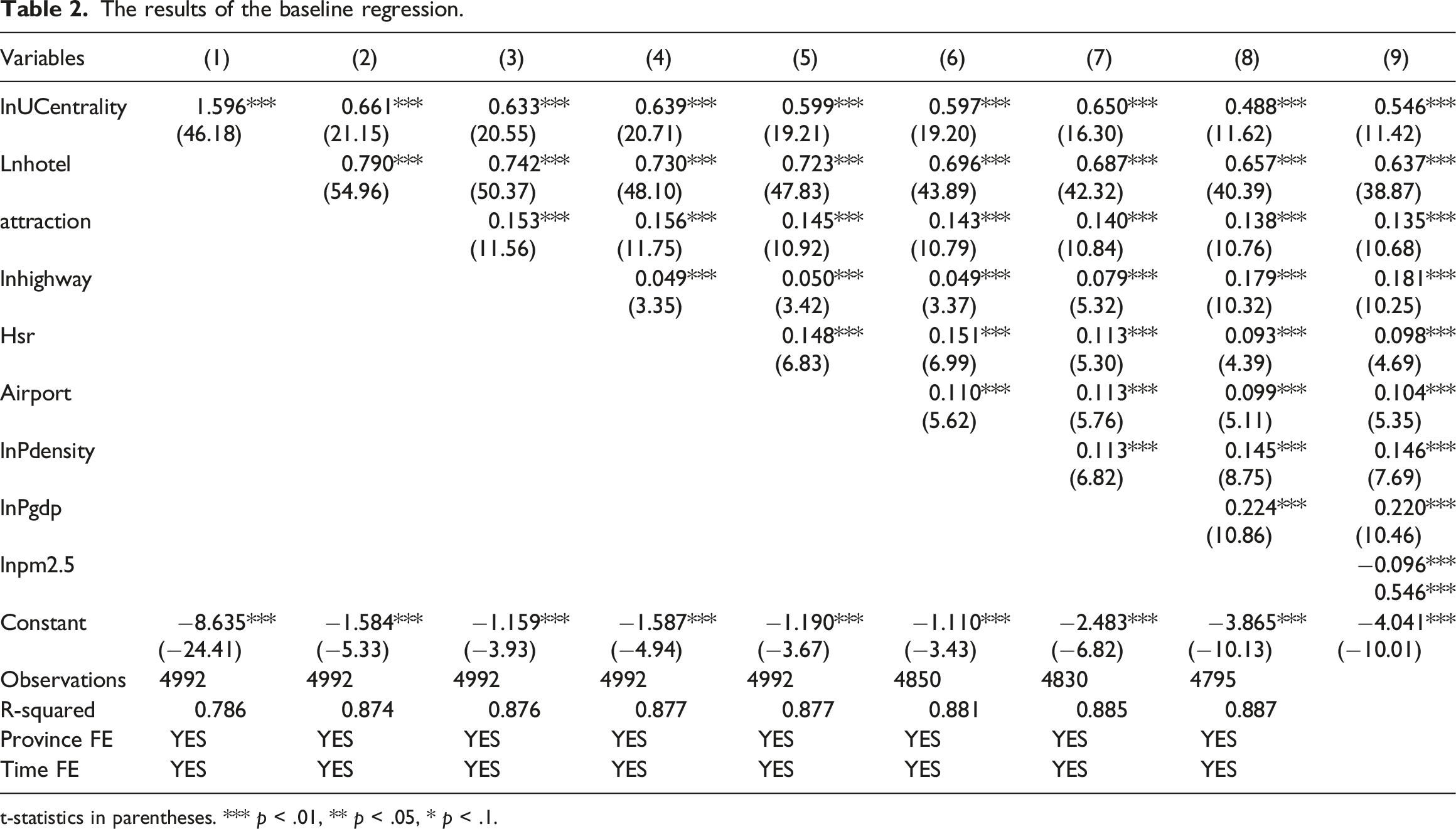
t-statistics in parentheses. *** p < .01, ** p < .05, * p < .1.
The results of robustness test.
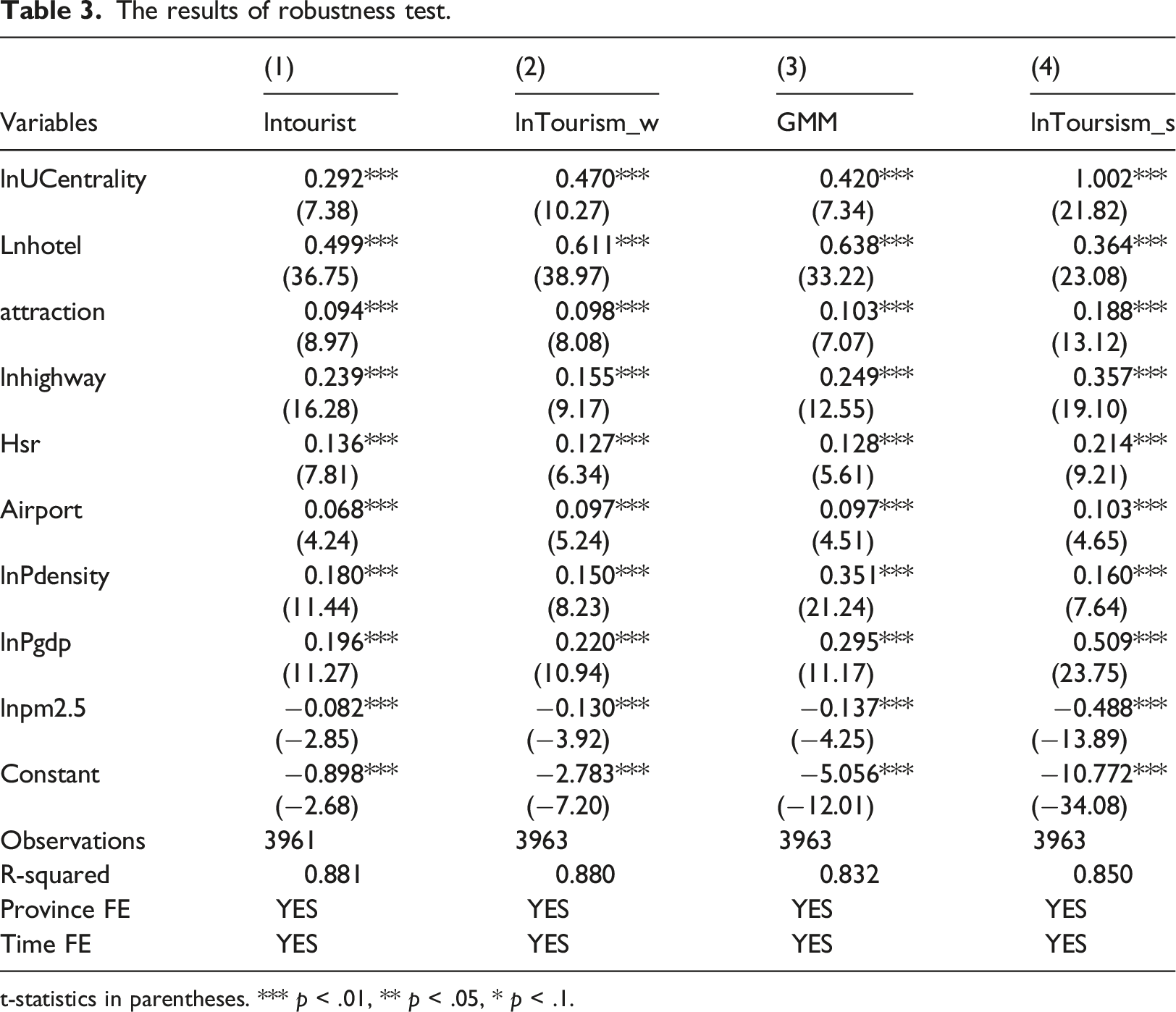
t-statistics in parentheses. *** p < .01, ** p < .05, * p < .1.
Robustness test
To ensure the reliability of the regression results, this paper carries out a robustness test through four methods. (1) Replace the explained variable (Column (1)). We use the number of tourists (
Endogenous test
To deal with the endogenous problem, this paper employs the slope of each city (
The results of endogenous test.
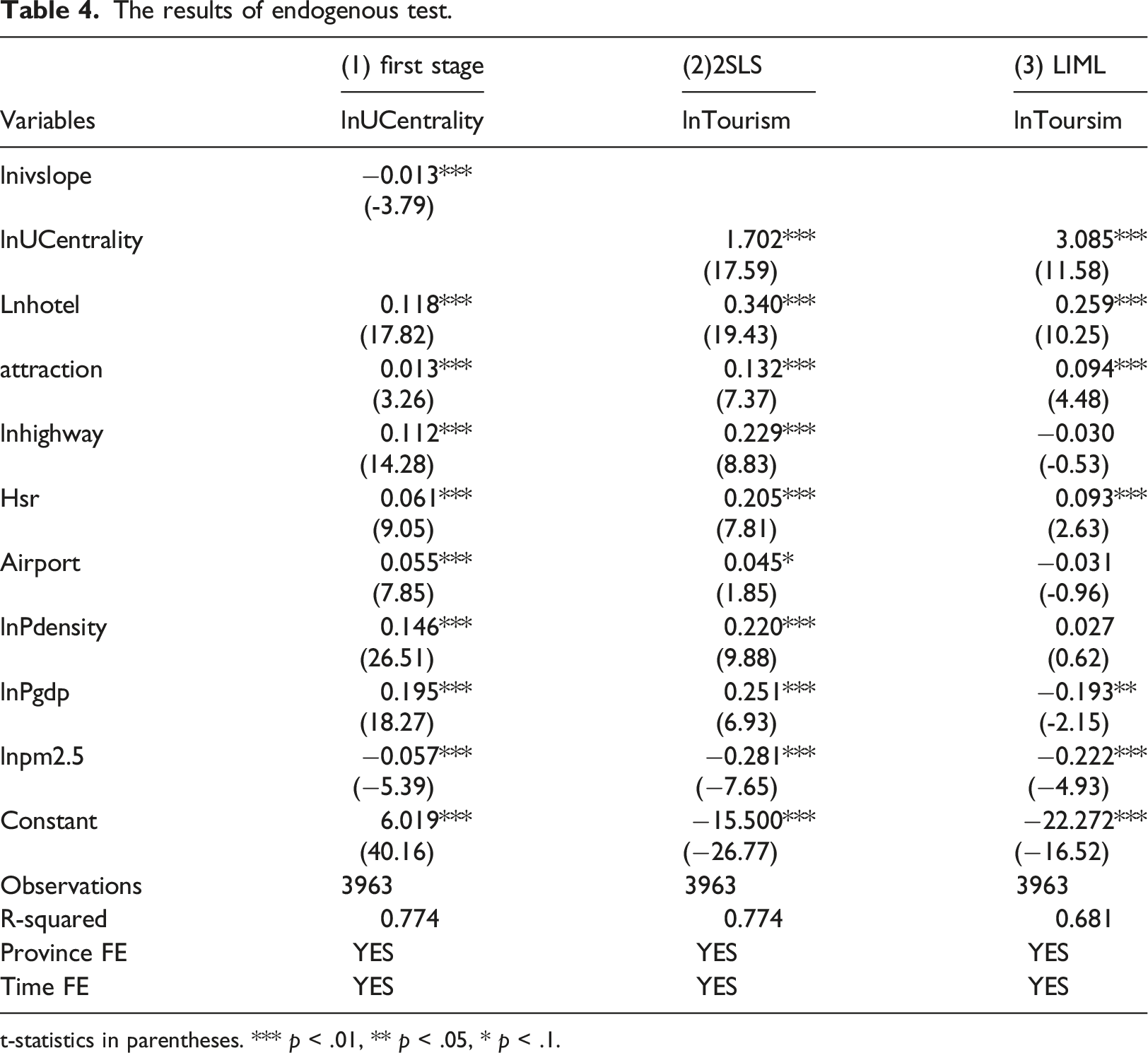
t-statistics in parentheses. *** p < .01, ** p < .05, * p < .1.
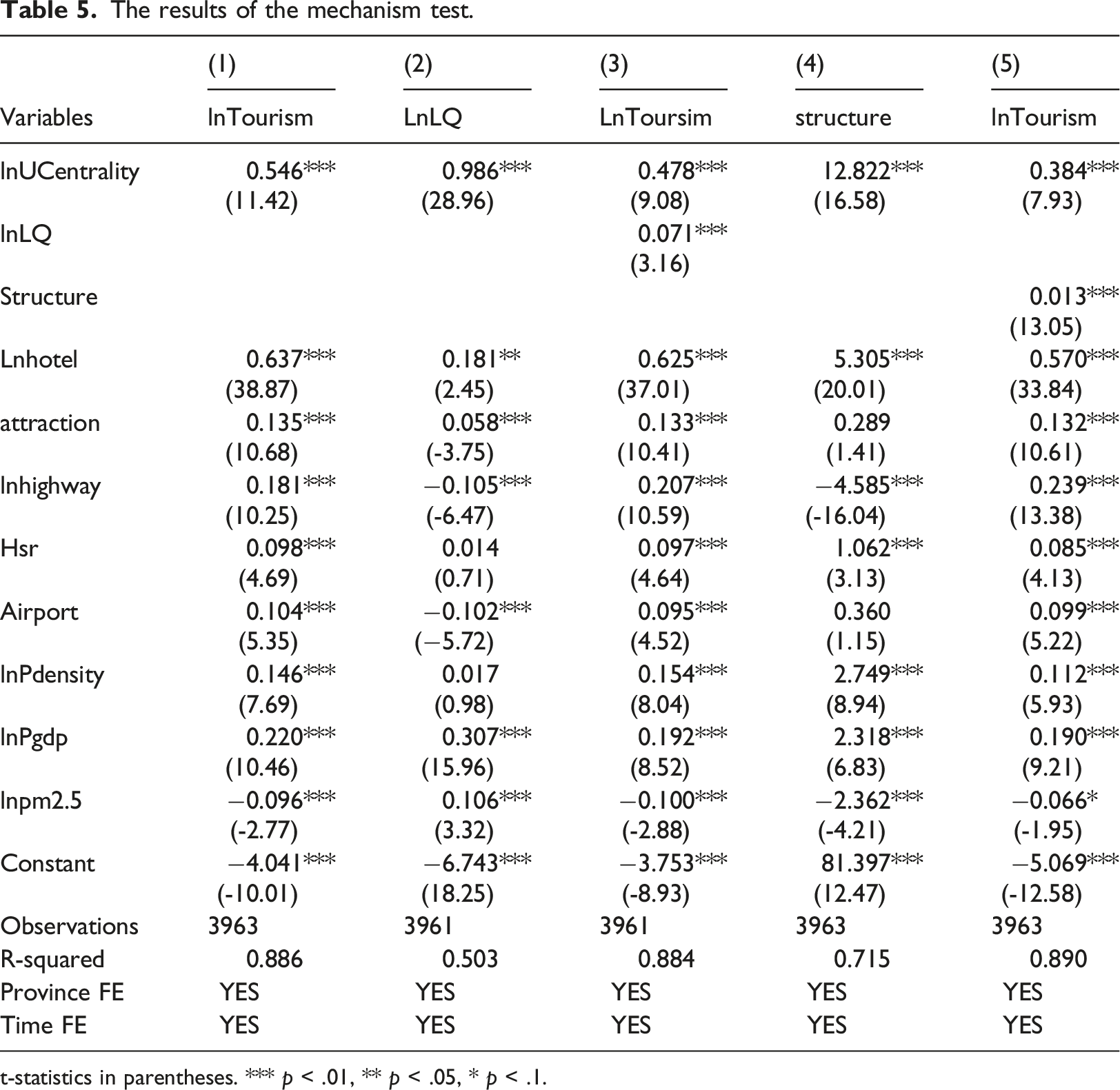
Mechanism test
The results of the mechanism test.
t-statistics in parentheses. *** p < .01, ** p < .05, * p < .1.
Heterogeneity analysis
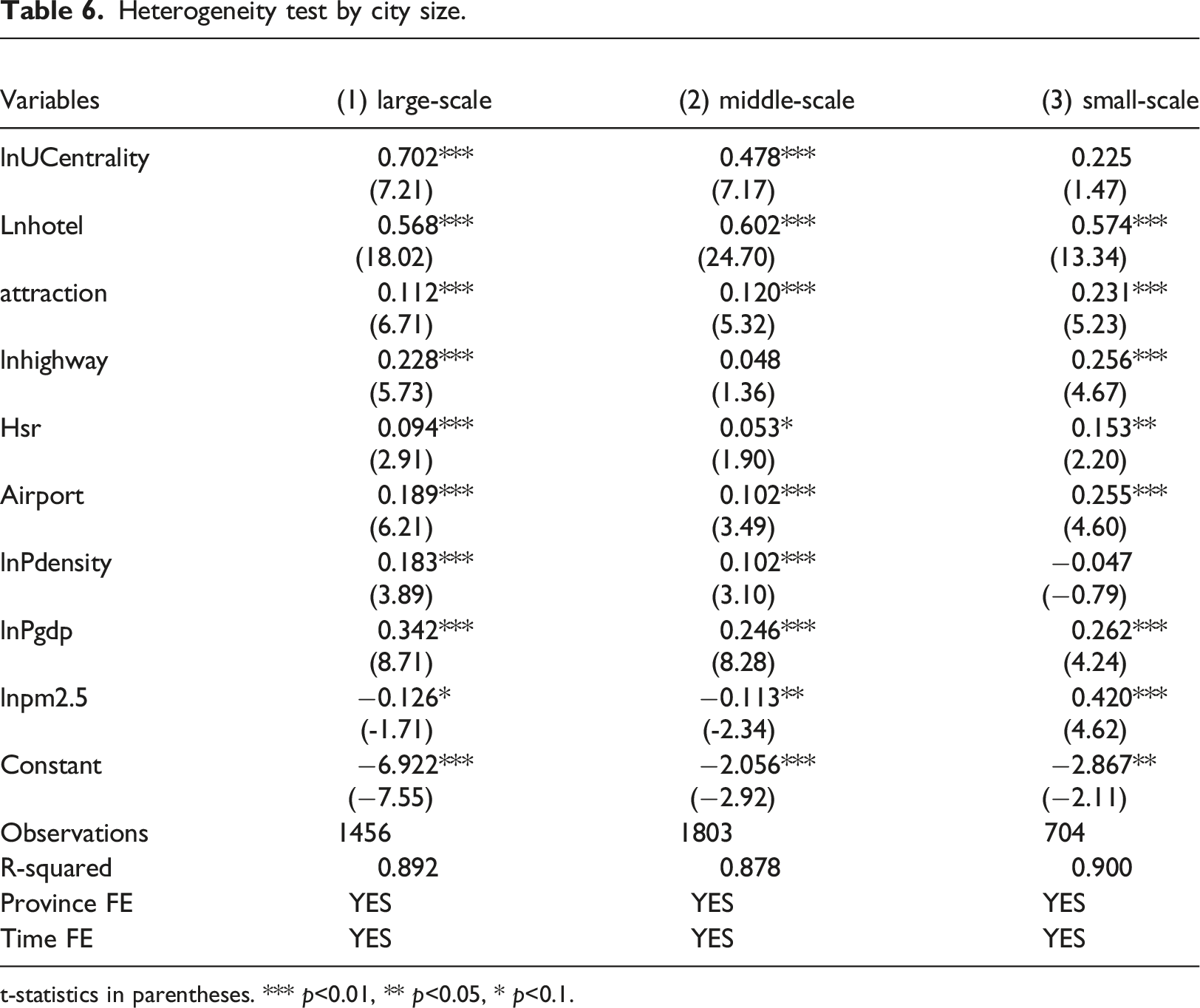
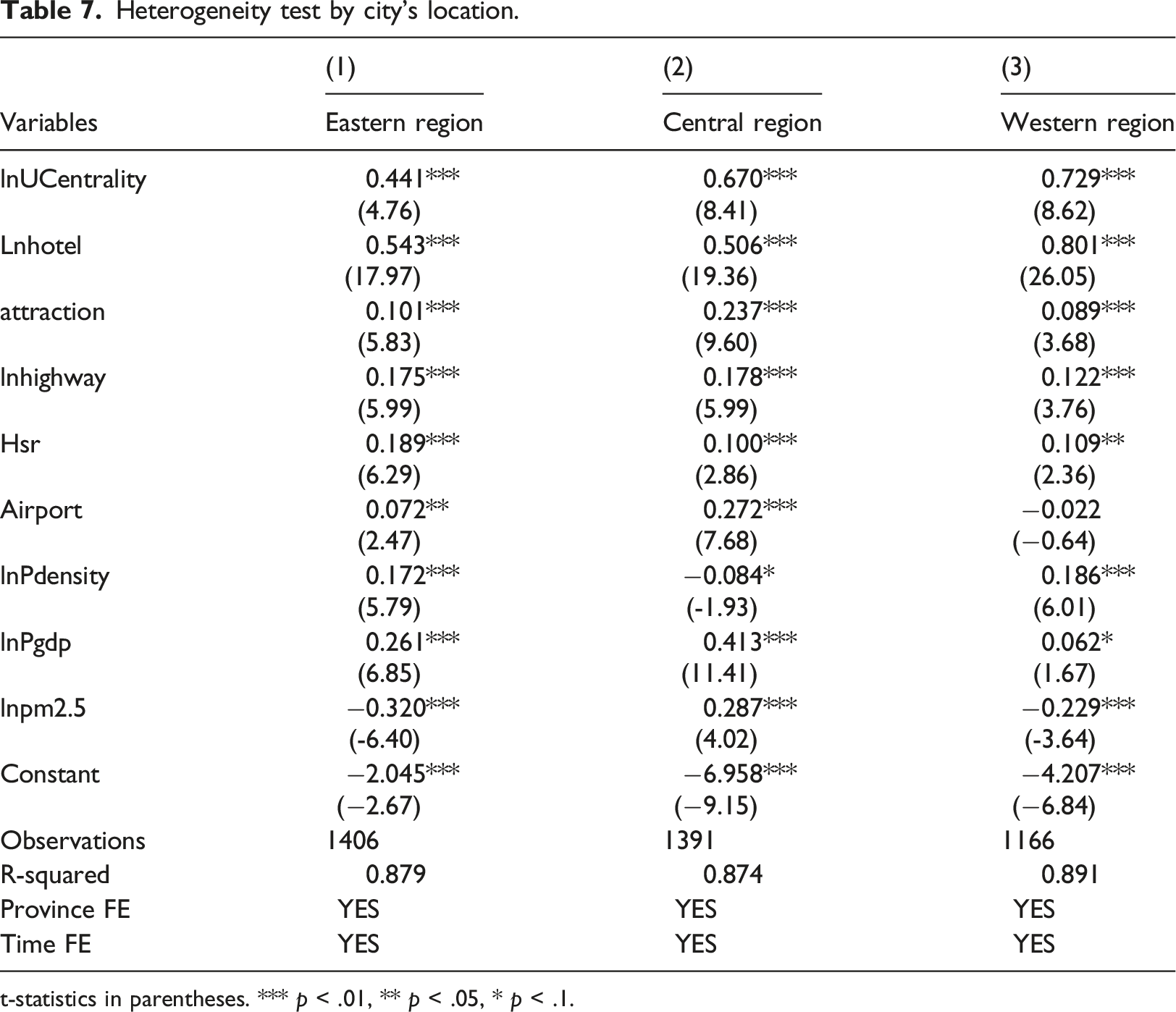
The heterogeneous characteristics of various cities may lead to differences in the intensity of the influence on the tourism industry. To explore the influence more deeply, this paper employs two indicators to classify our samples. One is the size of the city represented by the number of permanent residents in a city. The other is the location of the cities.
Heterogeneity test by city size.
t-statistics in parentheses. *** p<0.01, ** p<0.05, * p<0.1.
Heterogeneity test by city’s location.
t-statistics in parentheses. *** p < .01, ** p < .05, * p < .1.
Conclusions
The tourism industry in China has developed rapidly in the recent 20 years and contributed substantially to the whole economic growth. Previous literature has discussed the determinants of the tourism industry from various perspectives. However, very few studies have explored it from the perspective of urban centrality. As an index to measure the relative importance of a city in the urban network, urban centrality is a vital factor that cannot be ignored in the study of urban tourism. This paper tries to fill the research gap by introducing the concept of urban centrality in studying tourism’s determinants. In addition, we identify two mechanisms through which urban centrality influences a city’s tourism development. To facilitate the analysis, this paper uses panel data of 295 cities from 2005 to 2018 in China to study the influence of urban centrality on tourism income. By controlling a series of related variables, this paper uses fixed effect regression methods to testify the influence. Endogeneity test and robustness test are carried out to ensure reliable and robust results.
Empirical results show that urban centrality has a significantly positive influence on tourism income. The results, in general, are in line with our expectations. It highlights the importance of a city’s centrality in the urban network for economic growth. Moreover, considering the huge imbalance in Chinese cities, we employ the heterogeneity analysis. Results show the existence of regional diversification as well. The magnitude of the influence is particularly prominent in large-scale and medium-scale cities. In addition, the effect becomes stronger in cities in the Western region than those in other regions. Moreover, theoretical and empirical mechanism analysis shows that agglomeration and structural effects are the two main channels through which a city’s centrality affects the development of its tourism industry. It is one of the newest insights of this study.
Theoretically, this paper contributes to the agglomeration economy, network science theory, and tourism research. Although some scholars have discussed the network or centrality concepts as the determinants of tourism, they mostly emphasized the transportation network (e.g. Chen et al., 2020) or the network of the tourism economy (e.g. Gan et al., 2021). Our study pays attention to a city’s centrality in the urban network, originally from network science and urban study. Consequently, our study enriches the existing discussion about the determinants of tourism development. In addition, we identify the two mechanisms, agglomeration, and industrial structure effect, thereby expanding theoretically and empirically the interdisciplinary of network theory and agglomeration economics. Moreover, the econometric analysis method in this paper provides a more comprehensive complementary to the tourism literature, which usually employs case studies.
The analysis of this paper provides several implications for national and regional policymakers, especially in China. Considering the importance of the central position in the city network or urban agglomeration, cities need to break through the constraints and bottlenecks due to geographical location. Cities can formulate relevant industrial policies to attract the entry of high-end production resources and exploit their competitive advantages. Cities with high centrality can be considered strategic cities for transforming and upgrading the regional tourism industry. Their development will have a spillover effect on other cities in the network. Moreover, small- and medium-scale cities could strengthen exchanges and cooperation with other cities in the network to realize a synergy effect. In addition, tourism is currently one of the industries most damaged by COVID-19. Our analysis shows that tourism development is closely related to other sectors and the city’s status. The industrial upgrading and supporting facilities within the city are necessary, but the distribution of transportation infrastructure and the increased urban centrality brought about by improved transportation facilities also need to be underscored.
This paper also has its limitations. We use the data on China’s leading producer service company to construct the urban centrality index as our explanatory variable. Literature has provided several methods for constructing this index. It might be more persuasive to employ other comparable methods or data for the construction in future analysis. Furthermore, urban tourism development depends on natural and cultural landscapes, as well as urban amenities and facilities. Future related research can include more indicators to represent the heterogeneity of tourism’s development, which might help yield more implications in practice.
Footnotes
Declaration of conflicting interests
The author(s) declared no potential conflicts of interest with respect to the research, authorship, and/or publication of this article.
Funding
The author(s) disclosed receipt of the following financial support for the research, authorship, and/or publication of this article: Shanghai Philosophy and Social Science Planning Projec (No. 2019BJB012) and National Natural Science Foundation of China (No. 72003141).
