



Abstract
While candidate spending is a well-established predictor of electoral success in general elections, much less is known about the role of spending in intraparty elections. Drawing on a unique dataset of over 600 nomination contestants in Canada’s 2019 and 2021 federal elections, this study explores whether dynamics from the interparty arena also apply to the intraparty arena. We find that nomination contestant spending is positively associated with winning a party’s nomination. Contrary to expectations, however, we find no significant gender gap in total fundraising or spending: men and women raise and spend similar amounts. Nonetheless, we uncover consistent evidence of a gender gap in nomination fundraising effort, revealing that women candidates need twice as many donors to achieve the same fundraising results as men. Multivariate analyses confirm these patterns and further reinforce the notion that financial resources are a key determinant of political success not just in general elections but also in the earlier, intraparty, stages of candidate selection.
Introduction
Recruiting and endorsing candidates for election are among the defining characteristics of political parties (Schattschneider, 1942; Sartori, 1976). Unlike other politically inclined organizations (e.g., social movements or advocacy groups), only parties engage in democratic politics by endorsing candidates and supporting their electoral bids during campaigns. Importantly, who parties endorse as candidates helps to shape what the party represents in public office, both substantively and descriptively (Heider and Wauters, 2019; Norris and Lovenduski, 1995). It is therefore not surprising that the literature has devoted significant attention to investigating the power dynamics underpinning candidate selection processes within political parties in an attempt to better understand who ultimately gets nominated (Gallagher and Marsh, 1988; Hazan and Rahat, 2010; Pruysers et al., 2017; Tolley, 2019).
Although a range of nomination methods are employed, political parties in a variety of countries are increasingly selecting their candidates through decentralized processes that are inclusive of the grassroots membership (Barnea and Rahat, 2007; Bille, 2001; Gauja, 2017; Kenig et al., 2015). Membership participation in intraparty affairs is an important mechanism for revitalizing the party organization and (re)building the volunteer corps needed to contest the general election that follows the candidate preselection process (Bale et al., 2019; Cross et al., 2022). However, decentralized and inclusive processes are also known to create barriers for the success of candidates from diverse backgrounds, mainly women and members of racialized and visible minority groups. A considerable amount of research documents this trade-off. On the one hand, decentralized nomination processes help to engage the grassroots membership in intraparty decisions and thus help to forge an essential linkage between ordinary members and political elites by providing meaningful participatory opportunities (Carty, 2004; Cross, 2008). On the other hand, decentralized processes tend to encourage the selection of stereotypical candidates who are less descriptively representative of the broader electorate (Butler et al., 2024; Cheng and Tavits, 2011; Gauja and Cross, 2015; Pruysers and Cross, 2016; Rahat et al., 2008; Thomas and Bodet, 2013).
A number of reasons have been identified to explain why prospective candidates from diverse backgrounds are less successful under inclusive selection procedures – including coordination problems among atomized and disparate selectorates (Krook, 2010), sacrificial lambs and the propensity to disproportionately recruit and nominate diverse candidates in unwinnable electoral districts (Thomas and Bodet, 2013), and the power and influence that local party recruiters have in shaping who is on the ballot (Cross and Pruysers, 2019a; Tolley, 2019). One possible explanation that has been less well-studied, by contrast, is that contesting a party nomination through an inclusive selection process can be an expensive endeavour that requires funds to travel the district, produce nomination campaign materials, recruit new members into the party, mobilize supporters, and more. In short, the money required to mount an effective nomination campaign may be an obstacle for some candidates.
A large literature focussed on general elections clearly demonstrates that money matters. A central insight from this literature is that local campaign activities, and local campaigning intensity specifically, improve the chances of the candidates winning the ground campaign (Carty and Eagles, 2005; Pattie et al., 1994; Zittel, 2015). Using local candidate spending as a reliable estimate of campaign intensity on the ground (see Cross and Young, 2011; Denver et al., 2004), a range of studies show that higher levels of local candidate spending increase party vote share (Carty and Eagles, 2005; Pattie and Johnston, 2009; Benoit and Marsh, 2003). What’s more, while local campaign intensity has a modest effect, it can prove to be decisive, especially for challengers or in more competitive local contests. 1 At the same time, a separate literature on election financing shows that women and racialized candidates face larger obstacles to raising and thus spending money during general elections (Currie-Wood and Pruysers, 2025; Herrnson et al., 2022; Jenkins, 2007; Sorensen and Chen, 2022, 2024; Tolley et al., 2022).
Despite the considerable attention devoted to measuring the effects of candidate spending during interparty elections, with few exceptions this relationship has yet to be examined fully in the context of intraparty elections (but see Atmor et al., 2023; Mockler and Garnett, 2024). In order to address this gap, we ask two questions about the relationship between candidate spending and nomination outcomes in this study. First, given the evidence from the interparty arena, is nomination campaign spending related to positive outcomes? In other words, are nomination contestants with higher spending more likely to win their party’s intraparty nomination? Second, given recent evidence regarding donation patterns (Tolley et al., 2022) and other financial barriers (Herrnson et al., 2022), is nomination fundraising and spending gendered? That is, are men able to raise and spend more money than women contestants?
To explore these questions, we draw upon a unique dataset of nomination fundraising, spending, and outcomes in Canada. Derived primarily from the final reports that nomination contestants are required to file with Elections Canada, the dataset includes 621 recent nomination contestants. Results reveal that nomination spending is indeed positively associated with winning a local party nomination. Interestingly, the data produce no compelling evidence of a gender gap in this regard and demonstrate that men and women tend to raise and spend at equivalent rates during intraparty elections. At the same time, however, the results suggest that women contestants may have to expend considerably more effort than do men to achieve similar results – raising contributions from twice as many donors to secure the same amount of money as men. Results have implications for intraparty dynamics as well as for the kinds of individuals who win nominations and therefore contest general elections and serve as elected representatives in the legislature.
Literature and expectations
Money has often been labeled as the “lifeblood” of party and electoral politics (Garnett et al., 2022). While human resources are undeniably important for parties as they provide campaign support in the form of canvassers, volunteers, and the like (Cross and Young, 2011; Fisher and Denver, 2009; Fisher et al., 2014), financial resources are consistently related to enhanced electoral outcomes (Benoit and Marsh, 2003; Cox and Thies, 2000; Johnston and Pattie, 2008). In Canada, for example, evidence suggests that the country’s major party candidates can expect to earn an additional 0.3 to 0.7% of the local vote for every additional $1000 spent on their constituency campaign (Carty and Eagles, 2005). A relatively modest amount of additional spending, therefore, may be enough to turn the tide, especially in very competitive districts that are won or lost on just a few percent of the vote. Similar findings have been documented in other countries too – including Ireland (Beniot and Marsh, 2003), Japan (Cox and Thies, 2000), the United States (Coleman and Mana, 2000), and the United Kingdom (Johnston and Pattie, 2008; Pattie and Johnston, 2009). In a variety of countries, spanning a variety of different electoral systems, therefore, studies have routinely demonstrated that local candidate spending matters. Moreover, as Currie-Wood and Pruysers (2025: 177) explain, since most candidates, at least in Canada, do not spend the legally permissible limit, “local candidate spending represents an important, and often not fully maximized, opportunity to influence the campaign and its outcome.” 2
Not only does the literature demonstrate that candidate spending is correlated with electoral success, but a number of studies have also uncovered a gender gap in political financing. Research from Canada (Tolley et al., 2022), Belgium (Smulders et al., 2019), the United States (Kitchens and Swers, 2016), Ireland (Buckley and Mariani, 2022), and Italy (Feo et al., 2021), for instance, reveals that women candidates often face additional challenges when it comes to raising and spending money during elections. Tolley et al. (2022: 265), for example, write that “the very donors who are most likely to give to women candidates — women — give less money and less often.” Likewise, Herrnson et al. (2022) demonstrate that women challengers must spend more than men to achieve similar election results. What’s more, Jenkins (2007) reports that, in terms of campaign fundraising effort, women have to work harder to raise money – spending more time fundraising and drawing upon more varied techniques than men to achieve similar results. 3 Other evidence suggests that such barriers are even worse for racialized women (Sorensen and Chen, 2022). Currie-Wood and Pruysers (2025) provide evidence to suggest that despite these gendered barriers to political financing, central party organizations do not tend to consistently prioritize women candidates when distributing central party campaign funds to local candidates. In other words, party organizations are not proactively addressing such inequities.
While the evidence regarding money and electoral outcomes, including gender gaps, is compelling and (relatively) consistent 4 at the interparty level (i.e., at the general election stage), there has been much less attention devoted to this question at the intraparty level (i.e., the candidate nomination stage). Indeed, many studies have examined the factors related to who contests and ultimately wins a party nomination – including factors such as the rules of the nomination contest (Cross and Pruysers, 2019a), the composition of the local party executive (Cheng and Tavits, 2011), the nature of the selectorate (Rahat et al., 2008), the preferences of local recruiters (Cross et al., 2025), candidate characteristics (Thomas and Bodet, 2013), and party gatekeeping (Albaugh, 2022). The role of money, however, has not been well-examined. Although tightly regulated in many places (see, for example, Young and Jansen, 2011), and while funds are less necessary than during the general election, financial resources are still relevant to contest a party nomination. Nomination contestants require financial resources to contact and recruit potential new members (mobilization efforts, phone banks, etc.), conduct surveys of the local electorate/membership, hire and compensate staff, travel across the district 5 , etc. This, of course, is in addition to the funds required for the more mundane aspects of the nomination such as routine office supplies and printing (see Elections Canada, 2021). Given the gendered patterns relating to general election fundraising and spending described above, it is not surprising that feminist organizations have frequently called for spending limits during party nomination contests (Young, 2000: 62; see also Brodie, 1991).
To our knowledge, very few studies have attempted to address role of money in candidate preselection within parties outside of the American context 6 . Mockler and Garnett (2024) examine the question of fundraising in nomination elections. Utilizing data from recent Canadian elections, the authors find no evidence of a gender gap in political fundraising and conclude that men and women nomination contestants raise equivalent amounts. Atmor et al. (2023), by contrast, examine the possibility of a gender gap in political financing in Israel, focusing on spending during nomination contests. Their analysis of more than 300 candidates from recent Israeli primaries 7 (2008–2015) finds that women spend considerably less money than do men on their nominations. This study also reveals that candidate spending during the primary is positively associated with electoral success (across all three parties examined). Overall, the evidence is not entirely consistent: data from Canada suggests that women raise the same amounts of money as do men, but evidence from Israel suggests that women spend less than men.
While these studies are helpful in drawing attention to the importance of money in intraparty elections, they focus on different sides of the same coin (Mockler and Garnett on fundraising and Atmor et al. on spending). We build on these studies by considering both fundraising and spending as well as how these financial resources are related to intraparty electoral outcomes. Here we are interested in whether (1) gender gaps in fundraising and spending are present at the candidate nomination stage, and (2) whether spending is associated with electoral success during the nomination. Given what we know from the large literature regarding the role of money in the interparty arena, and what little has been examined at the intraparty level, we put forward the following two hypotheses. H1: Nomination contestants who spend more money are more likely to win their intraparty election (i.e., be successfully nominated). H2: Women nomination contestants are expected to raise (and also spend) significantly less money than men contestants.
The Canadian case
Our study leverages data from the Canadian case to examine the relationship between nomination contestant financing, the gender of the contestants, and the winner of the party nomination. Canada is an appropriate case to examine this relationship for several reasons. To begin with, the single member plurality (SMP) electoral system divides the country into hundreds of separate single member electoral districts – each of which elects just one representative to send to Parliament. This SMP system encourages Canadian parties to adopt fairly decentralized procedures when nominating their local election candidates, providing grassroots electoral district associations (EDAs) with considerable authority and discretion in the process (Cheng and Tavits, 2011; Cross and Pruysers, 2019b). While central party bodies establish a common set of nomination contest rules (instituting deadlines, setting the cost of membership fees, screening prospective candidates; Pruysers and Cross, 2016), the actual administering of the contest, and the eventual decision, is typically devolved to EDAs at the local level (Cross, 2016; Currie-Wood, 2025; Sayers, 1999). When the local nomination is contested by more than one nomination contestant, the party membership residing in the voting district elects the nominee via a direct membership vote (Cross et al., 2022; Pruysers and Cross, 2016). 8 The decentralized process results in hundreds of cases where we can investigate the financial dynamics of intraparty nomination contests.
Although levels of competition are known to vary significantly during candidate preselection processes (Gallagher and Marsh, 1988; Hazan and Rahat, 2010), the decentralized process adopted within Canadian parties helps to facilitate somewhat higher levels of competition (Sayers, 1999). Approximately one-third of party nominations are contested by more than one candidate in the dominant Liberal and Conservative parties. 9 Even in the smaller New Democratic Party (NDP), which faces lower electoral prospects in the majority of districts, one-in-four nominations are contested (Samara Centre for Democracy, 2019: 12; see also Erickson and Carty, 1991). Competitive nominations are more likely to unfold in districts where the party is perceived as electable and an incumbent is not seeking re-election (Carty and Eagles, 2005; Cross, 2016). Importantly, central party bodies increasingly “screen” prospective candidates before they are permitted to enter a nomination contest (Marland, 2021; Pruysers and Cross, 2016). In some cases, “the centre” may require constituency associations to actively recruit women or members from other diverse communities into the local race. Although involvement from the centre can impact the competitiveness of a particular nomination, party nominations remain, on balance, modestly competitive sites of intraparty democracy in Canada (Albaugh, 2022; Cross, 2016; Currie-Wood, 2025).
The competitiveness of party nominations is also rooted in lower barriers to becoming a party member and thus securing participatory rights. Comparative studies note that Canada falls on the “inclusive” (and, as previously mentioned, “decentralized”) side of candidate preselection practices (Hazan and Rahat, 2010: 136). The three major national parties – the Liberals, Conservatives, and New Democrats – have inclusive criteria to become a party member and thus securing the right to vote at nomination meetings. Annual membership fees are not expensive (typically ranging from $10 to $15, but in some cases such as the Liberal Party, membership fees are $0), eligibility criteria are not cumbersome (e.g., the minimum age requirement is often 14- or 16-year-old—below the general election voting age of 18), and participatory rights are activated after short registration periods of about 21-days (Cross et al., 2022: 25). Parties also impose only modest criteria for becoming a nomination contestant as signature requirements and financial deposits remain low. Although the central bodies of some of the centrist and left-leaning parties, particularly the Liberals and New Democrats, have introduced somewhat more elaborate rules in an effort to recruit underrepresented contestants such as women, party nominations remain generally open and inclusive of the wider membership on the ground (Cross et al., 2022; Currie-Wood, 2025; Pruysers and Cross, 2016).
Lastly, we examine the Canadian case because election law requires the public disclosure of fundraising and spending by party nomination contestants. While Canadian election laws do not regulate many aspects of intraparty democracy, they do impose regulations on fundraising and spending (Young and Jansen, 2011), including nomination contestant expense limits. These spending limits are set at 20% of the district limits imposed during general elections (Canada Elections Act, 2000: Sec. 476.67). For nominations held before April 23, 2024, the limits ranged from $17,798 (Charlottetown, PE) to $30,545 (Kootenay—Columbia, BC) (Elections Canada, 2023). On the other side of the equation, strict limits are placed on financial donations. Here trade unions and corporations are banned from contributing, and individuals are limited to just $1750 (initially $1000 and adjusted for inflation; see Pruysers et al., 2025).
Along with these financing regulations, the Canada Elections Act (Canada Elections Act SC, 2000, c.9: Sec. 376.75[1]) requires contestants’ campaigns to publicly report contributions and expenses when either surpasses $1000. These data are made publicly available by Elections Canada (2025), the arms-length administrator of general elections. While financial reports for general election candidates are now widely used by academics (Cross et al., 2020; Currie-Wood, 2020; Pruysers, 2024; Tolley et al., 2022), the nomination disclosures have not yet been well-examined for understanding the internal life of party politics (but see Mockler and Garnett, 2024). In this sense, we trend new ground in this paper by examining how fundraising and spending impact the (a) dynamics of intraparty nomination contests generally, and (b) gender dynamics underpinning these contests specifically.
Methods and data
To explore the relationship between gender, spending, and nomination outcomes, we capture intraparty contests held leading into the 2019 and 2021 federal elections. 10 To be included in the analysis, a nomination contestant must be included in Elections Canada’s database of nomination contestant campaign returns. This means that the contestant must have submitted financial documents, certifying their fundraising and spending, to Elections Canada. As noted in the previous section, regulatory requirements mandate that contestants who raise or spend more than $1000 must file such paperwork. The final dataset includes 621 cases. Of these cases, 429 filed fundraising reports and 289 filed campaign spending reports. 11 In this regard, our data is comparable to Atmor et al.’s (2023) study of nominations in Israel, which included 365 candidates.
Our primary dependent variable in the analysis is whether the nomination contestant won their intraparty election (1 = successfully nominated; 0 = lost the nomination). We obtained information about nomination outcomes from the Elections Canada Nomination Contest Database (2019). This database identifies the individual successfully endorsed by a party in a given electoral district as well as the names of all individuals who contested the position. The database also reports other information about nomination contests that we capture as control variables in the subsequent analysis, including the number of contestants in each local nomination (discussed below).
Our primary independent variable, by contrast, is the nomination contestant’s reported expenses (in Canadian dollars). 12 Here we rely on the total expenses subject to the spending limit imposed on nominations by Elections Canada (2023). This data is reported in Part 3a of the Elections Canada (2025) Nomination Contestant Campaign Returns. With the exception of expenses for raising monetary contributions (i.e. the costs of fundraising) and personal expenses, the expenses subject to spending limits include (a) the production of advertising or promotional material; (b) the distribution, broadcast or publication of these materials in media; (c) paying nomination campaign workers; (d) securing meeting spaces or supplying light refreshments; and (e) conducting surveys or other types of research (Canada Elections Act, 2000 s. 9: Sec. 374.2 [3]). Although spending on these items illustrates the types of activities conducted during nomination contests, our expenditure variable only captures the total amount spent by each contestant.
In addition to nomination expenses, the Nomination Contestant Campaign Returns also report information about fundraising. This includes the total monetary contributions raised by each contestant and the total number of individuals who made a financial contribution. We collected these data from Part 2a of the Nomination Contestant Campaign Returns. We use these variables to help probe the gender dynamics that unfold when parties nominate their election candidates. Our analysis also includes a number of controls. First, we include party affiliation. Here we distinguish between contestants seeking the nomination in the Liberal, Conservative, and New Democratic parties (with the Liberals serving as the reference category in the analysis that follows). Second, we control for the geographic location of the district. We do so with a measure of urbanity developed by Armstrong et al. (2022) that accounts for district size, institutionalization, density, economic activity, and social heterogeneity for each voting district. 13 Third, we include a variable to distinguish between nomination contestants who are incumbents versus challengers (1 = incumbent; 0 = non-incumbent) as well as the gender of the contestant (1 = man; 0 = woman) 14 . Fourth, drawing on census data (Statistics Canada, 2017) we control for the percent of the district that is South Asian – a group that has been identified as being highly politically engaged financially (Besco and Tolley, 2020). Finally, we include the number of contestants on the intraparty ballot, and party competitiveness in the district (measured by party vote share in the district from the previous general election). Descriptive statistics for key variables, including variation by political party, can be found in the Appendix.
Results
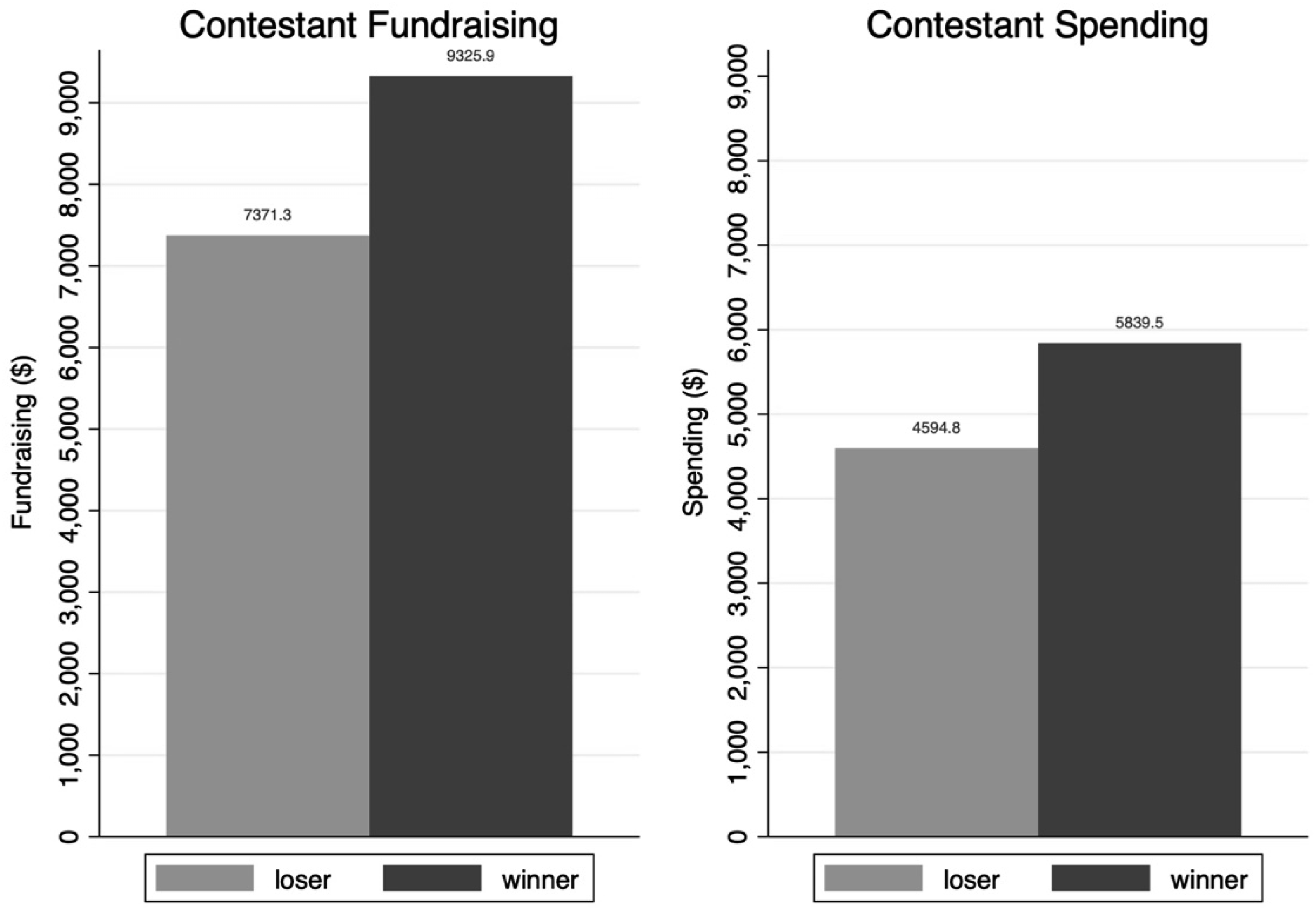
As documented earlier, evidence of election financing from the interparty arena reveals two broad trends. First, many studies have documented gender gaps in fundraising and spending whereby women experience additional barriers compared to men. Second, research has consistently demonstrated that local candidate spending is positively correlated with increased electoral chances and outcomes. The question for us, therefore, is whether these trends that have been identified at the interparty level extend to the intraparty level. We begin the analysis by exploring some simple bivariate relationships in the data. First, we consider the relationship between nomination contestant gender and fundraising/spending (see Figure 1). This is then followed by a consideration of fundraising and nomination outcomes (see Figure 2). Nomination financing and contestant gender. Nomination financing and contest outcomes.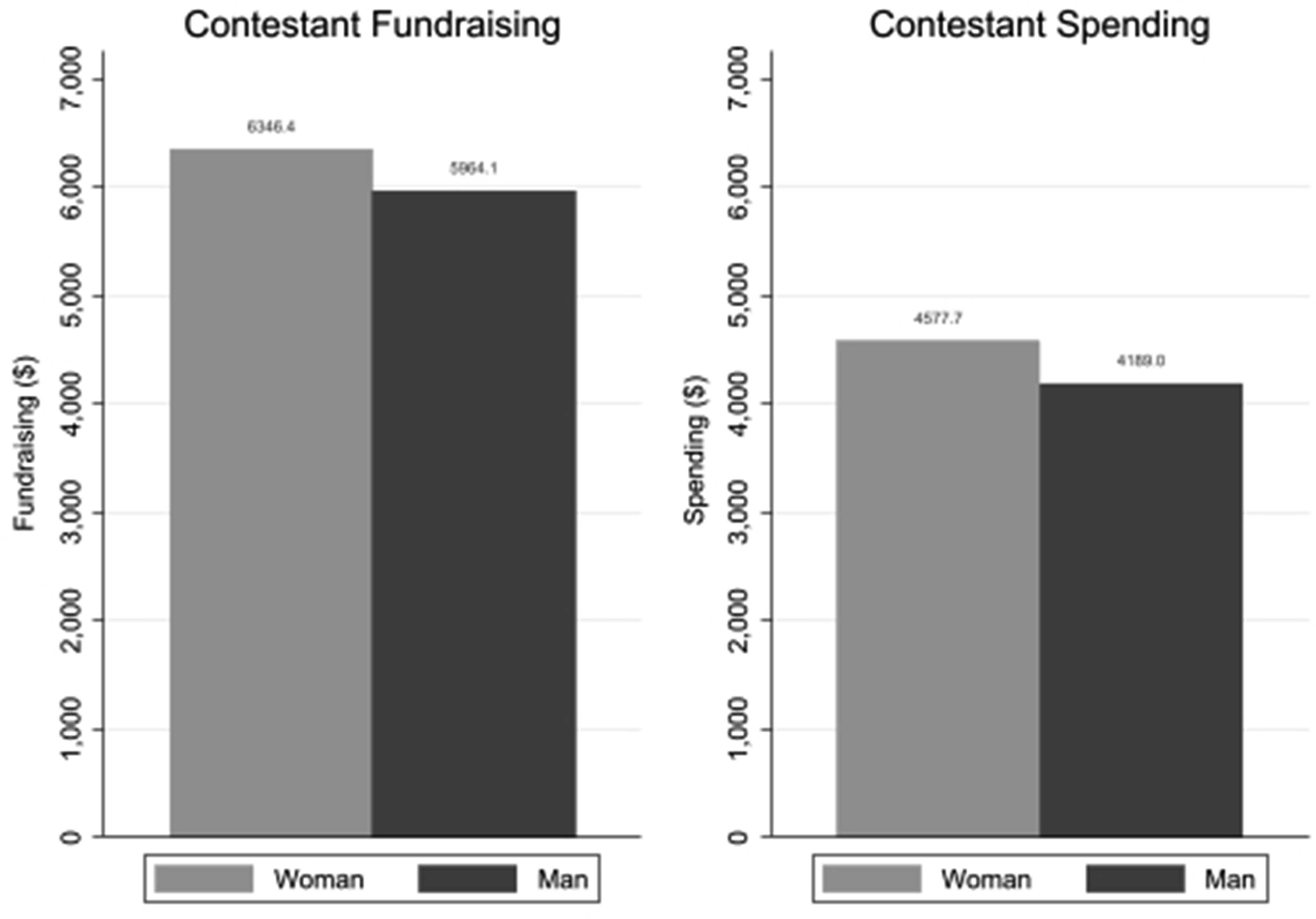
On the first question, fundraising, the data reveal that men nomination contestants (N = 247) raised an average of $5964.11 in total monetary contributions while women contestants (N = 176) had a mean of $6346.43. An independent samples t-test showed no significant differences between the groups, t (421) = −0.48, p = .316. In a similar fashion, the data show that men and women spend at relatively consistent rates to one another during intraparty elections as well. Men contestants in the sample spent an average of $4189.01 on their nomination campaigns while women spent an average of $4577.71. 15 Once again a t-test reveals that there are no significant differences between the groups, t (284) = -0.48, p = .315. Interestingly, the aggregate findings hold when examining these relationships at the party-level too. Here we find no evidence that women nomination contestants are outraised or outspent by men in the Liberal, Conservative, or New Democratic parties (see Figure A1 in the Appendix). What’s more, this pattern also applies to incumbents where we find no significant differences in spending or fundraising between men and women incumbents.
Our data do, however, confirm the evidence from the comparative literature regarding gender gaps in fundraising effort (see, for example, Jenkins, 2007). Despite raising similar amounts of money, our data suggest that women have to raise funds from significantly more donors than do men. The average woman in our sample, for example, has 21 donors while the average man has just 11. In other words, women nomination contestants have to raise contributions from nearly twice as many donors to raise the same amount of money as men. The differences between men and women are statistically significant in this regard, t (211.76) = −2.41, p = .008. Interestingly, the Liberals seem to be an outlier. While the women and men seeking candidacies in the Liberal Party have nine donors each, on average, Conservative women have significantly more donors with an average of 37 versus 13 for men. Likewise, New Democratic women contestants raise money from an average of 41 donors, whereas men raise money from just 12. With pronounced gender difference occurring in both conservative and social democratic parties, these findings suggest that women and men must navigate different environments when seeking party nominations regardless of the ideological orientation of the party.
Now we consider the relationship between spending and nomination outcomes. That is, do those contestants who raise and spend more money win their nomination at higher rates? Here we limit the analysis to those nominations that had more than one contestant since we are interested in the act of winning (i.e., non-acclimations). Considering the fundraising side, we find a considerable gap – $2000 separates winning from losing nomination contestants. 16 On average, winning nomination candidates raised $9325.86 whereas losing candidates raised $7371.35. This fundraising difference is statistically significant, t (259) = 1.650, p = .050. Significant differences in spending, by contrast, are not found. Winning nomination contestants spent an average of $5839.53 while unsuccessful candidates spent $4594.83, t (222) = 1.218, p = .112. We note that this finding could be attributed to party-level dynamics. Whereas higher levels of spending correlate with winners in the Conservatives and New Democrats, two parties in opposition during the period of analysis, losing nomination contestants spent an average of $1760.70 more than winners in the governing Liberal Party (see Figure A2 in the Appendix). This finding is consistent with other studies finding that governing parties tend to adopt more restrictive or less open and competitive approaches to membership participation than parties sitting on the opposition benches (e.g., Cross, 2018). Thus, despite raising more money winning candidates do not necessarily spend more money to secure their nomination – at least at the bivariate level.
Overall, then, the bivariate data reveal a number of important patterns. First, we find that men and women raise an equivalent amount of funds to contest their nomination. Second, and consistent with the fundraising patterns, men and women do not differ in the amount that they spend to contest their nomination. Third, women have to raise donations from considerably more individuals to raise the same amount of money compared to their male counterparts. Finally, we find that while winning candidates raise more money for their intraparty election, they do not necessarily spend more to win their nomination.
We can now move to a multivariate analysis that explores the relationship between gender, campaign funds, and nomination outcomes simultaneously. In the first analysis the dependent variable is whether an individual won their nomination contest (1 = nominated; 0 = not nominated). As a result, we make use of binary logistic regression. Our primary independent variable is campaign spending. Additionally, we control for party affiliation (with the Liberals serving as the reference category), the level of urbanity in the district, the percentage of the district that is South Asian, the number of candidates contesting the nomination, incumbency, nomination contestant gender, and the competitiveness of the party in the district. Figure 3 provides the results with marginal effects plotted (see Table A2 for full regression results). Nomination Outcome (Binary Logistic Regression). Notes. Model excludes uncontested nominations. Outcome = nomination winner; Liberal = reference category for party. Standard errors clustered by nomination contest. Variable symbol ♦ denotes p ≤ .05.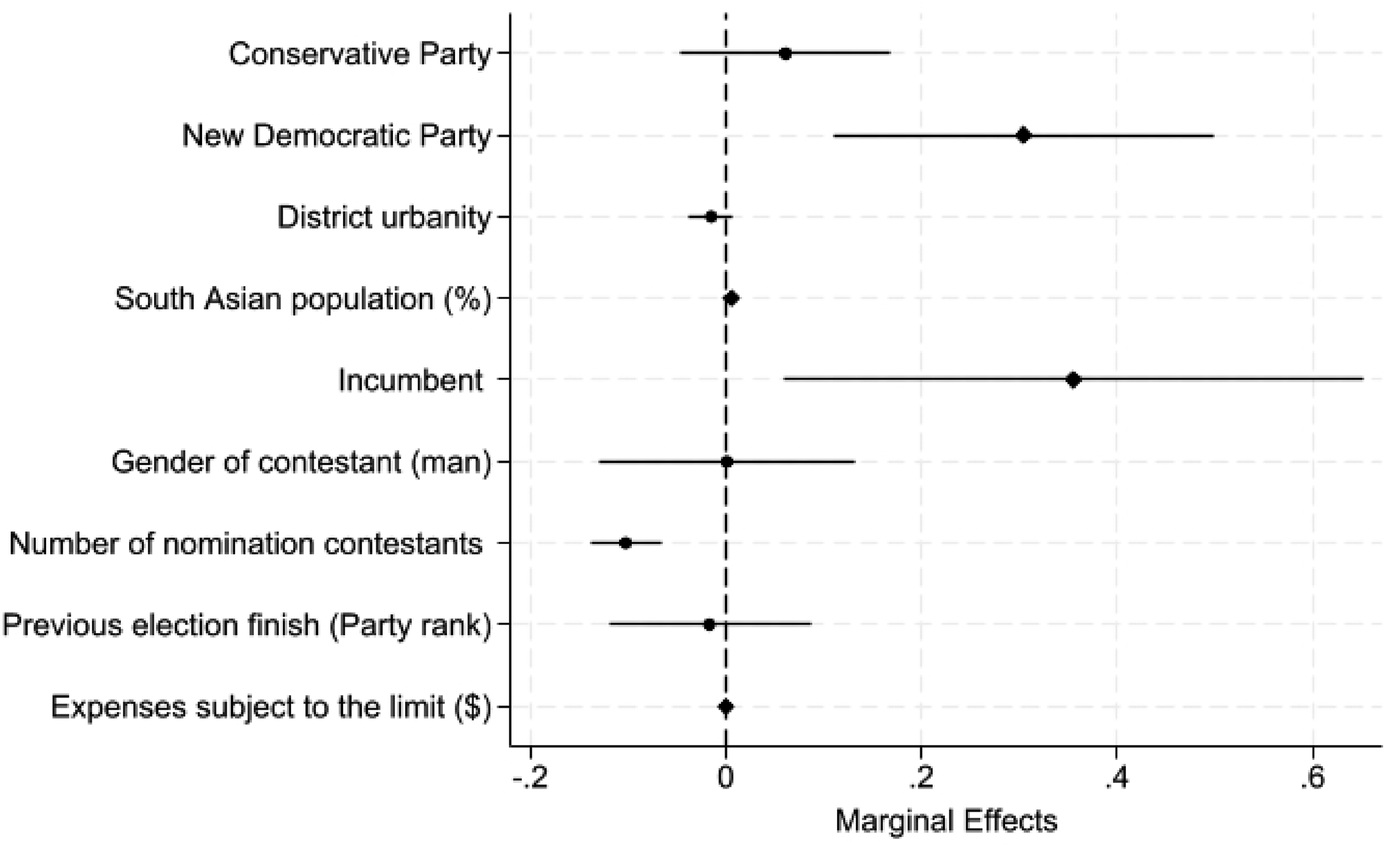
Starting with the controls, the marginal effects estimates reveal a predictable pattern in many ways. For example, the results demonstrate that as the competitiveness of the nomination race increases (as indicated by the number of candidates in the race), the likelihood of winning decreases substantially. We also find evidence of a strong incumbency advantage. According to the model, incumbents enjoy an increase of nearly 40 percentage points in their probability of winning compared with non-incumbents, making their re-nomination almost guaranteed. This, of course, is not surprising as many incumbents are automatically renominated (Cross, 2006) or, at the very least, can “earn protection” from the central party office (Bryden, 2018; Cross et al., 2022).
Most importantly for our analysis, we see that, when controlling for additional variables, candidate spending is now positively related to winning the nomination (while it was not in the bivariate analysis). Although the effect of a single dollar of spending is very small – just a 0.1% increase in the odds of winning – larger amounts of spending can have more substantive effects. For example, an additional $1000 in spending increases the odds of winning the nomination by a factor of approximately 2.7. Consistent with a broad literature that reveals a relationship between candidate spending and positive general election outcomes (Beniot and Marsh, 2003; Carty and Eagles, 2005; Johnston and Pattie, 2008), we confirm this trend at the intraparty level as well.
Candidate fundraising and spending (OLS regression).
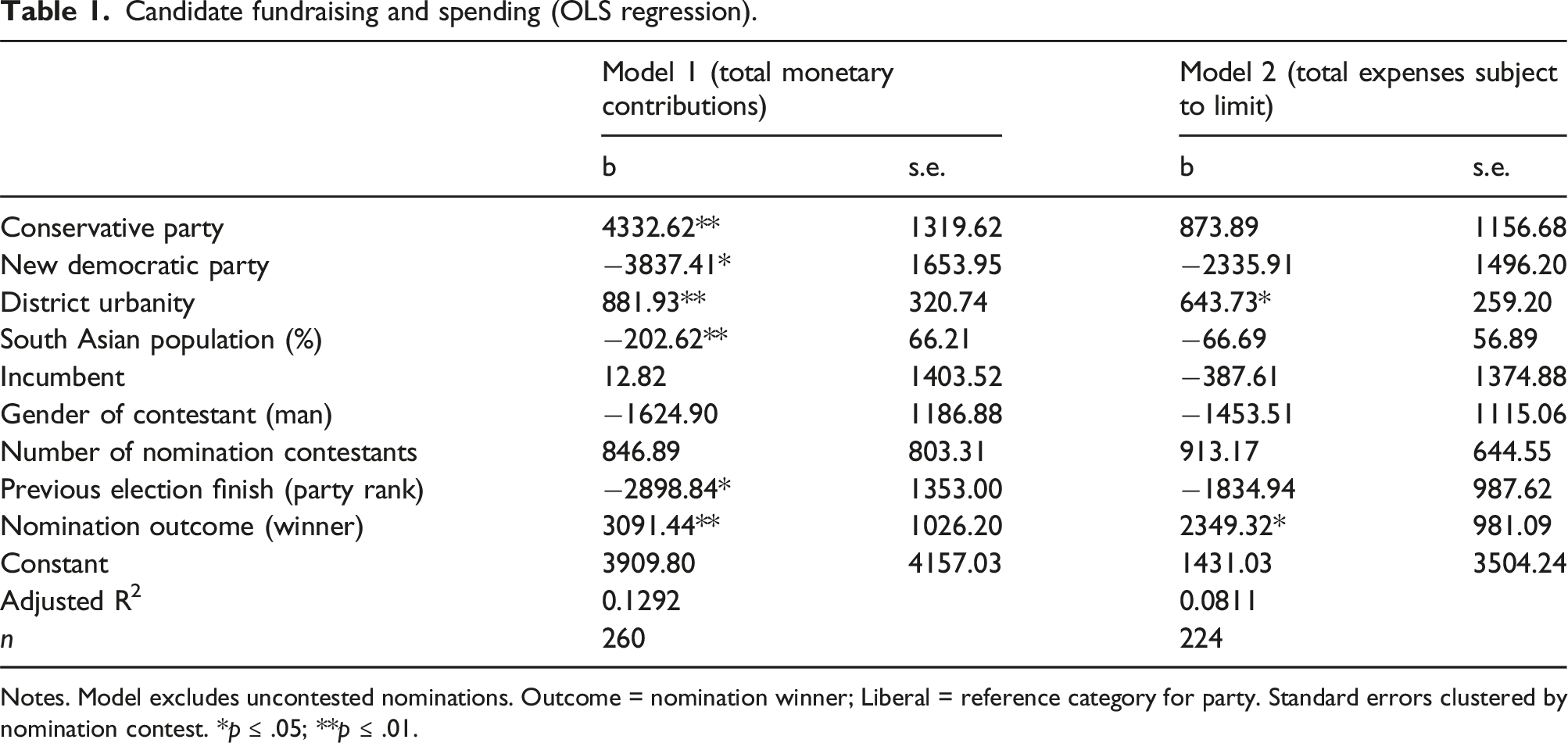
Notes. Model excludes uncontested nominations. Outcome = nomination winner; Liberal = reference category for party. Standard errors clustered by nomination contest. *p ≤ .05; **p ≤ .01.
Finally, Figure 4 explores the question of campaign effort – specifically the number of donors for each nomination contestant (see Table A3 for full results). Given the count nature of the data, we make use of negative binomial regression. Recall that the bivariate analysis revealed that women candidates raised money from nearly twice as many donors as men (21 vs 11). The multivariate results confirm this trend, revealing that men have significantly fewer donors than do women even when we control for a variety of additional explanatory factors, such as district competitiveness, incumbency, and party. Total Number of Financial Contributors (Negative Binomial Regression). Notes. Model excludes uncontested nominations. Outcome = nomination winner; Liberal = reference category for party. Standard errors clustered by nomination contest. Variable symbol ♦ denotes p ≤ .05.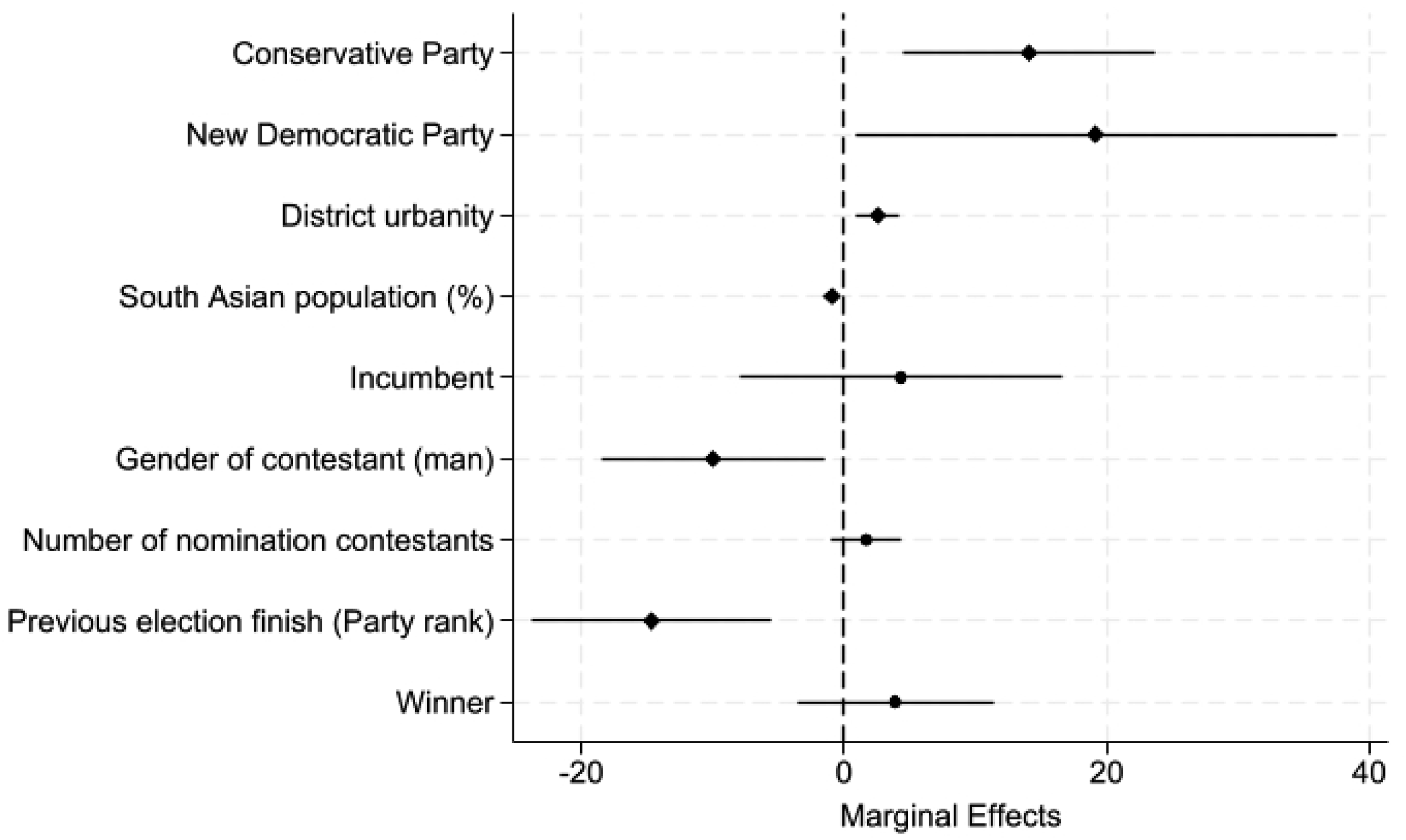
Conclusions
Drawing on a novel dataset derived from the financial reports and nomination outcomes of more than 600 nomination contestants from recent intraparty elections in Canada, this paper explored two primary questions. First, is nomination campaign spending related to positive outcomes? In other words, are nomination contestants with higher spending more likely to win their party’s nomination just as candidates who spend more during the general election have increased electoral performance (Carty and Eagles, 2005)? Second, given recent evidence regarding donation patterns to general election candidates (Tolley et al., 2022) as well as the financial obstacles that women candidates often face (Jenkins, 2007), is nomination fundraising and spending gendered?
Taken together, the results presented here tell an important and multi-faceted story. First, our data reveal that women must exert considerably more effort (i.e., twice as many donors) to raise the same amount of money as men. What’s more, this trend is evident among political parties on both the left and right of the political spectrum. This is consistent with a growing literature which documents the additional, often financial, barriers that women face when seeking election (Currie-Wood and Pruysers, 2025; Herrnson et al., 2022; Jenkins, 2007; Murray et al., 2023). Nonetheless, the data confirm that, perhaps because of their extra campaign effort, women do raise (and spend) equivalent amounts of money to men. Thus, while we uncover a clear gap in fundraising effort, we find no gender gaps with regards to total nomination fundraising or spending.
Second, the results show that fundraising and spending dynamics that characterize general elections also apply to the intraparty level: those nomination contestants who spend more are more likely to win. This relationship is shown in multivariate analyses that control for a variety of factors such as party affiliation, competitiveness, incumbency, and others. These results reinforce the notion that financial resources are a key determinant of political success not just in general elections but also in the earlier, intraparty, stages of candidate selection. Given that nominations serve as a crucial gateway to elected political office, disparities in fundraising and spending at this stage can have downstream implications for political representation. 17
While the paper advances our understanding of the “secret garden” that is candidate selection (Gallagher and Marsh, 1988) by highlighting the role of money in the nomination process, it is not without limitations. Chief among these is that the data are from a single country case study and the focus is not longitudinal in scope (only covering Canada during the period of 2019–2021). This, of course, raises questions regarding whether the patterns presented here generalize to other elections, parties, and countries. Future research would benefit from building multi-country datasets capable of examining these same questions through a larger n comparative lens. At the same time, the results also provide opportunities for some new directions. Future research, for example, should consider expanding the analysis to consider whether, and how, other characteristics such as race and Indigeneity intersect with gender, especially with regards to nomination fundraising and its associated outcomes. Finally, future research may consider examining how nomination funds are allocated – moving beyond total amounts raised and spent – to better explore and understand the strategic choices that nomination contestants make in deploying their financial resources when contesting intraparty elections.
Supplemental Material
Supplemental Material - Banking on victory? Gender, campaign spending, and candidate nomination outcomes in Canada
Supplemental Material for Banking on victory? Gender, campaign spending, and candidate nomination outcomes in Canada by Scott Pruysers and Rob Currie-Wood in Party Politics
Footnotes
Declaration of conflicting interests
The authors declared no potential conflicts of interest with respect to the research, authorship, and/or publication of this article.
Funding
The authors received no financial support for the research, authorship, and/or publication of this article.

Supplemental Material
Supplemental material for this article is available online.
Notes
Author biographies
References
Supplementary Material
Please find the following supplemental material available below.
For Open Access articles published under a Creative Commons License, all supplemental material carries the same license as the article it is associated with.
For non-Open Access articles published, all supplemental material carries a non-exclusive license, and permission requests for re-use of supplemental material or any part of supplemental material shall be sent directly to the copyright owner as specified in the copyright notice associated with the article.
