



Abstract
Institutional configurations in multilevel states create tensions in political decision-making processes resulting from constitutional decisions. Often, these decisions affect party competition, e.g., a member of the parliament (MP) may be legally bound to represent the constituency or the entire territory yet be elected regionally. In these settings parties place their members in additional positions thereby gaining advantage. Does former experience as a regional MP increase the probability of becoming a national MP? We expect that MP candidates from regional constituencies are more likely to have legislative experience in the regional assembly. We test our expectations with novel data from Portugal and demonstrate that candidates who were regional MPs are more likely to be in eligible positions and to take office. Conversely, former regional government members (elected officials) have a negative likelihood of becoming a national MP.
Keywords
Political parties are pivotal actors in democracies. Political parties’ behavior rarely deviates far from their voters’ preferences. But there is more to parties than their voters’ preferences and a vast literature explores questions related to their behavior. One of the branches of this literature examines the selection of MP candidates and party leaders (e.g., Cross and Katz, 2013; Pilet and Cross, 2014; Hazan and Rahat, 2010; Hopkin, 2003; Katz, 2001; Lundell, 2004; Rahat and Hazan, 2001). Schattscheider (1942) argued MP candidates’ selection is critical for political parties. Shomer (2014) showed in a comparative study that a party’s ideology and size, regime type, state territorial organization, and region within a country all have an effect on party selection of their candidates. Based on this they argued that candidate selection processes are highly relevant for parties’ organization. Gallagher and Marsh (1988) defend that candidate selection is a major mechanism by which parties affect a country’s territory arrangements.
In a comparative study where they measure and operationalize the selection of candidates processes, Tuttnauer and Rahat (2022) underline the inclusiveness and complexity perspectives these processes entail. They also consider the relevance of selectorate roles and add distinct levels of party organizations, like the local, the regional, and the national to explain candidates’ selection of particular parties. We focus our main and first argument on this territory dimension of the state, in what Rahat (2007) calls the constitutional moment in which the “choice before the choice” is made, that is, it is based on how the territory is politically and administratively organized that all the other constitutional settings are established. We defend the position that the territorial dimension of a given country has everything to do with its parties’ choice of candidates from which it selects candidates for office.
Several questions about electoral list placement remain open. In fact, we see list placements as a proxy for candidate selection and criteria. Research strongly suggests the territorial dimension as central for political party behavior. There is a clear connection between the territory arrangement of a state and political and administrative processes within it. For instance, the European reality is commonly connected with the widespread decentralization processes that have occurred in the last decades in parties’ internal processes that comprise candidates’ selection and list placements. Indeed, the reconfiguration of state-level politics consequently implied that political parties had to adjust their structures to a “new” institutional context (Deschower, 2006; Detterbeck and Hepburn, 2010; Downs, 1998; Van Houte 2009).
In decentralized polities, MP selection for national elections acquires an extra territorial feature where candidates stand for national elections in territorially defined constituencies, which seems to be an extra challenge for these polities (van Biezen and Hopkin 2004; Hough and Jeffery, 2006). Therefore, in territories with regional autonomy, MP selection for the national parliament reflects the structure of the state (centralized or decentralized) and the organizational autonomy enjoyed by the parties’ regional branches (Cordero et al., 2016; Duverger, 1954; Hopkin, 2003; Hopkin and Bradbury, 2006; Riker, 1975).
In order to gain an understanding of the dynamics of intra-party politics in multilevel states with a regional tier of government and with directly elected sub-national assemblies, we must account for the vertical integration of the party structures. Likewise, and regarding the regional branch autonomy about candidate selection, this means that it is necessary to consider the rules addressing representatives’ selection for national parliament first and foremost (Detterbeck & Hepburn, 2010, 2018; Thorlakson, 2006, 2009). Consequently, in such cases, different layers of authority have given the regional selectorates significant powers when dealing with their representatives and making electoral lists (Cordero et al., 2016b).
One of the ways that statewide parties, especially those with seats in national assemblies, act to defend their regional interest is by fully controlling the order of candidates on lists. Territorial units without territorial autonomy or legislative powers do not exhibit this behavior. With this in mind, we ask: Does former experience as a regional MP increase the probability of becoming a national MP?
In closed list systems, nominating someone for the electoral lists to national parliament is a procedural function of political parties. We hypothesize that MPs endorsed by regional constituencies for national parliamentary elections are more likely be former MPs at the regional assembly. Our reasoning rests on two major (institutional) factors: (1) the strengths of the regional party branches within parties’ central level, which in turn, is intertwined with the scope of the structure of the state (centralized or decentralized); and, (2) MP candidates’ previous political experience at the regional assembly, because an MP is more likely to be in eligible positions in the national assembly electoral lists and take office once like that parties have an additional guarantee that these MPs will more easily pursue party’s branch purposes.
We test our expectations using the Portuguese case as a unitary political system that has limited decentralized power structures. Our research design is particularly suited to intra-party cooperation and competition at the regional level that has an effect at the national level. Thus, we make a within-comparison of cases (two autonomous regions) and use several legislatures.
We consider that the process of candidate selection among the two Portuguese regions–Azores and Madeira–for national elections is, essentially, territorially bound by the regional apparatus that then imposes on the national level structure their choice concerning candidates. Actually, this should not be a unique case. For instance, evidence from Spain and Italy suggests that regional leaders manage to increase their autonomy when they control regional governments (Fabre, 2008; Fabre and Méndez-Lago, 2009; Hopkin, 2009). In fact, regional branches of nationwide parties in Portugal have assumed greater policy and organizational autonomy in crucial dimensions of party structure (singular from the mainland tables). Candidate selection functions for all competition settings–local, regional, national, and European elections– constitutes one of the cornerstones of the (re)configuration of authority within party organizations. However, once elected, MPs represent the entire country, not the electoral constituency. The relative absence of ethno-linguistic and territorial tensions, the nature of the institutional architecture of the state–unitarian–and the state-level party organization (Ruel, 2021) makes the Portuguese case particularly suited to our purposes.
Using the Calca and Koehler (2023a) parliamentary database and Ruel (2021) institutional data with additional new regional variables, we constructed a new dataset to test our theoretical expectations. Our empirical analysis confirms our expectations, demonstrating that candidates who are in the first three positions in the lists for national elections, thus eligible, are more likely to have been MPs at the regional assembly.
Our main aim is to enhance the potential explanations on the mechanisms that illustrate representatives’ selection in multilevel countries. This is particularly relevant for cases where the regions have relatively strong legislative powers to add an extra layer to the intra-party level possibilities. By defining who is in better electoral placements, we attest who parties choose to have increasing chances of election and re-election.
This article is organized as follows: the first section presents a brief overview of the literature on candidate selection and the intra-party features in multilevel contexts. Secondly, we present our main theoretical arguments followed by the reasons for our case selection, as well as the institutional setting where these events are developed. In the third section, we present the data and the empirical strategy followed by a discussion of our empirical results. We conclude by summarizing and discussing our findings.
Candidate selection and intra-party dynamics in multilevel settings
Candidate selection is one of the defining functions of a political party in a democracy (Katz, 2001) and this corresponds to the mechanism by which political parties choose the candidates who will compete in elections with their sponsorship (Rahat and Hazan, 2001). By analyzing candidate selection, we can extrapolate to related dynamics within the party, for instance, information about leaders’ power positions, veto points in the decision-making process through procedures taken, and other relevant information on internal power and decision-making dynamics of parties (e.g., Katz, 2001; Kirchheimer, 1966; Michels, 1915; Ostrogorski, 1902; Ranney, 1981; Schattscheneider, 1942).
Several studies on candidate selection have focused on the distribution of power within party organizations, the selectorate, and the formal rules that guide the process of candidate selection (e.g., Katz and Mair, 1995; Lovenduski and Norris, 1993; Panebianco, 1988; Ranney, 1981). Another stream of this literature has highlighted political representatives constituted by state-elites, the consequences of this concentration of power, and the criteria of dominance when selecting candidates as well as party leaders (Esaiasson and Holmberg, 1996; Eulau and Wahlke, 1978; Narud and Johansson, 2001; Norris, 1997). Also, the effects of candidate selection processes on legislator behavior, the party, and the legislature are considered relevant for addressing and explaining the logic of candidate selection for parties, as addressed by Müller and Saalfeld (1997) and Shepsle (1989).
Research has long shown the importance of territorial parties’ organization for representative’ selection (Epstein, 1980; Gallagher and Marsh 1988). As Sharpe (1993) underlines, the aspirations of regional subcultures within the territory are an element of this importance. In the last two decades, trends towards federalization, regionalization or decentralization, have created new incentives and opportunities for political actors and prompted significant changes in political parties’ organization. Political parties have had to adjust their structures to this institutional state design, concomitantly being challenged by the multilevel political competition. Political parties compete across territorial arenas, often alongside regionalist parties within a given regional setting, for example in the United Kingdom, Spain, and Belgium.
Actually, more and more statewide parties have been compelled to take positions on regional issues and represent and undertake territorial interests at the state level (e.g., Hough and Jeffery, 2006; Hepburn, 2010). The distinctiveness and political strengths of regionalist parties in federalized contexts have been well documented (Bracanti, 2008; Massetti and Schakel, 2013, 2017). However, this literature mainly addresses the impact of decentralization on electoral and governing strategies at regional and national elections (e.g., Deschouwer, 2003; Detterbeck and Hepburn, 2010; Dandoy and Schakel, 2013; Meguid, 2015) even when it includes the structure of the state from a party perspective (Detterbeck, 2005; Thorlakson, 2009) and the movements amongst candidates across electoral arenas (Dodeigne, 2018) in their analysis. Additionally, researchers have given some attention to the statewide parties and their territorial branches in the multilevel landscape, highlighting their autonomy, territorial-focused structures, and political strategies (Bracanti, 2008; Fabre, 2008, 2011). The connections and mechanisms concerning those selections are yet be unveiled.
Yet, some research has highlighted the linkages amongst the processes of state decentralization, party decentralization, and decentralization in candidate selection (Gallager and Marsh, 1998; Rahat and Hazan, 2001). We know, for instance, that region, party size, and even different territorial features are critical to explain variations in the selection of candidates (Bermúdez and Cordero, 2017; Lundell, 2004; Rahat, 2007). This evidence coupled with our understanding of the state institutional design indicates that multilevel systems present incentives for parties to centralize authority and selection (Cordero et al., 2016a). However, in multilevel states, regional branches determine the selection of candidates, and regional leaders play a leveraged role in those selection processes (Coller et al., 2018; Cordero et al., 2016; Cox, 1997; Hopkin, 2003; Van Houten, 2009).
A theory of institutional setup in multilevel states
The institutional structure of a state corresponds to a territorial distribution of power. This power distribution coincides with the formal rules established at the constitutional moment and that was written in the constitutional text. A state’s constitution establishes the structures and rules of the decision-making processes; that is, it ensures the procedures to control the exercise of power (Dahl, 1966; Powell, 1982; Sartori, 2010). Consequently, a territory is a likely intervening attribute in decision-making processes of parties, parliaments and executives. The structure of power within parties–that it is assumed in a continuum of centralization and decentralization–is, thus, a strong indicator of the general structure of territorial politics (Riker, 1964), and it is both influenced by the institutional setup of the state and, at least partially, responsible for changes in it (Filippov et al., 2004; Hopkin, 2009).
As individuals have preferences regarding political institutions and their functioning, they will anticipate the future actions of the actors operating under a certain institutional framework (Acemoglu and Robinson, 2006). Applying this understanding to multilevel contexts, as we do in this work, indicates that the structure of the state is established through the institutional design and dependent on the balance between self-rule and shared rule. Those dimensions are critical to the definition of an institutional architecture and for the scope of the state structure (centralized vs. decentralized or unitary vs. federal). The self-rule dimension refers to the authority exercised by the regional constituent units within the state over their territory (region). Shared-rule, rather, shapes the authority exercised by a regional government or its representatives in a country as a whole over time (Marks, et al., 2010; Hooghe et al., 2016). This is relevant for our argument because it is within and with this framing that political parties will have to act, and, more specifically, will define the candidates list for the elections at the state level where they want to be represented.
Scholars have sought explanations within state multilevel structures for parties’ behavior using several approaches because the institutional design and configuration of a state, in itself, reflects party choices at the constitutional (seminal) or reform moments and thus the organization of political parties (Duverger, 1954; Powell, 1982; Riker, 1964; Chibber and Kollman, 1998, 2004). Also, the incumbency status of certain parties, at the regional level, have boosted the autonomy of regional branches within state-level parties (Sweden and Maddens, 2009). That is, state institutional design has revealed how political parties interact with their institutional environment in order to protect and defend their policy positions and thus follow most intended electoral gains in the national and regional political arenas. Given that institutional design is central to the interaction amongst political parties, candidate selection for national elections is a relevant issue for them. We argue that the autonomy the regional branches of the statewide parties enjoy constitutes an important condition to the selection of candidates. The regional structures that determine candidate nomination for national elections have a dynamic relationship with the state-level party. Despite the formal rules party statutes have imposed in terms of candidate selection, and the national-level veto power over the candidates that the regional branches propose, we believe that the national level will have little to say in this specific process what is exactly the opposite to what happens at the mainland level. Evidence from the United Kingdom and Spain (Hopkin and Bradbury, 2006; Fabre, 2011; Fabre and Swenden, 2013) has shown exactly this, and the Portuguese case also follows the tendency, in particular for its two mainstream parties, in the Social-Democratic Party (PSD, Partido Social-Democrata) and the Socialist Party (PS, Partido Socialista).
Figure 1 shows a representation of our reasoning. Party statutes (party rules) of main Portuguese statewide parties establish the extent of the selectorate intervention in the process of candidate selection to the electoral competition. They set where the decision is made. The process is informed in a bottom-up direction where party structures across the territory produce lists of candidates, allocating candidates to positions in a dialogue between each party constituency (which match with electoral constituencies) and the state level. List placements are subject to negotiation and approval by the national structure. Definition of party lists within a multilevel institutional setup.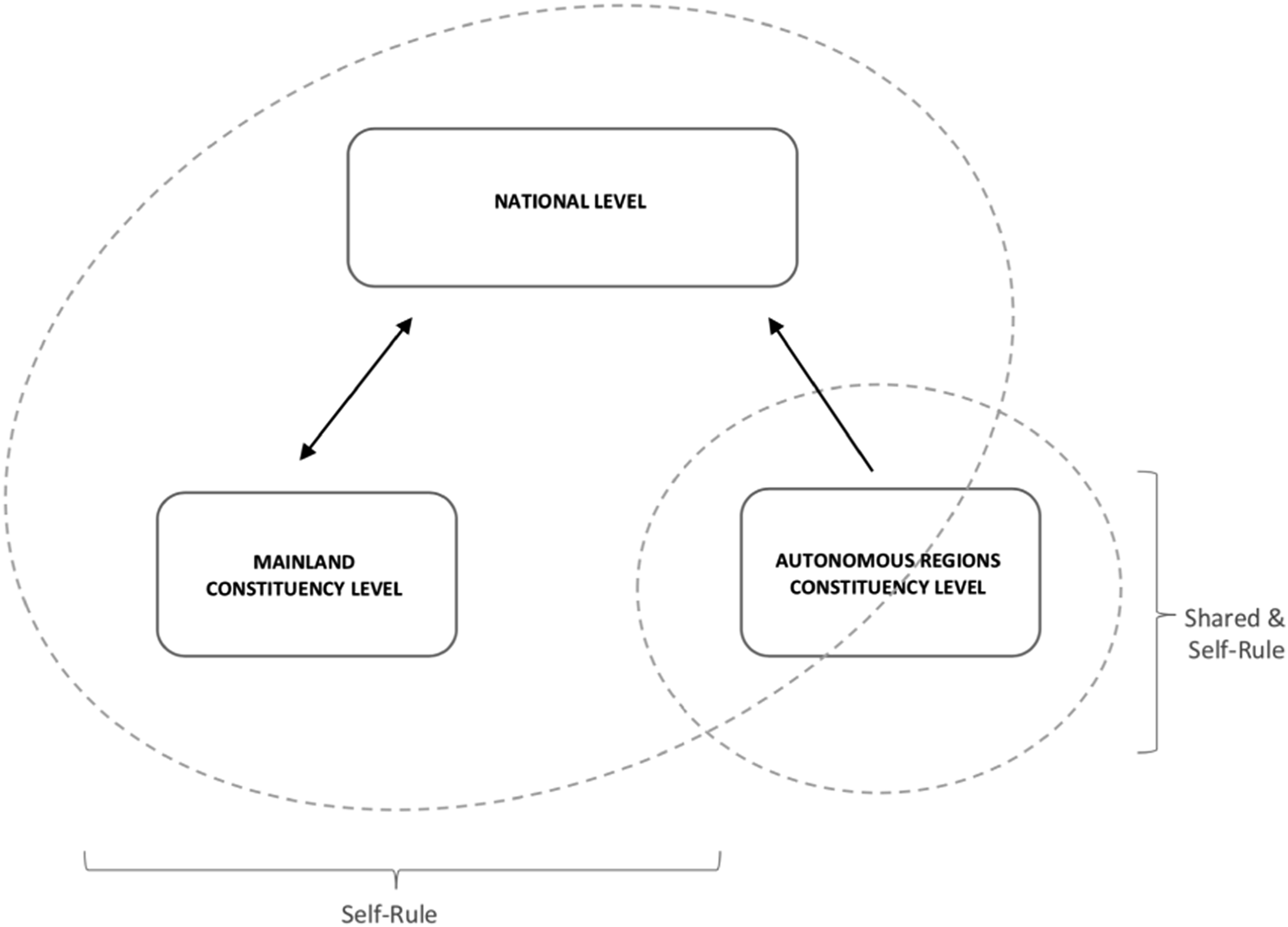
However, the praxis around is that in the constituencies that have regional authority with legislative powers and individual regional assemblies–Azores and Madeira–the regional party makes candidate lists and submits them to the national party. While the statewide structure has formal veto power, the regional branches have decision-making autonomy, and they are rarely constrained by the state-level party. By contrast in the mainland’s constituencies, which lack territorial autonomy, the definition of candidate lists are made in a bi-directional way. That is, parties’ structures in mainland Portugal propose their candidates and their position in the lists to the state-level party, which has the last word this is distinct to what happens in Madeira and Azores (Ruel, 2017).
The practical and recurrent definition of candidate lists is dependent on previous constitutional definitions of the state territory as well as political institutions: constitutional settings and rules are part of this setting (Persson and Tabellini, 2002). By regulating the allocation of de jure political power, like the definition of candidate lists, political institutions serve elite intents when deciding to extend the franchise and include wider segments of society in the decision-making process (Acemoglu and Robinson, 2006).
In unitary states with some decentralized structures, such as Portugal, which has a relatively strong regional level of authority, the regional branches have hampered the elites’ intents in defense of long-lasting regional agendas with issues that have persisted since the seminal institutional architecture designed by the 1976 Constitution. These factors endowed the structures of the regional parties in Azores and Madeira with strong incentives to control their internal affairs. Greater autonomy within the nationwide organization was as a result reinforced by their status of regional incumbency over time (Ruel, 2021).
Our argument stresses that regional branches of political parties have autonomy regarding candidate selection for the national elections. The regions of Azores and Madeira (constituencies) have established this autonomy because they are of major importance within the mainstream political parties (PSD and PS) 1 and due to their longtime status as powerful regional governments. We expect that the elites’ regional path dependency will play a strong role in the definition of which candidates should be selected for eligible positions, as the guarantees are quite high for both parties in each of the regions.
Regional elites will be placed in the best positions for conquering a seat. Thus, candidates will be people who not only have party’s trust, but also some degree of experience in the legislative arena. This experience will be central for safeguarding regional elites’ interests. Consequently, there is a higher likelihood that regional candidates in eligible placements in the lists for the national assembly will have previous experience as regional MPs (Hypothesis 1).
If in Hypothesis 1 we look at broader experience and list placements, in Hypothesis 2 we will test if candidate experience better predicts which candidates take office, rather than their position in the lists. Our hypotheses predict that the regional candidates who win office in the national assembly are more likely to have previously been in the regional assembly than in the regional government.
Who takes and do not take office is a particularly crucial topic for studying Azores and Madeira list placements at the national elections and over time and that is shown when we qualitatively look at the evidence: in several approaches that we took to the topic, including conducting interviews, reading news reports, and tracking of names that frequently appear on candidate lists, we identified several patterns with regard to who was substituted and who took office after the election and, in some cases, these substitutions were made in ways that potentially violate legal norms (Ruel, 2017, 2022). For example, the Azorean PSD’s lists of candidates for national parliament between 1976 and 1995 consistently had the Azores regional premier, Mota Amaral, in the first position in the list. Despite he got elected to the national parliament, just after 19 years he stepped down from the regional cabinet, he assumed the seat as MP at national parliament (1995). Similarly the head of Madeira’s regional government, Alberto João Jardim, was on PSD’s head of list throughout 1976-2011 but never assumed the MP’ position at the national parliament (Ruel, 2018).
The Portuguese institutional setting
The literature about multilevel parties tends to focus on federalized states (e.g., Stolz, 2003; Lundell, 2004) and has given minor attention to decentralized states, with the exception of the United Kingdom and Spain (Hopkin and Bradbury, 2006; Cordero et al., 2016). Thus Portugal has played little part in our understanding of descentralized states. However, Portugal has been a unitary state with decentralized structures since a process of decentralization that accompanied the third wave of democratization, which took place in 1974. The Democratic Constitution of 1976 established a regional tier of government that entitled Azores and Madeira to self-government in order to guarantee the democratic participation of the islanders and defend their interests, promote regional economic and social development, and strengthen national unity and solidarity among all Portuguese citizens (Article 235, 2nd, CPR 1976). No other territories within the Portuguese state have such arrangements (Ruel, 2018). Each island has a system of representation with directly elected parliaments (Assembleia Legislativa) and regional cabinets (Governo Regional). These representative bodies have their own civil service and decision-making autonomy over a wide range of policy areas. Thus the Portuguese case provides an adequate setting to test our theory and related arguments, and in fact some distinctive institutional features regarding its counterparts that are usually not studied offer particular reserarch leverage.
Further, political parties in Portugal are statewide despite the decentralized structure of the state. There is a constitutional ban on regionalist or non-statewide parties (Article 51, 4th, CPR). Nevertheless, statewide parties have territorialized party organizations at the regional level and reproduce the regional autonomy arrangements. This characteristic increases the importance of party politics across territorial levels.
As parties have an important role underpinned by the features of its electoral system, in Portugal candidates for national elections are organized by party lists, which are closed and blocked. They are selected and ranked by party organizations in all the constituencies following the D’Hondt proportional formula. The national parliament elects 230 MPs in a multi-member list divided by 22 constituencies: 18 on mainland Portugal; two in the autonomous regions (Azores and Madeira); one in Europe; and one for citizens who live outside of Europe. Each constituency has distinctive magnitude (number of seats) according to the number of voters. 2
Each party produces a list of candidates in a dialogue between each electoral constituency and the national party structures. Portuguese parties tend to have centralized procedures for candidate selection. The national party elites have significant power, especially in mainland districts, but in the Azores and Madeira constituencies the regional party branches have decision-making autonomy over their MP candidates for all types of electoral competition (European, national, regional, and local), without veto constraints from the national party structure (Ruel, 2017). The vertical structure of regional branches in the Azores and Madeira has its own party statutes and autonomy over its organizational layers. Regarding the horizontal relationship among regional branches and state-level structures, the regional apparatus consists of agents with split loyalties who operate simultaneously at different levels of authority and with distinctive strategies. They are representatives of regional interests (at the national level) and are the forefront of an ideological organization in the territory (at the regional level). Additionally, the position of the regional leaders within the state-level organization reinforces the dominance of the incumbent political parties (Ruel, 2021).
The Azores constituency elects five MPs, whereas the Madeira electoral district elects six MPs for national elections. Over the last four decades of democracy, the Azores and Madeira constituencies have displayed within national parties structure a decentralized pattern of candidate selection for the national parliament that is not always inclusive. Some of the same candidates from those regional constituencies have maintained their safe position in the lists and gotten elected over time (Ruel, 2017). In practice, this pattern constitutes a relevant output within intra-party dynamics and reinforces the importance of the regional-level dynamics that affect party choices.
In Portugal, the institutional arrangements negotiated during the democratization period have incorporated various strategic elements influential to democracy performance. One of those elements is related to the constitutional arrangement that has deliberately banned regionalist parties from the country’s institutional framework. This was the corollary of the negotiations between statewide parties and regional elites in order to accommodate and empower former long-lasting regionalist pressures and counter the rise of separatist movements that erupted during the democratization period (1974–1976) in the insular territories. However, state-level parties have territorialized their party structures in the Azores and Madeira, echoing the regional autonomy arrangements and to some extent acting like regionalist parties (Ruel, 2021).
The Portuguese regional institutional configuration has produced major political outcomes. With more than four decades of regional elections, both Azores and Madeira have produced political outcomes distinct from those in the rest of the country. For instance, the PSD come into office with the first regional elections of June 1976 and has remained in power in Madeira since. It also ruled Azores for 20 years until the PS took over the executive branch in 1996, after which it remained in power until 2020 (24 years). Within regional territories there exists a de facto single-party dominance over time in which the Azores had a long-term of incumbency and Madeira still has a pattern of non-alternation in office (Ruel, 2021).
While regionalist parties are absent from the Portuguese institutional design, regional elites had and have decisive power. Statewide parties have spread their organizational structures within the territory of the country and orient their strategies and appeals to distinctive layers of mobilization and regional attachment. In fact, regional branches have acquired significant autonomy from the national parties and assumed programmatic differentiation for the defense of regional interests. The regional affairs gained relevance and distinctiveness among their national counterparts, this mainly happened because it was driven by regional contexts that permitted a an advantage within national negotiation settings from active and powerful regional elites (Ruel, 2018, 2021).
Data and empirical strategy
Variable names, designation, and description.
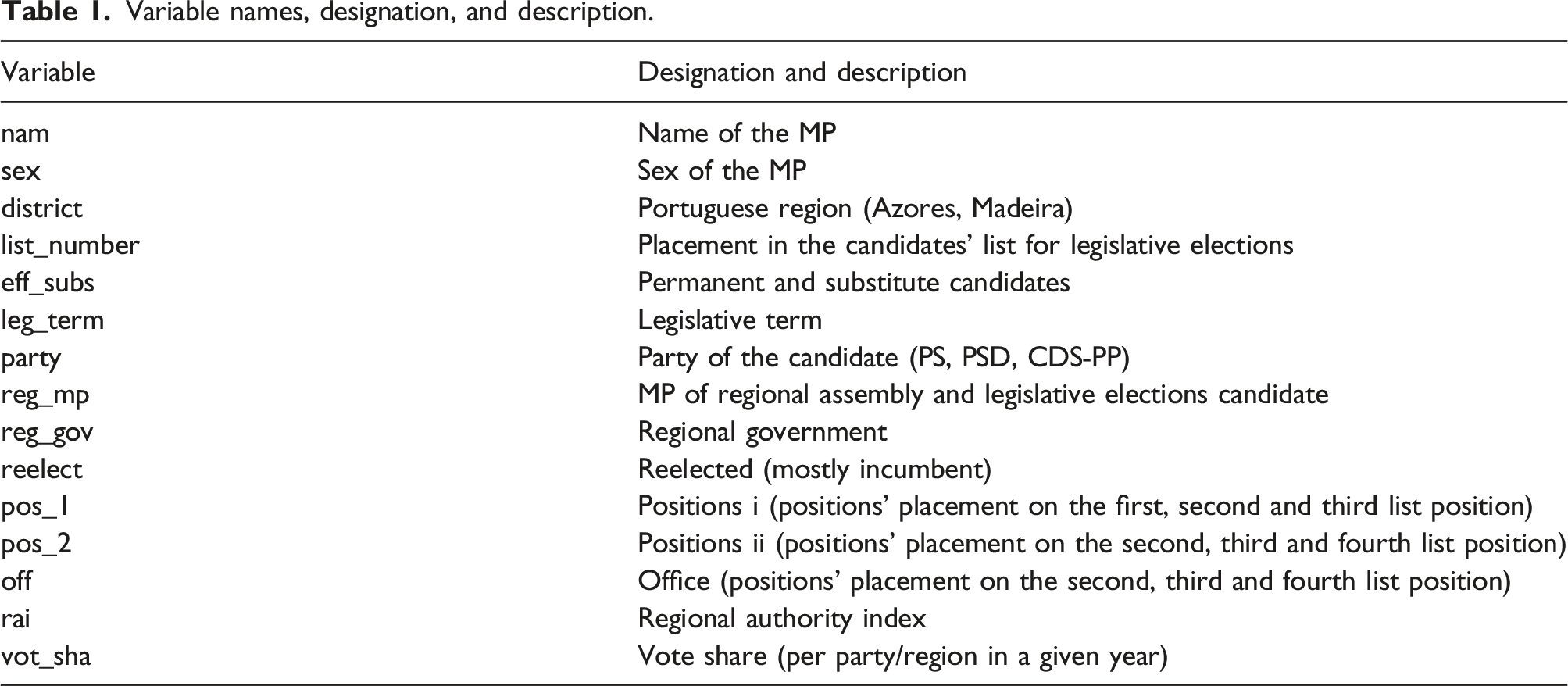
We constructed three dependent variables in order to test our two hypotheses. The first variable, Positions i (pos_1), refers to candidates placed in the first three slots in the lists. We coded it with a one (1) for the first three candidates–the candidates in an eligible position if we consider the average results per party along the years–and zero (0) for those who were not in the first three ranked positions of the list for the legislative elections. These candidates have the greatest chance of being elected.
Having found that it was not unusual for a candidate that appeared first on the list not to take office, we decided to code a second dependent variable with some variation, Positions ii (pos_2). This variable refers to the second, third, and fourth slots in the lists. The positions that were filled by people with this ranking were coded one (1) and the remaining list placements were coded as zero (0), much as we did for the first variable. This second dependent variable was coded to give us additional information to respond to our first hypothesis and it works as a robustness check because of the candidates who ultimately take office. We recognized the need for this second variable concern because the head of the regional government in Madeira was often first on the list for the legislative elections but, once elected, never took office. Thus, we look at the candidates that are placed in three slots below him because they will in practice take office if they are elected.
Our third dependent variable, the Office (off), indicated the status of candidates who were elected, i.e., the candidates for the legislative elections, independently of their position in the lists, who take office in the national assembly at some point. This variable gives us a better idea of the eventual behavior of the regional MPs that take office in the national assembly, distinguishing candidates who were listed for symbolic reasons, was elected but who never took office.
With the variable Regional Assembly (reg_ass), we coded whether a given MP candidate was (1) or was not (0) ever in the regional assembly. Each legislative election cycle is considered in comparison with the previous regional elections cycle for both regions of Azores and Madeira. 4
Another variable that we use is the rai Regional Authority Index, (RAI). It measures the authority exercised by regional governments. Regional authority is measured along ten dimensions. Five of these operationalize self-rule–institutional depth, policy scope; fiscal autonomy; borrowing autonomy, and representation. The other five capture shared rule–law-making, executive control; fiscal control; borrowing control, and constitutional reform–over time (Hooghe et al., 2010, 2016). Self-rule refers to the independence of the regional government from central supervision and the scope of regional decision-making, whereas shared rule depends on the capacity of a regional government to shape national decision-making (Marks et al., 2008). Regional authority is measured on a scale of 0–24 and it can be interpreted as a continuous variable where the higher numbers constitute an increase in autonomy and the lowers a decrease of autonomy. We use this variable to control for disparities that may occur between the two regions, although regional (district) fixed effects should clarify most individual factors. Our argument suggests that the individual experience of MPs at the regional level and the probability of becoming a national MP are related. We also have controlled by party to identify differences between the parties. However, we know that MPs tend to serve long terms (approximately three terms each) in both regions and at the national level (Ruel, 2017, 2022).
Figure 2 shows the distribution of zeros and ones for the main five dummy variables in a bar plot. The darker blue areas indicate presence (1) and the lighter blue areas indicate absence (0). For the variable sex we coded one (1) if male and zero (0), female. Bar-plot of Dummy Variables.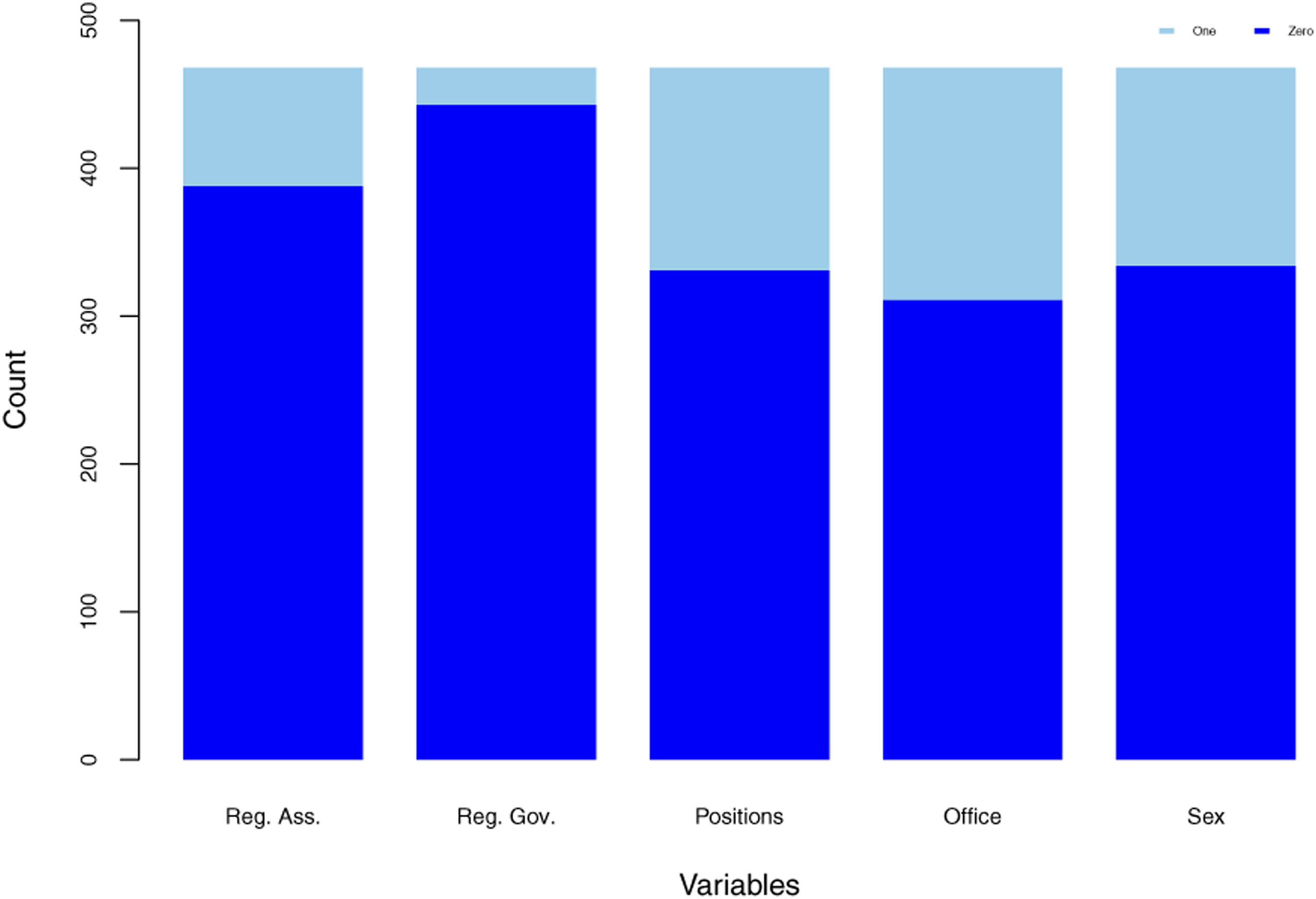
The first variable regarding the regional assembly (reg_ass) measuring the candidates who took office and were in the lists for the national assembly, coded with a one (1), are in higher positions than the candidates who belonged to the regional government (reg_gov).
For the variable coded for the position (pos), eligible or not, of a given candidate, the value distribution is in line with what one could expect. That is, usually three out of six are elected MPs. This is not the case for the Azores in all the legislative elections, where we had less than six, but for the sake of simplicity we considered the same total numbers for the entire period.
Candidates who did took office (off) appear more often but only a little more than candidates whose position (pos) variable indicates they were eligible. This primarily happened because with some frequency (especially in Madeira) someone who was not in the first three placements replaced the person who was first in the list–who is in an eligible position; other replacements occurred as well.
Results and discussion
Logistic regression model - list position (Δ) 1, 2, and 3
Note:*p
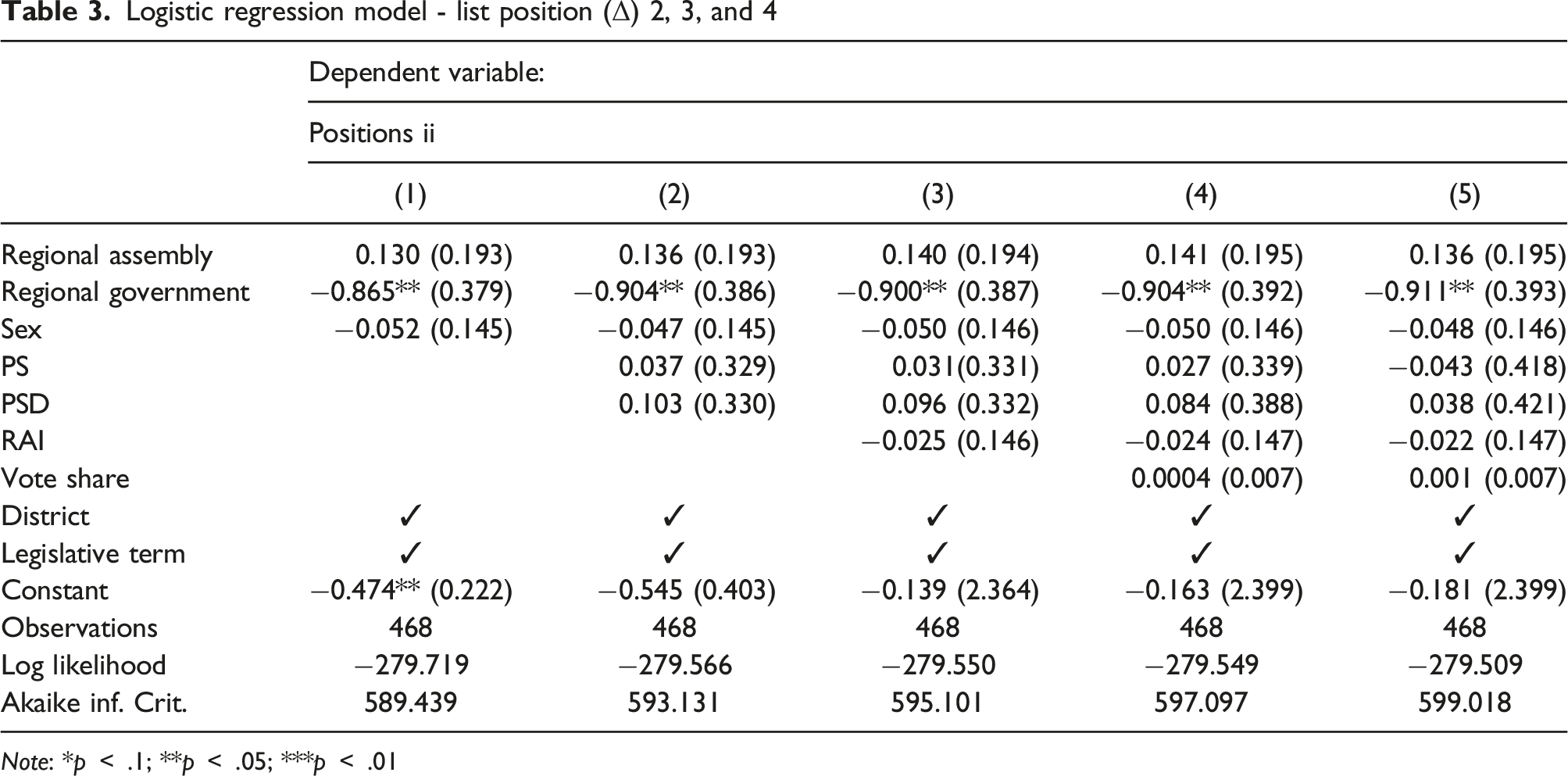
Logistic regression model - list position (Δ) 2, 3, and 4
Note: *p
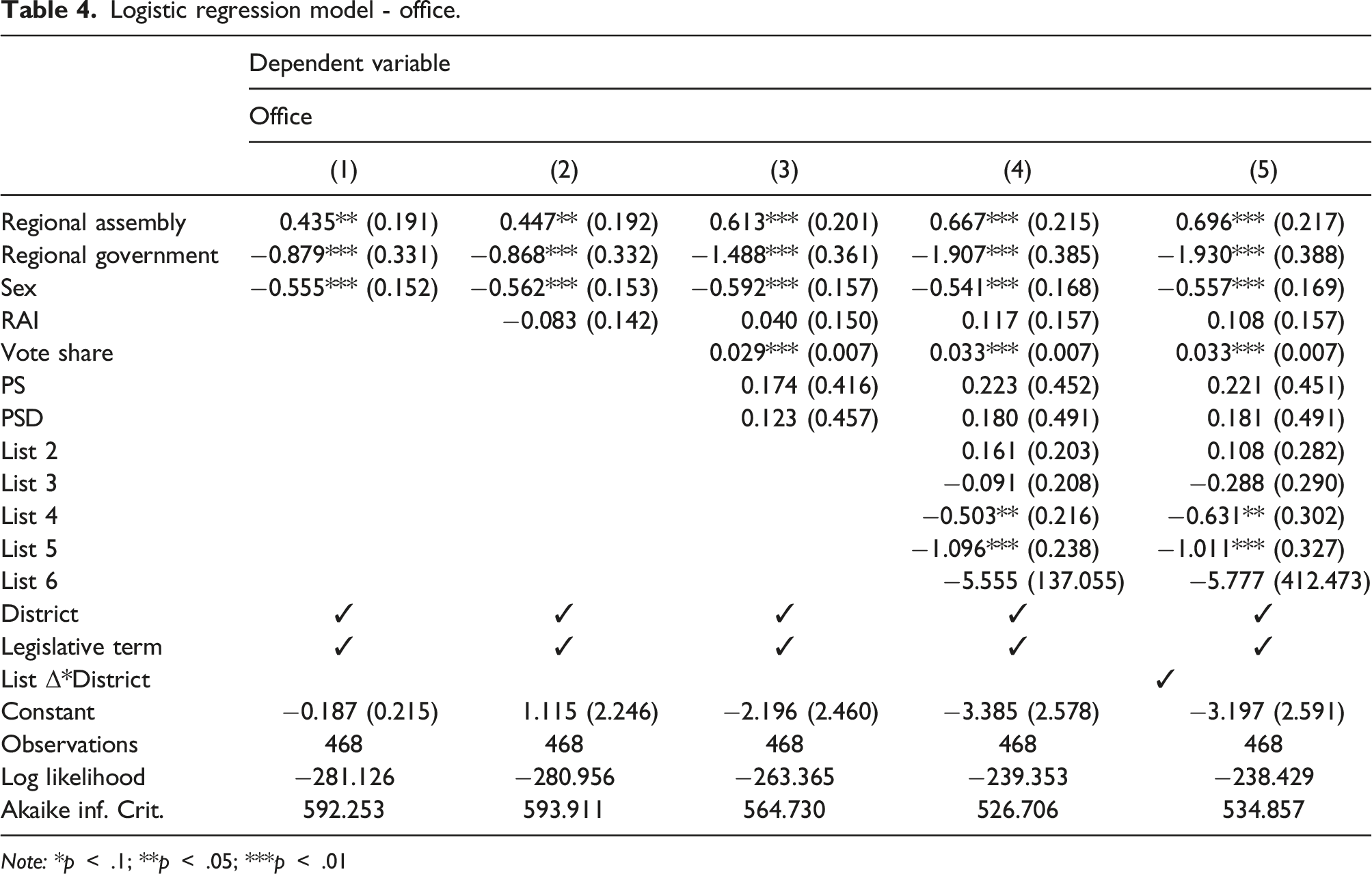
Logistic regression model - office.
Note: *p
Next, we checked and coded if a given candidate took office and then tested our two hypotheses. Our hypotheses were based on two main reasoning strategies. The first has to do with the position placement of the regional candidates for the legislative assembly. Thus, we tested whether the characteristics of the candidates in eligible positions are somehow distinct from those in other placements. Our theory suggests that previous experience at the regional assembly should have an impact.
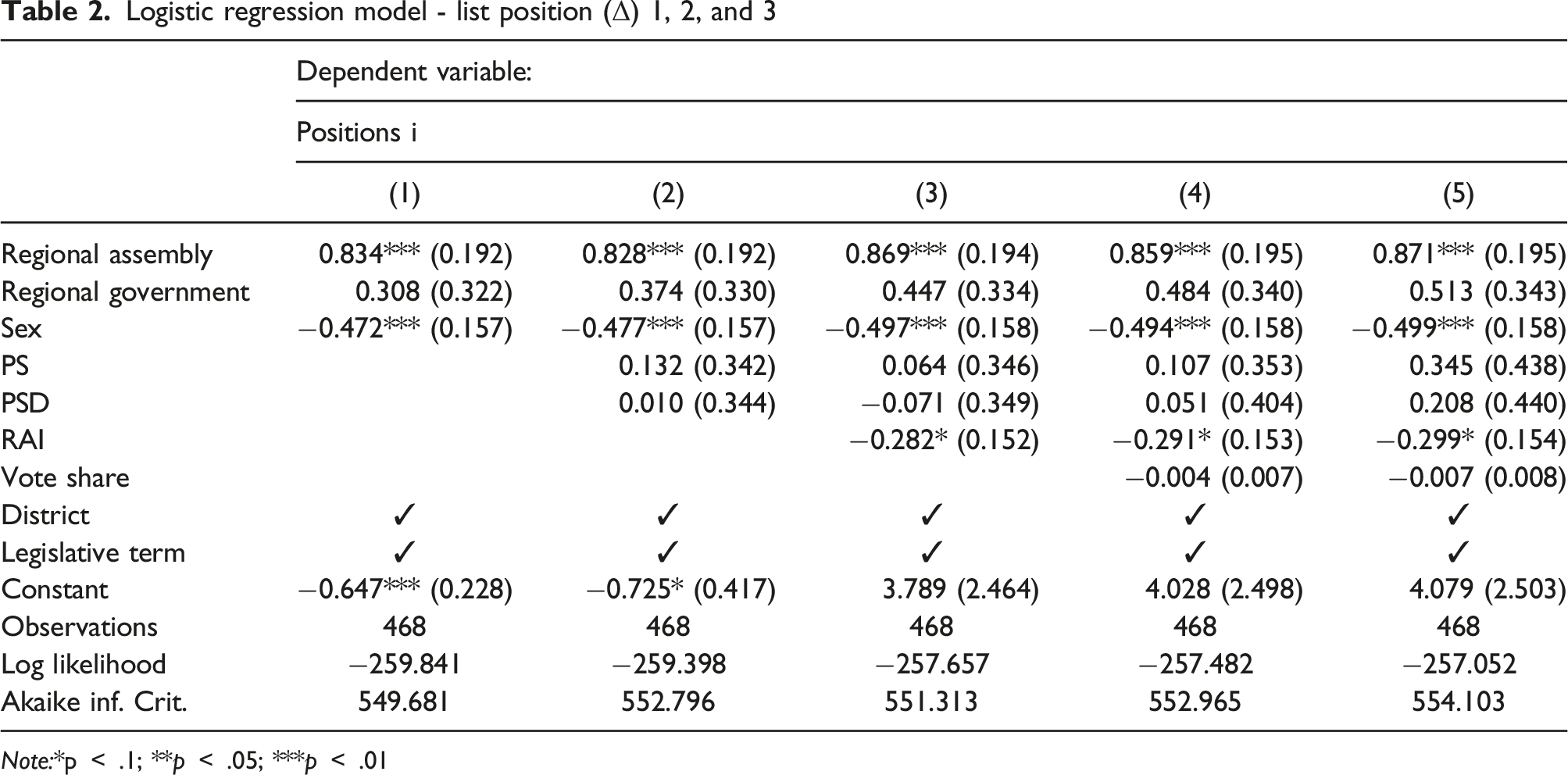
Looking at Figure 3 where we use our first dependent variable, Positions 1, 2, and 3, concerning the three first positions in the lists, the results hold as hypothesised. From the five models we ran, the regional assembly variable always has a positive and statistically significant effect on this first dependent variable. Thus, it is more likely that candidates ranked in the first three positions in the lists for the national assembly have previously been regional MPs. As expected, the sex of the candidate has a relevant and negative effect as women are less likely to be in the first three placements of the lists. As Calca and Koehler (2023b) reported for the national total and also evidenced by Ruel (2017, 2022) for both the Azores and Madeira, inclusion of female candidates in legislative elections is low. Estimated coefficients of the logistic regression - positions 1, 2 and 3.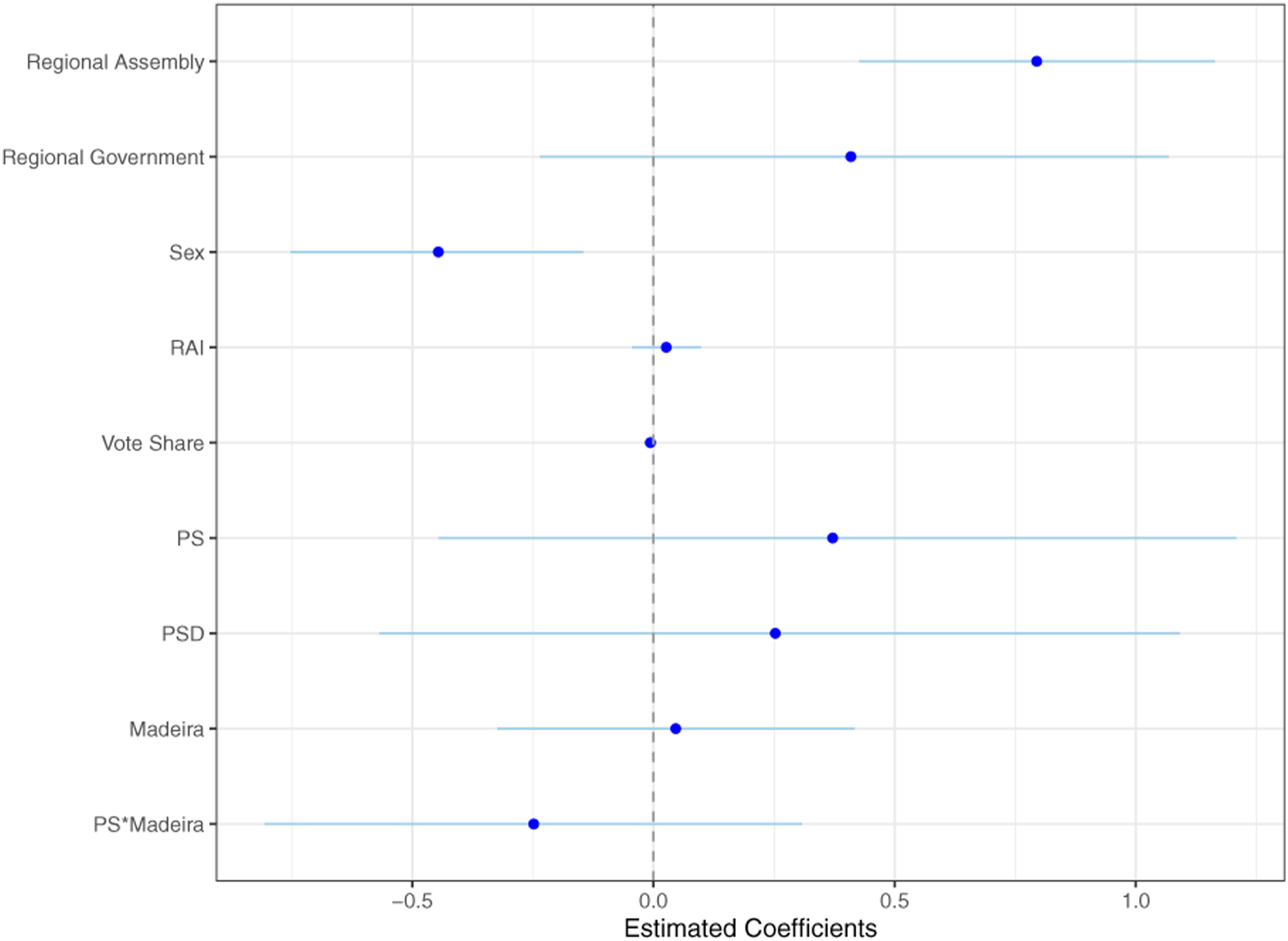
The effects of our main explanatory variable, regional assembly, continue to be strong after controlling for the RAI, the vote share, and, finally, for district (fixed effects) and for legislative term effects.
We also show that an MP candidate to the legislative elections has a higher likelihood of being in one of the three first list positions (eligible) if she was previously a regional MP than if they was not. As plotted the in Estimated Coefficients of the Logistical Regression - 1, 2 and 3 for the first dependent variable in Figure 3 all else being equal, belonging to the regional assembly has a positive and significant effect in the likelihood of being placed in the first three positions in the candidate list.
With a negative signal, we find that the sex variable should be read as indicating that being a woman (coded as a zero) negatively affects your likelihood of being in one of the three eligible placements.
Next, in Figure 4 we can see the predicted probability of a candidate being in an eligible position (1, 2 and 3) and have been a regional MP. As we show, the likelihood of being in eligible positions increases more than 20% points by the fact that this candidate have been a regional MP in the past. That is, passing from around 55% of likelihood of being elected to approximately 80%. The latter is in line with the confirmation of our first hypothesis. Probability of being in an Eligible Position (1, 2 and 3) if a Candidate have been a regional MP.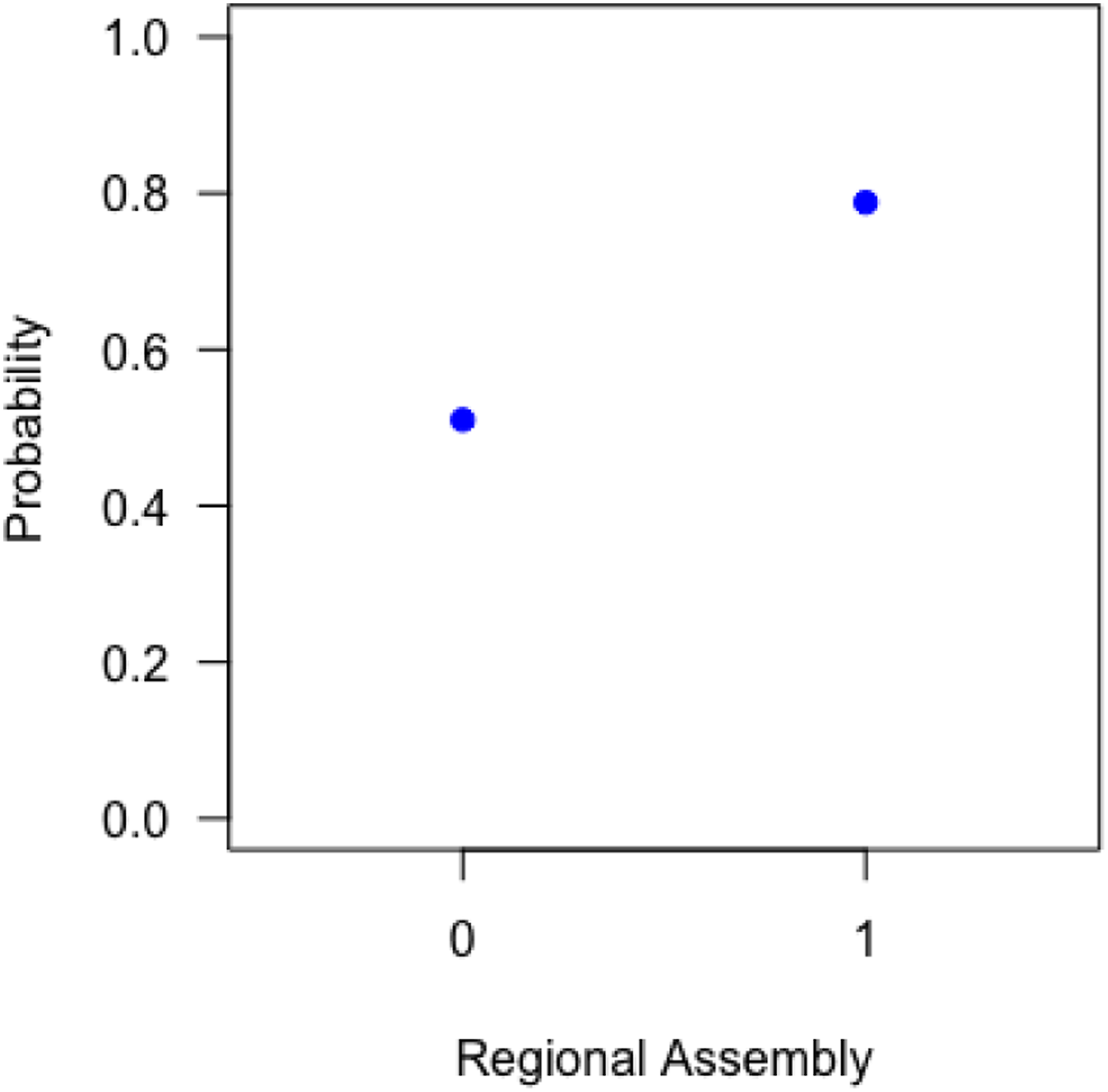
As a way to reinforce the results of our first hypothesis, we decided to look at the next best ranked position for a candidate. We coded a variation of the position in the first, second, and third placements that then has the second, third, and fourth placement of candidates in the lists. There is an empirical reason for this, as already mentioned–the presidents of the regional governments very often occupy the first placement on the list but do not take office.
Considering the results of our logistical regression, once we withdraw the first position mainly occupied by presidents of the regional governments, the variable regarding the regional government gains statistical significance as it is negatively correlated with being in the second, third, and fourth placements in the lists. Thus, we can show that the first variable regarding the regional assembly loses its effect and that this happens because of the lack of variation in this variable because we do not consider the first placement in the dependent variable. To be more precise, more than double the candidates placed in second, third, or fourth were regional MPs, and just a few of them belonged to the regional government beforehand.
To test our second hypothesis, we ran a logistic regression where we used the variable office (off) as a dependent variable. As shown in Figure 5, we investigated what kind of candidates were elected and took office and not only those who had a higher likelihood of being elected given their list placement. The praxis related to who actually goes to the national assembly as a representative is relevant to our argument. Having been a MP in the regional assembly positively correlates to taking office. Additionally, belonging to the regional government negatively correlates with taking office at the national assembly. Again, not only the list placements (Hypothesis 1) but also who takes office after being elected (Hypothesis 2) is central to understanding the logic of regional branches of national parties in defining who goes in which position in the lists for the national assembly. Estimated coefficients of the logistic regression - office.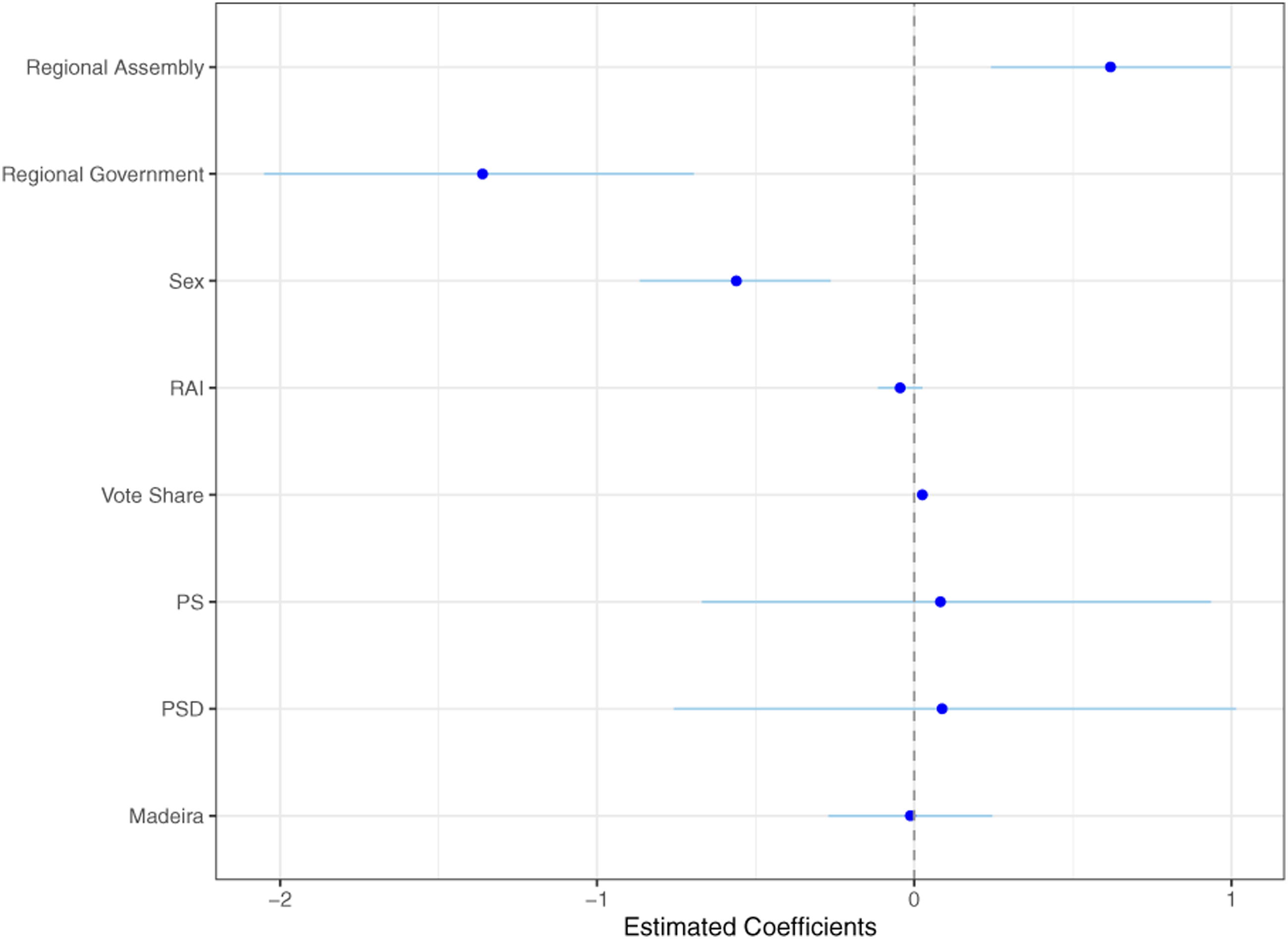
Not surprisingly, being in placements four and five negatively affects the likelihood of taking office as this refers to the number of available mandates, even considering the substitution aspects. We believe that this does not happen for the sixth position, as, in Madeira, the last candidate took office as a substitute in several legislative terms.
Conclusions
We know that unitary systems have more exclusive and centralized selection procedures, while federalist states have the opposite, that is, more inclusive and less centralized selection procedures. Indeed, there is a correlation between territorial organization and selection procedures (Duverger, 1954; Galllager & March, 1988; Shomer, 2014). This paper goes hand in hand with this first idea in its attempt to explain how the selection of representatives, in multilevel states, constitute a tool used by the regional branches of mainstream parties for their advantages. We argue that these parties look for the maintenance of an influence and power spheres, at the regional level, that are connected to the national level. By answering the question: Does former experience as a regional MP increase the probability of becoming a national MP? we study how intra-party dynamics impact candidate selection as a mediator to maintain autonomy held by the nationwide party regional branches, and how this affects the choices of MP candidates for the national assembly.
With recent and original data, we present an approach that integrates a conflicting relationship between party representation at the national and regional levels within Portugal, a decentralized unitary state.
We show that previous experience in the regional assembly as an MP is central for being in one of the eligible seats defined by parties at the regional level. Additionally, if one candidate belonged to the regional government, they are less likely to be in an eligible position and to take office. This seems to indicate that there are two distinct career options for politicians in the regions: one legislative driven and one executive driven. We thus confirm both our hypotheses, the first regarding list placements and the second considering whom takes office from the ones that were elected.
In the Portuguese setting, the adoption of a particular institutional architecture–decentralized unitary state–with two autonomous regions (Azores and Madeira) that have political authority over their political decisions, the absence of non-nationwide parties and a pattern of non-alternation or longevity in power (Ruel, 2018, 2021) have reinforced our analysis and have underlined the two fronts along which regional branches of nationwide parties have established their strategies: (1) at a regional level, while creating a party identity/ideology which was designed to accommodate regional interests, sometimes in divergence with the party line; and (2) at a national level, voicing regional issues and defending regional interests of the territory within the state. The salience of regional interests is the cornerstone of regional branch strategies to the extent that the regional leaders have gained leverage within the state-level structure, increasing their sphere of influence and empowered by their electoral gains at the regional level. Our analysis also revealed a crystallization of regional representatives at the national assembly, which underlines the strategies of the regional leaders to indicate and secure the best politicians to safe positions in order to maintain and guarantee the defense of regional interests at the national level.
Despite the absence of regionalist parties in Portugal, the regional branches of parties, in particular the incumbent parties, behave as regionalist parties. For instance, the position of regional branches that voice and channel the territorial interests, often demanding more financial autonomy at a state-level, are resonant in regional branch autonomy and among the electorate. Thus, this article uncovers the impact of the institutional design on the incentives and constraints political actors face on institutional performance over time.
The structure of opportunities created by democratic institutions alongside regional autonomy assigned to Azores and Madeira has attributed significant autonomy to regional branches of nationwide parties over their own structures and affairs. The critical dimension within intra-party politics–candidate selection for elections–in particular for national parliament constitutes a strong indicator of the autonomy of regional structures within the state level and shapes the identity linkage to the regional arena of politics.
The observed patterns that we find provide suggestive evidence that lists of safe positions of MPs in national elections, over time, prove the autonomy enjoyed by the regional branches of nationwide parties. Additionally, an intervening factor that might be coupled with it refers to regional identity and the guarantee of regional interests. For instance, the strategic bargaining that takes place during the discussion of the annual budget at the national parliament, where there is clear intervention of the elected MPs from regional constituencies (Azores and Madeira) plus the benefits accomplished for those regions at these moments, reinforces the scope of explanations and implications of candidate selection in multilevel polities. Future work should further examine this line of argument. By looking at other territorial realities, we may find identical patterns in other countries leading to similar mechanisms.
Footnotes
Acknowledgements
A previous version of this paper was presented at the 2021 IPSA World Congress of Political Science in Lisbon, at the 2021 Standing Group of Parliaments Virtual Conference of the ECPR, at the 2020 SPARC-ICS meeting in Lisbon and at the 2020 ECPR General Conference Virtual Event. We thank the helpful comments and suggestions of our discussants in each one of these meetings: Pablo Oñate, Wang Leung Ting, Ulrich Sieberer and Marina Costa Lobo. The authors would also like to thank the editor of Party Politics, Paul Webb, and the anonymous reviewers, as well as very valuable feedback from Sebastian Koehler and Or Tuttnauer.
Declaration of conflicting interests
The author(s) declared no potential conflicts of interest with respect to the research, authorship, and/or publication of this article.
Funding
The author(s) received no financial support for the research, authorship, and/or publication of this article.
